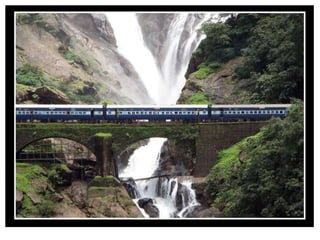
RAILWAY ENGINEERING
By: Lohit Havalagi
Assistant professor, NKOCET Solapur
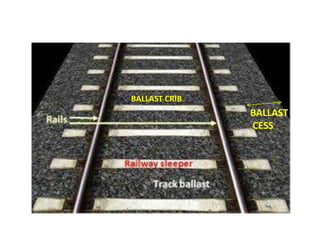
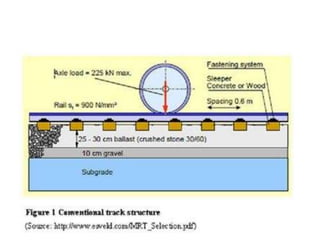
BALLAST
CESS
BALLAST CRIB
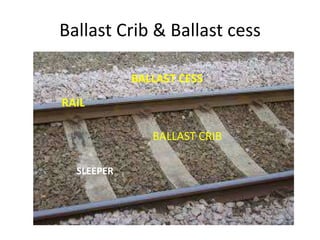
Ballast Crib & Ballast cess
BALLAST CRIB
BALLAST CESS
SLEEPER
RAIL
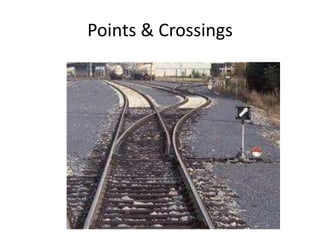
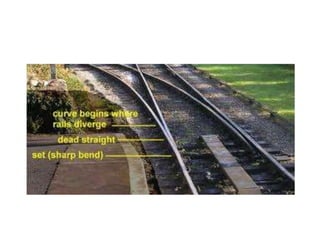
Points & Crossings
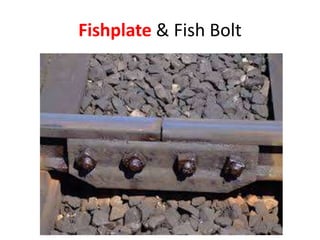
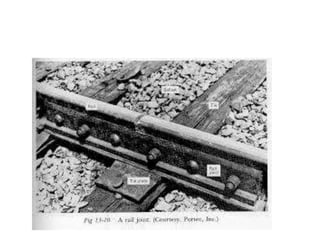
Fishplate & Fish Bolt
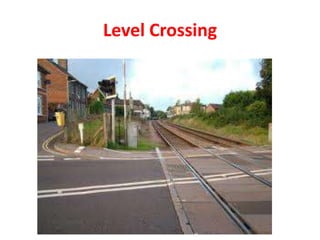
Level Crossing
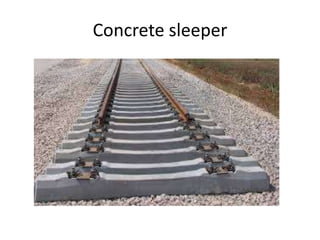
Concrete sleeper
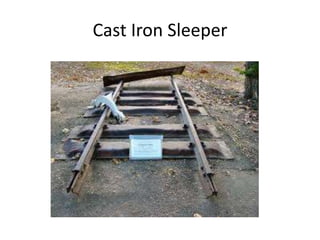
Cast Iron Sleeper
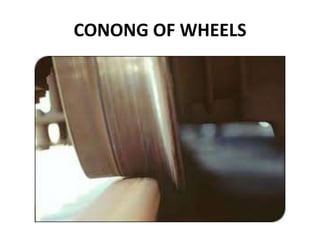
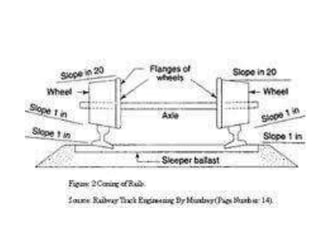
CONONG OF WHEELS
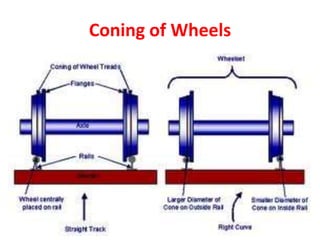
Coning of Wheels
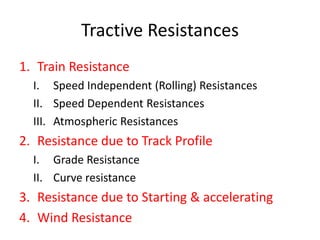
Tractive Resistances
1. Train Resistance
I. Speed Independent (Rolling) Resistances
II. Speed Dependent Resistances
III. Atmospheric Resistances
2. Resistance due to Track Profile
I. Grade Resistance
II. Curve resistance
3. Resistance due to Starting & accelerating
4. Wind Resistance
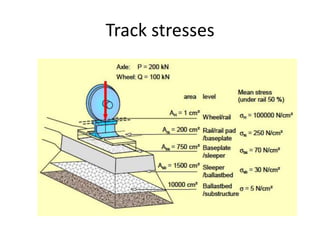
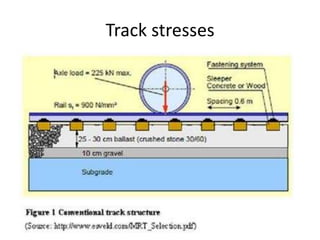
Track stresses
Track stresses
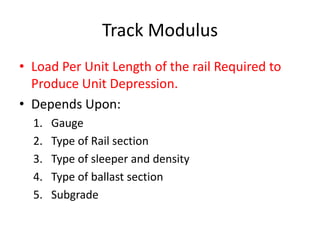
Track Modulus
• Load Per Unit Length of the rail Required to
Produce Unit Depression.
• Depends Upon:
1. Gauge
2. Type of Rail section
3. Type of sleeper and density
4. Type of ballast section
5. Subgrade
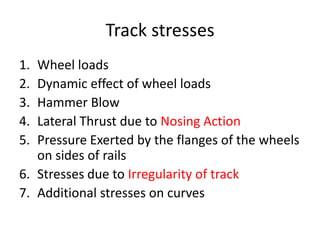
Track stresses
1. Wheel loads
2. Dynamic effect of wheel loads
3. Hammer Blow
4. Lateral Thrust due to Nosing Action
5. Pressure Exerted by the flanges of the wheels
on sides of rails
6. Stresses due to Irregularity of track
7. Additional stresses on curves
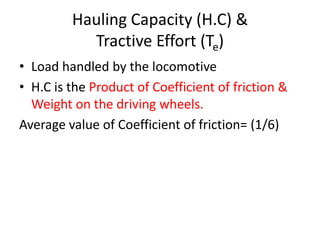
Hauling Capacity (H.C) &
Tractive Effort (Te)
• Load handled by the locomotive
• H.C is the Product of Coefficient of friction &
Weight on the driving wheels.
Average value of Coefficient of friction= (1/6)
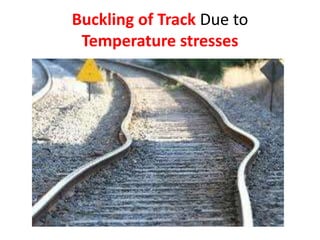
Buckling of Track Due to
Temperature stresses
Stresses in Rail
• Longitudinal Stresses due to Tractive Effort &
Braking Forces.
• Thermal stresses
• Due irregularity there will be heavy impact on
the rails.
• Minimum Ultimate Tensile Strength of Rail =
72.42 kg/cm2
Stresses in the Sleepers
• Stresses in sleepers depends upon:
• Wheel load
• Irregularities in the track
• Speed
• Dynamic effect of wheels on rails
• Elasticity of the rail
• Efficiency of Fastenings
• Design & Dimension of Sleeper
• Strength of Sleeper
• Track Modulus
• Stiffness of the rail
• Maintenance of track
Stresses in the Ballast
Stresses in Ballast depends on:
• Elastic Property of the sleeper
• Degree of compaction
• Nature of Ballast bed
• Bigger the cess & size of sleeper, lesser the
Pressure in ballast & formation.
Stresses in the Formation
• Stresses in subgrade is decreased by
increasing both depth & Size of the Ballast.
• Quality & Gradation of Ballast influences
ultimate pressure on formation.
Unit 1. introduction to Railway Engineering

Unit 1. introduction to Railway Engineering

  • 1.
    RAILWAY ENGINEERING By: LohitHavalagi Assistant professor, NKOCET Solapur
  • 2.
  • 3.
    Ballast Crib &Ballast cess BALLAST CRIB BALLAST CESS SLEEPER RAIL
  • 5.
  • 6.
  • 8.
  • 10.
  • 11.
  • 12.
  • 14.
  • 15.
    Tractive Resistances 1. TrainResistance I. Speed Independent (Rolling) Resistances II. Speed Dependent Resistances III. Atmospheric Resistances 2. Resistance due to Track Profile I. Grade Resistance II. Curve resistance 3. Resistance due to Starting & accelerating 4. Wind Resistance
  • 16.
  • 17.
  • 18.
    Track Modulus • LoadPer Unit Length of the rail Required to Produce Unit Depression. • Depends Upon: 1. Gauge 2. Type of Rail section 3. Type of sleeper and density 4. Type of ballast section 5. Subgrade
  • 19.
    Track stresses 1. Wheelloads 2. Dynamic effect of wheel loads 3. Hammer Blow 4. Lateral Thrust due to Nosing Action 5. Pressure Exerted by the flanges of the wheels on sides of rails 6. Stresses due to Irregularity of track 7. Additional stresses on curves
  • 20.
    Hauling Capacity (H.C)& Tractive Effort (Te) • Load handled by the locomotive • H.C is the Product of Coefficient of friction & Weight on the driving wheels. Average value of Coefficient of friction= (1/6)
  • 22.
    Buckling of TrackDue to Temperature stresses
  • 23.
    Stresses in Rail •Longitudinal Stresses due to Tractive Effort & Braking Forces. • Thermal stresses • Due irregularity there will be heavy impact on the rails. • Minimum Ultimate Tensile Strength of Rail = 72.42 kg/cm2
  • 24.
    Stresses in theSleepers • Stresses in sleepers depends upon: • Wheel load • Irregularities in the track • Speed • Dynamic effect of wheels on rails • Elasticity of the rail
  • 25.
    • Efficiency ofFastenings • Design & Dimension of Sleeper • Strength of Sleeper • Track Modulus • Stiffness of the rail • Maintenance of track
  • 26.
    Stresses in theBallast Stresses in Ballast depends on: • Elastic Property of the sleeper • Degree of compaction • Nature of Ballast bed • Bigger the cess & size of sleeper, lesser the Pressure in ballast & formation.
  • 27.
    Stresses in theFormation • Stresses in subgrade is decreased by increasing both depth & Size of the Ballast. • Quality & Gradation of Ballast influences ultimate pressure on formation.