This document discusses key concepts around motion including frames of reference, distance, displacement, and vectors. It defines a frame of reference as a system used to describe motion accurately. Distance is defined as the length of a path between two points, while displacement is the length and direction of a straight line between a starting and ending point. Vectors represent quantities that have both magnitude and direction, and can be added or subtracted depending on if they are in the same or opposite directions. Displacement over a non-straight path can be determined by combining individual displacement vectors.
11.1 Frame ofReference = Is a system of objects that are not moving with respect to another object. = Needed to describe motion completely and accurately **Students Describe where something is in the room without using a frame of reference**
3.
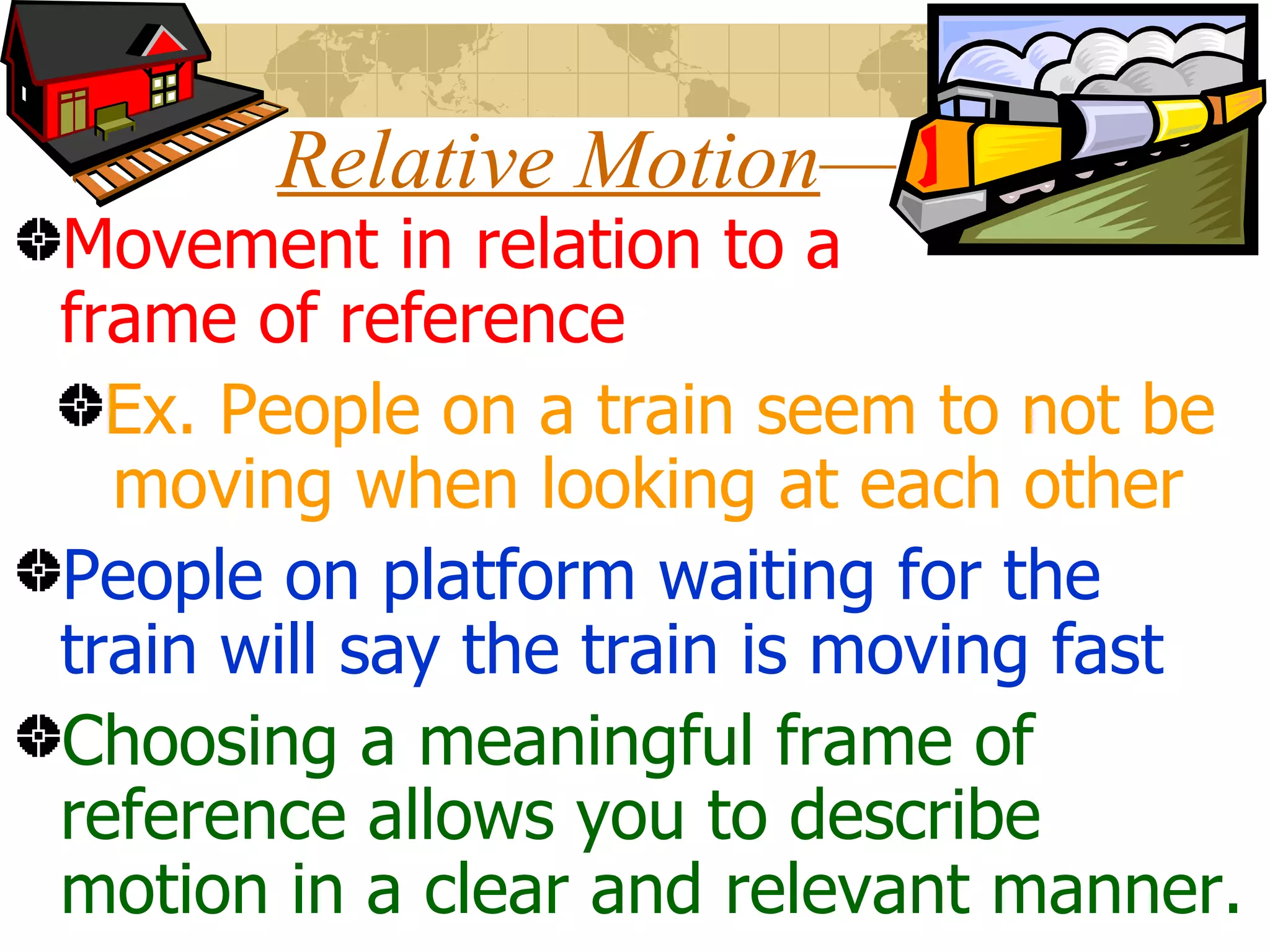
Relative Motion —Movement in relation to a frame of reference Ex. People on a train seem to not be moving when looking at each other People on platform waiting for the train will say the train is moving fast Choosing a meaningful frame of reference allows you to describe motion in a clear and relevant manner.
4.
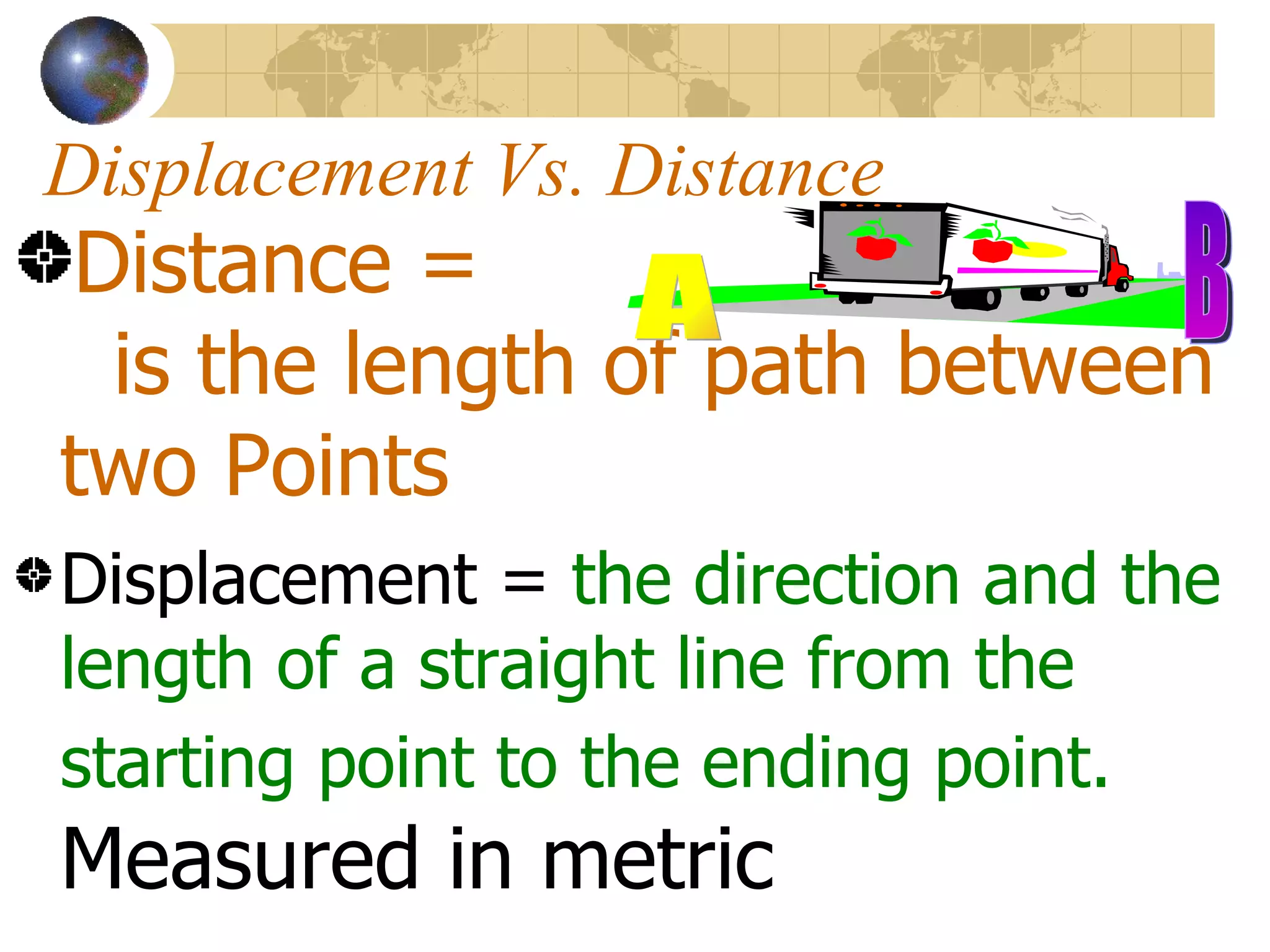
Displacement Vs. DistanceDistance = is the length of path between two Points Displacement = the direction and the length of a straight line from the starting point to the ending point. Measured in metric A B
5.
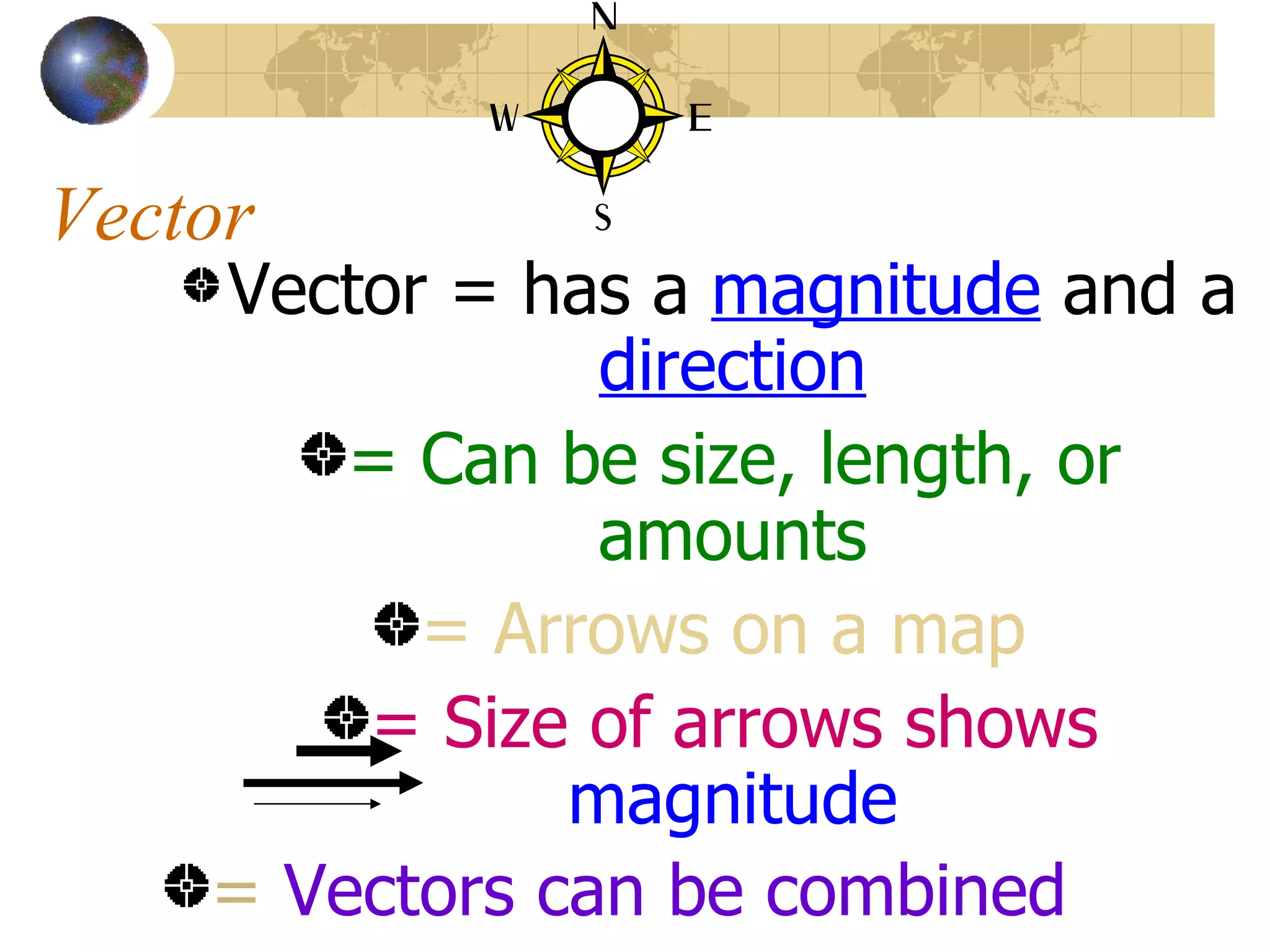
Vector Vector =has a magnitude and a direction = Can be size, length, or amounts = Arrows on a map = Size of arrows shows magnitude = Vectors can be combined
6.
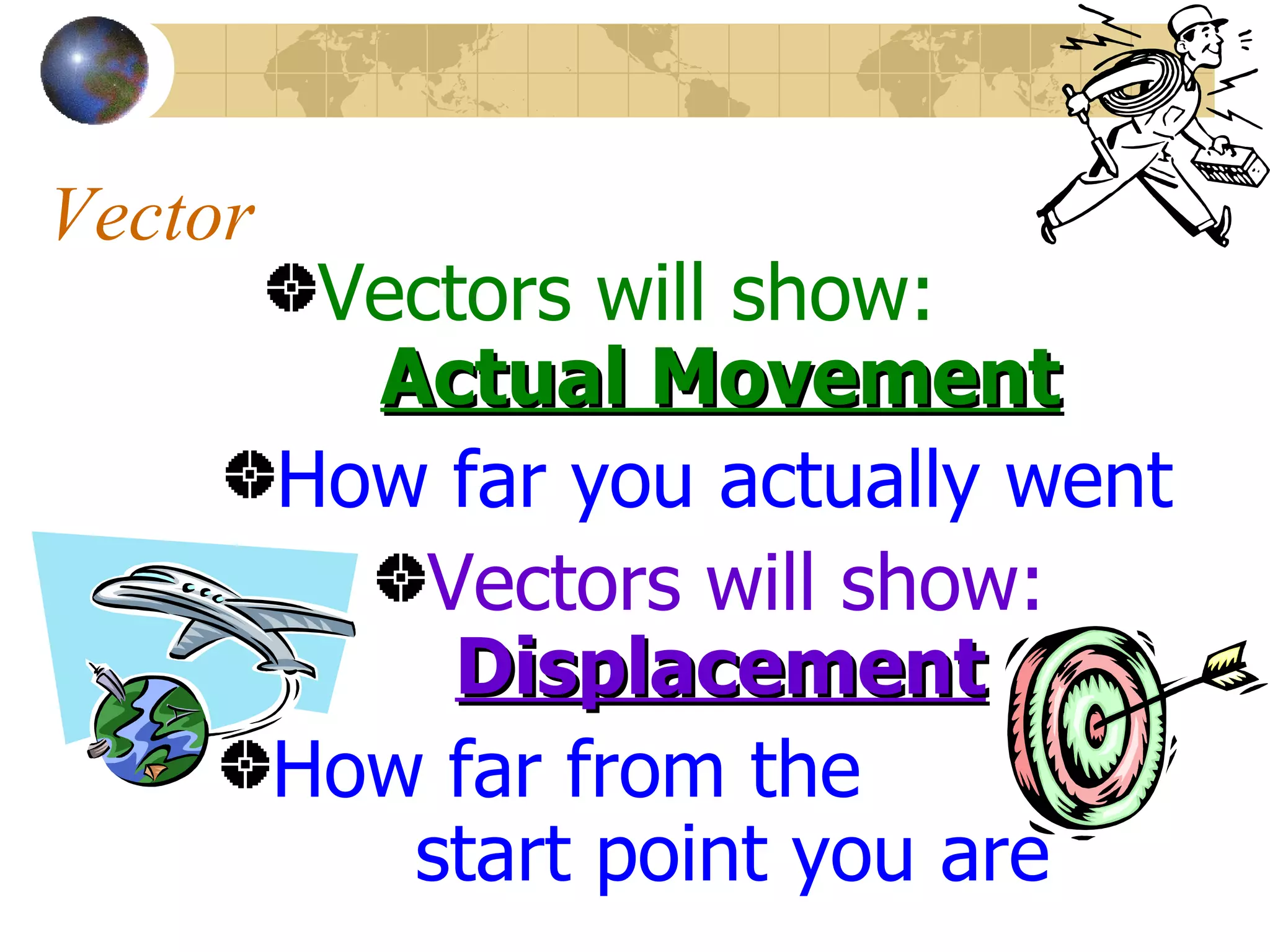
Vector Vectors willshow: Actual Movement How far you actually went Vectors will show: Displacement How far from the start point you are
7.
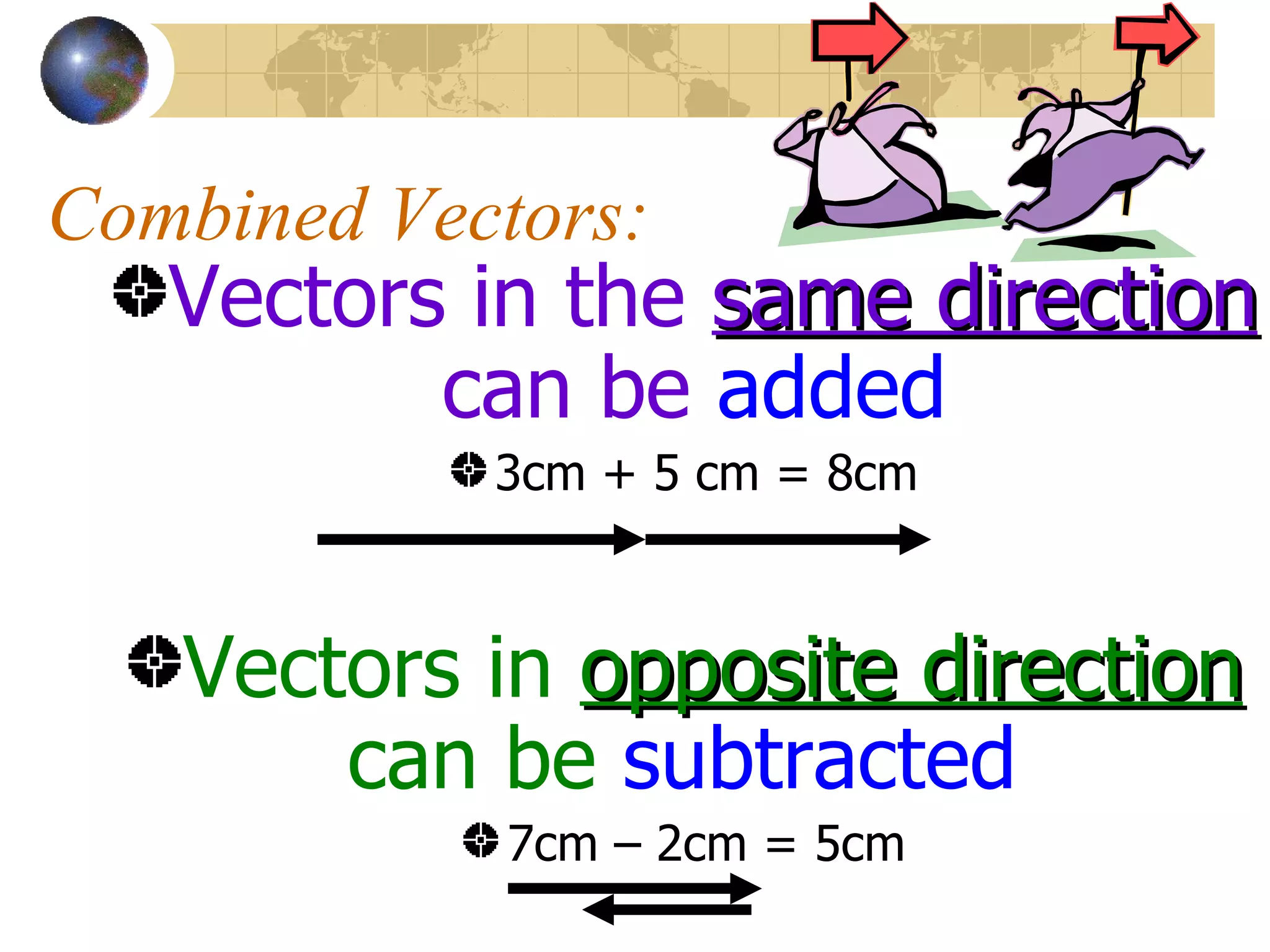
Combined Vectors: Vectorsin the same direction can be added 3cm + 5 cm = 8cm Vectors in opposite direction can be subtracted 7cm – 2cm = 5cm
8.
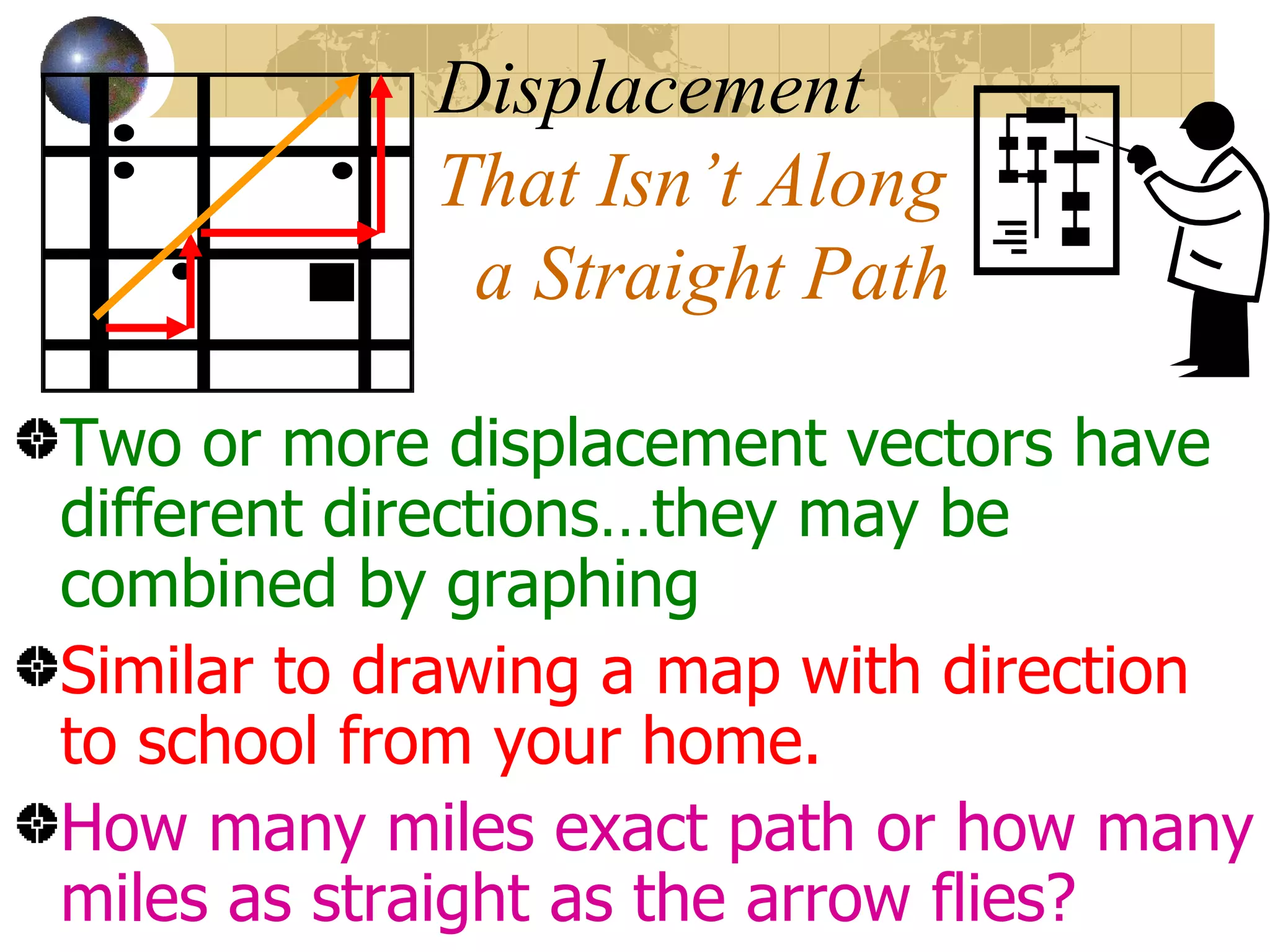
Displacement ThatIsn’t Along a Straight Path Two or more displacement vectors have different directions…they may be combined by graphing Similar to drawing a map with direction to school from your home. How many miles exact path or how many miles as straight as the arrow flies?