This document provides an overview of the theory of translation and discusses various types and levels of equivalence in translation. It covers the following key points:
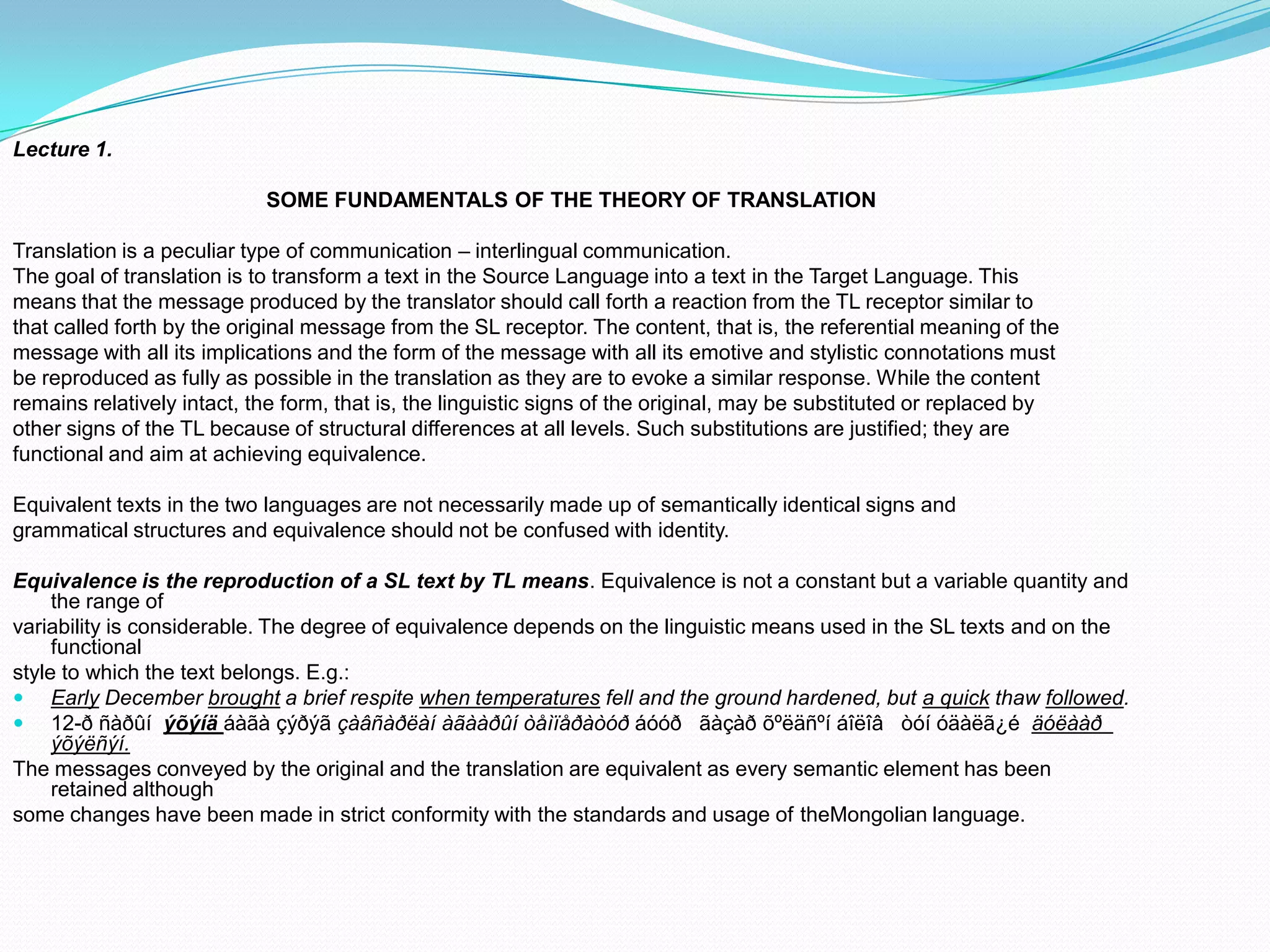
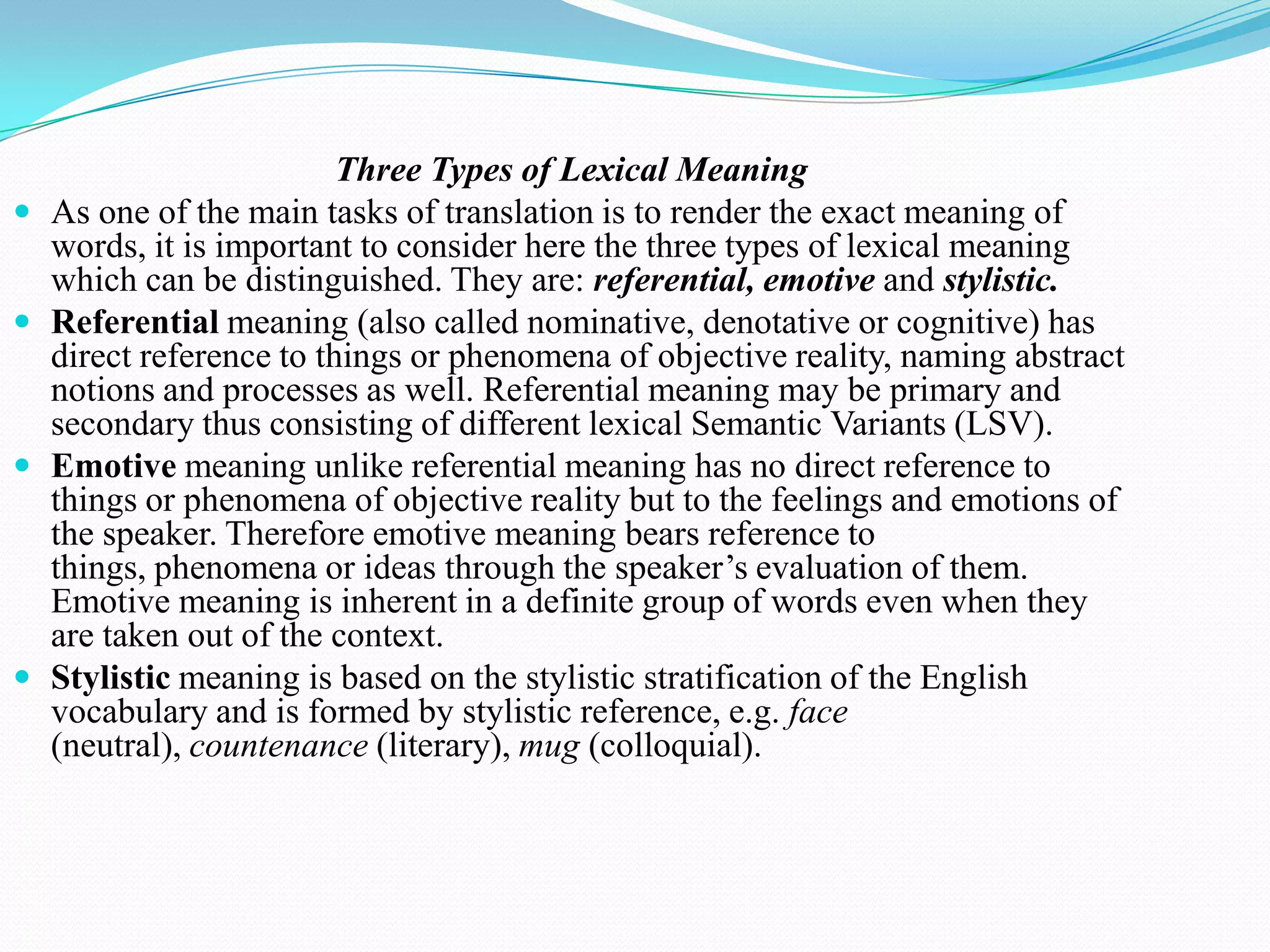
- The goal of translation is to transform a text in the source language into the target language while reproducing the content, message, and implications as fully as possible.
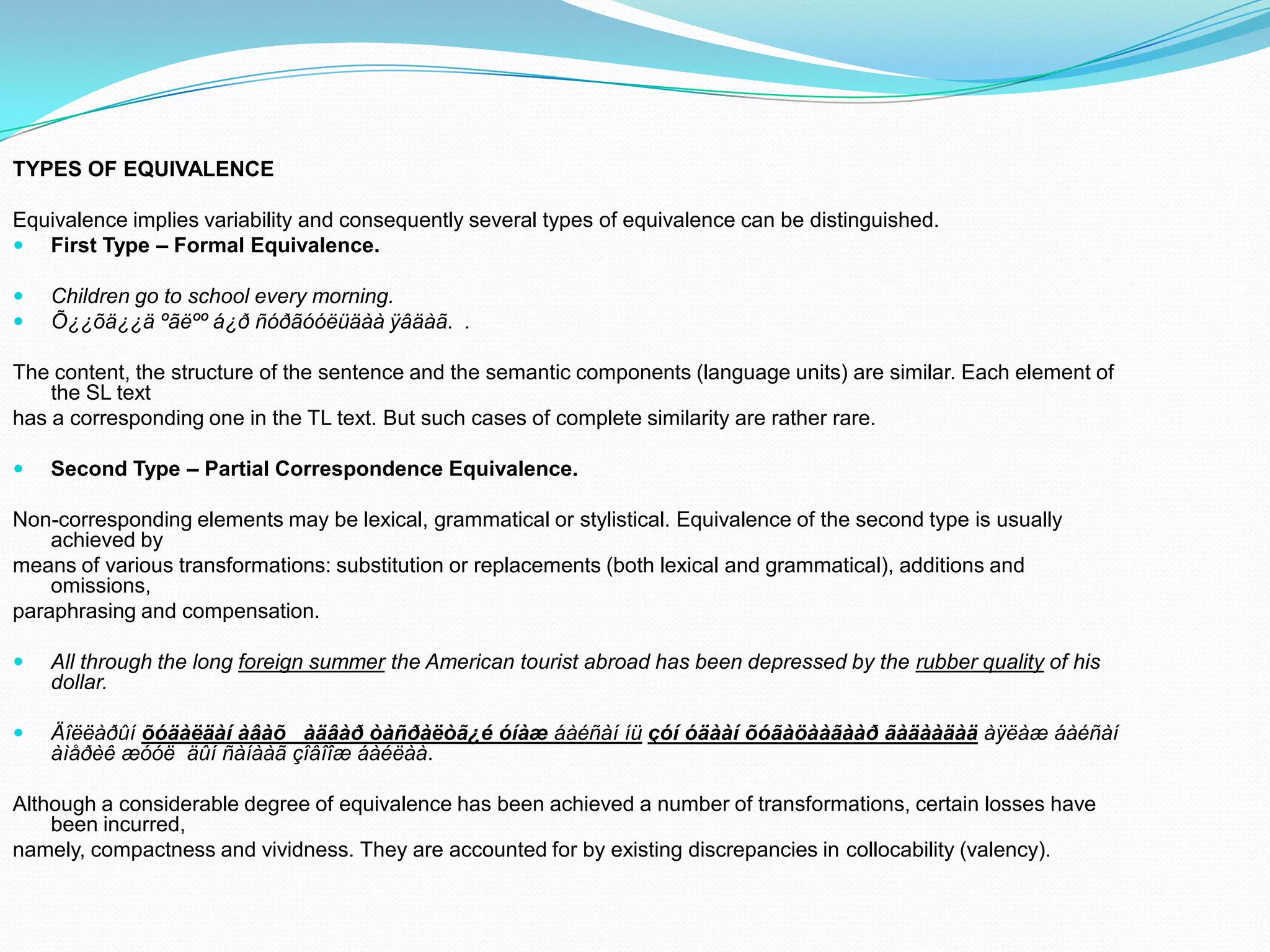
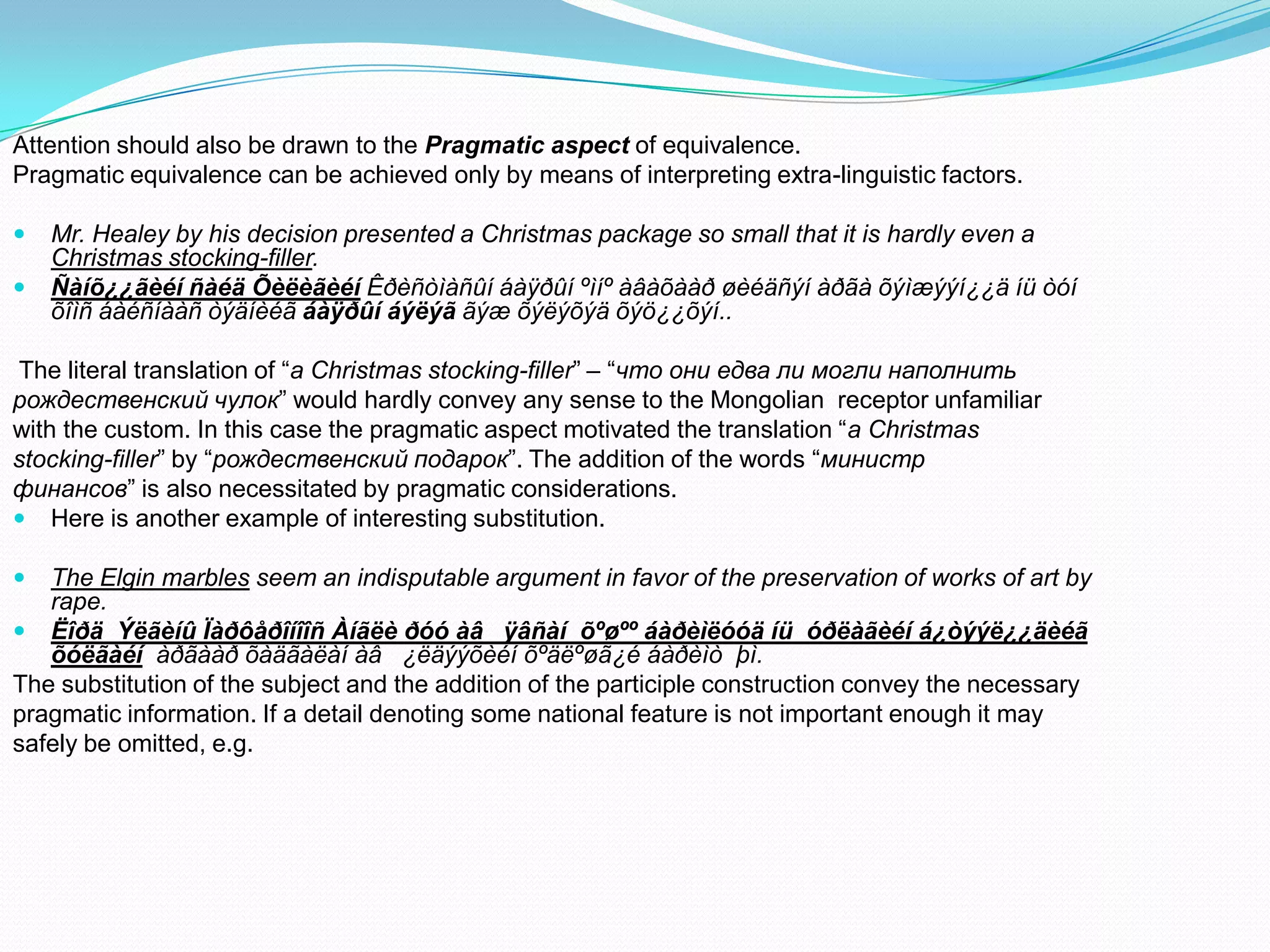
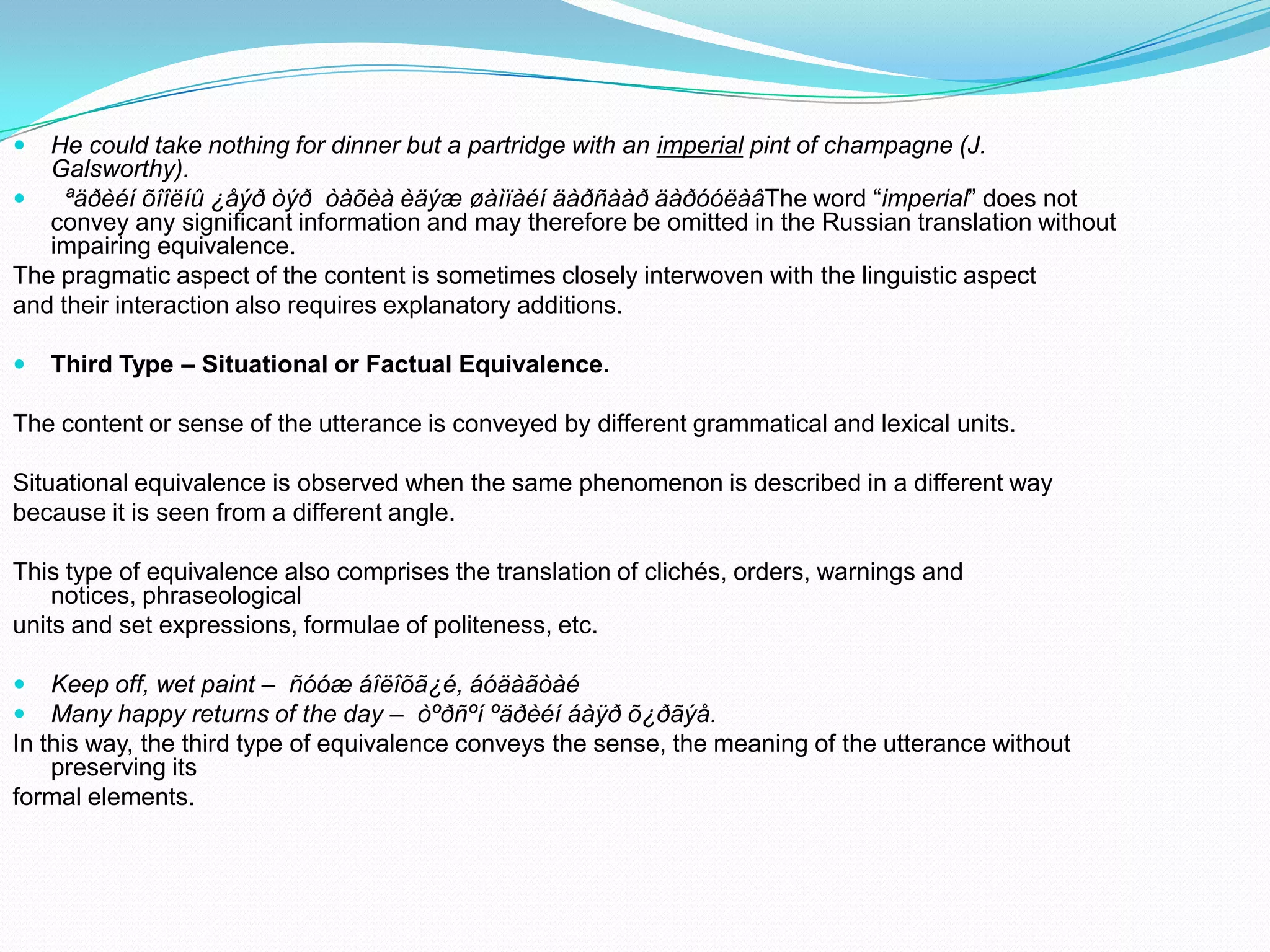
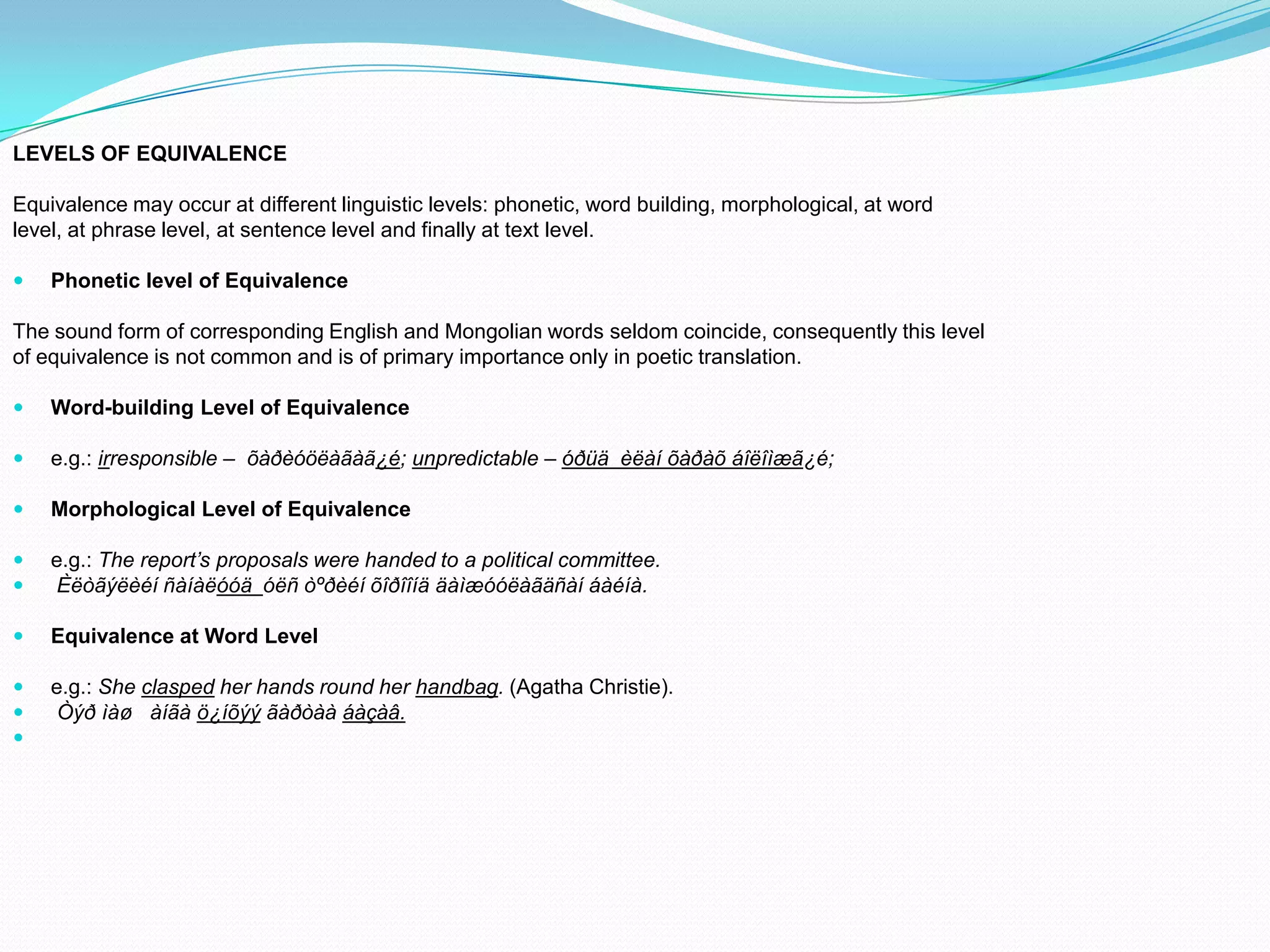
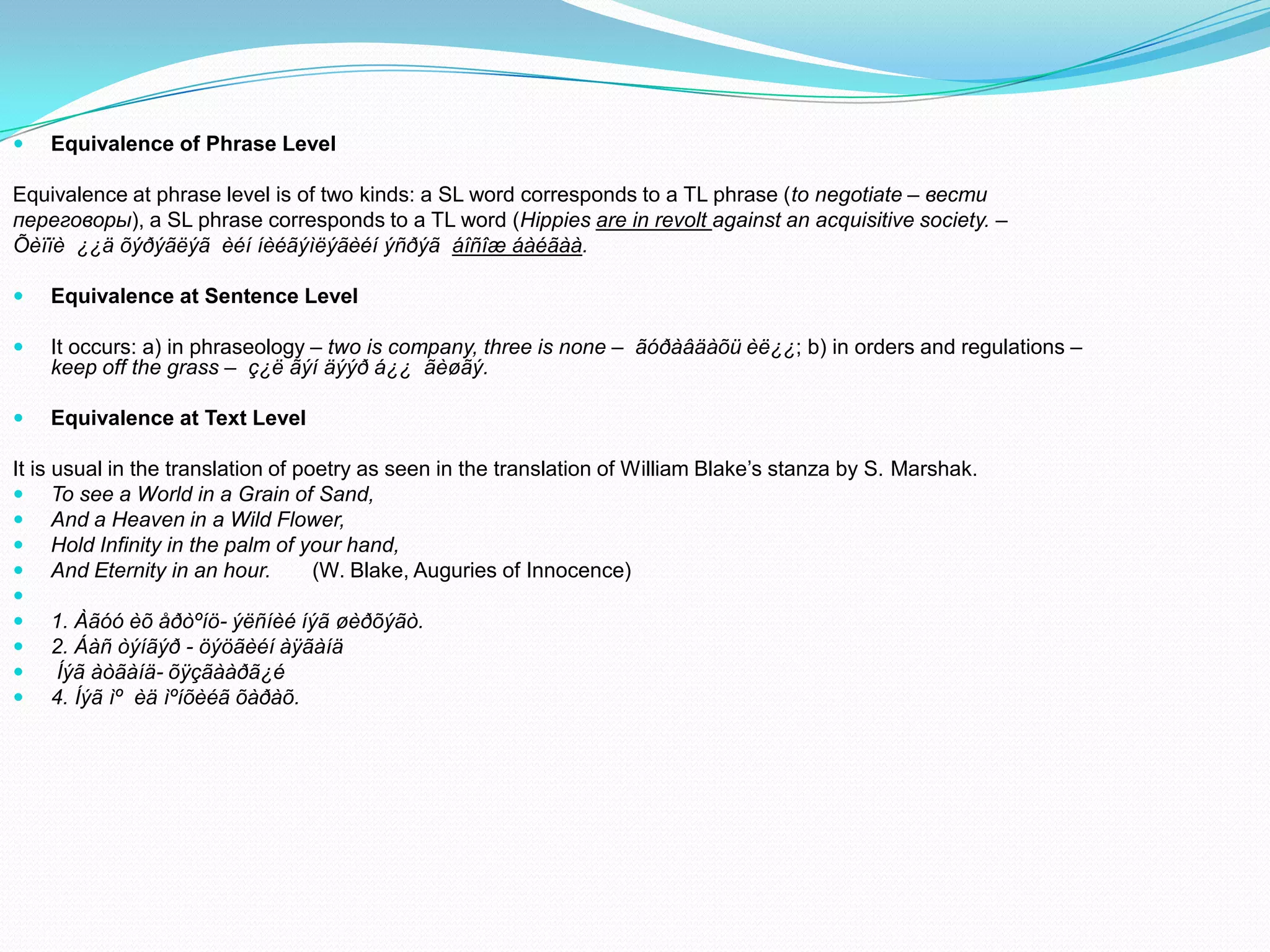
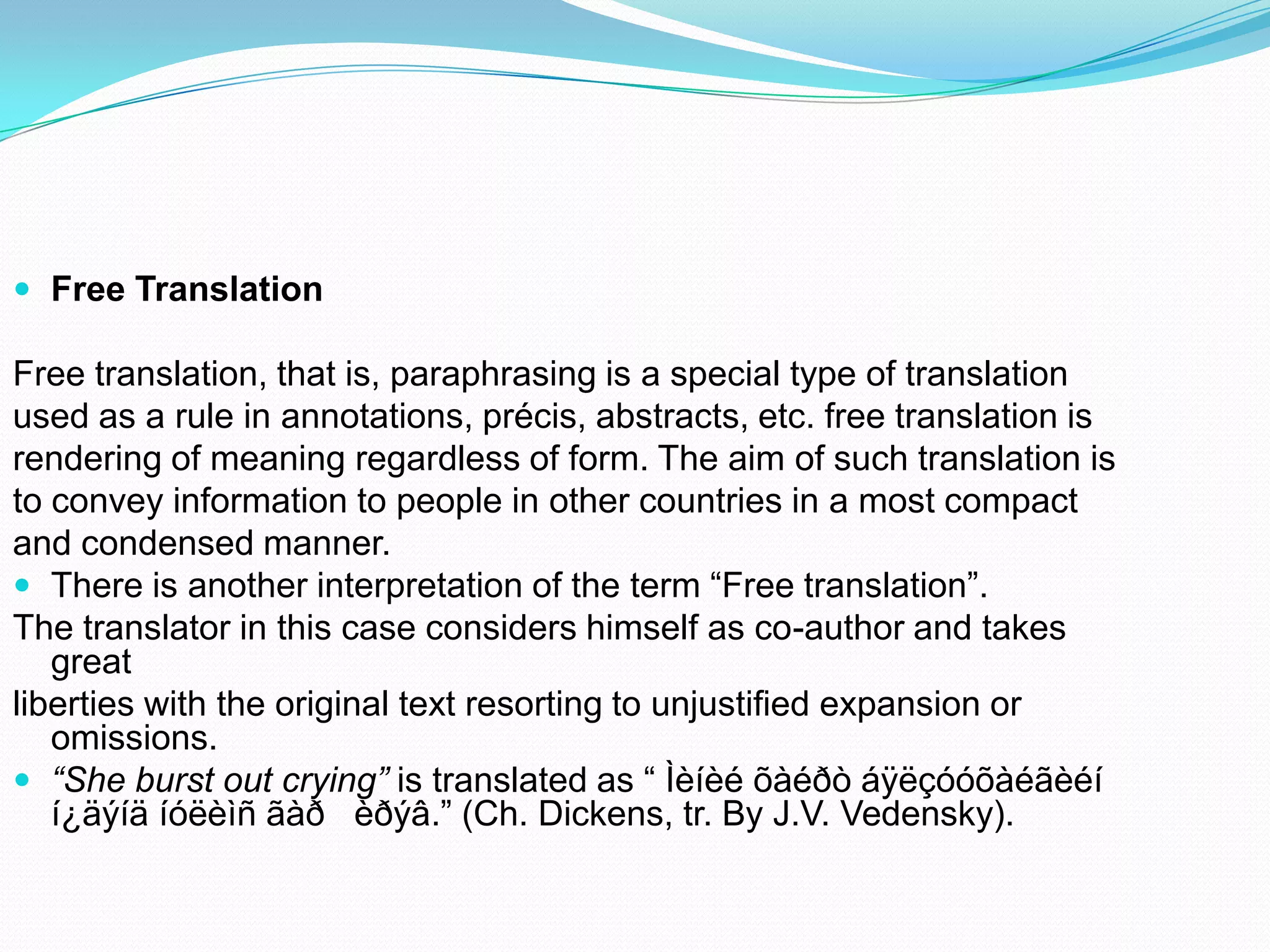
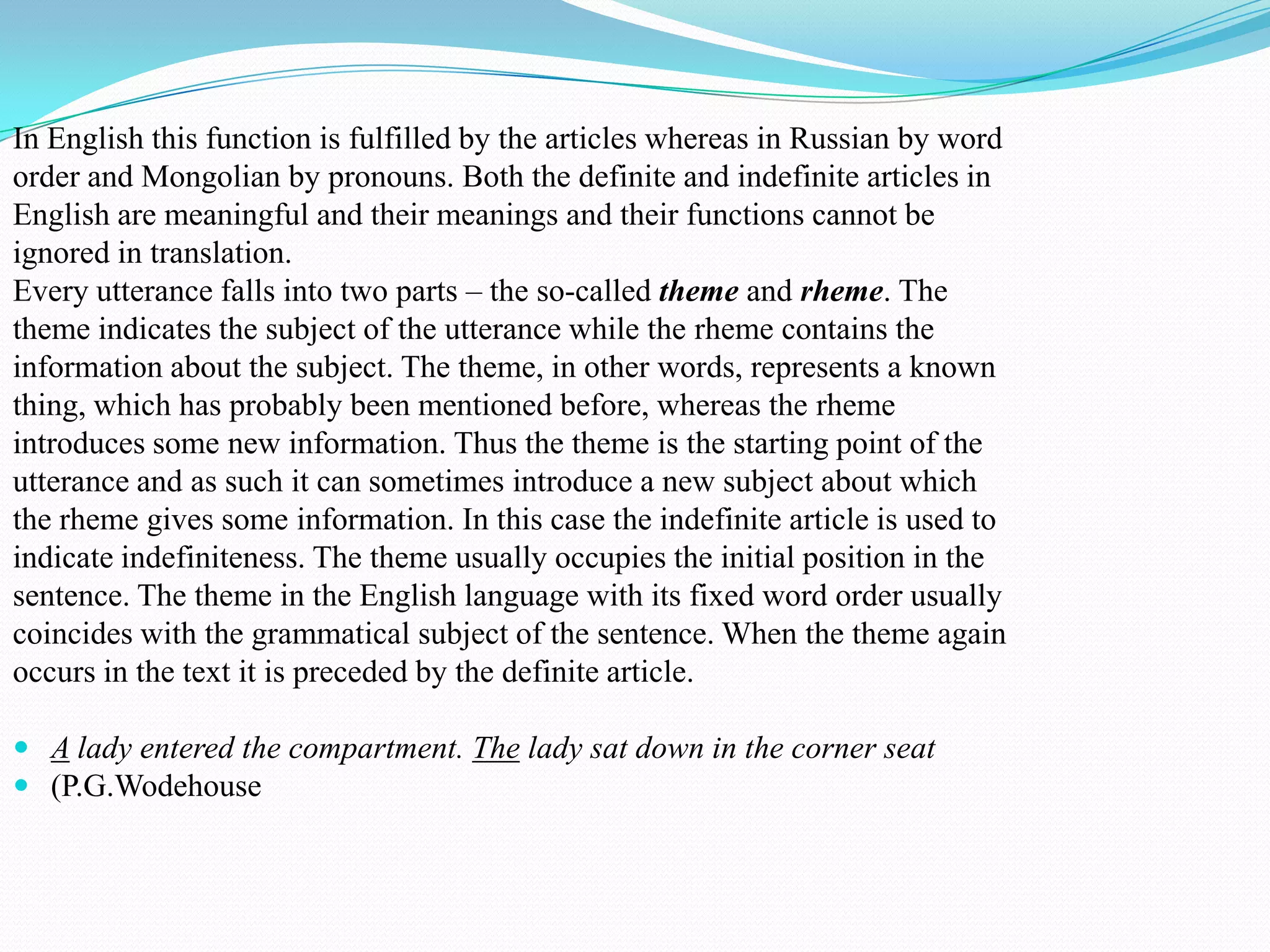
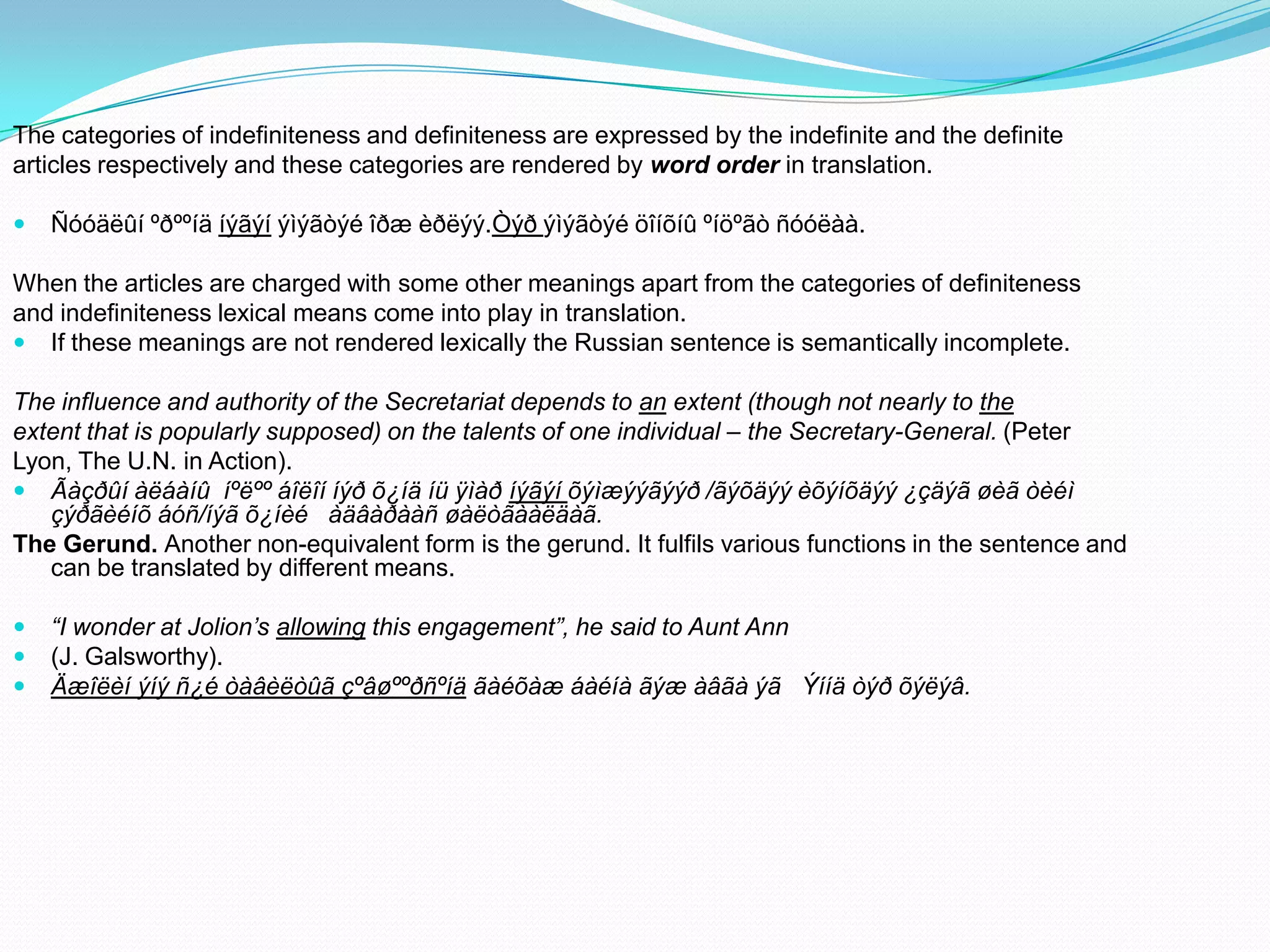
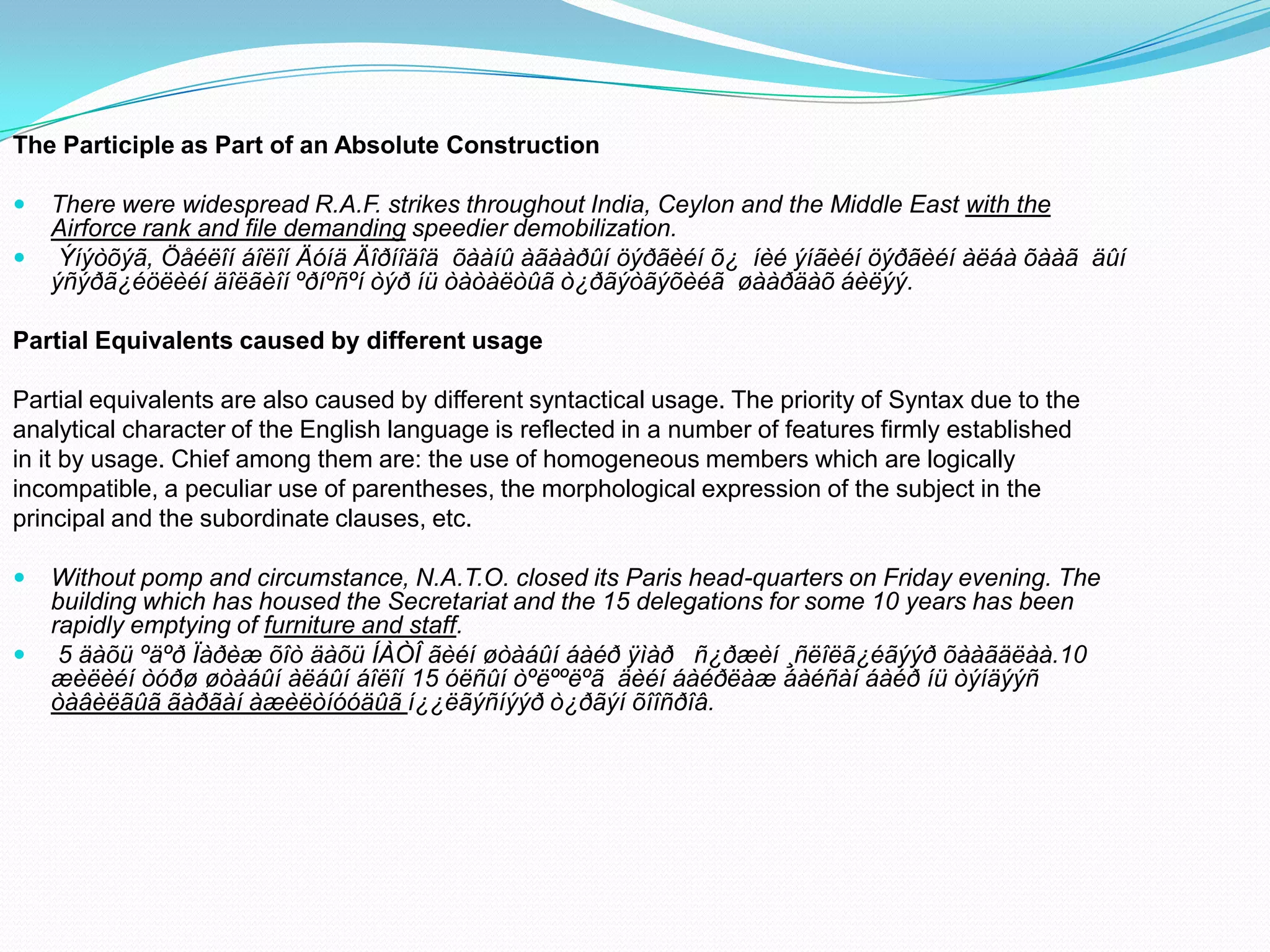
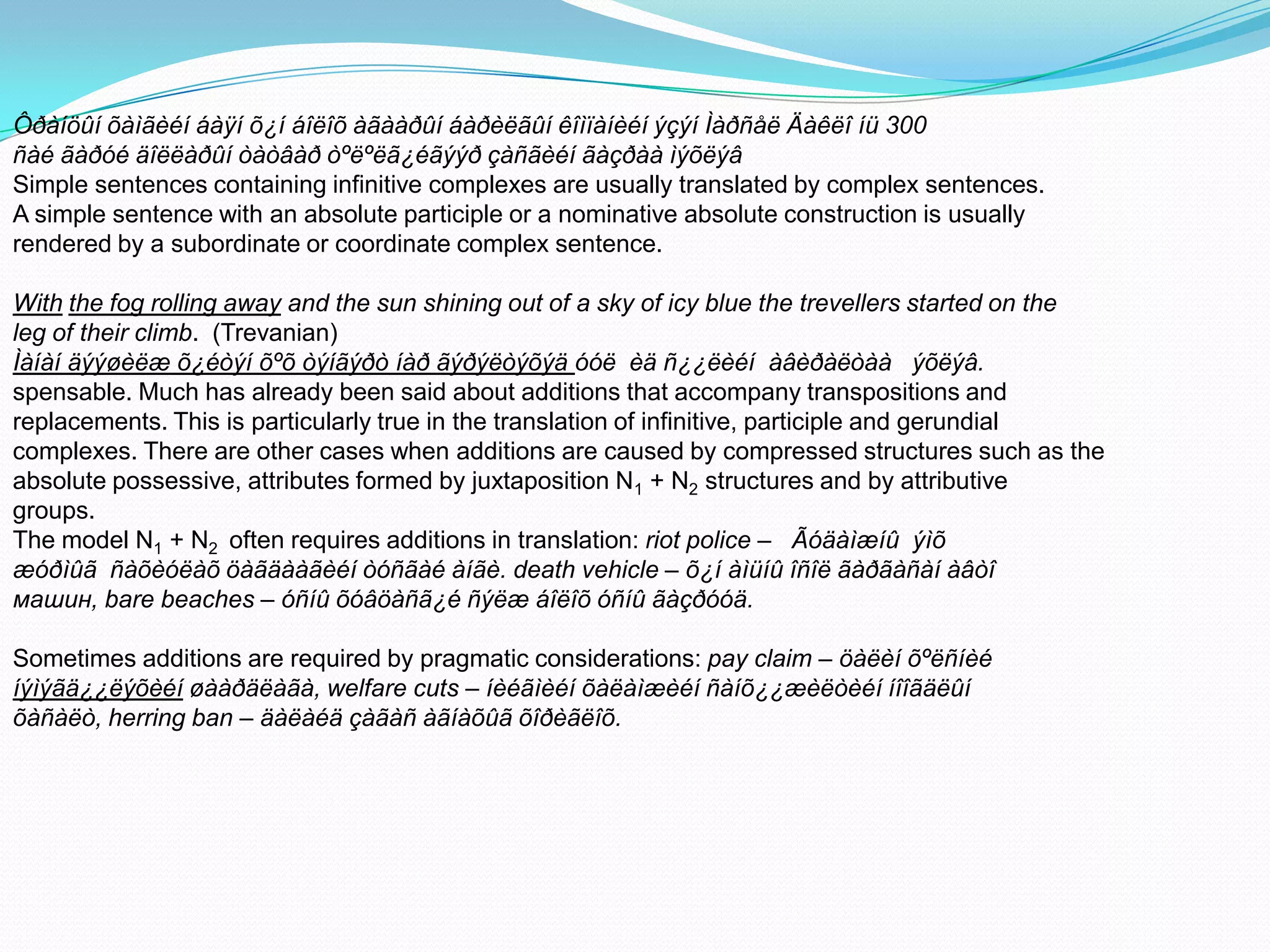
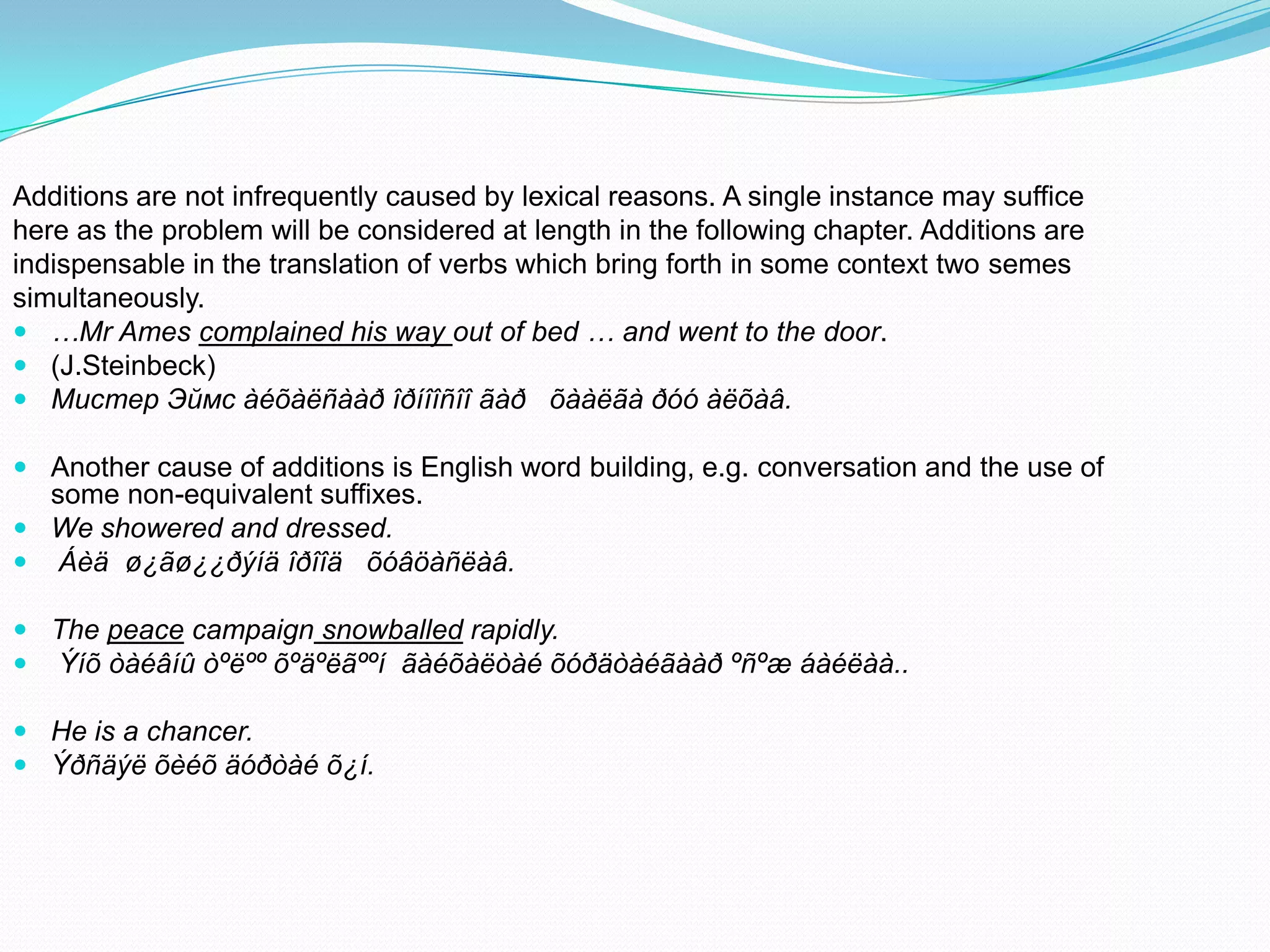
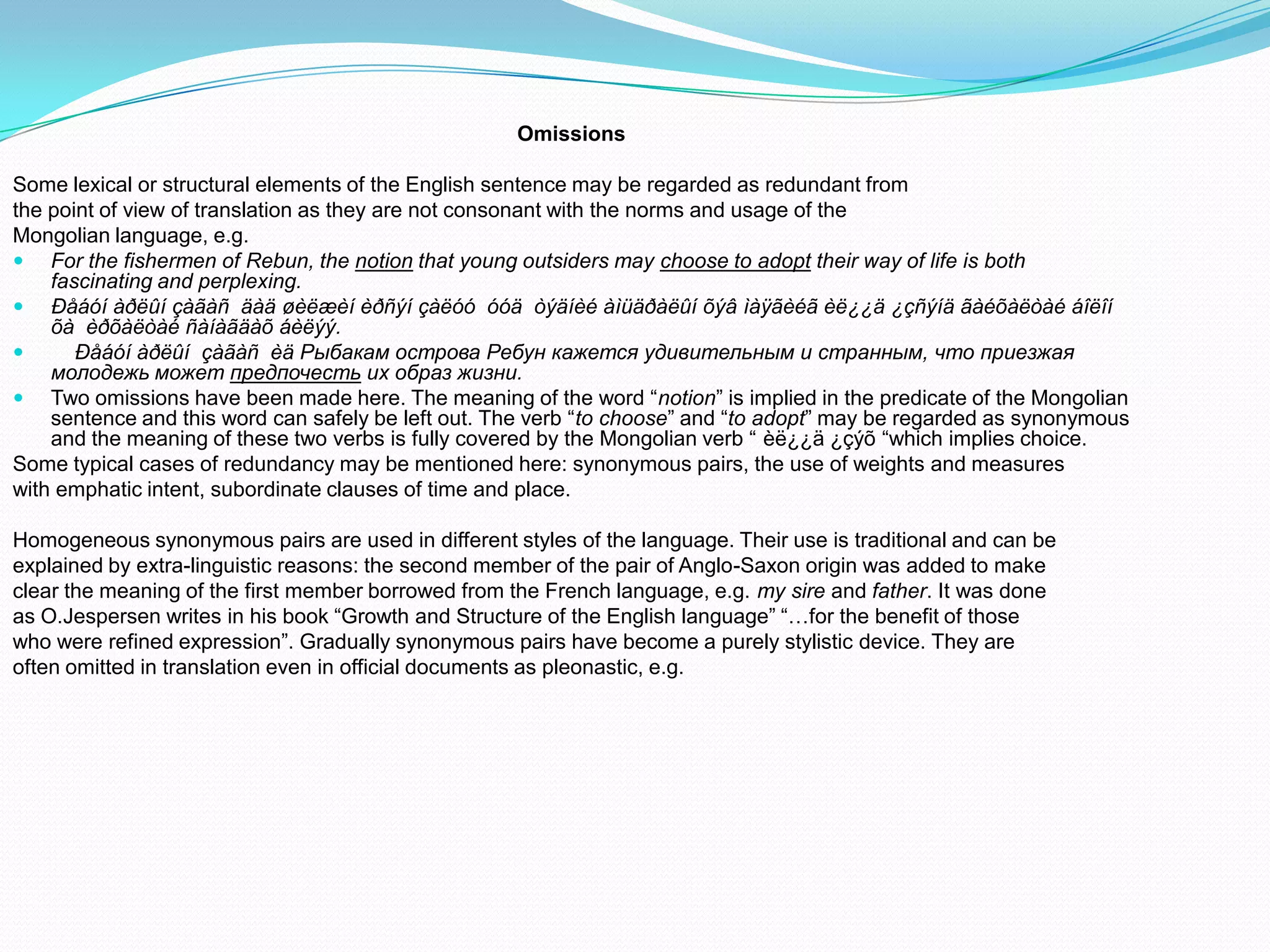
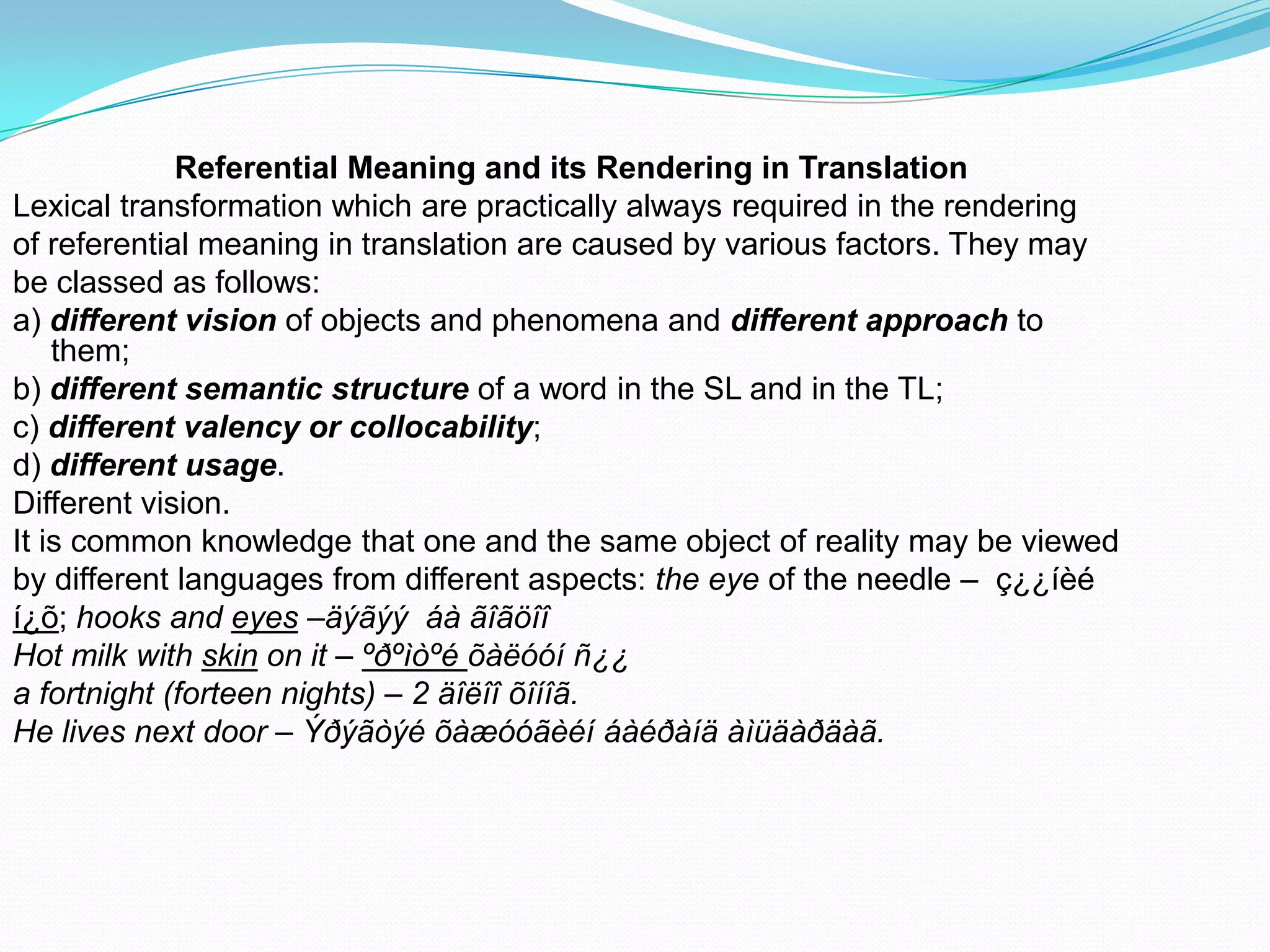
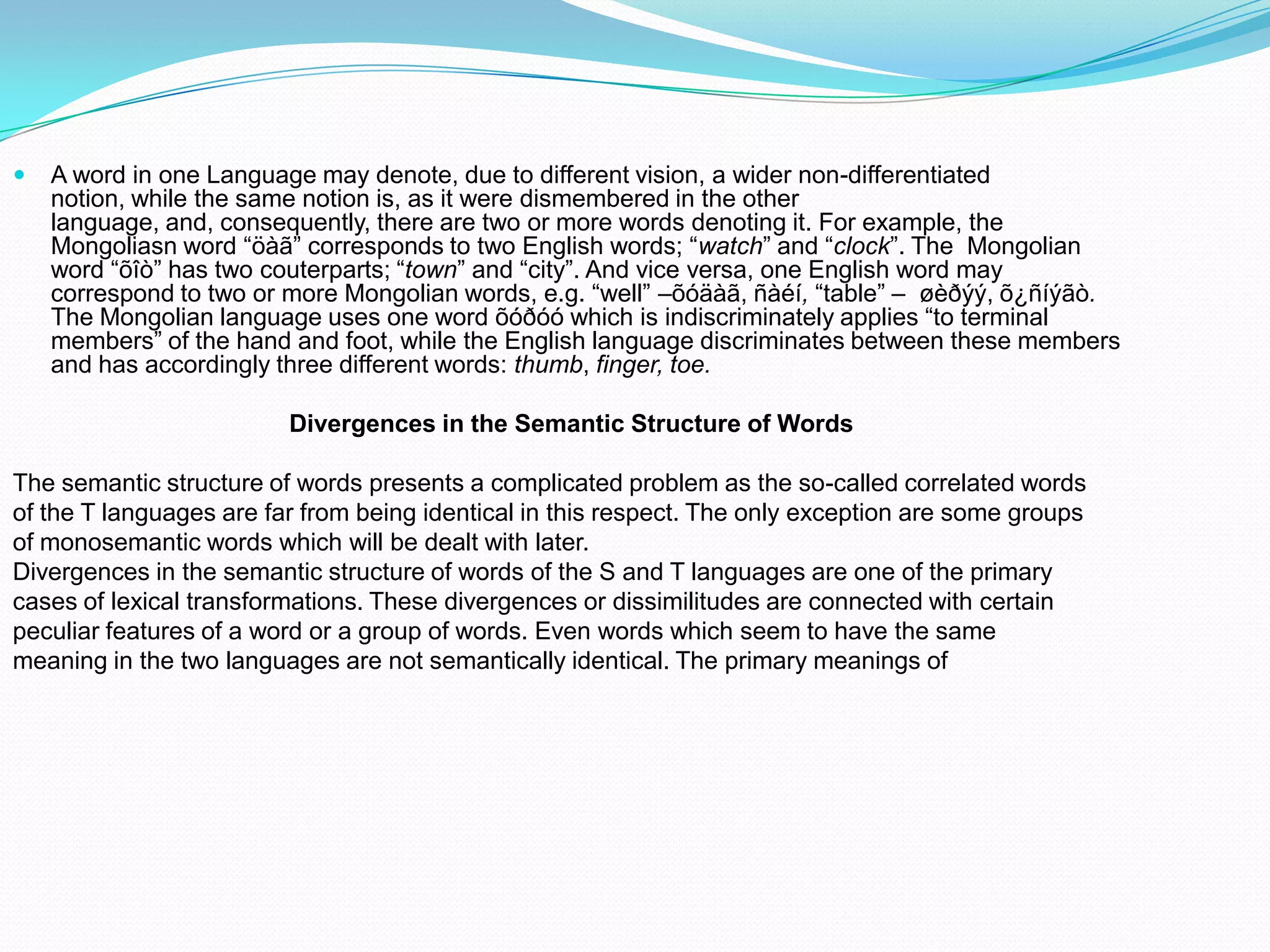
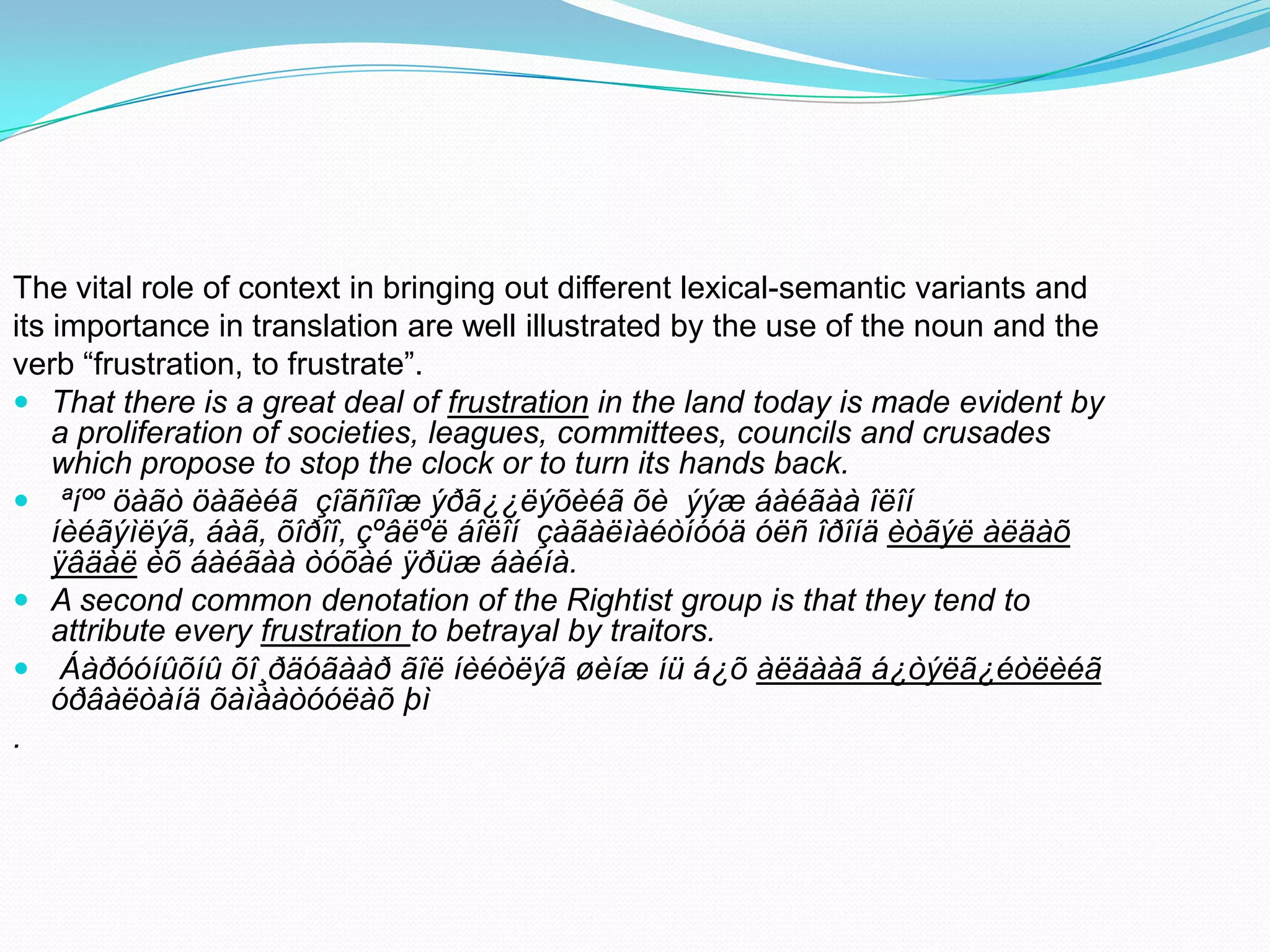
- Equivalence in translation is variable and there are different types, including formal, partial correspondence, and situational equivalence. Equivalence can occur at the phonetic, word, phrase, sentence and text levels.
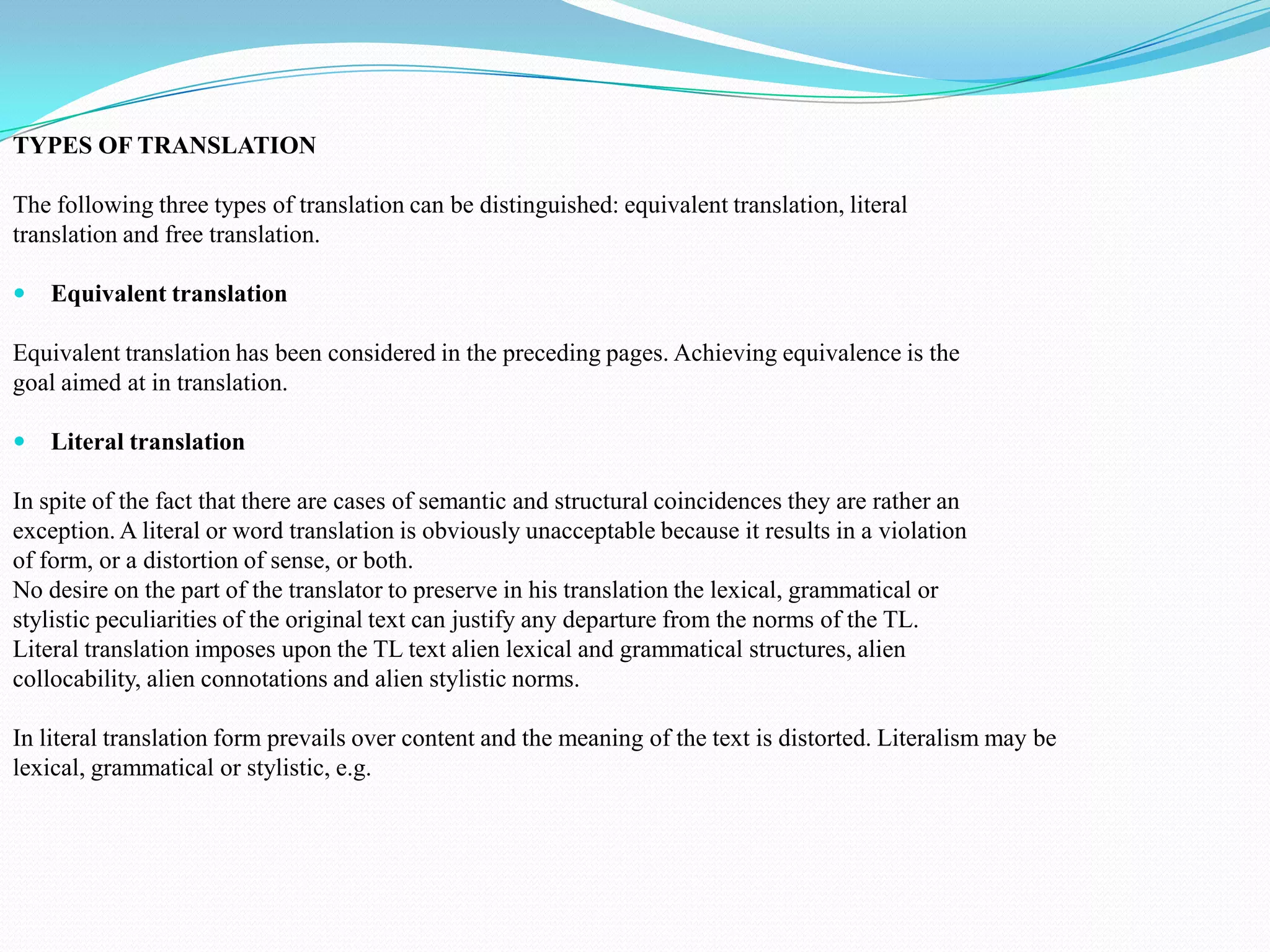
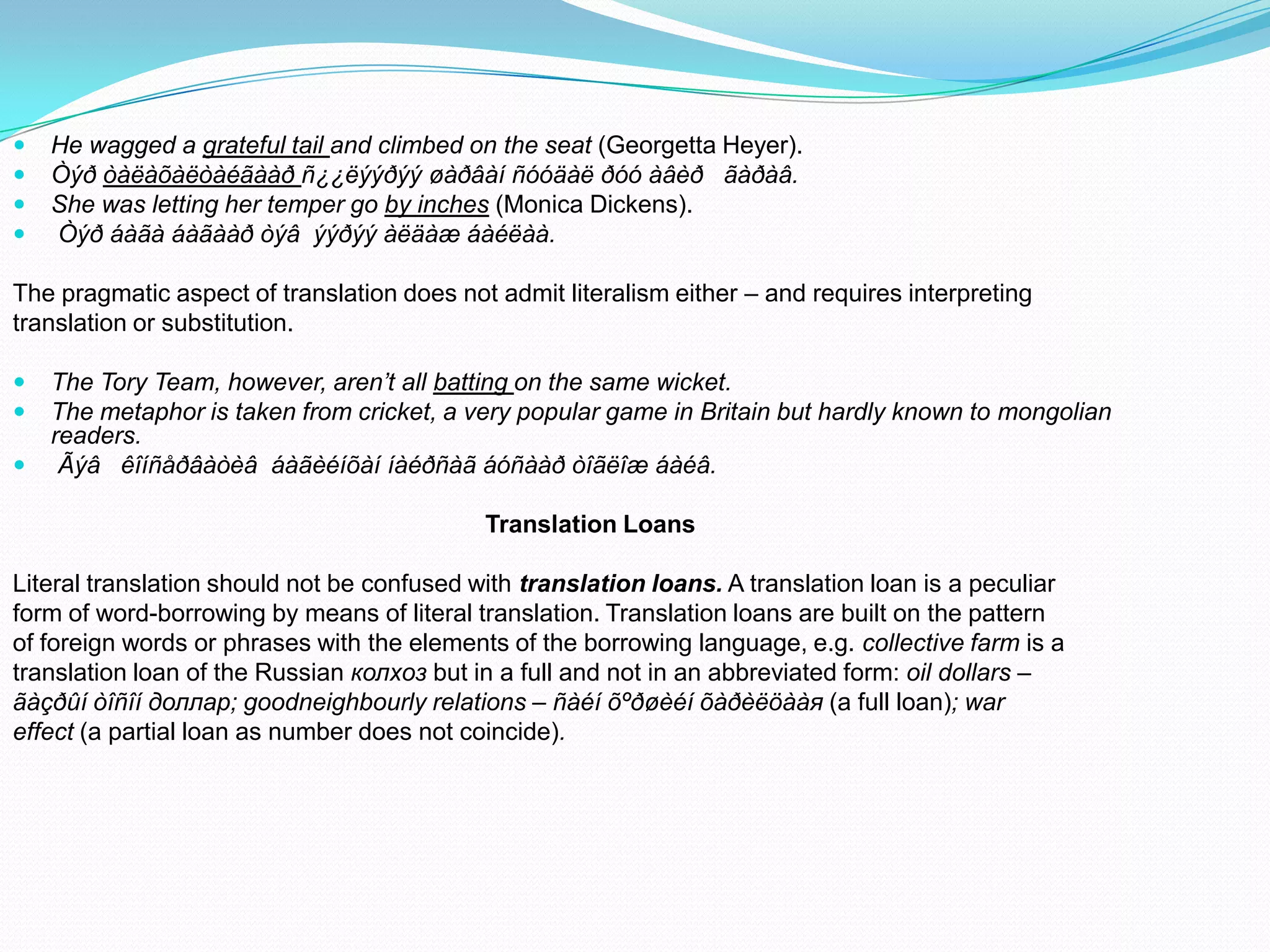
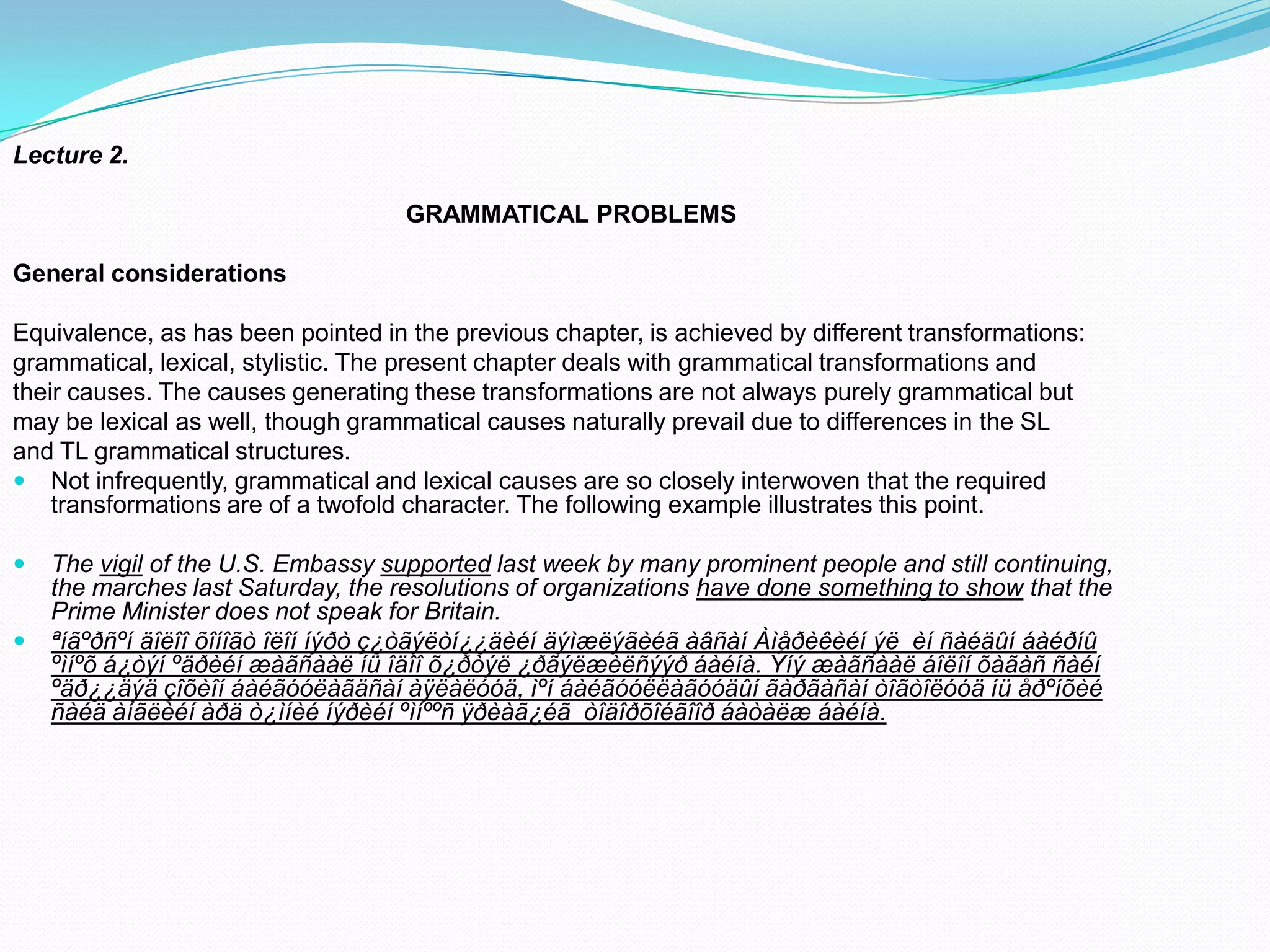
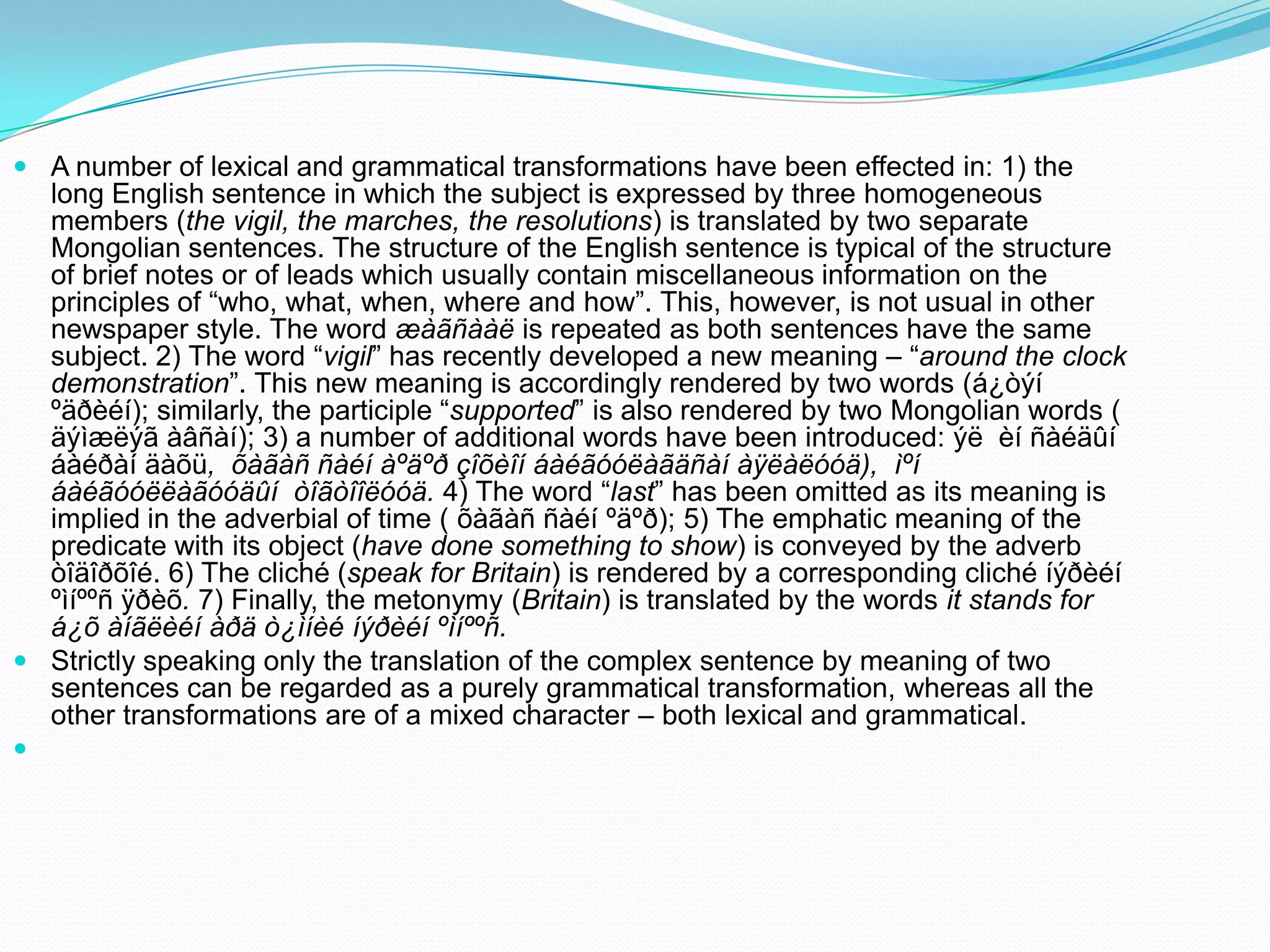
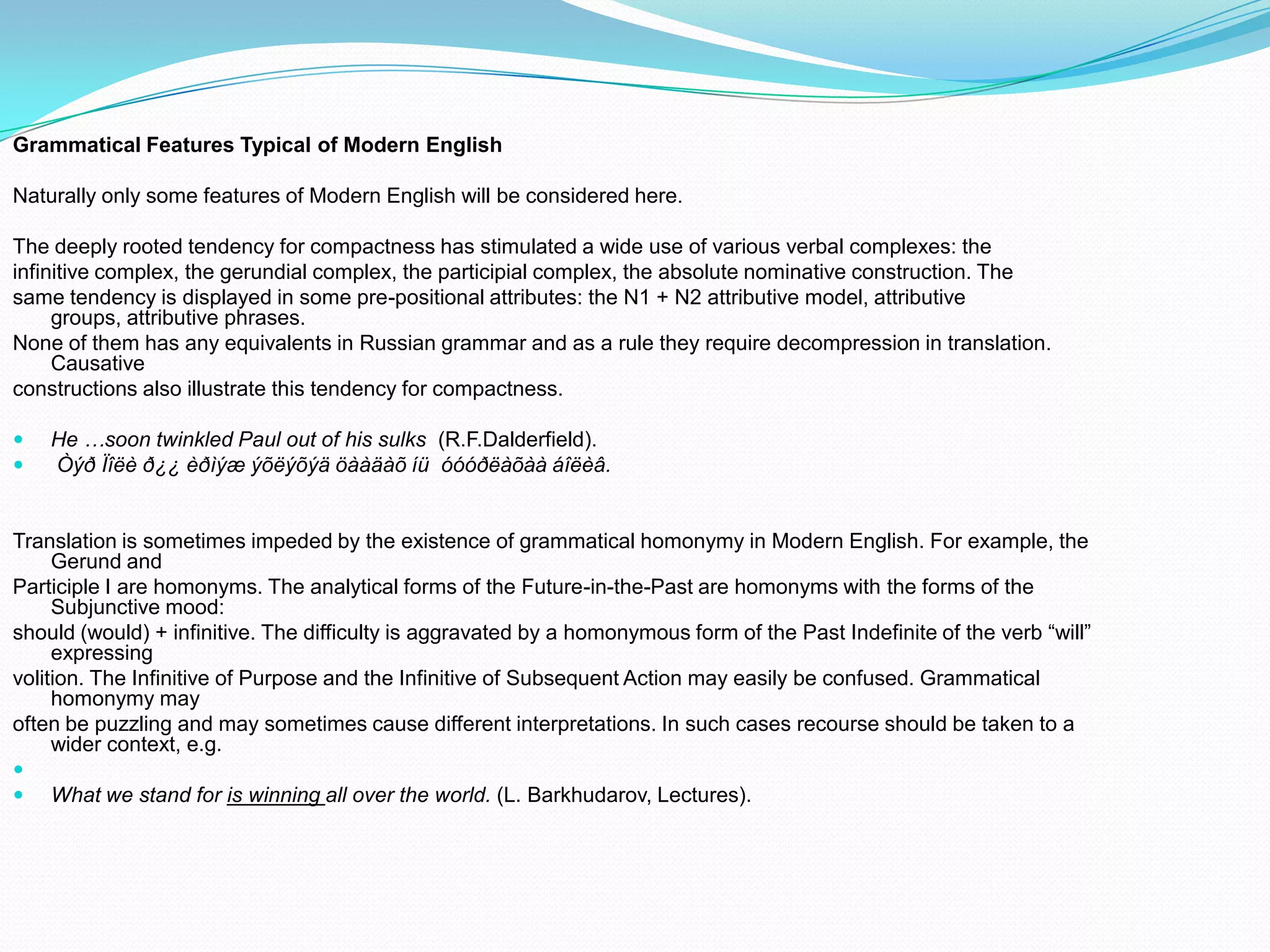
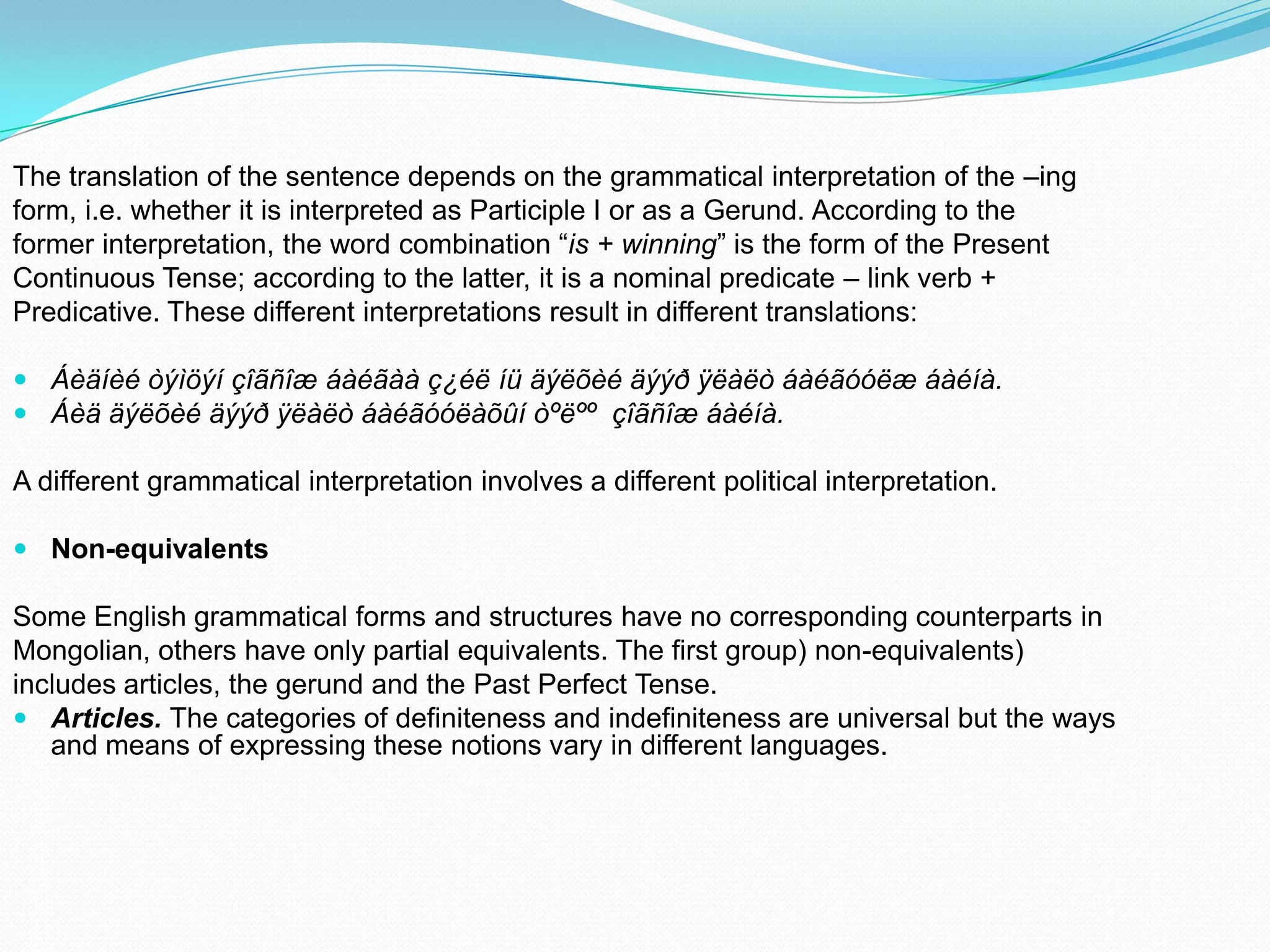
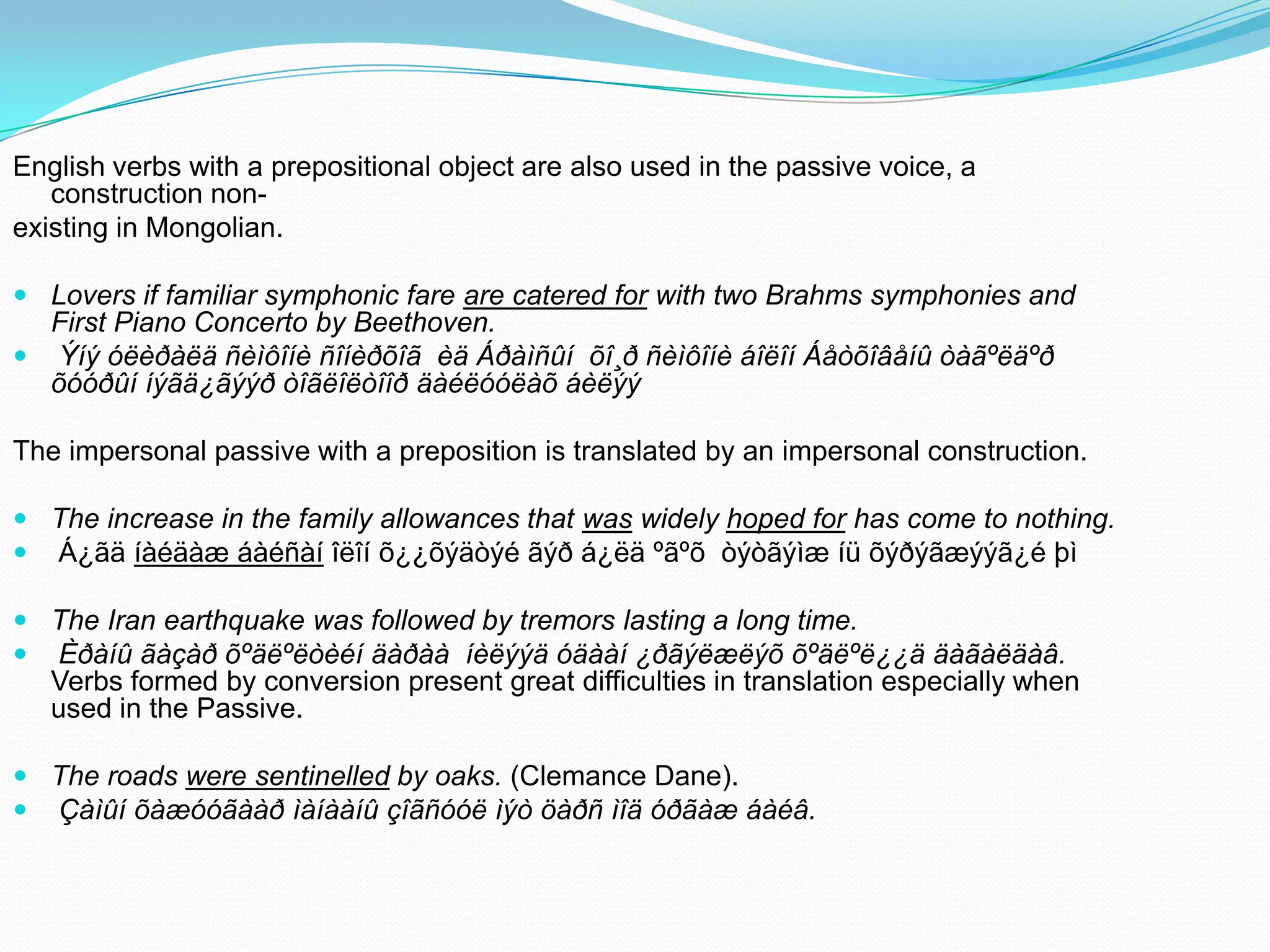
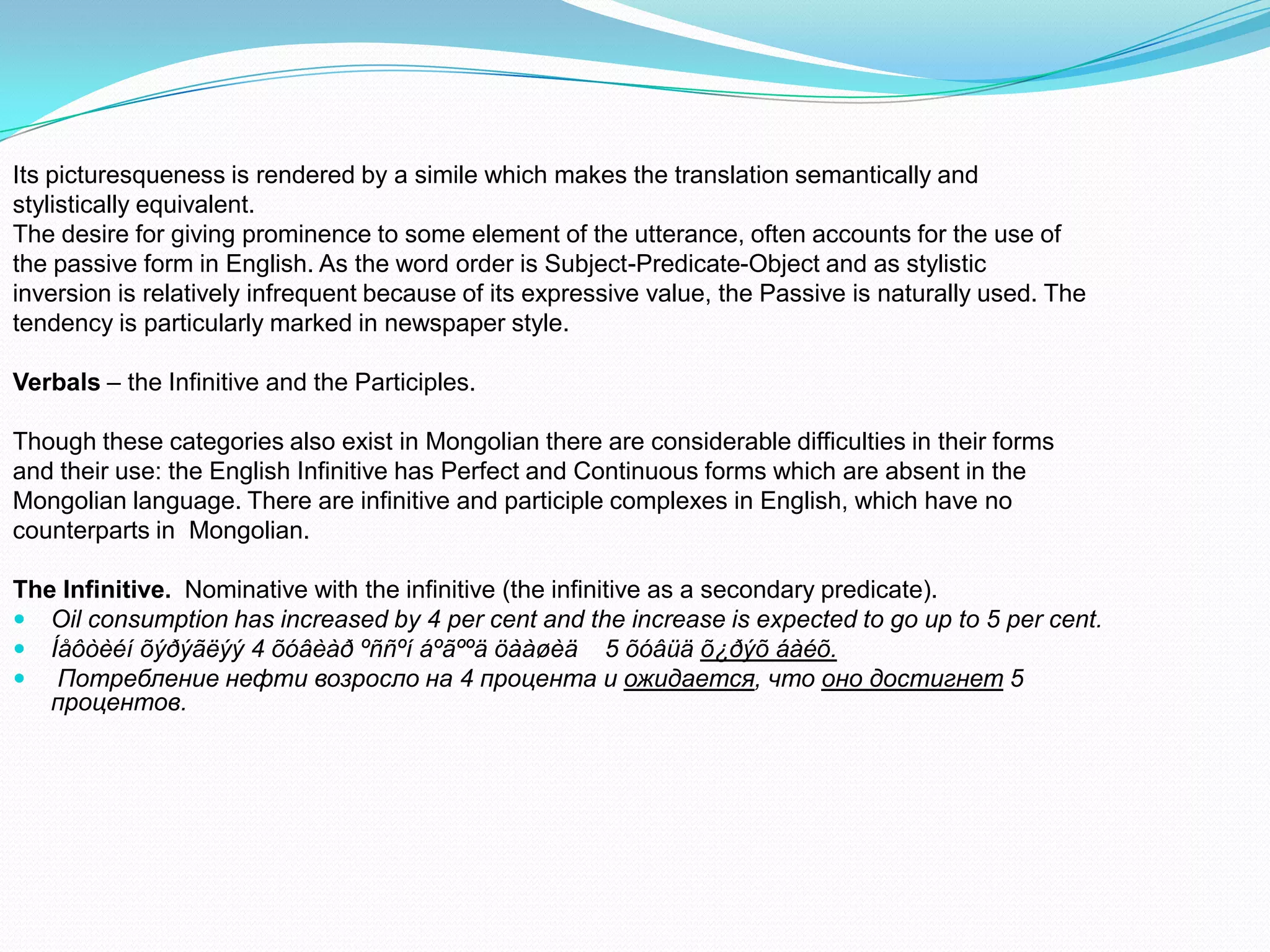
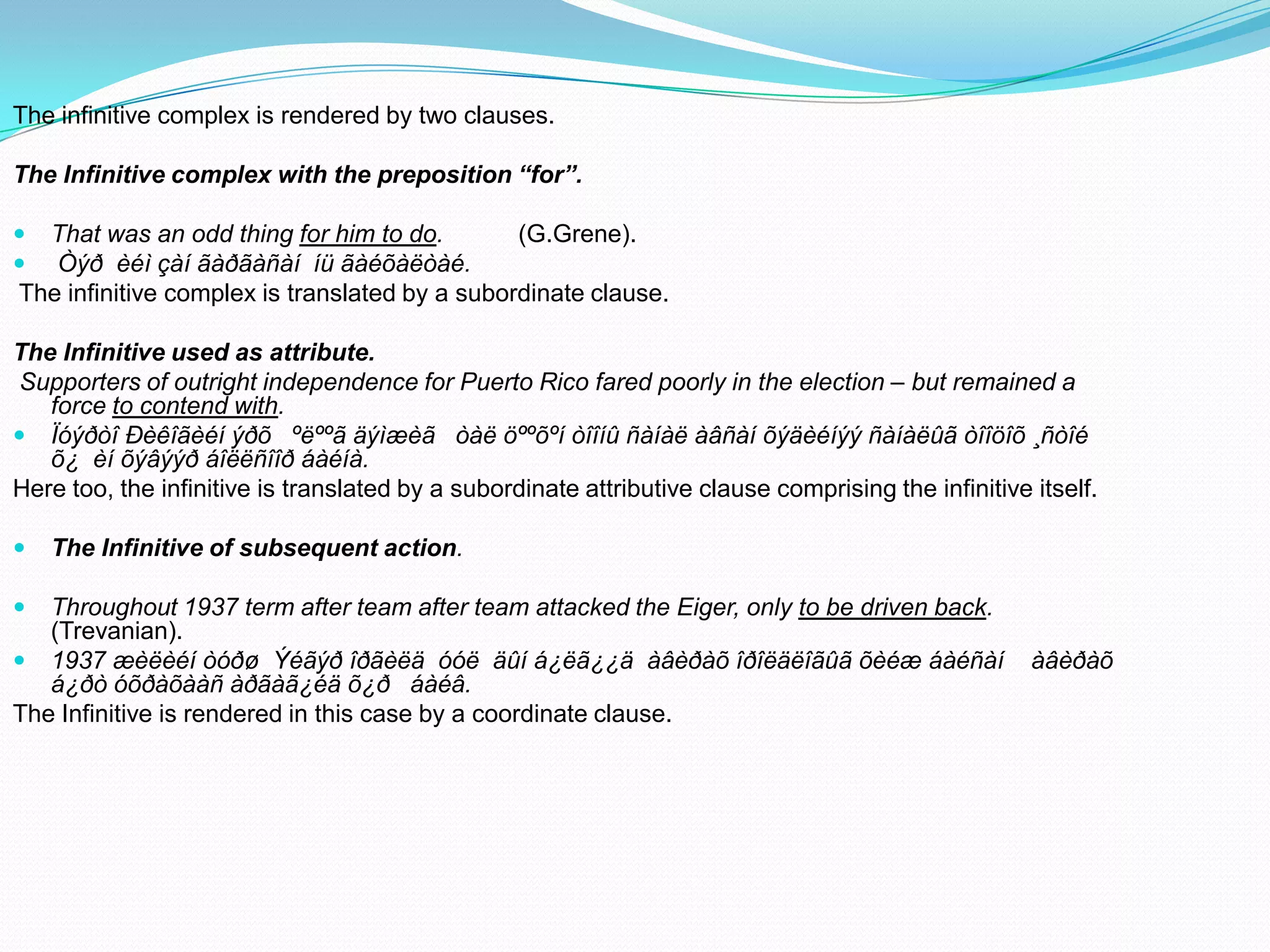
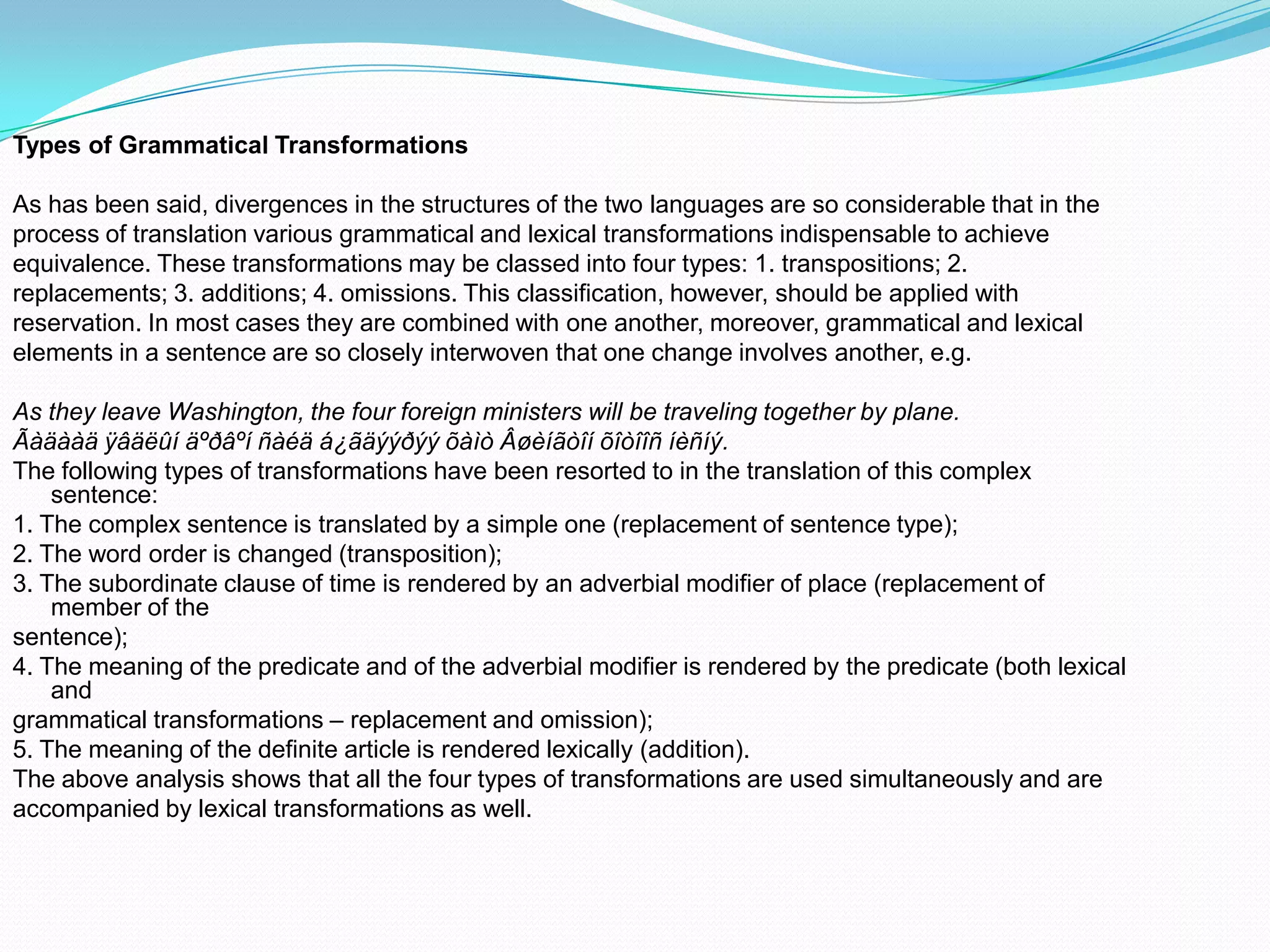
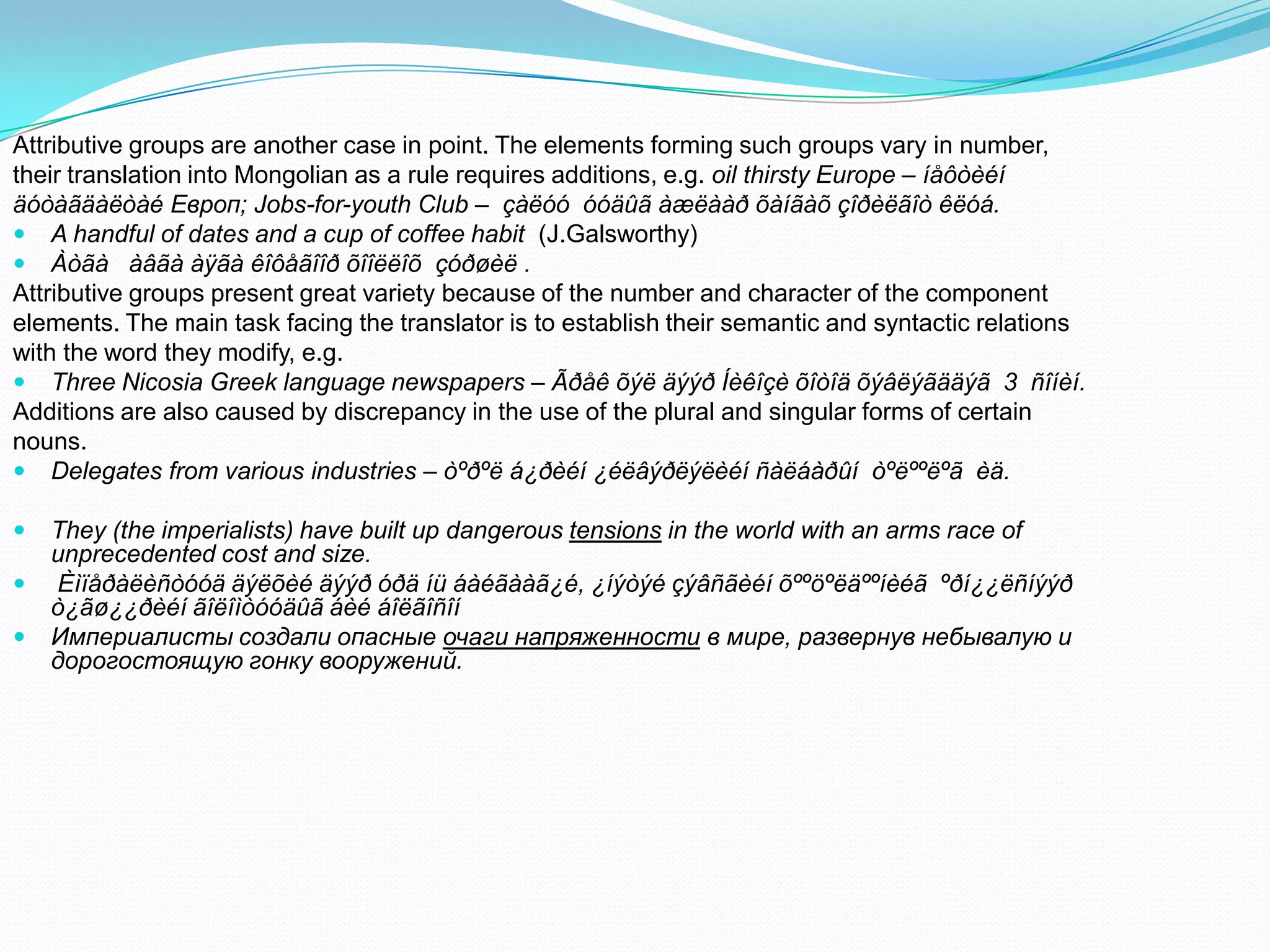
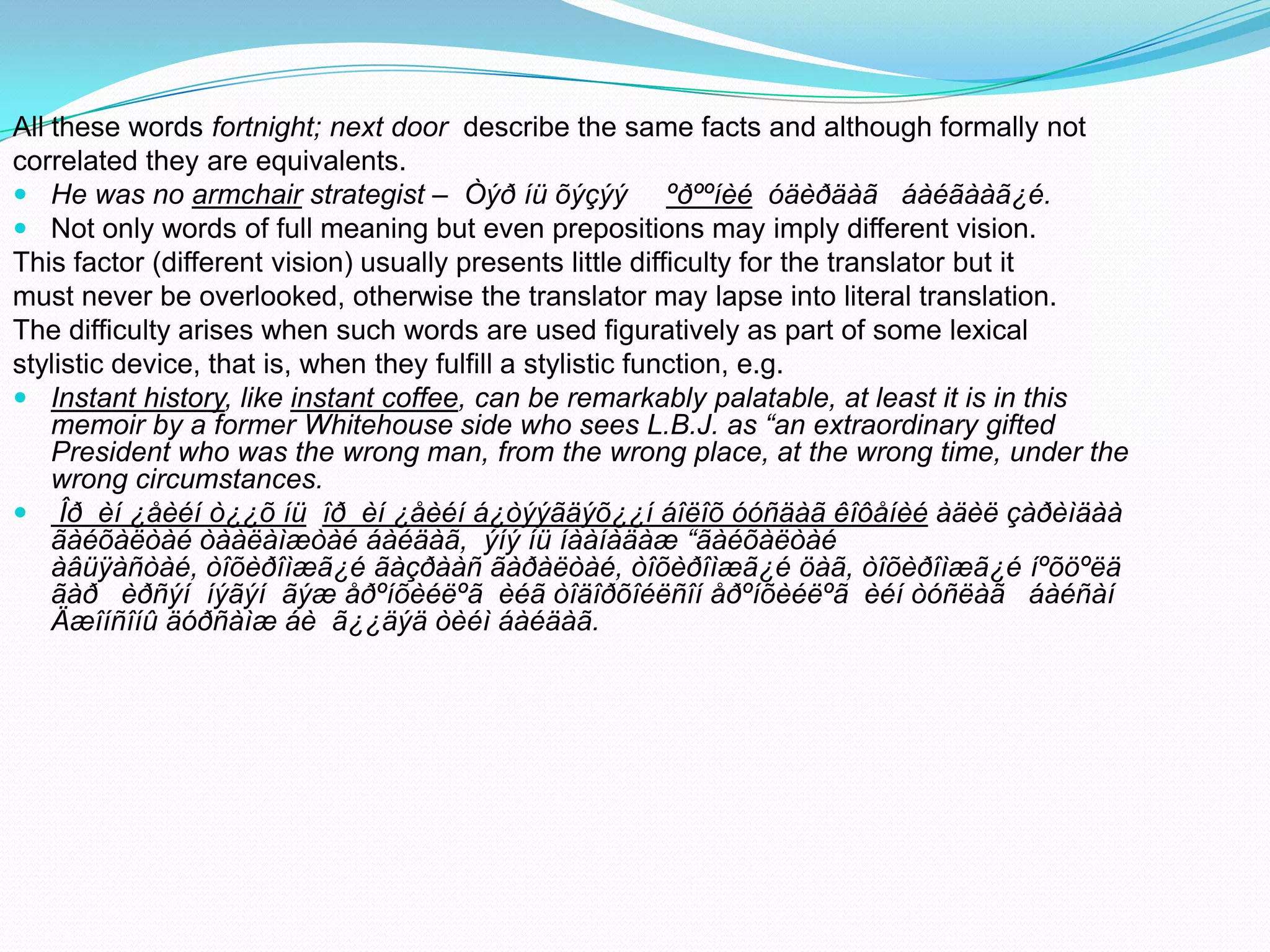
- Grammatical transformations are often needed in translation to achieve equivalence due to differences in source and target language structures. Literal translation is generally unacceptable as it can distort meaning.