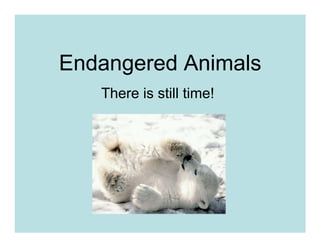
Endangered Animals
   There is still time!
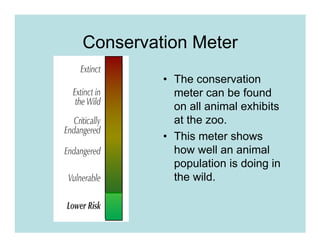
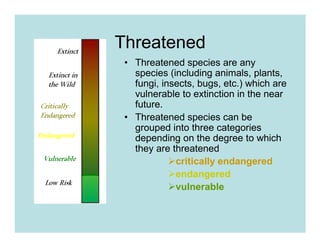
Conservation Meter
         • The conservation
           meter can be found
           on all animal exhibits
           at the zoo.
         • This meter shows
           how well an animal
           population is doing in
           the wild.
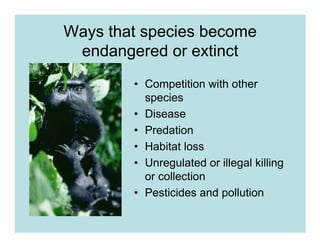
Ways that species become
 endangered or extinct
        • Competition with other
          species
        • Disease
        • Predation
        • Habitat loss
        • Unregulated or illegal killing
          or collection
        • Pesticides and pollution
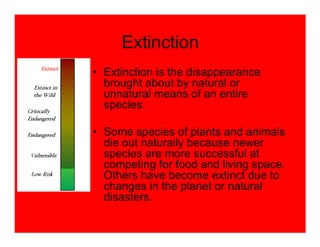
Extinction
• Extinction is the disappearance
  brought about by natural or
  unnatural means of an entire
  species.

• Some species of plants and animals
  die out naturally because newer
  species are more successful at
  competing for food and living space.
  Others have become extinct due to
  changes in the planet or natural
  disasters.
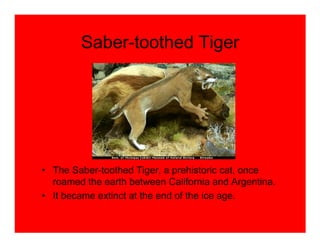
Saber-toothed Tiger


• The Saber-toothed Tiger, a prehistoric cat, once
  roamed the earth between California and Argentina.
• It became extinct at the end of the ice age.
Humans a problem?
• In today's world, however, species mostly
  become extinct or are threatened with
  extinction because of humans. Humans
  hunt animals, destroy their habitats, and
  introduce other animals that prey upon the
  endangered animals or compete for their
  resources. Among these factors, the
  greatest threat to plants and animals is
  habitat destruction.
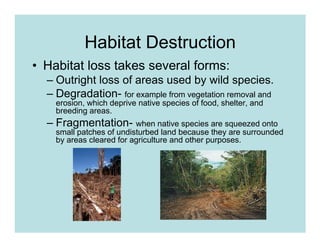
Habitat Destruction
• Habitat loss takes several forms:
  – Outright loss of areas used by wild species.
  – Degradation- for example from vegetation removal and
    erosion, which deprive native species of food, shelter, and
    breeding areas.
  – Fragmentation- when native species are squeezed onto
    small patches of undisturbed land because they are surrounded
    by areas cleared for agriculture and other purposes.
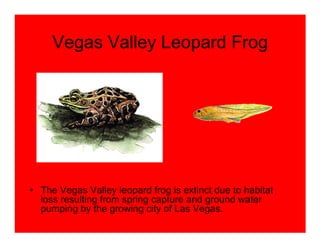
Vegas Valley Leopard Frog


• The Vegas Valley leopard frog is extinct due to habitat
  loss resulting from spring capture and ground water
  pumping by the growing city of Las Vegas.
Threatened
 • Threatened species are any
   species (including animals, plants,
   fungi, insects, bugs, etc.) which are
   vulnerable to extinction in the near
   future.
 • Threatened species can be
   grouped into three categories
   depending on the degree to which
   they are threatened
             critically endangered
             endangered
             vulnerable
Critically Endangered
• Critically endangered is when a species is
  facing extremely high risk of extinction in the
  wild in the immediate future.


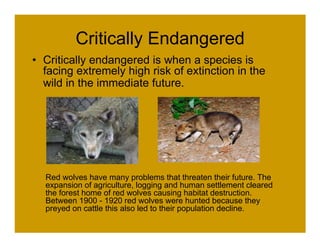
  Red wolves have many problems that threaten their future. The
  expansion of agriculture, logging and human settlement cleared
  the forest home of red wolves causing habitat destruction.
  Between 1900 - 1920 red wolves were hunted because they
  preyed on cattle this also led to their population decline.
Endangered
• An endangered species is facing a high risk of extinction in the
  near future. It means that something is attacking its home, its food
  source, or directly attacking that species.


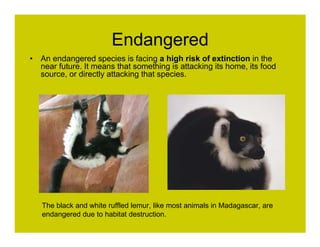
   The black and white ruffled lemur, like most animals in Madagascar, are
   endangered due to habitat destruction.
Vulnerable
A species is considered vulnerable when it is facing a high risk of total
destruction in the medium to long term future.


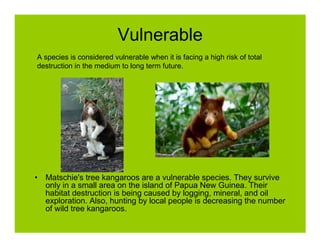
• Matschie's tree kangaroos are a vulnerable species. They survive
  only in a small area on the island of Papua New Guinea. Their
  habitat destruction is being caused by logging, mineral, and oil
  exploration. Also, hunting by local people is decreasing the number
  of wild tree kangaroos.
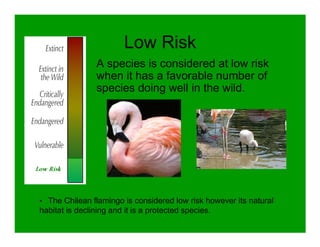
Low Risk
               A species is considered at low risk
               when it has a favorable number of
               species doing well in the wild.


• The Chilean flamingo is considered low risk however its natural
habitat is declining and it is a protected species.
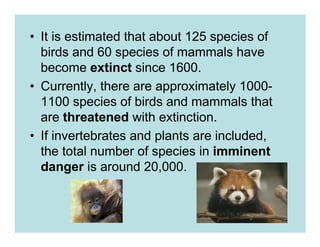
• It is estimated that about 125 species of
  birds and 60 species of mammals have
  become extinct since 1600.
• Currently, there are approximately 1000-
  1100 species of birds and mammals that
  are threatened with extinction.
• If invertebrates and plants are included,
  the total number of species in imminent
  danger is around 20,000.
What are zoos doing about all this?
The American Zoological Association (AZA)
 developed a program called the Species
 Survival Plan (SSP).
This mission of the SSP is that each SSP
 zoo manages the breeding of a species in
 order to maintain a healthy and self-
 sustaining population that is both
 genetically diverse and demographically
 stable.
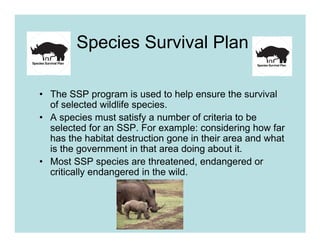
Species Survival Plan

• The SSP program is used to help ensure the survival
  of selected wildlife species.
• A species must satisfy a number of criteria to be
  selected for an SSP. For example: considering how far
  has the habitat destruction gone in their area and what
  is the government in that area doing about it.
• Most SSP species are threatened, endangered or
  critically endangered in the wild.
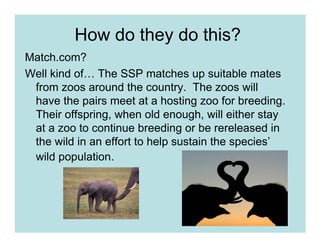
How do they do this?
Match.com?
Well kind of… The SSP matches up suitable mates
 from zoos around the country. The zoos will
 have the pairs meet at a hosting zoo for breeding.
 Their offspring, when old enough, will either stay
 at a zoo to continue breeding or be rereleased in
 the wild in an effort to help sustain the species’
 wild population.

Power Point Endanderd

  • 1.
    Endangered Animals There is still time!
  • 2.
    Conservation Meter • The conservation meter can be found on all animal exhibits at the zoo. • This meter shows how well an animal population is doing in the wild.
  • 3.
    Ways that speciesbecome endangered or extinct • Competition with other species • Disease • Predation • Habitat loss • Unregulated or illegal killing or collection • Pesticides and pollution
  • 4.
    Extinction • Extinction isthe disappearance brought about by natural or unnatural means of an entire species. • Some species of plants and animals die out naturally because newer species are more successful at competing for food and living space. Others have become extinct due to changes in the planet or natural disasters.
  • 5.
    Saber-toothed Tiger • TheSaber-toothed Tiger, a prehistoric cat, once roamed the earth between California and Argentina. • It became extinct at the end of the ice age.
  • 6.
    Humans a problem? •In today's world, however, species mostly become extinct or are threatened with extinction because of humans. Humans hunt animals, destroy their habitats, and introduce other animals that prey upon the endangered animals or compete for their resources. Among these factors, the greatest threat to plants and animals is habitat destruction.
  • 7.
    Habitat Destruction • Habitatloss takes several forms: – Outright loss of areas used by wild species. – Degradation- for example from vegetation removal and erosion, which deprive native species of food, shelter, and breeding areas. – Fragmentation- when native species are squeezed onto small patches of undisturbed land because they are surrounded by areas cleared for agriculture and other purposes.
  • 8.
    Vegas Valley LeopardFrog • The Vegas Valley leopard frog is extinct due to habitat loss resulting from spring capture and ground water pumping by the growing city of Las Vegas.
  • 9.
    Threatened • Threatenedspecies are any species (including animals, plants, fungi, insects, bugs, etc.) which are vulnerable to extinction in the near future. • Threatened species can be grouped into three categories depending on the degree to which they are threatened critically endangered endangered vulnerable
  • 10.
    Critically Endangered • Criticallyendangered is when a species is facing extremely high risk of extinction in the wild in the immediate future. Red wolves have many problems that threaten their future. The expansion of agriculture, logging and human settlement cleared the forest home of red wolves causing habitat destruction. Between 1900 - 1920 red wolves were hunted because they preyed on cattle this also led to their population decline.
  • 11.
    Endangered • An endangeredspecies is facing a high risk of extinction in the near future. It means that something is attacking its home, its food source, or directly attacking that species. The black and white ruffled lemur, like most animals in Madagascar, are endangered due to habitat destruction.
  • 12.
    Vulnerable A species isconsidered vulnerable when it is facing a high risk of total destruction in the medium to long term future. • Matschie's tree kangaroos are a vulnerable species. They survive only in a small area on the island of Papua New Guinea. Their habitat destruction is being caused by logging, mineral, and oil exploration. Also, hunting by local people is decreasing the number of wild tree kangaroos.
  • 13.
    Low Risk A species is considered at low risk when it has a favorable number of species doing well in the wild. • The Chilean flamingo is considered low risk however its natural habitat is declining and it is a protected species.
  • 14.
    • It isestimated that about 125 species of birds and 60 species of mammals have become extinct since 1600. • Currently, there are approximately 1000- 1100 species of birds and mammals that are threatened with extinction. • If invertebrates and plants are included, the total number of species in imminent danger is around 20,000.
  • 15.
    What are zoosdoing about all this? The American Zoological Association (AZA) developed a program called the Species Survival Plan (SSP). This mission of the SSP is that each SSP zoo manages the breeding of a species in order to maintain a healthy and self- sustaining population that is both genetically diverse and demographically stable.
  • 16.
    Species Survival Plan •The SSP program is used to help ensure the survival of selected wildlife species. • A species must satisfy a number of criteria to be selected for an SSP. For example: considering how far has the habitat destruction gone in their area and what is the government in that area doing about it. • Most SSP species are threatened, endangered or critically endangered in the wild.
  • 17.
    How do theydo this? Match.com? Well kind of… The SSP matches up suitable mates from zoos around the country. The zoos will have the pairs meet at a hosting zoo for breeding. Their offspring, when old enough, will either stay at a zoo to continue breeding or be rereleased in the wild in an effort to help sustain the species’ wild population.