Velocities by Resolution and
                   Composition
                             Lecture Notes


Reference: Elements of
Mechanism by V.L. Doughtie
and W.H. James
Resolution and Composition
     If the velocity of one point and the direction
     of the velocity of any point on a body are
     known, the velocity of any other point on that
     body may be obtained by resolving the known
     velocity vector into components along and
     perpendicular to the line joining these points
     and making one of the velocity of the other
     point equal to the component along the line.

Reference: Elements of
Mechanism by V.L. Doughtie
and W.H. James
Example 1:
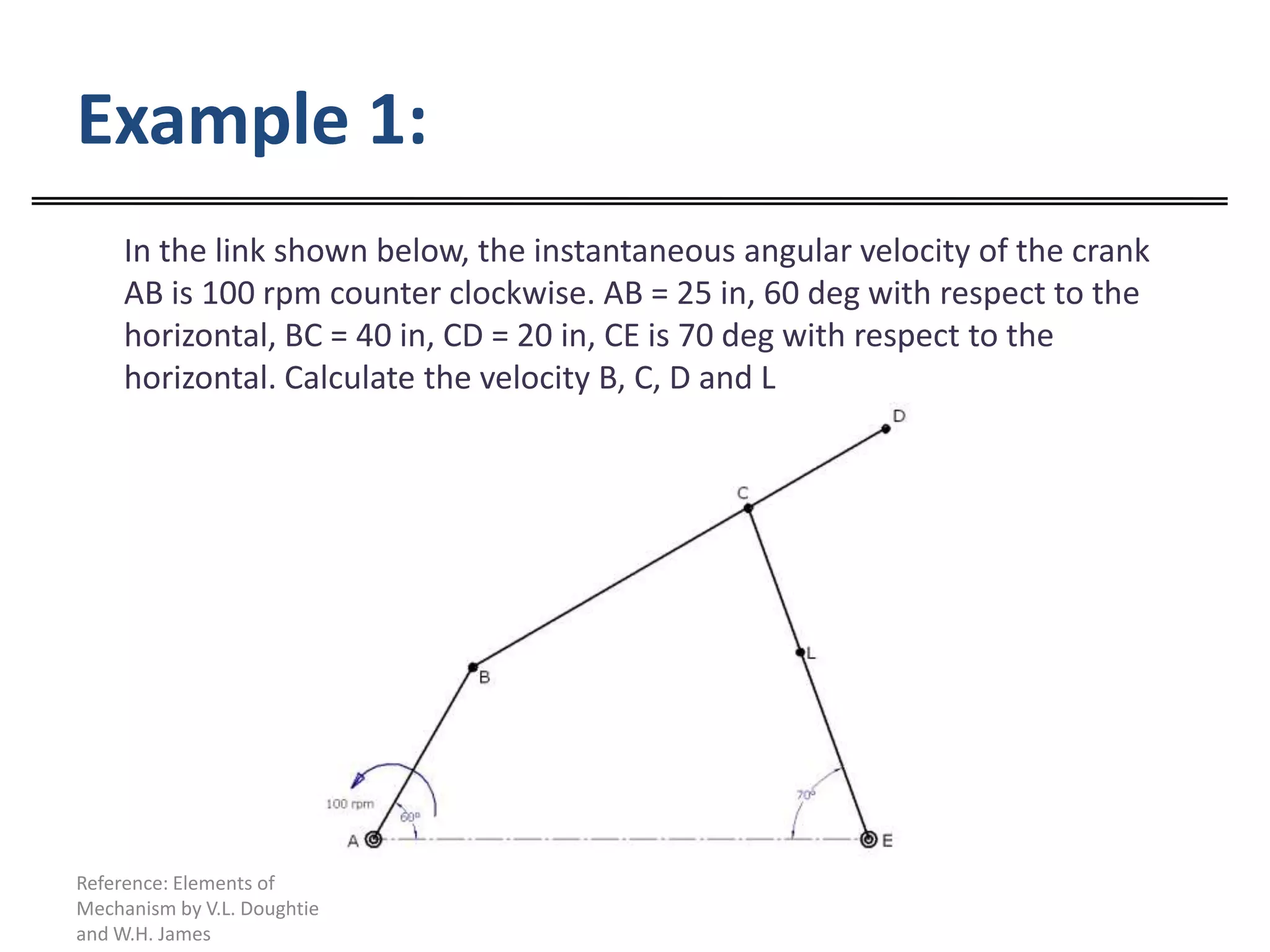
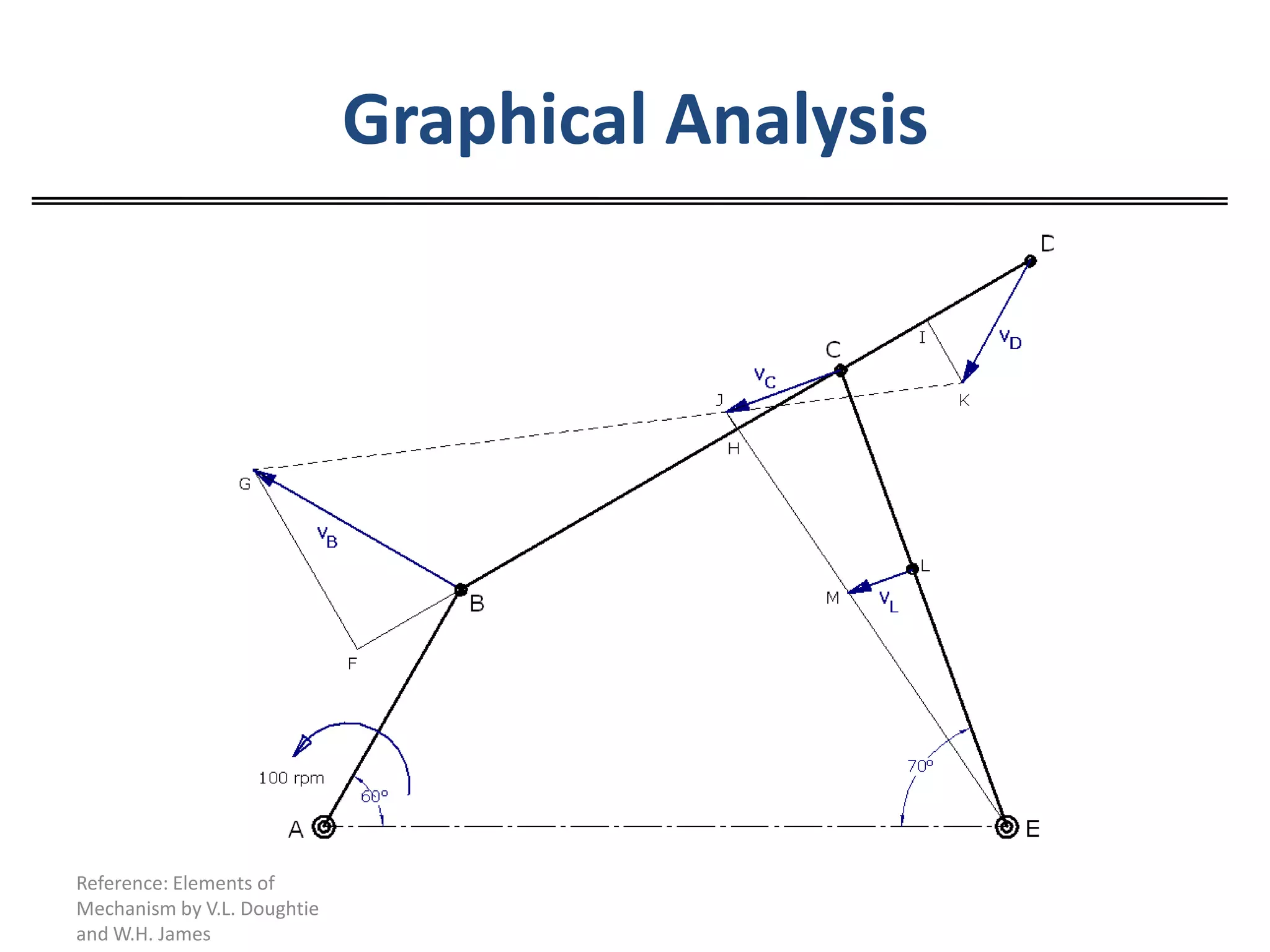
     In the link shown below, the instantaneous angular velocity of the crank
     AB is 100 rpm counter clockwise. AB = 25 in, 60 deg with respect to the
     horizontal, BC = 40 in, CD = 20 in, CE is 70 deg with respect to the
     horizontal. Calculate the velocity B, C, D and L


Reference: Elements of
Mechanism by V.L. Doughtie
and W.H. James
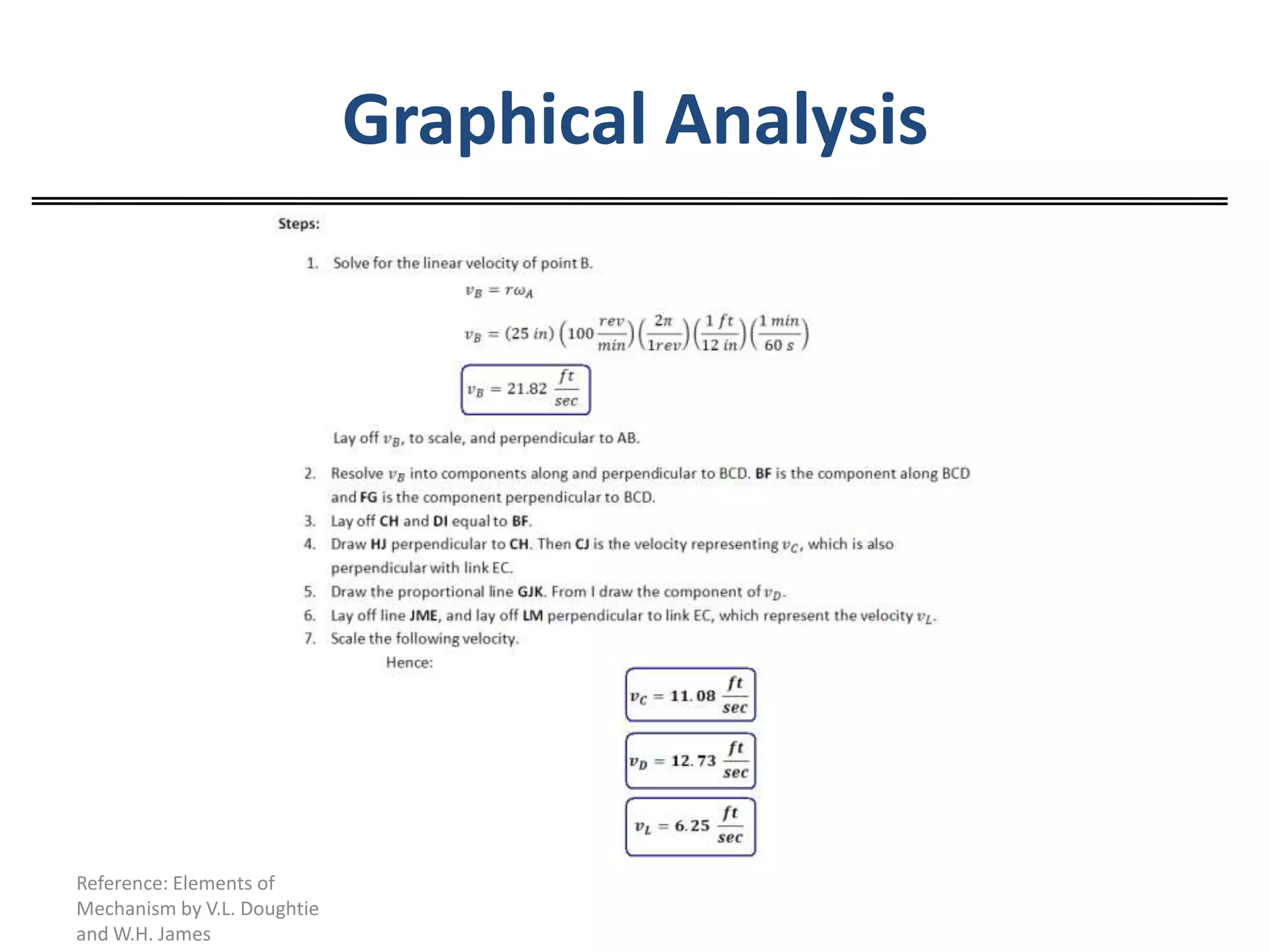
Graphical Analysis


Reference: Elements of
Mechanism by V.L. Doughtie
and W.H. James
Graphical Analysis


Reference: Elements of
Mechanism by V.L. Doughtie
and W.H. James
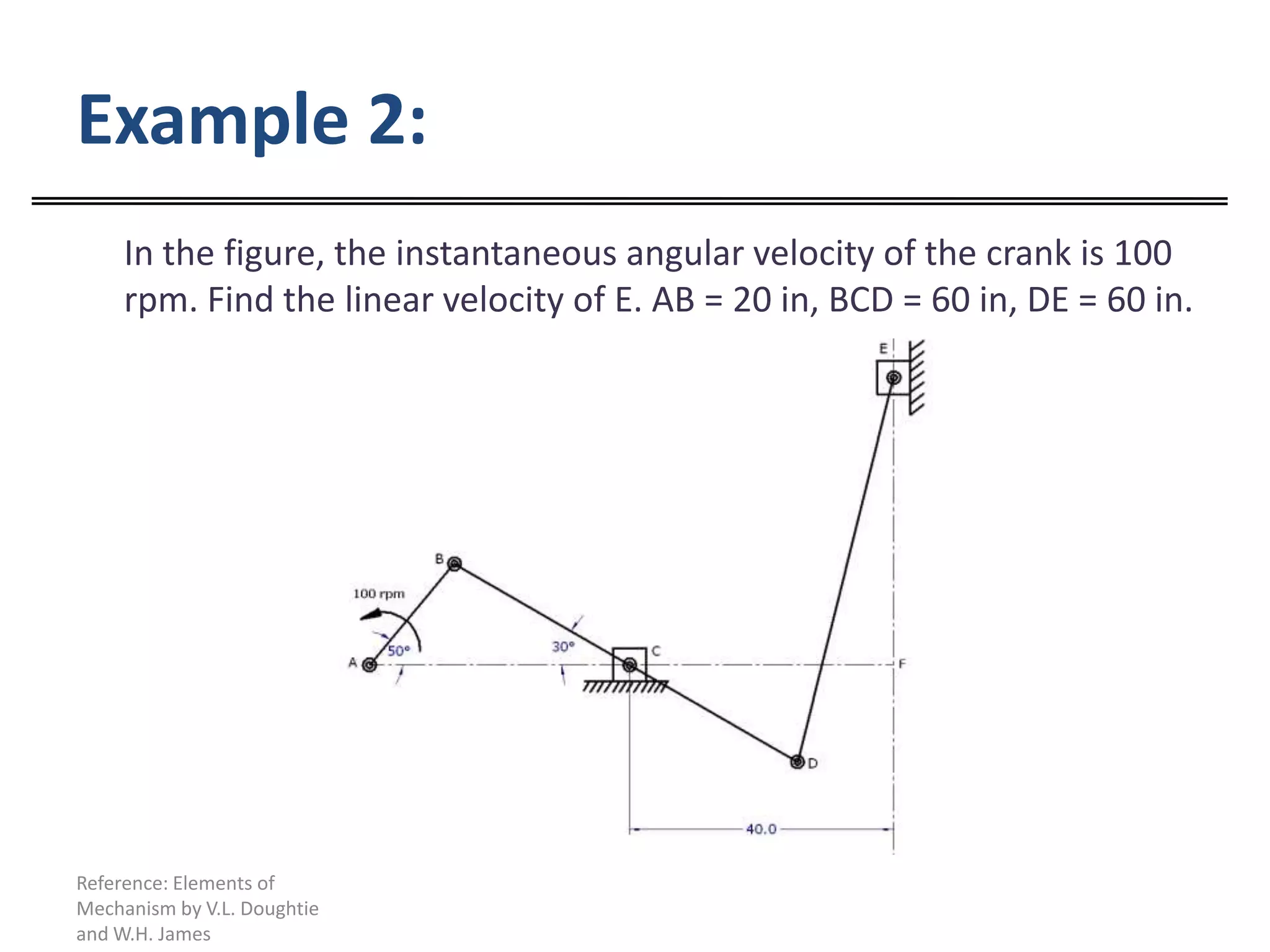
Example 2:
     In the figure, the instantaneous angular velocity of the crank is 100
     rpm. Find the linear velocity of E. AB = 20 in, BCD = 60 in, DE = 60 in.


Reference: Elements of
Mechanism by V.L. Doughtie
and W.H. James
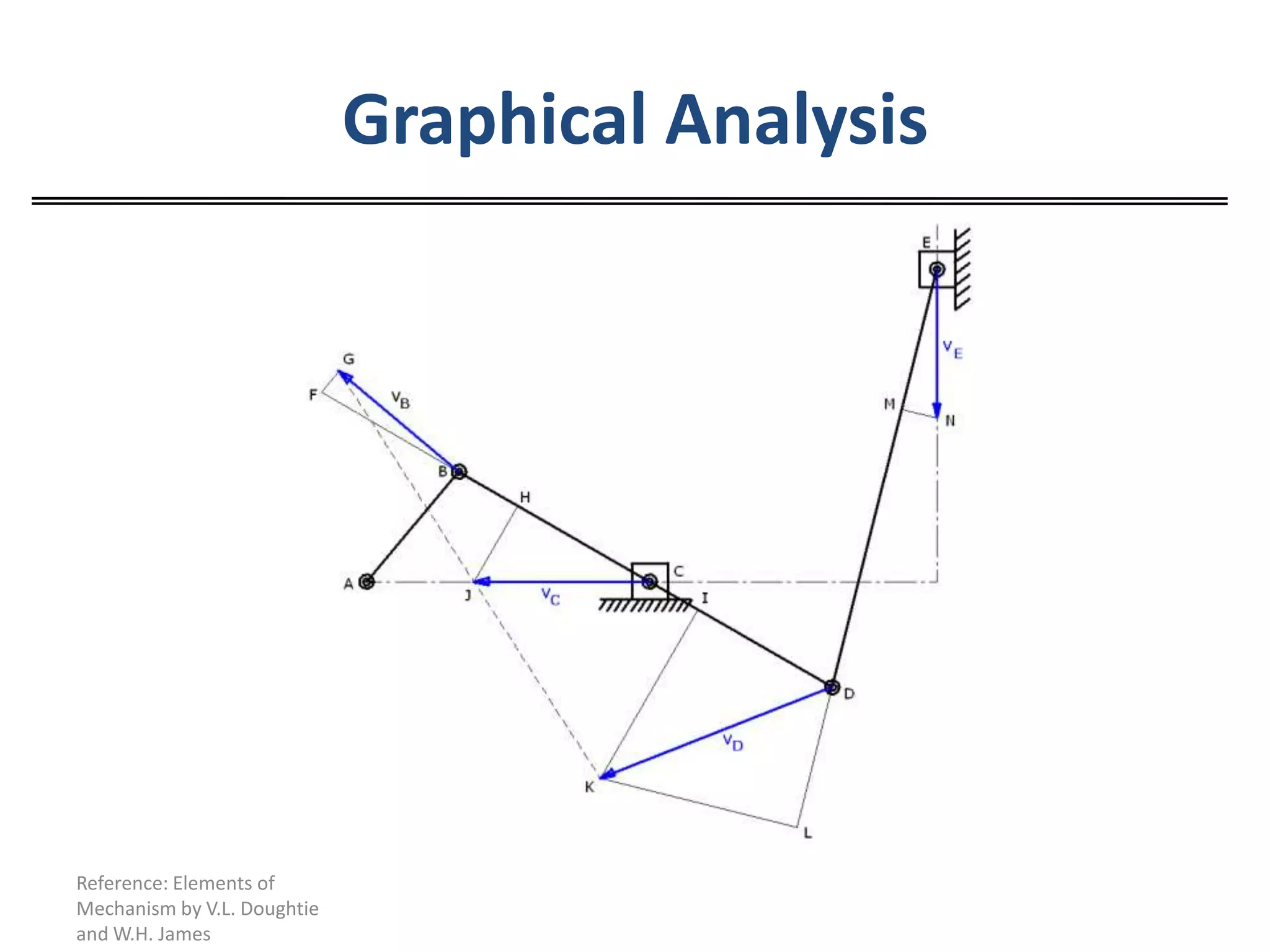
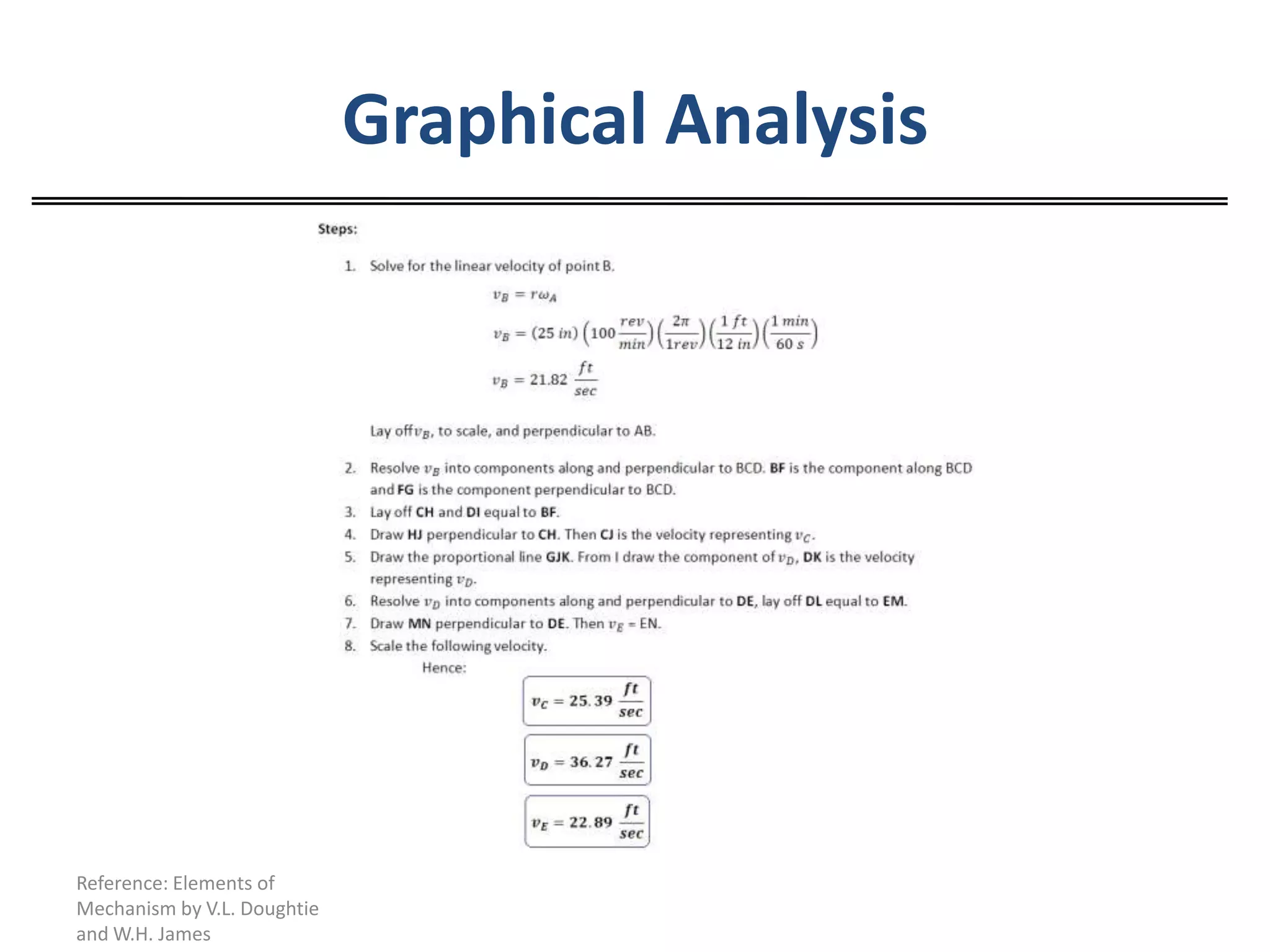
Graphical Analysis


Reference: Elements of
Mechanism by V.L. Doughtie
and W.H. James
Graphical Analysis


Reference: Elements of
Mechanism by V.L. Doughtie
and W.H. James
Reference:
     Elements of Mechanism by V.L. Doughtie and
     W.H. James. © 1954 by John and Wiley and
     Sons, Inc. Page 41 - 48.


Reference: Elements of
Mechanism by V.L. Doughtie
and W.H. James

006a velocity by resolution and composition

  • 1.
    Velocities by Resolutionand Composition Lecture Notes Reference: Elements of Mechanism by V.L. Doughtie and W.H. James
  • 2.
    Resolution and Composition If the velocity of one point and the direction of the velocity of any point on a body are known, the velocity of any other point on that body may be obtained by resolving the known velocity vector into components along and perpendicular to the line joining these points and making one of the velocity of the other point equal to the component along the line. Reference: Elements of Mechanism by V.L. Doughtie and W.H. James
  • 3.
    Example 1: In the link shown below, the instantaneous angular velocity of the crank AB is 100 rpm counter clockwise. AB = 25 in, 60 deg with respect to the horizontal, BC = 40 in, CD = 20 in, CE is 70 deg with respect to the horizontal. Calculate the velocity B, C, D and L Reference: Elements of Mechanism by V.L. Doughtie and W.H. James
  • 4.
    Graphical Analysis Reference: Elementsof Mechanism by V.L. Doughtie and W.H. James
  • 5.
    Graphical Analysis Reference: Elementsof Mechanism by V.L. Doughtie and W.H. James
  • 6.
    Example 2: In the figure, the instantaneous angular velocity of the crank is 100 rpm. Find the linear velocity of E. AB = 20 in, BCD = 60 in, DE = 60 in. Reference: Elements of Mechanism by V.L. Doughtie and W.H. James
  • 7.
    Graphical Analysis Reference: Elementsof Mechanism by V.L. Doughtie and W.H. James
  • 8.
    Graphical Analysis Reference: Elementsof Mechanism by V.L. Doughtie and W.H. James
  • 9.
    Reference: Elements of Mechanism by V.L. Doughtie and W.H. James. © 1954 by John and Wiley and Sons, Inc. Page 41 - 48. Reference: Elements of Mechanism by V.L. Doughtie and W.H. James