Design Stages and Prerequisites
Machine
A machine is a device, a formulation of
principles, comprising of various elements
arranged together, so as to carry out the
needs of a human being.
Building Blocks of a Machine
• Mechanisms
    A mechanism is made of a set of moving
    parts or links. The moving parts would
    have certain constraints, which would
    make the outcome predictable.

• Structure
      Structures are the fixed parts in case of a
      machine. The fixed parts should be properly
      restrained or held.
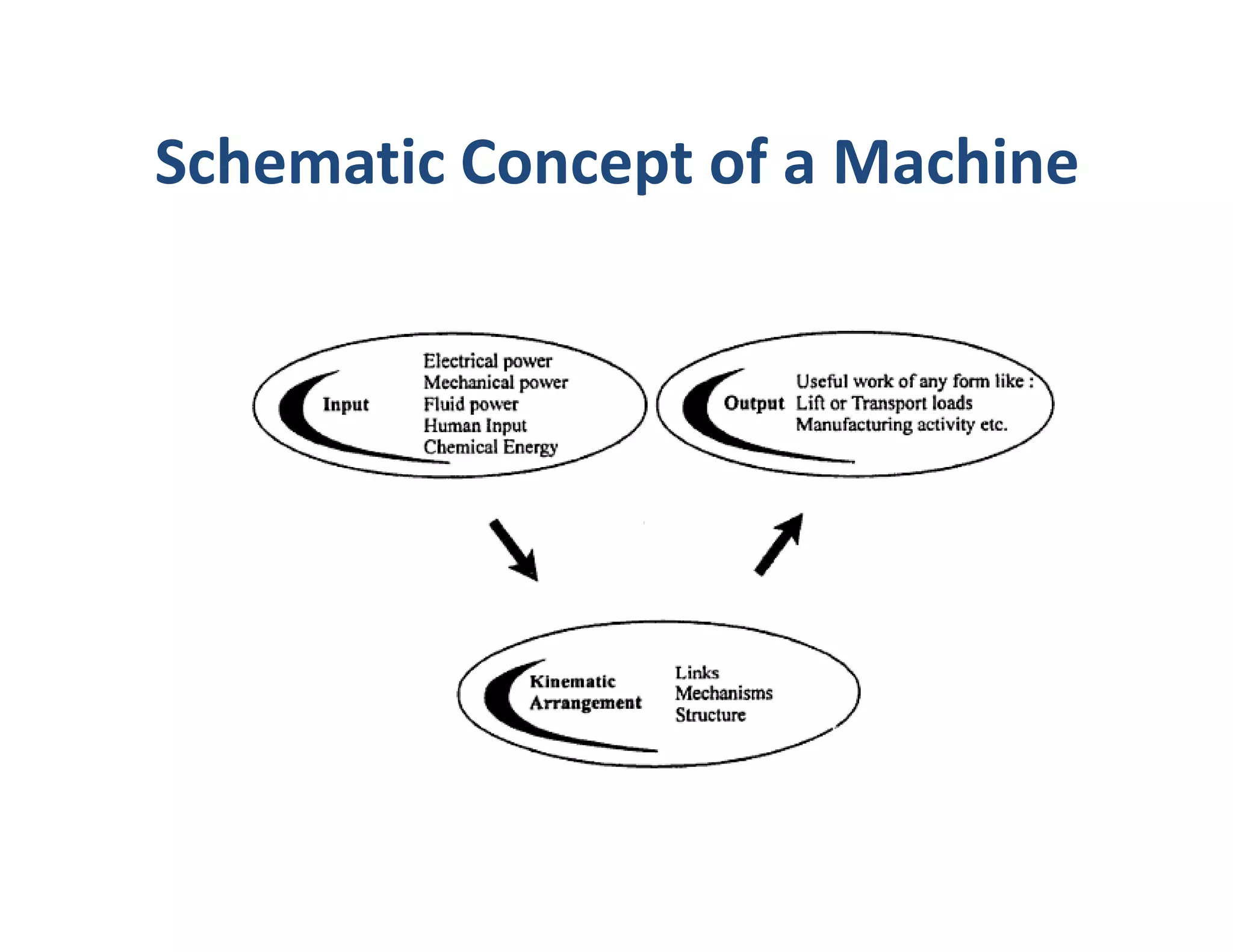
Schematic Concept of a Machine
Machine Design
To design is to understand the need, to be
creative, and then using the elementary
principles, devising a new improved machine
for accomplishing the requirements of a
human being.

Machine Design is the art of planning or
devising new or improved machines.
Design by Drawing
Features:
  – The design is well conceived and changes can be easily
    done on the drawings.
  – The product design if first finalized on drawings and
    then the design is released for production.
  – The design process and manufacturing process can be
    completely isolated and individual components can be
    manufactured by different people.
  – The record of design in the form of a drawing ensures
    new designer does not have to start from scratch to
    update it.
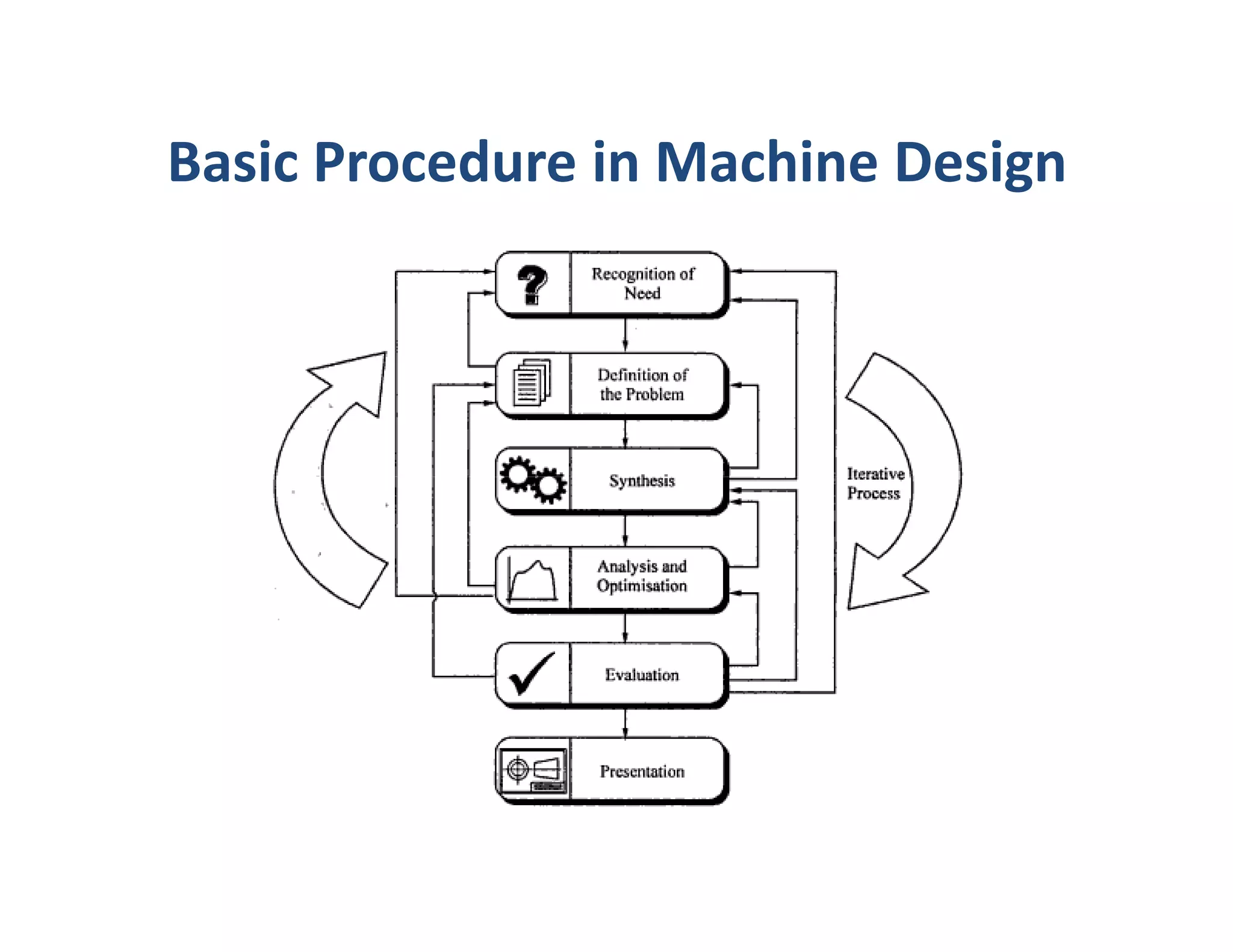
Basic Procedure in Machine Design
(1) Recognition of Problem


“Necessity is the mother of all inventions”
(2) Definition of the Problem
Categories:
• Must: These requirements are must in the design
• Must nots: These are the constraints which the
  design should not have
• Wants: These are the requirements worth
  stating, but are not always feasible to include.
• Don’t Wants: These are the constraints worth
  stating, which preferably should not be present in
  the design.
Other Considerations in Defining a
                Problem
•   Workshop facilities
•   Form and size of the parts
•   Selection of materials and sizes
•   Economical considerations
•   Economy in size of the batch
•   Safety in operation
(3) Synthesis and Analysis

Synthesis involves giving shape to the system
and the designer is expect to create layouts,
configuration drawings, sketches of important
components, kinematics of linkages,
mechanisms and other details of joining
assembly.
(4) Analysis and Optimization

Analysis is concerned with calculating the
behavior of the design by using appropriate
principles of science.

   • Type of load and stresses caused by the loads
   • Kinematics or study of motion
   • Frictional resistance and lubrication
(5) Evaluation

Evaluation is the stage wherein the design is
verified. This involves prototypes, and at this
stage the model undergoes vigorous testing to
ensure that it satisfies all the requirements
specified during definition of the problem
(6) Presentation
Presentation is the communication of the design to
others.

Presentation is selling the job and it needs convincing
that the design on offer is a reliable and better one.
Creativity and Requisites of a Design
               Engineer
• Develop a creative attitude
      Be confident that you can provide solution
• Vivid imaginations
     Why? What if?
• Persistence and hard work
      Invention is 95% perspiration and 5%
      inspiration
• Open mind and positive thinking
• Suspend one’s judgment
• Set problem boundaries
Abilities of a Good Designer
• Good communication skills
• Team player
• Good understanding of fundamental
  environmental sciences and manufacturing
  processes
• Enthusiastic
• Efficient method of recording of his observations
• Good understanding of legal requirements
  (patents and other legal laws)
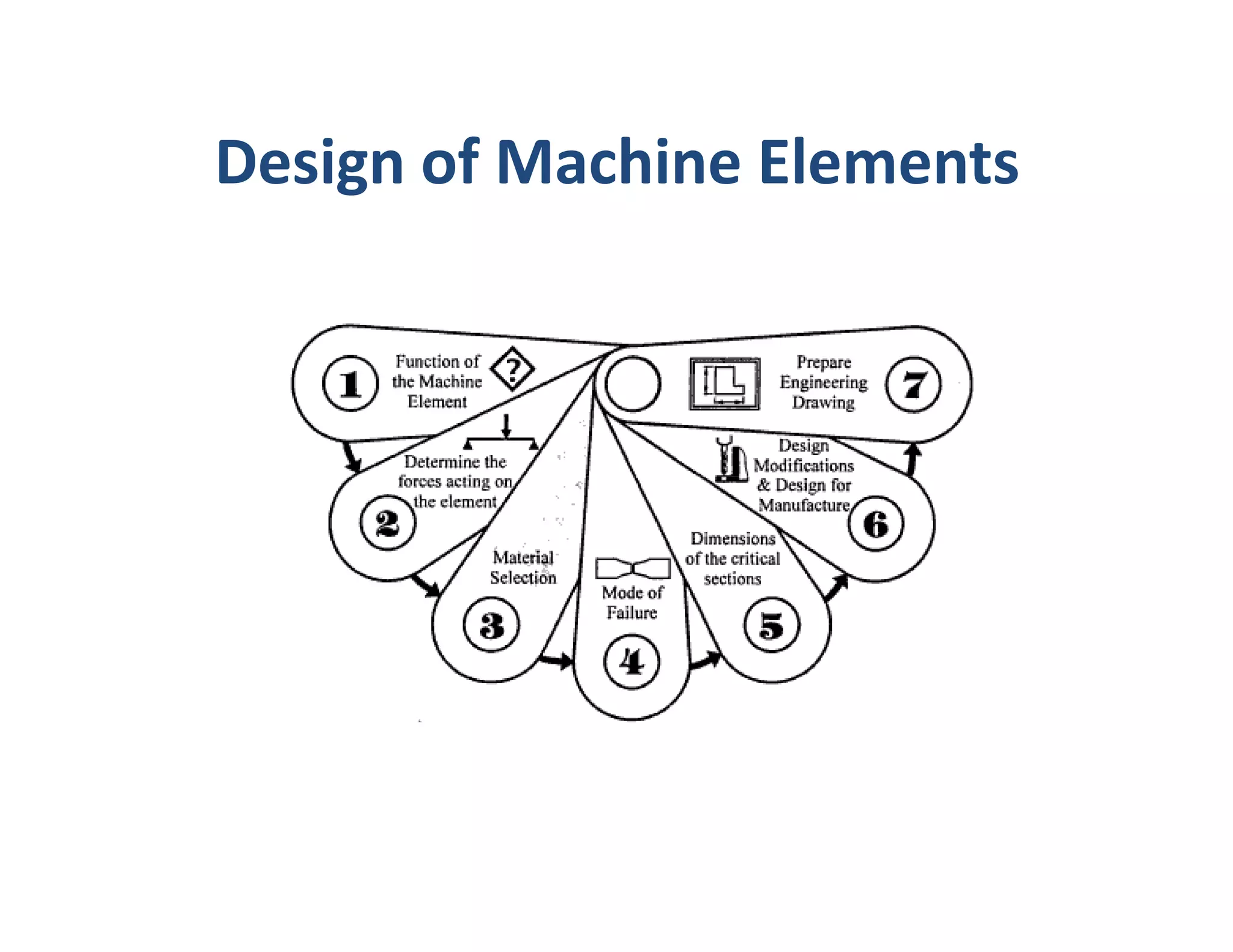
Design of Machine Elements
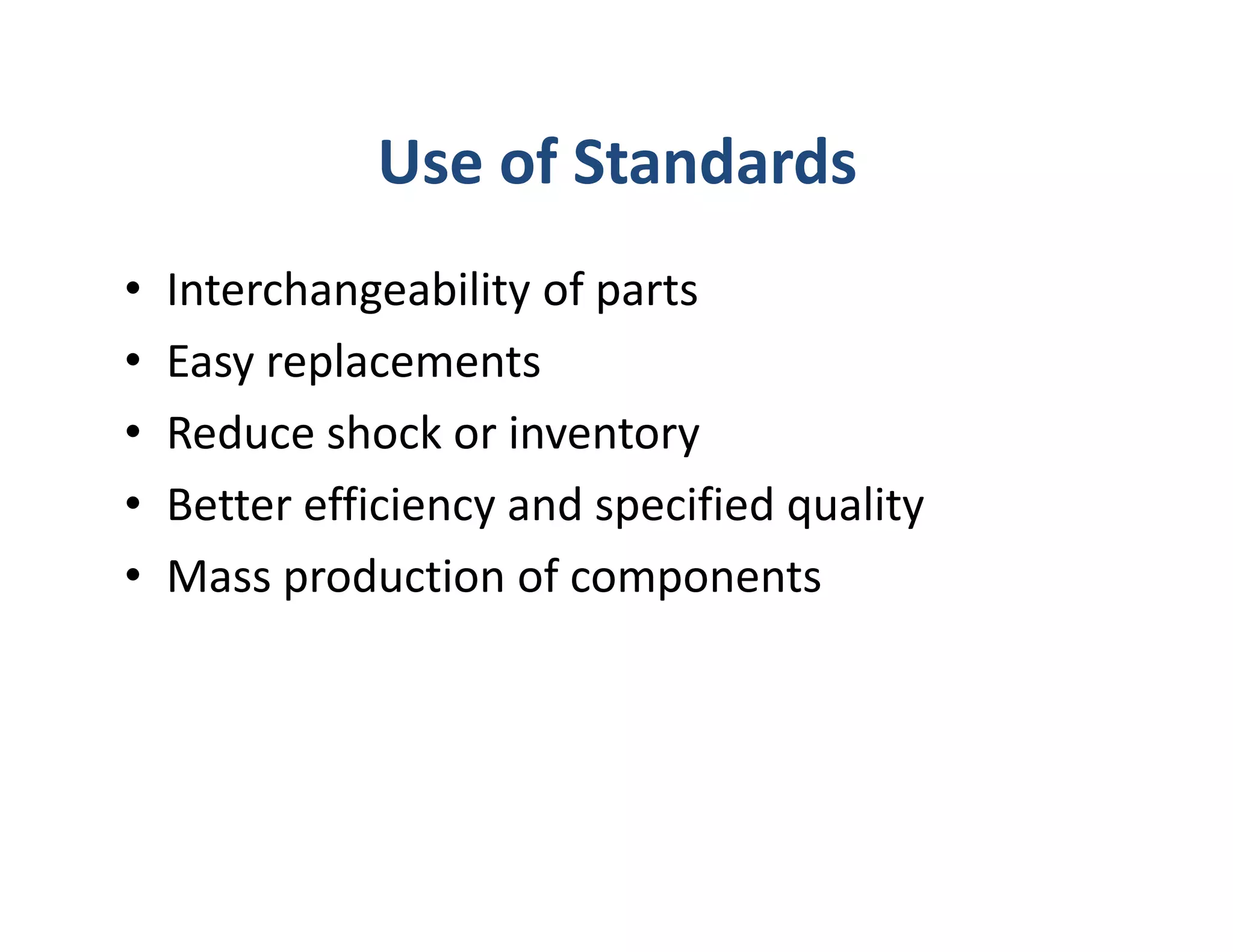
Use of Standards
•   Interchangeability of parts
•   Easy replacements
•   Reduce shock or inventory
•   Better efficiency and specified quality
•   Mass production of components
Reference:
• Design of Machine Elements 1st Edition by
  Farazdak Haideri © 2005 by the Author

Design stages and_prerequisites

  • 1.
    Design Stages andPrerequisites
  • 2.
    Machine A machine isa device, a formulation of principles, comprising of various elements arranged together, so as to carry out the needs of a human being.
  • 3.
    Building Blocks ofa Machine • Mechanisms A mechanism is made of a set of moving parts or links. The moving parts would have certain constraints, which would make the outcome predictable. • Structure Structures are the fixed parts in case of a machine. The fixed parts should be properly restrained or held.
  • 4.
  • 5.
    Machine Design To designis to understand the need, to be creative, and then using the elementary principles, devising a new improved machine for accomplishing the requirements of a human being. Machine Design is the art of planning or devising new or improved machines.
  • 6.
    Design by Drawing Features: – The design is well conceived and changes can be easily done on the drawings. – The product design if first finalized on drawings and then the design is released for production. – The design process and manufacturing process can be completely isolated and individual components can be manufactured by different people. – The record of design in the form of a drawing ensures new designer does not have to start from scratch to update it.
  • 7.
    Basic Procedure inMachine Design
  • 8.
    (1) Recognition ofProblem “Necessity is the mother of all inventions”
  • 9.
    (2) Definition ofthe Problem Categories: • Must: These requirements are must in the design • Must nots: These are the constraints which the design should not have • Wants: These are the requirements worth stating, but are not always feasible to include. • Don’t Wants: These are the constraints worth stating, which preferably should not be present in the design.
  • 10.
    Other Considerations inDefining a Problem • Workshop facilities • Form and size of the parts • Selection of materials and sizes • Economical considerations • Economy in size of the batch • Safety in operation
  • 11.
    (3) Synthesis andAnalysis Synthesis involves giving shape to the system and the designer is expect to create layouts, configuration drawings, sketches of important components, kinematics of linkages, mechanisms and other details of joining assembly.
  • 12.
    (4) Analysis andOptimization Analysis is concerned with calculating the behavior of the design by using appropriate principles of science. • Type of load and stresses caused by the loads • Kinematics or study of motion • Frictional resistance and lubrication
  • 13.
    (5) Evaluation Evaluation isthe stage wherein the design is verified. This involves prototypes, and at this stage the model undergoes vigorous testing to ensure that it satisfies all the requirements specified during definition of the problem
  • 14.
    (6) Presentation Presentation isthe communication of the design to others. Presentation is selling the job and it needs convincing that the design on offer is a reliable and better one.
  • 15.
    Creativity and Requisitesof a Design Engineer • Develop a creative attitude Be confident that you can provide solution • Vivid imaginations Why? What if? • Persistence and hard work Invention is 95% perspiration and 5% inspiration • Open mind and positive thinking • Suspend one’s judgment • Set problem boundaries
  • 16.
    Abilities of aGood Designer • Good communication skills • Team player • Good understanding of fundamental environmental sciences and manufacturing processes • Enthusiastic • Efficient method of recording of his observations • Good understanding of legal requirements (patents and other legal laws)
  • 17.
  • 18.
    Use of Standards • Interchangeability of parts • Easy replacements • Reduce shock or inventory • Better efficiency and specified quality • Mass production of components
  • 19.
    Reference: • Design ofMachine Elements 1st Edition by Farazdak Haideri © 2005 by the Author