Fire Safety
Fire Prevention Goals
S – save life, if safe to do so
A – alertness
F – fight fire, if safe to do so
E – evacuate
Possible Sources of Fire
•   Kitchen
•   Office
•   Car parking
•   Air conditioners
•   Computer room
•   Transformers
Causes of Fire
• Faulty electrical wires
• Poor house keeping
• Overloaded electrical systems
• Overheating of equipments
• Careless handling of fire such as disposing of
  cigarettes, candles and other inflammable
  materials
• Spontaneous combustion
Detection of Fire
• Manual
  Use of senses (sight, hearing and smell)

• System sensors
  Smoke detectors, heat sensors
Methods of Extinguishing Fire
•   Beating
•   Blanketing
•   Use of sand
•   Use of water
•   Foam
•   Carbon Di-Oxide
•   Dry chemical powder
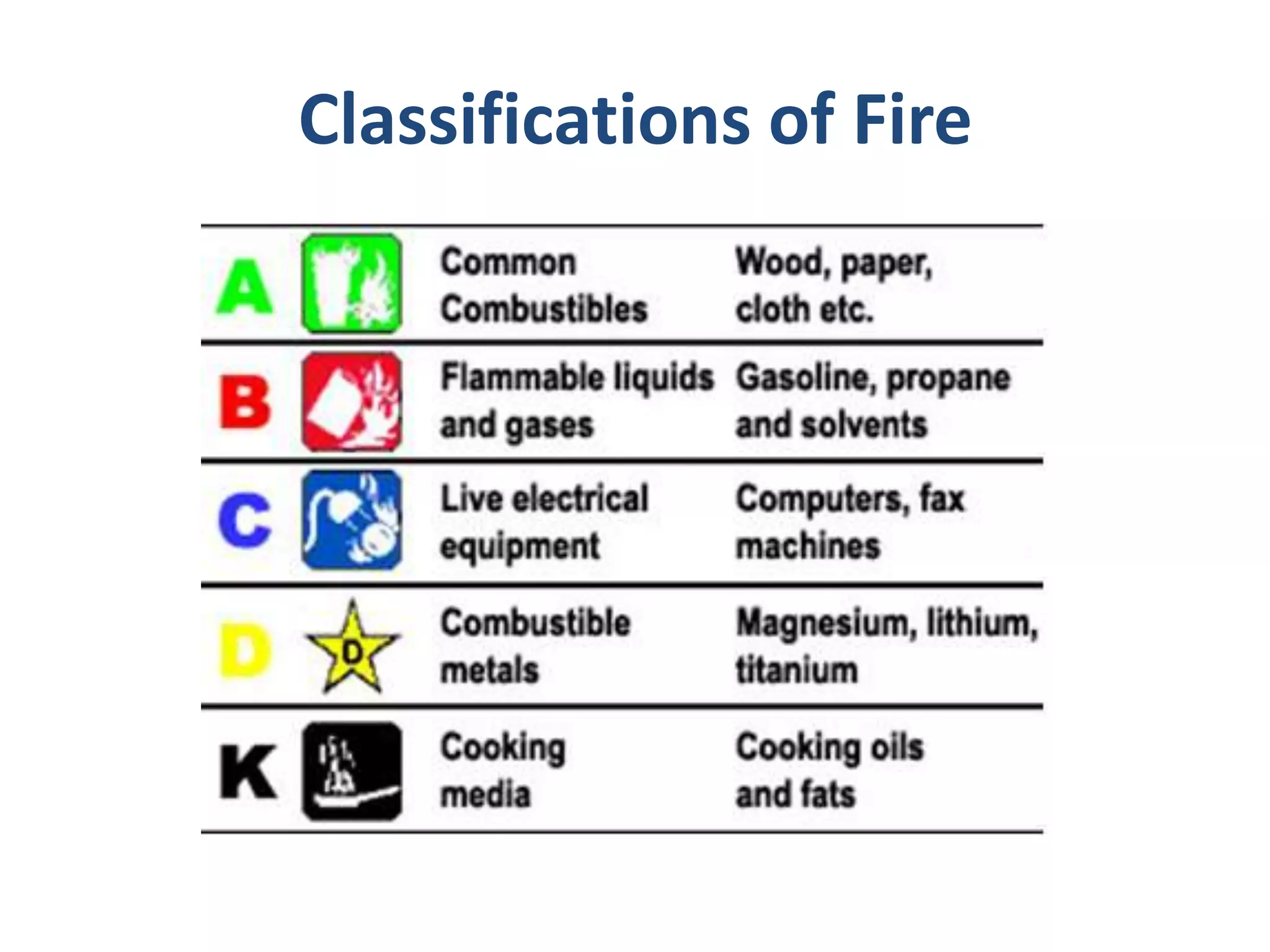
Classifications of Fire
NOTE!
• Don’t use water to extinguish electricity cables
  fire
• Don’t use water to extinguish oil fire
Portable Fire Extinguishers
              Capacity:
                1.5 to 25 lbs of
                extinguishing agent

              Range:
                3 to 15 ft

              Duration:
                Discharge their contents
                in only 5 to 30 seconds
Fire Extinguisher Chart
P.A.S.S. word
Upon Discovery of Fire or Smoke
R – remove persons in immediate danger!
E – ensure doors are closed! (Confine smoke/fire)
A – activate the building alarm!
C – call fire department
T – treat all fires as DANGEROUS!
       Continue a complete building evacuation.
       Do not attempt to fight fire unless you are
       Fire Safety Training Certified in use of fire
       extinguishers.
Assignment:
1. When do we use and when do we need NOT to
   use fire extinguishers?
2. Provide a standard checklists of where to place
   and how many fire extinguishers is needed for a
   given size of room.
3. What do we need to know or understand during
   fire evacuation?
4. Give guidelines on what to do when a person is
   trapped in a fire.
5. Give rules for fighting fires.
References:
http://disaster-risk-management.blogspot.com

Oklahoma State University Environmental
 Health and Safety Department

Fire safety

  • 1.
  • 2.
    Fire Prevention Goals S– save life, if safe to do so A – alertness F – fight fire, if safe to do so E – evacuate
  • 3.
    Possible Sources ofFire • Kitchen • Office • Car parking • Air conditioners • Computer room • Transformers
  • 4.
    Causes of Fire •Faulty electrical wires • Poor house keeping • Overloaded electrical systems • Overheating of equipments • Careless handling of fire such as disposing of cigarettes, candles and other inflammable materials • Spontaneous combustion
  • 5.
    Detection of Fire •Manual Use of senses (sight, hearing and smell) • System sensors Smoke detectors, heat sensors
  • 6.
    Methods of ExtinguishingFire • Beating • Blanketing • Use of sand • Use of water • Foam • Carbon Di-Oxide • Dry chemical powder
  • 7.
  • 8.
    NOTE! • Don’t usewater to extinguish electricity cables fire • Don’t use water to extinguish oil fire
  • 9.
    Portable Fire Extinguishers Capacity: 1.5 to 25 lbs of extinguishing agent Range: 3 to 15 ft Duration: Discharge their contents in only 5 to 30 seconds
  • 10.
  • 11.
  • 12.
    Upon Discovery ofFire or Smoke R – remove persons in immediate danger! E – ensure doors are closed! (Confine smoke/fire) A – activate the building alarm! C – call fire department T – treat all fires as DANGEROUS! Continue a complete building evacuation. Do not attempt to fight fire unless you are Fire Safety Training Certified in use of fire extinguishers.
  • 13.
    Assignment: 1. When dowe use and when do we need NOT to use fire extinguishers? 2. Provide a standard checklists of where to place and how many fire extinguishers is needed for a given size of room. 3. What do we need to know or understand during fire evacuation? 4. Give guidelines on what to do when a person is trapped in a fire. 5. Give rules for fighting fires.
  • 14.