Acceleration AnalysisLecture NotesReference: Machines and Mechanisms Applied Kinematics by David H. Myszka
Acceleration AnalysisAcceleration analysis involves determining the amount that certain points on links of mechanism are either “speeding up” or “slowing down.”The amount of acceleration is critical property because of the inertial forces associated with it. Reference: Machines and Mechanisms Applied Kinematics by David H. Myszka
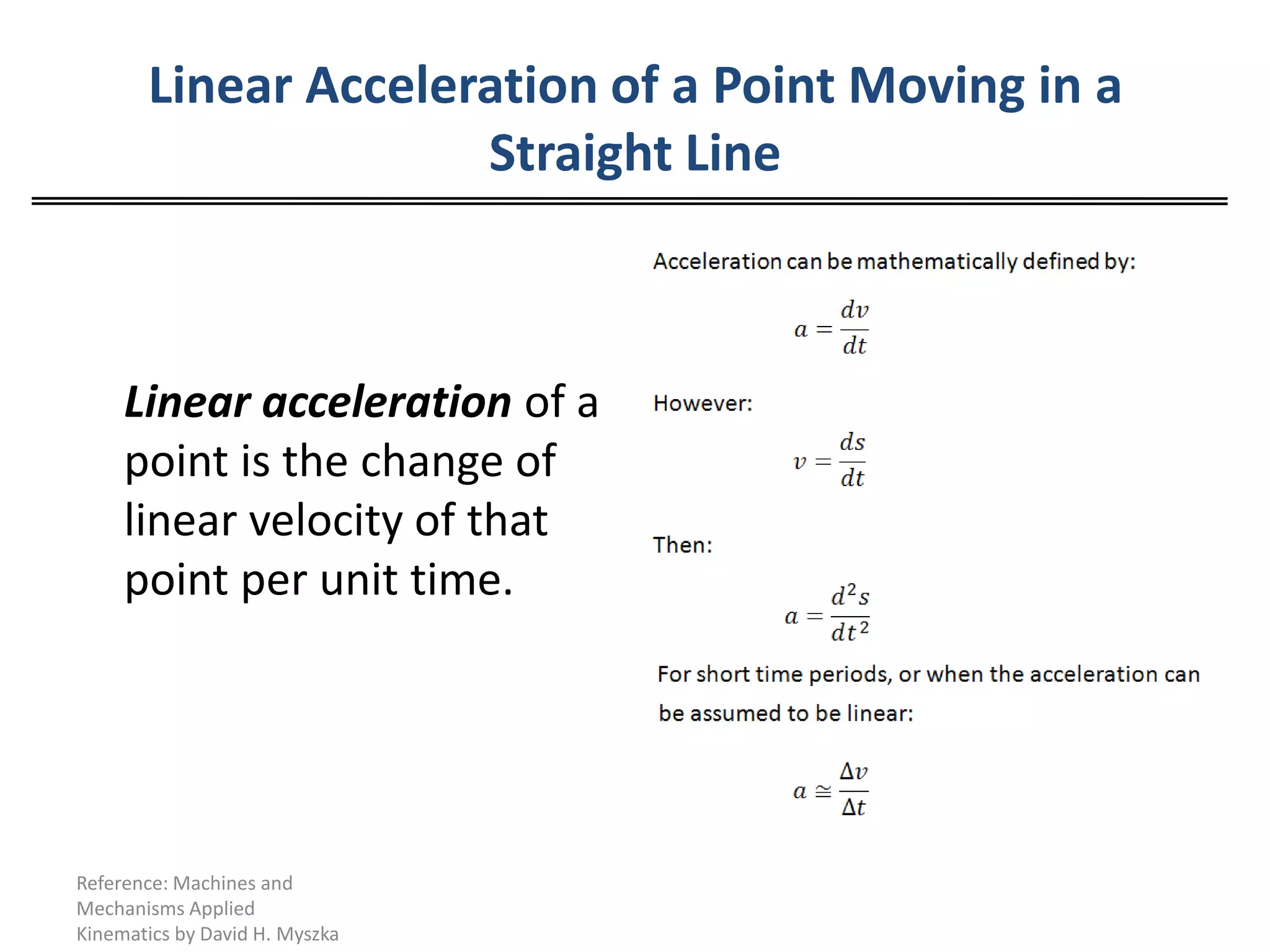
Linear Acceleration of a Point Moving in a Straight LineLinear acceleration of a point is the change of linear velocity of that point per unit time. Reference: Machines and Mechanisms Applied Kinematics by David H. Myszka
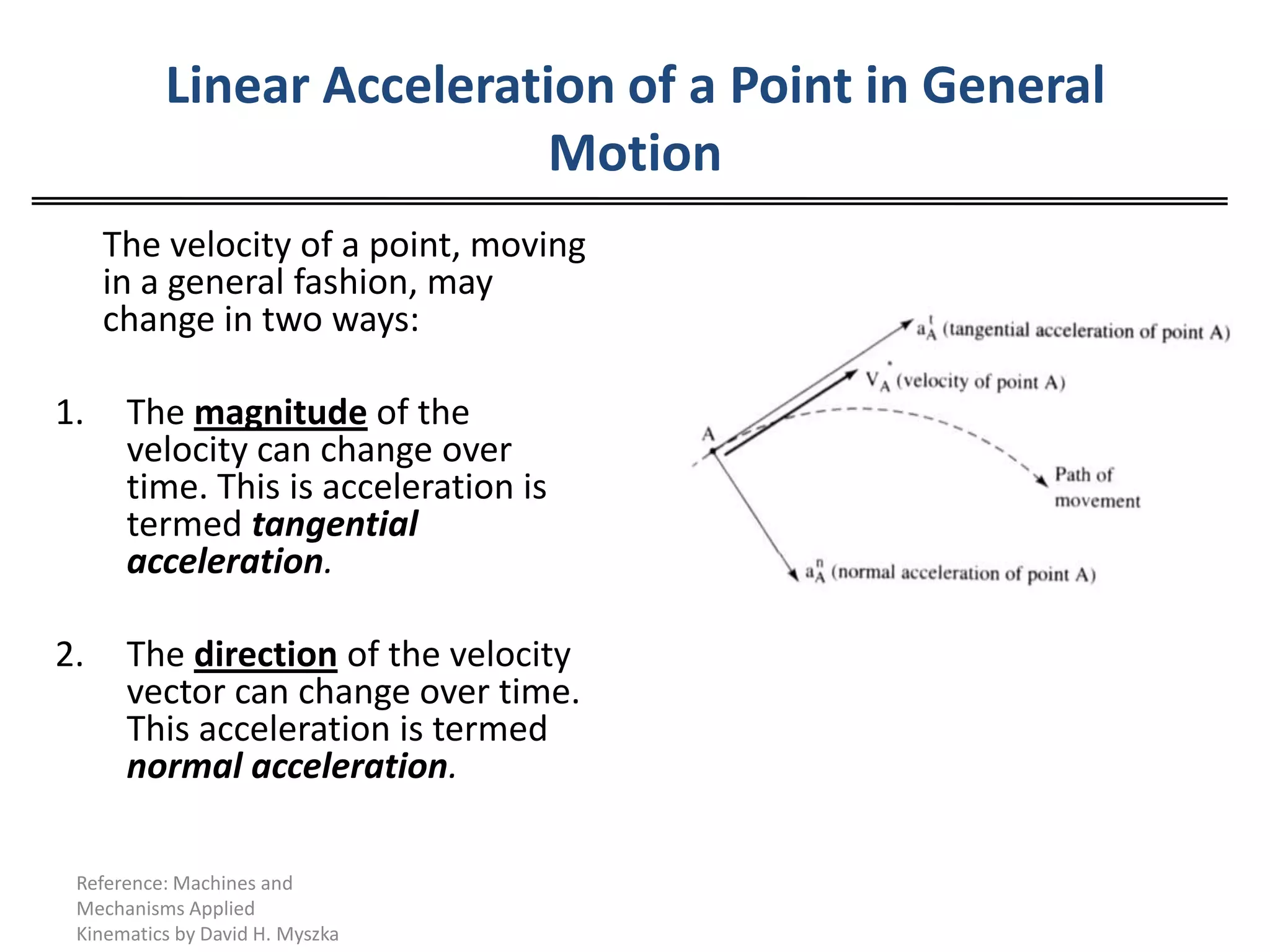
Linear Acceleration of a Point in General Motion	The velocity of a point, moving in a general fashion, may change in two ways:The magnitude of the velocity can change over time. This is acceleration is termed tangential acceleration.2. 	The directionof the velocity vector can change over time. This acceleration is termed normal acceleration.Reference: Machines and Mechanisms Applied Kinematics by David H. Myszka
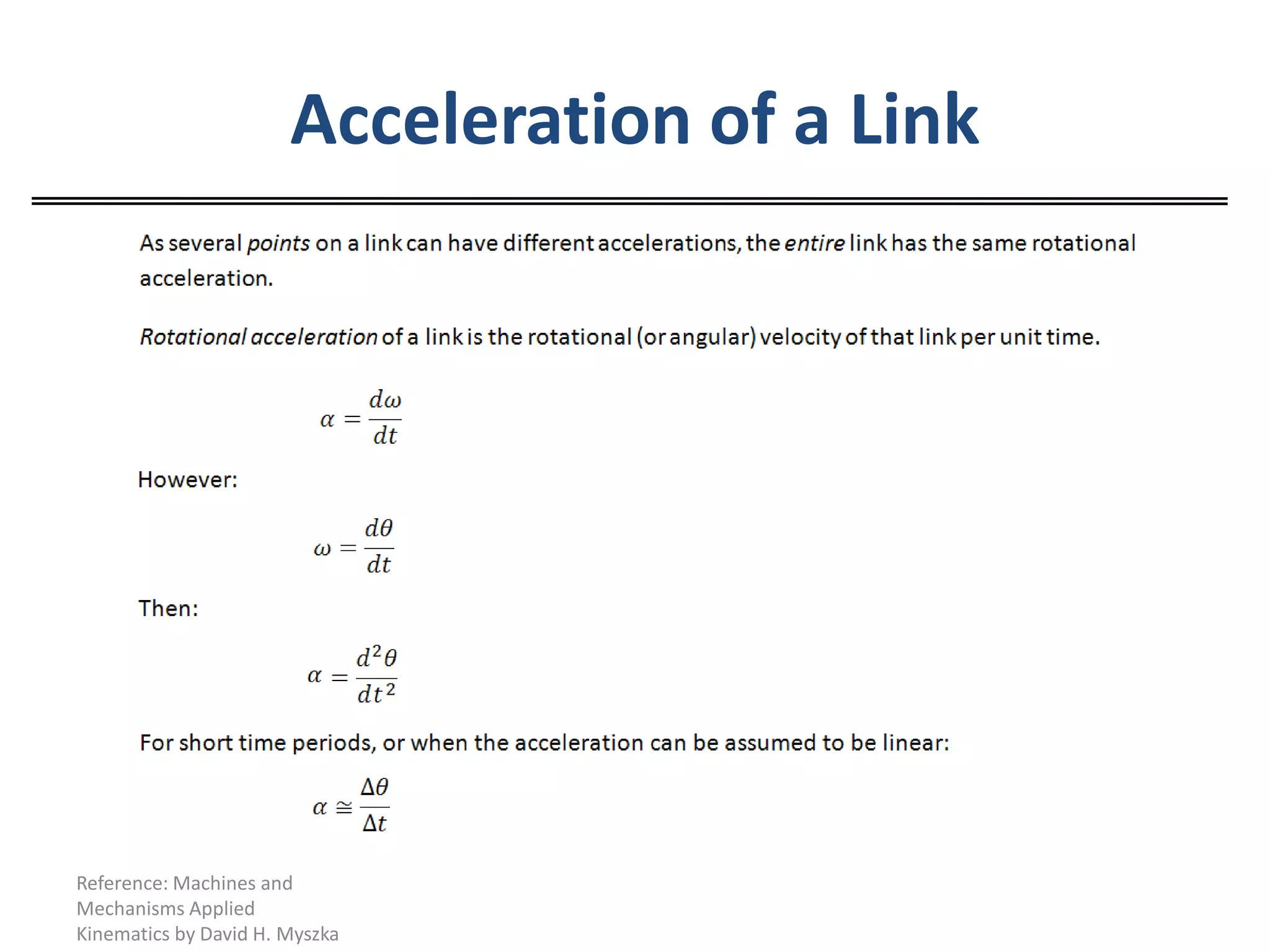
Acceleration of a LinkReference: Machines and Mechanisms Applied Kinematics by David H. Myszka
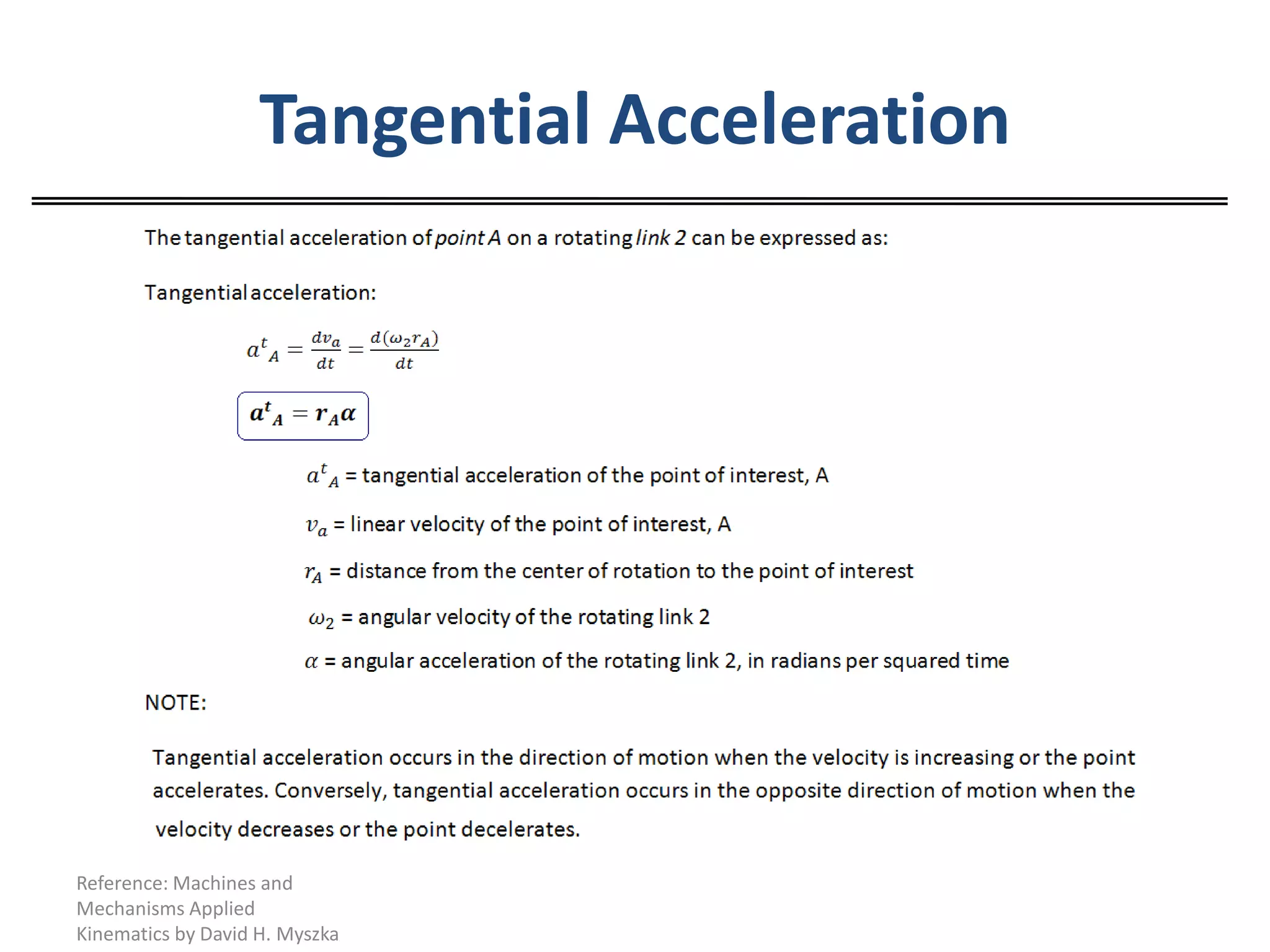
Tangential AccelerationReference: Machines and Mechanisms Applied Kinematics by David H. Myszka
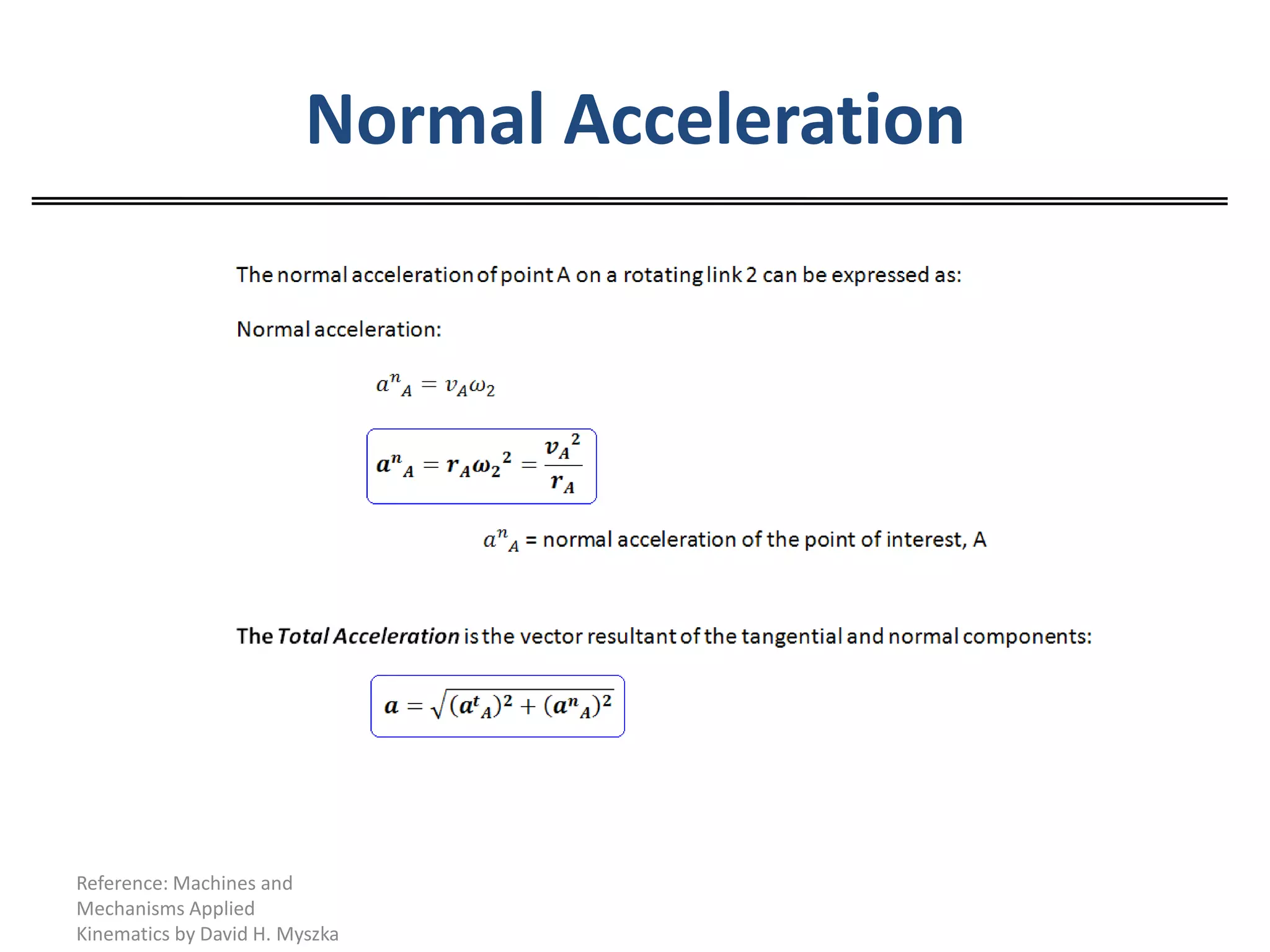
Normal AccelerationReference: Machines and Mechanisms Applied Kinematics by David H. Myszka
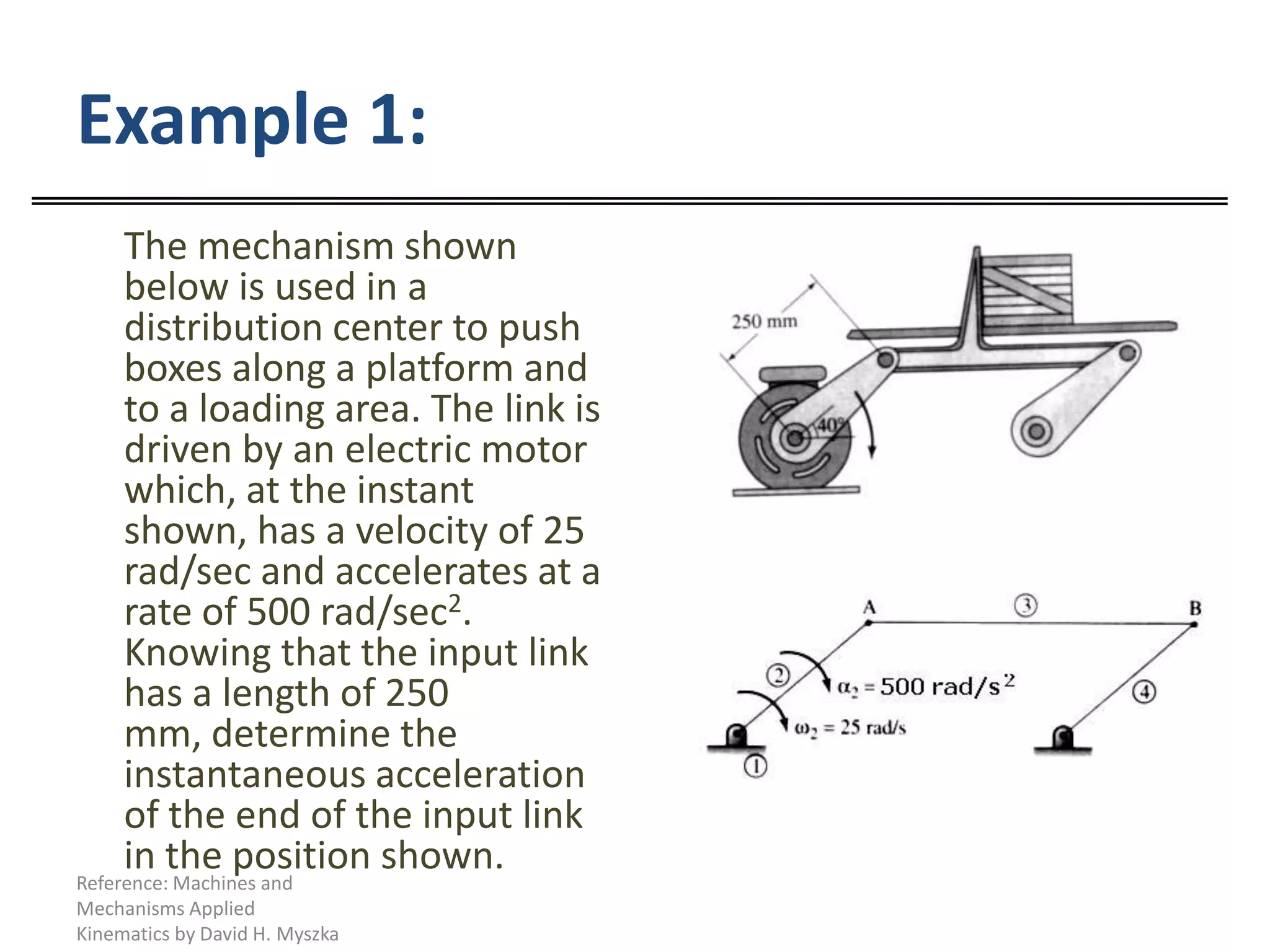
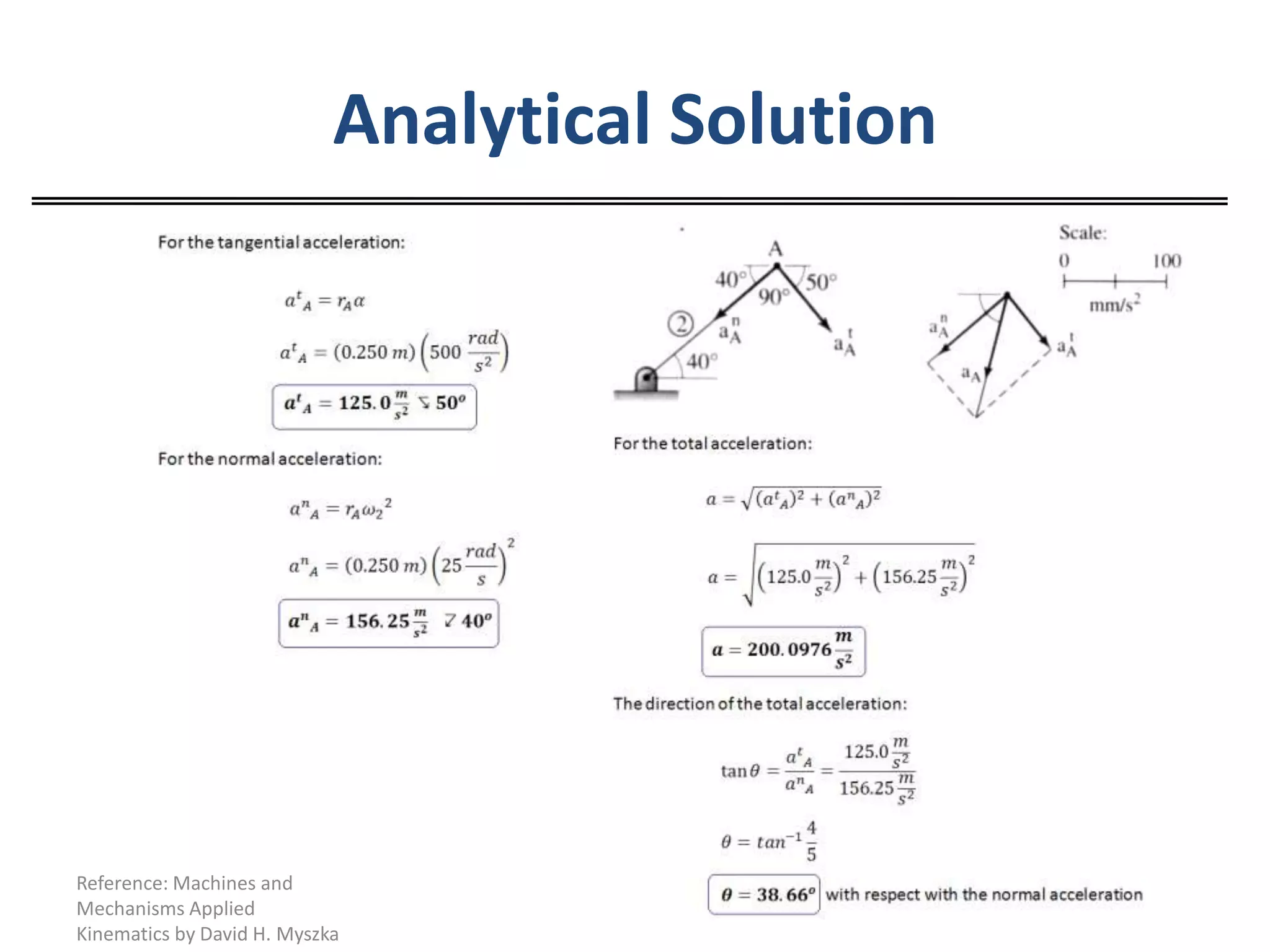
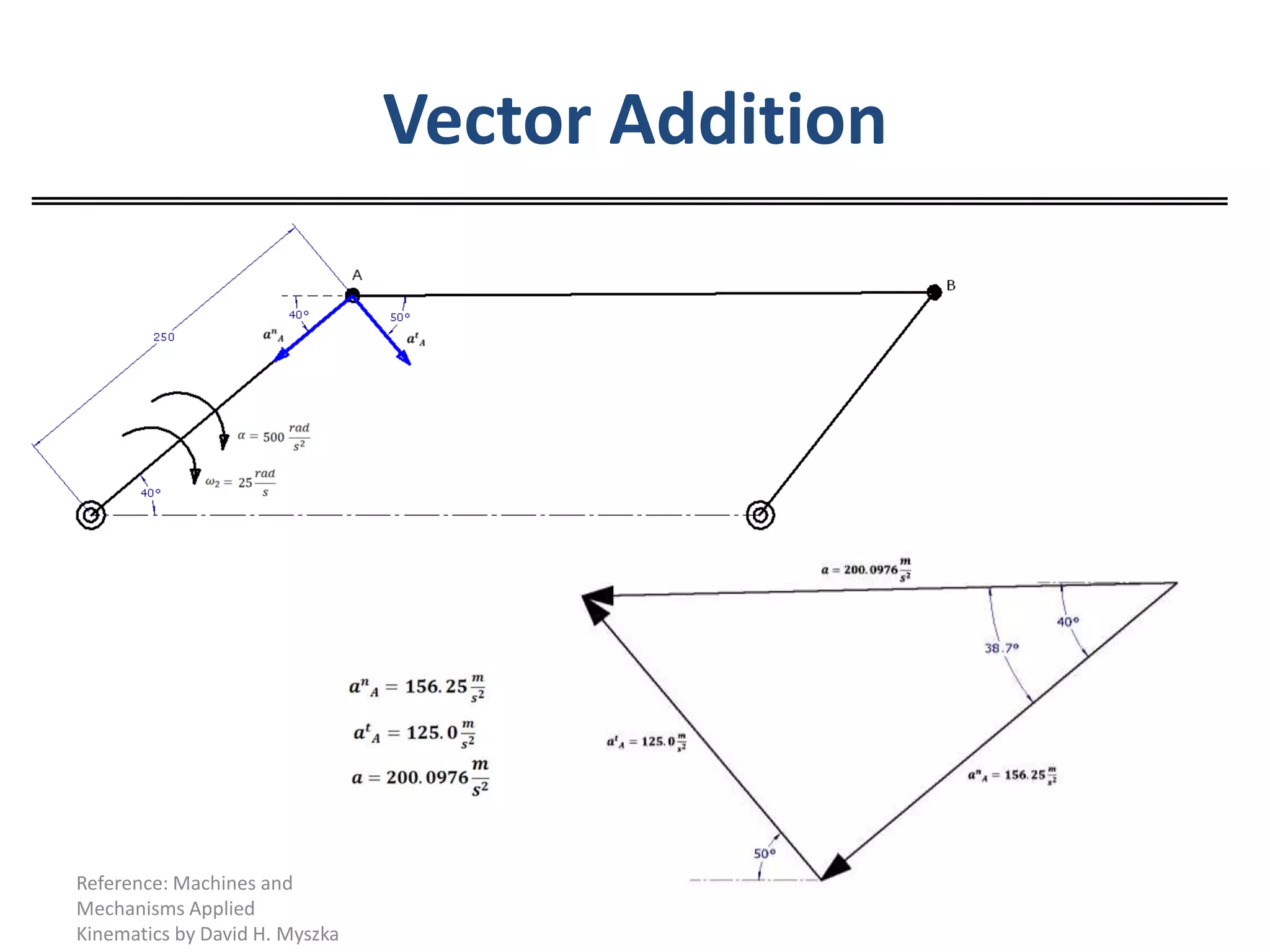
Example 1:The mechanism shown below is used in a distribution center to push boxes along a platform and to a loading area. The link is driven by an electric motor which, at the instant shown, has a velocity of 25 rad/sec and accelerates at a rate of 500 rad/sec2. Knowing that the input link has a length of 250 mm, determine the instantaneous acceleration of the end of the input link in the position shown.Reference: Machines and Mechanisms Applied Kinematics by David H. Myszka
Analytical SolutionReference: Machines and Mechanisms Applied Kinematics by David H. Myszka
Vector AdditionReference: Machines and Mechanisms Applied Kinematics by David H. Myszka
Reference:	Machines and Mechanisms Applied Kinematic Analysis by David H. Myszka. © 1999 by Prentice-Hall, Inc. Page 193 - 201.

008 acceleration analysis

  • 1.
    Acceleration AnalysisLecture NotesReference:Machines and Mechanisms Applied Kinematics by David H. Myszka
  • 2.
    Acceleration AnalysisAcceleration analysisinvolves determining the amount that certain points on links of mechanism are either “speeding up” or “slowing down.”The amount of acceleration is critical property because of the inertial forces associated with it. Reference: Machines and Mechanisms Applied Kinematics by David H. Myszka
  • 3.
    Linear Acceleration ofa Point Moving in a Straight LineLinear acceleration of a point is the change of linear velocity of that point per unit time. Reference: Machines and Mechanisms Applied Kinematics by David H. Myszka
  • 4.
    Linear Acceleration ofa Point in General Motion The velocity of a point, moving in a general fashion, may change in two ways:The magnitude of the velocity can change over time. This is acceleration is termed tangential acceleration.2. The directionof the velocity vector can change over time. This acceleration is termed normal acceleration.Reference: Machines and Mechanisms Applied Kinematics by David H. Myszka
  • 5.
    Acceleration of aLinkReference: Machines and Mechanisms Applied Kinematics by David H. Myszka
  • 6.
    Tangential AccelerationReference: Machinesand Mechanisms Applied Kinematics by David H. Myszka
  • 7.
    Normal AccelerationReference: Machinesand Mechanisms Applied Kinematics by David H. Myszka
  • 8.
    Example 1:The mechanismshown below is used in a distribution center to push boxes along a platform and to a loading area. The link is driven by an electric motor which, at the instant shown, has a velocity of 25 rad/sec and accelerates at a rate of 500 rad/sec2. Knowing that the input link has a length of 250 mm, determine the instantaneous acceleration of the end of the input link in the position shown.Reference: Machines and Mechanisms Applied Kinematics by David H. Myszka
  • 9.
    Analytical SolutionReference: Machinesand Mechanisms Applied Kinematics by David H. Myszka
  • 10.
    Vector AdditionReference: Machinesand Mechanisms Applied Kinematics by David H. Myszka
  • 11.
    Reference: Machines and MechanismsApplied Kinematic Analysis by David H. Myszka. © 1999 by Prentice-Hall, Inc. Page 193 - 201.