 INTRODUCTION
 APPLICATION
 IN THE DRIVING SEAT
 THE DOCTOR WILL SEE
 WIRED WEARABLES
 DO NOT KEEP YOUR EYES ON ROAD
 ADAPTIVE CRUISE CONTROL(A.C.C.)
 WORKING PRINCIPLE OF ACC
 DOPPLER EFFECT
 WORKING OF A.C.C.
 ABOUT THE BEAUTY OF A.C.C.
 CONCLUSION
 An embedded system is any device controlled by
instructions stored on a chip. These devices are
usually controlled by a micro processor that
executes the instructions stored on a read only
memory (ROM) chip.
 The software for the embedded system is
called firmware
 Embedded systems are also known as real time
systems since they respond to an input or event
and produce the result within a guaranteed
time period
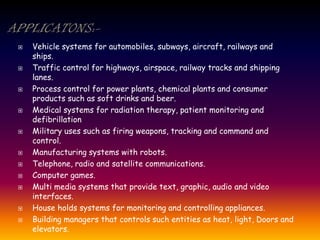
 Vehicle systems for automobiles, subways, aircraft, railways and
ships.
 Traffic control for highways, airspace, railway tracks and shipping
lanes.
 Process control for power plants, chemical plants and consumer
products such as soft drinks and beer.
 Medical systems for radiation therapy, patient monitoring and
defibrillation
 Military uses such as firing weapons, tracking and command and
control.
 Manufacturing systems with robots.
 Telephone, radio and satellite communications.
 Computer games.
 Multi media systems that provide text, graphic, audio and video
interfaces.
 House holds systems for monitoring and controlling appliances.
 Building managers that controls such entities as heat, light, Doors and
elevators.
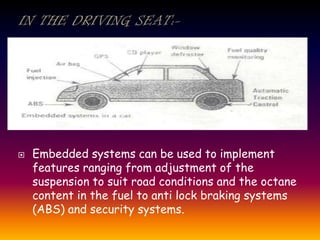
 Embedded systems can be used to implement
features ranging from adjustment of the
suspension to suit road conditions and the octane
content in the fuel to anti lock braking systems
(ABS) and security systems.
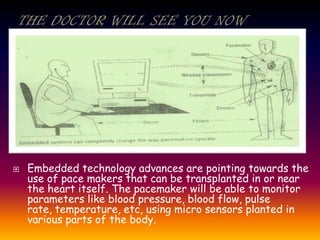
 Embedded technology advances are pointing towards the
use of pace makers that can be transplanted in or near
the heart itself. The pacemaker will be able to monitor
parameters like blood pressure, blood flow, pulse
rate, temperature, etc, using micro sensors planted in
various parts of the body.
 Embedded systems have a small foot print
and consume very little power which makes
them ideal for wearable computing
applications.The minimal system
requirements of these devices ensure that
the hardware is almost microscopic
 Embedded systems can also make
driverless vehicle control a reality.
Major automobile manufacturers
are already engaged in work on
these concepts. One such
technology is Adaptive Cruise
Control (ACC).
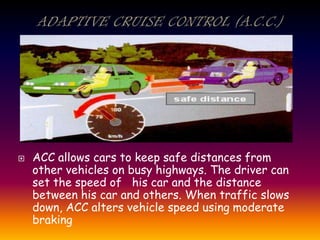
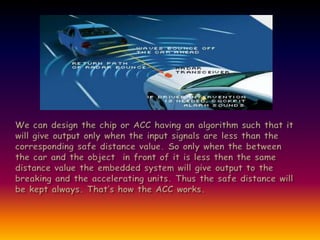
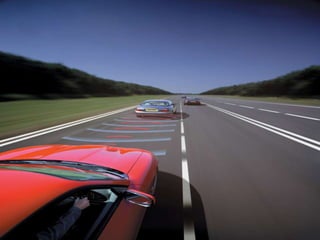
 ACC allows cars to keep safe distances from
other vehicles on busy highways. The driver can
set the speed of his car and the distance
between his car and others. When traffic slows
down, ACC alters vehicle speed using moderate
braking
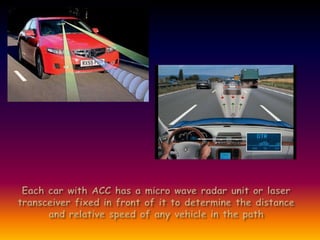
 As each car with ACC have a micro wave
radar unit fixed in front of it to determine
the distance and relative speed of any
vehicle in it’s path. The principle behind the
working of this type of radar is- THE
DOPPLER EFFECT
Doppler Effect is the change in frequency of
the waves when there is a relative motion
between the transmitting and receiving
units. The Doppler Effect can be categorize
in two ways:-
1. Higher Pitch Sound
2. Lower Pitch Sound
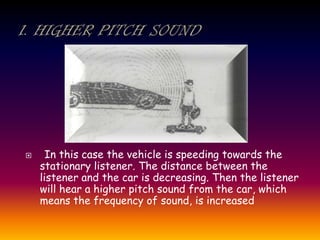
 In this case the vehicle is speeding towards the
stationary listener. The distance between the
listener and the car is decreasing. Then the listener
will hear a higher pitch sound from the car, which
means the frequency of sound, is increased
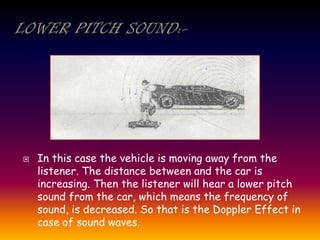
 In this case the vehicle is moving away from the
listener. The distance between and the car is
increasing. Then the listener will hear a lower pitch
sound from the car, which means the frequency of
sound, is decreased. So that is the Doppler Effect in
case of sound waves.
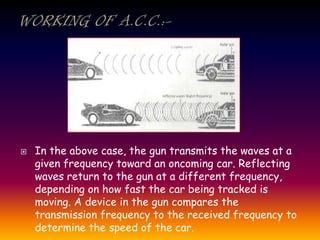
 In the above case, the gun transmits the waves at a
given frequency toward an oncoming car. Reflecting
waves return to the gun at a different frequency,
depending on how fast the car being tracked is
moving. A device in the gun compares the
transmission frequency to the received frequency to
determine the speed of the car.
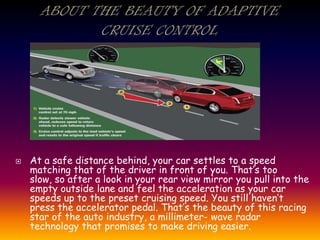
 At a safe distance behind, your car settles to a speed
matching that of the driver in front of you. That’s too
slow, so after a look in your rear view mirror you pull into the
empty outside lane and feel the acceleration as your car
speeds up to the preset cruising speed. You still haven’t
press the accelerator pedal. That’s the beauty of this racing
star of the auto industry, a millimeter- wave radar
technology that promises to make driving easier.
 Embedded systems can be used to implement
features ranging from the way pacemakers
operate and mobile phone that can be worn
as jewellery to adaptive cruise control
(ACC).
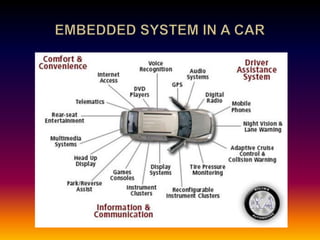
Embedded system-in-automobile

Embedded system-in-automobile

  • 2.
     INTRODUCTION  APPLICATION IN THE DRIVING SEAT  THE DOCTOR WILL SEE  WIRED WEARABLES  DO NOT KEEP YOUR EYES ON ROAD  ADAPTIVE CRUISE CONTROL(A.C.C.)  WORKING PRINCIPLE OF ACC  DOPPLER EFFECT  WORKING OF A.C.C.  ABOUT THE BEAUTY OF A.C.C.  CONCLUSION
  • 3.
     An embeddedsystem is any device controlled by instructions stored on a chip. These devices are usually controlled by a micro processor that executes the instructions stored on a read only memory (ROM) chip.  The software for the embedded system is called firmware  Embedded systems are also known as real time systems since they respond to an input or event and produce the result within a guaranteed time period
  • 4.
     Vehicle systemsfor automobiles, subways, aircraft, railways and ships.  Traffic control for highways, airspace, railway tracks and shipping lanes.  Process control for power plants, chemical plants and consumer products such as soft drinks and beer.  Medical systems for radiation therapy, patient monitoring and defibrillation  Military uses such as firing weapons, tracking and command and control.  Manufacturing systems with robots.  Telephone, radio and satellite communications.  Computer games.  Multi media systems that provide text, graphic, audio and video interfaces.  House holds systems for monitoring and controlling appliances.  Building managers that controls such entities as heat, light, Doors and elevators.
  • 6.
     Embedded systemscan be used to implement features ranging from adjustment of the suspension to suit road conditions and the octane content in the fuel to anti lock braking systems (ABS) and security systems.
  • 7.
     Embedded technologyadvances are pointing towards the use of pace makers that can be transplanted in or near the heart itself. The pacemaker will be able to monitor parameters like blood pressure, blood flow, pulse rate, temperature, etc, using micro sensors planted in various parts of the body.
  • 8.
     Embedded systemshave a small foot print and consume very little power which makes them ideal for wearable computing applications.The minimal system requirements of these devices ensure that the hardware is almost microscopic
  • 9.
     Embedded systemscan also make driverless vehicle control a reality. Major automobile manufacturers are already engaged in work on these concepts. One such technology is Adaptive Cruise Control (ACC).
  • 10.
     ACC allowscars to keep safe distances from other vehicles on busy highways. The driver can set the speed of his car and the distance between his car and others. When traffic slows down, ACC alters vehicle speed using moderate braking
  • 12.
     As eachcar with ACC have a micro wave radar unit fixed in front of it to determine the distance and relative speed of any vehicle in it’s path. The principle behind the working of this type of radar is- THE DOPPLER EFFECT
  • 13.
    Doppler Effect isthe change in frequency of the waves when there is a relative motion between the transmitting and receiving units. The Doppler Effect can be categorize in two ways:- 1. Higher Pitch Sound 2. Lower Pitch Sound
  • 14.
     In thiscase the vehicle is speeding towards the stationary listener. The distance between the listener and the car is decreasing. Then the listener will hear a higher pitch sound from the car, which means the frequency of sound, is increased
  • 15.
     In thiscase the vehicle is moving away from the listener. The distance between and the car is increasing. Then the listener will hear a lower pitch sound from the car, which means the frequency of sound, is decreased. So that is the Doppler Effect in case of sound waves.
  • 16.
     In theabove case, the gun transmits the waves at a given frequency toward an oncoming car. Reflecting waves return to the gun at a different frequency, depending on how fast the car being tracked is moving. A device in the gun compares the transmission frequency to the received frequency to determine the speed of the car.
  • 19.
     At asafe distance behind, your car settles to a speed matching that of the driver in front of you. That’s too slow, so after a look in your rear view mirror you pull into the empty outside lane and feel the acceleration as your car speeds up to the preset cruising speed. You still haven’t press the accelerator pedal. That’s the beauty of this racing star of the auto industry, a millimeter- wave radar technology that promises to make driving easier.
  • 20.
     Embedded systemscan be used to implement features ranging from the way pacemakers operate and mobile phone that can be worn as jewellery to adaptive cruise control (ACC).