SHIJO.T.DANIEL
S5 MECHANICAL
ROLL NO : 859
REG NO : 11020125
OUTLINE
Introduction
History
Cruise control
Adaptive cruise control (ACC)
components of ACC
Working
Acceleration & Deceleration
Controlling ACC
Dealing with switches
Features
Advantages
Limitations
Future aspects
ACC used vehicles
Conclusion
References
INTRODUCTION
Increased accident rate
Factors
Need o0f intelligent vehicles
Invention of Cruise control
HISTORY
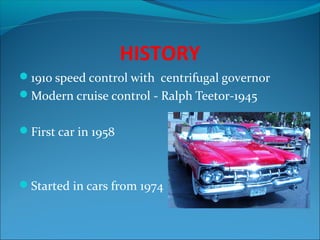
1910 speed control with centrifugal governor
Modern cruise control - Ralph Teetor-1945
First car in 1958

Started in cars from 1974
CRUISE CONTROL
Cruise control - automatically controls the speed

of a motor vehicle.

 Also known as speed control or auto cruise.
Adjusting the throttle position to maintain a

speed set by the driver
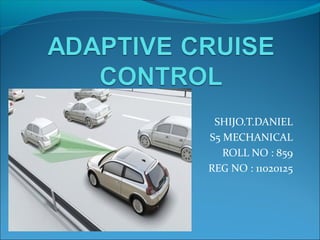
ADAPTIVE CRUISE CONTROL
(ACC)
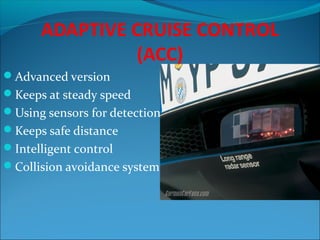
Advanced version
Keeps at steady speed
Using sensors for detection
Keeps safe distance
Intelligent control
Collision avoidance system
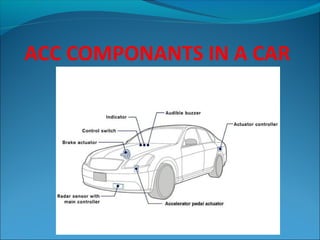
MAIN COMPONENTS ACC
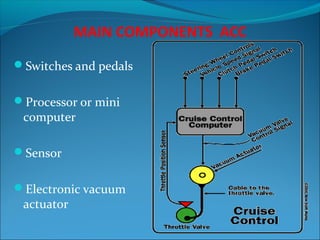
Switches and pedals
Processor or mini

computer

Sensor
Electronic vacuum

actuator
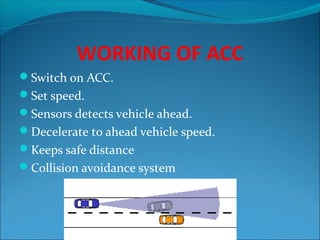
WORKING OF ACC
Switch on ACC.
Set speed.
Sensors detects vehicle ahead.
Decelerate to ahead vehicle speed.
Keeps safe distance
Collision avoidance system
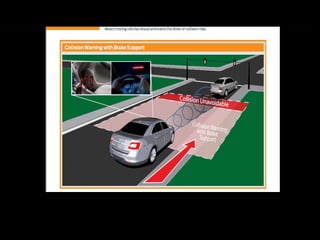
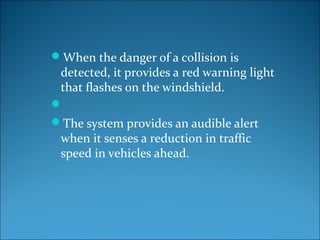
When the danger of a collision is

detected, it provides a red warning light
that flashes on the windshield.

The system provides an audible alert
when it senses a reduction in traffic
speed in vehicles ahead.
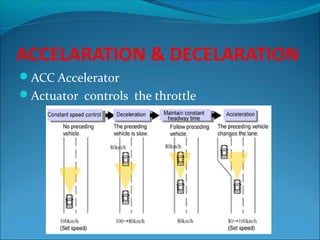
ACCELARATION & DECELARATION
ACC Accelerator
Actuator controls the throttle
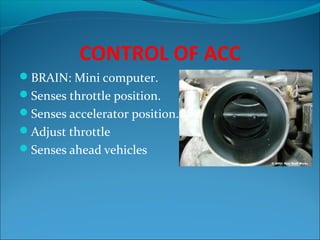
CONTROL OF ACC
BRAIN: Mini computer.
Senses throttle position.
Senses accelerator position.
Adjust throttle
Senses ahead vehicles
LIDAR is Light Detection And Ranging.
 A laser diode was used to generate the light

signal.
RADAR is Radio Detection And Ranging
 It is operated by radiating energy into space and
detecting the echo signal reflected from target

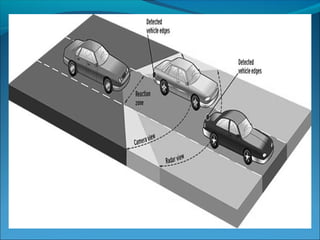
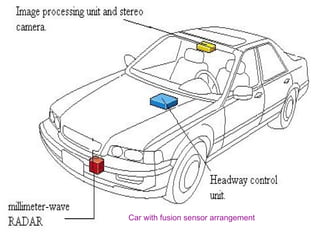
While RADAR target is the car’s rear spoiler the
stereo camera is constantly captures all objects in
its field of view.
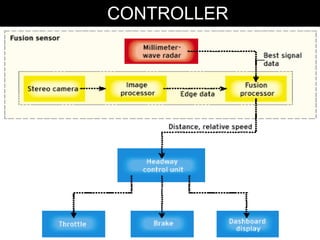
It includes millimeter wave radar linked to a
640x480 pixel stereo camera
CONTROLLER

Sensing and controlling
process
Car with fusion sensor
arrangement

Car with fusion sensor arrangement
ACC COMPONANTS IN A CAR
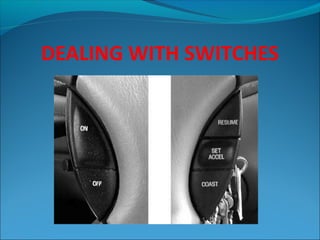
DEALING WITH SWITCHES
FEATURES
Maintains a safe, comfortable distance between

vehicles without driver interventions
Maintains a consistent performance in poor
visibility conditions.
Maintains a continuous performance during road
turns and elevation changes
Alerts drivers by way of automatic braking.
ADVANTAGES
It’s very useful for long driving.
The driver is relieved from the task of careful

acceleration, deceleration and braking in
congested traffics.
Can avoid unconsciously violating speed limits.
Reduction in accident rate.
Reduction in driver fatigue.
Increased fuel efficiency.
DISADVANTAGES
Cost
Not for heavy traffic
Dangerous in slippery roads
Encourages the driver to become careless.
The ACC systems not respond directly to the

traffic signals.
FUTURE ASPECTS
Co-Cooperative Adaptive cruise control or

CACC is already being tested in California .

ACC respond to the distance and speed of the

car ahead ,CACC communicate with two or
more cars and work together to avoid collision.

 Communication is quicker, reliable and

responsive.
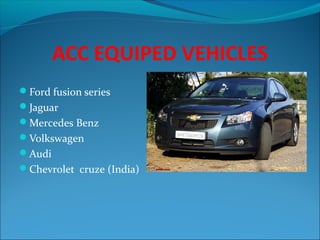
ACC EQUIPED VEHICLES
Ford fusion series
Jaguar
Mercedes Benz
Volkswagen
Audi
Chevrolet cruze (India)
CONCLUSION
Current system ranges 150 meters can stop and

slows if any obstruction
Fully autonomous car is probably not viable in the
foreseen future.
Near by vehicles would be in constant
communication with each other and act cooperatively.
It will probably take decades, but car accidents
may eventually become almost as rare as plane
crashes are now.
REFFERENCE
1.

University of Michigan (July 12, 2004). U-M physicist:
Smart cruise control eliminates traffic jams. Press release.
2.
L. C. Davis (2004). "Effect of adaptive cruise control
systems on traffic flow". Physical Review Letters E 69 (6): 066110
(article ID; no page reference).
3.
CY Liang, H Peng (1999). "Optimal Adaptive Cruise
Control with Guaranteed String Stability". Vehicle System
Dynamics 32 (4-5): 313-330.
4.
P Venhovens, K Naab, B Adiprasito (2000). "Stop and Go
Cruise Control". Proc. FISITA World Automotive Congress, Seoul,
Korea.
5.
L. C. Davis, “Effect of adaptive cruise control systems on
traffic flow” Physics Department, University of Michigan, Ann
Arbor, Michigan 48109, USA The American Physical Society
(Received 27 October 2003; revised 22 January 2004; published 4
June 2004)
ANY QUERIES??
THANK YOU FOR LISTNING

Adaptive Cruise control

  • 1.
    SHIJO.T.DANIEL S5 MECHANICAL ROLL NO: 859 REG NO : 11020125
  • 2.
    OUTLINE Introduction History Cruise control Adaptive cruisecontrol (ACC) components of ACC Working Acceleration & Deceleration Controlling ACC Dealing with switches
  • 3.
  • 4.
    INTRODUCTION Increased accident rate Factors Needo0f intelligent vehicles Invention of Cruise control
  • 5.
    HISTORY 1910 speed controlwith centrifugal governor Modern cruise control - Ralph Teetor-1945 First car in 1958 Started in cars from 1974
  • 6.
    CRUISE CONTROL Cruise control- automatically controls the speed of a motor vehicle.  Also known as speed control or auto cruise. Adjusting the throttle position to maintain a speed set by the driver
  • 7.
    ADAPTIVE CRUISE CONTROL (ACC) Advancedversion Keeps at steady speed Using sensors for detection Keeps safe distance Intelligent control Collision avoidance system
  • 8.
    MAIN COMPONENTS ACC Switchesand pedals Processor or mini computer Sensor Electronic vacuum actuator
  • 9.
    WORKING OF ACC Switchon ACC. Set speed. Sensors detects vehicle ahead. Decelerate to ahead vehicle speed. Keeps safe distance Collision avoidance system
  • 12.
    When the dangerof a collision is detected, it provides a red warning light that flashes on the windshield.  The system provides an audible alert when it senses a reduction in traffic speed in vehicles ahead.
  • 13.
    ACCELARATION & DECELARATION ACCAccelerator Actuator controls the throttle
  • 14.
    CONTROL OF ACC BRAIN:Mini computer. Senses throttle position. Senses accelerator position. Adjust throttle Senses ahead vehicles
  • 15.
    LIDAR is LightDetection And Ranging.  A laser diode was used to generate the light signal. RADAR is Radio Detection And Ranging  It is operated by radiating energy into space and detecting the echo signal reflected from target  While RADAR target is the car’s rear spoiler the stereo camera is constantly captures all objects in its field of view. It includes millimeter wave radar linked to a 640x480 pixel stereo camera
  • 16.
  • 17.
    Car with fusionsensor arrangement Car with fusion sensor arrangement
  • 18.
  • 19.
  • 20.
    FEATURES Maintains a safe,comfortable distance between vehicles without driver interventions Maintains a consistent performance in poor visibility conditions. Maintains a continuous performance during road turns and elevation changes Alerts drivers by way of automatic braking.
  • 21.
    ADVANTAGES It’s very usefulfor long driving. The driver is relieved from the task of careful acceleration, deceleration and braking in congested traffics. Can avoid unconsciously violating speed limits. Reduction in accident rate. Reduction in driver fatigue. Increased fuel efficiency.
  • 22.
    DISADVANTAGES Cost Not for heavytraffic Dangerous in slippery roads Encourages the driver to become careless. The ACC systems not respond directly to the traffic signals.
  • 23.
    FUTURE ASPECTS Co-Cooperative Adaptivecruise control or CACC is already being tested in California . ACC respond to the distance and speed of the car ahead ,CACC communicate with two or more cars and work together to avoid collision.  Communication is quicker, reliable and responsive.
  • 24.
    ACC EQUIPED VEHICLES Fordfusion series Jaguar Mercedes Benz Volkswagen Audi Chevrolet cruze (India)
  • 25.
    CONCLUSION Current system ranges150 meters can stop and slows if any obstruction Fully autonomous car is probably not viable in the foreseen future. Near by vehicles would be in constant communication with each other and act cooperatively. It will probably take decades, but car accidents may eventually become almost as rare as plane crashes are now.
  • 26.
    REFFERENCE 1. University of Michigan(July 12, 2004). U-M physicist: Smart cruise control eliminates traffic jams. Press release. 2. L. C. Davis (2004). "Effect of adaptive cruise control systems on traffic flow". Physical Review Letters E 69 (6): 066110 (article ID; no page reference). 3. CY Liang, H Peng (1999). "Optimal Adaptive Cruise Control with Guaranteed String Stability". Vehicle System Dynamics 32 (4-5): 313-330. 4. P Venhovens, K Naab, B Adiprasito (2000). "Stop and Go Cruise Control". Proc. FISITA World Automotive Congress, Seoul, Korea. 5. L. C. Davis, “Effect of adaptive cruise control systems on traffic flow” Physics Department, University of Michigan, Ann Arbor, Michigan 48109, USA The American Physical Society (Received 27 October 2003; revised 22 January 2004; published 4 June 2004)
  • 27.
  • 28.
    THANK YOU FORLISTNING