Downloaded 865 times

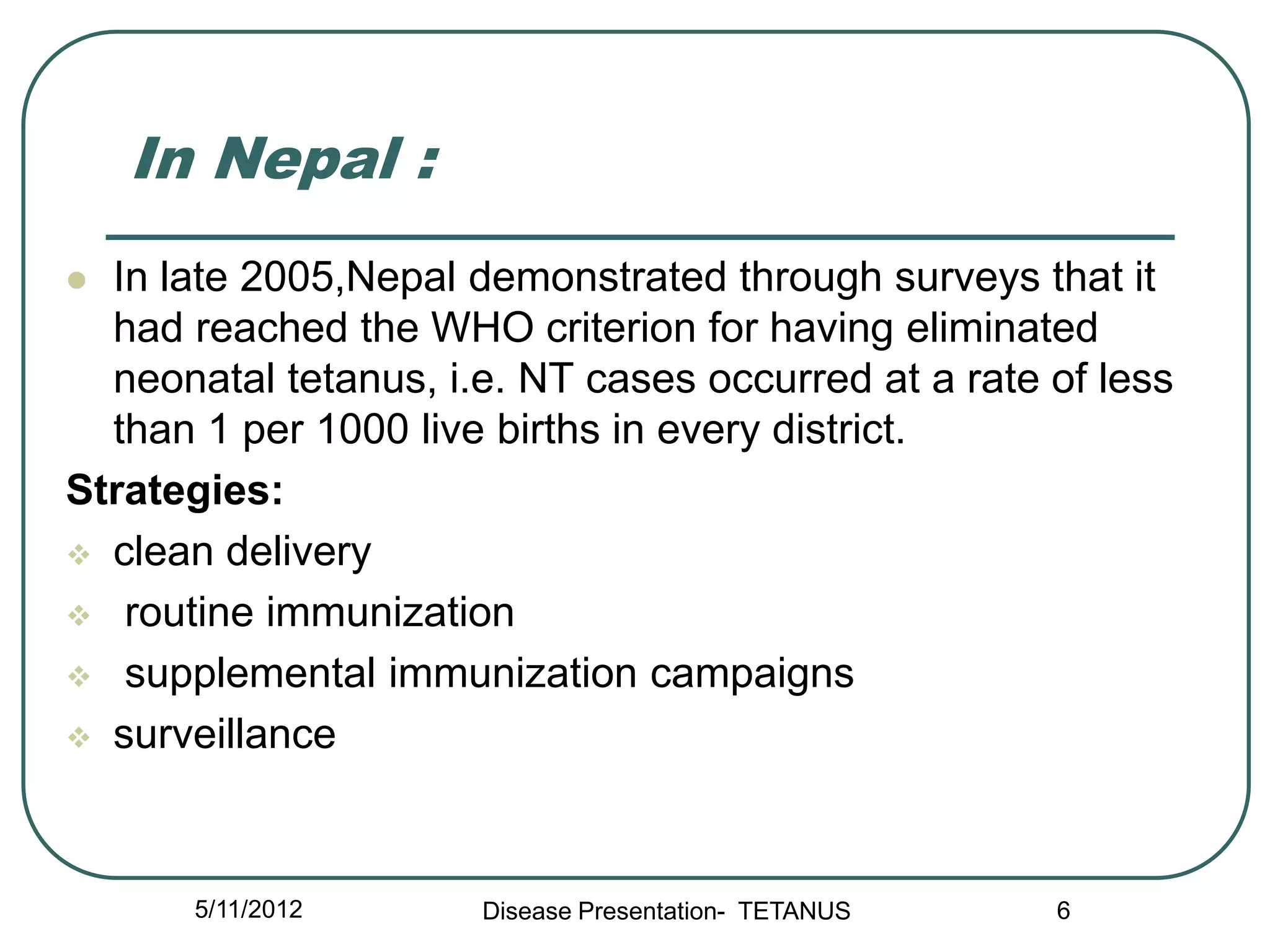
![Some facts;
Initiation of EPI in 1979 [3 districts]
1989 in 75 districts
DPT and TT vaccines from 1981.
years TT+2 COVERAGE
1993–1995 33%
1996–2000 45%
1999 65%
5/11/2012 Disease Presentation- TETANUS 7](https://image.slidesharecdn.com/tetanus-120511152528-phpapp02/75/Tetanus-7-2048.jpg)
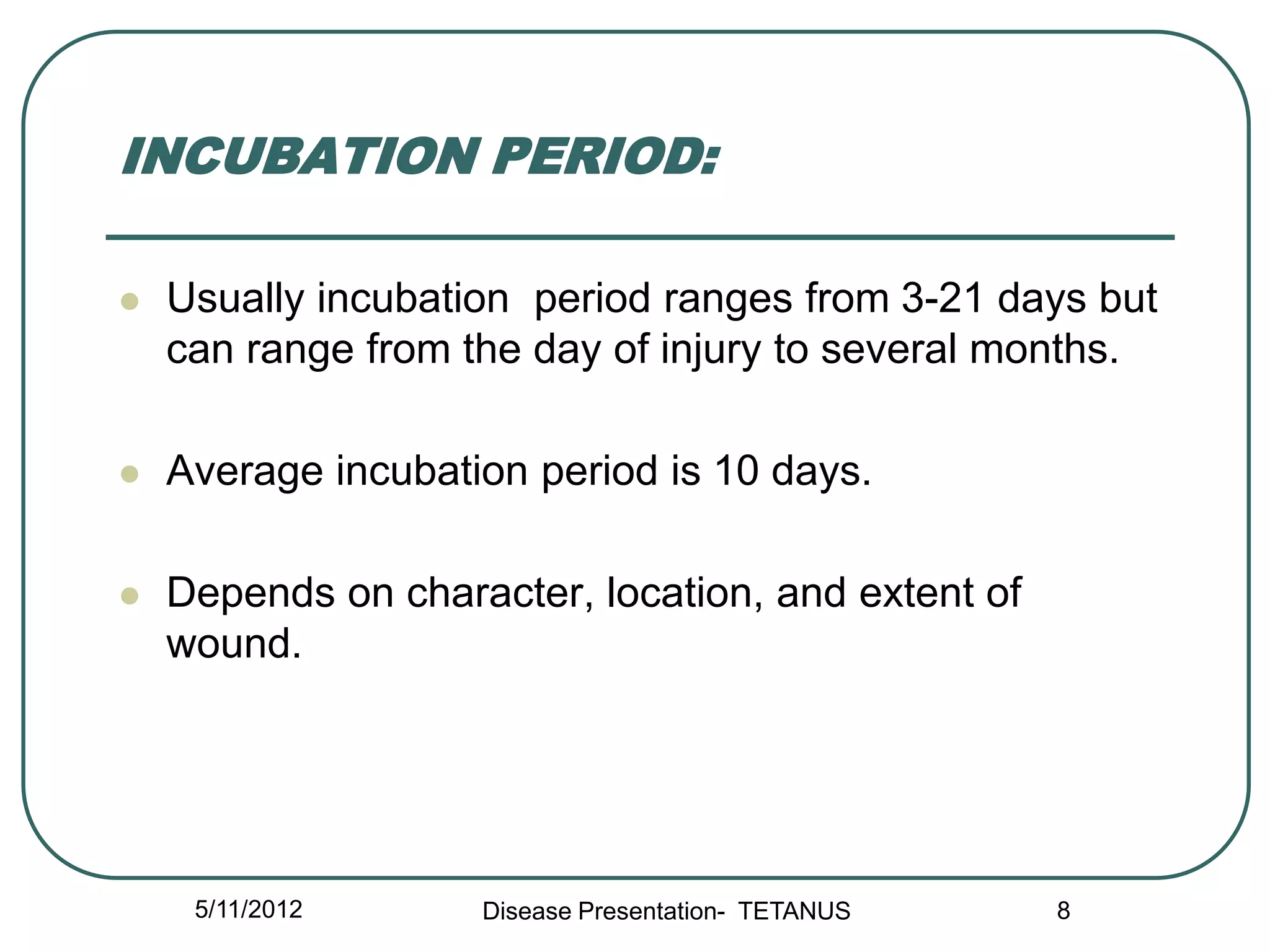
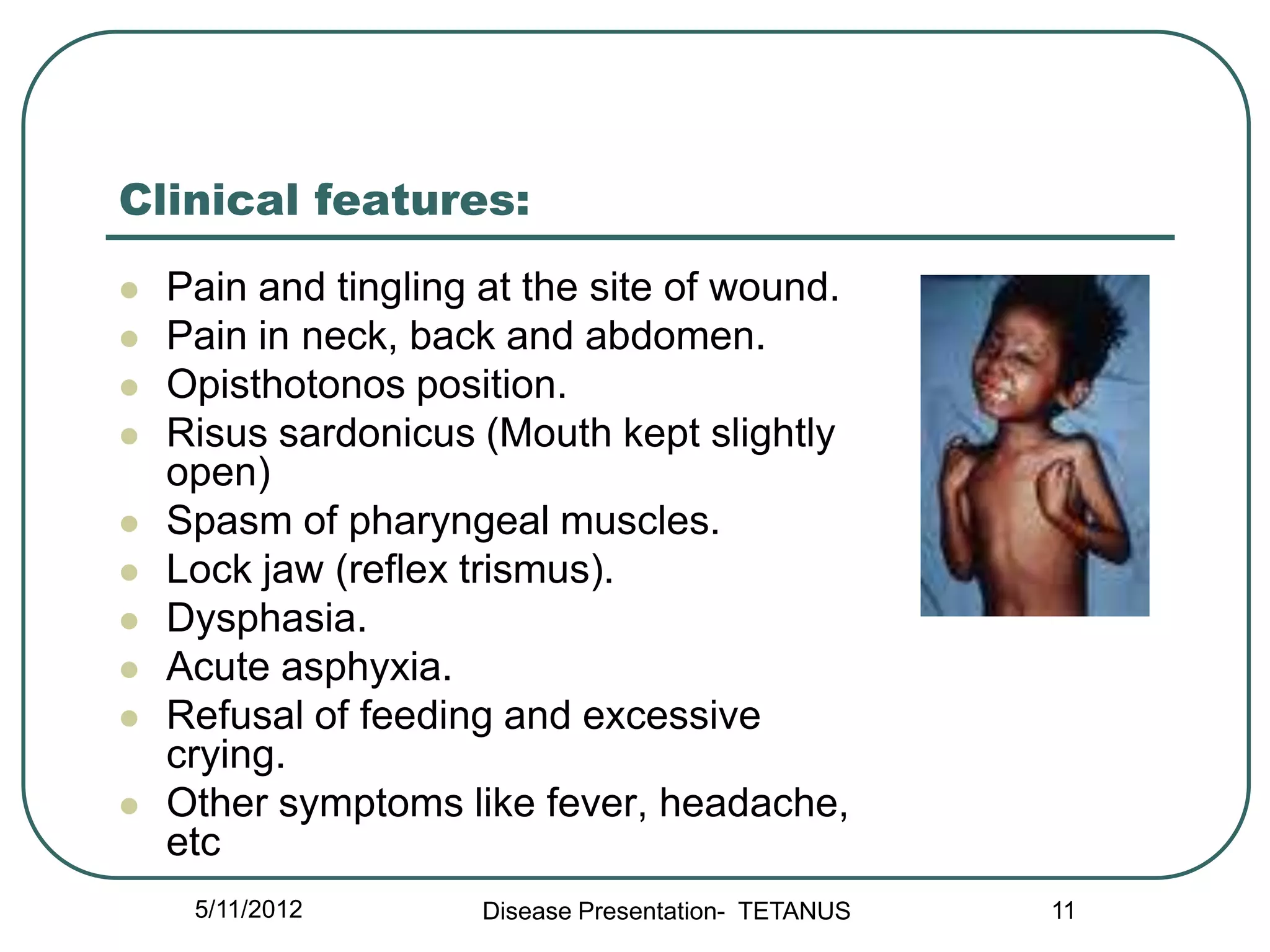

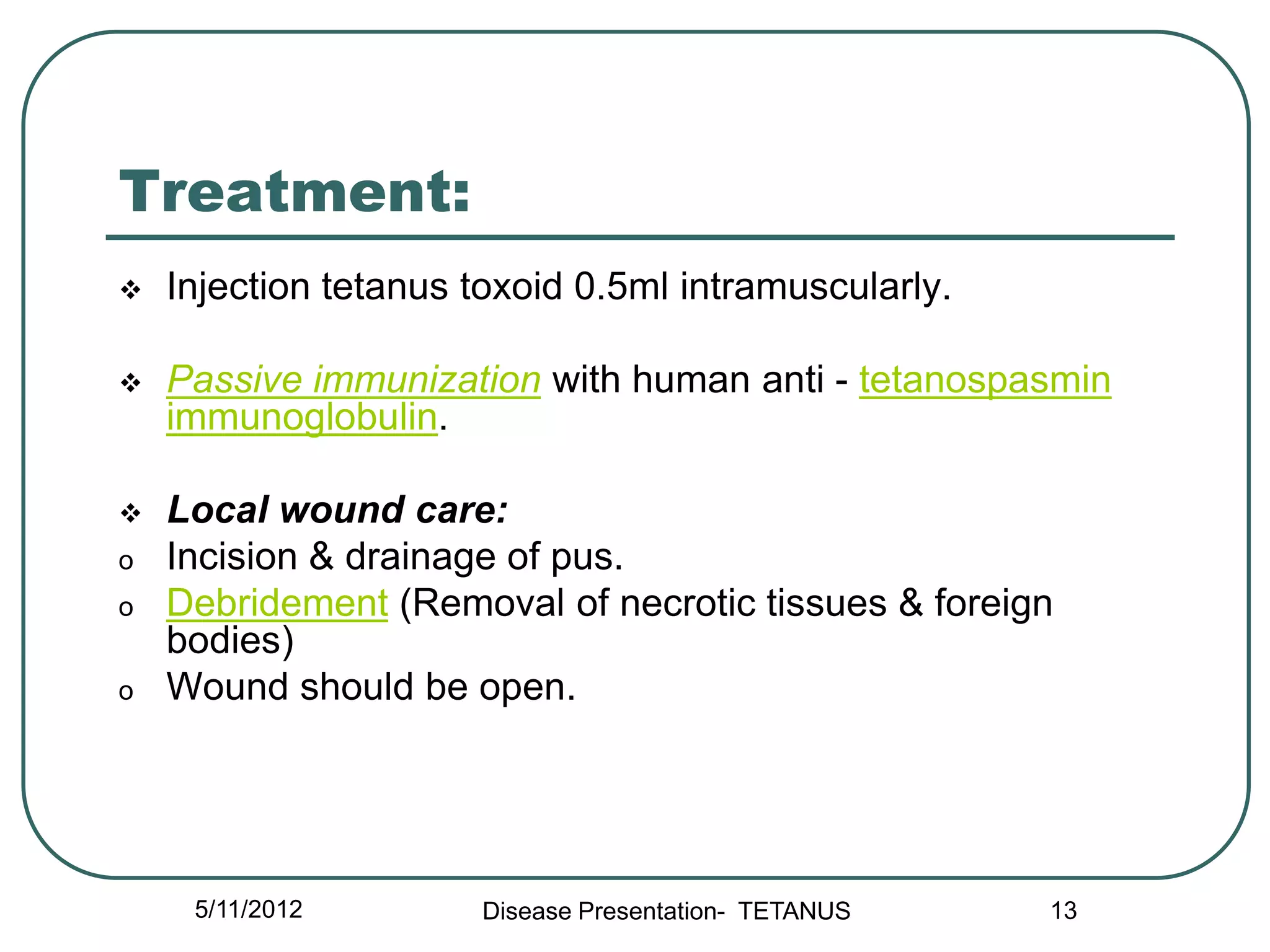


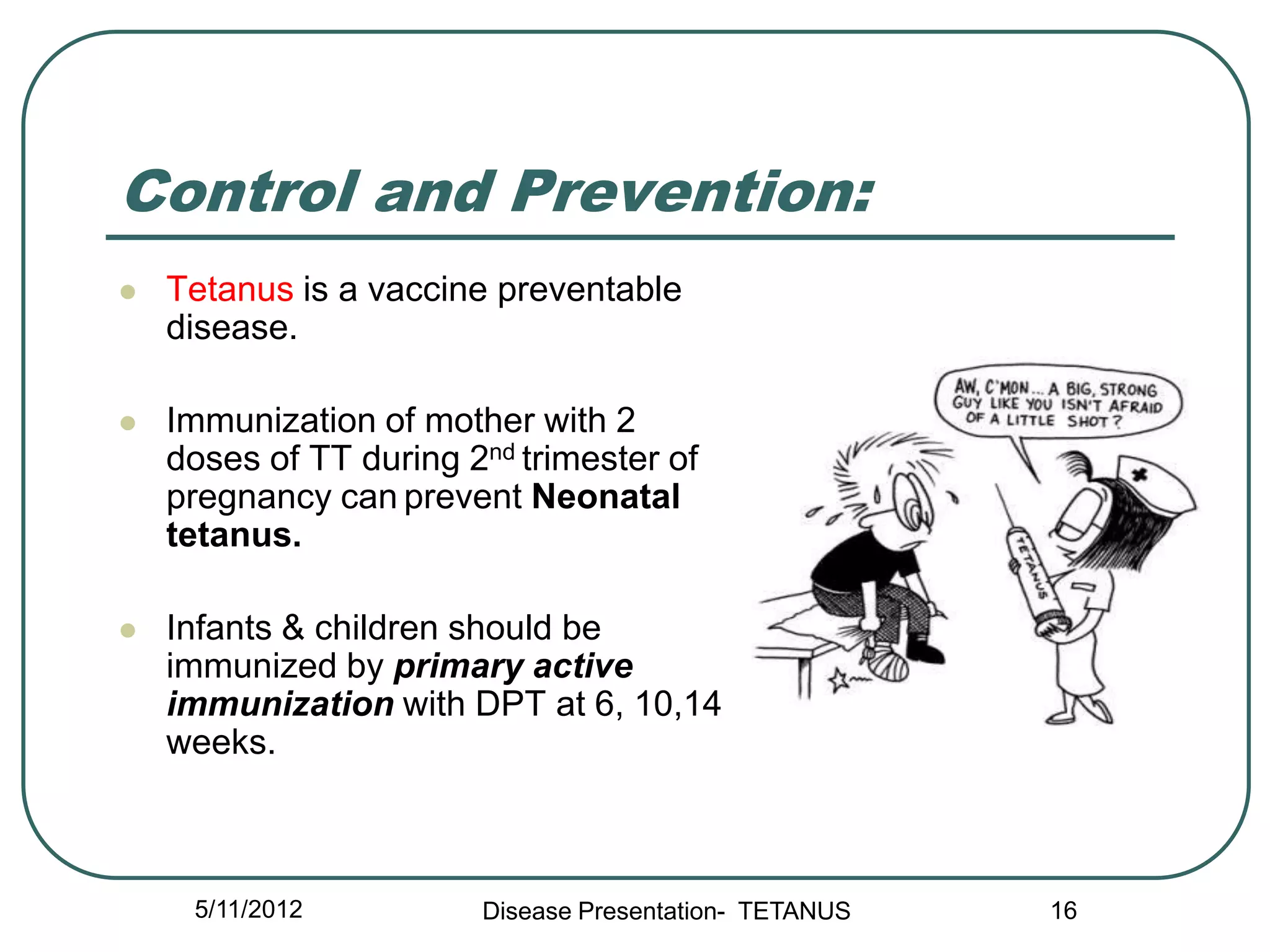
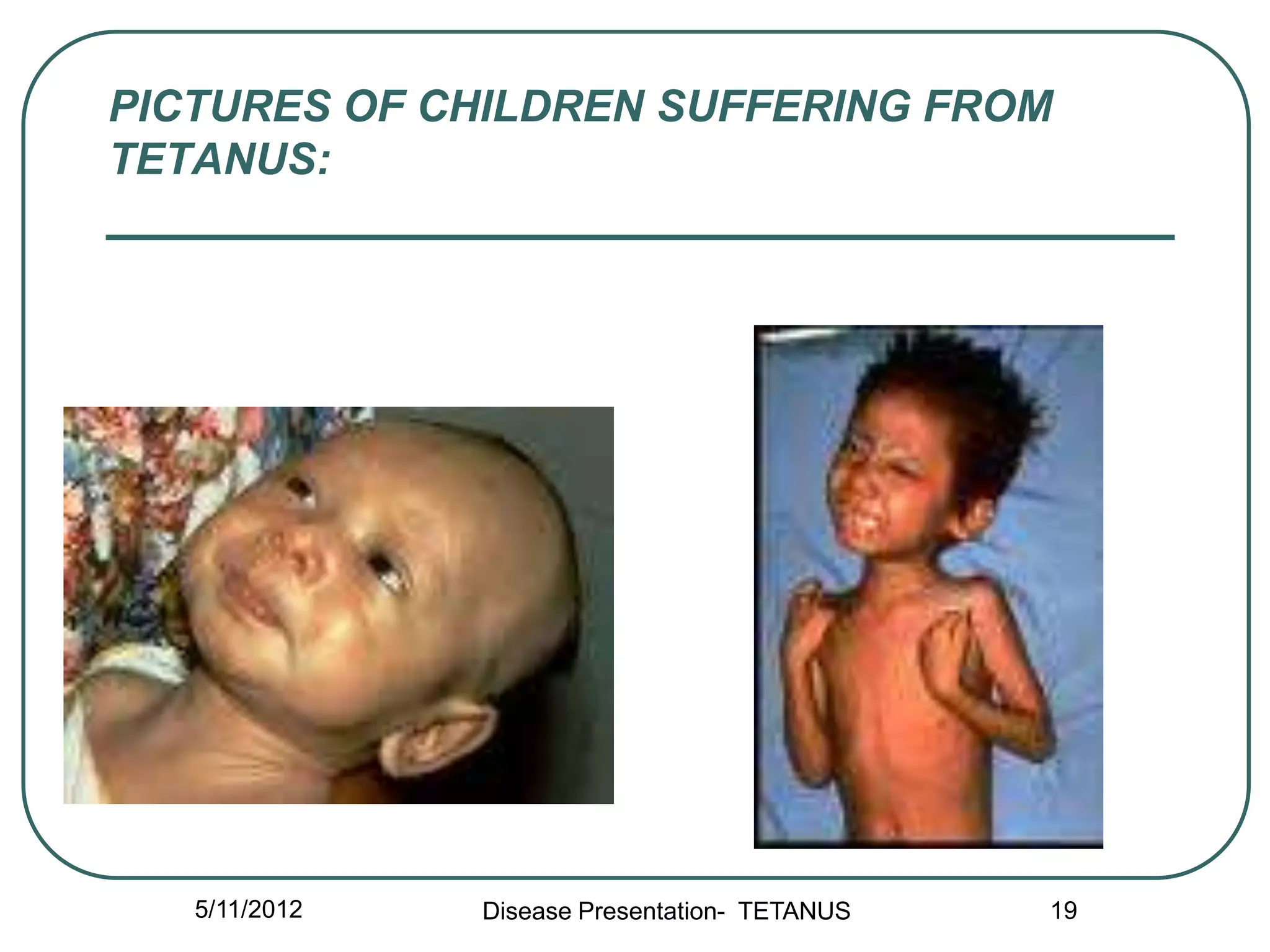
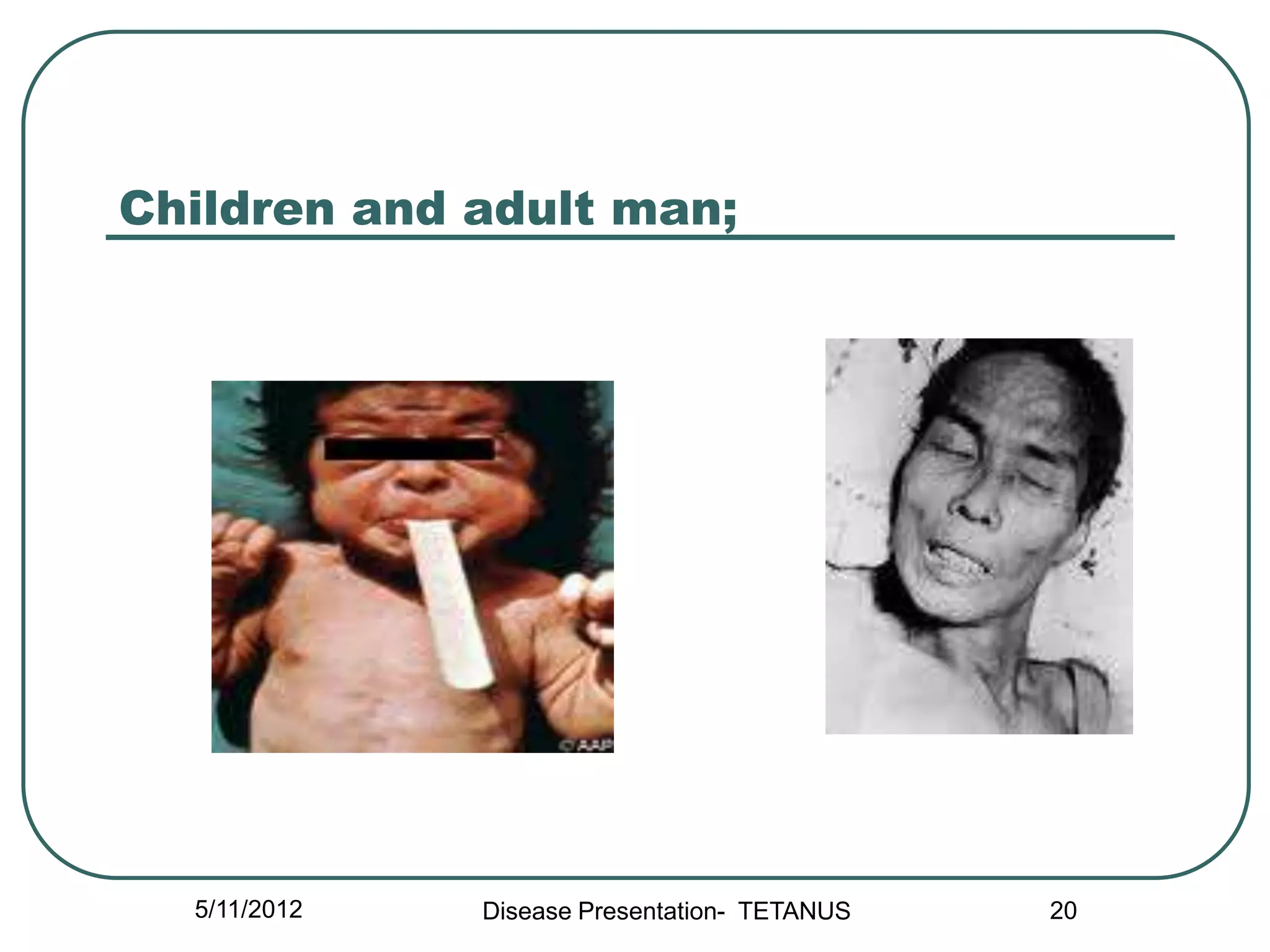


Clostridium tetani causes tetanus, which is characterized by prolonged muscle contractions. The bacteria forms spores that are found in soil and can enter the body through wounds. Once inside the body, the spores produce a neurotoxin that causes painful muscle spasms. Tetanus is especially prevalent in developing countries and causes around 59,000 newborn deaths per year worldwide. Vaccination is the most effective prevention strategy and has helped Nepal eliminate neonatal tetanus. Treatment focuses on wound care, antibiotics, controlling spasms, and supportive measures.


