CHRONIC
DACRYOCYSTITIS
• WHAT IS DACRYOCYSTITIS?
• WHAT ARE THE CAUSES OF
CHRONIC DACRYOCYSTITIS?
Predisposing Factors
Factors causing stasis of tears
Source of infection
Causative organisms
1. Predisposing factors
• Age
• Sex
• Race
• Heredity
• Socio-economic status
• Poor personal hygiene
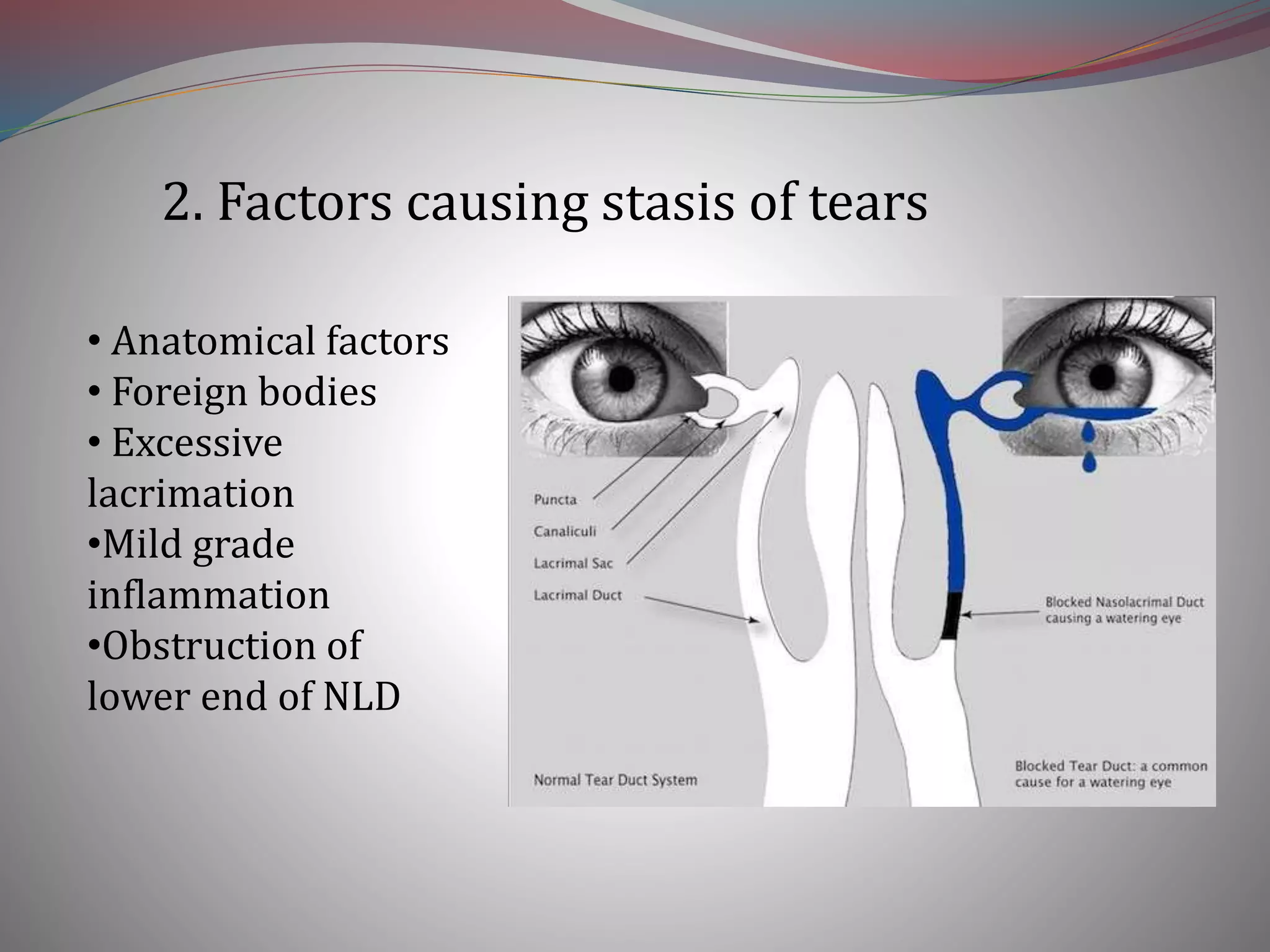
2. Factors causing stasis of tears
• Anatomical factors
• Foreign bodies
• Excessive
lacrimation
•Mild grade
inflammation
•Obstruction of
lower end of NLD
3. Source of infection
4. Causative organisms
• Most common –
Staphylococci,
Pneumococci,
Streptococci,
Pseudomonas
pyocyanea
STAGES
1. Stage of chronic catarrhal
dacryocystitis
2. Stage of lacrimal mucocoele
3. Stage of chronic
suppurative dacryocystitis
4. Stage of chronic fibrotic sac
1. Stage of chronic catarrhal
dacryocystitis
• Symptoms
• Lacrimal syringing –
clear fluid or few
fibrinous flakes
• Dacryocystography –
block in the NLD, normal
sized lacrimal sac with
healthy mucosa
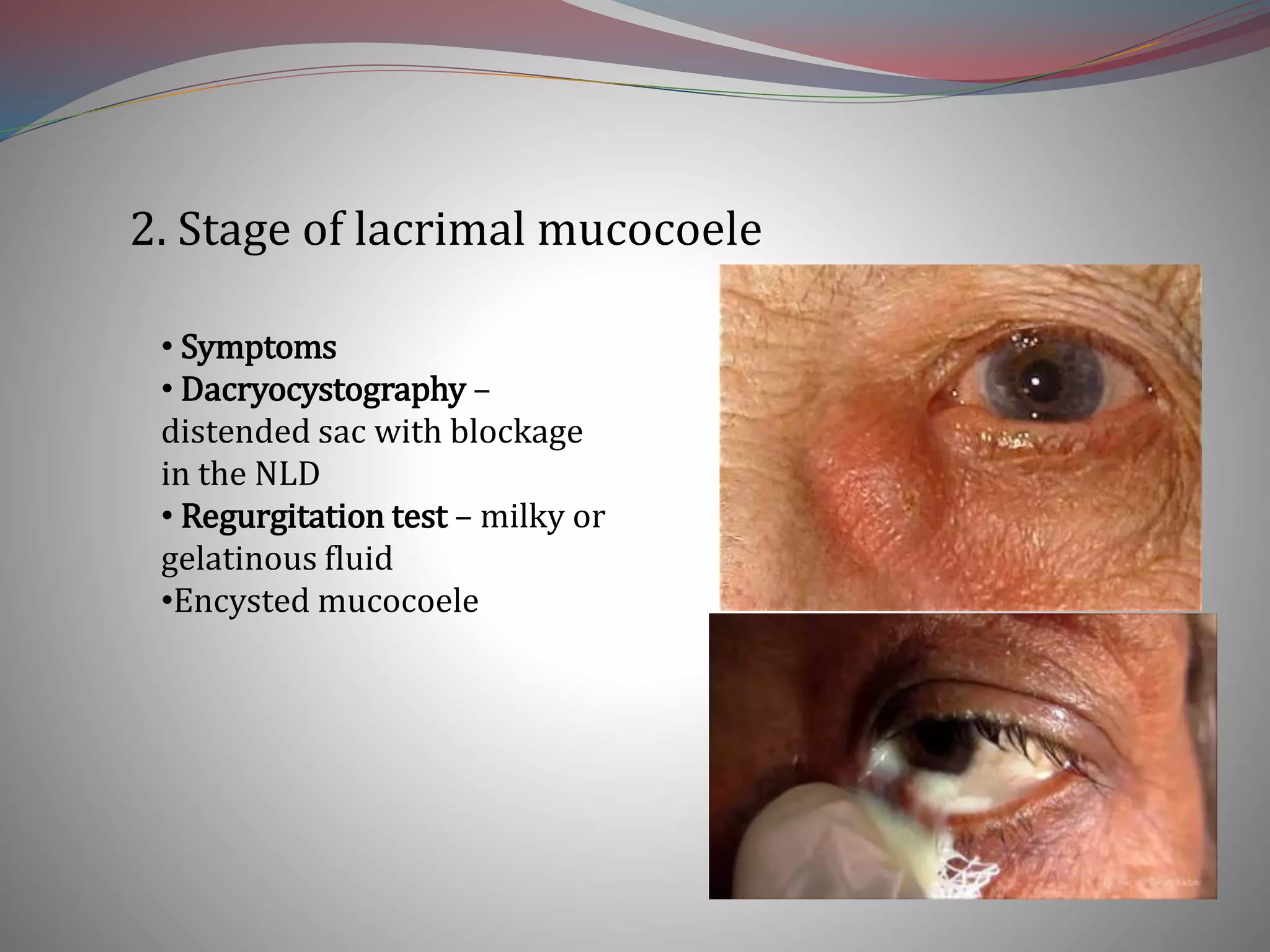
2. Stage of lacrimal mucocoele
• Symptoms
• Dacryocystography –
distended sac with blockage
in the NLD
• Regurgitation test – milky or
gelatinous fluid
•Encysted mucocoele
3. Stage of chronic suppurative
dacryocystitis
• Symptoms
• Regurgitation test – frank
mucopurulent discharge
• Encysted pyocoele
4. Stage of chronic fibrotic sac
• Symptoms
• Dacryocystography – very
small sac with irregular
mucosal folds
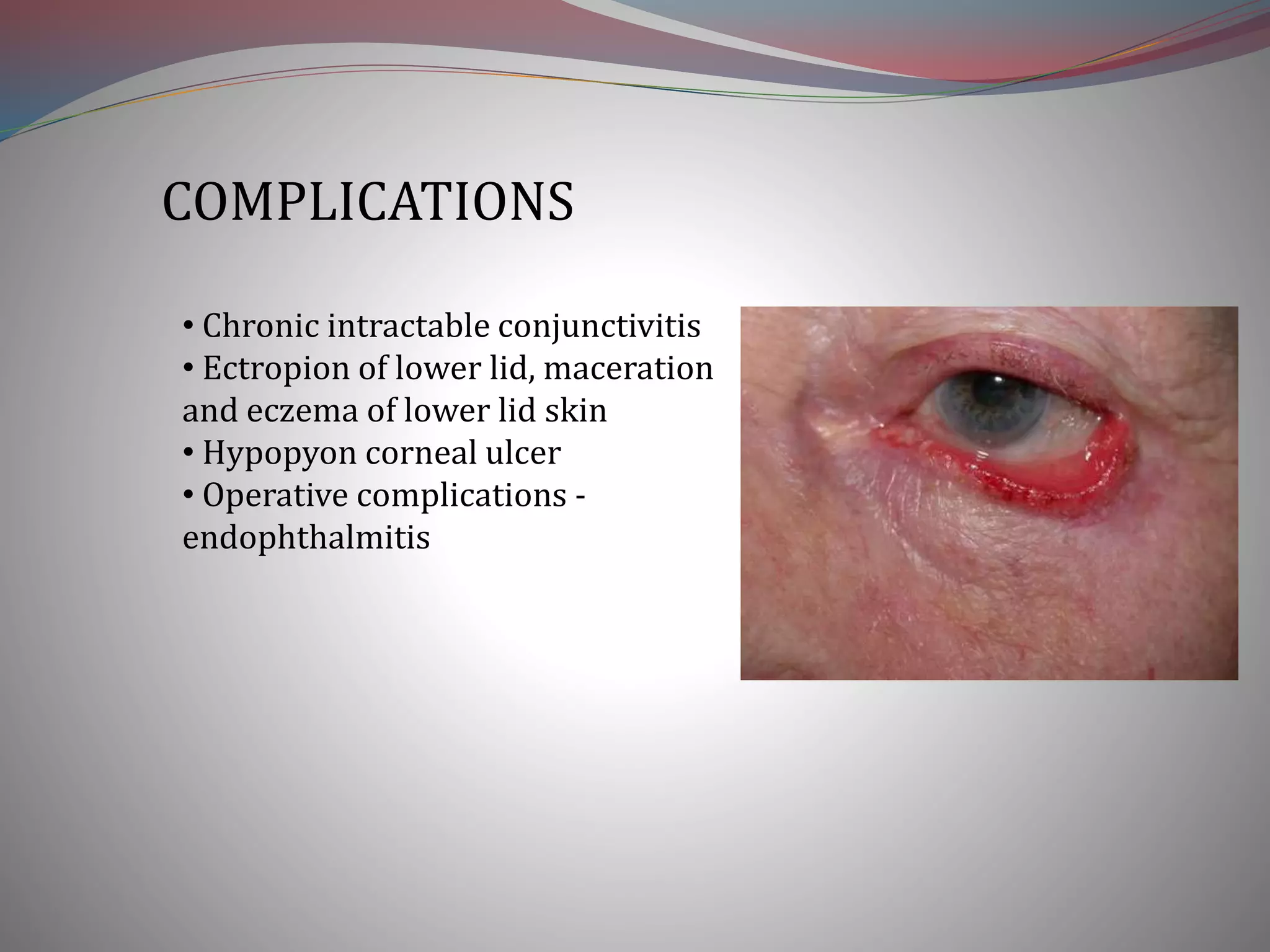
COMPLICATIONS
• Chronic intractable conjunctivitis
• Ectropion of lower lid, maceration
and eczema of lower lid skin
• Hypopyon corneal ulcer
• Operative complications -
endophthalmitis
TREATMENT
• Conservative treatment – repeated lacrimal
syringing
• Balloon catheter dilation
• Dacryocystorhinostomy
• Dacryocystectomy – only when DCR is
contraindicated
• Conjunctivodacryocystorhinostomy
THANK
YOU

Chronic dacryocystitis

  • 1.
  • 2.
    • WHAT ISDACRYOCYSTITIS? • WHAT ARE THE CAUSES OF CHRONIC DACRYOCYSTITIS? Predisposing Factors Factors causing stasis of tears Source of infection Causative organisms
  • 3.
    1. Predisposing factors •Age • Sex • Race • Heredity • Socio-economic status • Poor personal hygiene
  • 4.
    2. Factors causingstasis of tears • Anatomical factors • Foreign bodies • Excessive lacrimation •Mild grade inflammation •Obstruction of lower end of NLD
  • 5.
    3. Source ofinfection
  • 6.
    4. Causative organisms •Most common – Staphylococci, Pneumococci, Streptococci, Pseudomonas pyocyanea
  • 7.
    STAGES 1. Stage ofchronic catarrhal dacryocystitis 2. Stage of lacrimal mucocoele 3. Stage of chronic suppurative dacryocystitis 4. Stage of chronic fibrotic sac
  • 8.
    1. Stage ofchronic catarrhal dacryocystitis • Symptoms • Lacrimal syringing – clear fluid or few fibrinous flakes • Dacryocystography – block in the NLD, normal sized lacrimal sac with healthy mucosa
  • 9.
    2. Stage oflacrimal mucocoele • Symptoms • Dacryocystography – distended sac with blockage in the NLD • Regurgitation test – milky or gelatinous fluid •Encysted mucocoele
  • 10.
    3. Stage ofchronic suppurative dacryocystitis • Symptoms • Regurgitation test – frank mucopurulent discharge • Encysted pyocoele 4. Stage of chronic fibrotic sac • Symptoms • Dacryocystography – very small sac with irregular mucosal folds
  • 11.
    COMPLICATIONS • Chronic intractableconjunctivitis • Ectropion of lower lid, maceration and eczema of lower lid skin • Hypopyon corneal ulcer • Operative complications - endophthalmitis
  • 12.
    TREATMENT • Conservative treatment– repeated lacrimal syringing • Balloon catheter dilation • Dacryocystorhinostomy • Dacryocystectomy – only when DCR is contraindicated • Conjunctivodacryocystorhinostomy
  • 13.