A mixture is a combination of two or more substances that retain their individual chemical and physical properties. There are two types of mixtures: homogeneous mixtures, where the substances are evenly mixed on a small scale and cannot be seen, and heterogeneous mixtures, where the individual substances can be visually identified. A solution is a type of homogeneous mixture where one substance dissolves evenly into another, such as sugar dissolving in water, forming a mixture on a molecular scale. Not all mixtures are solutions, as solubility determines whether a substance will dissolve in another.
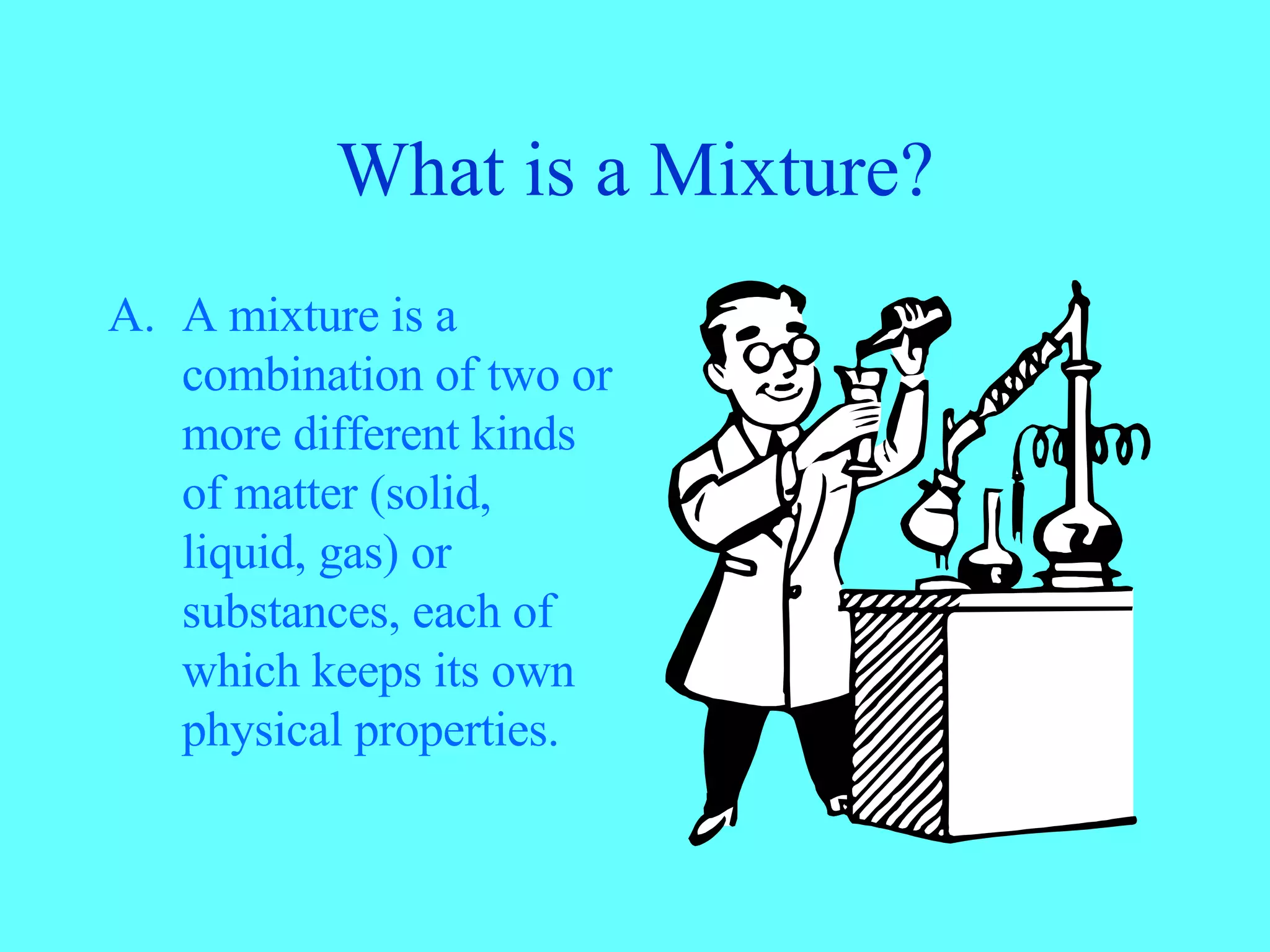
What is aMixture? A mixture is a combination of two or more different kinds of matter (solid, liquid, gas) or substances, each of which keeps its own physical properties.
3.
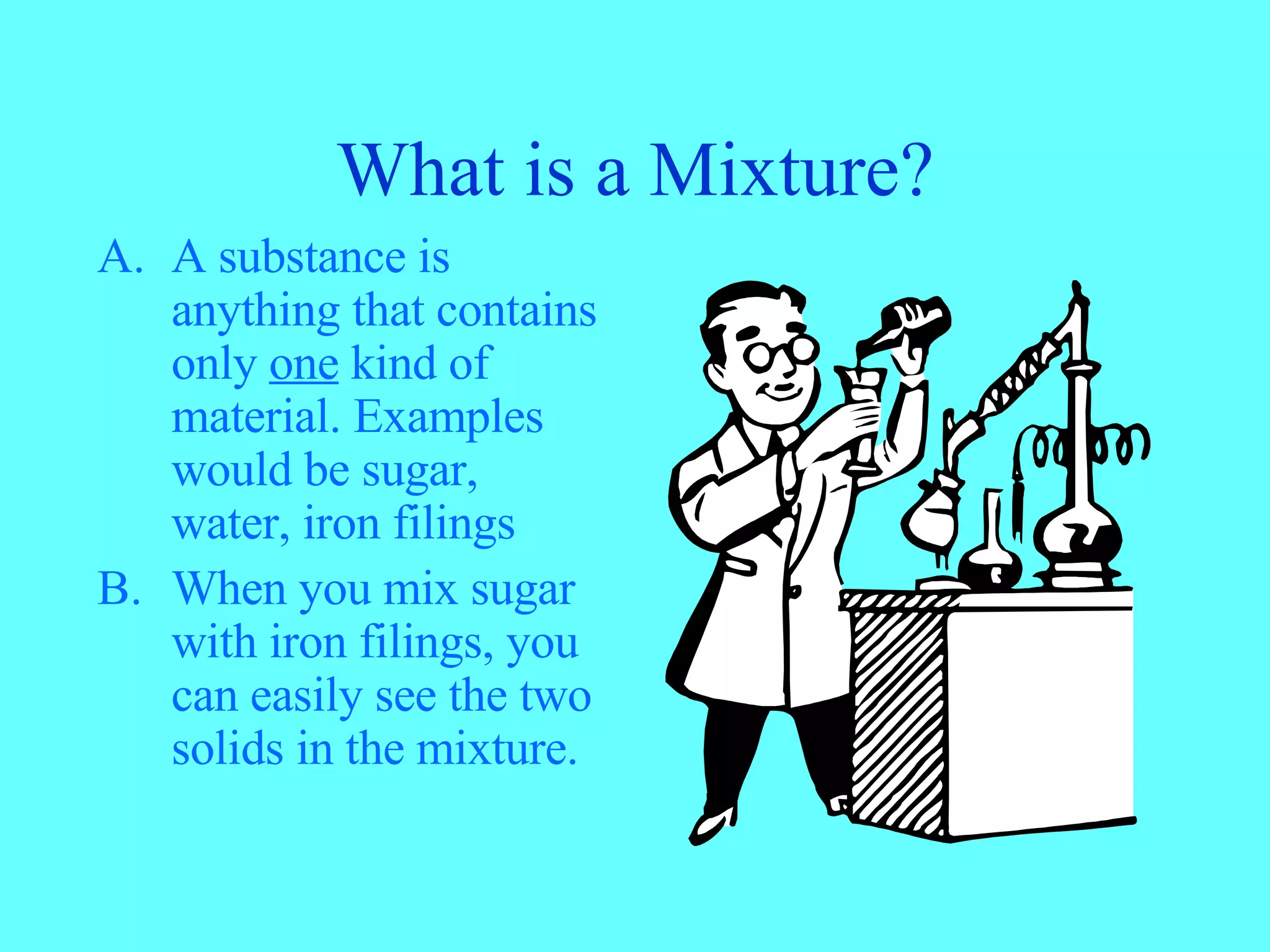
What is aMixture? A substance is anything that contains only one kind of material. Examples would be sugar, water, iron filings When you mix sugar with iron filings, you can easily see the two solids in the mixture.
4.
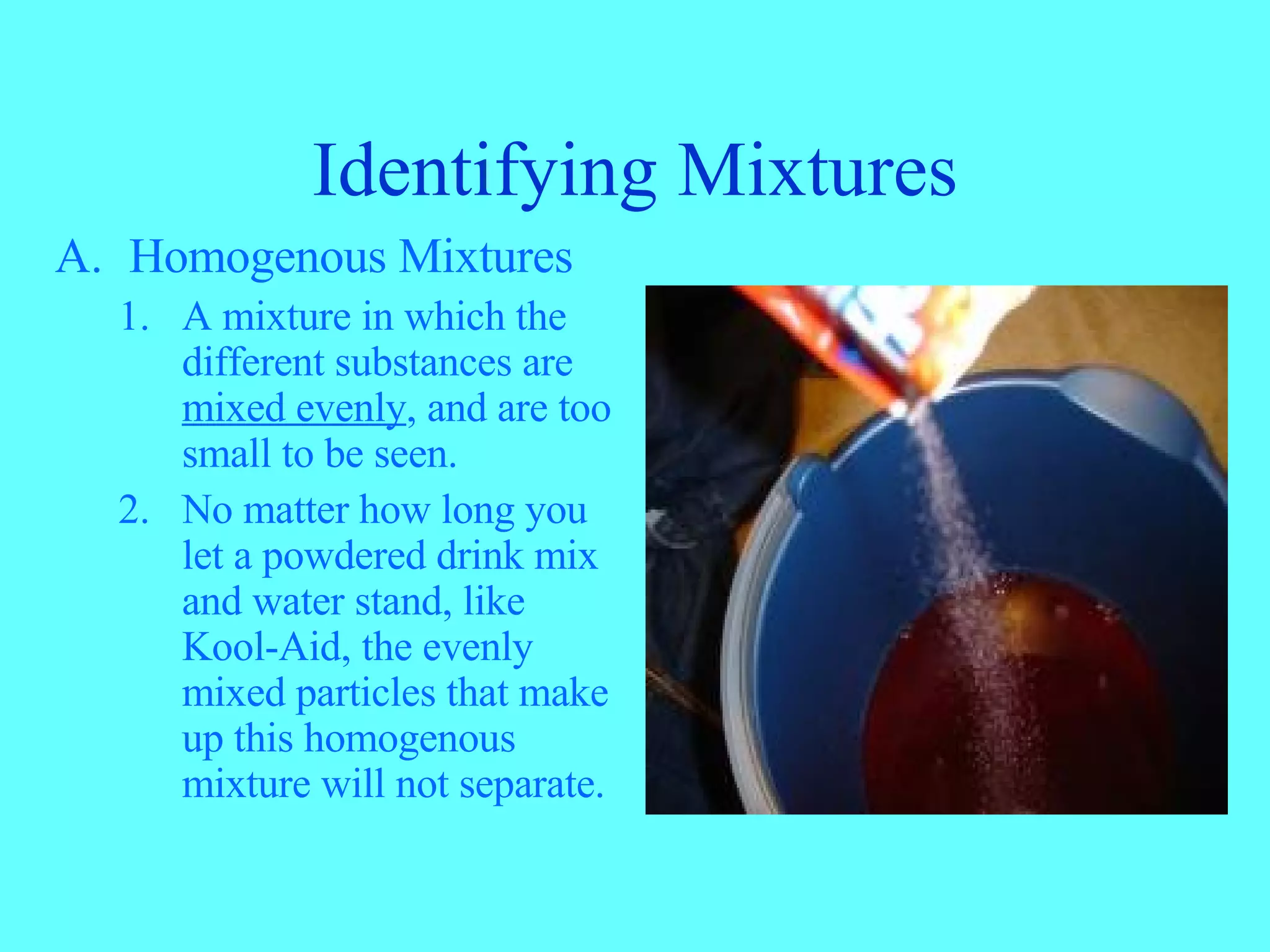
Identifying Mixtures HomogenousMixtures A mixture in which the different substances are mixed evenly , and are too small to be seen. No matter how long you let a powdered drink mix and water stand, like Kool-Aid, the evenly mixed particles that make up this homogenous mixture will not separate.
5.
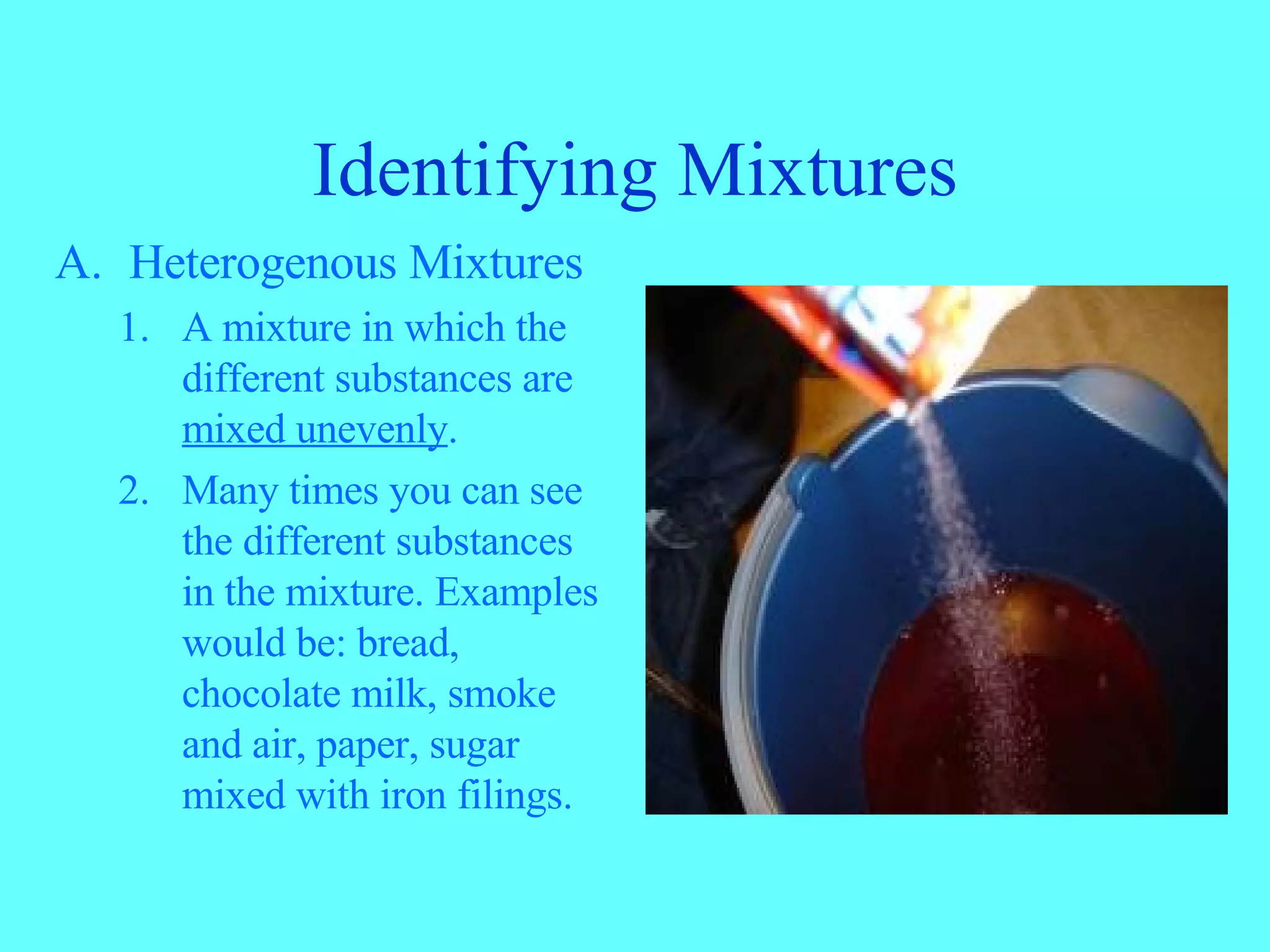
Identifying Mixtures HeterogenousMixtures A mixture in which the different substances are mixed unevenly . Many times you can see the different substances in the mixture. Examples would be: bread, chocolate milk, smoke and air, paper, sugar mixed with iron filings.
6.
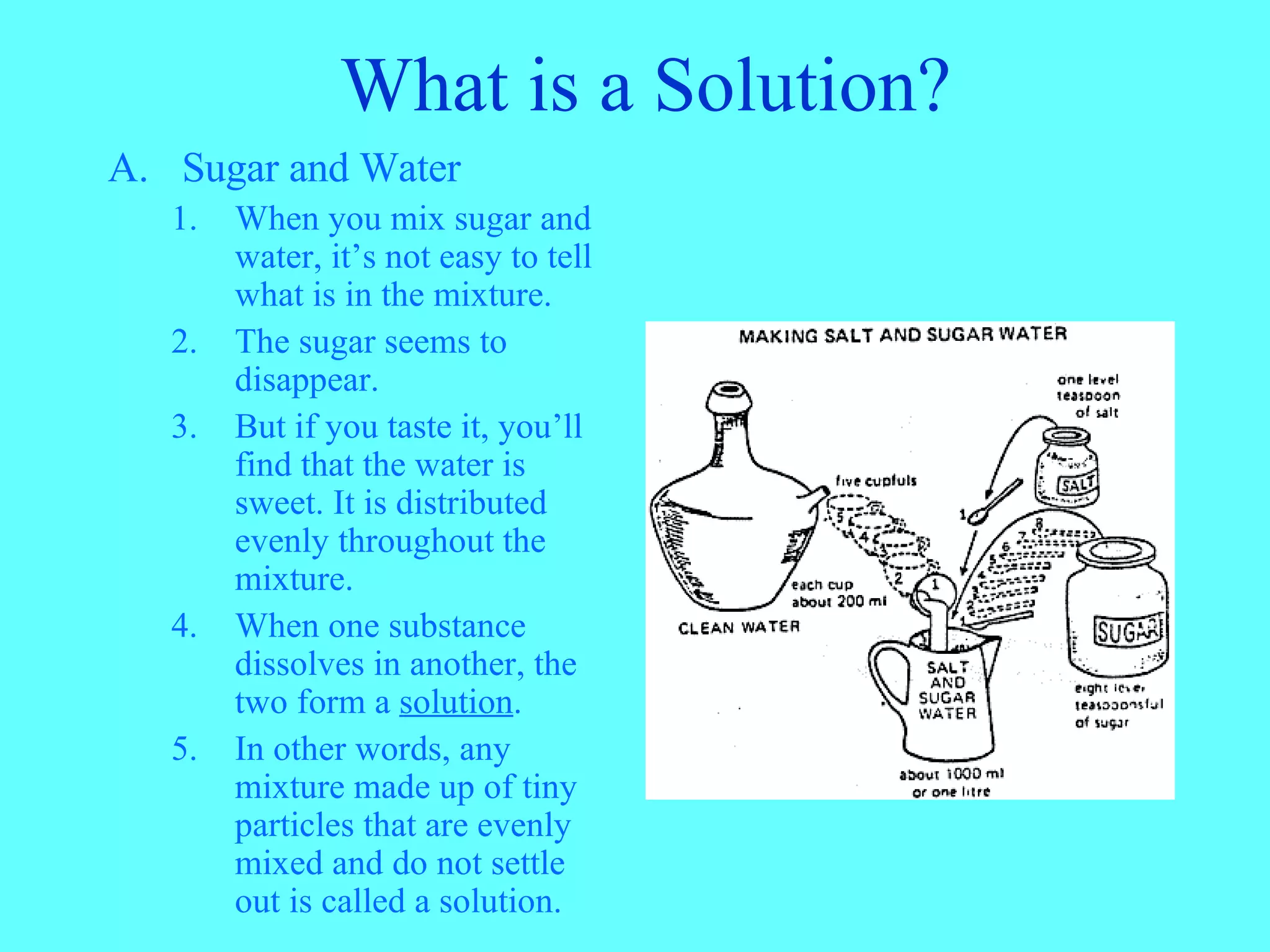
What is aSolution? Sugar and Water When you mix sugar and water, it’s not easy to tell what is in the mixture. The sugar seems to disappear. But if you taste it, you’ll find that the water is sweet. It is distributed evenly throughout the mixture. When one substance dissolves in another, the two form a solution . In other words, any mixture made up of tiny particles that are evenly mixed and do not settle out is called a solution.
7.
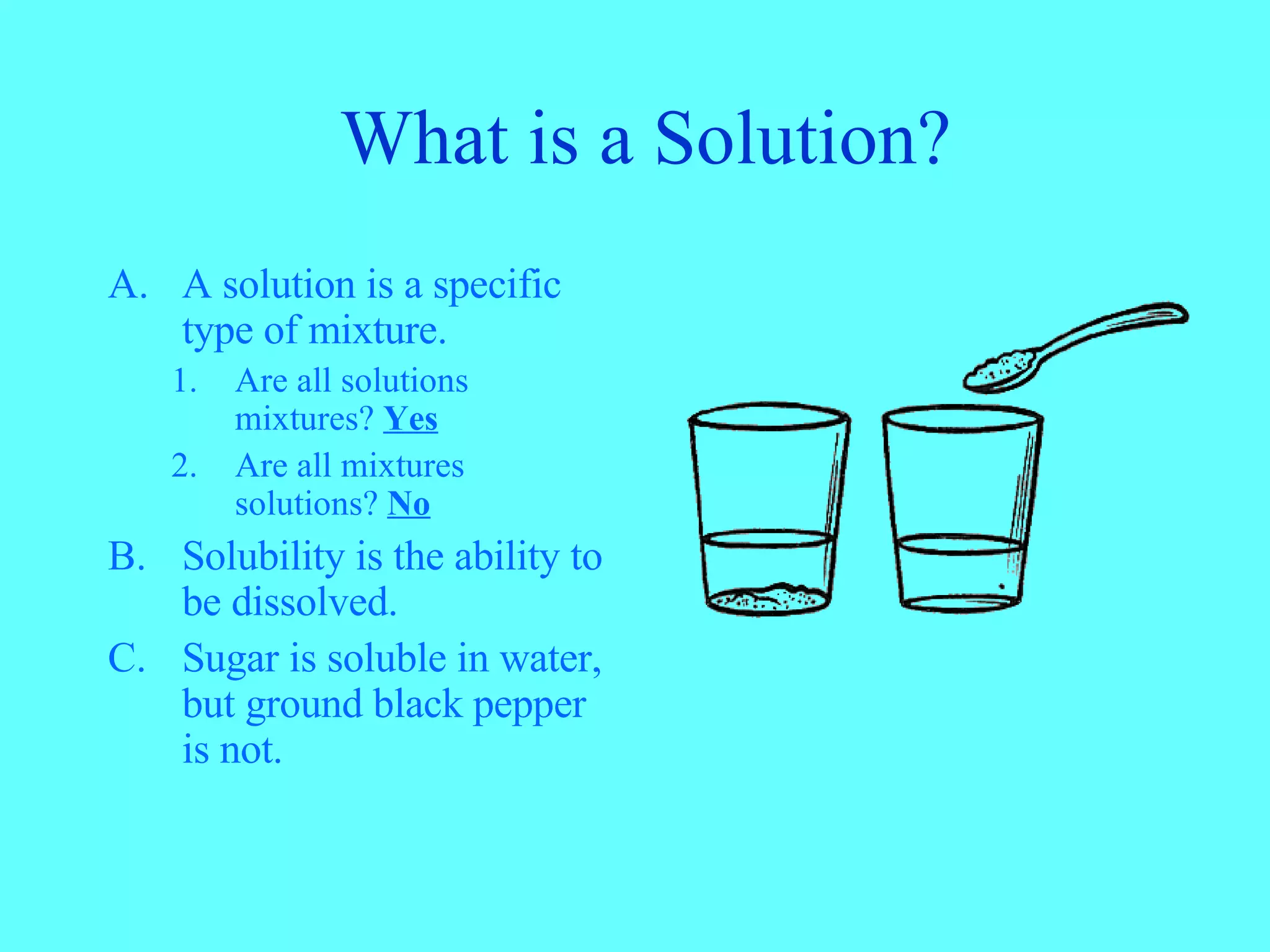
What is aSolution? A solution is a specific type of mixture. Are all solutions mixtures? Yes Are all mixtures solutions? No Solubility is the ability to be dissolved. Sugar is soluble in water, but ground black pepper is not.