TRANSFORMER FAILURES AND
CASE STUDIES
By
Veerabrahmam Bathini
Power Research & Development Consultants Pvt. Ltd.,
#5, 11th Cross, 2nd Stage, West of Chord Road,
Bangalore – 560086, Karnataka, India
OUTLINE
• Classification of Transformer Failures
• Major Failures in Transformers
• Design Aspects of Transformers
• Protection of Transformers against Problems
• Case Studies
• Conclusions
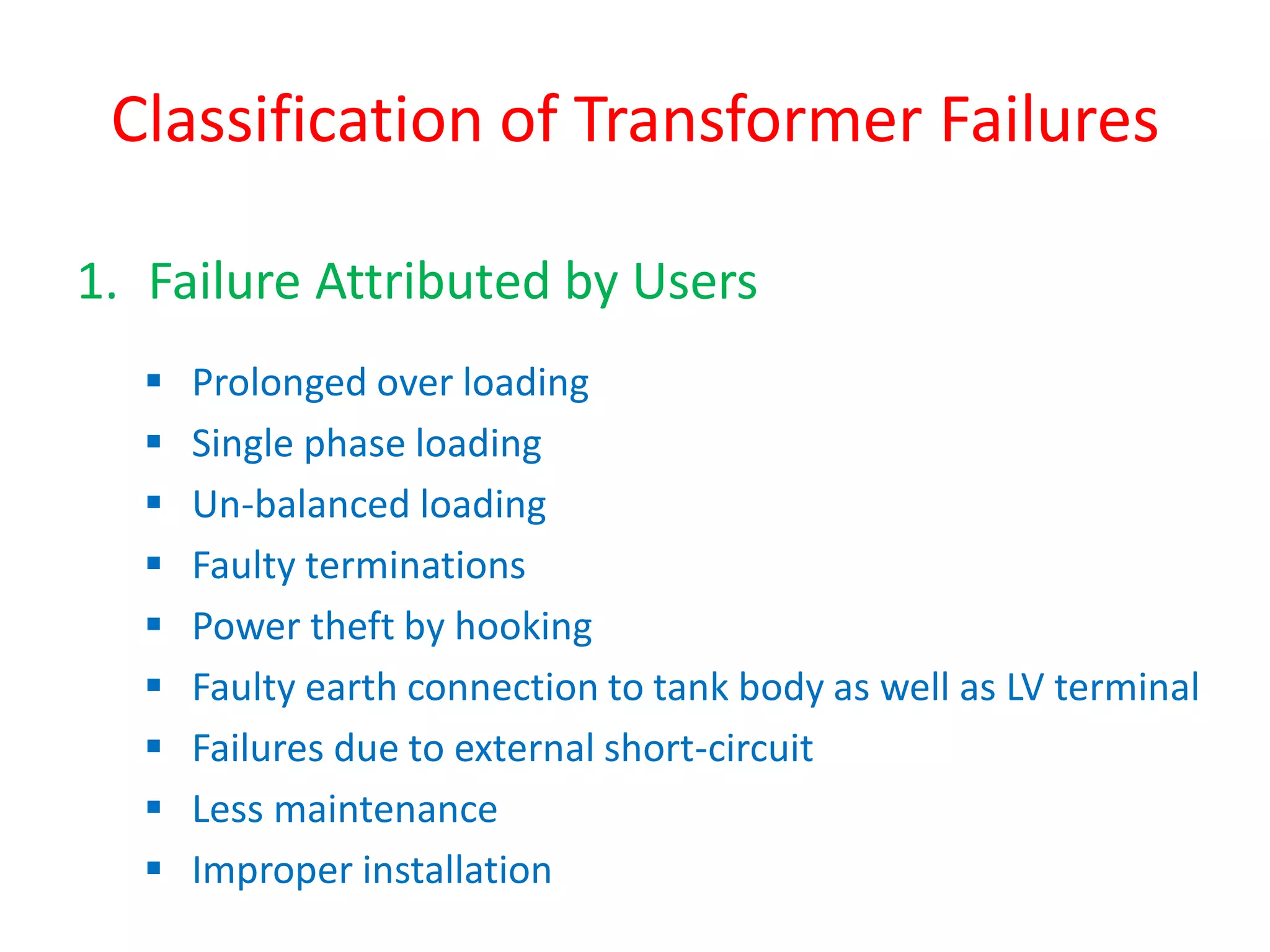
Classification of Transformer Failures
1. Failure Attributed by Users
 Prolonged over loading
 Single phase loading
 Un-balanced loading
 Faulty terminations
 Power theft by hooking
 Faulty earth connection to tank body as well as LV terminal
 Failures due to external short-circuit
 Less maintenance
 Improper installation
Classification of Transformer Failures
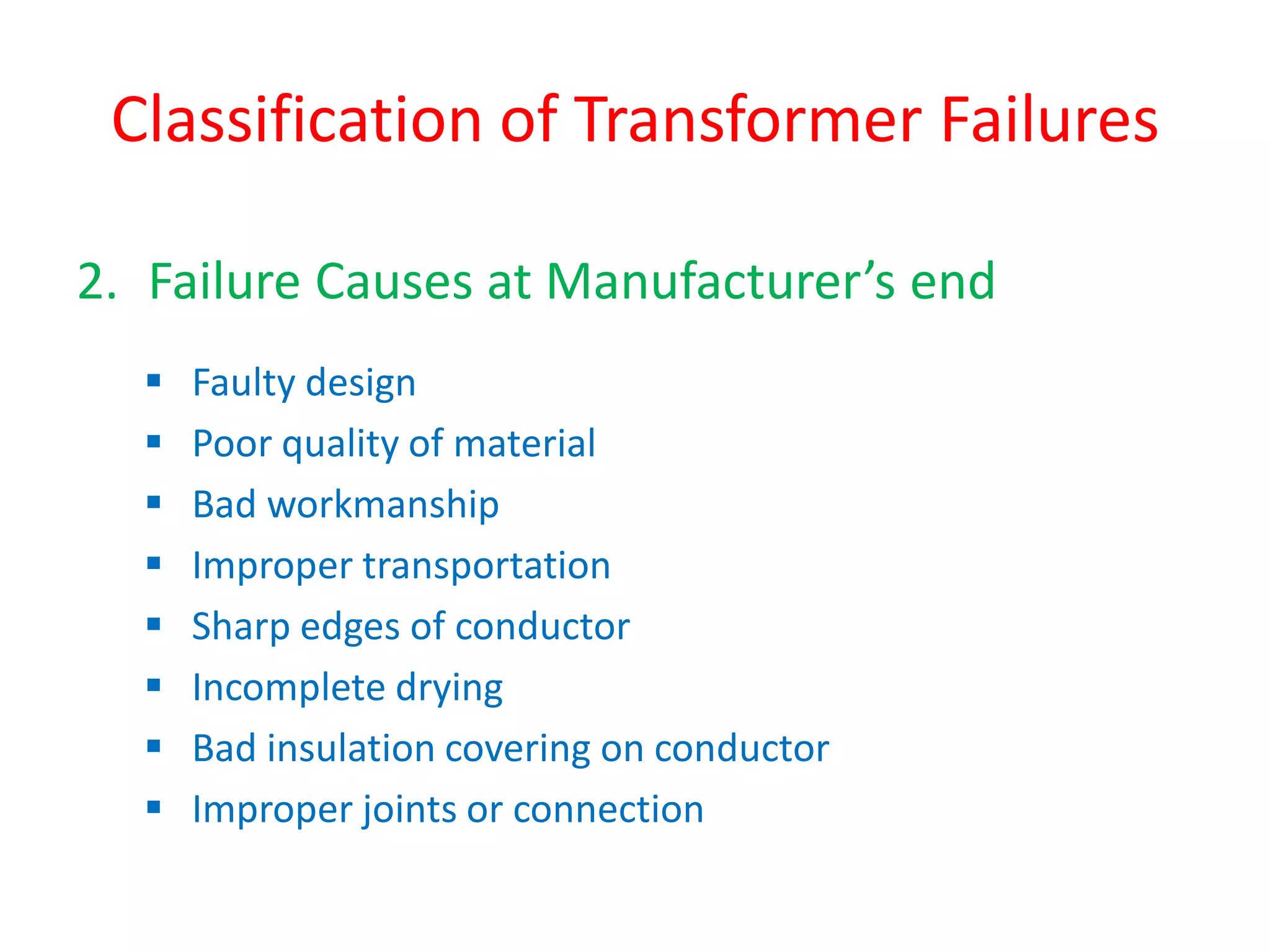
2. Failure Causes at Manufacturer’s end
 Faulty design
 Poor quality of material
 Bad workmanship
 Improper transportation
 Sharp edges of conductor
 Incomplete drying
 Bad insulation covering on conductor
 Improper joints or connection
Fig. 1. Winding Insulating Process
Fig. 2. Improper Joint
Classification of Transformer Failures
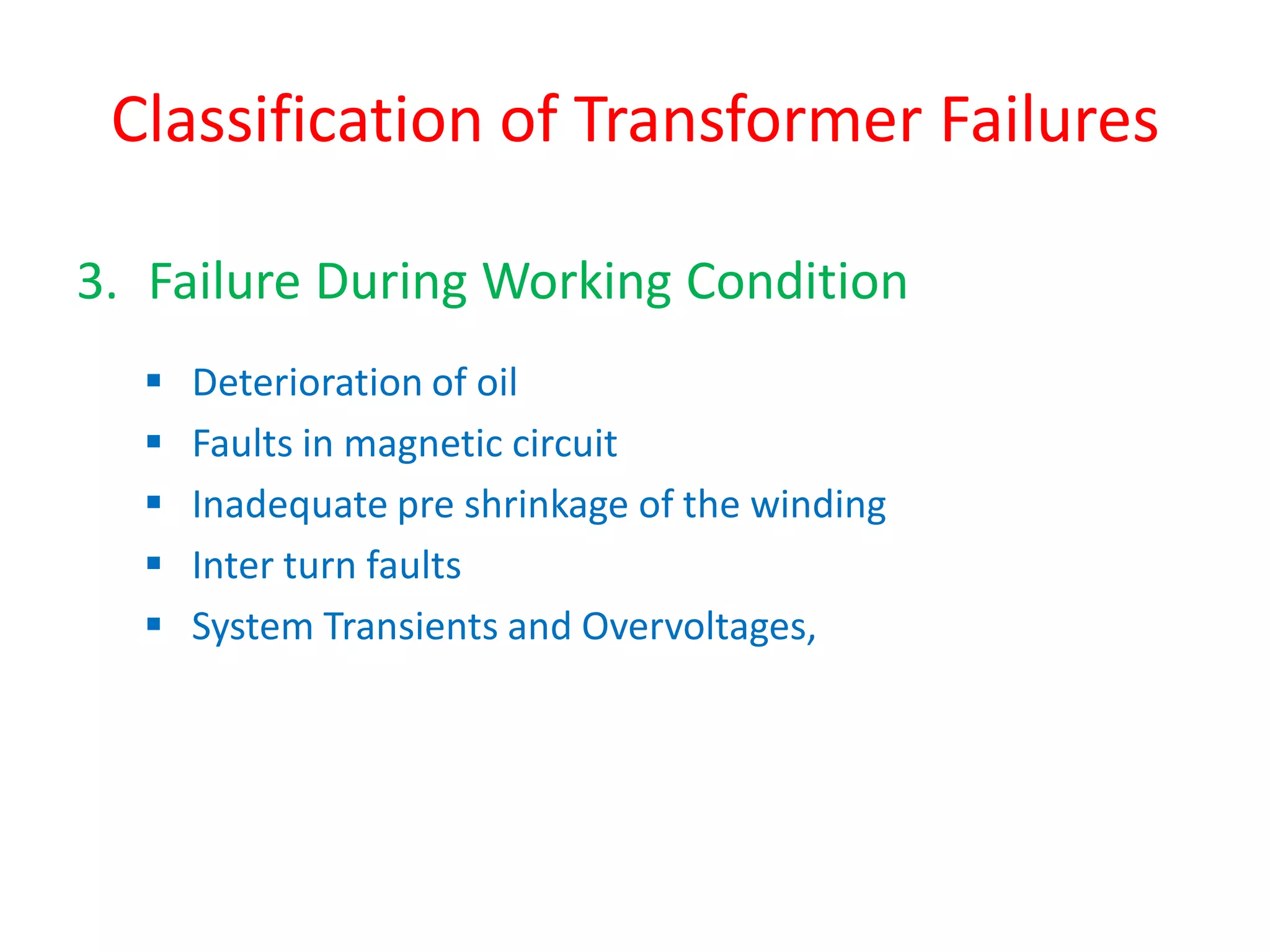
3. Failure During Working Condition
 Deterioration of oil
 Faults in magnetic circuit
 Inadequate pre shrinkage of the winding
 Inter turn faults
 System Transients and Overvoltages,
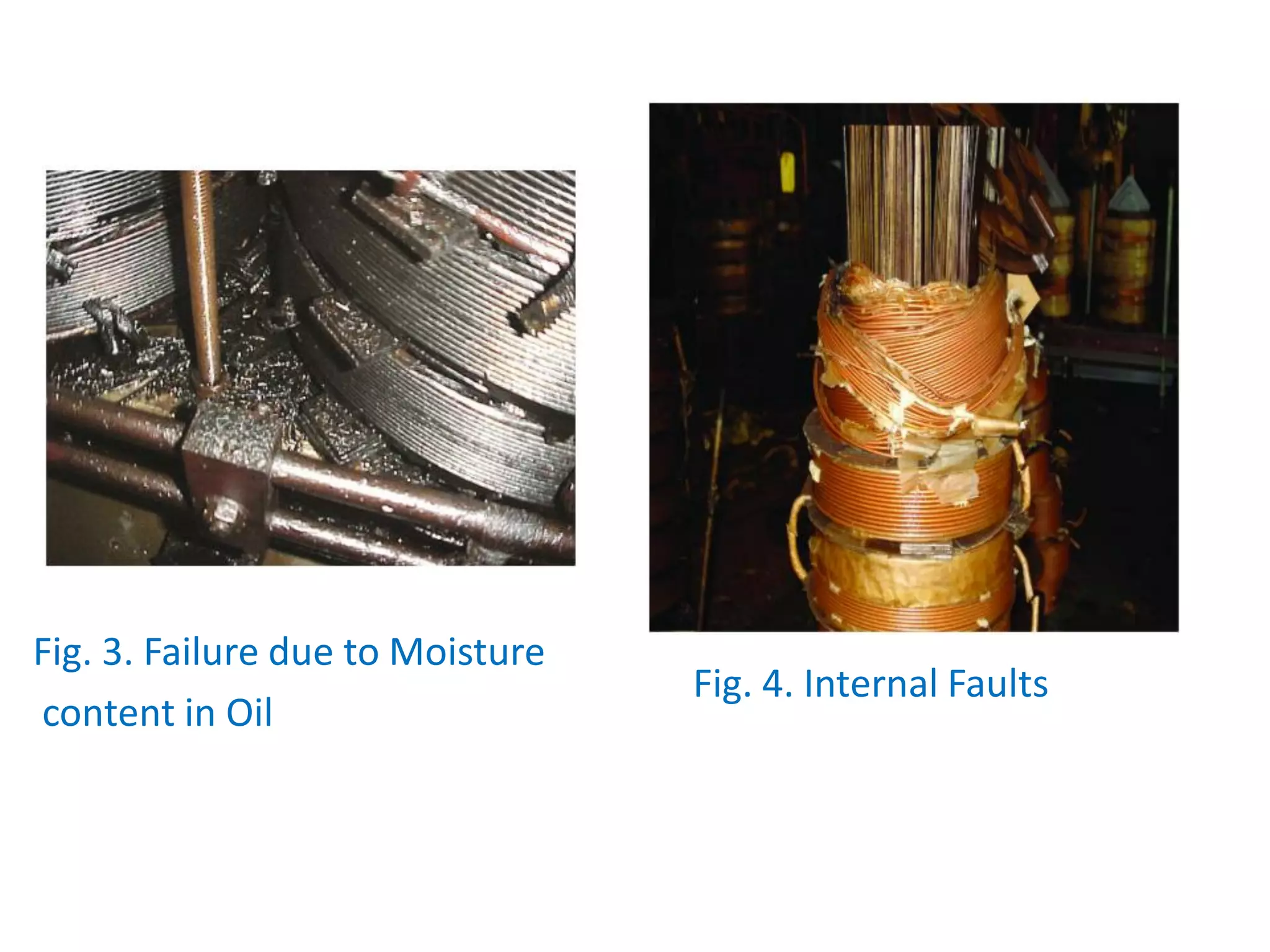
Fig. 3. Failure due to Moisture
content in Oil
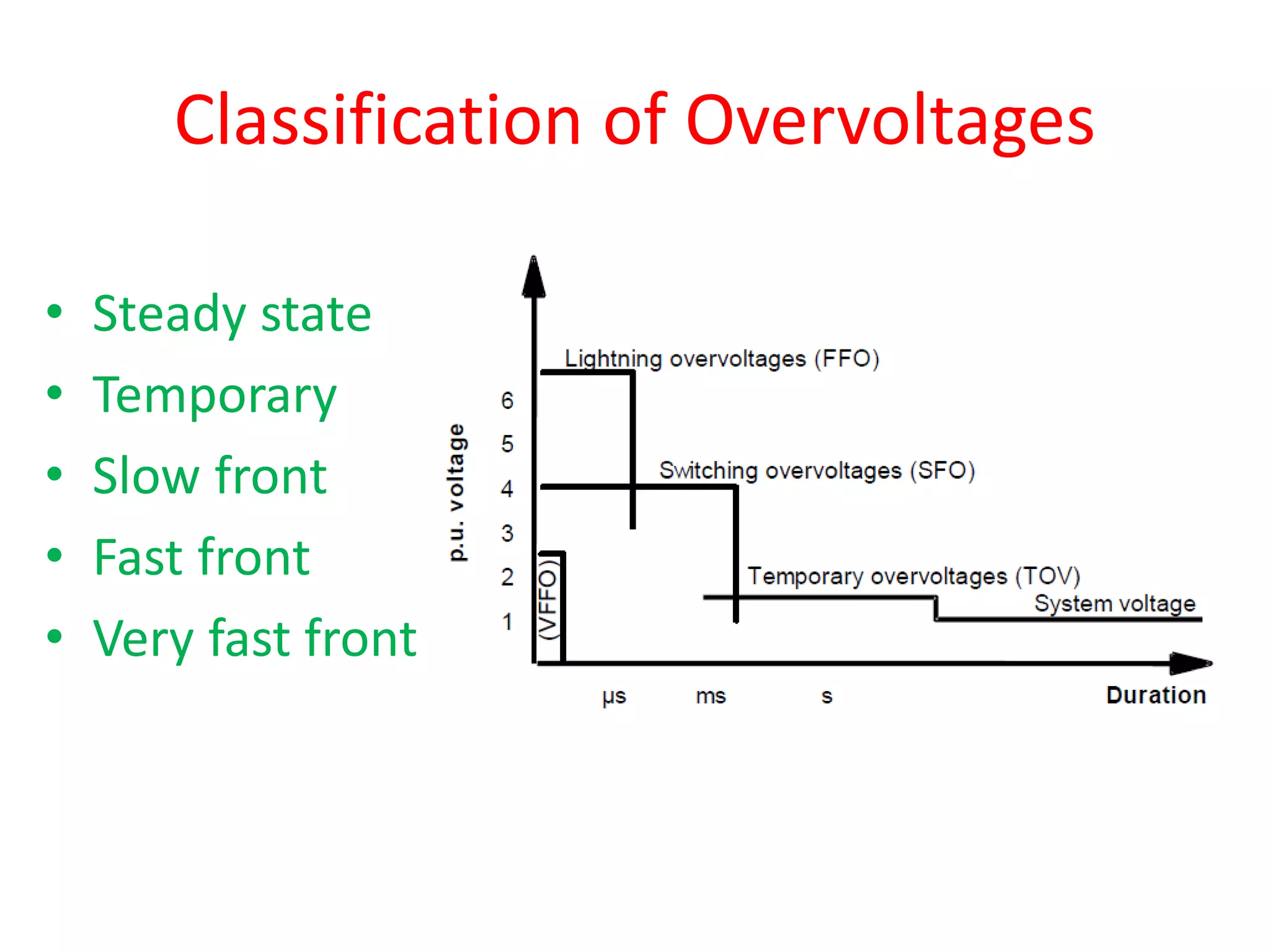
Fig. 4. Internal Faults
Fig. 5. Core Insulation Failure Fig. 6. Failure due to Paper Block
Shrinkage
Transients in Power Systems
10-4
10-3
10-2
10-1
100
101
102
103
104
105
106
Frequency f in Hz
FrequencyRange2FrequencyRange1
Very Fast Transients, SF6 Transients
Fast Transients, Lightning
Slow Front Transients, Switching
Temporary Overvoltages, ferroresonance
Steady State Overvoltages
Subsynchronous resonance
Transient Stability: Machine–rotor
Dynamics
Interarea Oscillations
Mid term & long term Stability:
Automatic Generation Control
ElectromagneticPhenomenaElectromechanicalPhenomena
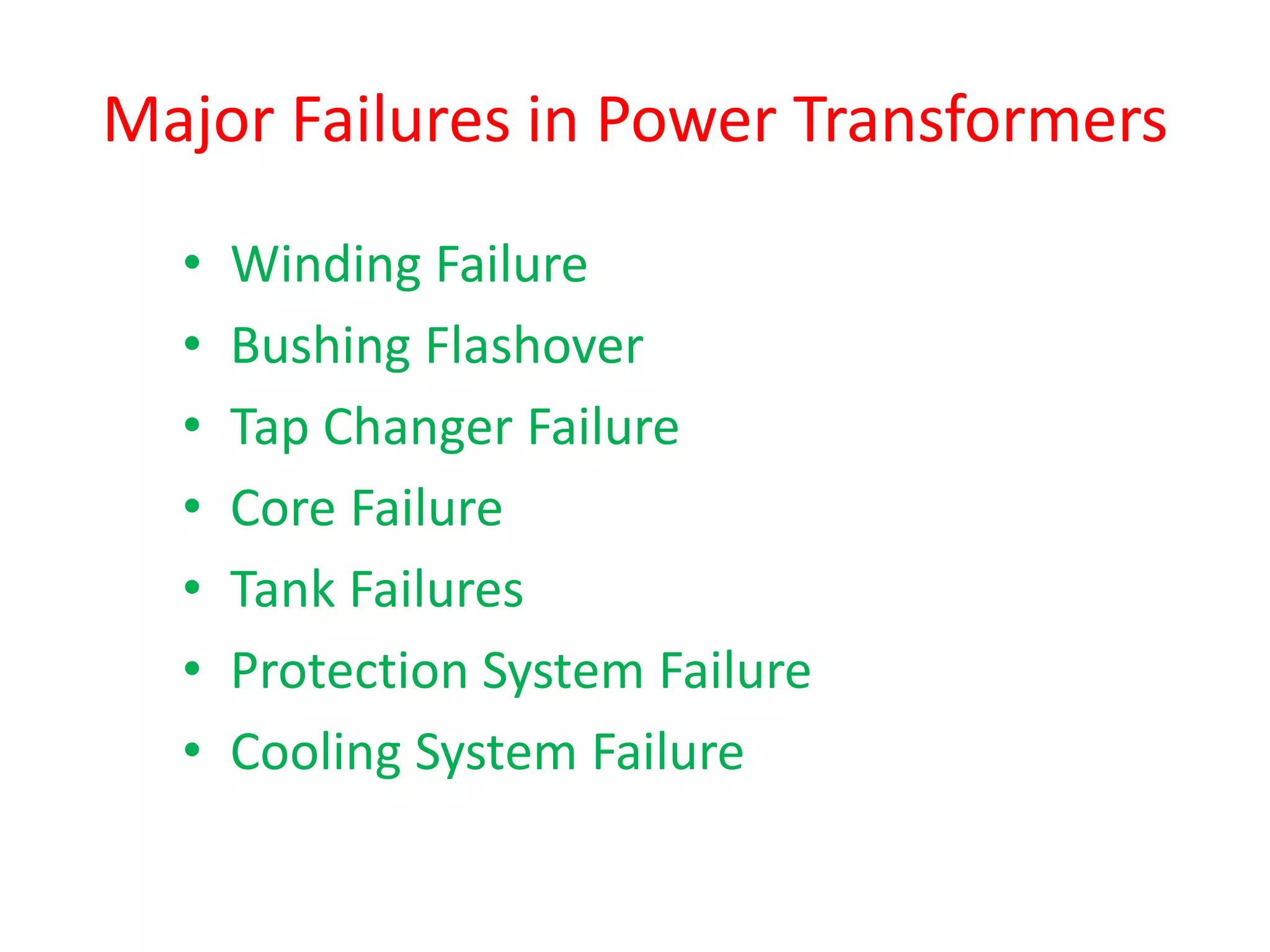
Classification of Overvoltages
• Steady state
• Temporary
• Slow front
• Fast front
• Very fast front
Major Failures in Power Transformers
• Winding Failure
• Bushing Flashover
• Tap Changer Failure
• Core Failure
• Tank Failures
• Protection System Failure
• Cooling System Failure
Design Aspects of Power Transformers
• Accurate electromagnetic field calculations
—Minimization eddy and stray losses
—High rate of loss capitalization
• Withstanding against system Overvoltages
—Reliable high voltage insulation design
• Stray loss evaluation and Control
• Short Circuit Stresses and Strength
—Analysis of Dynamic Behavior
• Elimination of hotspots in
—Core , Winding and structural parts
• Robust Structural Design
—Seismic withstand, transport induced stresses
• Design of Cooling Systems
• Lower Noise Levels
Protection of Transformers against
problems
• Overfluxing Conditions
• Part winding resonance
• System generated Overvoltages
(FFO,VFTO, SFO)
• Ferroresonance
• Power System harmonics
• Geomagnetic Disturbances
• Static electrification phenomenon
Case Studies
• Bushing Failure due to combustible gases formation in Oil
Case Studies
• Transformer failure due to Part winding resonance
Case Studies
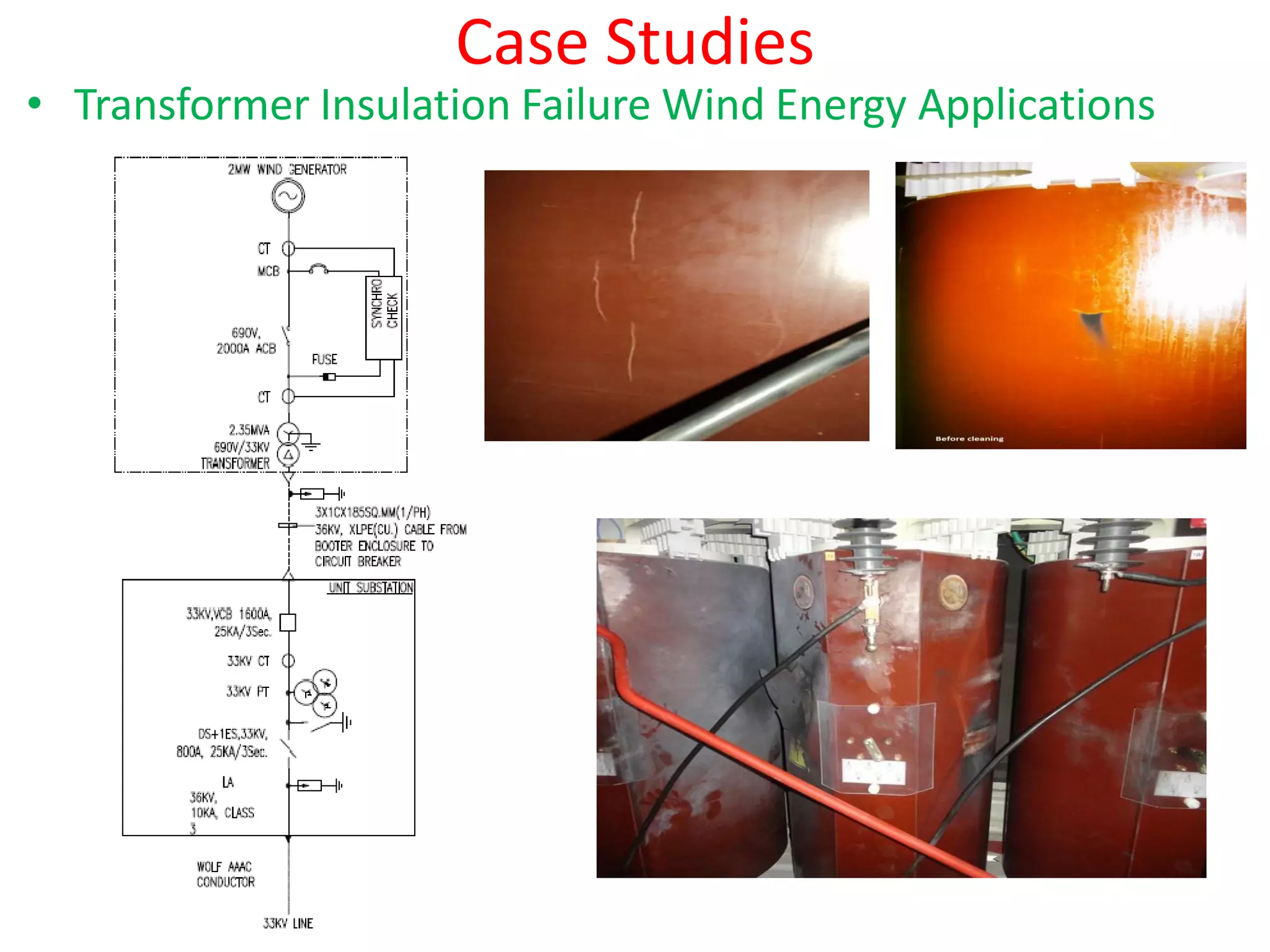
• Transformer Insulation Failure Wind Energy Applications
Conclusions
• Proper Design
• Proper Workmanship
• Proper Maintenance
• Properly rated Surge Protective Devices
• Protective Relays
Discussions?

Transformer Failures and Case Studies

  • 1.
    TRANSFORMER FAILURES AND CASESTUDIES By Veerabrahmam Bathini Power Research & Development Consultants Pvt. Ltd., #5, 11th Cross, 2nd Stage, West of Chord Road, Bangalore – 560086, Karnataka, India
  • 2.
    OUTLINE • Classification ofTransformer Failures • Major Failures in Transformers • Design Aspects of Transformers • Protection of Transformers against Problems • Case Studies • Conclusions
  • 3.
    Classification of TransformerFailures 1. Failure Attributed by Users  Prolonged over loading  Single phase loading  Un-balanced loading  Faulty terminations  Power theft by hooking  Faulty earth connection to tank body as well as LV terminal  Failures due to external short-circuit  Less maintenance  Improper installation
  • 4.
    Classification of TransformerFailures 2. Failure Causes at Manufacturer’s end  Faulty design  Poor quality of material  Bad workmanship  Improper transportation  Sharp edges of conductor  Incomplete drying  Bad insulation covering on conductor  Improper joints or connection
  • 5.
    Fig. 1. WindingInsulating Process Fig. 2. Improper Joint
  • 6.
    Classification of TransformerFailures 3. Failure During Working Condition  Deterioration of oil  Faults in magnetic circuit  Inadequate pre shrinkage of the winding  Inter turn faults  System Transients and Overvoltages,
  • 7.
    Fig. 3. Failuredue to Moisture content in Oil Fig. 4. Internal Faults
  • 8.
    Fig. 5. CoreInsulation Failure Fig. 6. Failure due to Paper Block Shrinkage
  • 9.
    Transients in PowerSystems 10-4 10-3 10-2 10-1 100 101 102 103 104 105 106 Frequency f in Hz FrequencyRange2FrequencyRange1 Very Fast Transients, SF6 Transients Fast Transients, Lightning Slow Front Transients, Switching Temporary Overvoltages, ferroresonance Steady State Overvoltages Subsynchronous resonance Transient Stability: Machine–rotor Dynamics Interarea Oscillations Mid term & long term Stability: Automatic Generation Control ElectromagneticPhenomenaElectromechanicalPhenomena
  • 10.
    Classification of Overvoltages •Steady state • Temporary • Slow front • Fast front • Very fast front
  • 11.
    Major Failures inPower Transformers • Winding Failure • Bushing Flashover • Tap Changer Failure • Core Failure • Tank Failures • Protection System Failure • Cooling System Failure
  • 12.
    Design Aspects ofPower Transformers • Accurate electromagnetic field calculations —Minimization eddy and stray losses —High rate of loss capitalization • Withstanding against system Overvoltages —Reliable high voltage insulation design • Stray loss evaluation and Control • Short Circuit Stresses and Strength —Analysis of Dynamic Behavior • Elimination of hotspots in —Core , Winding and structural parts • Robust Structural Design —Seismic withstand, transport induced stresses • Design of Cooling Systems • Lower Noise Levels
  • 13.
    Protection of Transformersagainst problems • Overfluxing Conditions • Part winding resonance • System generated Overvoltages (FFO,VFTO, SFO) • Ferroresonance • Power System harmonics • Geomagnetic Disturbances • Static electrification phenomenon
  • 14.
    Case Studies • BushingFailure due to combustible gases formation in Oil
  • 15.
    Case Studies • Transformerfailure due to Part winding resonance
  • 16.
    Case Studies • TransformerInsulation Failure Wind Energy Applications
  • 17.
    Conclusions • Proper Design •Proper Workmanship • Proper Maintenance • Properly rated Surge Protective Devices • Protective Relays
  • 18.