RECORDING SOUND

Microphones and Cables used in Film &
             Television
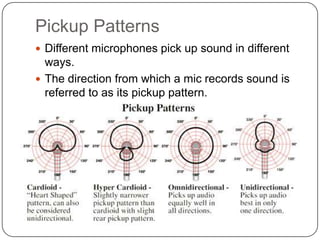
Pickup Patterns
 Different microphones pick up sound in different
  ways.
 The direction from which a mic records sound is
  referred to as its pickup pattern.
Lavaliere (Lav) Mic
 Omni-Directional
 Hands-free (fastened
  to clothing with a clip)
 Used for:
   Interviews
   News anchors
   Planting in scenes
    that are hard to place
    a mic
Handheld Mic
 Cardioid
 Used for:
   Electronic News
    Gathering (ENG)
   Interviews
   Field Reporting
   Game Show Hosts
Shotgun Mic
 Super Cardioid
 Often used in
  conjunction with a
  boom pole
 Used for:
   Film Shoots
   Location sound
   Recording nature
XLR Cables
 Most commonly used
  cable for attaching an
  external mic to a
  camera
 Carries a left
  channel, as right
  channel, and a
  ground wire.
Other Types of Audio Cables
Recording Accessories
Windscreens             Pop-Filters
 These devices are      Used to minimize
 used to eliminate or     plosives (pop-sounds
 reduce wind              made while talking) in
 sound, and other         the studio
 ambient                  environment.
 sounds, during the
 recording process.
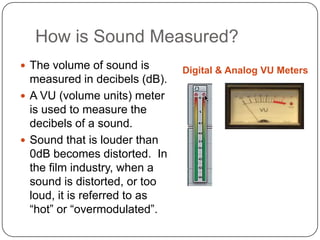
How is Sound Measured?
 The volume of sound is       Digital & Analog VU Meters
  measured in decibels (dB).
 A VU (volume units) meter
  is used to measure the
  decibels of a sound.
 Sound that is louder than
  0dB becomes distorted. In
  the film industry, when a
  sound is distorted, or too
  loud, it is referred to as
  “hot” or “overmodulated”.
Tips for Recording Good Sound
 Each mic has a specific purpose. When choosing a
    mic, think about what you are recording and how you want
    it to sound.
   Make sure you use headphones to listen to the audio as
    you record it. This will allow you to hear exactly what is
    being recorded to tape.
   Use an external mic. The microphones included on
    cameras are not high quality, and will produce a low quality
    audio recording.
   Eliminate as much background noise as possible. Close
    windows, shut doors, turn off lights and/or electrical
    equipment to reduce excess noise and/or buzzing.
   Hold the mic close to your subject, pointed at her/his
    mouth.
   Have the person speak clearly and loudly.
   Check your VU levels to make sure the audio you are

Recording Sound

  • 1.
    RECORDING SOUND Microphones andCables used in Film & Television
  • 2.
    Pickup Patterns  Differentmicrophones pick up sound in different ways.  The direction from which a mic records sound is referred to as its pickup pattern.
  • 3.
    Lavaliere (Lav) Mic Omni-Directional  Hands-free (fastened to clothing with a clip)  Used for:  Interviews  News anchors  Planting in scenes that are hard to place a mic
  • 4.
    Handheld Mic  Cardioid Used for:  Electronic News Gathering (ENG)  Interviews  Field Reporting  Game Show Hosts
  • 5.
    Shotgun Mic  SuperCardioid  Often used in conjunction with a boom pole  Used for:  Film Shoots  Location sound  Recording nature
  • 6.
    XLR Cables  Mostcommonly used cable for attaching an external mic to a camera  Carries a left channel, as right channel, and a ground wire.
  • 7.
    Other Types ofAudio Cables
  • 8.
    Recording Accessories Windscreens Pop-Filters  These devices are  Used to minimize used to eliminate or plosives (pop-sounds reduce wind made while talking) in sound, and other the studio ambient environment. sounds, during the recording process.
  • 9.
    How is SoundMeasured?  The volume of sound is Digital & Analog VU Meters measured in decibels (dB).  A VU (volume units) meter is used to measure the decibels of a sound.  Sound that is louder than 0dB becomes distorted. In the film industry, when a sound is distorted, or too loud, it is referred to as “hot” or “overmodulated”.
  • 10.
    Tips for RecordingGood Sound  Each mic has a specific purpose. When choosing a mic, think about what you are recording and how you want it to sound.  Make sure you use headphones to listen to the audio as you record it. This will allow you to hear exactly what is being recorded to tape.  Use an external mic. The microphones included on cameras are not high quality, and will produce a low quality audio recording.  Eliminate as much background noise as possible. Close windows, shut doors, turn off lights and/or electrical equipment to reduce excess noise and/or buzzing.  Hold the mic close to your subject, pointed at her/his mouth.  Have the person speak clearly and loudly.  Check your VU levels to make sure the audio you are

Editor's Notes