10 Compositional Theories of
                  Still Photography

“There is a vast difference between taking a picture and
             making a photograph.” – Robert Heinecken
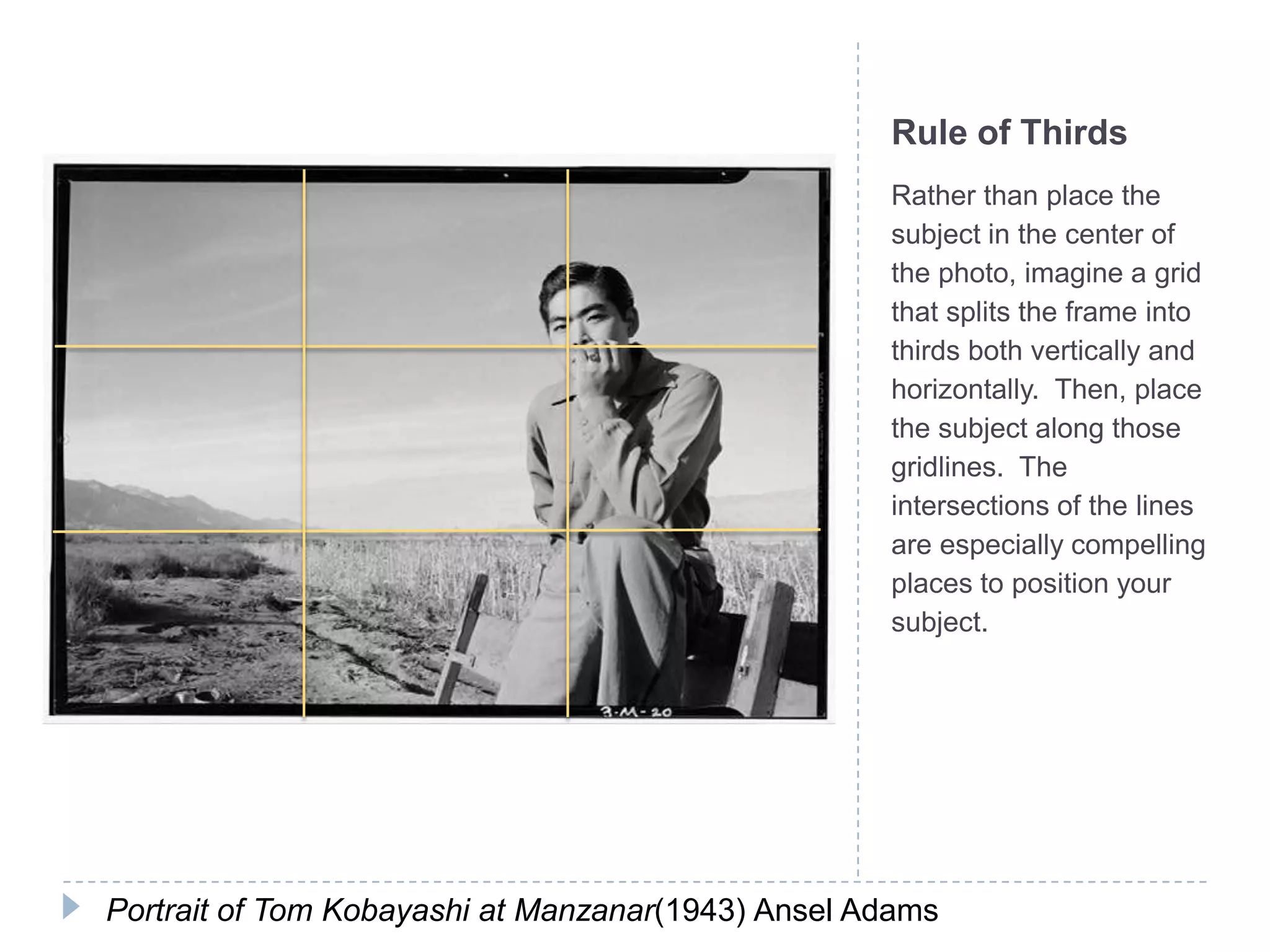
Rule of Thirds
                                                   Rather than place the
                                                   subject in the center of
                                                   the photo, imagine a grid
                                                   that splits the frame into
                                                   thirds both vertically and
                                                   horizontally. Then, place
                                                   the subject along those
                                                   gridlines. The
                                                   intersections of the lines
                                                   are especially compelling
                                                   places to position your
                                                   subject.


Portrait of Tom Kobayashi at Manzanar(1943) Ansel Adams
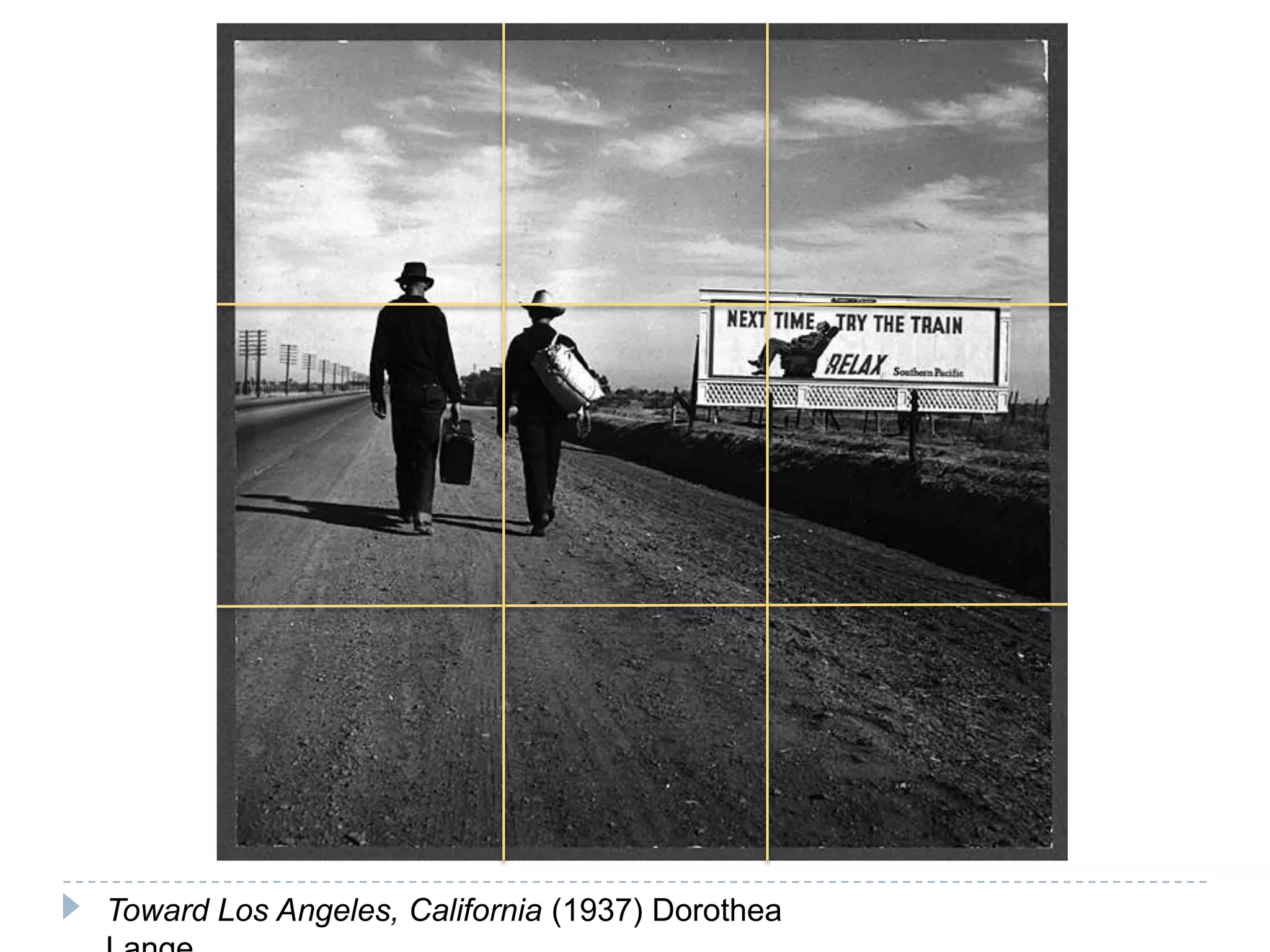
Toward Los Angeles, California (1937) Dorothea
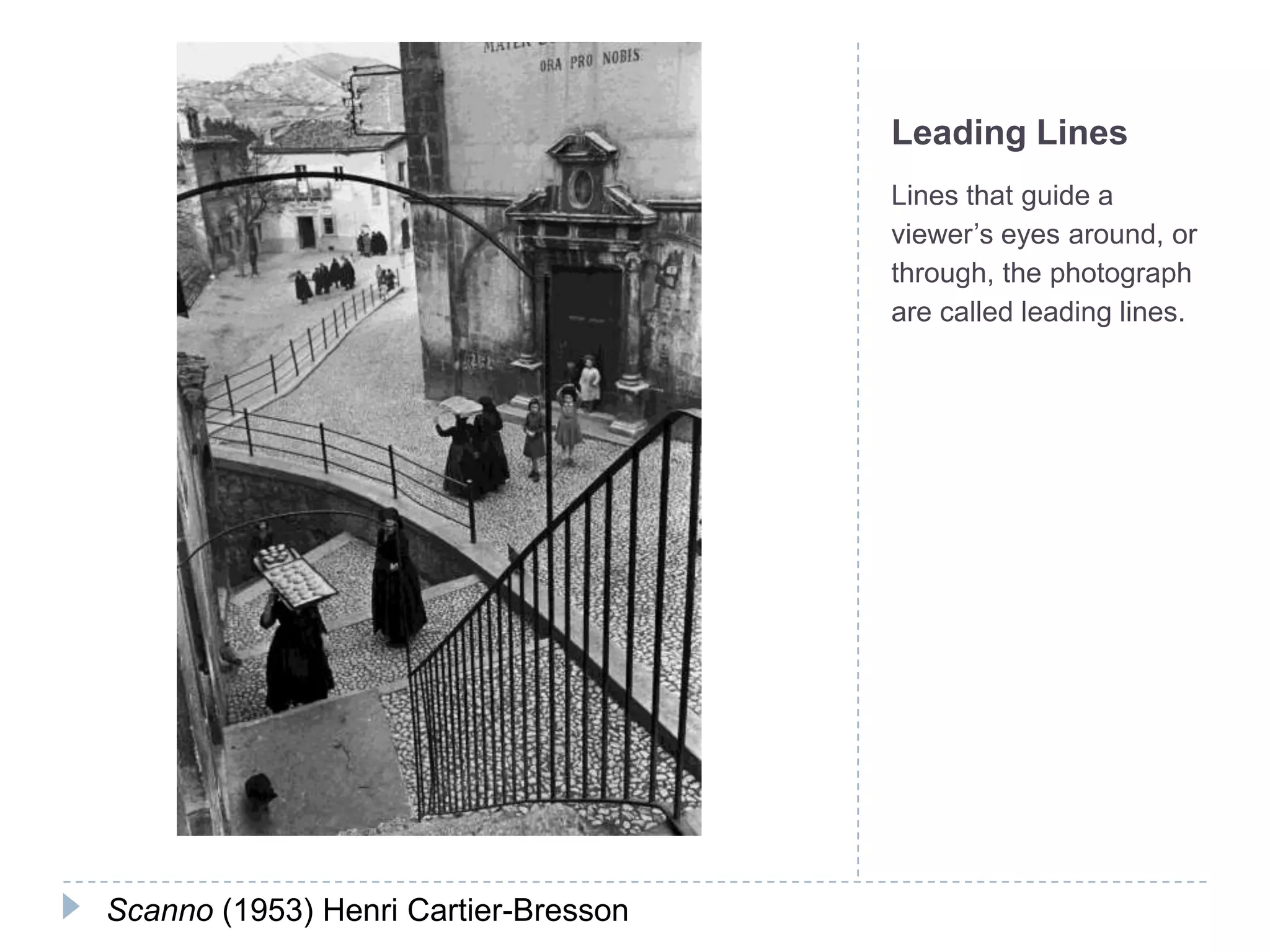
Leading Lines
                                      Lines that guide a
                                      viewer’s eyes around, or
                                      through, the photograph
                                      are called leading lines.


Scanno (1953) Henri Cartier-Bresson
Monks Along the River Arno, Florence (1935) Alfred Eisenstaedt
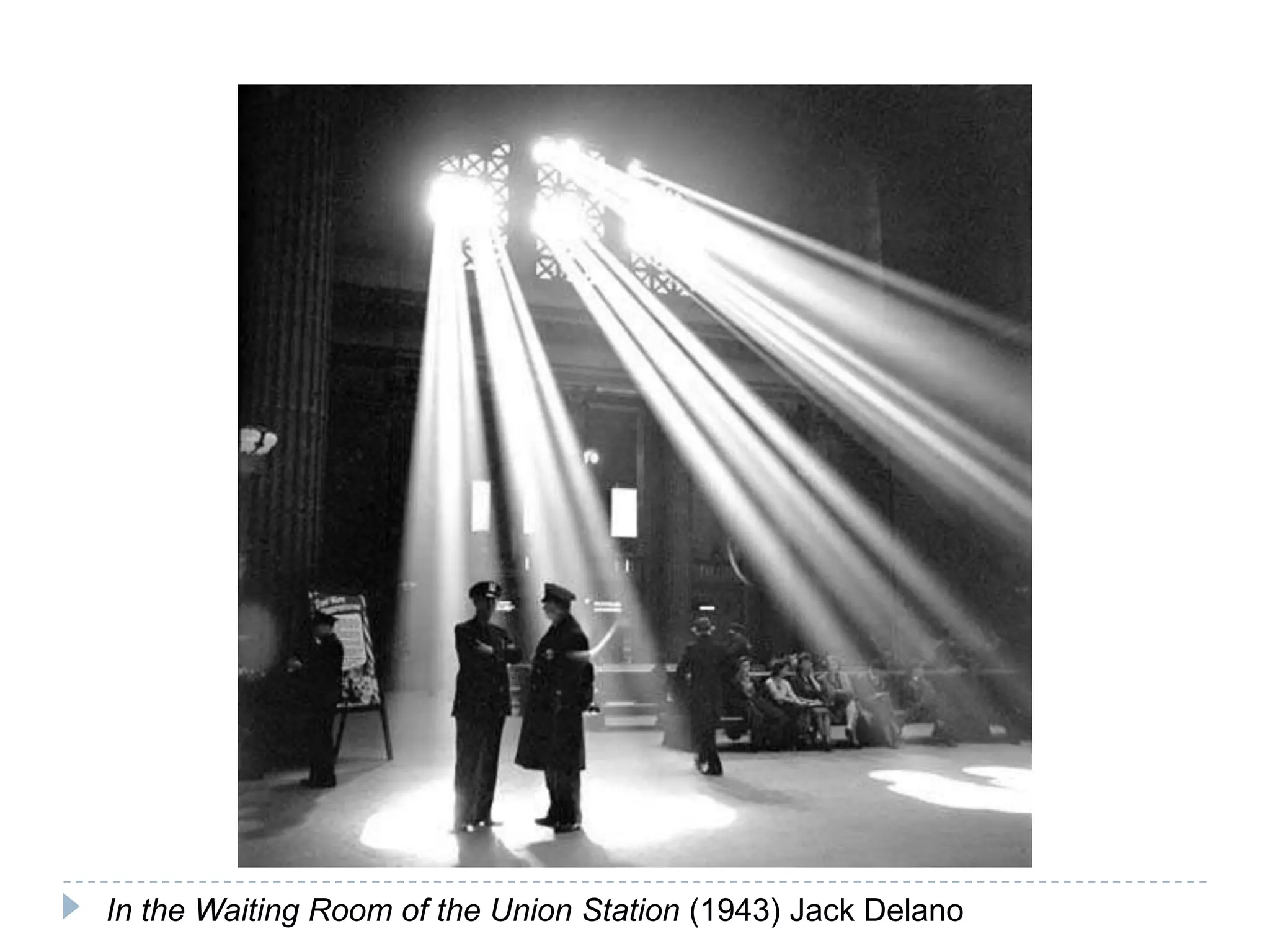
Strong Diagonal
                                                   A strong diagonal is a
                                                   form of a leading line. It
                                                   can transform a boring
                                                   composition into a
                                                   dynamic one.


Female Welders, Gary, IN (1942) Margaret Bourke-
In the Waiting Room of the Union Station (1943) Jack Delano
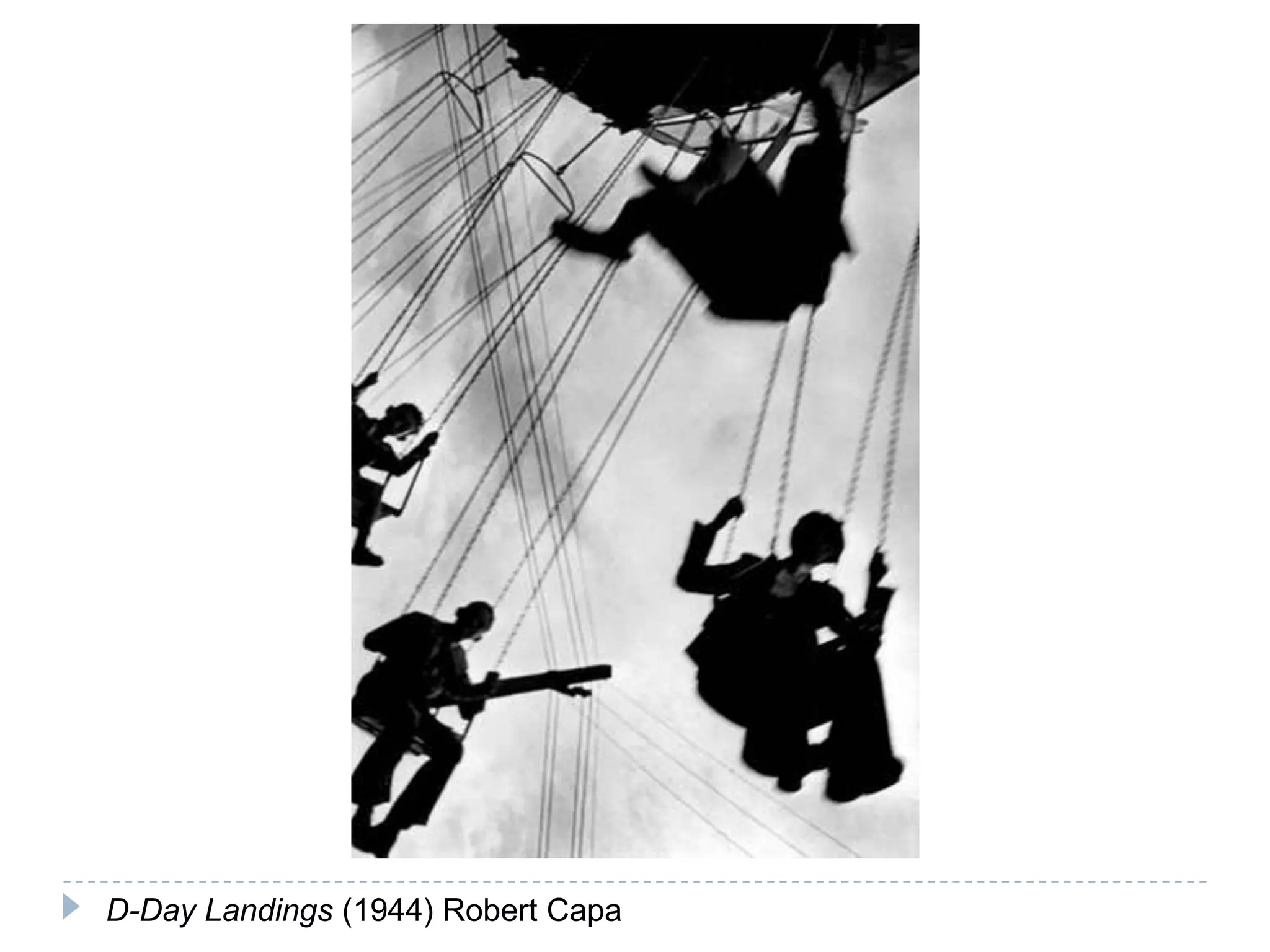
Point of View
                                        Pictures do not always
                                        need to be taken at eye
                                        level. Moving the camera
                                        above, or below, the
                                        subject can create a
                                        more interesting, dynamic
                                        photograph.

                                        This is a good way to
                                        transform an ordinary
                                        subject into an
                                        extraordinary picture.


Sisters of Charity (1956) David Moore
D-Day Landings (1944) Robert Capa
Framing
                                                      One way to make your
                                                      subject stand out is by
                                                      finding and using a
                                                      natural frame within the
                                                      composition. The frame
                                                      helps draw the viewer’s
                                                      eye to the main subject.

                                                      Framing can also be
                                                      used to create a sense of
                                                      depth in a photograph, or
                                                      to provide a context for
                                                      the photograph.


Cabaret L’Enfer, Boulevard de Clichy, Paris (1952) Robert Doisneau
Paradise Garden (1946) W. Eugene Smith
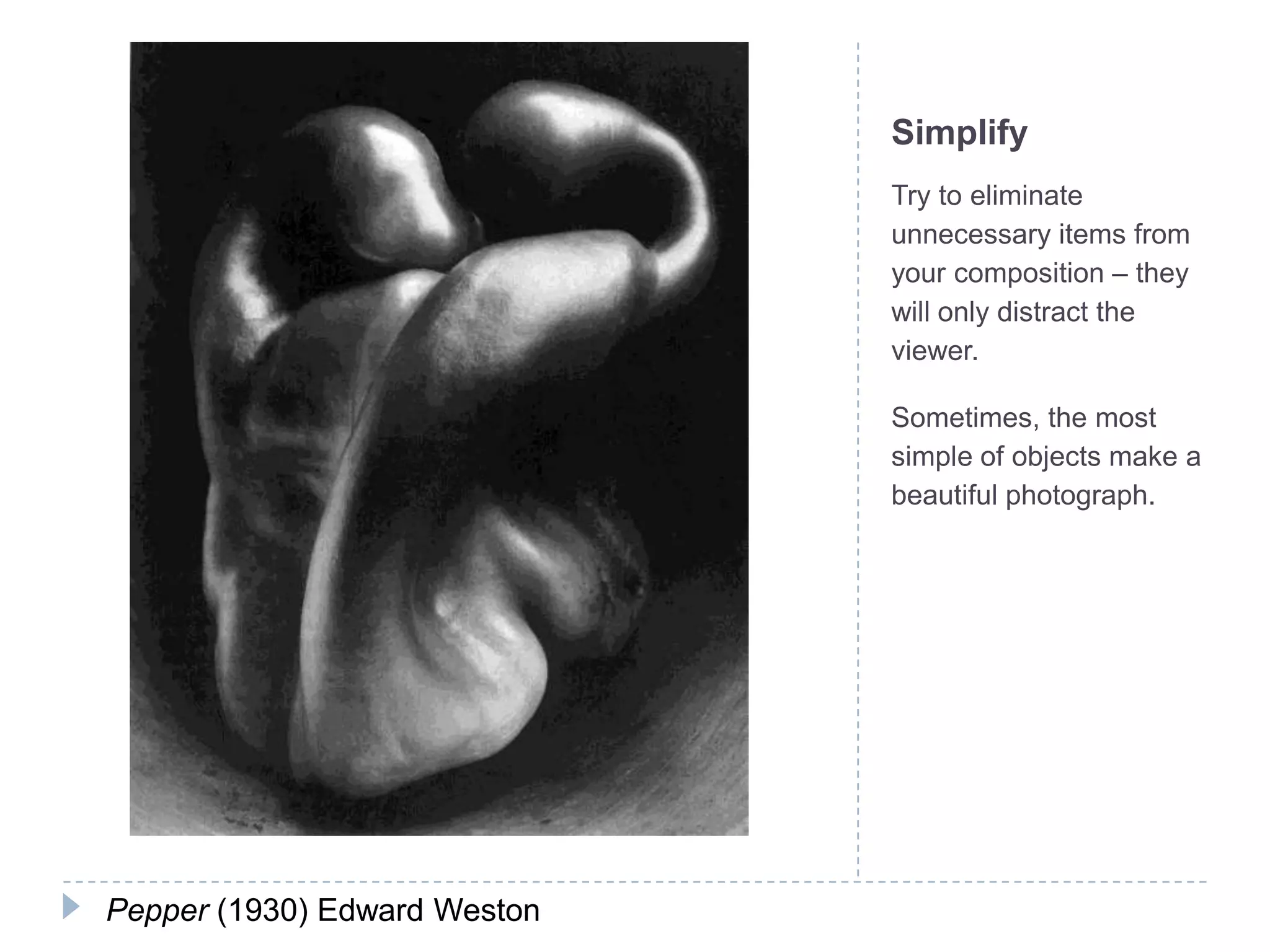
Simplify
                              Try to eliminate
                              unnecessary items from
                              your composition – they
                              will only distract the
                              viewer.

                              Sometimes, the most
                              simple of objects make a
                              beautiful photograph.


Pepper (1930) Edward Weston
Self-Portrait Fay Godwin
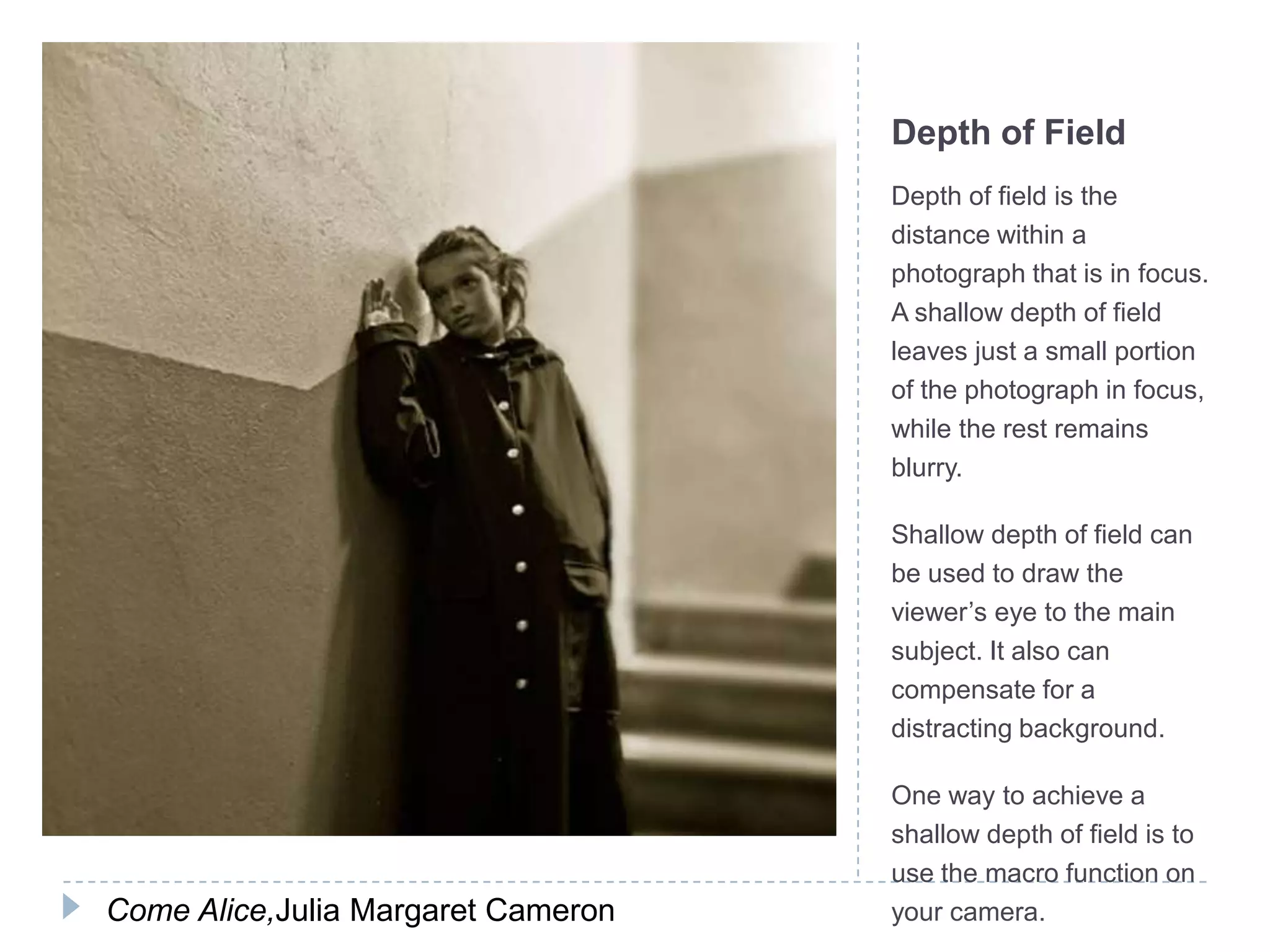
Depth of Field
                                    Depth of field is the
                                    distance within a
                                    photograph that is in focus.
                                    A shallow depth of field
                                    leaves just a small portion
                                    of the photograph in focus,
                                    while the rest remains
                                    blurry.

                                    Shallow depth of field can
                                    be used to draw the
                                    viewer’s eye to the main
                                    subject. It also can
                                    compensate for a
                                    distracting background.

                                    One way to achieve a
                                    shallow depth of field is to
                                    use the macro function on
Come Alice,Julia Margaret Cameron   your camera.
A photograph taken with the macro function, producing a shallow depth of
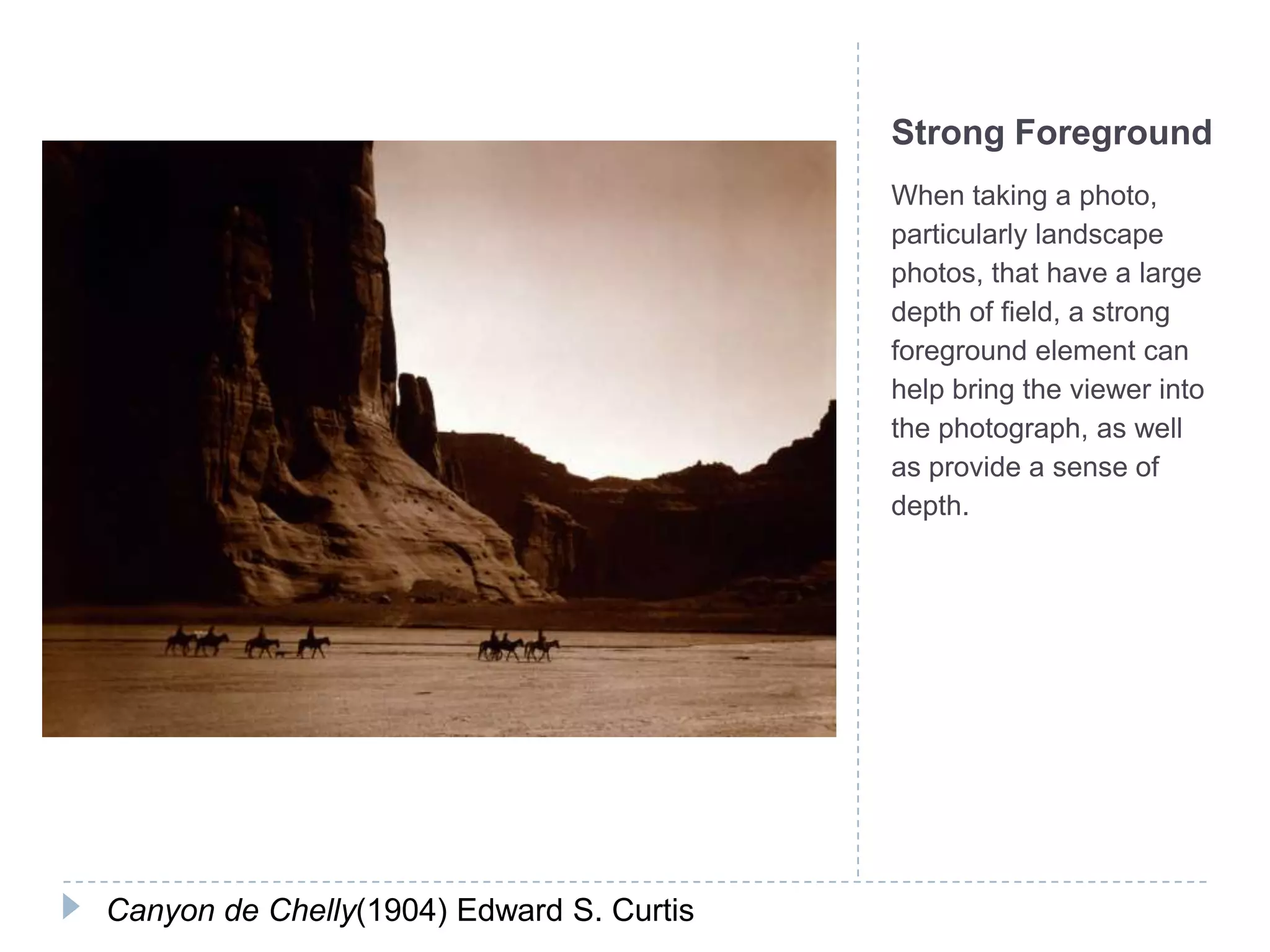
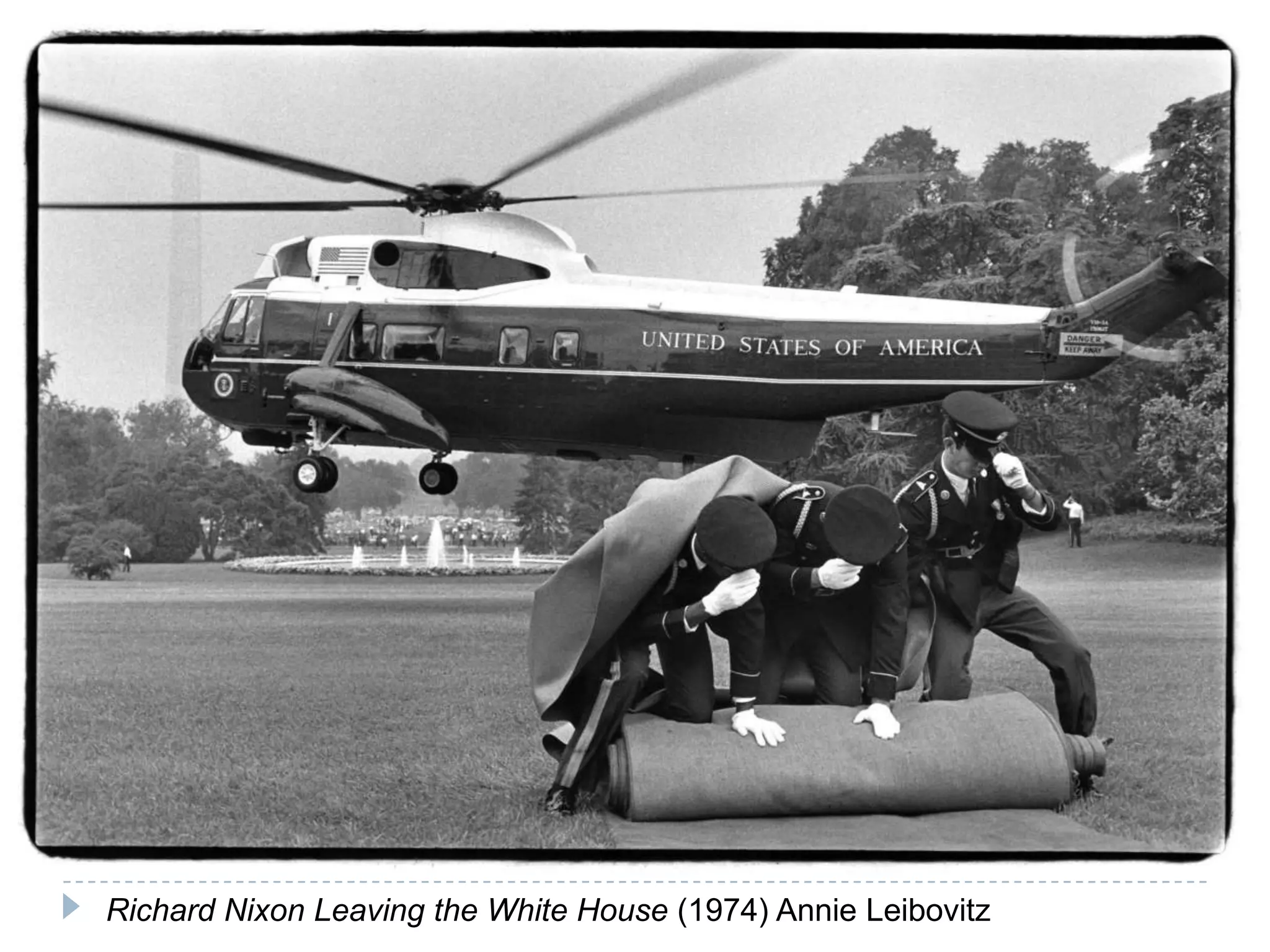
Strong Foreground
                                          When taking a photo,
                                          particularly landscape
                                          photos, that have a large
                                          depth of field, a strong
                                          foreground element can
                                          help bring the viewer into
                                          the photograph, as well
                                          as provide a sense of
                                          depth.


Canyon de Chelly(1904) Edward S. Curtis
Richard Nixon Leaving the White House (1974) Annie Leibovitz
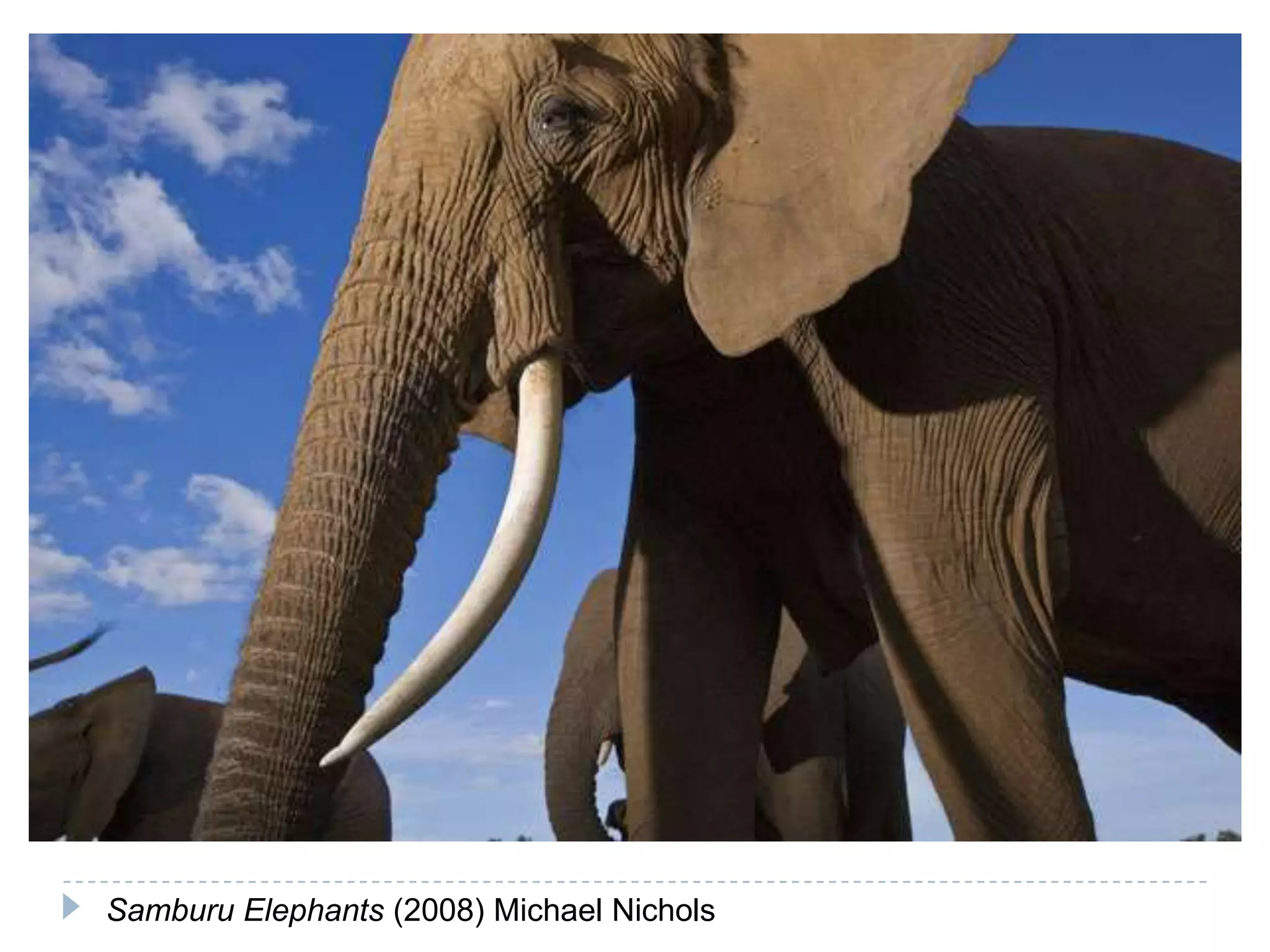
Fill the Frame
                                           It is not always necessary
                                           for the entire subject to
                                           be included in the
                                           composition. Sometimes
                                           it is more effective, and
                                           interesting, to crop the
                                           edges of your main
                                           subject.


False Hellebore (1926) Imogen Cunningham
Samburu Elephants (2008) Michael Nichols
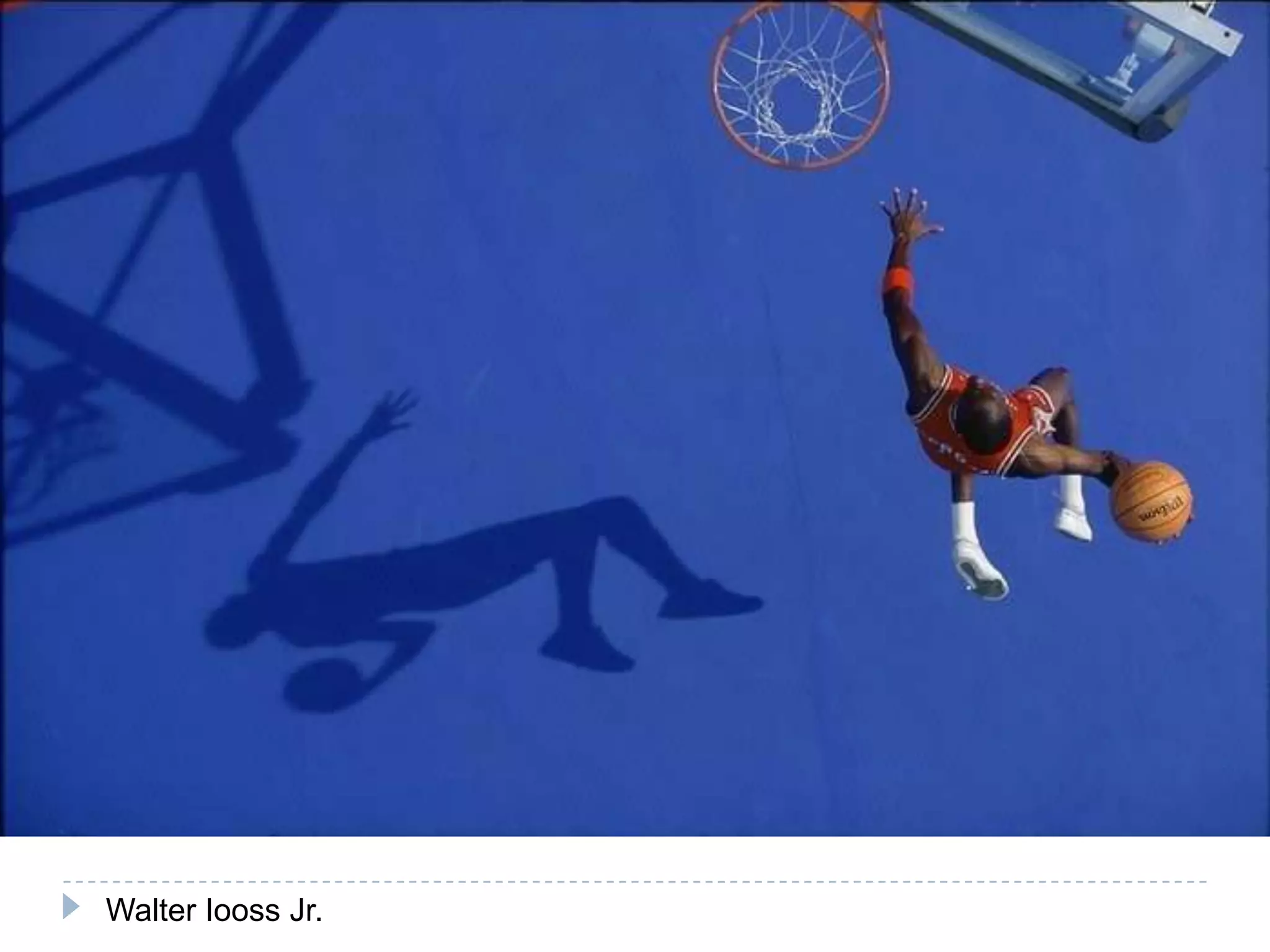
Active Space
                   It is important when you
                   are capturing a
                   photograph of an action,
                   that you leave space
                   between the side of the
                   frame and the subject. If
                   you do not do this, the
                   picture will feel
                   unbalanced.


Walter Iooss Jr.
Walter Iooss Jr.
Walter Iooss Jr.
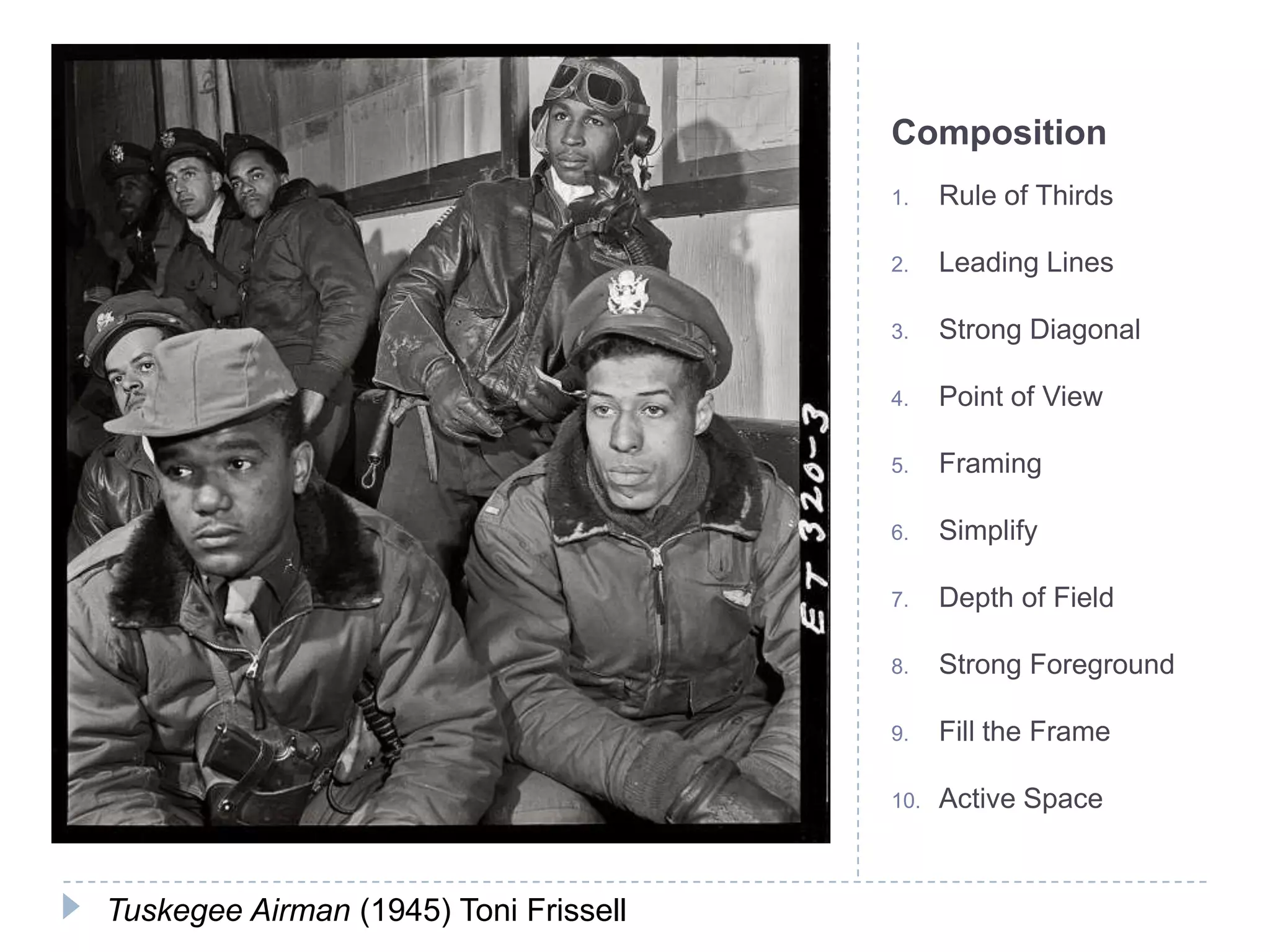
Composition
                                       1.    Rule of Thirds

                                       2.    Leading Lines

                                       3.    Strong Diagonal

                                       4.    Point of View

                                       5.    Framing

                                       6.    Simplify

                                       7.    Depth of Field

                                       8.    Strong Foreground

                                       9.    Fill the Frame

                                       10.   Active Space


Tuskegee Airman (1945) Toni Frissell
Walter Iooss Jr.
“Beauty can be seen in all things,
seeing and composing the beauty is
what separates the snapshot from
the photograph.”
                     –Matt Hardy

Theories of Photographic Composition

  • 1.
    10 Compositional Theoriesof Still Photography “There is a vast difference between taking a picture and making a photograph.” – Robert Heinecken
  • 2.
    Rule of Thirds Rather than place the subject in the center of the photo, imagine a grid that splits the frame into thirds both vertically and horizontally. Then, place the subject along those gridlines. The intersections of the lines are especially compelling places to position your subject. Portrait of Tom Kobayashi at Manzanar(1943) Ansel Adams
  • 3.
    Toward Los Angeles,California (1937) Dorothea
  • 4.
    Leading Lines Lines that guide a viewer’s eyes around, or through, the photograph are called leading lines. Scanno (1953) Henri Cartier-Bresson
  • 5.
    Monks Along theRiver Arno, Florence (1935) Alfred Eisenstaedt
  • 6.
    Strong Diagonal A strong diagonal is a form of a leading line. It can transform a boring composition into a dynamic one. Female Welders, Gary, IN (1942) Margaret Bourke-
  • 7.
    In the WaitingRoom of the Union Station (1943) Jack Delano
  • 8.
    Point of View Pictures do not always need to be taken at eye level. Moving the camera above, or below, the subject can create a more interesting, dynamic photograph. This is a good way to transform an ordinary subject into an extraordinary picture. Sisters of Charity (1956) David Moore
  • 9.
  • 10.
    Framing One way to make your subject stand out is by finding and using a natural frame within the composition. The frame helps draw the viewer’s eye to the main subject. Framing can also be used to create a sense of depth in a photograph, or to provide a context for the photograph. Cabaret L’Enfer, Boulevard de Clichy, Paris (1952) Robert Doisneau
  • 11.
    Paradise Garden (1946)W. Eugene Smith
  • 12.
    Simplify Try to eliminate unnecessary items from your composition – they will only distract the viewer. Sometimes, the most simple of objects make a beautiful photograph. Pepper (1930) Edward Weston
  • 13.
  • 14.
    Depth of Field Depth of field is the distance within a photograph that is in focus. A shallow depth of field leaves just a small portion of the photograph in focus, while the rest remains blurry. Shallow depth of field can be used to draw the viewer’s eye to the main subject. It also can compensate for a distracting background. One way to achieve a shallow depth of field is to use the macro function on Come Alice,Julia Margaret Cameron your camera.
  • 15.
    A photograph takenwith the macro function, producing a shallow depth of
  • 16.
    Strong Foreground When taking a photo, particularly landscape photos, that have a large depth of field, a strong foreground element can help bring the viewer into the photograph, as well as provide a sense of depth. Canyon de Chelly(1904) Edward S. Curtis
  • 17.
    Richard Nixon Leavingthe White House (1974) Annie Leibovitz
  • 18.
    Fill the Frame It is not always necessary for the entire subject to be included in the composition. Sometimes it is more effective, and interesting, to crop the edges of your main subject. False Hellebore (1926) Imogen Cunningham
  • 19.
    Samburu Elephants (2008)Michael Nichols
  • 20.
    Active Space It is important when you are capturing a photograph of an action, that you leave space between the side of the frame and the subject. If you do not do this, the picture will feel unbalanced. Walter Iooss Jr.
  • 21.
  • 22.
  • 23.
    Composition 1. Rule of Thirds 2. Leading Lines 3. Strong Diagonal 4. Point of View 5. Framing 6. Simplify 7. Depth of Field 8. Strong Foreground 9. Fill the Frame 10. Active Space Tuskegee Airman (1945) Toni Frissell
  • 24.
  • 25.
    “Beauty can beseen in all things, seeing and composing the beauty is what separates the snapshot from the photograph.” –Matt Hardy