1. Sound plays a crucial role in films, with 90% of the experience coming from audio rather than visuals. Sound is used to simulate reality, add elements not visible, and set mood.
2. Key audio elements include dialogue, ambient noise, additional recordings, narration, effects, score, and soundtrack music. Effects are created through Foley artistry and studios.
3. The editing and mixing process combines all audio layers to enhance realism and emotional impact for the audience.
Sound is vital in film, constituting 90% of the experience, elevating reality and audience engagement.
Sound fulfills three roles: simulating reality, adding unseen elements, and mood setting; includes dialogue, ADR, effects, and music.
Explores dialogue, ambient sounds, ADR, narration, sound effects, and Foley techniques for realistic soundscapes.Foley artists enhance films by creating sound effects, using props to match visuals for enhanced realism.
Discusses original score and soundtrack; score is custom for the film, while a soundtrack comprises pre-existing music.
Describes synchronous versus asynchronous sounds, sound editing processes, and critical terms in sound design.
Encourages audiences to actively listen to film sounds and music, enhancing appreciation for sound design.
Sound in Film&
Television
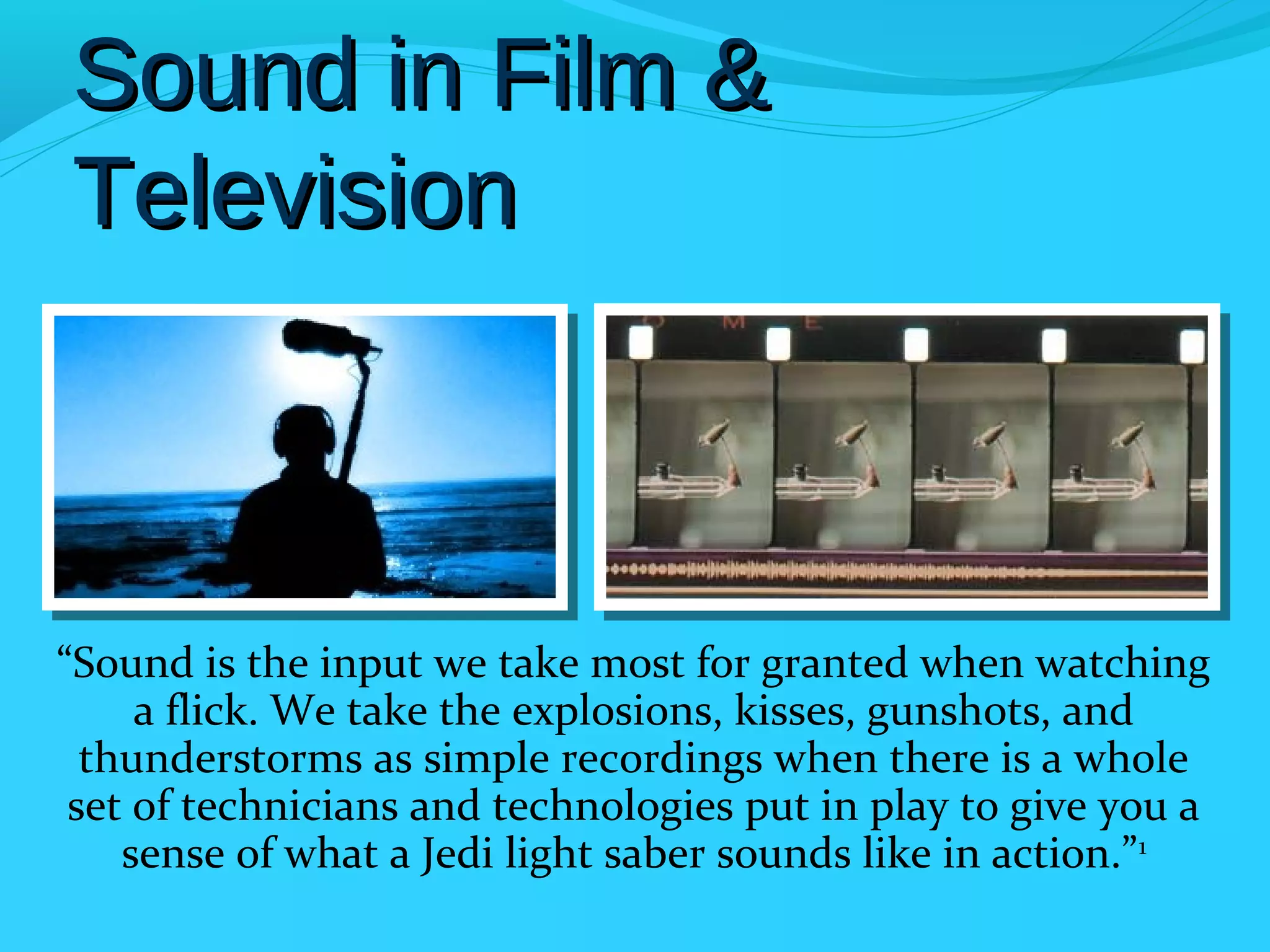
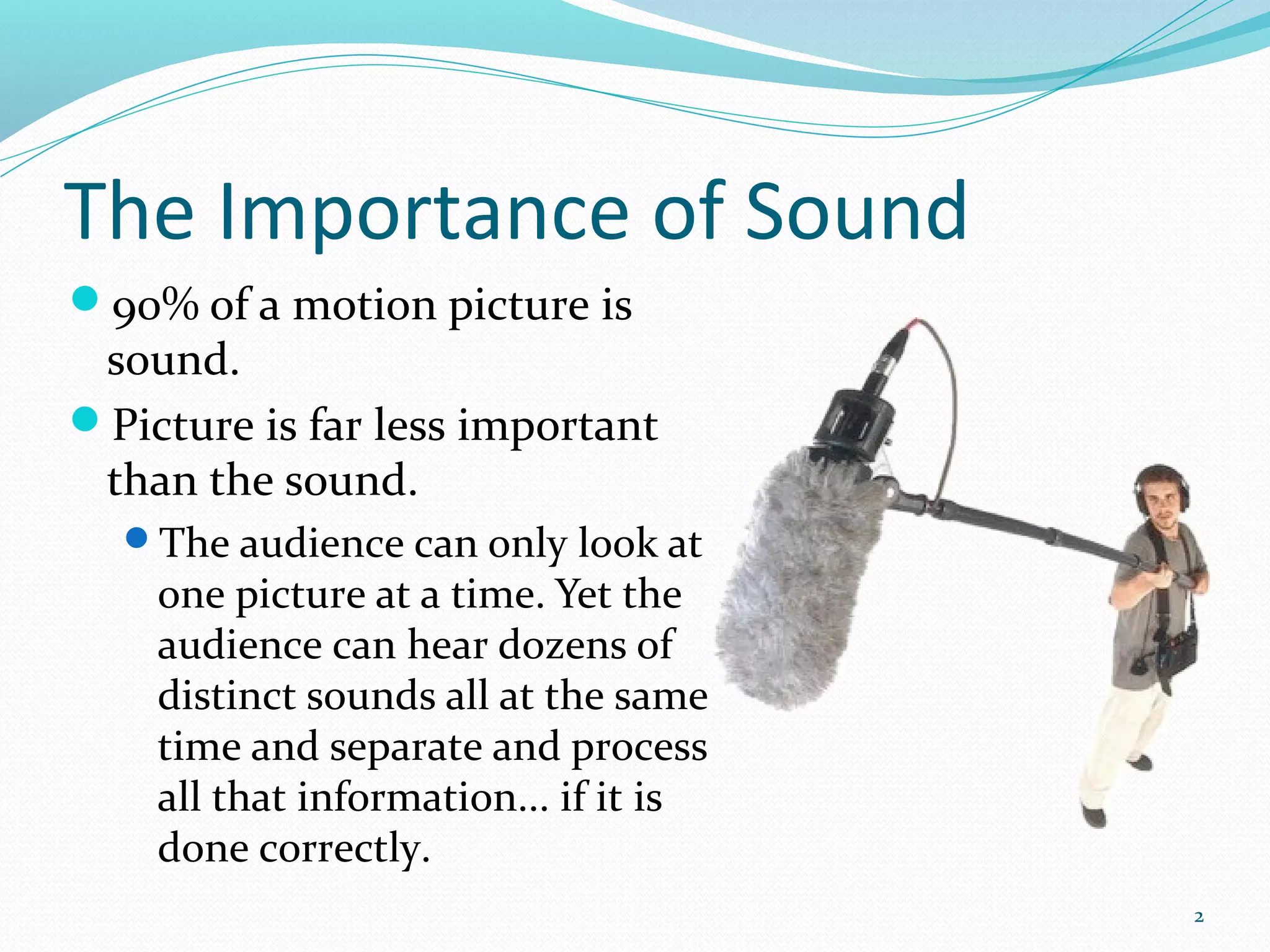
“Sound is the input we take most for granted when watching
a flick. We take the explosions, kisses, gunshots, and
thunderstorms as simple recordings when there is a whole
set of technicians and technologies put in play to give you a
sense of what a Jedi light saber sounds like in action.”1
2.
The Importance ofSound
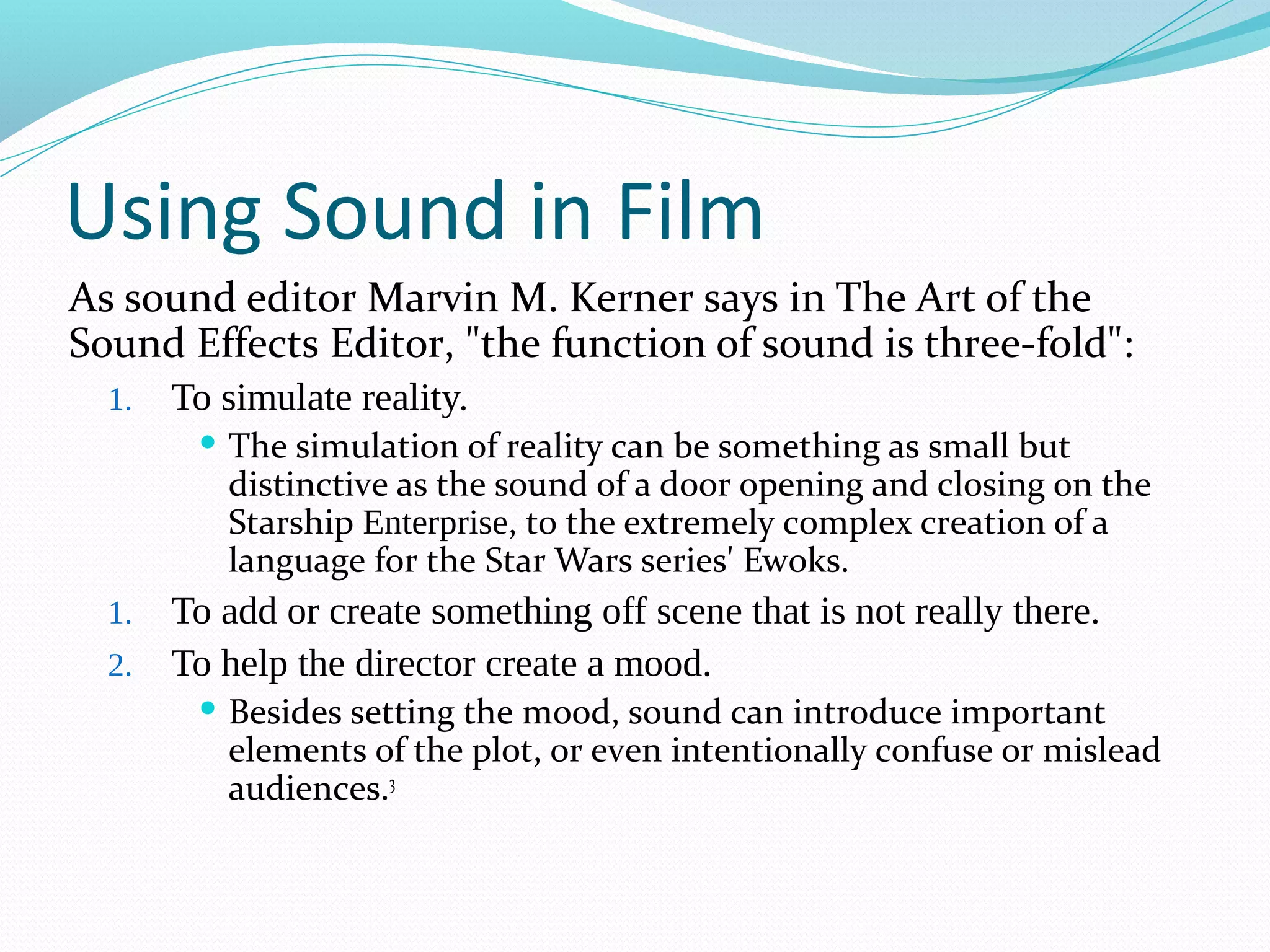
90% of a motion picture is
sound.
Picture is far less important
than the sound.
The audience can only look at
one picture at a time. Yet the
audience can hear dozens of
distinct sounds all at the same
time and separate and process
all that information... if it is
done correctly.
2
3.
Using Sound inFilm
As sound editor Marvin M. Kerner says in The Art of the
Sound Effects Editor, "the function of sound is three-fold":
1. To simulate reality.
The simulation of reality can be something as small but
distinctive as the sound of a door opening and closing on the
Starship Enterprise, to the extremely complex creation of a
language for the Star Wars series' Ewoks.
1. To add or create something off scene that is not really there.
2. To help the director create a mood.
Besidessetting the mood, sound can introduce important
elements of the plot, or even intentionally confuse or mislead
audiences.3
4.
Types of Soundin TV & Film
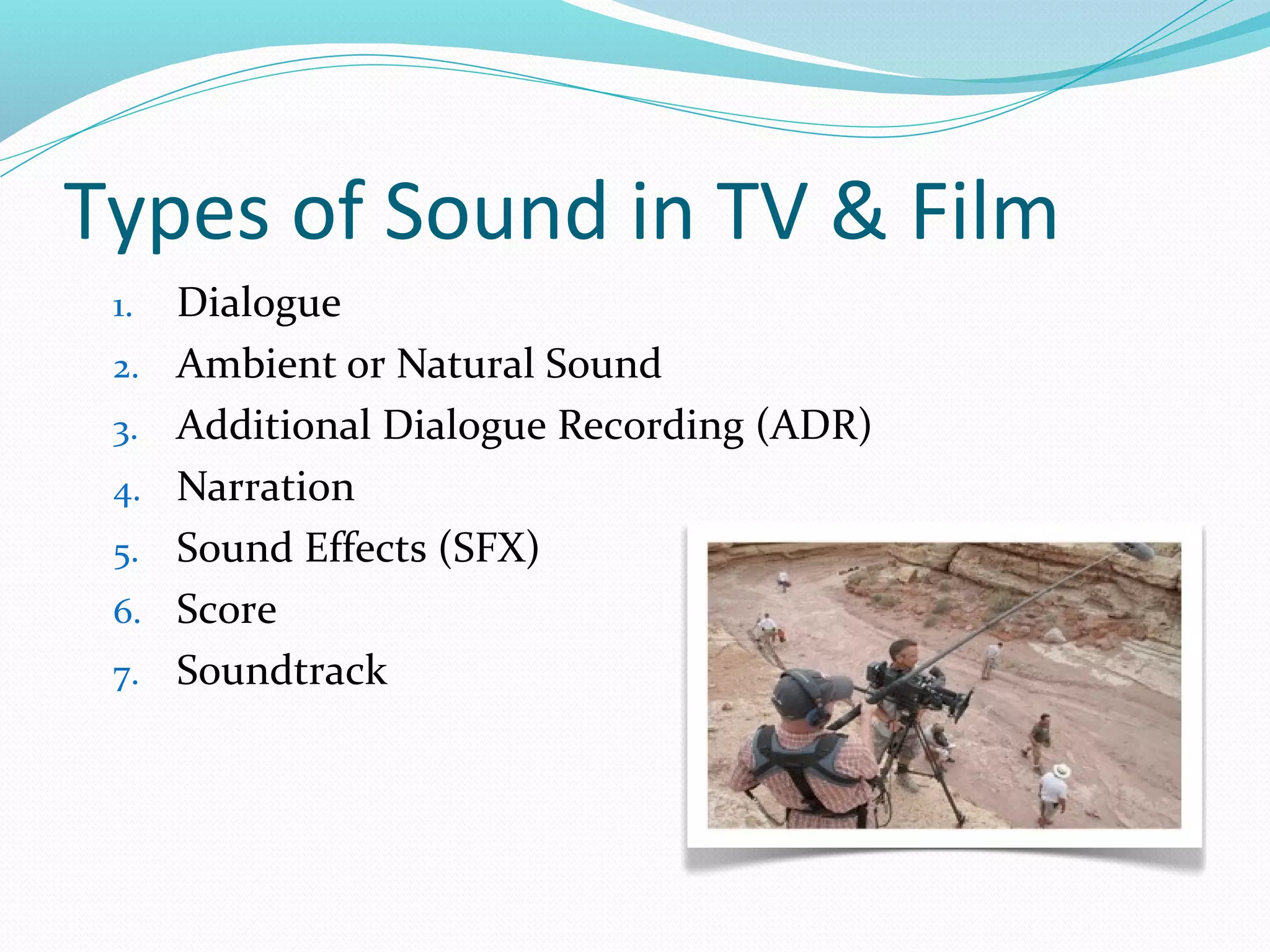
1. Dialogue
2. Ambient or Natural Sound
3. Additional Dialogue Recording (ADR)
4. Narration
5. Sound Effects (SFX)
6. Score
7. Soundtrack
5.
Dialogue
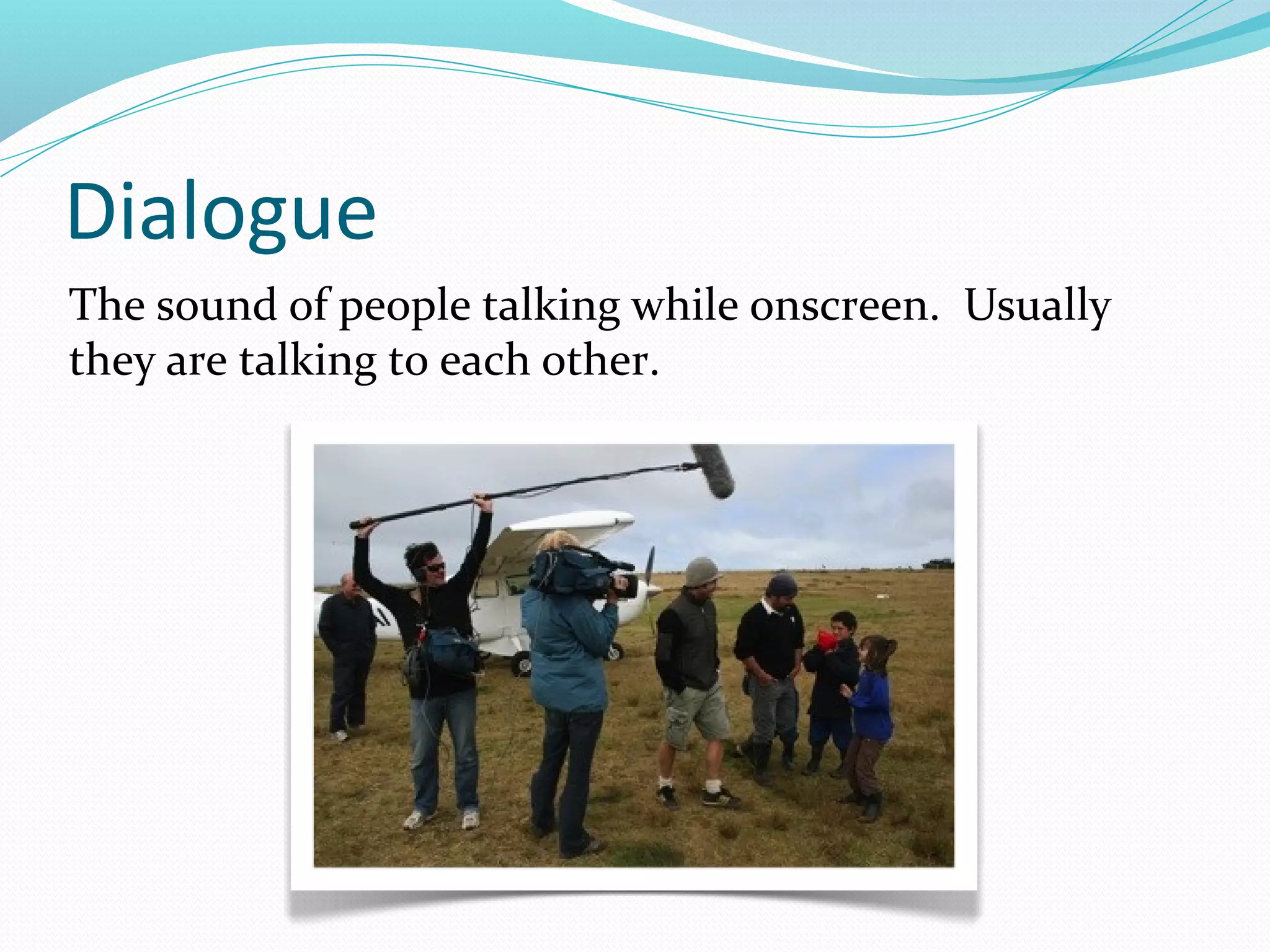
The sound ofpeople talking while onscreen. Usually
they are talking to each other.
6.
Ambient aka NaturalSound
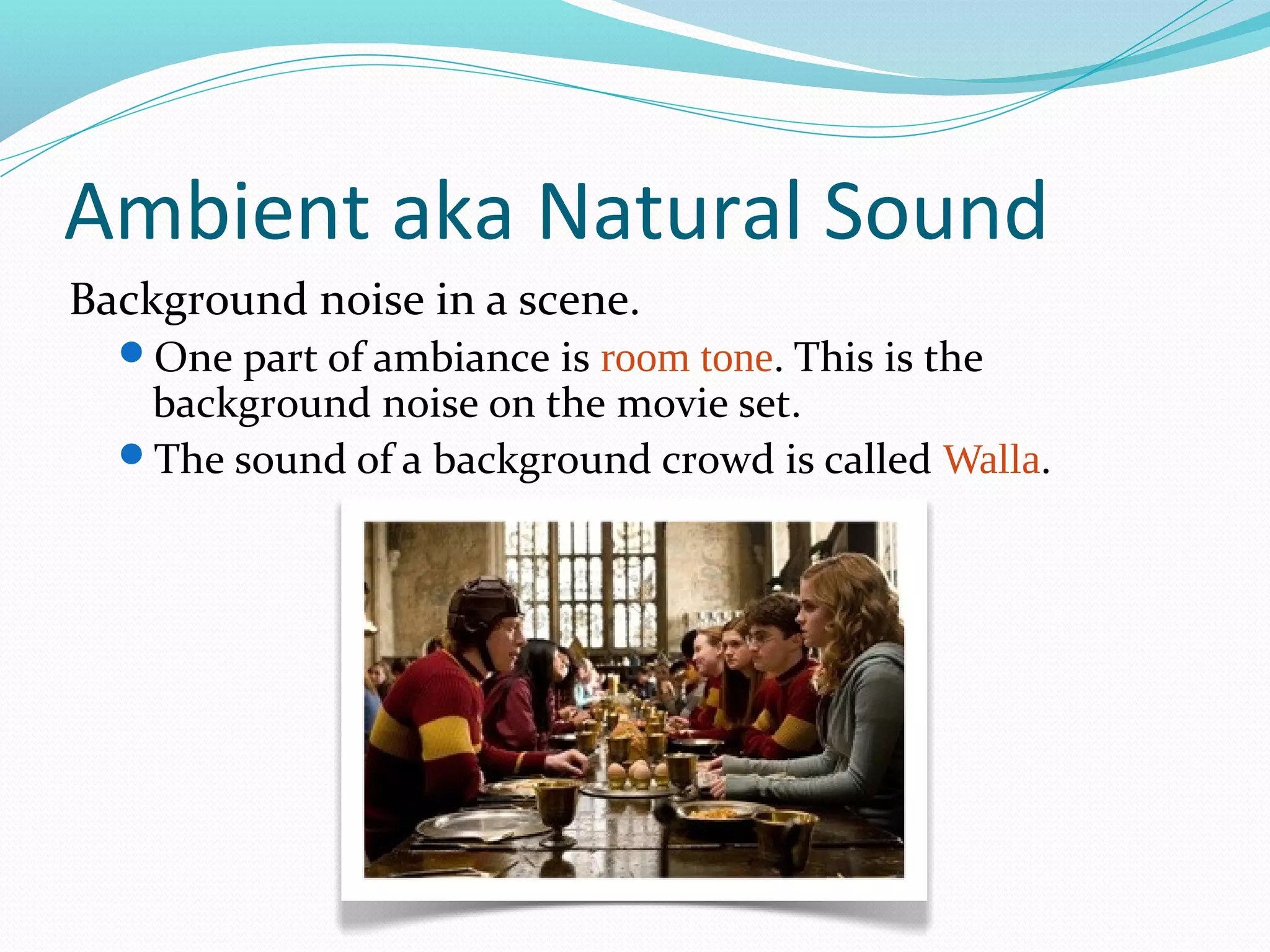
Background noise in a scene.
One part of ambiance is room tone. This is the
background noise on the movie set.
The sound of a background crowd is called Walla.
7.
Additional Dialogue Recording(ADR)
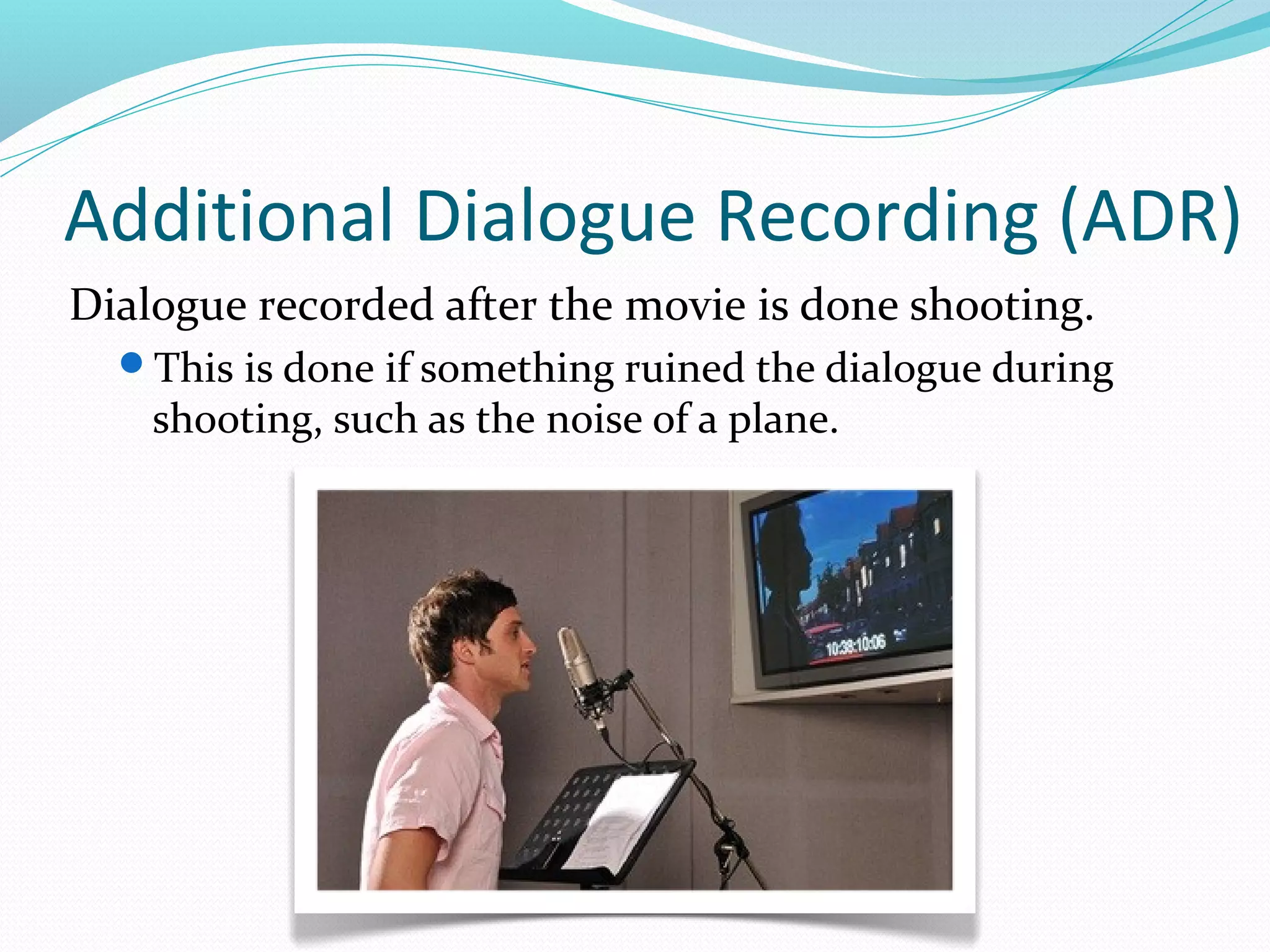
Dialogue recorded after the movie is done shooting.
This is done if something ruined the dialogue during
shooting, such as the noise of a plane.
8.
Narration
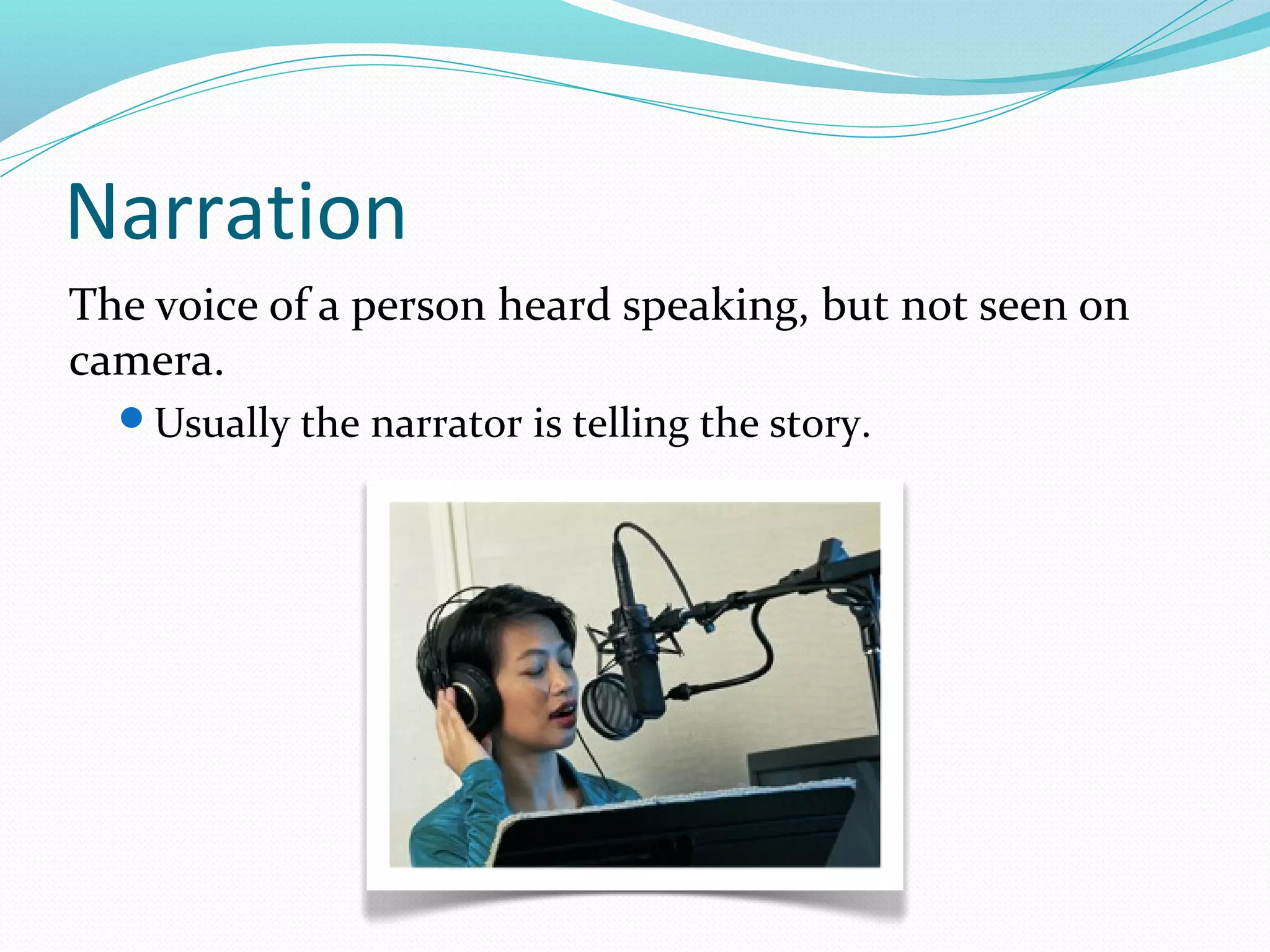
The voice ofa person heard speaking, but not seen on
camera.
Usually the narrator is telling the story.
9.
Sound Effects (SFX)
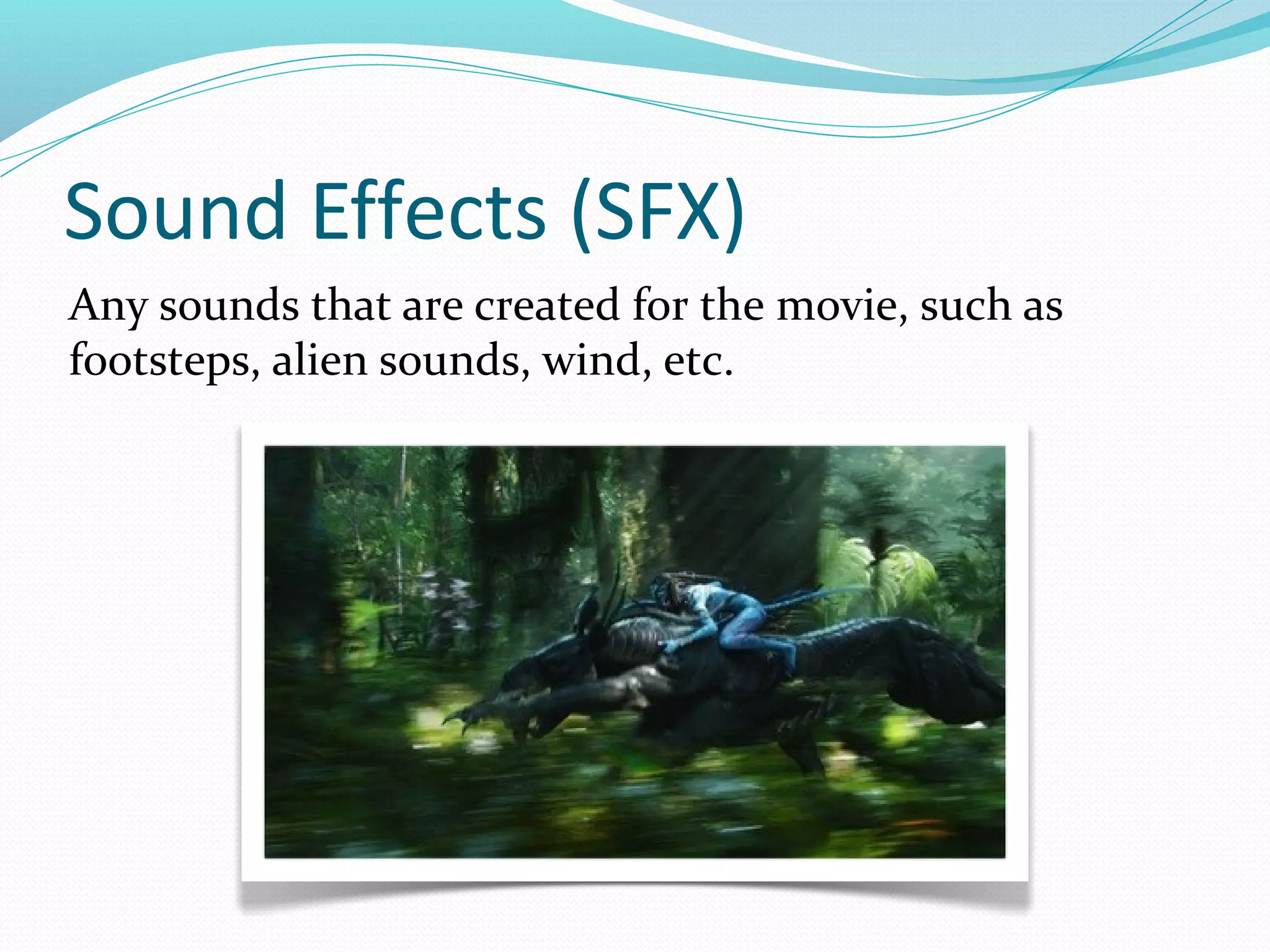
Anysounds that are created for the movie, such as
footsteps, alien sounds, wind, etc.
10.
The Foley Process
“TheFoley artist creates sound effects on a Foley stage, which
is simply a production room in which everything is a sound
prop, including the floor, which can provide different kinds of
footfalls. The film rolls on-screen, and the Foley artist matches
the kind of sound the filmmaker wants to the image
projected.”5
The Foley Process was
created by Jack Foley.
11.
The Foley Artist
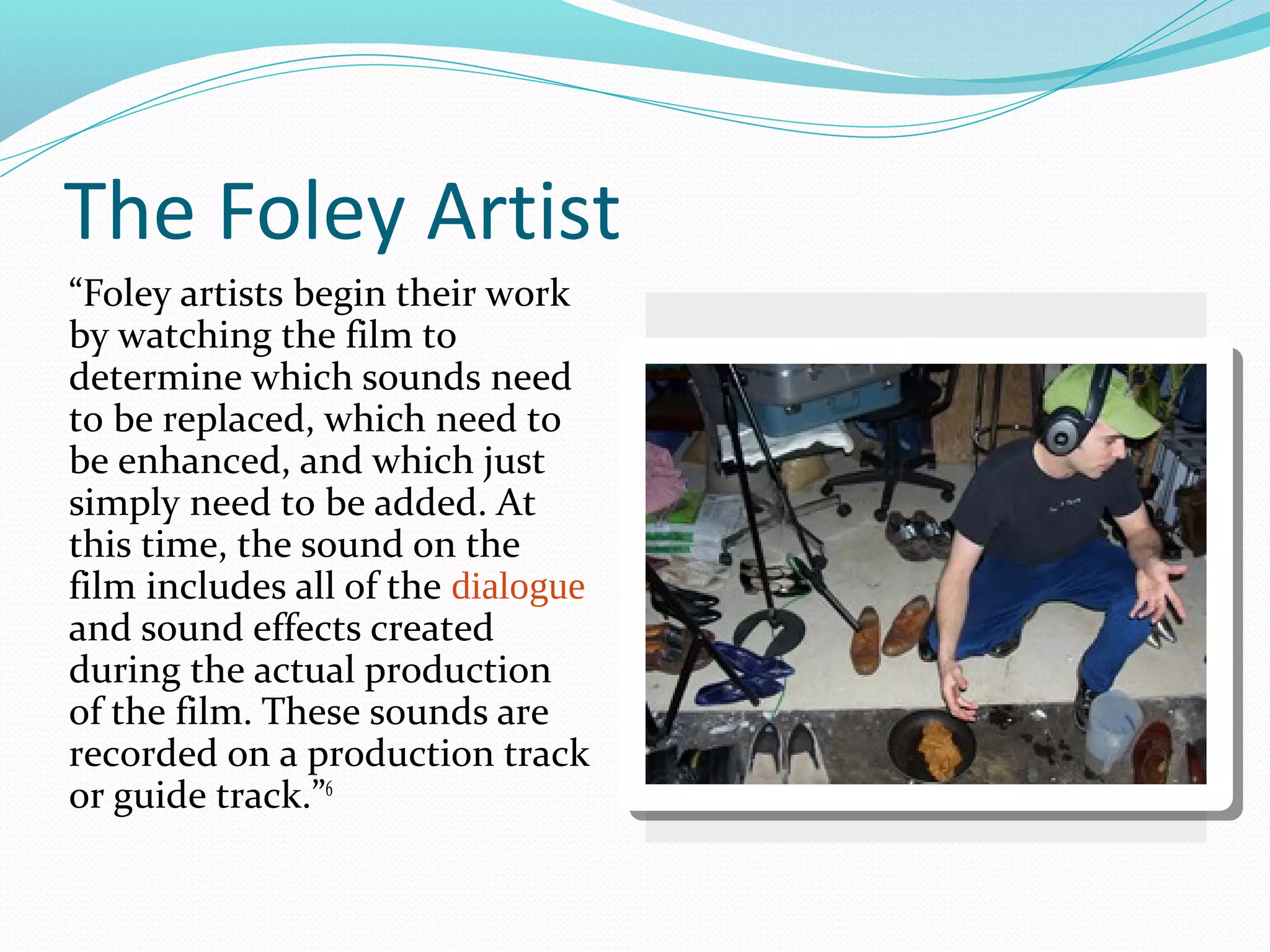
“Foleyartists begin their work
by watching the film to
determine which sounds need
to be replaced, which need to
be enhanced, and which just
simply need to be added. At
this time, the sound on the
film includes all of the dialogue
and sound effects created
during the actual production
of the film. These sounds are
recorded on a production track
or guide track.”6
12.
The Foley Stage
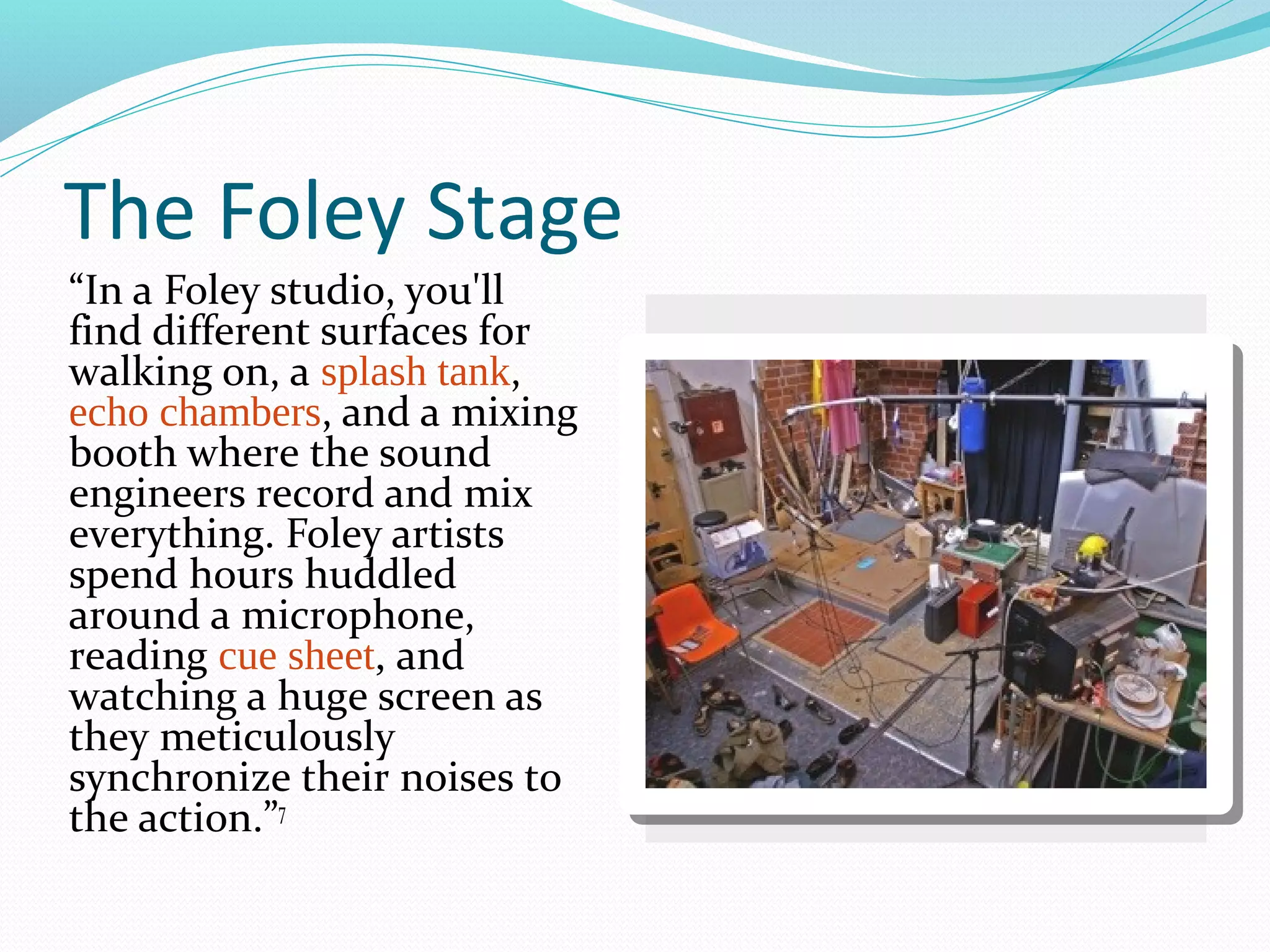
“Ina Foley studio, you'll
find different surfaces for
walking on, a splash tank,
echo chambers, and a mixing
booth where the sound
engineers record and mix
everything. Foley artists
spend hours huddled
around a microphone,
reading cue sheet, and
watching a huge screen as
they meticulously
synchronize their noises to
the action.”7
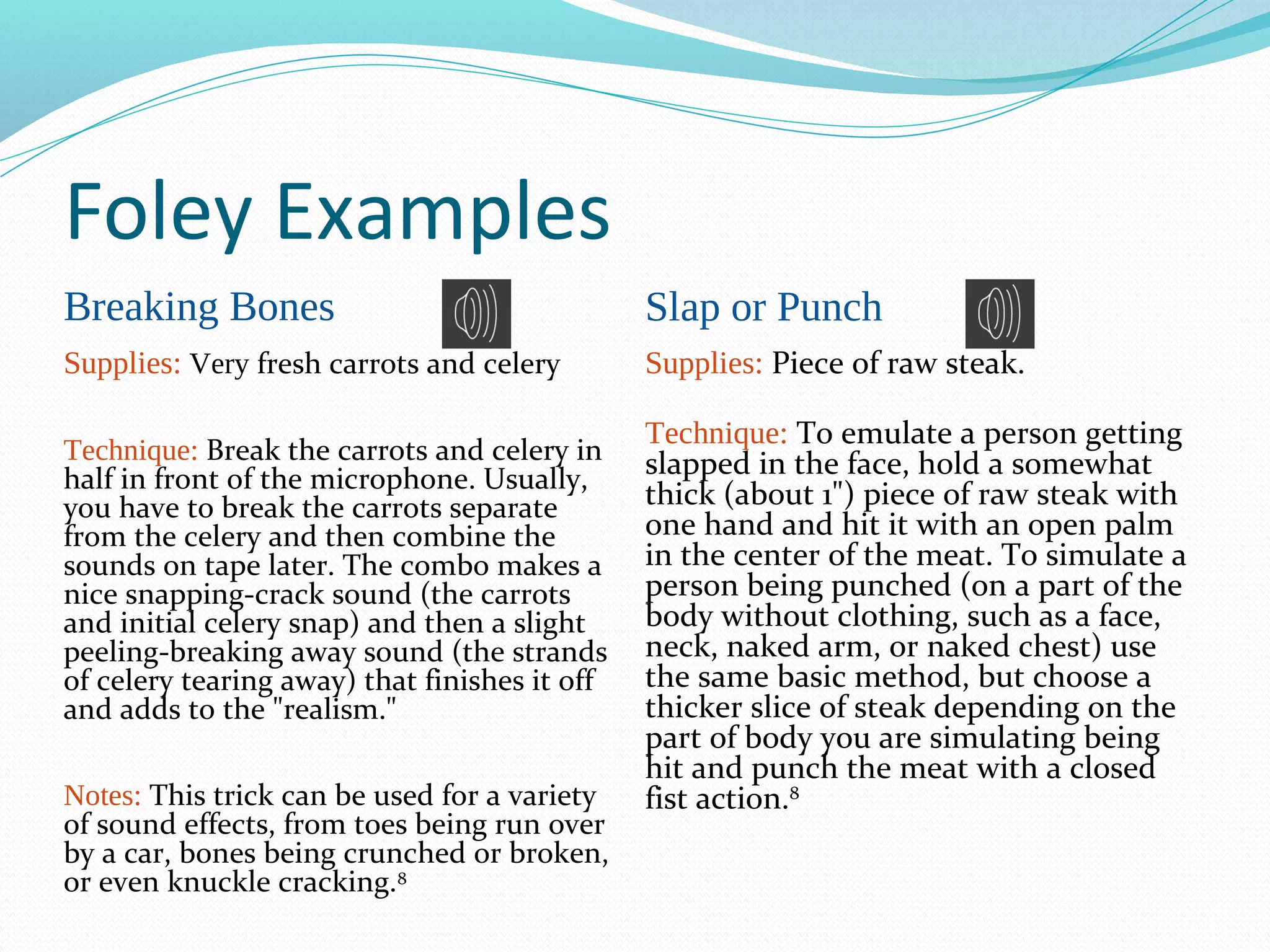
13.
Foley Examples
Breaking Bones Slap or Punch
Supplies: Very fresh carrots and celery Supplies: Piece of raw steak.
Technique: To emulate a person getting
Technique: Break the carrots and celery in slapped in the face, hold a somewhat
half in front of the microphone. Usually,
you have to break the carrots separate thick (about 1") piece of raw steak with
from the celery and then combine the one hand and hit it with an open palm
sounds on tape later. The combo makes a in the center of the meat. To simulate a
nice snapping-crack sound (the carrots person being punched (on a part of the
and initial celery snap) and then a slight body without clothing, such as a face,
peeling-breaking away sound (the strands neck, naked arm, or naked chest) use
of celery tearing away) that finishes it off the same basic method, but choose a
and adds to the "realism." thicker slice of steak depending on the
part of body you are simulating being
hit and punch the meat with a closed
Notes: This trick can be used for a variety fist action.8
of sound effects, from toes being run over
by a car, bones being crunched or broken,
or even knuckle cracking.8
14.
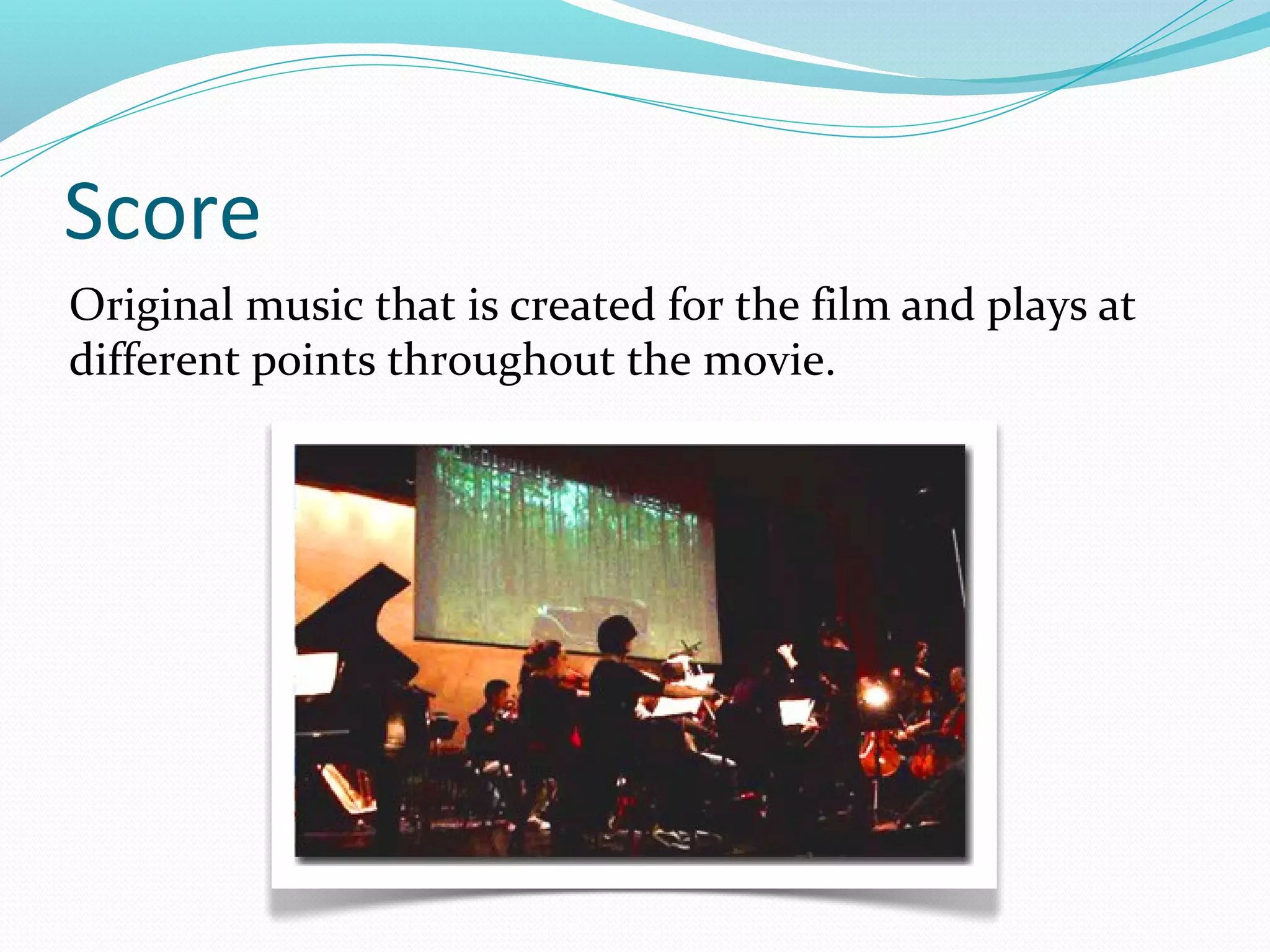
Score
Original music thatis created for the film and plays at
different points throughout the movie.
15.
Soundtrack
Music included inyour film that wasn’t created
specifically for the film (for example, a song by a popular
artist).
16.
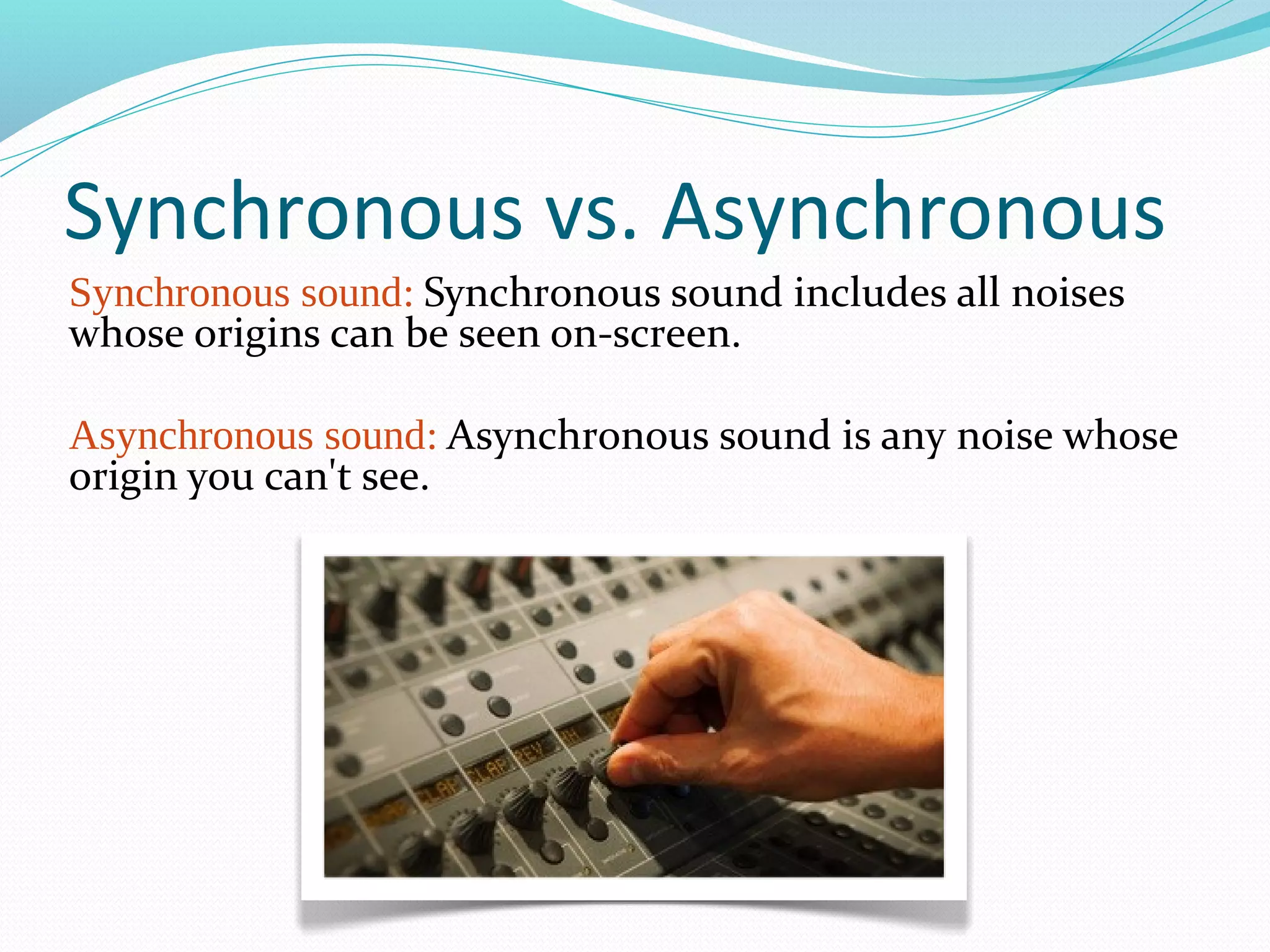
Synchronous vs. Asynchronous
Synchronoussound: Synchronous sound includes all noises
whose origins can be seen on-screen.
Asynchronous sound: Asynchronous sound is any noise whose
origin you can't see.
17.
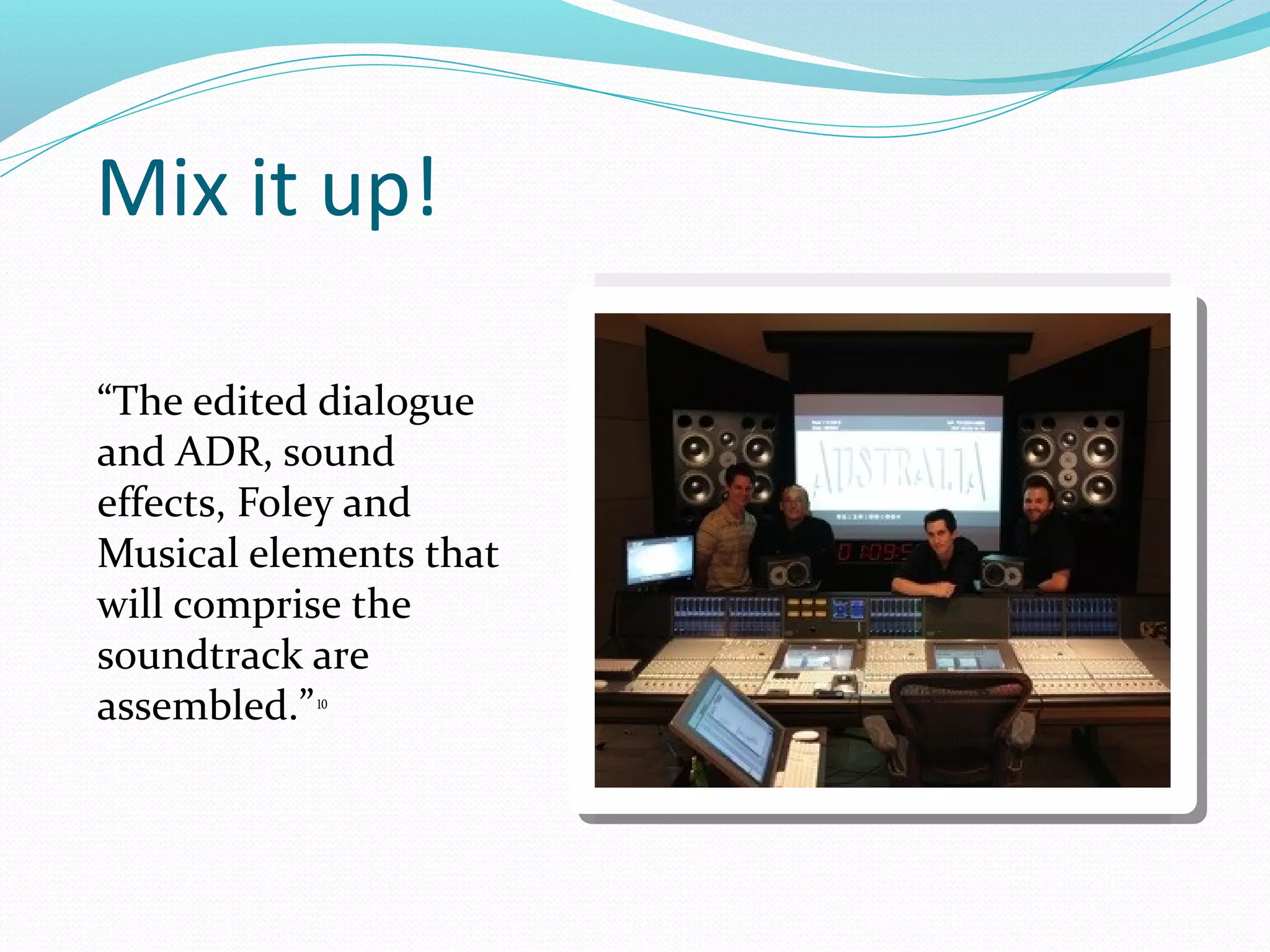
Mix it up!
“Theedited dialogue
and ADR, sound
effects, Foley and
Musical elements that
will comprise the
soundtrack are
assembled.” 10
18.
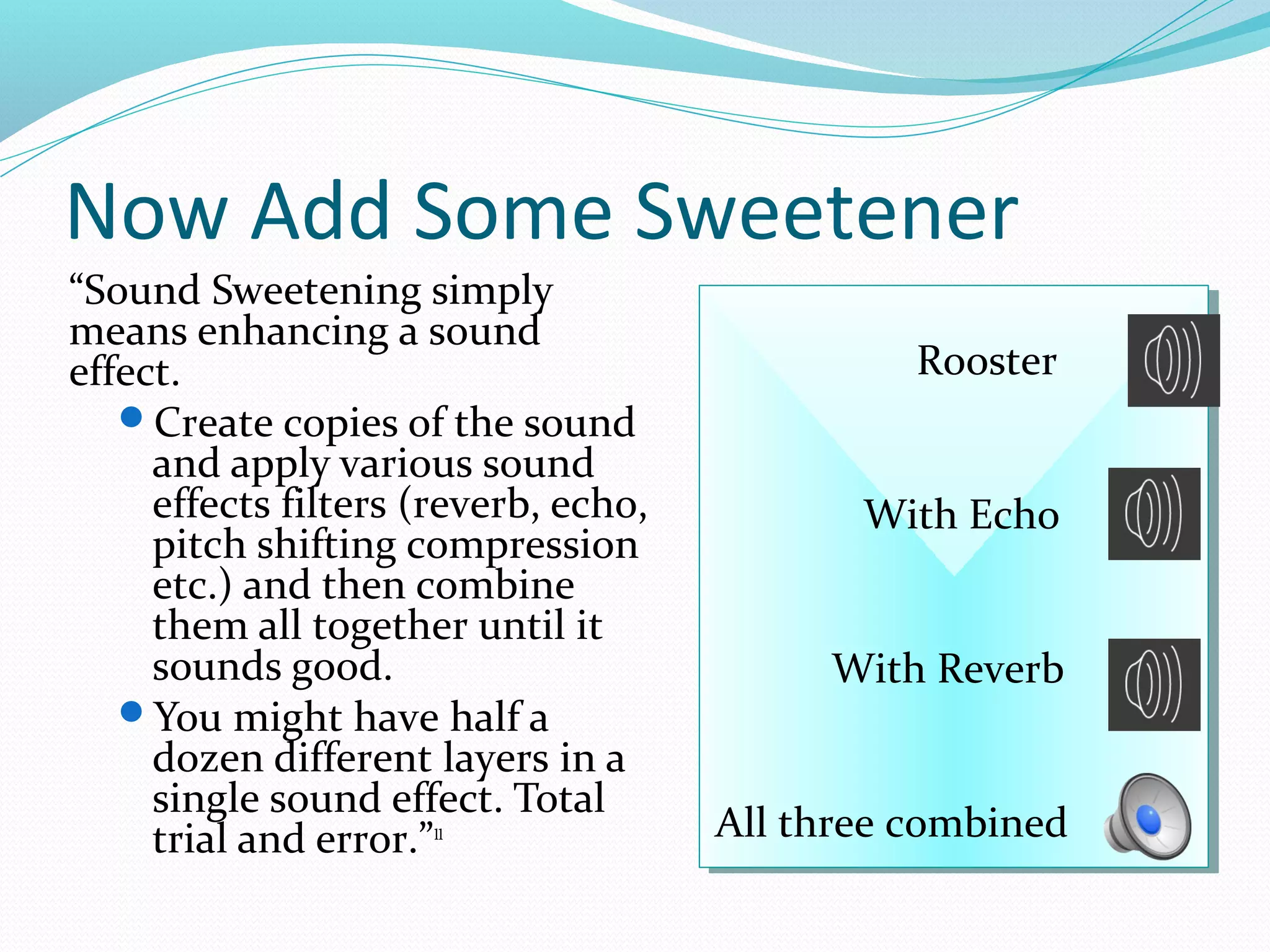
Now Add SomeSweetener
“Sound Sweetening simply
means enhancing a sound
effect. Rooster
Rooster
Create copies of the sound
and apply various sound
effects filters (reverb, echo, With Echo
With Echo
pitch shifting compression
etc.) and then combine
them all together until it
sounds good. With Reverb
With Reverb
You might have half a
dozen different layers in a
single sound effect. Total
trial and error.”11 All three combined
All three combined
19.
Terms to Know 12
Cue sheet: a list of all the necessary sound effects, along with their "cues"--time
code and/or film footage signals that indicate when the sound begins and ends
Echo chamber: a box or container used to create the illusion of distance and
reverberation
Incidental: casual, everyday sounds. Special sound effects that aren't necessarily
"special."
Mixing console: a machine capable of taking in several different sounds, then
mixing them at different levels to create a single, unified sound
Reverberation: a reechoed sound which fades until it becomes inaudible
Rough cut: the "first draft" of a film
Score: the background music throughout a film
Splash tank: a container filled with water for wet sound effects
Walla: the film industry term for background crowd noises in a movie
20.
Listen up!
“From nowon, when you exit the theater, you should not
simply sing the theme song and promptly forget the rest
of the sounds in the film. Rather, you should be asking
what kind of theme music was used, what other use of
music within the narrative, what sound effects were
created for which situations, whether certain effects
were synchronous or asynchronous, and why. So get out
to the local multiplex and start listening with both ears!” 13