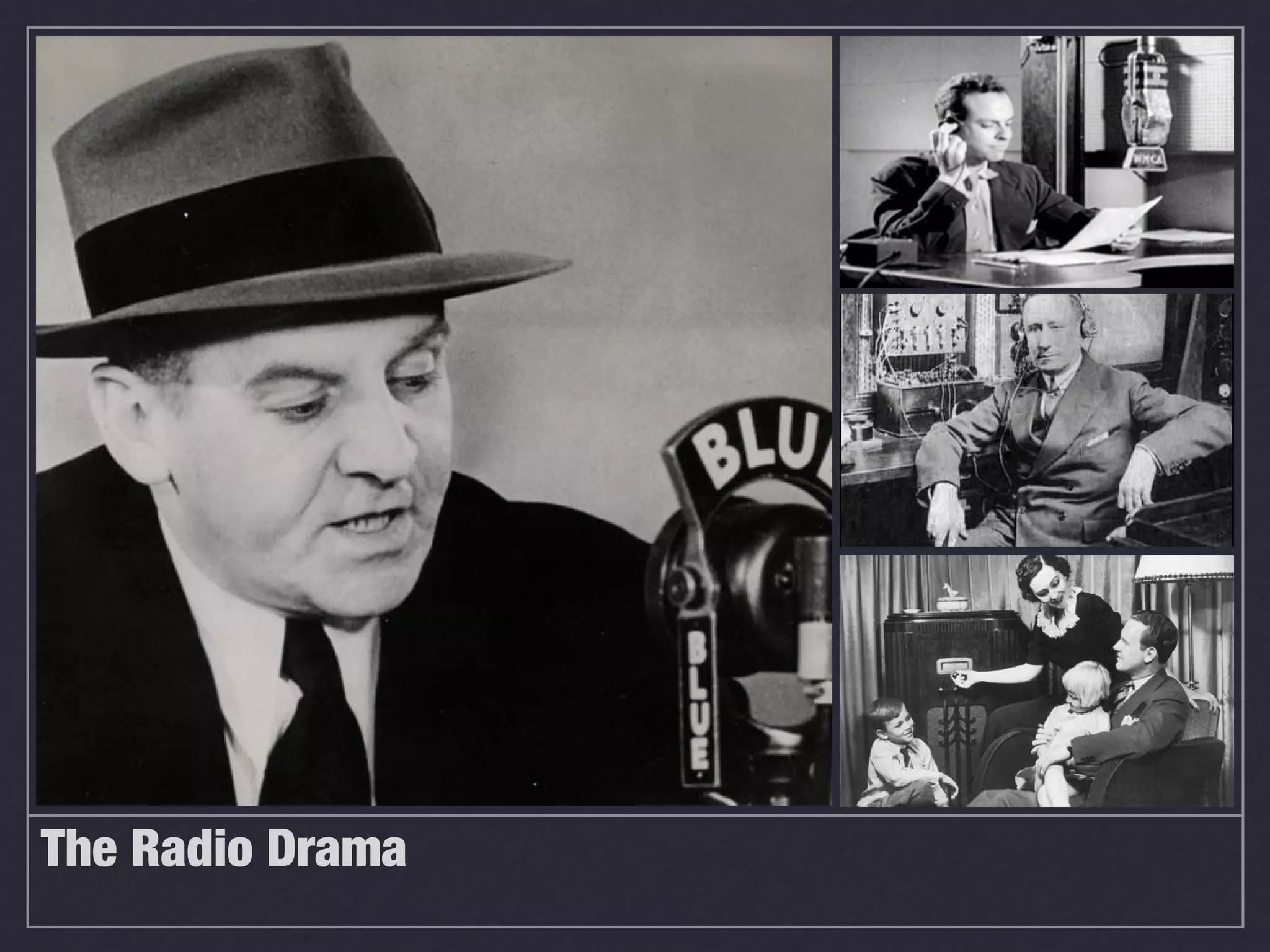
The Radio Drama
What is a Radio
Drama?
A dramatized audio performance, broadcast on
radio or published on audio media, such as tape
or CD.

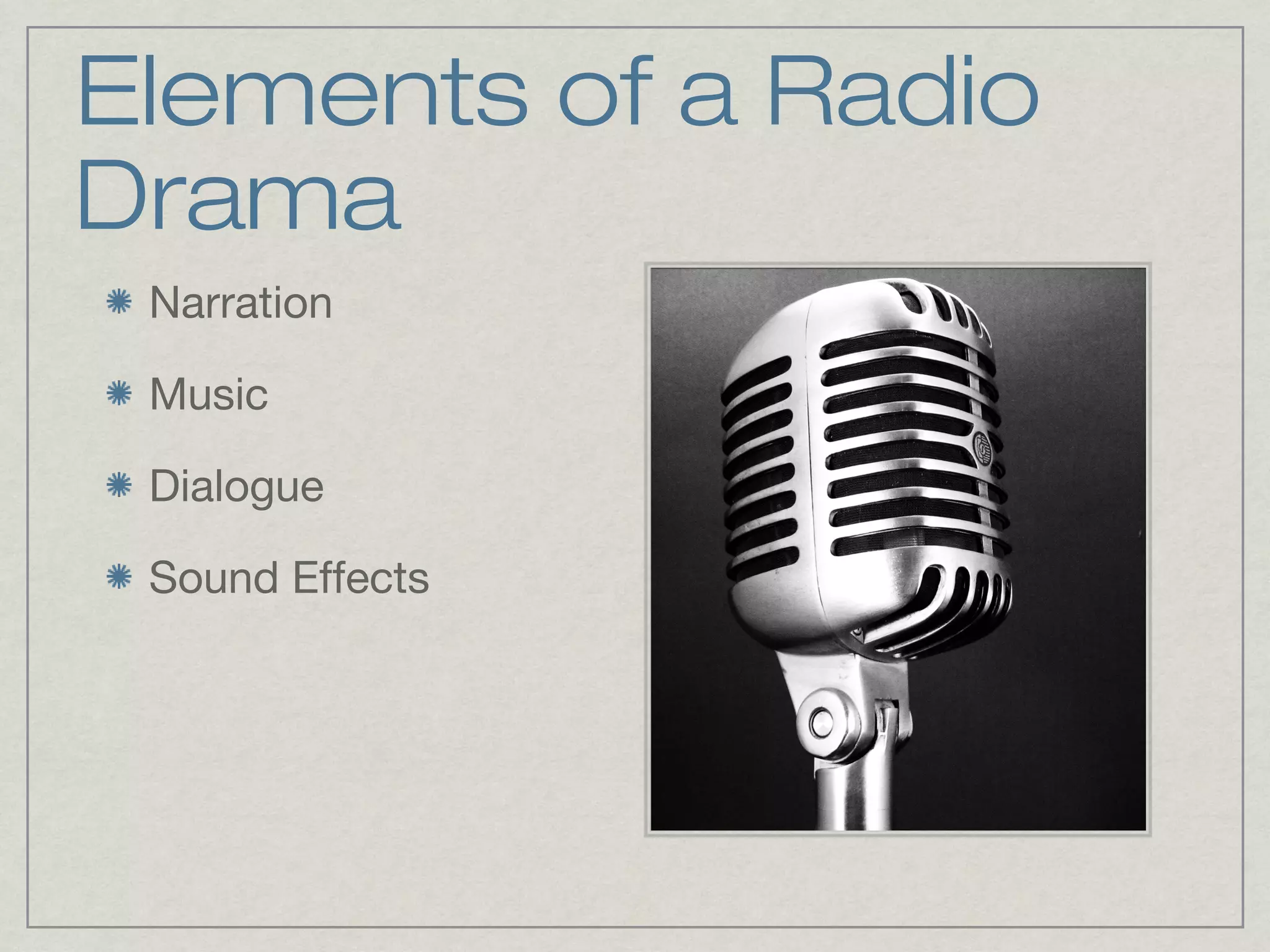
Because there is no accompanying video, a radio
drama depends on narration, dialogue, music and
sound effects to help the listener imagine the
characters and story.
History of Radio
Dramas
By the late 1930s, radio drama was widely popular
in the United States (and also in other parts of the
world).

There were dozens of programs in many different
genres, from mysteries and thrillers, to
soap operas and comedies.
Decline of Radio
Drama
After the advent of television, radio drama never
recovered its popularity in the United States.

Most remaining CBS and NBC radio dramas were
cancelled in 1960.
Elements of a Radio
Drama
 Narration

 Music

 Dialogue

 Sound Effects
Narration
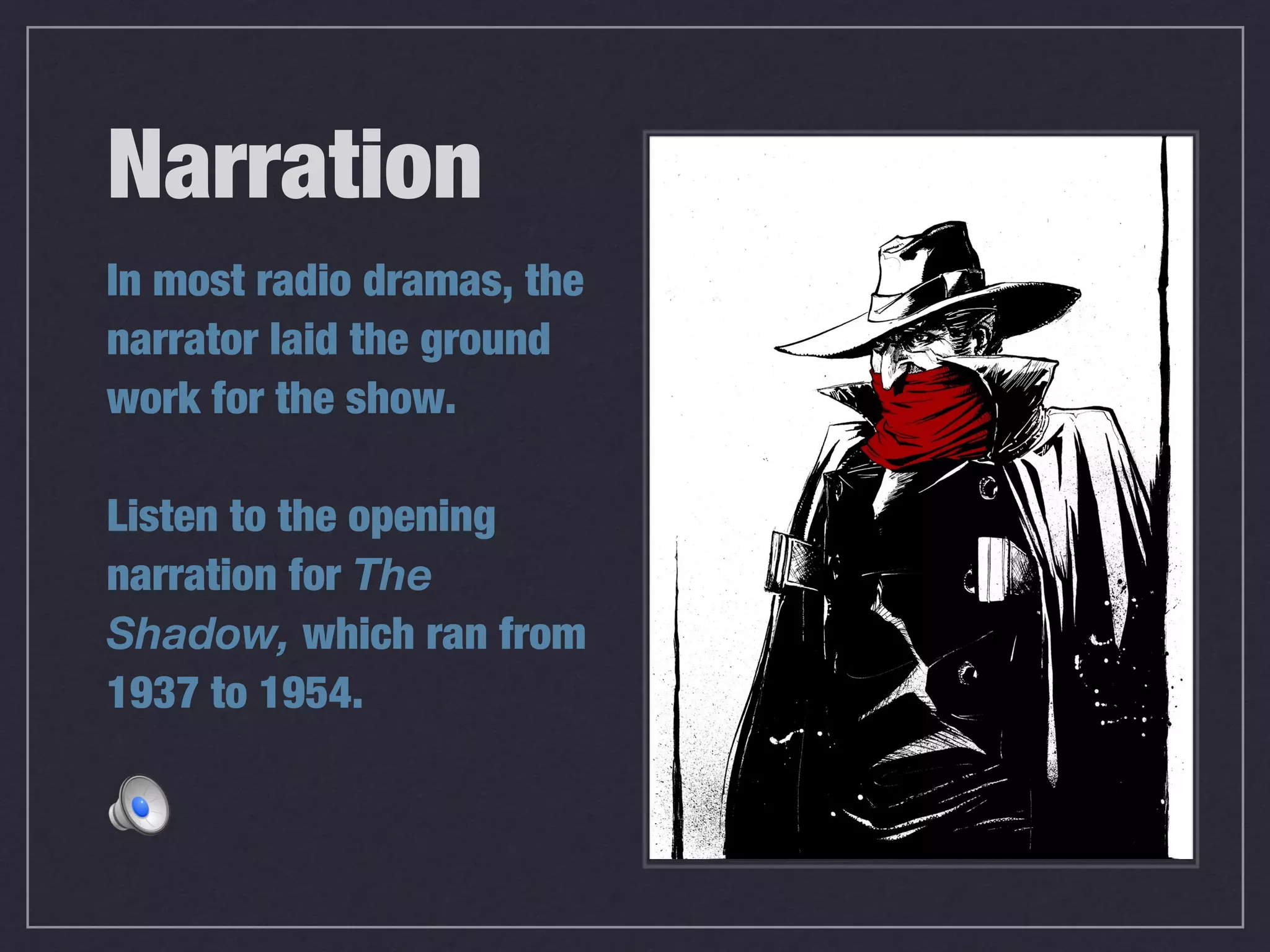
In most radio dramas, the
narrator laid the ground
work for the show.

Listen to the opening
narration for The
Shadow, which ran from
1937 to 1954.
Dialogue
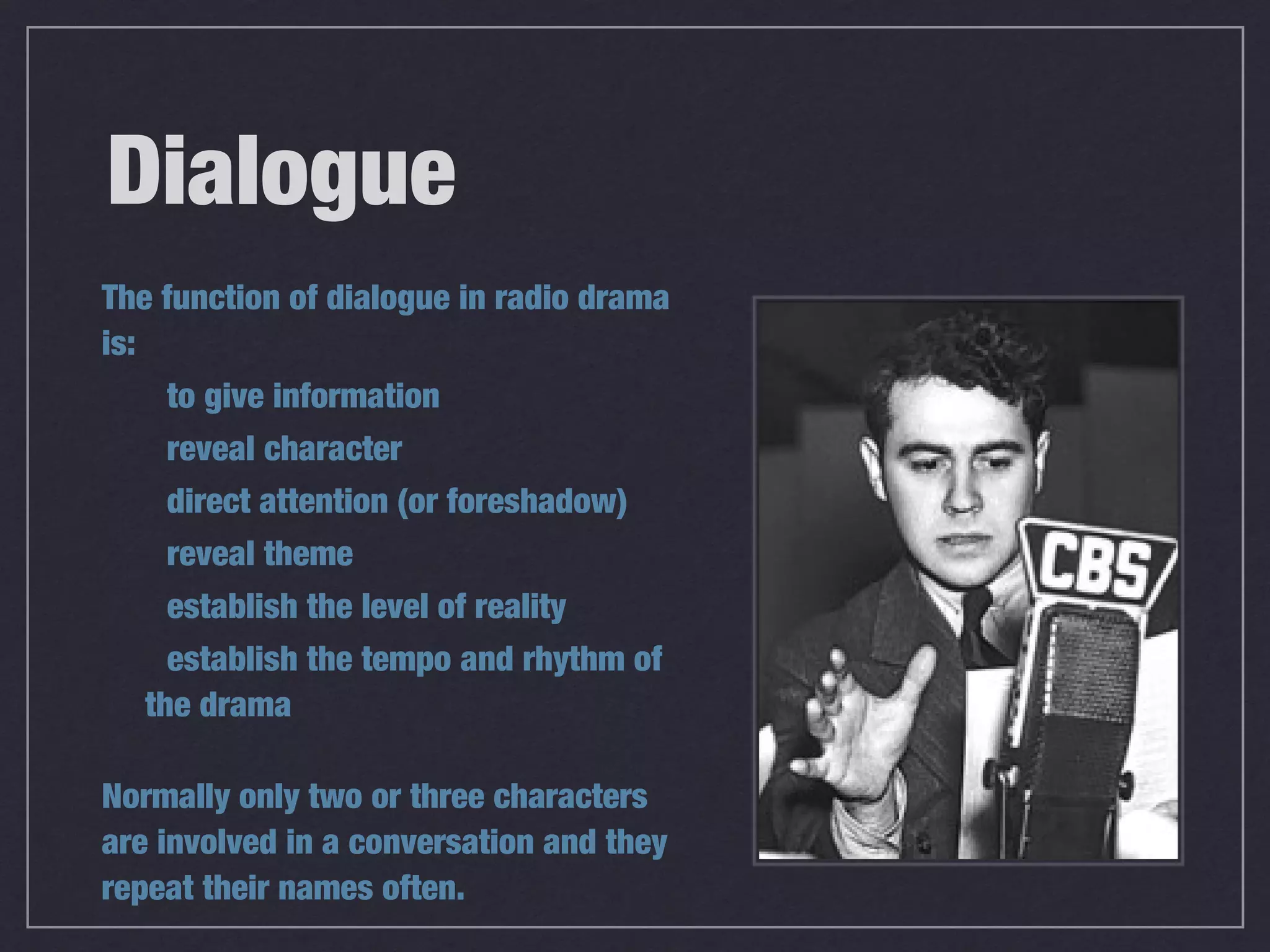
The function of dialogue in radio drama
is:
    to give information
    reveal character
    direct attention (or foreshadow)
    reveal theme
    establish the level of reality
    establish the tempo and rhythm of
  the drama

Normally only two or three characters
are involved in a conversation and they
repeat their names often.
Music
To identify the program
    Every show had a theme that was instantly
    recognizable.
To create a bridge, a short three or four measure musical
connection between scenes.
To underscore dialogue, as in a movie, creating a
"dramatic" mood.
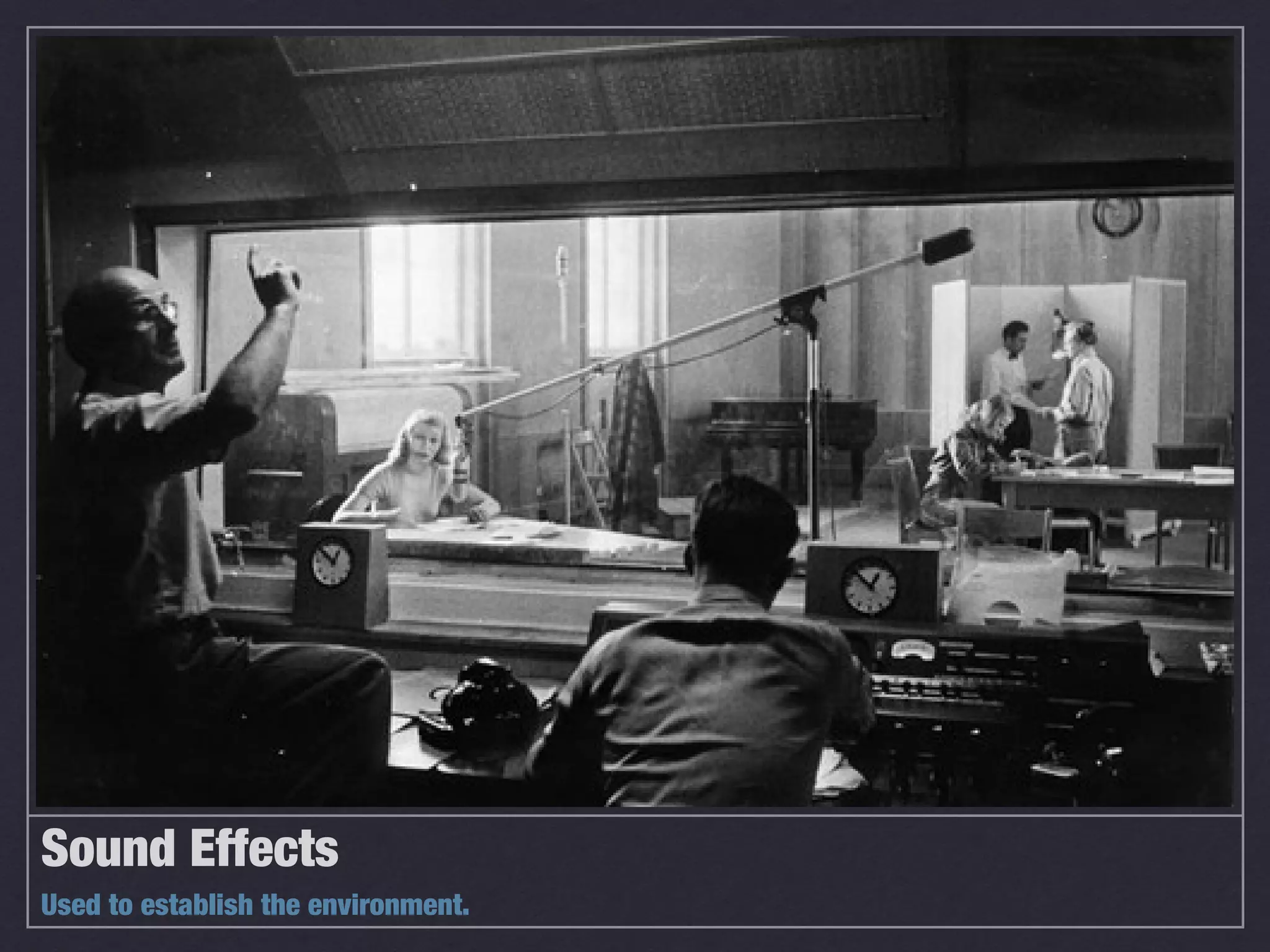
Sound Effects
Used to establish the environment.
The Radio Drama
Today
With the advent of
podcasting, Radio
Dramas have once
again become a
popular medium of
communication.
Benefits of
Podcasting
Podcasts are easy to
create, cost little to no
money, and can be
produced by anyone.

There are no
restrictions on the
length or content of a
podcast.
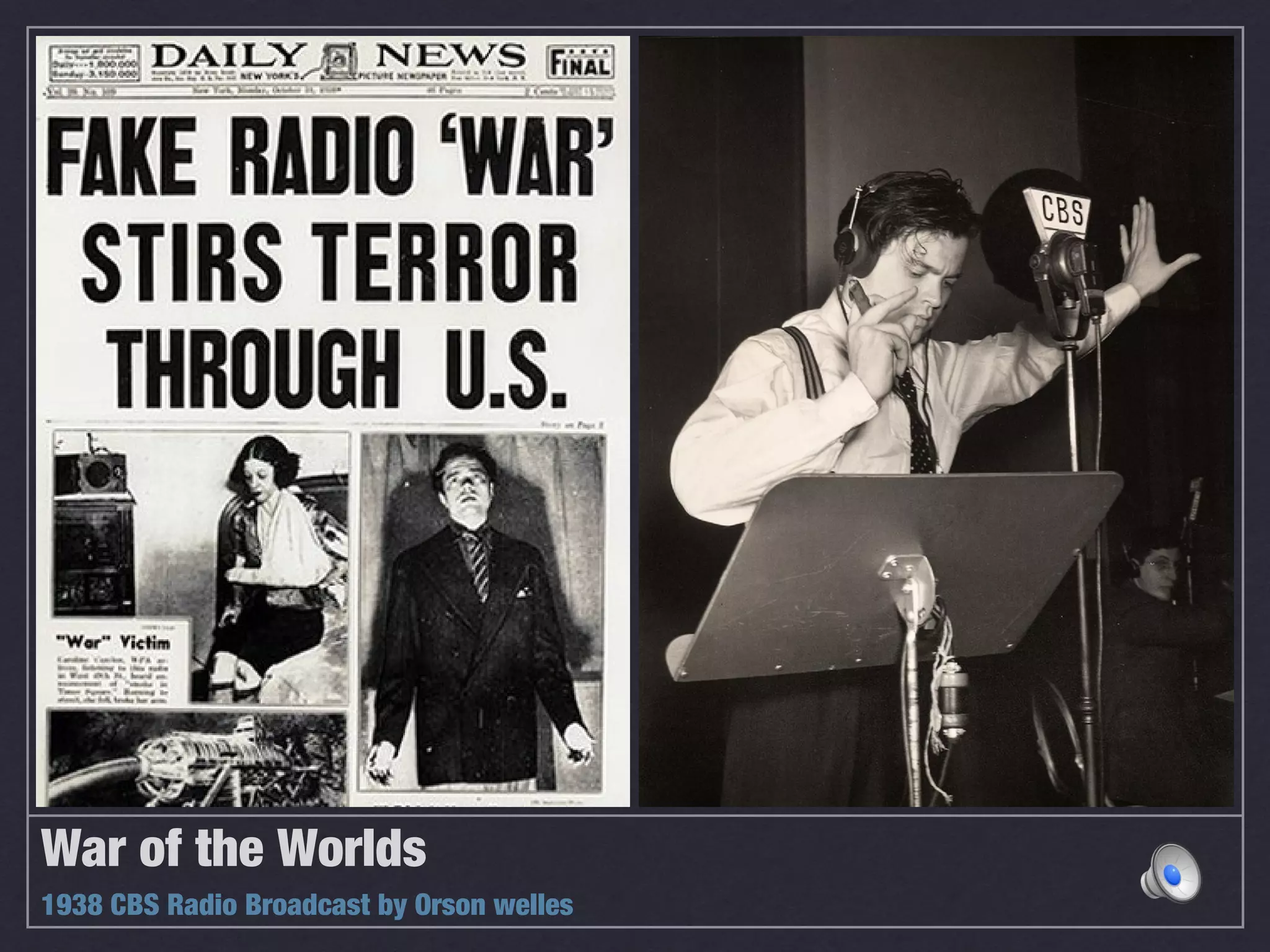
War of the Worlds
1938 CBS Radio Broadcast by Orson welles

History of Radio Dramas

  • 1.
  • 2.
    What is aRadio Drama? A dramatized audio performance, broadcast on radio or published on audio media, such as tape or CD. Because there is no accompanying video, a radio drama depends on narration, dialogue, music and sound effects to help the listener imagine the characters and story.
  • 3.
    History of Radio Dramas Bythe late 1930s, radio drama was widely popular in the United States (and also in other parts of the world). There were dozens of programs in many different genres, from mysteries and thrillers, to soap operas and comedies.
  • 4.
    Decline of Radio Drama Afterthe advent of television, radio drama never recovered its popularity in the United States. Most remaining CBS and NBC radio dramas were cancelled in 1960.
  • 5.
    Elements of aRadio Drama Narration Music Dialogue Sound Effects
  • 6.
    Narration In most radiodramas, the narrator laid the ground work for the show. Listen to the opening narration for The Shadow, which ran from 1937 to 1954.
  • 7.
    Dialogue The function ofdialogue in radio drama is: to give information reveal character direct attention (or foreshadow) reveal theme establish the level of reality establish the tempo and rhythm of the drama Normally only two or three characters are involved in a conversation and they repeat their names often.
  • 8.
    Music To identify theprogram Every show had a theme that was instantly recognizable. To create a bridge, a short three or four measure musical connection between scenes. To underscore dialogue, as in a movie, creating a "dramatic" mood.
  • 9.
    Sound Effects Used toestablish the environment.
  • 10.
    The Radio Drama Today Withthe advent of podcasting, Radio Dramas have once again become a popular medium of communication.
  • 11.
    Benefits of Podcasting Podcasts areeasy to create, cost little to no money, and can be produced by anyone. There are no restrictions on the length or content of a podcast.
  • 12.
    War of theWorlds 1938 CBS Radio Broadcast by Orson welles