Microphone
Essentials
Basics
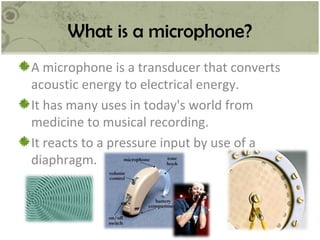
What is a microphone?
A microphone is a transducer that converts
acoustic energy to electrical energy.
It has many uses in today's world from
medicine to musical recording.
It reacts to a pressure input by use of a
diaphragm.
History
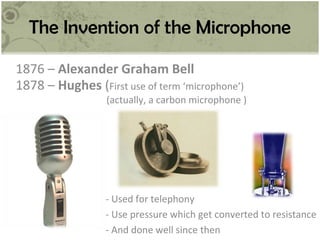
The Invention of the Microphone
1876 – Alexander Graham Bell
1878 – Hughes (First use of term ‘microphone’)

(actually, a carbon microphone )

- Used for telephony
- Use pressure which get converted to resistance
- And done well since then
1920’s
The Rise of Broadcasting
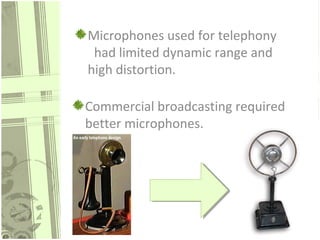
Microphones used for telephony
had limited dynamic range and
high distortion.
Commercial broadcasting required
better microphones.
Microphone
Types
Dynamic Microphones
1. Dynamic moving coil microphones employ a coil
of wires attached to a diaphragm, which is
suspended within a magnetic field.
2. Acoustical vibrations cause the diaphragm and
the coil to vibrate within this magnetic field,
creating an AC (alternating current.)
3. This current electrically represents the audio
signal.
Condenser Microphones
1. Condenser microphones use two adjacent
plates. One is stationary, while the other, a
diaphragm, vibrates to incoming acoustic signal.
2. These two plates are charged with a constant
voltage - phantom power. As the distance
between the stationary plate and diaphragm
varies with incoming vibrations, a varying
electrical current is generated.
Ribbon Microphones
1.
2.
3.
4.

Again principle of induction is used
Ribbon (Induction) is used as diaphragm
Oscillates between magnetic poles
Bi-directional
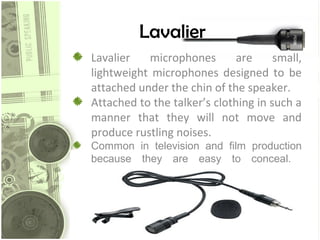
Lavalier
Lavalier
microphones
are
small,
lightweight microphones designed to be
attached under the chin of the speaker.
Attached to the talker’s clothing in such a
manner that they will not move and
produce rustling noises.
Common in television and film production
because they are easy to conceal.
Phantom
Power
Phantom power is a method of
powering a condenser microphone
using another device. For example, the
cable from the microphone to the audio
mixer or videotape recorder could carry
power as well as audio signals. If you
are able to provide a microphone
phantom power, you will not need
batteries!
Dynamic V/s Condenser
Microphones
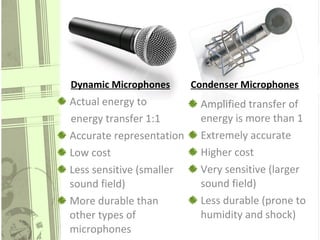
Dynamic Microphones

Actual energy to
energy transfer 1:1
Accurate representation
Low cost
Less sensitive (smaller
sound field)
More durable than
other types of
microphones

Condenser Microphones

Amplified transfer of
energy is more than 1
Extremely accurate
Higher cost
Very sensitive (larger
sound field)
Less durable (prone to
humidity and shock)
Microphones

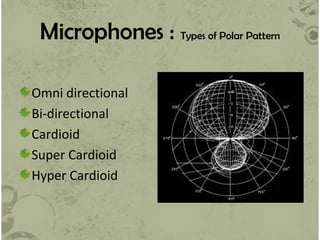
Polar Pick-up Pattern
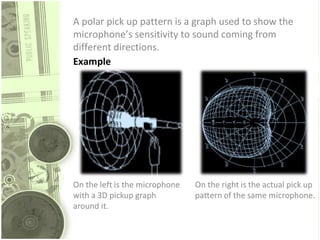
A polar pick up pattern is a graph used to show the
microphone’s sensitivity to sound coming from
different directions.
Example
Microphones : Types of Polar Pattern
Omni directional
Bi-directional
Cardioid
Super Cardioid
Hyper Cardioid
How to Choose
Microphones
Decibel (dB) scale

Measures how sensitive the
microphone is

Frequency Response

“Bandwidth“ of microphone

On-axis response

Response to sound coming
directly to the microphone

Off-axis responses

Response to sound coming
from all angles

Diffuse field response

Response to sound coming
from reflections

Equivalent noise level

Noise from microphone itself
(good if <15db)

Sensitivity

What voltage a microphone
will produce at a certain sound
pressure level
Thank You

Microphones

  • 1.
  • 2.
  • 3.
    What is amicrophone? A microphone is a transducer that converts acoustic energy to electrical energy. It has many uses in today's world from medicine to musical recording. It reacts to a pressure input by use of a diaphragm.
  • 4.
  • 5.
    The Invention ofthe Microphone 1876 – Alexander Graham Bell 1878 – Hughes (First use of term ‘microphone’) (actually, a carbon microphone ) - Used for telephony - Use pressure which get converted to resistance - And done well since then
  • 6.
  • 7.
    Microphones used fortelephony had limited dynamic range and high distortion. Commercial broadcasting required better microphones.
  • 8.
  • 9.
    Dynamic Microphones 1. Dynamicmoving coil microphones employ a coil of wires attached to a diaphragm, which is suspended within a magnetic field. 2. Acoustical vibrations cause the diaphragm and the coil to vibrate within this magnetic field, creating an AC (alternating current.) 3. This current electrically represents the audio signal.
  • 10.
    Condenser Microphones 1. Condensermicrophones use two adjacent plates. One is stationary, while the other, a diaphragm, vibrates to incoming acoustic signal. 2. These two plates are charged with a constant voltage - phantom power. As the distance between the stationary plate and diaphragm varies with incoming vibrations, a varying electrical current is generated.
  • 11.
    Ribbon Microphones 1. 2. 3. 4. Again principleof induction is used Ribbon (Induction) is used as diaphragm Oscillates between magnetic poles Bi-directional
  • 12.
    Lavalier Lavalier microphones are small, lightweight microphones designedto be attached under the chin of the speaker. Attached to the talker’s clothing in such a manner that they will not move and produce rustling noises. Common in television and film production because they are easy to conceal.
  • 13.
  • 14.
    Phantom power isa method of powering a condenser microphone using another device. For example, the cable from the microphone to the audio mixer or videotape recorder could carry power as well as audio signals. If you are able to provide a microphone phantom power, you will not need batteries!
  • 15.
  • 16.
    Dynamic Microphones Actual energyto energy transfer 1:1 Accurate representation Low cost Less sensitive (smaller sound field) More durable than other types of microphones Condenser Microphones Amplified transfer of energy is more than 1 Extremely accurate Higher cost Very sensitive (larger sound field) Less durable (prone to humidity and shock)
  • 17.
  • 18.
    A polar pickup pattern is a graph used to show the microphone’s sensitivity to sound coming from different directions. Example
  • 19.
    Microphones : Typesof Polar Pattern Omni directional Bi-directional Cardioid Super Cardioid Hyper Cardioid
  • 20.
  • 21.
    Decibel (dB) scale Measureshow sensitive the microphone is Frequency Response “Bandwidth“ of microphone On-axis response Response to sound coming directly to the microphone Off-axis responses Response to sound coming from all angles Diffuse field response Response to sound coming from reflections Equivalent noise level Noise from microphone itself (good if <15db) Sensitivity What voltage a microphone will produce at a certain sound pressure level
  • 22.