...words and pictures can work together to
communicate more powerfully than either alone.
  - William Albert Allard, Photographic Essay (American Photographer
                                 Master Series) by William Albert Allard
What is a Photo Essay?
 Creating a photo essay is a combination of
  art and journalism.
 As with a written essay, the elements of a
  photo essay should be structured in a way
  that easily conveys a story to the viewer.
 Each individual photo contributes to the
  overall story, theme, and emotions of the
  essay.
 The photos you choose must not only be
  compositionally and artistically strong, but
  also informative and educational.
Two Types of Photographic Essays
   Narrative
     tells a sequential story
   Thematic
     focuses on a central theme
Elements of a Photo Essay
   The story- Your essay should be able to stand alone, without a
    written article, and make logical sense to the viewer.
   A range of photos: A variety of photos (wide angle, detailed,
    portraits etc.) should be included.
   The order of the photos: It is important that the order of your
    photos effectively tell a story, in an interesting and logical
    sequence.
   Information and emotion: Your photos should include both
    informational and emotional photos.
   Captions: In a photo essay, captions are your best opportunity
    to describe what is happening in words and ensure that the
    viewer understands.
Types of Photos
 By including a variety of types of photos in
  your essay, you will ensure that it is both
  interesting and informative.
 Not only is it important to choose powerful
  photos, but also to present them in an
  effective order.
The Lead Photo
 Similar to the first two sentences of a
  newspaper article, your lead photo should
  effectively draw in your audience.
 This is usually the most difficult photo to
  choose and should follow the theme of your
  essay.
 It could be an emotional portrait or an action
  shot, but ultimately it should provoke the
  curiosity of the viewer.
The Scene
 Your second photo should set the stage and
  describe the scene of your story.
 An overarching photo taken with a wide
  angle lens is often effective.
Portraits
 Your photo essay should include at least one
  portrait.
 Capturing an emotional expression or telling
  action shot can effectively humanize your
  story.
 These photos often evoke strong emotions
  and empathy in the viewer (whether it is a
  positive and enthusiastic emotion, or a
  sympathetic and concerned emotion.)
Detail Photos
 Detail photos focus in on one element, be it
  a building, a face, or a relevant object.
 These photos are your best opportunity to
  capture specific objects.
 The captions of these photos should be
  informative and educational.
Close-Up Photos
 Similarly, close-up photos provide an
  opportunity to focus in on specific objects.
 These photos are tightly cropped, simple
  shots that present a specific element of your
  story.
 Again, this is an excellent opportunity to
  present information in the caption.
The Signature Photo
   The signature photo summarizes the
    situation and captures the key elements of
    your story in a telling moment.
The Clincher Photo
 The final photo, the clincher, should evoke
  the emotion you want the viewer to walk
  away with, be it a feeling of hope, inspiration,
  or sadness.
 Decide on this mood before you select this
  photo.
Order of Photos
   While the order of some photos (e.g. the
    lead photo, and the clincher) is set, the order
    of most types of photos in your essay is your
    preference.
Photographer Brooks Kraft captures the Chinese
president's historic meeting with Obama
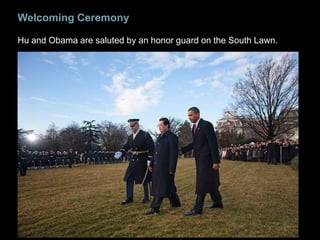
Welcoming Ceremony

Hu and Obama are saluted by an honor guard on the South Lawn.
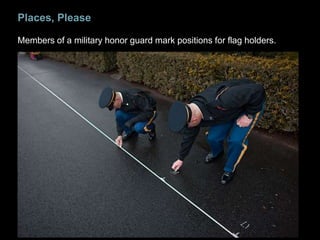
Places, Please

Members of a military honor guard mark positions for flag holders.
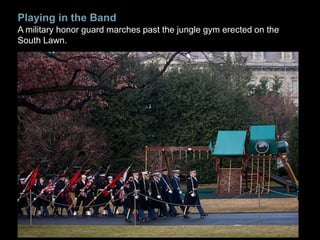
Playing in the Band
A military honor guard marches past the jungle gym erected on the
South Lawn.
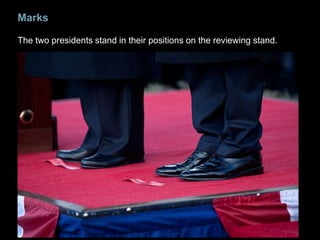
Marks

The two presidents stand in their positions on the reviewing stand.
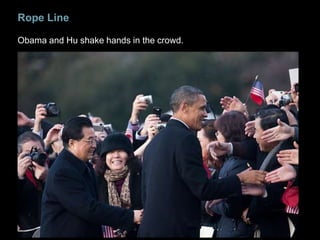
Rope Line

Obama and Hu shake hands in the crowd.
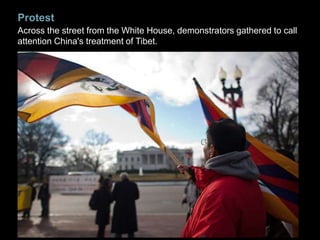
Protest
Across the street from the White House, demonstrators gathered to call
attention China's treatment of Tibet.
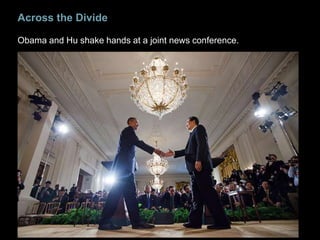
Across the Divide

Obama and Hu shake hands at a joint news conference.
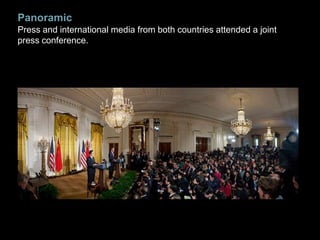
Panoramic
Press and international media from both countries attended a joint
press conference.
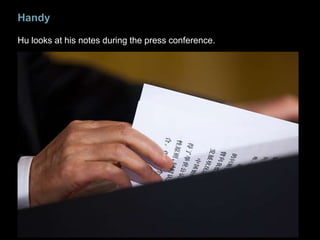
Handy

Hu looks at his notes during the press conference.
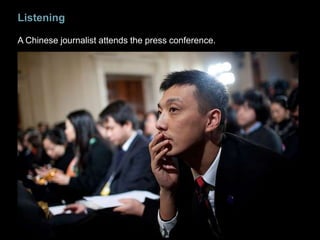
Listening

A Chinese journalist attends the press conference.
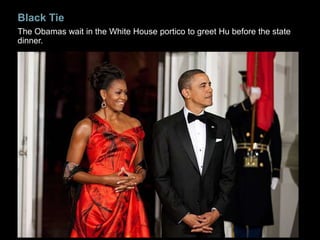
Black Tie
The Obamas wait in the White House portico to greet Hu before the state
dinner.
What's on family dinner tables around the
globe? Photographs by Peter Menzel from the book
"Hungry Planet”
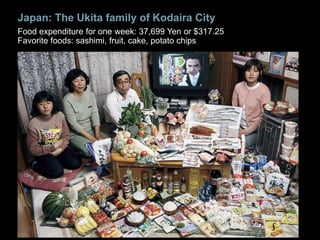
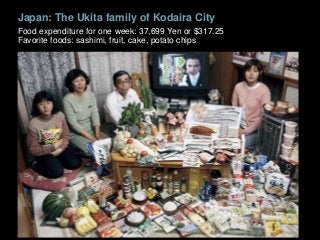
Japan: The Ukita family of Kodaira City
Food expenditure for one week: 37,699 Yen or $317.25
Favorite foods: sashimi, fruit, cake, potato chips
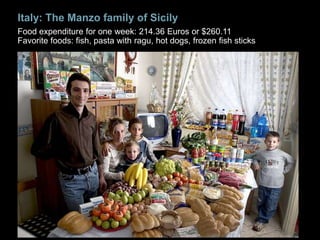
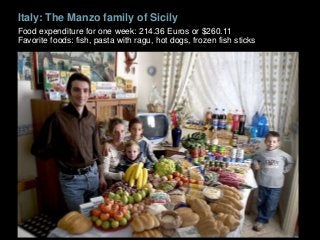
Italy: The Manzo family of Sicily
Food expenditure for one week: 214.36 Euros or $260.11
Favorite foods: fish, pasta with ragu, hot dogs, frozen fish sticks
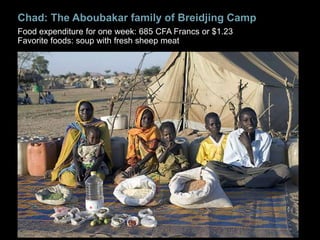
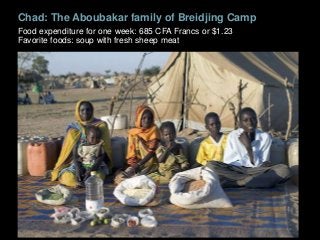
Chad: The Aboubakar family of Breidjing Camp
Food expenditure for one week: 685 CFA Francs or $1.23
Favorite foods: soup with fresh sheep meat
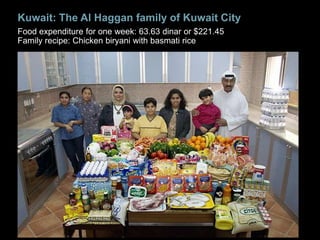
Kuwait: The Al Haggan family of Kuwait City
Food expenditure for one week: 63.63 dinar or $221.45
Family recipe: Chicken biryani with basmati rice
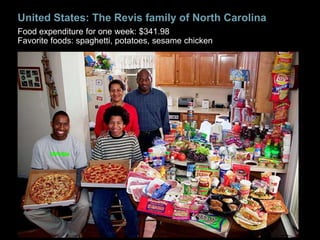
United States: The Revis family of North Carolina
Food expenditure for one week: $341.98
Favorite foods: spaghetti, potatoes, sesame chicken
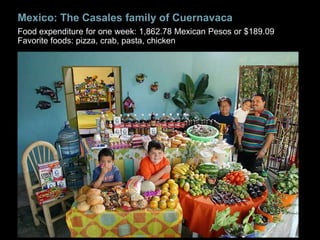
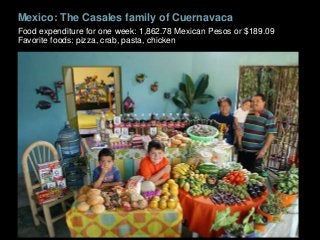
Mexico: The Casales family of Cuernavaca
Food expenditure for one week: 1,862.78 Mexican Pesos or $189.09
Favorite foods: pizza, crab, pasta, chicken
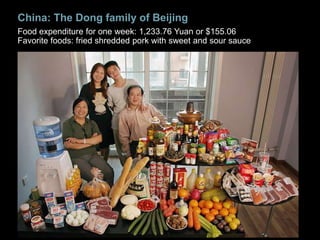
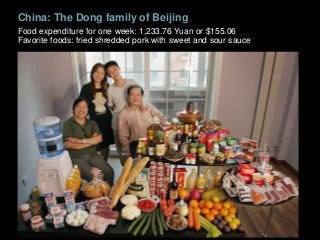
China: The Dong family of Beijing
Food expenditure for one week: 1,233.76 Yuan or $155.06
Favorite foods: fried shredded pork with sweet and sour sauce
Poland: The Sobczynscy family of Konstancin-Jeziorna
Food expenditure for one week: 582.48 Zlotys or $151.27
Family recipe: Pig's knuckles with carrots, celery and parsnips
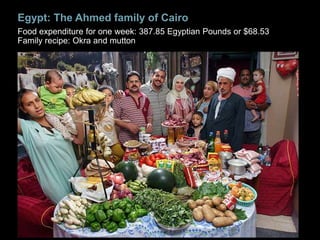
Egypt: The Ahmed family of Cairo
Food expenditure for one week: 387.85 Egyptian Pounds or $68.53
Family recipe: Okra and mutton
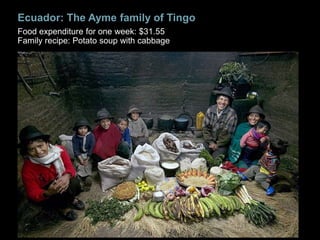
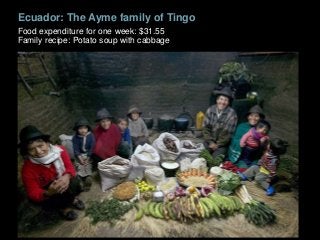
Ecuador: The Ayme family of Tingo
Food expenditure for one week: $31.55
Family recipe: Potato soup with cabbage

The Photographic Essay

  • 1.
    ...words and picturescan work together to communicate more powerfully than either alone. - William Albert Allard, Photographic Essay (American Photographer Master Series) by William Albert Allard
  • 2.
    What is aPhoto Essay?  Creating a photo essay is a combination of art and journalism.  As with a written essay, the elements of a photo essay should be structured in a way that easily conveys a story to the viewer.  Each individual photo contributes to the overall story, theme, and emotions of the essay.  The photos you choose must not only be compositionally and artistically strong, but also informative and educational.
  • 3.
    Two Types ofPhotographic Essays  Narrative  tells a sequential story  Thematic  focuses on a central theme
  • 4.
    Elements of aPhoto Essay  The story- Your essay should be able to stand alone, without a written article, and make logical sense to the viewer.  A range of photos: A variety of photos (wide angle, detailed, portraits etc.) should be included.  The order of the photos: It is important that the order of your photos effectively tell a story, in an interesting and logical sequence.  Information and emotion: Your photos should include both informational and emotional photos.  Captions: In a photo essay, captions are your best opportunity to describe what is happening in words and ensure that the viewer understands.
  • 5.
    Types of Photos By including a variety of types of photos in your essay, you will ensure that it is both interesting and informative.  Not only is it important to choose powerful photos, but also to present them in an effective order.
  • 6.
    The Lead Photo Similar to the first two sentences of a newspaper article, your lead photo should effectively draw in your audience.  This is usually the most difficult photo to choose and should follow the theme of your essay.  It could be an emotional portrait or an action shot, but ultimately it should provoke the curiosity of the viewer.
  • 7.
    The Scene  Yoursecond photo should set the stage and describe the scene of your story.  An overarching photo taken with a wide angle lens is often effective.
  • 8.
    Portraits  Your photoessay should include at least one portrait.  Capturing an emotional expression or telling action shot can effectively humanize your story.  These photos often evoke strong emotions and empathy in the viewer (whether it is a positive and enthusiastic emotion, or a sympathetic and concerned emotion.)
  • 9.
    Detail Photos  Detailphotos focus in on one element, be it a building, a face, or a relevant object.  These photos are your best opportunity to capture specific objects.  The captions of these photos should be informative and educational.
  • 10.
    Close-Up Photos  Similarly,close-up photos provide an opportunity to focus in on specific objects.  These photos are tightly cropped, simple shots that present a specific element of your story.  Again, this is an excellent opportunity to present information in the caption.
  • 11.
    The Signature Photo  The signature photo summarizes the situation and captures the key elements of your story in a telling moment.
  • 12.
    The Clincher Photo The final photo, the clincher, should evoke the emotion you want the viewer to walk away with, be it a feeling of hope, inspiration, or sadness.  Decide on this mood before you select this photo.
  • 13.
    Order of Photos  While the order of some photos (e.g. the lead photo, and the clincher) is set, the order of most types of photos in your essay is your preference.
  • 14.
    Photographer Brooks Kraftcaptures the Chinese president's historic meeting with Obama
  • 15.
    Welcoming Ceremony Hu andObama are saluted by an honor guard on the South Lawn.
  • 16.
    Places, Please Members ofa military honor guard mark positions for flag holders.
  • 17.
    Playing in theBand A military honor guard marches past the jungle gym erected on the South Lawn.
  • 18.
    Marks The two presidentsstand in their positions on the reviewing stand.
  • 19.
    Rope Line Obama andHu shake hands in the crowd.
  • 20.
    Protest Across the streetfrom the White House, demonstrators gathered to call attention China's treatment of Tibet.
  • 21.
    Across the Divide Obamaand Hu shake hands at a joint news conference.
  • 22.
    Panoramic Press and internationalmedia from both countries attended a joint press conference.
  • 23.
    Handy Hu looks athis notes during the press conference.
  • 24.
    Listening A Chinese journalistattends the press conference.
  • 25.
    Black Tie The Obamaswait in the White House portico to greet Hu before the state dinner.
  • 26.
    What's on familydinner tables around the globe? Photographs by Peter Menzel from the book "Hungry Planet”
  • 27.
    Japan: The Ukitafamily of Kodaira City Food expenditure for one week: 37,699 Yen or $317.25 Favorite foods: sashimi, fruit, cake, potato chips
  • 28.
    Italy: The Manzofamily of Sicily Food expenditure for one week: 214.36 Euros or $260.11 Favorite foods: fish, pasta with ragu, hot dogs, frozen fish sticks
  • 29.
    Chad: The Aboubakarfamily of Breidjing Camp Food expenditure for one week: 685 CFA Francs or $1.23 Favorite foods: soup with fresh sheep meat
  • 30.
    Kuwait: The AlHaggan family of Kuwait City Food expenditure for one week: 63.63 dinar or $221.45 Family recipe: Chicken biryani with basmati rice
  • 31.
    United States: TheRevis family of North Carolina Food expenditure for one week: $341.98 Favorite foods: spaghetti, potatoes, sesame chicken
  • 32.
    Mexico: The Casalesfamily of Cuernavaca Food expenditure for one week: 1,862.78 Mexican Pesos or $189.09 Favorite foods: pizza, crab, pasta, chicken
  • 33.
    China: The Dongfamily of Beijing Food expenditure for one week: 1,233.76 Yuan or $155.06 Favorite foods: fried shredded pork with sweet and sour sauce
  • 34.
    Poland: The Sobczynscyfamily of Konstancin-Jeziorna Food expenditure for one week: 582.48 Zlotys or $151.27 Family recipe: Pig's knuckles with carrots, celery and parsnips
  • 35.
    Egypt: The Ahmedfamily of Cairo Food expenditure for one week: 387.85 Egyptian Pounds or $68.53 Family recipe: Okra and mutton
  • 36.
    Ecuador: The Aymefamily of Tingo Food expenditure for one week: $31.55 Family recipe: Potato soup with cabbage