MEDIAN of
Grouped Data
By: Maryleigh P. Castillo
Objectives:
• Make frequency distribution
table
• Compute for the Median
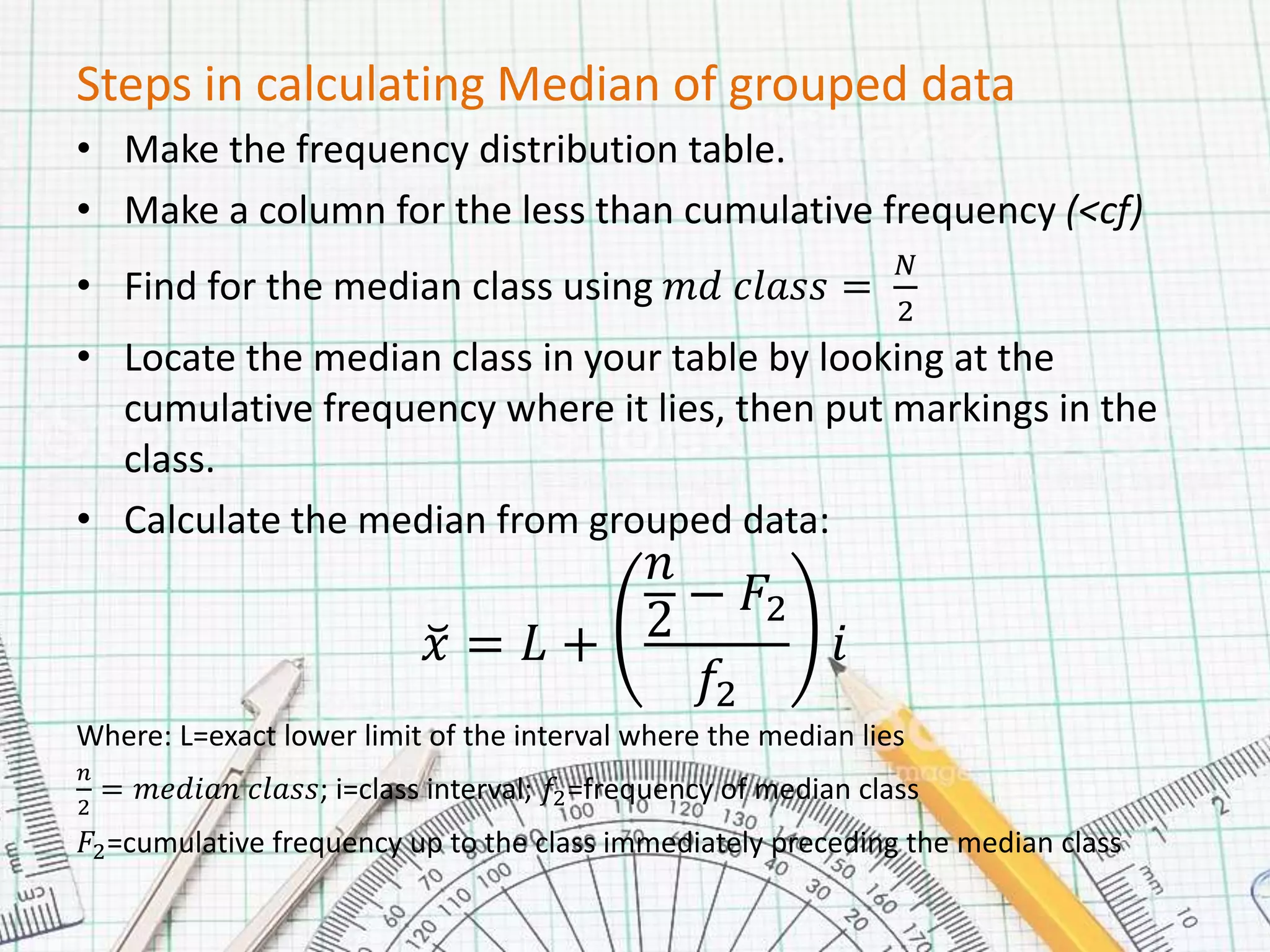
Steps in calculating Median of grouped data
• Make the frequency distribution table.
• Make a column for the less than cumulative frequency (<cf)
• Find for the median class using 𝑚𝑑 𝑐𝑙𝑎𝑠𝑠 =
𝑁
2
• Locate the median class in your table by looking at the
cumulative frequency where it lies, then put markings in the
class.
• Calculate the median from grouped data:
𝑥 = 𝐿 +
𝑛
2
− 𝐹2
𝑓2
𝑖
Where: L=exact lower limit of the interval where the median lies
𝑛
2
= 𝑚𝑒𝑑𝑖𝑎𝑛 𝑐𝑙𝑎𝑠𝑠; i=class interval; 𝑓2=frequency of median class
𝐹2=cumulative frequency up to the class immediately preceding the median class
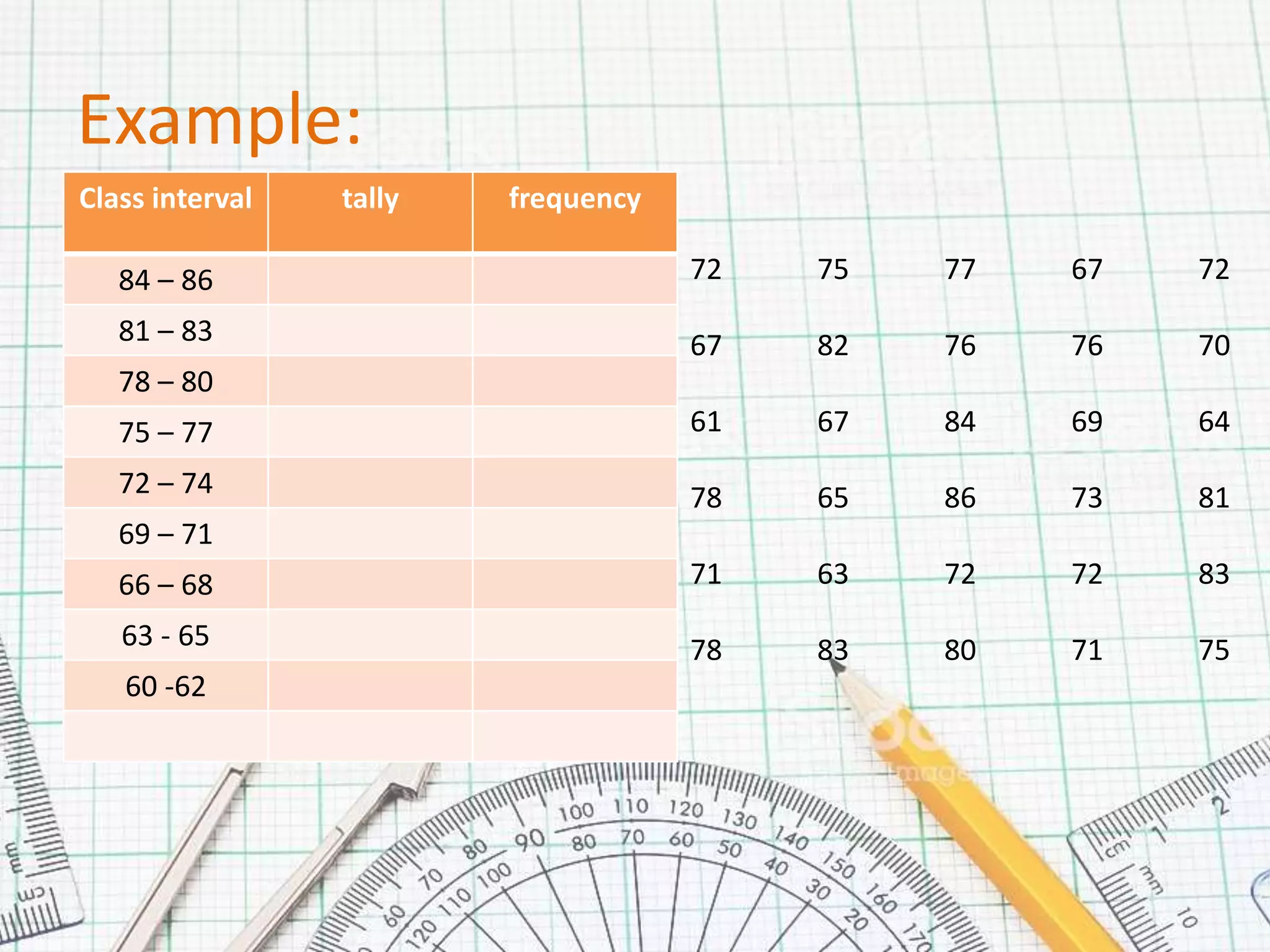
Example:
Class interval tally frequency
84 – 86
81 – 83
78 – 80
75 – 77
72 – 74
69 – 71
66 – 68
63 - 65
60 -62
72 75 77 67 72
67 82 76 76 70
61 67 84 69 64
78 65 86 73 81
71 63 72 72 83
78 83 80 71 75
Make the frequency distribution table.
Class interval tally frequency
84 – 86 2
81 – 83 4
78 – 80 3
75 – 77 5
72 – 74 5
69 – 71 4
66 – 68 3
63 - 65 3
60 -62 1
N = 30
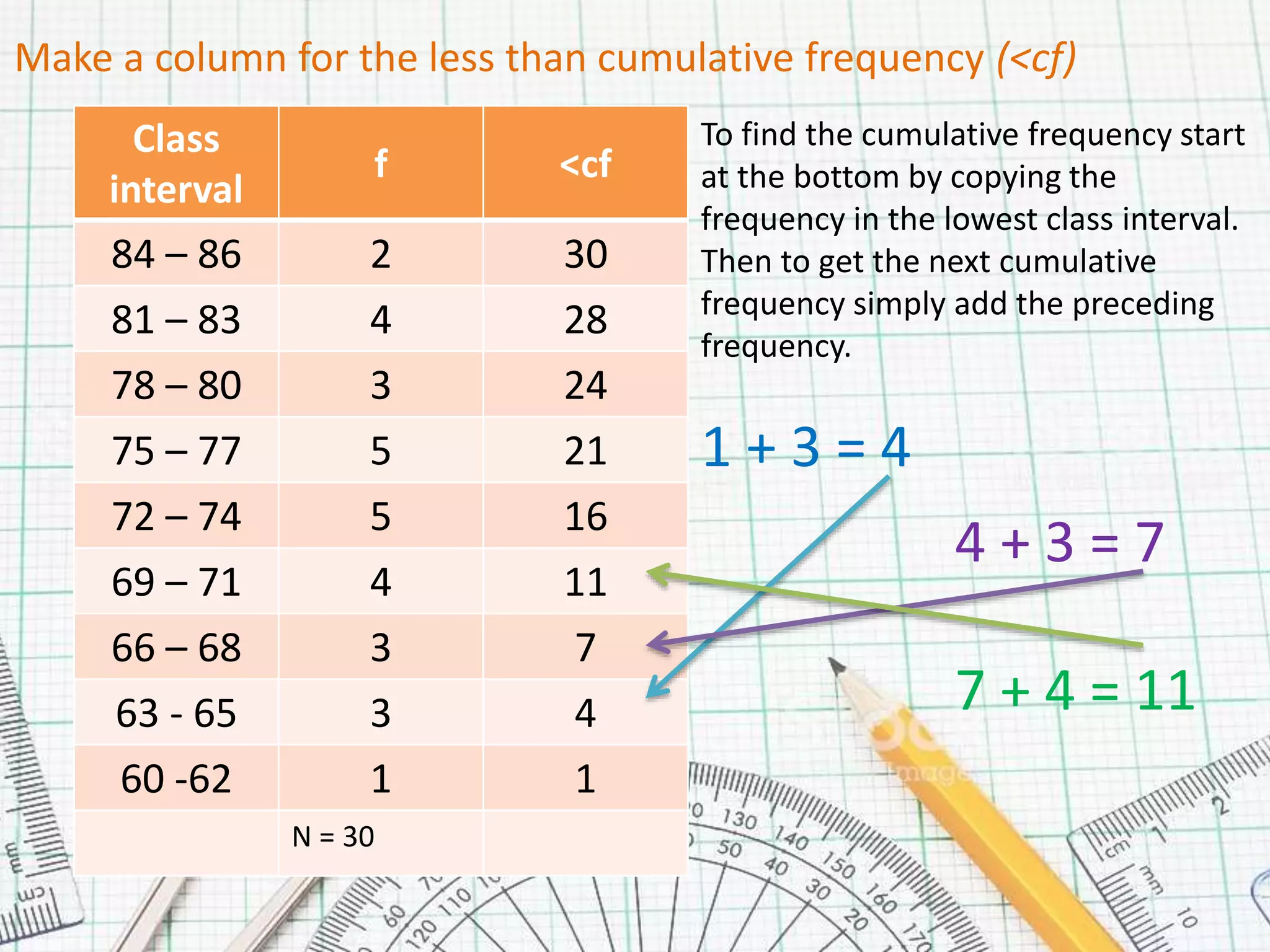
Make a column for the less than cumulative frequency (<cf)
Class
interval
f <cf
84 – 86 2 30
81 – 83 4 28
78 – 80 3 24
75 – 77 5 21
72 – 74 5 16
69 – 71 4 11
66 – 68 3 7
63 - 65 3 4
60 -62 1 1
N = 30
To find the cumulative frequency start
at the bottom by copying the
frequency in the lowest class interval.
Then to get the next cumulative
frequency simply add the preceding
frequency.
1 + 3 = 4
4 + 3 = 7
7 + 4 = 11
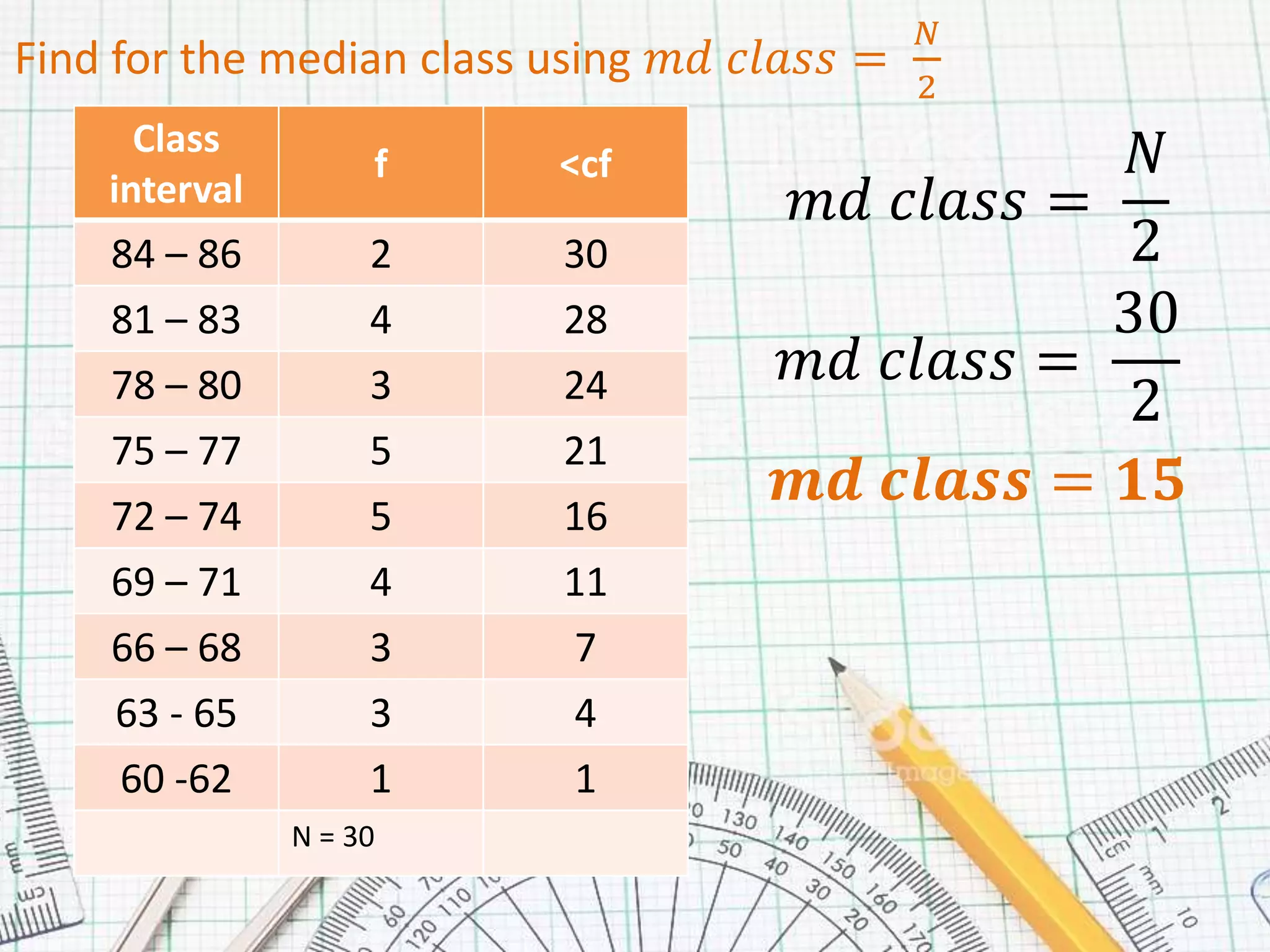
Find for the median class using 𝑚𝑑 𝑐𝑙𝑎𝑠𝑠 =
𝑁
2
Class
interval
f <cf
84 – 86 2 30
81 – 83 4 28
78 – 80 3 24
75 – 77 5 21
72 – 74 5 16
69 – 71 4 11
66 – 68 3 7
63 - 65 3 4
60 -62 1 1
N = 30
𝑚𝑑 𝑐𝑙𝑎𝑠𝑠 =
𝑁
2
𝑚𝑑 𝑐𝑙𝑎𝑠𝑠 =
30
2
𝒎𝒅 𝒄𝒍𝒂𝒔𝒔 = 𝟏𝟓
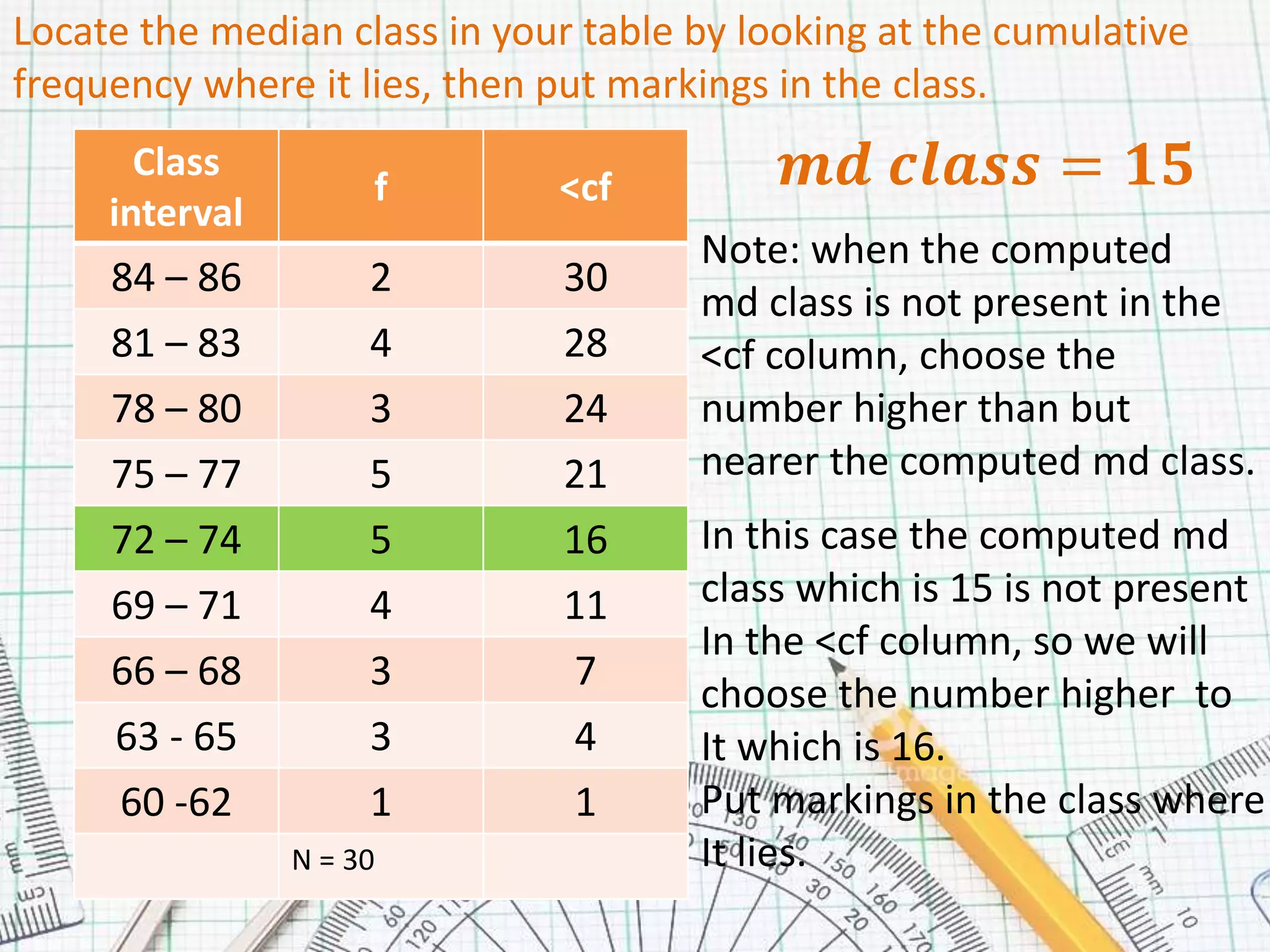
Locate the median class in your table by looking at the cumulative
frequency where it lies, then put markings in the class.
Class
interval
f <cf
84 – 86 2 30
81 – 83 4 28
78 – 80 3 24
75 – 77 5 21
72 – 74 5 16
69 – 71 4 11
66 – 68 3 7
63 - 65 3 4
60 -62 1 1
N = 30
𝒎𝒅 𝒄𝒍𝒂𝒔𝒔 = 𝟏𝟓
Note: when the computed
md class is not present in the
<cf column, choose the
number higher than but
nearer the computed md class.
In this case the computed md
class which is 15 is not present
In the <cf column, so we will
choose the number higher to
It which is 16.
Put markings in the class where
It lies.
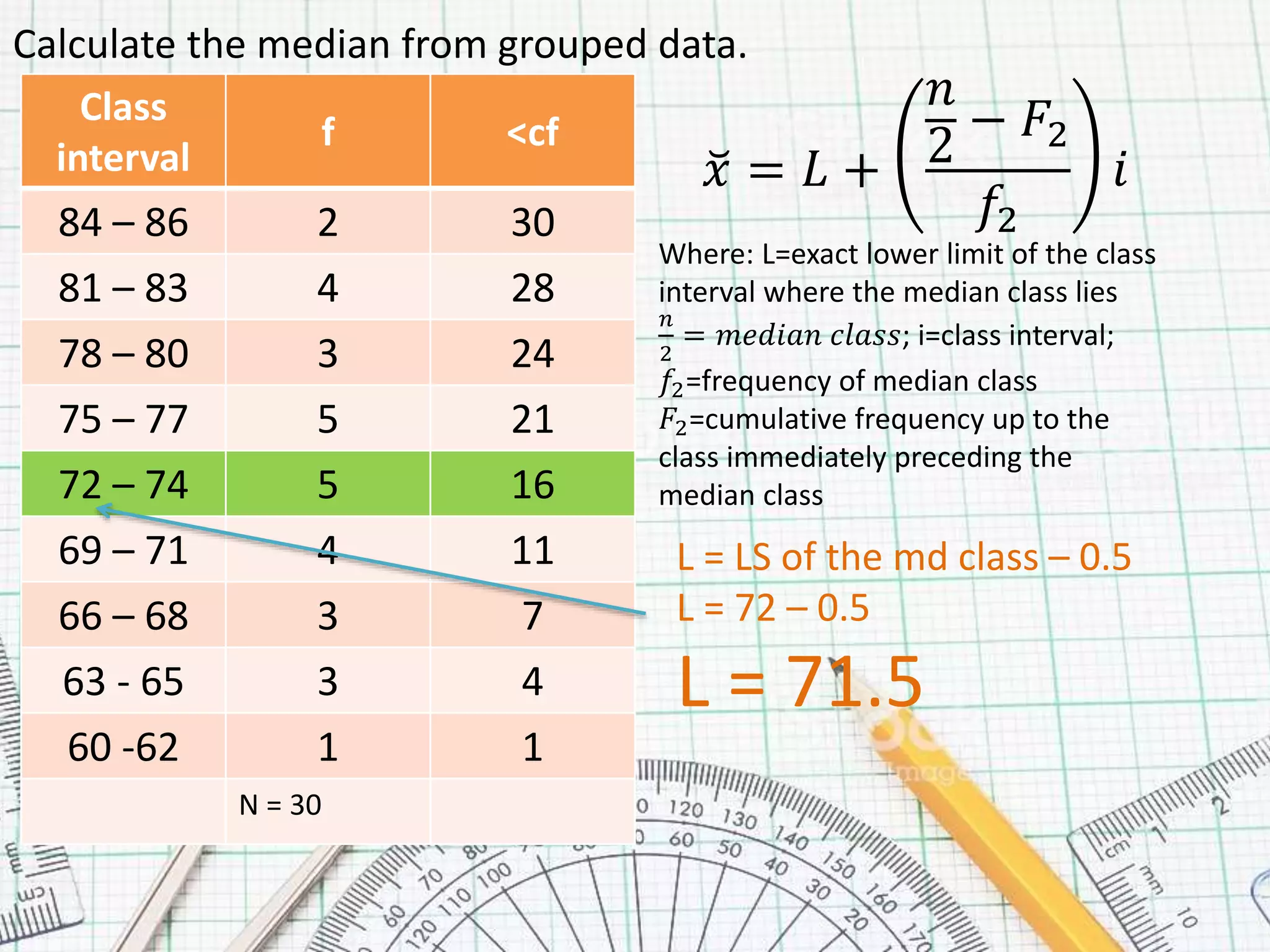
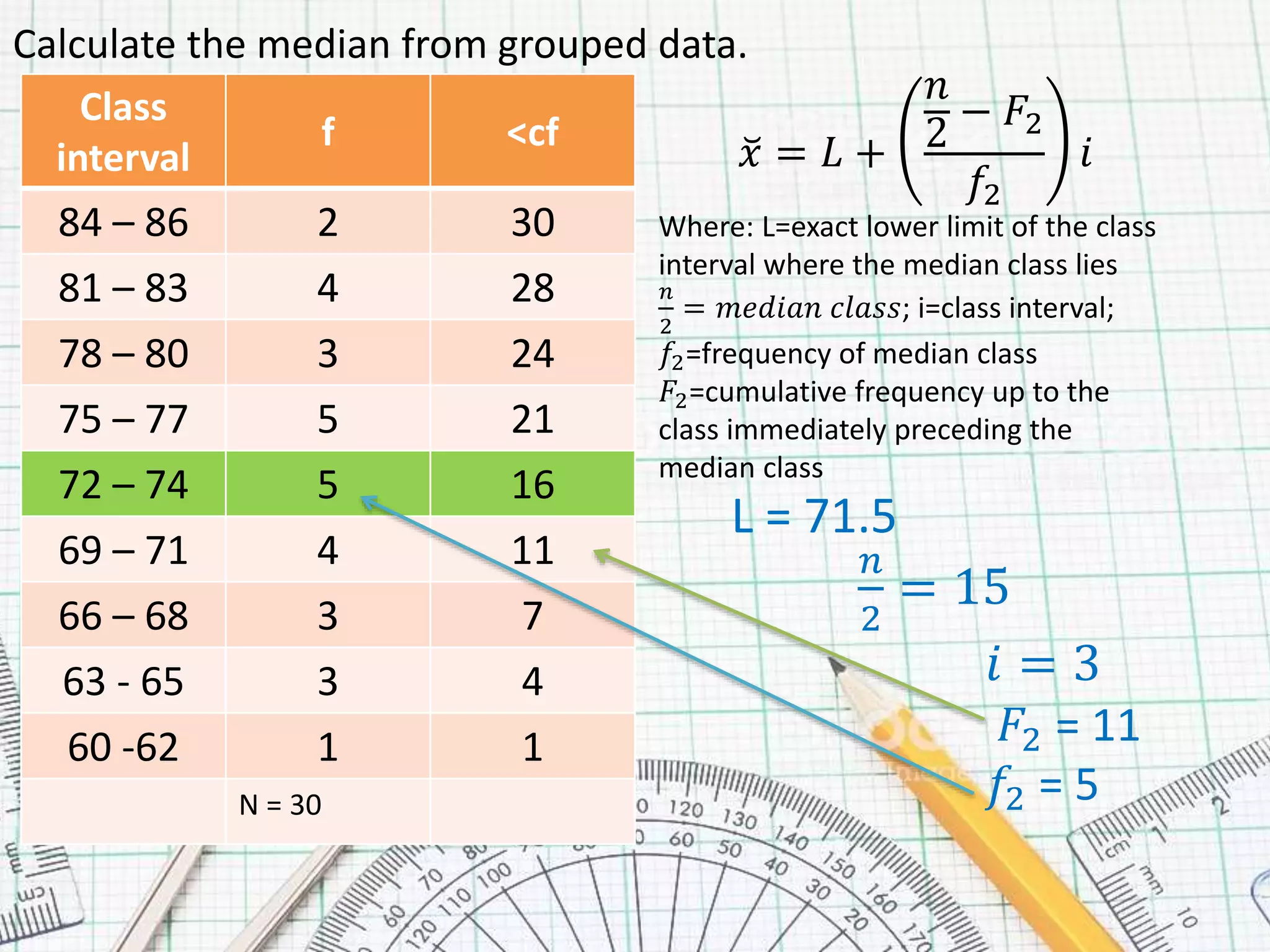
Calculate the median from grouped data.
Class
interval
f <cf
84 – 86 2 30
81 – 83 4 28
78 – 80 3 24
75 – 77 5 21
72 – 74 5 16
69 – 71 4 11
66 – 68 3 7
63 - 65 3 4
60 -62 1 1
N = 30
𝑥 = 𝐿 +
𝑛
2
− 𝐹2
𝑓2
𝑖
Where: L=exact lower limit of the class
interval where the median class lies
𝑛
2
= 𝑚𝑒𝑑𝑖𝑎𝑛 𝑐𝑙𝑎𝑠𝑠; i=class interval;
𝑓2=frequency of median class
𝐹2=cumulative frequency up to the
class immediately preceding the
median class
L = LS of the md class – 0.5
L = 72 – 0.5
L = 71.5
Calculate the median from grouped data.
Class
interval
f <cf
84 – 86 2 30
81 – 83 4 28
78 – 80 3 24
75 – 77 5 21
72 – 74 5 16
69 – 71 4 11
66 – 68 3 7
63 - 65 3 4
60 -62 1 1
N = 30
𝑥 = 𝐿 +
𝑛
2
− 𝐹2
𝑓2
𝑖
Where: L=exact lower limit of the class
interval where the median class lies
𝑛
2
= 𝑚𝑒𝑑𝑖𝑎𝑛 𝑐𝑙𝑎𝑠𝑠; i=class interval;
𝑓2=frequency of median class
𝐹2=cumulative frequency up to the
class immediately preceding the
median class
L = 71.5
𝑛
2
= 15
𝑖 = 3
𝐹2 = 11
𝑓2 = 5
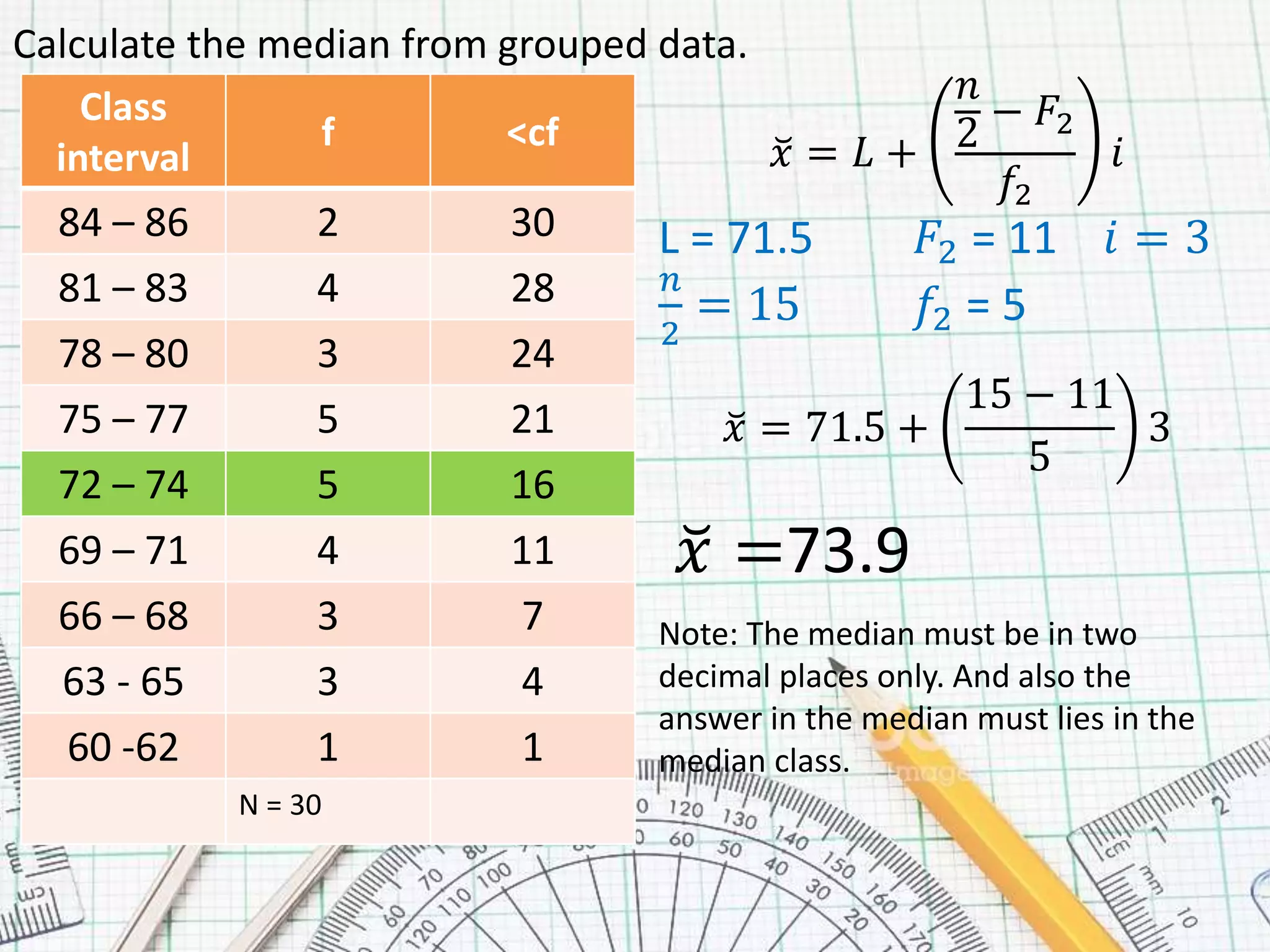
Calculate the median from grouped data.
Class
interval
f <cf
84 – 86 2 30
81 – 83 4 28
78 – 80 3 24
75 – 77 5 21
72 – 74 5 16
69 – 71 4 11
66 – 68 3 7
63 - 65 3 4
60 -62 1 1
N = 30
𝑥 = 𝐿 +
𝑛
2
− 𝐹2
𝑓2
𝑖
L = 71.5 𝐹2 = 11 𝑖 = 3
𝑛
2
= 15 𝑓2 = 5
𝑥 = 71.5 +
15 − 11
5
3
𝑥 =73.9
Note: The median must be in two
decimal places only. And also the
answer in the median must lies in the
median class.

Median of grouped data

  • 1.
    MEDIAN of Grouped Data By:Maryleigh P. Castillo
  • 2.
    Objectives: • Make frequencydistribution table • Compute for the Median
  • 3.
    Steps in calculatingMedian of grouped data • Make the frequency distribution table. • Make a column for the less than cumulative frequency (<cf) • Find for the median class using 𝑚𝑑 𝑐𝑙𝑎𝑠𝑠 = 𝑁 2 • Locate the median class in your table by looking at the cumulative frequency where it lies, then put markings in the class. • Calculate the median from grouped data: 𝑥 = 𝐿 + 𝑛 2 − 𝐹2 𝑓2 𝑖 Where: L=exact lower limit of the interval where the median lies 𝑛 2 = 𝑚𝑒𝑑𝑖𝑎𝑛 𝑐𝑙𝑎𝑠𝑠; i=class interval; 𝑓2=frequency of median class 𝐹2=cumulative frequency up to the class immediately preceding the median class
  • 4.
    Example: Class interval tallyfrequency 84 – 86 81 – 83 78 – 80 75 – 77 72 – 74 69 – 71 66 – 68 63 - 65 60 -62 72 75 77 67 72 67 82 76 76 70 61 67 84 69 64 78 65 86 73 81 71 63 72 72 83 78 83 80 71 75
  • 5.
    Make the frequencydistribution table. Class interval tally frequency 84 – 86 2 81 – 83 4 78 – 80 3 75 – 77 5 72 – 74 5 69 – 71 4 66 – 68 3 63 - 65 3 60 -62 1 N = 30
  • 6.
    Make a columnfor the less than cumulative frequency (<cf) Class interval f <cf 84 – 86 2 30 81 – 83 4 28 78 – 80 3 24 75 – 77 5 21 72 – 74 5 16 69 – 71 4 11 66 – 68 3 7 63 - 65 3 4 60 -62 1 1 N = 30 To find the cumulative frequency start at the bottom by copying the frequency in the lowest class interval. Then to get the next cumulative frequency simply add the preceding frequency. 1 + 3 = 4 4 + 3 = 7 7 + 4 = 11
  • 7.
    Find for themedian class using 𝑚𝑑 𝑐𝑙𝑎𝑠𝑠 = 𝑁 2 Class interval f <cf 84 – 86 2 30 81 – 83 4 28 78 – 80 3 24 75 – 77 5 21 72 – 74 5 16 69 – 71 4 11 66 – 68 3 7 63 - 65 3 4 60 -62 1 1 N = 30 𝑚𝑑 𝑐𝑙𝑎𝑠𝑠 = 𝑁 2 𝑚𝑑 𝑐𝑙𝑎𝑠𝑠 = 30 2 𝒎𝒅 𝒄𝒍𝒂𝒔𝒔 = 𝟏𝟓
  • 8.
    Locate the medianclass in your table by looking at the cumulative frequency where it lies, then put markings in the class. Class interval f <cf 84 – 86 2 30 81 – 83 4 28 78 – 80 3 24 75 – 77 5 21 72 – 74 5 16 69 – 71 4 11 66 – 68 3 7 63 - 65 3 4 60 -62 1 1 N = 30 𝒎𝒅 𝒄𝒍𝒂𝒔𝒔 = 𝟏𝟓 Note: when the computed md class is not present in the <cf column, choose the number higher than but nearer the computed md class. In this case the computed md class which is 15 is not present In the <cf column, so we will choose the number higher to It which is 16. Put markings in the class where It lies.
  • 9.
    Calculate the medianfrom grouped data. Class interval f <cf 84 – 86 2 30 81 – 83 4 28 78 – 80 3 24 75 – 77 5 21 72 – 74 5 16 69 – 71 4 11 66 – 68 3 7 63 - 65 3 4 60 -62 1 1 N = 30 𝑥 = 𝐿 + 𝑛 2 − 𝐹2 𝑓2 𝑖 Where: L=exact lower limit of the class interval where the median class lies 𝑛 2 = 𝑚𝑒𝑑𝑖𝑎𝑛 𝑐𝑙𝑎𝑠𝑠; i=class interval; 𝑓2=frequency of median class 𝐹2=cumulative frequency up to the class immediately preceding the median class L = LS of the md class – 0.5 L = 72 – 0.5 L = 71.5
  • 10.
    Calculate the medianfrom grouped data. Class interval f <cf 84 – 86 2 30 81 – 83 4 28 78 – 80 3 24 75 – 77 5 21 72 – 74 5 16 69 – 71 4 11 66 – 68 3 7 63 - 65 3 4 60 -62 1 1 N = 30 𝑥 = 𝐿 + 𝑛 2 − 𝐹2 𝑓2 𝑖 Where: L=exact lower limit of the class interval where the median class lies 𝑛 2 = 𝑚𝑒𝑑𝑖𝑎𝑛 𝑐𝑙𝑎𝑠𝑠; i=class interval; 𝑓2=frequency of median class 𝐹2=cumulative frequency up to the class immediately preceding the median class L = 71.5 𝑛 2 = 15 𝑖 = 3 𝐹2 = 11 𝑓2 = 5
  • 11.
    Calculate the medianfrom grouped data. Class interval f <cf 84 – 86 2 30 81 – 83 4 28 78 – 80 3 24 75 – 77 5 21 72 – 74 5 16 69 – 71 4 11 66 – 68 3 7 63 - 65 3 4 60 -62 1 1 N = 30 𝑥 = 𝐿 + 𝑛 2 − 𝐹2 𝑓2 𝑖 L = 71.5 𝐹2 = 11 𝑖 = 3 𝑛 2 = 15 𝑓2 = 5 𝑥 = 71.5 + 15 − 11 5 3 𝑥 =73.9 Note: The median must be in two decimal places only. And also the answer in the median must lies in the median class.