LAVIN KATIYAR 
1113331094 
ECE-VIIA
OUTLINE 
 Introduction 
 Components 
 Working 
 Do’s & Don’t 
 Other technology 
 Present era of technology 
 Conclusion
INTRODUCTION 
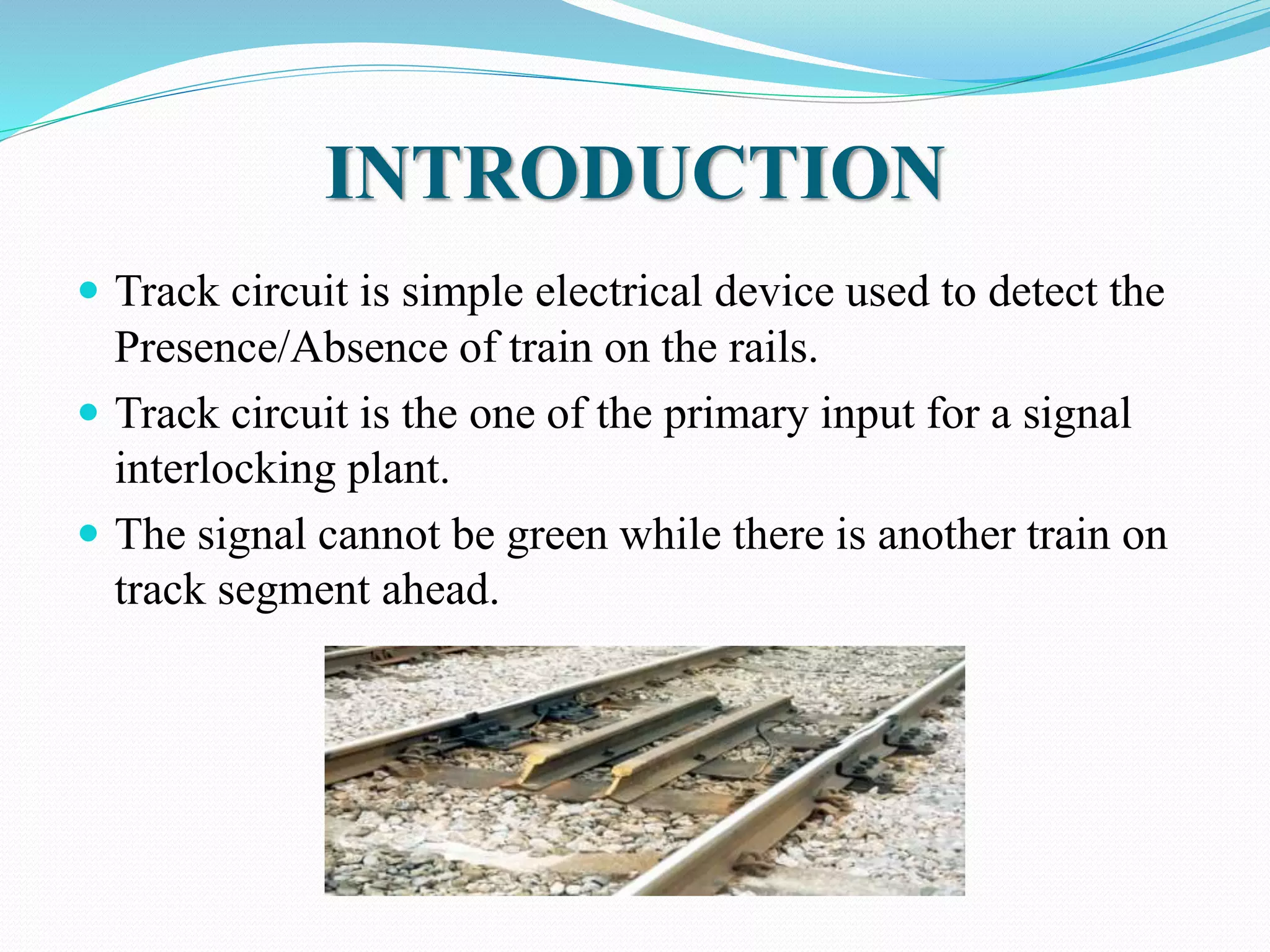
 Track circuit is simple electrical device used to detect the 
Presence/Absence of train on the rails. 
 Track circuit is the one of the primary input for a signal 
interlocking plant. 
 The signal cannot be green while there is another train on 
track segment ahead.
COMPONENTS 
 Battery. 
 Track Relay. 
 Adjustable resistance. 
 Insulated rail joints.
Cond. 
Battery 
 Gravity cells are used . 
Relay 
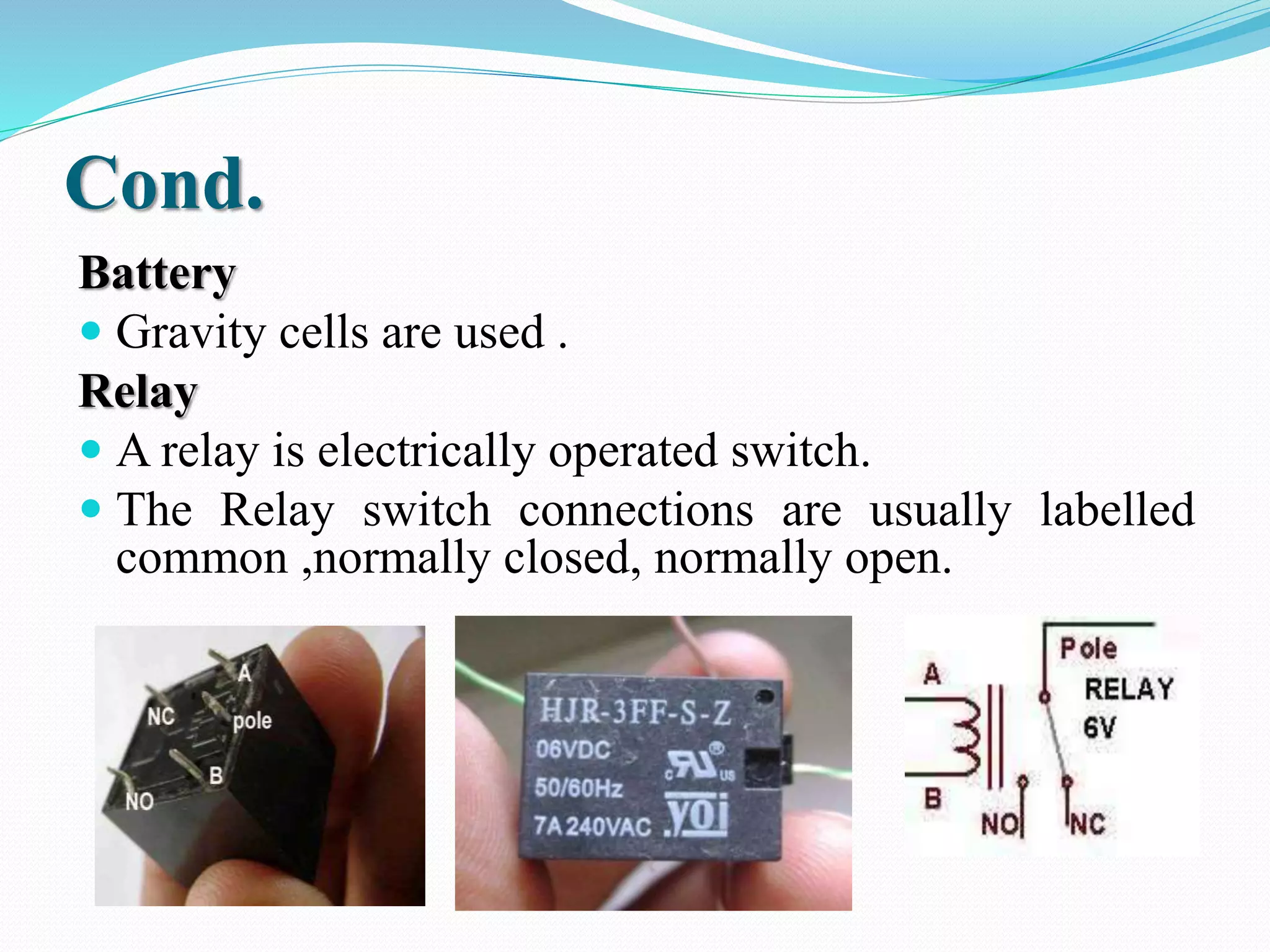
 A relay is electrically operated switch. 
 The Relay switch connections are usually labelled 
common ,normally closed, normally open.
Cond. 
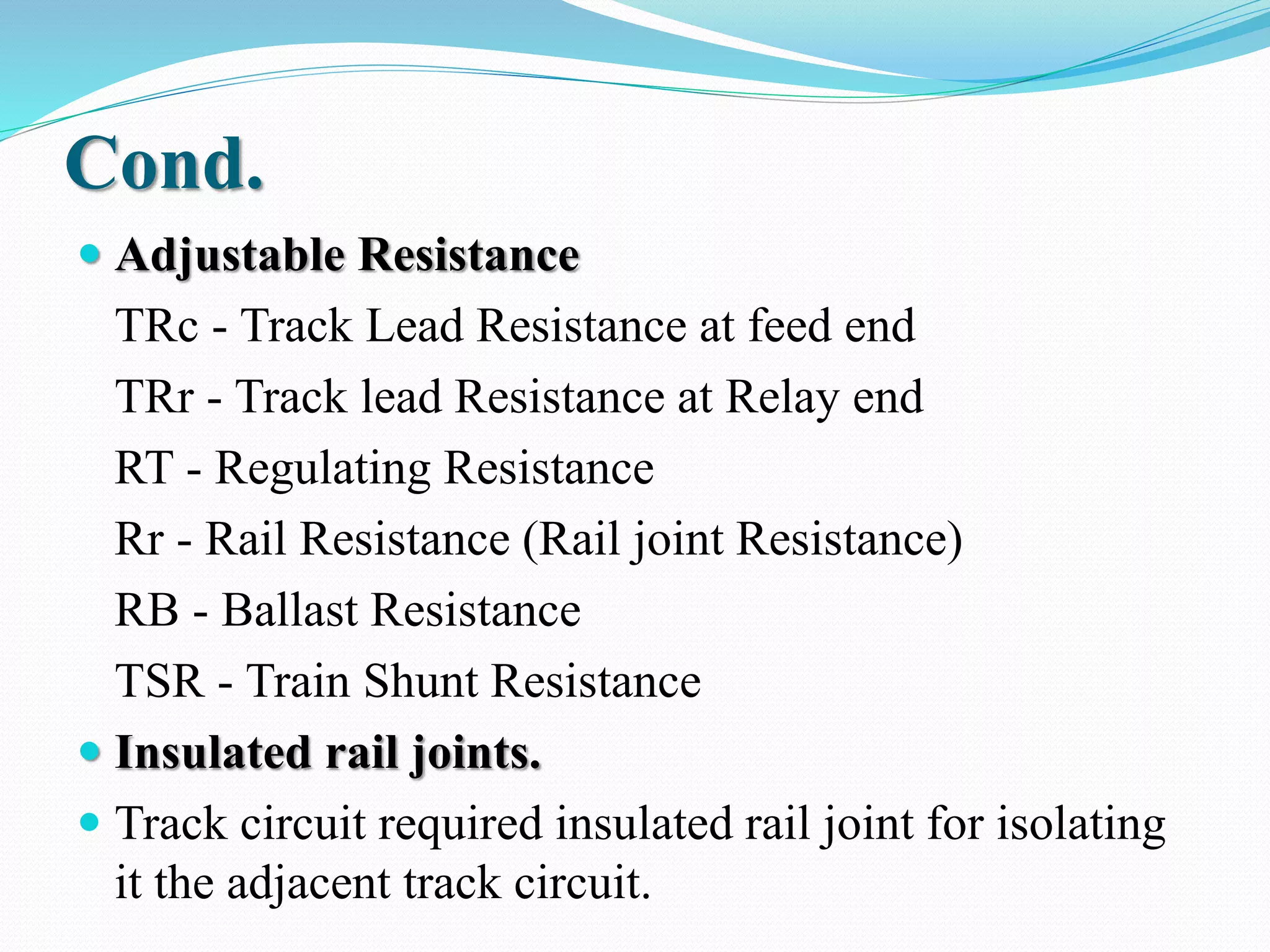
 Adjustable Resistance 
TRc - Track Lead Resistance at feed end 
TRr - Track lead Resistance at Relay end 
RT - Regulating Resistance 
Rr - Rail Resistance (Rail joint Resistance) 
RB - Ballast Resistance 
TSR - Train Shunt Resistance 
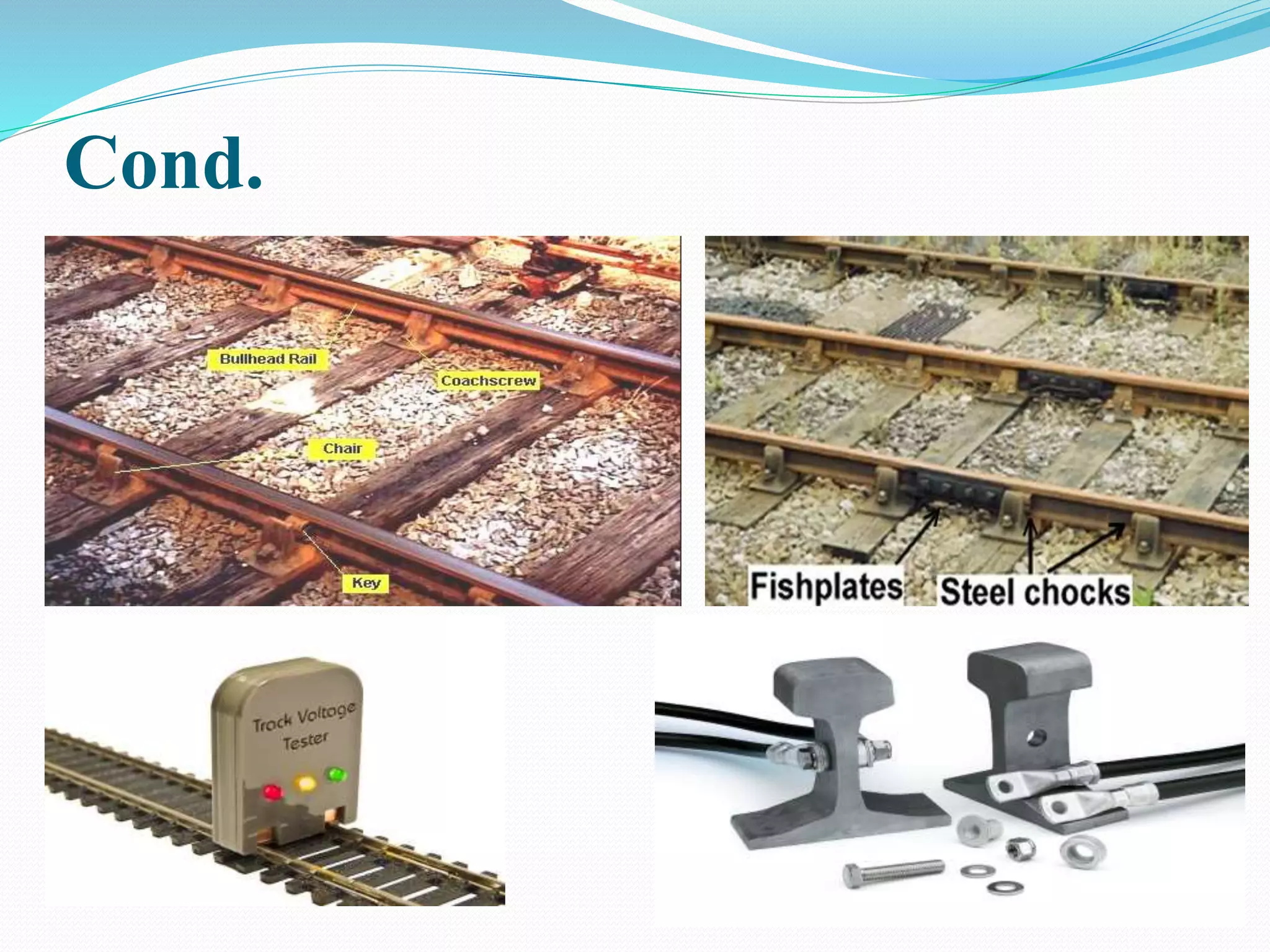
 Insulated rail joints. 
 Track circuit required insulated rail joint for isolating 
it the adjacent track circuit.
Cond. 
 Nylon IRJ 
 Glued IRJ 
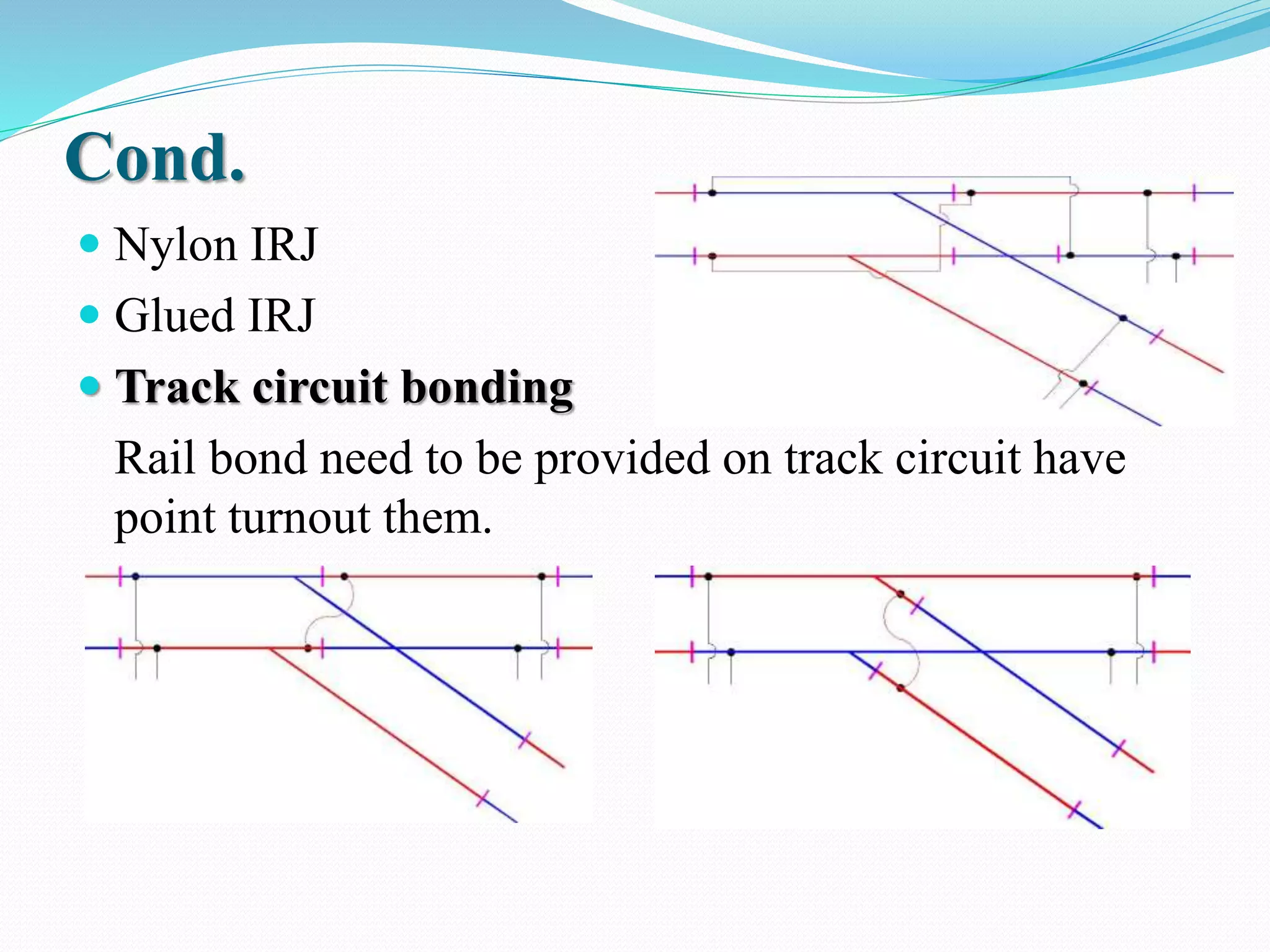
 Track circuit bonding 
Rail bond need to be provided on track circuit have 
point turnout them.
Cond.
WORKING 
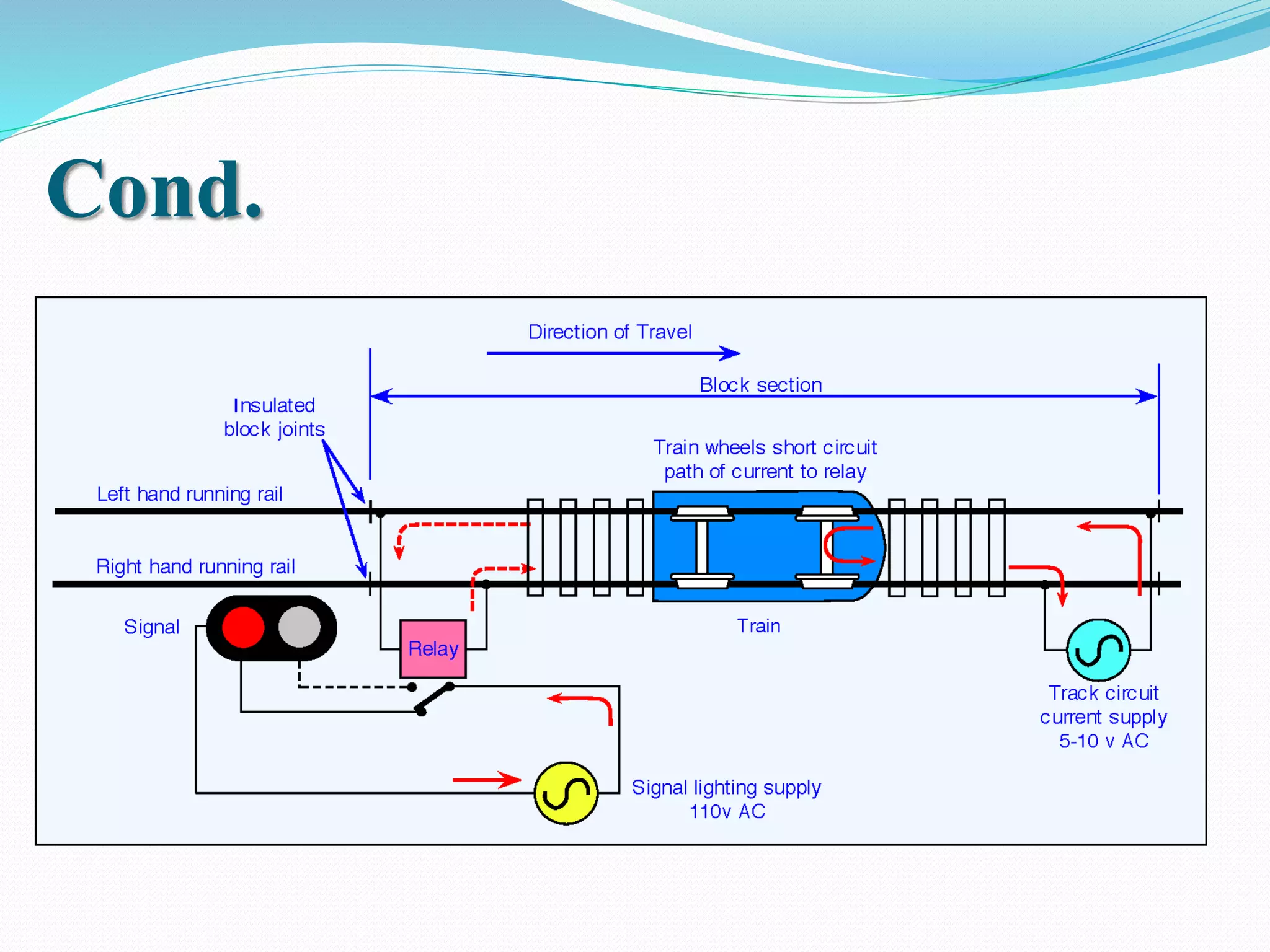
 The portion of the Track which is to be Track circuited, 
is first provided with wooden or RCC sleepers and then 
the rails are insulated from the rest of the Track by the 
provision of Insulated rail joints. 
 At one end of the Track circuit feed is connected and at 
other end track relay is connected. 
 When the track portion is not occupied by trains, the 
fed is available for track relay and the relay is in 
energized condition.
Cond. 
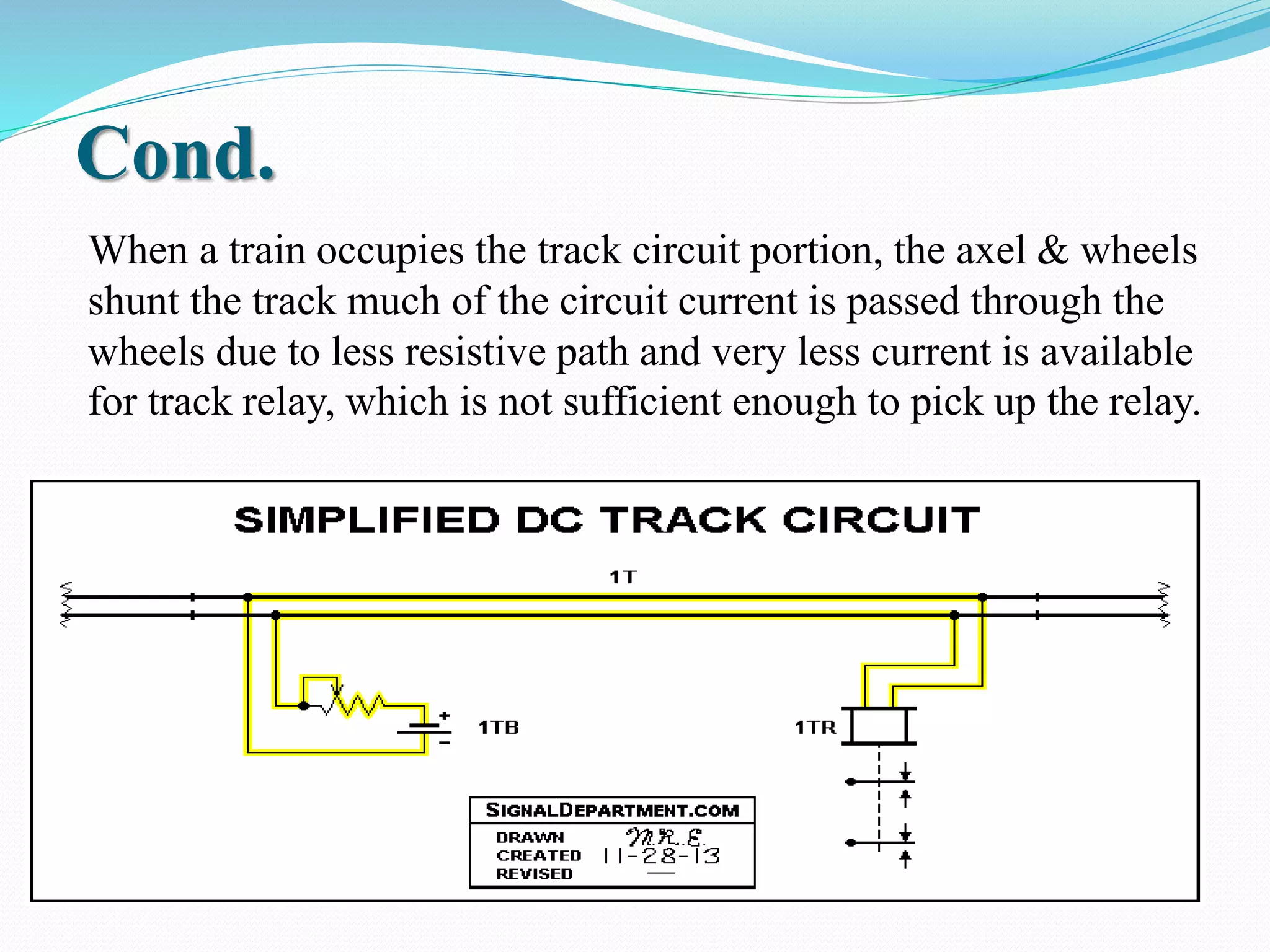
When a train occupies the track circuit portion, the axel & wheels 
shunt the track much of the circuit current is passed through the 
wheels due to less resistive path and very less current is available 
for track relay, which is not sufficient enough to pick up the relay.
Cond.
DEAD SECTION 
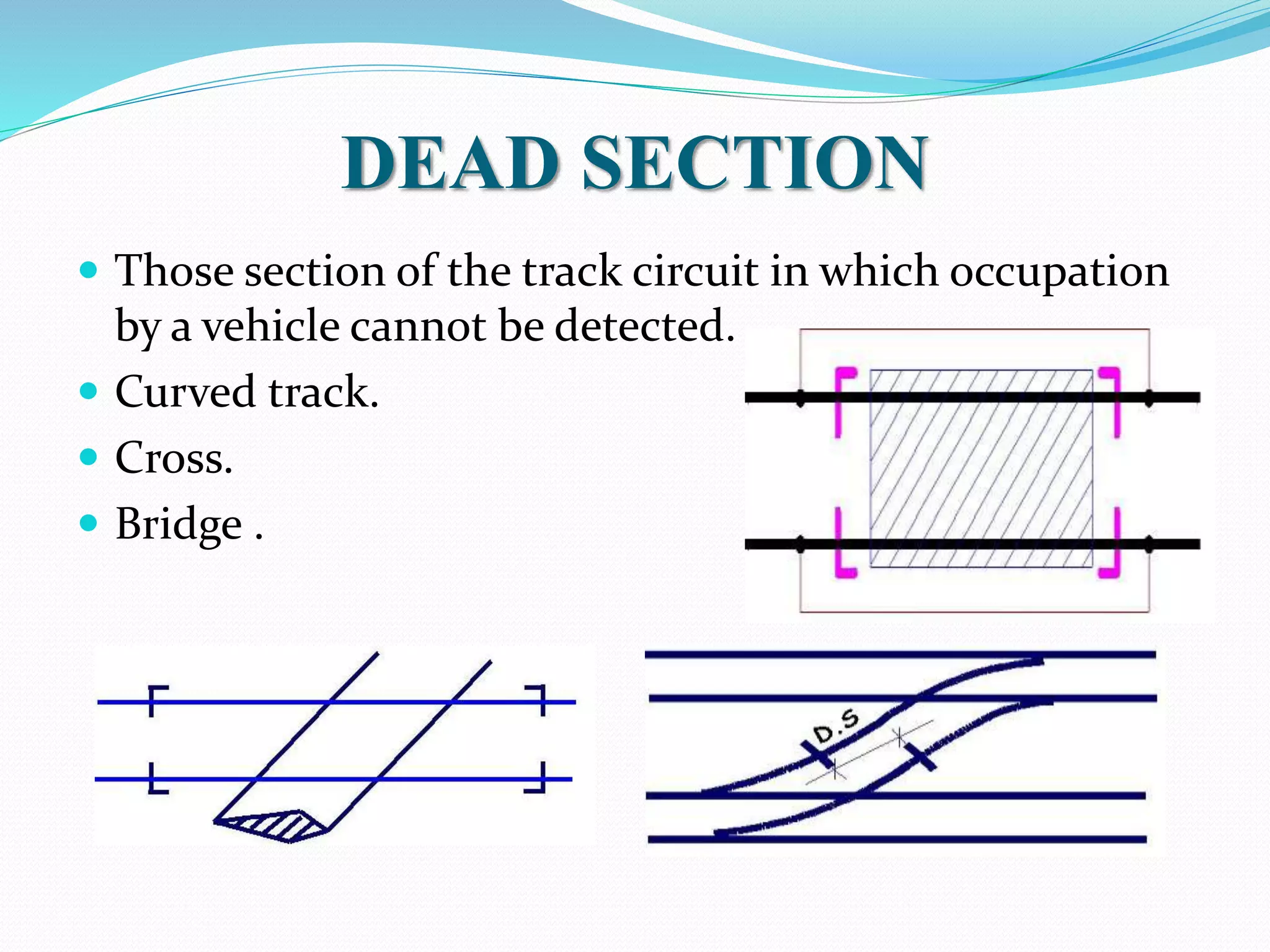
 Those section of the track circuit in which occupation 
by a vehicle cannot be detected. 
 Curved track. 
 Cross. 
 Bridge .
DO’S & DON’T 
 Top up distilled water if the electrolyte level is low in 
batteries. 
 Change the relay which is due to for overhauling. 
 Replace the damaged and corroded bonding wires. 
 Do not Tilt the relay. 
 Do not Test the track circuit by shunting with a wire 
only. 
 Track circuit does not get shunted properly by vehicles. 
 Its working length is dependent on immunity of track 
relay.
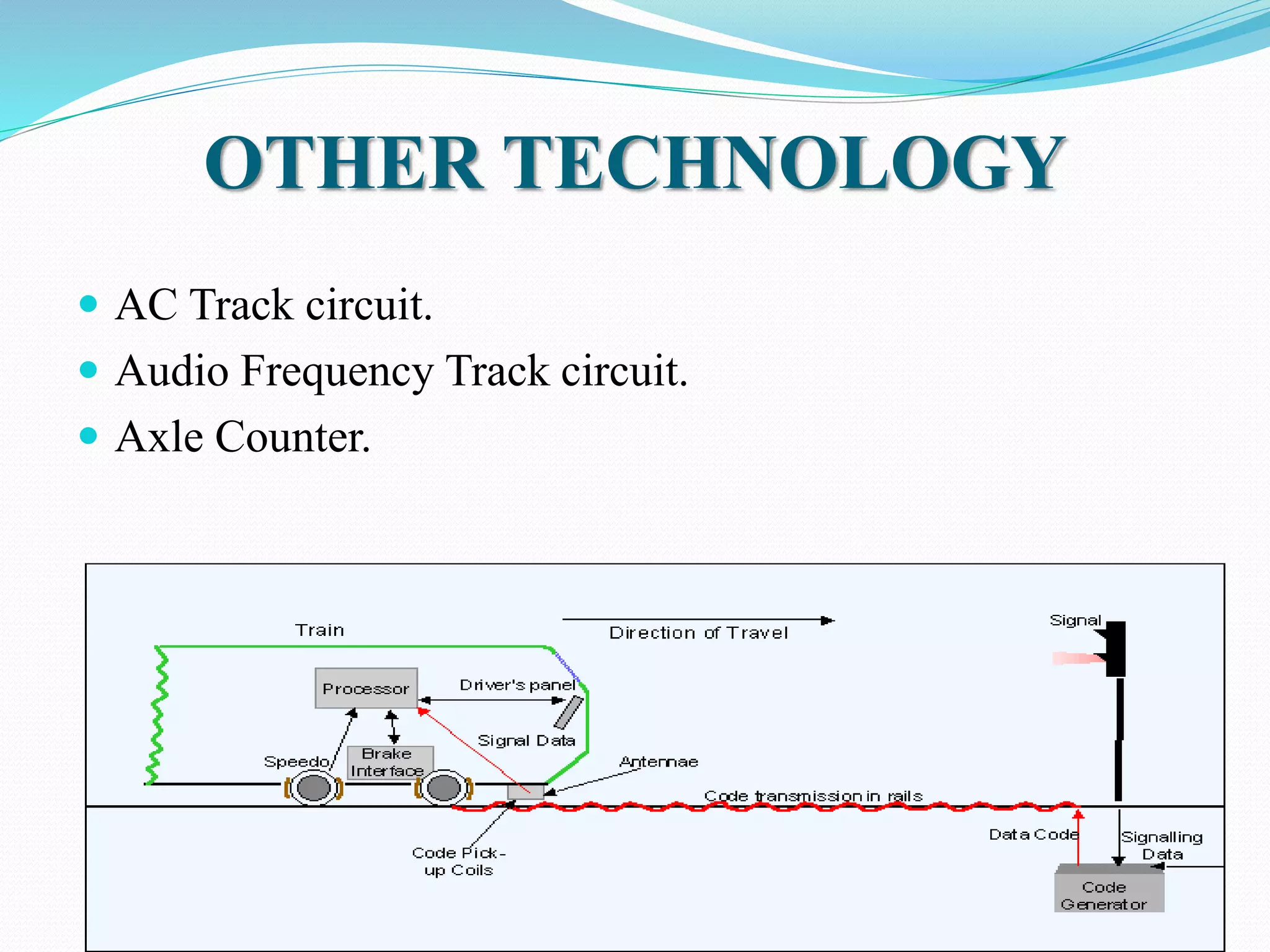
OTHER TECHNOLOGY 
 AC Track circuit. 
 Audio Frequency Track circuit. 
 Axle Counter.
Cond.
PRESENT ERA 
 Indian Railways is installing a state-of-art technology 
along train tracks to detect of faults and defective parts in 
coaches, wagons and locomotives. 
 The new system, which uses high-speed infrared and 
digital cameras, will replace physical examination of the 
wagons by railway staff. 
 The project, which will be run as trial project will be 
installed at 10 locations at an estimated cost of 73 crore 
rupees in the first phase.
CONCLUTION 
 DC Track circuit are the simplest , least costly and 
most reliable type of track circuit. 
 Now a days for signalling purposes , trains are 
monitored automatically by means of TRACK 
CIRCUIT. 
 Track circuit play important role in stop accidents, 
traffic .
Track circuit

Track circuit

  • 1.
  • 2.
    OUTLINE  Introduction  Components  Working  Do’s & Don’t  Other technology  Present era of technology  Conclusion
  • 3.
    INTRODUCTION  Trackcircuit is simple electrical device used to detect the Presence/Absence of train on the rails.  Track circuit is the one of the primary input for a signal interlocking plant.  The signal cannot be green while there is another train on track segment ahead.
  • 4.
    COMPONENTS  Battery.  Track Relay.  Adjustable resistance.  Insulated rail joints.
  • 5.
    Cond. Battery Gravity cells are used . Relay  A relay is electrically operated switch.  The Relay switch connections are usually labelled common ,normally closed, normally open.
  • 6.
    Cond.  AdjustableResistance TRc - Track Lead Resistance at feed end TRr - Track lead Resistance at Relay end RT - Regulating Resistance Rr - Rail Resistance (Rail joint Resistance) RB - Ballast Resistance TSR - Train Shunt Resistance  Insulated rail joints.  Track circuit required insulated rail joint for isolating it the adjacent track circuit.
  • 7.
    Cond.  NylonIRJ  Glued IRJ  Track circuit bonding Rail bond need to be provided on track circuit have point turnout them.
  • 8.
  • 9.
    WORKING  Theportion of the Track which is to be Track circuited, is first provided with wooden or RCC sleepers and then the rails are insulated from the rest of the Track by the provision of Insulated rail joints.  At one end of the Track circuit feed is connected and at other end track relay is connected.  When the track portion is not occupied by trains, the fed is available for track relay and the relay is in energized condition.
  • 10.
    Cond. When atrain occupies the track circuit portion, the axel & wheels shunt the track much of the circuit current is passed through the wheels due to less resistive path and very less current is available for track relay, which is not sufficient enough to pick up the relay.
  • 11.
  • 12.
    DEAD SECTION Those section of the track circuit in which occupation by a vehicle cannot be detected.  Curved track.  Cross.  Bridge .
  • 13.
    DO’S & DON’T  Top up distilled water if the electrolyte level is low in batteries.  Change the relay which is due to for overhauling.  Replace the damaged and corroded bonding wires.  Do not Tilt the relay.  Do not Test the track circuit by shunting with a wire only.  Track circuit does not get shunted properly by vehicles.  Its working length is dependent on immunity of track relay.
  • 14.
    OTHER TECHNOLOGY AC Track circuit.  Audio Frequency Track circuit.  Axle Counter.
  • 15.
  • 16.
    PRESENT ERA Indian Railways is installing a state-of-art technology along train tracks to detect of faults and defective parts in coaches, wagons and locomotives.  The new system, which uses high-speed infrared and digital cameras, will replace physical examination of the wagons by railway staff.  The project, which will be run as trial project will be installed at 10 locations at an estimated cost of 73 crore rupees in the first phase.
  • 17.
    CONCLUTION  DCTrack circuit are the simplest , least costly and most reliable type of track circuit.  Now a days for signalling purposes , trains are monitored automatically by means of TRACK CIRCUIT.  Track circuit play important role in stop accidents, traffic .