Building Planning for Staircases
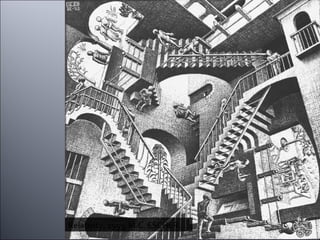
Relativity, 1953, M.C. ESCHER
Evolution of Staircases Why do we need Staircase? Staircase Terminology Types of Staircases Building Codes on Staircase Universal Design of Staircase Staircase Unlimited Resources
 
“ Staircases are one of the oldest building elements in architectural histories…reflecting the prevailing philosophies and symbolic language…” - Staircases through history by Eva Jiricna
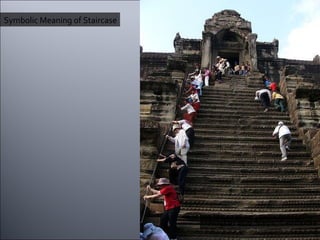
Angkor Wat Steps, Cambodia Symbolic Meaning of Staircase
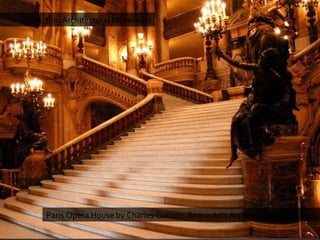
Paris Opera House by Charles Garnier, Beaux Arts Architecture Movement Reflecting Architectural Movement
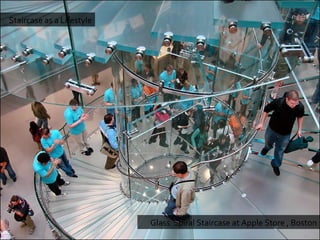
Glass  Spiral Staircase at Apple Store , Boston Staircase as a Lifestyle
 
 
“… to protect people from injury and to facilitate access during movement from one level to another in a building.” - Building & Construction Authority (BCA)  Acceptable Solutions – under  Regulation 27 of the Building Control Regulations  Ver 3.01
 
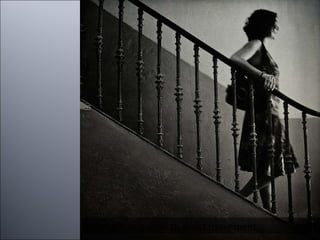
handrails or guides to assist movement
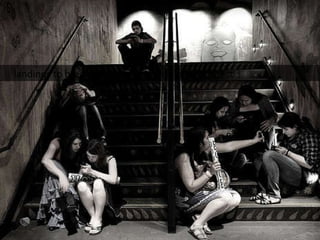
landings to break a fall and provide a place for rest
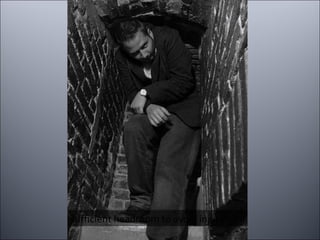
sufficient headroom to avoid injury
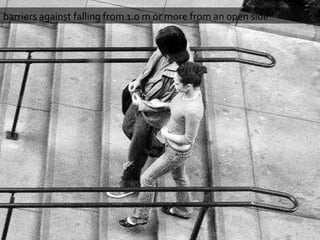
barriers against falling from 1.0 m or more from an open side
 
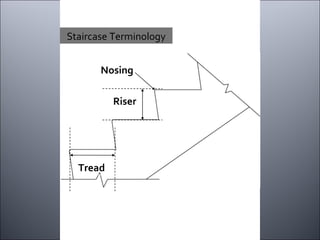
Staircase Terminology Tread Riser Nosing
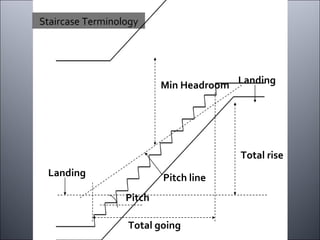
Staircase Terminology Pitch line Pitch Min Headroom Total rise Total going Landing Landing
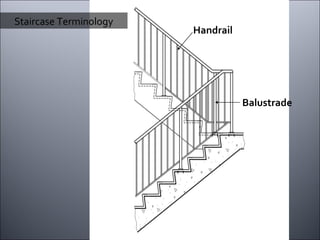
Staircase Terminology Handrail Balustrade
 
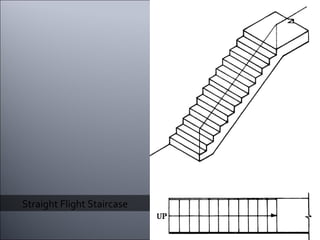
Straight Flight Staircase
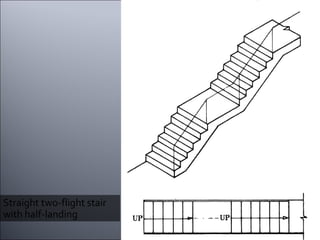
Straight two-flight stair with half-landing
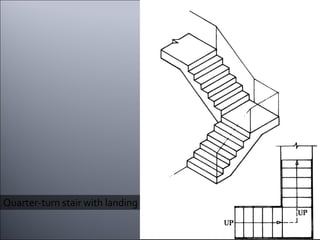
Quarter-turn stair with landing
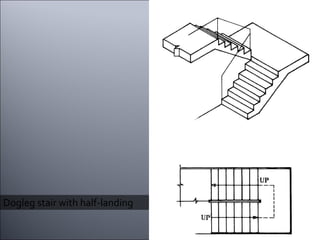
Dogleg stair with half-landing
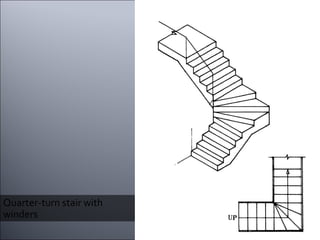
Quarter-turn stair with winders
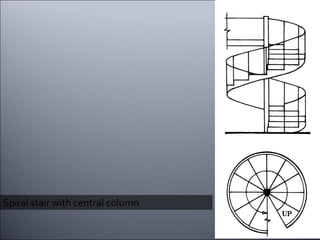
Spiral stair with central column
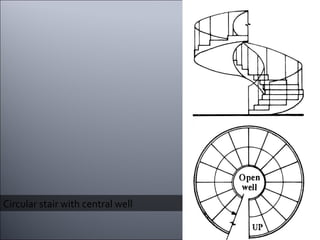
Circular stair with central well
 
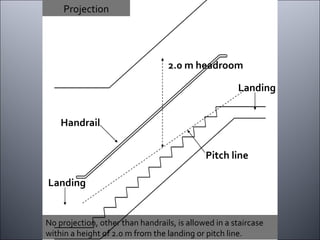
No projection, other than handrails, is allowed in a staircase within a height of 2.0 m from the landing or pitch line. Projection 2.0 m headroom Pitch line Handrail Landing Landing
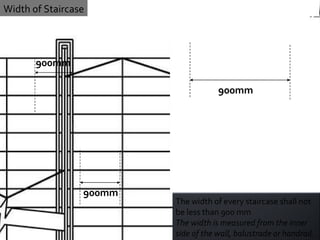
The width of every staircase shall not be less than 900 mm The width is measured from the inner side of the wall, balustrade or handrail. Width of Staircase 900mm 900mm 900mm
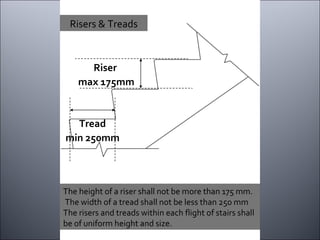
The height of a riser shall not be more than 175 mm. The width of a tread shall not be less than 250 mm The risers and treads within each flight of stairs shall be of uniform height and size. Risers & Treads Tread min 250mm Riser  max 175mm
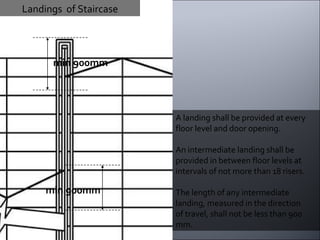
A landing shall be provided at every floor level and door opening. An intermediate landing shall be provided in between floor levels at intervals of not more than 18 risers. The length of any intermediate landing, measured in the direction of travel, shall not be less than 900 mm. Landings  of Staircase min 900mm min 900mm
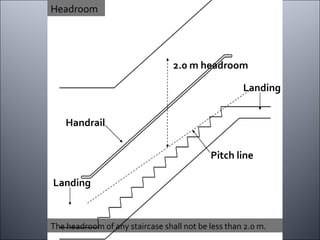
The headroom of any staircase shall not be less than 2.0 m. Headroom 2.0 m headroom Pitch line Handrail Landing Landing
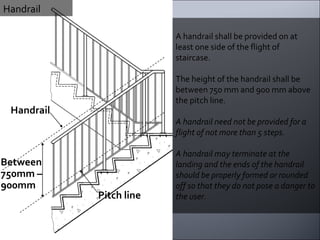
A handrail shall be provided on at least one side of the flight of staircase. The height of the handrail shall be between 750 mm and 900 mm above the pitch line. A handrail need not be provided for a flight of not more than 5 steps. A handrail may terminate at the landing and the ends of the handrail should be properly formed or rounded off so that they do not pose a danger to the user. Handrail Handrail Pitch line Between 750mm – 900mm
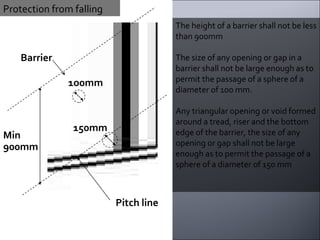
Protection from falling Pitch line The height of a barrier shall not be less than 900mm The size of any opening or gap in a barrier shall not be large enough as to permit the passage of a sphere of a diameter of 100 mm. Any triangular opening or void formed around a tread, riser and the bottom edge of the barrier, the size of any opening or gap shall not be large enough as to permit the passage of a sphere of a diameter of 150 mm Barrier 1o0mm 150mm Min 900mm
 
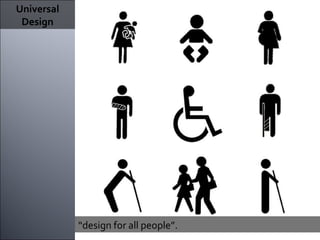
“ design for all people”.  Universal Design
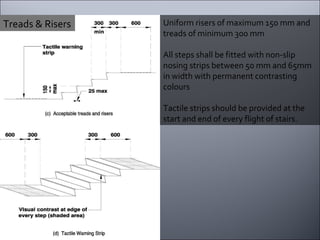
Uniform risers of maximum 150 mm and treads of minimum 300 mm All steps shall be fitted with non-slip nosing strips between 50 mm and 65mm in width with permanent contrasting colours Tactile strips should be provided at the start and end of every flight of stairs. Treads & Risers
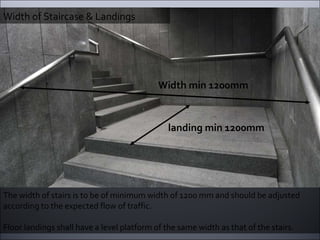
Width of Staircase & Landings The width of stairs is to be of minimum width of 1200 mm and should be adjusted according to the expected flow of traffic.  Floor landings shall have a level platform of the same width as that of the stairs. Width min 1200mm landing min 1200mm
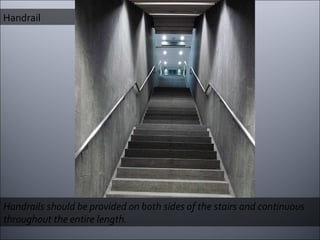
Handrails should be provided on both sides of the stairs and continuous throughout the entire length. Handrail
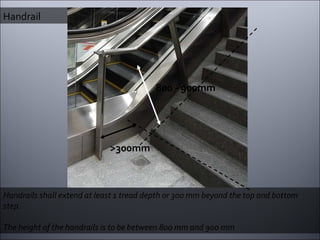
Handrails shall extend at least 1 tread depth or 300 mm beyond the top and bottom step. The height of the handrails is to be between 800 mm and 900 mm Handrail >300mm 800 - 900mm
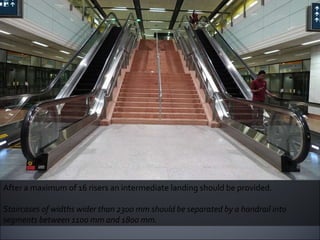
After a maximum of 16 risers an intermediate landing should be provided. Staircases of widths wider than 2300 mm should be separated by a handrail into segments between 1100 mm and 1800 mm.
 
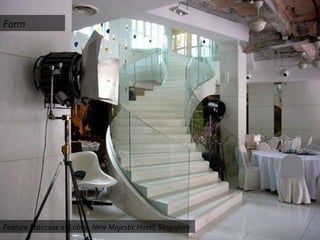
Form Feature Staircase at Lobby, New Majestic Hotel, Singapore
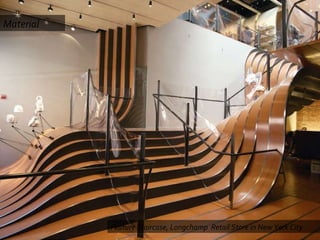
Material Feature Staircase, Longchamp  Retail Store in New York City
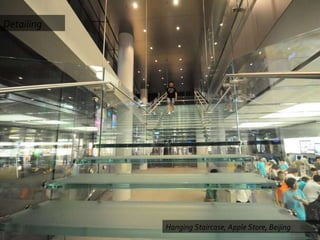
Detailing Hanging Staircase, Apple Store, Beijing
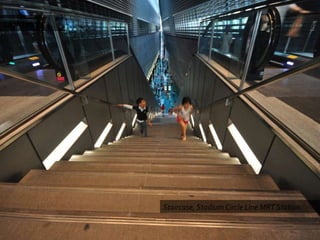
Lighting Staircase, Stadium Circle Line MRT Station


Staircase_Planning

  • 1.
  • 2.
  • 3.
    Evolution of StaircasesWhy do we need Staircase? Staircase Terminology Types of Staircases Building Codes on Staircase Universal Design of Staircase Staircase Unlimited Resources
  • 4.
  • 5.
    “ Staircases areone of the oldest building elements in architectural histories…reflecting the prevailing philosophies and symbolic language…” - Staircases through history by Eva Jiricna
  • 6.
    Angkor Wat Steps,Cambodia Symbolic Meaning of Staircase
  • 7.
    Paris Opera Houseby Charles Garnier, Beaux Arts Architecture Movement Reflecting Architectural Movement
  • 8.
    Glass SpiralStaircase at Apple Store , Boston Staircase as a Lifestyle
  • 9.
  • 10.
  • 11.
    “… to protectpeople from injury and to facilitate access during movement from one level to another in a building.” - Building & Construction Authority (BCA) Acceptable Solutions – under Regulation 27 of the Building Control Regulations Ver 3.01
  • 12.
  • 13.
    handrails or guidesto assist movement
  • 14.
    landings to breaka fall and provide a place for rest
  • 15.
  • 16.
    barriers against fallingfrom 1.0 m or more from an open side
  • 17.
  • 18.
  • 19.
    Staircase Terminology Pitchline Pitch Min Headroom Total rise Total going Landing Landing
  • 20.
  • 21.
  • 22.
  • 23.
    Straight two-flight stairwith half-landing
  • 24.
  • 25.
    Dogleg stair withhalf-landing
  • 26.
  • 27.
    Spiral stair withcentral column
  • 28.
    Circular stair withcentral well
  • 29.
  • 30.
    No projection, otherthan handrails, is allowed in a staircase within a height of 2.0 m from the landing or pitch line. Projection 2.0 m headroom Pitch line Handrail Landing Landing
  • 31.
    The width ofevery staircase shall not be less than 900 mm The width is measured from the inner side of the wall, balustrade or handrail. Width of Staircase 900mm 900mm 900mm
  • 32.
    The height ofa riser shall not be more than 175 mm. The width of a tread shall not be less than 250 mm The risers and treads within each flight of stairs shall be of uniform height and size. Risers & Treads Tread min 250mm Riser max 175mm
  • 33.
    A landing shallbe provided at every floor level and door opening. An intermediate landing shall be provided in between floor levels at intervals of not more than 18 risers. The length of any intermediate landing, measured in the direction of travel, shall not be less than 900 mm. Landings of Staircase min 900mm min 900mm
  • 34.
    The headroom ofany staircase shall not be less than 2.0 m. Headroom 2.0 m headroom Pitch line Handrail Landing Landing
  • 35.
    A handrail shallbe provided on at least one side of the flight of staircase. The height of the handrail shall be between 750 mm and 900 mm above the pitch line. A handrail need not be provided for a flight of not more than 5 steps. A handrail may terminate at the landing and the ends of the handrail should be properly formed or rounded off so that they do not pose a danger to the user. Handrail Handrail Pitch line Between 750mm – 900mm
  • 36.
    Protection from fallingPitch line The height of a barrier shall not be less than 900mm The size of any opening or gap in a barrier shall not be large enough as to permit the passage of a sphere of a diameter of 100 mm. Any triangular opening or void formed around a tread, riser and the bottom edge of the barrier, the size of any opening or gap shall not be large enough as to permit the passage of a sphere of a diameter of 150 mm Barrier 1o0mm 150mm Min 900mm
  • 37.
  • 38.
    “ design forall people”. Universal Design
  • 39.
    Uniform risers ofmaximum 150 mm and treads of minimum 300 mm All steps shall be fitted with non-slip nosing strips between 50 mm and 65mm in width with permanent contrasting colours Tactile strips should be provided at the start and end of every flight of stairs. Treads & Risers
  • 40.
    Width of Staircase& Landings The width of stairs is to be of minimum width of 1200 mm and should be adjusted according to the expected flow of traffic. Floor landings shall have a level platform of the same width as that of the stairs. Width min 1200mm landing min 1200mm
  • 41.
    Handrails should beprovided on both sides of the stairs and continuous throughout the entire length. Handrail
  • 42.
    Handrails shall extendat least 1 tread depth or 300 mm beyond the top and bottom step. The height of the handrails is to be between 800 mm and 900 mm Handrail >300mm 800 - 900mm
  • 43.
    After a maximumof 16 risers an intermediate landing should be provided. Staircases of widths wider than 2300 mm should be separated by a handrail into segments between 1100 mm and 1800 mm.
  • 44.
  • 45.
    Form Feature Staircaseat Lobby, New Majestic Hotel, Singapore
  • 46.
    Material Feature Staircase,Longchamp Retail Store in New York City
  • 47.
    Detailing Hanging Staircase,Apple Store, Beijing
  • 48.
    Lighting Staircase, StadiumCircle Line MRT Station
  • 49.
  • 50.
  • 51.
  • 52.

Editor's Notes

  • #39 It seeks to create an environment addressing the needs for all age groups and people of different abilities including temporary disability. The designer and building owner/developer hold the key to create an environment allowing people with different levels of physical and/or cognitive capabilities to move independently so as to integrate as fully as possible into the mainstream of daily life. Infants and Children Expectant Mothers Elderly Wheelchair Users Physically Injured Persons Sightless or Partially Sighted Persons Hearing Impaired Persons
  • #51 Approved Document Acceptable Solutions (BCA) Universal Design Guide (BCA) Singapore Civil Defence Force. Code of Practice for Fire Precautions in Building, Singapore, 2002. Building and Construction Authority. Code on Barrier-Free Accessibility In Buildings, Singapore, 2007. Neufert Architectural Data Building Construction Illustrated by Frank Ching