• EVOLUTION
• CORE
• ELEVATOR
• ESCALATOR
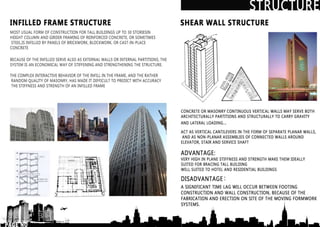
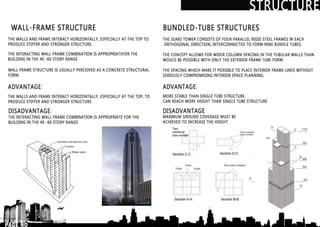
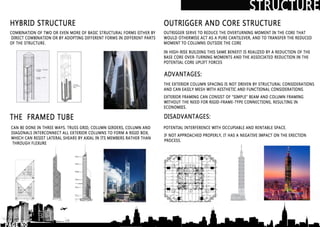
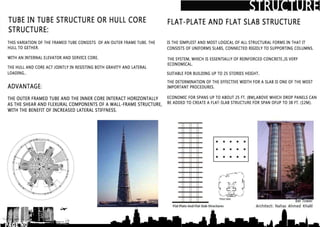
• STRUCTURE
• LOAD
• WIND
• PARKING
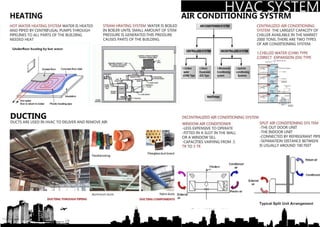
• HVAC SYSTEM
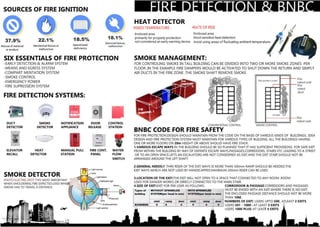
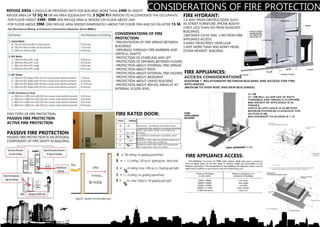
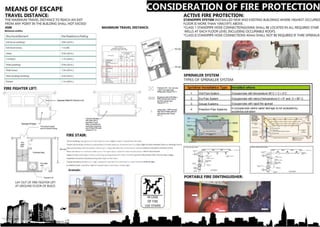
• FIRE
DETECTION
AND BNBC
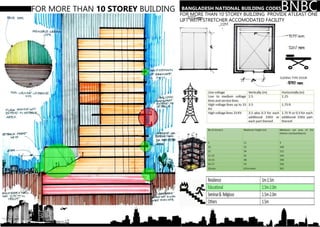
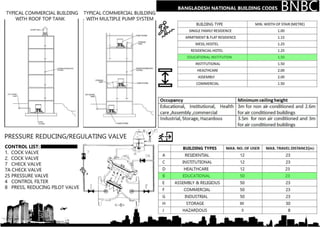
• BNBC
• CASE STUDY
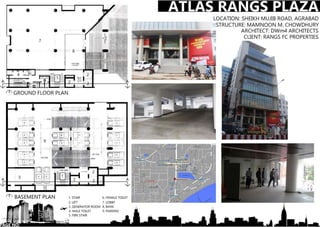
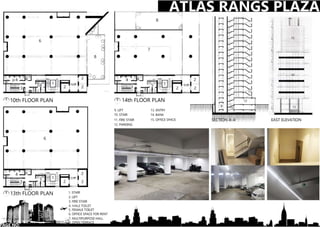
I. ATLAS RANKS PLAZA
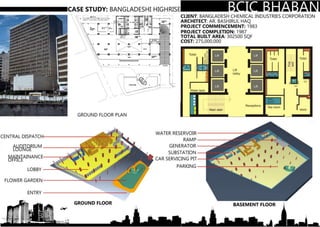
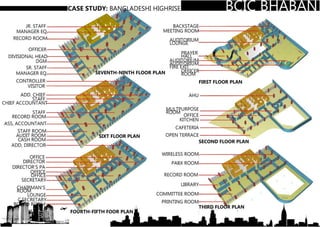
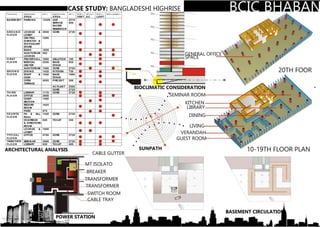
II. BCIC BHABAN
III. SHAGHAI TOWER
IV. PETRONUS TOWER
CONTENT
CORE
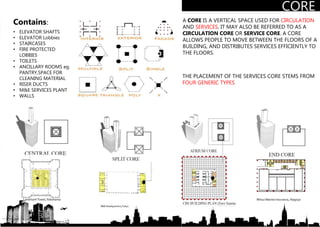
LandmarkTower,Yokohama
IBM Headquarters,Tokyo
Mitsui Marine Insurance, Nagoya
A CORE IS A VERTICAL SPACE USED FOR CIRCULATION
AND SERVICES. IT MAY ALSO BE REFERRED TO AS A
CIRCULATION CORE OR SERVICE CORE. A CORE
ALLOWS PEOPLE TO MOVE BETWEEN THE FLOORS OF A
BUILDING, AND DISTRIBUTES SERVICES EFFICIENTLY TO
THE FLOORS.
THE PLACEMENT OF THE SERVICES CORE STEMS FROM
FOUR GENERIC TYPES
Contains:
• ELEVATOR SHAFTS
• ELEVATOR Lobbies
• STAIRCASES
• FIRE PROTECTED
LOBBIES
• TOILETS
• ANCILLARY ROOMS eg.
PANTRY,SPACE FOR
CLEANING MATERIAL
• RISER DUCTS
• M&E SERVICES PLANT
• WALLS
CORE
CORE
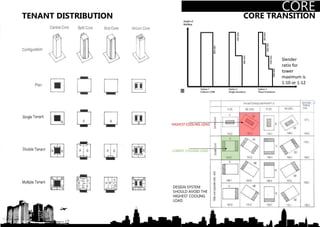
HIGHEST COOLING LOAD
LOWEST COOLING LOAD
TENANT DISTRIBUTION CORE TRANSITION
DESIGN SYSTEM
SHOULD AVOID THE
HIGHEST COOLING
LOAD
Slender
ratio for
tower
maximum is
1:10 or 1:12
CORE
M & E SERVICES
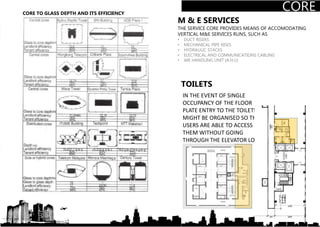
THE SERVICE CORE PROVIDES MEANS OF ACCOMODATING
VERTICAL M&E SERVICES RUNS, SUCH AS
• DUCT RISERS
• MECHANICAL PIPE RISES
• HYDRAULIC STACKS
• ELECTRICAL AND COMMUNICATIONS CABLING
• AIR HANDLING UNIT (A.H.U)
TOILETS
IN THE EVENT OF SINGLE
OCCUPANCY OF THE FLOOR
PLATE ENTRY TO THE TOILETS
MIGHT BE ORGANISED SO THAT
USERS ARE ABLE TO ACCESS
THEM WITHOUT GOING
THROUGH THE ELEVATOR LOBBY
CORE TO GLASS DEPTH AND ITS EFFICIENCY
CORE
ELEVATOR
CAR
ARRANGEM
ENT:
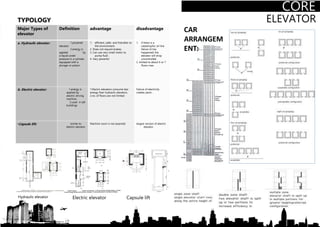
Major Types of
elevator
Definition advantage disadvantage
a. Hydraulic elevator: 1.powered
elevator
2.energy is
applied by
a liquid under
pressure in a cylinder
equipped with a
plunger or piston.
1. efficient, safer, and friendlier to
the environment.
2. Does not require brakes,
3. Can use very small motor to
pump fluid .
4. Very powerful
1. if there is a
catastrophic oil line
failure (it has
happened) the
elevator will drop
uncontrolled
2. limited to about 6 or 7
floors max.
b. Electric elevator: 1.energy is
applied by
electric driving
machine .
2.used in tall
buildings
1.Electric elevators consume less
energy than hydraulic elevators.
2.no. of floors are not limited
Failure of electricity
creates panic .
•Capsule lift: similar to
electric elevator.
Machine room is not essential largest version of electric
elevator.
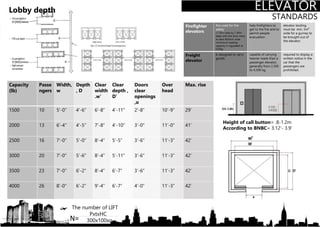
TYPOLOGY
Hydraulic elevator Electric elevator Capsule lift
Capacity
(lb)
Passe
ngers
Width,
w
Depth
, D
Clear
width
.w’
Clear
depth ,
D’
Doors
clear
openings
,o
Over
head
Max. rise
1500 10 5’-0” 4’-6” 6’-8” 4’-11” 2’-8” 10’-9” 29’
2000 13 6’-4” 4’-5” 7’-8” 4’-10” 3’-0” 11’-0” 41’
2500 16 7’-0” 5’-0” 8’-4” 5’-5” 3’-6” 11’-3” 42’
3000 20 7’-0” 5’-6” 8’-4” 5’-11” 3’-6” 11’-3” 42’
3500 23 7’-0” 6’-2” 8’-4” 6’-7” 3’-6” 11’-3” 42’
4000 26 8’-0” 6’-2” 9’-4” 6’-7” 4’-0” 11’-3” 42’
Height of call button= .8-1.2m
According to BNBC= 3.12’- 3.9’
3.125’-
3.9’ZZZ
ELEVATOR
STANDARDS
Firefighter
elevators
Are used for fire
safety
•1.10m wide by 1.40m
deep with the door entry
at least 800mm wide
•minimum loading
capacity is regulated at
630kg.
help firefighters to
get to the fire and to
permit people
evacuation
elevator landing
must be min. 5m²
wide for a gurney to
be brought out of
the elevator.
Freight
elevator
Is designed to carry
goods.
capable of carrying
heavier loads than a
passenger elevator,
generally from 2,300
to 4,500 kg.
required to display a
written notice in the
car that the
passengers are
prohibited.
The number of LIFT
PxtxHC
300x100xqN=
Lobby depth
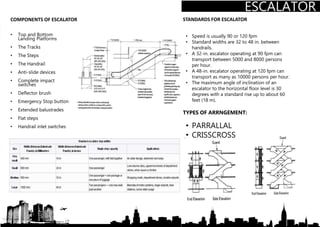
ESCALATOR
• Speed is usually 90 or 120 fpm
• Standard widths are 32 to 48 in. between
handrails.
• A 32-in. escalator operating at 90 fpm can
transport between 5000 and 8000 persons
per hour.
• A 48-in. escalator operating at 120 fpm can
transport as many as 10000 persons per hour.
• The maximum angle of inclination of an
escalator to the horizontal floor level is 30
degrees with a standard rise up to about 60
feet (18 m).
STANDARDS FOR ESCALATOR
• Top and Bottom
Landing Platforms
• The Tracks
• The Steps
• The Handrail
• Anti-slide devices
• Complete impact
switches
• Deflector brush
• Emergency Stop button
• Extended balustrades
• Flat steps
• Handrail inlet switches
COMPONENTS OF ESCALATOR
TYPES OF ARRNGEMENT:
• PARRALLAL
• CRISSCROSS
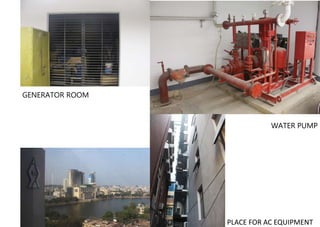
GENERATOR
GENERATOR ROOM
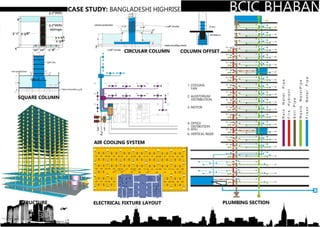
WATER PUMP
PLACE FOR AC EQUIPMENT
WATER PUMP
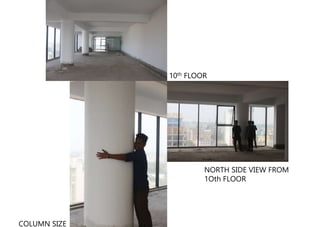
10th FLOOR
NORTH SIDE VIEW FROM
1Oth FLOOR
COLUMN SIZE
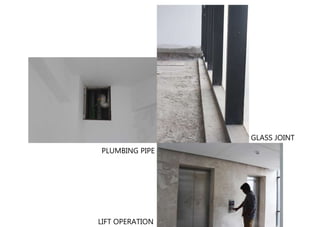
GLASS JOINT
LIFT OPERATION
PLUMBING PIPE
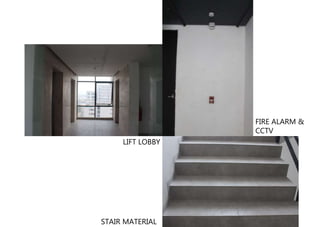
LIFT LOBBY
STAIR MATERIAL
FIRE ALARM &
CCTV
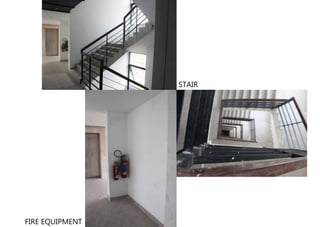
STAIR
FIRE EQUIPMENT
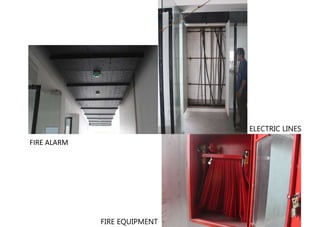
ELECTRIC LINES
FIRE EQUIPMENT
FIRE ALARM
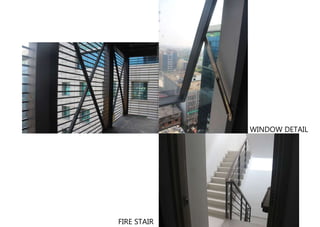
FIRE STAIR
WINDOW DETAIL
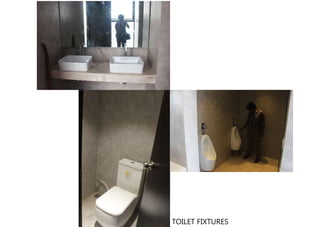
TOILET FIXTURES
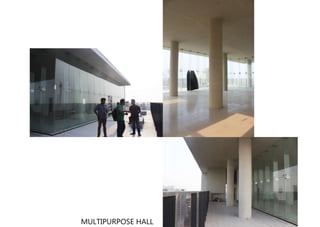
MULTIPURPOSE HALL
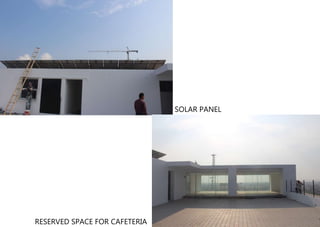
SOLAR PANEL
RESERVED SPACE FOR CAFETERIA
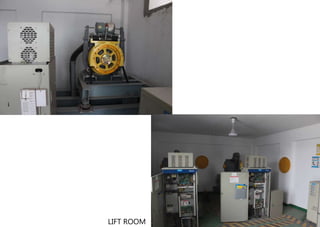
LIFT ROOM
CASE STUDY
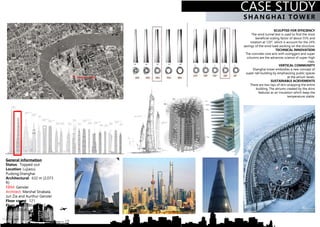
SCULPTED FOR EFFICIENCY
The wind tunnel test is used to find the most
beneficial scaling factor of about 55% and
rotation at 120°, which is account for the 24%
savings of the wind load working on the structure.
TECHNICAL INNOVATION
The concrete core acts with outriggers and super
columns are the advances science of super-high
rises.
VERTICAL COMMUNITY
Shanghai tower embodies a new concept of
super-tall building by emphasizing public spaces
at the atrium levels.
SUSTAINABLE ACIEVEMENTS
There are two lays of skin wrapping the entire
building. The atriums created by the skins
features as an insulation which keep the
temperature stable.
General information
Status: Topped-out
Location: Lujiazui,
Pudong,Shanghai
Architectural: 632 m (2,073
ft)
FIRM: Gensler
Architect: Marshal Strabala,
Jun Zia and Aurthur Gensler
Floor count: 121
Floor area: 380,000 m2
(4,090,300 sf ) above
SHA NGHA I TO WER
CASE STUDY
CASE STUDY
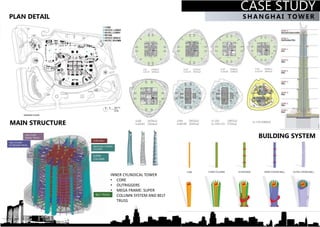
SHANGHAI TOWERPLAN DETAIL
TWO STOERY
OUTRIGGER TRUSS
ONE STORY
RADIAL TRUUS
CORE WALL
DIAGONAL CORNER
COLUMN
SUPER
COLUMN
BELT TRUSS
BUILDING SYSTEM
MAIN STRUCTURE
INNER CYLINDICAL TOWER
• CORE
• OUTRIGGERS
• MEGA FRAME: SUPER
COLUMN SYSTEM AND BELT
TRUSS
SHA NGHA I TO WER
CASE STUDY
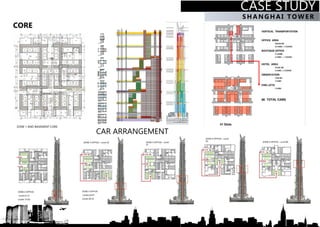
CORE
ZONE 1 AND BASEMENT CORE
CASE STUDY
SHA NGHA I TO WER
CAR ARRANGEMENT
SHANGHAI TOWER
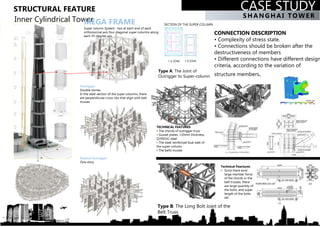
CASE STUDYSTRUCTURAL FEATURE
Outrigger
Double stories
In the steel section of the super columns, there
are perpendicular cross ribs that align with belt
trusses
Radical Outrigger
One story
Inner Cylindrical TowerMEGA FRAME
Super column System: two at each end of each
orthonormal axis four diagonal super columns along
each 45-degree axis
SECTION OF THE SUPER COLUMN
1-6 ZONE 7-8 ZONE
Type A: The Joint of
Outrigger to Super-column
CONNECTION DESCRIPTION
• Complexity of stress state.
• Connections should be broken after the
destructiveness of members
• Different connections have different design
criteria, according to the variation of
structure members.
TECHNICAL FEATURES
• The chords of outrigger truss
• Gusset plates, 120mm thickness,
Q390GJC steel
• The steel reinforced dual web of
the super-column
• The belts trusses
Type B: The Long Bolt Joint of the
Belt Truss
Technical Feactures
• Since there exist
large member force
of the chords in the
belt trusses, there
are large quantity of
the bolts, and super
length of the bolts
set.
CASE STUDY
CASE STUDY
SHA NGHA I TO WER
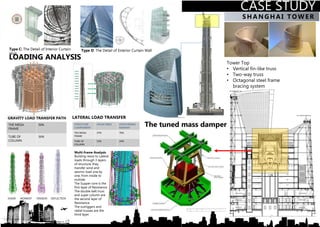
Tower Top
• Vertical fin-like truss
• Two-way truss
• Octagonal steel frame
bracing system
The tuned mass damper
Type C: The Detail of Interior Curtain
Wall
Type D: The Detail of Exterior Curtain Wall
LOADING ANALYSIS
GRAVITY LOAD TRANSFER PATH
THE MEGA
FRAME
50%
TUBE OF
COLUMN
50%
STRUCTURE
COMPONENT
SHEAR FORCE OVERTURNING
MOMENT
THE MEGA
FRAME
47% 76%
TUBE OF
COLUMN
53% 24%
LATERAL LOAD TRANSFER
Multi-frame Analysis
Building resist to Lateral
loads through 3 layers
of structure, they
transfer wind and
seismic load one by
one, from inside to
outside.
The Supper core is the
first layer of Resistance.
The double belt truss
and super column are
the second layer of
Resistance.
The outriggers and
radial trusses are the
third layer.
SHEAR MOMENT TENSION DEFLECTION
CASE STUDY
SHA NGHA I TO WER
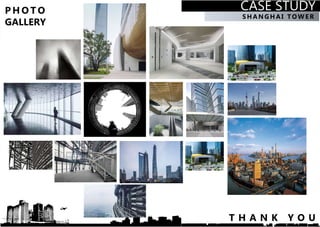
P H O T O
GALLERY
T H A N K Y O U
THANKYOU

Report on High Rise buildings.

  • 2.
    • EVOLUTION • CORE •ELEVATOR • ESCALATOR • STRUCTURE • LOAD • WIND • PARKING • HVAC SYSTEM • FIRE DETECTION AND BNBC • BNBC • CASE STUDY I. ATLAS RANKS PLAZA II. BCIC BHABAN III. SHAGHAI TOWER IV. PETRONUS TOWER CONTENT
  • 4.
    CORE LandmarkTower,Yokohama IBM Headquarters,Tokyo Mitsui MarineInsurance, Nagoya A CORE IS A VERTICAL SPACE USED FOR CIRCULATION AND SERVICES. IT MAY ALSO BE REFERRED TO AS A CIRCULATION CORE OR SERVICE CORE. A CORE ALLOWS PEOPLE TO MOVE BETWEEN THE FLOORS OF A BUILDING, AND DISTRIBUTES SERVICES EFFICIENTLY TO THE FLOORS. THE PLACEMENT OF THE SERVICES CORE STEMS FROM FOUR GENERIC TYPES Contains: • ELEVATOR SHAFTS • ELEVATOR Lobbies • STAIRCASES • FIRE PROTECTED LOBBIES • TOILETS • ANCILLARY ROOMS eg. PANTRY,SPACE FOR CLEANING MATERIAL • RISER DUCTS • M&E SERVICES PLANT • WALLS CORE
  • 5.
    CORE HIGHEST COOLING LOAD LOWESTCOOLING LOAD TENANT DISTRIBUTION CORE TRANSITION DESIGN SYSTEM SHOULD AVOID THE HIGHEST COOLING LOAD Slender ratio for tower maximum is 1:10 or 1:12
  • 6.
    CORE M & ESERVICES THE SERVICE CORE PROVIDES MEANS OF ACCOMODATING VERTICAL M&E SERVICES RUNS, SUCH AS • DUCT RISERS • MECHANICAL PIPE RISES • HYDRAULIC STACKS • ELECTRICAL AND COMMUNICATIONS CABLING • AIR HANDLING UNIT (A.H.U) TOILETS IN THE EVENT OF SINGLE OCCUPANCY OF THE FLOOR PLATE ENTRY TO THE TOILETS MIGHT BE ORGANISED SO THAT USERS ARE ABLE TO ACCESS THEM WITHOUT GOING THROUGH THE ELEVATOR LOBBY CORE TO GLASS DEPTH AND ITS EFFICIENCY
  • 7.
    CORE ELEVATOR CAR ARRANGEM ENT: Major Types of elevator Definitionadvantage disadvantage a. Hydraulic elevator: 1.powered elevator 2.energy is applied by a liquid under pressure in a cylinder equipped with a plunger or piston. 1. efficient, safer, and friendlier to the environment. 2. Does not require brakes, 3. Can use very small motor to pump fluid . 4. Very powerful 1. if there is a catastrophic oil line failure (it has happened) the elevator will drop uncontrolled 2. limited to about 6 or 7 floors max. b. Electric elevator: 1.energy is applied by electric driving machine . 2.used in tall buildings 1.Electric elevators consume less energy than hydraulic elevators. 2.no. of floors are not limited Failure of electricity creates panic . •Capsule lift: similar to electric elevator. Machine room is not essential largest version of electric elevator. TYPOLOGY Hydraulic elevator Electric elevator Capsule lift
  • 8.
    Capacity (lb) Passe ngers Width, w Depth , D Clear width .w’ Clear depth , D’ Doors clear openings ,o Over head Max.rise 1500 10 5’-0” 4’-6” 6’-8” 4’-11” 2’-8” 10’-9” 29’ 2000 13 6’-4” 4’-5” 7’-8” 4’-10” 3’-0” 11’-0” 41’ 2500 16 7’-0” 5’-0” 8’-4” 5’-5” 3’-6” 11’-3” 42’ 3000 20 7’-0” 5’-6” 8’-4” 5’-11” 3’-6” 11’-3” 42’ 3500 23 7’-0” 6’-2” 8’-4” 6’-7” 3’-6” 11’-3” 42’ 4000 26 8’-0” 6’-2” 9’-4” 6’-7” 4’-0” 11’-3” 42’ Height of call button= .8-1.2m According to BNBC= 3.12’- 3.9’ 3.125’- 3.9’ZZZ ELEVATOR STANDARDS Firefighter elevators Are used for fire safety •1.10m wide by 1.40m deep with the door entry at least 800mm wide •minimum loading capacity is regulated at 630kg. help firefighters to get to the fire and to permit people evacuation elevator landing must be min. 5m² wide for a gurney to be brought out of the elevator. Freight elevator Is designed to carry goods. capable of carrying heavier loads than a passenger elevator, generally from 2,300 to 4,500 kg. required to display a written notice in the car that the passengers are prohibited. The number of LIFT PxtxHC 300x100xqN= Lobby depth
  • 9.
    ESCALATOR • Speed isusually 90 or 120 fpm • Standard widths are 32 to 48 in. between handrails. • A 32-in. escalator operating at 90 fpm can transport between 5000 and 8000 persons per hour. • A 48-in. escalator operating at 120 fpm can transport as many as 10000 persons per hour. • The maximum angle of inclination of an escalator to the horizontal floor level is 30 degrees with a standard rise up to about 60 feet (18 m). STANDARDS FOR ESCALATOR • Top and Bottom Landing Platforms • The Tracks • The Steps • The Handrail • Anti-slide devices • Complete impact switches • Deflector brush • Emergency Stop button • Extended balustrades • Flat steps • Handrail inlet switches COMPONENTS OF ESCALATOR TYPES OF ARRNGEMENT: • PARRALLAL • CRISSCROSS
  • 28.
  • 29.
    WATER PUMP 10th FLOOR NORTHSIDE VIEW FROM 1Oth FLOOR COLUMN SIZE
  • 30.
  • 31.
  • 32.
  • 33.
  • 34.
  • 35.
  • 36.
  • 37.
  • 38.
  • 43.
    CASE STUDY SCULPTED FOREFFICIENCY The wind tunnel test is used to find the most beneficial scaling factor of about 55% and rotation at 120°, which is account for the 24% savings of the wind load working on the structure. TECHNICAL INNOVATION The concrete core acts with outriggers and super columns are the advances science of super-high rises. VERTICAL COMMUNITY Shanghai tower embodies a new concept of super-tall building by emphasizing public spaces at the atrium levels. SUSTAINABLE ACIEVEMENTS There are two lays of skin wrapping the entire building. The atriums created by the skins features as an insulation which keep the temperature stable. General information Status: Topped-out Location: Lujiazui, Pudong,Shanghai Architectural: 632 m (2,073 ft) FIRM: Gensler Architect: Marshal Strabala, Jun Zia and Aurthur Gensler Floor count: 121 Floor area: 380,000 m2 (4,090,300 sf ) above SHA NGHA I TO WER CASE STUDY
  • 44.
    CASE STUDY SHANGHAI TOWERPLANDETAIL TWO STOERY OUTRIGGER TRUSS ONE STORY RADIAL TRUUS CORE WALL DIAGONAL CORNER COLUMN SUPER COLUMN BELT TRUSS BUILDING SYSTEM MAIN STRUCTURE INNER CYLINDICAL TOWER • CORE • OUTRIGGERS • MEGA FRAME: SUPER COLUMN SYSTEM AND BELT TRUSS
  • 45.
    SHA NGHA ITO WER CASE STUDY CORE ZONE 1 AND BASEMENT CORE CASE STUDY SHA NGHA I TO WER CAR ARRANGEMENT
  • 46.
    SHANGHAI TOWER CASE STUDYSTRUCTURALFEATURE Outrigger Double stories In the steel section of the super columns, there are perpendicular cross ribs that align with belt trusses Radical Outrigger One story Inner Cylindrical TowerMEGA FRAME Super column System: two at each end of each orthonormal axis four diagonal super columns along each 45-degree axis SECTION OF THE SUPER COLUMN 1-6 ZONE 7-8 ZONE Type A: The Joint of Outrigger to Super-column CONNECTION DESCRIPTION • Complexity of stress state. • Connections should be broken after the destructiveness of members • Different connections have different design criteria, according to the variation of structure members. TECHNICAL FEATURES • The chords of outrigger truss • Gusset plates, 120mm thickness, Q390GJC steel • The steel reinforced dual web of the super-column • The belts trusses Type B: The Long Bolt Joint of the Belt Truss Technical Feactures • Since there exist large member force of the chords in the belt trusses, there are large quantity of the bolts, and super length of the bolts set.
  • 47.
    CASE STUDY CASE STUDY SHANGHA I TO WER Tower Top • Vertical fin-like truss • Two-way truss • Octagonal steel frame bracing system The tuned mass damper Type C: The Detail of Interior Curtain Wall Type D: The Detail of Exterior Curtain Wall LOADING ANALYSIS GRAVITY LOAD TRANSFER PATH THE MEGA FRAME 50% TUBE OF COLUMN 50% STRUCTURE COMPONENT SHEAR FORCE OVERTURNING MOMENT THE MEGA FRAME 47% 76% TUBE OF COLUMN 53% 24% LATERAL LOAD TRANSFER Multi-frame Analysis Building resist to Lateral loads through 3 layers of structure, they transfer wind and seismic load one by one, from inside to outside. The Supper core is the first layer of Resistance. The double belt truss and super column are the second layer of Resistance. The outriggers and radial trusses are the third layer. SHEAR MOMENT TENSION DEFLECTION
  • 48.
    CASE STUDY SHA NGHAI TO WER P H O T O GALLERY T H A N K Y O U
  • 52.