Downloaded 208 times
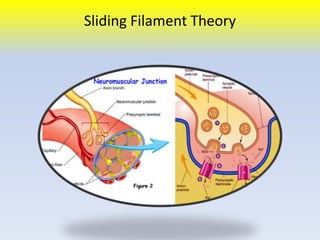
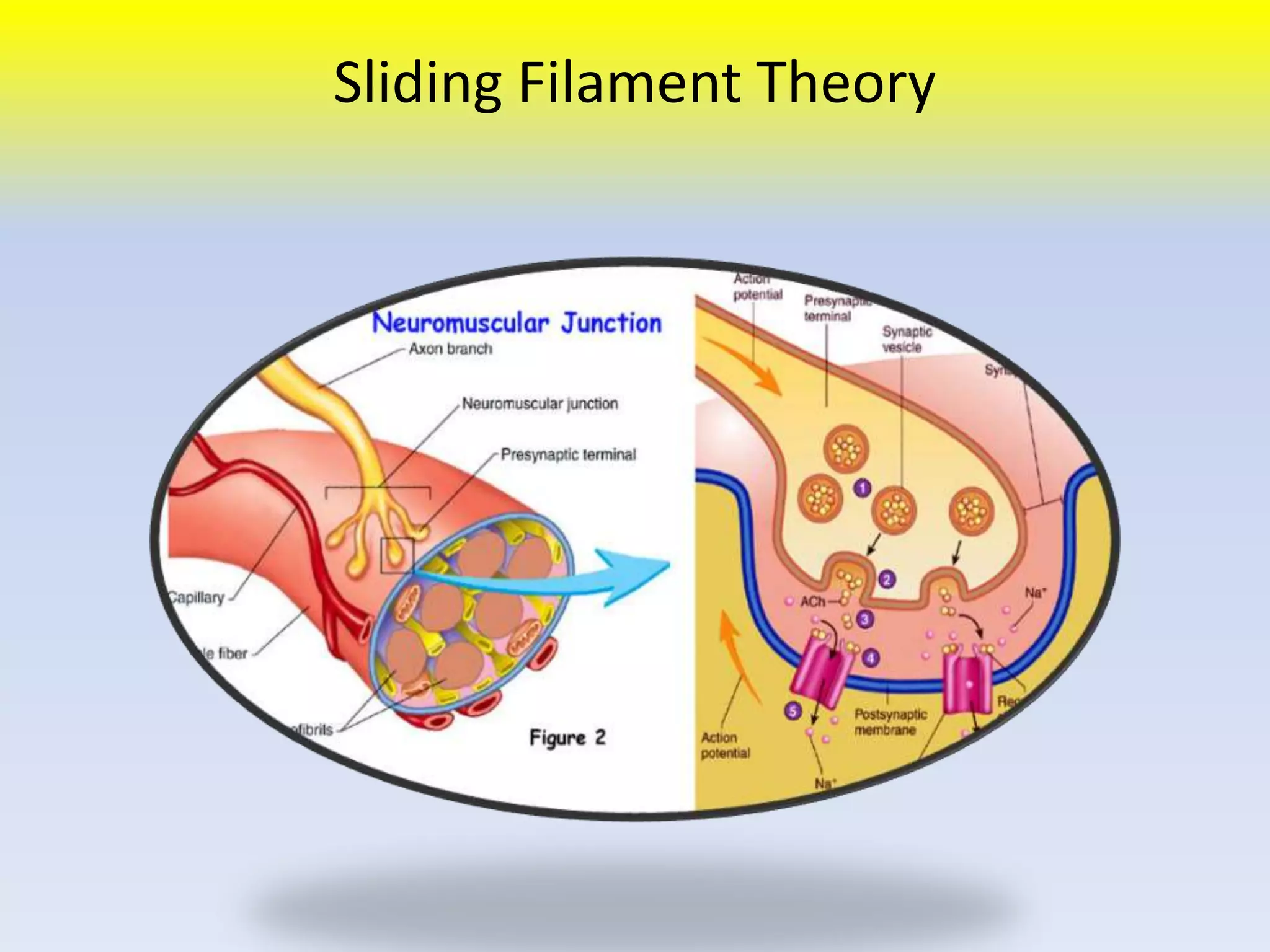
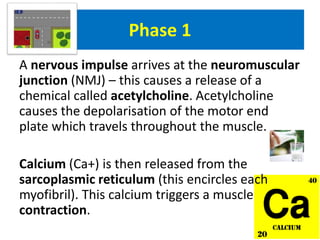
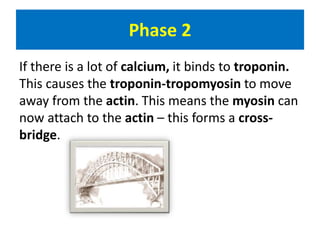
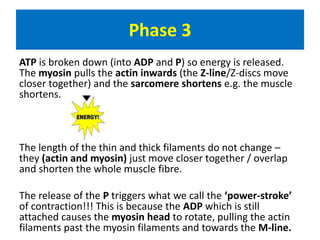


The sliding filament theory of muscle contraction occurs in 5 phases: 1) A nervous impulse causes acetylcholine release at the neuromuscular junction, depolarizing the motor end plate and triggering calcium release from the sarcoplasmic reticulum. 2) Calcium binds to troponin, displacing tropomyosin and exposing actin binding sites for myosin. 3) ATP hydrolysis allows myosin to pull actin inward, shortening the sarcomere as cross-bridges detach and reattach down the actin filament. 4) Contraction continues as long as ATP and calcium levels remain high. 5) When the impulse stops, calcium reenters storage and


