Cell Metabolism
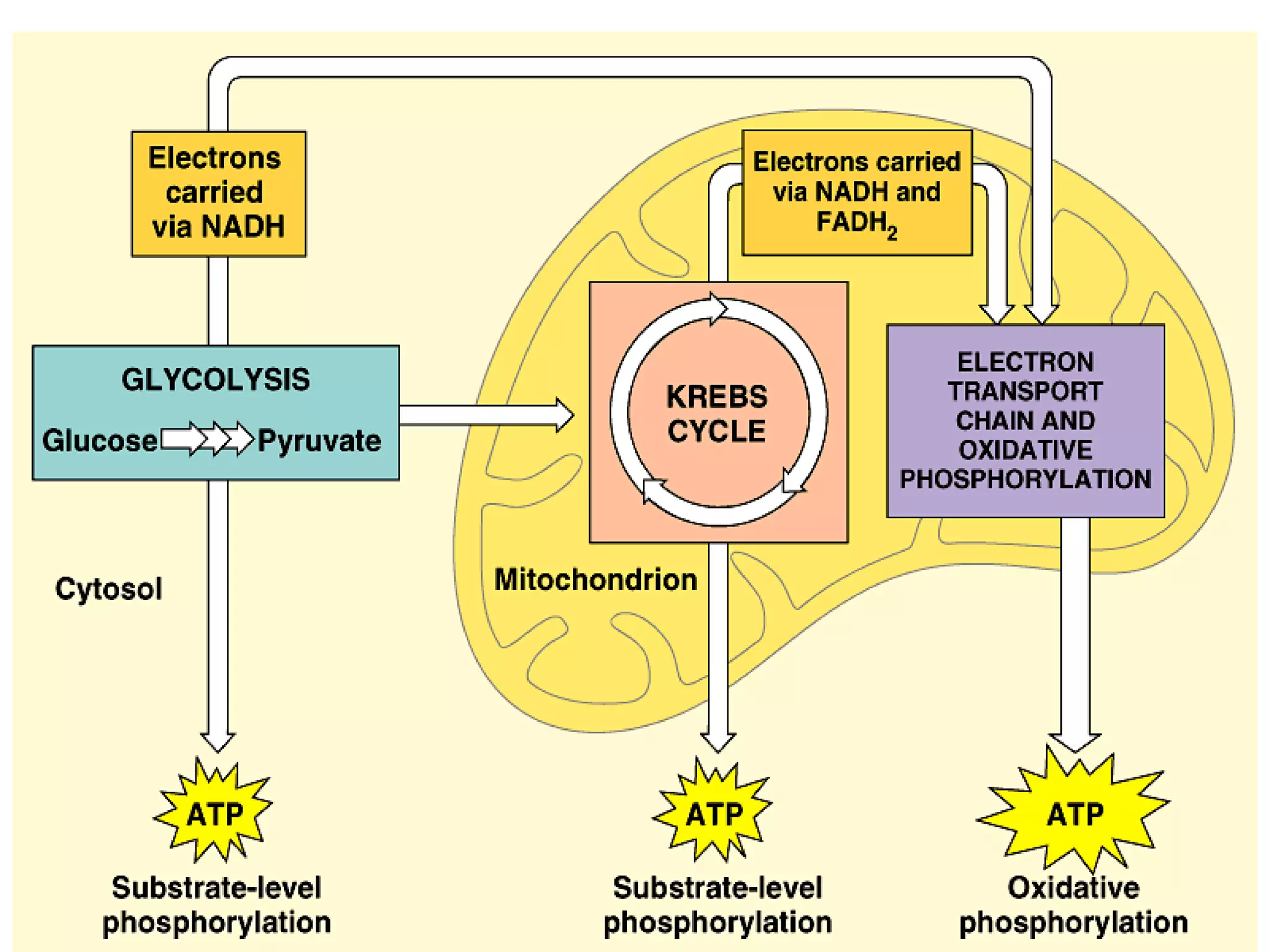
Cell Respiration (Metabolism) Cellular Respiration-  is a metabolic process used to obtain energy from organic compounds or food can run under aerobic and anaerobic conditions.  catabolic pathway.  occurs in the cytoplasm and mitochondria  3 main steps:   Glycolysis  and the  Kreb Cycle , also known as the citric acid cycle and tricarboxylic acid cycle, and the  ETC (electron transport chain)
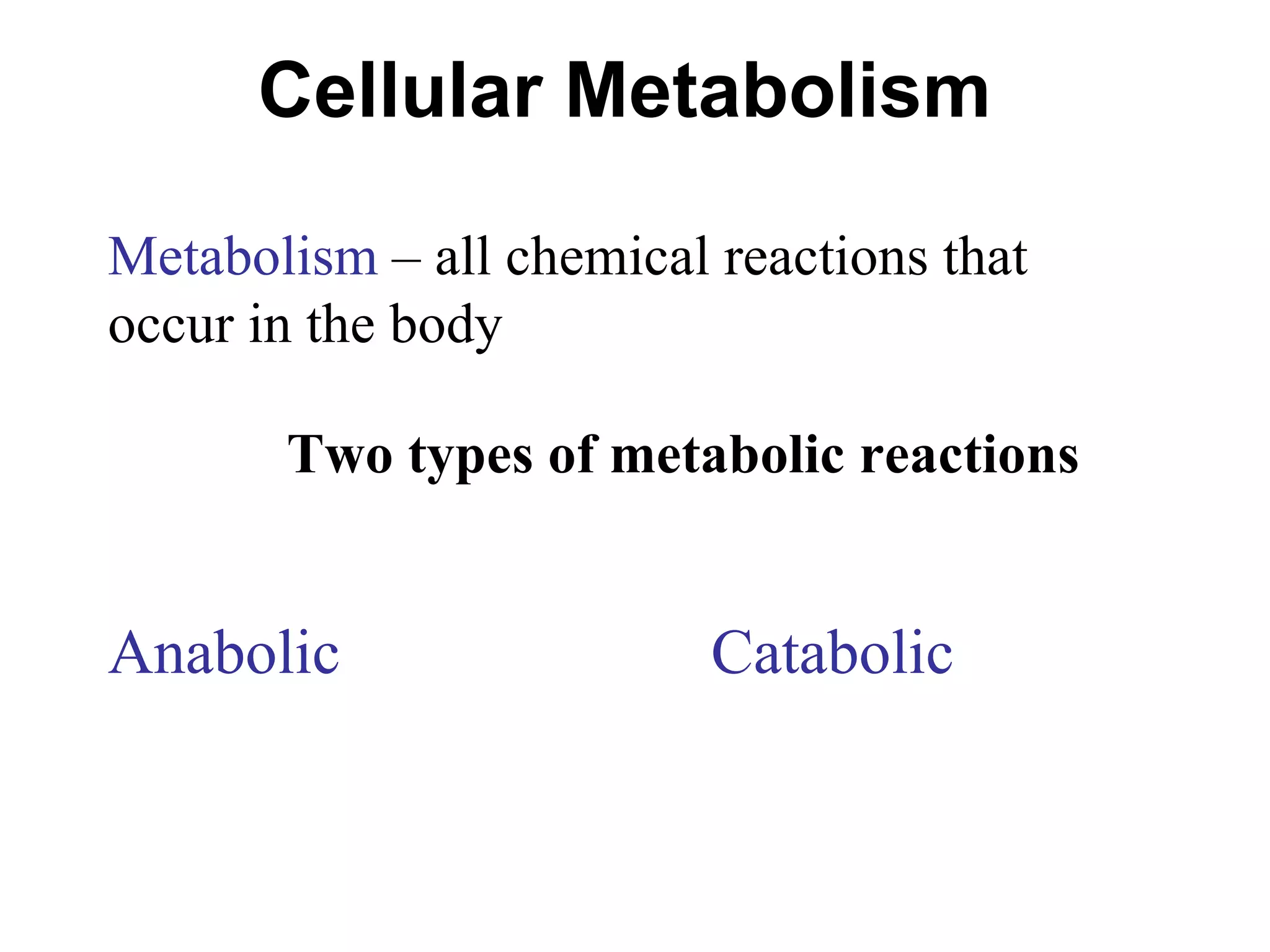
Cellular Metabolism Metabolism  – all chemical reactions that occur in the body  Two types of metabolic reactions Anabolic Catabolic
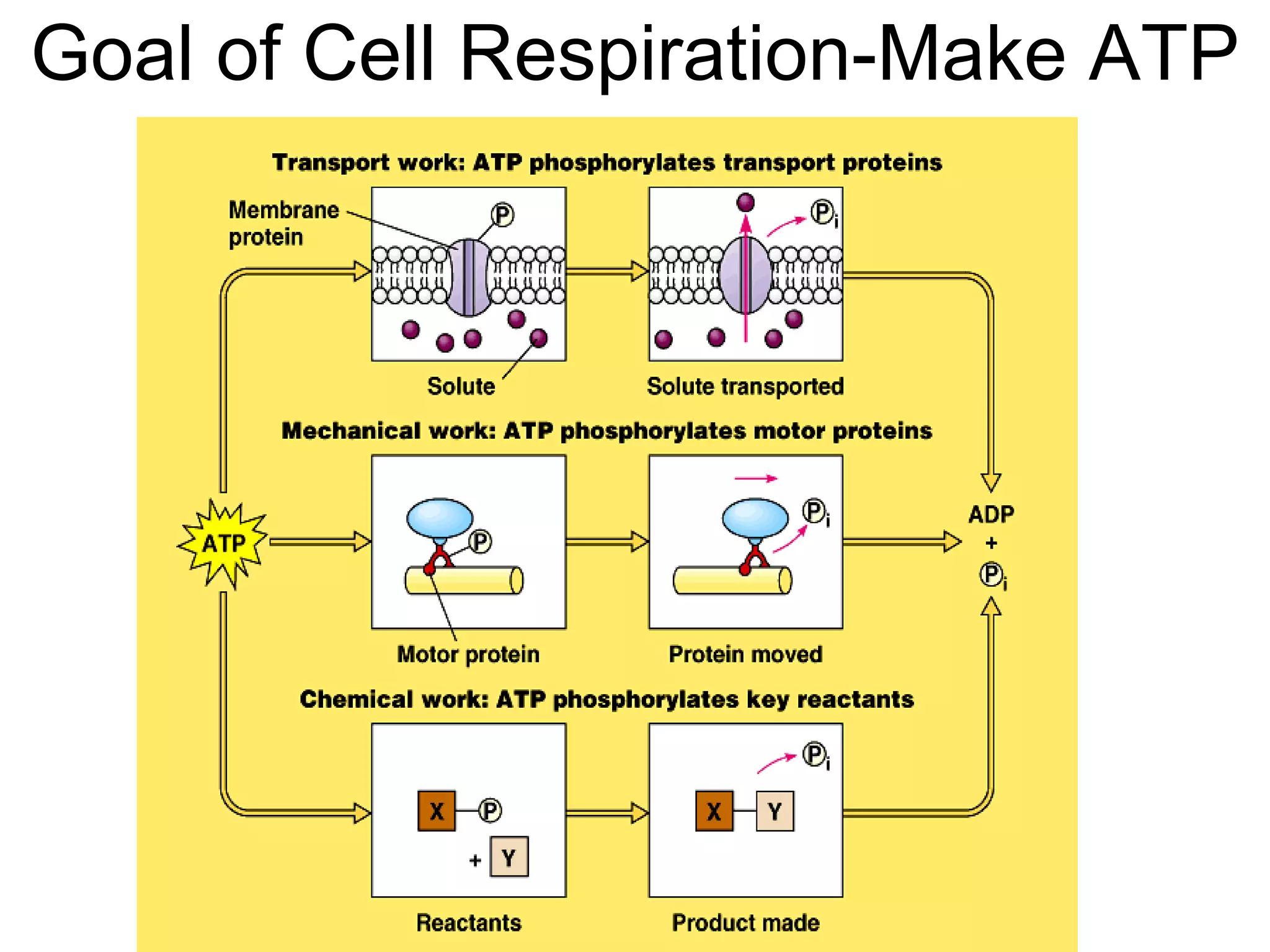
Goal of Cell Respiration-Make ATP
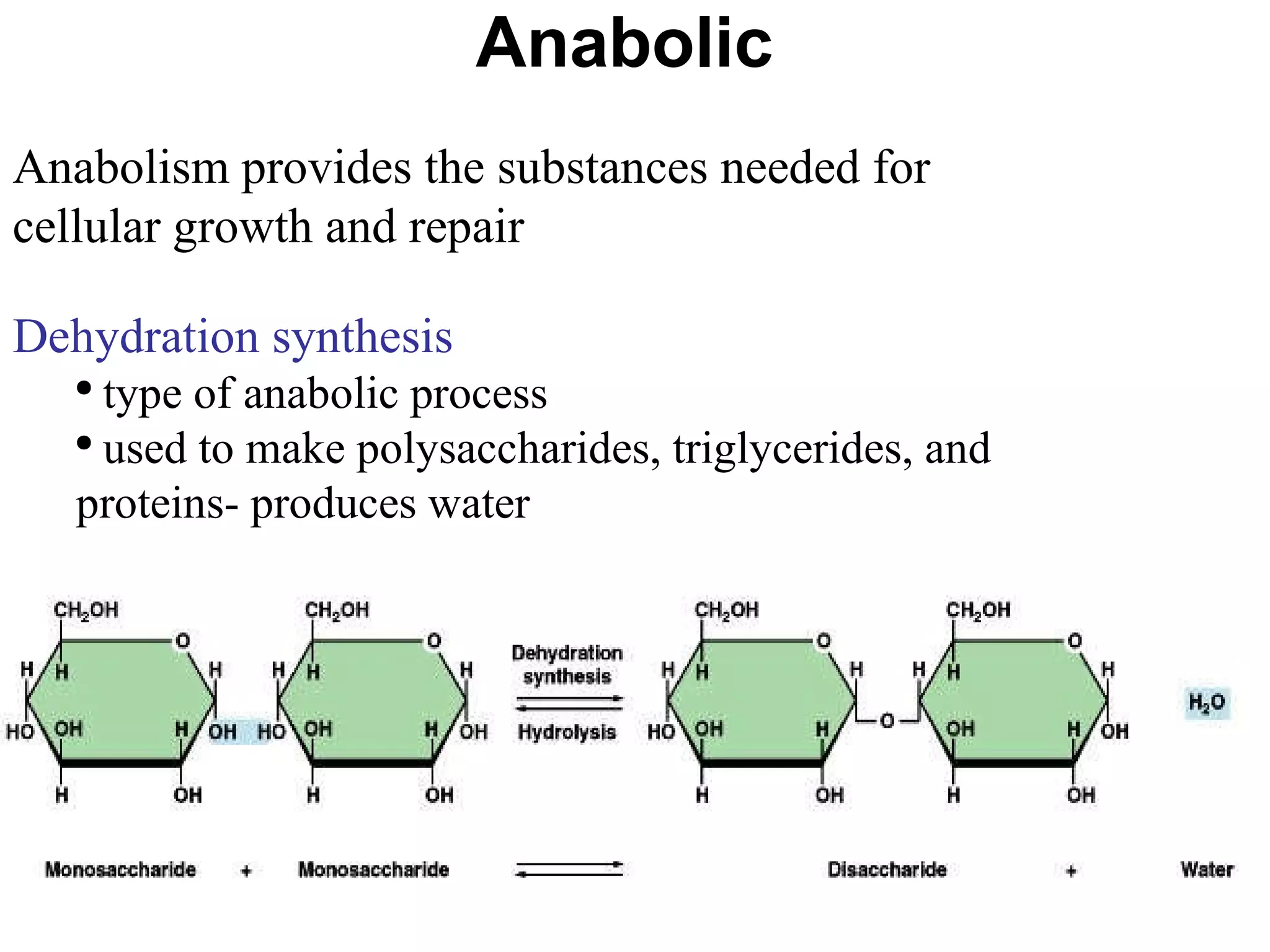
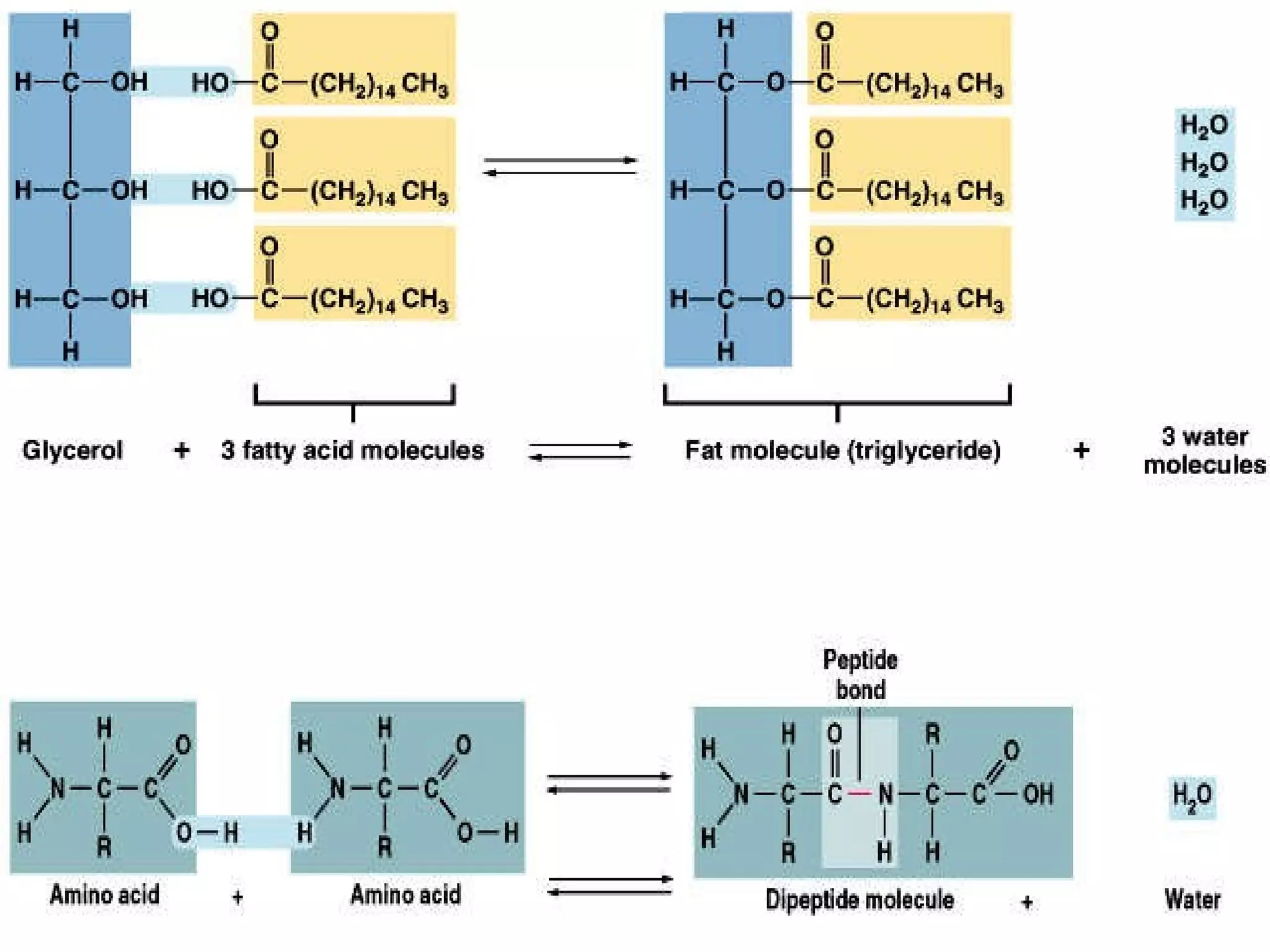
Anabolic Anabolism provides the substances needed for cellular growth and repair  Dehydration synthesis  type of anabolic process used to make polysaccharides, triglycerides, and proteins- produces water
 
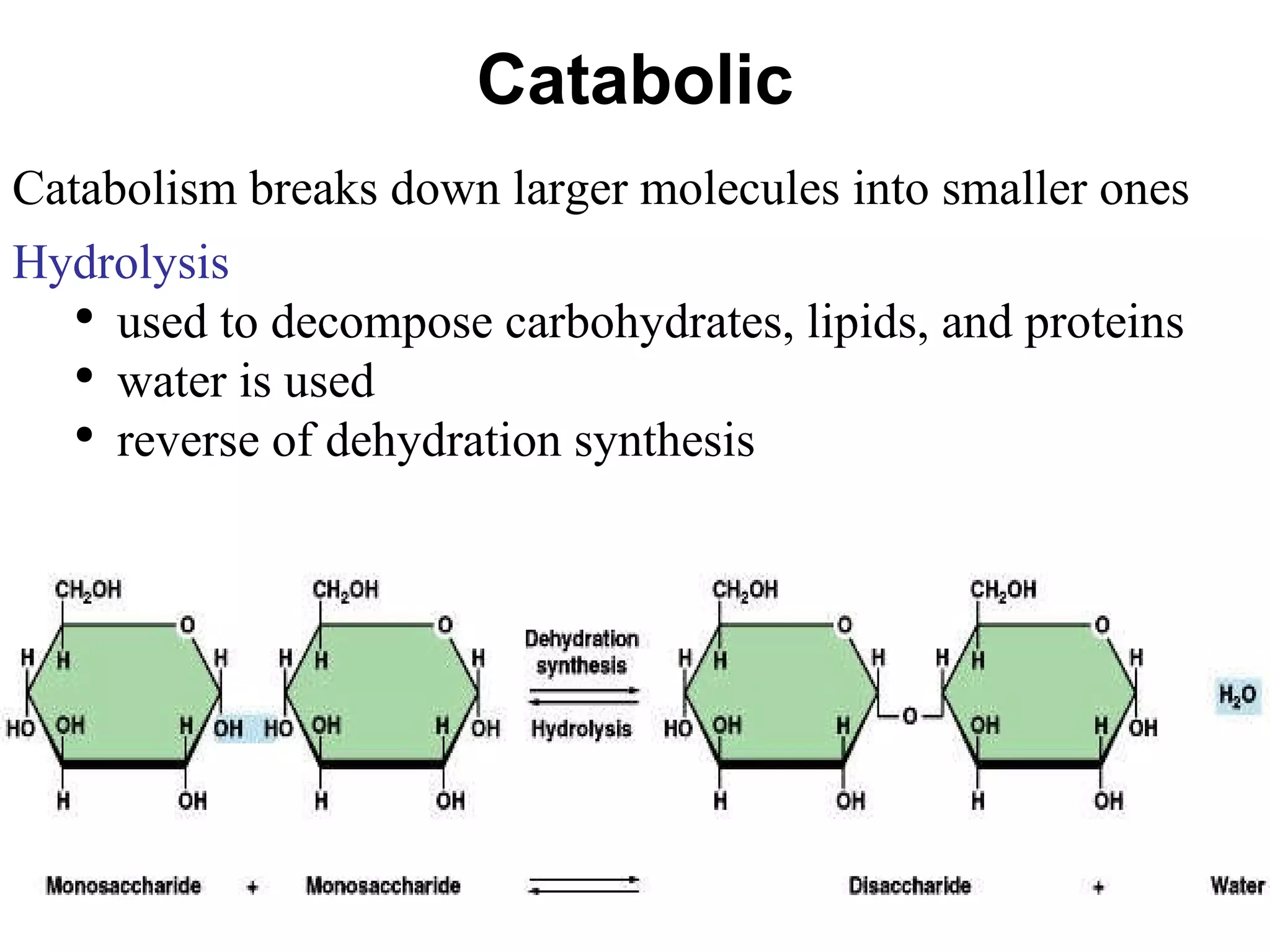
Catabolic Catabolism breaks down larger molecules into smaller ones Hydrolysis used to decompose carbohydrates, lipids, and proteins water is used reverse of dehydration synthesis
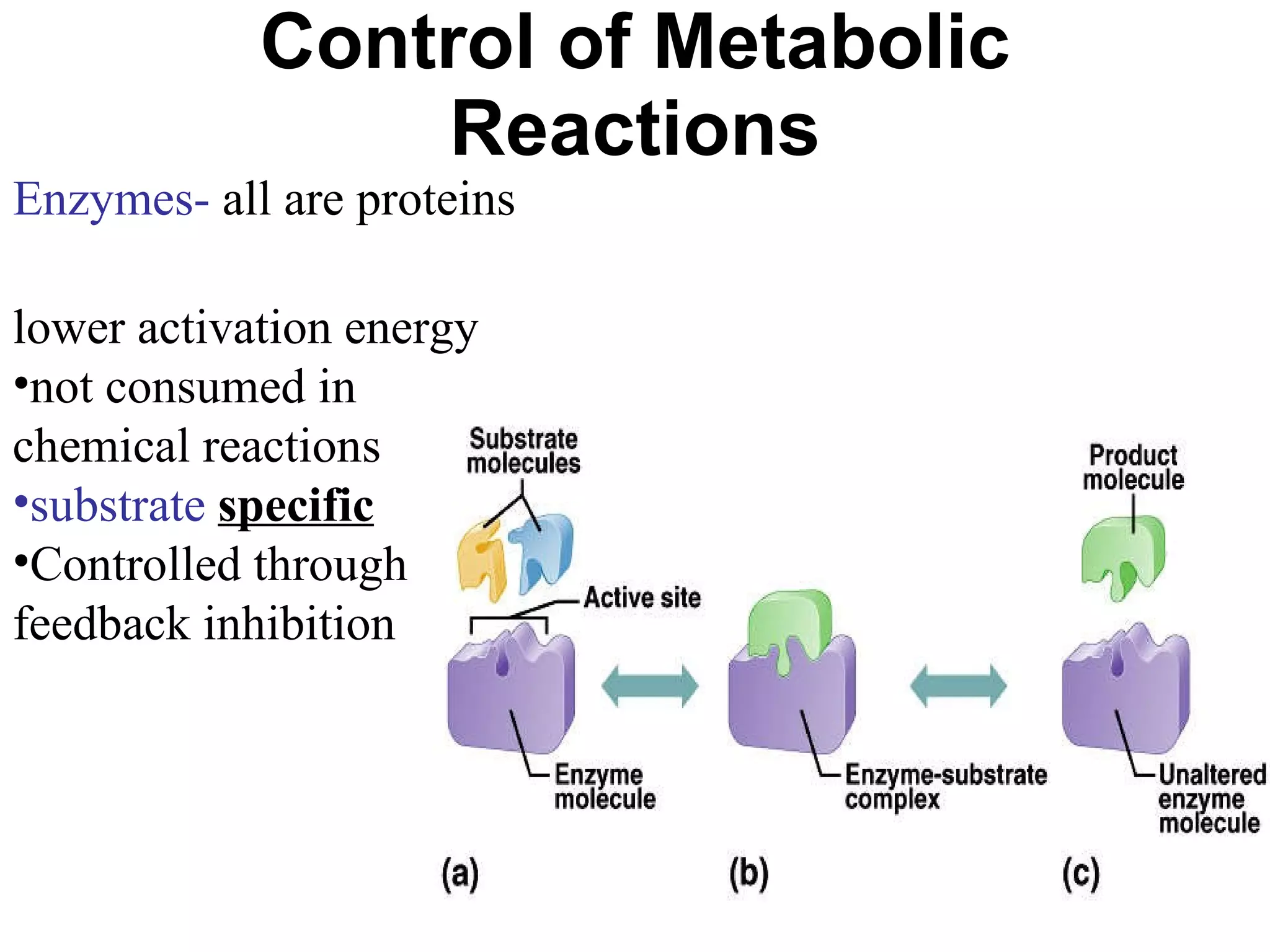
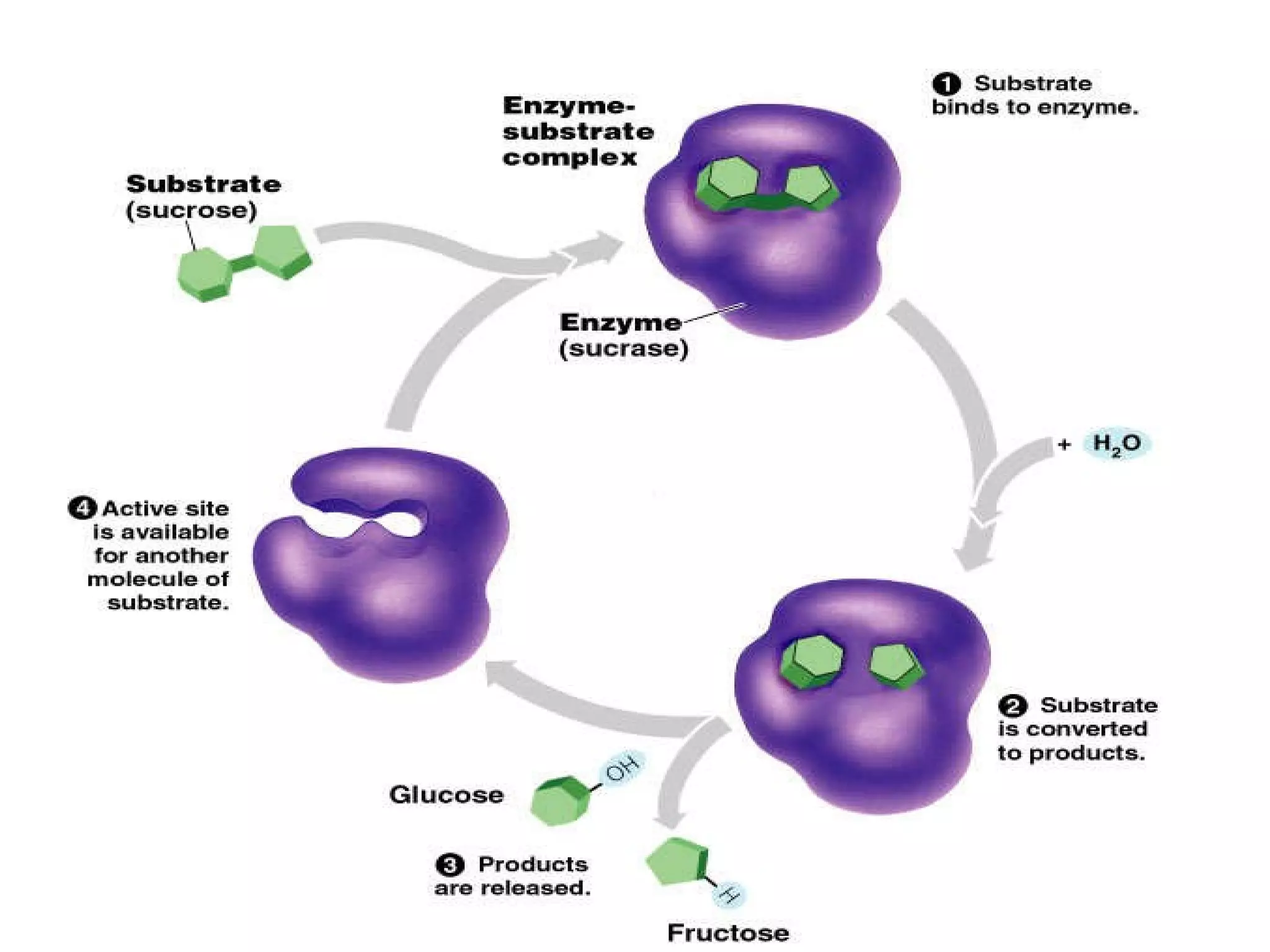
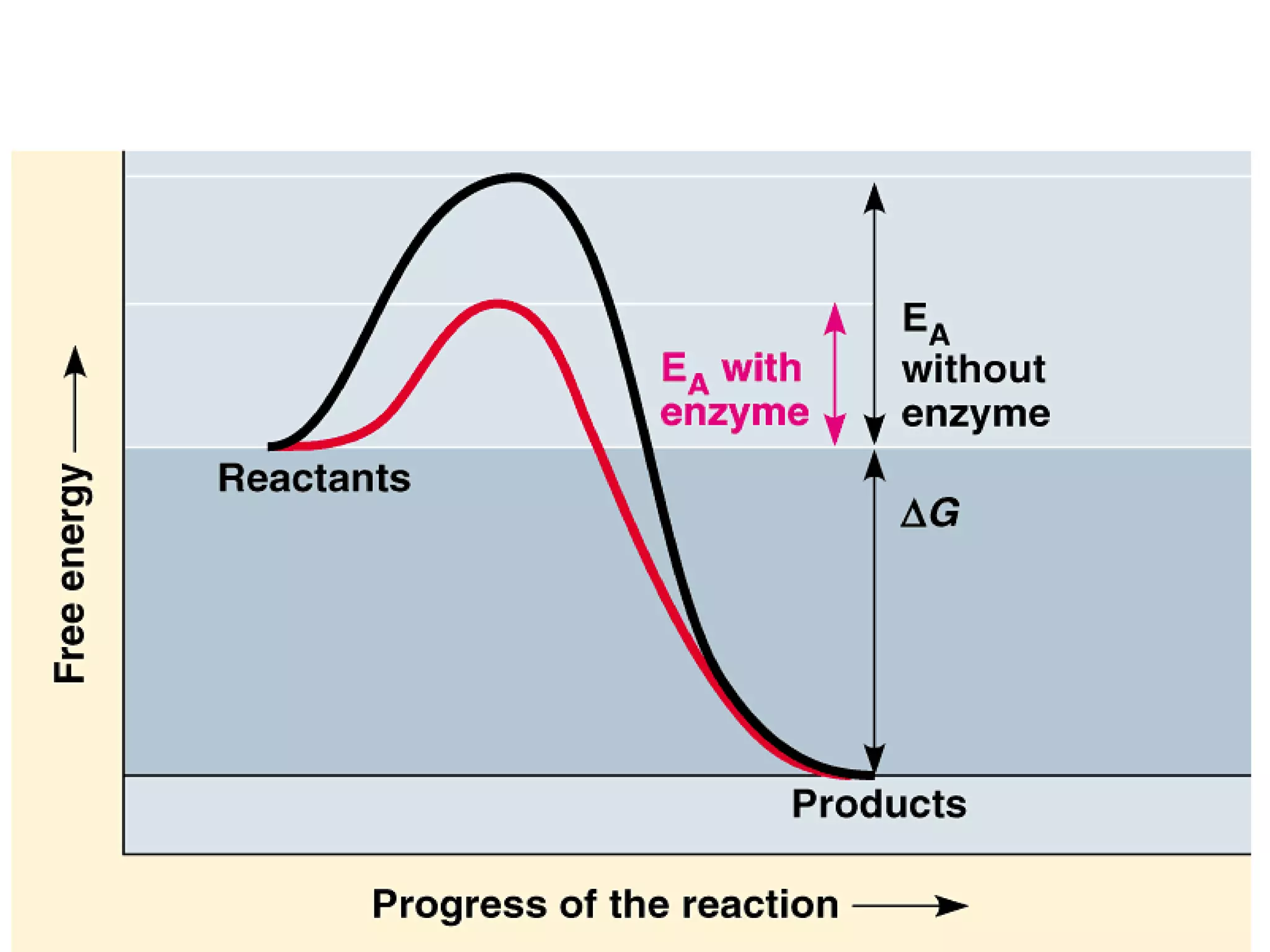
Control of Metabolic Reactions Enzymes-  all are proteins lower activation energy not consumed in chemical reactions substrate   specific Controlled through feedback inhibition
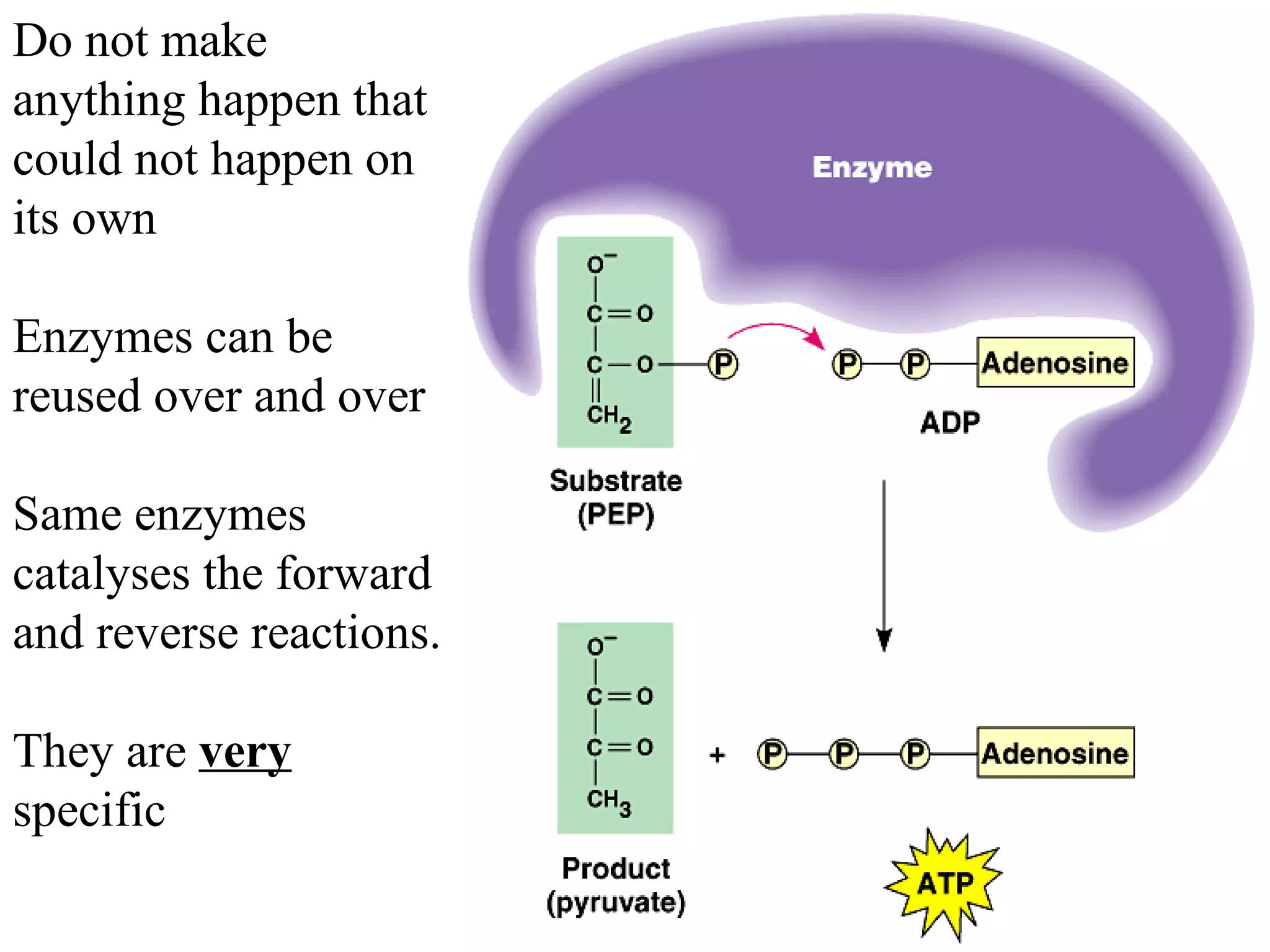
Do not make anything happen that could not happen on its own Enzymes can be reused over and over Same enzymes catalyses the forward and reverse reactions.  They are  very  specific
 
 
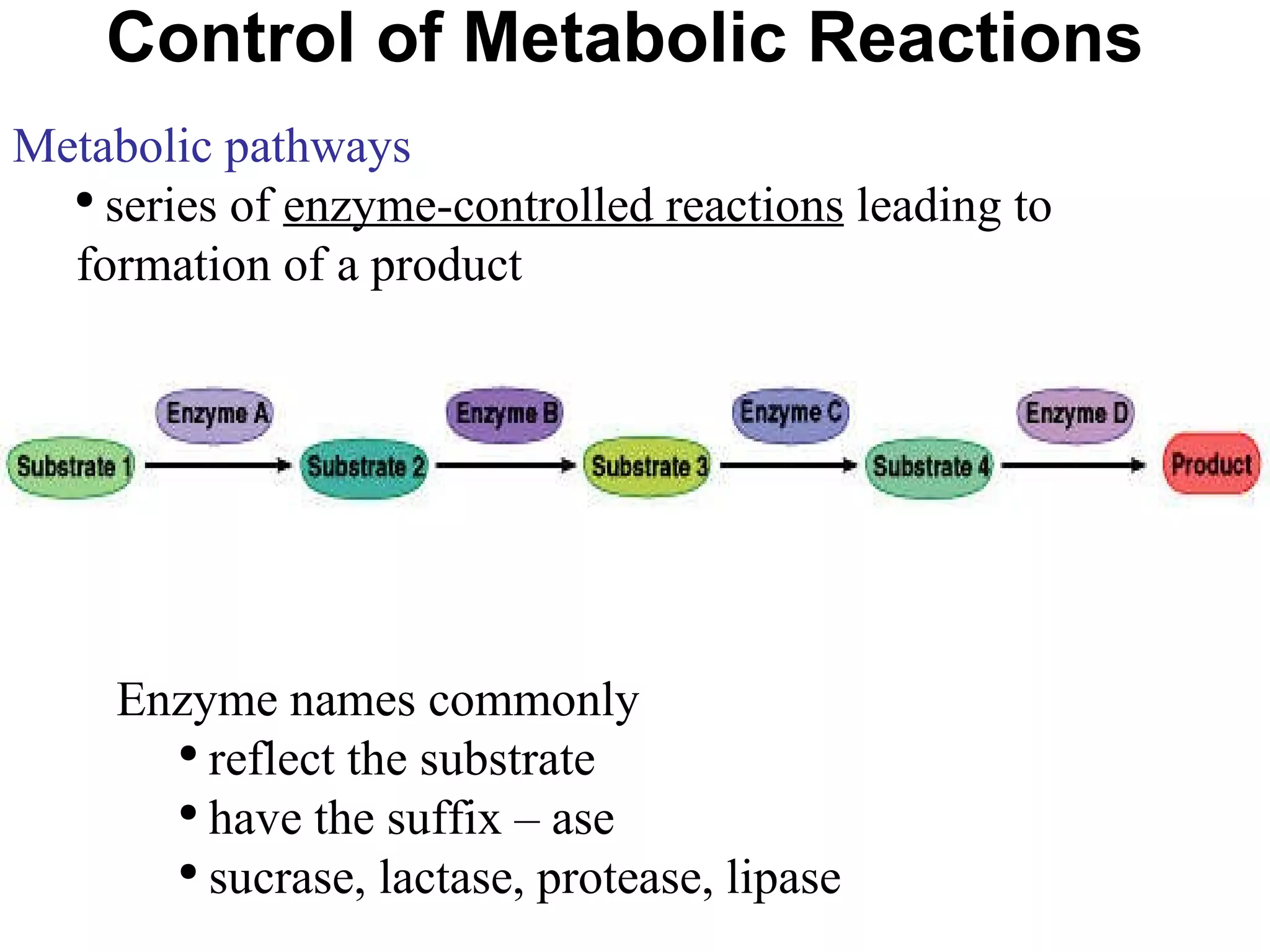
Control of Metabolic Reactions Metabolic pathways series of  enzyme-controlled reactions  leading to formation of a product Enzyme names commonly reflect the substrate have the suffix – ase sucrase, lactase, protease, lipase
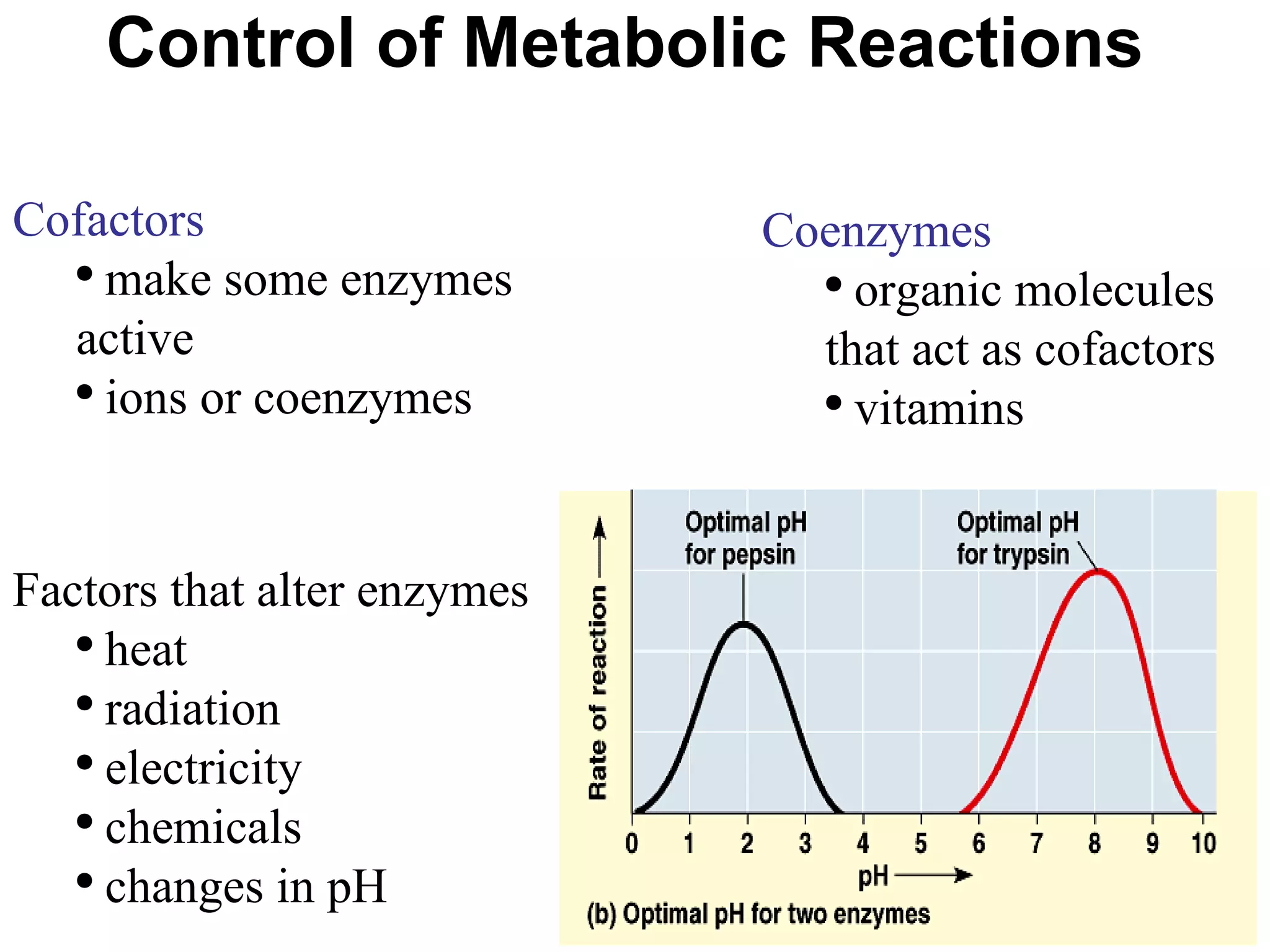
Control of Metabolic Reactions Cofactors  make some enzymes active ions or coenzymes Coenzymes organic molecules that act as cofactors vitamins Factors that alter enzymes heat radiation electricity chemicals changes in pH
Energy for Metabolic Reactions Energy ability to do work or change something heat, light, sound, electricity, mechanical energy, chemical energy involved in all metabolic reactions
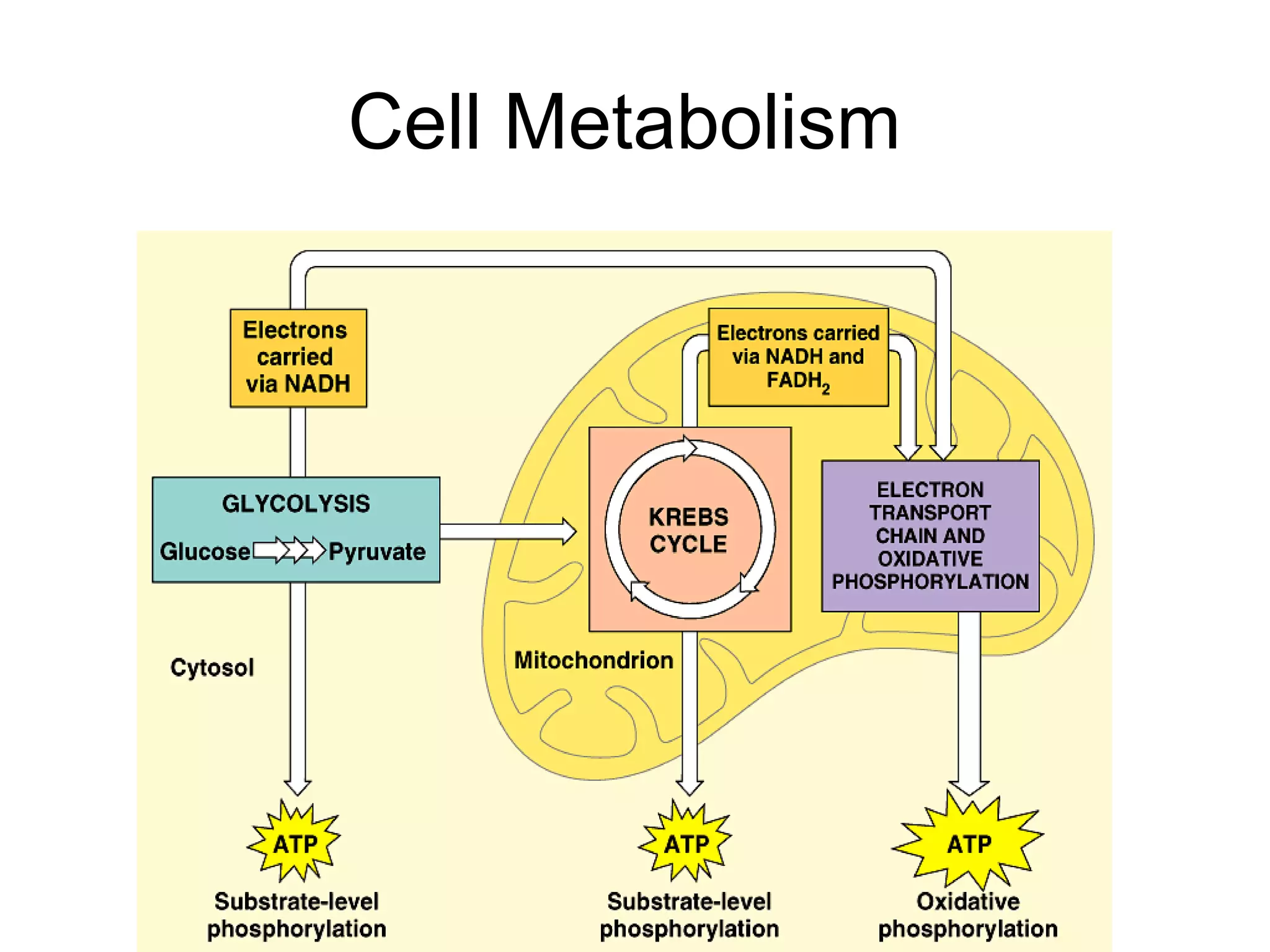
Cellular Respiration Occurs in three series of reactions Glycolysis Citric acid cycle Electron transport chain Produces carbon dioxide water ATP (chemical energy) heat Includes anaerobic reactions (without O 2 ) - produce little ATP aerobic reactions (requires O 2 ) - produce most ATP
 
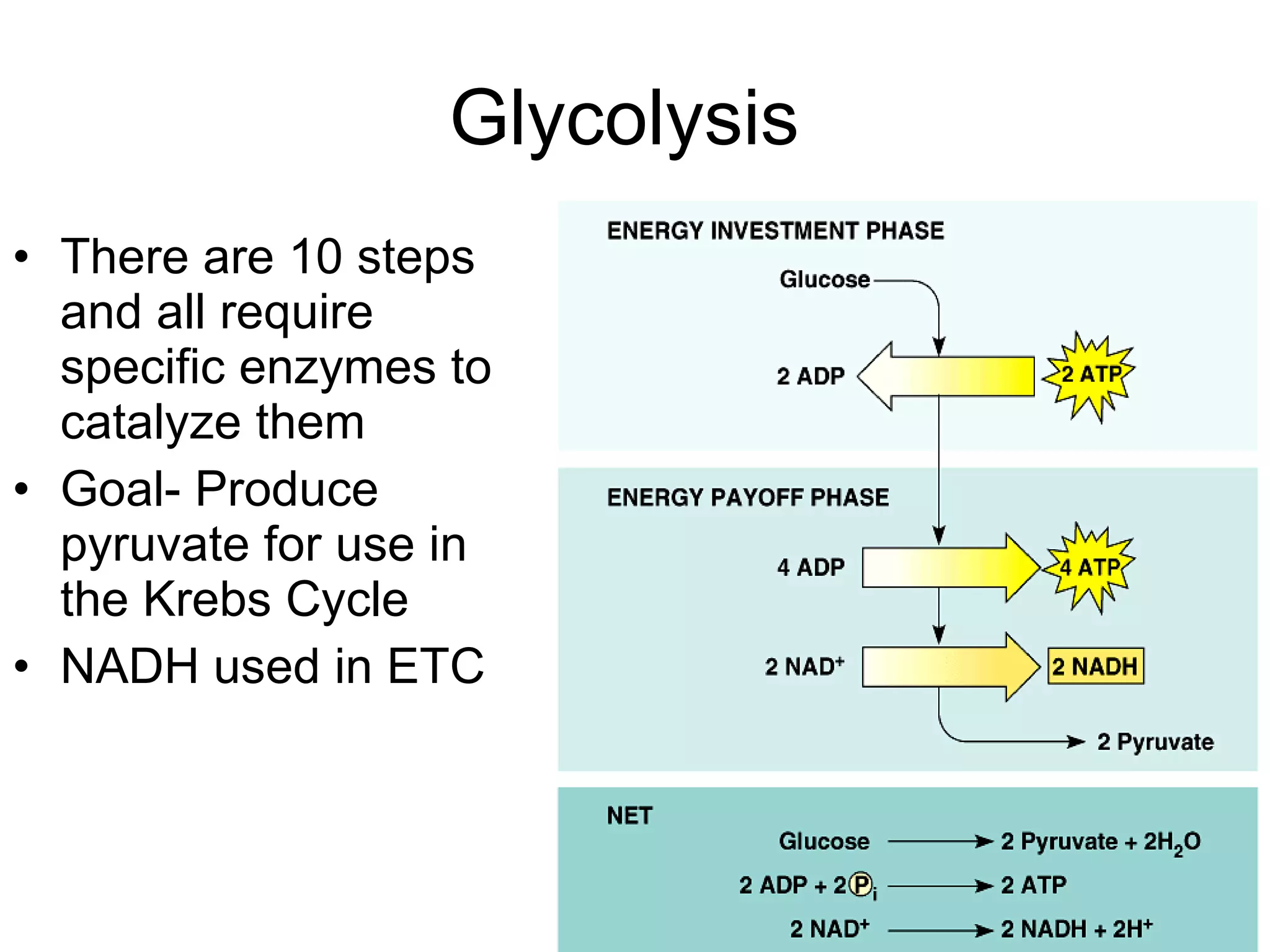
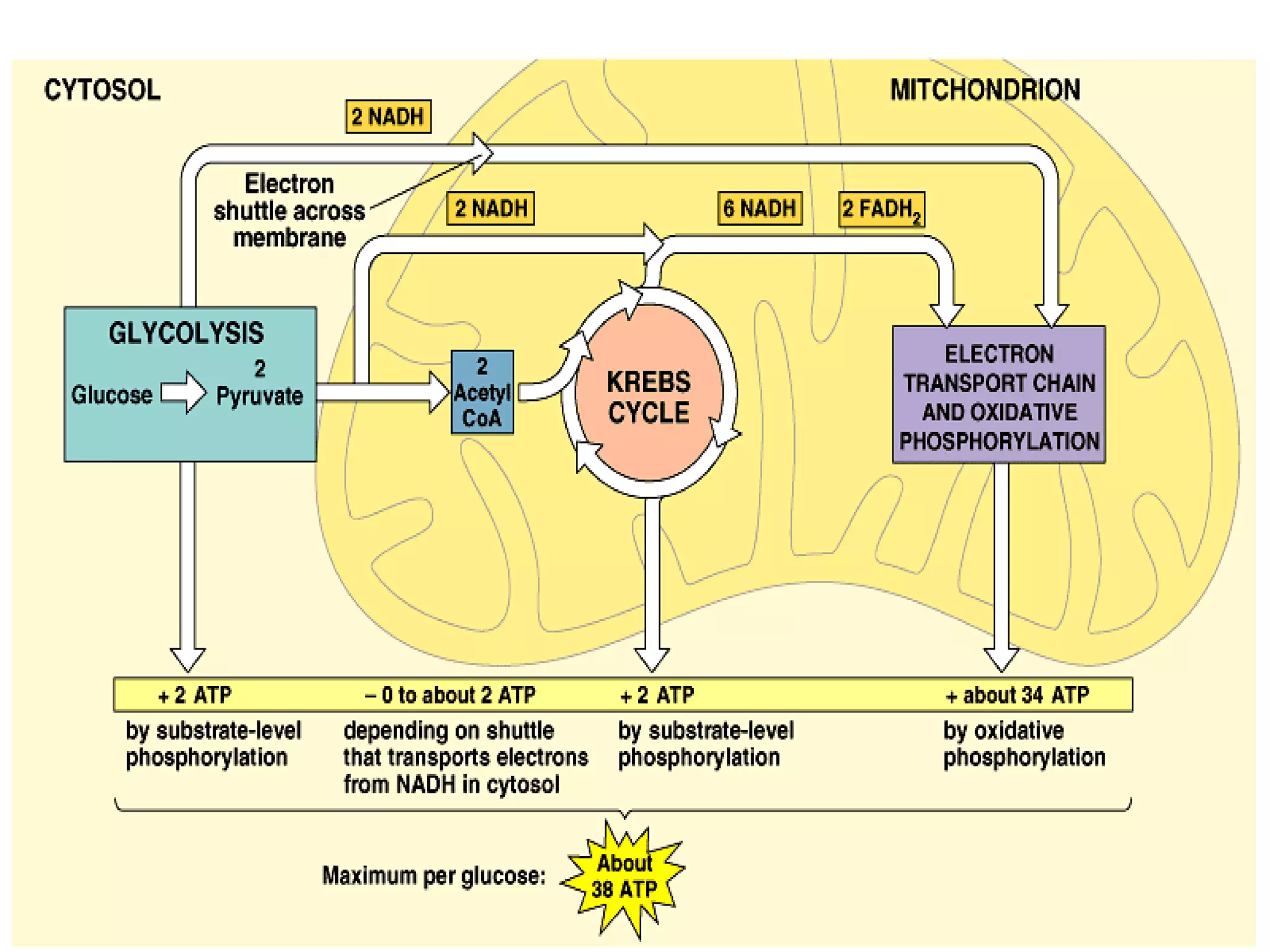
Glycolysis  There are 10 steps and all require specific enzymes to catalyze them Goal- Produce pyruvate for use in the Krebs Cycle NADH used in ETC
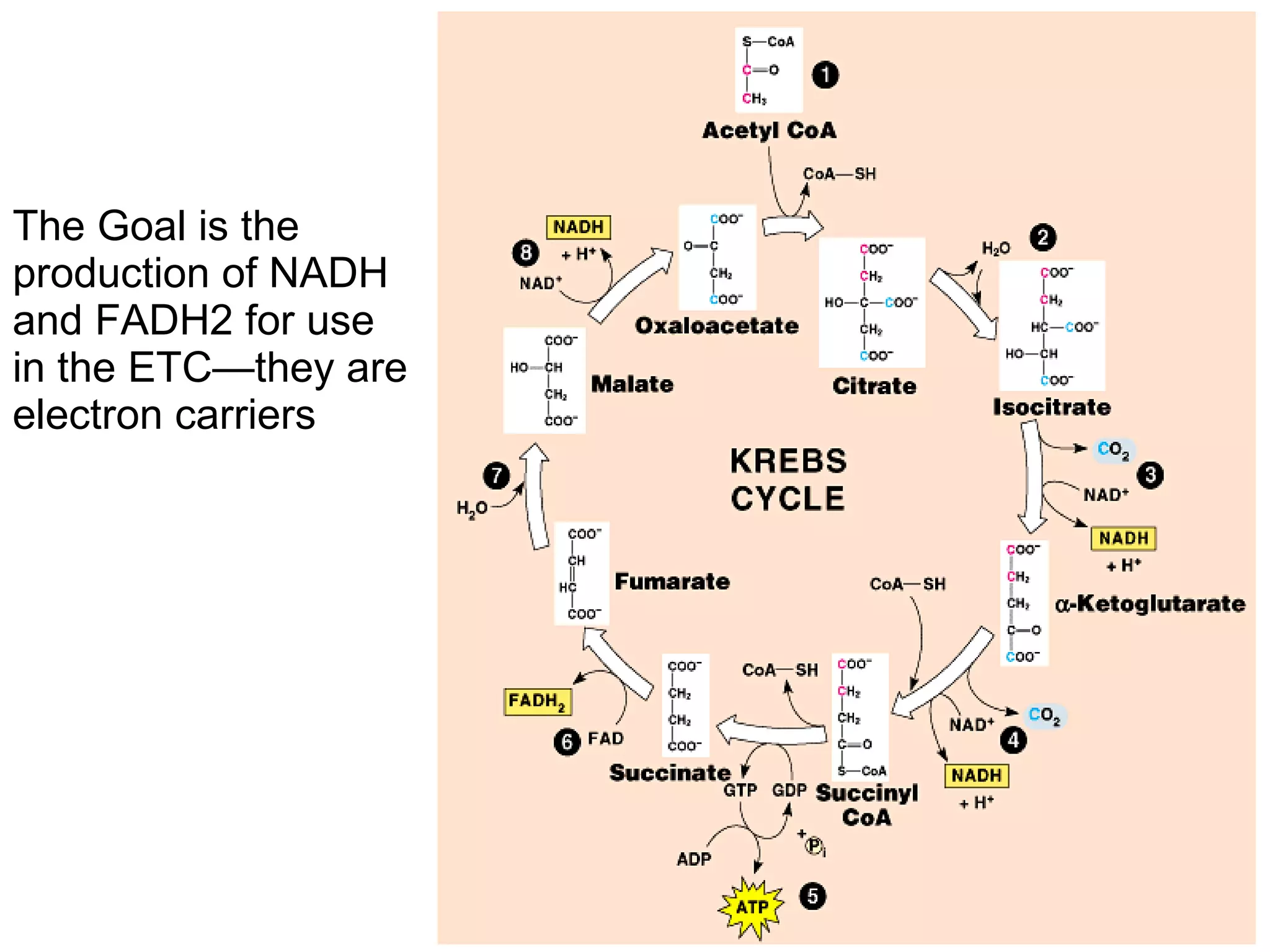
Citric Acid Cycle begins when acetyl CoA combines with oxaloacetic acid to produce citric acid citric acid is changed into oxaloacetic acid through a series of reactions cycle repeats as long as pyruvic acid and oxygen are available Makes 2 ATP 6 NADH and 2 FADH 2  BP- 4 CO 2
The Goal is the production of NADH and FADH2 for use in the ETC—they are electron carriers
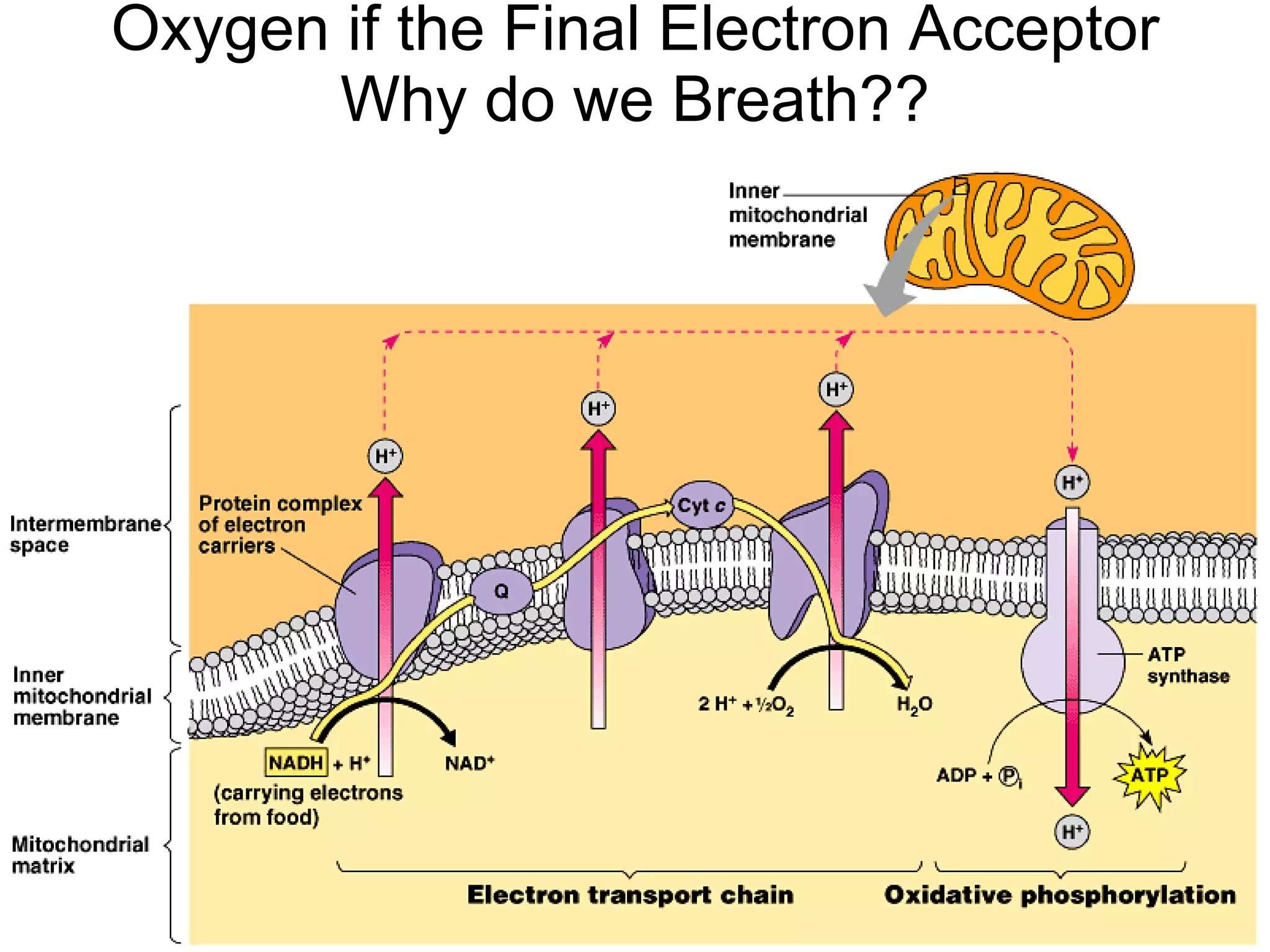
ETC So far only 4 of the 38 ATP that will be produced have been, all by substrate level phosphorylation.  The remaining will be produced by the ETC.  The majority of the ATP produced comes from the energy carried in the electrons of NADH (and FADH 2 ) that were produced by the Krebs Cycle. 6 NADH and 2 FADH 2 The energy in these electrons is used in the ETC to power the synthesis of ATP. There are thousands of ETC’s found in each mitochondria, which can number in the 100’s depending on the cell type .
Oxygen if the Final Electron Acceptor Why do we Breath??
 
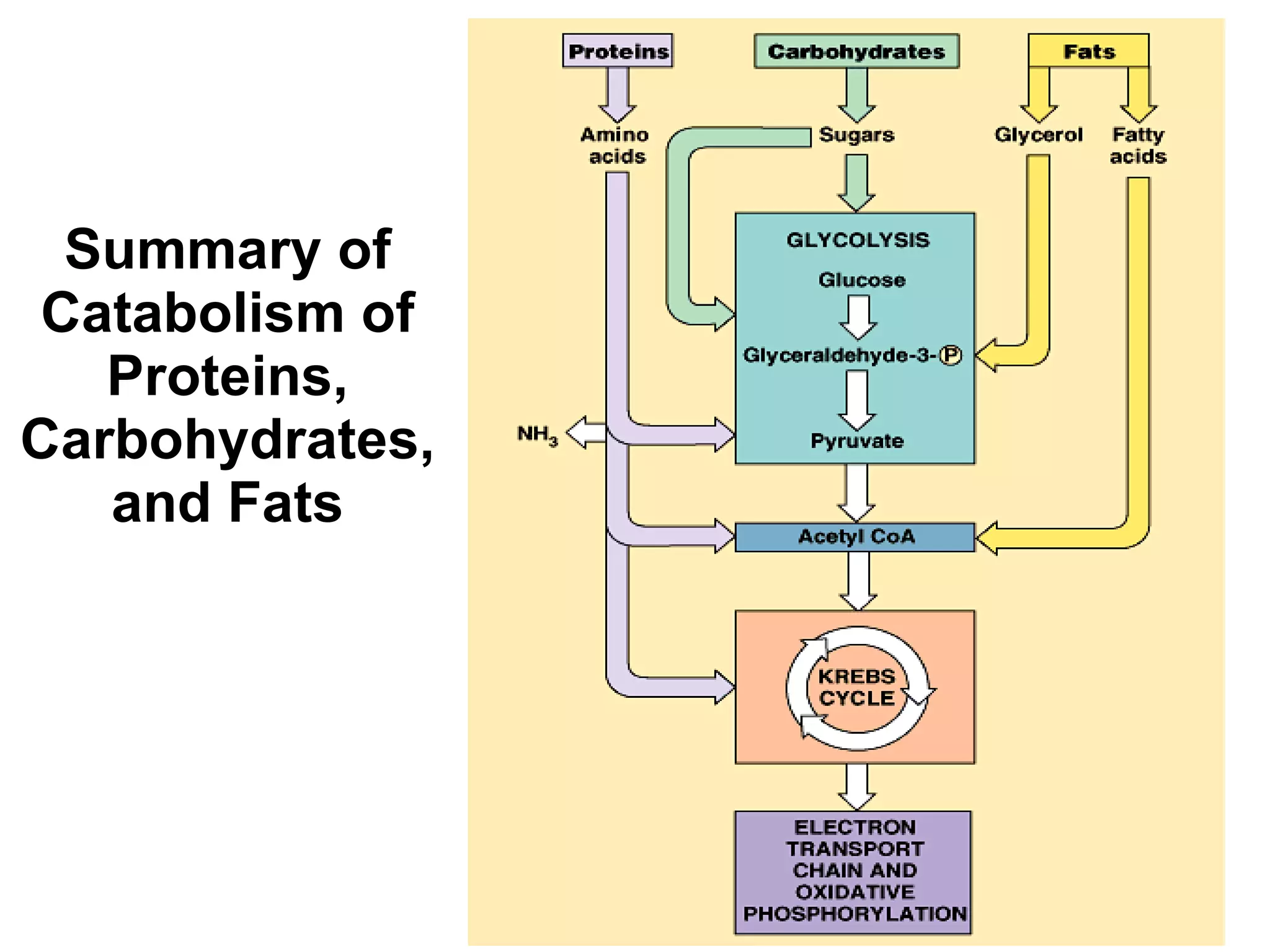
Summary of Catabolism of Proteins, Carbohydrates, and Fats 4-21
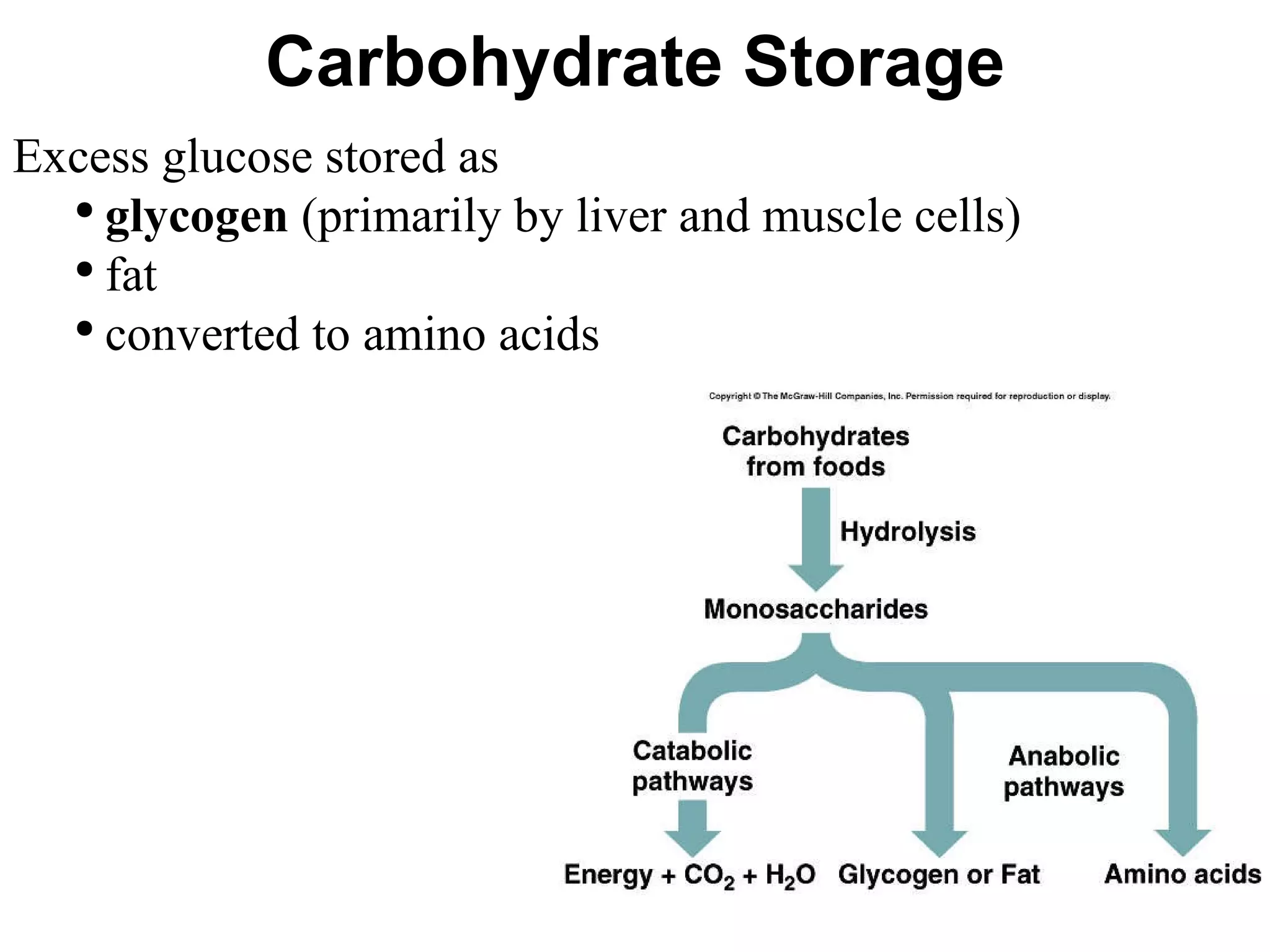
Carbohydrate Storage Excess glucose stored as  glycogen  (primarily by liver and muscle cells) fat converted to amino acids
Regulation of Metabolic Pathways Turned off when their product is in strong supply Works by supply and demand  4-23
Nucleic Acids and  Protein Synthesis Gene  – segment of DNA that codes for one protein Genome  – complete set of genes
The Central Dogma It is all about Proteins!!! DNA  contains the information needed to build these life giving proteins in a code on segments called genes. One gene can code for more than one protein?
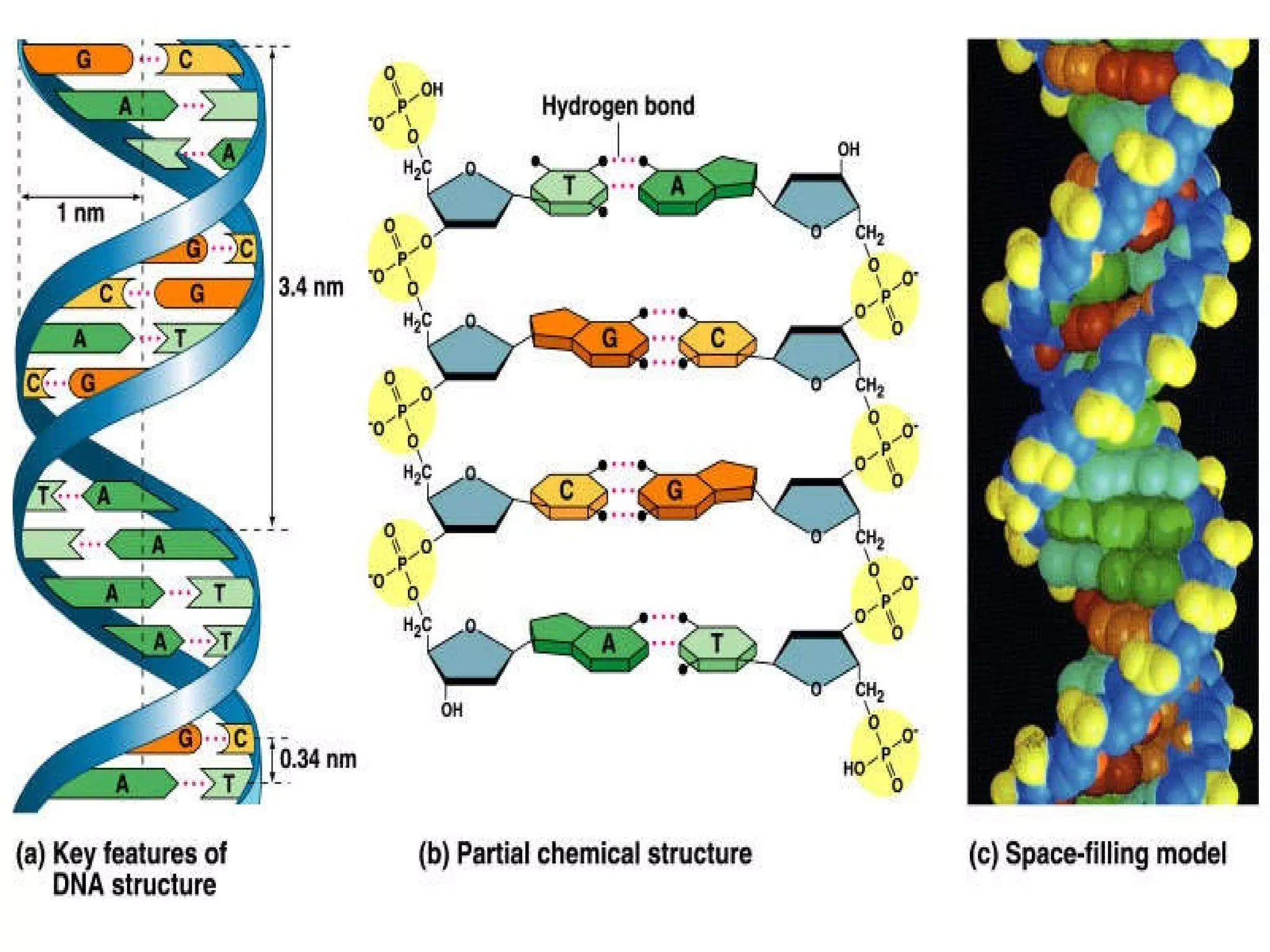
Structure of DNA two polynucleotide chains hydrogen bonds hold nitrogenous bases together bases pair specifically (A-T and C-G) forms a helix DNA wrapped about histones forms chromosomes
 
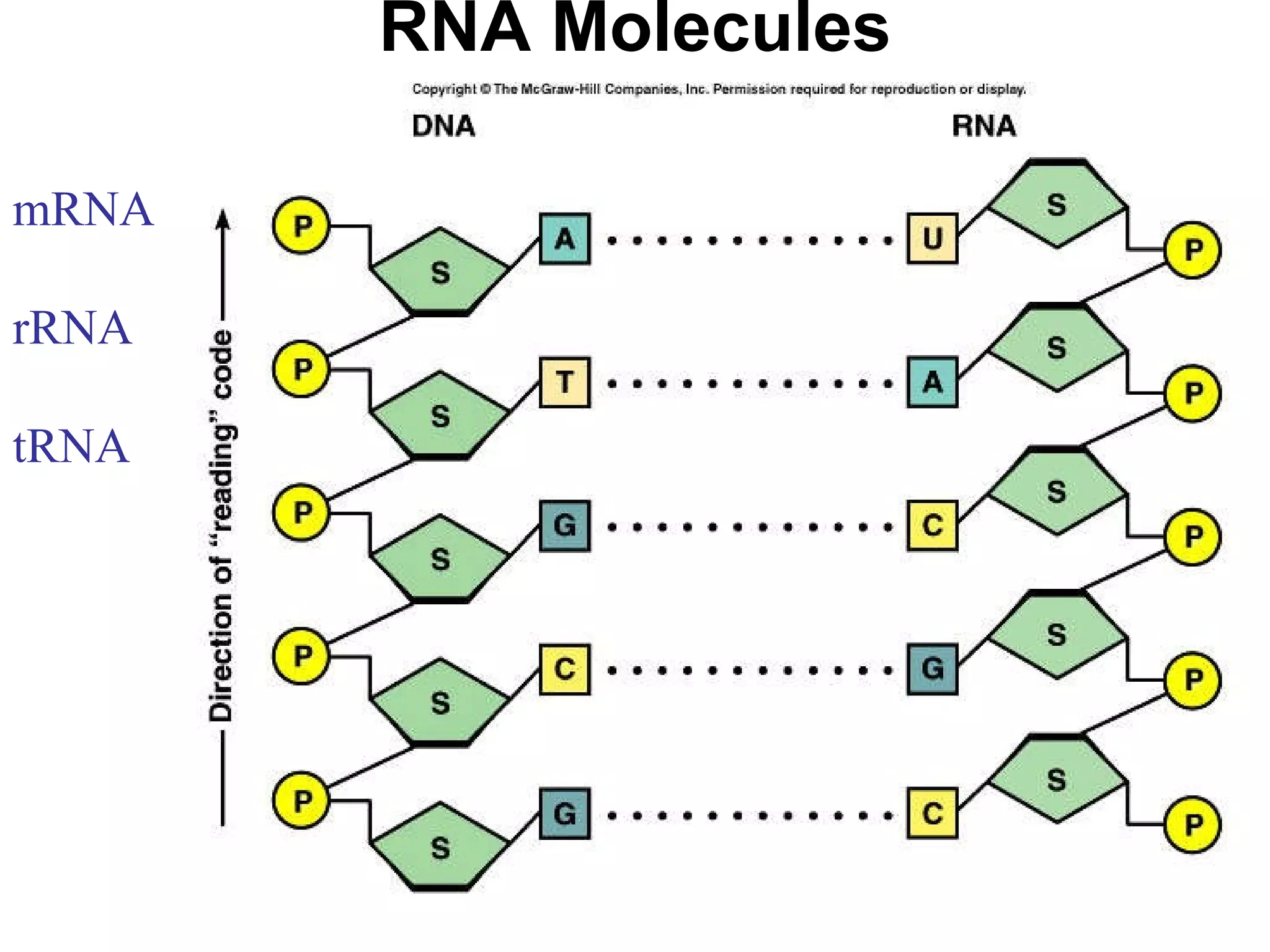
RNA Molecules mRNA rRNA tRNA
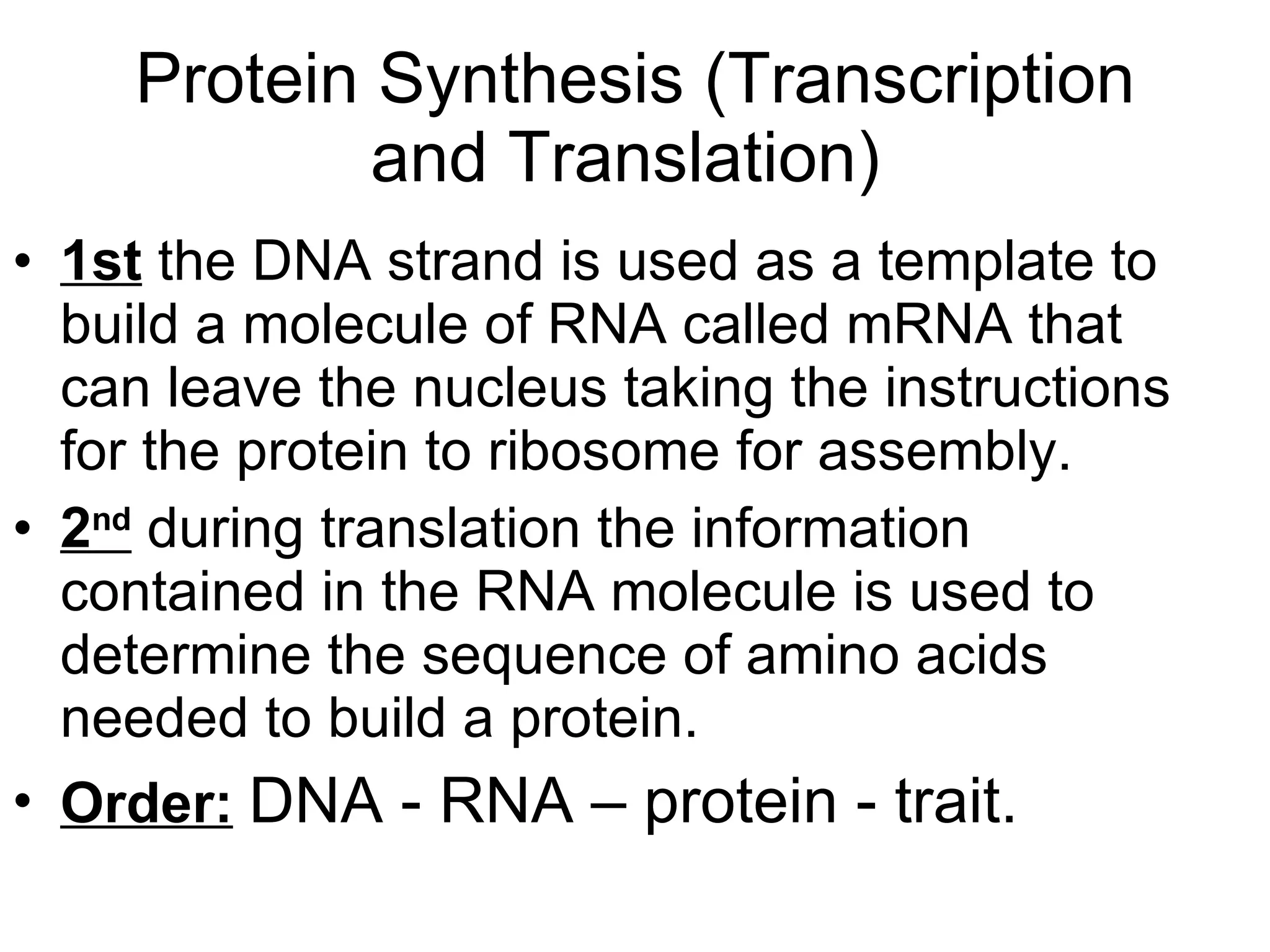
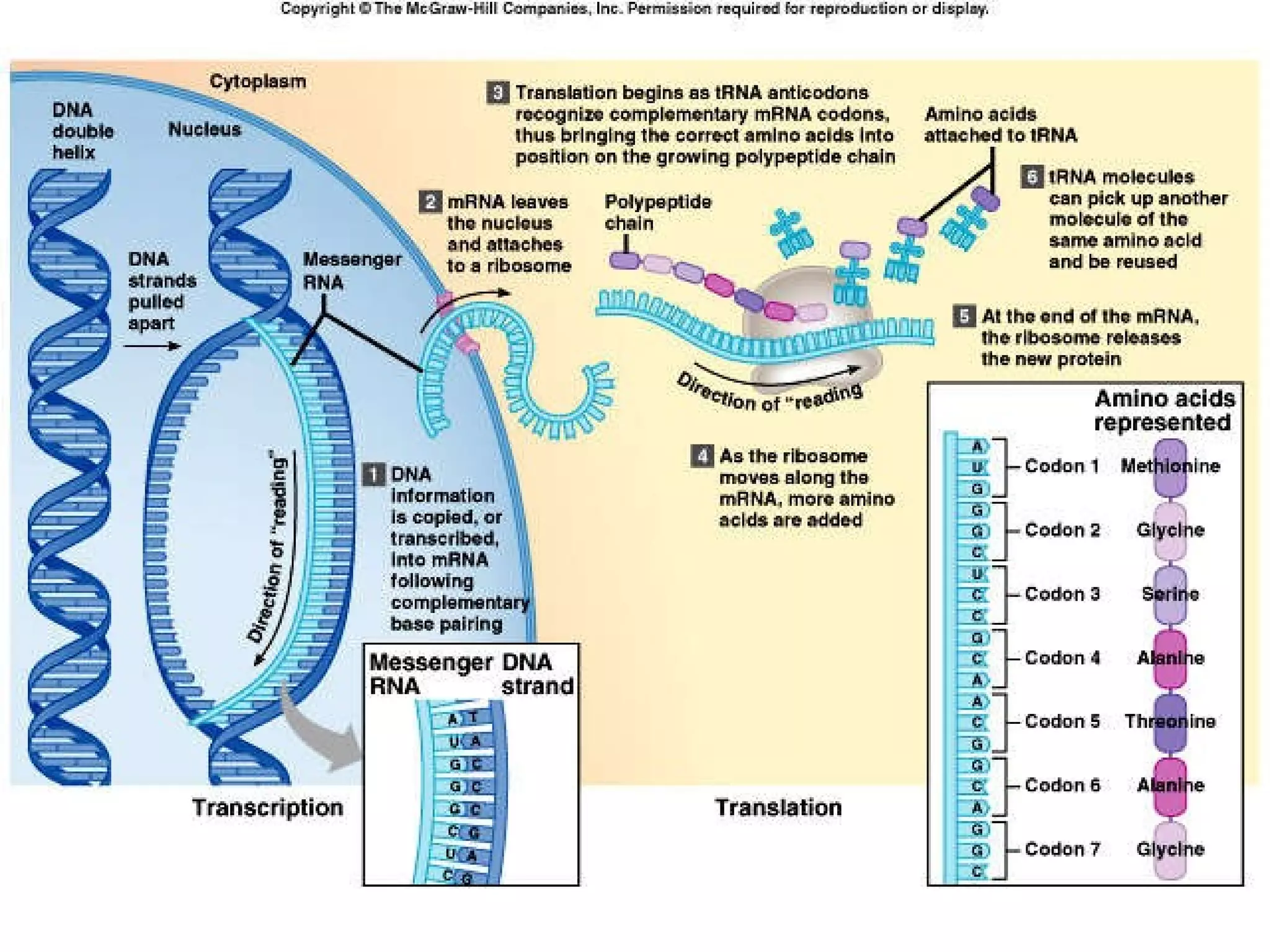
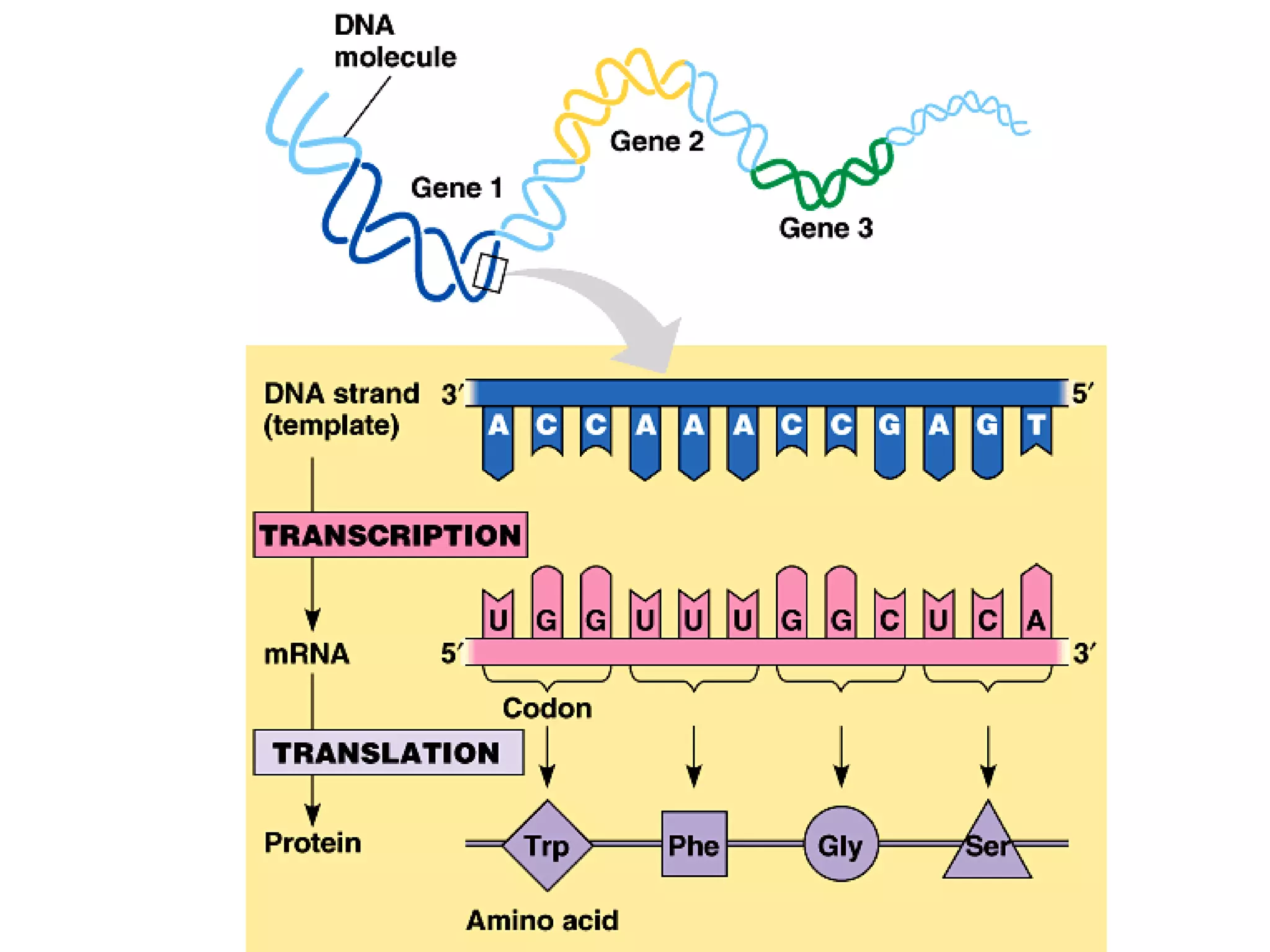
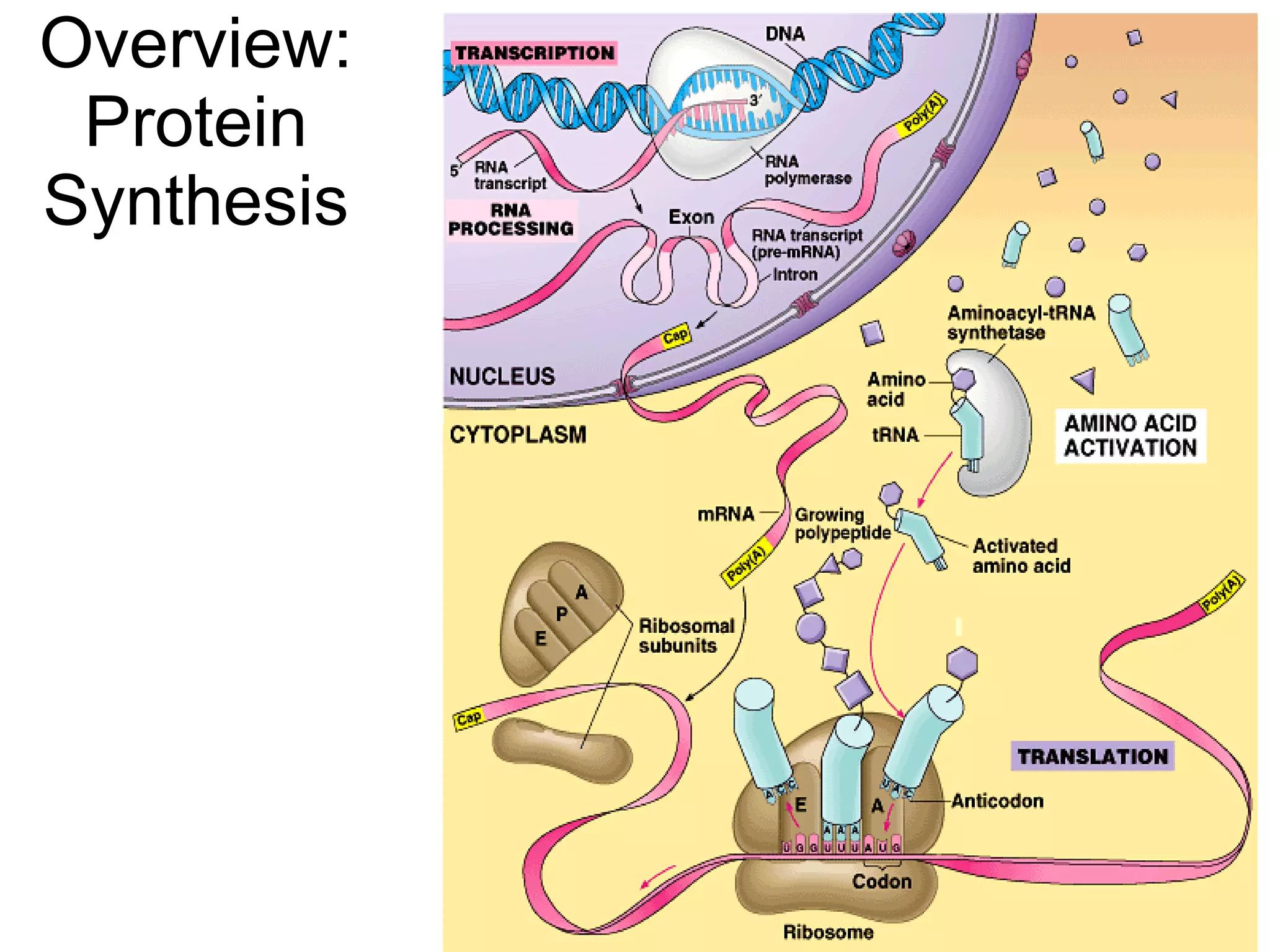
Protein Synthesis (Transcription and Translation)  1st  the DNA strand is used as a template to build a molecule of RNA called mRNA that can leave the nucleus taking the instructions for the protein to ribosome for assembly. 2 nd  during translation the information contained in the RNA molecule is used to determine the sequence of amino acids needed to build a protein.  Order:   DNA - RNA – protein - trait.
 
 
Translation
Overview: Protein Synthesis
DNA Replication
Mutations Mutations  – change in genetic information Result when  extra bases are added or deleted bases are changed May or may not change the protein Some good some bad
Clinical Application Phenylketonuria PKU enzyme that breaks down the amino acid phenylalanine is missing build up of phenylalanine causes mental retardation treated by diets very low in phenylalanine

Cell metabolism

  • 1.
  • 2.
    Cell Respiration (Metabolism)Cellular Respiration- is a metabolic process used to obtain energy from organic compounds or food can run under aerobic and anaerobic conditions. catabolic pathway. occurs in the cytoplasm and mitochondria 3 main steps: Glycolysis and the Kreb Cycle , also known as the citric acid cycle and tricarboxylic acid cycle, and the ETC (electron transport chain)
  • 3.
    Cellular Metabolism Metabolism – all chemical reactions that occur in the body Two types of metabolic reactions Anabolic Catabolic
  • 4.
    Goal of CellRespiration-Make ATP
  • 5.
    Anabolic Anabolism providesthe substances needed for cellular growth and repair Dehydration synthesis type of anabolic process used to make polysaccharides, triglycerides, and proteins- produces water
  • 6.
  • 7.
    Catabolic Catabolism breaksdown larger molecules into smaller ones Hydrolysis used to decompose carbohydrates, lipids, and proteins water is used reverse of dehydration synthesis
  • 8.
    Control of MetabolicReactions Enzymes- all are proteins lower activation energy not consumed in chemical reactions substrate specific Controlled through feedback inhibition
  • 9.
    Do not makeanything happen that could not happen on its own Enzymes can be reused over and over Same enzymes catalyses the forward and reverse reactions. They are very specific
  • 10.
  • 11.
  • 12.
    Control of MetabolicReactions Metabolic pathways series of enzyme-controlled reactions leading to formation of a product Enzyme names commonly reflect the substrate have the suffix – ase sucrase, lactase, protease, lipase
  • 13.
    Control of MetabolicReactions Cofactors make some enzymes active ions or coenzymes Coenzymes organic molecules that act as cofactors vitamins Factors that alter enzymes heat radiation electricity chemicals changes in pH
  • 14.
    Energy for MetabolicReactions Energy ability to do work or change something heat, light, sound, electricity, mechanical energy, chemical energy involved in all metabolic reactions
  • 15.
    Cellular Respiration Occursin three series of reactions Glycolysis Citric acid cycle Electron transport chain Produces carbon dioxide water ATP (chemical energy) heat Includes anaerobic reactions (without O 2 ) - produce little ATP aerobic reactions (requires O 2 ) - produce most ATP
  • 16.
  • 17.
    Glycolysis Thereare 10 steps and all require specific enzymes to catalyze them Goal- Produce pyruvate for use in the Krebs Cycle NADH used in ETC
  • 18.
    Citric Acid Cyclebegins when acetyl CoA combines with oxaloacetic acid to produce citric acid citric acid is changed into oxaloacetic acid through a series of reactions cycle repeats as long as pyruvic acid and oxygen are available Makes 2 ATP 6 NADH and 2 FADH 2 BP- 4 CO 2
  • 19.
    The Goal isthe production of NADH and FADH2 for use in the ETC—they are electron carriers
  • 20.
    ETC So faronly 4 of the 38 ATP that will be produced have been, all by substrate level phosphorylation. The remaining will be produced by the ETC. The majority of the ATP produced comes from the energy carried in the electrons of NADH (and FADH 2 ) that were produced by the Krebs Cycle. 6 NADH and 2 FADH 2 The energy in these electrons is used in the ETC to power the synthesis of ATP. There are thousands of ETC’s found in each mitochondria, which can number in the 100’s depending on the cell type .
  • 21.
    Oxygen if theFinal Electron Acceptor Why do we Breath??
  • 22.
  • 23.
    Summary of Catabolismof Proteins, Carbohydrates, and Fats 4-21
  • 24.
    Carbohydrate Storage Excessglucose stored as glycogen (primarily by liver and muscle cells) fat converted to amino acids
  • 25.
    Regulation of MetabolicPathways Turned off when their product is in strong supply Works by supply and demand 4-23
  • 26.
    Nucleic Acids and Protein Synthesis Gene – segment of DNA that codes for one protein Genome – complete set of genes
  • 27.
    The Central DogmaIt is all about Proteins!!! DNA contains the information needed to build these life giving proteins in a code on segments called genes. One gene can code for more than one protein?
  • 28.
    Structure of DNAtwo polynucleotide chains hydrogen bonds hold nitrogenous bases together bases pair specifically (A-T and C-G) forms a helix DNA wrapped about histones forms chromosomes
  • 29.
  • 30.
  • 31.
    Protein Synthesis (Transcriptionand Translation) 1st the DNA strand is used as a template to build a molecule of RNA called mRNA that can leave the nucleus taking the instructions for the protein to ribosome for assembly. 2 nd during translation the information contained in the RNA molecule is used to determine the sequence of amino acids needed to build a protein. Order: DNA - RNA – protein - trait.
  • 32.
  • 33.
  • 34.
  • 35.
  • 36.
  • 37.
    Mutations Mutations – change in genetic information Result when extra bases are added or deleted bases are changed May or may not change the protein Some good some bad
  • 38.
    Clinical Application PhenylketonuriaPKU enzyme that breaks down the amino acid phenylalanine is missing build up of phenylalanine causes mental retardation treated by diets very low in phenylalanine