Classification of ArticulationsBy Sadie Gordon & Bob
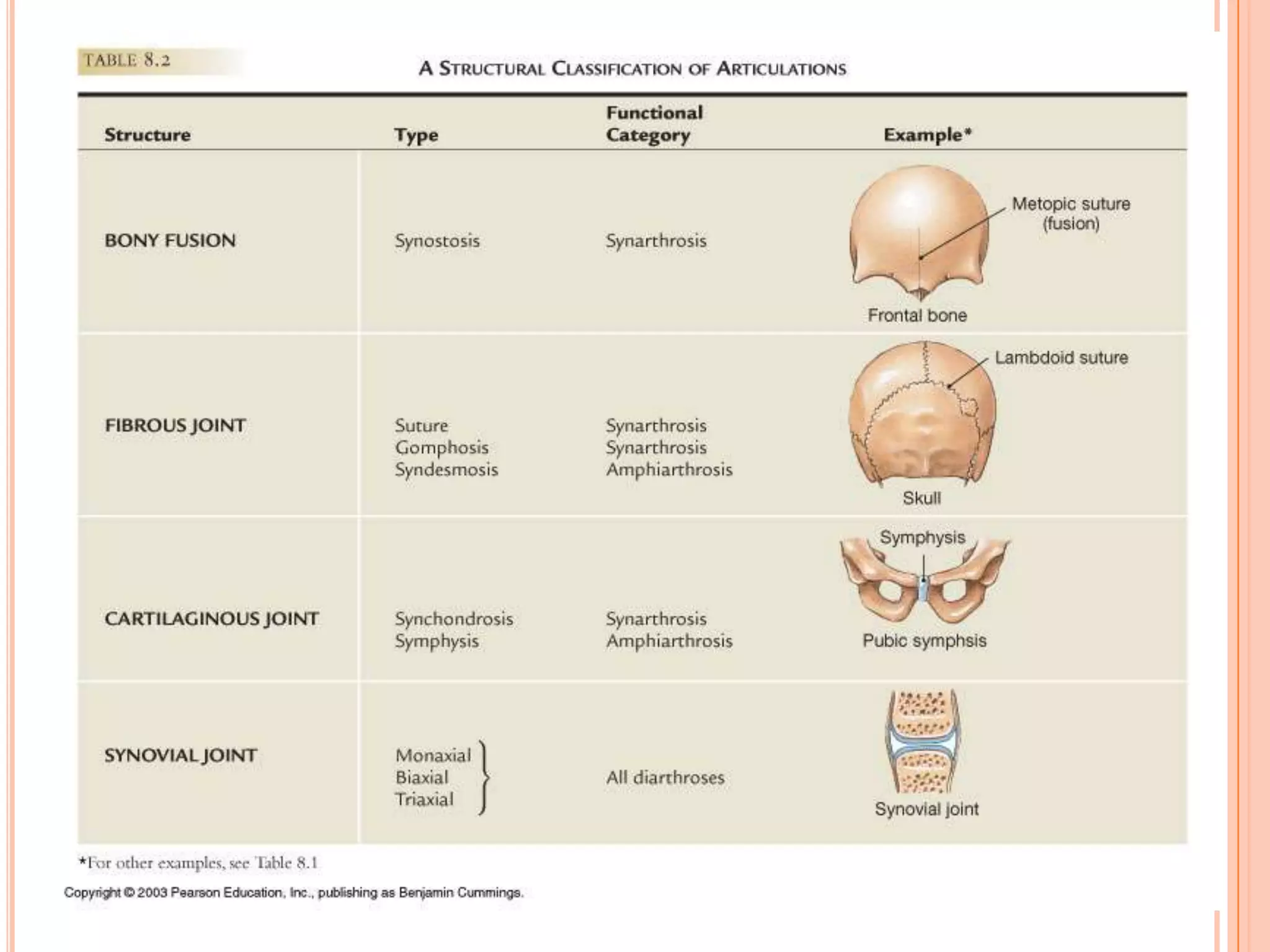
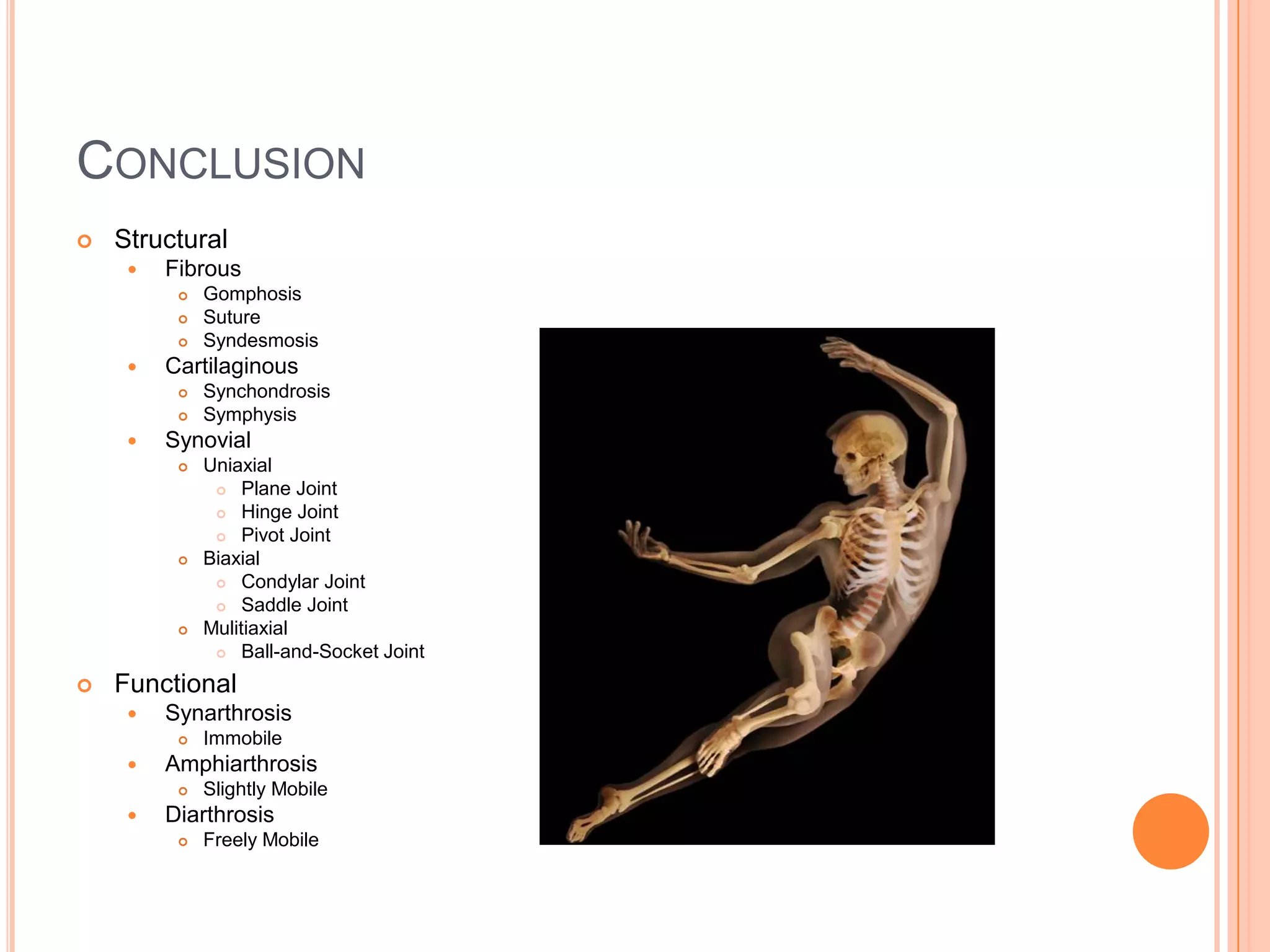
Classification of jointsFunctionallyFibrousDense Regular Connective TissueCartilaginousCartilageSynovialFluid Filled Joint CavityStructurallySynarthrosisImmobileAmphiarthrosisSlightly Movable JointDiarthrosisFreely Mobile Joint
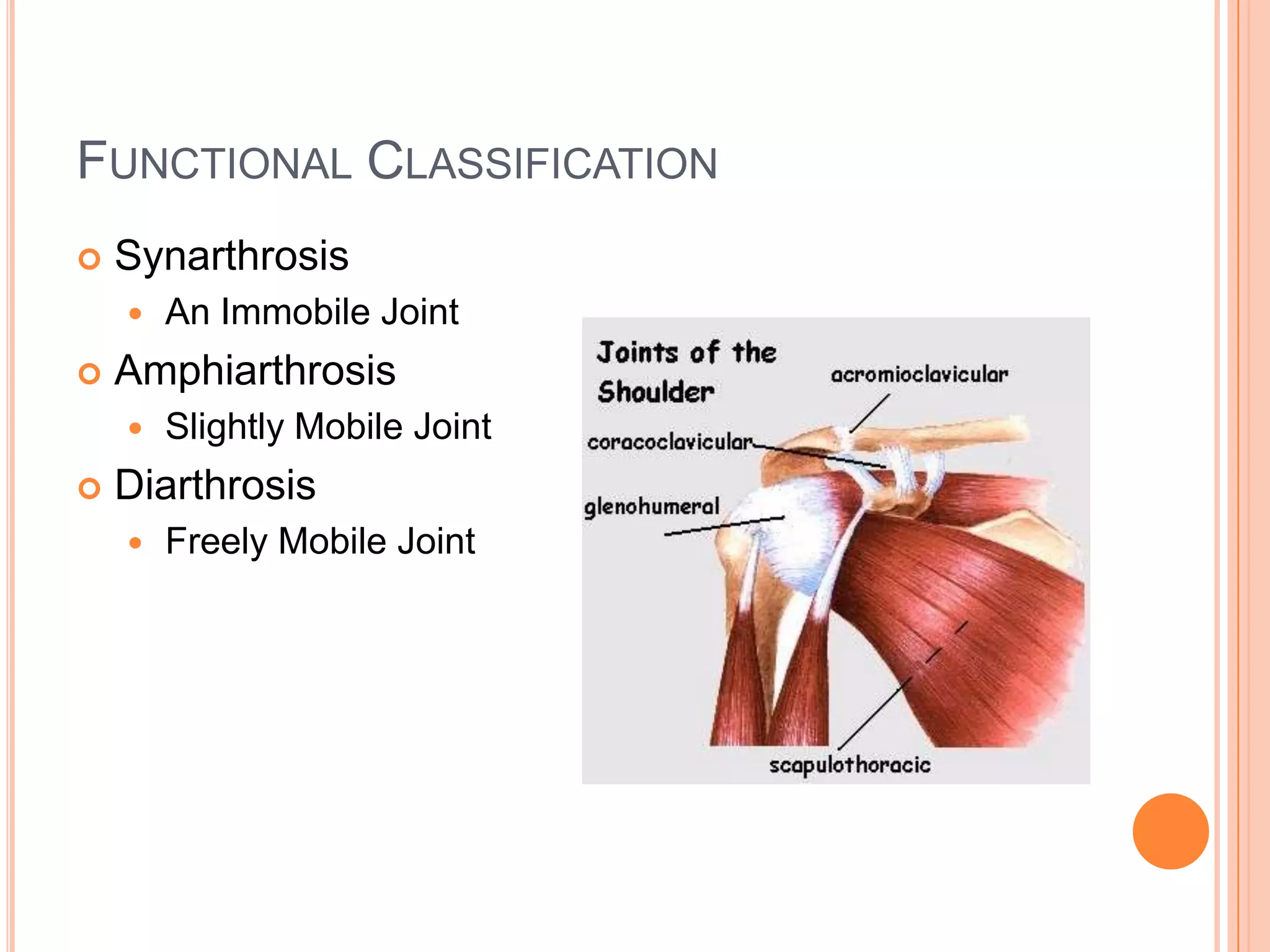
Functional Classification SynarthrosisAn Immobile JointAmphiarthrosisSlightly Mobile JointDiarthrosisFreely Mobile Joint
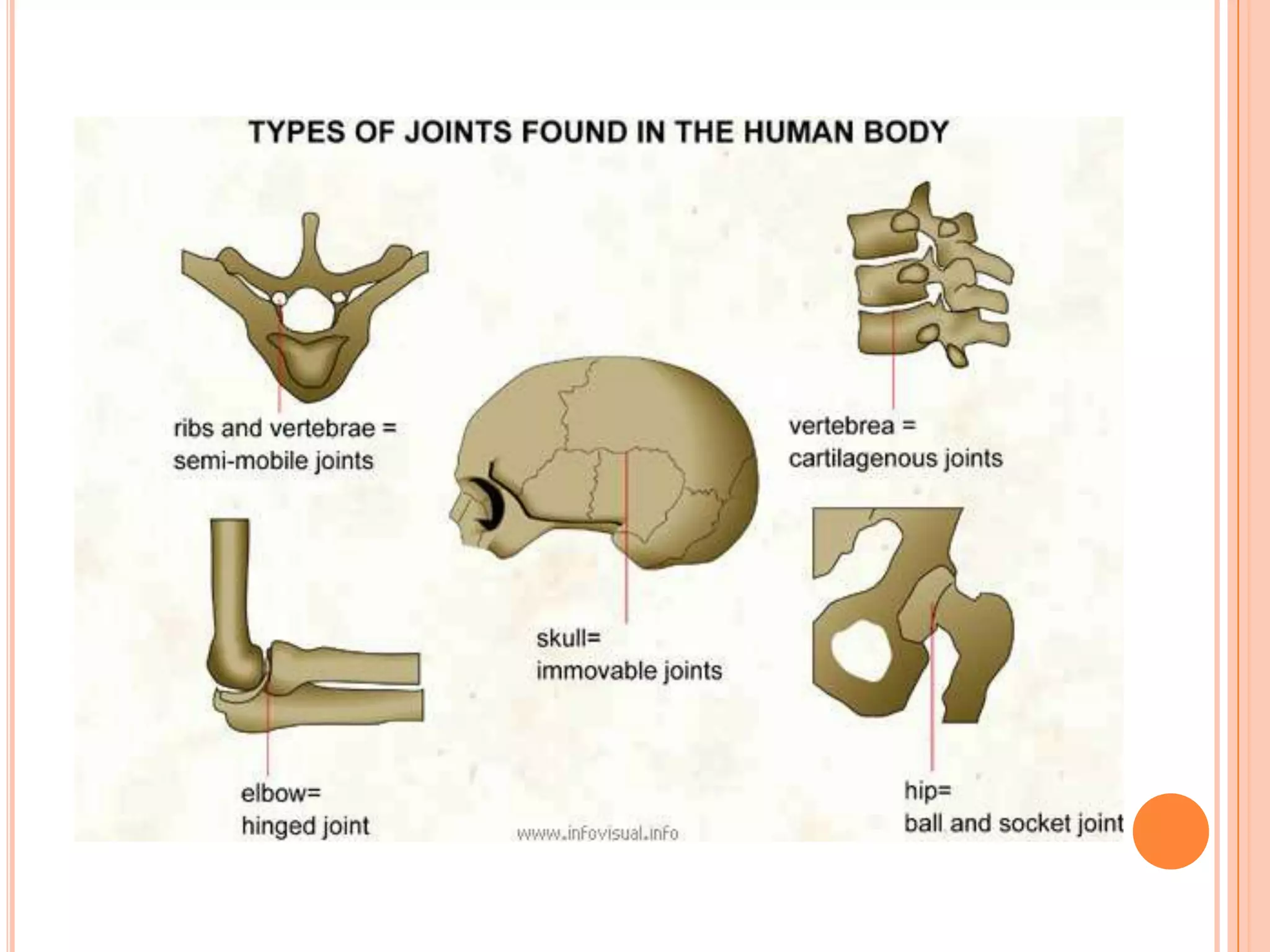
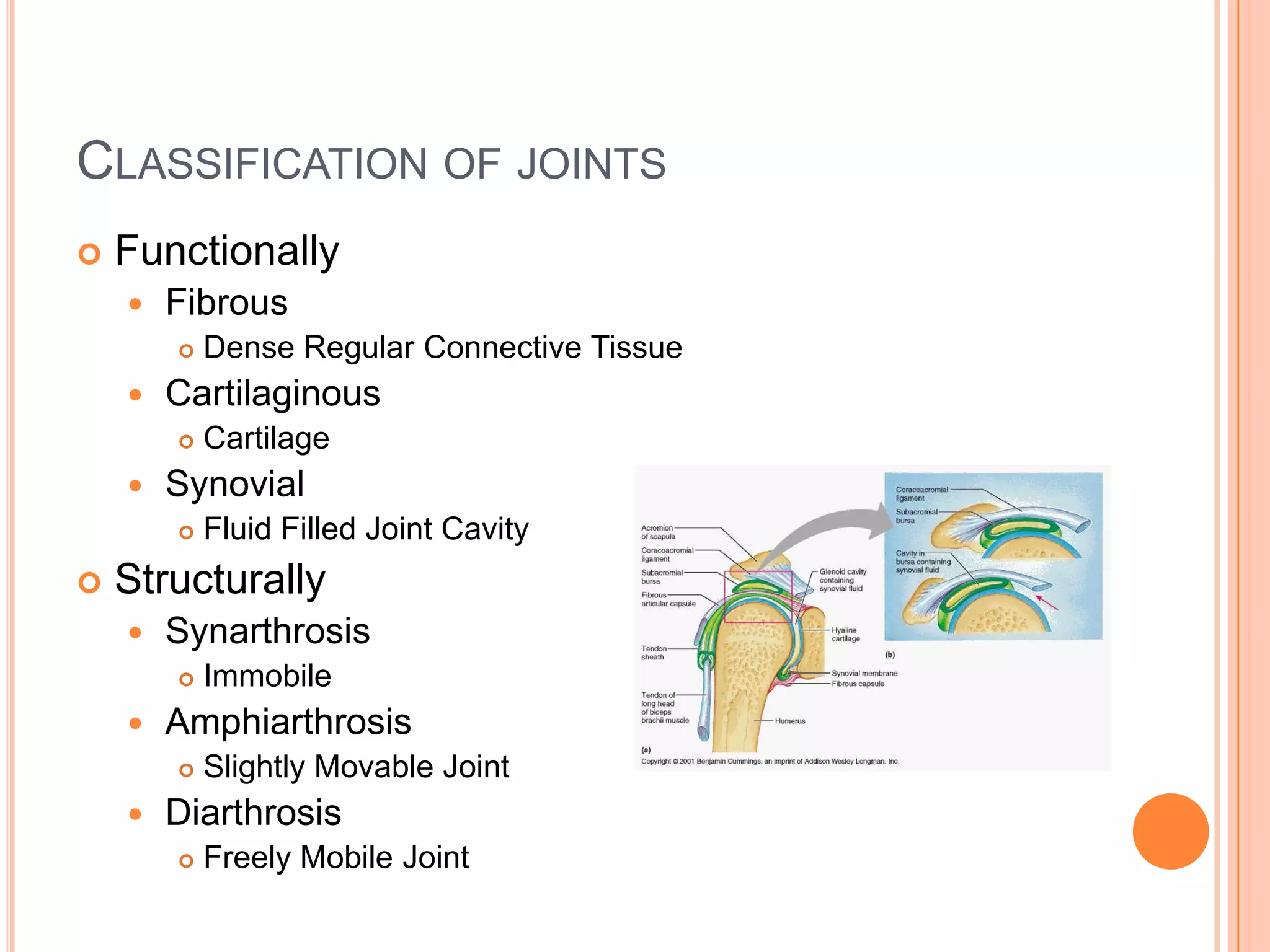
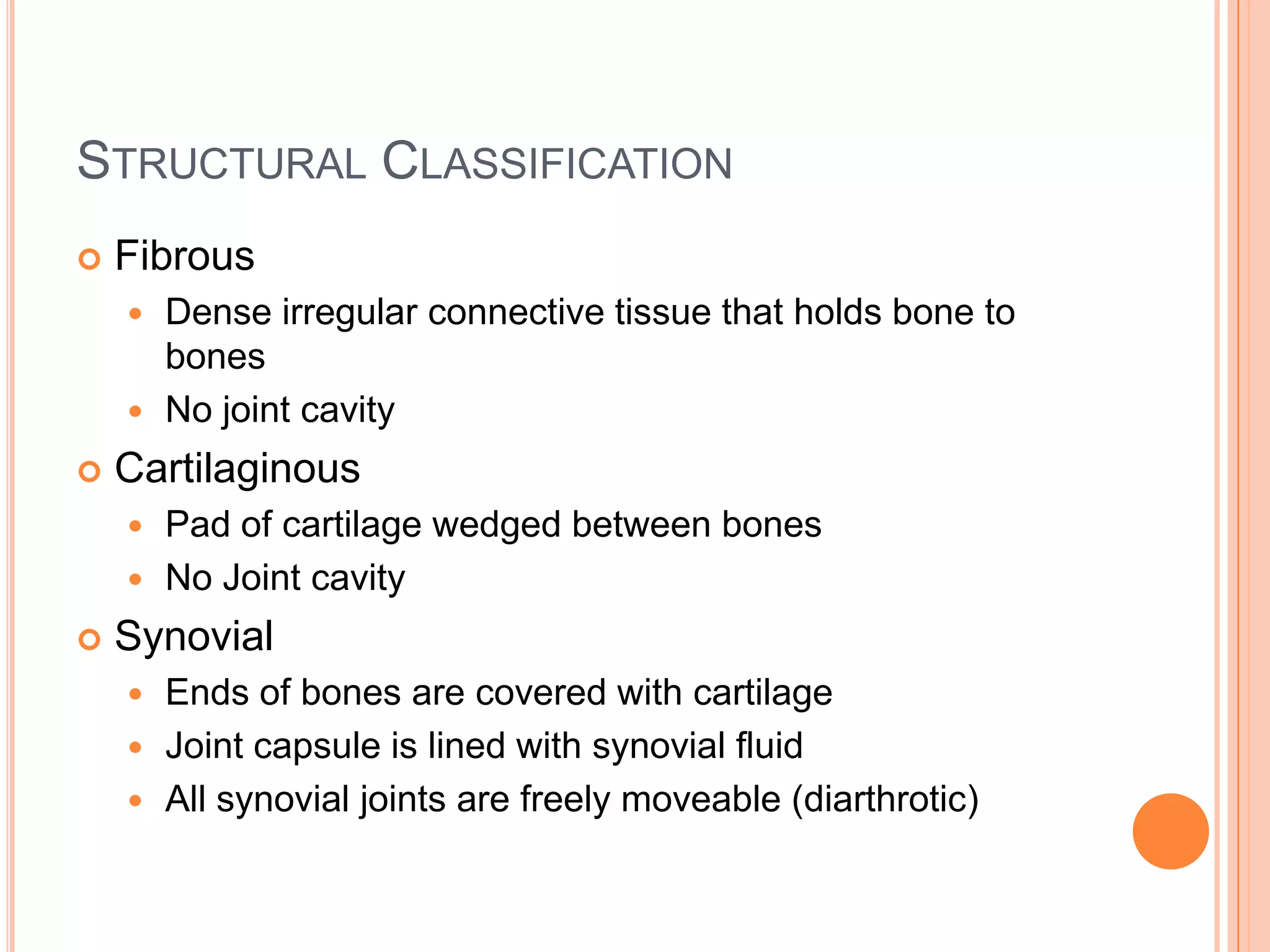
Structural ClassificationFibrousDense irregular connective tissue that holds bone to bonesNo joint cavityCartilaginousPad of cartilage wedged between bonesNo Joint cavitySynovialEnds of bones are covered with cartilageJoint capsule is lined with synovial fluidAll synovial joints are freely moveable (diarthrotic)
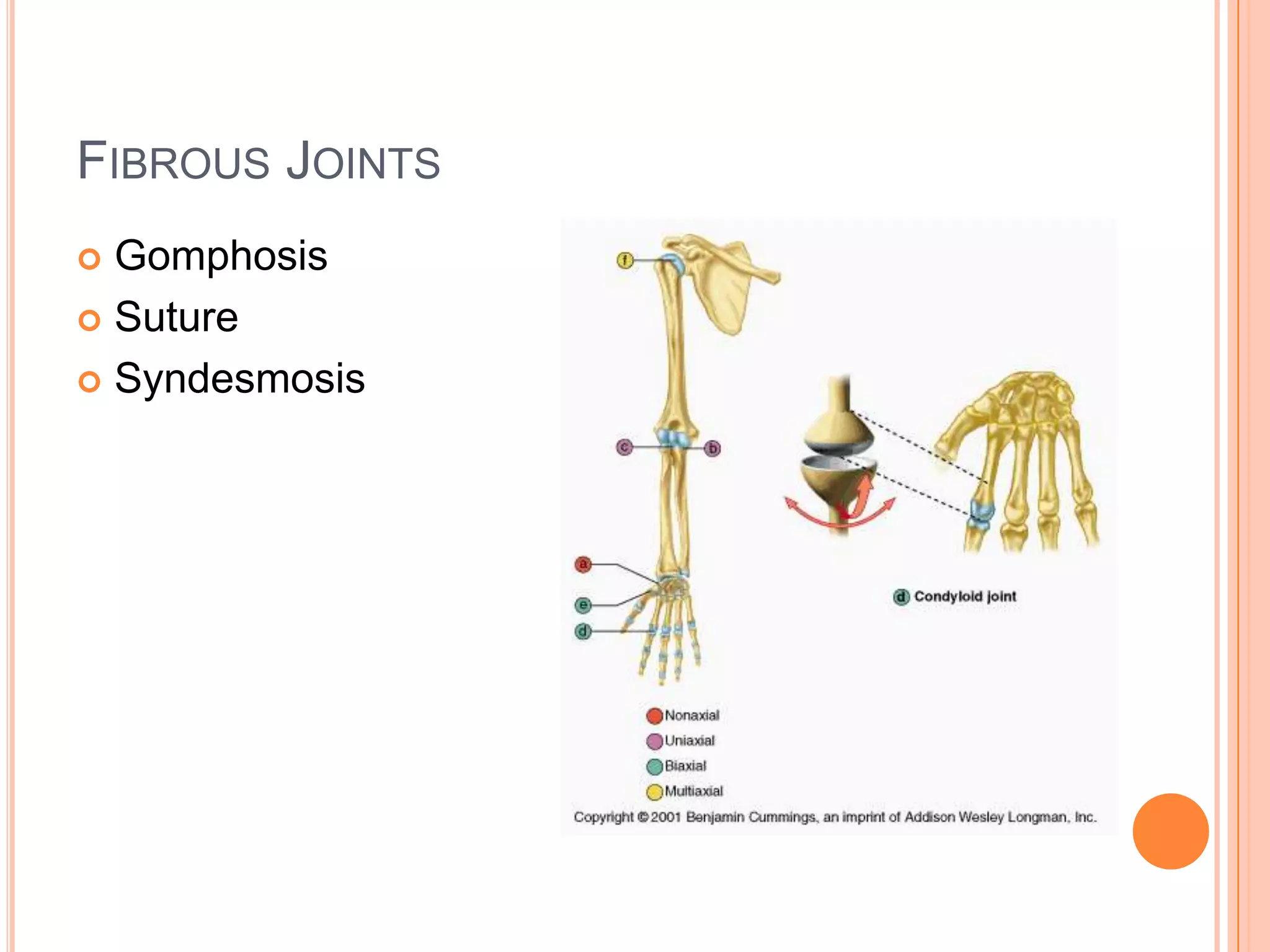
Fibrous JointsGomphosisSutureSyndesmosis
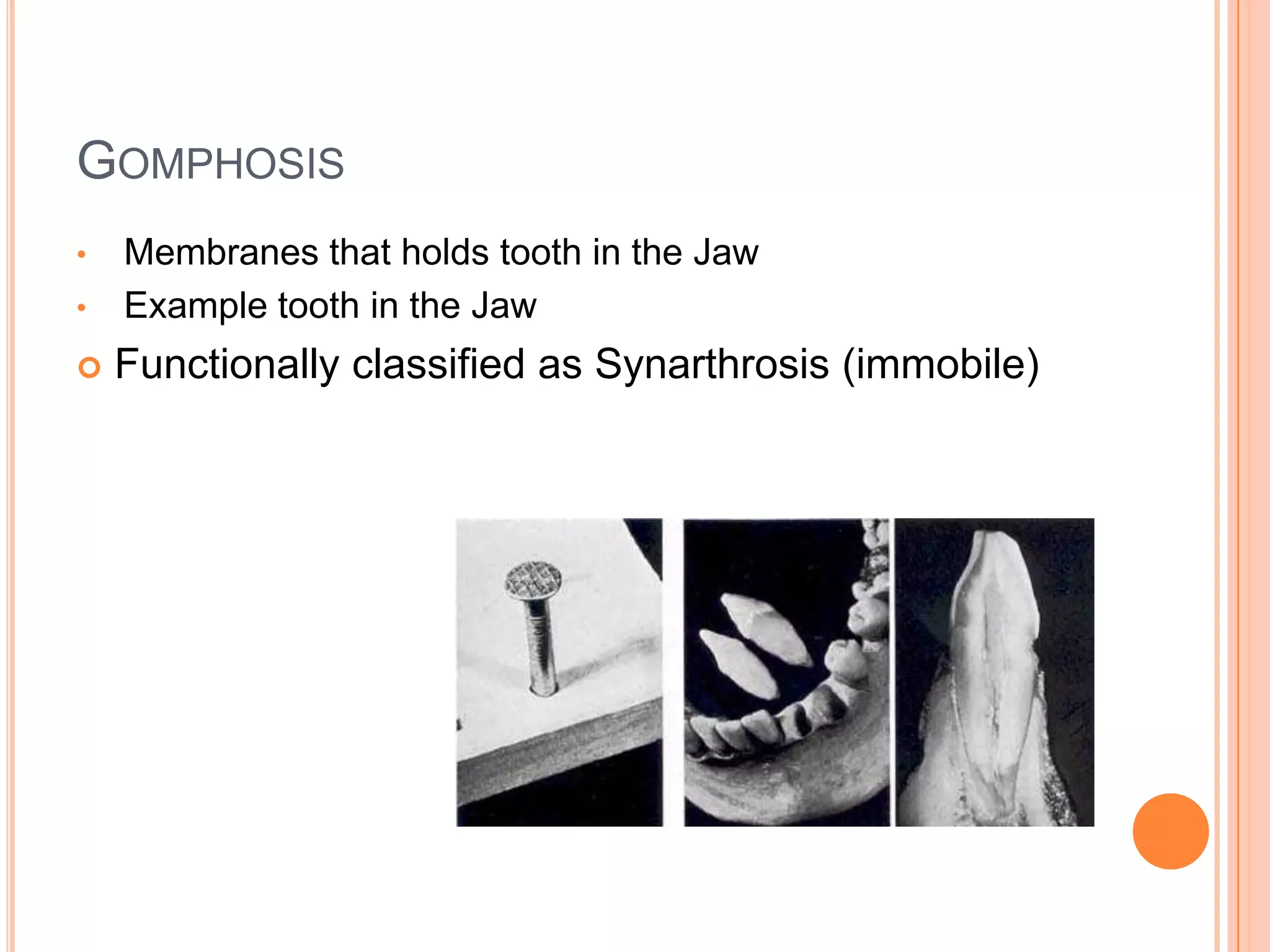
GomphosisMembranes that holds tooth in the Jaw
Example tooth in the JawFunctionally classified as Synarthrosis (immobile)
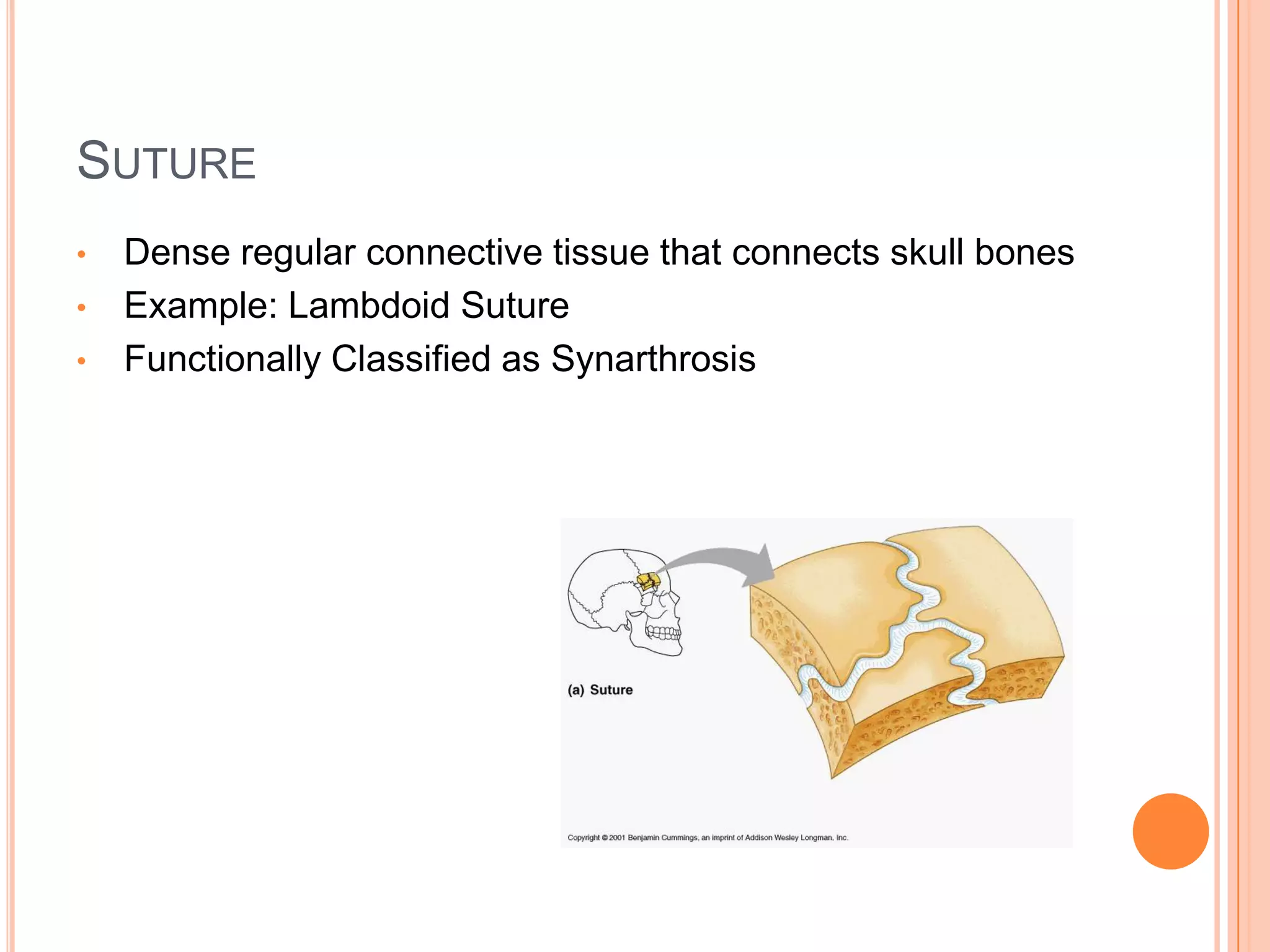
SutureDense regular connective tissue that connects skull bones
Example: Lambdoid Suture
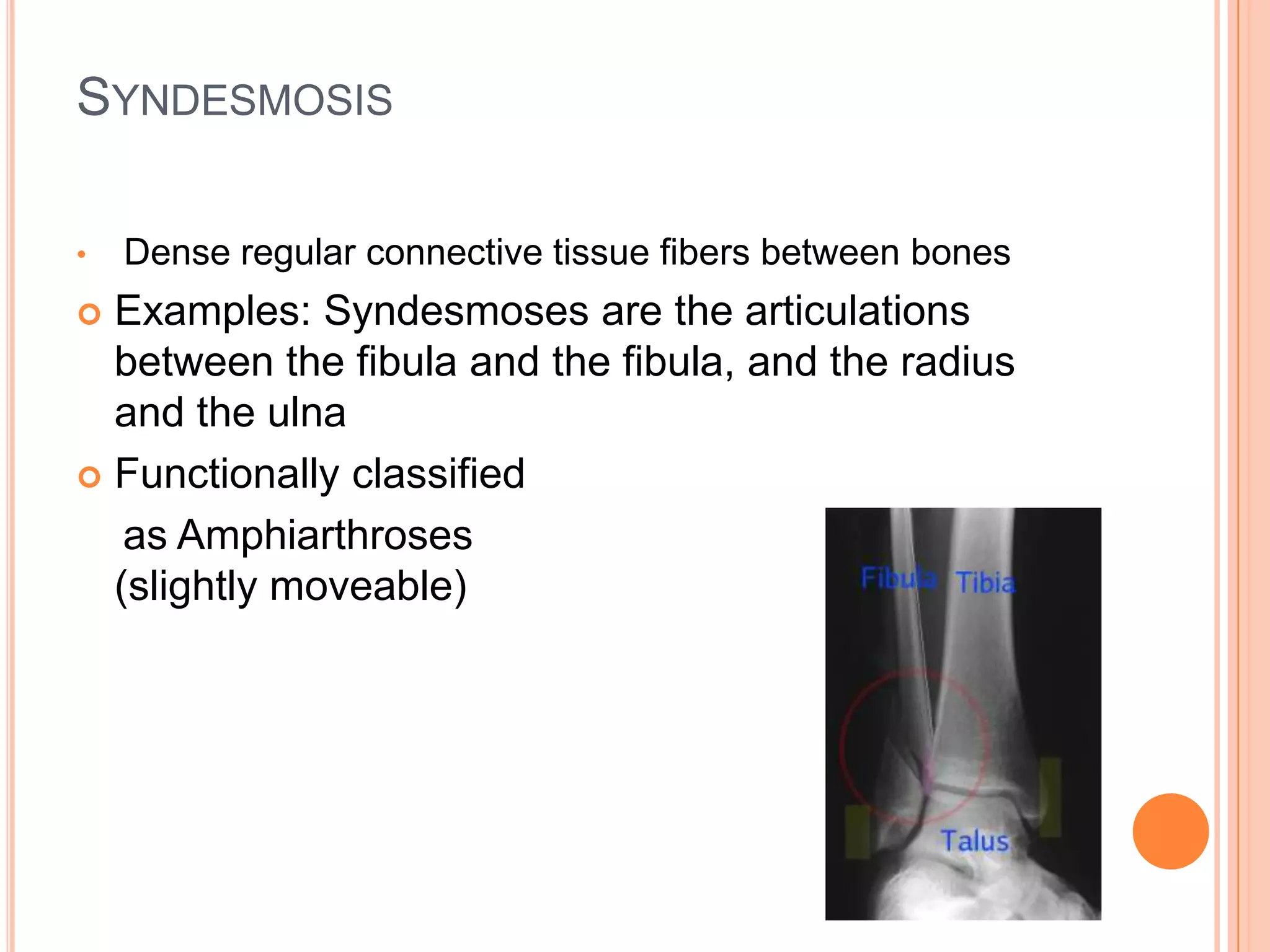
Functionally Classified as SynarthrosisSyndesmosisDense regular connective tissue fibers between bonesExamples: Syndesmosesare the articulations between the fibula and the fibula, and the radius and the ulnaFunctionally classified     as Amphiarthroses(slightly moveable)
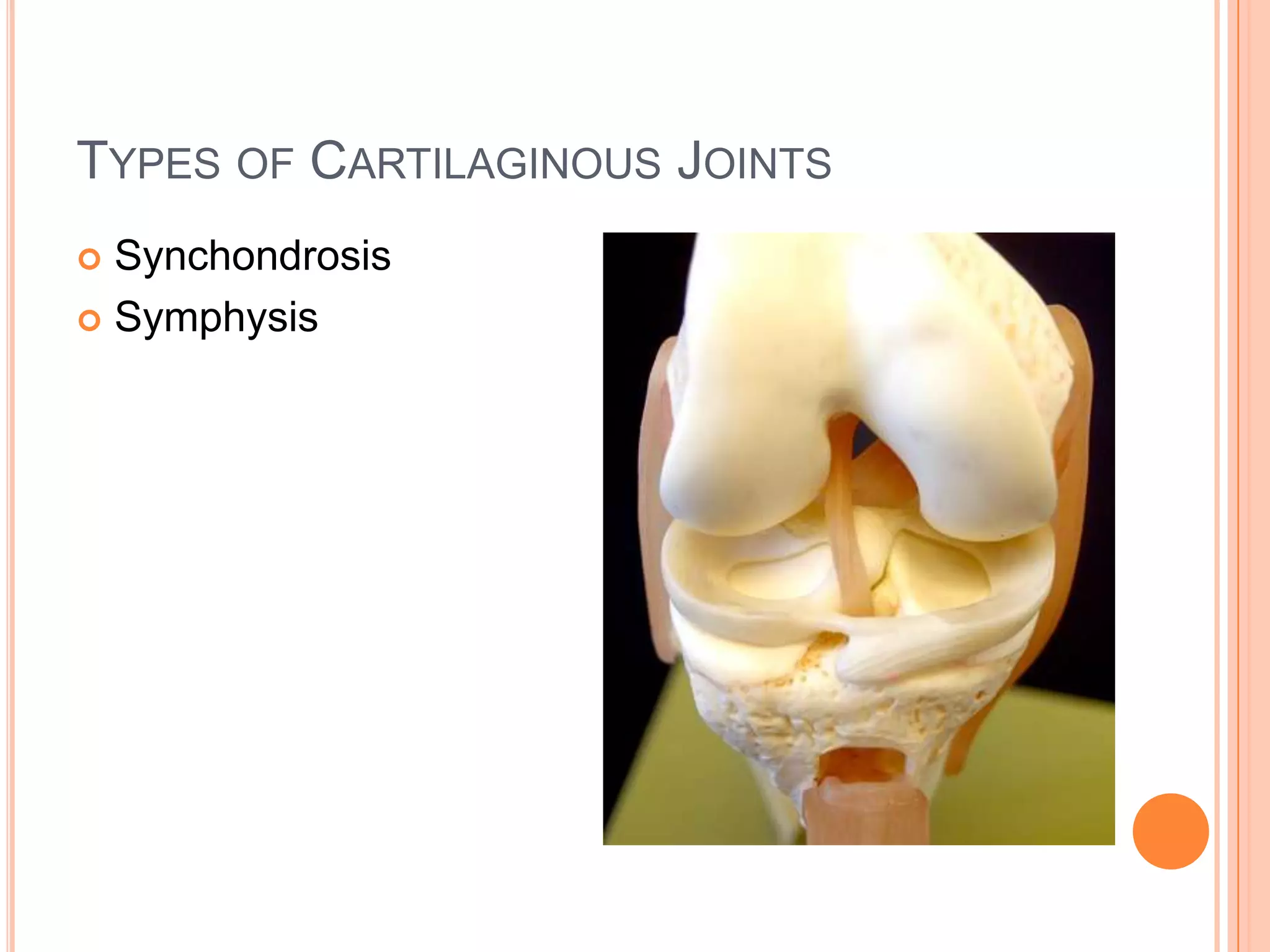
Types of Cartilaginous JointsSynchondrosisSymphysis
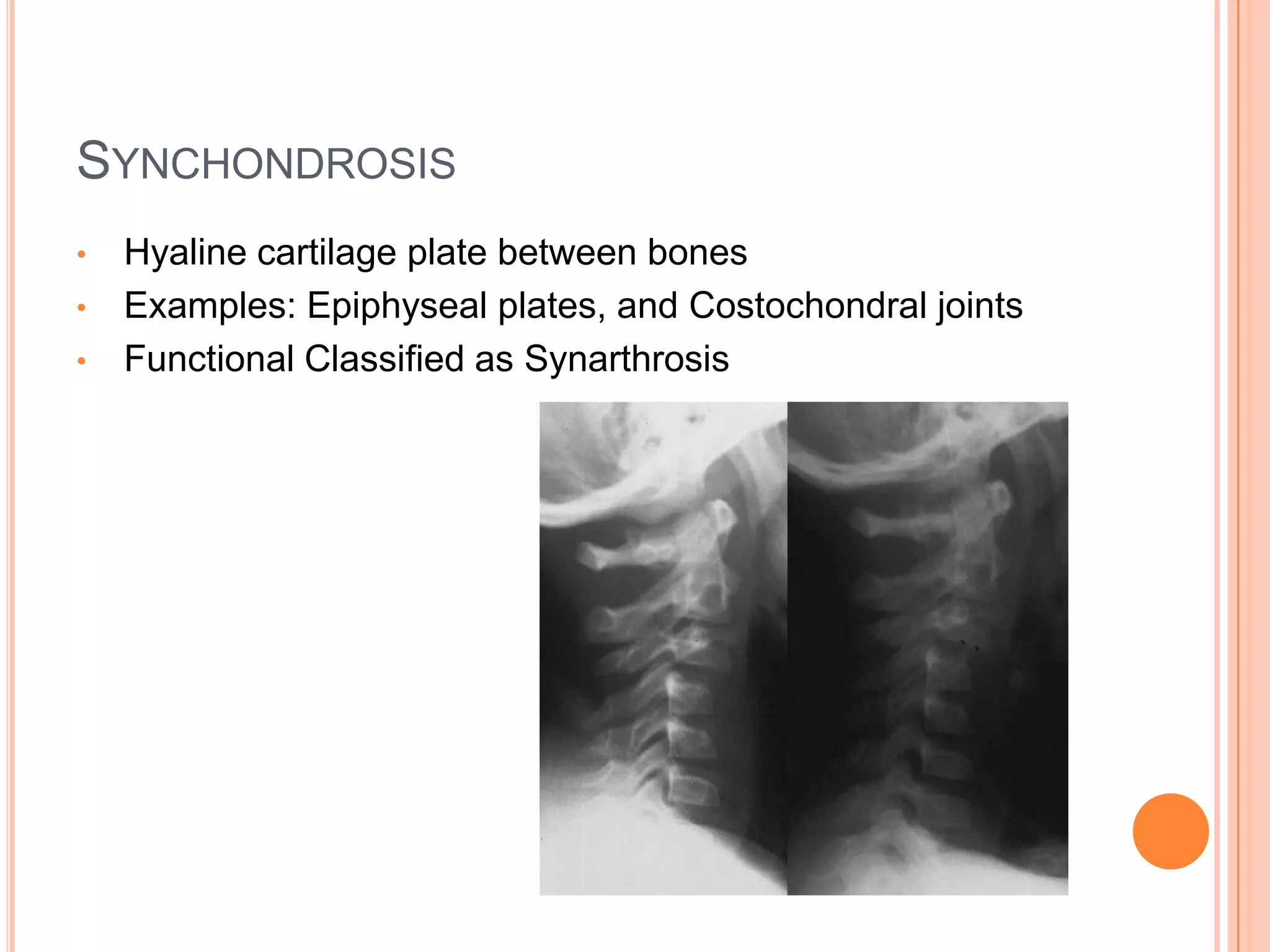
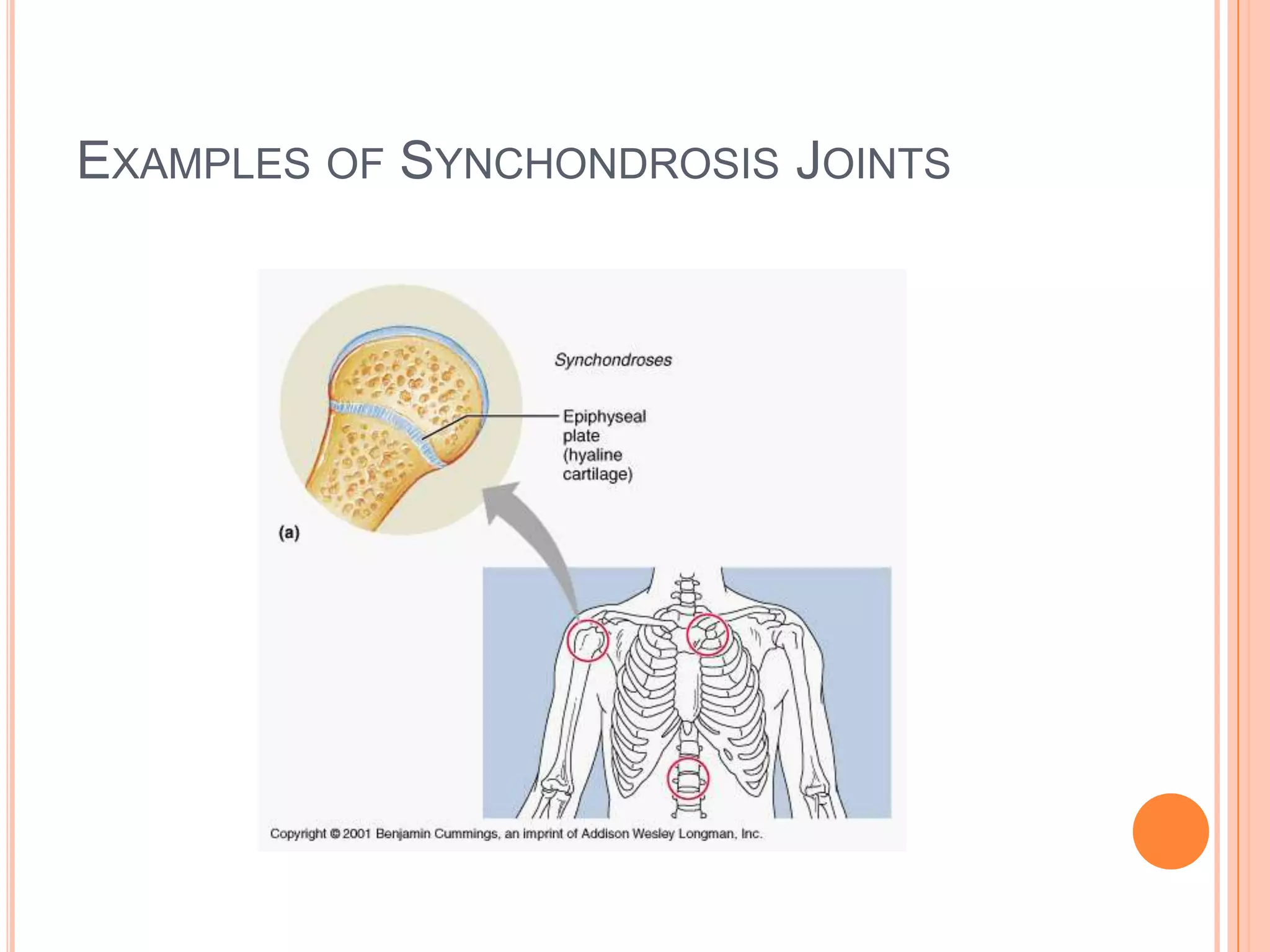
SynchondrosisHyaline cartilage plate between bones
Examples: Epiphyseal plates, and Costochondral joints
Functional Classified as SynarthrosisExamples of Synchondrosis Joints
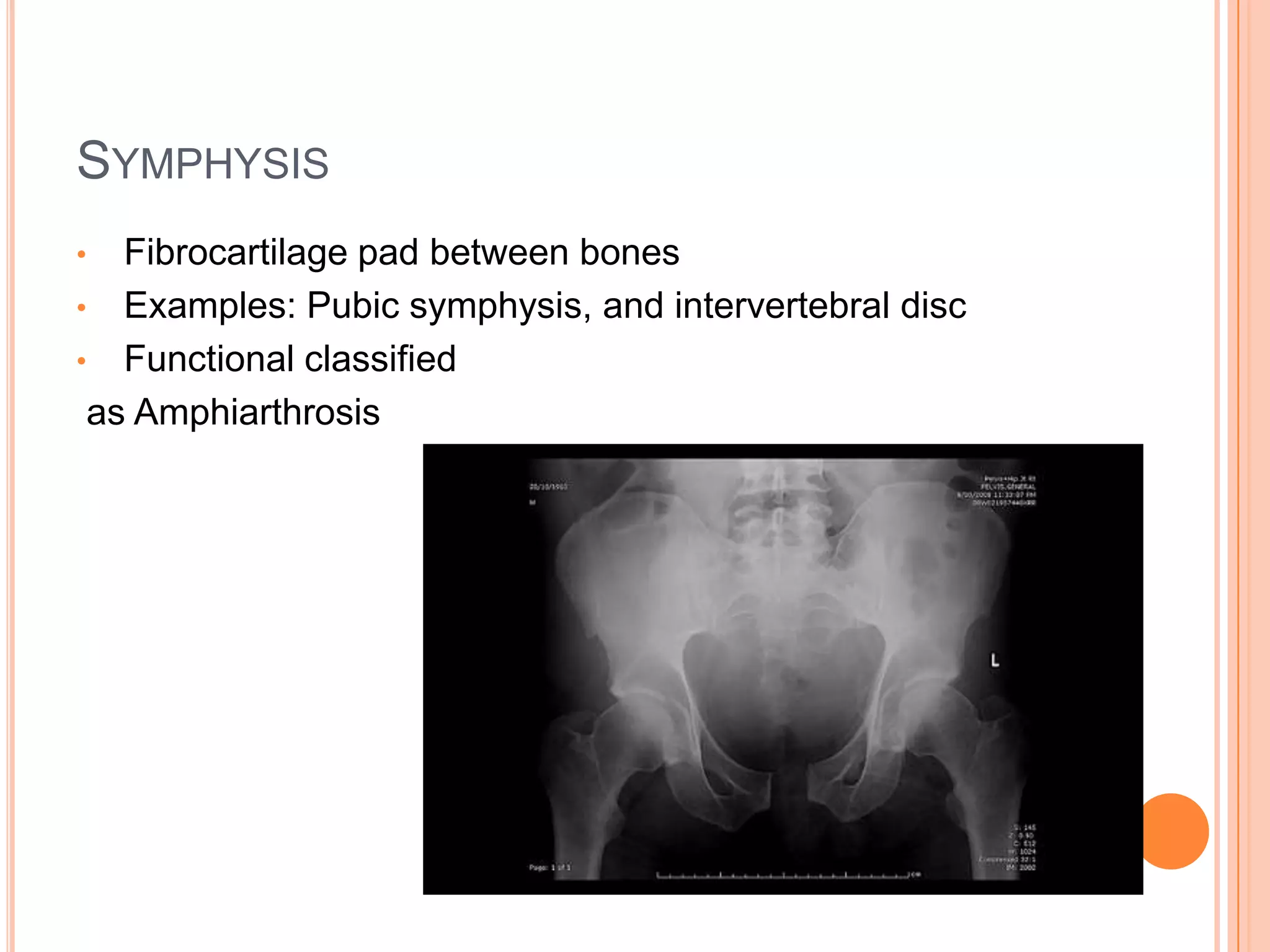
SymphysisFibrocartilage pad between bones
Examples: Pubic symphysis, and intervertebral disc
Functional classified  as Amphiarthrosis
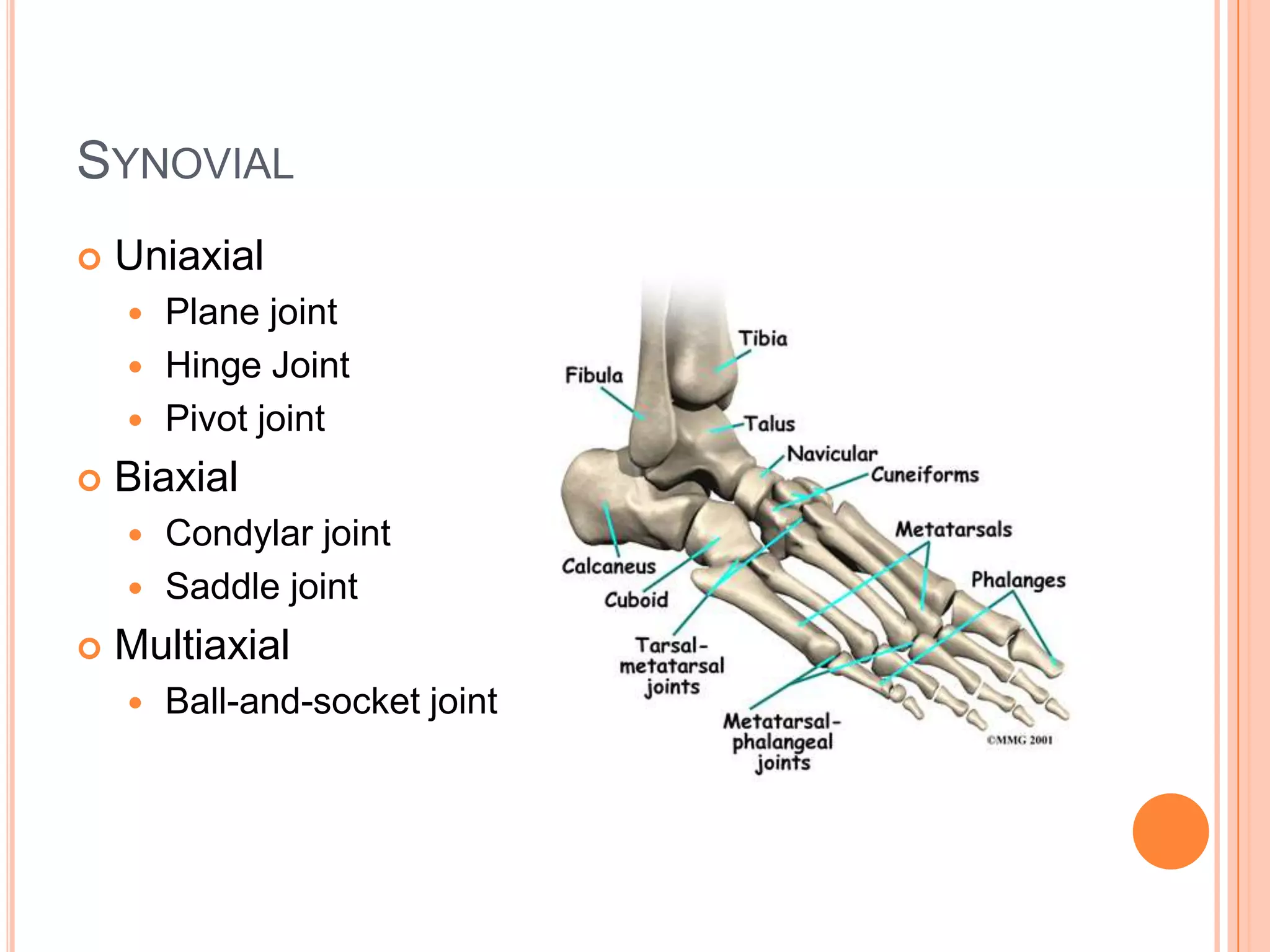
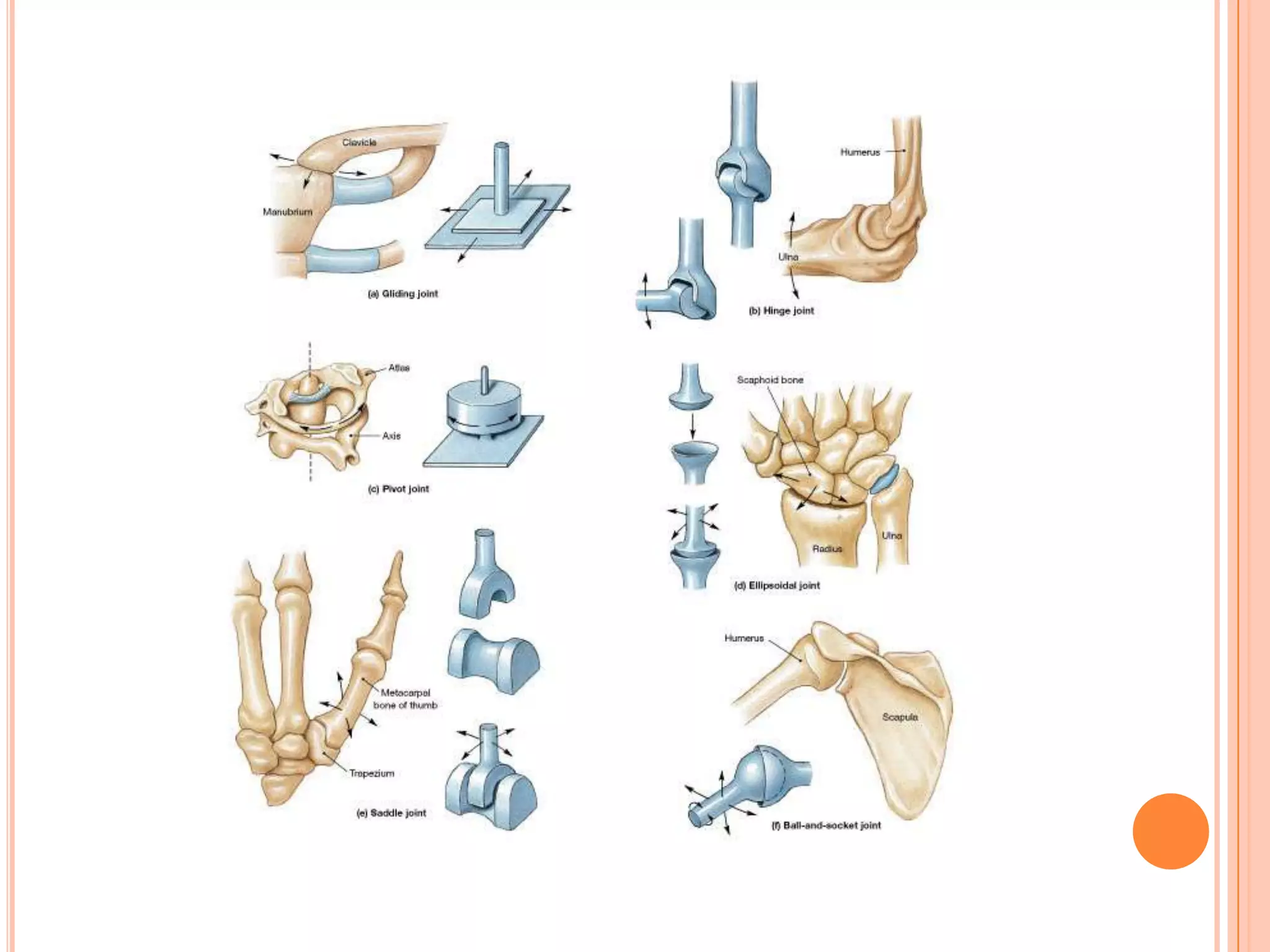
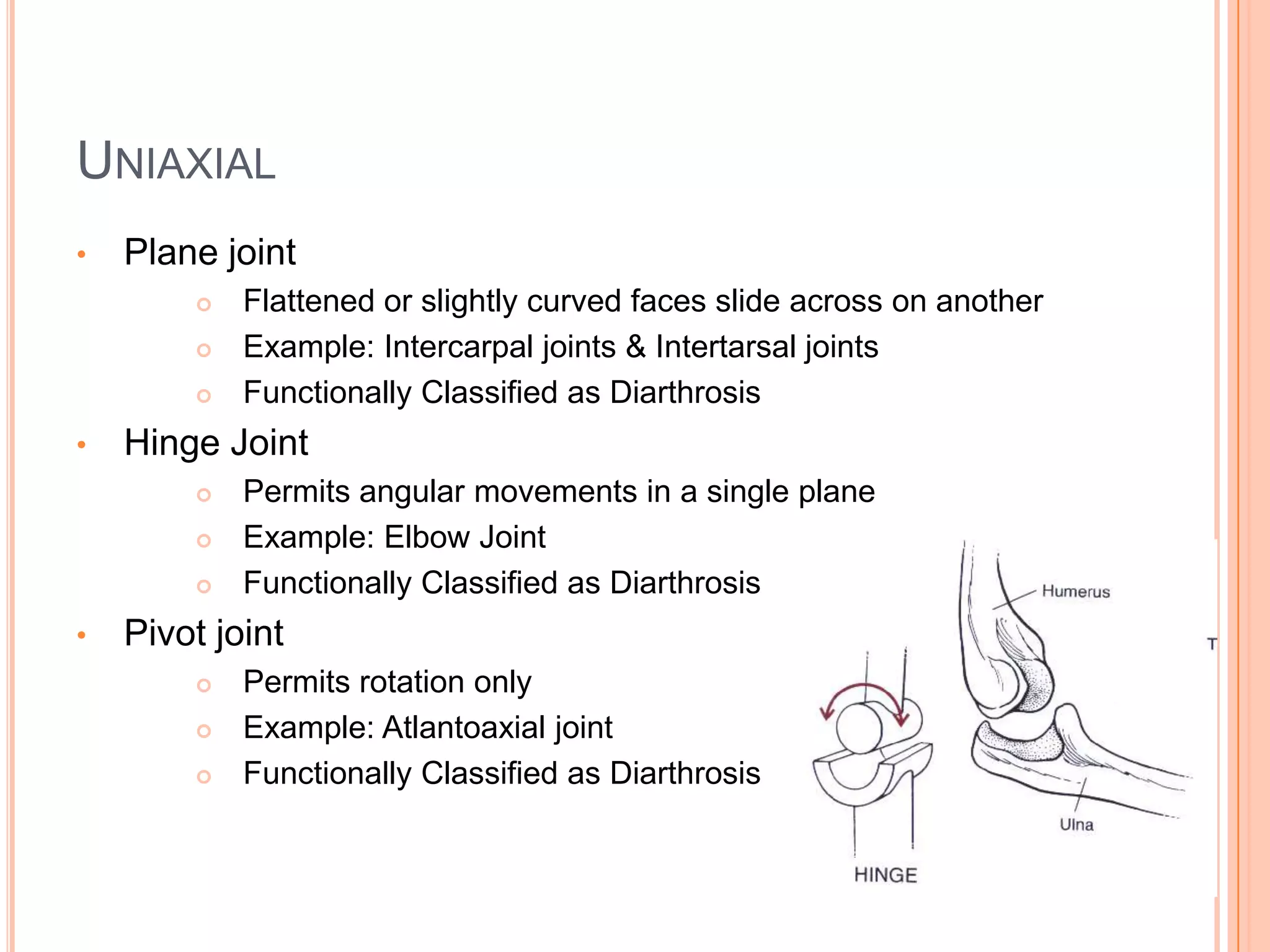
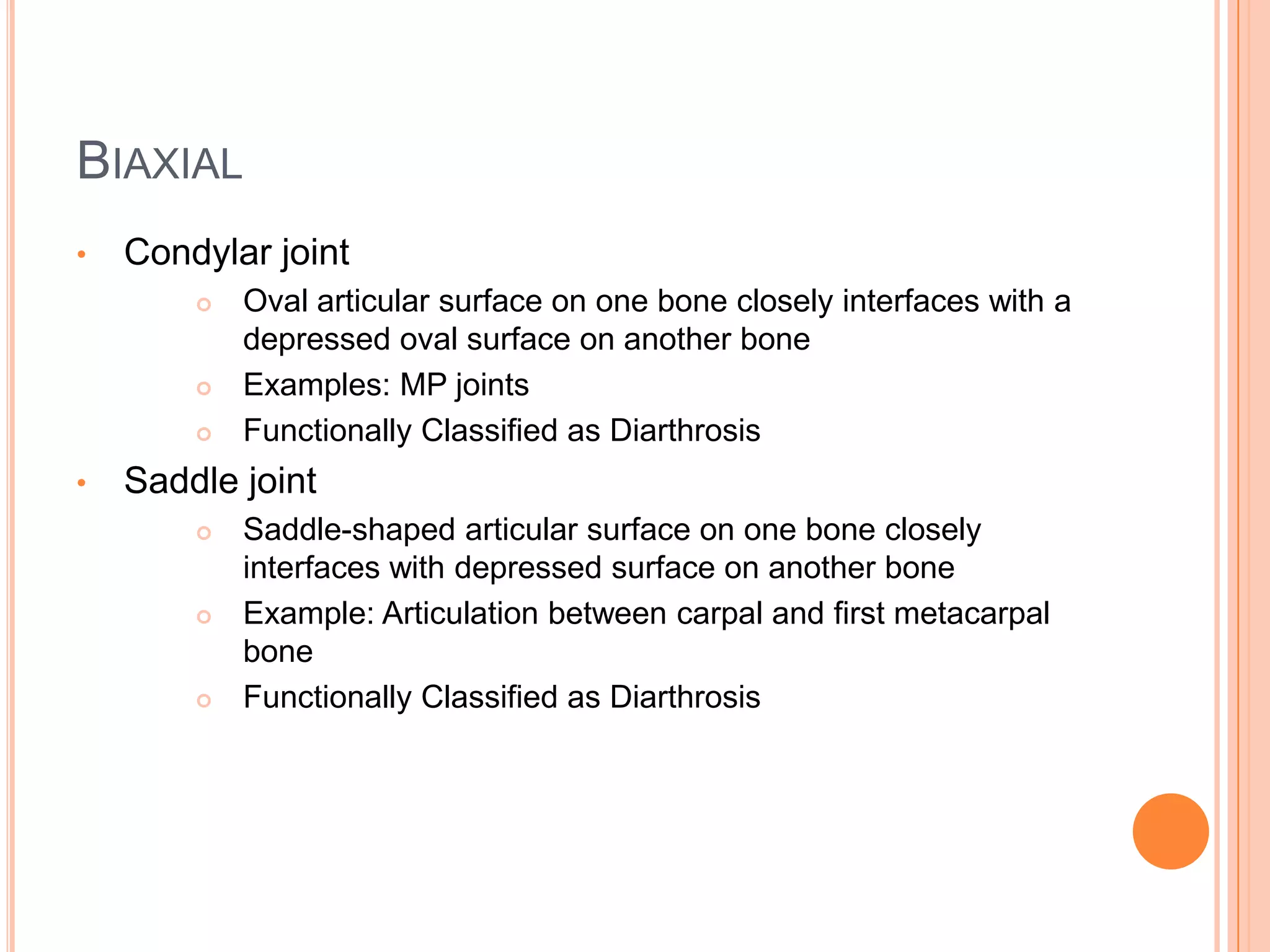
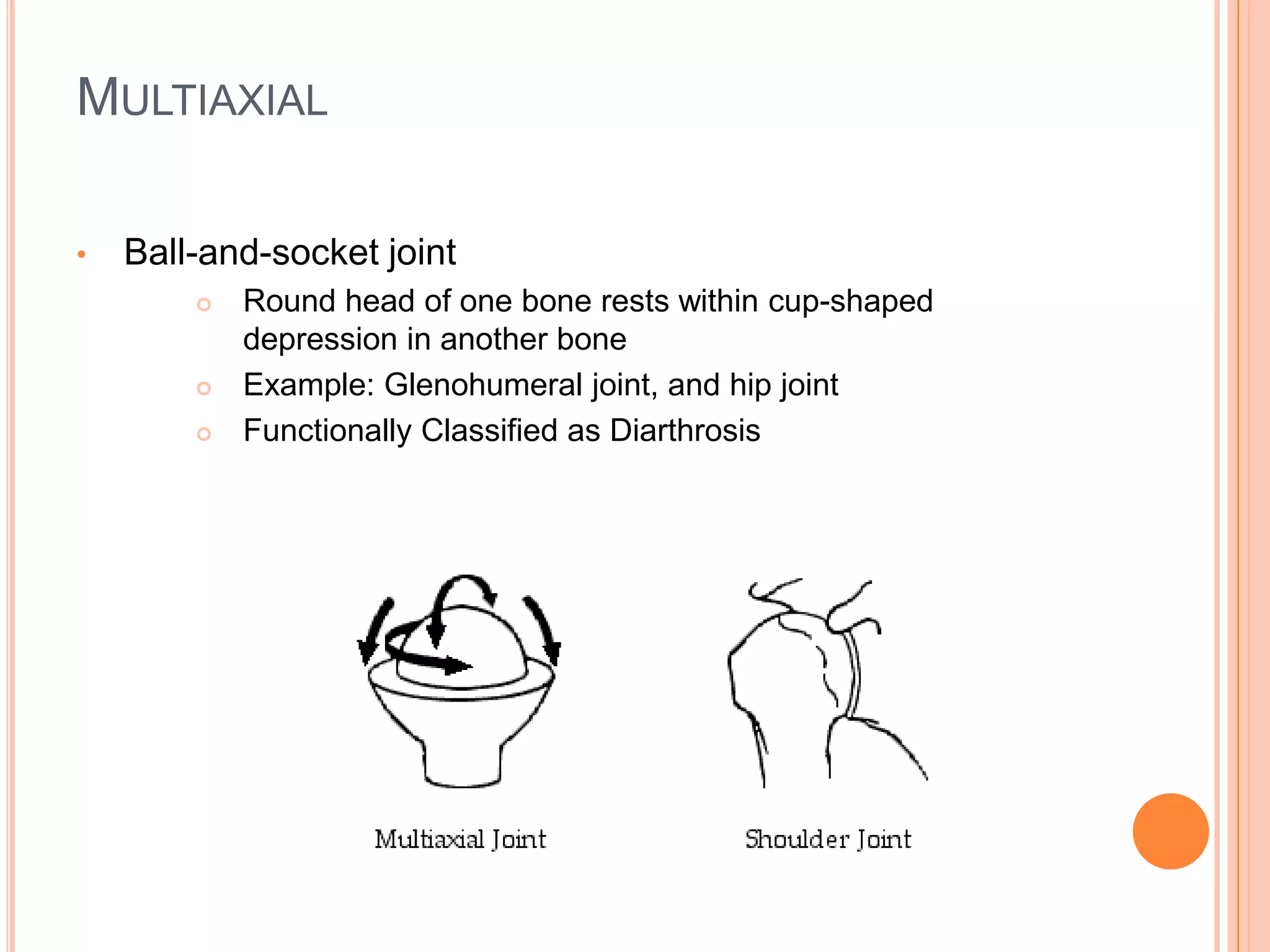
SynovialUniaxialPlane jointHinge JointPivot jointBiaxialCondylar jointSaddle jointMultiaxialBall-and-socket joint

Classification of articulations