In The Workplace
Dr. Raymond Torrenti
What You Will Learn
• A Definition of Emotional Intelligence
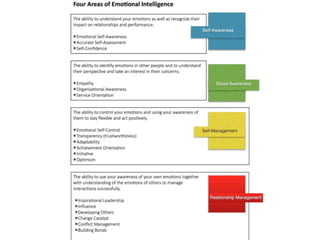
• The Four Areas of Emotional Intelligence
• How to Perceive and Name Emotions in Self & Others
• Managing Emotions in Self and Relationships
• Why Emotional Intelligence is Important at Work
• How Low Emotional Intelligence Show Up at Work
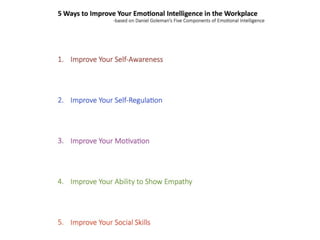
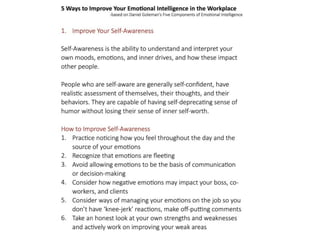
• Five Ways to Improve Emotional Intelligence at Work
• Skills for Increasing Emotional Intelligence
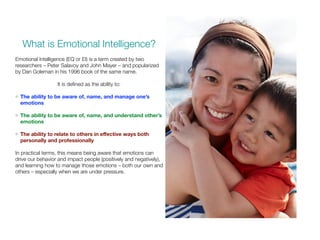
What is Emotional Intelligence?
Emotional Intelligence (EQ or EI) is a term created by two
researchers – Peter Salavoy and John Mayer – and popularized
by Dan Goleman in his 1996 book of the same name.
It is defined as the ability to:
The ability to be aware of, name, and manage one’s
emotions
The ability to be aware of, name, and understand other’s
emotions
The ability to relate to others in effective ways both
personally and professionally
In practical terms, this means being aware that emotions can
drive our behavior and impact people (positively and negatively),
and learning how to manage those emotions – both our own and
others – especially when we are under pressure.
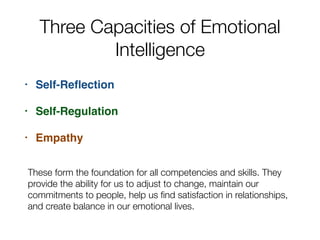
Three Capacities of Emotional
Intelligence
• Self-Reflection
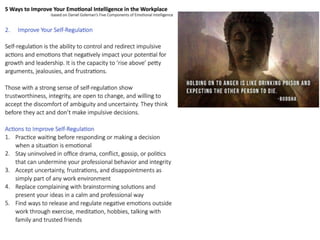
• Self-Regulation
• Empathy
These form the foundation for all competencies and skills. They
provide the ability for us to adjust to change, maintain our
commitments to people, help us find satisfaction in relationships,
and create balance in our emotional lives.
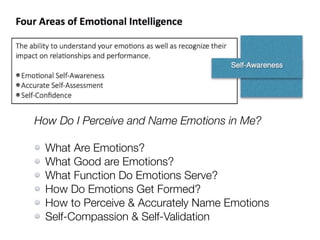
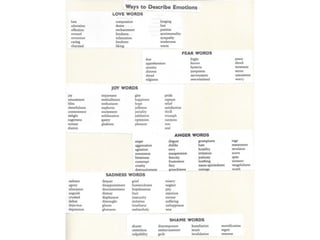
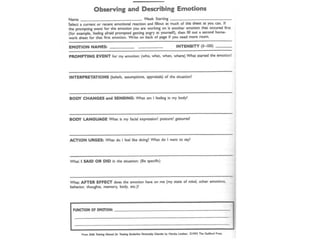
How Do I Perceive and Name Emotions in Me?
What Are Emotions?
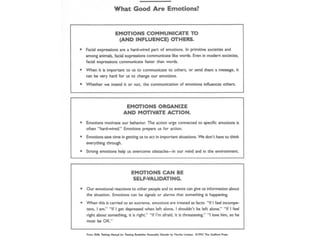
What Good are Emotions?
What Function Do Emotions Serve?
How Do Emotions Get Formed?
How to Perceive & Accurately Name Emotions
Self-Compassion & Self-Validation
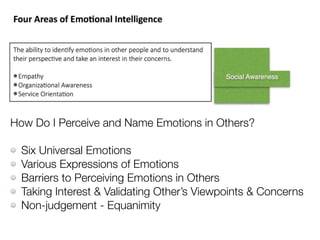
How Do I Perceive and Name Emotions in Others?
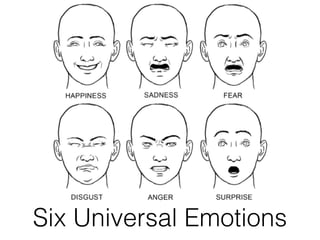
Six Universal Emotions
Various Expressions of Emotions
Barriers to Perceiving Emotions in Others
Taking Interest & Validating Other’s Viewpoints & Concerns
Non-judgement - Equanimity
Six Universal Emotions
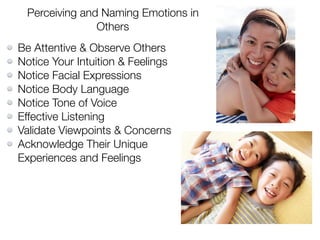
Perceiving and Naming Emotions in
Others
Be Attentive & Observe Others
Notice Your Intuition & Feelings
Notice Facial Expressions
Notice Body Language
Notice Tone of Voice
Effective Listening
Validate Viewpoints & Concerns
Acknowledge Their Unique
Experiences and Feelings
Barriers to Perceiving
Emotions in Others
Self-Reference
Self-Absorbed In Your Own Thoughts & Feelings
Lack of Empathy & Compassion & Interest
Devalues Emotions (in self or others)
Ashamed or Uncomfortable with Emotions
Avoidance - Don’t Know How to Respond
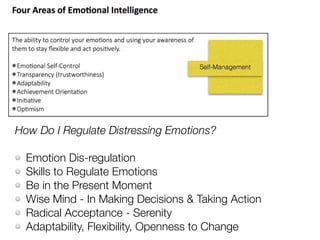
How Do I Regulate Distressing Emotions?
Emotion Dis-regulation
Skills to Regulate Emotions
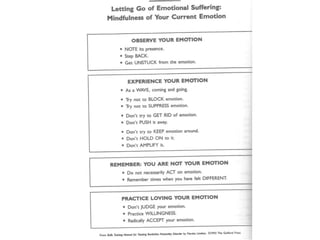
Be in the Present Moment
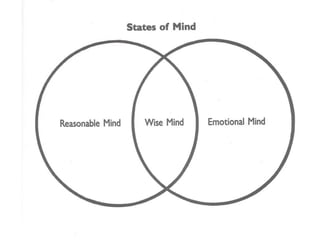
Wise Mind - In Making Decisions & Taking Action
Radical Acceptance - Serenity
Adaptability, Flexibility, Openness to Change
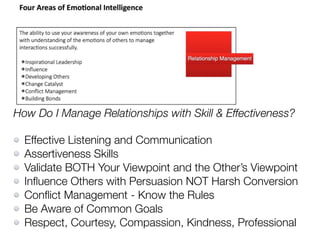
How Do I Manage Relationships with Skill & Effectiveness?
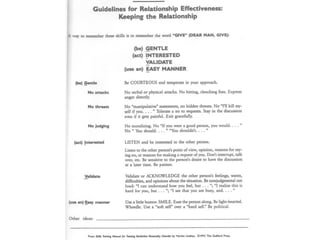
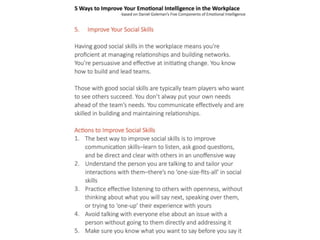
Effective Listening and Communication
Assertiveness Skills
Validate BOTH Your Viewpoint and the Other’s Viewpoint
Influence Others with Persuasion NOT Harsh Conversion
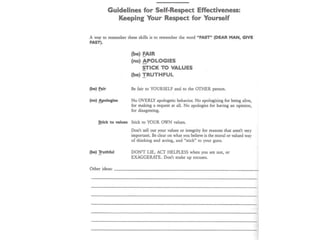
Conflict Management - Know the Rules
Be Aware of Common Goals
Respect, Courtesy, Compassion, Kindness, Professional
Relationship Interactions
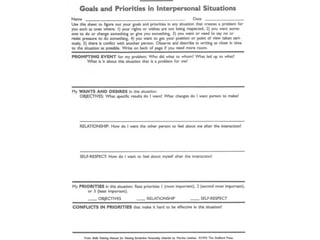
• Keep a common goal or objective in view, when possible
• Three possible outcomes–no, yes, hybrid
• Avoid clinging to an outcome while interacting with others
• Multiple Rights and Wrongs in the Universe
• The outcome could be ‘no’ – radical acceptance
• Interact with Wise Mind
• Value the other’s viewpoint – they have a right to it
• Value your own viewpoint – you have a right to it
• “I” statements only – you can only know yourself
Why Is Emotional Intelligence
Important at Work?
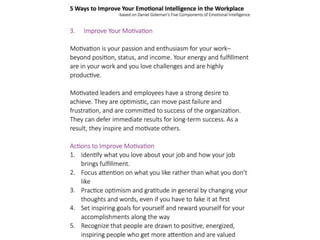
• Helps Manage Stress
• Enhances Cooperation and Teamwork
• Higher Performance and Potential For Promotion
• Job Success and Satisfaction
• Inspires Others
• Creates and Healthy Work Environment
• Maintains Higher Job Retention
• What portion of the decisions you make are
emotional versus rational?
• We decide 100% of everything emotionally then
spend hours, weeks, and months justifying them
logically
• 67% of all competencies deemed essential for high
performance are related to emotional intelligence
• Emotional intelligence matter twice as much as one’s
technical knowledge for higher performance
How Does Low Emotional
Intelligence Show Up at Work?
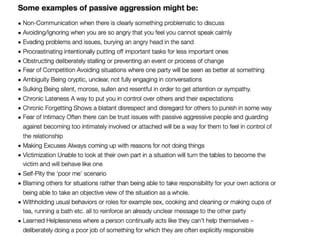
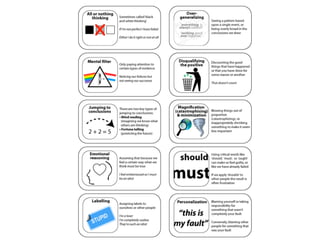
• Blaming others
• Victim statements “If only he/she would…”
• Complaining to everyone about someone without directly addressing it with the person
• Gossip, character assaults, office politics, drama, jealously of others
• Inability to hear critical feedback
• Diverse opinions are not welcome or valued
• Passive, aggressive, or passive-aggressive communication
• Lack of gratitude, respect, and appreciation for others
• Managers do not listen and become out of touch with those they lead
Take Away Thoughts
Increasing emotional intelligence can be done by anyone throughout life, but
it takes effort and continual practice. The reward is evident in lower stress,
higher career achievement, and greater satisfaction in all relationships.
Start small and expand
Be open and curious
Unlearn old emotional patterns & learn new ones
When you fail, practice self-compassion, learn,
and move on
Cultivate awareness, observation, noticing, and
mindfulness in yourself and those around you
Practice being in the present moment
Practice lovingkindness, compassion, gratitude,
appreciation
Emotional intelligence in the workplace

Emotional intelligence in the workplace

  • 1.
    In The Workplace Dr.Raymond Torrenti
  • 2.
    What You WillLearn • A Definition of Emotional Intelligence • The Four Areas of Emotional Intelligence • How to Perceive and Name Emotions in Self & Others • Managing Emotions in Self and Relationships • Why Emotional Intelligence is Important at Work • How Low Emotional Intelligence Show Up at Work • Five Ways to Improve Emotional Intelligence at Work • Skills for Increasing Emotional Intelligence
  • 3.
    What is EmotionalIntelligence? Emotional Intelligence (EQ or EI) is a term created by two researchers – Peter Salavoy and John Mayer – and popularized by Dan Goleman in his 1996 book of the same name. It is defined as the ability to: The ability to be aware of, name, and manage one’s emotions The ability to be aware of, name, and understand other’s emotions The ability to relate to others in effective ways both personally and professionally In practical terms, this means being aware that emotions can drive our behavior and impact people (positively and negatively), and learning how to manage those emotions – both our own and others – especially when we are under pressure.
  • 4.
    Three Capacities ofEmotional Intelligence • Self-Reflection • Self-Regulation • Empathy These form the foundation for all competencies and skills. They provide the ability for us to adjust to change, maintain our commitments to people, help us find satisfaction in relationships, and create balance in our emotional lives.
  • 6.
    How Do IPerceive and Name Emotions in Me? What Are Emotions? What Good are Emotions? What Function Do Emotions Serve? How Do Emotions Get Formed? How to Perceive & Accurately Name Emotions Self-Compassion & Self-Validation
  • 11.
    How Do IPerceive and Name Emotions in Others? Six Universal Emotions Various Expressions of Emotions Barriers to Perceiving Emotions in Others Taking Interest & Validating Other’s Viewpoints & Concerns Non-judgement - Equanimity
  • 12.
  • 13.
  • 14.
    Perceiving and NamingEmotions in Others Be Attentive & Observe Others Notice Your Intuition & Feelings Notice Facial Expressions Notice Body Language Notice Tone of Voice Effective Listening Validate Viewpoints & Concerns Acknowledge Their Unique Experiences and Feelings
  • 16.
    Barriers to Perceiving Emotionsin Others Self-Reference Self-Absorbed In Your Own Thoughts & Feelings Lack of Empathy & Compassion & Interest Devalues Emotions (in self or others) Ashamed or Uncomfortable with Emotions Avoidance - Don’t Know How to Respond
  • 17.
    How Do IRegulate Distressing Emotions? Emotion Dis-regulation Skills to Regulate Emotions Be in the Present Moment Wise Mind - In Making Decisions & Taking Action Radical Acceptance - Serenity Adaptability, Flexibility, Openness to Change
  • 21.
    How Do IManage Relationships with Skill & Effectiveness? Effective Listening and Communication Assertiveness Skills Validate BOTH Your Viewpoint and the Other’s Viewpoint Influence Others with Persuasion NOT Harsh Conversion Conflict Management - Know the Rules Be Aware of Common Goals Respect, Courtesy, Compassion, Kindness, Professional
  • 25.
    Relationship Interactions • Keepa common goal or objective in view, when possible • Three possible outcomes–no, yes, hybrid • Avoid clinging to an outcome while interacting with others • Multiple Rights and Wrongs in the Universe • The outcome could be ‘no’ – radical acceptance • Interact with Wise Mind • Value the other’s viewpoint – they have a right to it • Value your own viewpoint – you have a right to it • “I” statements only – you can only know yourself
  • 26.
    Why Is EmotionalIntelligence Important at Work? • Helps Manage Stress • Enhances Cooperation and Teamwork • Higher Performance and Potential For Promotion • Job Success and Satisfaction • Inspires Others • Creates and Healthy Work Environment • Maintains Higher Job Retention
  • 27.
    • What portionof the decisions you make are emotional versus rational? • We decide 100% of everything emotionally then spend hours, weeks, and months justifying them logically • 67% of all competencies deemed essential for high performance are related to emotional intelligence • Emotional intelligence matter twice as much as one’s technical knowledge for higher performance
  • 30.
    How Does LowEmotional Intelligence Show Up at Work? • Blaming others • Victim statements “If only he/she would…” • Complaining to everyone about someone without directly addressing it with the person • Gossip, character assaults, office politics, drama, jealously of others • Inability to hear critical feedback • Diverse opinions are not welcome or valued • Passive, aggressive, or passive-aggressive communication • Lack of gratitude, respect, and appreciation for others • Managers do not listen and become out of touch with those they lead
  • 40.
    Take Away Thoughts Increasingemotional intelligence can be done by anyone throughout life, but it takes effort and continual practice. The reward is evident in lower stress, higher career achievement, and greater satisfaction in all relationships. Start small and expand Be open and curious Unlearn old emotional patterns & learn new ones When you fail, practice self-compassion, learn, and move on Cultivate awareness, observation, noticing, and mindfulness in yourself and those around you Practice being in the present moment Practice lovingkindness, compassion, gratitude, appreciation