Ozarks Technical Community College
Hearing Loss is defined by…
 Degree/Magnitude of Loss
 Normal, slight, mild, moderate, moderately-severe,
severe, profound
 Type of Loss
 Conductive
 Sensorineural
 Mixed
 Configuration of Loss
 Flat, rising, sloping, precipitous
Normal Hearing
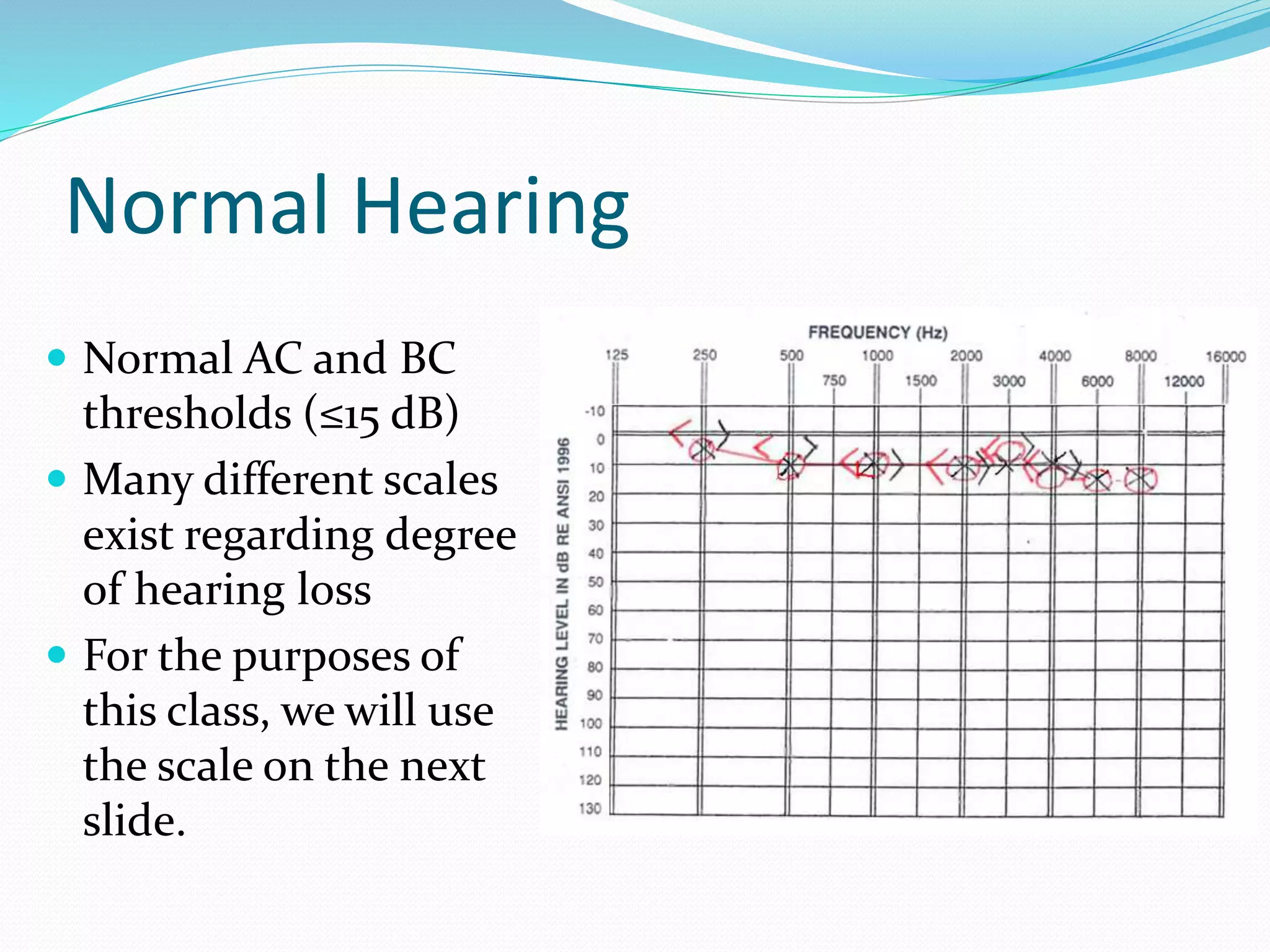
 Normal AC and BC
thresholds (≤15 dB)
 Many different scales
exist regarding degree
of hearing loss
 For the purposes of
this class, we will use
the scale on the next
slide.
Degree of Hearing Loss
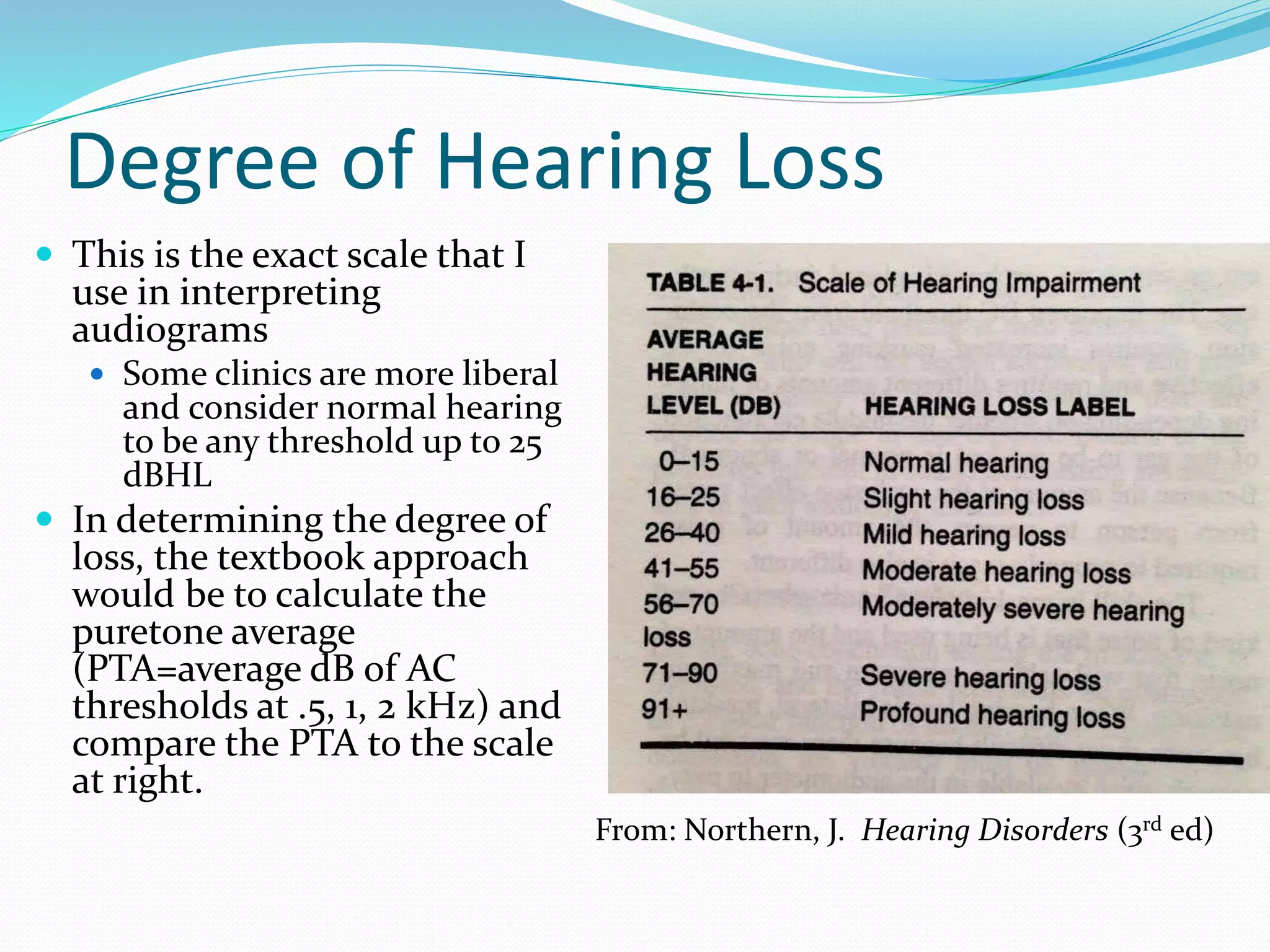
 This is the exact scale that I
use in interpreting
audiograms
 Some clinics are more liberal
and consider normal hearing
to be any threshold up to 25
dBHL
 In determining the degree of
loss, the textbook approach
would be to calculate the
puretone average
(PTA=average dB of AC
thresholds at .5, 1, 2 kHz) and
compare the PTA to the scale
at right.
From: Northern, J. Hearing Disorders (3rd ed)
Audiometric Interpretation
 If a patient has a disorder of the outer and/or middle
ear ONLY, then AC thresholds will be abnormal in the
presence of normal BC thresholds
 Air-bone gap = greater than or equal to 15dB difference
between AC and BC
 This is called a conductive hearing loss (CHL), as
sound cannot properly conduct through the outer
and/or middle ear to reach the normal-hearing
cochlea
Some Causes of CHL
 Anotia
 Microtia
 Atresia
 Outer ear infection
 Middle ear infection
 Otosclerosis
 Dislocation of the middle ear bones
 Cholesteatoma
 Ear wax!
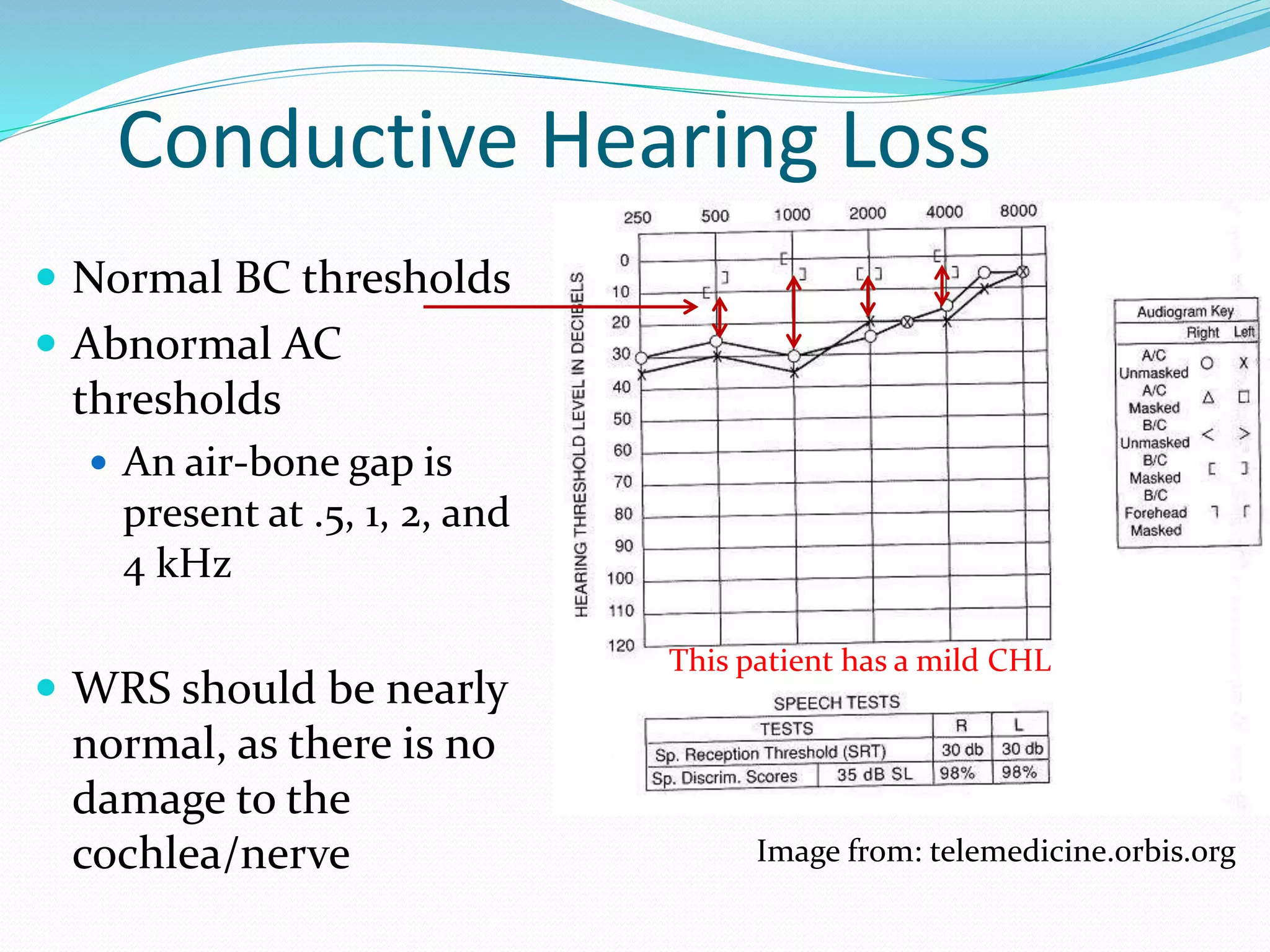
Conductive Hearing Loss
 Normal BC thresholds
 Abnormal AC
thresholds
 An air-bone gap is
present at .5, 1, 2, and
4 kHz
 WRS should be nearly
normal, as there is no
damage to the
cochlea/nerve Image from: telemedicine.orbis.org
This patient has a mild CHL
Collapsing Canals
 If you ever discover a conductive hearing loss
component in the high frequencies when you are using
traditional headphones, it is necessary to retest your
air-conduction thresholds using inserts.
 The pressure of traditional headphones can actually
cause a collapse of the ear canal in some patients
(especially true in the elderly)
Audiometric Interpretation
 If a patient has a disorder of the inner ear and/or
auditory nerve, then AC thresholds will be equal to BC
thresholds (no air-bone gap) and both will be
abnormal
 This is called a sensorineural hearing loss (SNHL)
Some Causes of SNHL
 Aging (presbycusis)
 Noise Exposure
 Genetics
 Acoustic Neuroma
 Meniere’s Disease
 Ototoxic Drugs
Sensorineural Hearing Loss
 Abnormal AC and BC
thresholds
 No air-bone gap
 WRS will vary depending
on degree of loss and
cochlear vs. neural
damage
 According to the PTA
method of determining
degree of HL, this patient
has a slight SNHL.
 However, due to the
sloping configuration, it is
more accurate to define
the loss as a slight-
sloping-to-severe SNHL.
Image from: telemedicine.orbis.org
Puretone Audiometry Interpretation
 If a patient has a disorder of the inner ear and/or
auditory nerve AND an outer/middle ear disorder,
then both AC thresholds and BC thresholds will be
abnormal AND an air-bone gap will exist
 This is called a mixed hearing loss (MHL)
 Example: 75 yo, male with age-related hearing loss and
bilateral otitis media
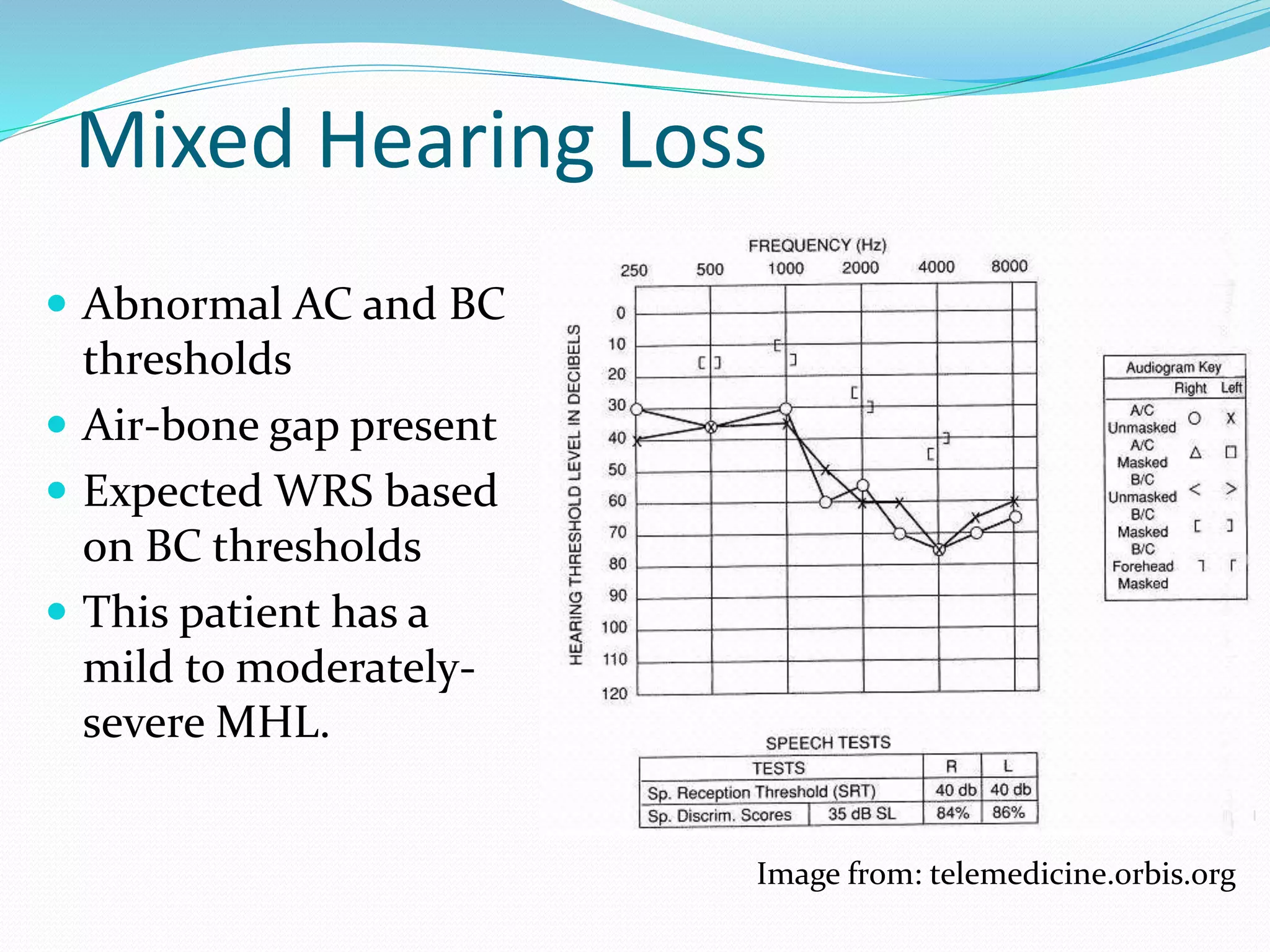
Mixed Hearing Loss
 Abnormal AC and BC
thresholds
 Air-bone gap present
 Expected WRS based
on BC thresholds
 This patient has a
mild to moderately-
severe MHL.
Image from: telemedicine.orbis.org
Configuration of HL
 Flat
 Thresholds within 20dB of each other across all frequencies
 Rising
 Low frequency thresholds are at least 20dB poorer than high
frequencies
 Sloping
 High frequency thresholds are at least 20dB poorer than low
frequencies
 Precipitous
 High frequency thresholds worsen by at least 20dB per octave
Always keep these FDA Regulations
in mind…
 If any of the following conditions exist, a patient must be
referred for a medical evaluation by a physician (preferably
an ENT):
 Visible congenital or traumatic deformity of the ear.
 History of active drainage from the ear in the previous 90
days.
 History of sudden or rapidly progressive hearing loss within
the previous 90 days.
 Acute or chronic dizziness.
 Unilateral hearing loss of sudden or recent onset within the
previous 90 days.
 Audiometric air-bone gap equal to or greater than 15 decibels
at 500 Hz, 1,000 Hz, and 2,000 Hz.
 Visible evidence of significant cerumen accumulation or a
foreign body in the ear canal.
 Pain or discomfort in the ear.

Audiogram interpretation

  • 1.
  • 2.
    Hearing Loss isdefined by…  Degree/Magnitude of Loss  Normal, slight, mild, moderate, moderately-severe, severe, profound  Type of Loss  Conductive  Sensorineural  Mixed  Configuration of Loss  Flat, rising, sloping, precipitous
  • 3.
    Normal Hearing  NormalAC and BC thresholds (≤15 dB)  Many different scales exist regarding degree of hearing loss  For the purposes of this class, we will use the scale on the next slide.
  • 4.
    Degree of HearingLoss  This is the exact scale that I use in interpreting audiograms  Some clinics are more liberal and consider normal hearing to be any threshold up to 25 dBHL  In determining the degree of loss, the textbook approach would be to calculate the puretone average (PTA=average dB of AC thresholds at .5, 1, 2 kHz) and compare the PTA to the scale at right. From: Northern, J. Hearing Disorders (3rd ed)
  • 5.
    Audiometric Interpretation  Ifa patient has a disorder of the outer and/or middle ear ONLY, then AC thresholds will be abnormal in the presence of normal BC thresholds  Air-bone gap = greater than or equal to 15dB difference between AC and BC  This is called a conductive hearing loss (CHL), as sound cannot properly conduct through the outer and/or middle ear to reach the normal-hearing cochlea
  • 6.
    Some Causes ofCHL  Anotia  Microtia  Atresia  Outer ear infection  Middle ear infection  Otosclerosis  Dislocation of the middle ear bones  Cholesteatoma  Ear wax!
  • 7.
    Conductive Hearing Loss Normal BC thresholds  Abnormal AC thresholds  An air-bone gap is present at .5, 1, 2, and 4 kHz  WRS should be nearly normal, as there is no damage to the cochlea/nerve Image from: telemedicine.orbis.org This patient has a mild CHL
  • 8.
    Collapsing Canals  Ifyou ever discover a conductive hearing loss component in the high frequencies when you are using traditional headphones, it is necessary to retest your air-conduction thresholds using inserts.  The pressure of traditional headphones can actually cause a collapse of the ear canal in some patients (especially true in the elderly)
  • 9.
    Audiometric Interpretation  Ifa patient has a disorder of the inner ear and/or auditory nerve, then AC thresholds will be equal to BC thresholds (no air-bone gap) and both will be abnormal  This is called a sensorineural hearing loss (SNHL)
  • 10.
    Some Causes ofSNHL  Aging (presbycusis)  Noise Exposure  Genetics  Acoustic Neuroma  Meniere’s Disease  Ototoxic Drugs
  • 11.
    Sensorineural Hearing Loss Abnormal AC and BC thresholds  No air-bone gap  WRS will vary depending on degree of loss and cochlear vs. neural damage  According to the PTA method of determining degree of HL, this patient has a slight SNHL.  However, due to the sloping configuration, it is more accurate to define the loss as a slight- sloping-to-severe SNHL. Image from: telemedicine.orbis.org
  • 12.
    Puretone Audiometry Interpretation If a patient has a disorder of the inner ear and/or auditory nerve AND an outer/middle ear disorder, then both AC thresholds and BC thresholds will be abnormal AND an air-bone gap will exist  This is called a mixed hearing loss (MHL)  Example: 75 yo, male with age-related hearing loss and bilateral otitis media
  • 13.
    Mixed Hearing Loss Abnormal AC and BC thresholds  Air-bone gap present  Expected WRS based on BC thresholds  This patient has a mild to moderately- severe MHL. Image from: telemedicine.orbis.org
  • 14.
    Configuration of HL Flat  Thresholds within 20dB of each other across all frequencies  Rising  Low frequency thresholds are at least 20dB poorer than high frequencies  Sloping  High frequency thresholds are at least 20dB poorer than low frequencies  Precipitous  High frequency thresholds worsen by at least 20dB per octave
  • 15.
    Always keep theseFDA Regulations in mind…  If any of the following conditions exist, a patient must be referred for a medical evaluation by a physician (preferably an ENT):  Visible congenital or traumatic deformity of the ear.  History of active drainage from the ear in the previous 90 days.  History of sudden or rapidly progressive hearing loss within the previous 90 days.  Acute or chronic dizziness.  Unilateral hearing loss of sudden or recent onset within the previous 90 days.  Audiometric air-bone gap equal to or greater than 15 decibels at 500 Hz, 1,000 Hz, and 2,000 Hz.  Visible evidence of significant cerumen accumulation or a foreign body in the ear canal.  Pain or discomfort in the ear.