Ozarks Technical Community College
HIS 120
Disorders of the
Peripheral Auditory System
Disorders of the Outer & Middle Ear
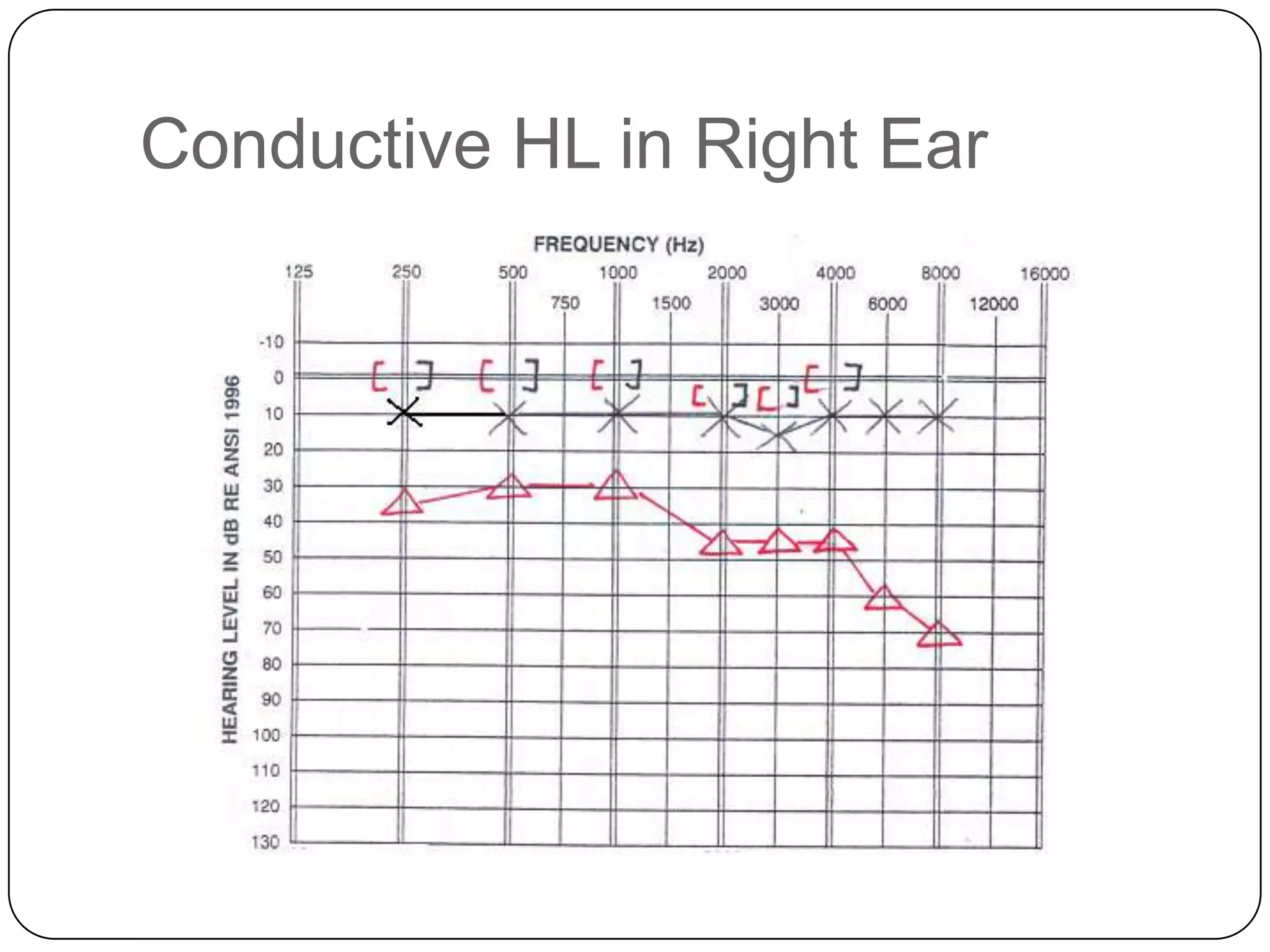
 Causes a conductive hearing loss (CHL)
 On the audiogram, you would find normal bone
conduction thresholds and abnormal air conduction
thresholds
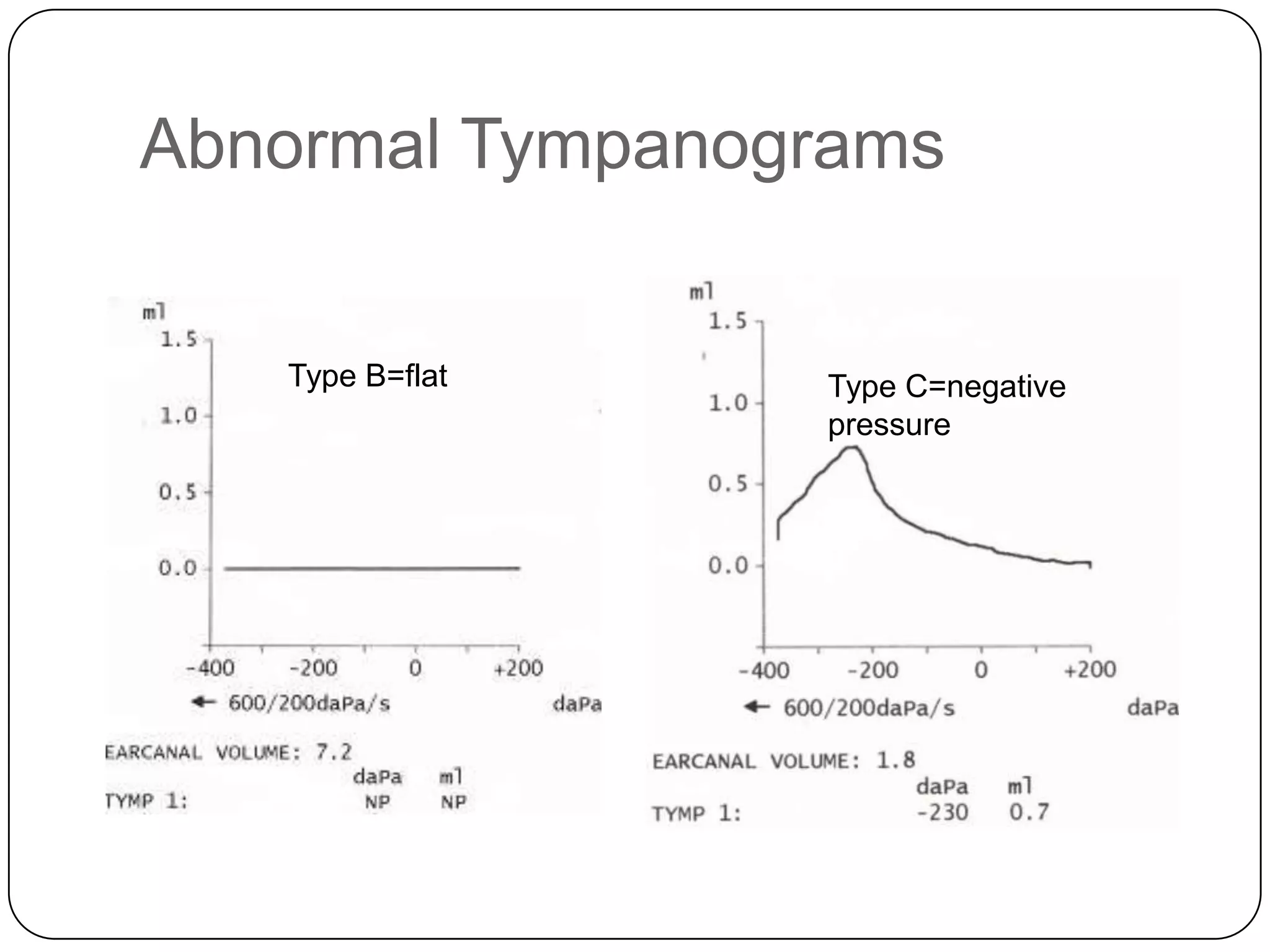
 Tympanograms (test of middle ear function) will be
abnormal
Conductive HL in Right Ear
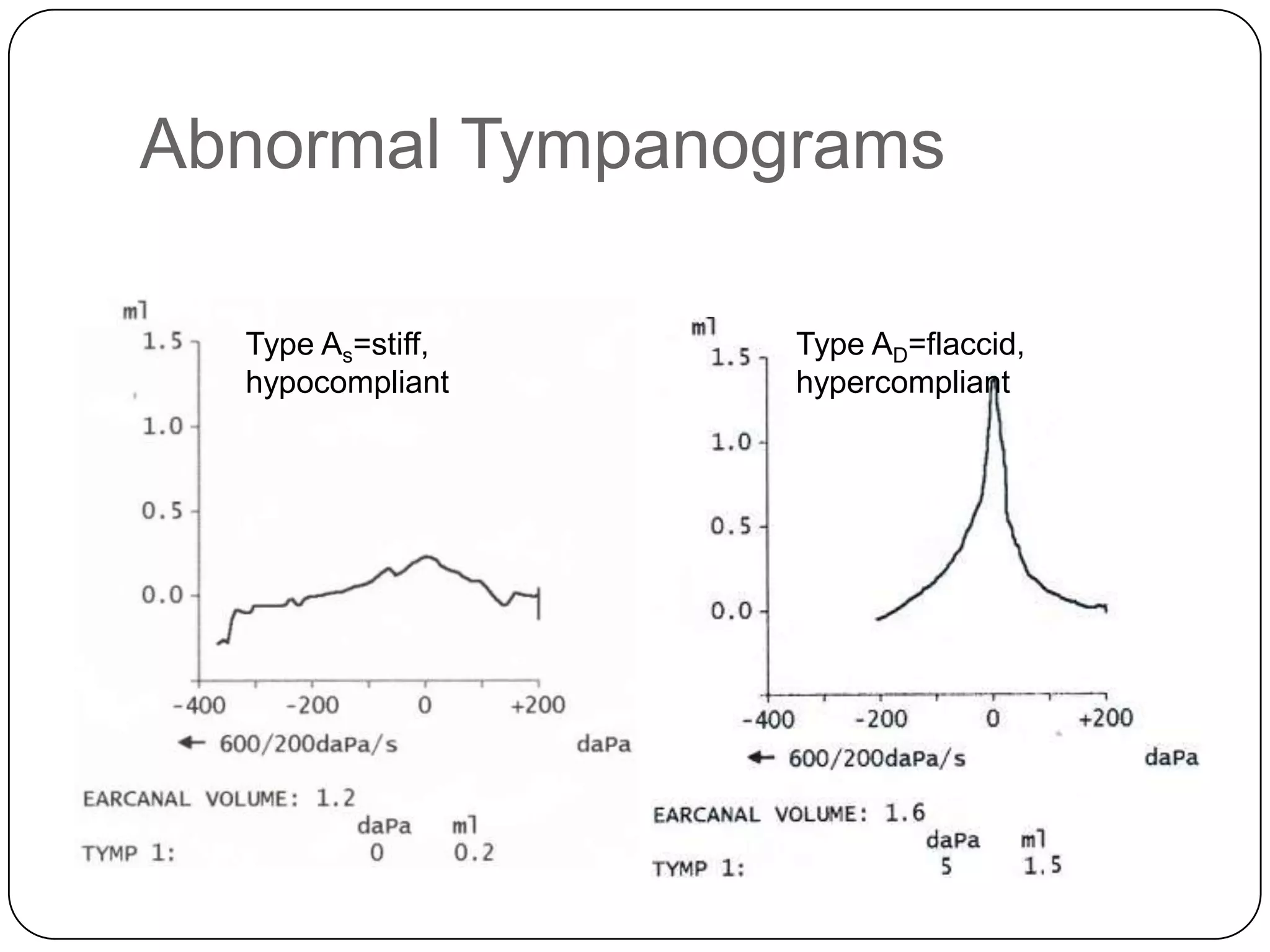
Abnormal Tympanograms
Type B=flat Type C=negative
pressure
Abnormal Tympanograms
Type As=stiff,
hypocompliant
Type AD=flaccid,
hypercompliant
Outer Ear Pathologies
 Anotia
o absence of the outer ear
 Microtia
o malformation of the outer ear
 Wax build-up
 Otitis Externa
o aka swimmer’s ear or outer ear infection (bacterial)
 Atresia
o absent or closed earcanal
 Stenosis
o narrowing of EAC
 Otomycosis
o fungal infection of EAC
 Exostoses
o bony growth in EAC, common in cold water swimmers
 Osteoma
o bony tumor in EAC
Tympanic Membrane Pathologies
 Myringitis
o inflammation of TM
 Tympanosclerosis
o thickening and scarring of the TM
 Perforation
o hole or tear in the TM
o May be caused by fluid pressure due to otitis media,
barotrauma (rapid pressure change due to flying or
scuba diving), or self-inflicted (q-tip use)
Middle Ear Pathologies
 Otitis media (OM)=middle ear infection
 Otitis media with effusion (fluid)
 May be acute (sudden onset) or chronic (long-lasting)
 Eustachian tube dysfunction
 malfunction of Eustachian tube
 Causes retraction of TM and popping, crackling,
pressure, pain
 Patulous Eustachian tube
 Eustachian tube is stuck open (patent)
 Autophony, hearing one’s own voice in head, is common
complaint
 Otosclerosis
 Bony growth over stapes footplate and fixation to oval
window
 Ossicular chain discontinuity
 Loss of connection between the ossicles; usually due to
head injury
Treatment for Conductive HL
 Medical
 Antibiotic eardrops, oral antibiotics for bacterial infections
 Surgical
 Myringotomy (incision in TM), pressure-equalization tubes,
ossicular repair, stapedectomy (removal of stapes and
prosthesis placement)
 Amplification
 CHL is very easy to fit with a hearing aid(s)
 Because the sensory cells of the cochlea are healthy, CHL
only requires amplification to power through the middle ear
pathology. Once the sound gets past the middle ear
problem, it is clearly transmitted through the remainder of
the auditory system with ease.
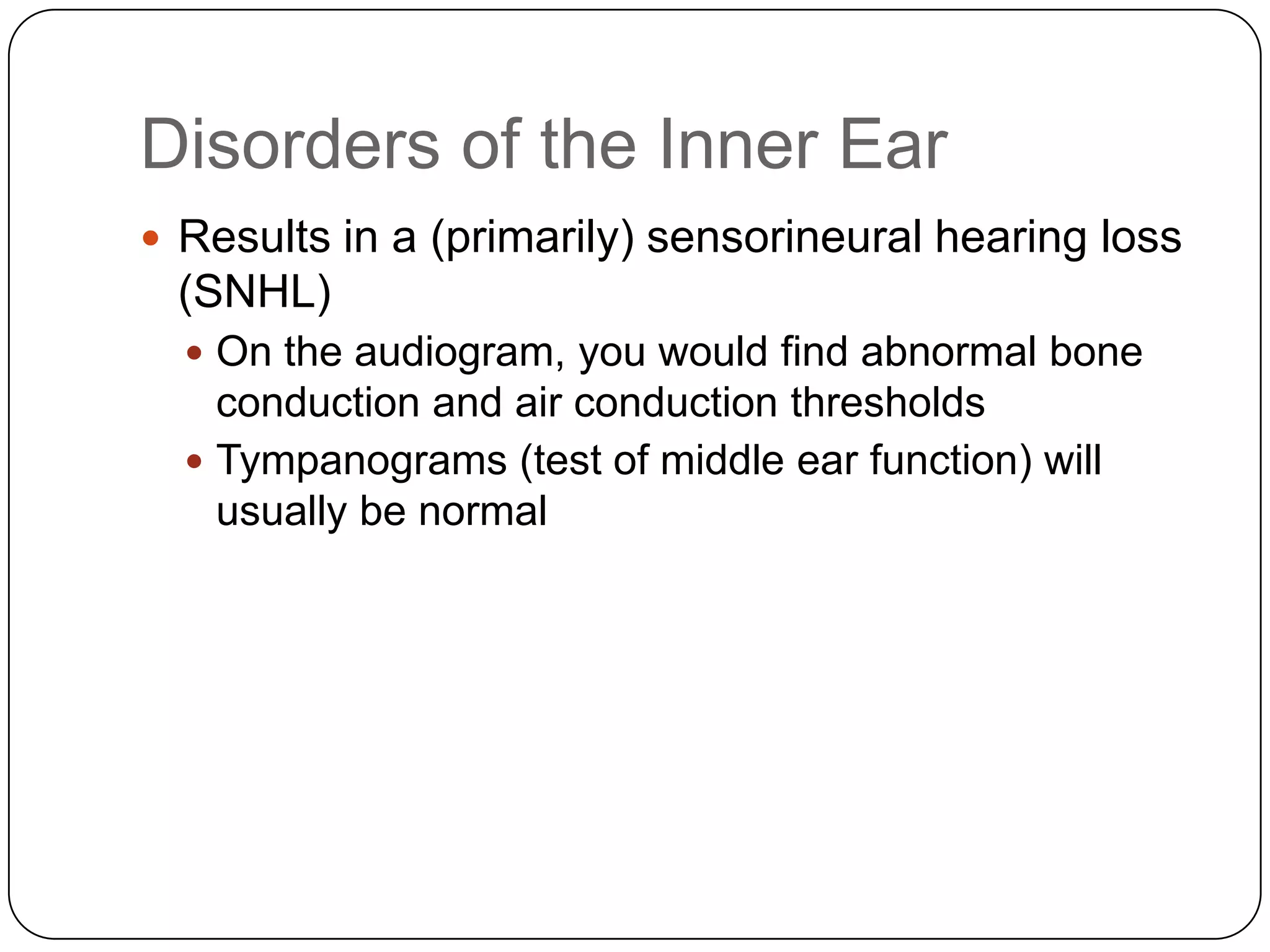
Disorders of the Inner Ear
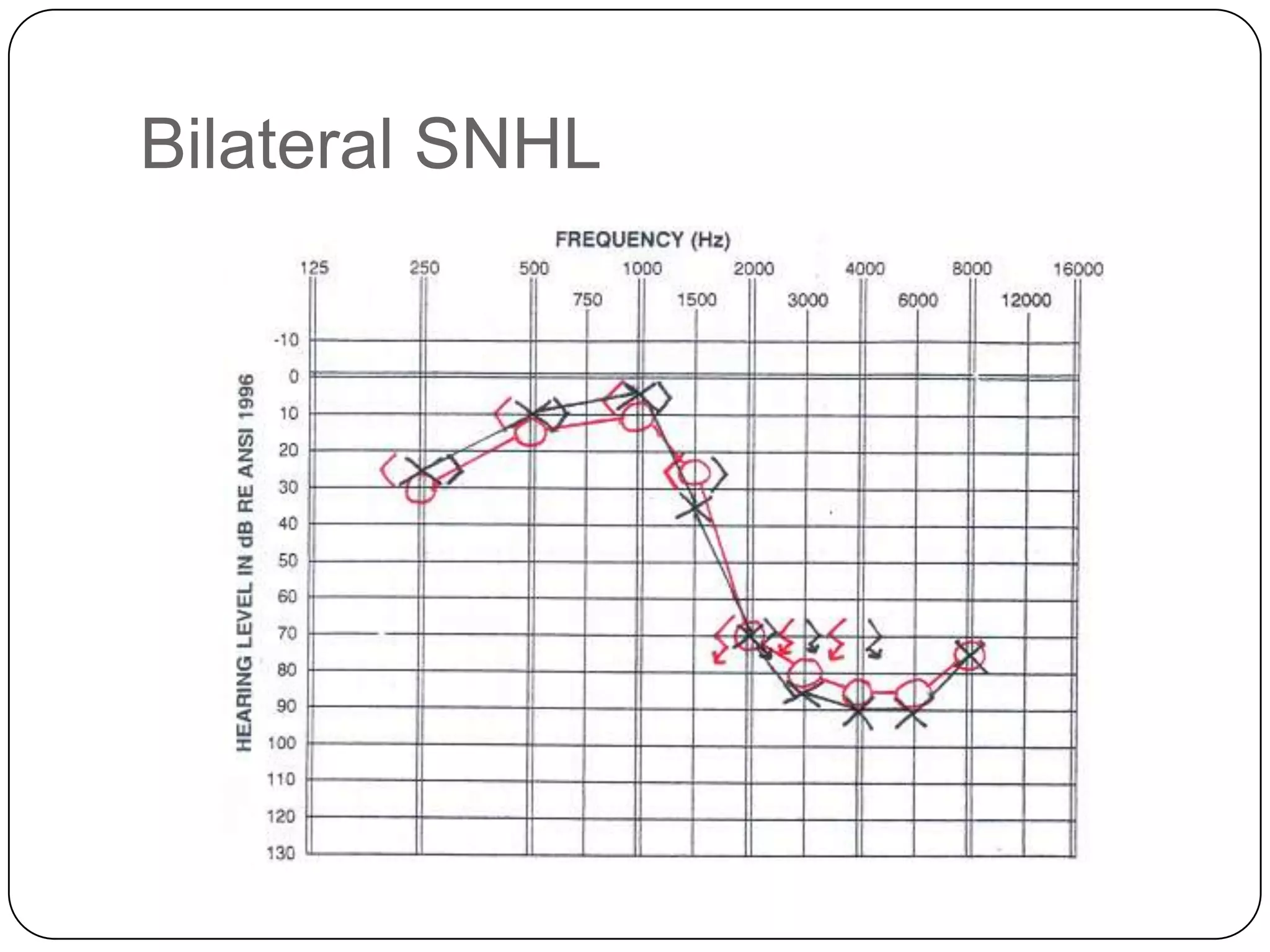
 Results in a (primarily) sensorineural hearing loss
(SNHL)
 On the audiogram, you would find abnormal bone
conduction and air conduction thresholds
 Tympanograms (test of middle ear function) will
usually be normal
Bilateral SNHL
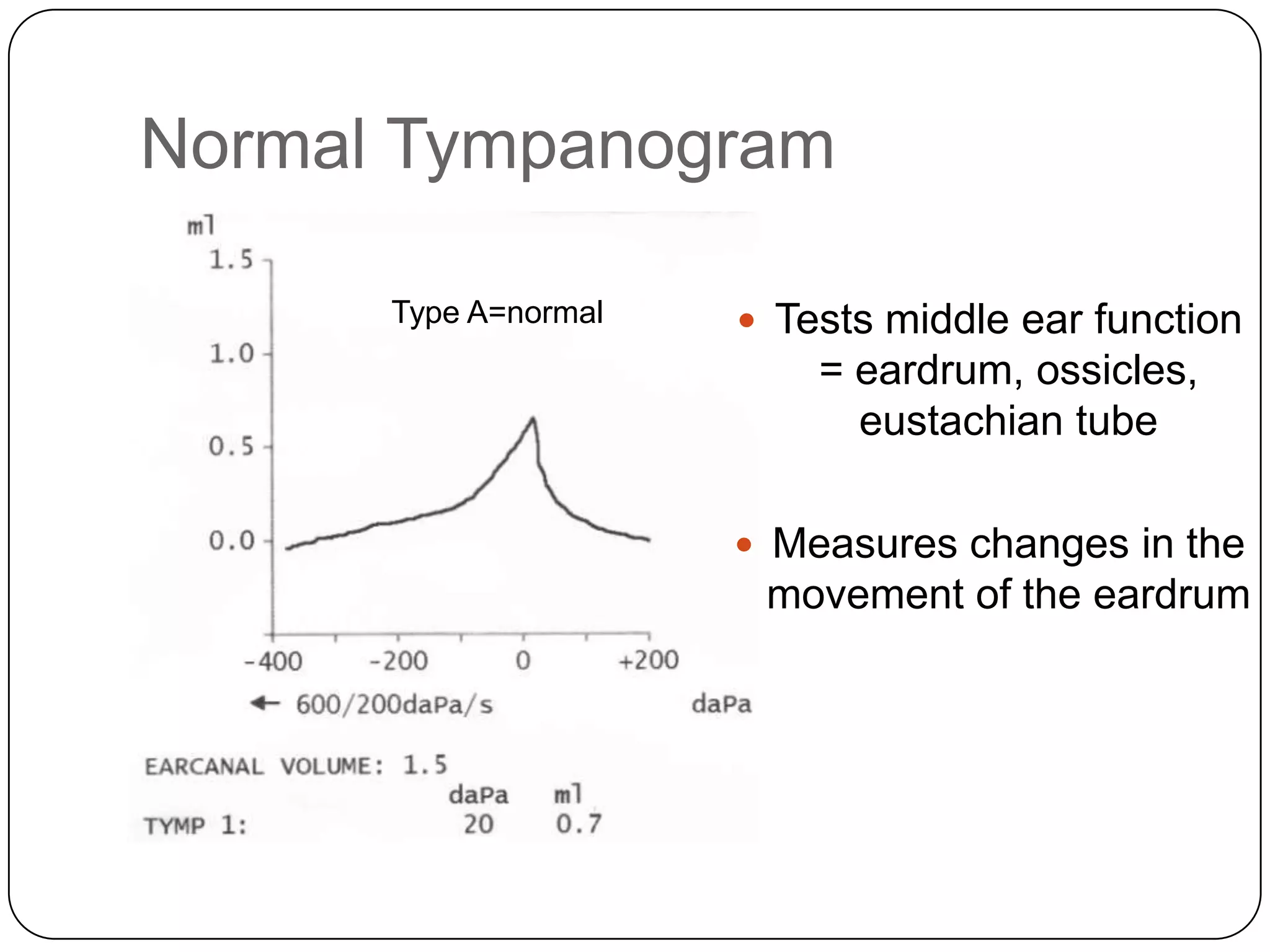
Normal Tympanogram
 Tests middle ear function
= eardrum, ossicles,
eustachian tube
 Measures changes in the
movement of the eardrum
Type A=normal
Inner Ear Pathologies Presbycusis
 Age-related hearing loss; effects the high frequencies first
 Noise-Induced Hearing Loss (NIHL)
 Exactly like it sounds; dependent on intensity, duration, and
type of noise exposure, classic “noise notch” seen from 3 to
6 kHz, with recovery at 8 kHz
 Meniere’s disease
 Overacummulation of endolymph in the cochlea;
characterized by attacks of vertigo, tinnitus (roaring), low-
frequency SNHL (usually unilateral), nausea/vomiting
 Ototoxicity
 High-frequency SNHL due to damaging effects of certain
drugs (most notably aminoglycoside antibiotics and
platinum-based chemo drugs)
 Perilymph fistula
 Hole (fistula) at the oval window, in which perilymph leaks
into middle ear. Fluctuating HL (SNHL or Mixed HL) and
dizziness common.
 Superior Semicircular Canal Dehiscence
 Hole or thinning of the bony lining of the superior SCC;
symptoms: fullness, autophony, dizziness with/sensitivity to
A note about sudden hearing loss
 Sudden, idiopathic sensorineural hearing loss is
any SNHL that occurs very suddenly with no
identifiable cause
 Usually unilateral
 May be partial or complete loss of hearing
 Often accompanied by dizziness and tinnitus
 Requires IMMEDIATE medical referral
 Do not assume that a patient has wax, an infection,
or a broken hearing aid if they call complaining of a
sudden inability to hear. If you can’t see them
ASAP refer them to their primary doctor or an ENT
for a same-day appointment, if possible. Steroid
treatment that occurs within the first week of the
hearing loss may result in improved/recovered
hearing.
Treatment for SNHL
 Hearing Aids
 Hearing Assistive Technology
 Cochlear Implants
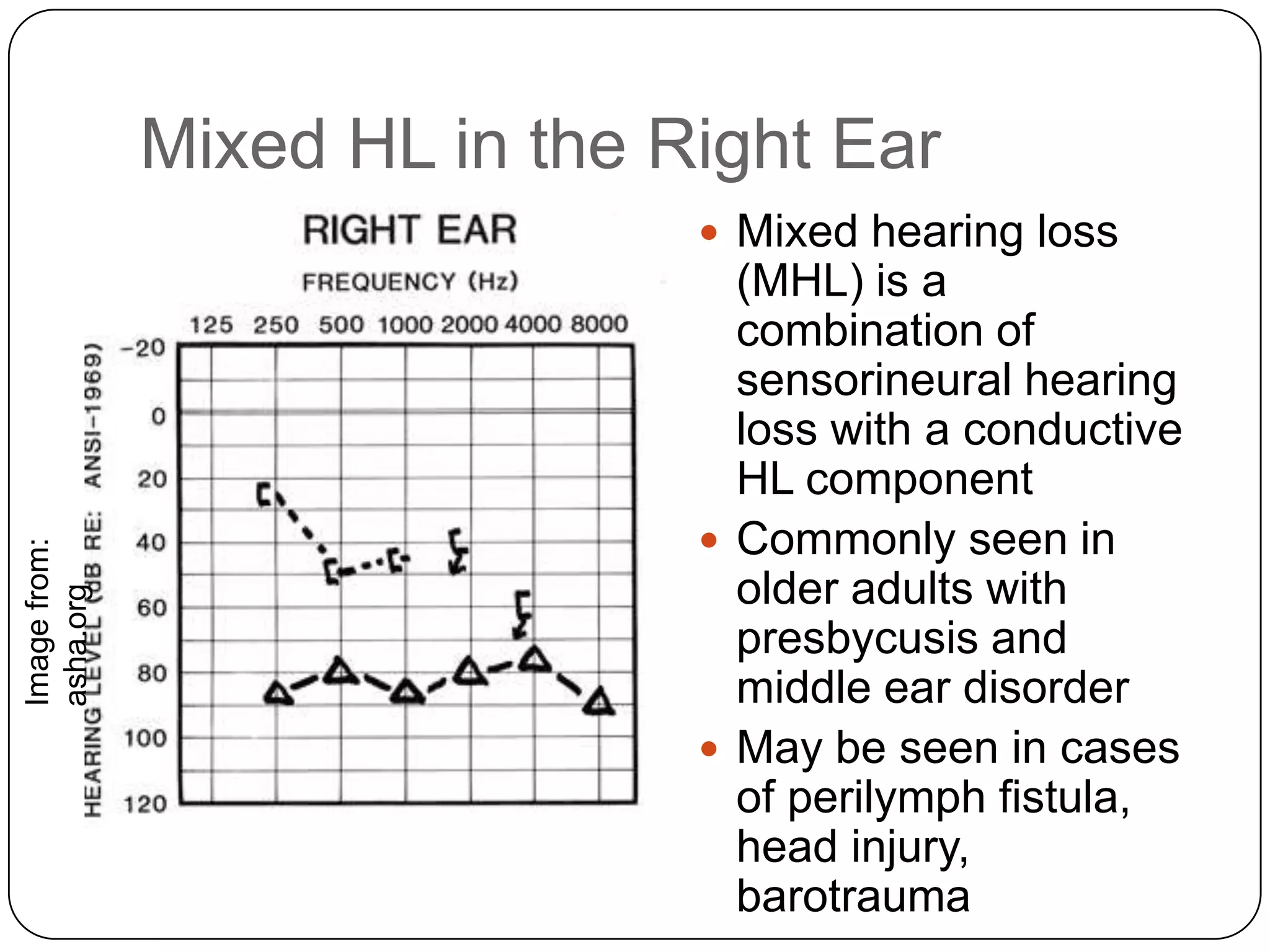
Mixed HL in the Right Ear
 Mixed hearing loss
(MHL) is a
combination of
sensorineural hearing
loss with a conductive
HL component
 Commonly seen in
older adults with
presbycusis and
middle ear disorder
 May be seen in cases
of perilymph fistula,
head injury,
barotrauma
Imagefrom:
asha.org
Treatment for MHL
 Because MHL is a combination of CHL and
SNHL, the treatment should also take a combined
approach
 Always refer to ENT for medical treatment FIRST
 Finally, amplify the hearing loss that remains

Disorders of the peripheral auditory system

  • 1.
    Ozarks Technical CommunityCollege HIS 120 Disorders of the Peripheral Auditory System
  • 2.
    Disorders of theOuter & Middle Ear  Causes a conductive hearing loss (CHL)  On the audiogram, you would find normal bone conduction thresholds and abnormal air conduction thresholds  Tympanograms (test of middle ear function) will be abnormal
  • 3.
  • 4.
    Abnormal Tympanograms Type B=flatType C=negative pressure
  • 5.
  • 6.
    Outer Ear Pathologies Anotia o absence of the outer ear  Microtia o malformation of the outer ear  Wax build-up  Otitis Externa o aka swimmer’s ear or outer ear infection (bacterial)  Atresia o absent or closed earcanal  Stenosis o narrowing of EAC  Otomycosis o fungal infection of EAC  Exostoses o bony growth in EAC, common in cold water swimmers  Osteoma o bony tumor in EAC
  • 7.
    Tympanic Membrane Pathologies Myringitis o inflammation of TM  Tympanosclerosis o thickening and scarring of the TM  Perforation o hole or tear in the TM o May be caused by fluid pressure due to otitis media, barotrauma (rapid pressure change due to flying or scuba diving), or self-inflicted (q-tip use)
  • 8.
    Middle Ear Pathologies Otitis media (OM)=middle ear infection  Otitis media with effusion (fluid)  May be acute (sudden onset) or chronic (long-lasting)  Eustachian tube dysfunction  malfunction of Eustachian tube  Causes retraction of TM and popping, crackling, pressure, pain  Patulous Eustachian tube  Eustachian tube is stuck open (patent)  Autophony, hearing one’s own voice in head, is common complaint  Otosclerosis  Bony growth over stapes footplate and fixation to oval window  Ossicular chain discontinuity  Loss of connection between the ossicles; usually due to head injury
  • 9.
    Treatment for ConductiveHL  Medical  Antibiotic eardrops, oral antibiotics for bacterial infections  Surgical  Myringotomy (incision in TM), pressure-equalization tubes, ossicular repair, stapedectomy (removal of stapes and prosthesis placement)  Amplification  CHL is very easy to fit with a hearing aid(s)  Because the sensory cells of the cochlea are healthy, CHL only requires amplification to power through the middle ear pathology. Once the sound gets past the middle ear problem, it is clearly transmitted through the remainder of the auditory system with ease.
  • 10.
    Disorders of theInner Ear  Results in a (primarily) sensorineural hearing loss (SNHL)  On the audiogram, you would find abnormal bone conduction and air conduction thresholds  Tympanograms (test of middle ear function) will usually be normal
  • 11.
  • 12.
    Normal Tympanogram  Testsmiddle ear function = eardrum, ossicles, eustachian tube  Measures changes in the movement of the eardrum Type A=normal
  • 13.
    Inner Ear PathologiesPresbycusis  Age-related hearing loss; effects the high frequencies first  Noise-Induced Hearing Loss (NIHL)  Exactly like it sounds; dependent on intensity, duration, and type of noise exposure, classic “noise notch” seen from 3 to 6 kHz, with recovery at 8 kHz  Meniere’s disease  Overacummulation of endolymph in the cochlea; characterized by attacks of vertigo, tinnitus (roaring), low- frequency SNHL (usually unilateral), nausea/vomiting  Ototoxicity  High-frequency SNHL due to damaging effects of certain drugs (most notably aminoglycoside antibiotics and platinum-based chemo drugs)  Perilymph fistula  Hole (fistula) at the oval window, in which perilymph leaks into middle ear. Fluctuating HL (SNHL or Mixed HL) and dizziness common.  Superior Semicircular Canal Dehiscence  Hole or thinning of the bony lining of the superior SCC; symptoms: fullness, autophony, dizziness with/sensitivity to
  • 14.
    A note aboutsudden hearing loss  Sudden, idiopathic sensorineural hearing loss is any SNHL that occurs very suddenly with no identifiable cause  Usually unilateral  May be partial or complete loss of hearing  Often accompanied by dizziness and tinnitus  Requires IMMEDIATE medical referral  Do not assume that a patient has wax, an infection, or a broken hearing aid if they call complaining of a sudden inability to hear. If you can’t see them ASAP refer them to their primary doctor or an ENT for a same-day appointment, if possible. Steroid treatment that occurs within the first week of the hearing loss may result in improved/recovered hearing.
  • 15.
    Treatment for SNHL Hearing Aids  Hearing Assistive Technology  Cochlear Implants
  • 16.
    Mixed HL inthe Right Ear  Mixed hearing loss (MHL) is a combination of sensorineural hearing loss with a conductive HL component  Commonly seen in older adults with presbycusis and middle ear disorder  May be seen in cases of perilymph fistula, head injury, barotrauma Imagefrom: asha.org
  • 17.
    Treatment for MHL Because MHL is a combination of CHL and SNHL, the treatment should also take a combined approach  Always refer to ENT for medical treatment FIRST  Finally, amplify the hearing loss that remains