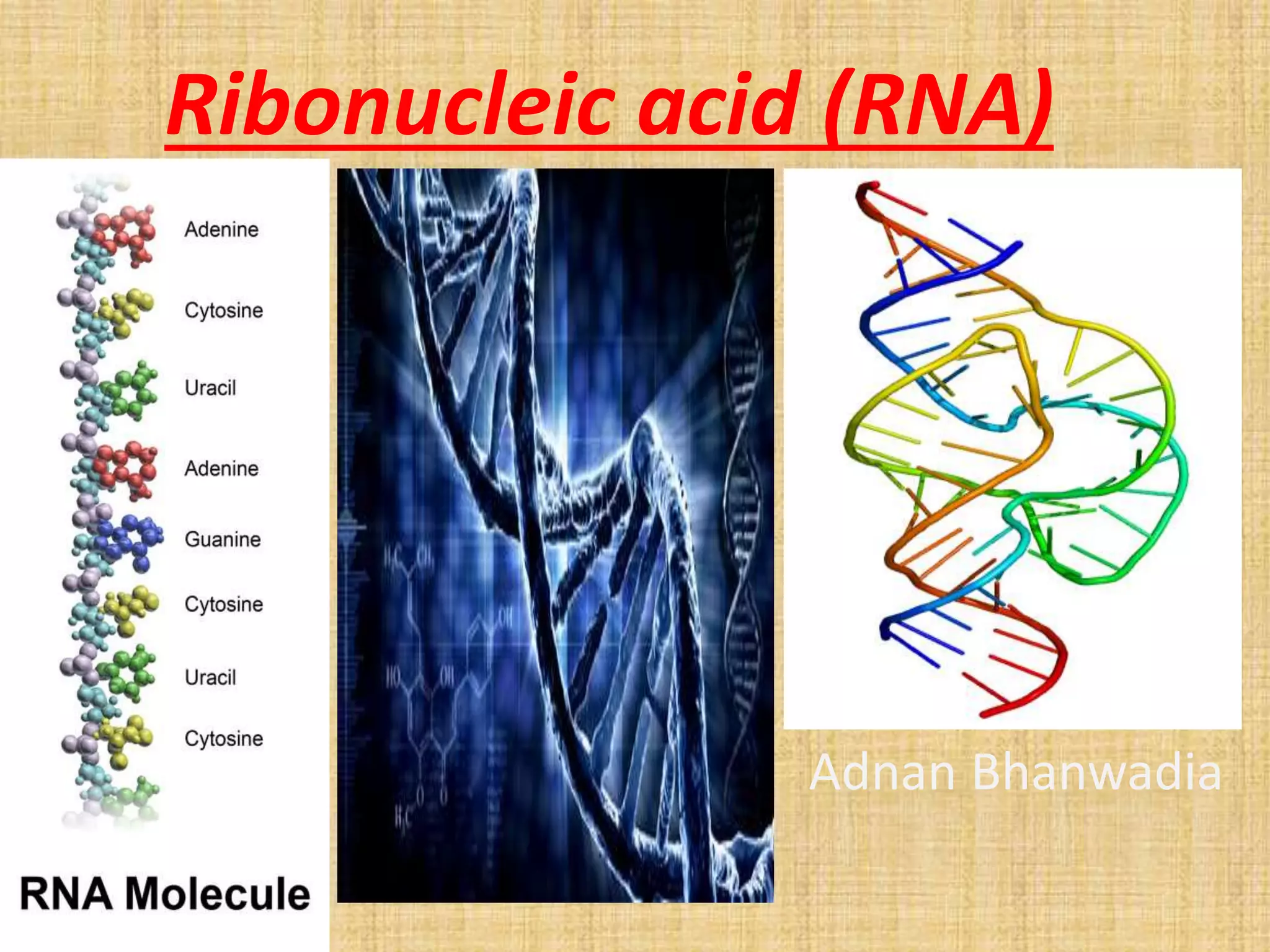
RNA is one of the major biological macromolecules essential for life. It has several types that serve different functions. Messenger RNA (mRNA) carries genetic information from DNA to the ribosomes for protein synthesis. Ribosomal RNA (rRNA) is the catalytic component of ribosomes and is involved in protein translation. Transfer RNA (tRNA) transfers specific amino acids to the growing polypeptide chain during translation.
An overview of the presentation on RNA, including nucleic acids, nucleotides, and their components.
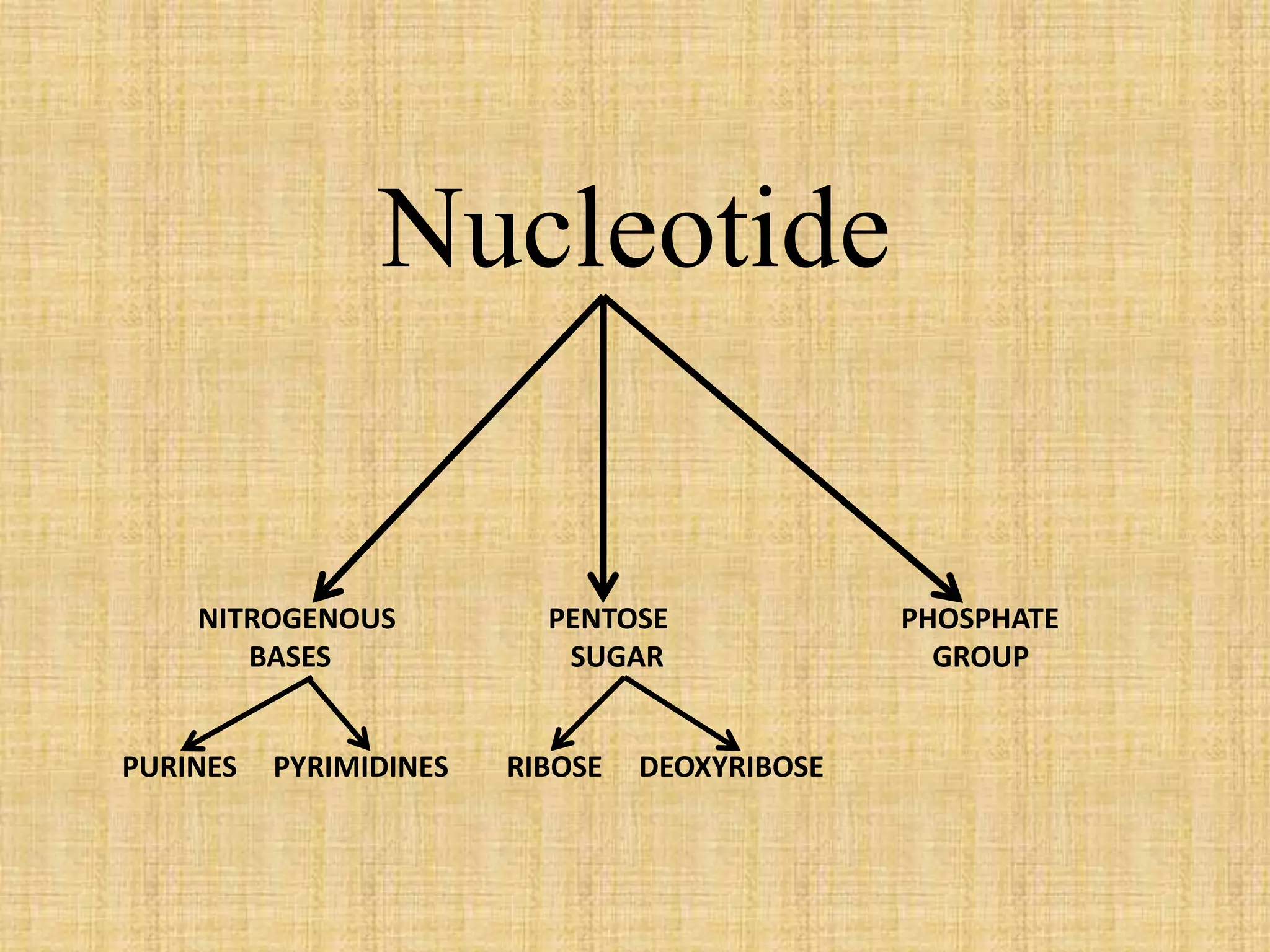
Definition of nucleic acids, e.g. RNA & DNA. Nucleotide composition includes nitrogenous bases and sugars.
Details the structure of RNA, linker types, and the significance of ribose sugar in RNA.
RNA synthesis through transcription, the role of RNA polymerase, and RNA viruses utilizing RNA template.
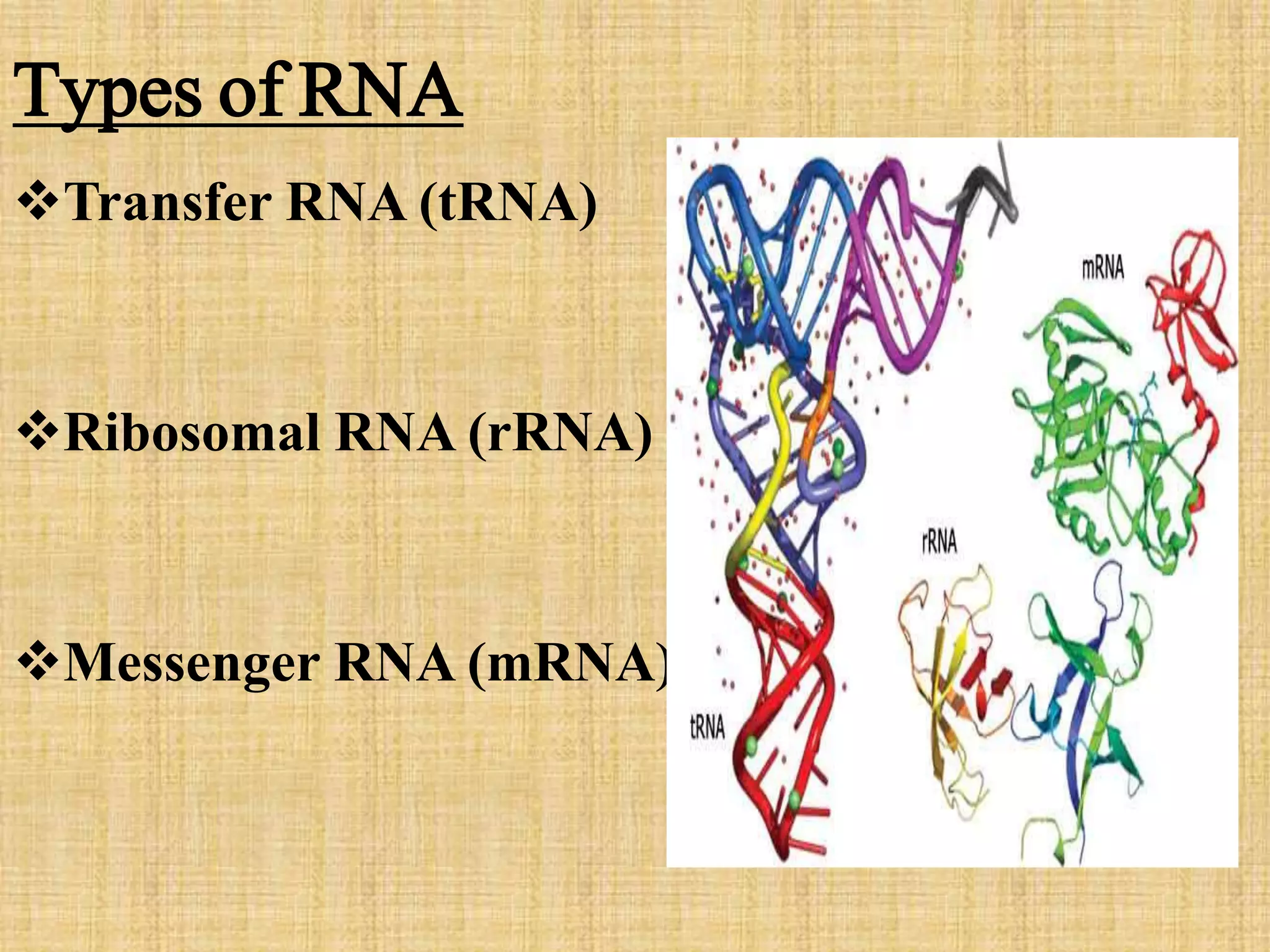
Introduction to various types of RNA - tRNA, rRNA, and mRNA.
Function of mRNA in carrying protein synthesis information, including its processing in eukaryotic cells.
rRNA's role in protein synthesis, its structural components, and prevalence in eukaryotic cells.
Function of tRNA as an adapter in protein synthesis by transferring specific amino acids to ribosomes.
Introduces various RNAs: snRNA, miRNA, siRNA, gRNA and their roles in gene silencing, RNA editing, etc. Summarizes various RNA types (mRNA, rRNA, tRNA) and their specific functions in protein synthesis and regulation.
Provides references and concludes the discussion on RNA.
What we willbe discussing?
Nucleic acids
Nucleotides
Nucleoside
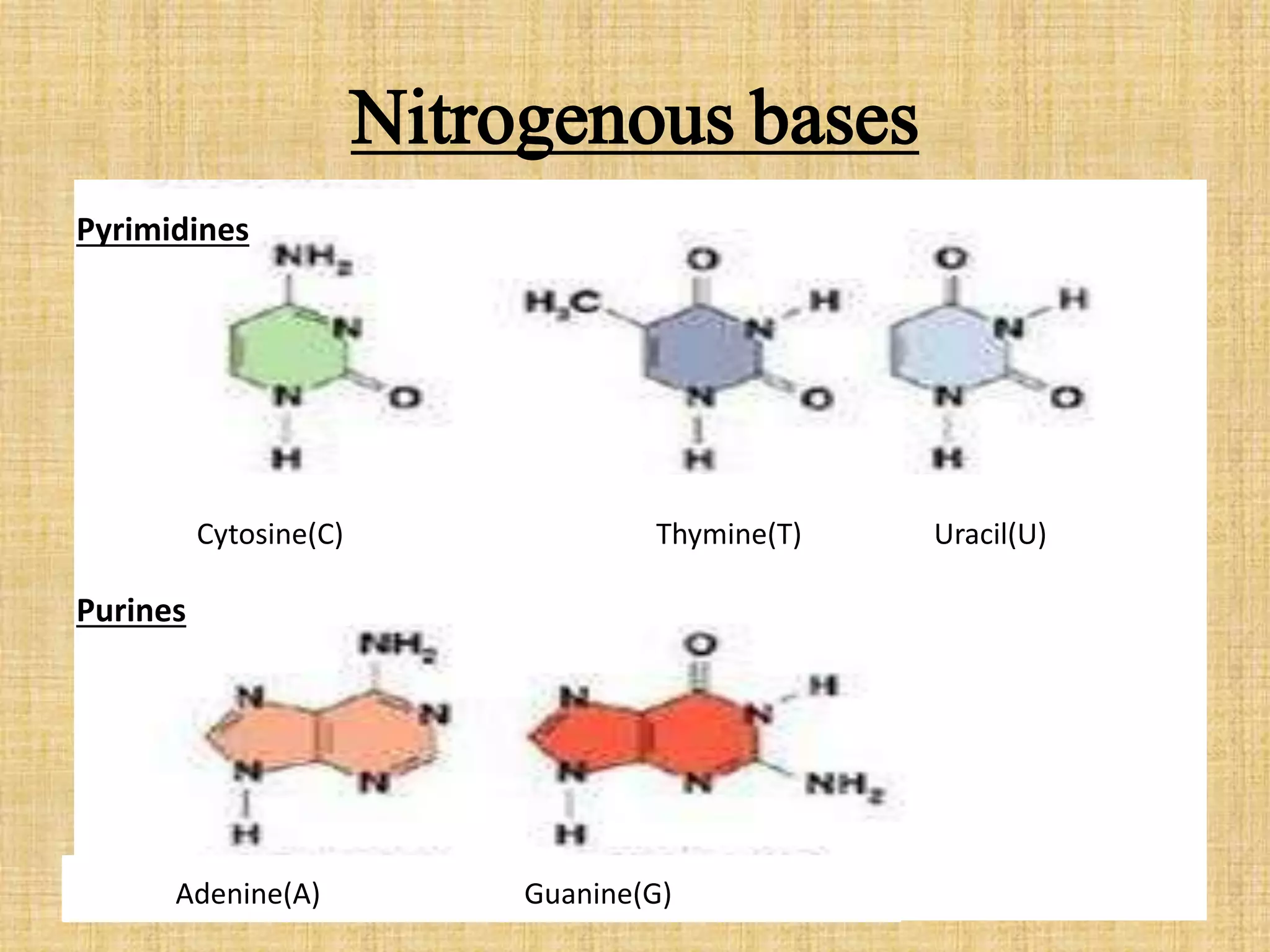
Nitrogenous bases
Pentose sugar
RNA
Introduction
Structure
Different types &
functions
Conclusion
3.
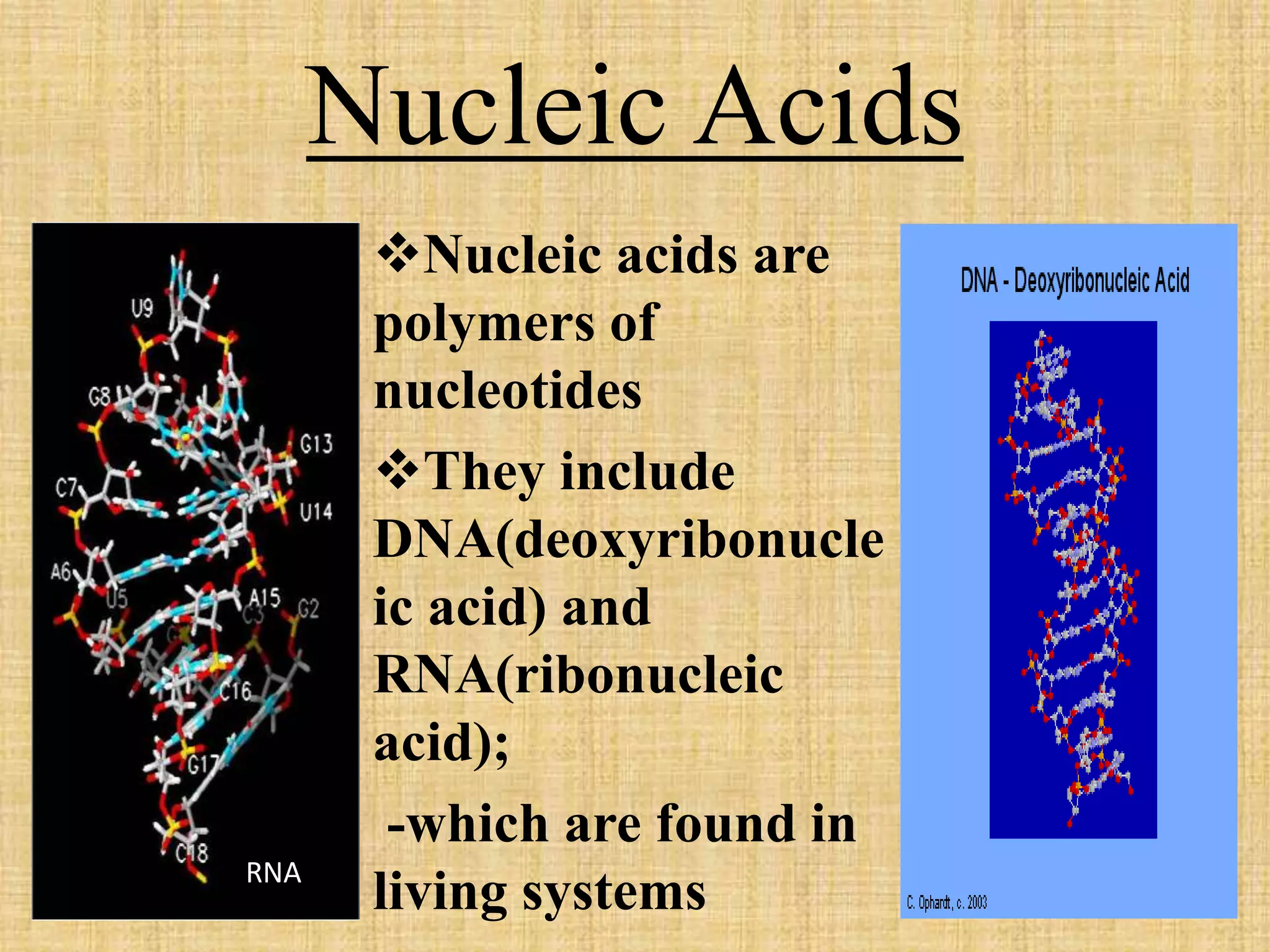
Nucleic Acids
Nucleicacids are
polymers of
nucleotides
They include
DNA(deoxyribonucle
ic acid) and
RNA(ribonucleic
acid);
-which are found in
living systems RNA
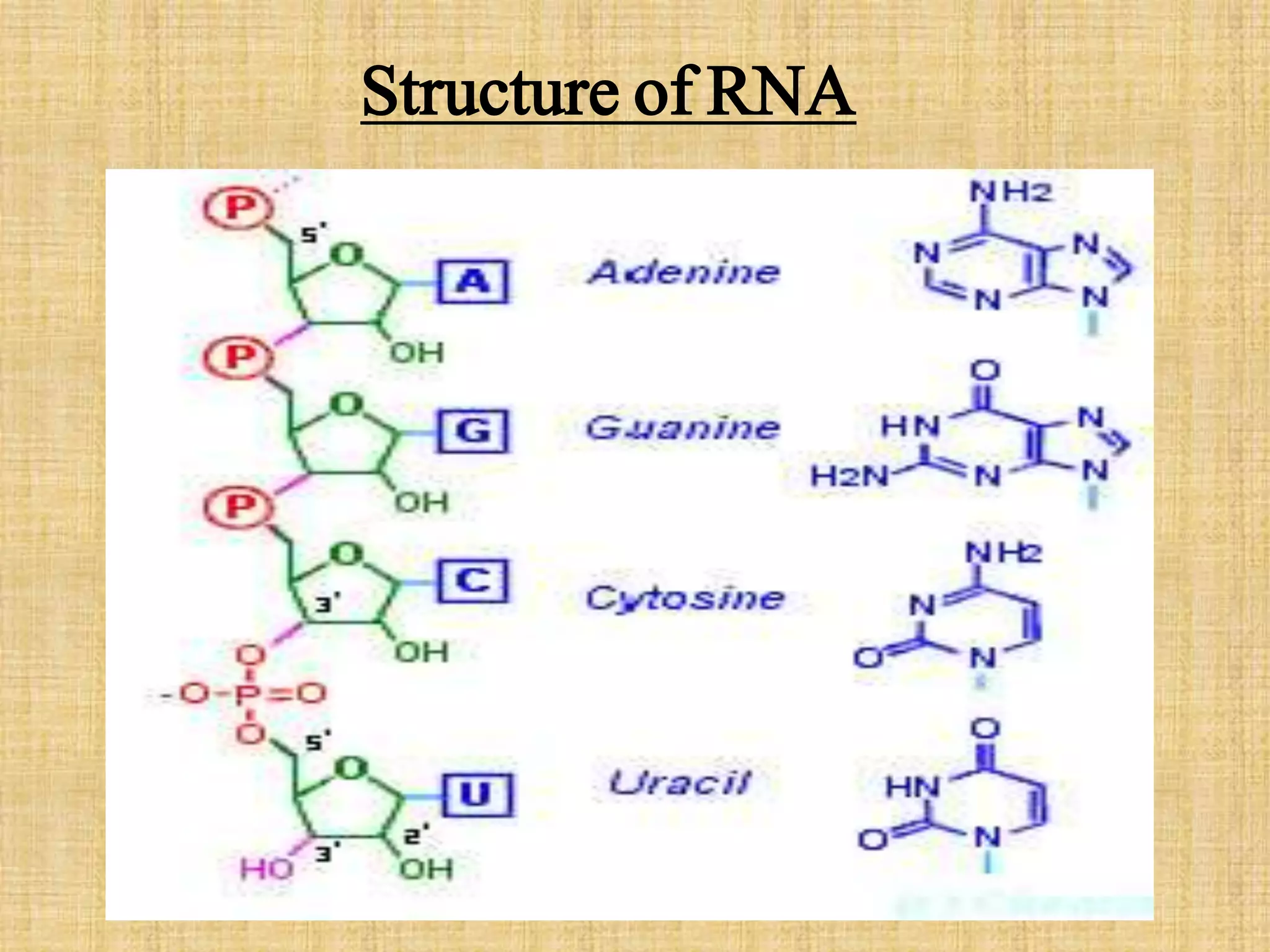
Structure of RNA
Back bone is sugar and phosphate group
Nitrogenous bases linked to sugar moiety project from
the backbone
Nitrogenous bases are linked to pentose sugar through
N-glycosidic linkage to form a nucleoside
Phosphate group is linked with 3’OH of nucleoside
through phosphoester linkage
2 nucleotides are linked through 3’-5’-phosphodiester
linkage to form a dinucleotide
7.
More and moresuch groups will be linked to form a poly
nucleotide chain
Such a polymer has a free phosphate moiety at 5’ end of
ribose sugar and it is called as 5’-end of polynucleotide chain
At other end, ribose has free 3’-OH group which is called
as the 3’-end of polynucleotide chain
In RNA, every nucleotide has an additional-OH present at
2’-position of ribose
8.
Ribonucleic acid
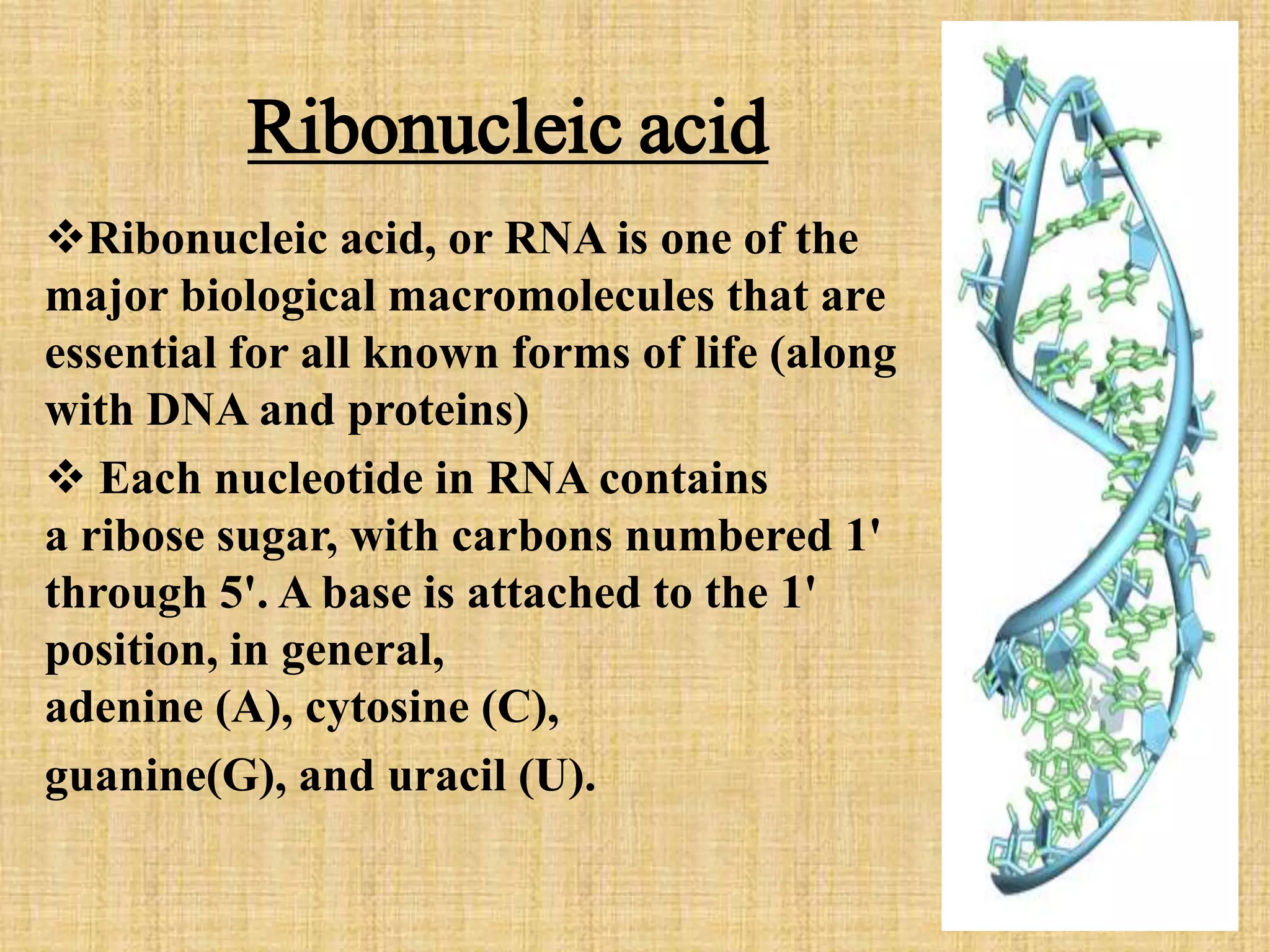
Ribonucleicacid, or RNA is one of the
major biological macromolecules that are
essential for all known forms of life (along
with DNA and proteins)
Each nucleotide in RNA contains
a ribose sugar, with carbons numbered 1'
through 5'. A base is attached to the 1'
position, in general,
adenine (A), cytosine (C),
guanine(G), and uracil (U).
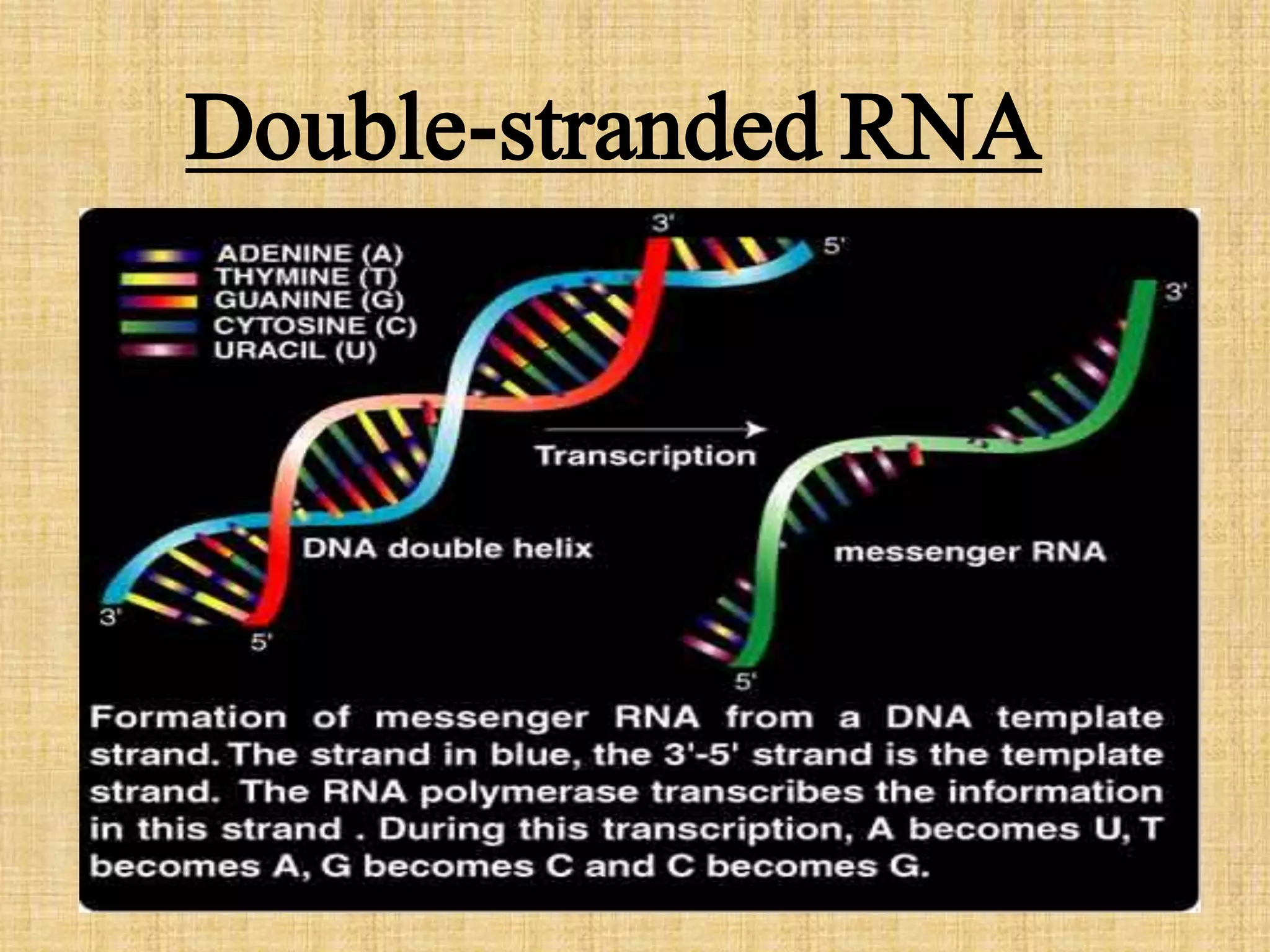
Synthesis
Synthesis ofRNA is usually catalyzed by an enzyme—
RNA polymerase
By using DNA as a template
The process is known as transcription
There are also a number of RNA-dependent RNA
polymerases that use RNA as their template for synthesis
of a new strand of RNA
A number of RNA viruses (such as poliovirus) use this
type of enzyme to replicate their genetic material
Messenger RNA (mRNA)
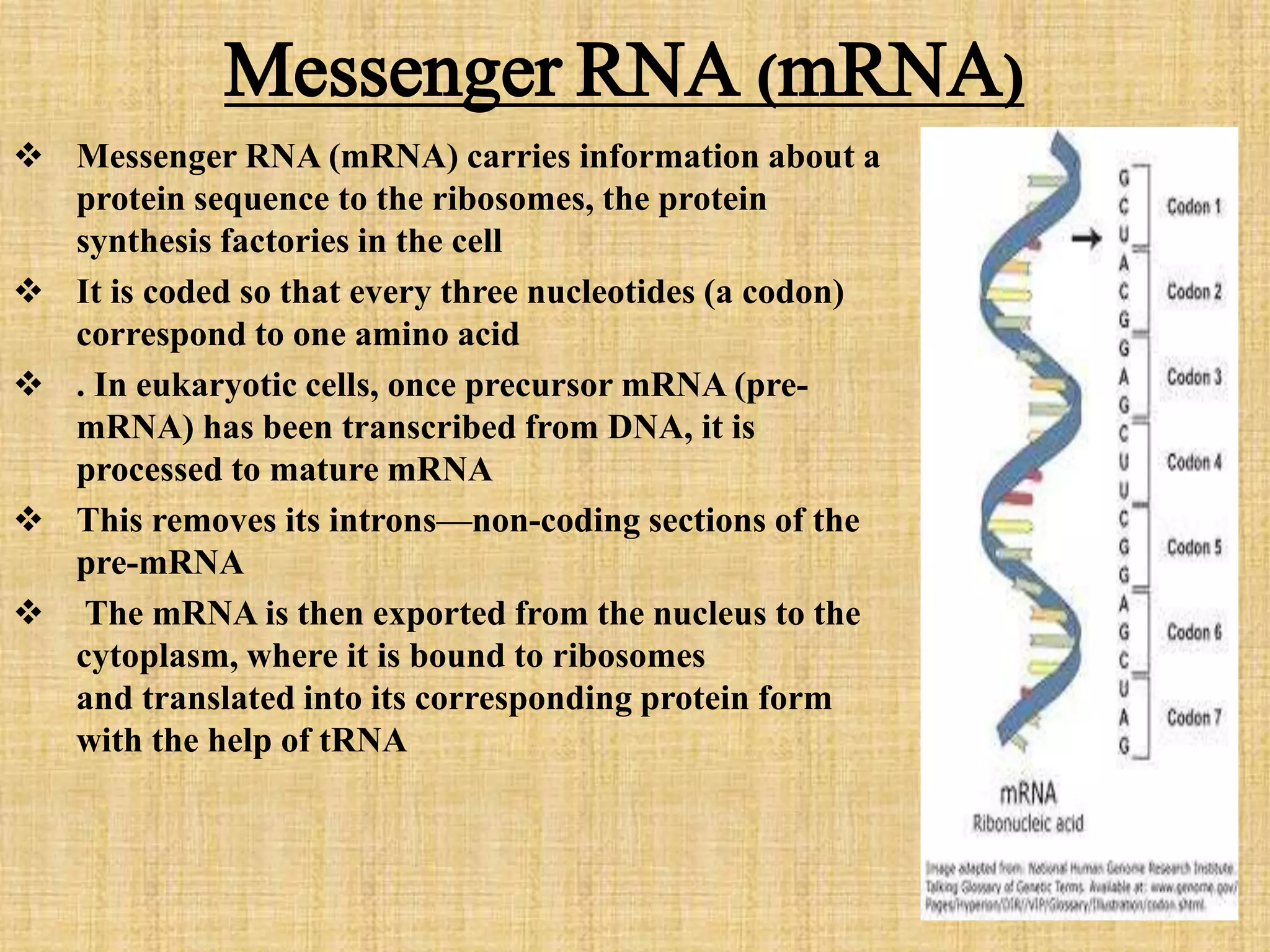
Messenger RNA (mRNA) carries information about a
protein sequence to the ribosomes, the protein
synthesis factories in the cell
It is coded so that every three nucleotides (a codon)
correspond to one amino acid
. In eukaryotic cells, once precursor mRNA (pre-mRNA)
has been transcribed from DNA, it is
processed to mature mRNA
This removes its introns—non-coding sections of the
pre-mRNA
The mRNA is then exported from the nucleus to the
cytoplasm, where it is bound to ribosomes
and translated into its corresponding protein form
with the help of tRNA
13.
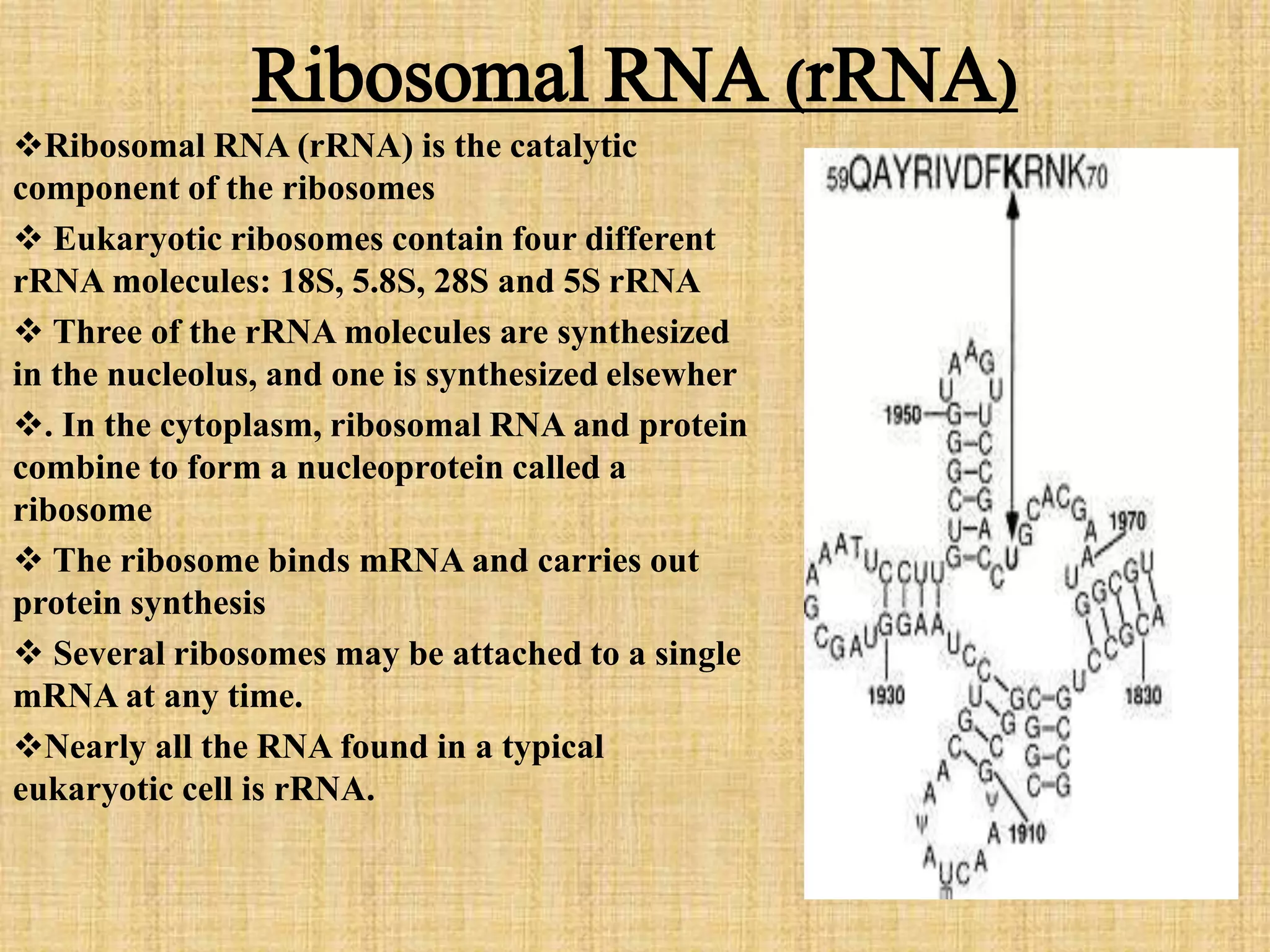
Ribosomal RNA (rRNA)
Ribosomal RNA (rRNA) is the catalytic
component of the ribosomes
Eukaryotic ribosomes contain four different
rRNA molecules: 18S, 5.8S, 28S and 5S rRNA
Three of the rRNA molecules are synthesized
in the nucleolus, and one is synthesized elsewher
. In the cytoplasm, ribosomal RNA and protein
combine to form a nucleoprotein called a
ribosome
The ribosome binds mRNA and carries out
protein synthesis
Several ribosomes may be attached to a single
mRNA at any time.
Nearly all the RNA found in a typical
eukaryotic cell is rRNA.
14.
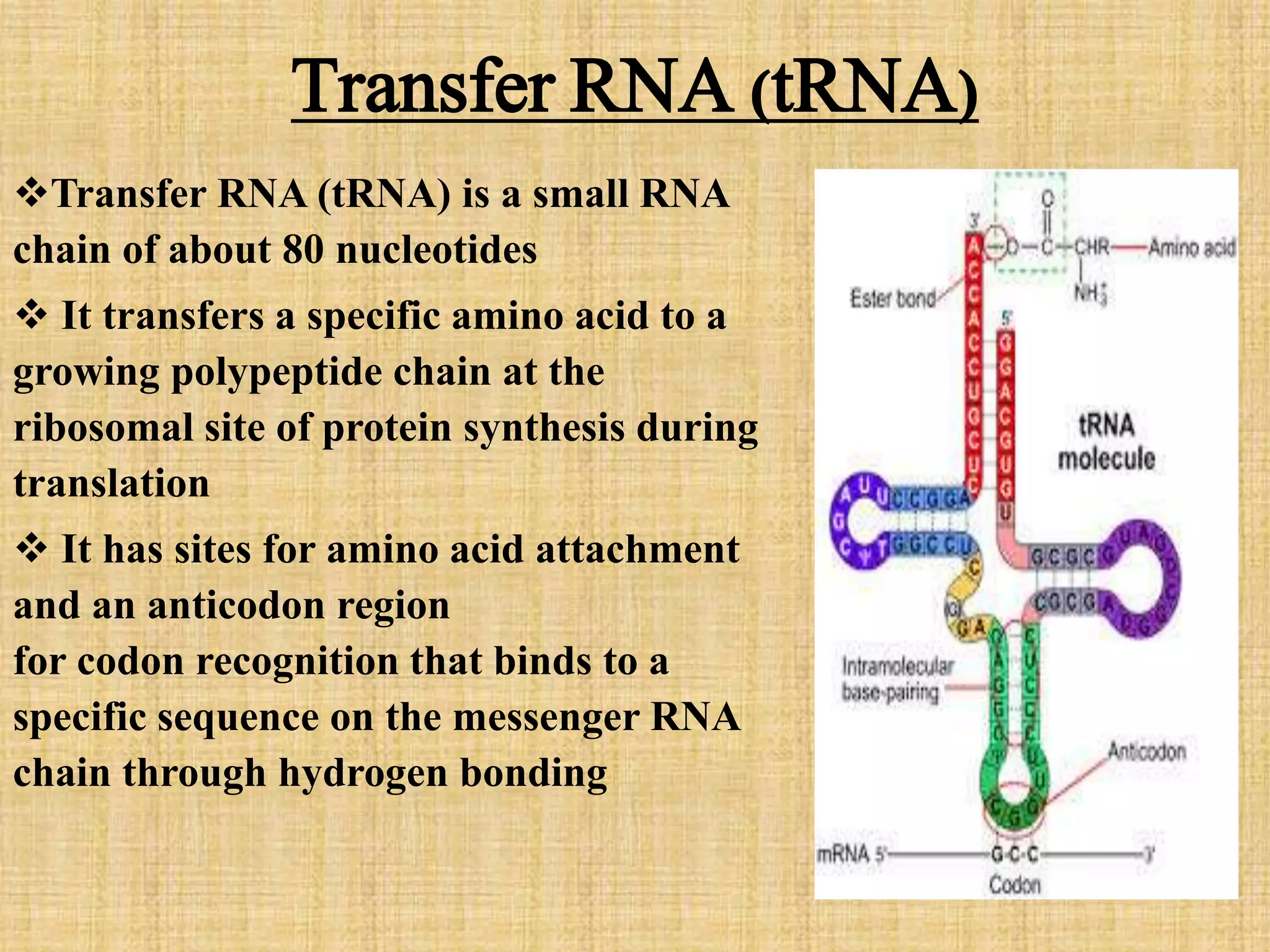
Transfer RNA (tRNA)
Transfer RNA (tRNA) is a small RNA
chain of about 80 nucleotides
It transfers a specific amino acid to a
growing polypeptide chain at the
ribosomal site of protein synthesis during
translation
It has sites for amino acid attachment
and an anticodon region
for codon recognition that binds to a
specific sequence on the messenger RNA
chain through hydrogen bonding
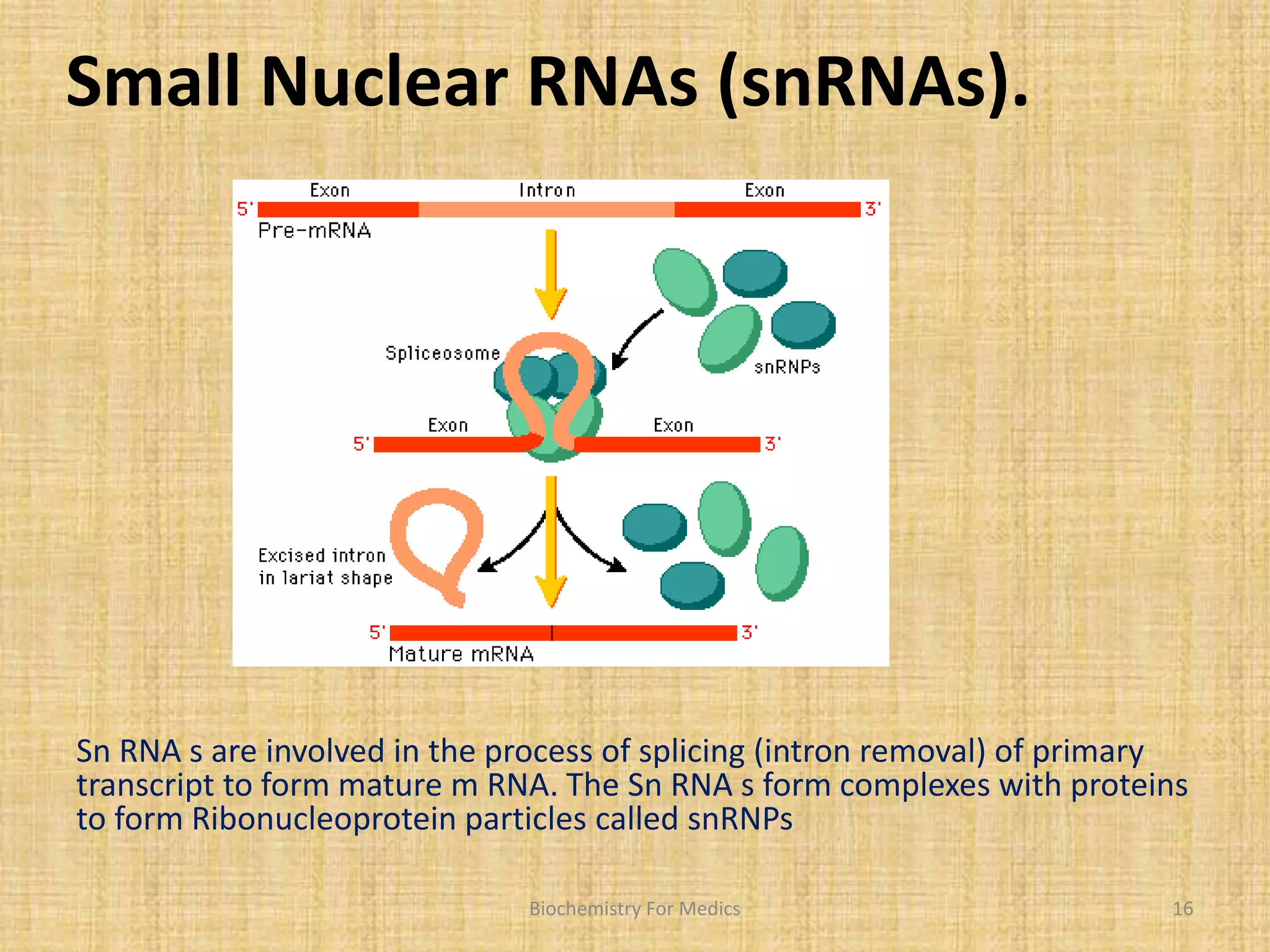
Small Nuclear RNAs(snRNAs).
Sn RNA s are involved in the process of splicing (intron removal) of primary
transcript to form mature m RNA. The Sn RNA s form complexes with proteins
to form Ribonucleoprotein particles called snRNPs
Biochemistry For Medics 16
17.
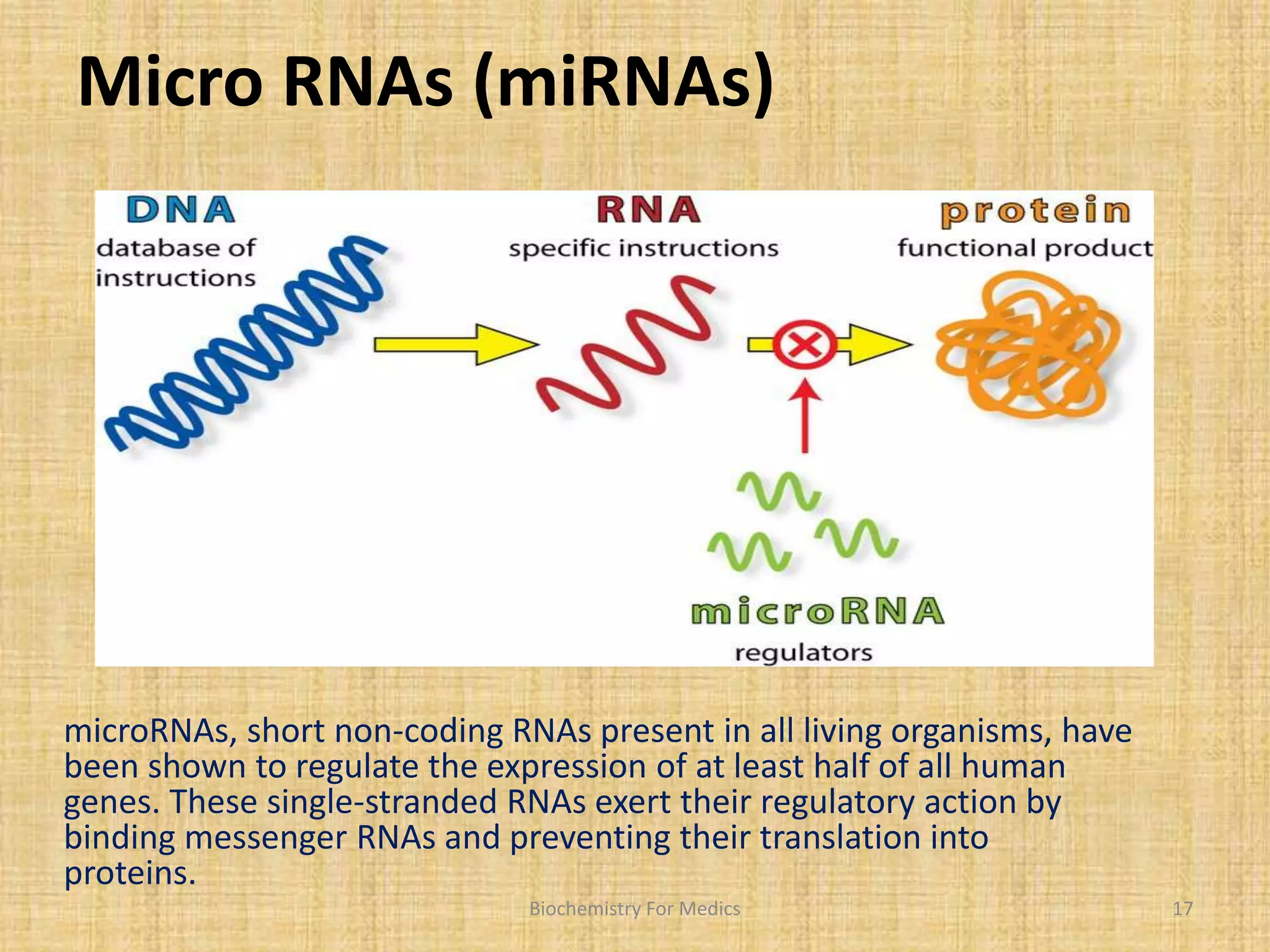
Micro RNAs (miRNAs)
microRNAs, short non-coding RNAs present in all living organisms, have
been shown to regulate the expression of at least half of all human
genes. These single-stranded RNAs exert their regulatory action by
binding messenger RNAs and preventing their translation into
proteins.
Biochemistry For Medics 17
18.
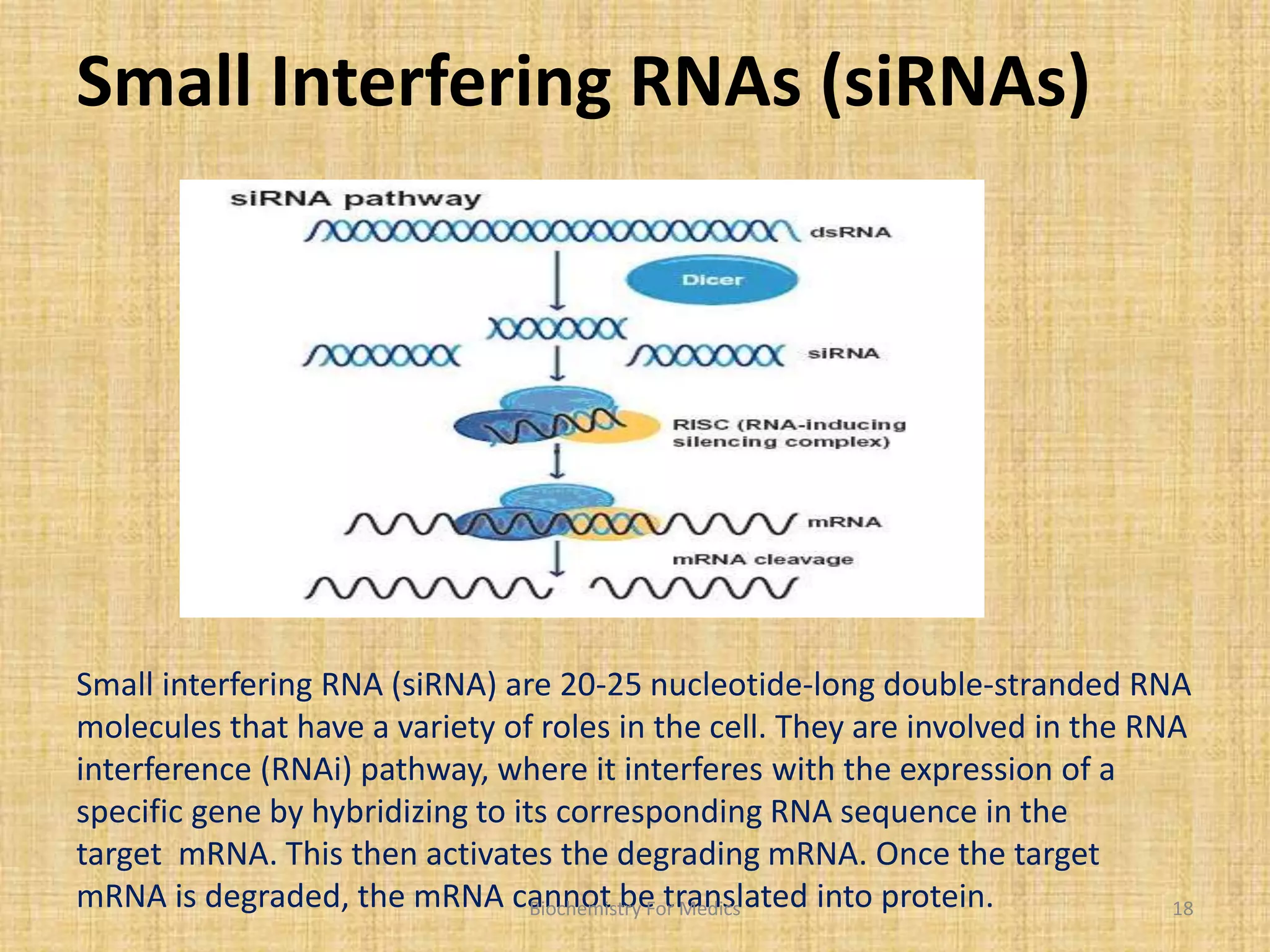
Small Interfering RNAs(siRNAs)
Small interfering RNA (siRNA) are 20-25 nucleotide-long double-stranded RNA
molecules that have a variety of roles in the cell. They are involved in the RNA
interference (RNAi) pathway, where it interferes with the expression of a
specific gene by hybridizing to its corresponding RNA sequence in the
target mRNA. This then activates the degrading mRNA. Once the target
mRNA is degraded, the mRNA cannot be translated into protein. Biochemistry For Medics 18
19.
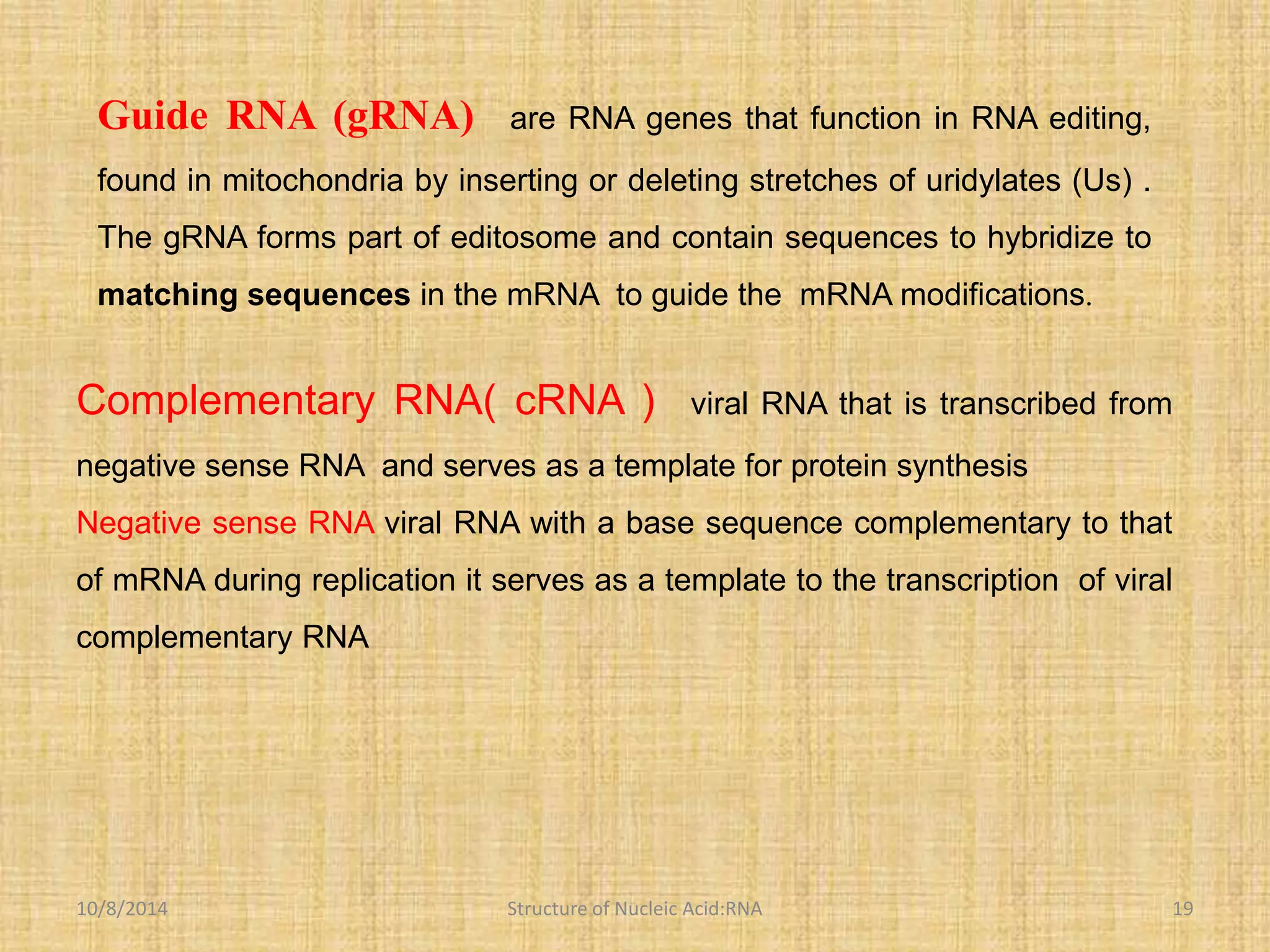
Guide RNA (gRNA)are RNA genes that function in RNA editing,
found in mitochondria by inserting or deleting stretches of uridylates (Us) .
The gRNA forms part of editosome and contain sequences to hybridize to
matching sequences in the mRNA to guide the mRNA modifications.
Complementary RNA( cRNA ) viral RNA that is transcribed from
negative sense RNA and serves as a template for protein synthesis
Negative sense RNA viral RNA with a base sequence complementary to that
of mRNA during replication it serves as a template to the transcription of viral
complementary RNA
10/8/2014 Structure of Nucleic Acid:RNA 19
20.
FUNCTIONS OF DIFFERENTRNA
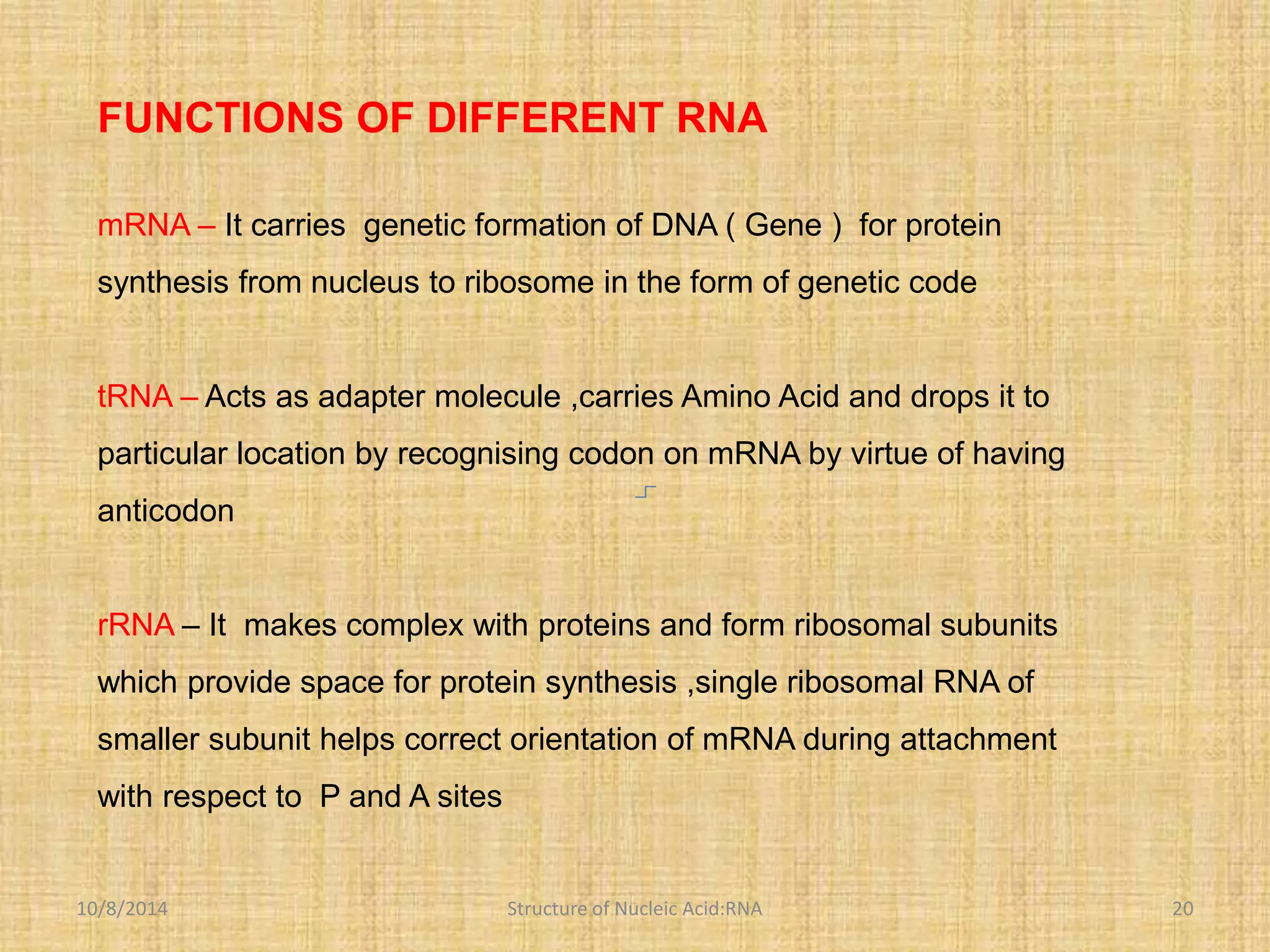
mRNA – It carries genetic formation of DNA ( Gene ) for protein
synthesis from nucleus to ribosome in the form of genetic code
tRNA – Acts as adapter molecule ,carries Amino Acid and drops it to
particular location by recognising codon on mRNA by virtue of having
anticodon
rRNA – It makes complex with proteins and form ribosomal subunits
which provide space for protein synthesis ,single ribosomal RNA of
smaller subunit helps correct orientation of mRNA during attachment
with respect to P and A sites
10/8/2014 Structure of Nucleic Acid:RNA 20
21.
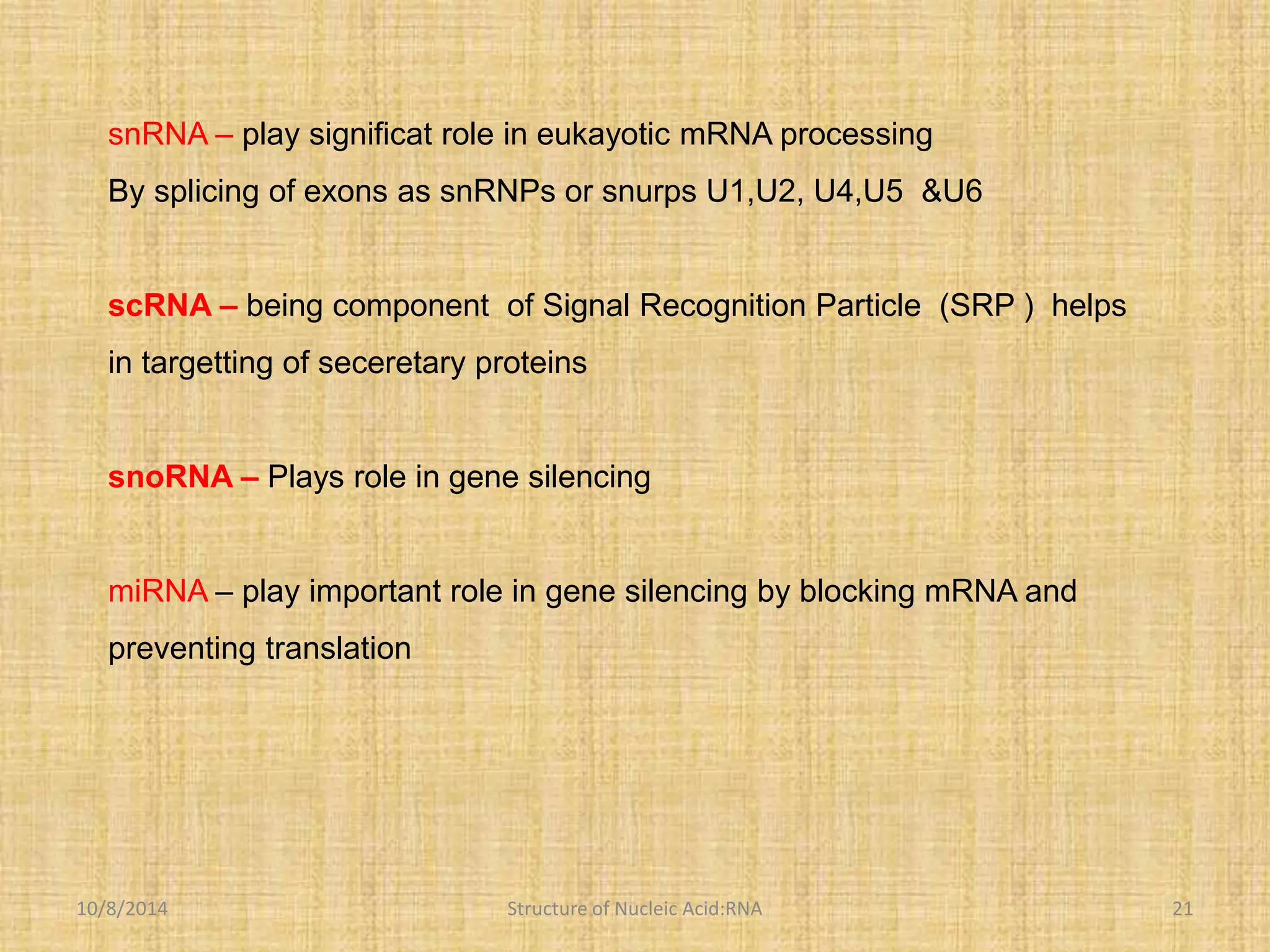
snRNA – playsignificat role in eukayotic mRNA processing
By splicing of exons as snRNPs or snurps U1,U2, U4,U5 &U6
scRNA – being component of Signal Recognition Particle (SRP ) helps
in targetting of seceretary proteins
snoRNA – Plays role in gene silencing
miRNA – play important role in gene silencing by blocking mRNA and
preventing translation
10/8/2014 Structure of Nucleic Acid:RNA 21
22.
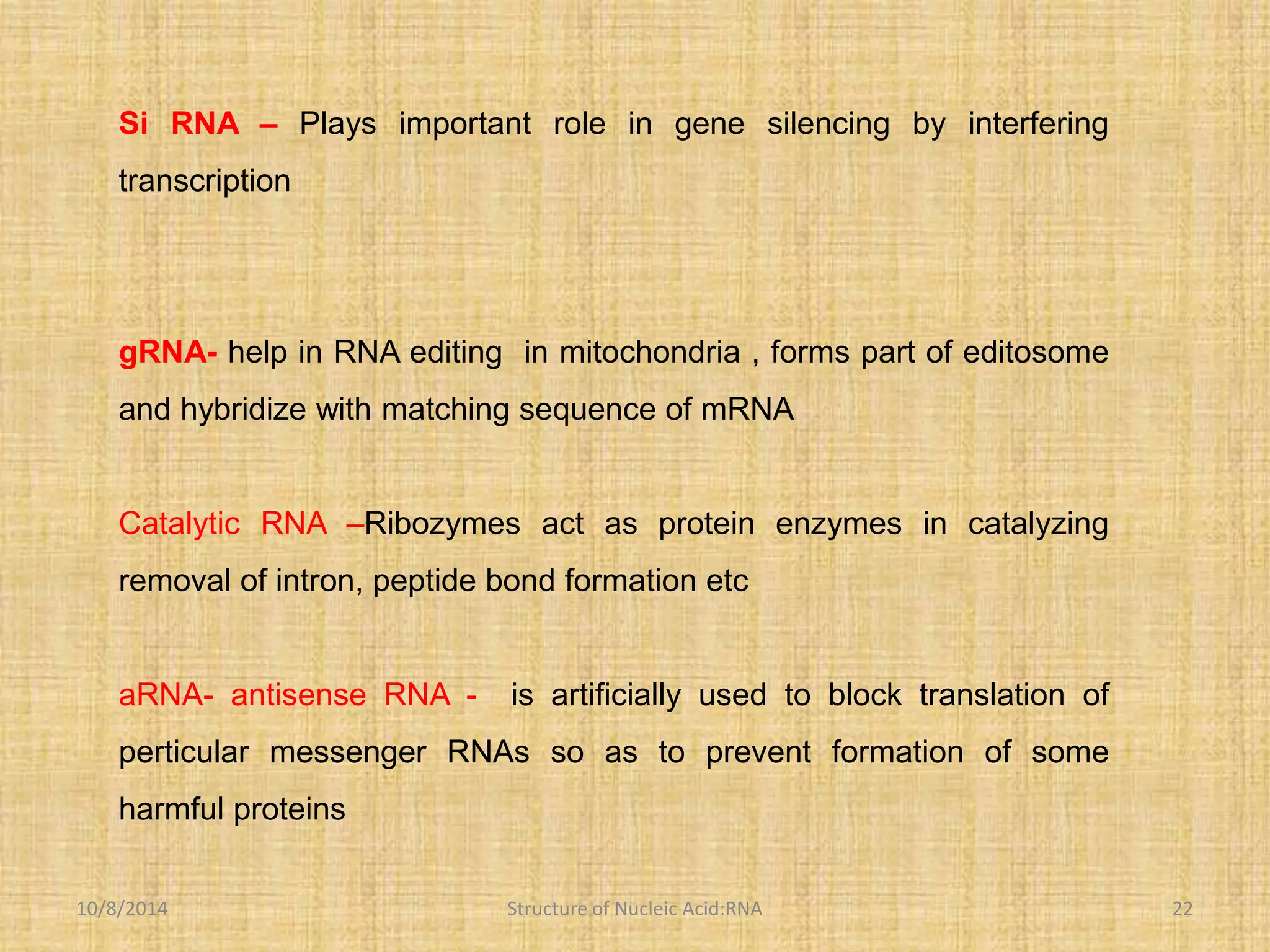
Si RNA –Plays important role in gene silencing by interfering
transcription
gRNA- help in RNA editing in mitochondria , forms part of editosome
and hybridize with matching sequence of mRNA
Catalytic RNA –Ribozymes act as protein enzymes in catalyzing
removal of intron, peptide bond formation etc
aRNA- antisense RNA - is artificially used to block translation of
perticular messenger RNAs so as to prevent formation of some
harmful proteins
10/8/2014 Structure of Nucleic Acid:RNA 22
23.
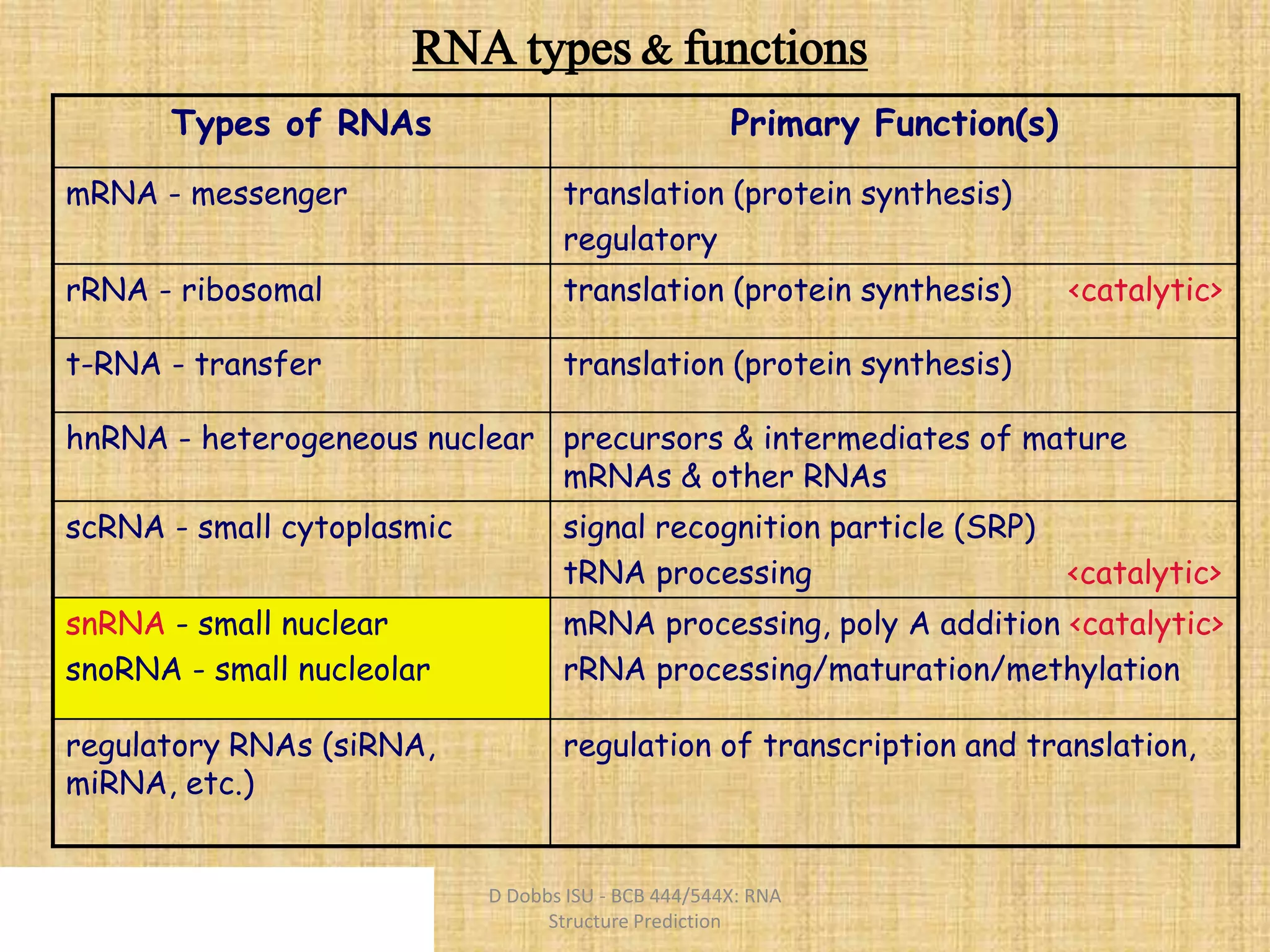
RNA types &functions
Types of RNAs Primary Function(s)
mRNA - messenger translation (protein synthesis)
regulatory
rRNA - ribosomal translation (protein synthesis) <catalytic>
t-RNA - transfer translation (protein synthesis)
hnRNA - heterogeneous nuclear precursors & intermediates of mature
mRNAs & other RNAs
scRNA - small cytoplasmic signal recognition particle (SRP)
tRNA processing <catalytic>
D Dobbs ISU - BCB 444/544X: RNA
Structure Prediction
snRNA - small nuclear
snoRNA - small nucleolar
mRNA processing, poly A addition <catalytic>
rRNA processing/maturation/methylation
regulatory RNAs (siRNA,
miRNA, etc.)
regulation of transcription and translation,
L Samaraweera 2005
24.
References:
Biochemistry byU.satyanarayana
Principle of biochemistry (lehninger)
Micheal M. Cox and David l. Nelson
• Thank you