Group
Roll no. 13 to 23
Section: A DPT
Physiology Presentation
> In respect of Dr.
Muzna Munir
Maryam Nadeem
TOPIC OUTLINE
 Transcription
 Types of RNA
Messenger RNA(mRNA)
or Codons
Transfer RNA (tRNA)
or Anticodons
Ribosomal RNA (rRNA)
MicroRNA (miRNA)
or Noncoding RNA
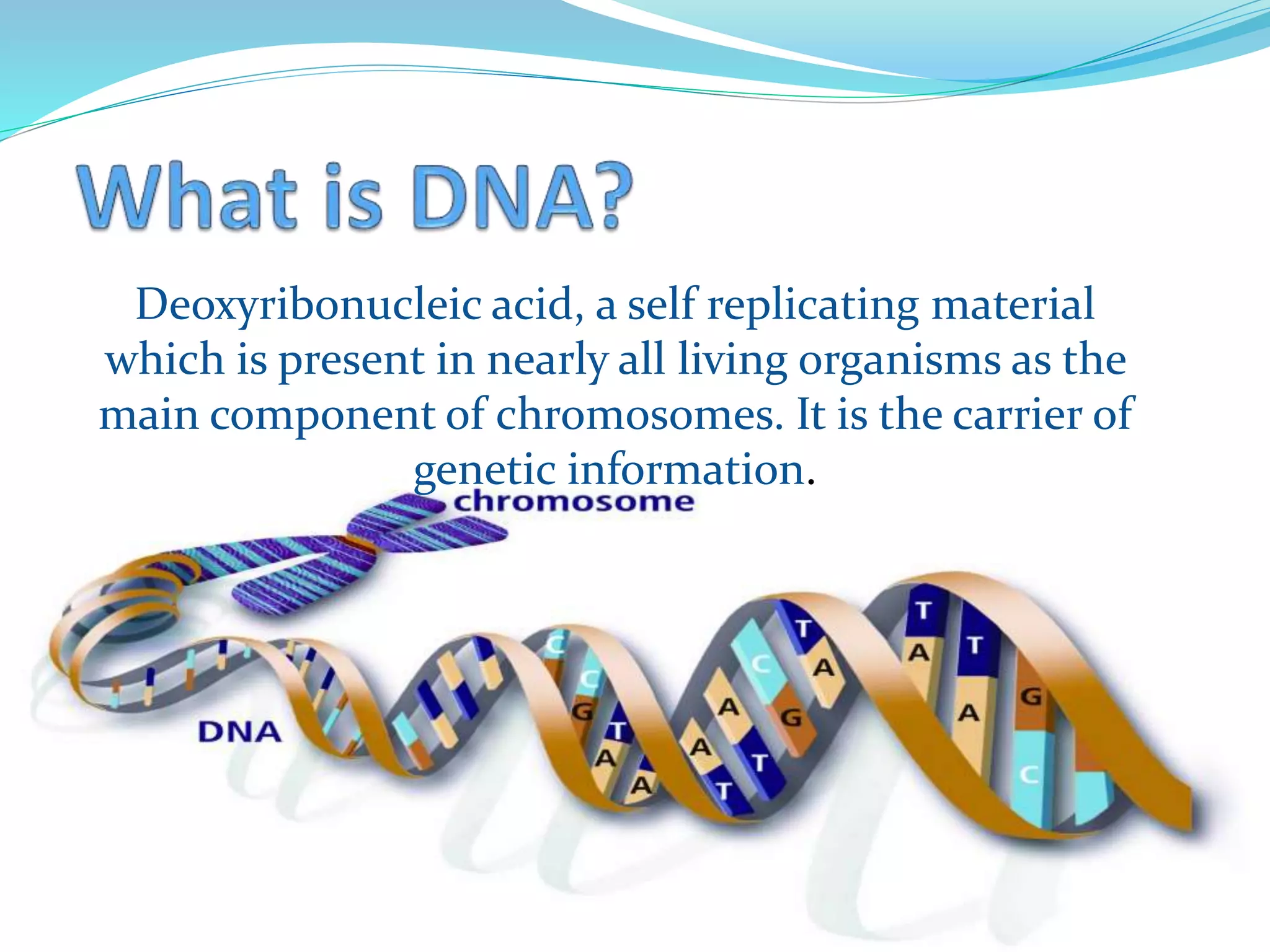
Deoxyribonucleic acid, a self replicating material
which is present in nearly all living organisms as the
main component of chromosomes. It is the carrier of
genetic information.
Transcription
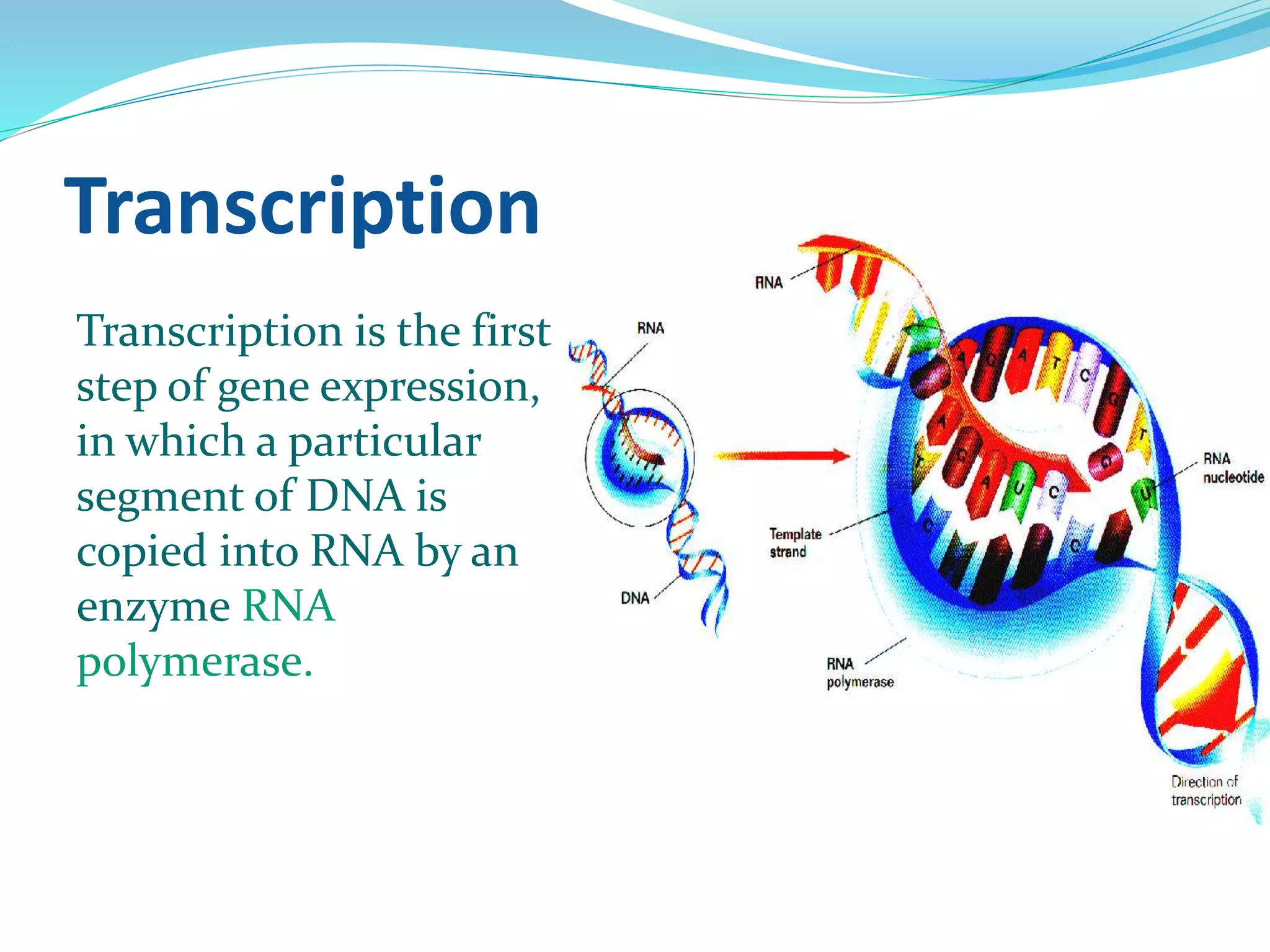
Transcription is the first
step of gene expression,
in which a particular
segment of DNA is
copied into RNA by an
enzyme RNA
polymerase.
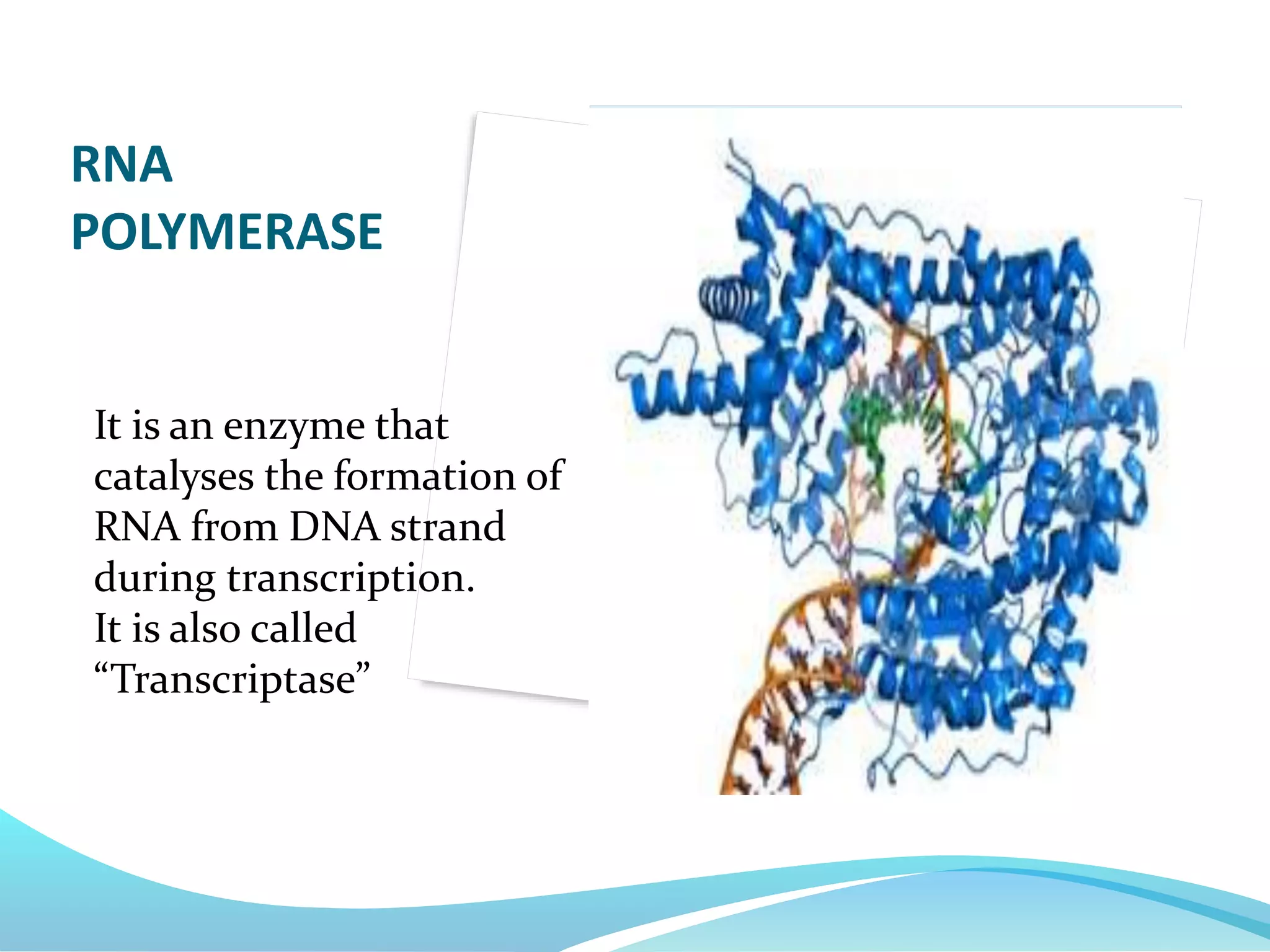
RNA Polymerase
o Also known as DNA-dependent RNA polymerase
o In process of Transcription
o essential to life and are found in all organisms and
many viruses.
DNA Code transfer
into cytoplasm-
Transcription…
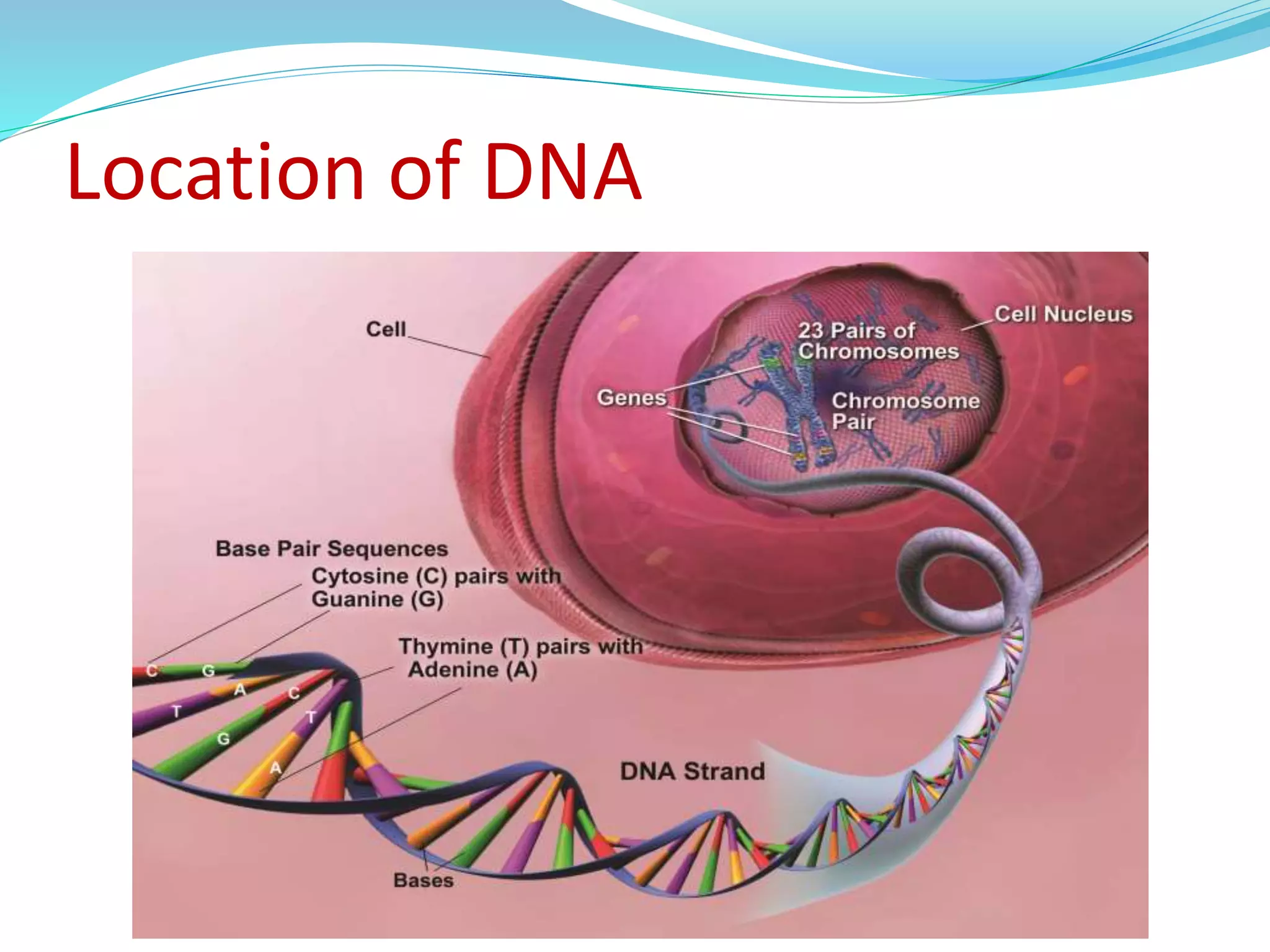
Location of DNA
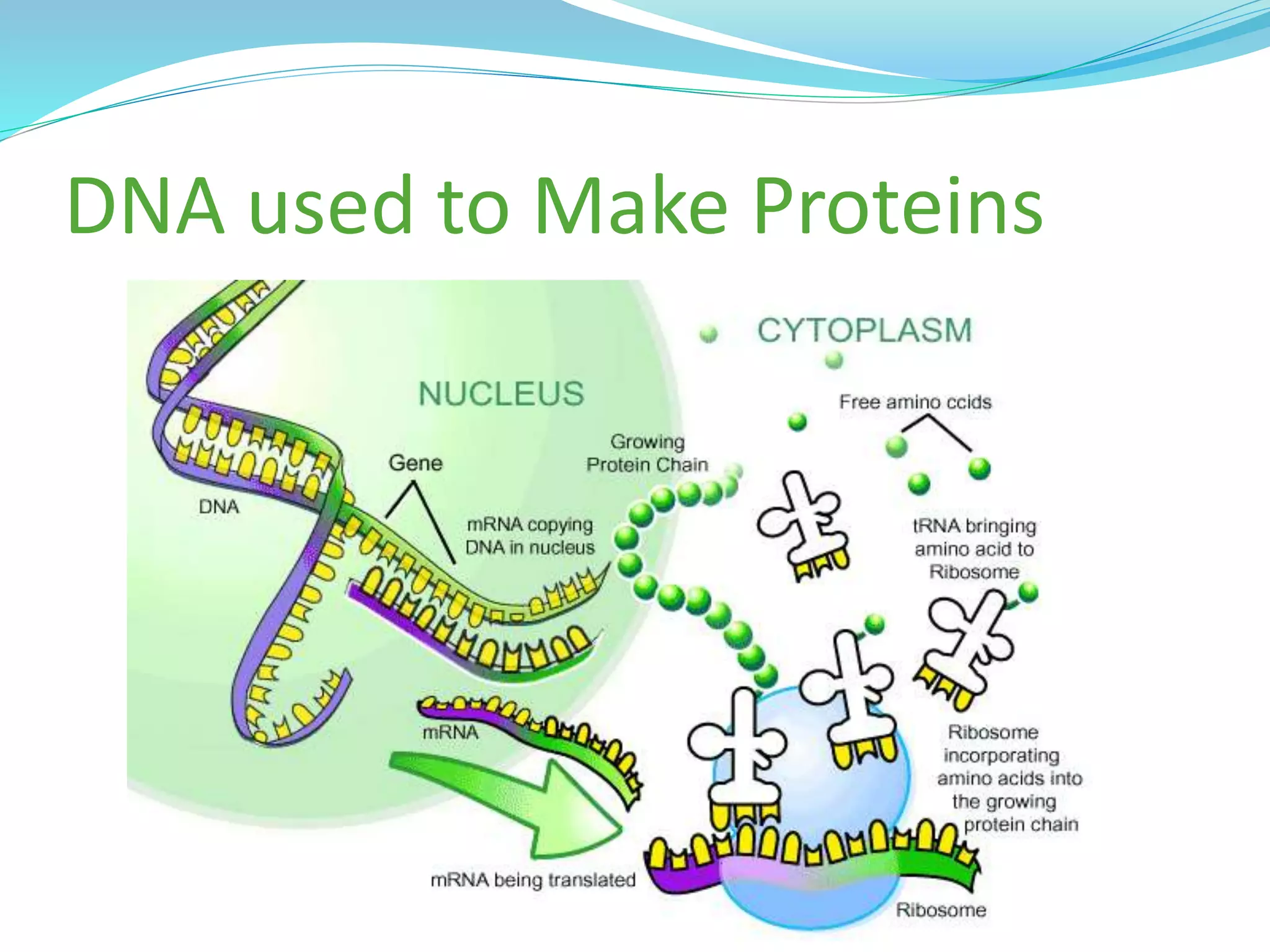
DNA used to Make Proteins
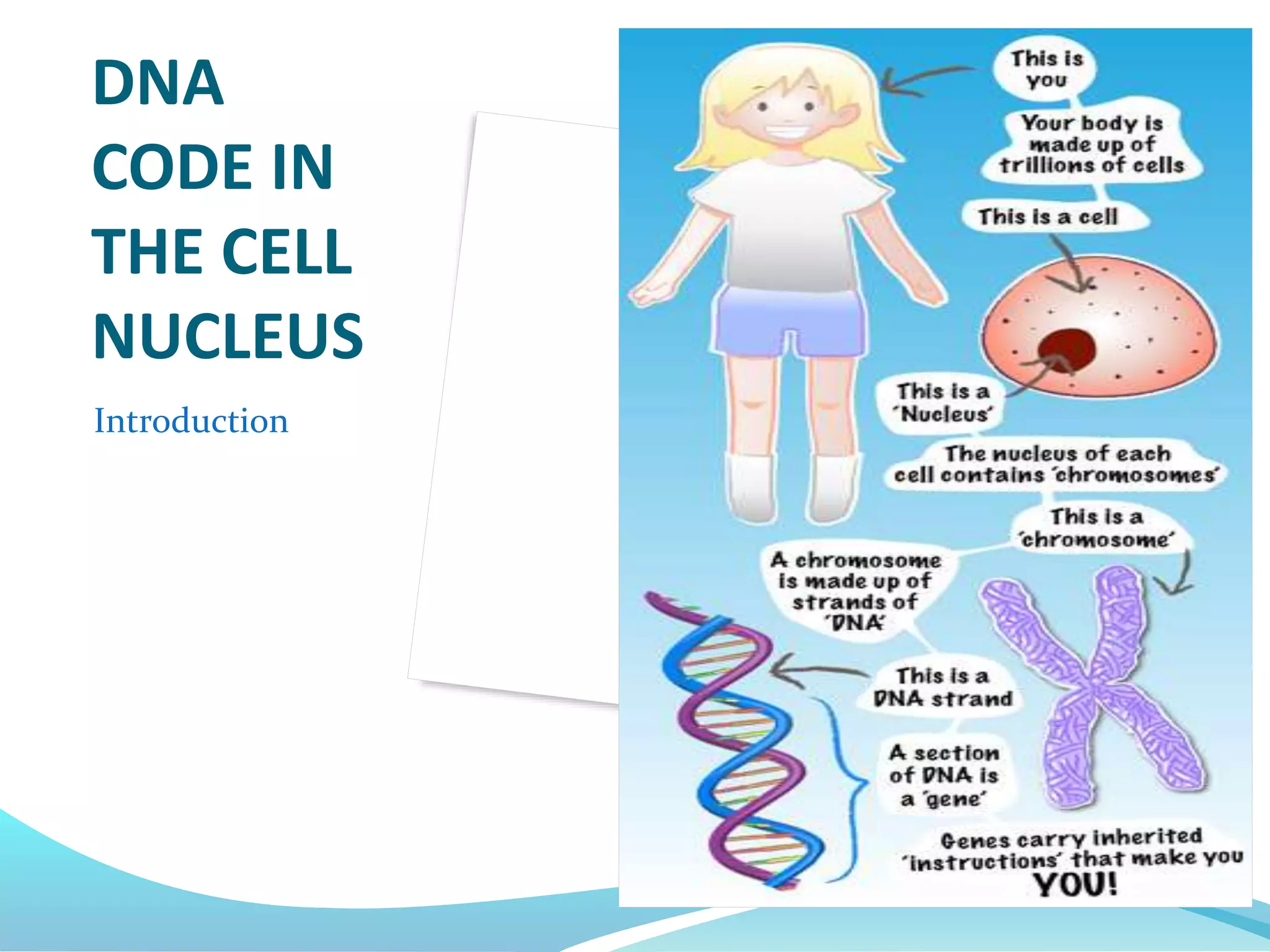
DNA
CODE IN
THE CELL
NUCLEUS
Introduction
Syeda Faiqa Rehman
What is DNA?
 DNA is (deoxyribose nucleic acid) a molecule that
encodes the genetic instructions used in the
development and functioning of all living organism.
 DNA is a self replicating material which is present in
nearly all living organisms as a main constituent of
chromosomes.
 In one chromosomes 25000 genes are present.
 The thickness of DNA is almost 2nm.
 10 base pairs are present in one turn.
 The length of one turn of DNA is 3.4 nm.
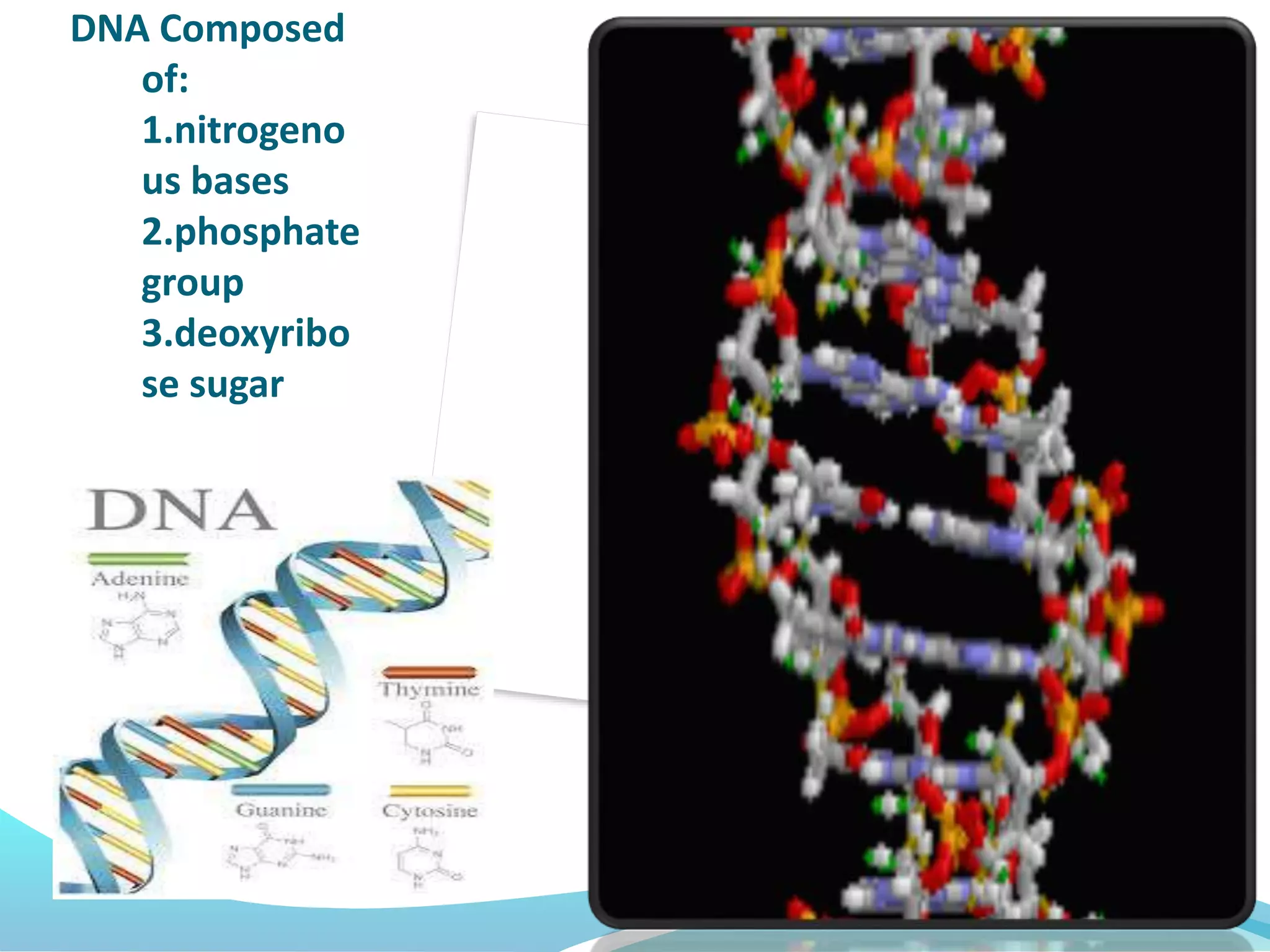
DNA Composed
of:
1.nitrogeno
us bases
2.phosphate
group
3.deoxyribo
se sugar
Location of DNA:
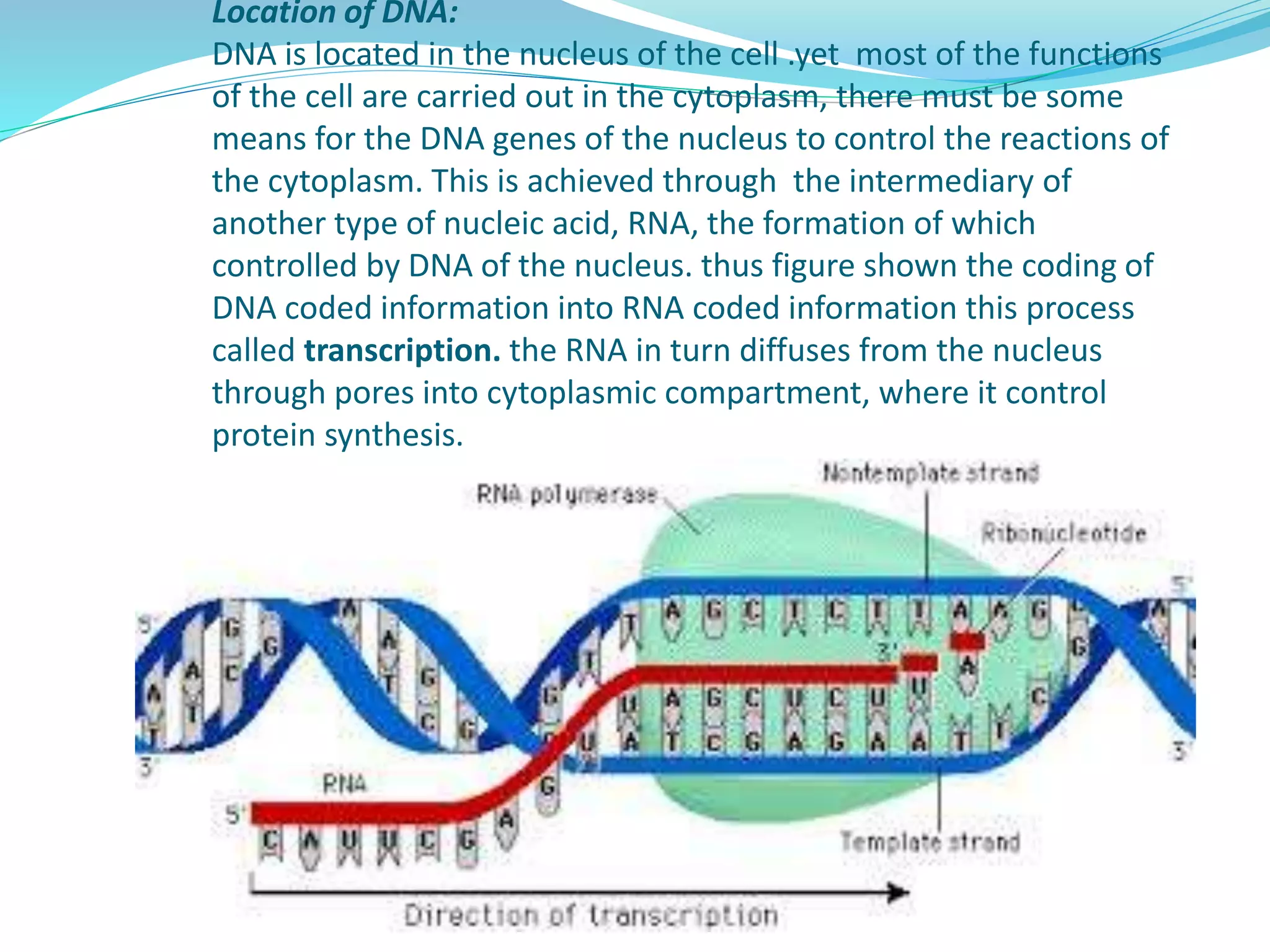
DNA is located in the nucleus of the cell .yet most of the functions
of the cell are carried out in the cytoplasm, there must be some
means for the DNA genes of the nucleus to control the reactions of
the cytoplasm. This is achieved through the intermediary of
another type of nucleic acid, RNA, the formation of which
controlled by DNA of the nucleus. thus figure shown the coding of
DNA coded information into RNA coded information this process
called transcription. the RNA in turn diffuses from the nucleus
through pores into cytoplasmic compartment, where it control
protein synthesis.
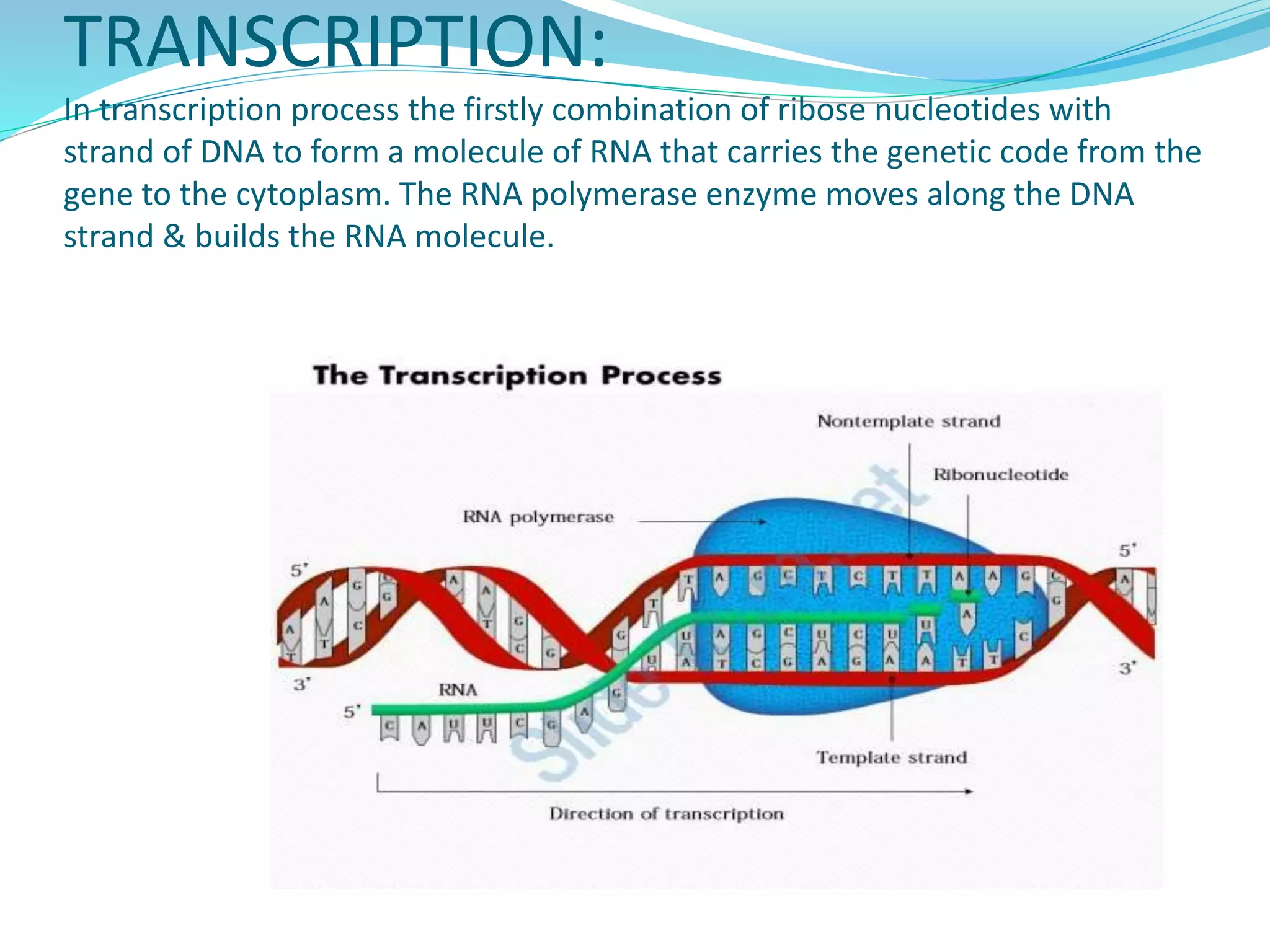
TRANSCRIPTION:
In transcription process the firstly combination of ribose nucleotides with
strand of DNA to form a molecule of RNA that carries the genetic code from the
gene to the cytoplasm. The RNA polymerase enzyme moves along the DNA
strand & builds the RNA molecule.
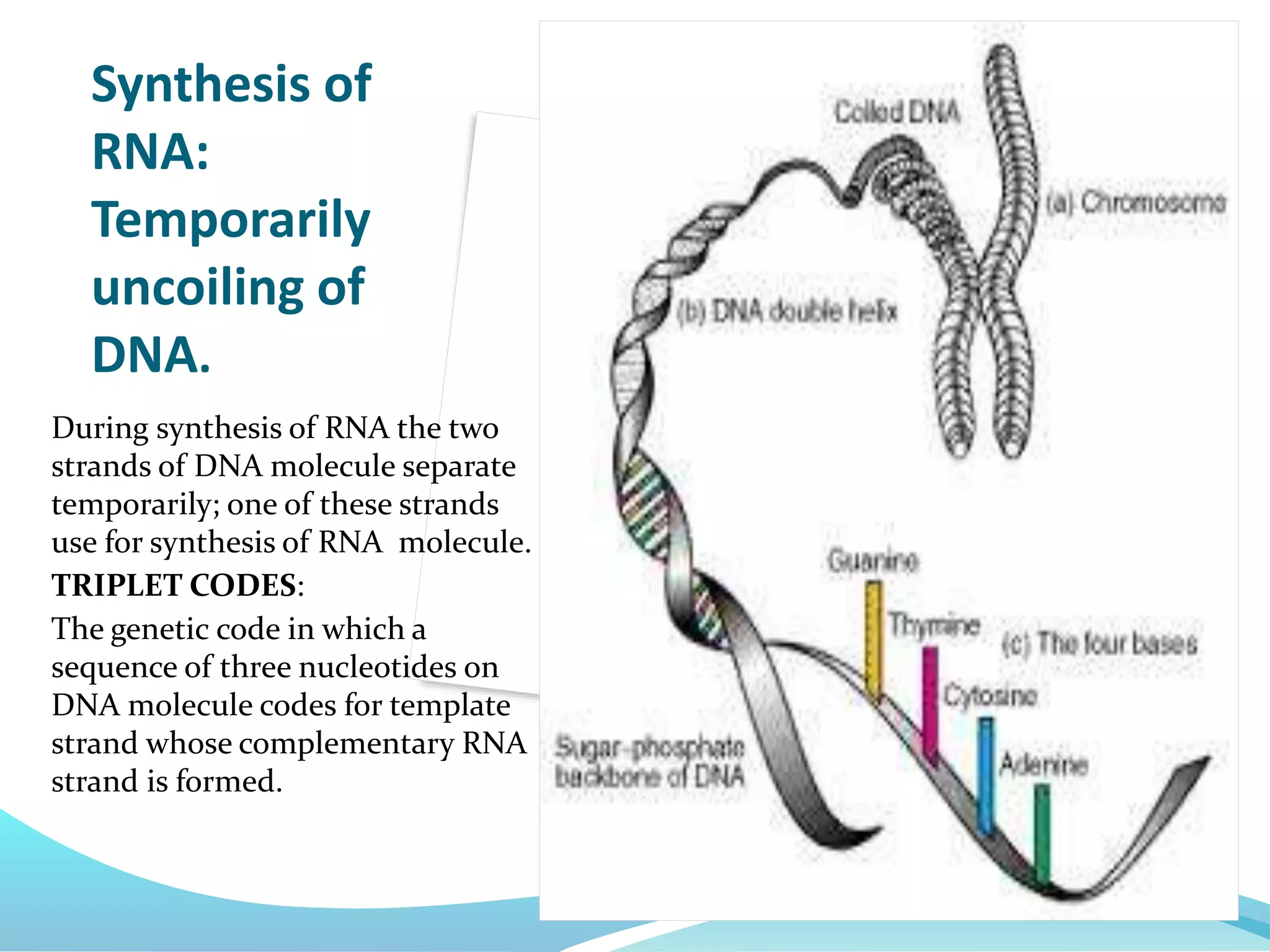
Synthesis of
RNA:
Temporarily
uncoiling of
DNA.
During synthesis of RNA the two
strands of DNA molecule separate
temporarily; one of these strands
use for synthesis of RNA molecule.
TRIPLET CODES:
The genetic code in which a
sequence of three nucleotides on
DNA molecule codes for template
strand whose complementary RNA
strand is formed.
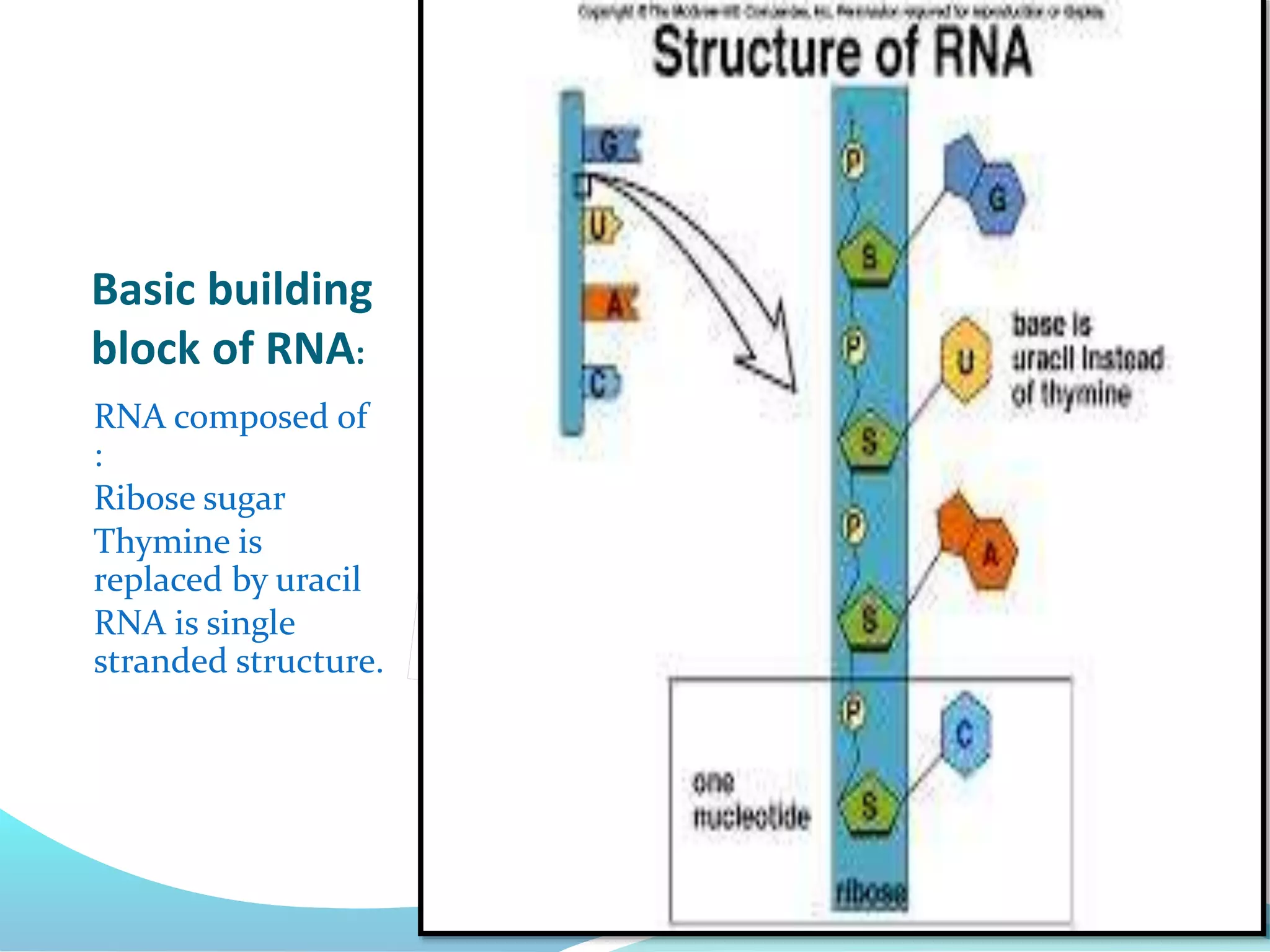
Basic building
block of RNA:
RNA composed of
:
Ribose sugar
Thymine is
replaced by uracil
RNA is single
stranded structure.
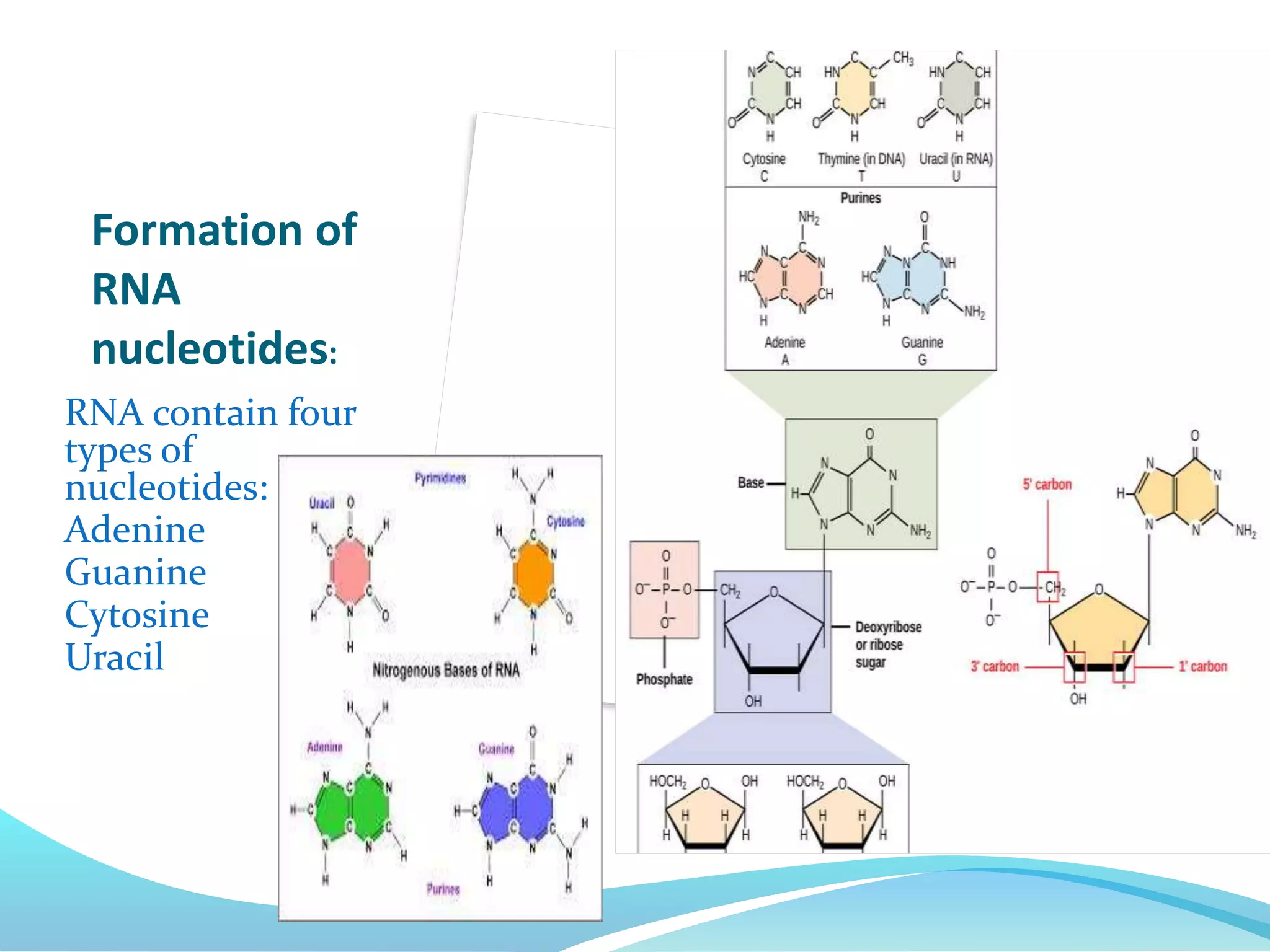
Formation of
RNA
nucleotides:
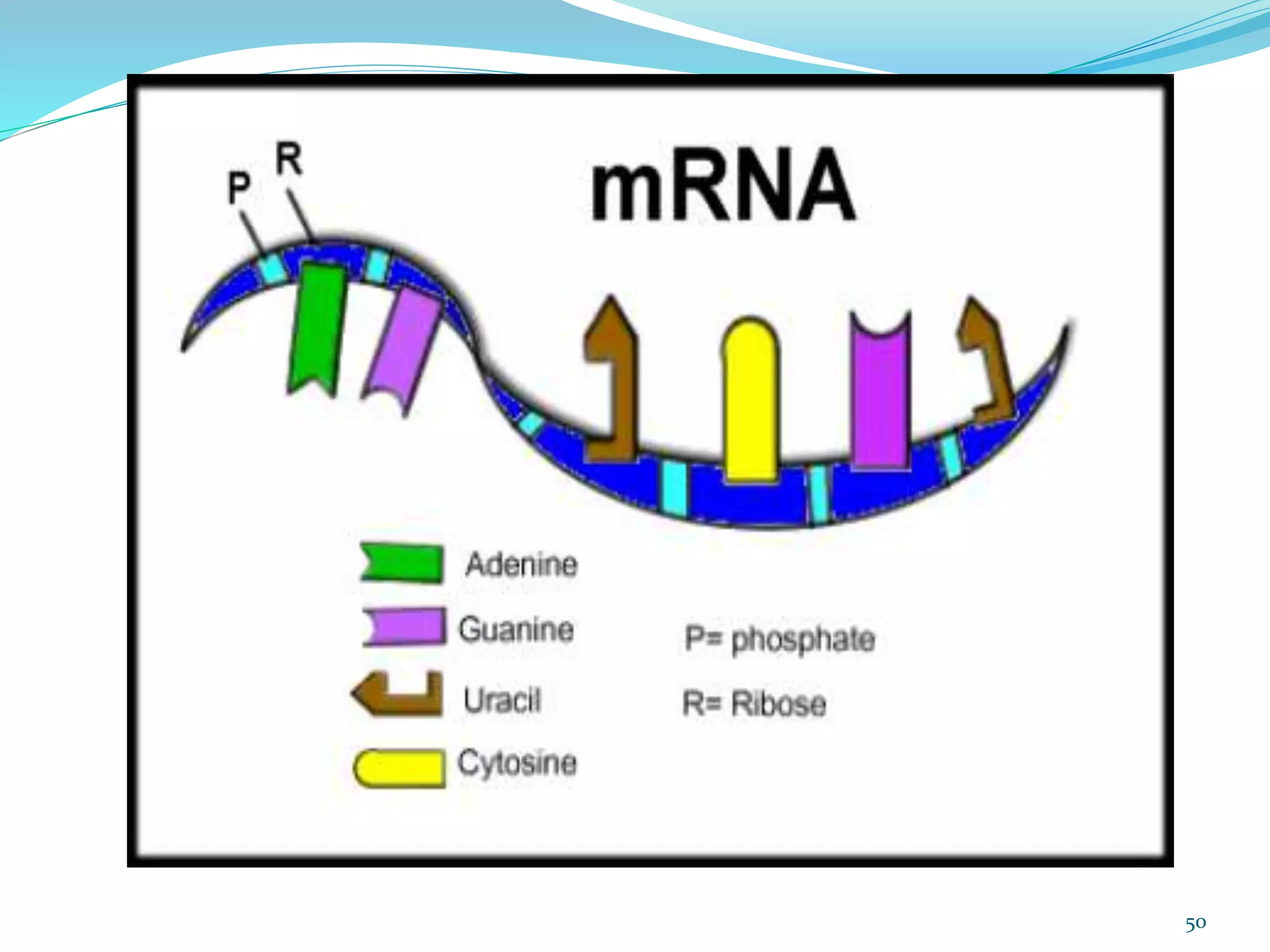
RNA contain four
types of
nucleotides:
Adenine
Guanine
Cytosine
Uracil
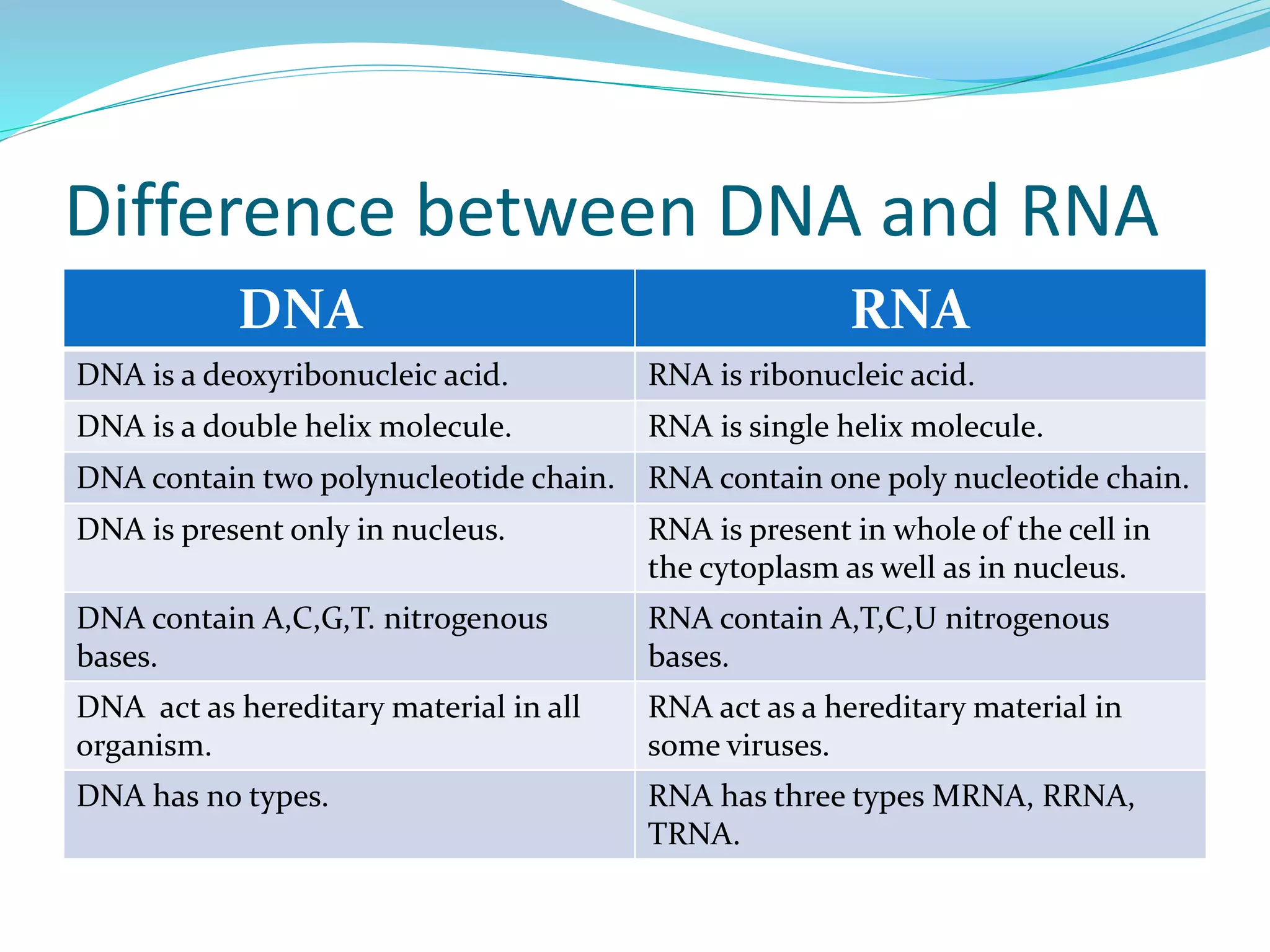
Difference between DNA and RNA
DNA RNA
DNA is a deoxyribonucleic acid. RNA is ribonucleic acid.
DNA is a double helix molecule. RNA is single helix molecule.
DNA contain two polynucleotide chain. RNA contain one poly nucleotide chain.
DNA is present only in nucleus. RNA is present in whole of the cell in
the cytoplasm as well as in nucleus.
DNA contain A,C,G,T. nitrogenous
bases.
RNA contain A,T,C,U nitrogenous
bases.
DNA act as hereditary material in all
organism.
RNA act as a hereditary material in
some viruses.
DNA has no types. RNA has three types MRNA, RRNA,
TRNA.
Hafiza Natasha Hira
In The Synthesis of RNA the
activation is done by an
enzyme which is called “RNA
Polymerase”.
Activation
of the RNA
Nucleotides.
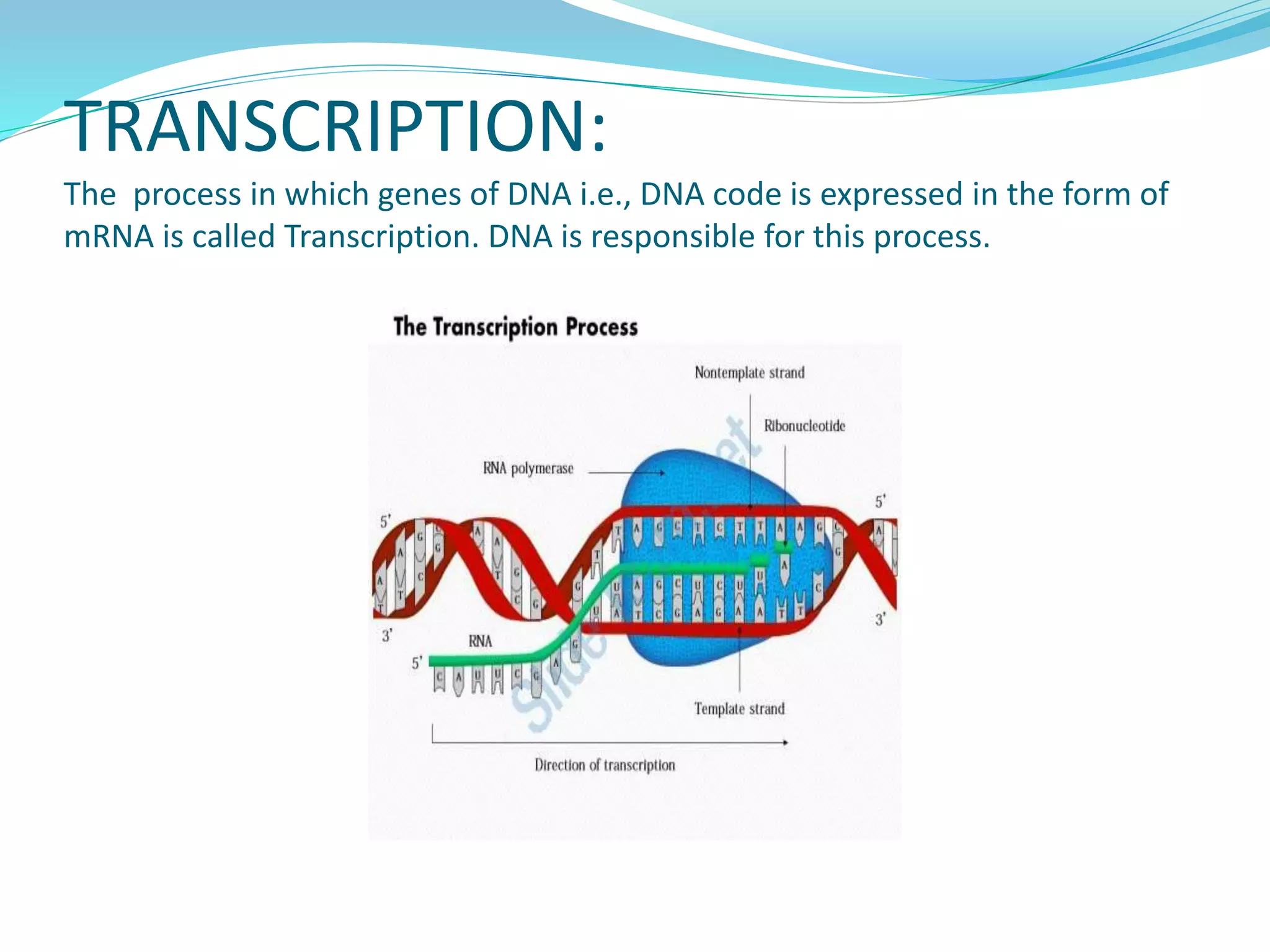
TRANSCRIPTION:
The process in which genes of DNA i.e., DNA code is expressed in the form of
mRNA is called Transcription. DNA is responsible for this process.
It is an enzyme that
catalyses the formation of
RNA from DNA strand
during transcription.
It is also called
“Transcriptase”
RNA
POLYMERASE
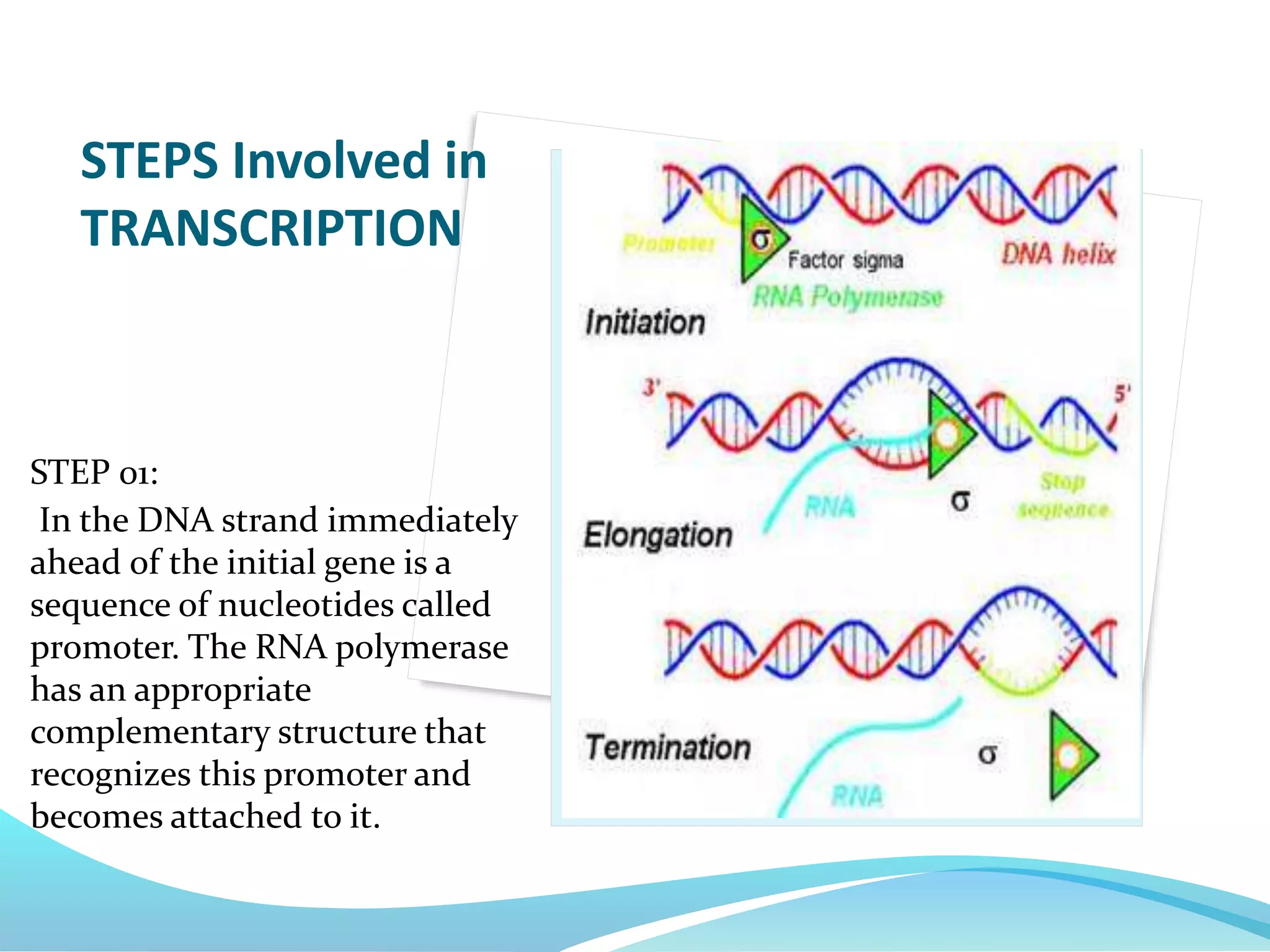
STEP 01:
In the DNA strand immediately
ahead of the initial gene is a
sequence of nucleotides called
promoter. The RNA polymerase
has an appropriate
complementary structure that
recognizes this promoter and
becomes attached to it.
STEPS Involved in
TRANSCRIPTION
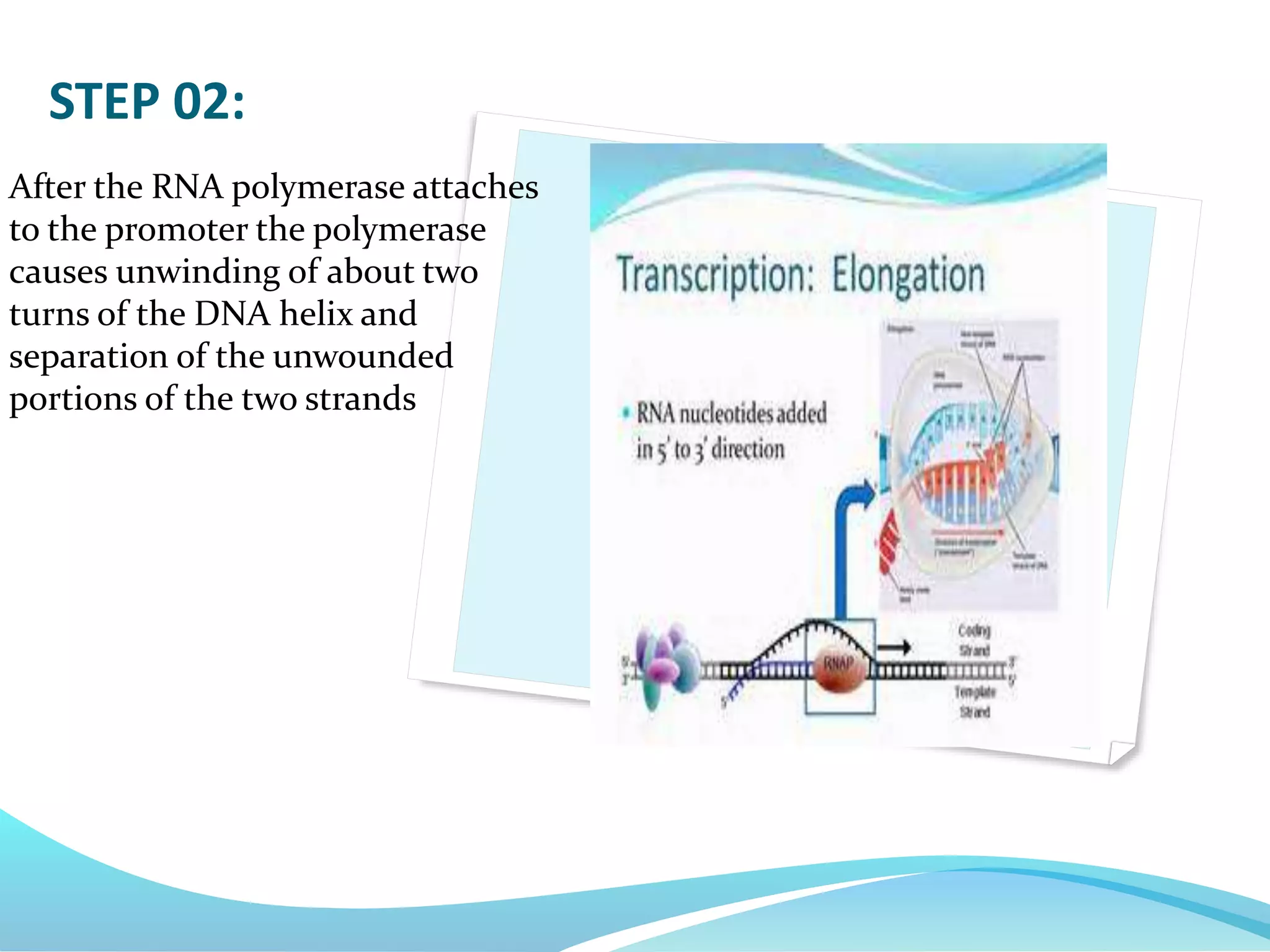
After the RNA polymerase attaches
to the promoter the polymerase
causes unwinding of about two
turns of the DNA helix and
separation of the unwounded
portions of the two strands
STEP 02:
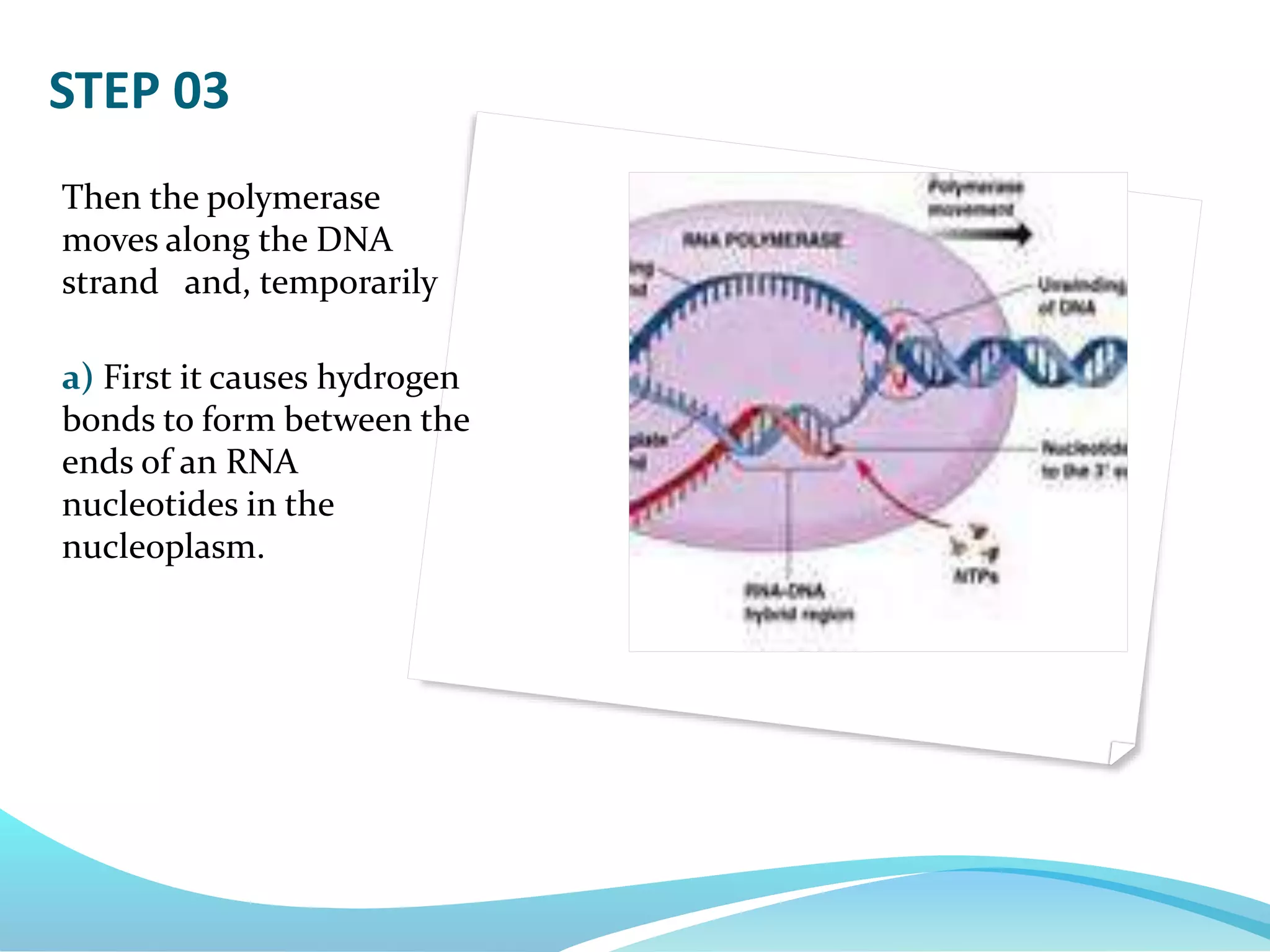
Then the polymerase
moves along the DNA
strand and, temporarily
a) First it causes hydrogen
bonds to form between the
ends of an RNA
nucleotides in the
nucleoplasm.
STEP 03
Then one at a time the RNA
polymerase breaks 2 of the 3
phosphate radicals away from each
of these RNA Nucleotides…………….
B)
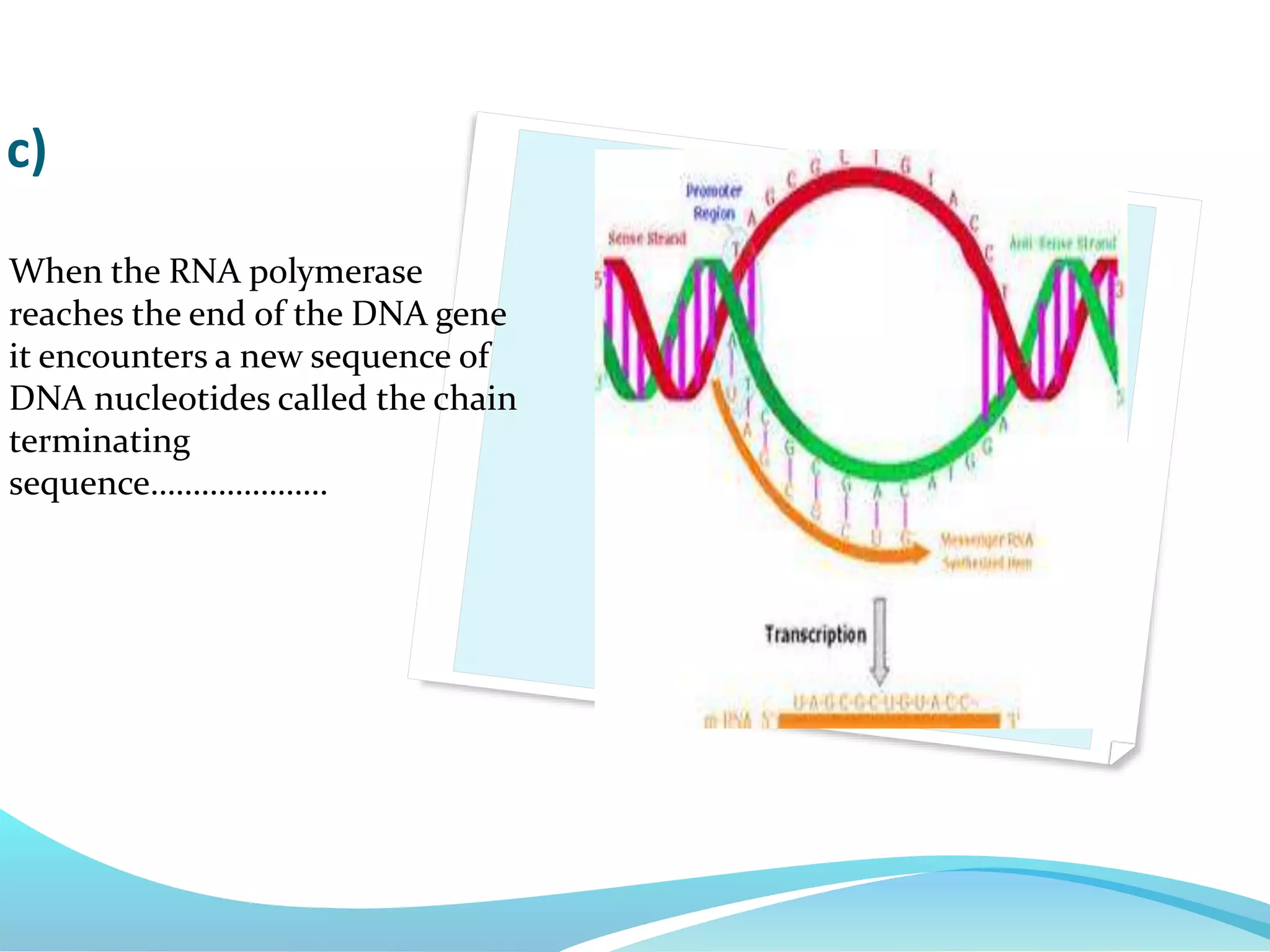
When the RNA polymerase
reaches the end of the DNA gene
it encounters a new sequence of
DNA nucleotides called the chain
terminating
sequence…………………
c)
As the new RNA
strand is formed
its week hydrogen
breaks away thus
the RNA chain is
forced away from
the DNA and
released into
nucleoplasm.
d)
The code that is present in DNA strands
is transmitted in complementary form to
the RNA.
In short,
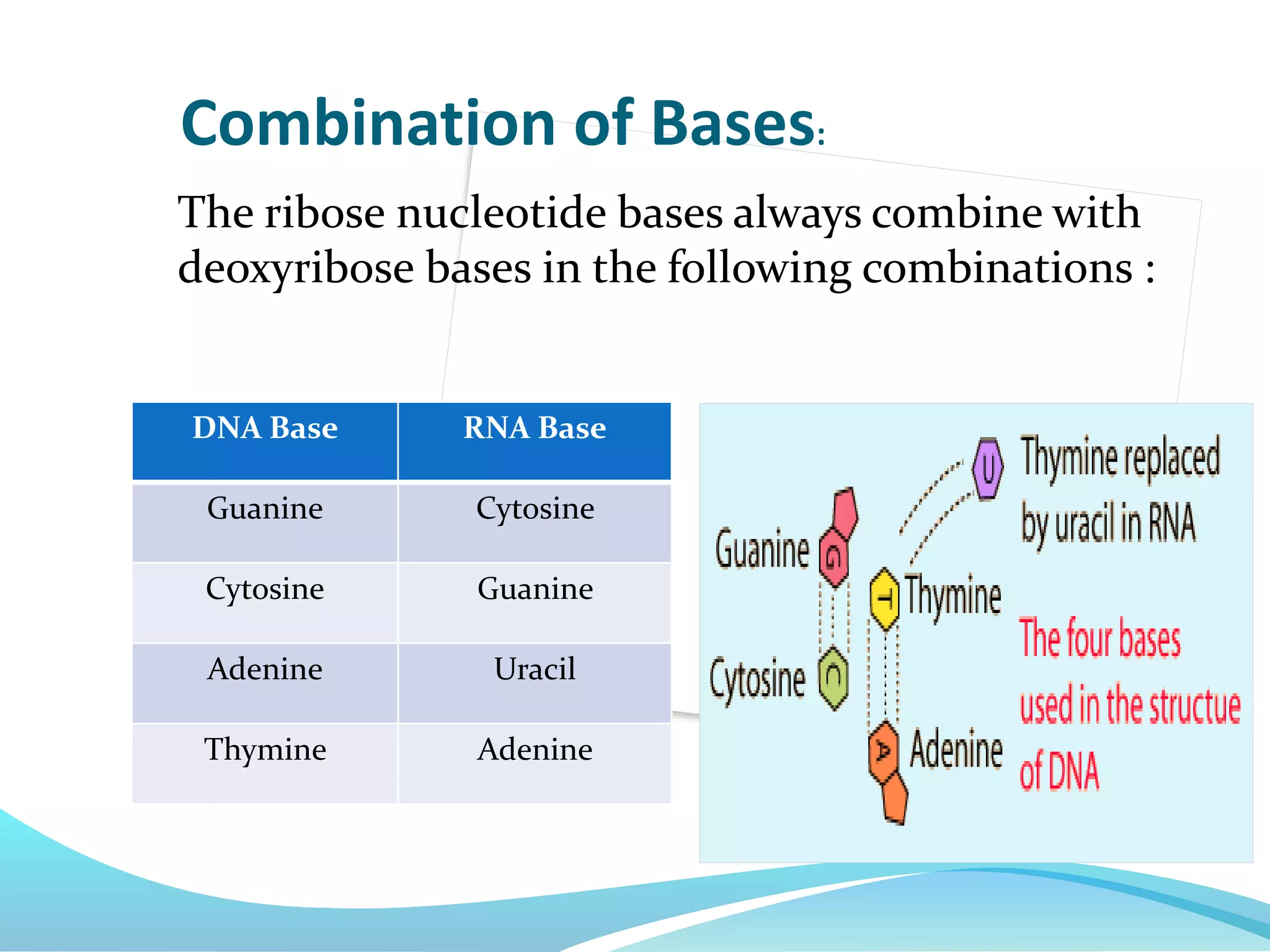
The ribose nucleotide bases always combine with
deoxyribose bases in the following combinations :
Combination of Bases:
DNA Base RNA Base
Guanine Cytosine
Cytosine Guanine
Adenine Uracil
Thymine Adenine
RNA:
• Ribonucleic acid, or RNA is one of the three major biological
macromolecules that are essential for all known forms of life (along
with DNA and proteins).
• DNA makes RNA, RNA makes Proteins.
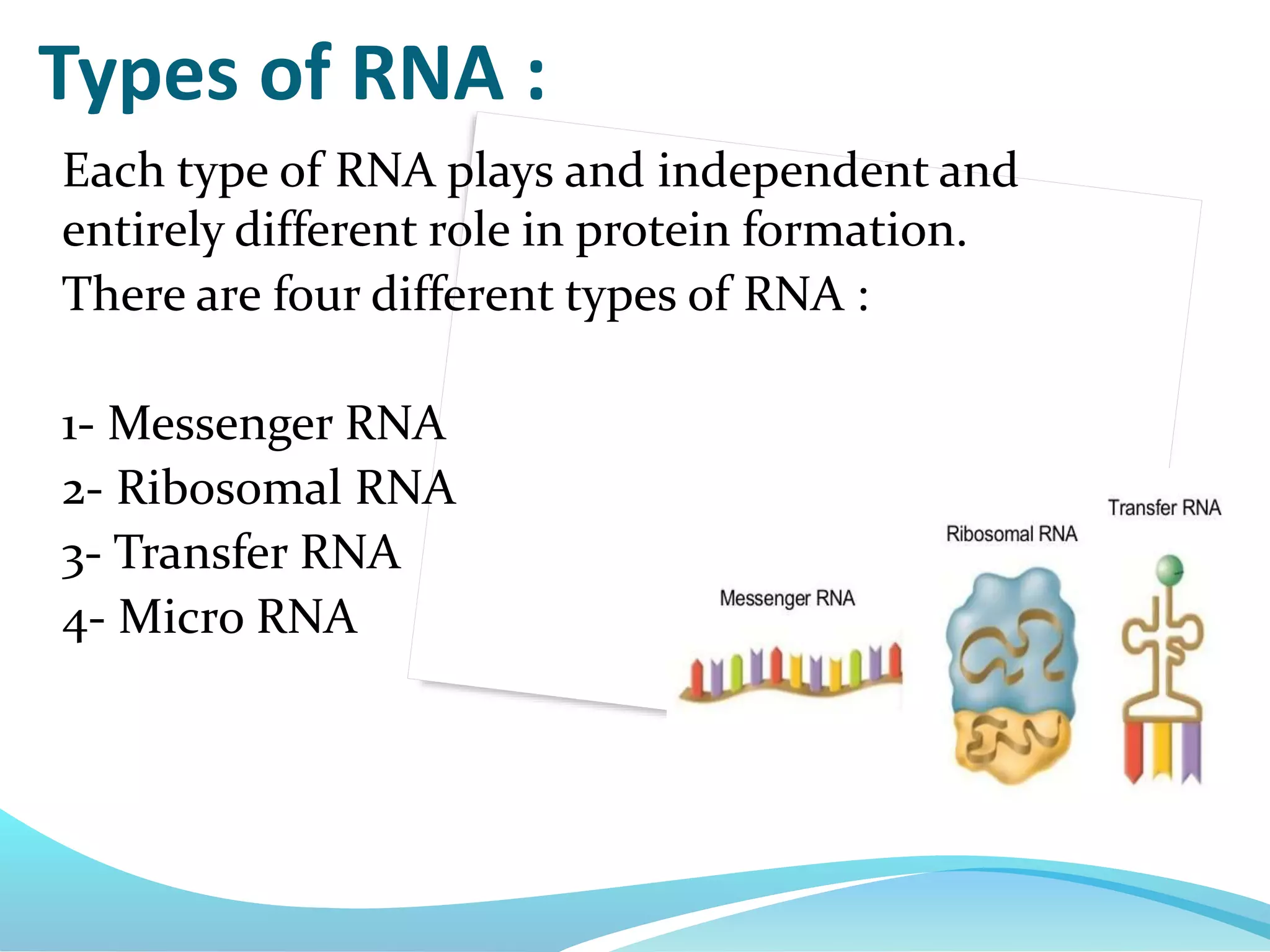
Each type of RNA plays and independent and
entirely different role in protein formation.
There are four different types of RNA :
1- Messenger RNA
2- Ribosomal RNA
3- Transfer RNA
4- Micro RNA
Types of RNA :
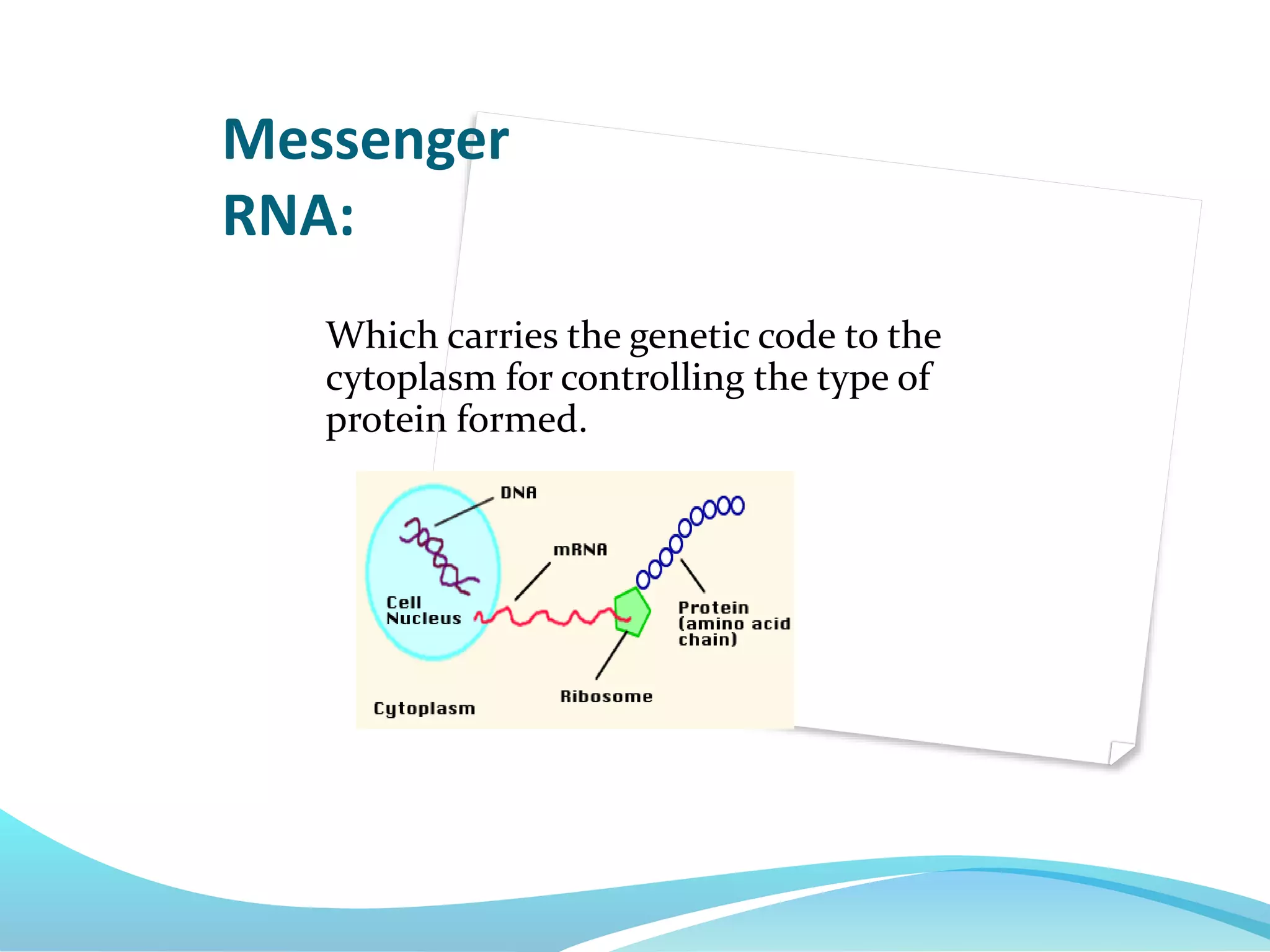
Which carries the genetic code to the
cytoplasm for controlling the type of
protein formed.
Messenger
RNA:
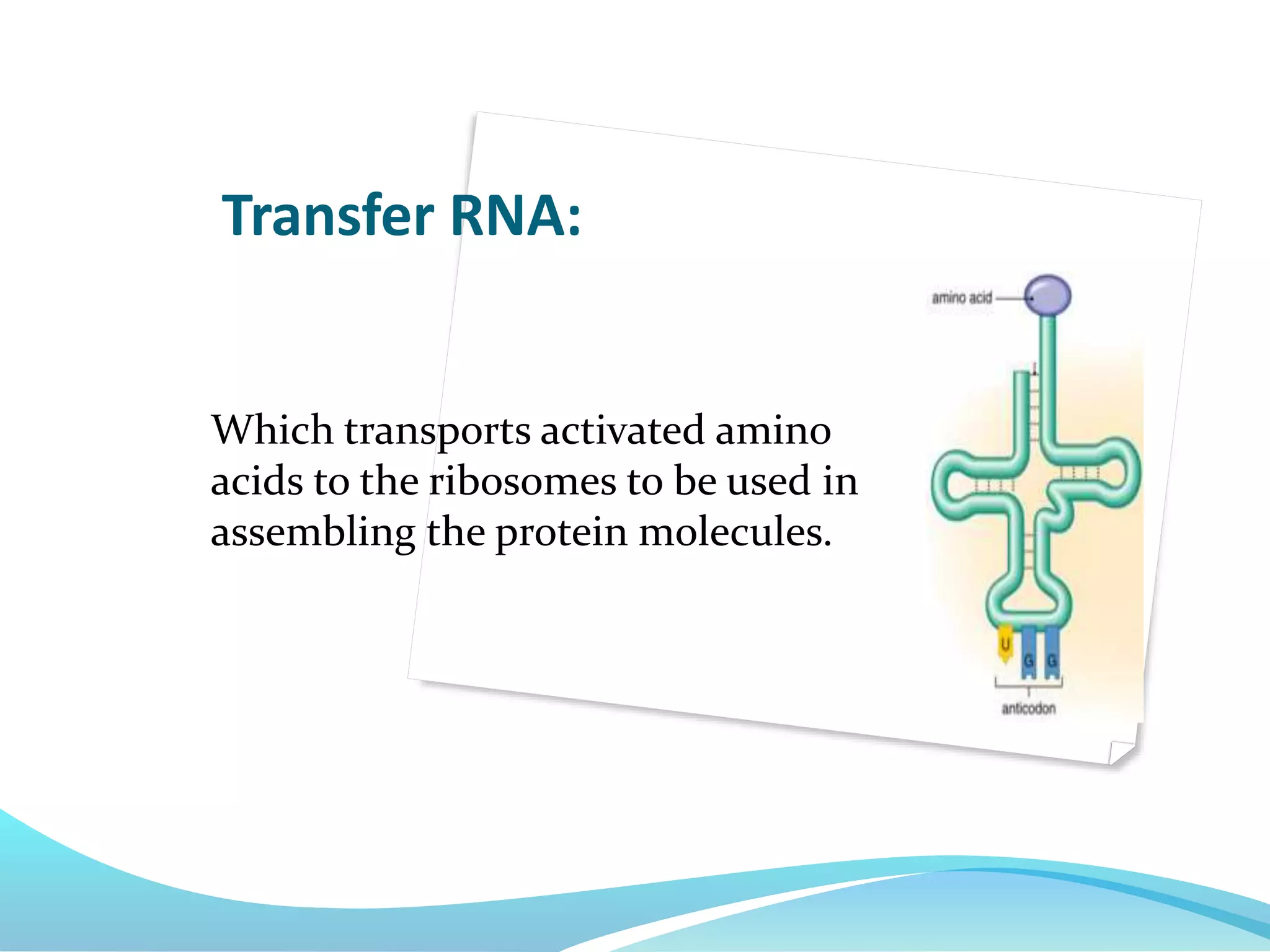
Which transports activated amino
acids to the ribosomes to be used in
assembling the protein molecules.
Transfer RNA:
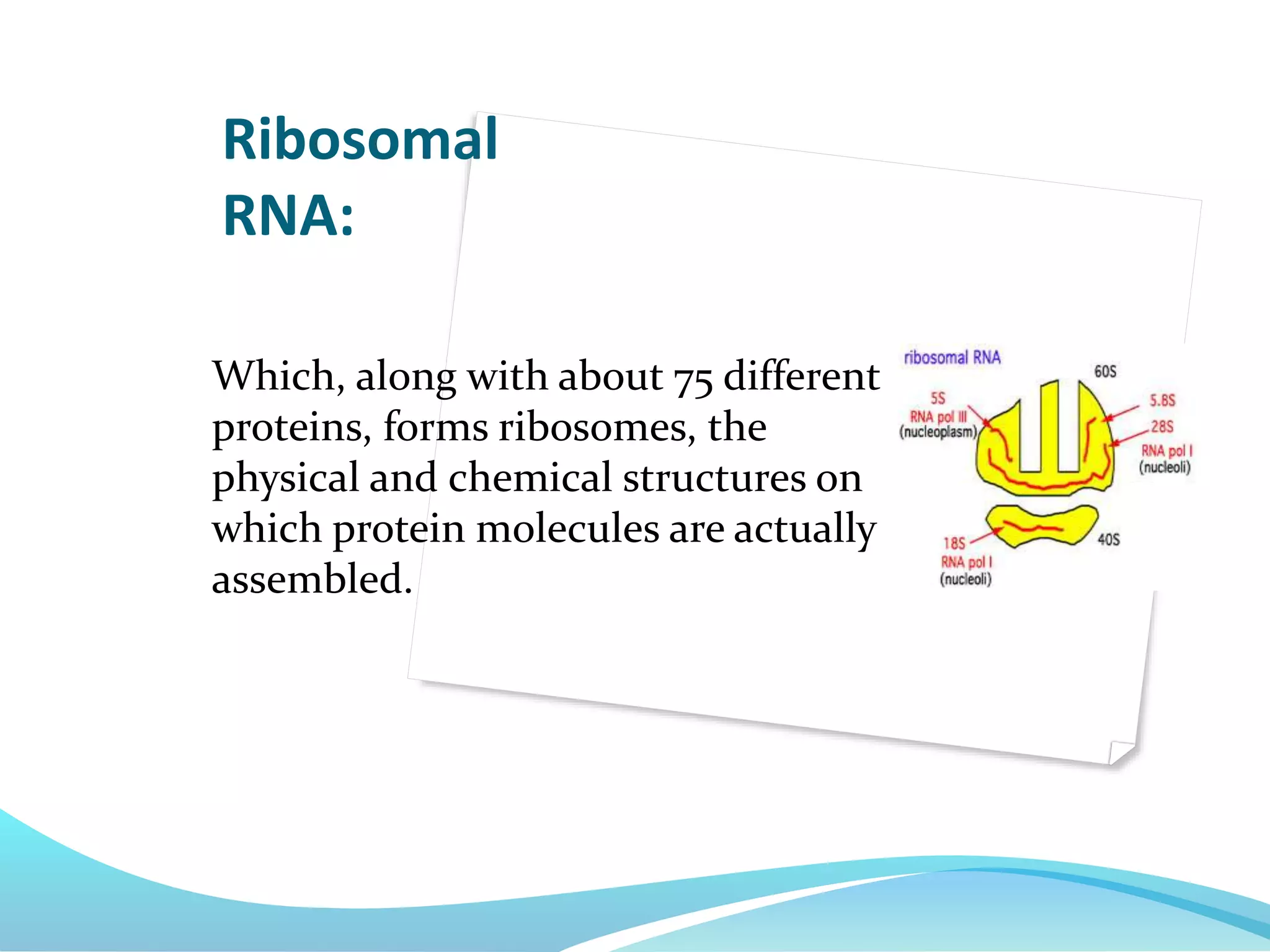
Which, along with about 75 different
proteins, forms ribosomes, the
physical and chemical structures on
which protein molecules are actually
assembled.
Ribosomal
RNA:
Micro RNA:
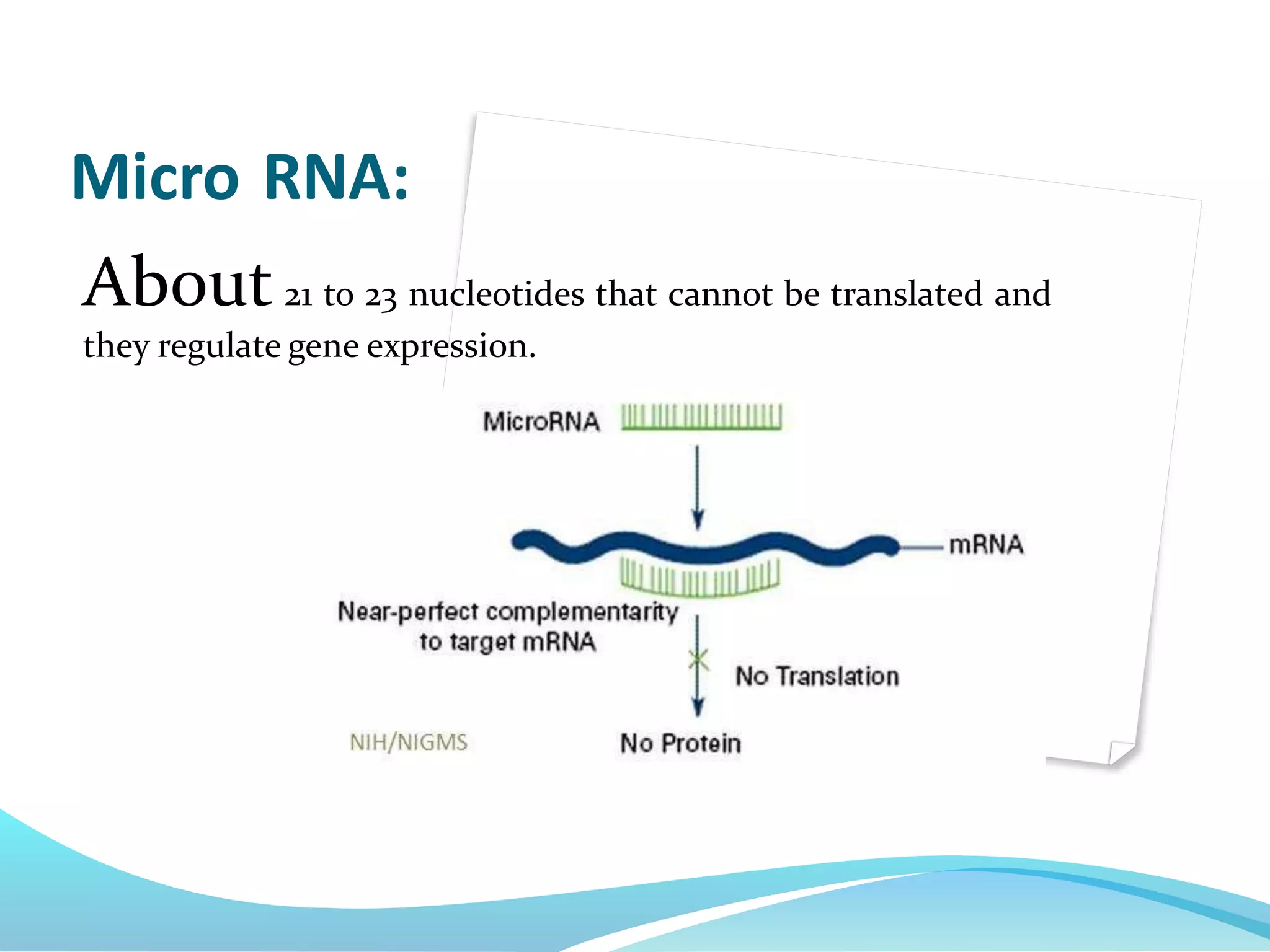
About 21 to 23 nucleotides that cannot be translated and
they regulate gene expression.
44
TOPIC OUTLINE
 m-RNA
 Structure
 Function
 Codon
45
Biochemistry For Medics 46
Messenger RNA (m-RNA)
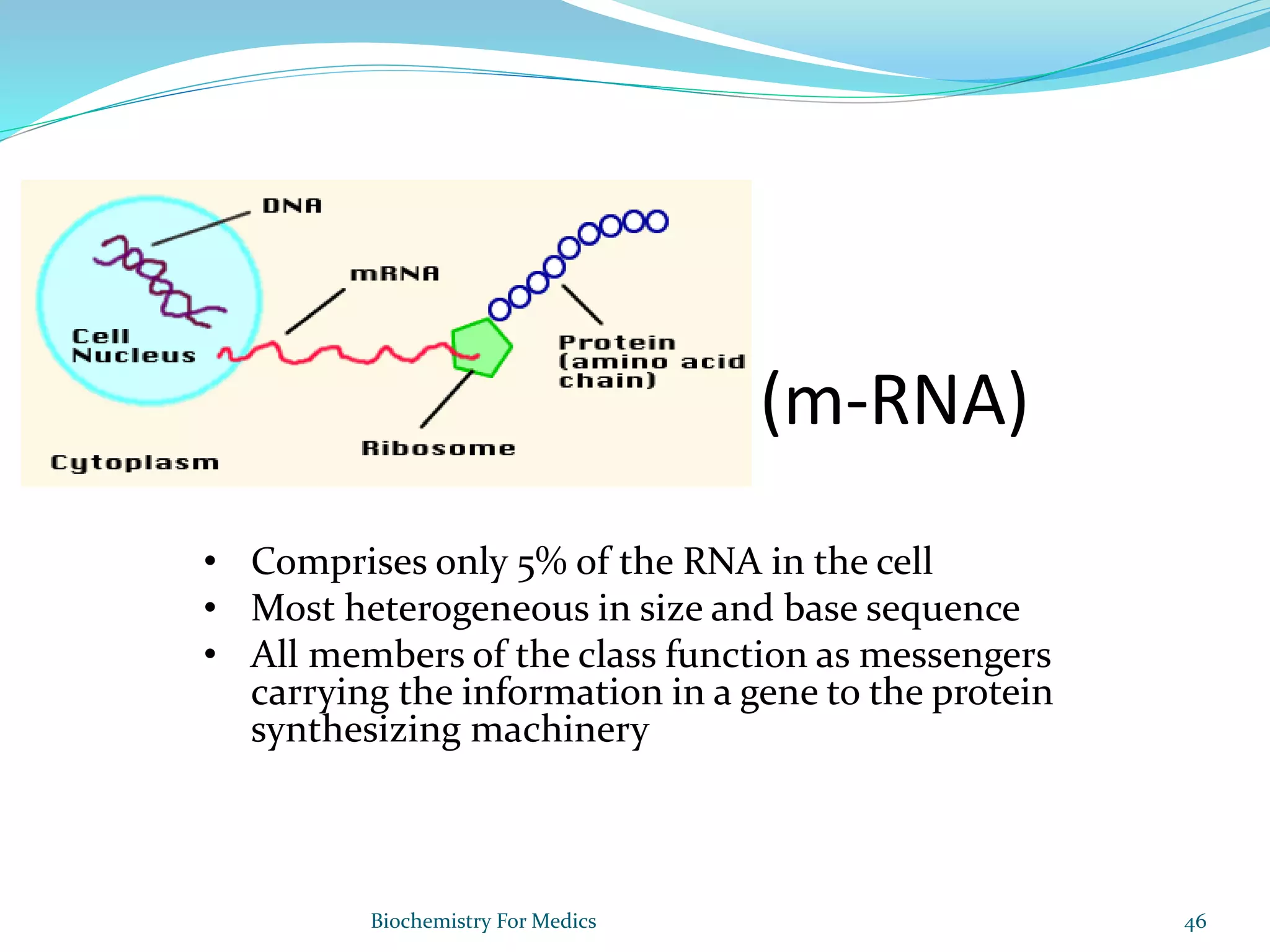
• Comprises only 5% of the RNA in the cell
• Most heterogeneous in size and base sequence
• All members of the class function as messengers
carrying the information in a gene to the protein
synthesizing machinery
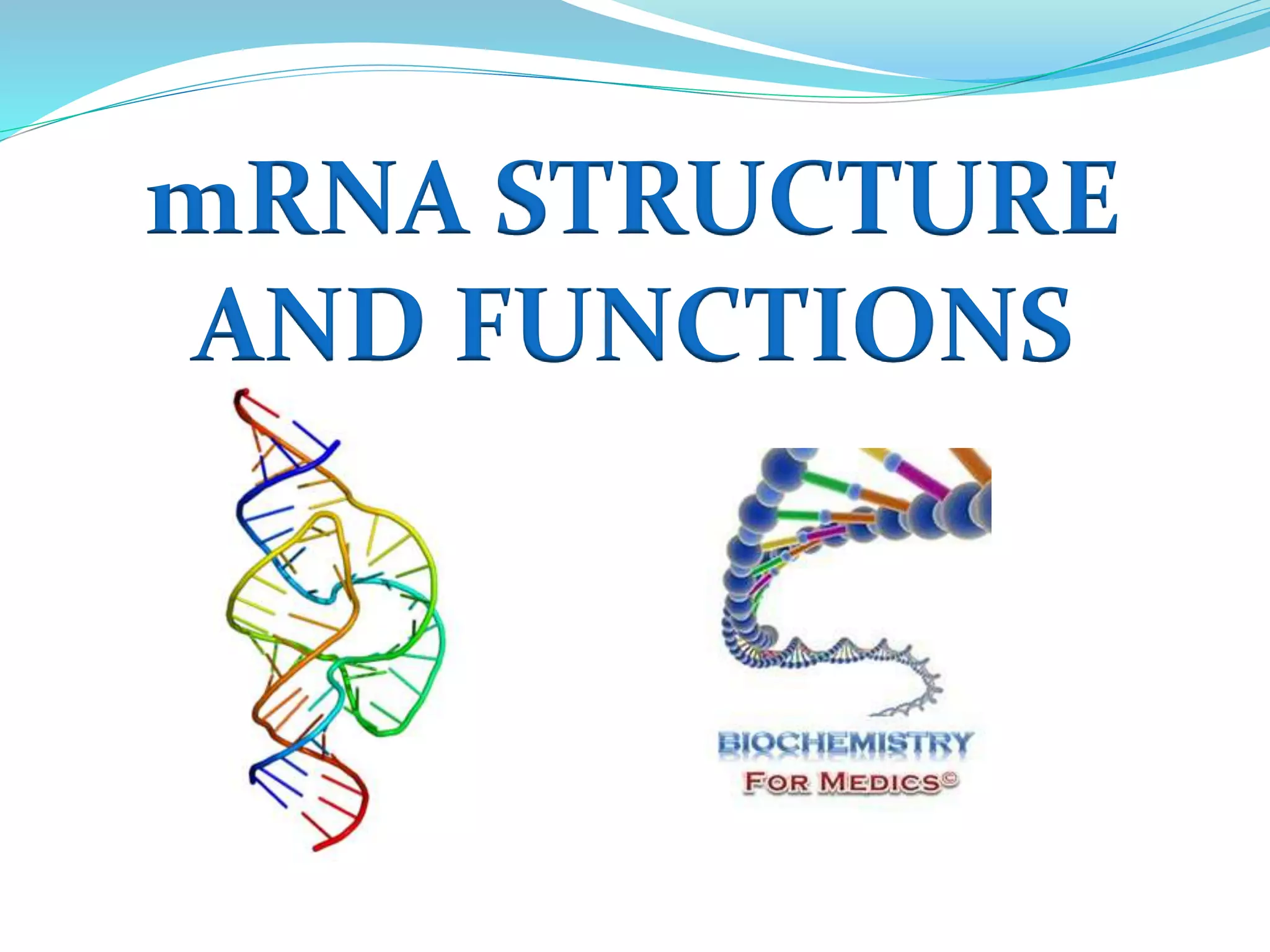
mRNA STRUCTURE
AND FUNCTIONS
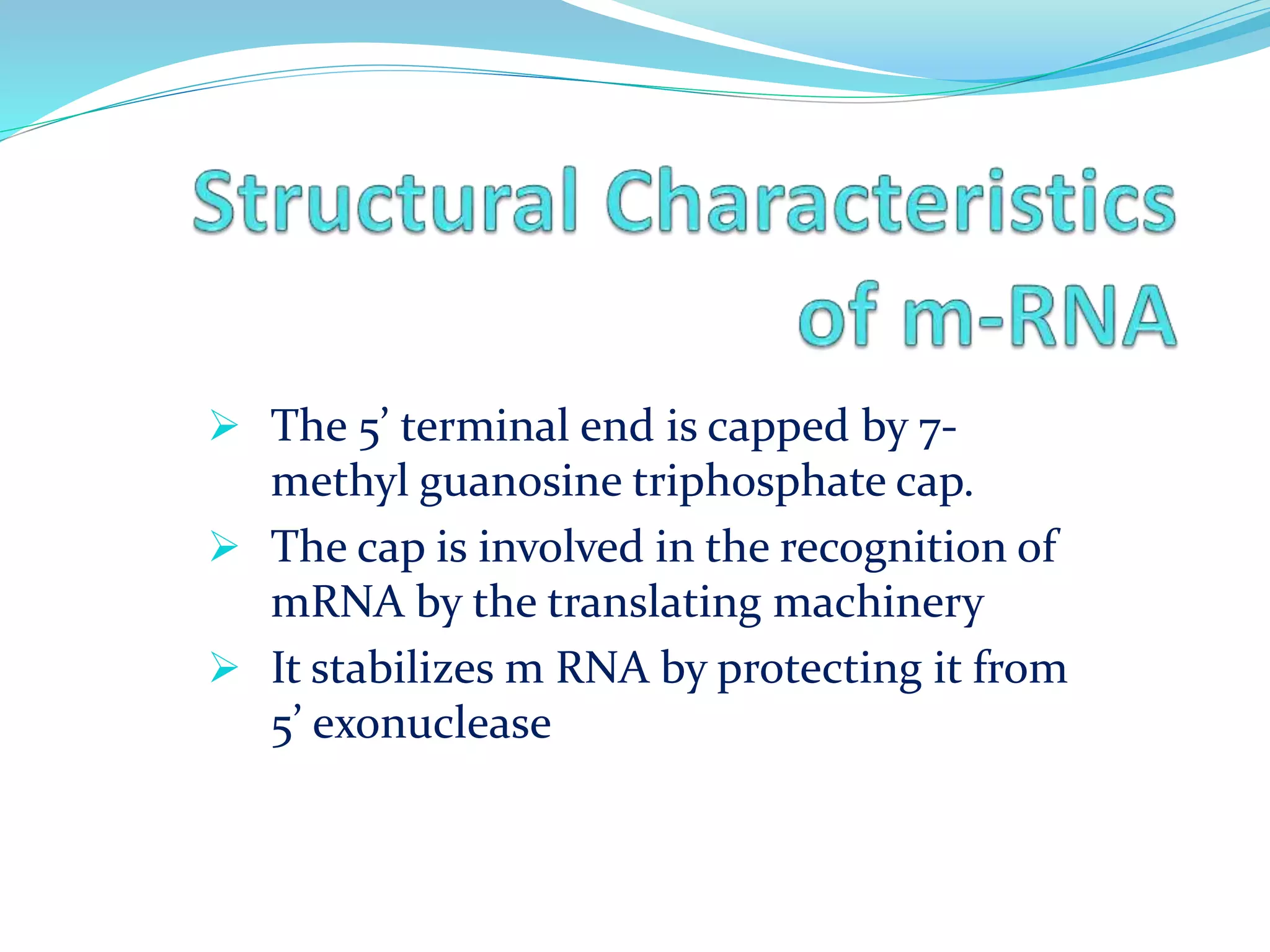
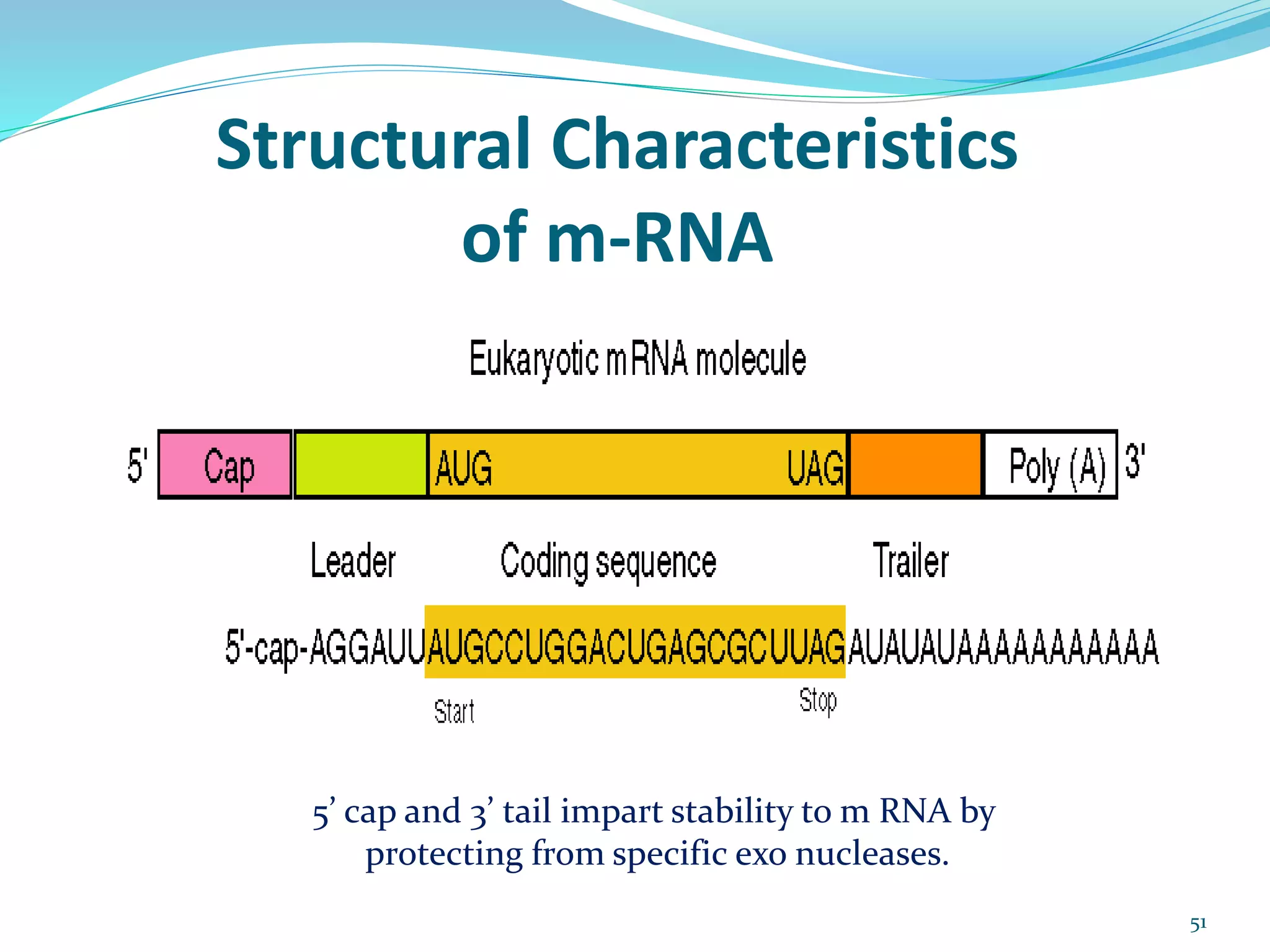
 The 5’ terminal end is capped by 7-
methyl guanosine triphosphate cap.
 The cap is involved in the recognition of
mRNA by the translating machinery
 It stabilizes m RNA by protecting it from
5’ exonuclease
 The 3’end of most m-RNAs have a polymer of
Adenylate residues( 20-250)
 The tail prevents the attack by 3’ exonucleases
 Histones and interferons do not contain poly A
tails
 On both 5’ and 3’ end there are non coding
sequences which are not translated (NCS)
50
Structural Characteristics
of m-RNA
5’ cap and 3’ tail impart stability to m RNA by
protecting from specific exo nucleases.
51
 The m- RNA molecules are formed with the
help of DNA template during the process of
transcription.
 The sequence of nucleotides in m RNA is
complementary to the sequence of
nucleotides on template DNA.
 The sequence carried on m -RNA is read in the
form of codons.
 A codon is made up of 3 nucleotides
 The m-RNA is formed after processing of
heterogeneous nuclear RNA
52
What is rRNA:
In molecular biology, ribosomal ribonucleic acid (rRNA)
is the RNA component of the ribosome, and is essential
for protein synthesis in all living organisms. It constitutes
the predominant material within the ribosome, which is
approximately 60% rRNA and 40% protein by weight.
Ribosomes contain two major rRNA and 50 or
more proteins.
54
Structure:
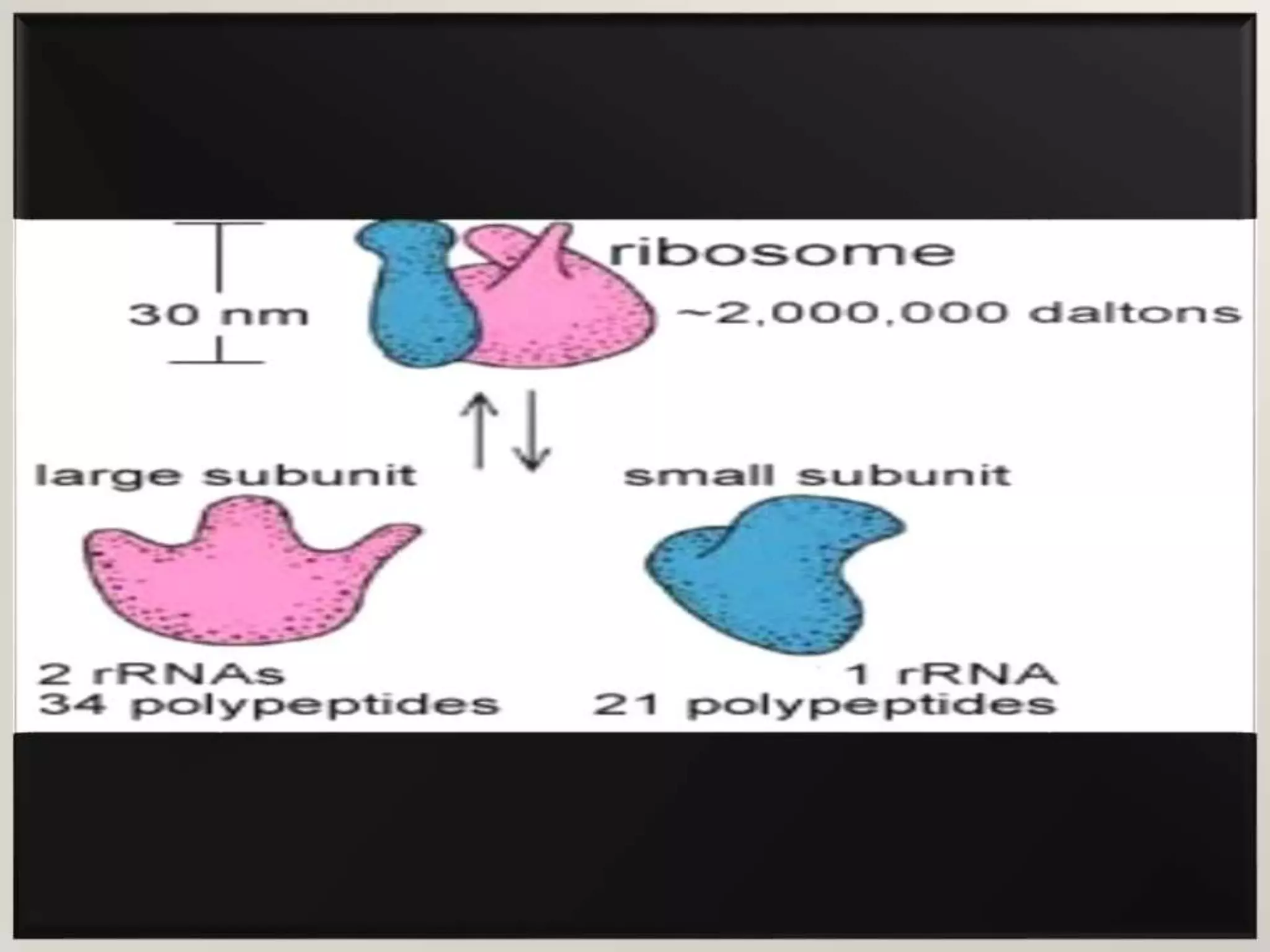
The ribosomal RNAs form two subunits, the large
subunit (LSU) and small subunit (SSU). mRNA is
sandwiched between the small and large subunits.
 A ribosome also has three binding sites called A, P, and E.
 The A site in the ribosome binds to an aminoacyl-tRNA (a tRNA bound to
an amino acid).
 The amino (NH2) group of the aminoacyl-tRNA, which contains the new
amino acid, attacks the ester linkage of peptidyl-tRNA (contained within
the P site), which contains the last amino acid of the growing chain,
forming a new peptide bond. This reaction is catalyzed by peptidyl
transferees.
 The tRNA that was holding on the last amino acid is moved to the E site,
and what used to be the aminoacyl-tRNA is the peptidyl-tRNA.
55
56
Formation of rRNA in
nucleolus:
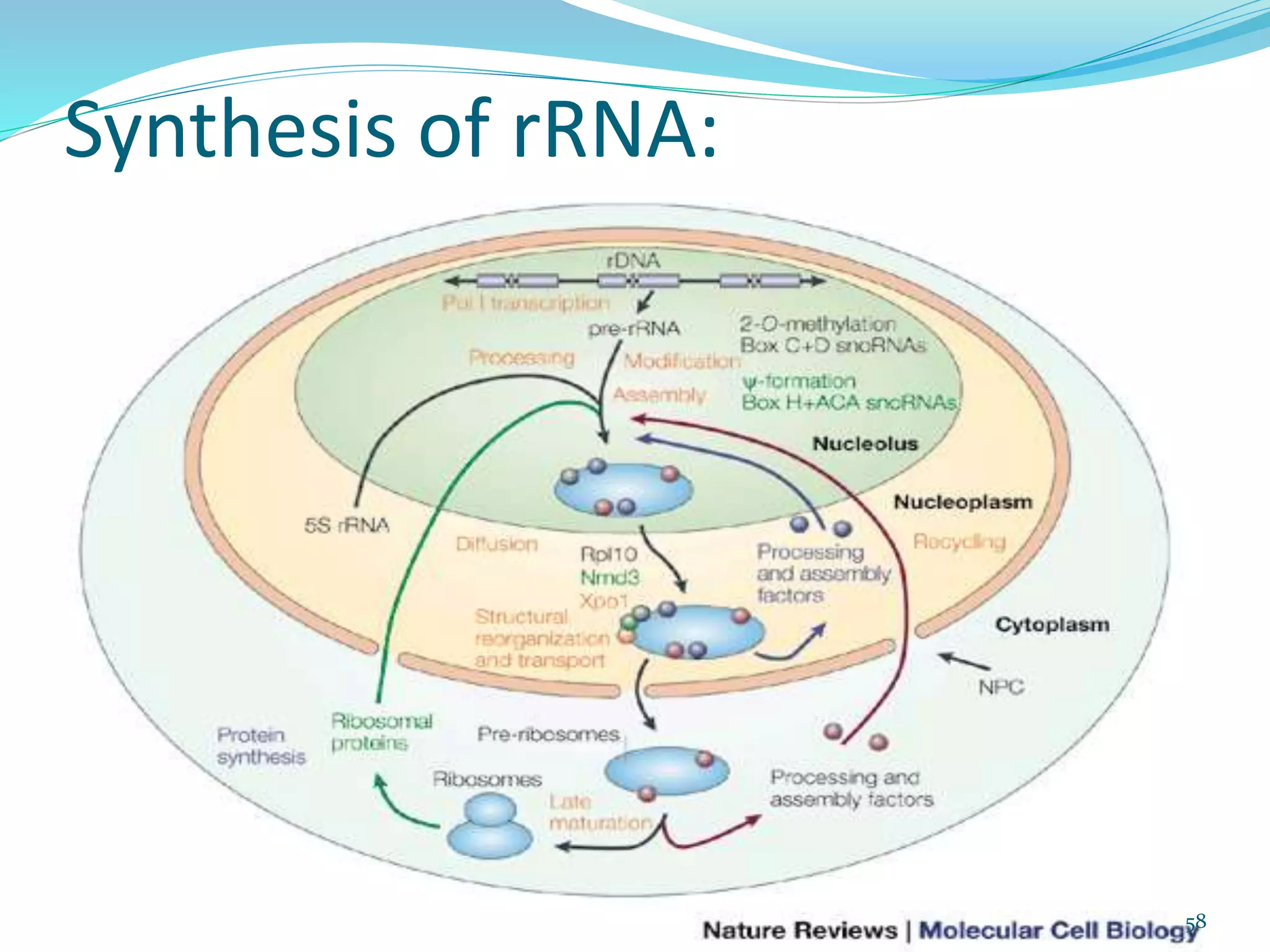
 As the rRNA forms it collects in the nucleolus.
 In nucleolus it binds with ribosomal proteins to form
granular condensation products that are predominant
subunits of ribosomes
 Subunits release from nucleolus and transported through
nuclear pores to almost all parts of cytoplasm.
 In cytoplasm rRNA assembled to form mature, functional
ribosomes.
 Therefore, proteins are formed in the cytoplasm of cell not
in nucleolus as it doesn’t contain mature ribosomes.
 Size of nucleolus depends upon no. of rRNA present in it.
57
Synthesis of rRNA:
58
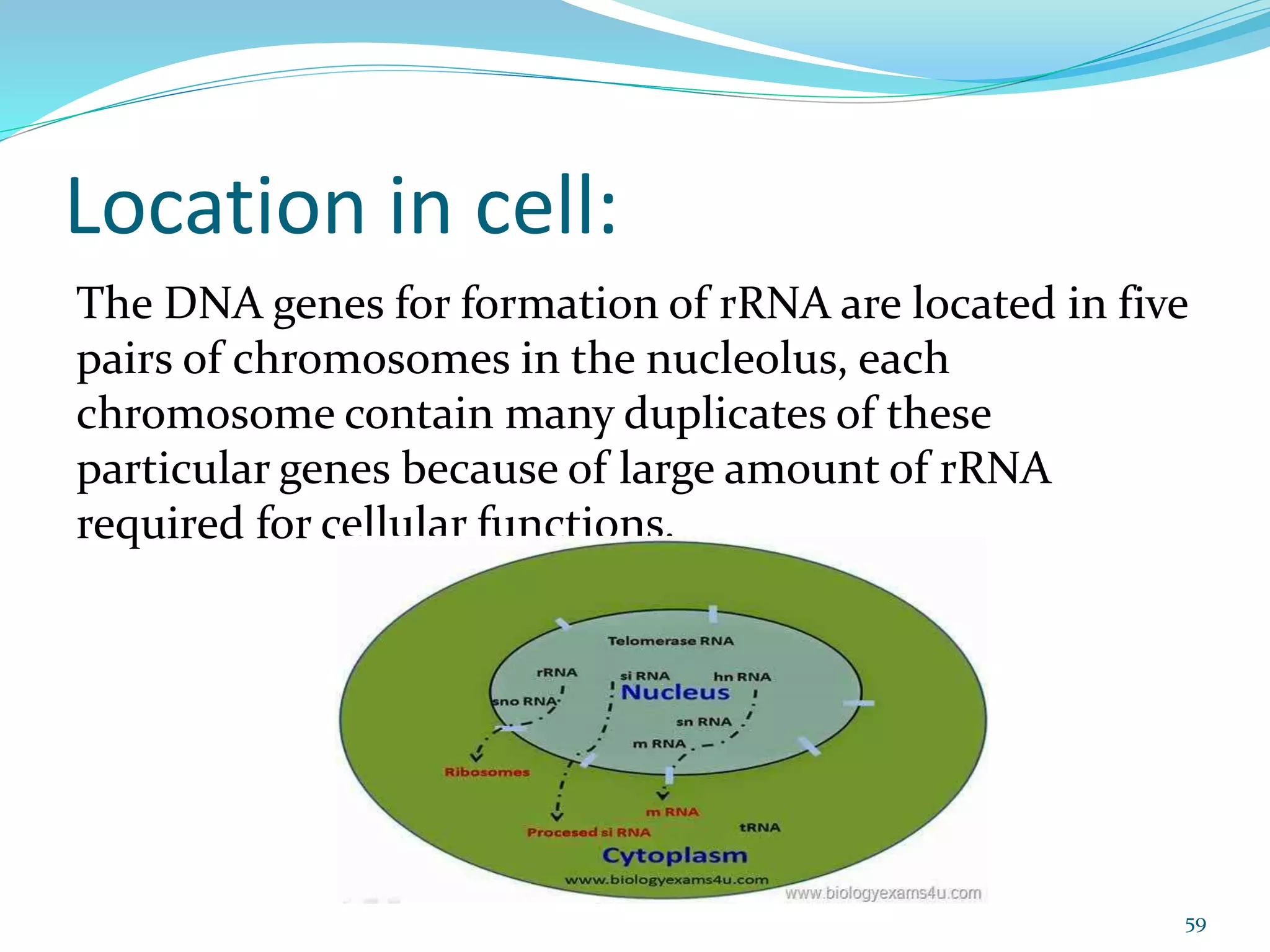
Location in cell:
The DNA genes for formation of rRNA are located in five
pairs of chromosomes in the nucleolus, each
chromosome contain many duplicates of these
particular genes because of large amount of rRNA
required for cellular functions.
59
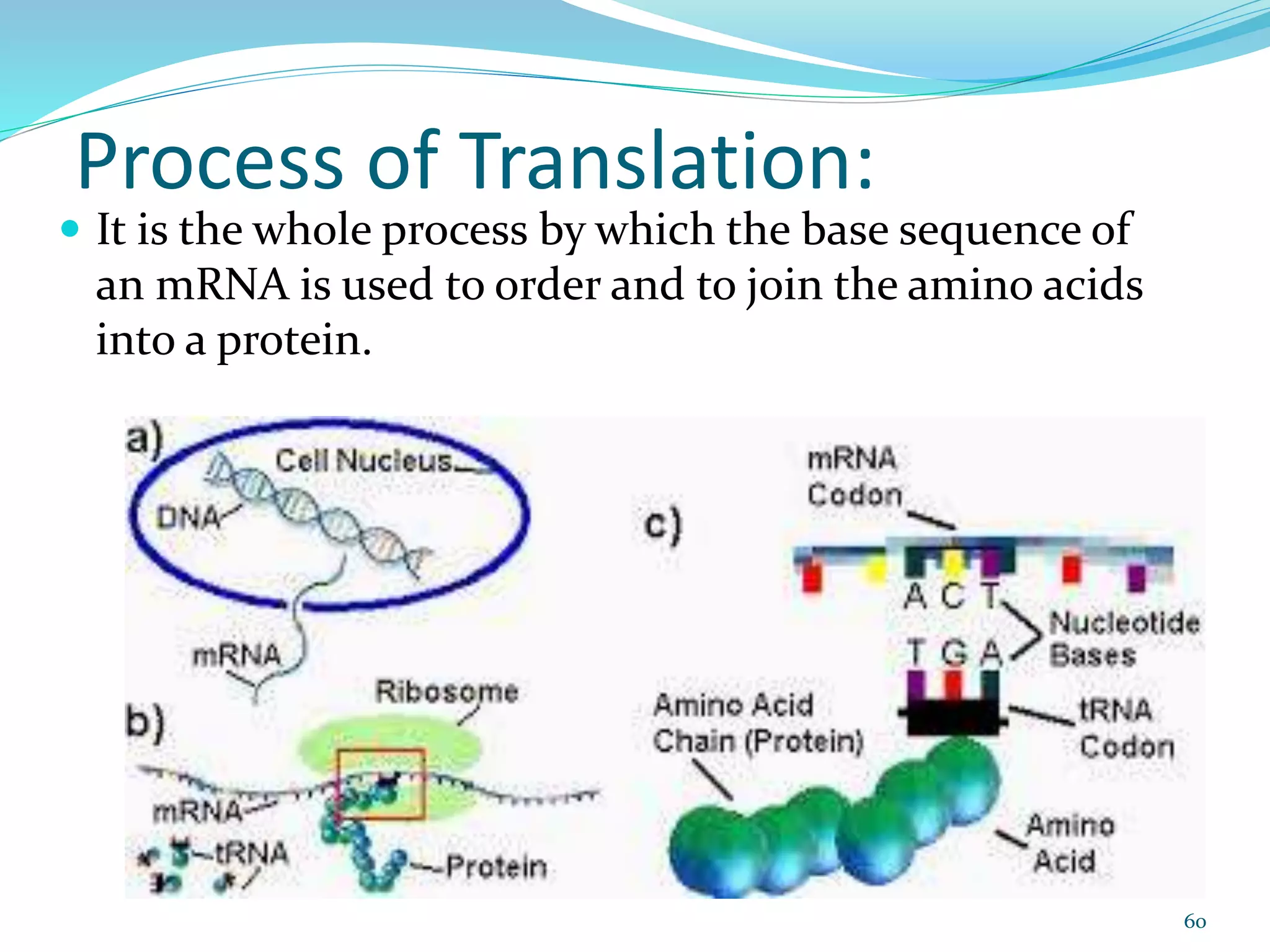
Process of Translation:
 It is the whole process by which the base sequence of
an mRNA is used to order and to join the amino acids
into a protein.
60
Role of rRNA in translation:
 All types of RNA takes part in process of
translation.
 rRNA associate with a set of proteins to form
ribosomes.
 These complex structures, which physically move
along an mRNA molecule, catalyzed the assembly
of amino acids into protein chains.
 They also binds tRNAs and various accessory
molecules necessary for protein synthesis.
61
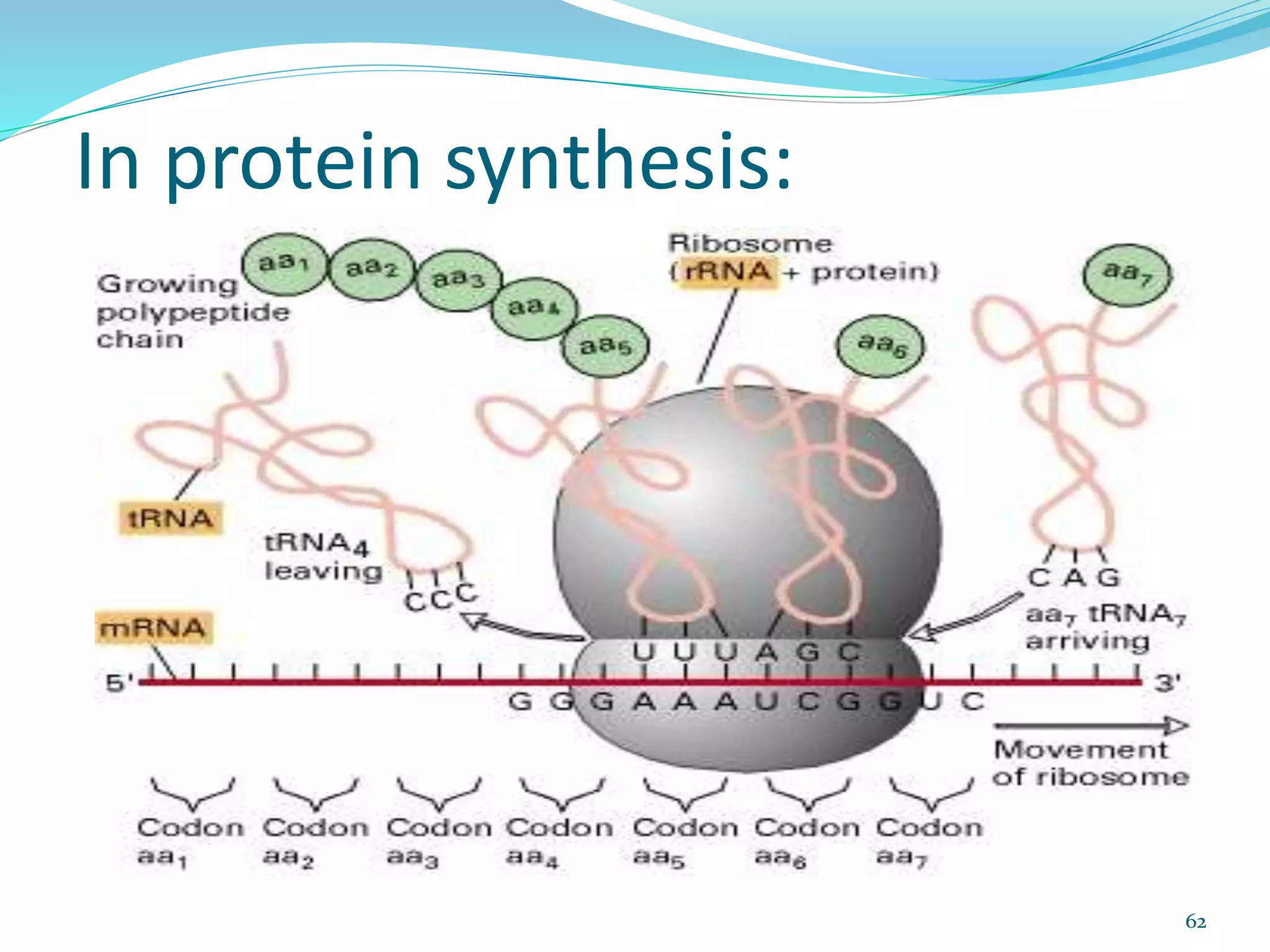
In protein synthesis:
62
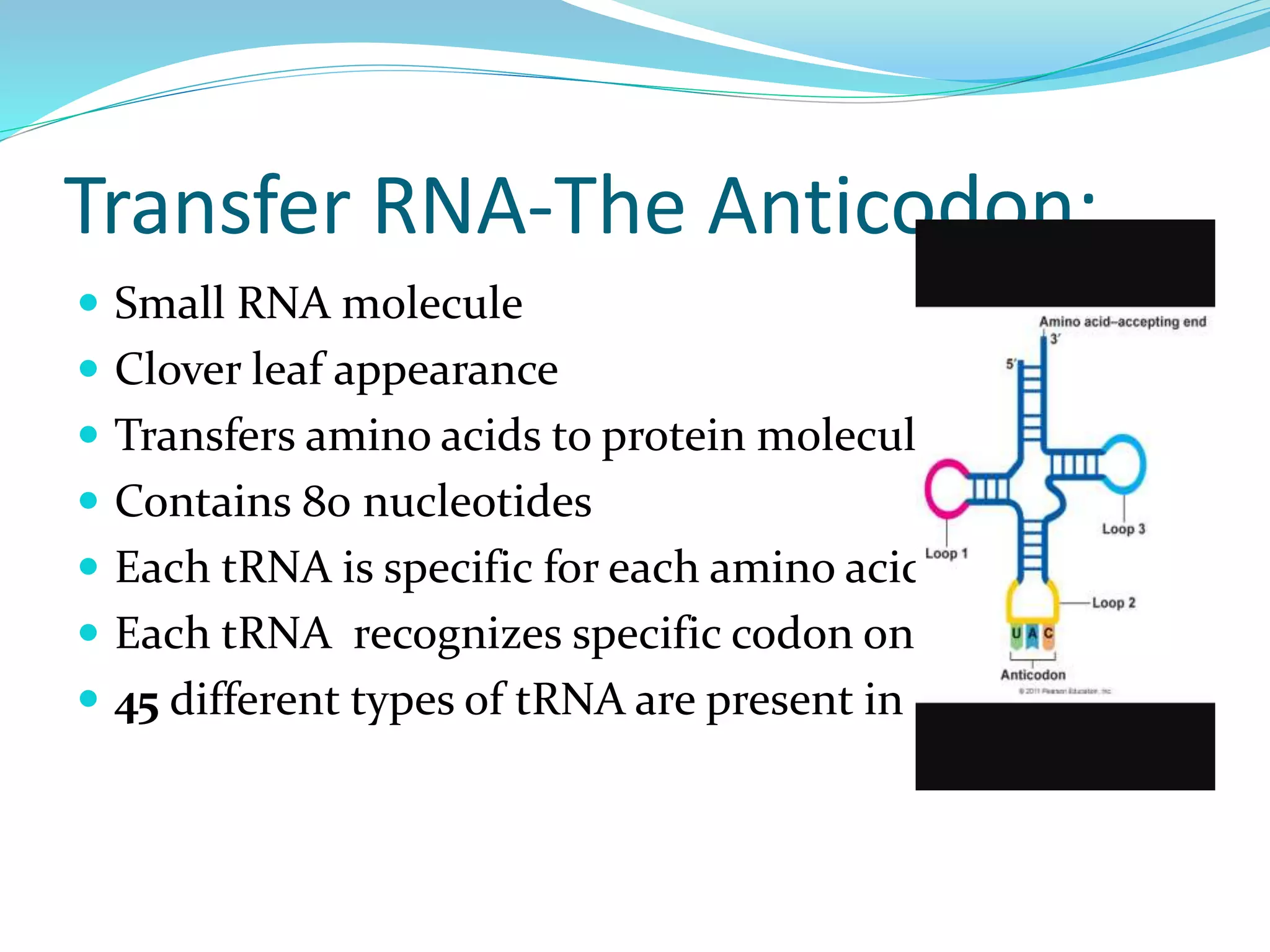
 Small RNA molecule
 Clover leaf appearance
 Transfers amino acids to protein molecules
 Contains 80 nucleotides
 Each tRNA is specific for each amino acid
 Each tRNA recognizes specific codon on mRNA
 45 different types of tRNA are present in humans
Transfer RNA-The Anticodon:
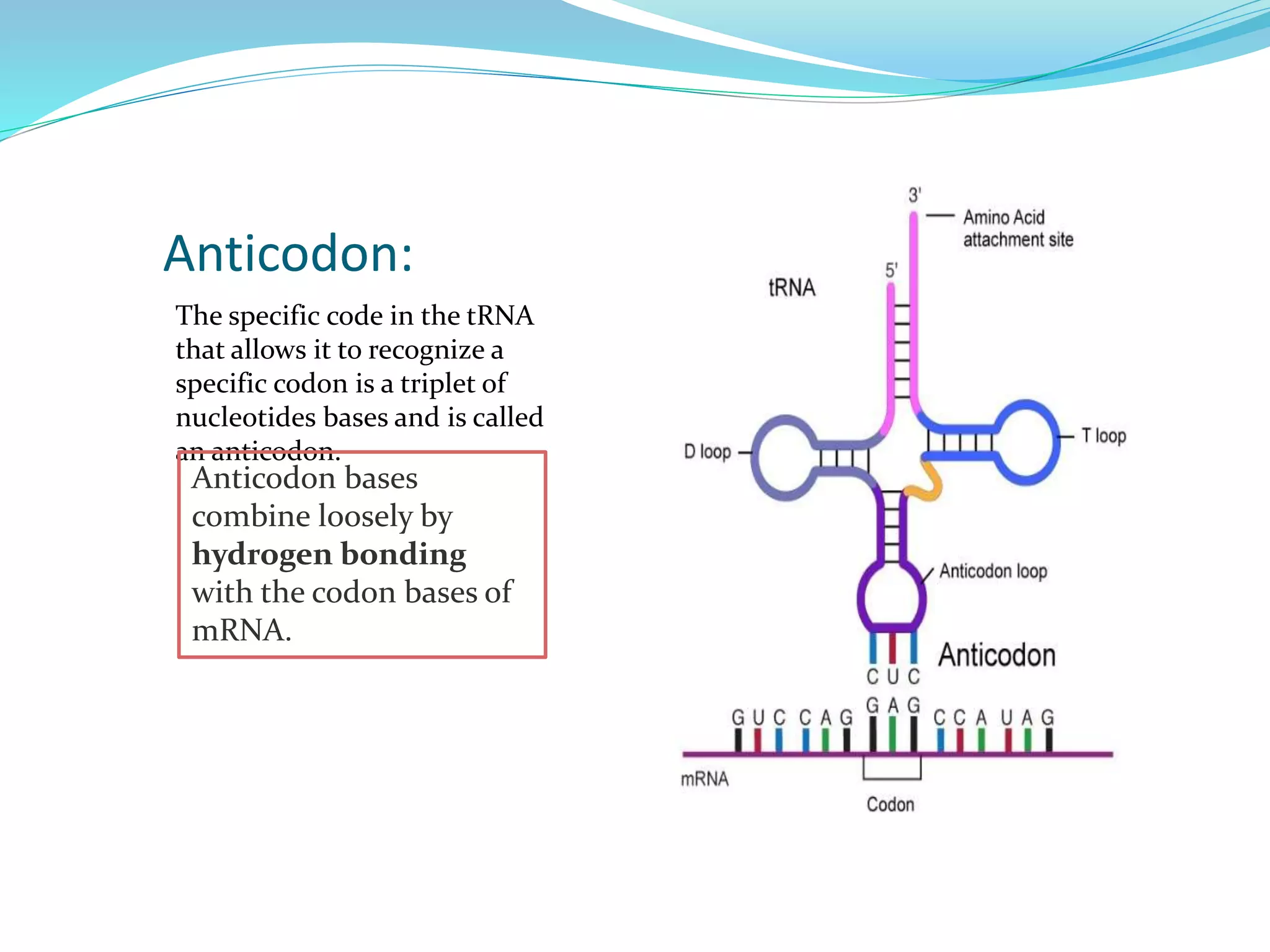
Anticodon:
The specific code in the tRNA
that allows it to recognize a
specific codon is a triplet of
nucleotides bases and is called
an anticodon.
Anticodon bases
combine loosely by
hydrogen bonding
with the codon bases of
mRNA.
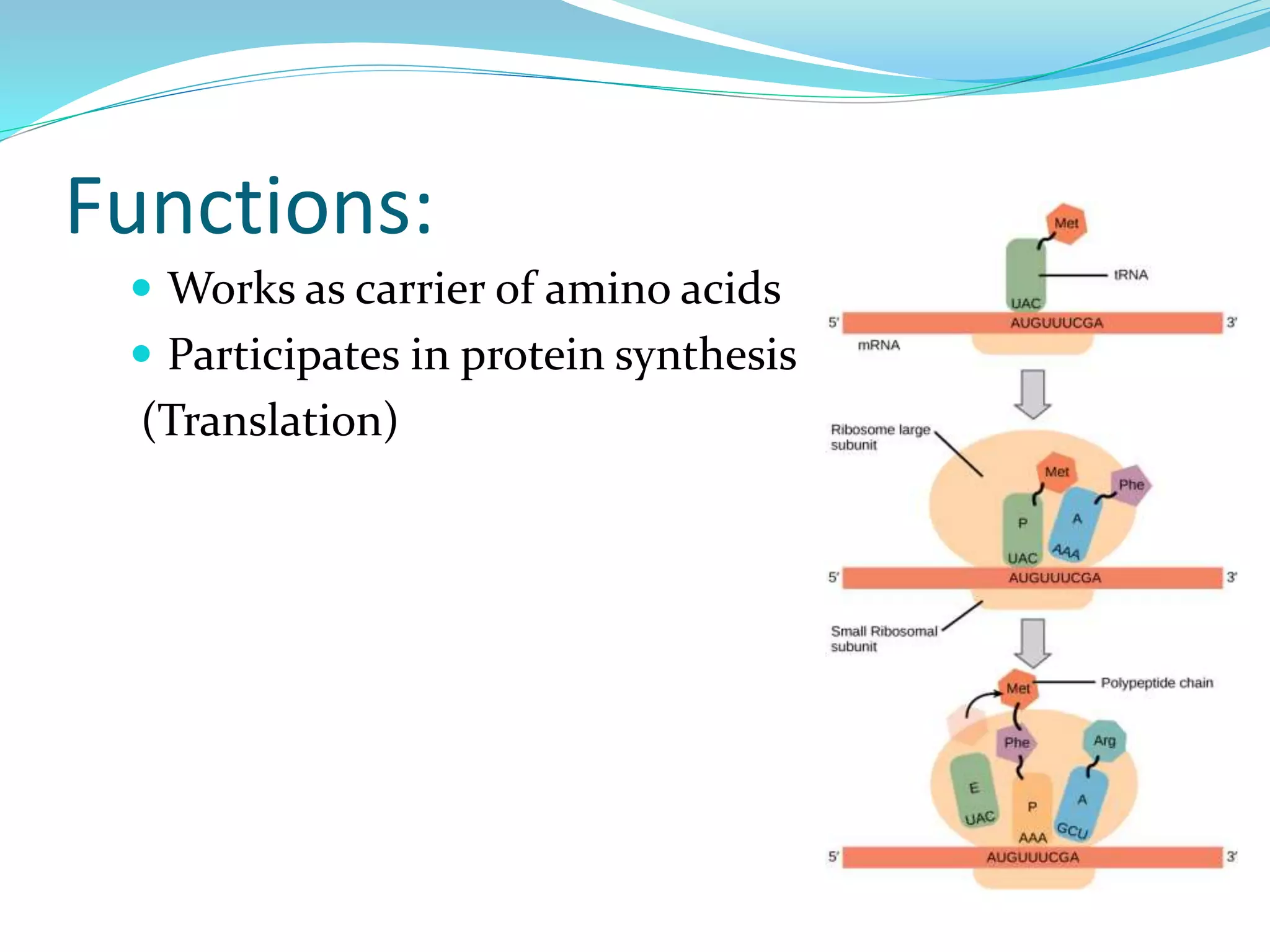
 Works as carrier of amino acids
 Participates in protein synthesis
(Translation)
Functions:
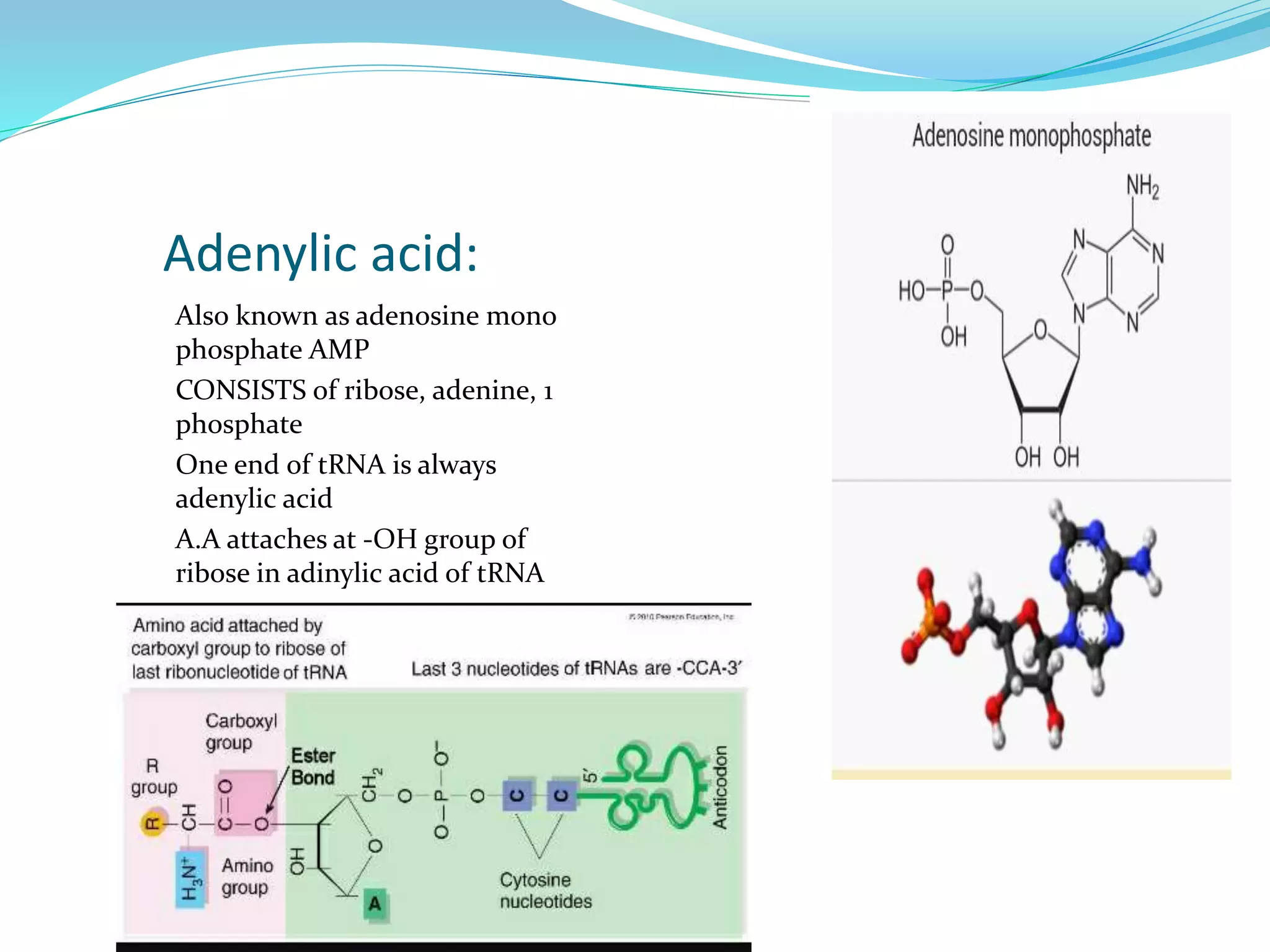
Also known as adenosine mono
phosphate AMP
CONSISTS of ribose, adenine, 1
phosphate
One end of tRNA is always
adenylic acid
A.A attaches at -OH group of
ribose in adinylic acid of tRNA
Adenylic acid:
A microRNA (abbreviated miRNA) is a small non-coding RNA
molecule (containing about 22 nucleotides) found in plants,
animals, and some viruses, which functions in RNA silencing
and post-transcriptional regulation of gene expression.
Discovery…
For the first time in Caenorhabditis elegans-a free
living nematode by Victor Ambros’ Laboratory in 1993.
Peculiarities…
 Encoded from transcribed DNA but not translated into
protein and hence called non-coding RNA.
 Regulate many functions of cells playing key role in:
> cell development, differentiation, death, proliferation,
apoptosis, neurodevelopment and indirectly in
Translation.
> siRNA(discussed later) may become useful therapeutic
tools to silence genes that contribute to the pathophysiology of
diseases.
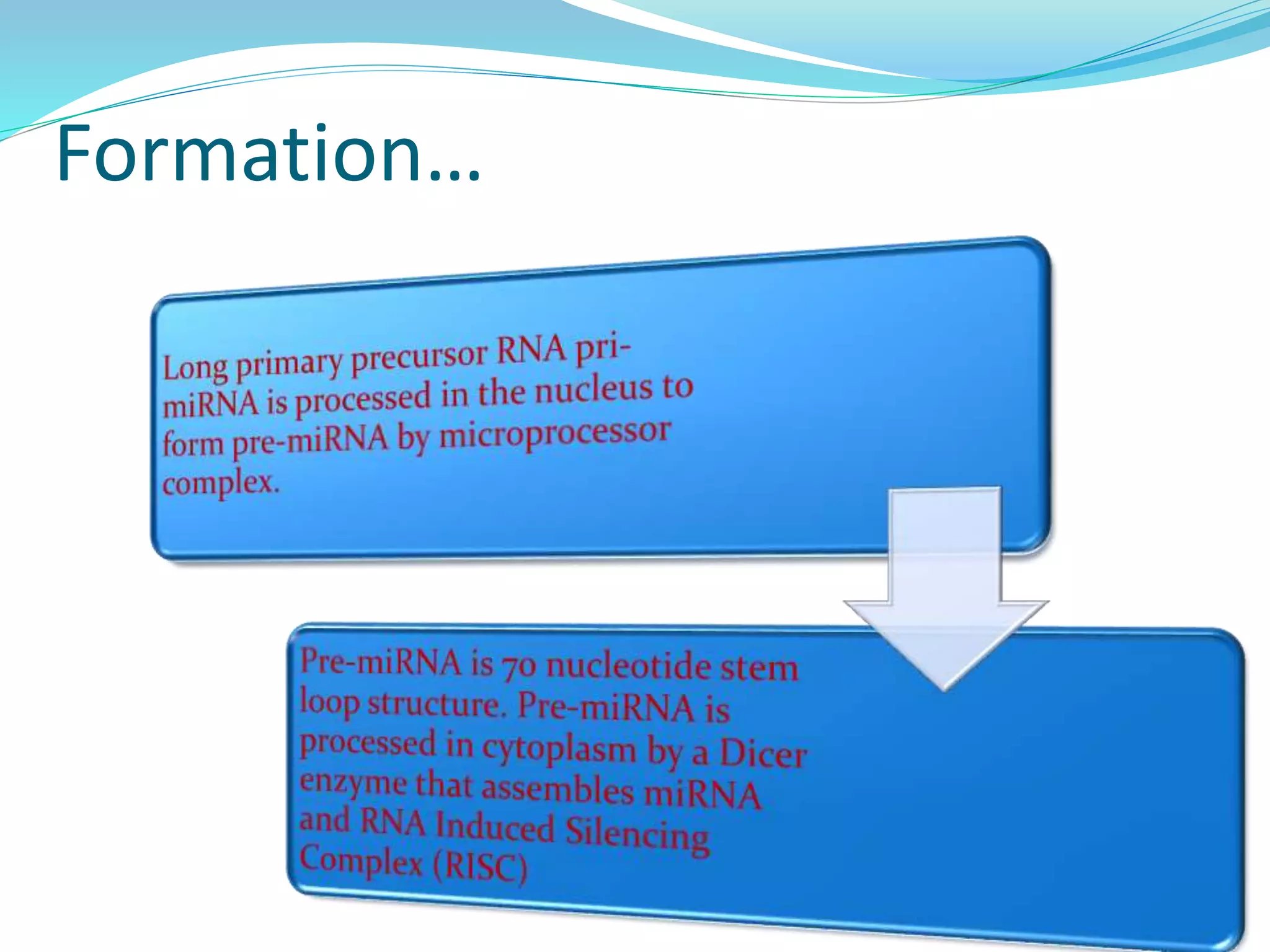
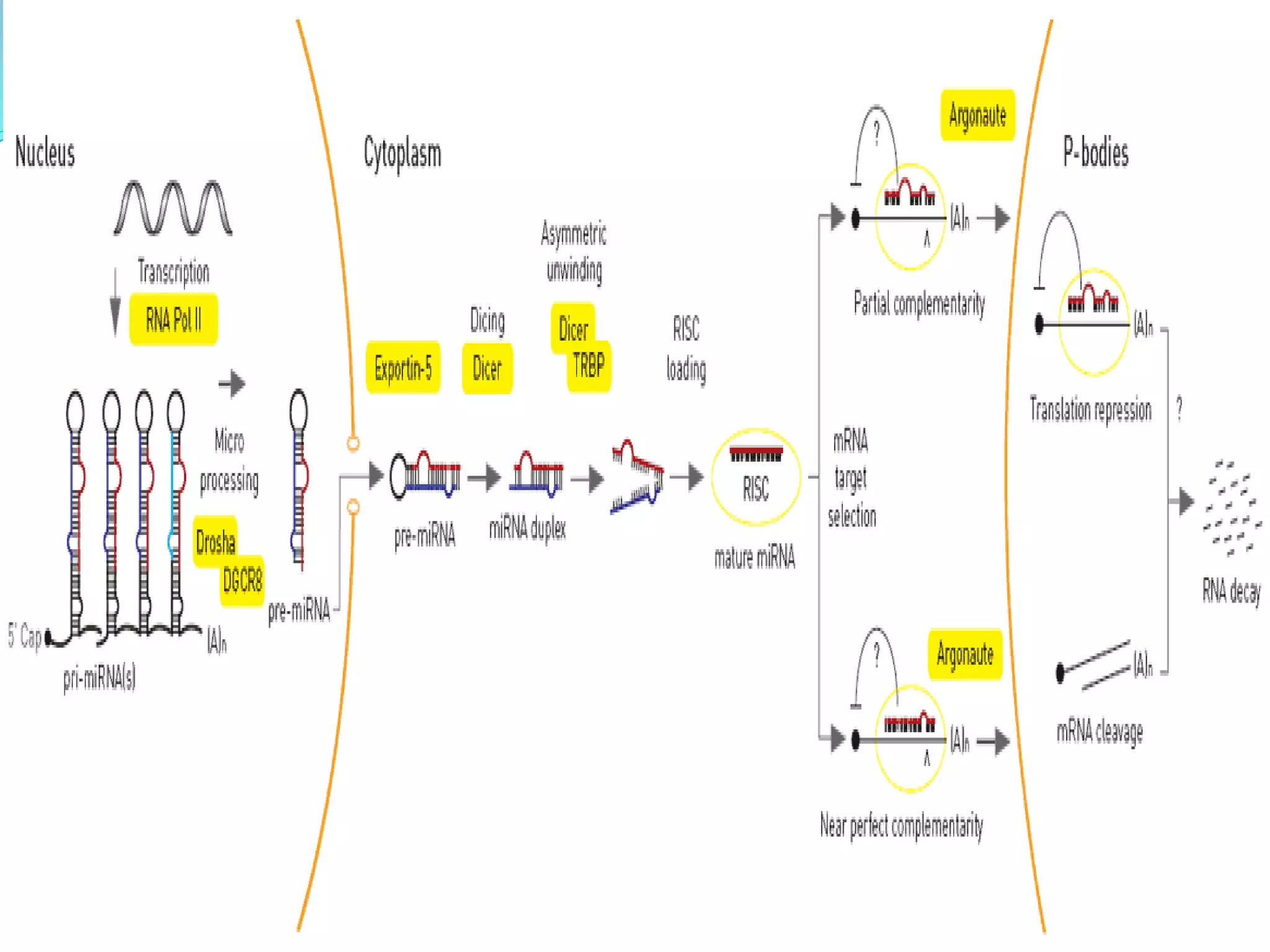
Formation…
Functions… It performs RNA Silencing by introducing anti-
sense RNA molecules in mRNA.
 It regulates gene expression by controlling process
of Translation.
 it reduces efficiency of mRNA in protein synthesis.
 this is done by another type of miRNA-a silencing
RNA(siRNA) or short RNA 20-25 nucleotides.
 The siRNA are short double stranded RNA
molecules, 20-25 nucleotides in length.
 as siRNA enters cytoplasm, it activates RISC that
was generated along with miRNA.
References…
 Bernice J, Heffner DR, Stark A, Russell RB, Cohen SM (2003) bantam encodes a developmentally regulated microRNA that controls cell proliferation and
regulates the proapoptotic gene hid in Drosophila. Cell 113: 25-36.
 Colin GA, Sevignani C, Dumitru CD, Hyslop T, Noch E, Yendamuri S, Shimizu M, Rattan S, Bullrich F, Negrini M, Croce CM (2004) Human miRNA genes are
frequently located at fragile sites and genomic regions involved in cancers. Proc. Natl. Acad. Sci. USA. 101: 2999-3004.
 Dostie J, Mourelatos Z, Yang M, Sharma A, Dreyfuss G. (2003) Numerous microRNPs in neuronal cells containing novel microRNAs. RNA 9(2): 180-6. Erratum
in: RNA 9(5): 631-2.
 Chen X. (2003) A MicroRNA as a Translational Repressor of APETALA2 in Arabidopsis Flower Development. Science E-Pub.
 Krichevsky AM, King KS, Donahue CP, Khrapko K, Kosik KS (2003) A miRNA array reveals extensive regulation of miRNAs during brain development. RNA 9:
1274-1281.
 Lee RC, Feinbaum RL, Ambros V (1993) The C. elegans heterochronic gene lin-4 encodes small RNAs with antisense complementarity to lin-14. Cell 75: 843-
854.
 Lim LP, Glasner ME, Yekta S, Burge CB, Bartel DP (2003b) Vertebrate microRNA genes. Science 299: 1540.
 Metzler M, Wilda M, Busch K, Viehmann S, Borkhardt A. (2004) High expression of precursor miRNA-155/BIC RNA in children with Burkitt lymphoma.
Genes Chromosomes Cancer 2: 167-169.
 Michael MZ, O’Connor SM, van Holst Pellekaan NG, Young GP, James RJ (2003) Reduced accumulation of specific microRNAs in colorectal neoplasia.
Molecular Cancer Research 1: 882-91.
 Pfeffer S, Zavolan M, Grasser FA, Chien M, Russo JJ, Ju J, John B, Enright AJ, Marks D, Sander C, Tuschl T. (2004) Identification of virus-encoded microRNAs.
Science 304(5671): 734-6.
 Reinhart BJ, Slack FA, Basson M, Pasquinelli AE, Bettinger JC, Rougvie AC, Horvitz HR, and G Ruvkun. (2000) The 21 nucleotide let-7 RNA regulates C.
elegans developmental timing. Nature 403: 901–906.
 Xu P, Vernooy SY, Guo M, Hay BA. (2003) The Drosophila microRNA Mir-14 suppresses cell death and is required for normal fat metabolism. Curr Biol 13(9):
790-5.
 Guyton and Hall Medical Physiology; ed 12 Genetic Control of Protein Synthesis, Cell Function, and Cell Reproduction_Unit-1_ The process of Transcription.

Physiology-brief about RNA and its types

  • 2.
  • 3.
    Roll no. 13to 23 Section: A DPT Physiology Presentation > In respect of Dr. Muzna Munir
  • 4.
  • 5.
    TOPIC OUTLINE  Transcription Types of RNA Messenger RNA(mRNA) or Codons Transfer RNA (tRNA) or Anticodons Ribosomal RNA (rRNA) MicroRNA (miRNA) or Noncoding RNA
  • 6.
    Deoxyribonucleic acid, aself replicating material which is present in nearly all living organisms as the main component of chromosomes. It is the carrier of genetic information.
  • 7.
    Transcription Transcription is thefirst step of gene expression, in which a particular segment of DNA is copied into RNA by an enzyme RNA polymerase.
  • 8.
    RNA Polymerase o Alsoknown as DNA-dependent RNA polymerase o In process of Transcription o essential to life and are found in all organisms and many viruses.
  • 9.
    DNA Code transfer intocytoplasm- Transcription…
  • 10.
  • 11.
    DNA used toMake Proteins
  • 12.
  • 13.
  • 14.
    What is DNA? DNA is (deoxyribose nucleic acid) a molecule that encodes the genetic instructions used in the development and functioning of all living organism.  DNA is a self replicating material which is present in nearly all living organisms as a main constituent of chromosomes.  In one chromosomes 25000 genes are present.  The thickness of DNA is almost 2nm.  10 base pairs are present in one turn.  The length of one turn of DNA is 3.4 nm.
  • 15.
  • 16.
    Location of DNA: DNAis located in the nucleus of the cell .yet most of the functions of the cell are carried out in the cytoplasm, there must be some means for the DNA genes of the nucleus to control the reactions of the cytoplasm. This is achieved through the intermediary of another type of nucleic acid, RNA, the formation of which controlled by DNA of the nucleus. thus figure shown the coding of DNA coded information into RNA coded information this process called transcription. the RNA in turn diffuses from the nucleus through pores into cytoplasmic compartment, where it control protein synthesis.
  • 17.
    TRANSCRIPTION: In transcription processthe firstly combination of ribose nucleotides with strand of DNA to form a molecule of RNA that carries the genetic code from the gene to the cytoplasm. The RNA polymerase enzyme moves along the DNA strand & builds the RNA molecule.
  • 18.
    Synthesis of RNA: Temporarily uncoiling of DNA. Duringsynthesis of RNA the two strands of DNA molecule separate temporarily; one of these strands use for synthesis of RNA molecule. TRIPLET CODES: The genetic code in which a sequence of three nucleotides on DNA molecule codes for template strand whose complementary RNA strand is formed.
  • 19.
    Basic building block ofRNA: RNA composed of : Ribose sugar Thymine is replaced by uracil RNA is single stranded structure.
  • 20.
    Formation of RNA nucleotides: RNA containfour types of nucleotides: Adenine Guanine Cytosine Uracil
  • 21.
    Difference between DNAand RNA DNA RNA DNA is a deoxyribonucleic acid. RNA is ribonucleic acid. DNA is a double helix molecule. RNA is single helix molecule. DNA contain two polynucleotide chain. RNA contain one poly nucleotide chain. DNA is present only in nucleus. RNA is present in whole of the cell in the cytoplasm as well as in nucleus. DNA contain A,C,G,T. nitrogenous bases. RNA contain A,T,C,U nitrogenous bases. DNA act as hereditary material in all organism. RNA act as a hereditary material in some viruses. DNA has no types. RNA has three types MRNA, RRNA, TRNA.
  • 22.
  • 23.
    In The Synthesisof RNA the activation is done by an enzyme which is called “RNA Polymerase”. Activation of the RNA Nucleotides.
  • 24.
    TRANSCRIPTION: The process inwhich genes of DNA i.e., DNA code is expressed in the form of mRNA is called Transcription. DNA is responsible for this process.
  • 25.
    It is anenzyme that catalyses the formation of RNA from DNA strand during transcription. It is also called “Transcriptase” RNA POLYMERASE
  • 27.
    STEP 01: In theDNA strand immediately ahead of the initial gene is a sequence of nucleotides called promoter. The RNA polymerase has an appropriate complementary structure that recognizes this promoter and becomes attached to it. STEPS Involved in TRANSCRIPTION
  • 28.
    After the RNApolymerase attaches to the promoter the polymerase causes unwinding of about two turns of the DNA helix and separation of the unwounded portions of the two strands STEP 02:
  • 30.
    Then the polymerase movesalong the DNA strand and, temporarily a) First it causes hydrogen bonds to form between the ends of an RNA nucleotides in the nucleoplasm. STEP 03
  • 31.
    Then one ata time the RNA polymerase breaks 2 of the 3 phosphate radicals away from each of these RNA Nucleotides……………. B)
  • 32.
    When the RNApolymerase reaches the end of the DNA gene it encounters a new sequence of DNA nucleotides called the chain terminating sequence………………… c)
  • 33.
    As the newRNA strand is formed its week hydrogen breaks away thus the RNA chain is forced away from the DNA and released into nucleoplasm. d)
  • 34.
    The code thatis present in DNA strands is transmitted in complementary form to the RNA. In short,
  • 36.
    The ribose nucleotidebases always combine with deoxyribose bases in the following combinations : Combination of Bases: DNA Base RNA Base Guanine Cytosine Cytosine Guanine Adenine Uracil Thymine Adenine
  • 37.
    RNA: • Ribonucleic acid,or RNA is one of the three major biological macromolecules that are essential for all known forms of life (along with DNA and proteins). • DNA makes RNA, RNA makes Proteins.
  • 38.
    Each type ofRNA plays and independent and entirely different role in protein formation. There are four different types of RNA : 1- Messenger RNA 2- Ribosomal RNA 3- Transfer RNA 4- Micro RNA Types of RNA :
  • 39.
    Which carries thegenetic code to the cytoplasm for controlling the type of protein formed. Messenger RNA:
  • 40.
    Which transports activatedamino acids to the ribosomes to be used in assembling the protein molecules. Transfer RNA:
  • 41.
    Which, along withabout 75 different proteins, forms ribosomes, the physical and chemical structures on which protein molecules are actually assembled. Ribosomal RNA:
  • 42.
    Micro RNA: About 21to 23 nucleotides that cannot be translated and they regulate gene expression.
  • 44.
  • 45.
    TOPIC OUTLINE  m-RNA Structure  Function  Codon 45
  • 46.
    Biochemistry For Medics46 Messenger RNA (m-RNA) • Comprises only 5% of the RNA in the cell • Most heterogeneous in size and base sequence • All members of the class function as messengers carrying the information in a gene to the protein synthesizing machinery
  • 47.
  • 48.
     The 5’terminal end is capped by 7- methyl guanosine triphosphate cap.  The cap is involved in the recognition of mRNA by the translating machinery  It stabilizes m RNA by protecting it from 5’ exonuclease
  • 49.
     The 3’endof most m-RNAs have a polymer of Adenylate residues( 20-250)  The tail prevents the attack by 3’ exonucleases  Histones and interferons do not contain poly A tails  On both 5’ and 3’ end there are non coding sequences which are not translated (NCS)
  • 50.
  • 51.
    Structural Characteristics of m-RNA 5’cap and 3’ tail impart stability to m RNA by protecting from specific exo nucleases. 51
  • 52.
     The m-RNA molecules are formed with the help of DNA template during the process of transcription.  The sequence of nucleotides in m RNA is complementary to the sequence of nucleotides on template DNA.  The sequence carried on m -RNA is read in the form of codons.  A codon is made up of 3 nucleotides  The m-RNA is formed after processing of heterogeneous nuclear RNA 52
  • 54.
    What is rRNA: Inmolecular biology, ribosomal ribonucleic acid (rRNA) is the RNA component of the ribosome, and is essential for protein synthesis in all living organisms. It constitutes the predominant material within the ribosome, which is approximately 60% rRNA and 40% protein by weight. Ribosomes contain two major rRNA and 50 or more proteins. 54
  • 55.
    Structure: The ribosomal RNAsform two subunits, the large subunit (LSU) and small subunit (SSU). mRNA is sandwiched between the small and large subunits.  A ribosome also has three binding sites called A, P, and E.  The A site in the ribosome binds to an aminoacyl-tRNA (a tRNA bound to an amino acid).  The amino (NH2) group of the aminoacyl-tRNA, which contains the new amino acid, attacks the ester linkage of peptidyl-tRNA (contained within the P site), which contains the last amino acid of the growing chain, forming a new peptide bond. This reaction is catalyzed by peptidyl transferees.  The tRNA that was holding on the last amino acid is moved to the E site, and what used to be the aminoacyl-tRNA is the peptidyl-tRNA. 55
  • 56.
  • 57.
    Formation of rRNAin nucleolus:  As the rRNA forms it collects in the nucleolus.  In nucleolus it binds with ribosomal proteins to form granular condensation products that are predominant subunits of ribosomes  Subunits release from nucleolus and transported through nuclear pores to almost all parts of cytoplasm.  In cytoplasm rRNA assembled to form mature, functional ribosomes.  Therefore, proteins are formed in the cytoplasm of cell not in nucleolus as it doesn’t contain mature ribosomes.  Size of nucleolus depends upon no. of rRNA present in it. 57
  • 58.
  • 59.
    Location in cell: TheDNA genes for formation of rRNA are located in five pairs of chromosomes in the nucleolus, each chromosome contain many duplicates of these particular genes because of large amount of rRNA required for cellular functions. 59
  • 60.
    Process of Translation: It is the whole process by which the base sequence of an mRNA is used to order and to join the amino acids into a protein. 60
  • 61.
    Role of rRNAin translation:  All types of RNA takes part in process of translation.  rRNA associate with a set of proteins to form ribosomes.  These complex structures, which physically move along an mRNA molecule, catalyzed the assembly of amino acids into protein chains.  They also binds tRNAs and various accessory molecules necessary for protein synthesis. 61
  • 62.
  • 65.
     Small RNAmolecule  Clover leaf appearance  Transfers amino acids to protein molecules  Contains 80 nucleotides  Each tRNA is specific for each amino acid  Each tRNA recognizes specific codon on mRNA  45 different types of tRNA are present in humans Transfer RNA-The Anticodon:
  • 66.
    Anticodon: The specific codein the tRNA that allows it to recognize a specific codon is a triplet of nucleotides bases and is called an anticodon. Anticodon bases combine loosely by hydrogen bonding with the codon bases of mRNA.
  • 67.
     Works ascarrier of amino acids  Participates in protein synthesis (Translation) Functions:
  • 68.
    Also known asadenosine mono phosphate AMP CONSISTS of ribose, adenine, 1 phosphate One end of tRNA is always adenylic acid A.A attaches at -OH group of ribose in adinylic acid of tRNA Adenylic acid:
  • 71.
    A microRNA (abbreviatedmiRNA) is a small non-coding RNA molecule (containing about 22 nucleotides) found in plants, animals, and some viruses, which functions in RNA silencing and post-transcriptional regulation of gene expression.
  • 72.
    Discovery… For the firsttime in Caenorhabditis elegans-a free living nematode by Victor Ambros’ Laboratory in 1993.
  • 73.
    Peculiarities…  Encoded fromtranscribed DNA but not translated into protein and hence called non-coding RNA.  Regulate many functions of cells playing key role in: > cell development, differentiation, death, proliferation, apoptosis, neurodevelopment and indirectly in Translation. > siRNA(discussed later) may become useful therapeutic tools to silence genes that contribute to the pathophysiology of diseases.
  • 75.
  • 77.
    Functions… It performsRNA Silencing by introducing anti- sense RNA molecules in mRNA.  It regulates gene expression by controlling process of Translation.  it reduces efficiency of mRNA in protein synthesis.  this is done by another type of miRNA-a silencing RNA(siRNA) or short RNA 20-25 nucleotides.  The siRNA are short double stranded RNA molecules, 20-25 nucleotides in length.  as siRNA enters cytoplasm, it activates RISC that was generated along with miRNA.
  • 78.
    References…  Bernice J,Heffner DR, Stark A, Russell RB, Cohen SM (2003) bantam encodes a developmentally regulated microRNA that controls cell proliferation and regulates the proapoptotic gene hid in Drosophila. Cell 113: 25-36.  Colin GA, Sevignani C, Dumitru CD, Hyslop T, Noch E, Yendamuri S, Shimizu M, Rattan S, Bullrich F, Negrini M, Croce CM (2004) Human miRNA genes are frequently located at fragile sites and genomic regions involved in cancers. Proc. Natl. Acad. Sci. USA. 101: 2999-3004.  Dostie J, Mourelatos Z, Yang M, Sharma A, Dreyfuss G. (2003) Numerous microRNPs in neuronal cells containing novel microRNAs. RNA 9(2): 180-6. Erratum in: RNA 9(5): 631-2.  Chen X. (2003) A MicroRNA as a Translational Repressor of APETALA2 in Arabidopsis Flower Development. Science E-Pub.  Krichevsky AM, King KS, Donahue CP, Khrapko K, Kosik KS (2003) A miRNA array reveals extensive regulation of miRNAs during brain development. RNA 9: 1274-1281.  Lee RC, Feinbaum RL, Ambros V (1993) The C. elegans heterochronic gene lin-4 encodes small RNAs with antisense complementarity to lin-14. Cell 75: 843- 854.  Lim LP, Glasner ME, Yekta S, Burge CB, Bartel DP (2003b) Vertebrate microRNA genes. Science 299: 1540.  Metzler M, Wilda M, Busch K, Viehmann S, Borkhardt A. (2004) High expression of precursor miRNA-155/BIC RNA in children with Burkitt lymphoma. Genes Chromosomes Cancer 2: 167-169.  Michael MZ, O’Connor SM, van Holst Pellekaan NG, Young GP, James RJ (2003) Reduced accumulation of specific microRNAs in colorectal neoplasia. Molecular Cancer Research 1: 882-91.  Pfeffer S, Zavolan M, Grasser FA, Chien M, Russo JJ, Ju J, John B, Enright AJ, Marks D, Sander C, Tuschl T. (2004) Identification of virus-encoded microRNAs. Science 304(5671): 734-6.  Reinhart BJ, Slack FA, Basson M, Pasquinelli AE, Bettinger JC, Rougvie AC, Horvitz HR, and G Ruvkun. (2000) The 21 nucleotide let-7 RNA regulates C. elegans developmental timing. Nature 403: 901–906.  Xu P, Vernooy SY, Guo M, Hay BA. (2003) The Drosophila microRNA Mir-14 suppresses cell death and is required for normal fat metabolism. Curr Biol 13(9): 790-5.  Guyton and Hall Medical Physiology; ed 12 Genetic Control of Protein Synthesis, Cell Function, and Cell Reproduction_Unit-1_ The process of Transcription.