
Presented By
 Technologies
a. Gyricon
b.Electrophoretic display
c.Electrowetting
d.Electrofluidic display
 Applications
 Advantages
 Conclusion
 Reference
 Electronic paper was first developed in the 1970s by Nicholas K Sheridon at
Xerox's Palo Alto Research Center.
 Electronic paper, also called e-paper, is a display technology designed to mimic
the appearance of ordinary ink on paper.
 E-paper have a wide viewing angle
 It is a display unit
 E-paper is flexible
 A digital pen is also used to create handwritten document.
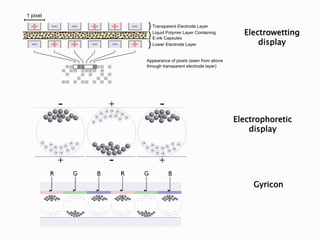
 Gyricon The first electronic paper, called Gyricon. It is based on a thin sheet
of flexible plastic containing a layer of tiny plastic beads each encapsulated
in oil and it rotate freely
 Electrophoretic display Electrophoretic front plane consist of millions of
micro capsules. Each micro capsule is filled with a clear fluid containing
positively charged white particle and black particle.
 Electrowetting It is used to display coloured images.It is low-power and
low-voltage technology and displays based on the effects can be made flat
and thin
 Electrofluidic display Electrofluidic displays are a variation of an
electrowetting display. Electrofluidic displays place an aqueous pigment
dispersion inside a tiny reservoir.
Electrowetting
display
Electrophoretic
display
Gyricon
 Low power consumption because no light emitting device is used.
 E-paper is often considered to be more comfortable to read than
conventional displays.
 Information can be displayed unchanged over a long period of time.
 Reduce eyestrain.
 Light weight and thin
 More convenient
 Multimedia information
 Reusable technology
 Education: Digital school books
 Wristwatches
 E-books
 News paper
 Computer monitor
 Status display
Researchers found that in just years this
technology can replace paper in many situations,
leading us to think of a truly paperless world
E paper technology

E paper technology

  • 1.
  • 2.
     Technologies a. Gyricon b.Electrophoreticdisplay c.Electrowetting d.Electrofluidic display  Applications  Advantages  Conclusion  Reference
  • 3.
     Electronic paperwas first developed in the 1970s by Nicholas K Sheridon at Xerox's Palo Alto Research Center.  Electronic paper, also called e-paper, is a display technology designed to mimic the appearance of ordinary ink on paper.  E-paper have a wide viewing angle  It is a display unit  E-paper is flexible  A digital pen is also used to create handwritten document.
  • 4.
     Gyricon Thefirst electronic paper, called Gyricon. It is based on a thin sheet of flexible plastic containing a layer of tiny plastic beads each encapsulated in oil and it rotate freely  Electrophoretic display Electrophoretic front plane consist of millions of micro capsules. Each micro capsule is filled with a clear fluid containing positively charged white particle and black particle.  Electrowetting It is used to display coloured images.It is low-power and low-voltage technology and displays based on the effects can be made flat and thin  Electrofluidic display Electrofluidic displays are a variation of an electrowetting display. Electrofluidic displays place an aqueous pigment dispersion inside a tiny reservoir.
  • 5.
  • 6.
     Low powerconsumption because no light emitting device is used.  E-paper is often considered to be more comfortable to read than conventional displays.  Information can be displayed unchanged over a long period of time.  Reduce eyestrain.  Light weight and thin  More convenient  Multimedia information  Reusable technology
  • 7.
     Education: Digitalschool books  Wristwatches  E-books  News paper  Computer monitor  Status display
  • 8.
    Researchers found thatin just years this technology can replace paper in many situations, leading us to think of a truly paperless world