 1.What is e paper?
 2.What is history of e paper?
 3.What component in e paper?
 4.How it works?
 5. Which company providing this
  technology?
 6.Advantage ?
 7 .Disadvantages?
 A portable, reusable storage medium.
    photos
    videos
    texts
 Common appearance to paper.
 E-paper(also know as electronic paper)
  can be described as an easily
  transportable electronic display device that
  looks like real paper, but can rewritten
  electronically millions of times.
 Its a display technology that will allow
  readers to read as if it was real paper with
  ink on it, while being extremely light and
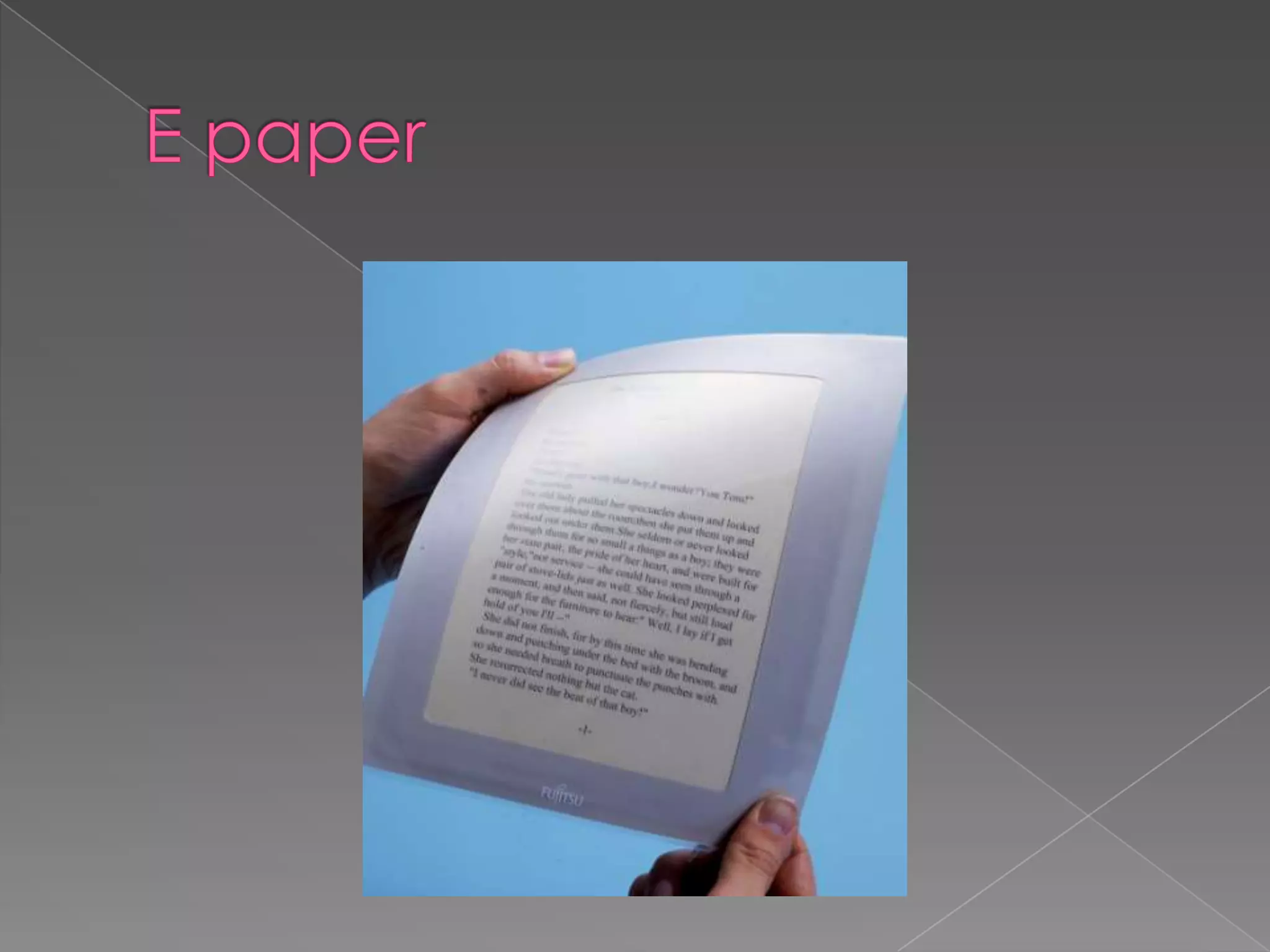
  flexible (epapercentral). Here is a picture
  that can help anyone visualize what e-
  paper looks like.
 Application such as:
   e-books
   electronic newspaper
   foldable display
   fashion
   In the 1970s, Xerox Palo Alto Research Center (Xerox
    PARC) was a powerhouse of innovation. Many
    aspects the modern computer, namely the
    mouse, laser printer, Ethernet, GUI, computer-
    generated color graphics, as well as a number of
    important computer languages, were invented at
    PARC around that time.
    Yet another development, nearly lost among those
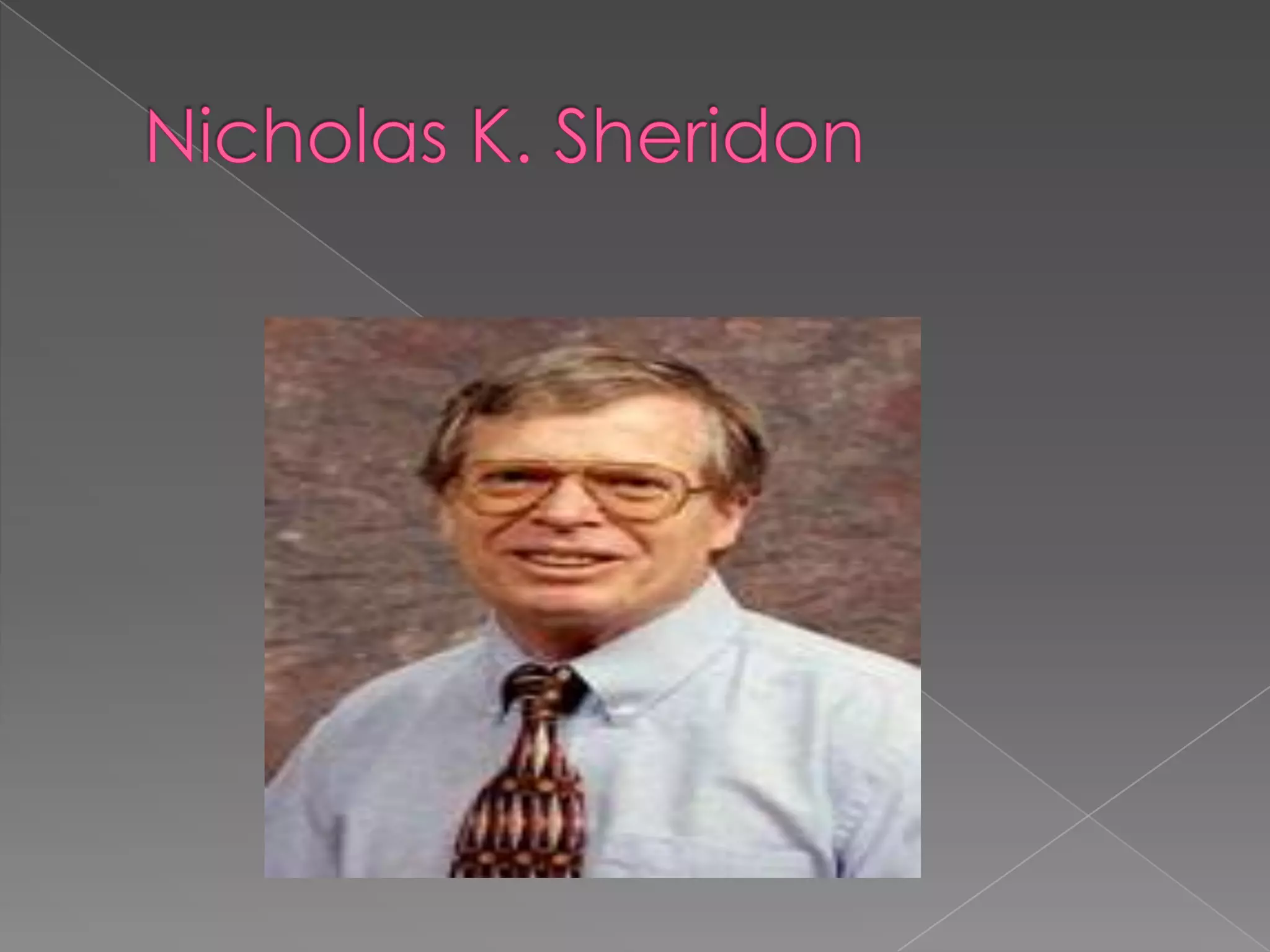
    important breakthroughs, was invented in 1974 by
    PARC employee Nicholas K. Sheridon. The Gyricon, a
    Greek term for rotating image, was to be new display
    technology for the Alto personal computer;
    eventually, it became the basis for modern e-paper
    technology..
   It includes two parts:

 1.E-ink(front plane)
 2.To generate text and images(black
  plane)
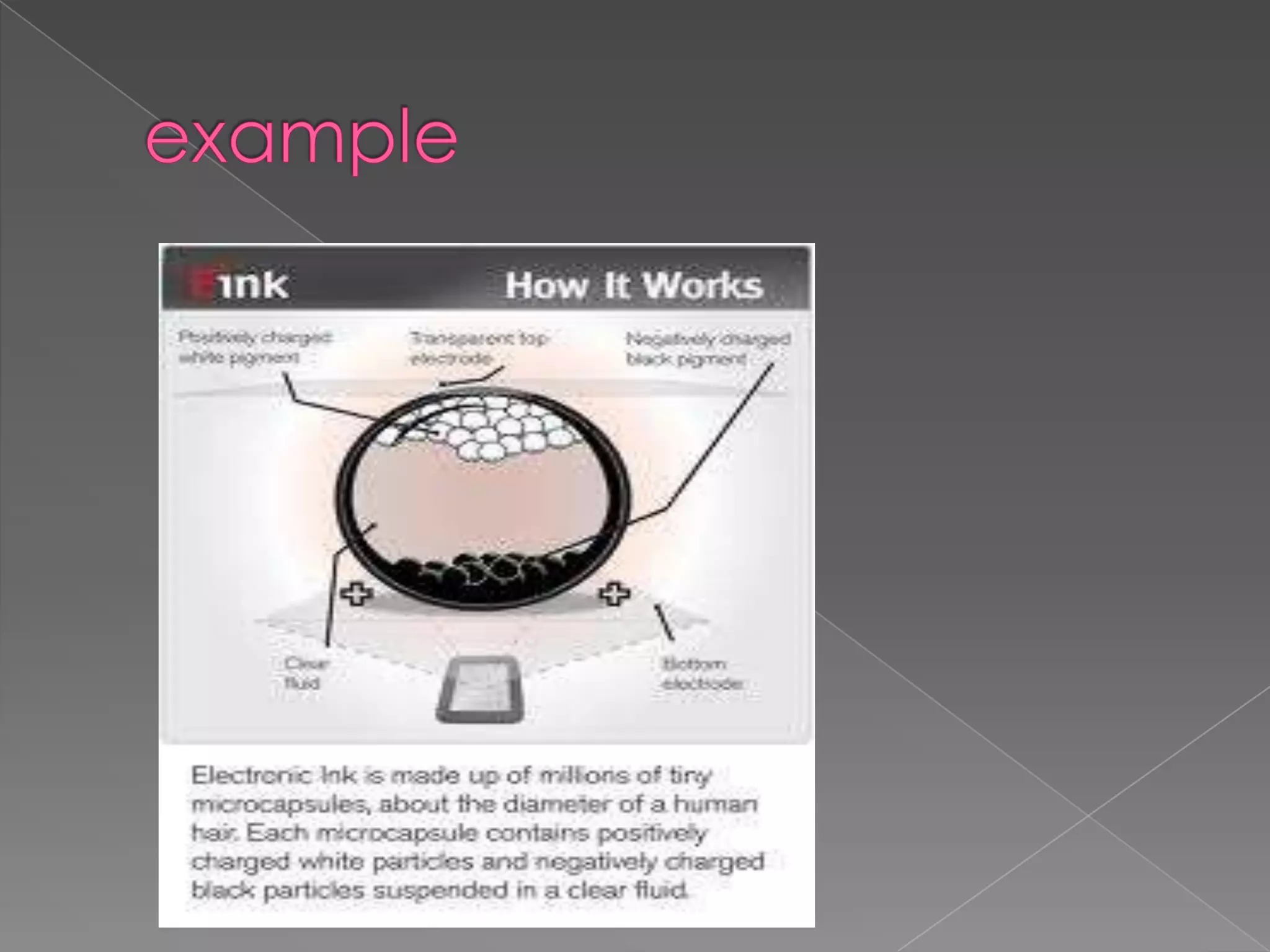
   Electronic ink is made up of millions of tiny
    microcapsules, about the diameter of a human
    hair. Each microcapsule contains positively
    charged white particles and negatively charged
    black particles suspended in a clear fluid. When a
    positive or negative electric field is
    applied, corresponding particles move to the top
    of the microcapsule where they become visible to
    the user. This makes the surface appear white or
    black at that spot.
    Bistable means that the image on an E Ink screen will be retained
    even when all power sources are removed.
    In practice, this means that the display is consuming power only when
    something is changing.
   For example, when reading on an eReader, power is only needed when
    turning to a new page but no power is consumed by the display while
    reading the page. This is most noticeable when an eReader goes into
    sleep mode yet there is still an image being displayed.
   By contrast, with a traditional LCD, the display is needs to be
    refreshed around 30X per second, regardless of the whether anything
    new is being displayed.
    Bistability significantly reduces the power consumption of displays
    using E Ink and is a key reason eReaders have such long battery life.
   E Ink displays are also referred to as
    "reflective displays." In an LCD, or
    "emissive display", light from a backlight is
    projected through the display towards
    your eyes. In an E Ink display, no
    backlight is used; rather, ambient light
    from the environment is reflected from
    the surface of the display back to your
    eyes
   Gyricon contains a lots of small spherical beads, sandwiched in
    between two thin transparent plastic sheet.
    Each bead is bichromal, meaning it contains two opposite
    colors (e.g., black and white) on each side of the sphere. These
    beads are imbedded in cavities filled with oil that allows these
    beads to rotate freely. Each side of the bead has its own
    electrical charge (positive or negative).
    These beads are rotated by exposure to an electrical charge;
    they rotate fully to display as black or white, or partially (in
    response to lower electrical charges), to display a range of grey
    shades.
   Images are created by the beads with distributed orientation, and
    are bi-stable: they remain fixed in position until another
    electrical charge is applied to change the orientation of the
    beads.
 Delta Electronics
 LG
 NEC
 Plastic Logic
 E Ink Holdings, flexible EPLaR
 Samsung
 Seiko Epson
 Irex
 Sony
 Philips
 Ink crops
 It is bileved that it will eventually Replace
  newspaper and books in the library.
 E paper may soon replace the use of
  LCD screen in many apps.
• Cell phones
• Laptops
• Mp3 players
• PDA
 Low power use:
 Battery life of several month on small
  battery.
 Cheap to manufacture.
 Applicable to replace existing monitors
  and LCD screen.
 Portability
 Thinness and weight
 Un recyclable
 Has novelty feel right now
 May have difficulty for accepting
  consumers and business.
 May have trouble to justify the price of e-
  book
versus traditional LCD screen version of
  unit.
E paper

E paper

  • 2.
     1.What ise paper?  2.What is history of e paper?  3.What component in e paper?  4.How it works?  5. Which company providing this technology?  6.Advantage ?  7 .Disadvantages?
  • 3.
     A portable,reusable storage medium. photos videos texts  Common appearance to paper.
  • 4.
     E-paper(also knowas electronic paper) can be described as an easily transportable electronic display device that looks like real paper, but can rewritten electronically millions of times.  Its a display technology that will allow readers to read as if it was real paper with ink on it, while being extremely light and flexible (epapercentral). Here is a picture that can help anyone visualize what e- paper looks like.
  • 6.
     Application suchas:  e-books  electronic newspaper  foldable display  fashion
  • 7.
    In the 1970s, Xerox Palo Alto Research Center (Xerox PARC) was a powerhouse of innovation. Many aspects the modern computer, namely the mouse, laser printer, Ethernet, GUI, computer- generated color graphics, as well as a number of important computer languages, were invented at PARC around that time.  Yet another development, nearly lost among those important breakthroughs, was invented in 1974 by PARC employee Nicholas K. Sheridon. The Gyricon, a Greek term for rotating image, was to be new display technology for the Alto personal computer; eventually, it became the basis for modern e-paper technology..
  • 9.
    It includes two parts:  1.E-ink(front plane)  2.To generate text and images(black plane)
  • 10.
    Electronic ink is made up of millions of tiny microcapsules, about the diameter of a human hair. Each microcapsule contains positively charged white particles and negatively charged black particles suspended in a clear fluid. When a positive or negative electric field is applied, corresponding particles move to the top of the microcapsule where they become visible to the user. This makes the surface appear white or black at that spot.
  • 12.
    Bistable means that the image on an E Ink screen will be retained even when all power sources are removed.  In practice, this means that the display is consuming power only when something is changing.  For example, when reading on an eReader, power is only needed when turning to a new page but no power is consumed by the display while reading the page. This is most noticeable when an eReader goes into sleep mode yet there is still an image being displayed.  By contrast, with a traditional LCD, the display is needs to be refreshed around 30X per second, regardless of the whether anything new is being displayed.  Bistability significantly reduces the power consumption of displays using E Ink and is a key reason eReaders have such long battery life.
  • 13.
    E Ink displays are also referred to as "reflective displays." In an LCD, or "emissive display", light from a backlight is projected through the display towards your eyes. In an E Ink display, no backlight is used; rather, ambient light from the environment is reflected from the surface of the display back to your eyes
  • 14.
    Gyricon contains a lots of small spherical beads, sandwiched in between two thin transparent plastic sheet.  Each bead is bichromal, meaning it contains two opposite colors (e.g., black and white) on each side of the sphere. These beads are imbedded in cavities filled with oil that allows these beads to rotate freely. Each side of the bead has its own electrical charge (positive or negative).  These beads are rotated by exposure to an electrical charge; they rotate fully to display as black or white, or partially (in response to lower electrical charges), to display a range of grey shades.  Images are created by the beads with distributed orientation, and are bi-stable: they remain fixed in position until another electrical charge is applied to change the orientation of the beads.
  • 15.
     Delta Electronics LG  NEC  Plastic Logic  E Ink Holdings, flexible EPLaR  Samsung  Seiko Epson
  • 16.
     Irex  Sony Philips  Ink crops
  • 17.
     It isbileved that it will eventually Replace newspaper and books in the library.  E paper may soon replace the use of LCD screen in many apps. • Cell phones • Laptops • Mp3 players • PDA
  • 18.
     Low poweruse:  Battery life of several month on small battery.  Cheap to manufacture.  Applicable to replace existing monitors and LCD screen.  Portability  Thinness and weight
  • 19.
     Un recyclable Has novelty feel right now  May have difficulty for accepting consumers and business.  May have trouble to justify the price of e- book versus traditional LCD screen version of unit.