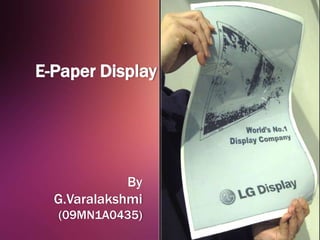
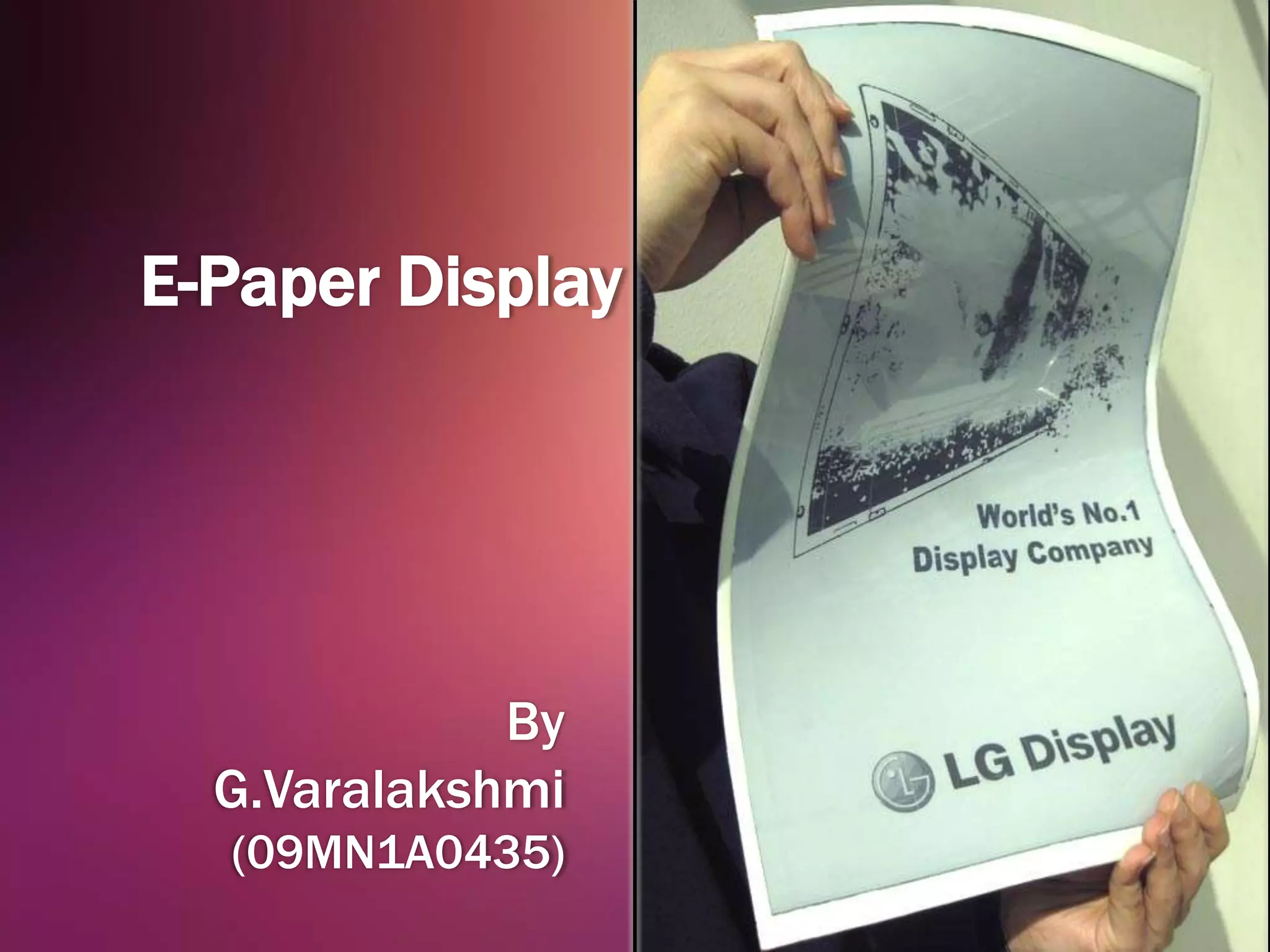
E-Paper Display


             By
  G.Varalakshmi
  (09MN1A0435)
ABSTRACT                INTRODUCTION                 WORKING


  • E-Paper is portable, re-usable and storage display device

  • It works by using E-Ink technology

  • It is Non-backlit

  • E-Paper is of two types i.e., Non-flexible and flexible


  • Flexible displays uses plastic substrates and plastic
    electronics for the display backplane
ABSTRACT                  INTRODUCTION                    WORKING


 • Electronic paper was first developed in the 1970s by Nick Sheridon


 • Gyricon is used only for black and white display


 • Latest E-paper displays were light weight, efficient and clear

 resolution


 • Because of high storing capability, it consumes less power
ABSTRACT   INTRODUCTION   WORKING
ABSTRACT                INTRODUCTION              WORKING


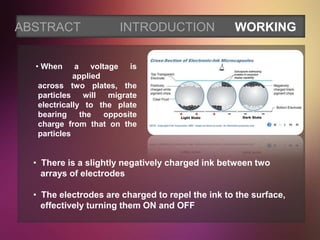
  • When      a voltage is
             applied
   across two plates, the
   particles will     migrate
   electrically to the plate
   bearing     the   opposite
   charge from that on the
   particles


  • There is a slightly negatively charged ink between two
    arrays of electrodes

  • The electrodes are charged to repel the ink to the surface,
    effectively turning them ON and OFF
ABSTRACT               INTRODUCTION      WORKING


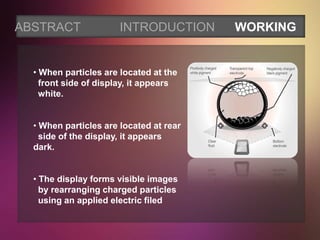
  • When particles are located at the
    front side of display, it appears
    white.


  • When particles are located at rear
    side of the display, it appears
  dark.


  • The display forms visible images
    by rearranging charged particles
    using an applied electric filed
ABSTRACT              INTRODUCTION               WORKING

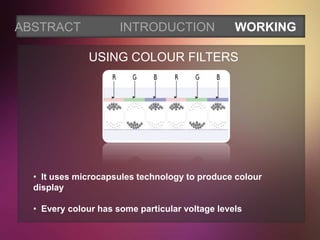
               USING COLOUR FILTERS


  • It uses microcapsules technology to produce colour
  display

  • Every colour has some particular voltage levels
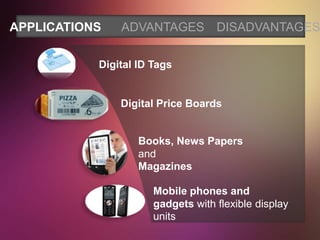
APPLICATIONS   ADVANTAGES DISADVANTAGES

           Digital ID Tags


               Digital Price Boards


                   Books, News Papers
                   and
                   Magazines

                      Mobile phones and
                      gadgets with flexible display
                      units
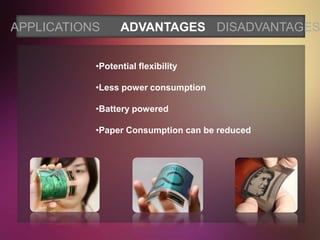
APPLICATIONS     ADVANTAGES DISADVANTAGES


           •Potential flexibility

           •Less power consumption

           •Battery powered

           •Paper Consumption can be reduced
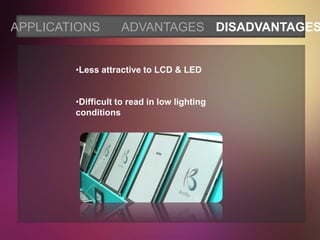
APPLICATIONS       ADVANTAGES DISADVANTAGES


        •Less attractive to LCD & LED


        •Difficult to read in low lighting
        conditions
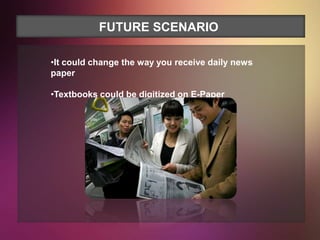
FUTURE SCENARIO

•It could change the way you receive daily news
paper

•Textbooks could be digitized on E-Paper
CONCLUSION


   • Since every development in the past few years has
   revolved
     around mobility & ease of information flow, E-paper seems
     to fit right into the mould for the future

   • Gadgets can be replaced by E-Paper display to reduce
     battery consumption and to read easily under sunlight
E-Paper Display

E-Paper Display

  • 1.
    E-Paper Display By G.Varalakshmi (09MN1A0435)
  • 2.
    ABSTRACT INTRODUCTION WORKING • E-Paper is portable, re-usable and storage display device • It works by using E-Ink technology • It is Non-backlit • E-Paper is of two types i.e., Non-flexible and flexible • Flexible displays uses plastic substrates and plastic electronics for the display backplane
  • 3.
    ABSTRACT INTRODUCTION WORKING • Electronic paper was first developed in the 1970s by Nick Sheridon • Gyricon is used only for black and white display • Latest E-paper displays were light weight, efficient and clear resolution • Because of high storing capability, it consumes less power
  • 4.
    ABSTRACT INTRODUCTION WORKING
  • 5.
    ABSTRACT INTRODUCTION WORKING • When a voltage is applied across two plates, the particles will migrate electrically to the plate bearing the opposite charge from that on the particles • There is a slightly negatively charged ink between two arrays of electrodes • The electrodes are charged to repel the ink to the surface, effectively turning them ON and OFF
  • 6.
    ABSTRACT INTRODUCTION WORKING • When particles are located at the front side of display, it appears white. • When particles are located at rear side of the display, it appears dark. • The display forms visible images by rearranging charged particles using an applied electric filed
  • 7.
    ABSTRACT INTRODUCTION WORKING USING COLOUR FILTERS • It uses microcapsules technology to produce colour display • Every colour has some particular voltage levels
  • 8.
    APPLICATIONS ADVANTAGES DISADVANTAGES Digital ID Tags Digital Price Boards Books, News Papers and Magazines Mobile phones and gadgets with flexible display units
  • 9.
    APPLICATIONS ADVANTAGES DISADVANTAGES •Potential flexibility •Less power consumption •Battery powered •Paper Consumption can be reduced
  • 10.
    APPLICATIONS ADVANTAGES DISADVANTAGES •Less attractive to LCD & LED •Difficult to read in low lighting conditions
  • 11.
    FUTURE SCENARIO •It couldchange the way you receive daily news paper •Textbooks could be digitized on E-Paper
  • 12.
    CONCLUSION • Since every development in the past few years has revolved around mobility & ease of information flow, E-paper seems to fit right into the mould for the future • Gadgets can be replaced by E-Paper display to reduce battery consumption and to read easily under sunlight

Editor's Notes

  • #2 Slide-1 : E-Paper
  • #3 Slide-2 : Abstract
  • #4 Slide-2 : Abstract
  • #5 Slide-3 : Introduction
  • #6 Slide-4 : Working-1
  • #7 Slide-5: Working-2
  • #8 Slide-5: Working-2
  • #9 Slide-6 : Applications (2)
  • #10 Slide-7 : Advantages
  • #11 Slide-8 : Disadvantages
  • #12 Slide-7 : Advantages
  • #13 Slide-9 : Conclusion
  • #14 Slide-11 : Thank You