ImageImage and Perceptionand Perception
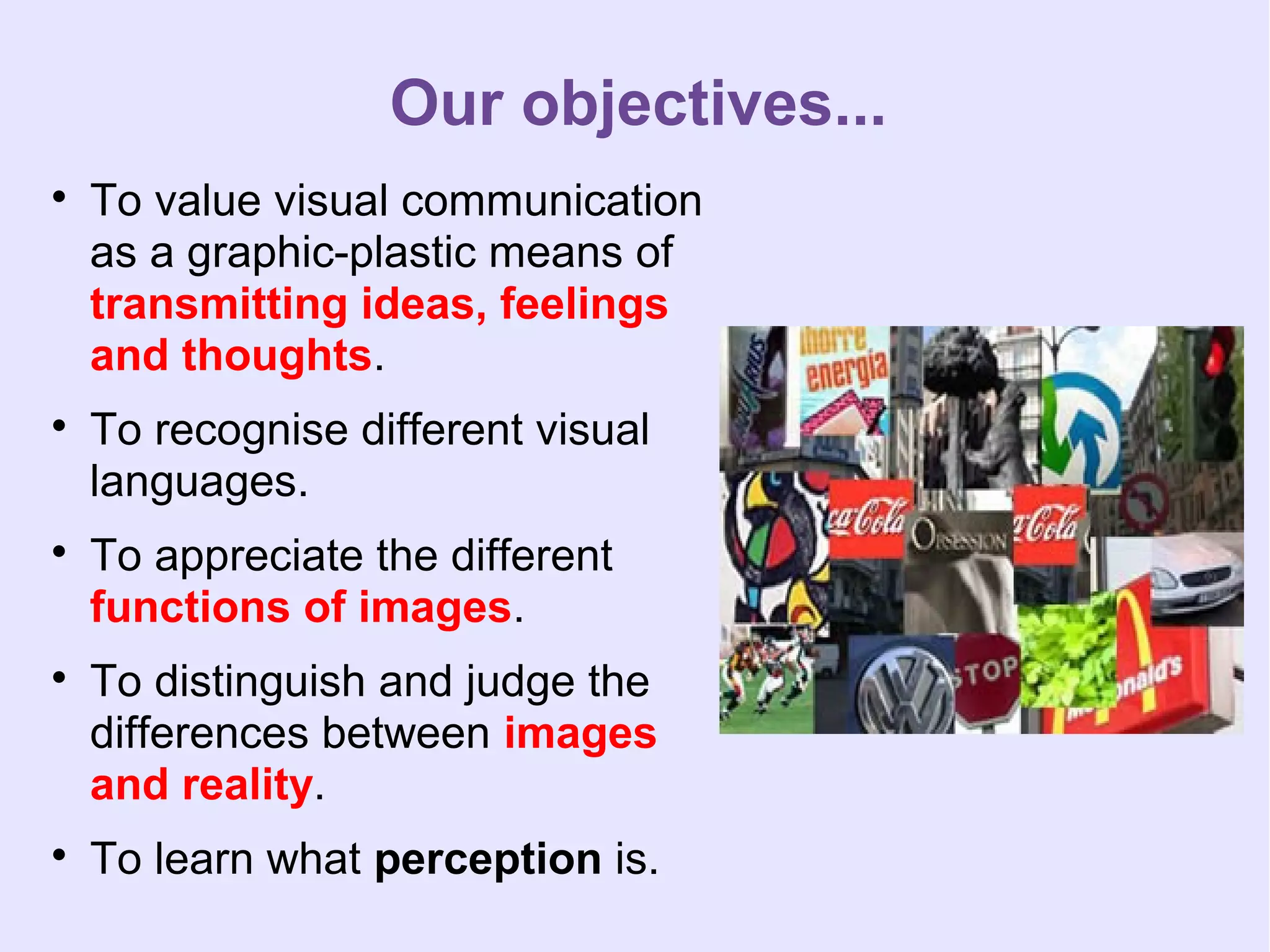
Our objectives...

To value visual communication
as a graphic-plastic means of
transmitting ideas, feelings
and thoughts.

To recognise different visual
languages.

To appreciate the different
functions of images.

To distinguish and judge the
differences between images
and reality.

To learn what perception is.
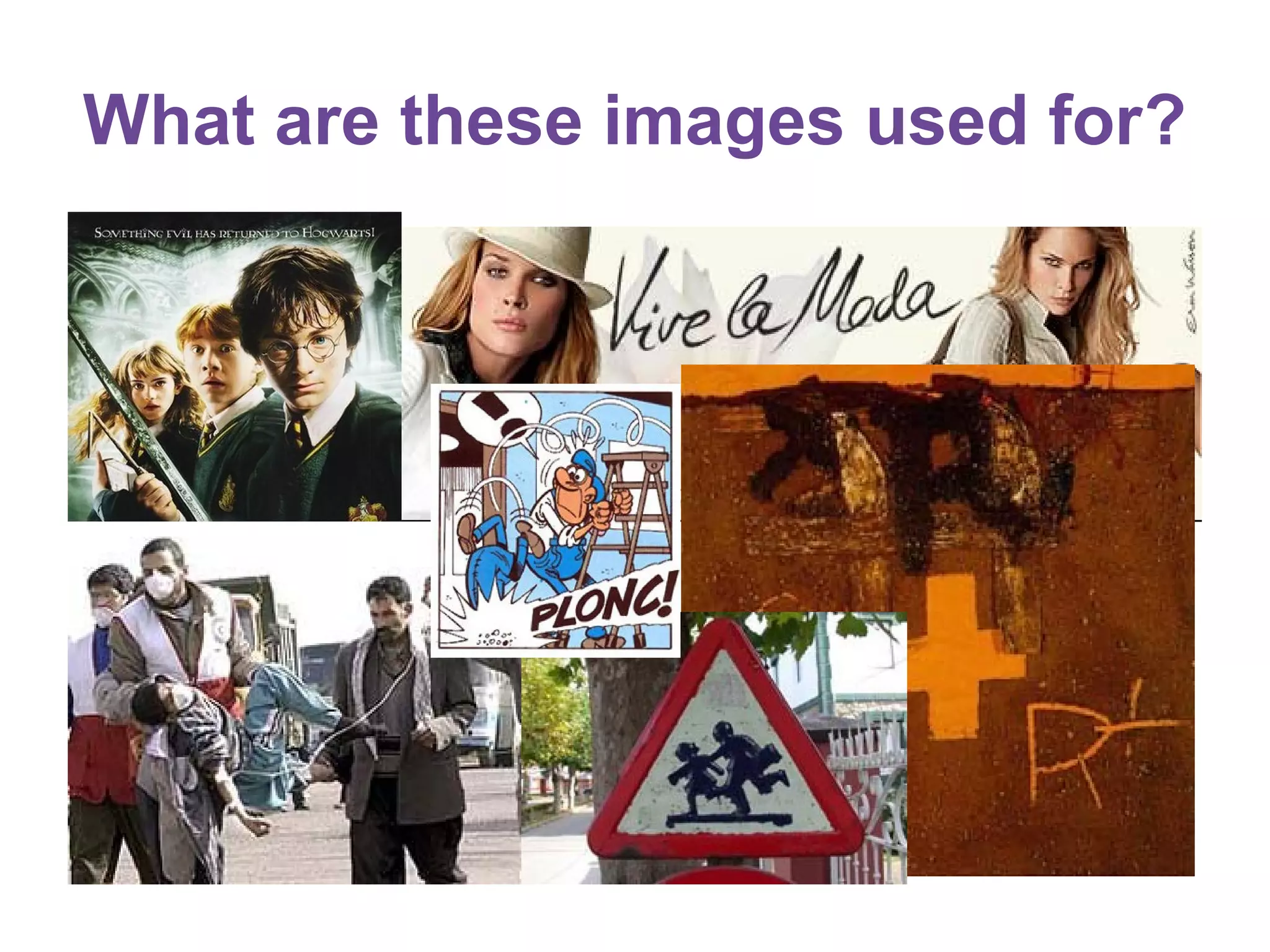
What are these images used for?
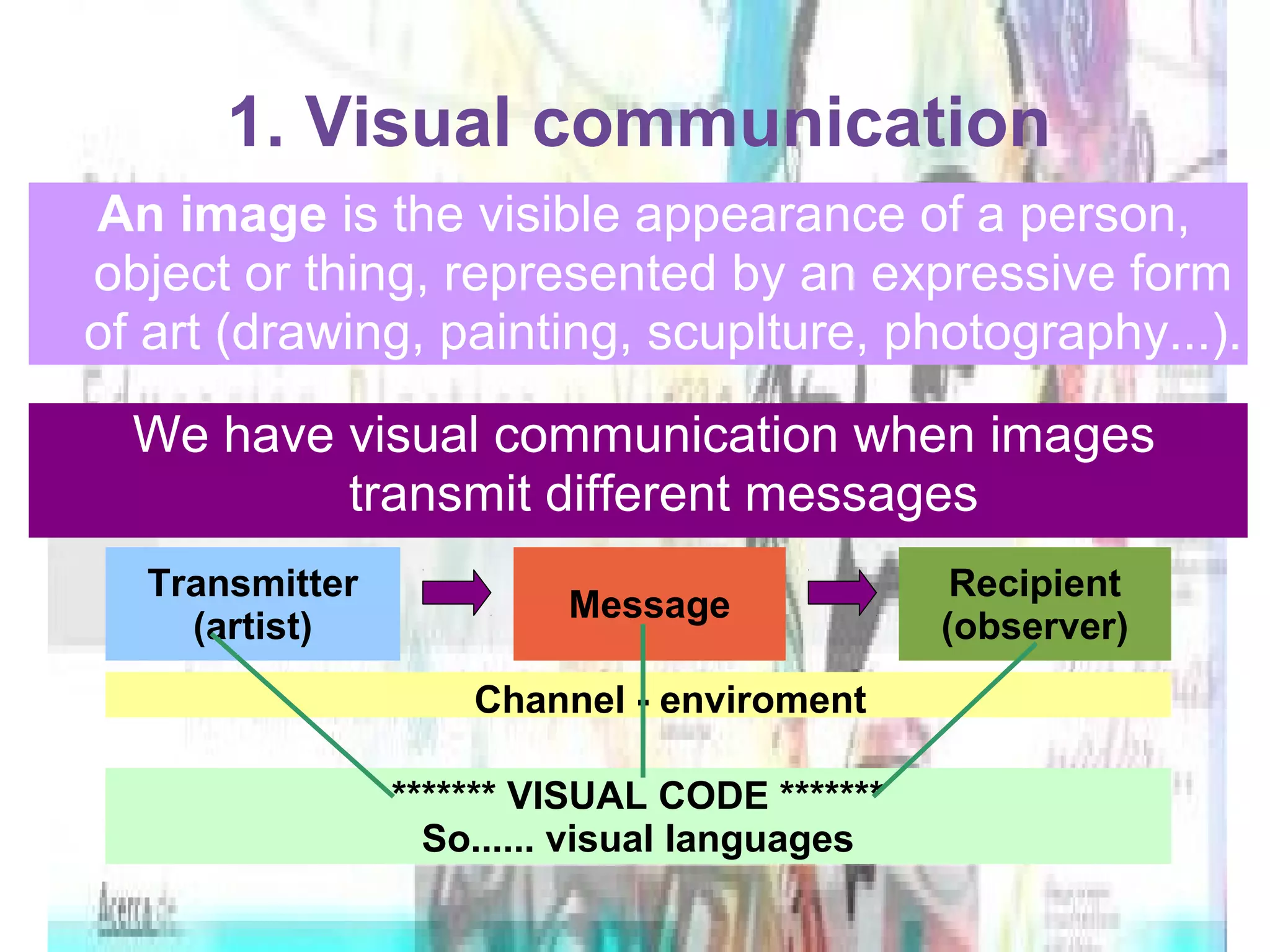
1. Visual communication
We have visual communication when images
transmit different messages
Transmitter
(artist)
Message
Recipient
(observer)
Channel - enviroment
An image is the visible appearance of a person,
object or thing, represented by an expressive form
of art (drawing, painting, scuplture, photography...).
******* VISUAL CODE *******
So...... visual languages
2. The invasion of images
Which are the techniques,
supports and tools we can create
and transmit images with?
Images have become very important in our lives as they are a
form of expression and communication
Where can we find images?
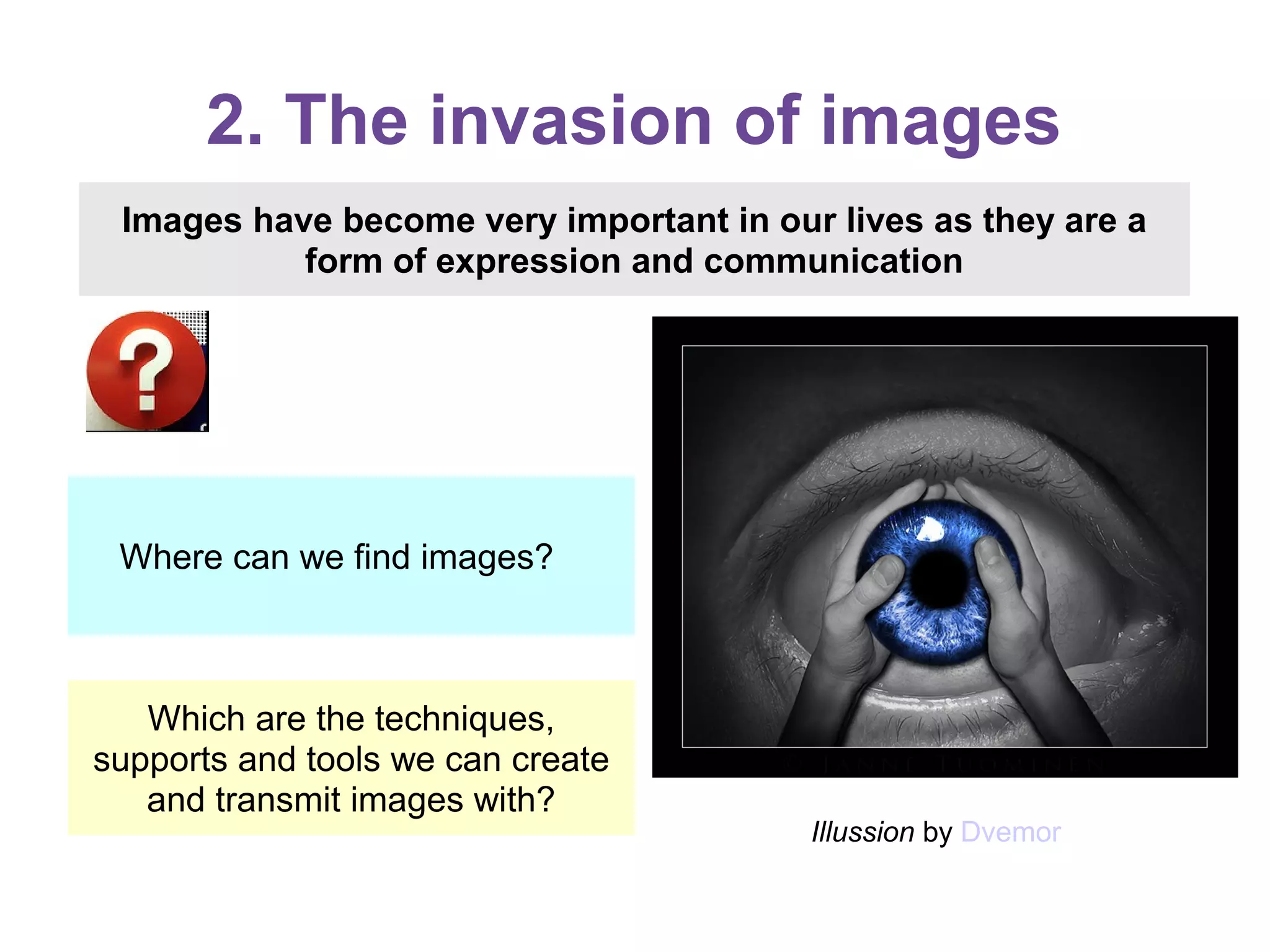
Illussion by Dvemor
3. Functions of images
Images do not have
always the same
function o purpose.
We can find:
a) Informative finality
b) Hortatory finality
c) Recreational finality
d) Aesthetic finality
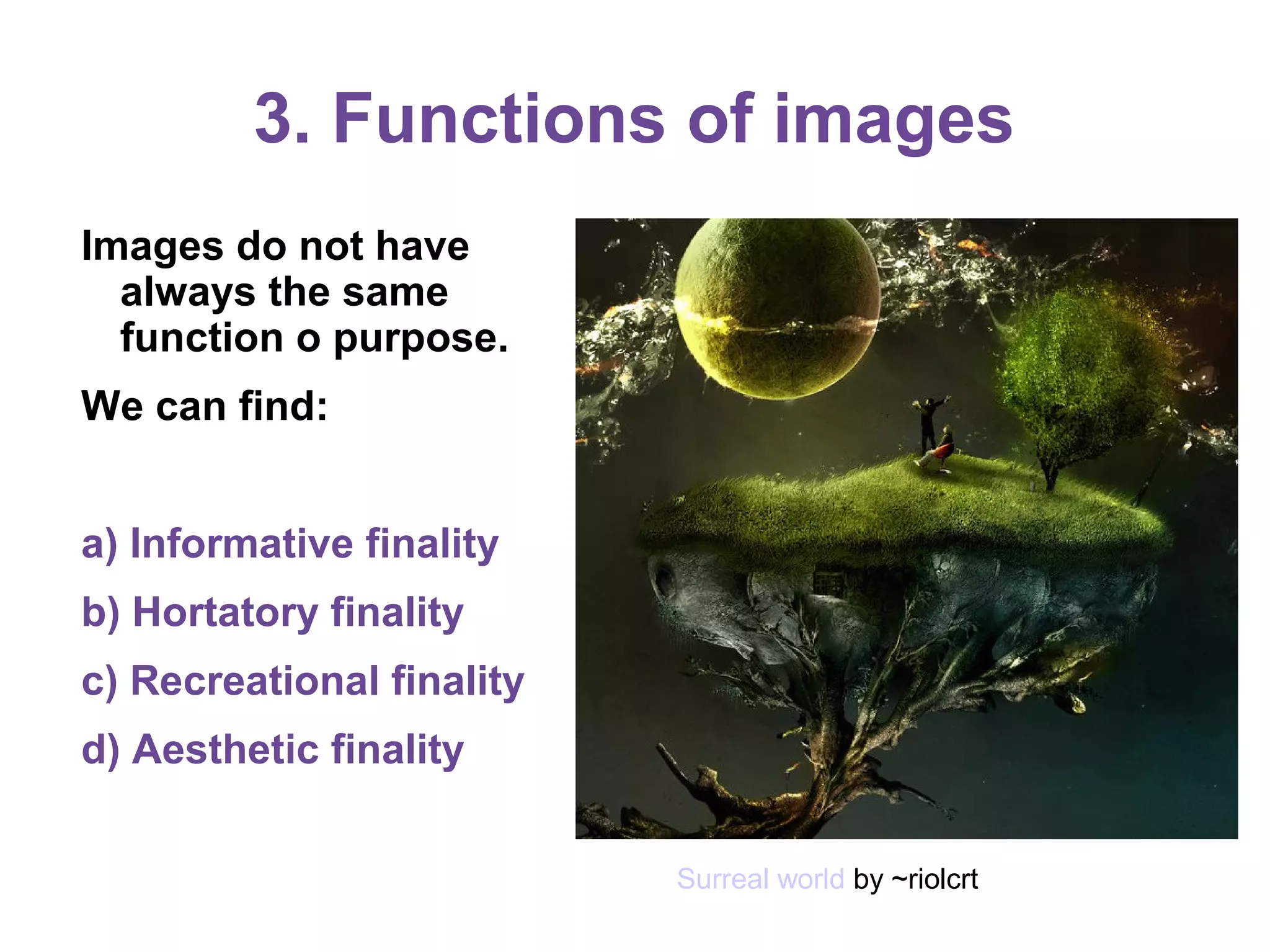
Surreal world by ~riolcrt
a) Informative finality

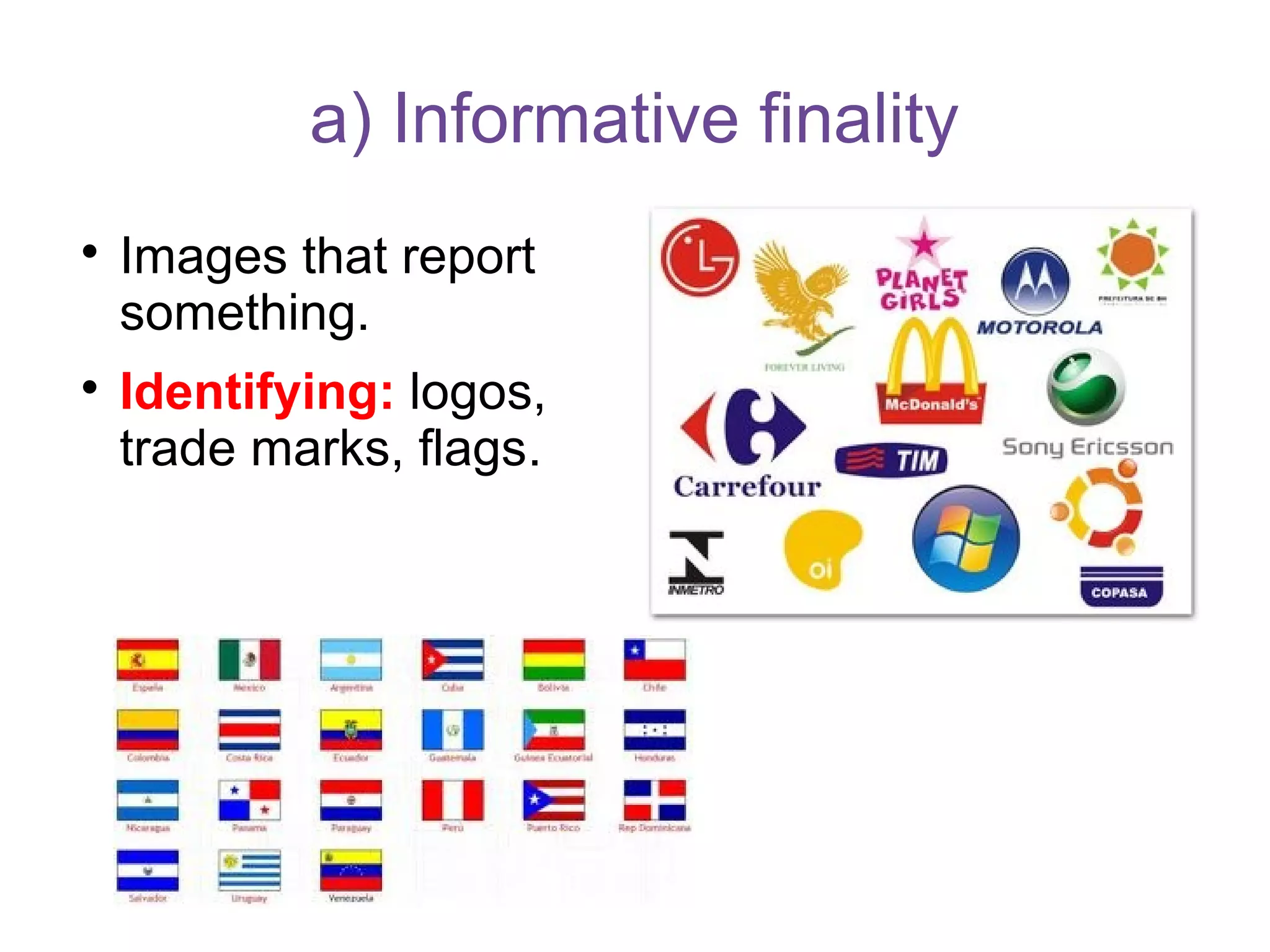
Images that report
something.

Identifying: logos,
trade marks, flags.
a) Informative finality

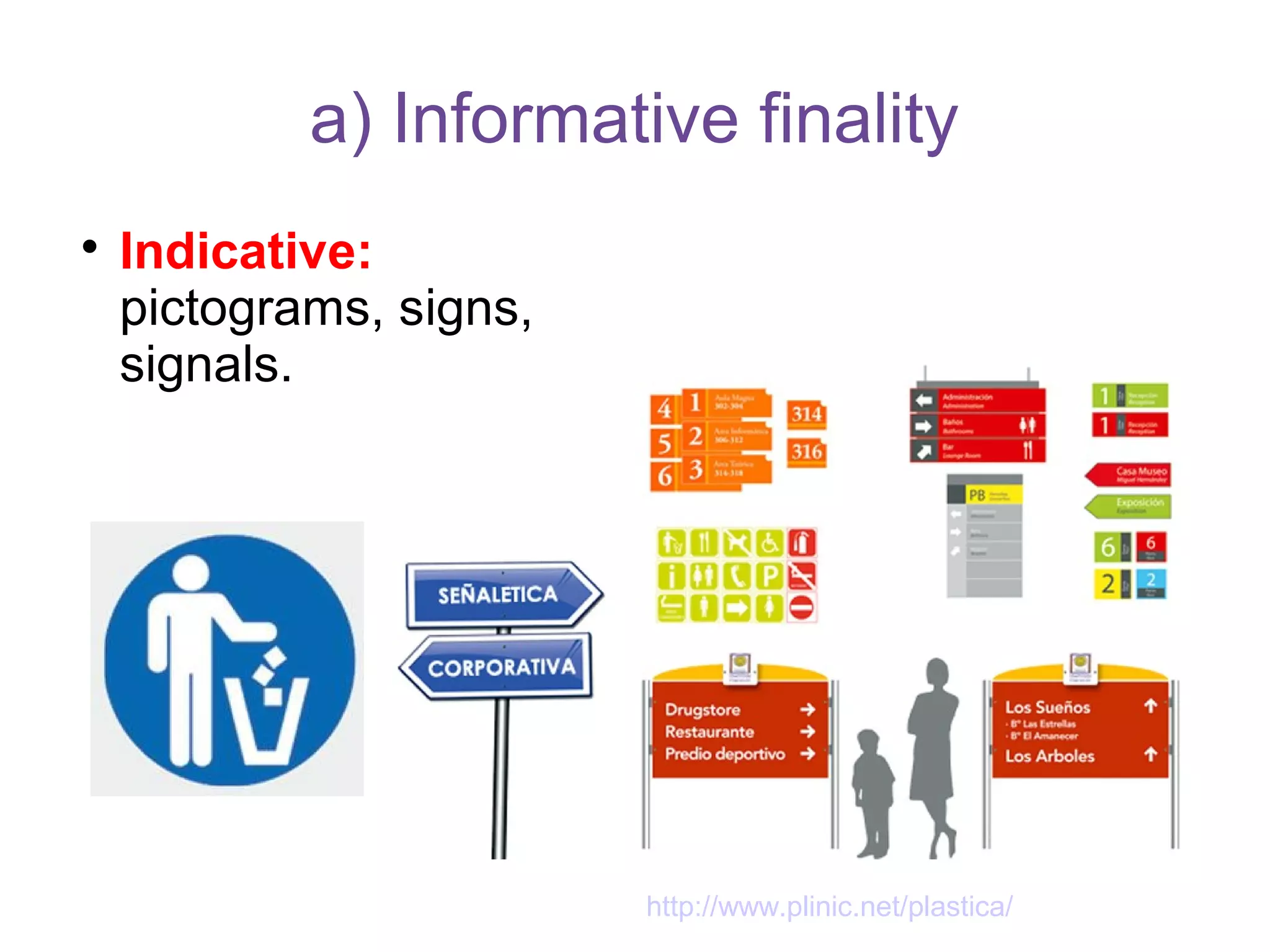
Indicative:
pictograms, signs,
signals.
http://www.plinic.net/plastica/
a) Informative finality

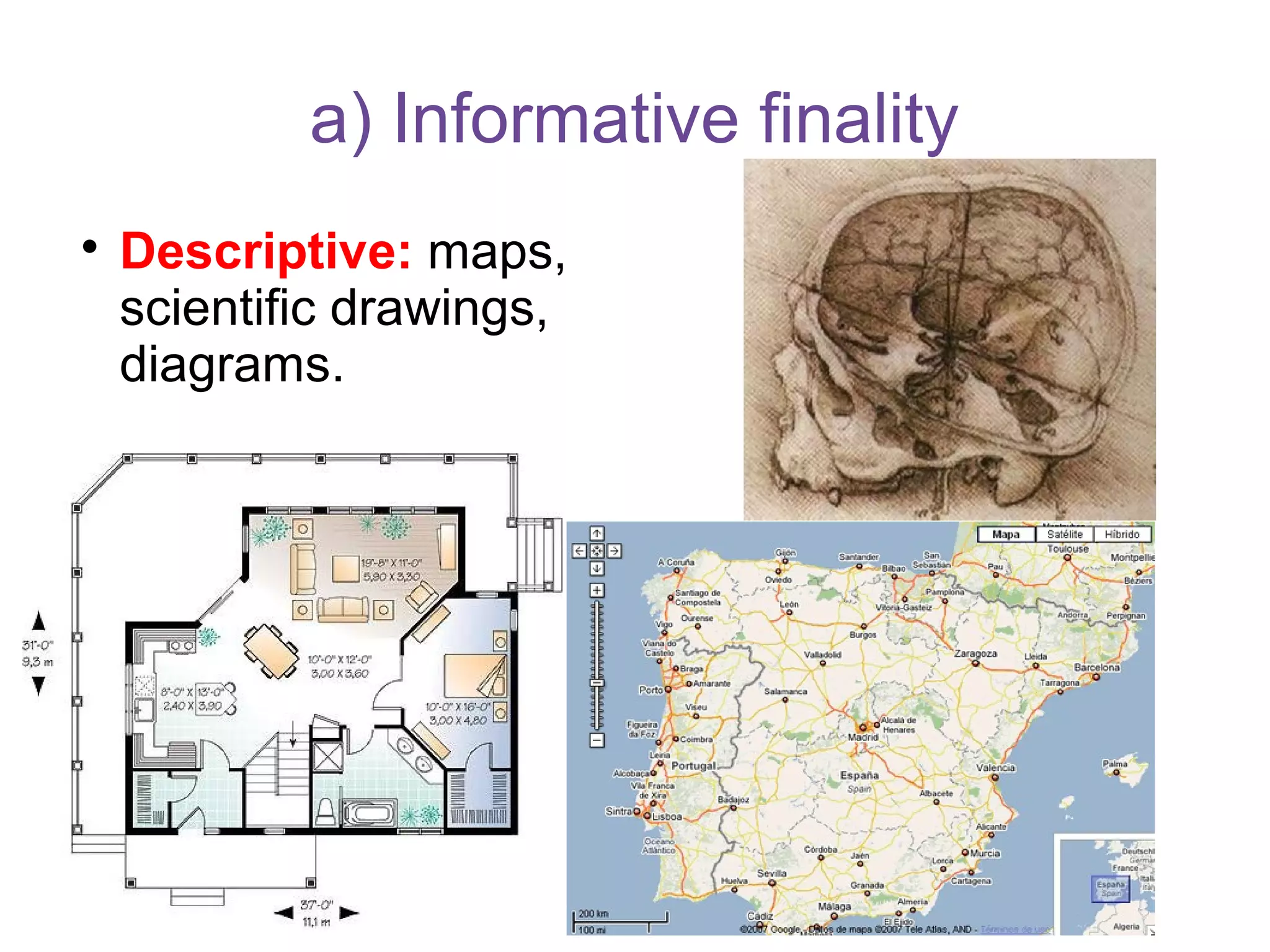
Descriptive: maps,
scientific drawings,
diagrams.
a) Informative finality

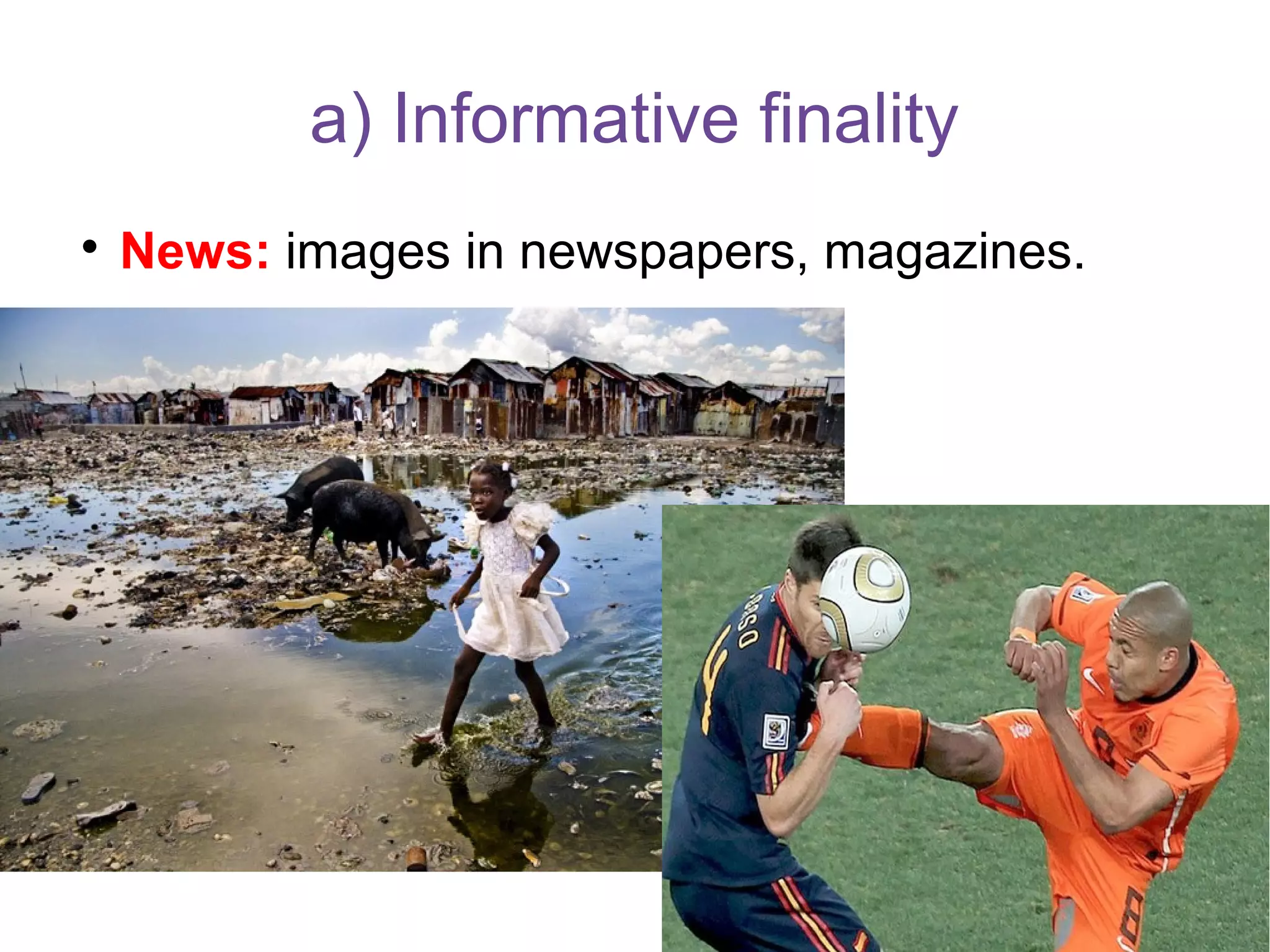
News: images in newspapers, magazines.
b) Hortatory finality

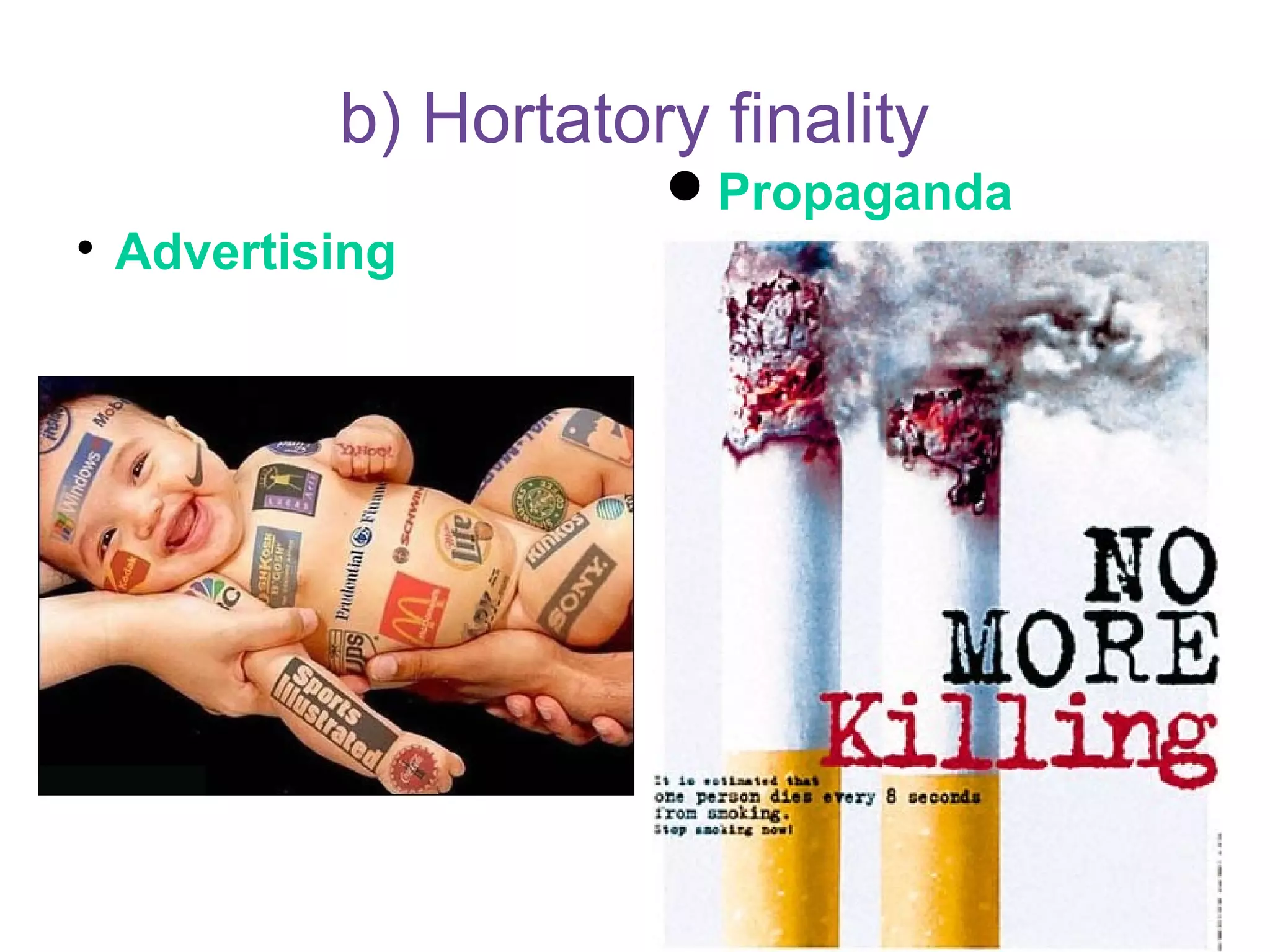
Advertising
Propaganda
c) Recreational finality

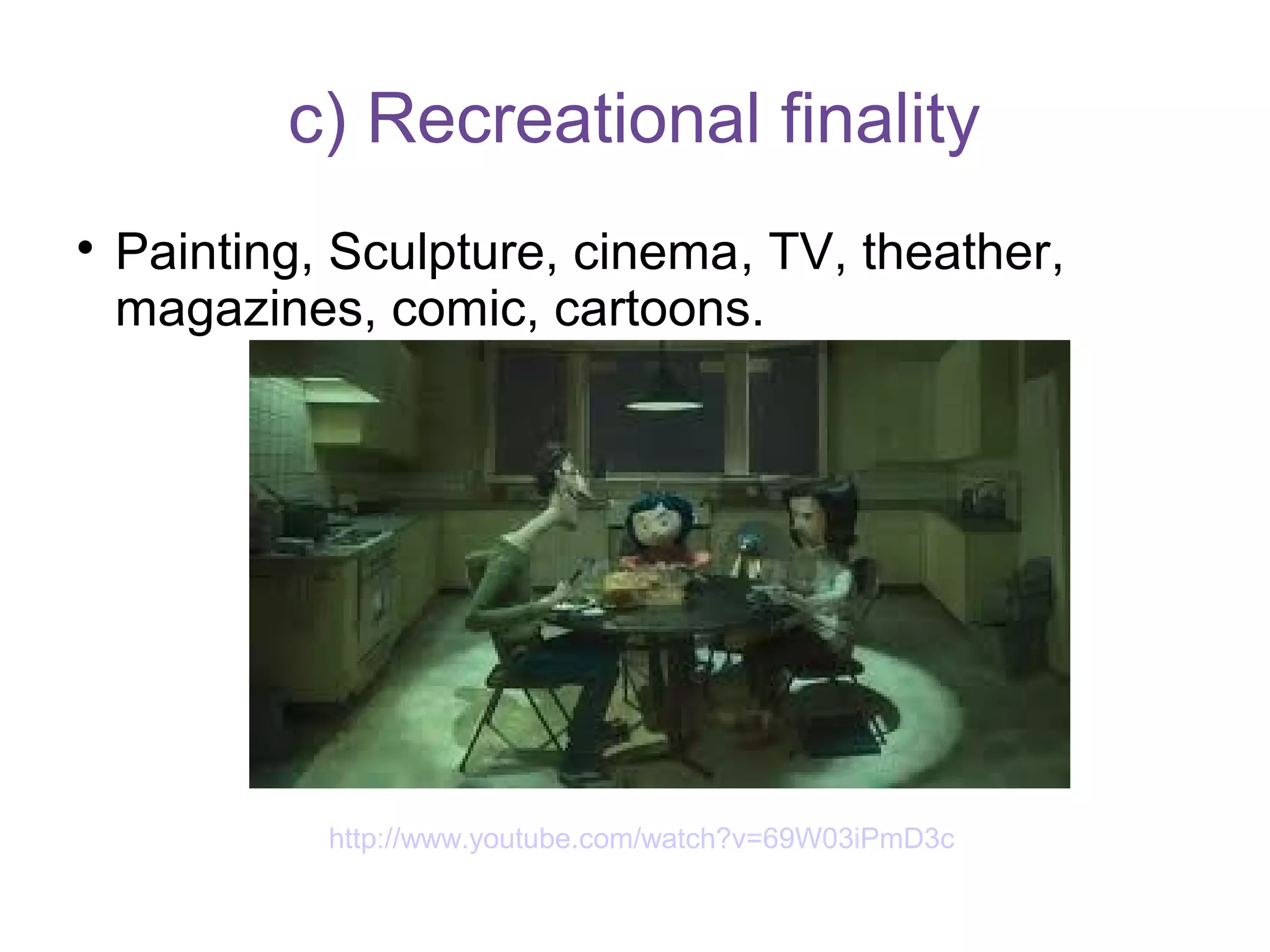
Painting, Sculpture, cinema, TV, theather,
magazines, comic, cartoons.
http://www.youtube.com/watch?v=69W03iPmD3c
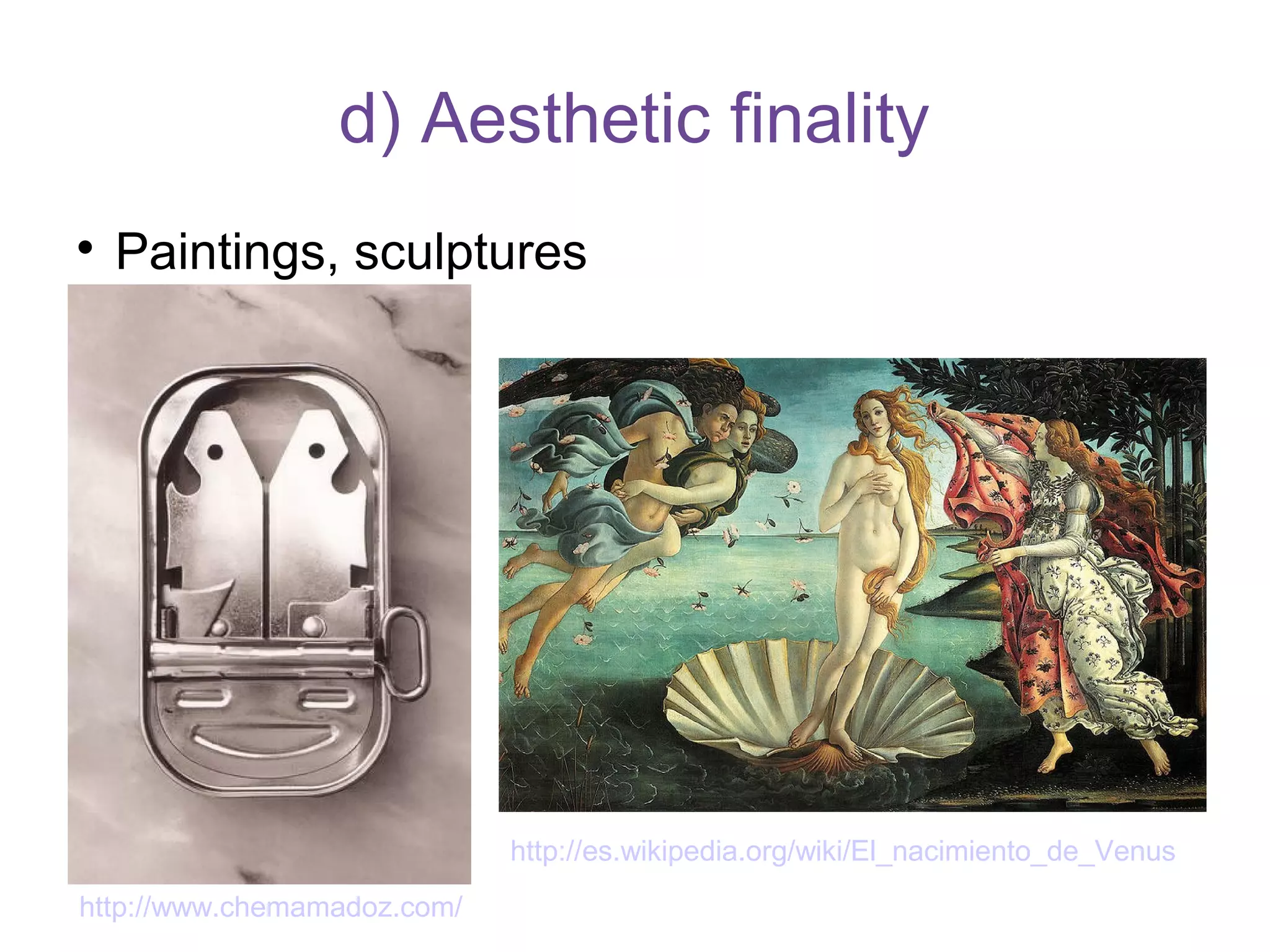
d) Aesthetic finality

Paintings, sculptures
http://es.wikipedia.org/wiki/El_nacimiento_de_Venus
http://www.chemamadoz.com/
Tasks
• Task 1: Find in the magazines in the classroom 4 images of the different
finalities we have studied. Cut them out and glue in a piece of paper.
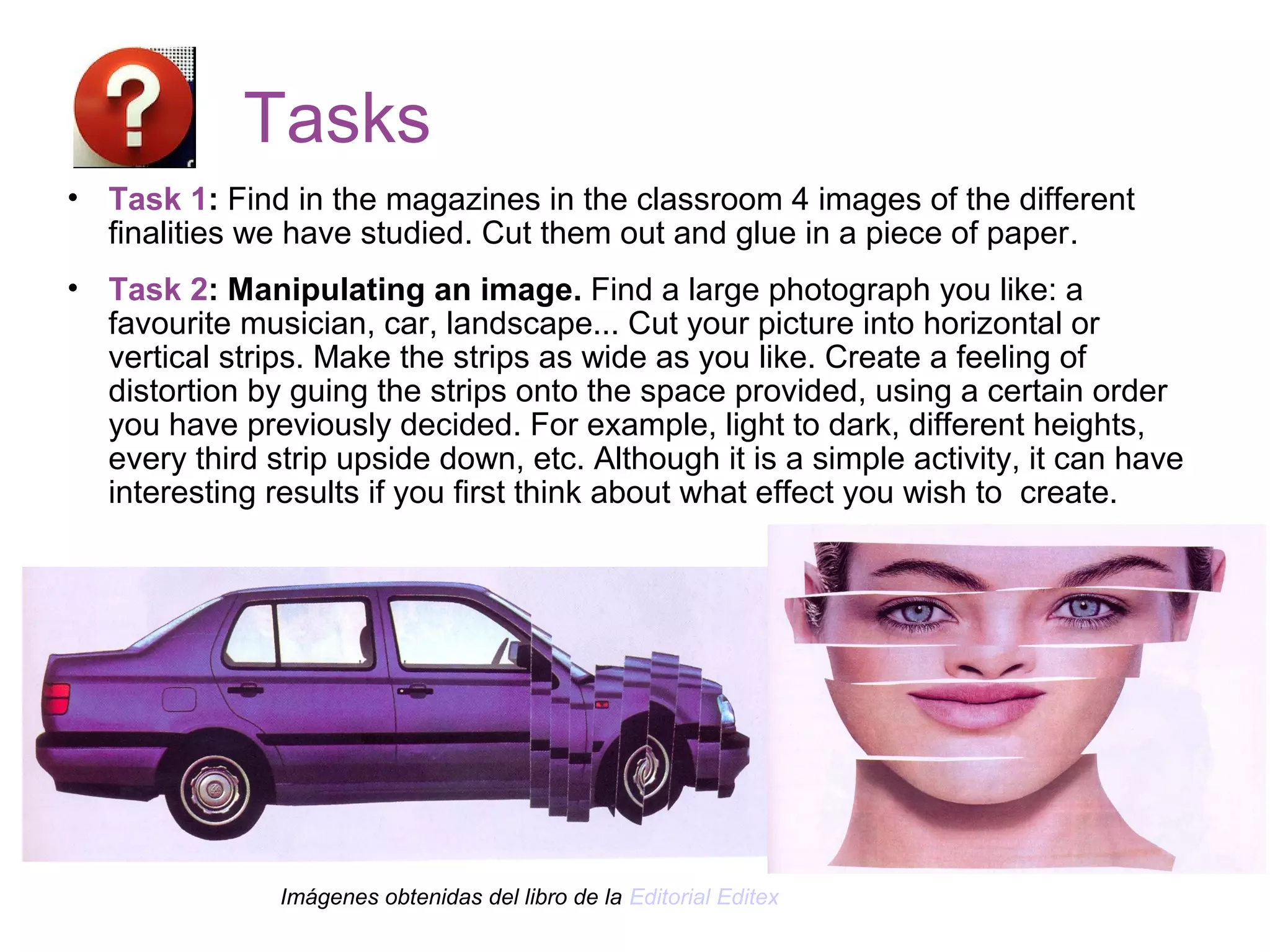
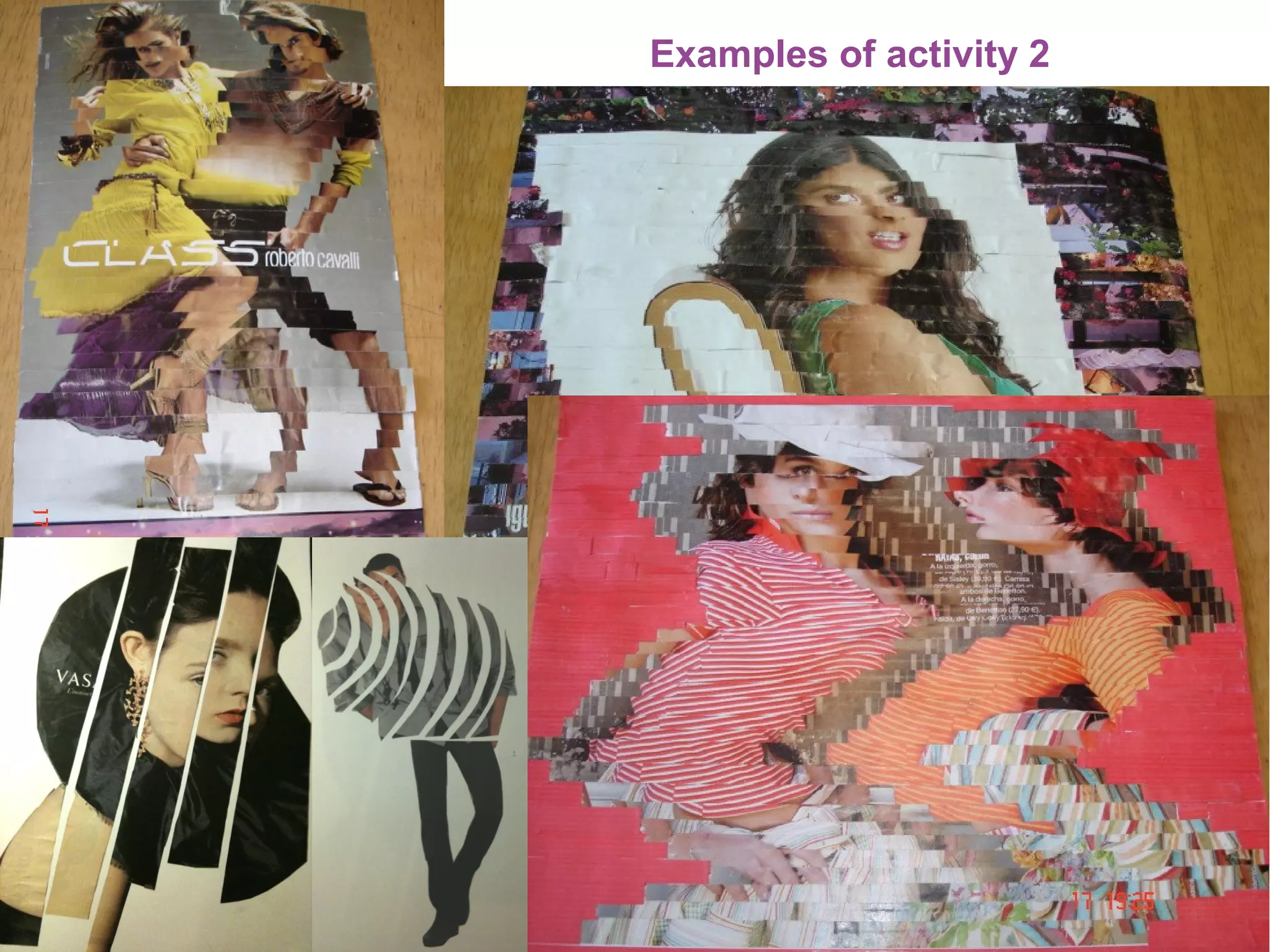
• Task 2: Manipulating an image. Find a large photograph you like: a
favourite musician, car, landscape... Cut your picture into horizontal or
vertical strips. Make the strips as wide as you like. Create a feeling of
distortion by guing the strips onto the space provided, using a certain order
you have previously decided. For example, light to dark, different heights,
every third strip upside down, etc. Although it is a simple activity, it can have
interesting results if you first think about what effect you wish to create.
Imágenes obtenidas del libro de la Editorial Editex
Examples of activity 2
4. Image and reality
An image is a visual representation
of an object on a support.
The relation between an image and
what it represents depends on the
degree of likeness. It can be an
imitation or a copy of the reality till a
representation that has no relation
with the reality. DEGREE OF
ICONICITY.
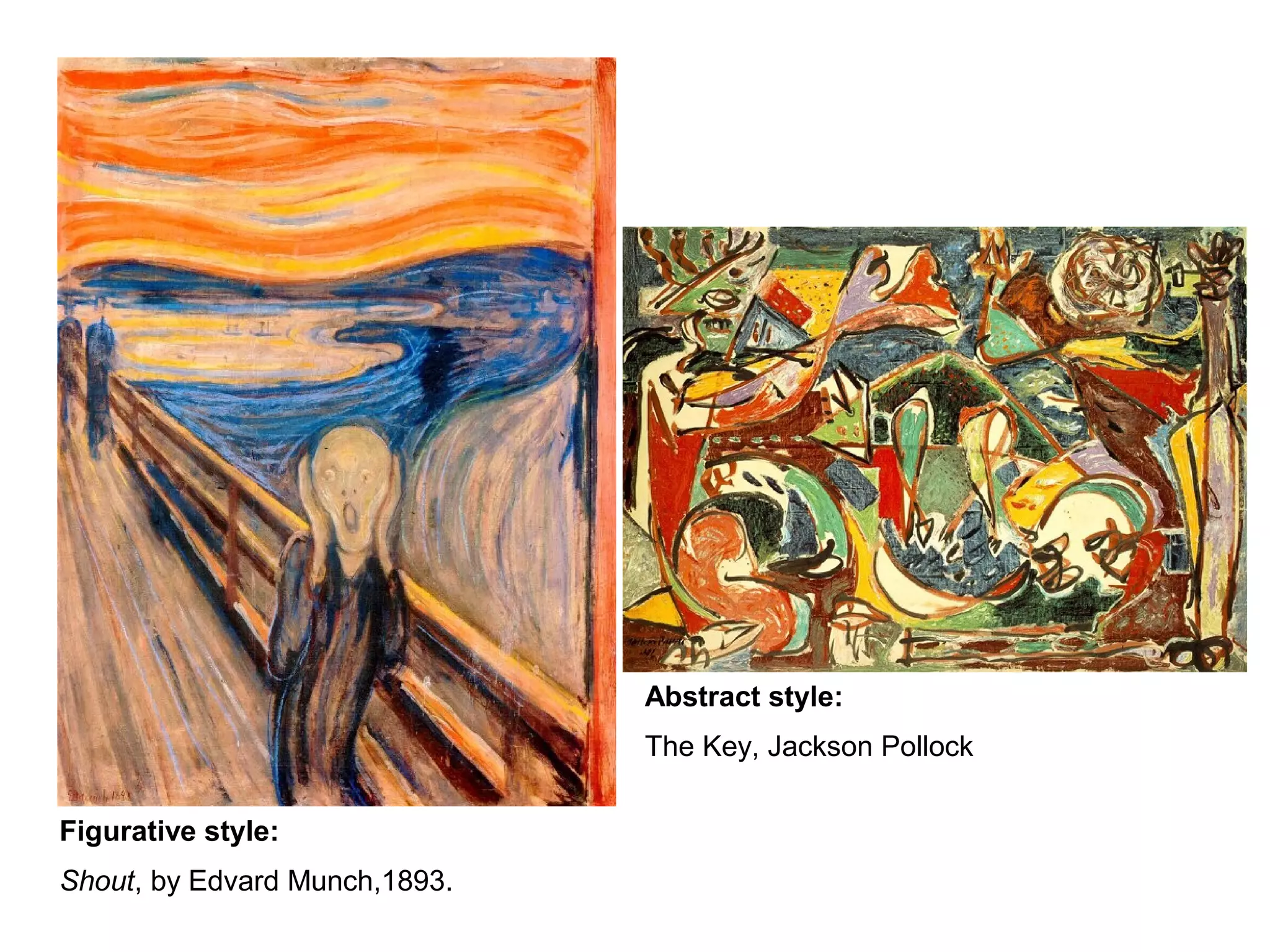
So, we can find:
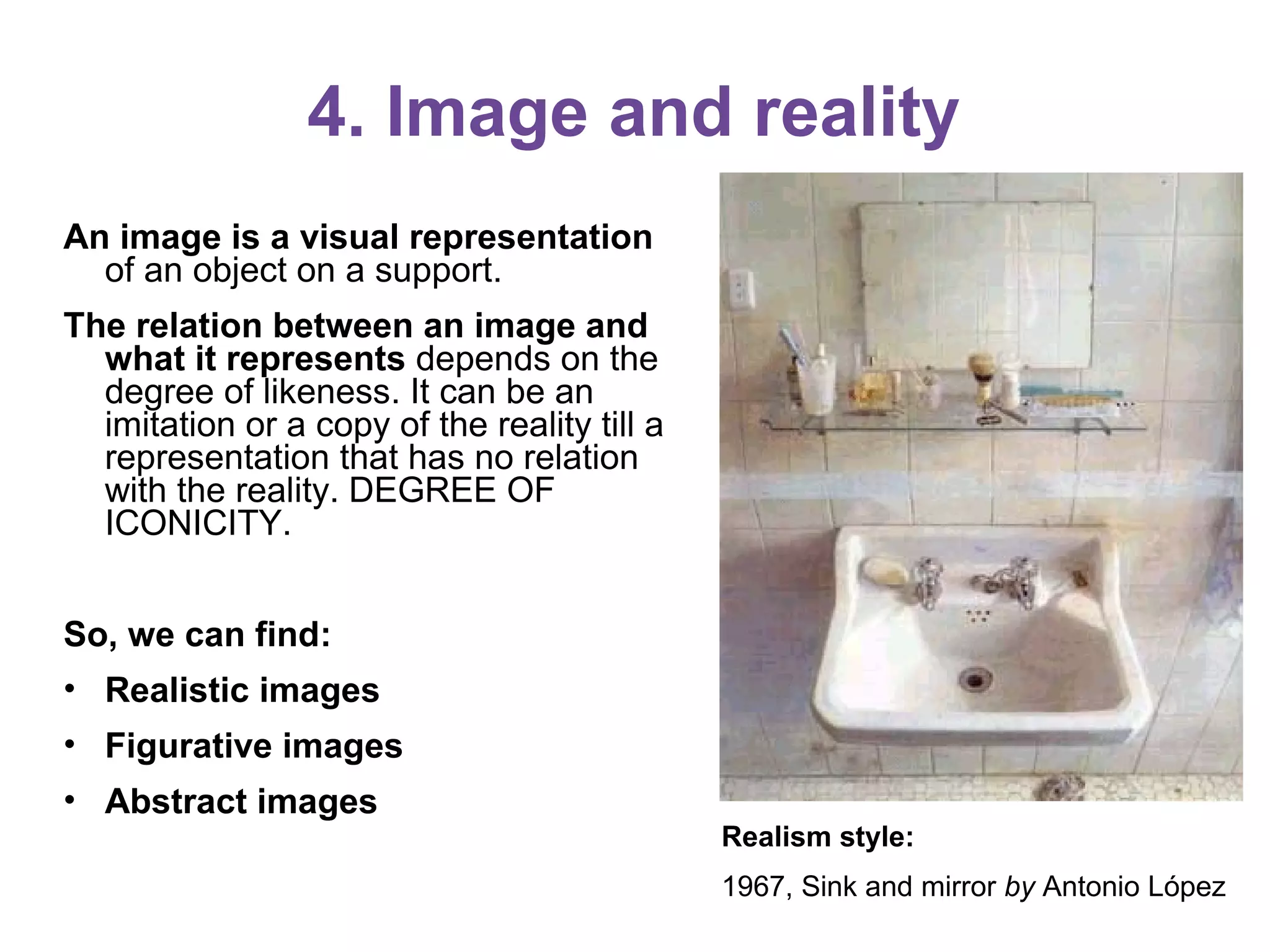
• Realistic images
• Figurative images
• Abstract images
Realism style:
1967, Sink and mirror by Antonio López
Figurative style:
Shout, by Edvard Munch,1893.
Abstract style:
The Key, Jackson Pollock
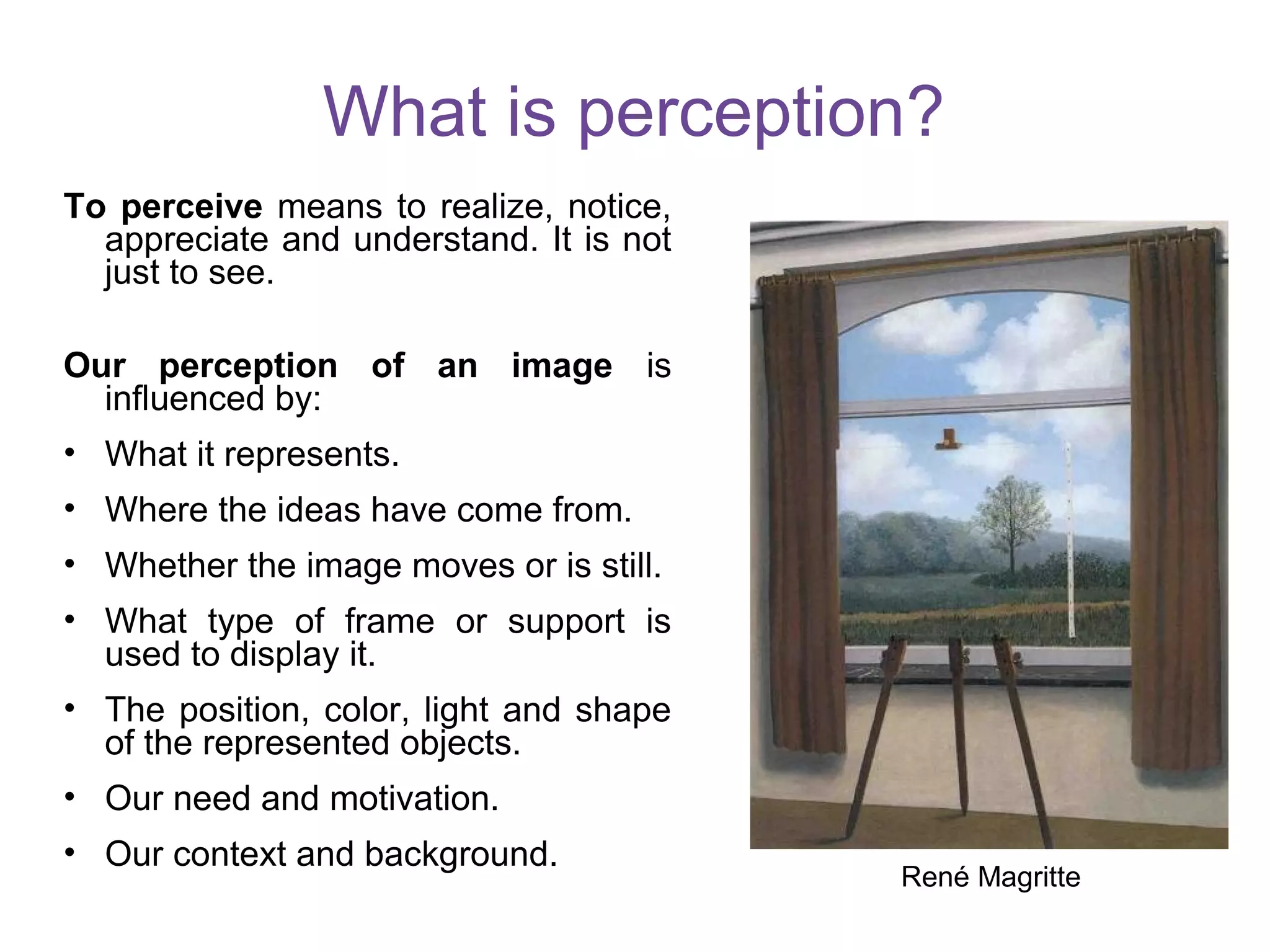
What is perception?
To perceive means to realize, notice,
appreciate and understand. It is not
just to see.
Our perception of an image is
influenced by:
• What it represents.
• Where the ideas have come from.
• Whether the image moves or is still.
• What type of frame or support is
used to display it.
• The position, color, light and shape
of the represented objects.
• Our need and motivation.
• Our context and background.
René Magritte
Presentation based on Lucía Álvarez’s one.
http://blog.educastur.es/luciaag/
Presentation based on Lucía Álvarez’s one.
http://blog.educastur.es/luciaag/

Image and Perception

  • 1.
  • 2.
    Our objectives...  To valuevisual communication as a graphic-plastic means of transmitting ideas, feelings and thoughts.  To recognise different visual languages.  To appreciate the different functions of images.  To distinguish and judge the differences between images and reality.  To learn what perception is.
  • 3.
    What are theseimages used for?
  • 4.
    1. Visual communication Wehave visual communication when images transmit different messages Transmitter (artist) Message Recipient (observer) Channel - enviroment An image is the visible appearance of a person, object or thing, represented by an expressive form of art (drawing, painting, scuplture, photography...). ******* VISUAL CODE ******* So...... visual languages
  • 5.
    2. The invasionof images Which are the techniques, supports and tools we can create and transmit images with? Images have become very important in our lives as they are a form of expression and communication Where can we find images? Illussion by Dvemor
  • 6.
    3. Functions ofimages Images do not have always the same function o purpose. We can find: a) Informative finality b) Hortatory finality c) Recreational finality d) Aesthetic finality Surreal world by ~riolcrt
  • 7.
    a) Informative finality  Imagesthat report something.  Identifying: logos, trade marks, flags.
  • 8.
    a) Informative finality  Indicative: pictograms,signs, signals. http://www.plinic.net/plastica/
  • 9.
    a) Informative finality  Descriptive:maps, scientific drawings, diagrams.
  • 10.
    a) Informative finality  News:images in newspapers, magazines.
  • 11.
  • 12.
    c) Recreational finality  Painting,Sculpture, cinema, TV, theather, magazines, comic, cartoons. http://www.youtube.com/watch?v=69W03iPmD3c
  • 13.
    d) Aesthetic finality  Paintings,sculptures http://es.wikipedia.org/wiki/El_nacimiento_de_Venus http://www.chemamadoz.com/
  • 14.
    Tasks • Task 1:Find in the magazines in the classroom 4 images of the different finalities we have studied. Cut them out and glue in a piece of paper. • Task 2: Manipulating an image. Find a large photograph you like: a favourite musician, car, landscape... Cut your picture into horizontal or vertical strips. Make the strips as wide as you like. Create a feeling of distortion by guing the strips onto the space provided, using a certain order you have previously decided. For example, light to dark, different heights, every third strip upside down, etc. Although it is a simple activity, it can have interesting results if you first think about what effect you wish to create. Imágenes obtenidas del libro de la Editorial Editex
  • 15.
  • 16.
    4. Image andreality An image is a visual representation of an object on a support. The relation between an image and what it represents depends on the degree of likeness. It can be an imitation or a copy of the reality till a representation that has no relation with the reality. DEGREE OF ICONICITY. So, we can find: • Realistic images • Figurative images • Abstract images Realism style: 1967, Sink and mirror by Antonio López
  • 17.
    Figurative style: Shout, byEdvard Munch,1893. Abstract style: The Key, Jackson Pollock
  • 18.
    What is perception? Toperceive means to realize, notice, appreciate and understand. It is not just to see. Our perception of an image is influenced by: • What it represents. • Where the ideas have come from. • Whether the image moves or is still. • What type of frame or support is used to display it. • The position, color, light and shape of the represented objects. • Our need and motivation. • Our context and background. René Magritte
  • 19.
    Presentation based onLucía Álvarez’s one. http://blog.educastur.es/luciaag/ Presentation based on Lucía Álvarez’s one. http://blog.educastur.es/luciaag/