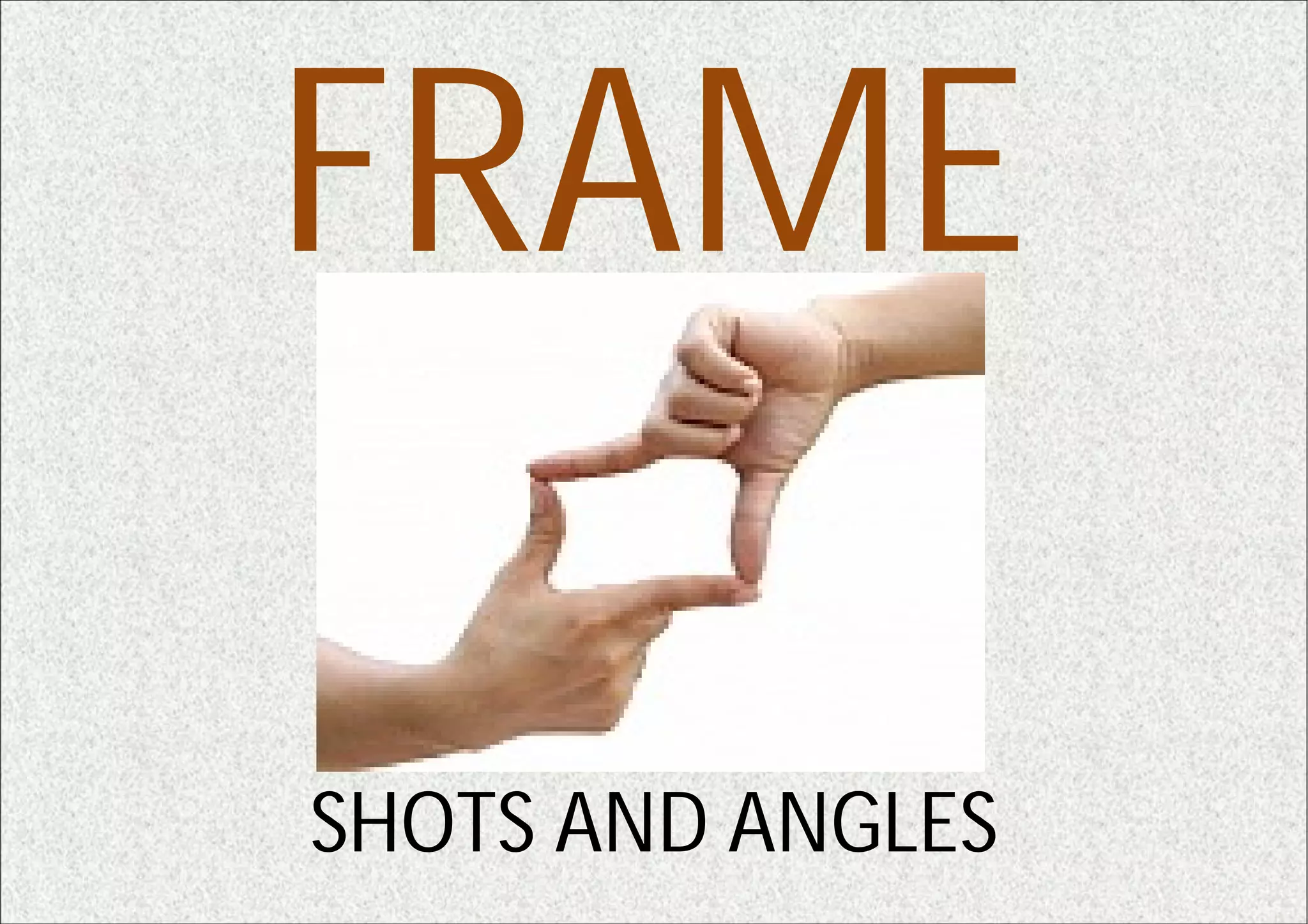
FRAME
SHOTS AND ANGLES
Introduction
When TAKING, or creating them yourself, you have
to think about important factors: The FRAMING of
the shot and the ANGLE of the shot.
When describing different cinematic shots,
different terms are used to indicate the amount of
subject matter contained within a frame, how far
away the camera is from the subject, and the
perspective of the viewer. Each different shot has a
different purpose and effect.
FRAMING:
SHOT AND ANGLE SIZES
Framing is the presentation of visual elements in an image,
especially the placement of the subject in relation to other
objects.
When taking a picture or making a film we focus on the size of
the human body and the angle or the point of view used.
https://www.youtube.com/watch?v=laU2MI6X48I
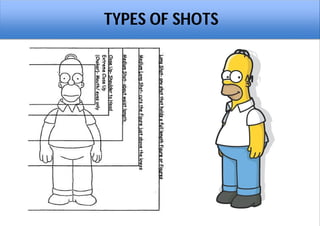
TYPES OF SHOTS
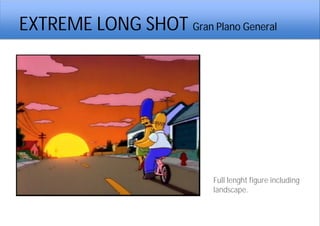
EXTREME LONG SHOT Gran Plano General
Full lenght figure including
landscape.
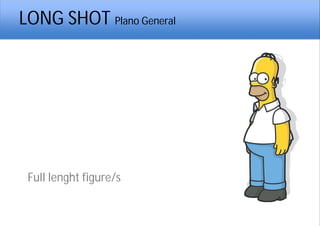
LONG SHOT Plano General
Full lenght figure/s
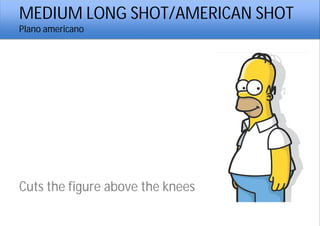
MEDIUM LONG SHOT/AMERICAN SHOT
Plano americano
Cuts the figure above the knees
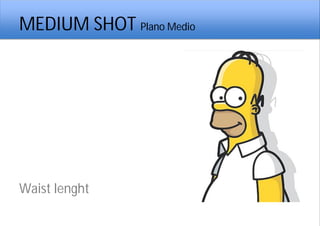
MEDIUM SHOT Plano Medio
Waist lenght
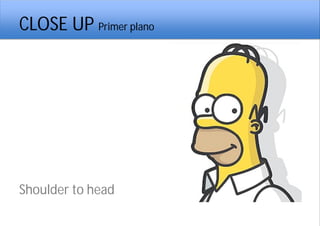
CLOSE UP Primer plano
Shoulder to head
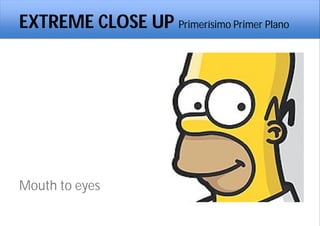
EXTREME CLOSE UP Primerísimo Primer Plano
Mouth to eyes
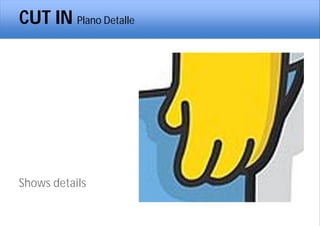
CUT IN Plano Detalle
Shows details
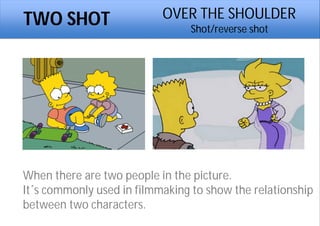
TWO SHOT
When there are two people in the picture.
It´s commonly used in filmmaking to show the relationship
between two characters.
OVER THE SHOULDER
Shot/reverse shot
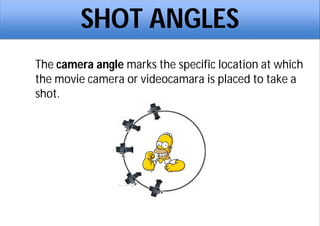
SHOT ANGLES
The camera angle marks the specific location at which
the movie camera or videocamara is placed to take a
shot.
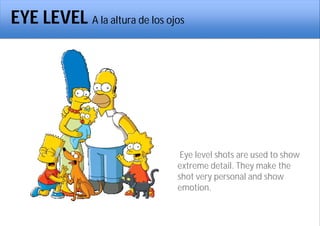
EYE LEVEL A la altura de los ojos
Eye level shots are used to show
extreme detail. They make the
shot very personal and show
emotion.
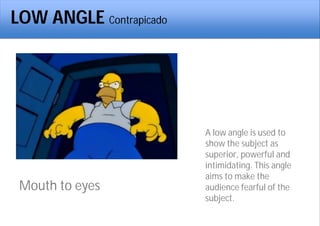
LOW ANGLE Contrapicado
Mouth to eyes
A low angle is used to
show the subject as
superior, powerful and
intimidating. This angle
aims to make the
audience fearful of the
subject.
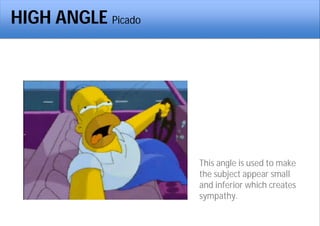
HIGH ANGLE Picado
This angle is used to make
the subject appear small
and inferior which creates
sympathy.
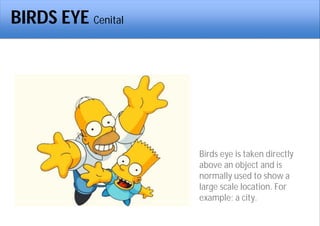
BIRDS EYE Cenital
Birds eye is taken directly
above an object and is
normally used to show a
large scale location. For
example; a city.
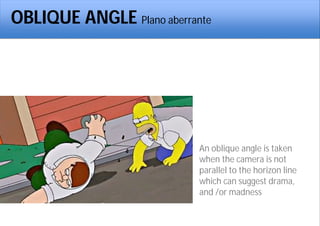
OBLIQUE ANGLE Plano aberrante
An oblique angle is taken
when the camera is not
parallel to the horizon line
which can suggest drama,
and /or madness
Esther and Rosa
Canterbury, 2015

Shots and Angles

  • 1.
  • 2.
    Introduction When TAKING, orcreating them yourself, you have to think about important factors: The FRAMING of the shot and the ANGLE of the shot. When describing different cinematic shots, different terms are used to indicate the amount of subject matter contained within a frame, how far away the camera is from the subject, and the perspective of the viewer. Each different shot has a different purpose and effect.
  • 3.
    FRAMING: SHOT AND ANGLESIZES Framing is the presentation of visual elements in an image, especially the placement of the subject in relation to other objects. When taking a picture or making a film we focus on the size of the human body and the angle or the point of view used. https://www.youtube.com/watch?v=laU2MI6X48I
  • 4.
  • 5.
    EXTREME LONG SHOTGran Plano General Full lenght figure including landscape.
  • 6.
    LONG SHOT PlanoGeneral Full lenght figure/s
  • 7.
    MEDIUM LONG SHOT/AMERICANSHOT Plano americano Cuts the figure above the knees
  • 8.
    MEDIUM SHOT PlanoMedio Waist lenght
  • 9.
    CLOSE UP Primerplano Shoulder to head
  • 10.
    EXTREME CLOSE UPPrimerísimo Primer Plano Mouth to eyes
  • 11.
    CUT IN PlanoDetalle Shows details
  • 12.
    TWO SHOT When thereare two people in the picture. It´s commonly used in filmmaking to show the relationship between two characters. OVER THE SHOULDER Shot/reverse shot
  • 13.
    SHOT ANGLES The cameraangle marks the specific location at which the movie camera or videocamara is placed to take a shot.
  • 14.
    EYE LEVEL Ala altura de los ojos Eye level shots are used to show extreme detail. They make the shot very personal and show emotion.
  • 15.
    LOW ANGLE Contrapicado Mouthto eyes A low angle is used to show the subject as superior, powerful and intimidating. This angle aims to make the audience fearful of the subject.
  • 16.
    HIGH ANGLE Picado Thisangle is used to make the subject appear small and inferior which creates sympathy.
  • 17.
    BIRDS EYE Cenital Birdseye is taken directly above an object and is normally used to show a large scale location. For example; a city.
  • 18.
    OBLIQUE ANGLE Planoaberrante An oblique angle is taken when the camera is not parallel to the horizon line which can suggest drama, and /or madness
  • 19.