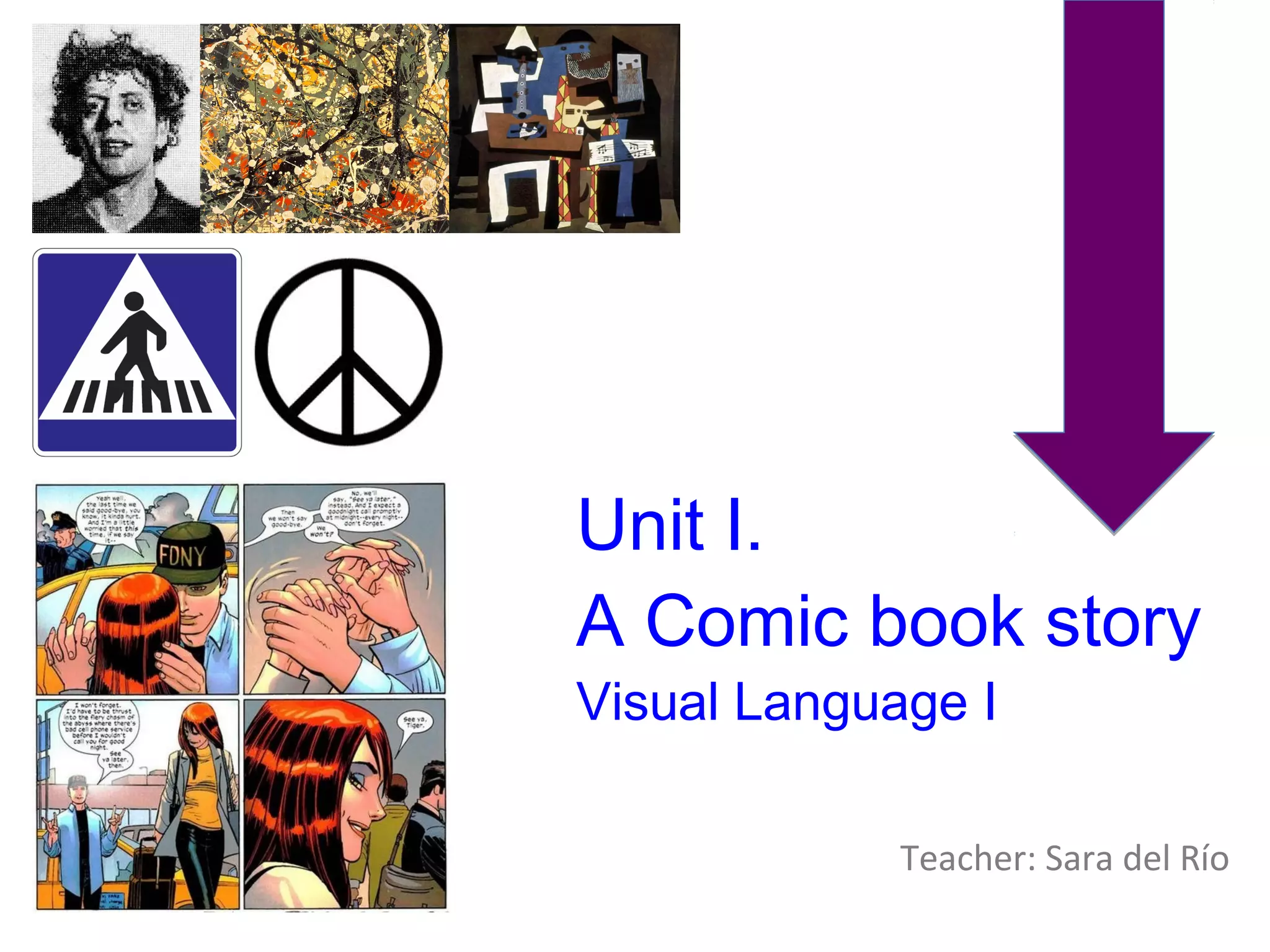
Unit I. 
A Comic book story 
Visual Language I 
Teacher: Sara del Río
1.What is Visual Language? 
- Human beings use communication to relate something. We use it to exchange 
messages. 
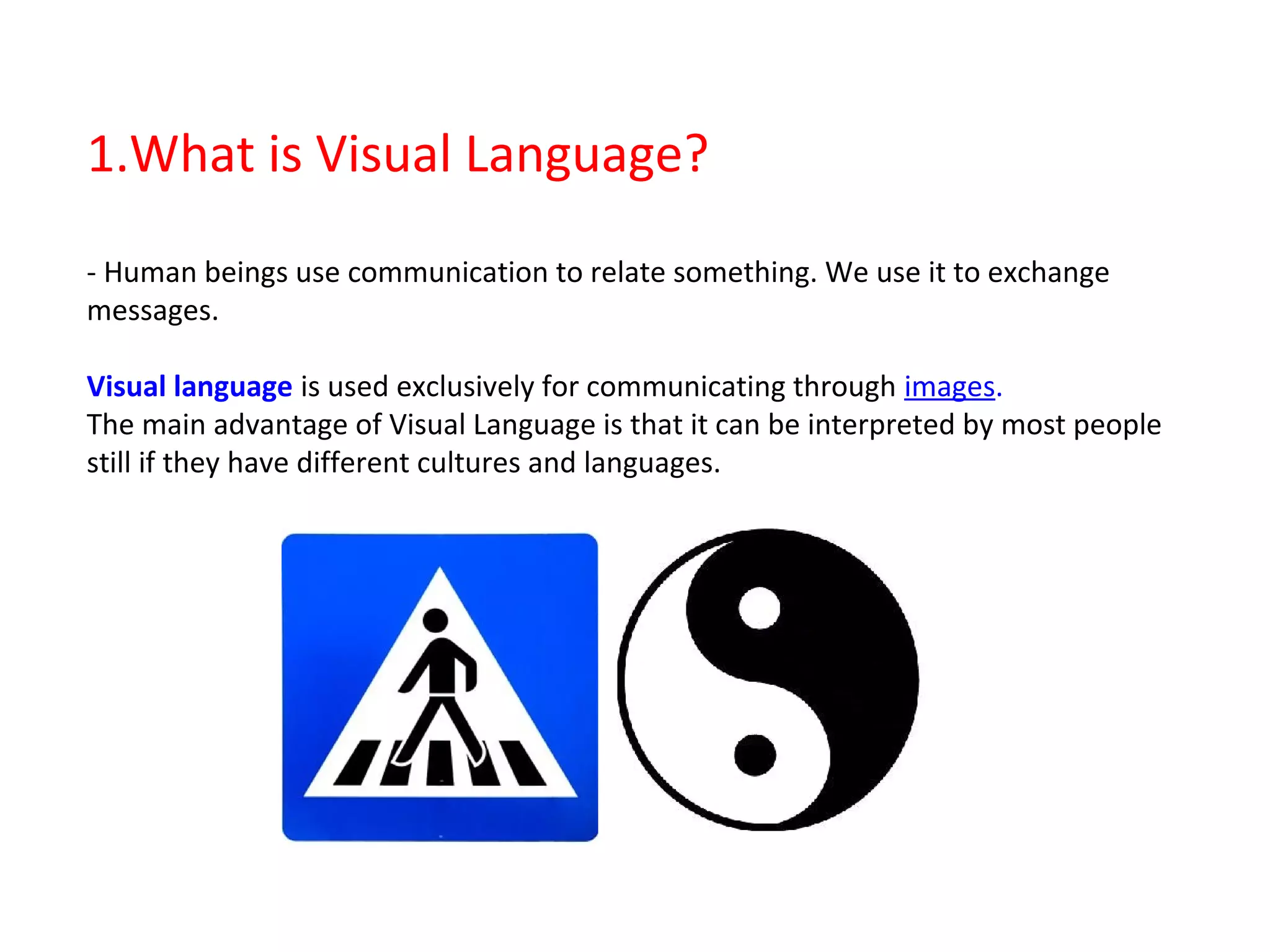
Visual language is the communication system used exclusively for communicating 
through images. 
The main advantage of Visual Language is that it can be interpreted by most people 
still if they have different cultures and languages.
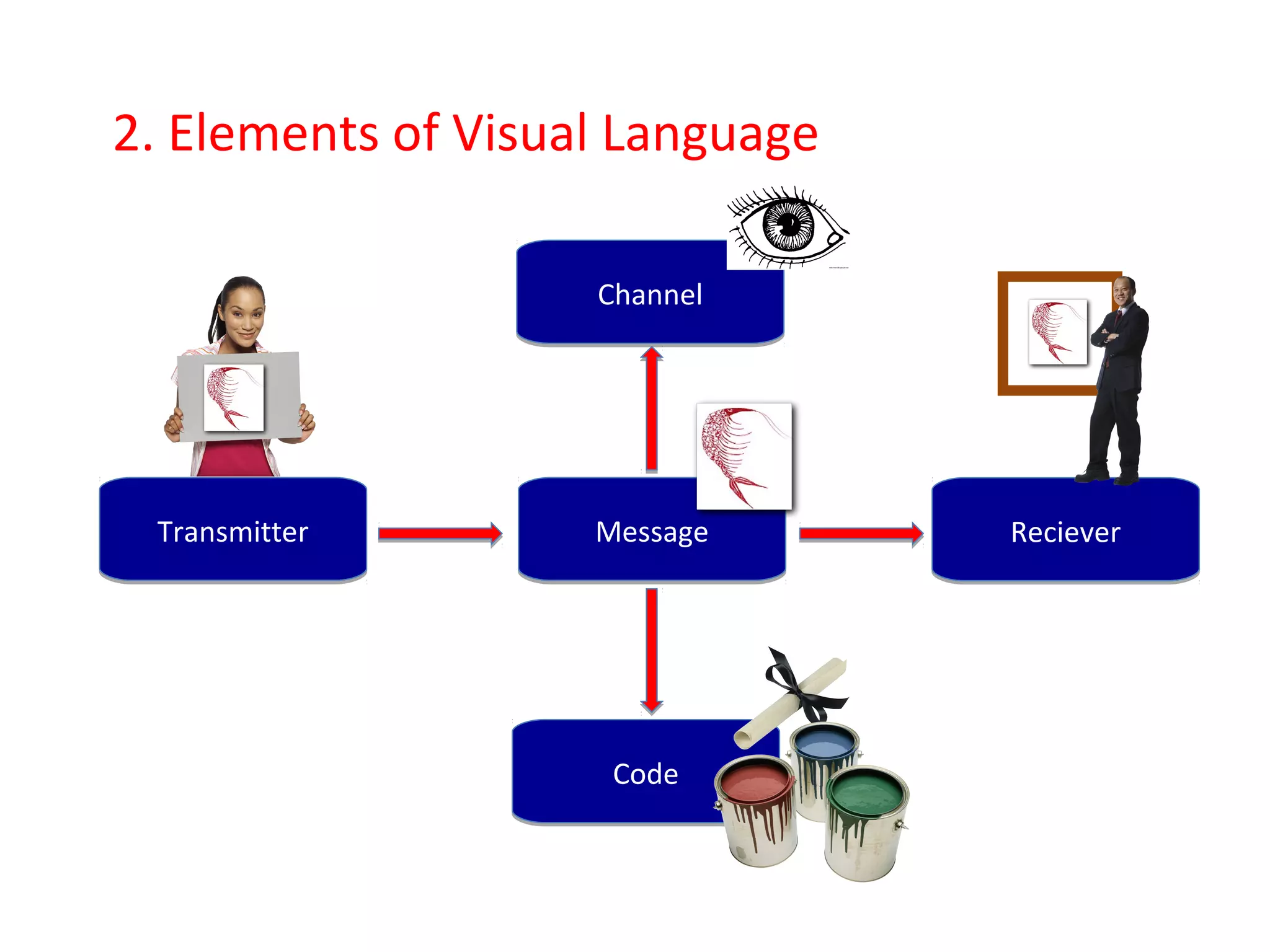
2. Elements of Visual Language 
CChhaannnneell 
MMeessssaaggee RReecceeiviveerr 
CCooddee 
TTrraannssmmitittteerr 
Who elaborates 
the message 
Who interprets 
the message
Transmitter: who creates the message. 
Message: the information the transmitter wants to 
communicate. 
Channel: medium used by the transmitter to send the message 
(Paper, canvas, etc…). 
Code: group of rules and knowledge used to generate the 
message (Visual Code, Principles of Composition, Light, Colour, 
Shape and Volume). 
Receiver: who interprets the message.
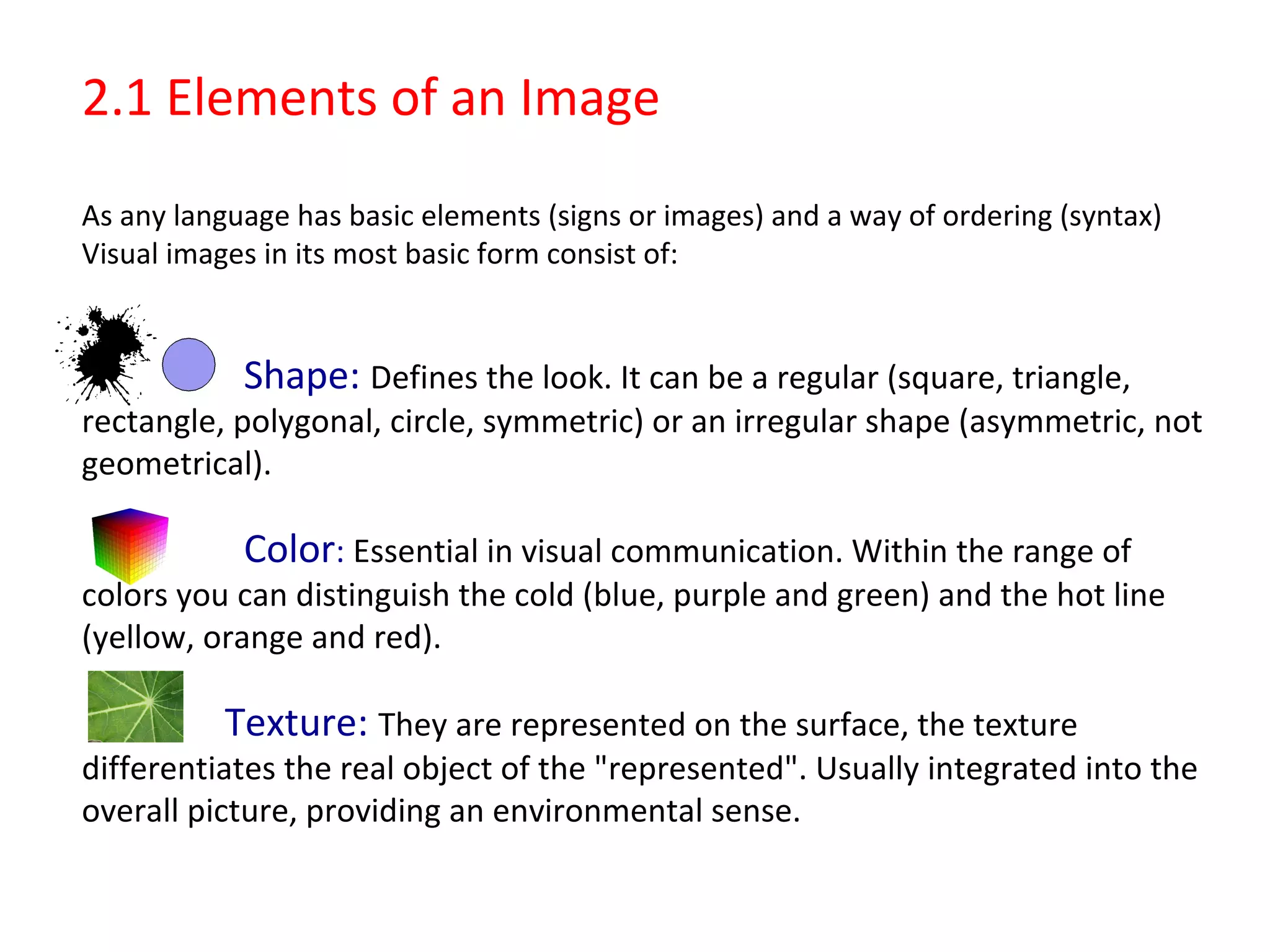
2.1 Elements of an Image 
As any language has basic elements (signs or images) and a way of ordering (syntax) 
Visual images in its most basic form consist of: 
Shape: Defines the look. It can be a regular (square, triangle, 
rectangle, polygonal, circle, symmetric) or an irregular shape (asymmetric, not 
geometrical). 
Color: Essential in visual communication. Within the range of 
colors you can distinguish the cold (blue, purple and green) and the hot line 
(yellow, orange and red). 
Texture: They are represented on the surface, the texture 
differentiates the real object of the "represented". Usually integrated into the 
overall picture, providing an environmental sense.
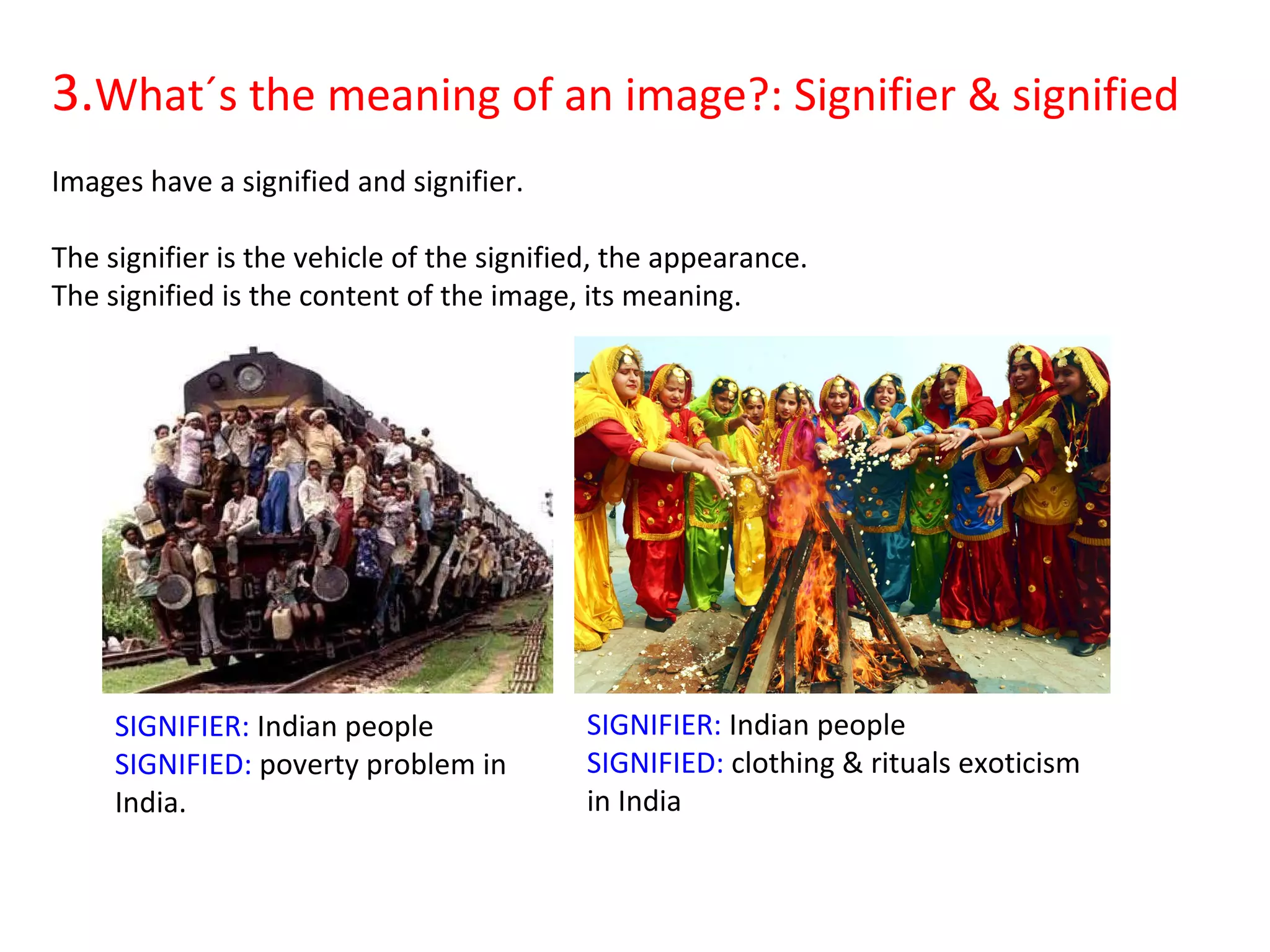
3.What´s the meaning of an image?: Signifier & signified 
Images have a signifier and a signified. 
The signifier is the object/image itself, its appearance. 
The signified is the content of the image, its meaning. 
SIGNIFIER: Indian people 
travelling by train. 
SIGNIFIED: poverty problem in 
India. 
SIGNIFIER: Indian people throwing 
petals to the fire. 
SIGNIFIED: clothing & rituals exoticism 
in India.
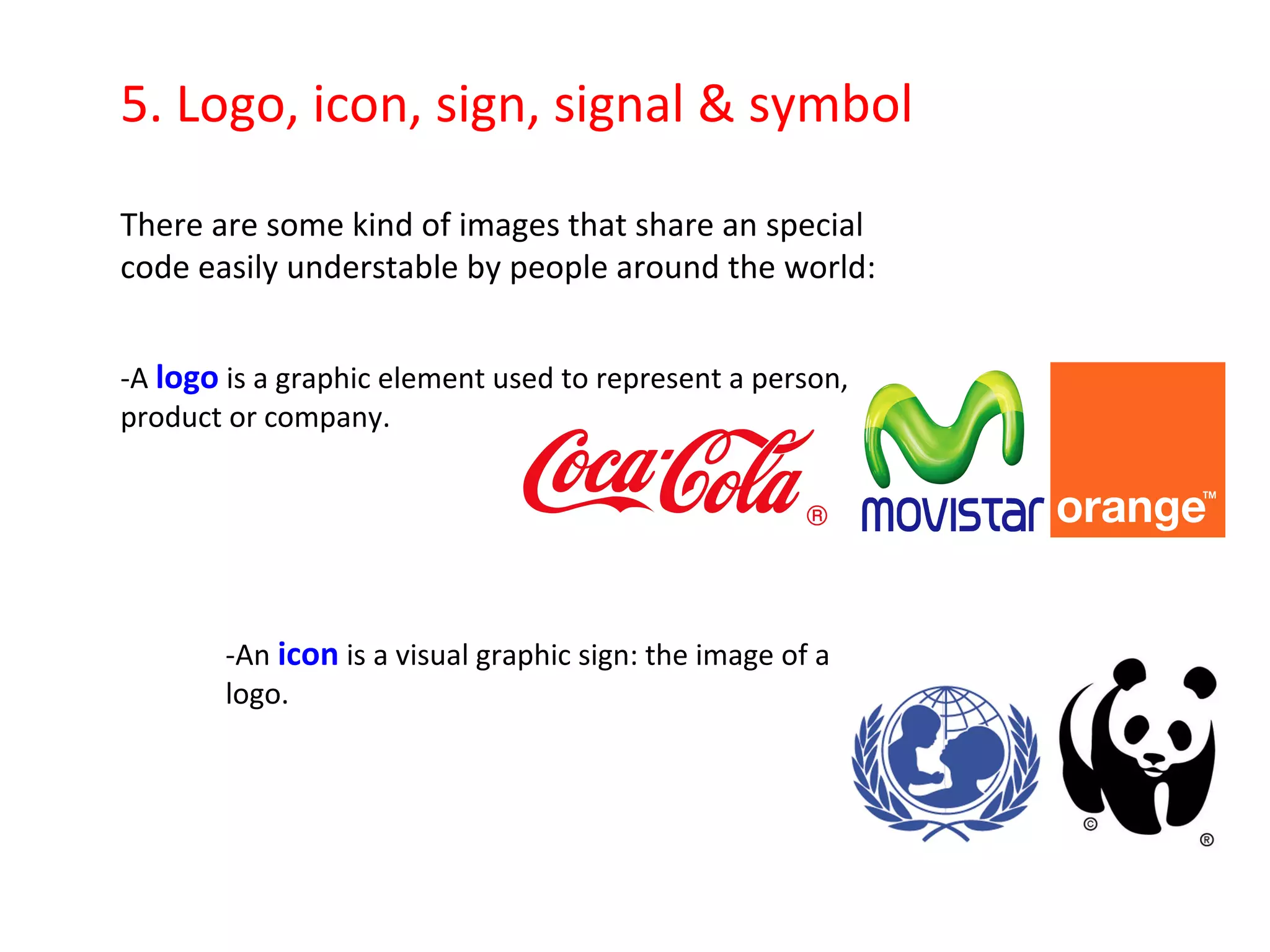
5. Logo, icon, sign, signal & symbol 
There are some kind of images that share an special 
code easily understable by people around the world: 
-A logo is a graphic element used to represent a person, 
product or company. 
-An icon is a visual graphic sign: the image of a 
logo.
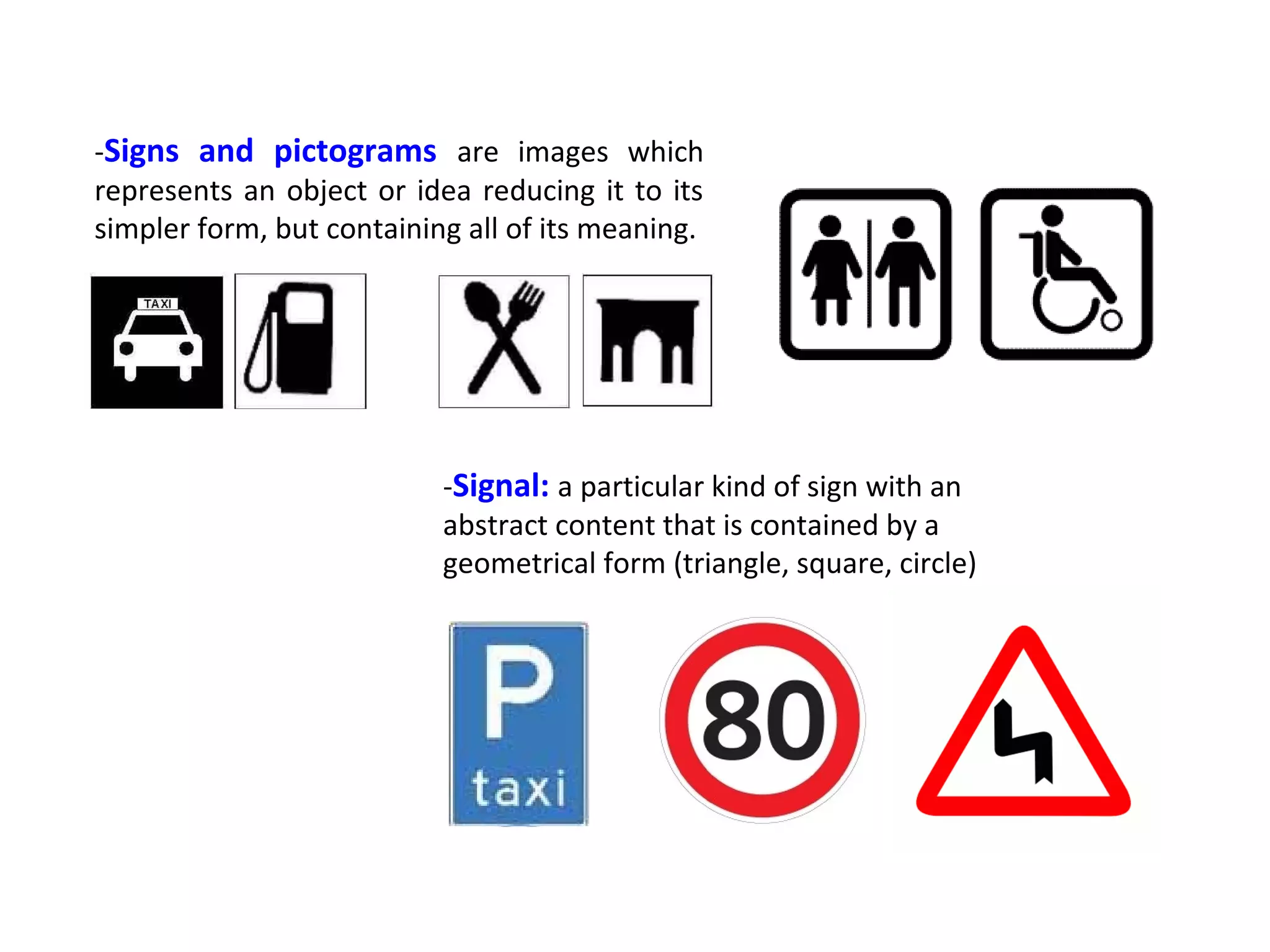
-Signs and pictograms are images which 
represents an object or idea reducing it to its 
simpler form, but containing all of its meaning. 
-Signal: a particular kind of sign with an 
abstract content that is contained by a 
geometrical form (triangle, square, circle)
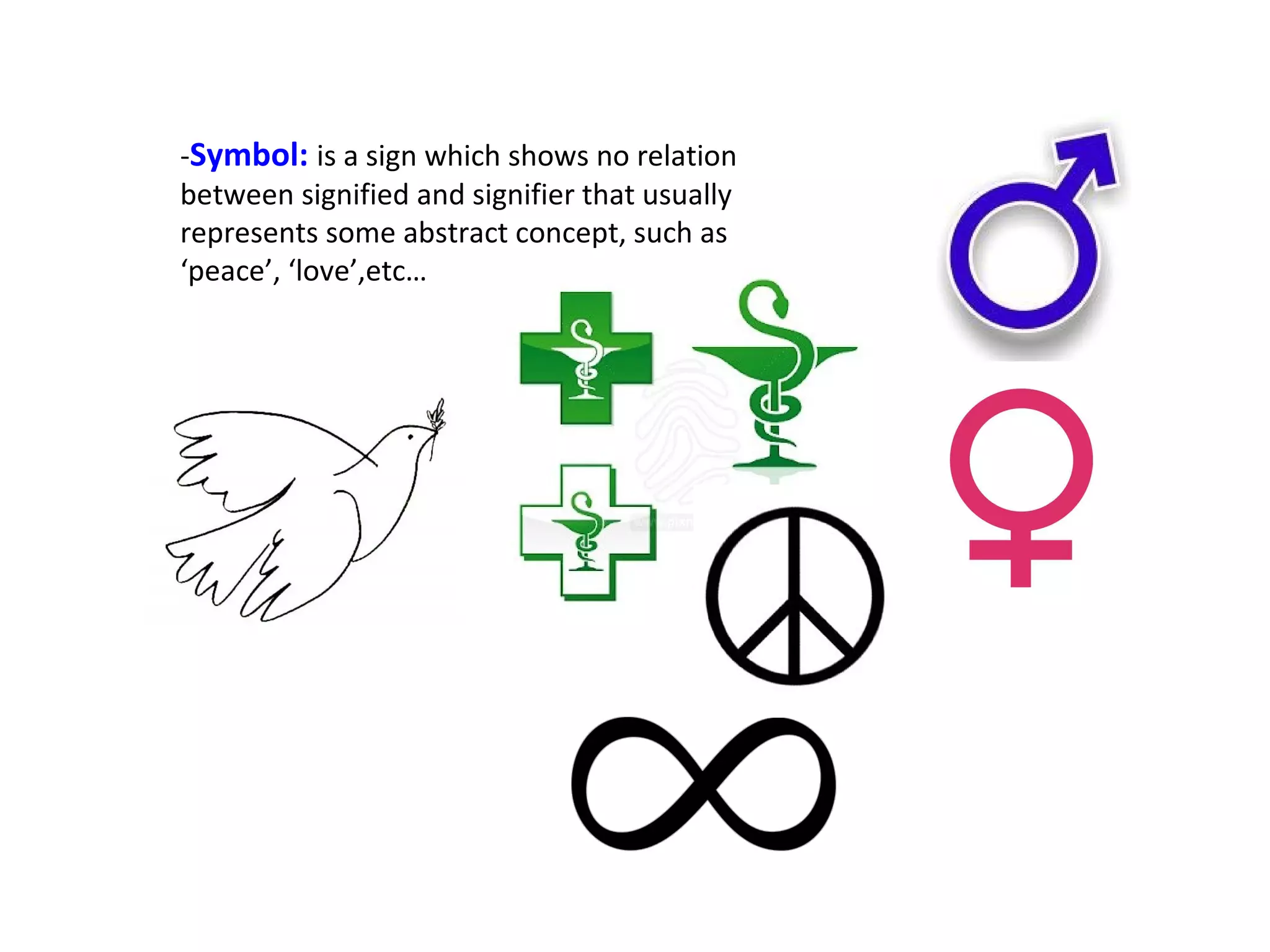
-Symbol: is a sign which shows no relation 
between signified and signifier that usually 
represents some abstract concept, such as 
‘peace’, ‘love’,etc…
6. Functions of Visual Language 
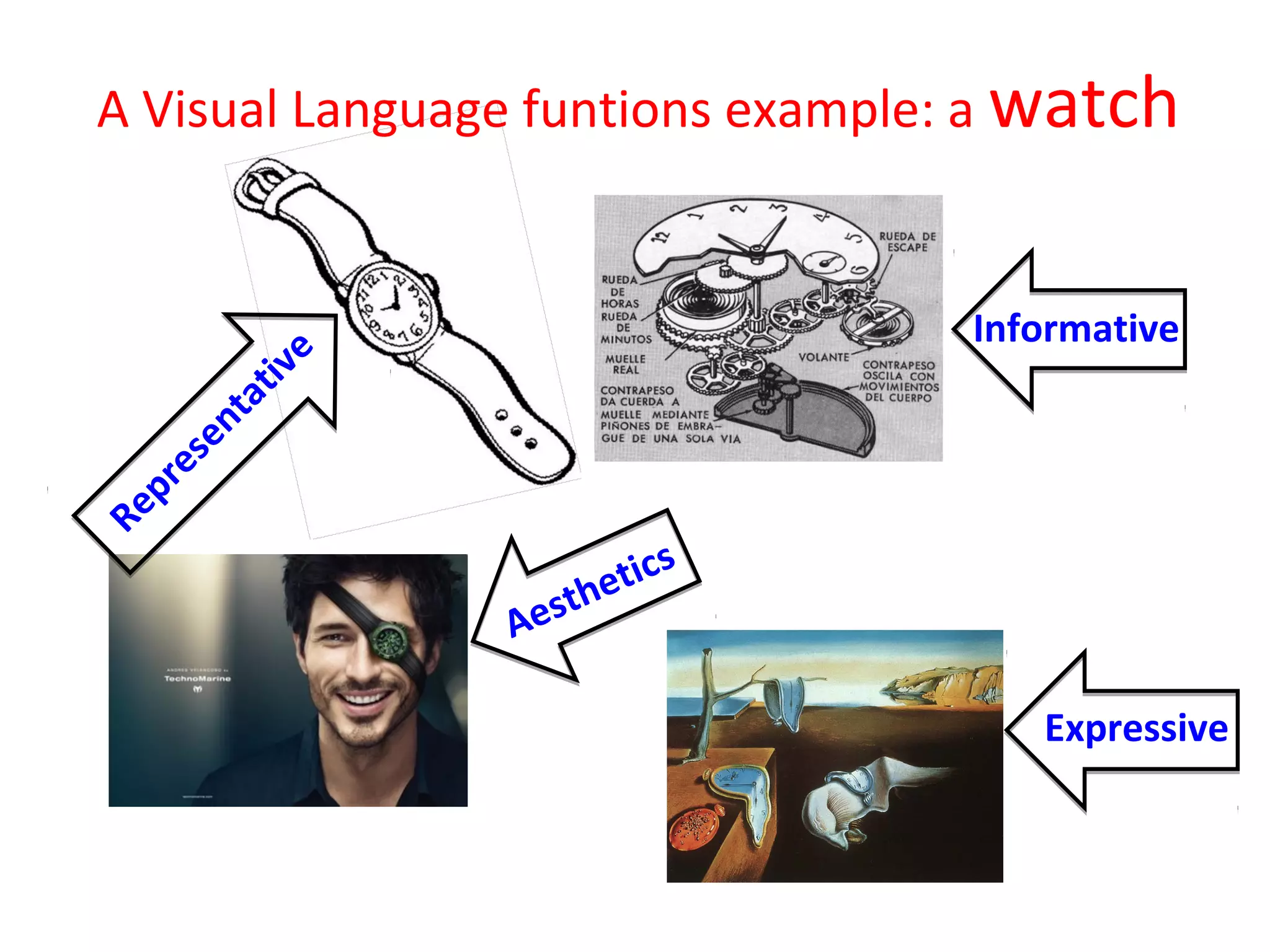
Visual Language has 4 different functions according to the message an image 
wants to transmit: 
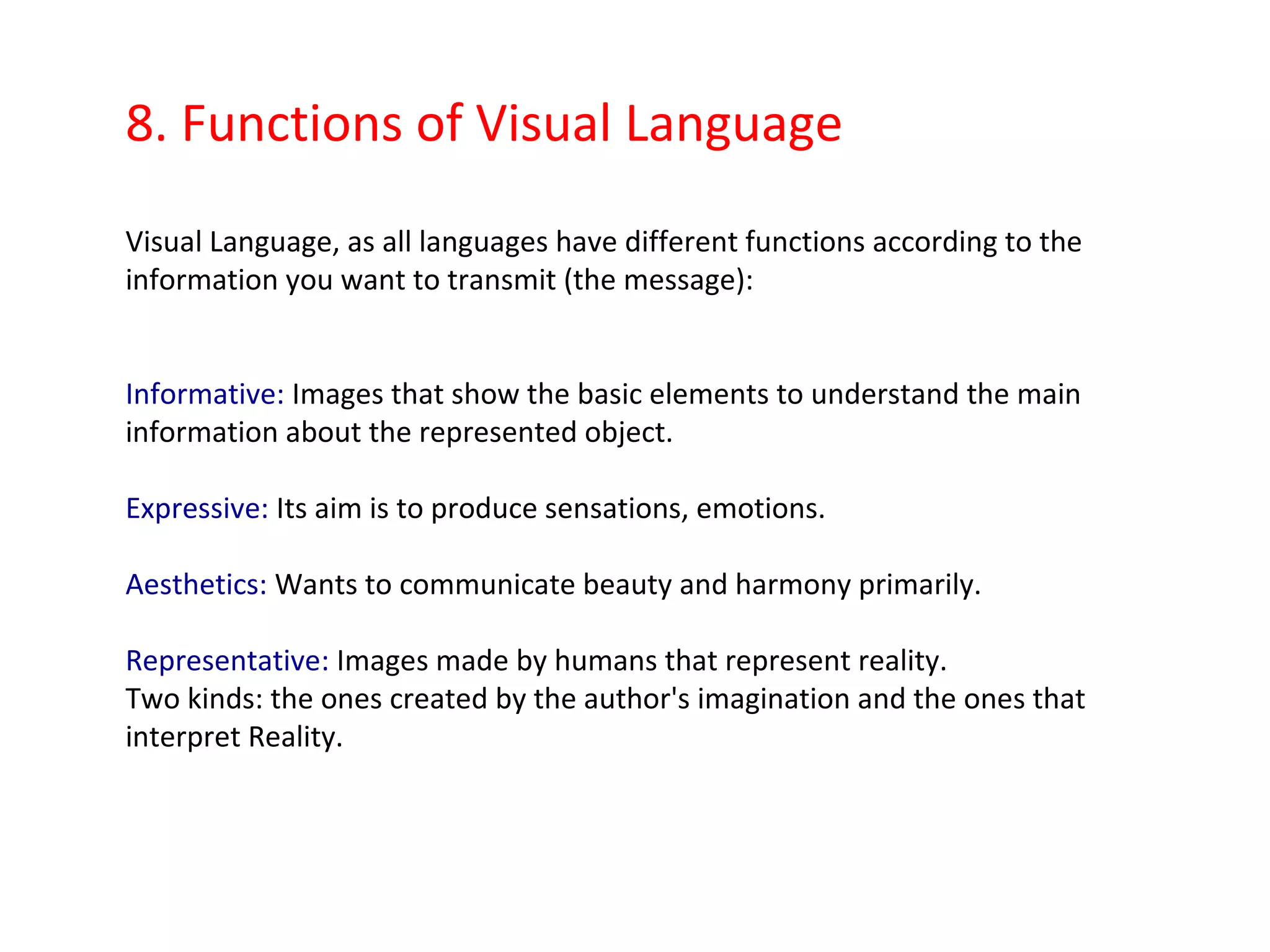
Informative: Images that show the basic elements to understand the main 
information about the represented object. Instructions sheets for objects/ 
machines are usually informative. 
Aesthetics: Images that wants to communicate beauty and harmony primarily. 
Design products are usually aesthetics. 
Expressive: Images whose aim is to evoke a particular sensation or emotion in 
the viewer (happiness, sadness, joy, melancholy, fear…). Paintings and 
sculptures are usually expressive. 
Exhortative: Images that try to persuade the receiver to consume a product, 
service or an idea. Advertising images are usually exhortative.
A Visual Language funtions example: a watch 
Informative 
Exhortative 
Expressive 
Aesthetics
7. Level of iconicity 
The level of iconicity its the level of similarity of an image with reality. 
The level of iconicity of a color photograph is high because it accurately 
represents reality, but when we speak of cinema the level of iconicity is 
even higher because sound and movement are also represented. 
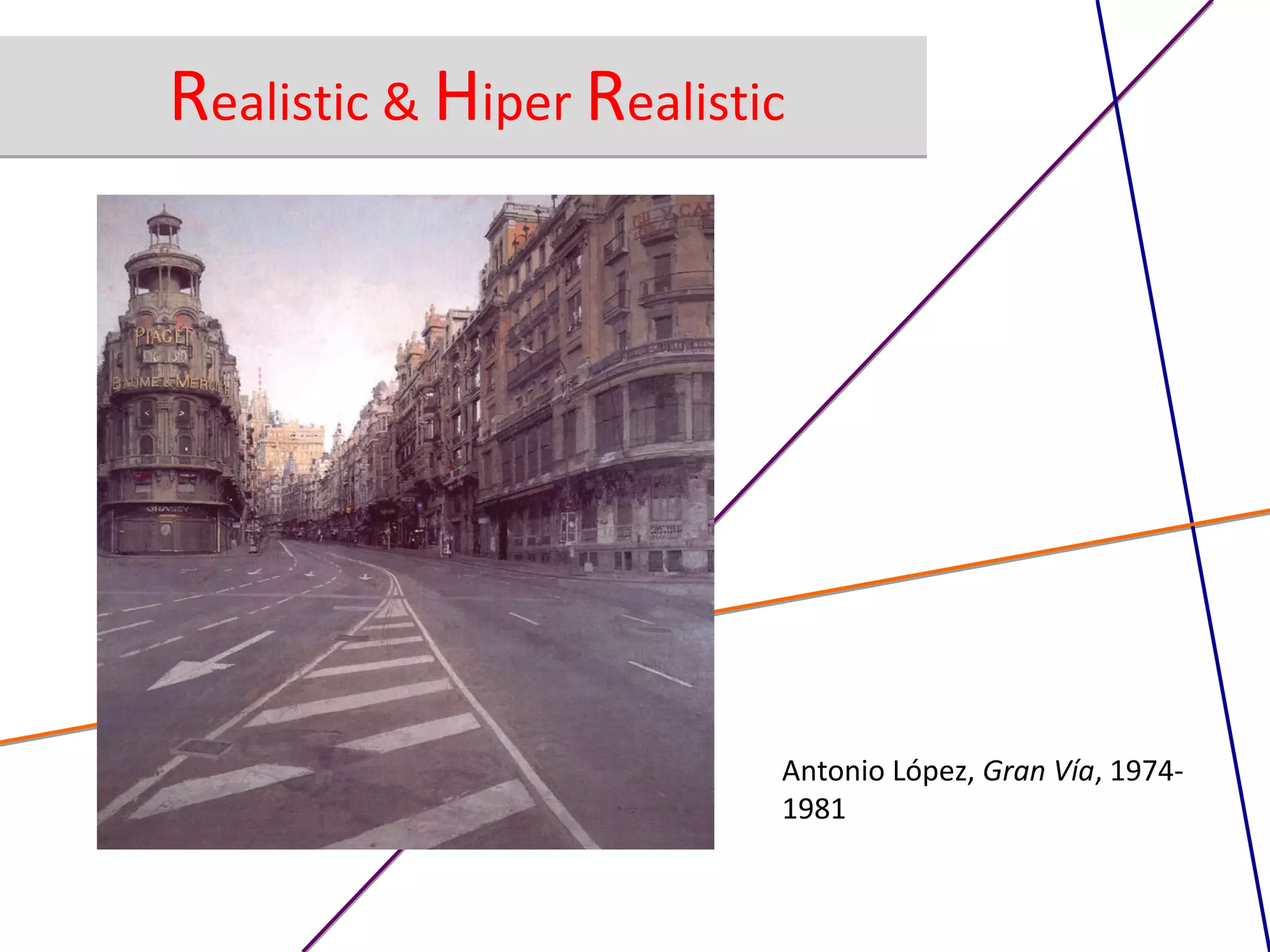
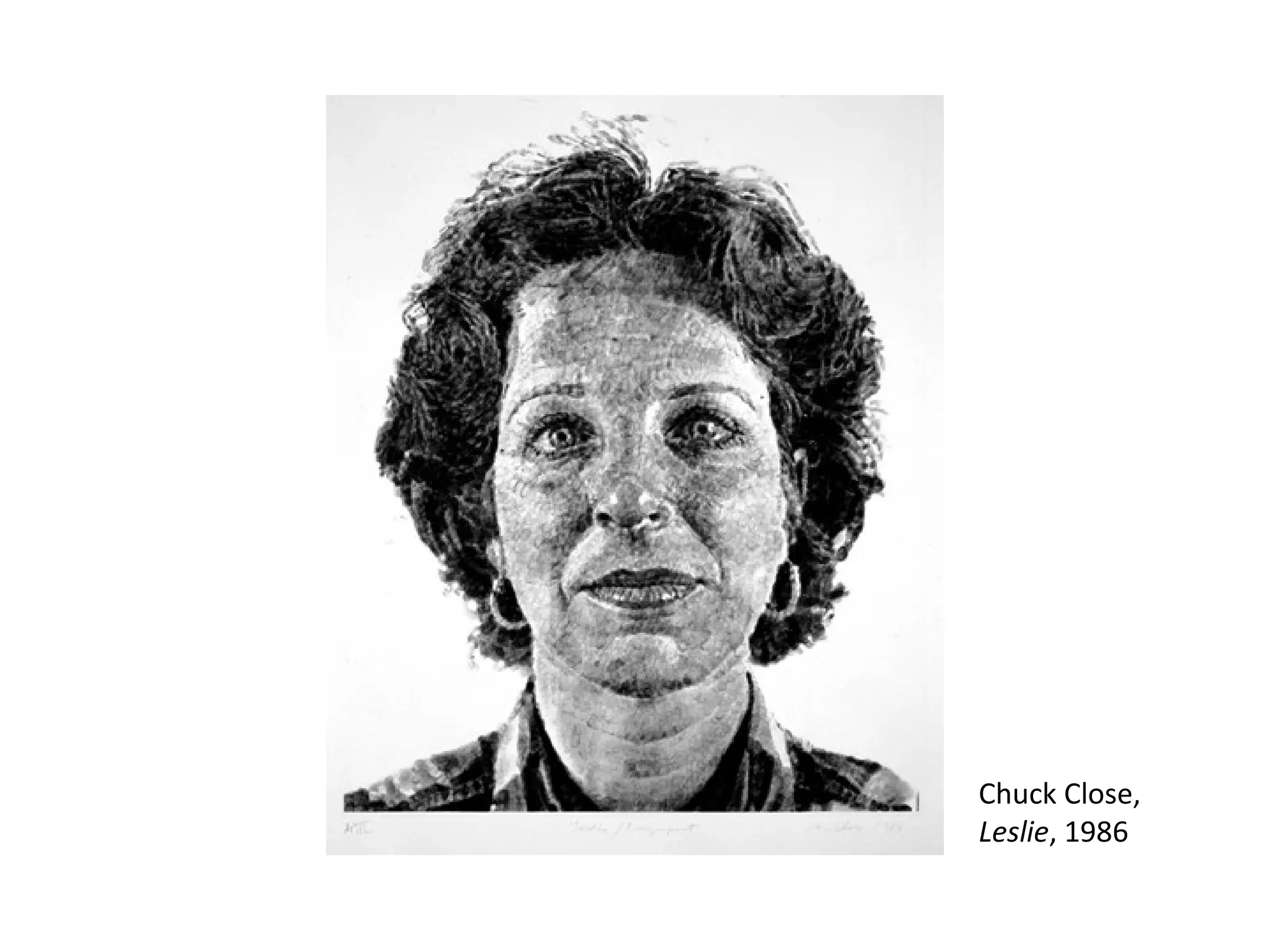
Hyper-realistic style in painting have a high level of iconicity. 
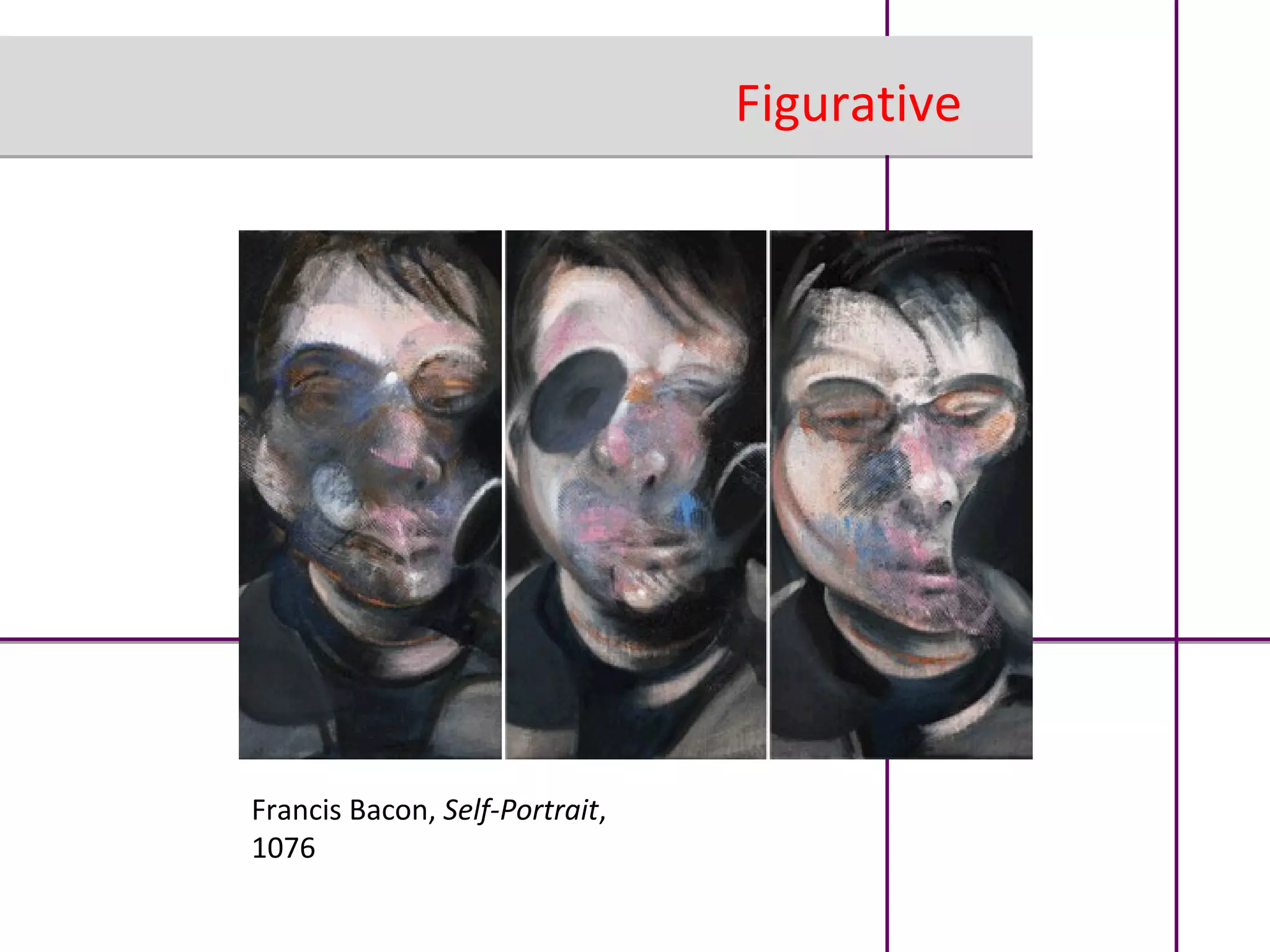
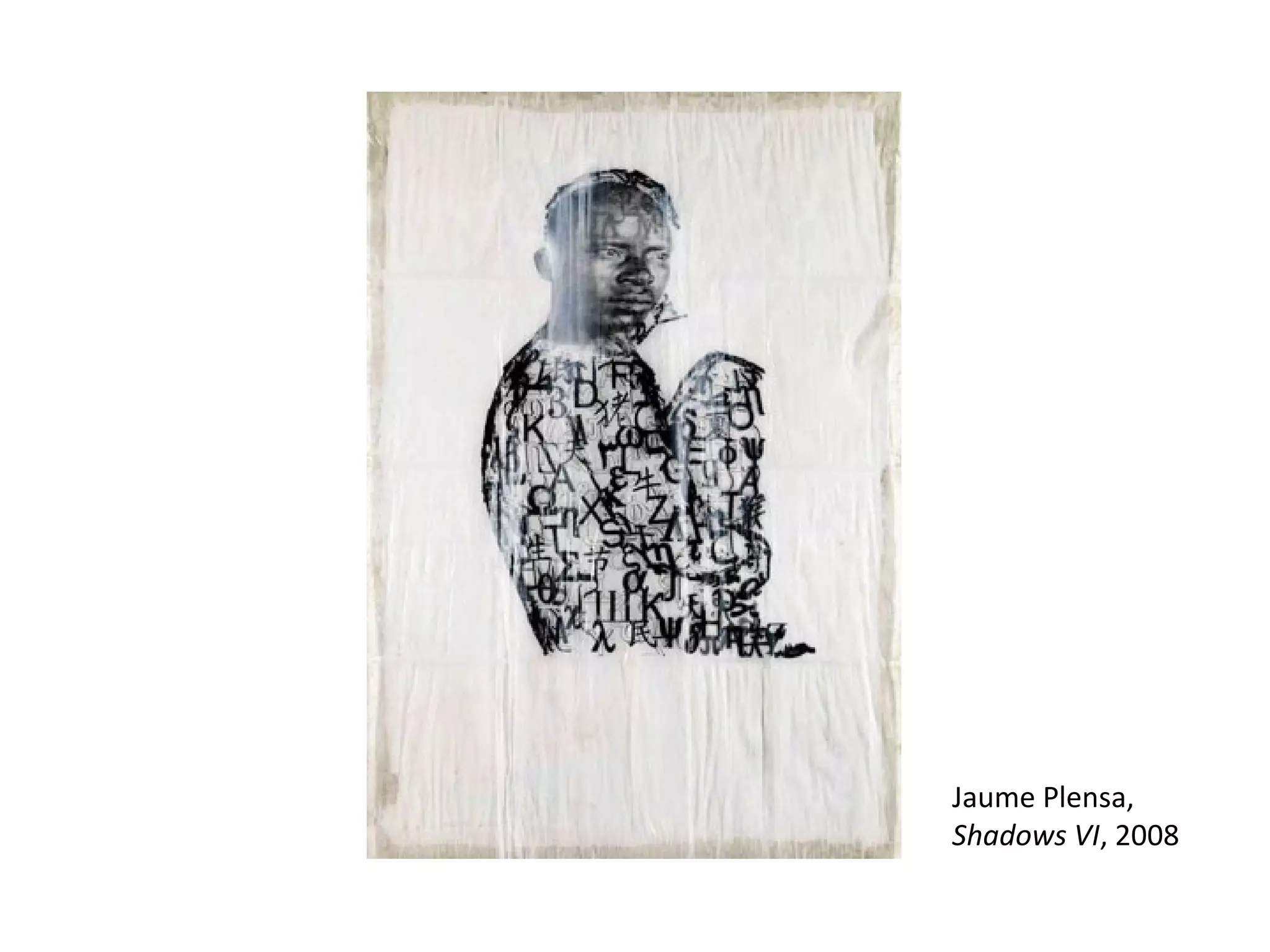
Figurative style let the viewer recognise the represented but it’s not faithful 
to reality, so the level of iconicity is medium. 
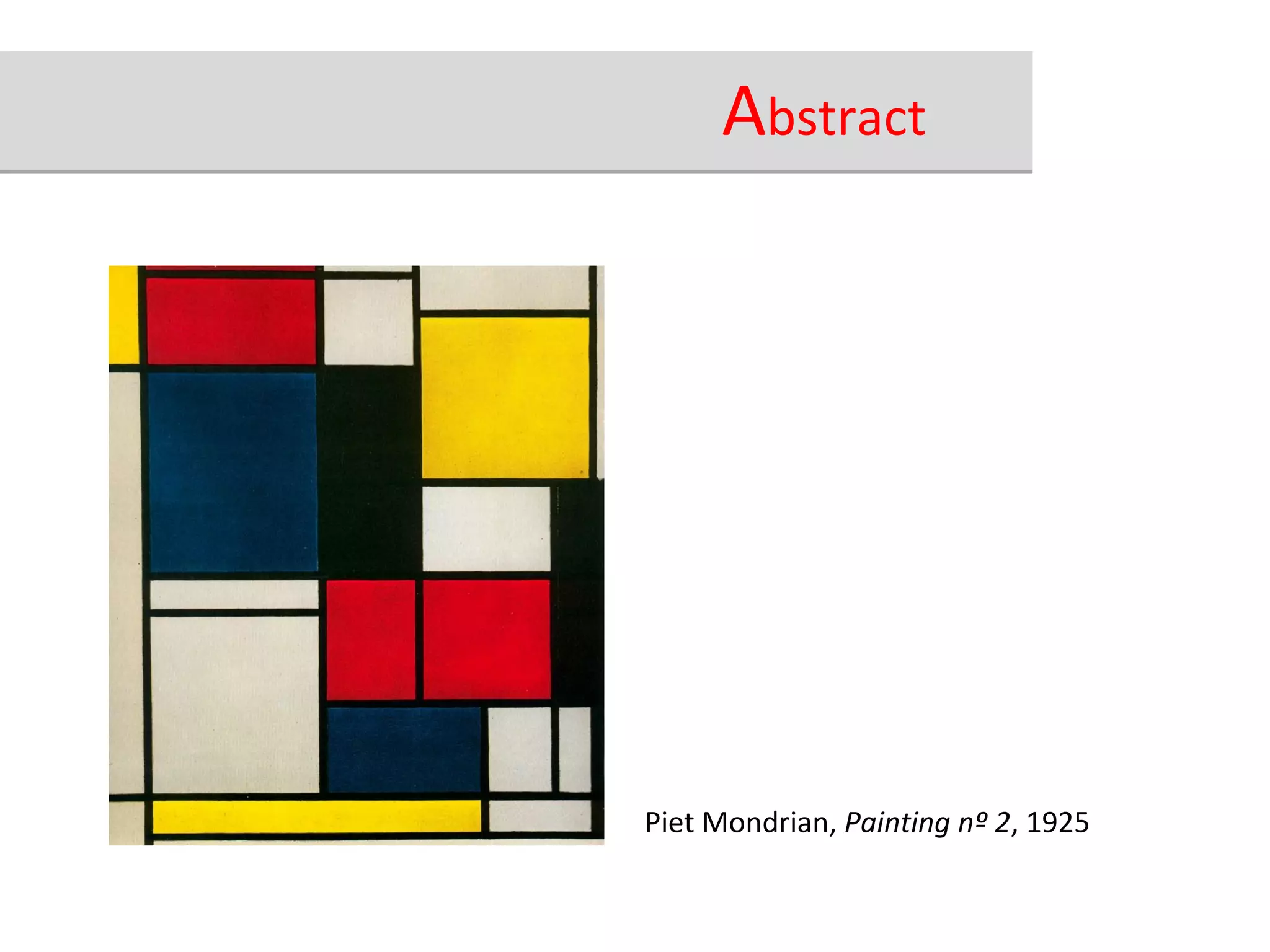
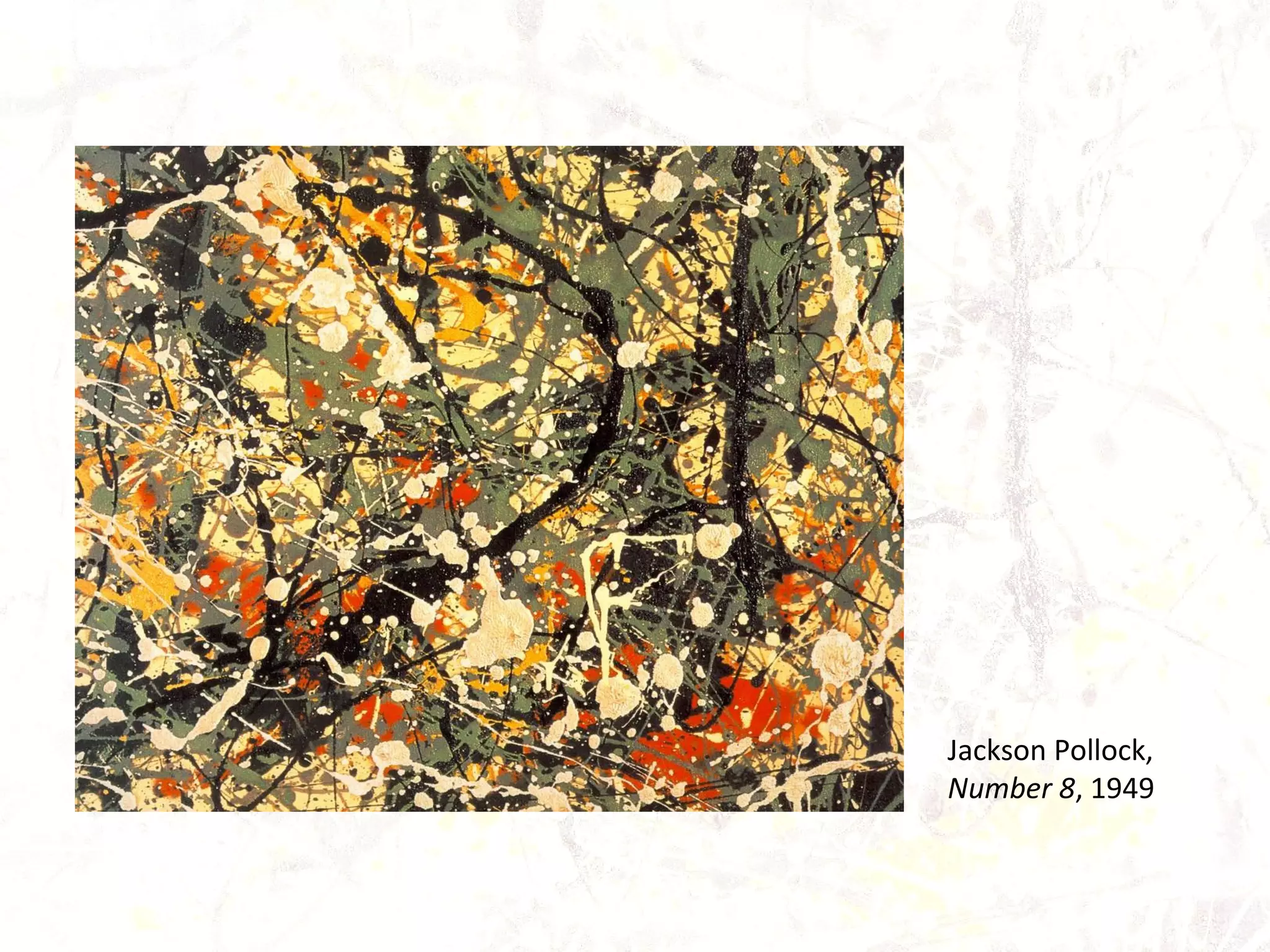
In Abstract art, reality is not represented so the level of iconicity is low.
8. Realistic, figurative & abstract images 
An image can have different interpretations depending on the 
characteristics of the transmitter and the receiver: 
-The transmitter determines the meaning of an image than a receiver 
complete when he receive it. There are three ways of expression: 
 Realistic, these are images similar to reality, like Photography or 
drawings of high precision. 
 Figurative, these represent reality-based forms but with a free 
interpretation. 
 Abstract, it doesn’t represent images based on reality. They are 
new forms created to represent a particular world.
Realistic & Hiper Realistic 
Antonio López, Gran Vía, 1974- 
1981
Chuck Close, 
Leslie, 1986
Figurative 
Francis Bacon, Self-Portrait, 
1076
Jaume Plensa, 
Shadows VI, 2008
Abstract 
Piet Mondrian, Painting nº 2, 1925
Jackson Pollock, 
Number 8, 1949

Unit 1 vl

  • 1.
    Unit I. AComic book story Visual Language I Teacher: Sara del Río
  • 2.
    1.What is VisualLanguage? - Human beings use communication to relate something. We use it to exchange messages. Visual language is the communication system used exclusively for communicating through images. The main advantage of Visual Language is that it can be interpreted by most people still if they have different cultures and languages.
  • 3.
    2. Elements ofVisual Language CChhaannnneell MMeessssaaggee RReecceeiviveerr CCooddee TTrraannssmmitittteerr Who elaborates the message Who interprets the message
  • 4.
    Transmitter: who createsthe message. Message: the information the transmitter wants to communicate. Channel: medium used by the transmitter to send the message (Paper, canvas, etc…). Code: group of rules and knowledge used to generate the message (Visual Code, Principles of Composition, Light, Colour, Shape and Volume). Receiver: who interprets the message.
  • 5.
    2.1 Elements ofan Image As any language has basic elements (signs or images) and a way of ordering (syntax) Visual images in its most basic form consist of: Shape: Defines the look. It can be a regular (square, triangle, rectangle, polygonal, circle, symmetric) or an irregular shape (asymmetric, not geometrical). Color: Essential in visual communication. Within the range of colors you can distinguish the cold (blue, purple and green) and the hot line (yellow, orange and red). Texture: They are represented on the surface, the texture differentiates the real object of the "represented". Usually integrated into the overall picture, providing an environmental sense.
  • 6.
    3.What´s the meaningof an image?: Signifier & signified Images have a signifier and a signified. The signifier is the object/image itself, its appearance. The signified is the content of the image, its meaning. SIGNIFIER: Indian people travelling by train. SIGNIFIED: poverty problem in India. SIGNIFIER: Indian people throwing petals to the fire. SIGNIFIED: clothing & rituals exoticism in India.
  • 7.
    5. Logo, icon,sign, signal & symbol There are some kind of images that share an special code easily understable by people around the world: -A logo is a graphic element used to represent a person, product or company. -An icon is a visual graphic sign: the image of a logo.
  • 8.
    -Signs and pictogramsare images which represents an object or idea reducing it to its simpler form, but containing all of its meaning. -Signal: a particular kind of sign with an abstract content that is contained by a geometrical form (triangle, square, circle)
  • 9.
    -Symbol: is asign which shows no relation between signified and signifier that usually represents some abstract concept, such as ‘peace’, ‘love’,etc…
  • 10.
    6. Functions ofVisual Language Visual Language has 4 different functions according to the message an image wants to transmit: Informative: Images that show the basic elements to understand the main information about the represented object. Instructions sheets for objects/ machines are usually informative. Aesthetics: Images that wants to communicate beauty and harmony primarily. Design products are usually aesthetics. Expressive: Images whose aim is to evoke a particular sensation or emotion in the viewer (happiness, sadness, joy, melancholy, fear…). Paintings and sculptures are usually expressive. Exhortative: Images that try to persuade the receiver to consume a product, service or an idea. Advertising images are usually exhortative.
  • 11.
    A Visual Languagefuntions example: a watch Informative Exhortative Expressive Aesthetics
  • 12.
    7. Level oficonicity The level of iconicity its the level of similarity of an image with reality. The level of iconicity of a color photograph is high because it accurately represents reality, but when we speak of cinema the level of iconicity is even higher because sound and movement are also represented. Hyper-realistic style in painting have a high level of iconicity. Figurative style let the viewer recognise the represented but it’s not faithful to reality, so the level of iconicity is medium. In Abstract art, reality is not represented so the level of iconicity is low.
  • 13.
    8. Realistic, figurative& abstract images An image can have different interpretations depending on the characteristics of the transmitter and the receiver: -The transmitter determines the meaning of an image than a receiver complete when he receive it. There are three ways of expression:  Realistic, these are images similar to reality, like Photography or drawings of high precision.  Figurative, these represent reality-based forms but with a free interpretation.  Abstract, it doesn’t represent images based on reality. They are new forms created to represent a particular world.
  • 14.
    Realistic & HiperRealistic Antonio López, Gran Vía, 1974- 1981
  • 15.
  • 16.
    Figurative Francis Bacon,Self-Portrait, 1076
  • 17.
  • 18.
    Abstract Piet Mondrian,Painting nº 2, 1925
  • 19.