

Art and Design 
1st E.S.O. 
RAMON DE FRANCISCO
INDEX 
COMMUNICATION AND ITS PURPOSES. U. 1 
VISUAL COMMUNICATION & VISUAL PERCEPTION. U. 2 
ELEMENTS OF VISUAL 
LANGUAGE 
SPACE & VOLUME 
FORMS & SHAPES 
COLOUR. U. 5 
TEXTURE. U. 6 
DOT, LINE & SURFACE. U. 3 
GEOMETRIC SHAPES. U. 4 
INTRODUCTION. U. 7 
LIGHT & VOLUME. U. 8 
SYSTEMS OF REPRESENTATION. U. 9 
RAMON DE FRANCISCO
VISUAL COMMUNICATION & VISUAL PERCEPTION. 
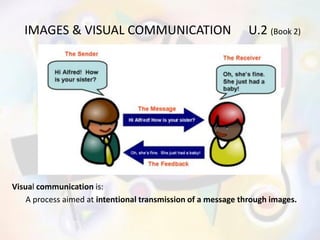
Visual communication is: 
A process aimed at intentional transmission of a message through images.
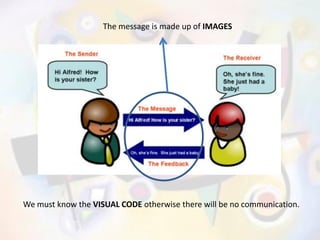
The message is made up of IMAGES 
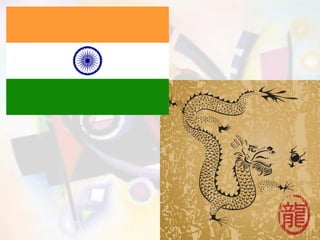
We must know the VISUAL CODE otherwise there will be no communication.
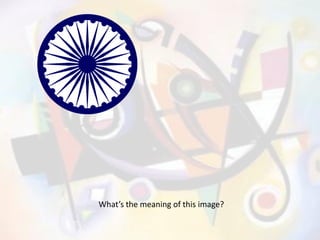
What’s the meaning of this image?
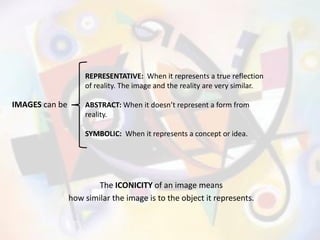
IMAGES can be 
REPRESENTATIVE: When it represents a true reflection 
of reality. The image and the reality are very similar. 
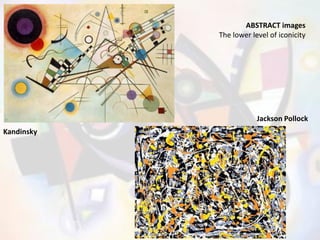
ABSTRACT: When it doesn’t represent a form from 
reality. 
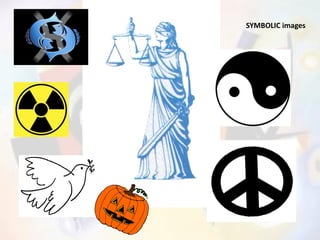
SYMBOLIC: When it represents a concept or idea. 
The ICONICITY of an image means 
how similar the image is to the object it represents.
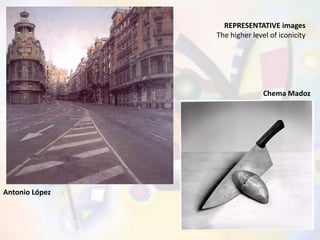
REPRESENTATIVE images 
The higher level of iconicity 
Chema Madoz 
Antonio López
RAMON DE FRANCISCO 
ABSTRACT images 
The lower level of iconicity 
Jackson Pollock 
Kandinsky
SYMBOLIC images
What is Visual Perception? 
It is the brain interpreting visual stimuli. 
It is a process that involves 
THE BRAIN THE OPTIC NERVES THE EYES
As every process it has its rules so if you know them you will find very easy to 
mislead both your eyes and your brain. 
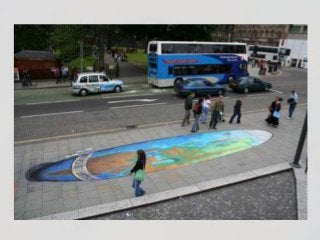
That is what we call OPTICAL ILLUSIONS.
While looking at he centre move forward and backwards
Find the hidden image
Which is the bigger car?
Is this figure possible?
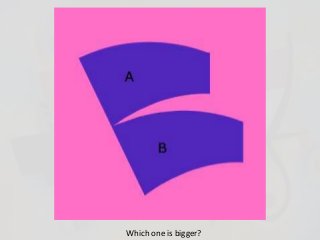
Which one is bigger?
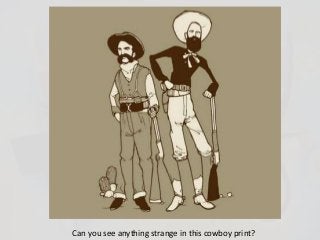
Can you see anything strange in this cowboy print?
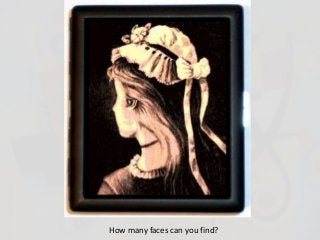
How many faces can you find?
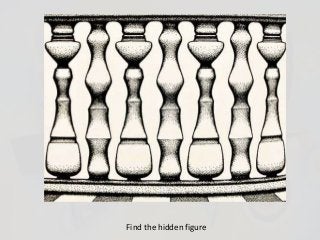
Find the hidden figure
Other examples
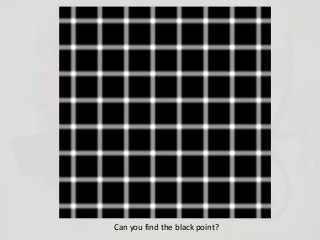
Can you find the black point?
02 ud images & visual communication

02 ud images & visual communication

  • 1.
    Art and Design 1st E.S.O. RAMON DE FRANCISCO
  • 2.
    INDEX COMMUNICATION ANDITS PURPOSES. U. 1 VISUAL COMMUNICATION & VISUAL PERCEPTION. U. 2 ELEMENTS OF VISUAL LANGUAGE SPACE & VOLUME FORMS & SHAPES COLOUR. U. 5 TEXTURE. U. 6 DOT, LINE & SURFACE. U. 3 GEOMETRIC SHAPES. U. 4 INTRODUCTION. U. 7 LIGHT & VOLUME. U. 8 SYSTEMS OF REPRESENTATION. U. 9 RAMON DE FRANCISCO
  • 3.
    VISUAL COMMUNICATION &VISUAL PERCEPTION. Visual communication is: A process aimed at intentional transmission of a message through images.
  • 4.
    The message ismade up of IMAGES We must know the VISUAL CODE otherwise there will be no communication.
  • 5.
    What’s the meaningof this image?
  • 7.
    IMAGES can be REPRESENTATIVE: When it represents a true reflection of reality. The image and the reality are very similar. ABSTRACT: When it doesn’t represent a form from reality. SYMBOLIC: When it represents a concept or idea. The ICONICITY of an image means how similar the image is to the object it represents.
  • 8.
    REPRESENTATIVE images Thehigher level of iconicity Chema Madoz Antonio López
  • 9.
    RAMON DE FRANCISCO ABSTRACT images The lower level of iconicity Jackson Pollock Kandinsky
  • 10.
  • 11.
    What is VisualPerception? It is the brain interpreting visual stimuli. It is a process that involves THE BRAIN THE OPTIC NERVES THE EYES
  • 12.
    As every processit has its rules so if you know them you will find very easy to mislead both your eyes and your brain. That is what we call OPTICAL ILLUSIONS.
  • 14.
    While looking athe centre move forward and backwards
  • 15.
  • 16.
    Which is thebigger car?
  • 17.
    Is this figurepossible?
  • 18.
    Which one isbigger?
  • 19.
    Can you seeanything strange in this cowboy print?
  • 20.
    How many facescan you find?
  • 21.
  • 22.
  • 23.
    Can you findthe black point?