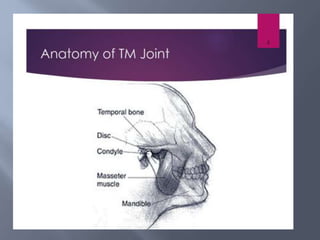
 Temporomandibular joint and muscle
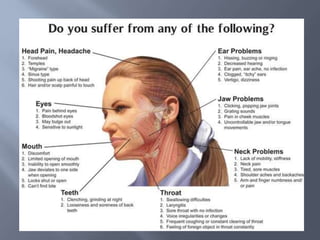
disorders, commonly called “TMJ,” are a group
of conditions that cause pain and dysfunction
in the jaw joint and the muscles that control
jaw movement.
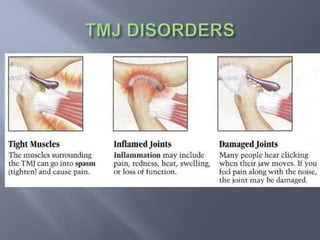
 1 Myofascial pain involves discomfort or pain in the
muscles that control jaw function.
 2 Internal derangement of the joint involves a
displaced disc, dislocated jaw, or injury to the condyle.
 3 Arthritis refers to a group of degenerative/
inflammatory joint disorders that can affect the
temporomandibular joint.
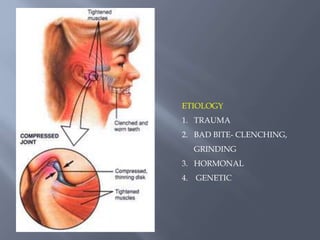
ETIOLOGY
1. TRAUMA
2. BAD BITE- CLENCHING,
GRINDING
3. HORMONAL
4. GENETIC
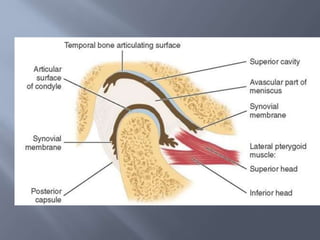
A. Muscle disorders may include spasm of the
masticatory muscles, most frequently
involving the lateral pterygoid
B. Fibromyalgia or myofascial pain syndrome
C. Emotional stress/tension which may lead to
bruxism
D. Postural dysfunction, namely forward head
posture, may also lead to muscle pain in the
jaw from repetitive stress
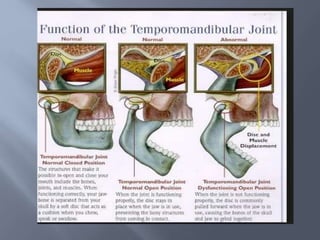
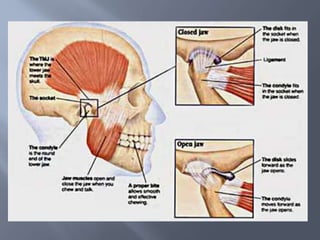
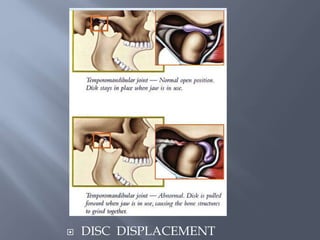
 Disc displacement is the most common TMJ arthropathy
and is defined as an abnormal relationship between the
articular disc and condyle.
 Clinically, this popping sound or clicking is regarded as
an initial symptom of the temporomandibular joint
internal derangement (TMJ-ID).
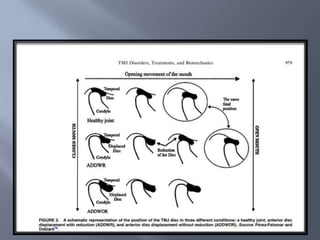
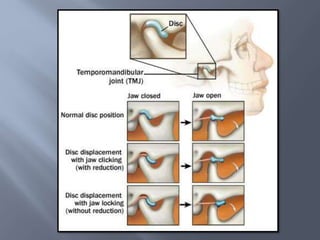
 If the displaced disc returns to its normal position when
the mouth is opened, accompanied by a popping sound,
it is referred to as disc displacement with reduction
 If the displaced disc does not return to the normal
position and acts as an obstacle during attempted mouth
opening, the joint appears as locked. This is referred to
as disc displacement without reduction
 DISC DISPLACEMENT
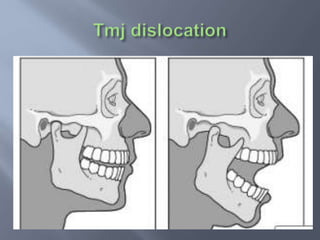
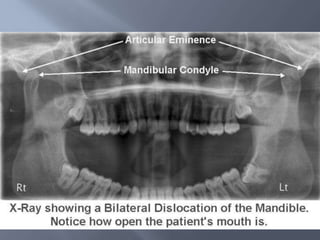
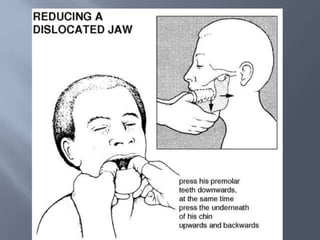
 Subluxation or hypermobility in the
temporomandibular joint is defined as the clinical
condition with repeated episodes of partial
dislocation of the jaw.
 It is a self-reducing incomplete dislocation of the
jaw which generally follows stretching of the
ligaments and the capsule surrounding the
tempero-mandibular joint.
Management of TMJ
disorder
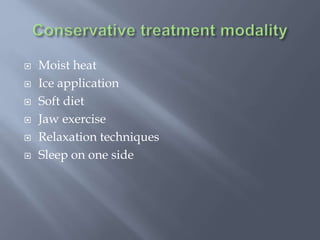
 Moist heat
 Ice application
 Soft diet
 Jaw exercise
 Relaxation techniques
 Sleep on one side
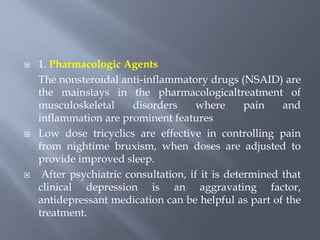
 1. Pharmacologic Agents
The nonsteroidal anti-inflammatory drugs (NSAID) are
the mainstays in the pharmacologicaltreatment of
musculoskeletal disorders where pain and
inflammation are prominent features
 Low dose tricyclics are effective in controlling pain
from nightime bruxism, when doses are adjusted to
provide improved sleep.
 After psychiatric consultation, if it is determined that
clinical depression is an aggravating factor,
antidepressant medication can be helpful as part of the
treatment.
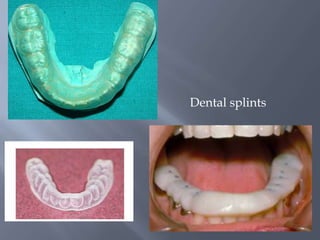
Dental splints
 Injections
 Injections of tender muscles, trigger areas, and/or joint
spaces with local anesthetic solution is used for diagnosis
and relief of symptoms.
 Corticosteroid injection can be effective in reducing
capsulitis
 The use of Botox to eliminate muscle spasm and reduce
strength of contraction, while retaining voluntary control
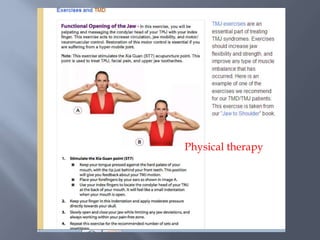
Physical therapy
 Self-Care Physical therapy is often used by TMD
patients to keep the synovial joint lubricated, and to
maintain full range of the jaw motion.
 One such exercise for the jaw is to open the mouth to a
comfortable fully-open position and then to apply
slight additional pressure to open the mouth fully.
 Another exercise includes stretching the jaw muscles
by making various facial expressions
 Behavior Modification
 Behavior modification is intended to help
patients understand and avoid stress-related
lifestyle habits, such as clenching, bruxism, and
excessive gum chewing
 Psychological consultation may be indicated
for stress management.
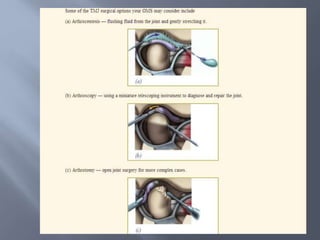
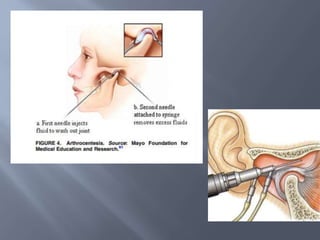
 ARTHROCENTESIS
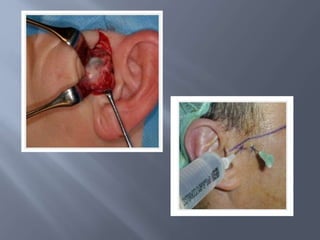
 ARTHROSCOPY
 ARTHROTOMY
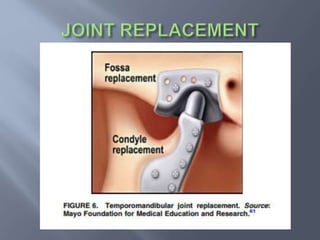
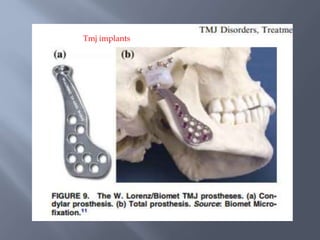
 TMJ IMPLANTS
 Discectomy
 Discectomy is a surgical treatment, which is
often performed on individuals with severe
TMD, to remove the damaged and very often
dislocating articular disc without going to a
more extreme treatment such as a joint
prosthetic.
 However, removal of the painful pathologic
disc causes the TMJ reduced absorbency and
increased loading during articulation
Tmj implants

Tmj disorder

  • 8.
     Temporomandibular jointand muscle disorders, commonly called “TMJ,” are a group of conditions that cause pain and dysfunction in the jaw joint and the muscles that control jaw movement.
  • 9.
     1 Myofascialpain involves discomfort or pain in the muscles that control jaw function.  2 Internal derangement of the joint involves a displaced disc, dislocated jaw, or injury to the condyle.  3 Arthritis refers to a group of degenerative/ inflammatory joint disorders that can affect the temporomandibular joint.
  • 11.
    ETIOLOGY 1. TRAUMA 2. BADBITE- CLENCHING, GRINDING 3. HORMONAL 4. GENETIC
  • 12.
    A. Muscle disordersmay include spasm of the masticatory muscles, most frequently involving the lateral pterygoid B. Fibromyalgia or myofascial pain syndrome C. Emotional stress/tension which may lead to bruxism D. Postural dysfunction, namely forward head posture, may also lead to muscle pain in the jaw from repetitive stress
  • 13.
     Disc displacementis the most common TMJ arthropathy and is defined as an abnormal relationship between the articular disc and condyle.  Clinically, this popping sound or clicking is regarded as an initial symptom of the temporomandibular joint internal derangement (TMJ-ID).  If the displaced disc returns to its normal position when the mouth is opened, accompanied by a popping sound, it is referred to as disc displacement with reduction  If the displaced disc does not return to the normal position and acts as an obstacle during attempted mouth opening, the joint appears as locked. This is referred to as disc displacement without reduction
  • 14.
  • 18.
     Subluxation orhypermobility in the temporomandibular joint is defined as the clinical condition with repeated episodes of partial dislocation of the jaw.  It is a self-reducing incomplete dislocation of the jaw which generally follows stretching of the ligaments and the capsule surrounding the tempero-mandibular joint.
  • 23.
  • 24.
     Moist heat Ice application  Soft diet  Jaw exercise  Relaxation techniques  Sleep on one side
  • 25.
     1. PharmacologicAgents The nonsteroidal anti-inflammatory drugs (NSAID) are the mainstays in the pharmacologicaltreatment of musculoskeletal disorders where pain and inflammation are prominent features  Low dose tricyclics are effective in controlling pain from nightime bruxism, when doses are adjusted to provide improved sleep.  After psychiatric consultation, if it is determined that clinical depression is an aggravating factor, antidepressant medication can be helpful as part of the treatment.
  • 26.
  • 27.
     Injections  Injectionsof tender muscles, trigger areas, and/or joint spaces with local anesthetic solution is used for diagnosis and relief of symptoms.  Corticosteroid injection can be effective in reducing capsulitis  The use of Botox to eliminate muscle spasm and reduce strength of contraction, while retaining voluntary control
  • 28.
  • 29.
     Self-Care Physicaltherapy is often used by TMD patients to keep the synovial joint lubricated, and to maintain full range of the jaw motion.  One such exercise for the jaw is to open the mouth to a comfortable fully-open position and then to apply slight additional pressure to open the mouth fully.  Another exercise includes stretching the jaw muscles by making various facial expressions
  • 30.
     Behavior Modification Behavior modification is intended to help patients understand and avoid stress-related lifestyle habits, such as clenching, bruxism, and excessive gum chewing  Psychological consultation may be indicated for stress management.
  • 32.
     ARTHROCENTESIS  ARTHROSCOPY ARTHROTOMY  TMJ IMPLANTS
  • 36.
     Discectomy  Discectomyis a surgical treatment, which is often performed on individuals with severe TMD, to remove the damaged and very often dislocating articular disc without going to a more extreme treatment such as a joint prosthetic.  However, removal of the painful pathologic disc causes the TMJ reduced absorbency and increased loading during articulation
  • 38.