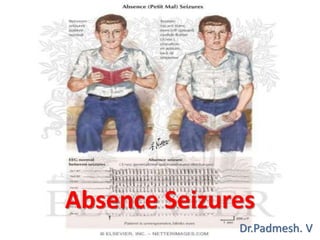
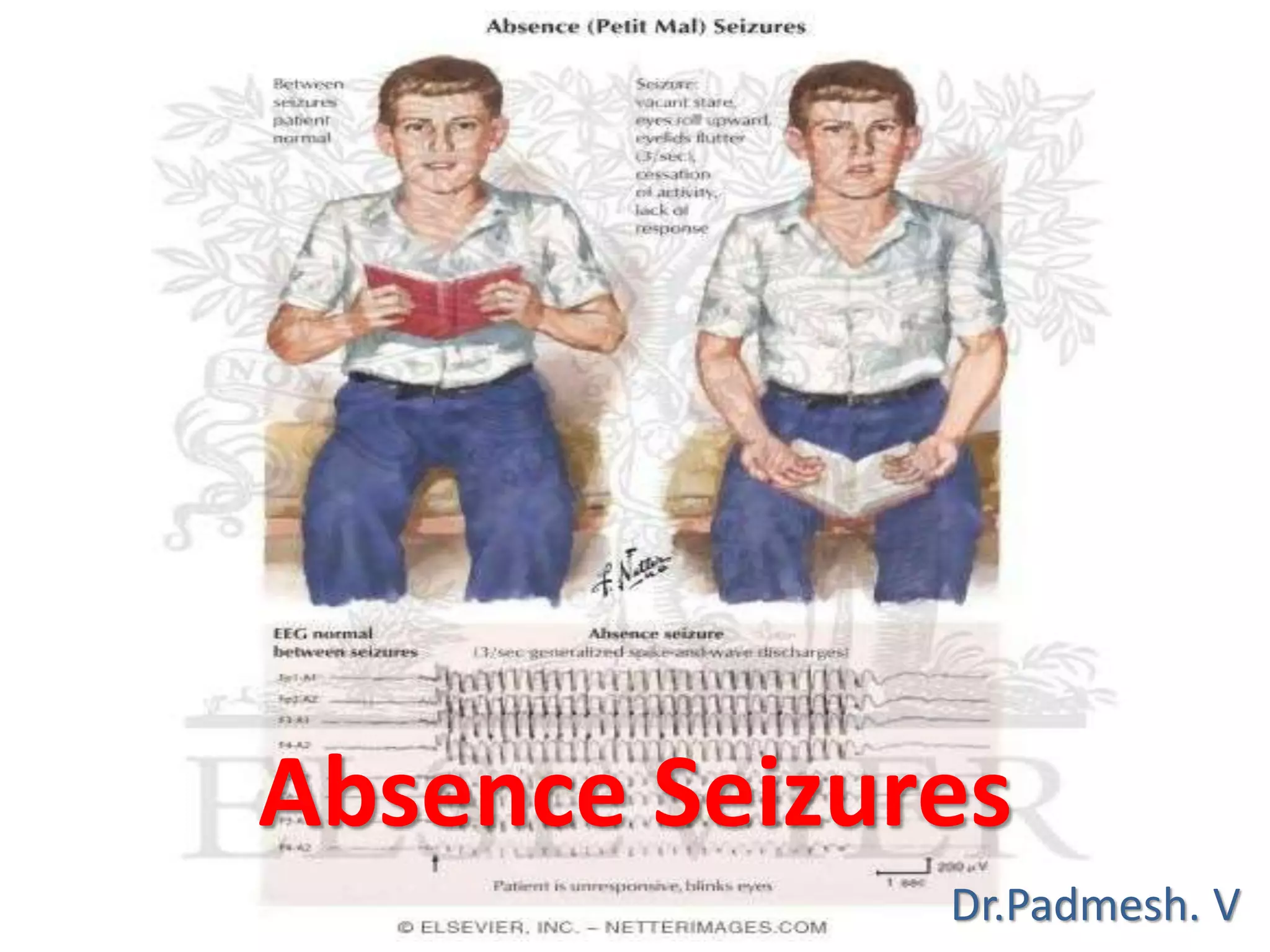
Absence Seizures
Dr.Padmesh. V
• Typical absence seizures have a bimodal
distribution for age of onset;
• First peak at 5-8 years (childhood)
• Second peak near 12 years of age (juvenile)
• Childhood Absence Epilepsy (CAE)
• CAE is a childhood epilepsy syndrome occurring in
10–17% of all childhood onset epilepsy.
• The most common pediatric epilepsy syndrome.
• Females > males
• Usually start at 5-8 yr of age.
• No aura.
• Usually last for only a few seconds.
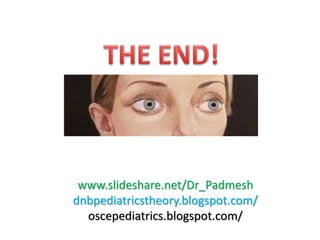
• Accompanied by eye lid flutter or upward rolling of
eyes.
• Absence seizures can have simple automatisms like
lip-smacking or picking at clothing.
• Head can minimally fall forward.
• No postictal period.
• Hyperventilation for 3-5 min can precipitate the
seizures and the accompanying 3 Hz spike–and–
slow-wave discharges.
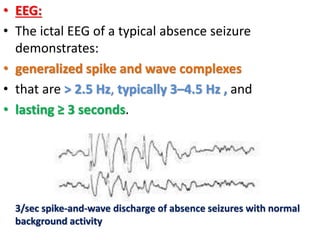
• EEG:
• The ictal EEG of a typical absence seizure
demonstrates:
• generalized spike and wave complexes
• that are > 2.5 Hz, typically 3–4.5 Hz , and
• lasting ≥ 3 seconds.
3/sec spike-and-wave discharge of absence seizures with normal
background activity
• The presence of periorbital, lid, perioral or limb
myoclonic jerks with the typical absence seizures
usually predicts difficulty in controlling the seizures
with medications.
• Early onset absence seizures (before 4 yr)
Evaluate glucose transporter defect that is often
associated with low CSF glucose levels and an
abnormal sequencing test of the transporter gene.
• Atypical absence seizures :
• Associated myoclonic components.
• Tone changes of the head (head drop) and body.
• Variable impairments of consciousness.
• Last longer than typical absences.
• Precipitated by drowsiness.
• Not provoked by hyperventilation or photic stimulation.
• Usually more difficult to treat.
• 1-2 Hz spike–and–slow-wave discharges.
• Juvenile absence seizures:
• Similar to typical absences.
• But occur at a later age. (10-17 years)
• Accompanied by 4-6 Hz spike–and–slowwave and
polyspike–and–slow-wave discharges.
• Usually associated with juvenile myoclonic epilepsy
• TREATMENT:
• Initial treatment: Ethosuximide (less toxic than
valproate and more effective than lamotrigine.)
• Alternative drugs of first choice are lamotrigine and
valproate, especially if generalized tonic–clonic seizures
coexist with absence seizures. (as these 2 medications are
effective against the latter seizures whereas ethosuximide is not.)
• EEG often normalizes when complete seizure control is
achieved.
• TREATMENT:
• Other medications that could be used for
absence seizures include
– Acetazolamide,
– Zonisamide, or
– Clonazepam.
• Outcome and Prognosis of Childhood Absence
Epilepsy
• Remission rates : 21%–74%
• Although labeled “benign”, the clinical course of CAE is
variable and remission rates are far lower than in other
classic benign idiopathic epilepsies such as Benign Rolandic
Epilepsy.
• Multiple studies report that GTCs ultimately develop in
roughly 40% of children with absence seizures at onset.
• Outcome and Prognosis of Childhood Absence
Epilepsy
• GTCs often occur 5 to 10 years after the onset of
the absence seizures between 8–15 years old.
• Risk factors include:
– Onset of absence seizures after 8 years old,
– Male sex,
– Lack of response to initial therapy and
– Therapy with only an anti-absence drug.
• Accidental injury is common.
www.slideshare.net/Dr_Padmesh
dnbpediatricstheory.blogspot.com/
oscepediatrics.blogspot.com/

Absence Seizures .. Dr Padmesh

  • 1.
  • 2.
    • Typical absenceseizures have a bimodal distribution for age of onset; • First peak at 5-8 years (childhood) • Second peak near 12 years of age (juvenile)
  • 3.
    • Childhood AbsenceEpilepsy (CAE) • CAE is a childhood epilepsy syndrome occurring in 10–17% of all childhood onset epilepsy. • The most common pediatric epilepsy syndrome. • Females > males
  • 4.
    • Usually startat 5-8 yr of age. • No aura. • Usually last for only a few seconds.
  • 5.
    • Accompanied byeye lid flutter or upward rolling of eyes. • Absence seizures can have simple automatisms like lip-smacking or picking at clothing. • Head can minimally fall forward. • No postictal period.
  • 6.
    • Hyperventilation for3-5 min can precipitate the seizures and the accompanying 3 Hz spike–and– slow-wave discharges.
  • 7.
    • EEG: • Theictal EEG of a typical absence seizure demonstrates: • generalized spike and wave complexes • that are > 2.5 Hz, typically 3–4.5 Hz , and • lasting ≥ 3 seconds. 3/sec spike-and-wave discharge of absence seizures with normal background activity
  • 8.
    • The presenceof periorbital, lid, perioral or limb myoclonic jerks with the typical absence seizures usually predicts difficulty in controlling the seizures with medications.
  • 9.
    • Early onsetabsence seizures (before 4 yr) Evaluate glucose transporter defect that is often associated with low CSF glucose levels and an abnormal sequencing test of the transporter gene.
  • 10.
    • Atypical absenceseizures : • Associated myoclonic components. • Tone changes of the head (head drop) and body. • Variable impairments of consciousness. • Last longer than typical absences. • Precipitated by drowsiness. • Not provoked by hyperventilation or photic stimulation. • Usually more difficult to treat. • 1-2 Hz spike–and–slow-wave discharges.
  • 11.
    • Juvenile absenceseizures: • Similar to typical absences. • But occur at a later age. (10-17 years) • Accompanied by 4-6 Hz spike–and–slowwave and polyspike–and–slow-wave discharges. • Usually associated with juvenile myoclonic epilepsy
  • 12.
    • TREATMENT: • Initialtreatment: Ethosuximide (less toxic than valproate and more effective than lamotrigine.) • Alternative drugs of first choice are lamotrigine and valproate, especially if generalized tonic–clonic seizures coexist with absence seizures. (as these 2 medications are effective against the latter seizures whereas ethosuximide is not.) • EEG often normalizes when complete seizure control is achieved.
  • 13.
    • TREATMENT: • Othermedications that could be used for absence seizures include – Acetazolamide, – Zonisamide, or – Clonazepam.
  • 14.
    • Outcome andPrognosis of Childhood Absence Epilepsy • Remission rates : 21%–74% • Although labeled “benign”, the clinical course of CAE is variable and remission rates are far lower than in other classic benign idiopathic epilepsies such as Benign Rolandic Epilepsy. • Multiple studies report that GTCs ultimately develop in roughly 40% of children with absence seizures at onset.
  • 15.
    • Outcome andPrognosis of Childhood Absence Epilepsy • GTCs often occur 5 to 10 years after the onset of the absence seizures between 8–15 years old. • Risk factors include: – Onset of absence seizures after 8 years old, – Male sex, – Lack of response to initial therapy and – Therapy with only an anti-absence drug. • Accidental injury is common.
  • 16.