Seizure Smart Schools
Epilepsy Foundation of Georgia
What is epilepsy?
• Epilepsy is a disorder characterized by recurring seizures
• seizures are a brief, temporary disturbance in the electrical
activity in the brain
• it is not contagious in any way
• a child with epilepsy typically gets good seizure control
with the use of medication
Epilepsy by the numbers
• 1 in every 100 people in the general population
• 1 in every 50 people under the age of 18
• 1 in every 3 people who have a developmental disability
• 10% of the population will have at least one seizure
during their lifetime
• 3 million people in the USA have epilepsy
Types of Seizures
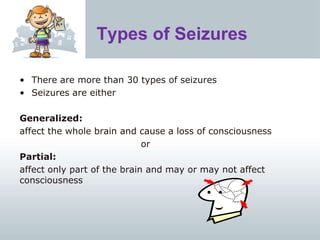
• There are more than 30 types of seizures
• Seizures are either
Generalized:
affect the whole brain and cause a loss of consciousness
or
Partial:
affect only part of the brain and may or may not affect
consciousness
Absence / Petit Mal
Seizures
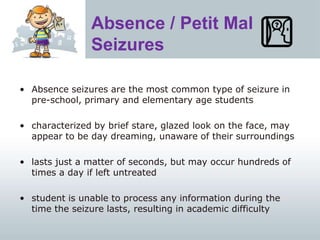
• Absence seizures are the most common type of seizure in
pre-school, primary and elementary age students
• characterized by brief stare, glazed look on the face, may
appear to be day dreaming, unaware of their surroundings
• lasts just a matter of seconds, but may occur hundreds of
times a day if left untreated
• student is unable to process any information during the
time the seizure lasts, resulting in academic difficulty
First Aid for Absence
Seizures
• Does not require medical first aid
• Protocol
Observe- note how frequently these disconnects occur,
length of time
Document – write down, keep count of occurrences
Report – make a school counselor/school nurse aware of the
situation
These types of seizures are very well controlled by meds !
Accommodations for
Absence Seizures
• send home lesson notes so parents can review material
child may have missed during seizure
• allow additional time to complete time - regulated tests
(as allowed)
• may require tutoring or summer school to keep pace
Partial Seizures
• Simple partial seizures result in an impairment related to
the part of the brain affected by the seizure (i.e.
memory, motor function, emotions, etc)
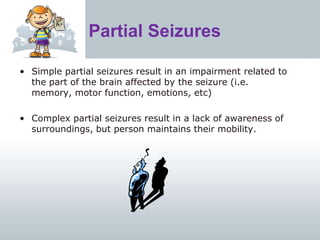
• Complex partial seizures result in a lack of awareness of
surroundings, but person maintains their mobility.
First Aid:
Complex Partial
• guard the child from harm; steer them gently away from
dangerous areas such as stairways, outside doors of
buildings or areas where they may encounter hard or
sharp objects
• allow the child “walk out” the seizure (typically 2-4
minutes)
• DO NOT tightly physically restrict child’s movements as
they may resist, resulting in injury
• Accommodation: send lesson plan home with child so
parent can review material with them
Tonic-Clonic Seizures
• formerly called grand mal
• most systemic form of seizure
• typically lasts 2-4 minutes, but can last much
longer
• symptoms include convulsions, loss of bladder
control, shallow breathing, grinding motion to
the teeth, loss of awareness
First Aid: Tonic Clonic
• protect from harm by moving away any objects the
student may strike during convulsive activity
• protect their head from hitting any hard surfaces; use soft
materials as a barrier or cradle gently; do not hold head
rigidly
• turn the person on their side to allow fluids to escape their
mouth and keep their tongue from blocking airway
• time the seizure
• DO NOT put anything a person’s mouth when they are
having a seizure… do not give any fluids for 45 minutes
after a seizure ends
Seizure
Emergencies
911 should be called in the event of any of the following
situations:
• First time seizure
• Seizures lasting more than 4 minutes
• Seizures occur in clusters
• Student is pregnant or has diabetes
• Student is injured
• When defined as a seizure emergency in the Seizure
Action Plan/IEP/ 504 plan
Seizure Action Plan
• One page quick reference plan put together by
school, student’s physician and parents
• Provides quick access to important information(phone
contacts, meds, doctor’s phone #, what constitutes a
seizure emergency
• Describes what that individual child’s seizures look like
• Should be developed in conjunction with the child’s
IEP/504/SST
Resources
• Epilepsy Foundation of Georgia
www.epilepsyga.org (800) 527-7105
• Epilepsy Classroom
www.epilepsyclassroom.org
• Childrens Healthcare of Atlanta
www.choa.org
• www.epilepsy.com
• Centers for Disease Control (CDC)
www.cdc.gov/epilepsy
Seizures - FY14

Seizures - FY14

  • 1.
    Seizure Smart Schools EpilepsyFoundation of Georgia
  • 2.
    What is epilepsy? •Epilepsy is a disorder characterized by recurring seizures • seizures are a brief, temporary disturbance in the electrical activity in the brain • it is not contagious in any way • a child with epilepsy typically gets good seizure control with the use of medication
  • 3.
    Epilepsy by thenumbers • 1 in every 100 people in the general population • 1 in every 50 people under the age of 18 • 1 in every 3 people who have a developmental disability • 10% of the population will have at least one seizure during their lifetime • 3 million people in the USA have epilepsy
  • 4.
    Types of Seizures •There are more than 30 types of seizures • Seizures are either Generalized: affect the whole brain and cause a loss of consciousness or Partial: affect only part of the brain and may or may not affect consciousness
  • 5.
    Absence / PetitMal Seizures • Absence seizures are the most common type of seizure in pre-school, primary and elementary age students • characterized by brief stare, glazed look on the face, may appear to be day dreaming, unaware of their surroundings • lasts just a matter of seconds, but may occur hundreds of times a day if left untreated • student is unable to process any information during the time the seizure lasts, resulting in academic difficulty
  • 6.
    First Aid forAbsence Seizures • Does not require medical first aid • Protocol Observe- note how frequently these disconnects occur, length of time Document – write down, keep count of occurrences Report – make a school counselor/school nurse aware of the situation These types of seizures are very well controlled by meds !
  • 7.
    Accommodations for Absence Seizures •send home lesson notes so parents can review material child may have missed during seizure • allow additional time to complete time - regulated tests (as allowed) • may require tutoring or summer school to keep pace
  • 8.
    Partial Seizures • Simplepartial seizures result in an impairment related to the part of the brain affected by the seizure (i.e. memory, motor function, emotions, etc) • Complex partial seizures result in a lack of awareness of surroundings, but person maintains their mobility.
  • 9.
    First Aid: Complex Partial •guard the child from harm; steer them gently away from dangerous areas such as stairways, outside doors of buildings or areas where they may encounter hard or sharp objects • allow the child “walk out” the seizure (typically 2-4 minutes) • DO NOT tightly physically restrict child’s movements as they may resist, resulting in injury • Accommodation: send lesson plan home with child so parent can review material with them
  • 10.
    Tonic-Clonic Seizures • formerlycalled grand mal • most systemic form of seizure • typically lasts 2-4 minutes, but can last much longer • symptoms include convulsions, loss of bladder control, shallow breathing, grinding motion to the teeth, loss of awareness
  • 11.
    First Aid: TonicClonic • protect from harm by moving away any objects the student may strike during convulsive activity • protect their head from hitting any hard surfaces; use soft materials as a barrier or cradle gently; do not hold head rigidly • turn the person on their side to allow fluids to escape their mouth and keep their tongue from blocking airway • time the seizure • DO NOT put anything a person’s mouth when they are having a seizure… do not give any fluids for 45 minutes after a seizure ends
  • 12.
    Seizure Emergencies 911 should becalled in the event of any of the following situations: • First time seizure • Seizures lasting more than 4 minutes • Seizures occur in clusters • Student is pregnant or has diabetes • Student is injured • When defined as a seizure emergency in the Seizure Action Plan/IEP/ 504 plan
  • 13.
    Seizure Action Plan •One page quick reference plan put together by school, student’s physician and parents • Provides quick access to important information(phone contacts, meds, doctor’s phone #, what constitutes a seizure emergency • Describes what that individual child’s seizures look like • Should be developed in conjunction with the child’s IEP/504/SST
  • 14.
    Resources • Epilepsy Foundationof Georgia www.epilepsyga.org (800) 527-7105 • Epilepsy Classroom www.epilepsyclassroom.org • Childrens Healthcare of Atlanta www.choa.org • www.epilepsy.com • Centers for Disease Control (CDC) www.cdc.gov/epilepsy