
Simulation of Traffic Flow - Density
PhD Candidate: Azdeen Najah Asst.Prof.Dr. Altan Ozkil
1
2
3
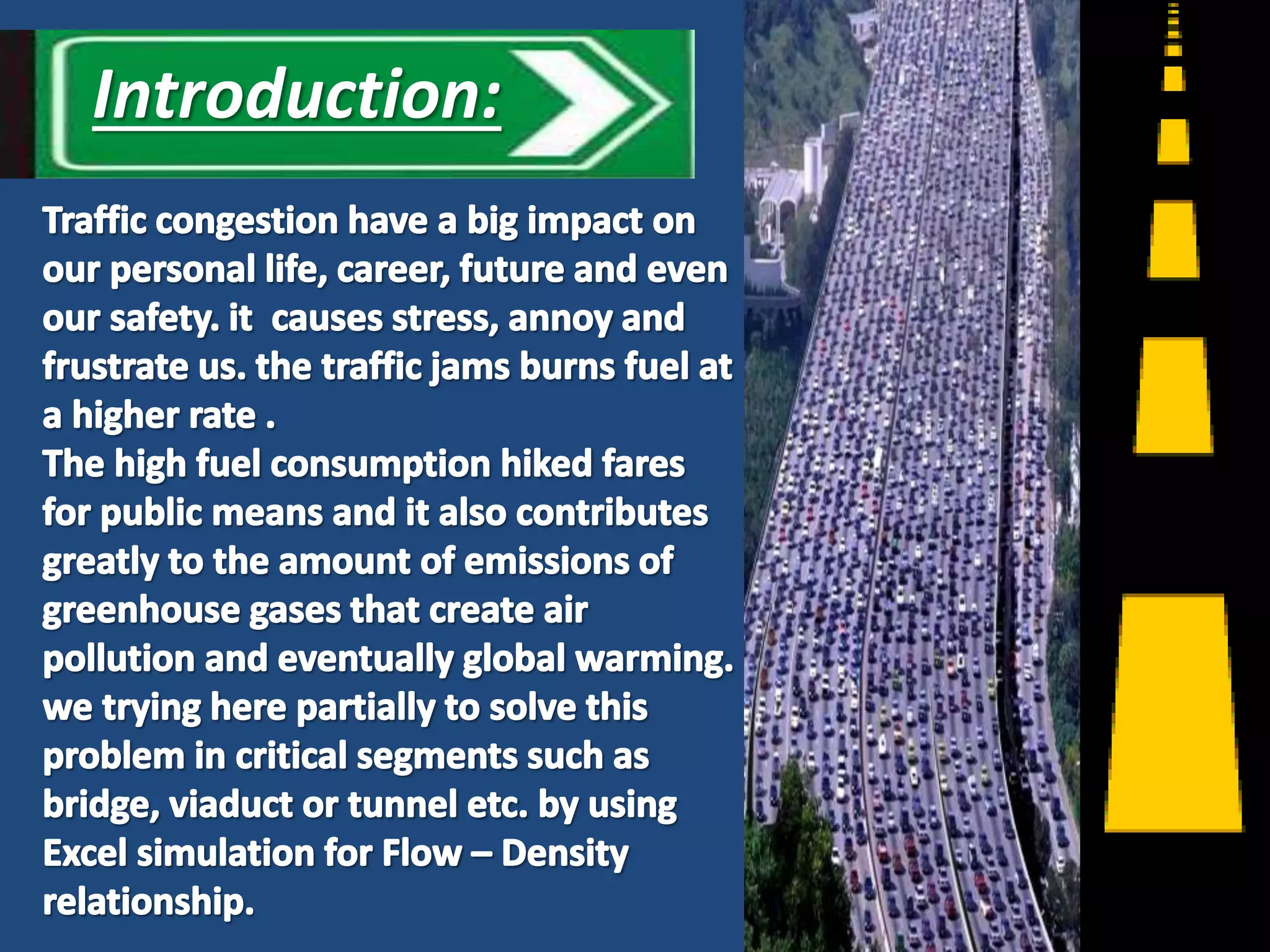
Introduction:
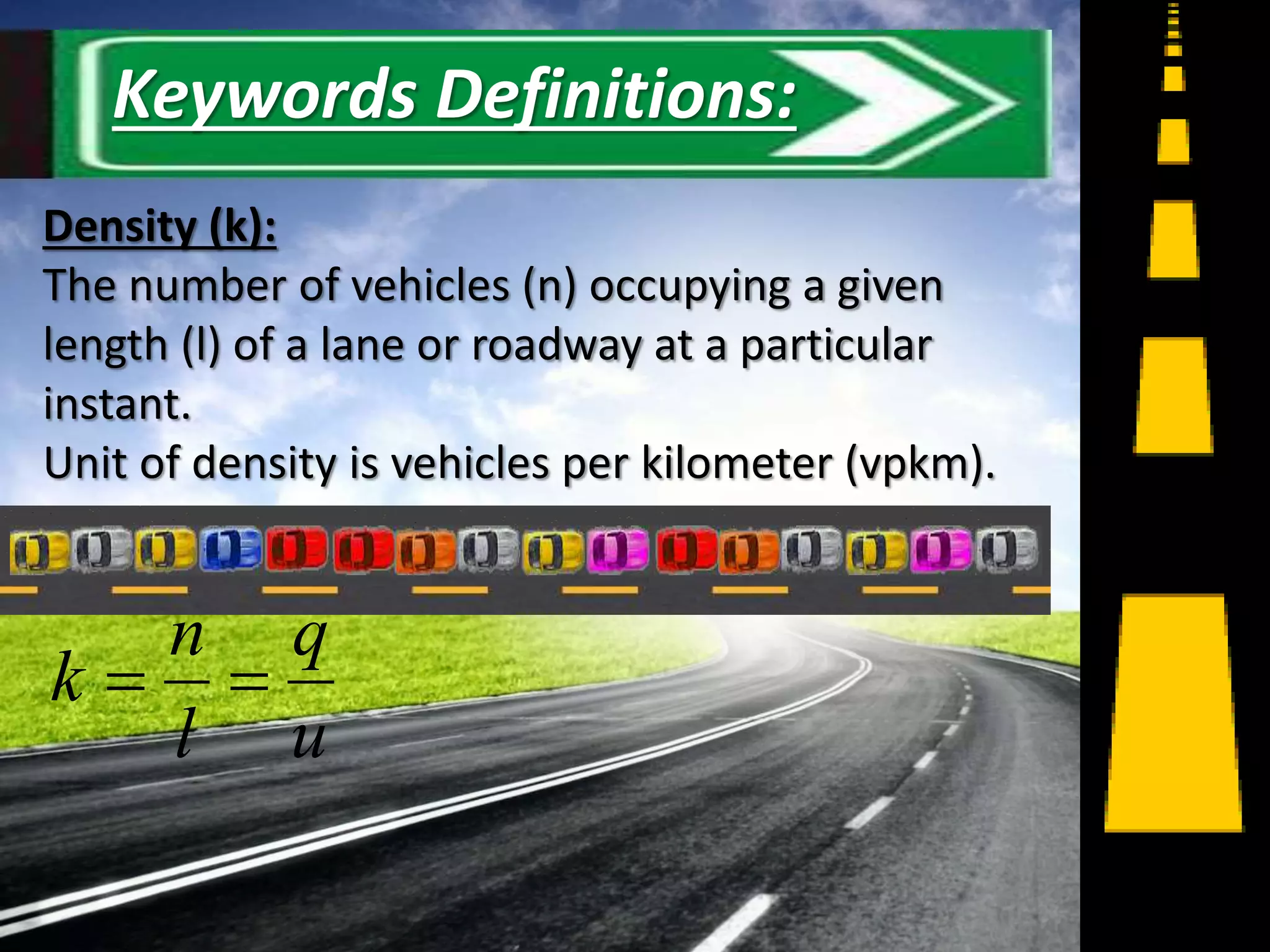
Density (k):
The number of vehicles (n) occupying a given
length (l) of a lane or roadway at a particular
instant.
Unit of density is vehicles per kilometer (vpkm).
u
q
l
n
k 
4
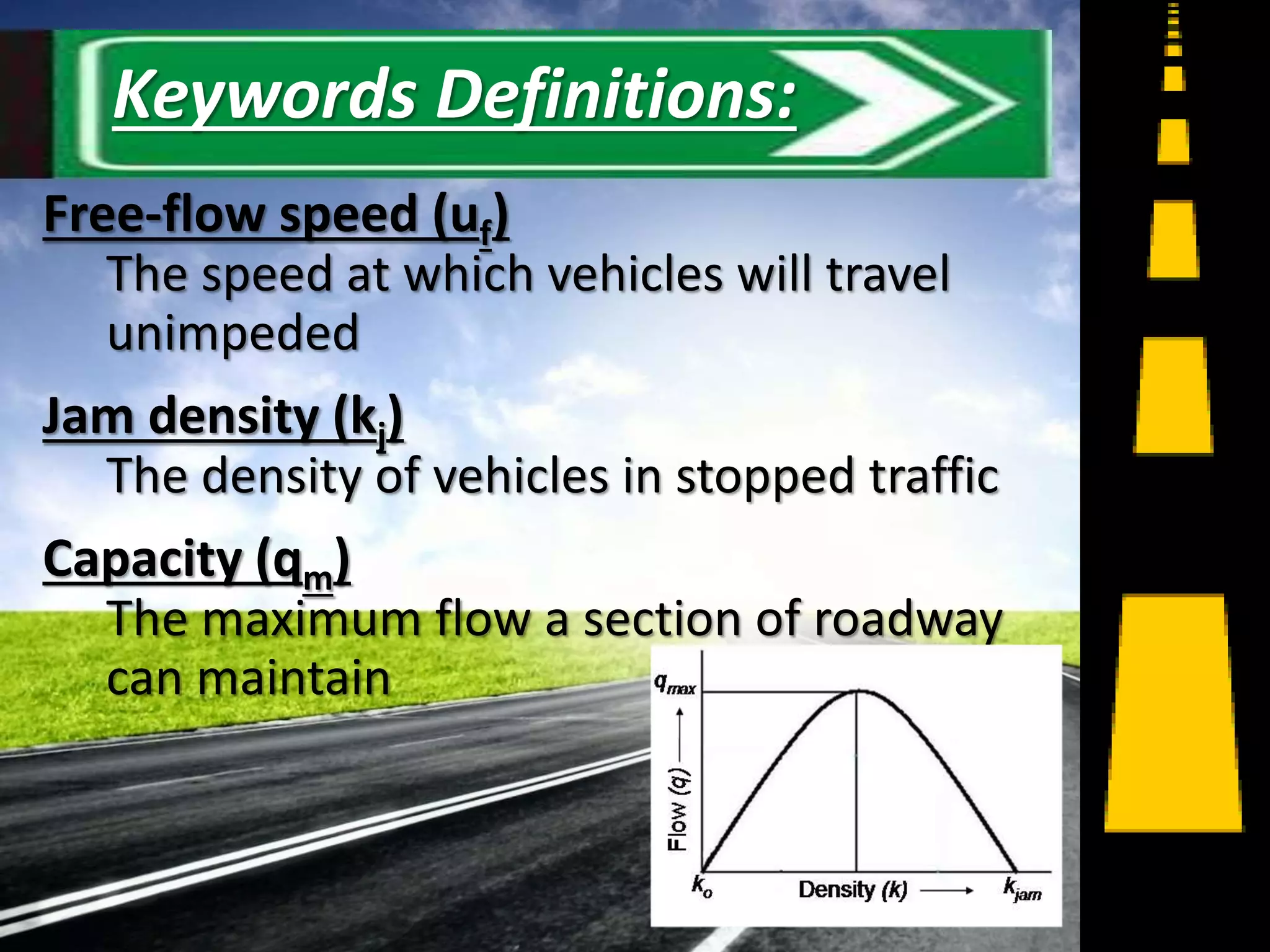
Keywords Definitions:
Free-flow speed (uf)
The speed at which vehicles will travel
unimpeded
Jam density (kj)
The density of vehicles in stopped traffic
Capacity (qm)
The maximum flow a section of roadway
can maintain
5
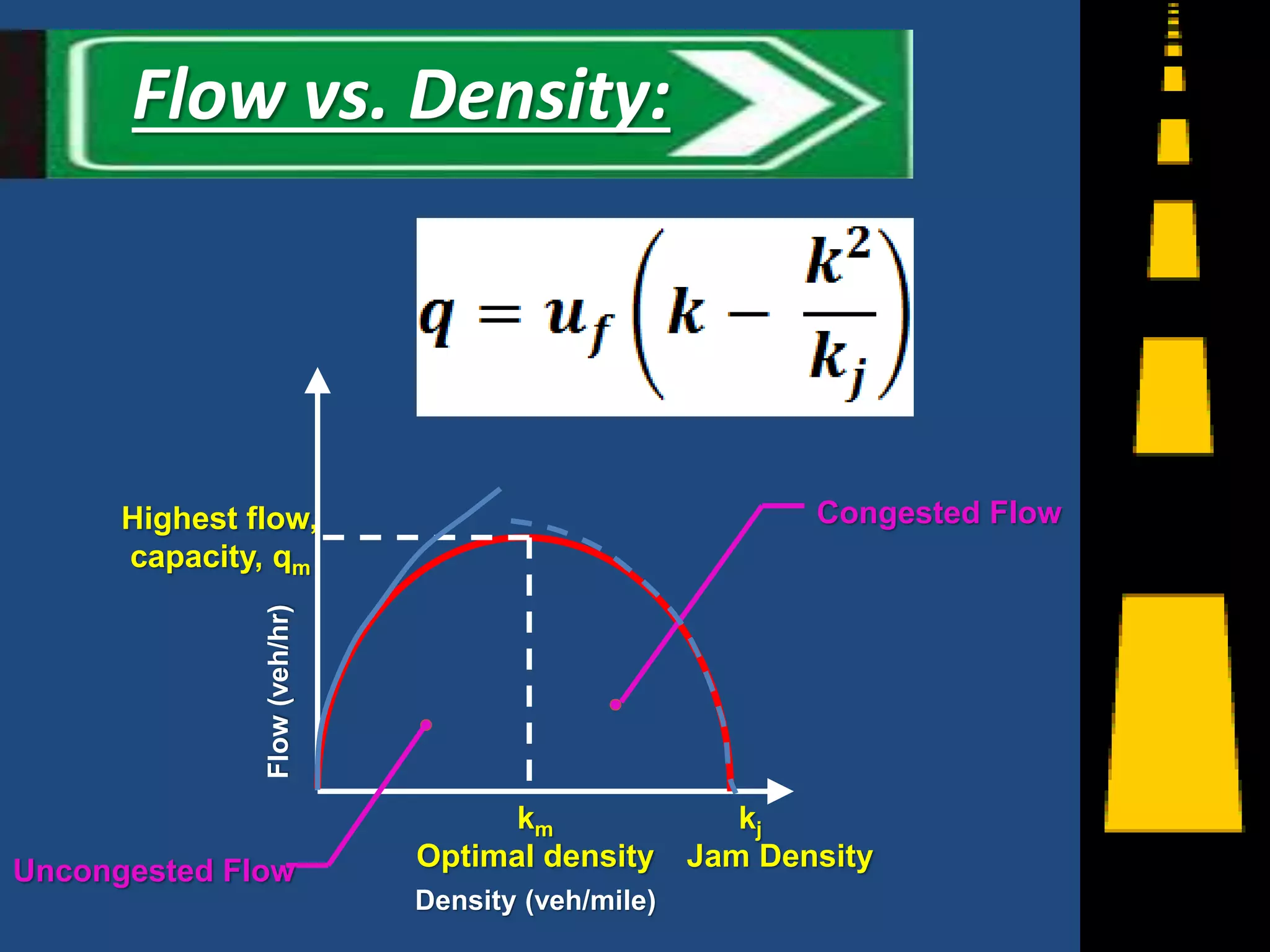
Keywords Definitions:
Density (veh/mile)
Flow(veh/hr)
kj
Jam Density
Highest flow,
capacity, qm
km
Optimal densityUncongested Flow
Congested Flow
6
Flow vs. Density:
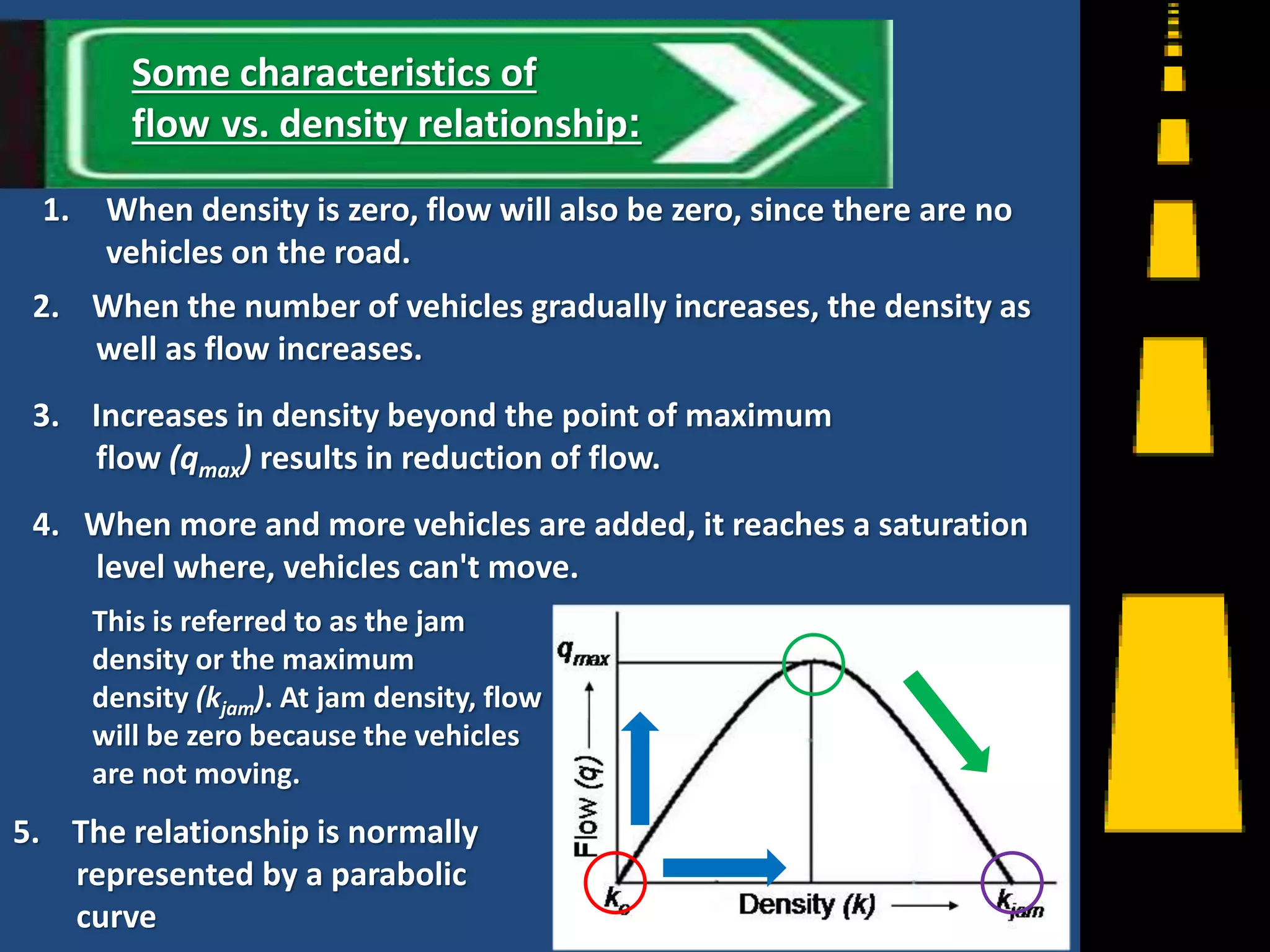
1. When density is zero, flow will also be zero, since there are no
vehicles on the road.
2. When the number of vehicles gradually increases, the density as
well as flow increases.
3. Increases in density beyond the point of maximum
flow (qmax) results in reduction of flow.
4. When more and more vehicles are added, it reaches a saturation
level where, vehicles can't move.
5. The relationship is normally
represented by a parabolic
curve 7
Some characteristics of
flow vs. density relationship:
This is referred to as the jam
density or the maximum
density (kjam). At jam density, flow
will be zero because the vehicles
are not moving.
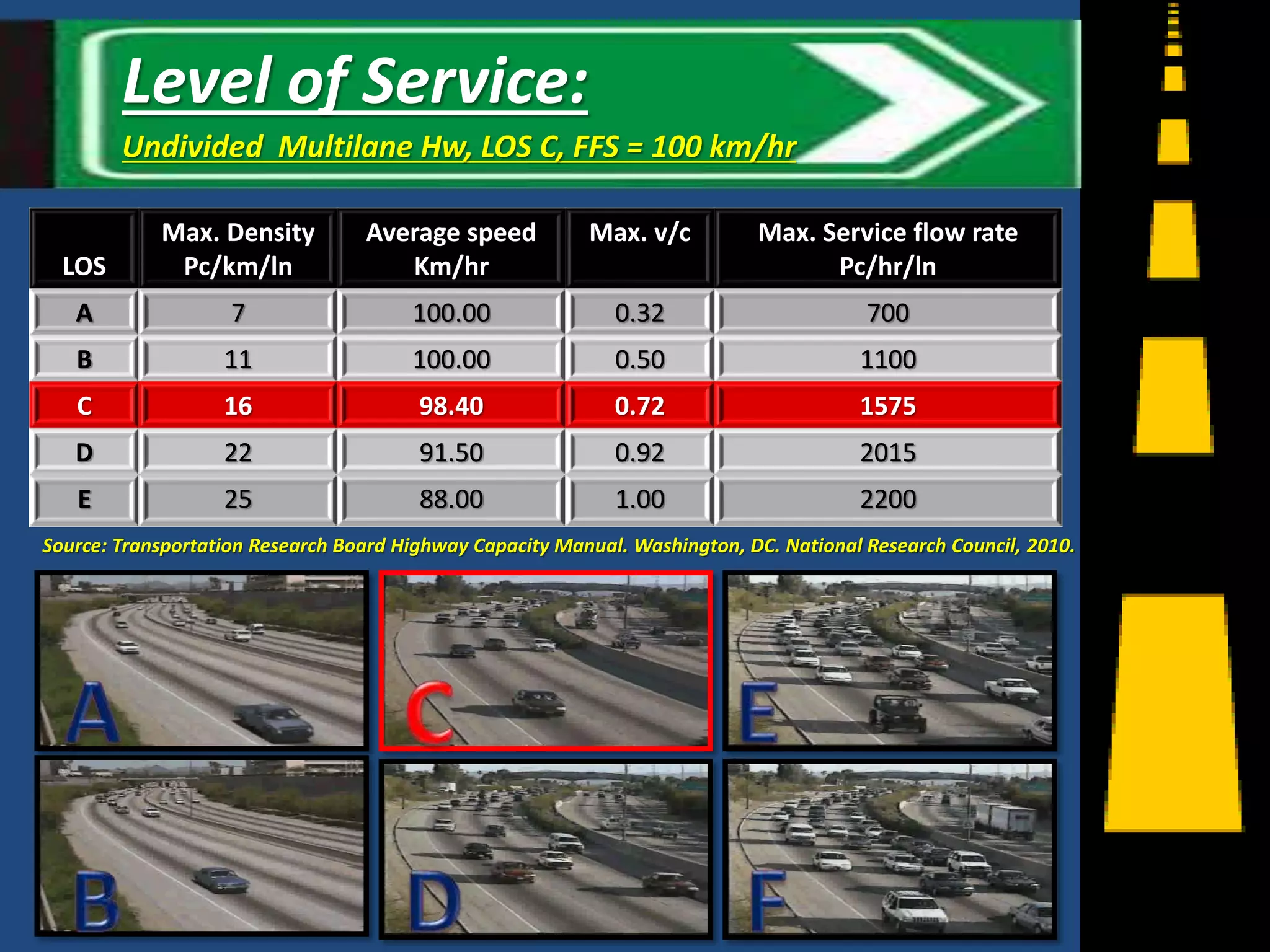
LOS
Max. Density
Pc/km/ln
Average speed
Km/hr
Max. v/c Max. Service flow rate
Pc/hr/ln
A 7 100.00 0.32 700
B 11 100.00 0.50 1100
C 16 98.40 0.72 1575
D 22 91.50 0.92 2015
E 25 88.00 1.00 2200
Source: Transportation Research Board Highway Capacity Manual. Washington, DC. National Research Council, 2010.
8
Level of Service:
Undivided Multilane Hw, LOS C, FFS = 100 km/hr
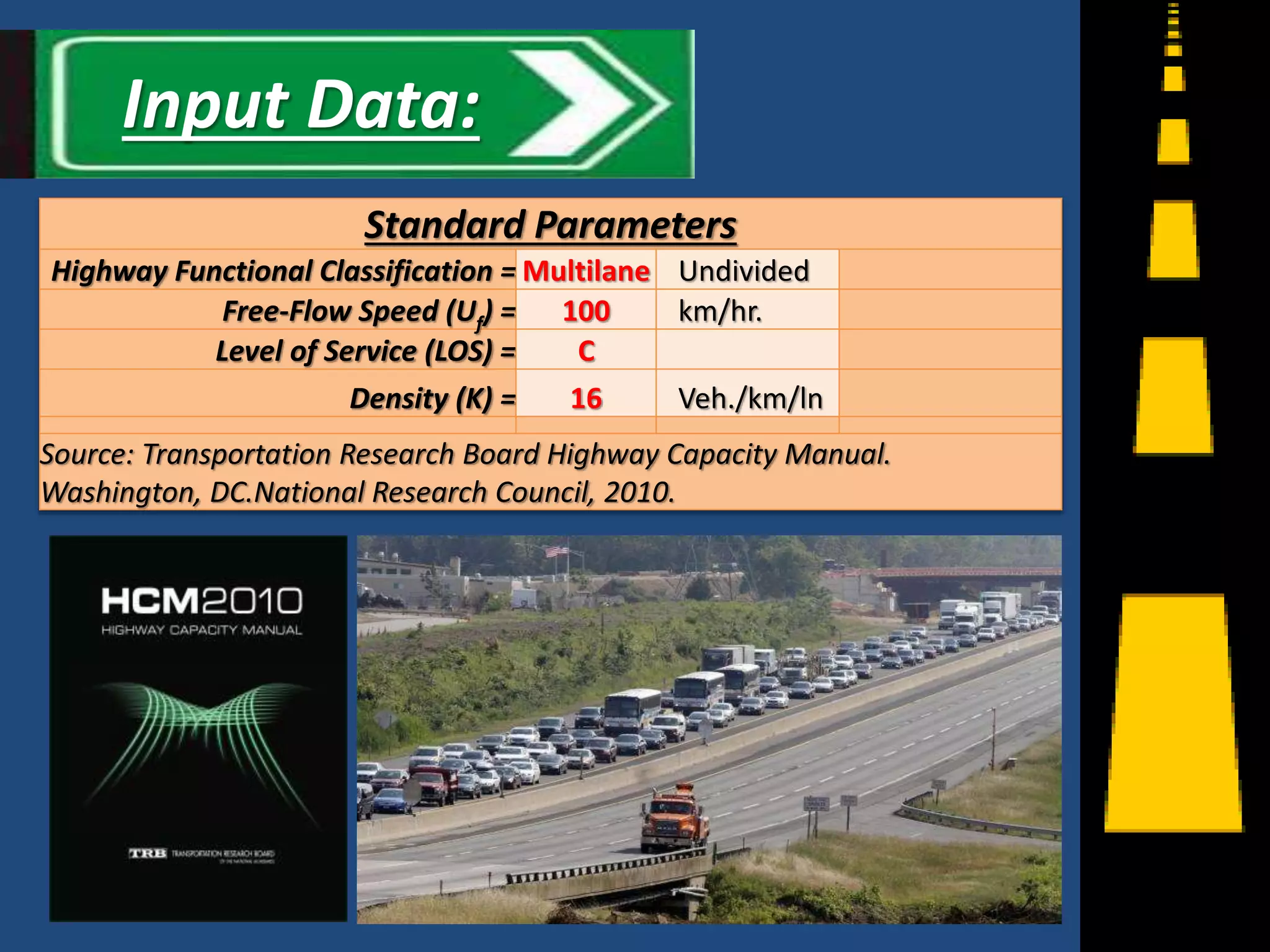
Standard Parameters
Highway Functional Classification = Multilane Undivided
Free-Flow Speed (Uf) = 100 km/hr.
Level of Service (LOS) = C
Density (K) = 16 Veh./km/ln
Source: Transportation Research Board Highway Capacity Manual.
Washington, DC.National Research Council, 2010.
9
Input Data:
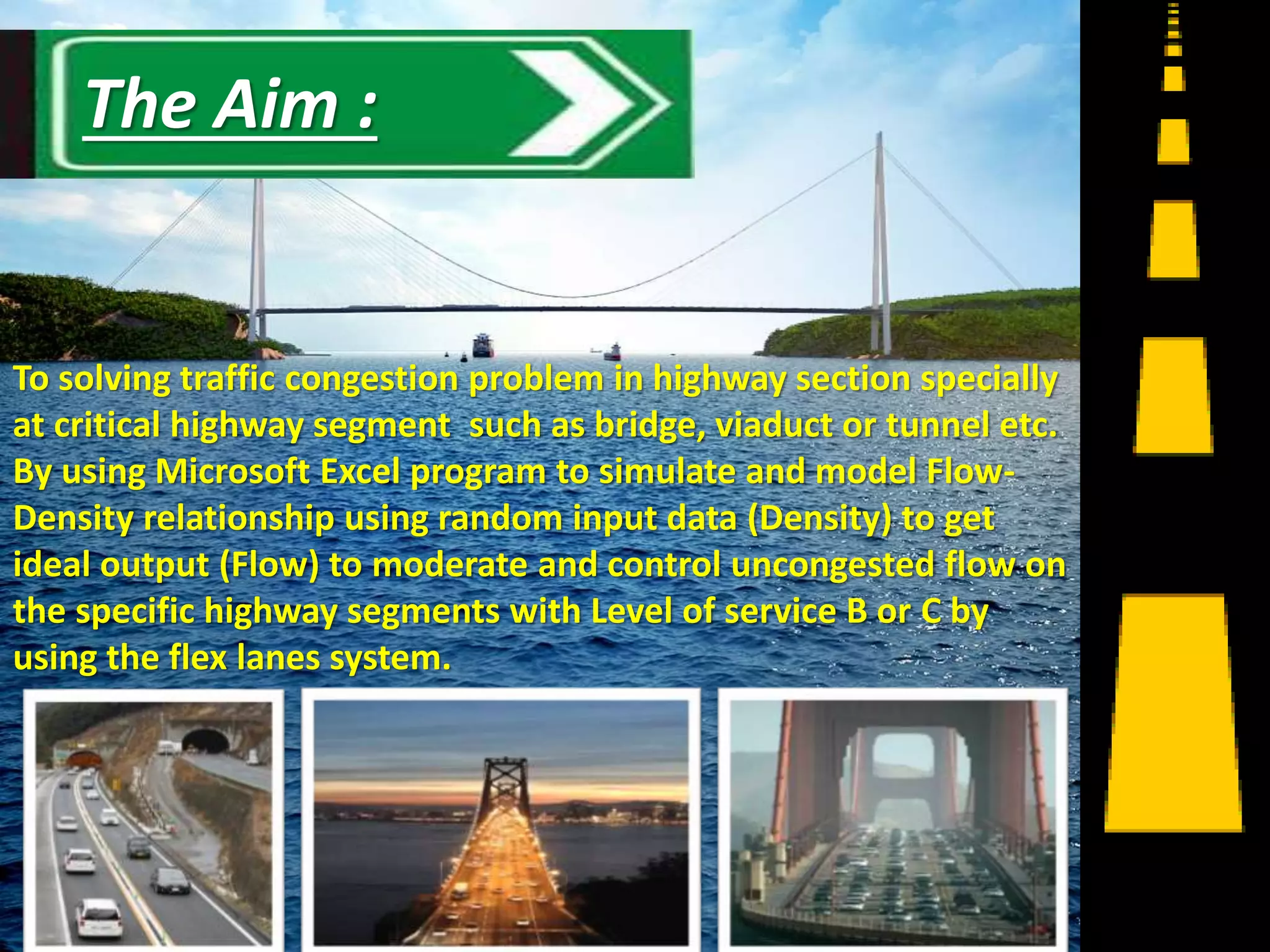
To solving traffic congestion problem in highway section specially
at critical highway segment such as bridge, viaduct or tunnel etc.
By using Microsoft Excel program to simulate and model Flow-
Density relationship using random input data (Density) to get
ideal output (Flow) to moderate and control uncongested flow on
the specific highway segments with Level of service B or C by
using the flex lanes system.
10
The Aim :
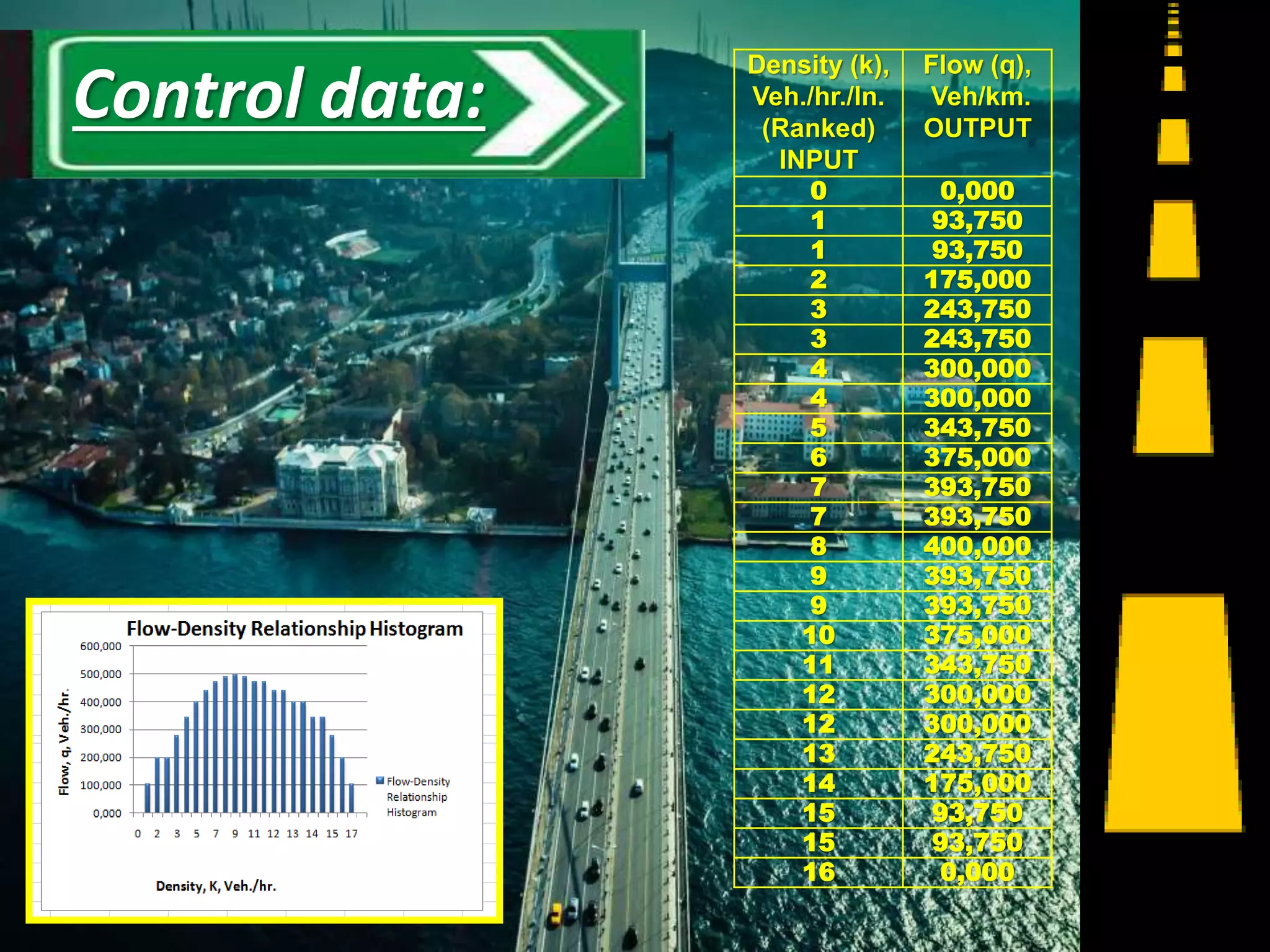
Density (k),
Veh./hr./ln.
(Ranked)
INPUT
Flow (q),
Veh/km.
OUTPUT
0 0,000
1 93,750
1 93,750
2 175,000
3 243,750
3 243,750
4 300,000
4 300,000
5 343,750
6 375,000
7 393,750
7 393,750
8 400,000
9 393,750
9 393,750
10 375,000
11 343,750
12 300,000
12 300,000
13 243,750
14 175,000
15 93,750
15 93,750
16 0,000
11
Control data:
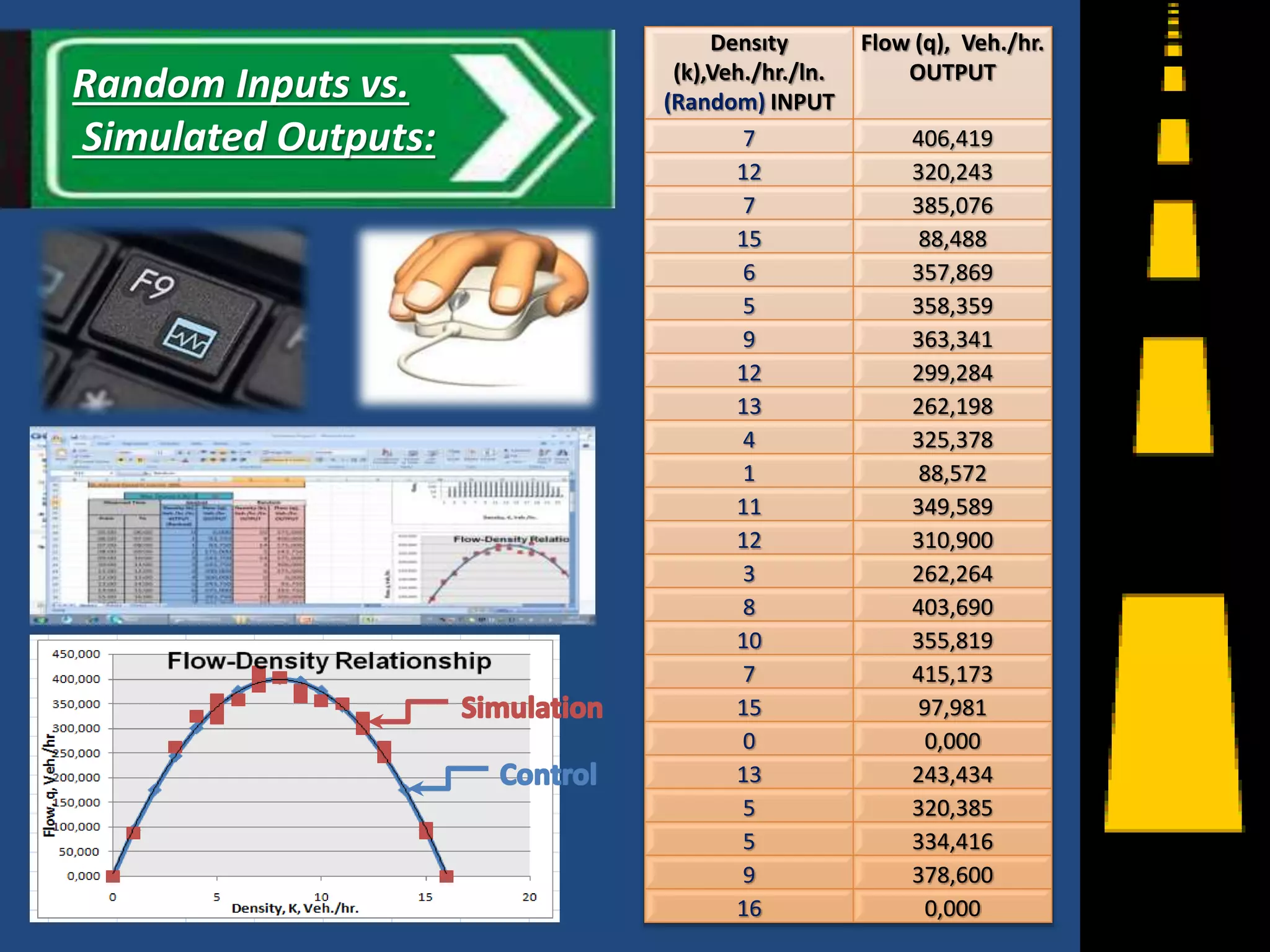
Densıty
(k),Veh./hr./ln.
(Random) INPUT
Flow (q), Veh./hr.
OUTPUT
7 406,419
12 320,243
7 385,076
15 88,488
6 357,869
5 358,359
9 363,341
12 299,284
13 262,198
4 325,378
1 88,572
11 349,589
12 310,900
3 262,264
8 403,690
10 355,819
7 415,173
15 97,981
0 0,000
13 243,434
5 320,385
5 334,416
9 378,600
16 0,000 12
Random Inputs vs.
Simulated Outputs:
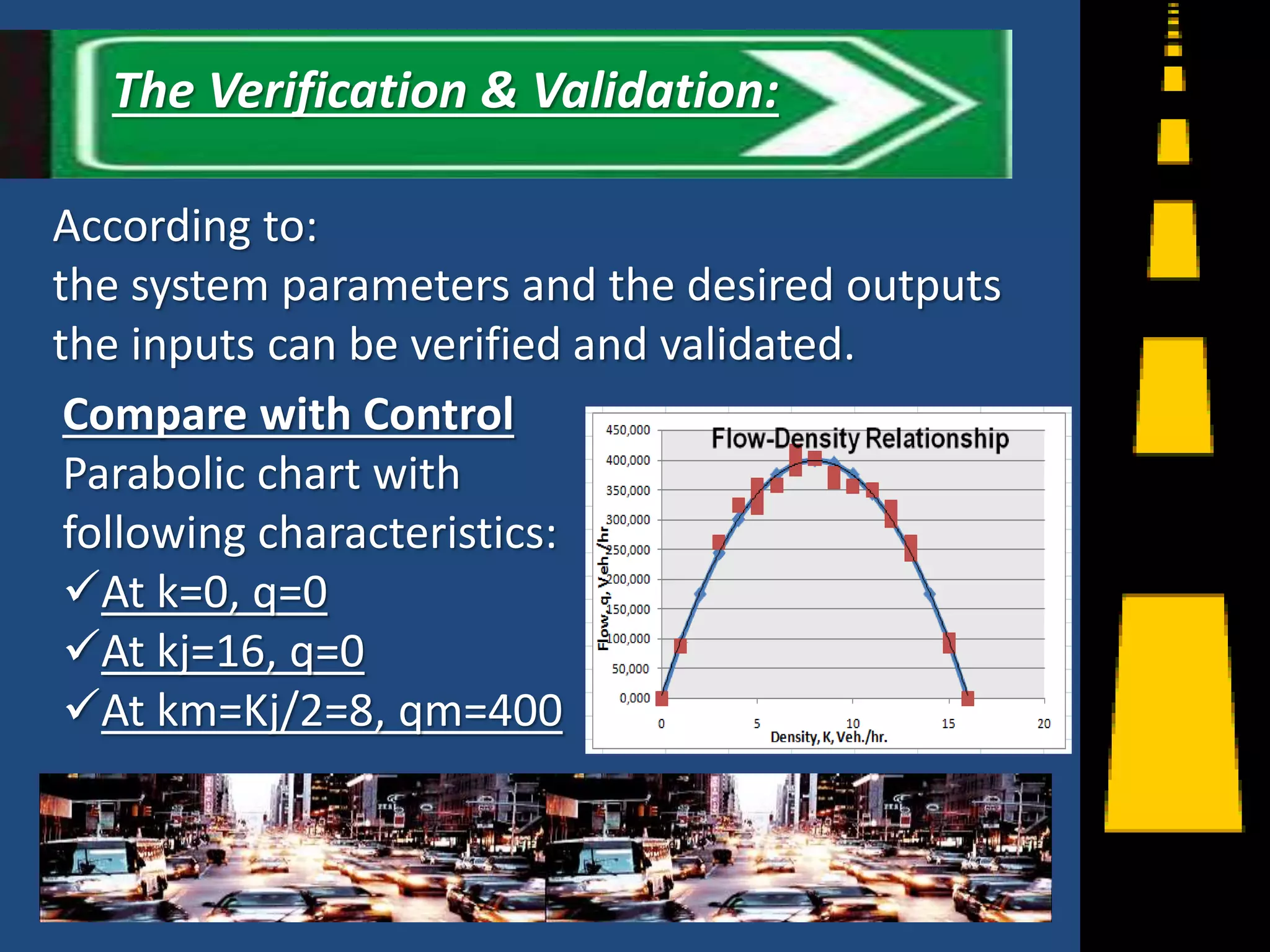
According to:
the system parameters and the desired outputs
the inputs can be verified and validated.
Compare with Control
Parabolic chart with
following characteristics:
At k=0, q=0
At kj=16, q=0
At km=Kj/2=8, qm=400
13
The Verification & Validation:
14
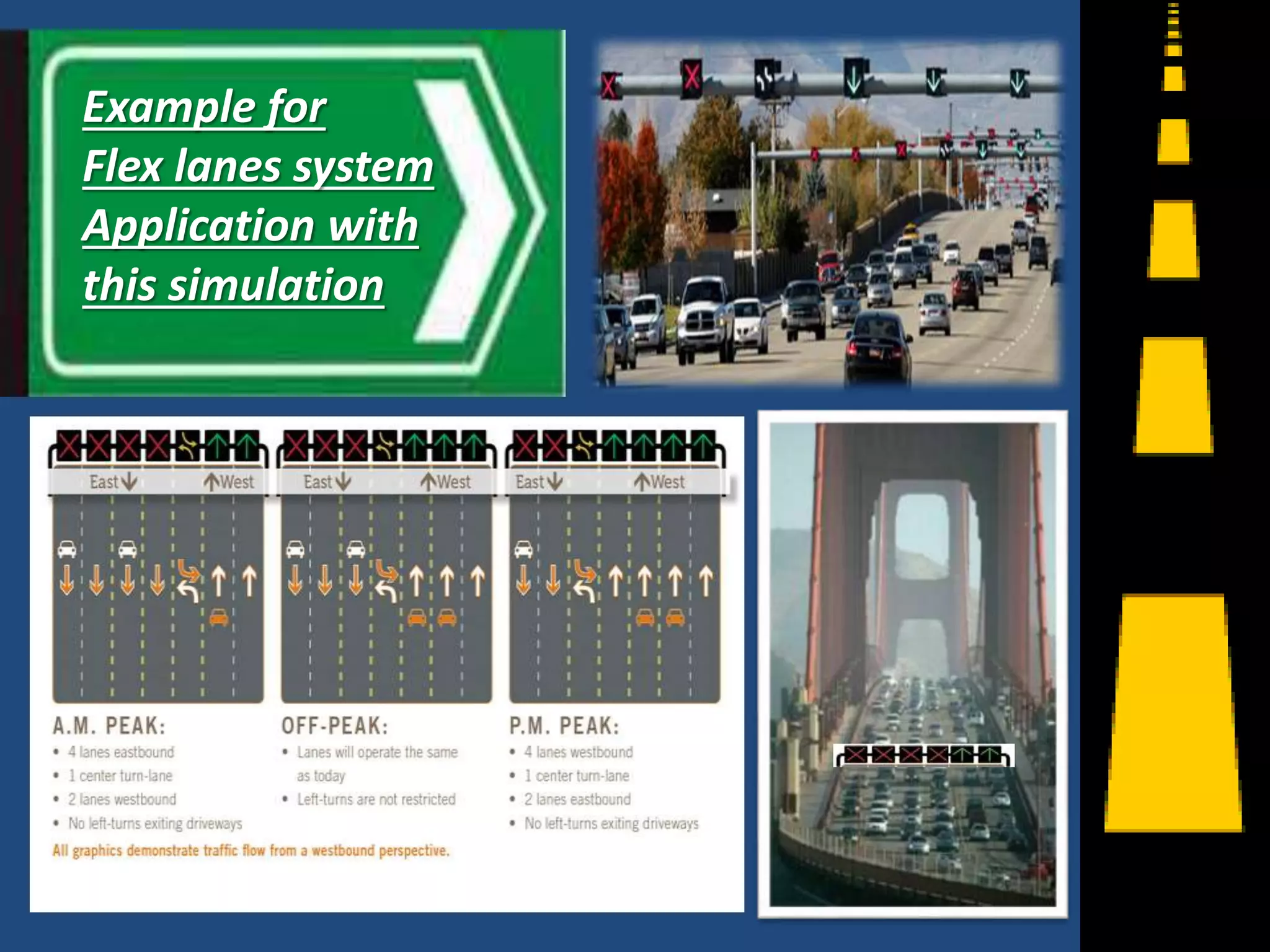
Example for
Flex lanes system
Application with
this simulation
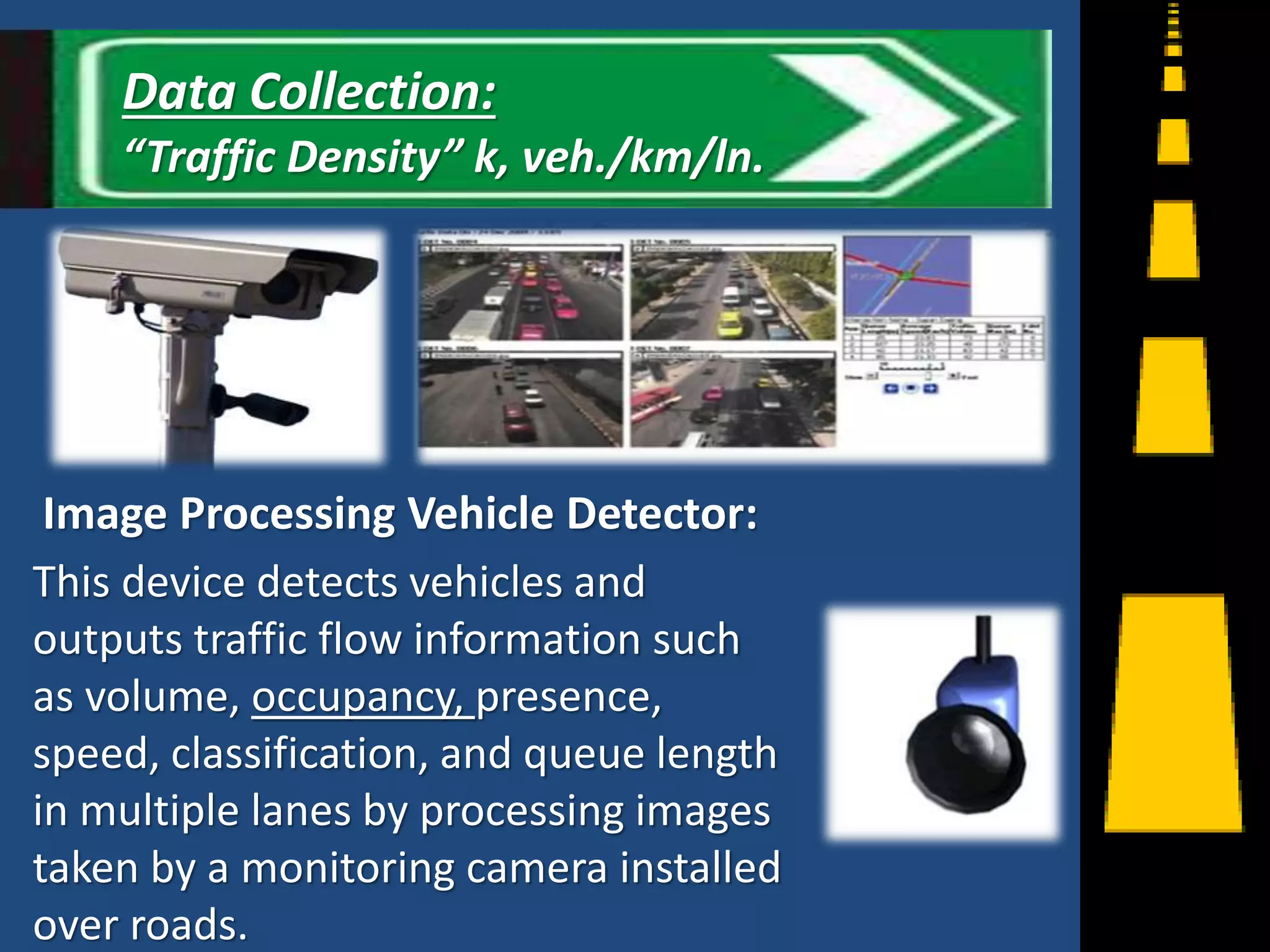
Image Processing Vehicle Detector:
This device detects vehicles and
outputs traffic flow information such
as volume, occupancy, presence,
speed, classification, and queue length
in multiple lanes by processing images
taken by a monitoring camera installed
over roads.
15
Data Collection:
“Traffic Density” k, veh./km/ln.
For Determine the traffic flow and capacity for
any road segment we should know its functional
classification, LOS, FFS and Number & width of
lanes.
By using Simulation and modelling we can solve
the traffic congestion problems by moderate and
control the critical highway segments such as
viaducts, bridges and tunnels.
16
The Conclusion:
Transportation Research Board
Highway Capacity Manual.
Washington, DC. National Research
Council, 2010.
Principles of Highway Engineering
and Traffic Analysis. 3dh. Edition.
17
The References:
18

Simulation of Traffic Flow - Density

  • 1.
    Simulation of TrafficFlow - Density PhD Candidate: Azdeen Najah Asst.Prof.Dr. Altan Ozkil 1
  • 2.
  • 3.
  • 4.
    Density (k): The numberof vehicles (n) occupying a given length (l) of a lane or roadway at a particular instant. Unit of density is vehicles per kilometer (vpkm). u q l n k  4 Keywords Definitions:
  • 5.
    Free-flow speed (uf) Thespeed at which vehicles will travel unimpeded Jam density (kj) The density of vehicles in stopped traffic Capacity (qm) The maximum flow a section of roadway can maintain 5 Keywords Definitions:
  • 6.
    Density (veh/mile) Flow(veh/hr) kj Jam Density Highestflow, capacity, qm km Optimal densityUncongested Flow Congested Flow 6 Flow vs. Density:
  • 7.
    1. When densityis zero, flow will also be zero, since there are no vehicles on the road. 2. When the number of vehicles gradually increases, the density as well as flow increases. 3. Increases in density beyond the point of maximum flow (qmax) results in reduction of flow. 4. When more and more vehicles are added, it reaches a saturation level where, vehicles can't move. 5. The relationship is normally represented by a parabolic curve 7 Some characteristics of flow vs. density relationship: This is referred to as the jam density or the maximum density (kjam). At jam density, flow will be zero because the vehicles are not moving.
  • 8.
    LOS Max. Density Pc/km/ln Average speed Km/hr Max.v/c Max. Service flow rate Pc/hr/ln A 7 100.00 0.32 700 B 11 100.00 0.50 1100 C 16 98.40 0.72 1575 D 22 91.50 0.92 2015 E 25 88.00 1.00 2200 Source: Transportation Research Board Highway Capacity Manual. Washington, DC. National Research Council, 2010. 8 Level of Service: Undivided Multilane Hw, LOS C, FFS = 100 km/hr
  • 9.
    Standard Parameters Highway FunctionalClassification = Multilane Undivided Free-Flow Speed (Uf) = 100 km/hr. Level of Service (LOS) = C Density (K) = 16 Veh./km/ln Source: Transportation Research Board Highway Capacity Manual. Washington, DC.National Research Council, 2010. 9 Input Data:
  • 10.
    To solving trafficcongestion problem in highway section specially at critical highway segment such as bridge, viaduct or tunnel etc. By using Microsoft Excel program to simulate and model Flow- Density relationship using random input data (Density) to get ideal output (Flow) to moderate and control uncongested flow on the specific highway segments with Level of service B or C by using the flex lanes system. 10 The Aim :
  • 11.
    Density (k), Veh./hr./ln. (Ranked) INPUT Flow (q), Veh/km. OUTPUT 00,000 1 93,750 1 93,750 2 175,000 3 243,750 3 243,750 4 300,000 4 300,000 5 343,750 6 375,000 7 393,750 7 393,750 8 400,000 9 393,750 9 393,750 10 375,000 11 343,750 12 300,000 12 300,000 13 243,750 14 175,000 15 93,750 15 93,750 16 0,000 11 Control data:
  • 12.
    Densıty (k),Veh./hr./ln. (Random) INPUT Flow (q),Veh./hr. OUTPUT 7 406,419 12 320,243 7 385,076 15 88,488 6 357,869 5 358,359 9 363,341 12 299,284 13 262,198 4 325,378 1 88,572 11 349,589 12 310,900 3 262,264 8 403,690 10 355,819 7 415,173 15 97,981 0 0,000 13 243,434 5 320,385 5 334,416 9 378,600 16 0,000 12 Random Inputs vs. Simulated Outputs:
  • 13.
    According to: the systemparameters and the desired outputs the inputs can be verified and validated. Compare with Control Parabolic chart with following characteristics: At k=0, q=0 At kj=16, q=0 At km=Kj/2=8, qm=400 13 The Verification & Validation:
  • 14.
    14 Example for Flex lanessystem Application with this simulation
  • 15.
    Image Processing VehicleDetector: This device detects vehicles and outputs traffic flow information such as volume, occupancy, presence, speed, classification, and queue length in multiple lanes by processing images taken by a monitoring camera installed over roads. 15 Data Collection: “Traffic Density” k, veh./km/ln.
  • 16.
    For Determine thetraffic flow and capacity for any road segment we should know its functional classification, LOS, FFS and Number & width of lanes. By using Simulation and modelling we can solve the traffic congestion problems by moderate and control the critical highway segments such as viaducts, bridges and tunnels. 16 The Conclusion:
  • 17.
    Transportation Research Board HighwayCapacity Manual. Washington, DC. National Research Council, 2010. Principles of Highway Engineering and Traffic Analysis. 3dh. Edition. 17 The References:
  • 18.