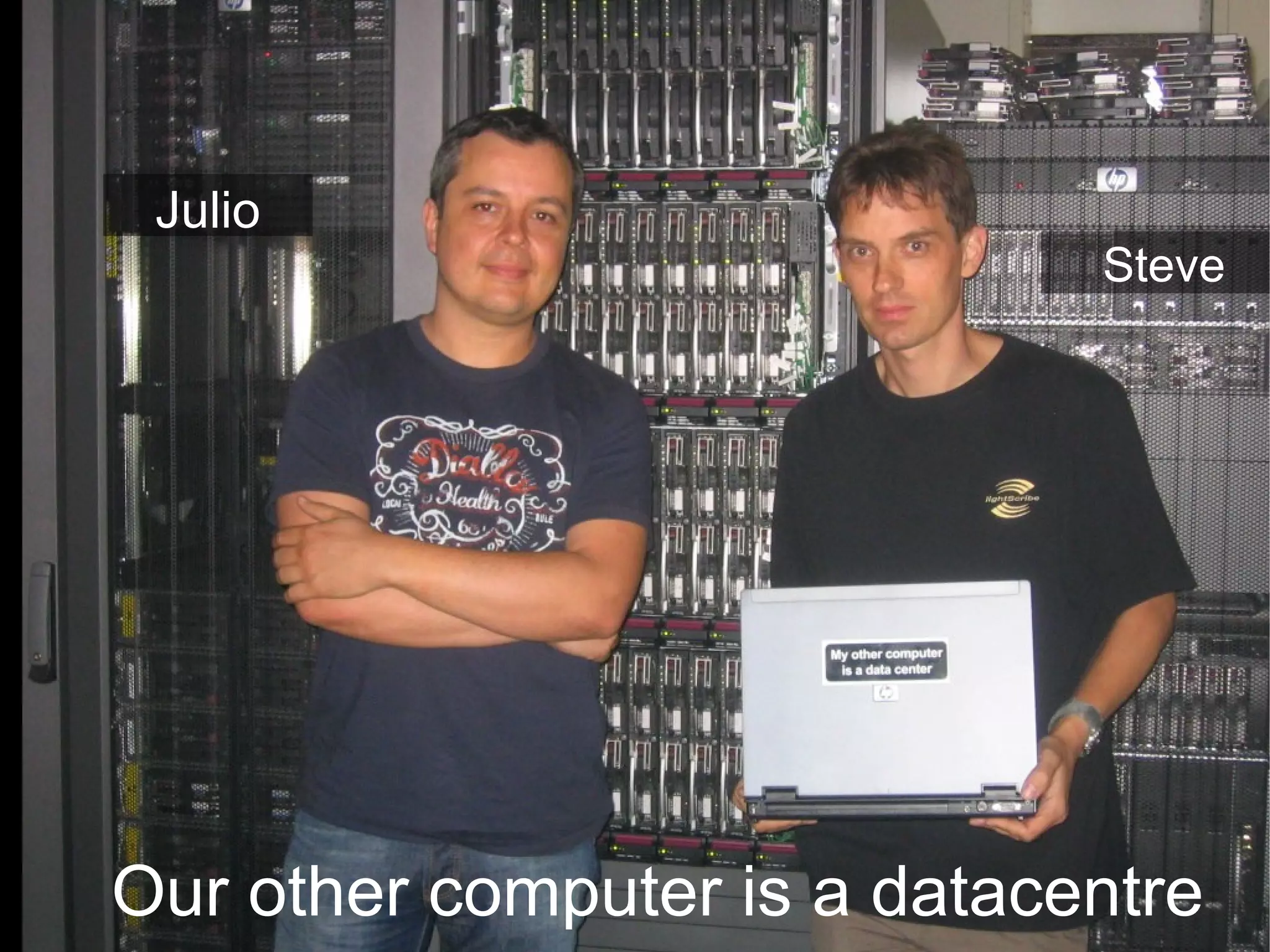
Julio
                              Steve


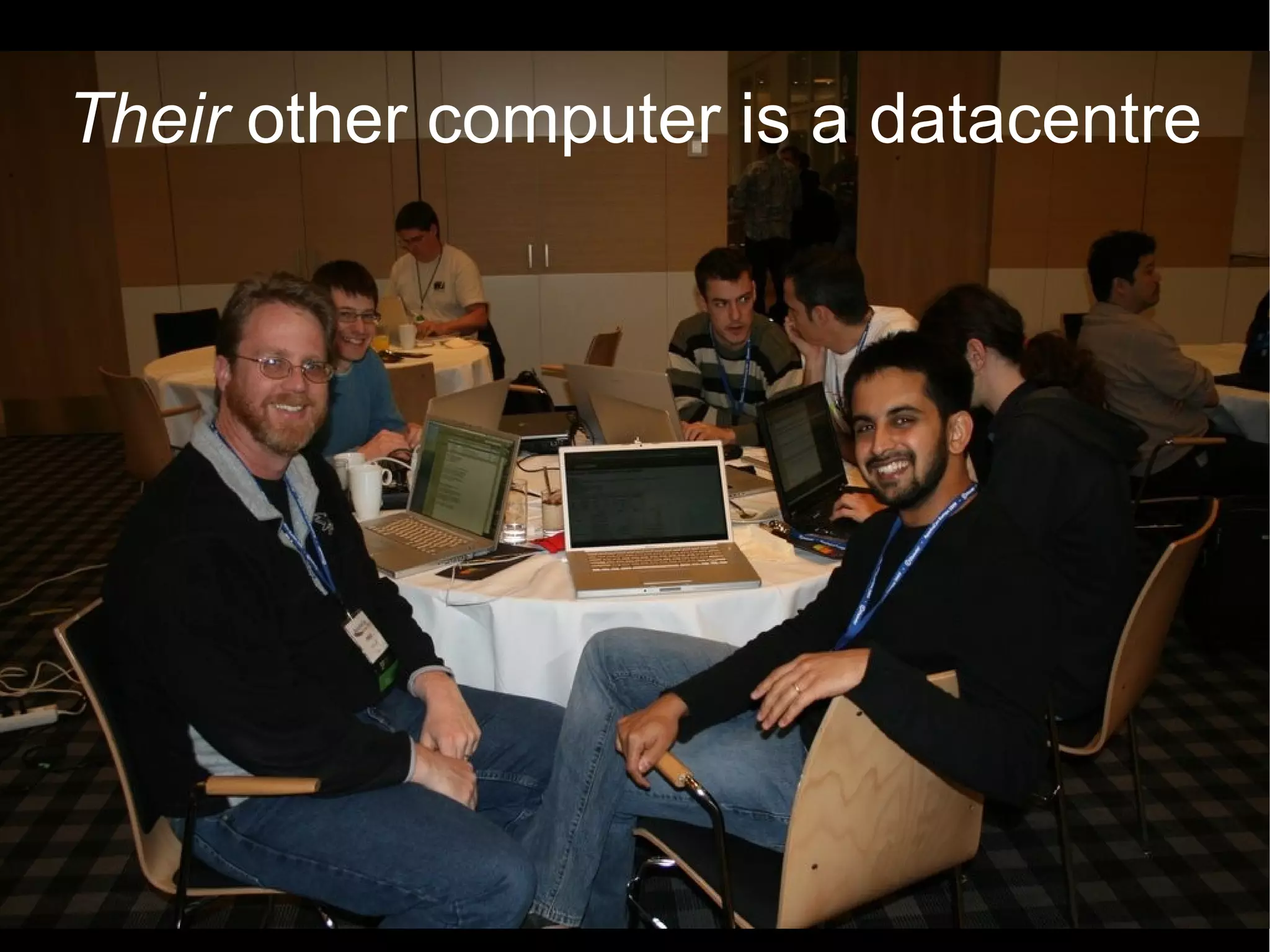
Our other computer is a datacentre
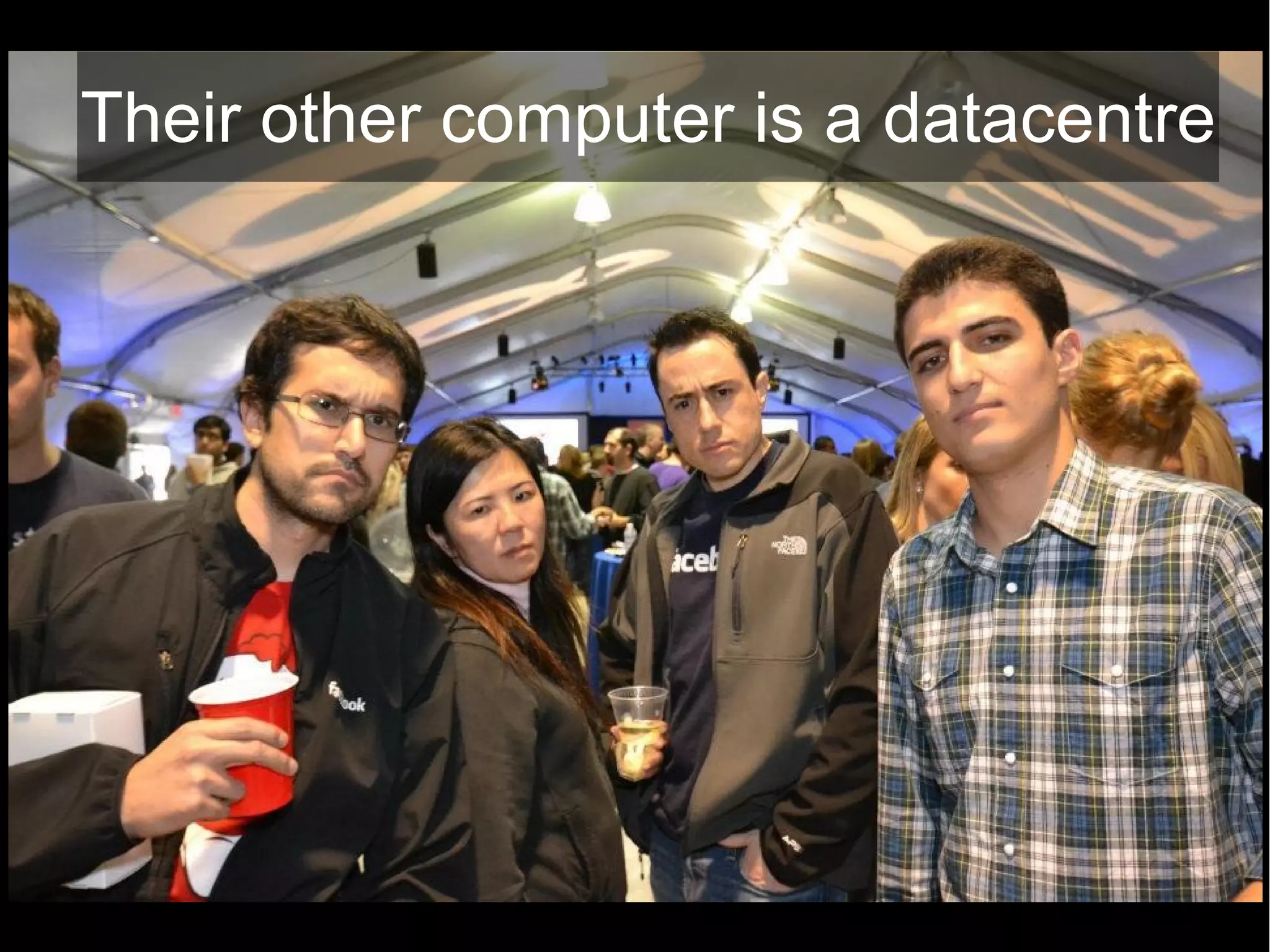
Their other computer is a datacentre
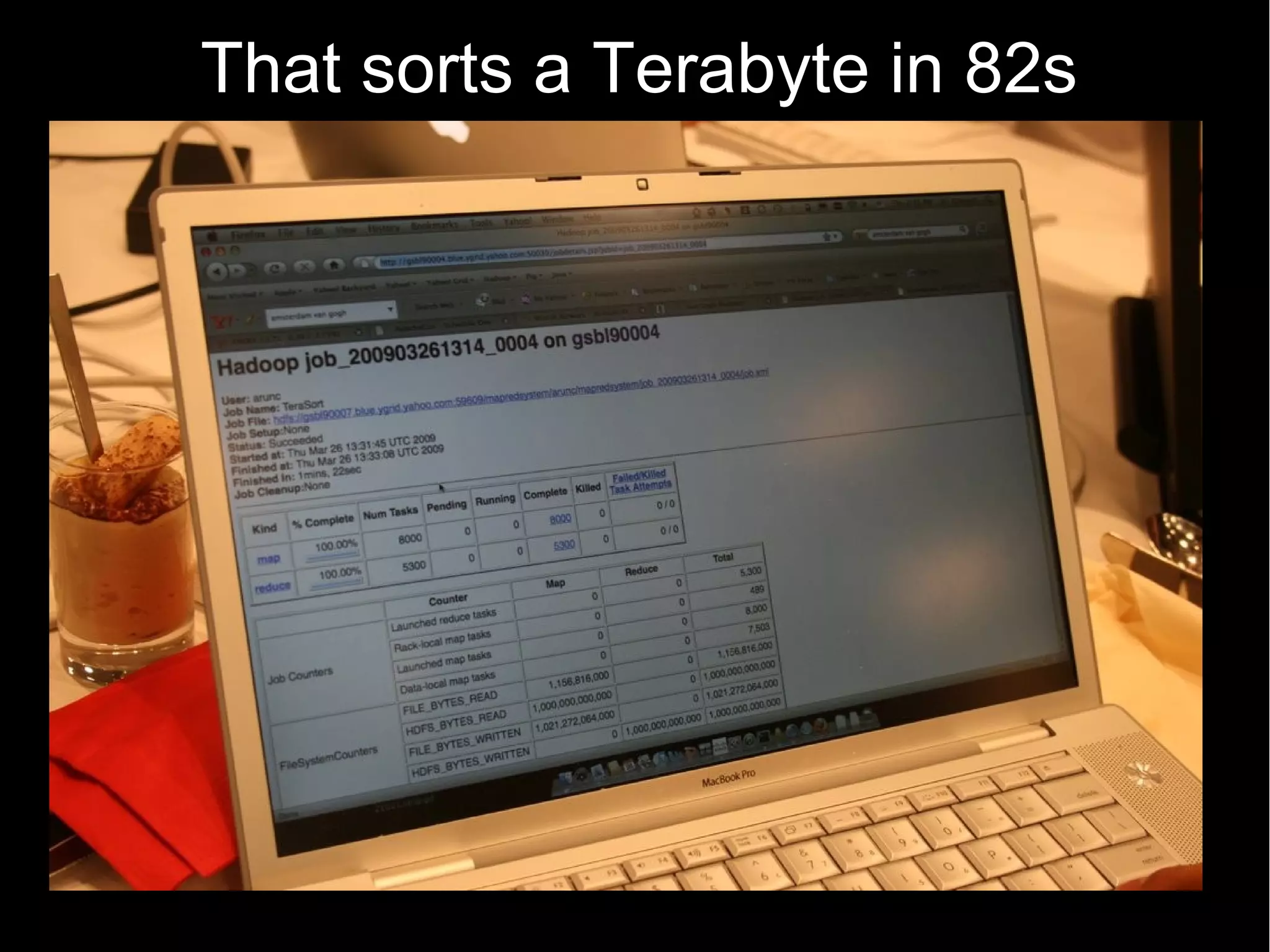
That sorts a Terabyte in 82s
Their other computer is a datacentre
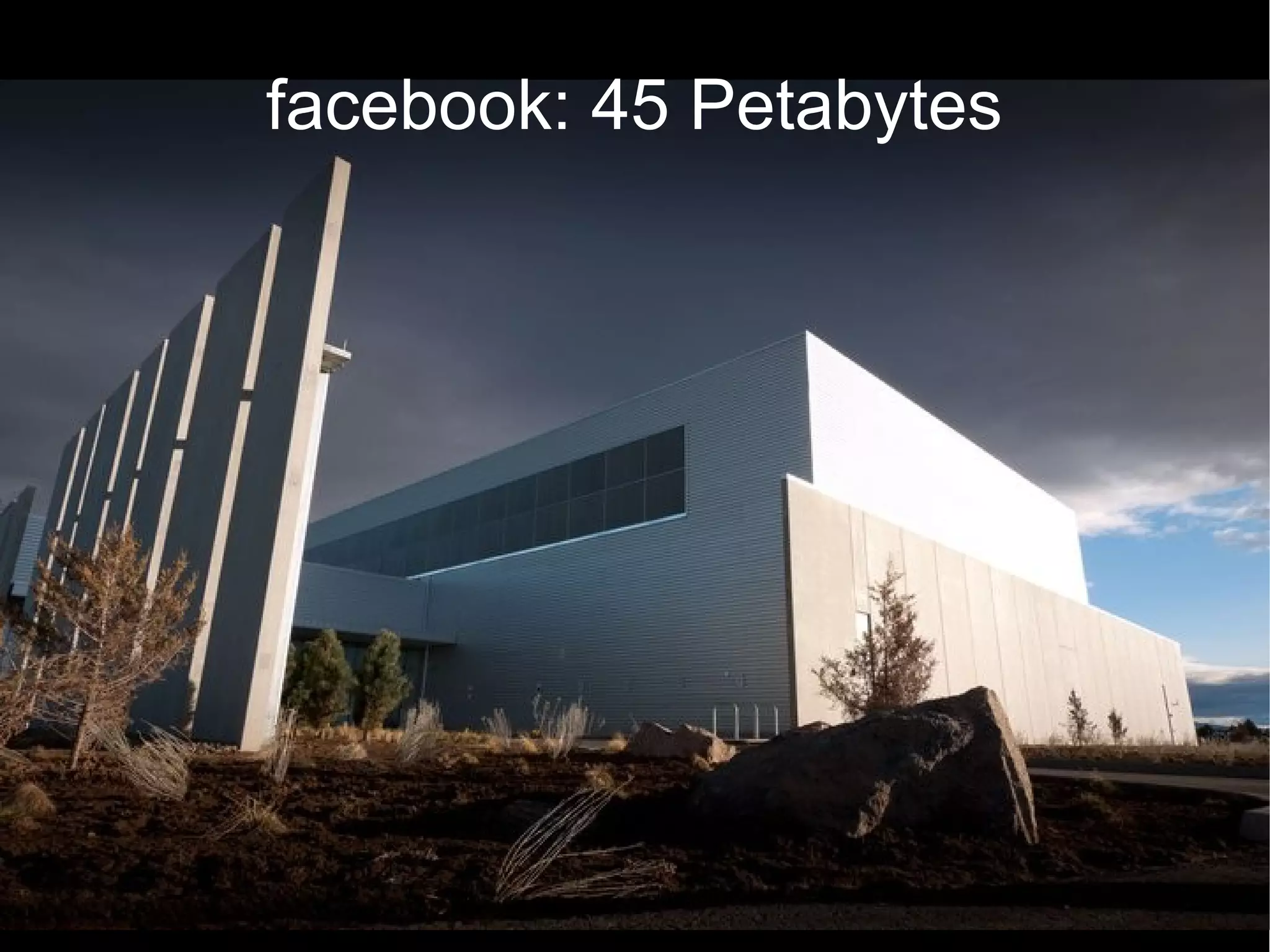
facebook: 45 Petabytes
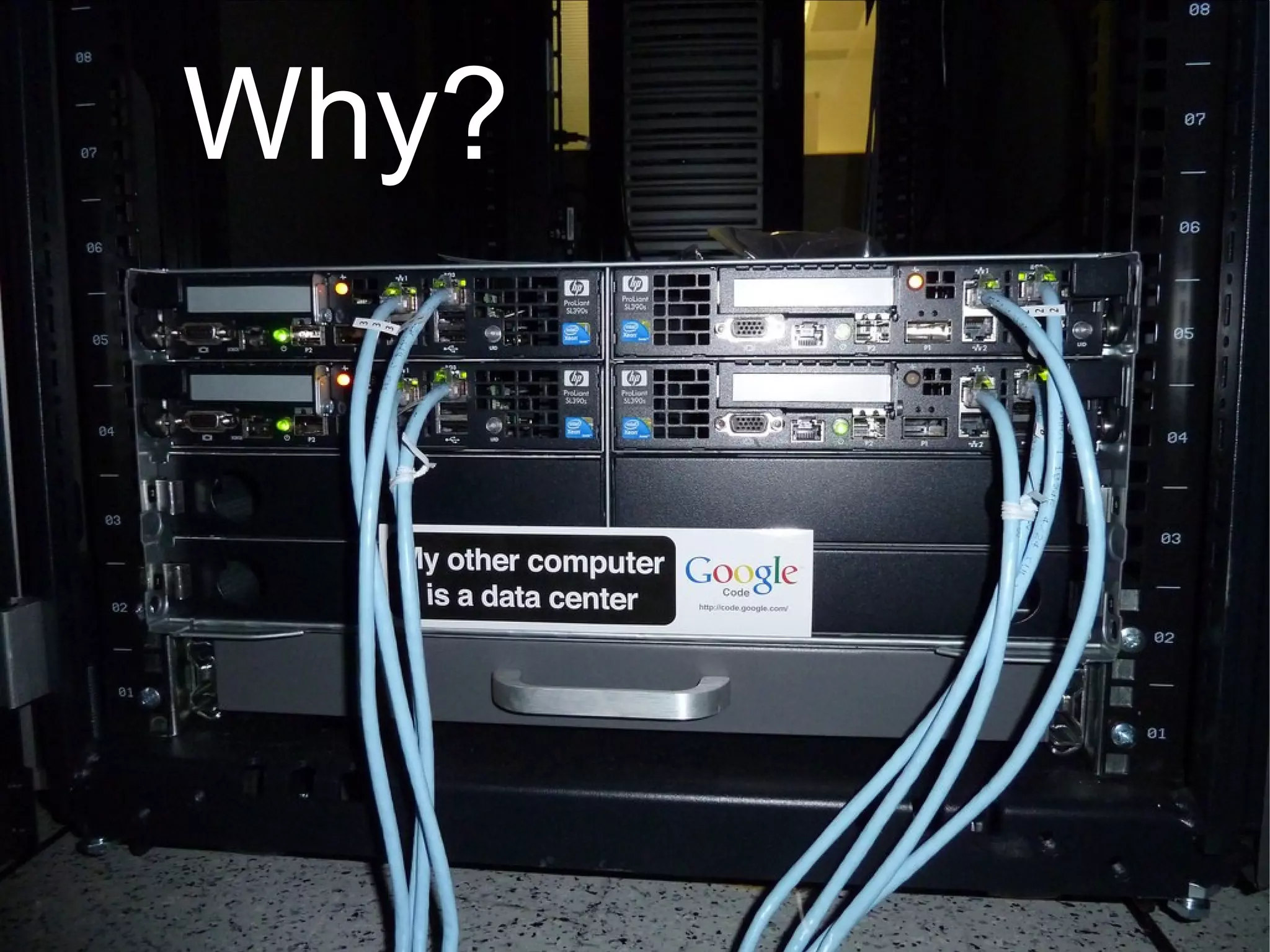
Why?
Big Data

Petabytes of "unstructured" data
Datamining: analysing past events
Prediction, Inference, Clustering
Graph analysis
Facebook-scale NoSQL databases
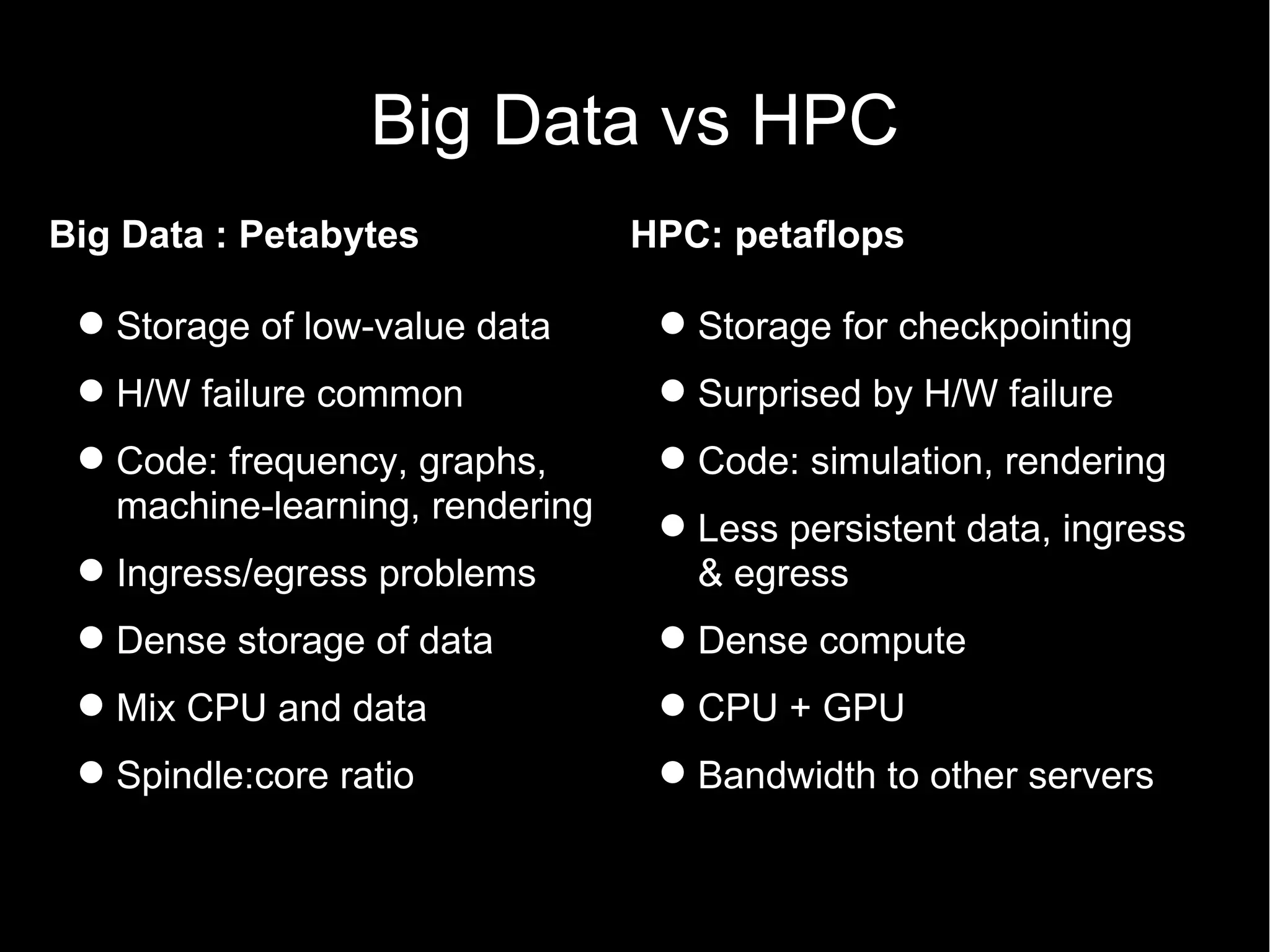
Big Data vs HPC
Big Data : Petabytes             HPC: petaflops

  Storage of low-value data       Storage for checkpointing
  H/W failure common              Surprised by H/W failure
  Code: frequency, graphs,        Code: simulation, rendering
   machine-learning, rendering
                                   Less persistent data, ingress
  Ingress/egress problems          & egress
  Dense storage of data           Dense compute
  Mix CPU and data                CPU + GPU
  Spindle:core ratio              Bandwidth to other servers
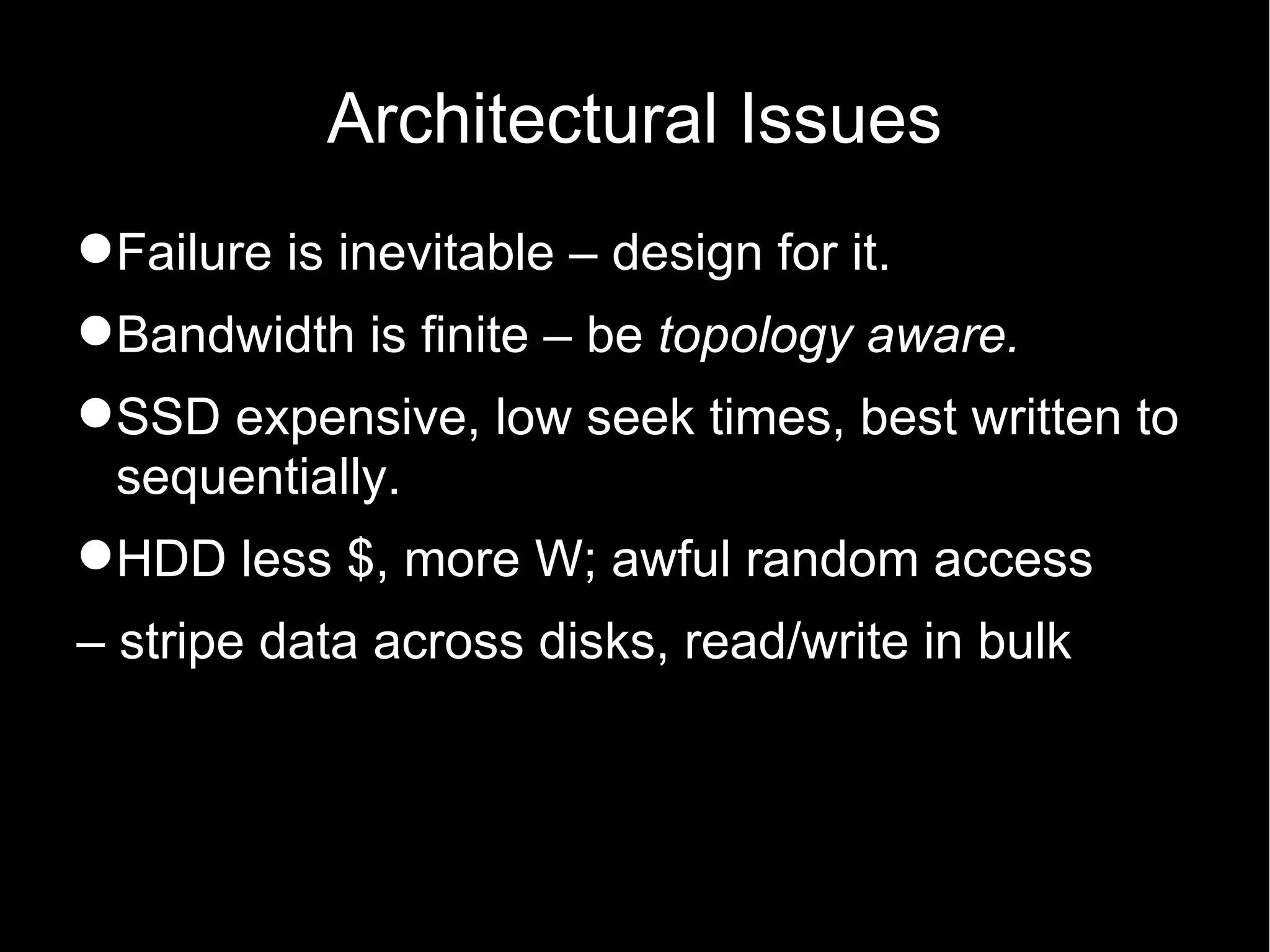
Architectural Issues
Failure is inevitable – design for it.
Bandwidth is finite – be topology aware.
SSD expensive, low seek times, best written to
 sequentially.
HDD less $, more W; awful random access
– stripe data across disks, read/write in bulk
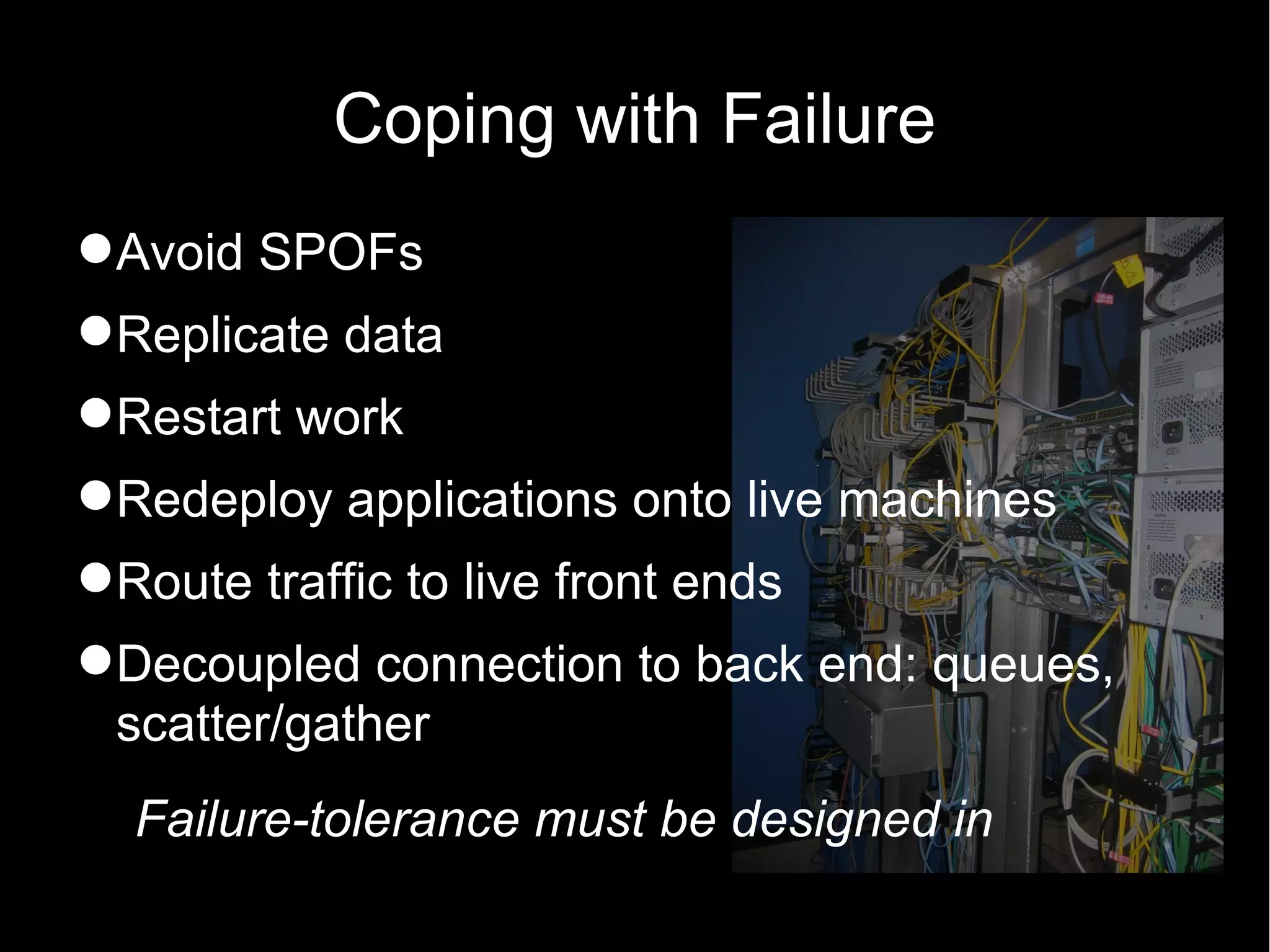
Coping with Failure
Avoid SPOFs
Replicate data
Restart work
Redeploy applications onto live machines
Route traffic to live front ends
Decoupled connection to back end: queues,
 scatter/gather
  Failure-tolerance must be designed in
Scale

Goal: linear performance scaling


Hide the problems from (most) developers
Design applications to scale across thousands
 of servers, tens of thousands of cores
Massive parallelisation, minimal communication


  Scalability must be designed in
Algorithms and Frameworks

MapReduce – Hadoop, CouchDB, (Dryad)
BSP – Pregel, Giraph, Hama
Column Tables – Cassandra, HBase, BigTable
Location Aware filesystem: GFS, HDFS
State Service: Chubby, Zookeeper, Anubis
Scatter/gather – search engines
(MPI)
MapReduce: Hadoop
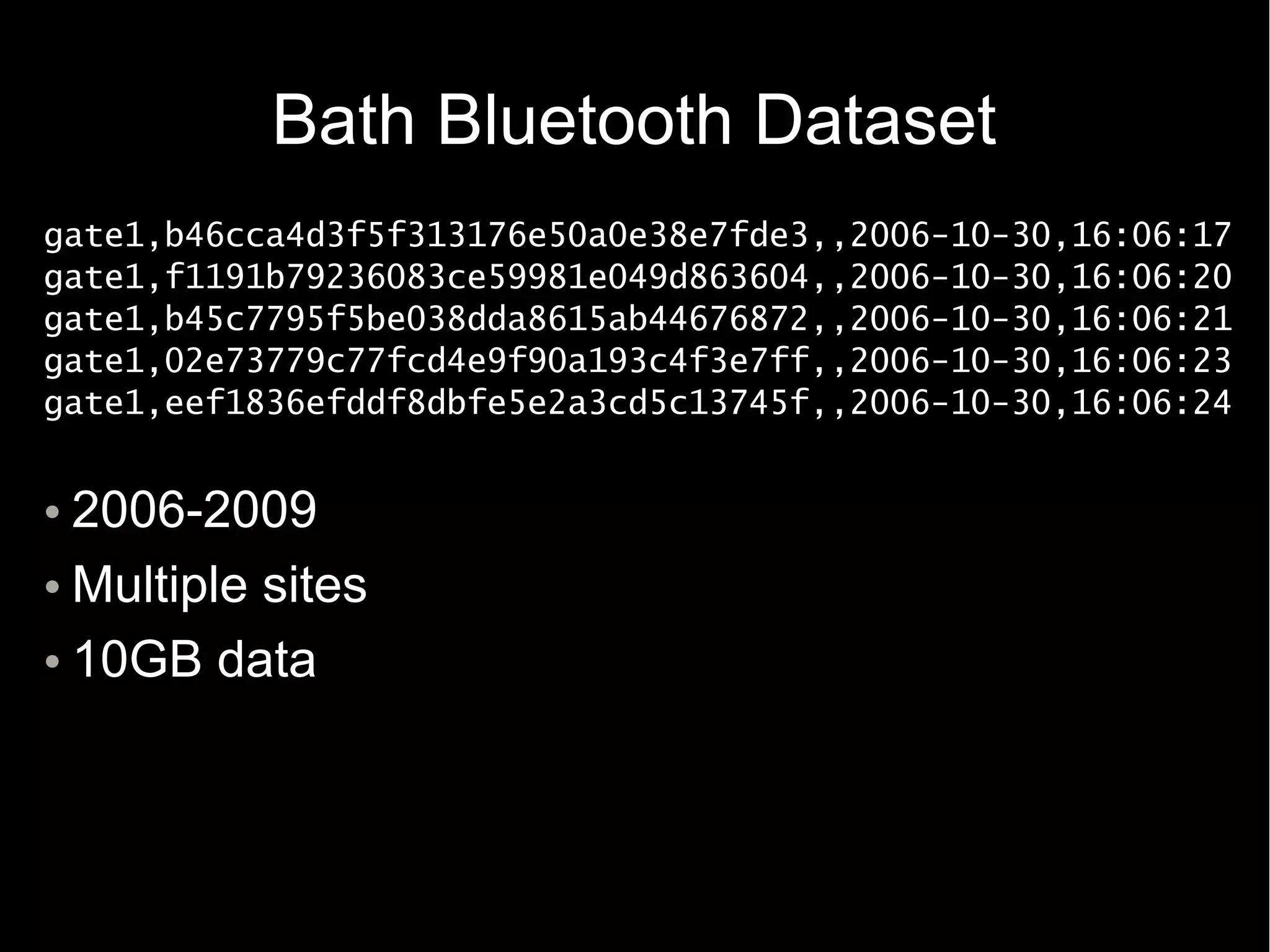
Bath Bluetooth Dataset
gate1,b46cca4d3f5f313176e50a0e38e7fde3,,2006-10-30,16:06:17
gate1,f1191b79236083ce59981e049d863604,,2006-10-30,16:06:20
gate1,b45c7795f5be038dda8615ab44676872,,2006-10-30,16:06:21
gate1,02e73779c77fcd4e9f90a193c4f3e7ff,,2006-10-30,16:06:23
gate1,eef1836efddf8dbfe5e2a3cd5c13745f,,2006-10-30,16:06:24


• 2006-2009
• Multiple sites
• 10GB data
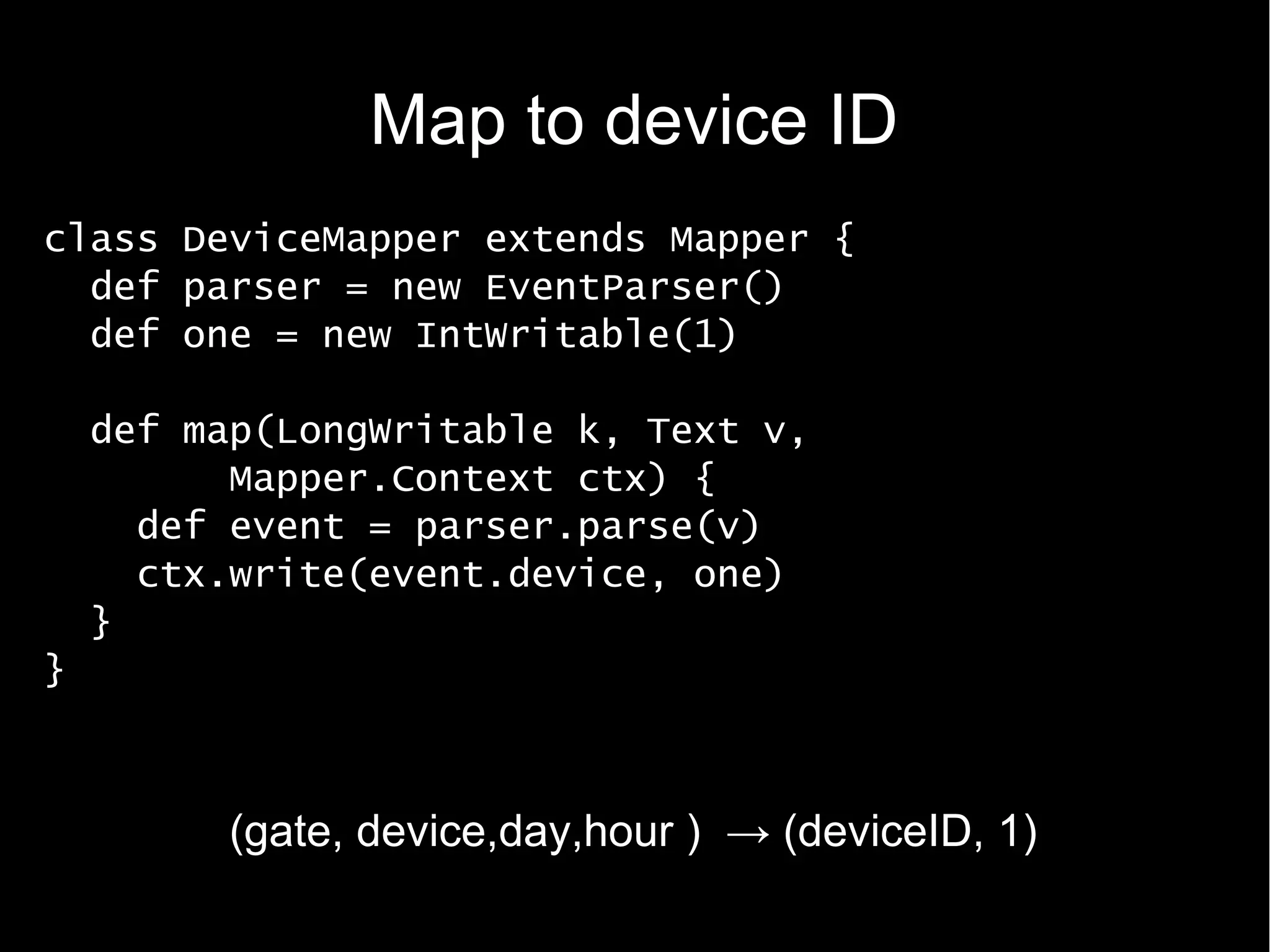
Map to device ID
class DeviceMapper extends Mapper {
  def parser = new EventParser()
  def one = new IntWritable(1)

    def map(LongWritable k, Text v,
          Mapper.Context ctx) {
      def event = parser.parse(v)
      ctx.write(event.device, one)
    }
}


          (gate, device,day,hour ) → (deviceID, 1)
Reduce to device count
class CountReducer2 extends Reducer {
  def iw = new IntWritable()

    def reduce(Text k,
               Iterable values,
               Reducer.Context ctx) {
      def sum = values.collect() {it.get()}.sum()
      iw.set(sum)
      ctx.write(k, iw);
    }
}


     (device,[count1, count2, ...] ) → (deviceID, count')
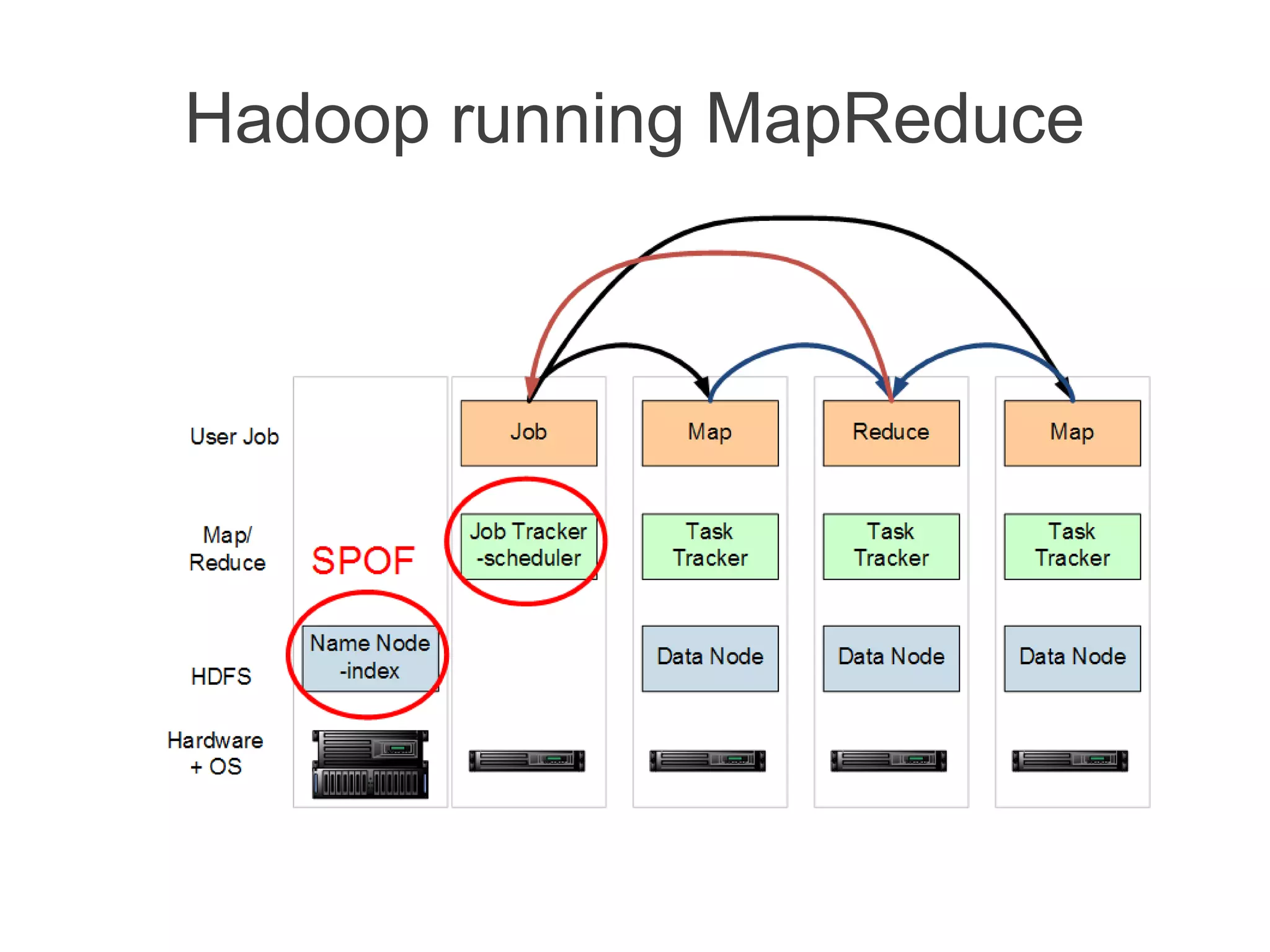
Hadoop running MapReduce
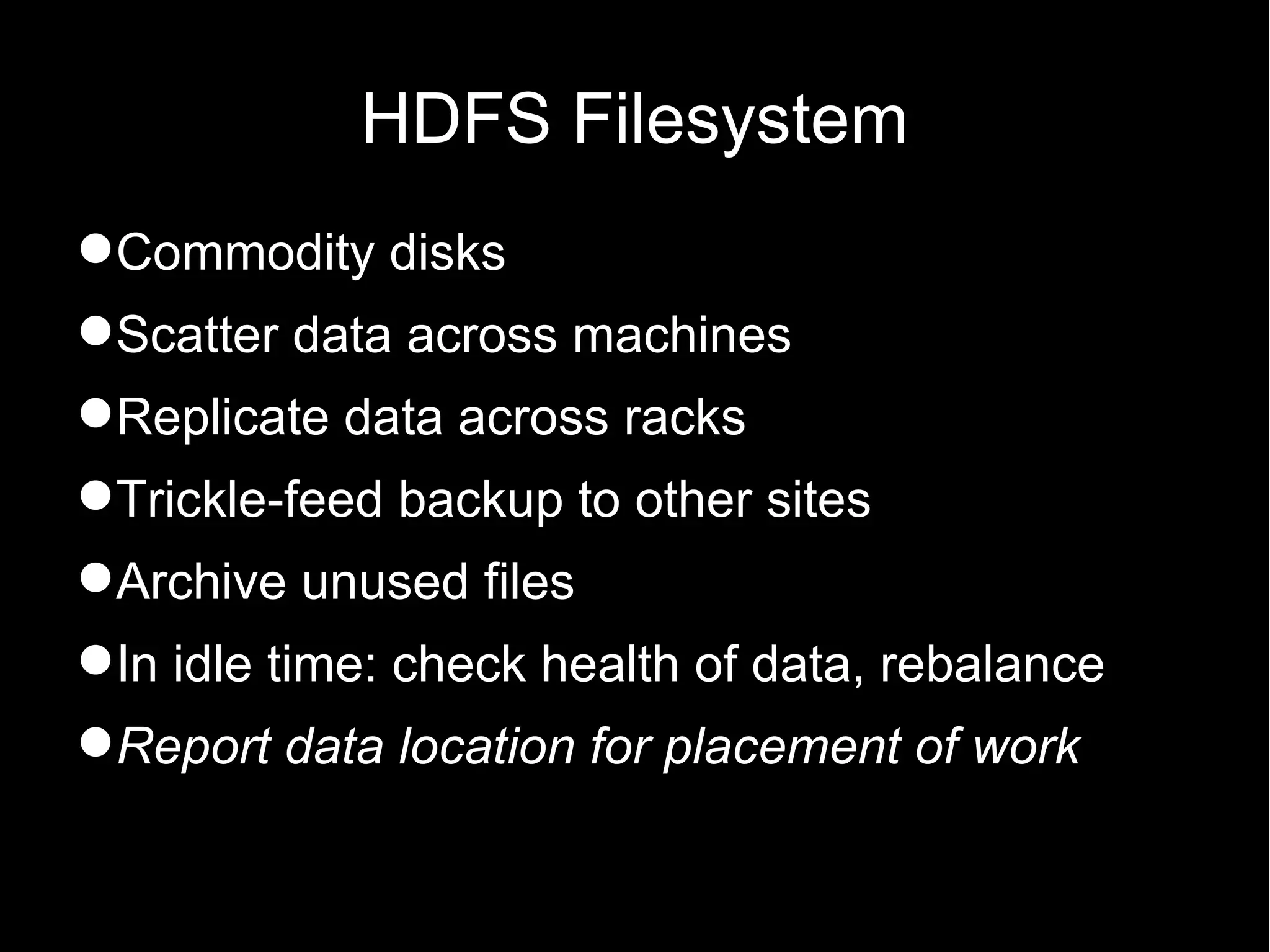
HDFS Filesystem
Commodity disks
Scatter data across machines
Replicate data across racks
Trickle-feed backup to other sites
Archive unused files
In idle time: check health of data, rebalance
Report data location for placement of work
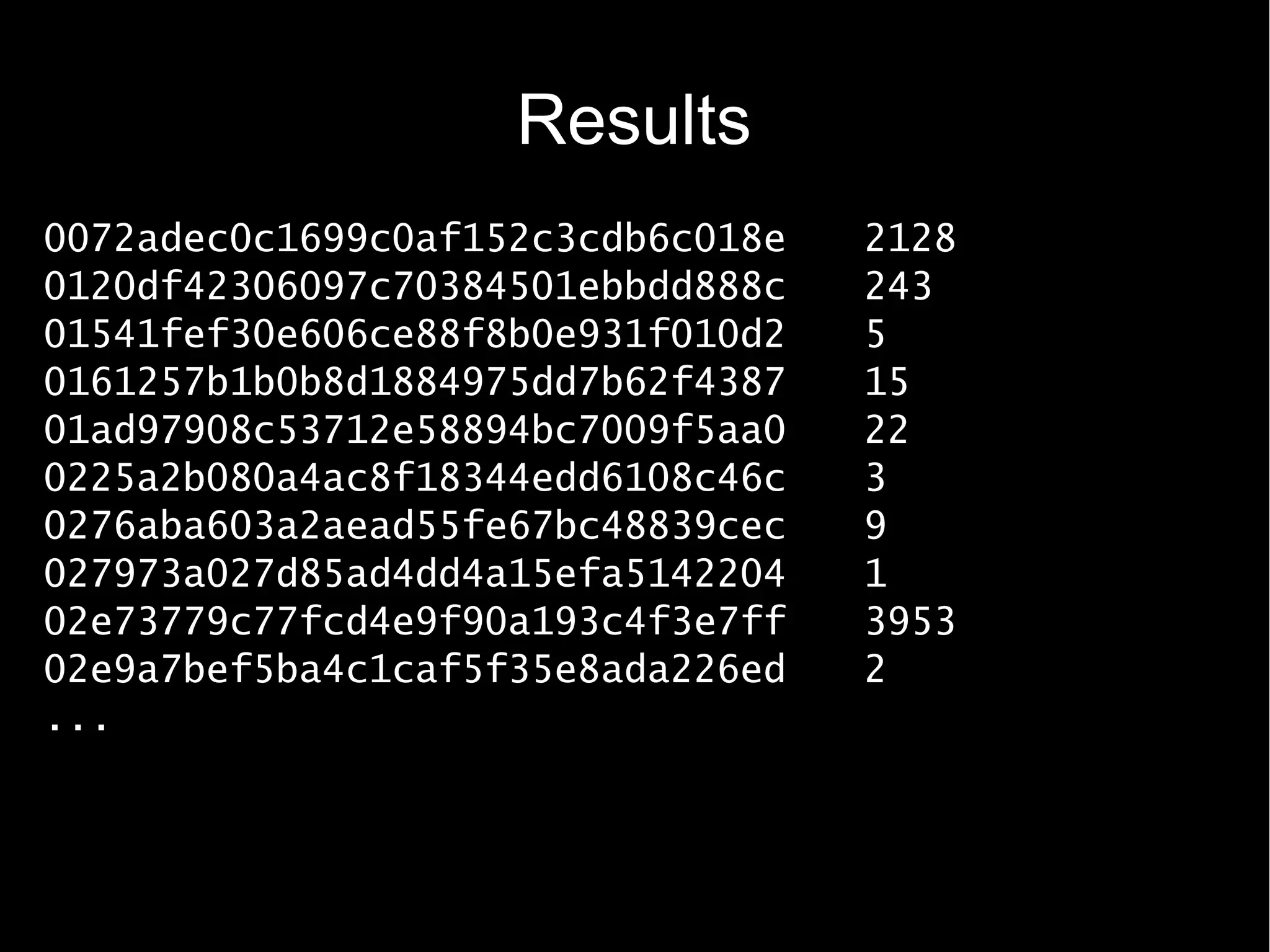
Results
0072adec0c1699c0af152c3cdb6c018e   2128
0120df42306097c70384501ebbdd888c   243
01541fef30e606ce88f8b0e931f010d2   5
0161257b1b0b8d1884975dd7b62f4387   15
01ad97908c53712e58894bc7009f5aa0   22
0225a2b080a4ac8f18344edd6108c46c   3
0276aba603a2aead55fe67bc48839cec   9
027973a027d85ad4dd4a15efa5142204   1
02e73779c77fcd4e9f90a193c4f3e7ff   3953
02e9a7bef5ba4c1caf5f35e8ada226ed   2
...
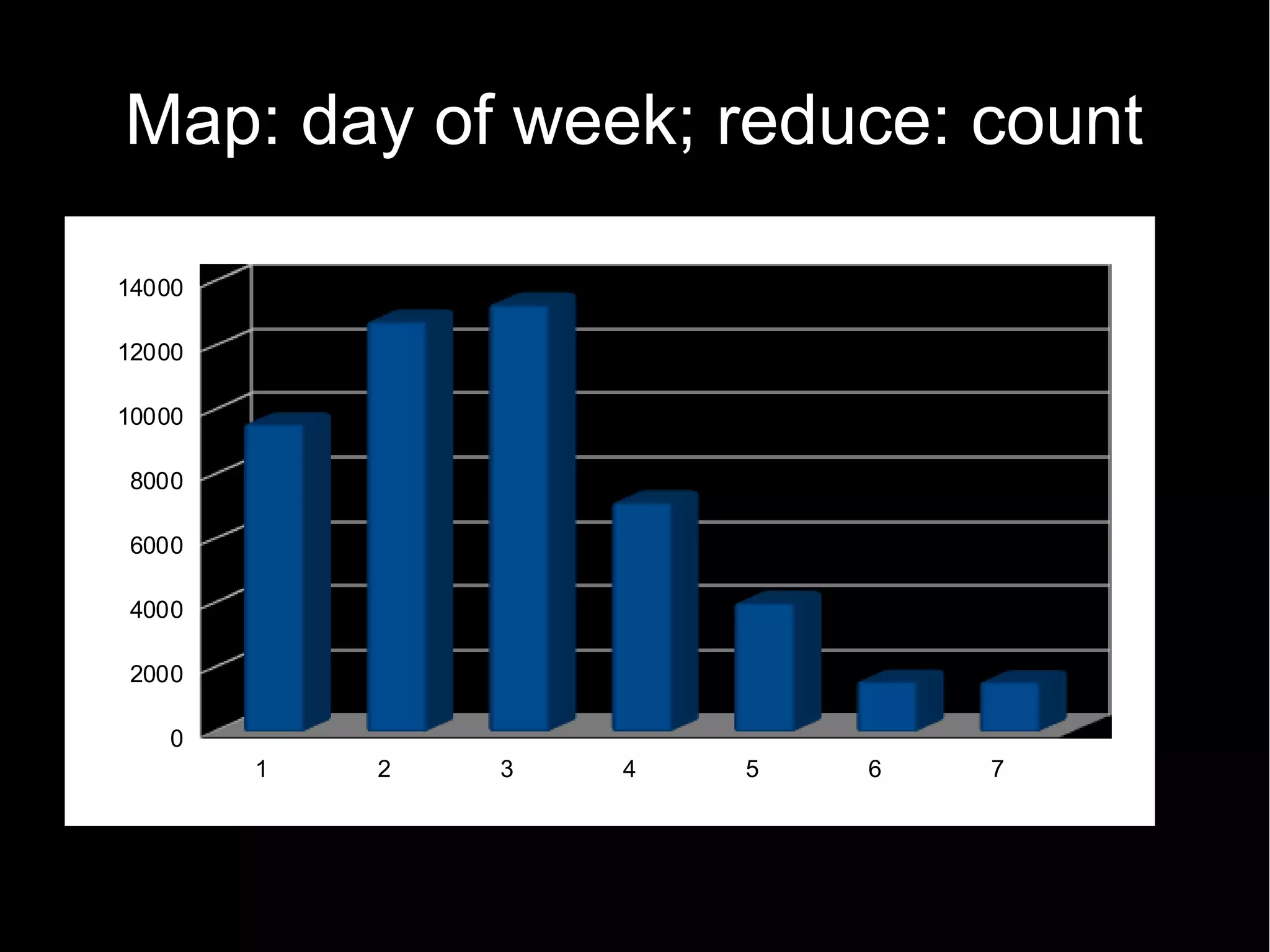
Map: day of week; reduce: count

14000

12000

10000

8000

6000

4000

2000

   0
        1   2   3   4   5   6   7
Other Questions
Peak hours for devices
Predictability of device
Time to cross gates/transit city
Routes they take
Which devices are often co-sighted?
When do they stop being co-sighted?
Clustering: resident, commuter, student, tourist
Hardware Challenges
Energy Proportional Computing
 [Barroso07]
Energy Proportional Datacenter Networks
 [Abts10]
Dark Silicon and the End of Multicore Scaling
 [Esmaeilzadeh10]


Scaling of CPU, storage, network
CS Problems
Scheduling
Placement of data and work
Graph Theory
Machine Learning
Heterogenous parallelism
Algorithms that run on large, unreliable, clusters
Dealing with availability
New problem: availability
Availability in Globally Distributed Storage
 Systems [Ford10]
Failure Trends in a Large Disk Drive Population
 [Pinheiro07]
DRAM Errors in the Wild [Schroeder09]
Characterizing Cloud Computing Hardware
 Reliability [Vishwanath10]
Understanding Network Failures in Data
 Centers [Gill11]
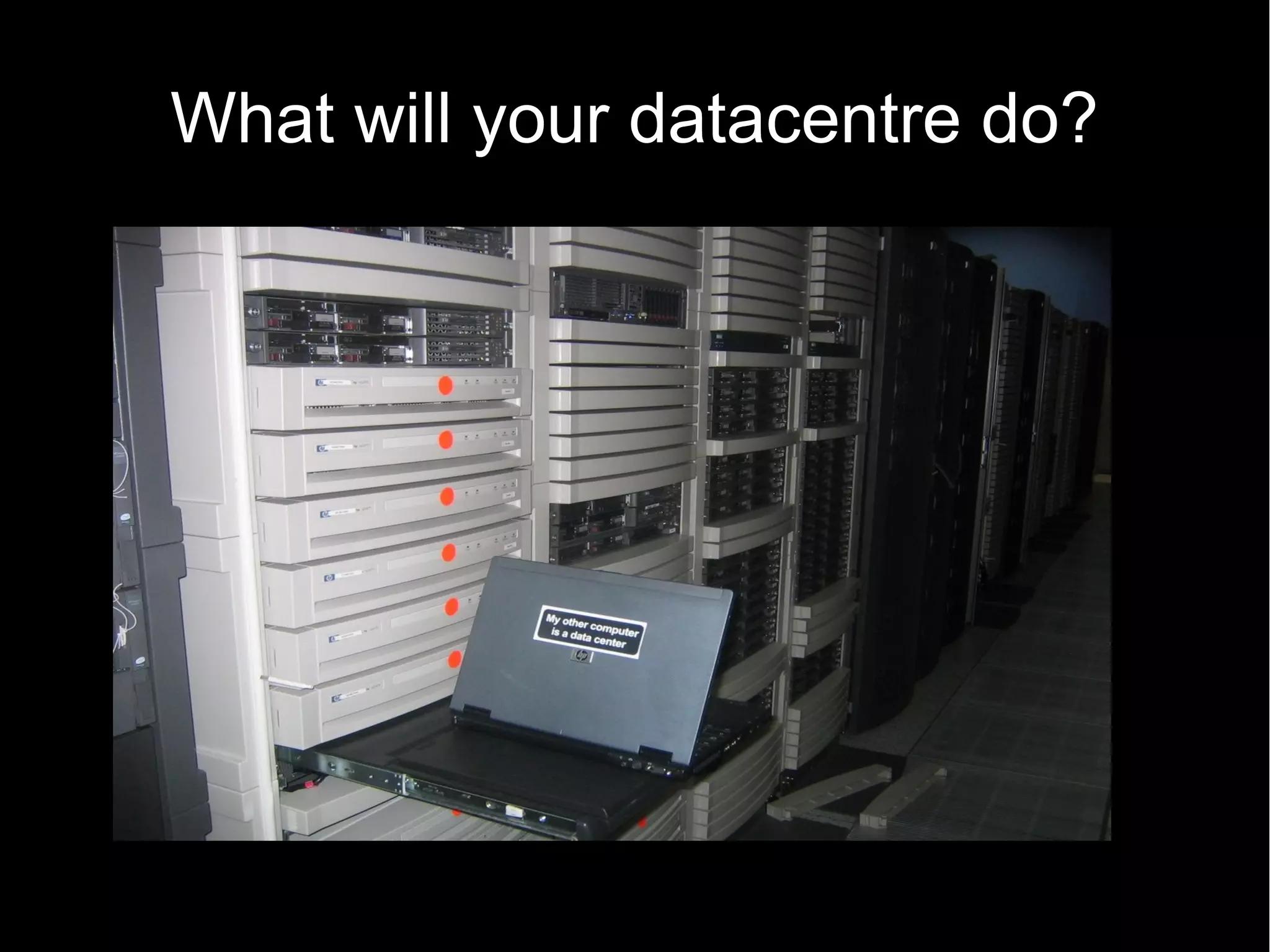
What will your datacentre do?

My other computer is a datacentre - 2012 edition

  • 2.
    Julio Steve Our other computer is a datacentre
  • 3.
    Their other computeris a datacentre
  • 4.
    That sorts aTerabyte in 82s
  • 5.
    Their other computeris a datacentre
  • 6.
  • 7.
  • 8.
    Big Data Petabytes of"unstructured" data Datamining: analysing past events Prediction, Inference, Clustering Graph analysis Facebook-scale NoSQL databases
  • 9.
    Big Data vsHPC Big Data : Petabytes HPC: petaflops  Storage of low-value data  Storage for checkpointing  H/W failure common  Surprised by H/W failure  Code: frequency, graphs,  Code: simulation, rendering machine-learning, rendering  Less persistent data, ingress  Ingress/egress problems & egress  Dense storage of data  Dense compute  Mix CPU and data  CPU + GPU  Spindle:core ratio  Bandwidth to other servers
  • 10.
    Architectural Issues Failure isinevitable – design for it. Bandwidth is finite – be topology aware. SSD expensive, low seek times, best written to sequentially. HDD less $, more W; awful random access – stripe data across disks, read/write in bulk
  • 11.
    Coping with Failure AvoidSPOFs Replicate data Restart work Redeploy applications onto live machines Route traffic to live front ends Decoupled connection to back end: queues, scatter/gather Failure-tolerance must be designed in
  • 12.
    Scale Goal: linear performancescaling Hide the problems from (most) developers Design applications to scale across thousands of servers, tens of thousands of cores Massive parallelisation, minimal communication Scalability must be designed in
  • 13.
    Algorithms and Frameworks MapReduce– Hadoop, CouchDB, (Dryad) BSP – Pregel, Giraph, Hama Column Tables – Cassandra, HBase, BigTable Location Aware filesystem: GFS, HDFS State Service: Chubby, Zookeeper, Anubis Scatter/gather – search engines (MPI)
  • 14.
  • 15.
  • 16.
    Map to deviceID class DeviceMapper extends Mapper { def parser = new EventParser() def one = new IntWritable(1) def map(LongWritable k, Text v, Mapper.Context ctx) { def event = parser.parse(v) ctx.write(event.device, one) } } (gate, device,day,hour ) → (deviceID, 1)
  • 17.
    Reduce to devicecount class CountReducer2 extends Reducer { def iw = new IntWritable() def reduce(Text k, Iterable values, Reducer.Context ctx) { def sum = values.collect() {it.get()}.sum() iw.set(sum) ctx.write(k, iw); } } (device,[count1, count2, ...] ) → (deviceID, count')
  • 18.
  • 19.
    HDFS Filesystem Commodity disks Scatterdata across machines Replicate data across racks Trickle-feed backup to other sites Archive unused files In idle time: check health of data, rebalance Report data location for placement of work
  • 20.
    Results 0072adec0c1699c0af152c3cdb6c018e 2128 0120df42306097c70384501ebbdd888c 243 01541fef30e606ce88f8b0e931f010d2 5 0161257b1b0b8d1884975dd7b62f4387 15 01ad97908c53712e58894bc7009f5aa0 22 0225a2b080a4ac8f18344edd6108c46c 3 0276aba603a2aead55fe67bc48839cec 9 027973a027d85ad4dd4a15efa5142204 1 02e73779c77fcd4e9f90a193c4f3e7ff 3953 02e9a7bef5ba4c1caf5f35e8ada226ed 2 ...
  • 21.
    Map: day ofweek; reduce: count 14000 12000 10000 8000 6000 4000 2000 0 1 2 3 4 5 6 7
  • 22.
    Other Questions Peak hoursfor devices Predictability of device Time to cross gates/transit city Routes they take Which devices are often co-sighted? When do they stop being co-sighted? Clustering: resident, commuter, student, tourist
  • 23.
    Hardware Challenges Energy ProportionalComputing [Barroso07] Energy Proportional Datacenter Networks [Abts10] Dark Silicon and the End of Multicore Scaling [Esmaeilzadeh10] Scaling of CPU, storage, network
  • 24.
    CS Problems Scheduling Placement ofdata and work Graph Theory Machine Learning Heterogenous parallelism Algorithms that run on large, unreliable, clusters Dealing with availability
  • 25.
    New problem: availability Availabilityin Globally Distributed Storage Systems [Ford10] Failure Trends in a Large Disk Drive Population [Pinheiro07] DRAM Errors in the Wild [Schroeder09] Characterizing Cloud Computing Hardware Reliability [Vishwanath10] Understanding Network Failures in Data Centers [Gill11]
  • 26.
    What will yourdatacentre do?