Algebra 2 Warm up
3.11.14
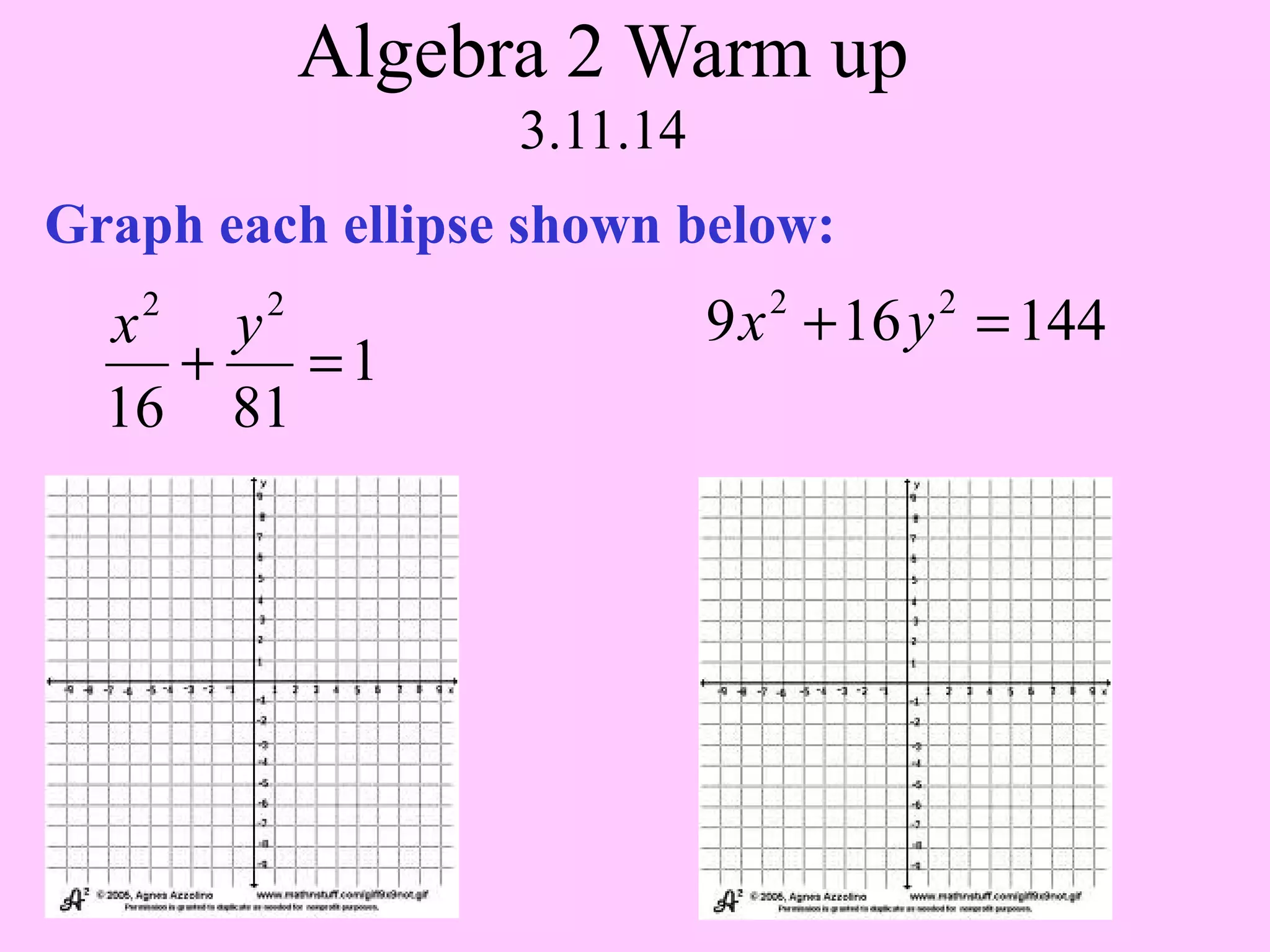
Graph each ellipse shown below:
2

2

x
y
+
=1
16 81

9 x + 16 y = 144
2

2
Algebra 2
Section 9.5
Hyperbolas
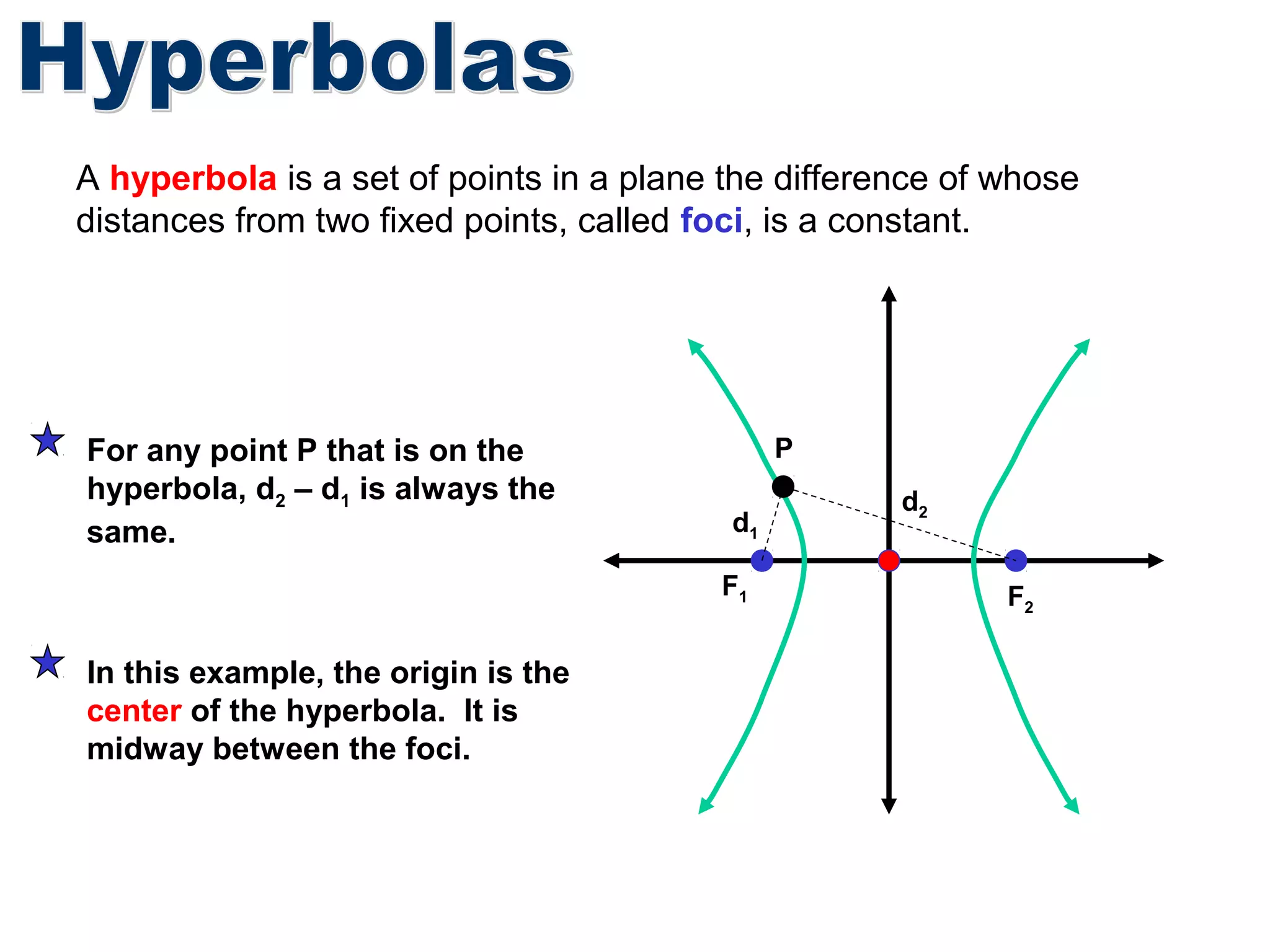
A hyperbola is a set of points in a plane the difference of whose
distances from two fixed points, called foci, is a constant.

For any point P that is on the
hyperbola, d2 – d1 is always the
same.

P
d1
F1

In this example, the origin is the
center of the hyperbola. It is
midway between the foci.

d2
F2
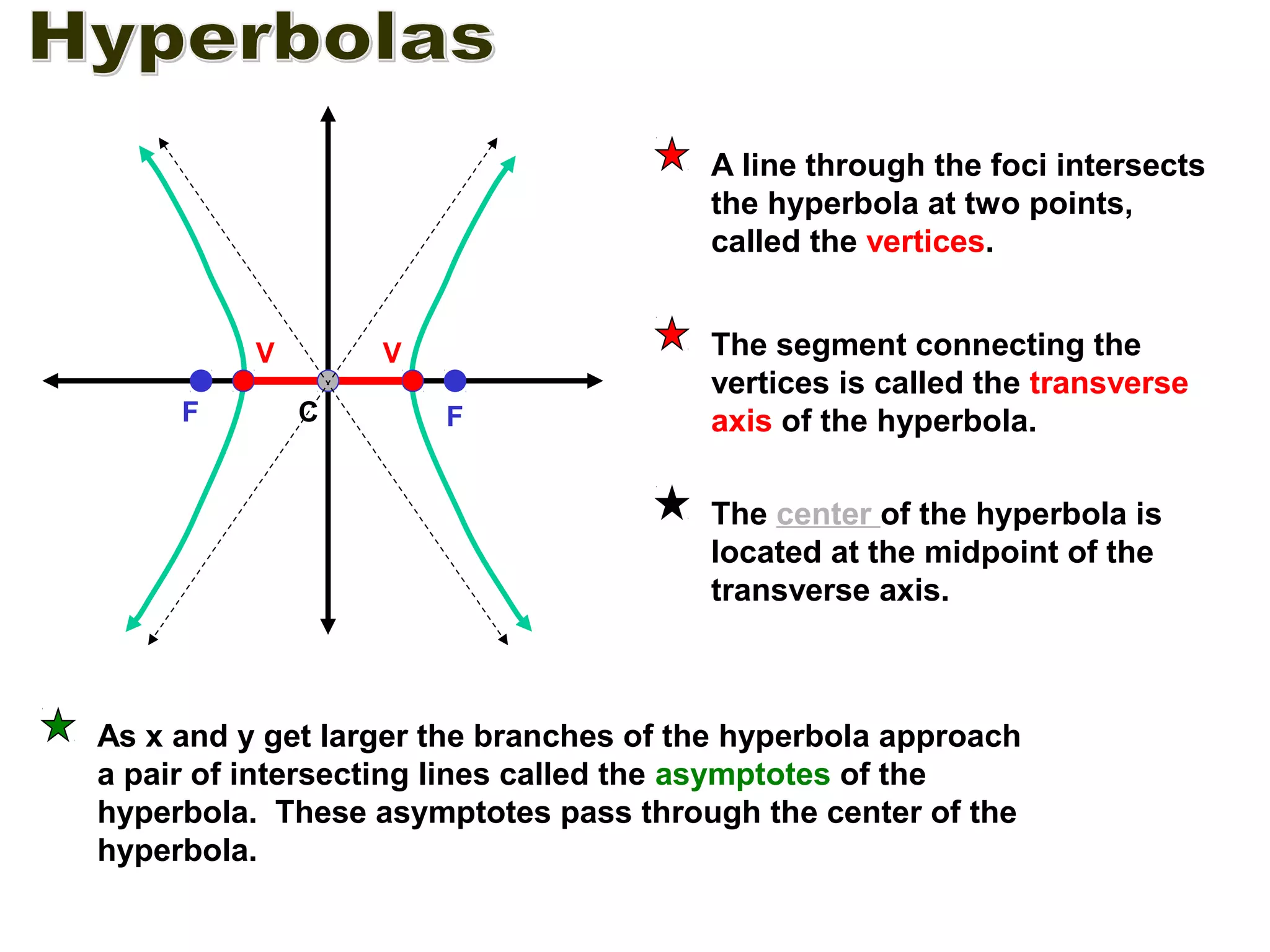
A line through the foci intersects
the hyperbola at two points,
called the vertices.
V
F

V
C

F

The segment connecting the
vertices is called the transverse
axis of the hyperbola.
The center of the hyperbola is
located at the midpoint of the
transverse axis.

As x and y get larger the branches of the hyperbola approach
a pair of intersecting lines called the asymptotes of the
hyperbola. These asymptotes pass through the center of the
hyperbola.
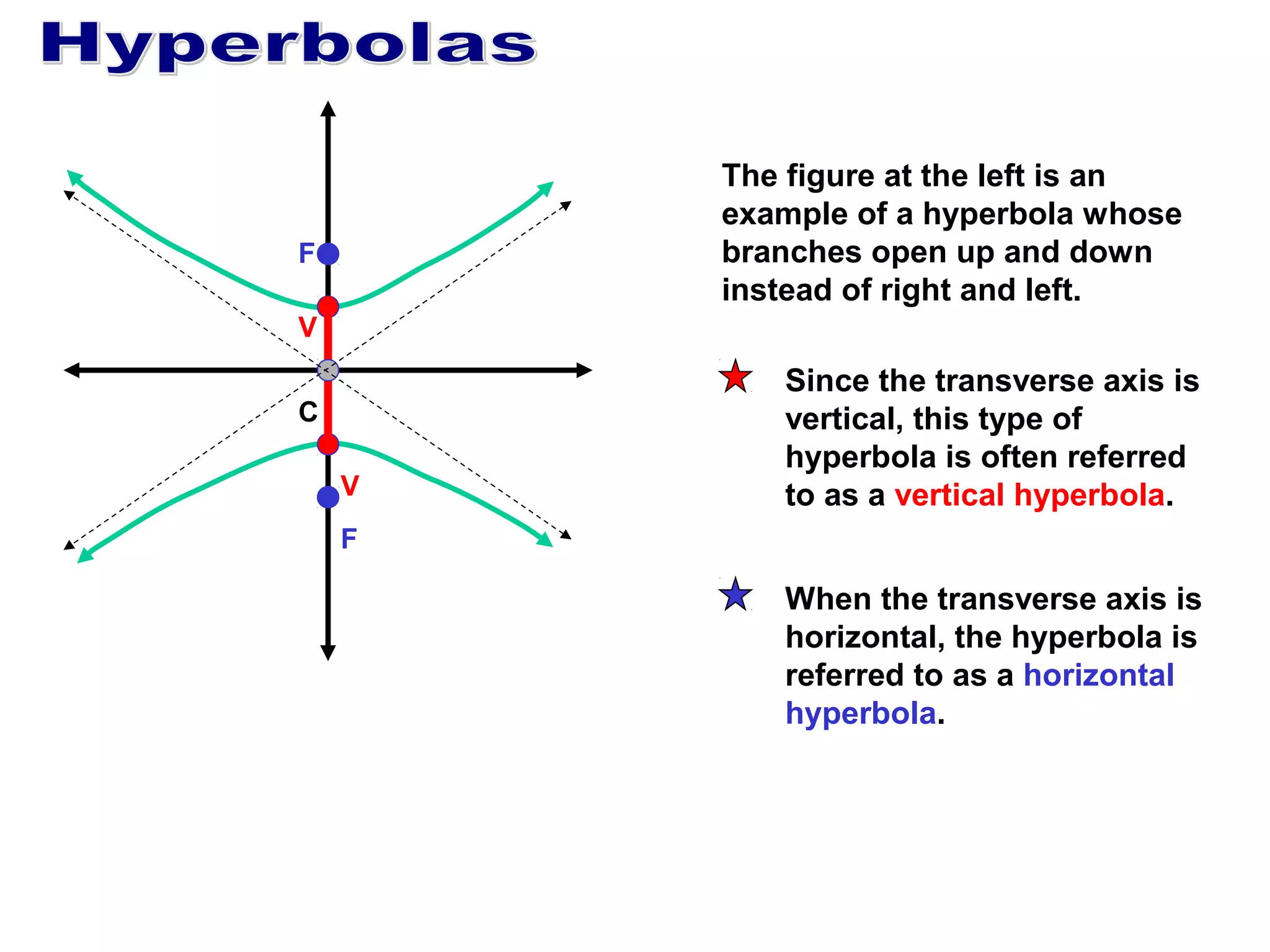
The figure at the left is an
example of a hyperbola whose
branches open up and down
instead of right and left.

F
V
C
V

Since the transverse axis is
vertical, this type of
hyperbola is often referred
to as a vertical hyperbola.

F

When the transverse axis is
horizontal, the hyperbola is
referred to as a horizontal
hyperbola.
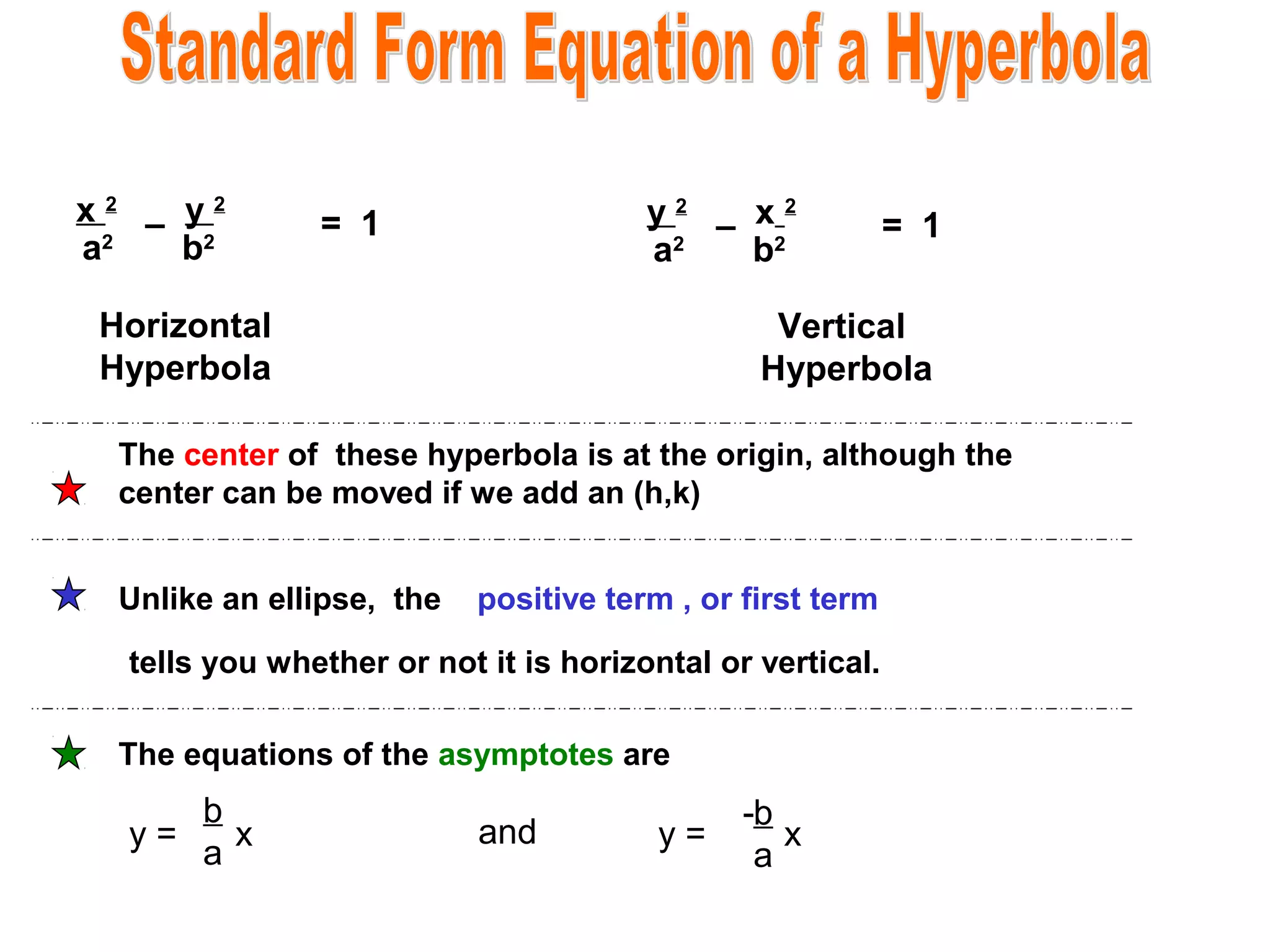
x2 – y2
a2
b2

y2 – x2
a2
b2

= 1

Horizontal
Hyperbola

= 1

Vertical
Hyperbola

The center of these hyperbola is at the origin, although the
center can be moved if we add an (h,k)
Unlike an ellipse, the

positive term , or first term

tells you whether or not it is horizontal or vertical.
The equations of the asymptotes are

y=

b
x
a

and

y=

-b
x
a
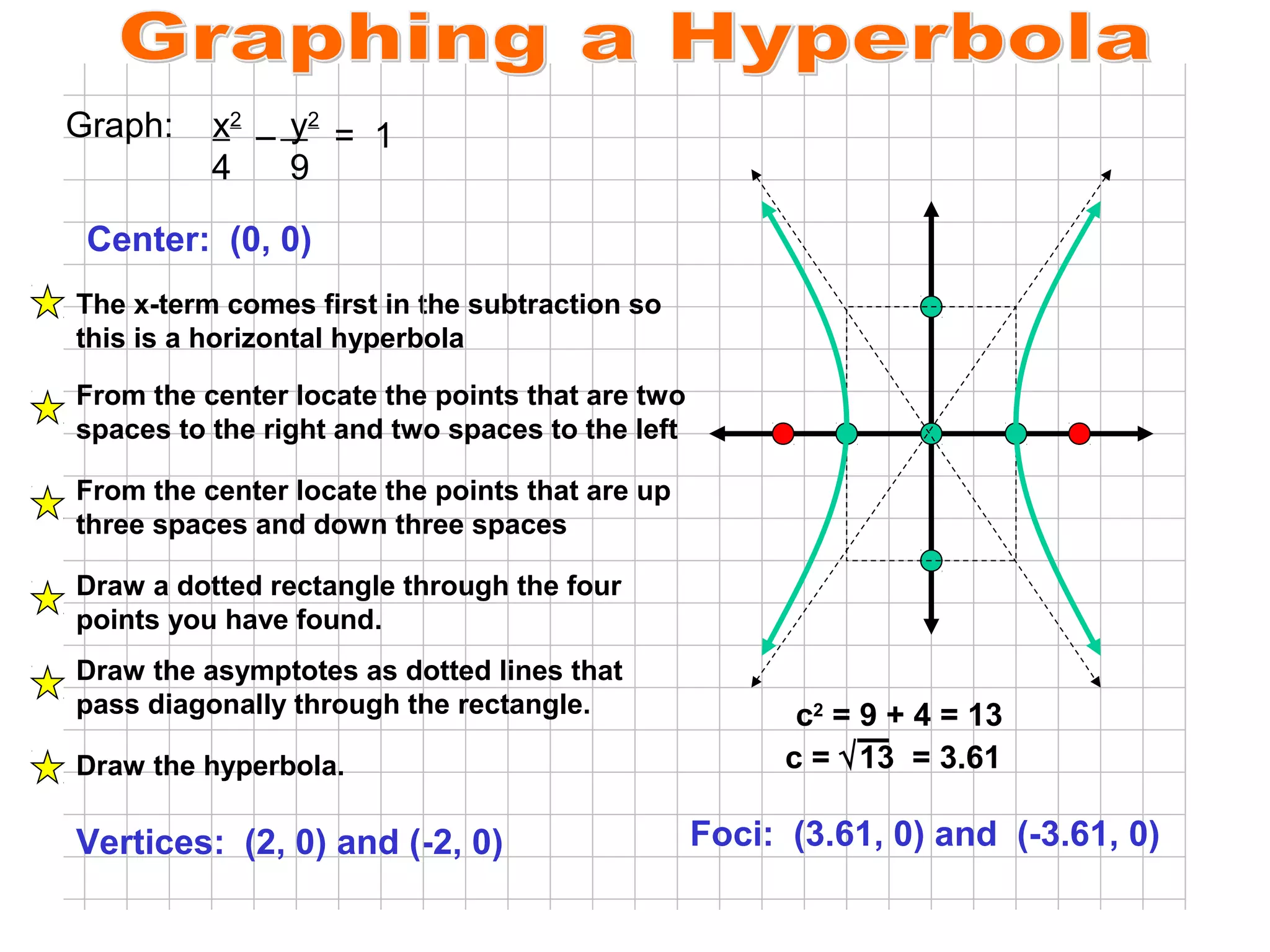
Graph:

x2 – y2 = 1
4
9

Center: (0, 0)
The x-term comes first in the subtraction so
this is a horizontal hyperbola
From the center locate the points that are two
spaces to the right and two spaces to the left
From the center locate the points that are up
three spaces and down three spaces
Draw a dotted rectangle through the four
points you have found.
Draw the asymptotes as dotted lines that
pass diagonally through the rectangle.
Draw the hyperbola.

Vertices: (2, 0) and (-2, 0)

c2 = 9 + 4 = 13
c = √13 = 3.61

Foci: (3.61, 0) and (-3.61, 0)
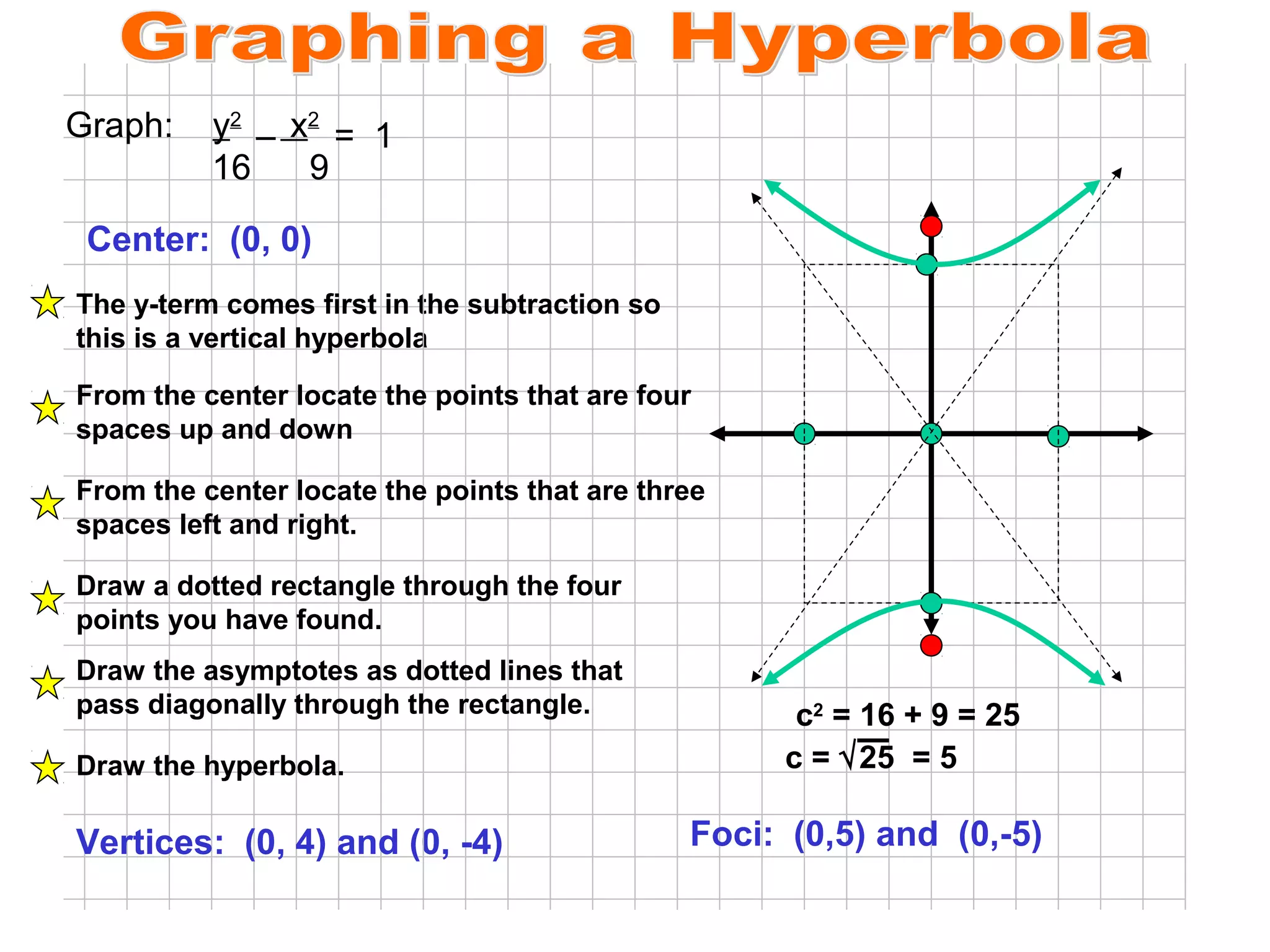
Graph:

y2 – x2 = 1
16
9

Center: (0, 0)
The y-term comes first in the subtraction so
this is a vertical hyperbola
From the center locate the points that are four
spaces up and down
From the center locate the points that are three
spaces left and right.
Draw a dotted rectangle through the four
points you have found.
Draw the asymptotes as dotted lines that
pass diagonally through the rectangle.
Draw the hyperbola.

Vertices: (0, 4) and (0, -4)

c2 = 16 + 9 = 25
c = √25 = 5

Foci: (0,5) and (0,-5)

Hyperbolas

  • 1.
    Algebra 2 Warmup 3.11.14 Graph each ellipse shown below: 2 2 x y + =1 16 81 9 x + 16 y = 144 2 2
  • 2.
  • 3.
    A hyperbola isa set of points in a plane the difference of whose distances from two fixed points, called foci, is a constant. For any point P that is on the hyperbola, d2 – d1 is always the same. P d1 F1 In this example, the origin is the center of the hyperbola. It is midway between the foci. d2 F2
  • 4.
    A line throughthe foci intersects the hyperbola at two points, called the vertices. V F V C F The segment connecting the vertices is called the transverse axis of the hyperbola. The center of the hyperbola is located at the midpoint of the transverse axis. As x and y get larger the branches of the hyperbola approach a pair of intersecting lines called the asymptotes of the hyperbola. These asymptotes pass through the center of the hyperbola.
  • 5.
    The figure atthe left is an example of a hyperbola whose branches open up and down instead of right and left. F V C V Since the transverse axis is vertical, this type of hyperbola is often referred to as a vertical hyperbola. F When the transverse axis is horizontal, the hyperbola is referred to as a horizontal hyperbola.
  • 6.
    x2 – y2 a2 b2 y2– x2 a2 b2 = 1 Horizontal Hyperbola = 1 Vertical Hyperbola The center of these hyperbola is at the origin, although the center can be moved if we add an (h,k) Unlike an ellipse, the positive term , or first term tells you whether or not it is horizontal or vertical. The equations of the asymptotes are y= b x a and y= -b x a
  • 7.
    Graph: x2 – y2= 1 4 9 Center: (0, 0) The x-term comes first in the subtraction so this is a horizontal hyperbola From the center locate the points that are two spaces to the right and two spaces to the left From the center locate the points that are up three spaces and down three spaces Draw a dotted rectangle through the four points you have found. Draw the asymptotes as dotted lines that pass diagonally through the rectangle. Draw the hyperbola. Vertices: (2, 0) and (-2, 0) c2 = 9 + 4 = 13 c = √13 = 3.61 Foci: (3.61, 0) and (-3.61, 0)
  • 8.
    Graph: y2 – x2= 1 16 9 Center: (0, 0) The y-term comes first in the subtraction so this is a vertical hyperbola From the center locate the points that are four spaces up and down From the center locate the points that are three spaces left and right. Draw a dotted rectangle through the four points you have found. Draw the asymptotes as dotted lines that pass diagonally through the rectangle. Draw the hyperbola. Vertices: (0, 4) and (0, -4) c2 = 16 + 9 = 25 c = √25 = 5 Foci: (0,5) and (0,-5)