
Downloaded 389 times
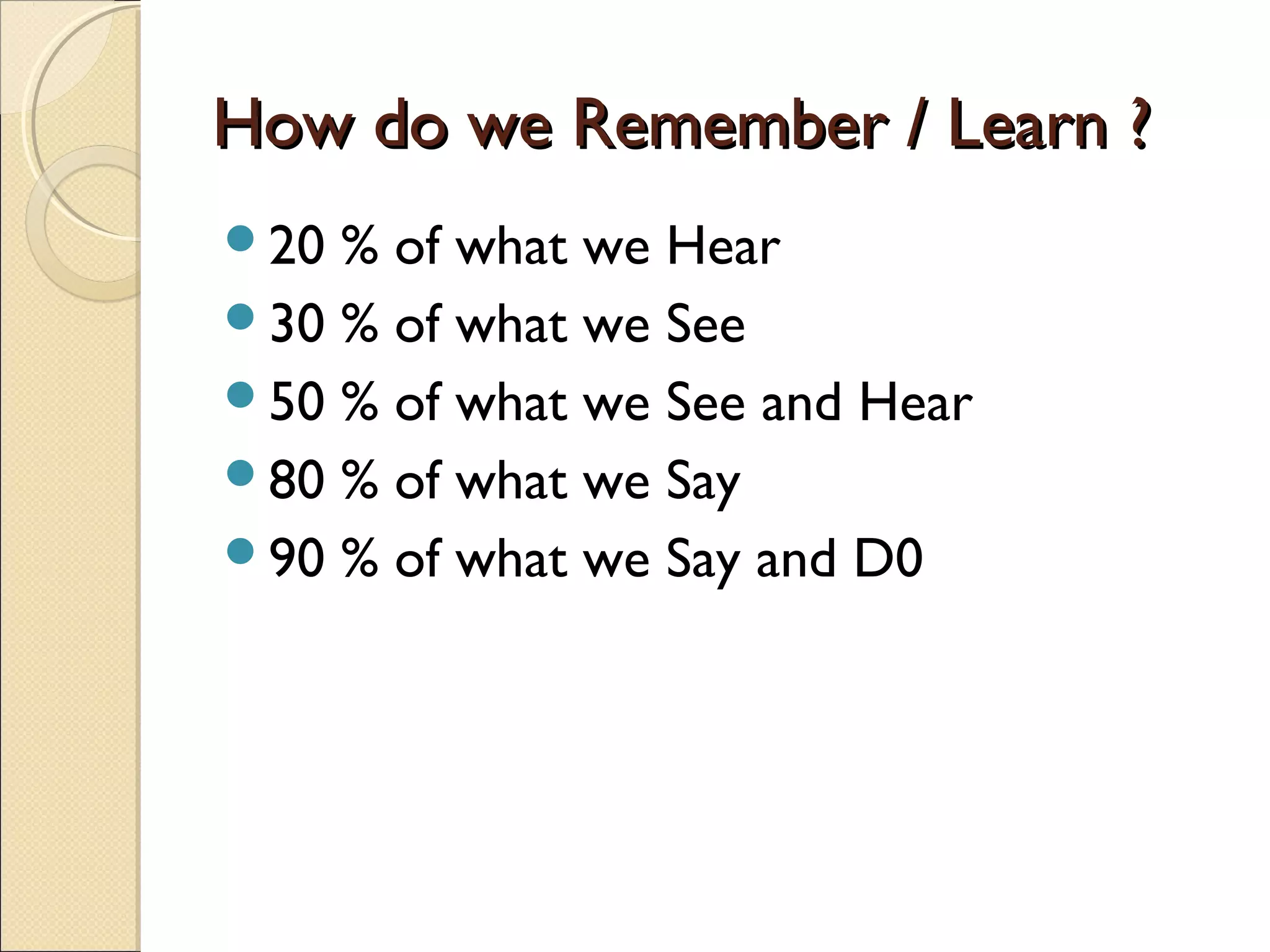
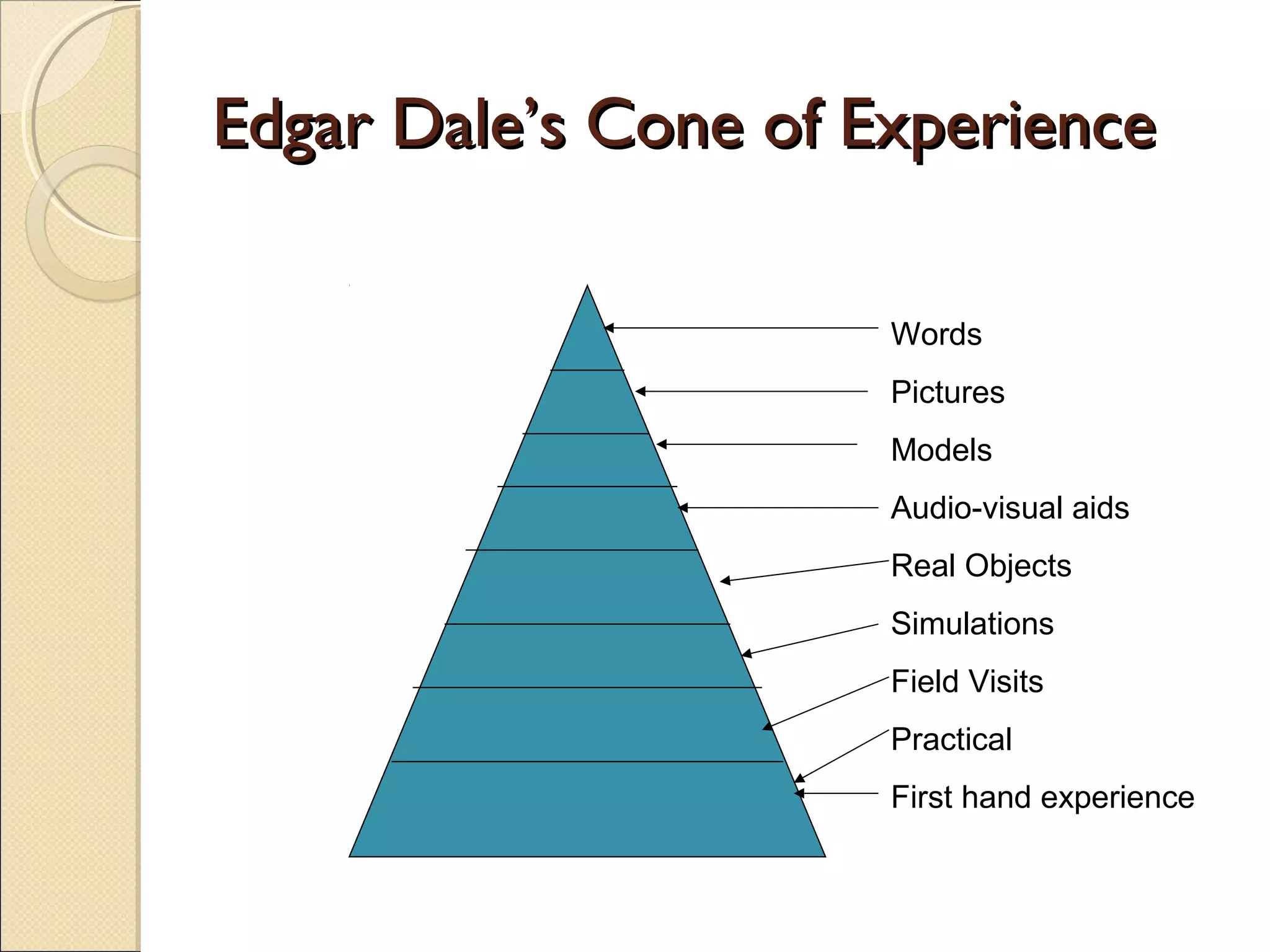
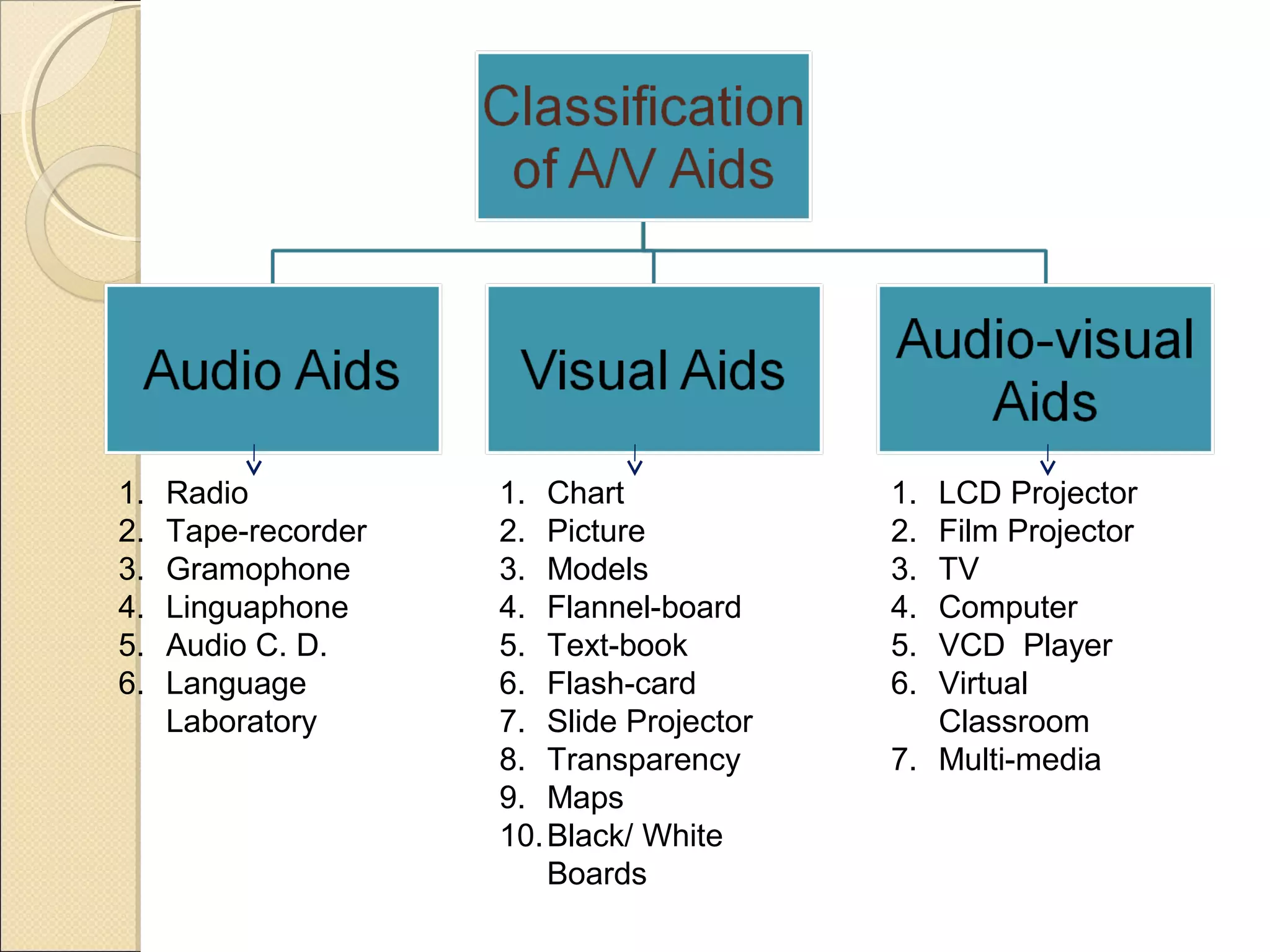
Audio-visual aids are effective teaching tools because learners retain 20% of what they hear, 30% of what they see, 50% of what they see and hear, 80% of what they say, and 90% of what they say and do. According to Edgar Dale's Cone of Experience, using real objects and hands-on experiences results in the highest retention rates for students, followed by using simulations, field visits, and audio-visual aids. Some common audio-visual aids include charts, pictures, models, flashcards, slides, maps, projectors, films, television, computers, and virtual classrooms.
Introduction of audio-visual aids in teaching by Shri. Dnyaneshwar Khodave, an Assistant Professor in Maharashtra.
Statistics on information retention: 20% by hearing, 30% by seeing, up to 90% by speaking and doing.
Hierarchy of learning experiences from real objects to simulations, emphasizing practical engagement.
List of audio (e.g., radio, CDs), visual (e.g., pictures, charts), and technological aids (e.g., projectors, virtual classrooms) used in teaching.


