Volcano Notes
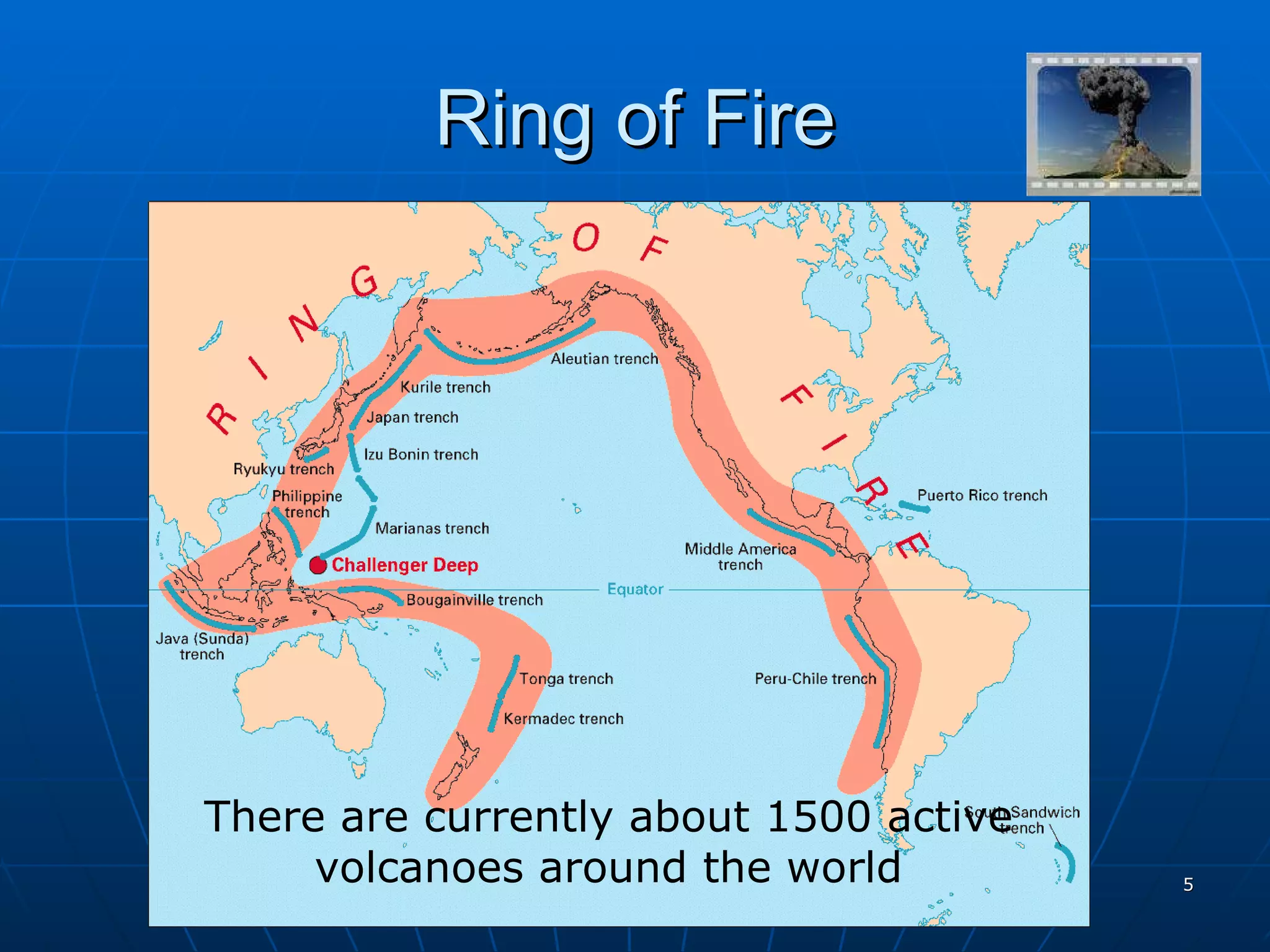
Individual Volcanoes  - Locations Subduction Zones: Association between volcanoes & subduction zones. Ring of Fire = Ring of Subduction Zones Continental Rift Zone: A few volcanoes are associated with rift zones. e.g. Kilimanjaro & others in east African rift. Hot Spots: Some coincide with plate boundaries, most don’t. e.g. Hawaii Galapagos Is., Iceland, Yellowstone.
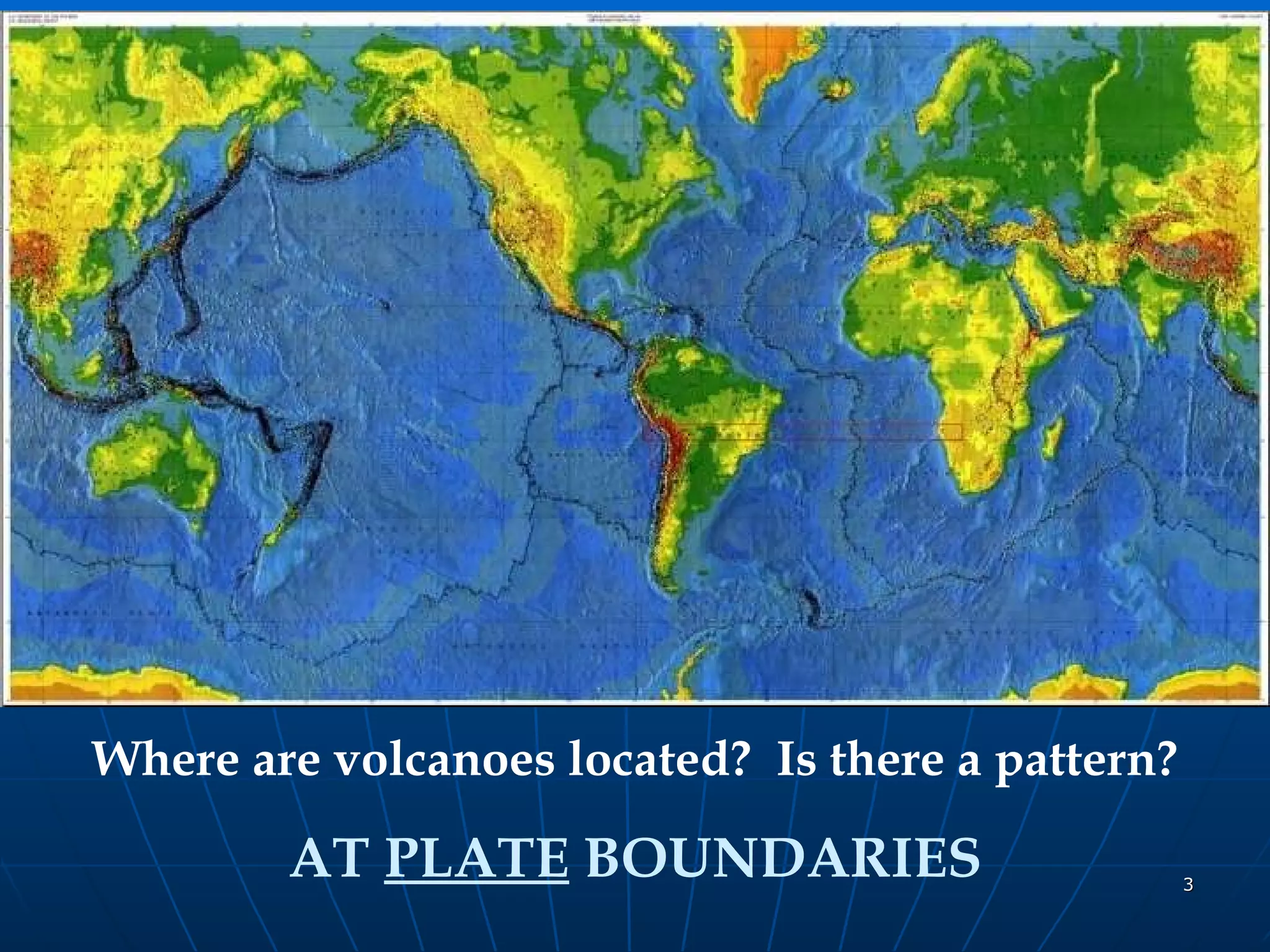
Where are volcanoes located?  Is there a pattern? AT  PLATE  BOUNDARIES
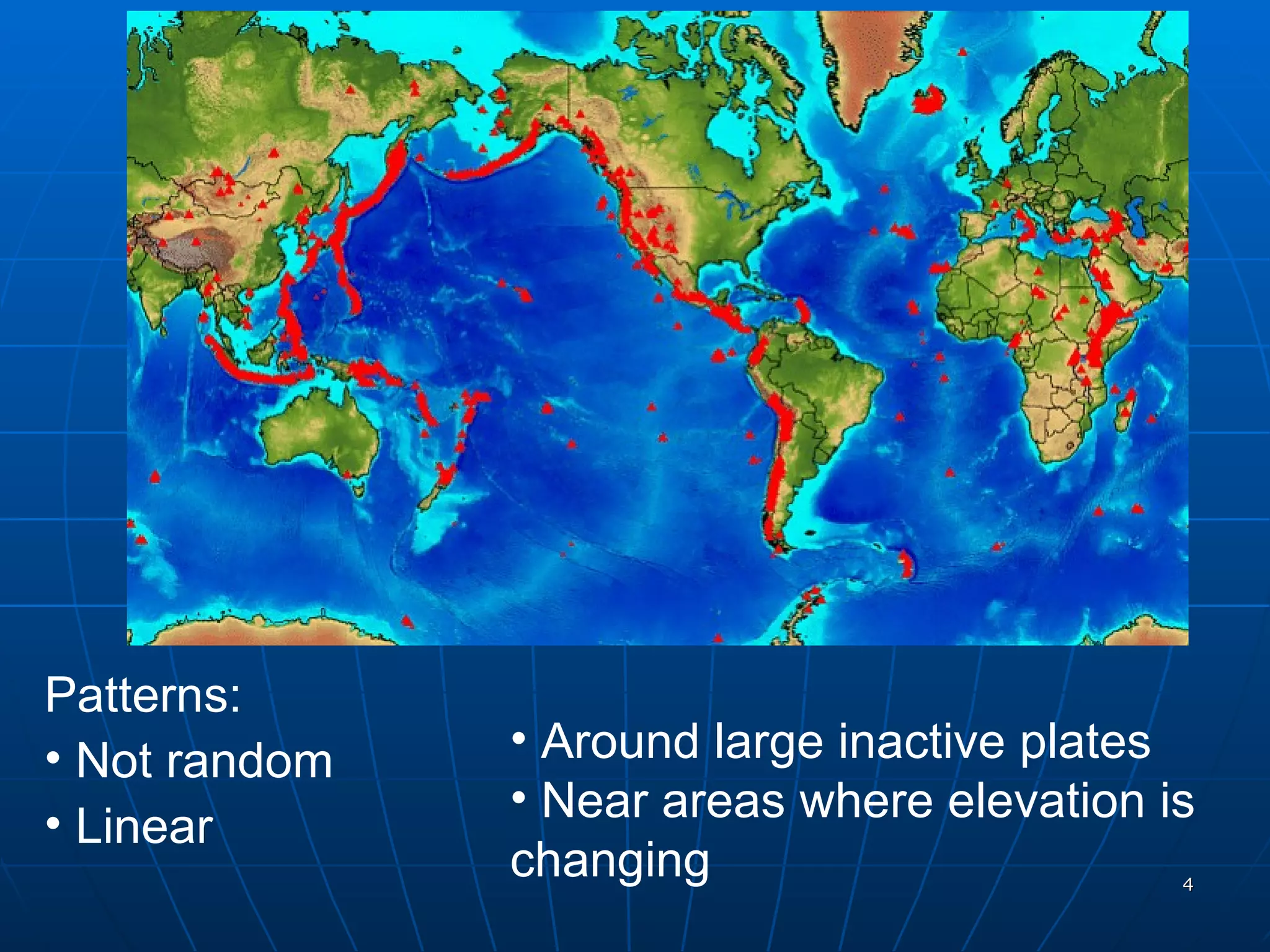
Patterns: Not random Linear Around large inactive plates Near areas where elevation is changing
Ring of Fire There are currently about 1500 active volcanoes around the world
Volcanoes Not currently erupting (but still could anytime) Dormant  (still has seismic activity and lava flow) Currently erupting Active Not able to erupt (permanently) Extinct  (no seismic activity, no magma flow) Magma Molten rock material  under  the surface of the earth Lava Molten rock material  above  the surface of the earth
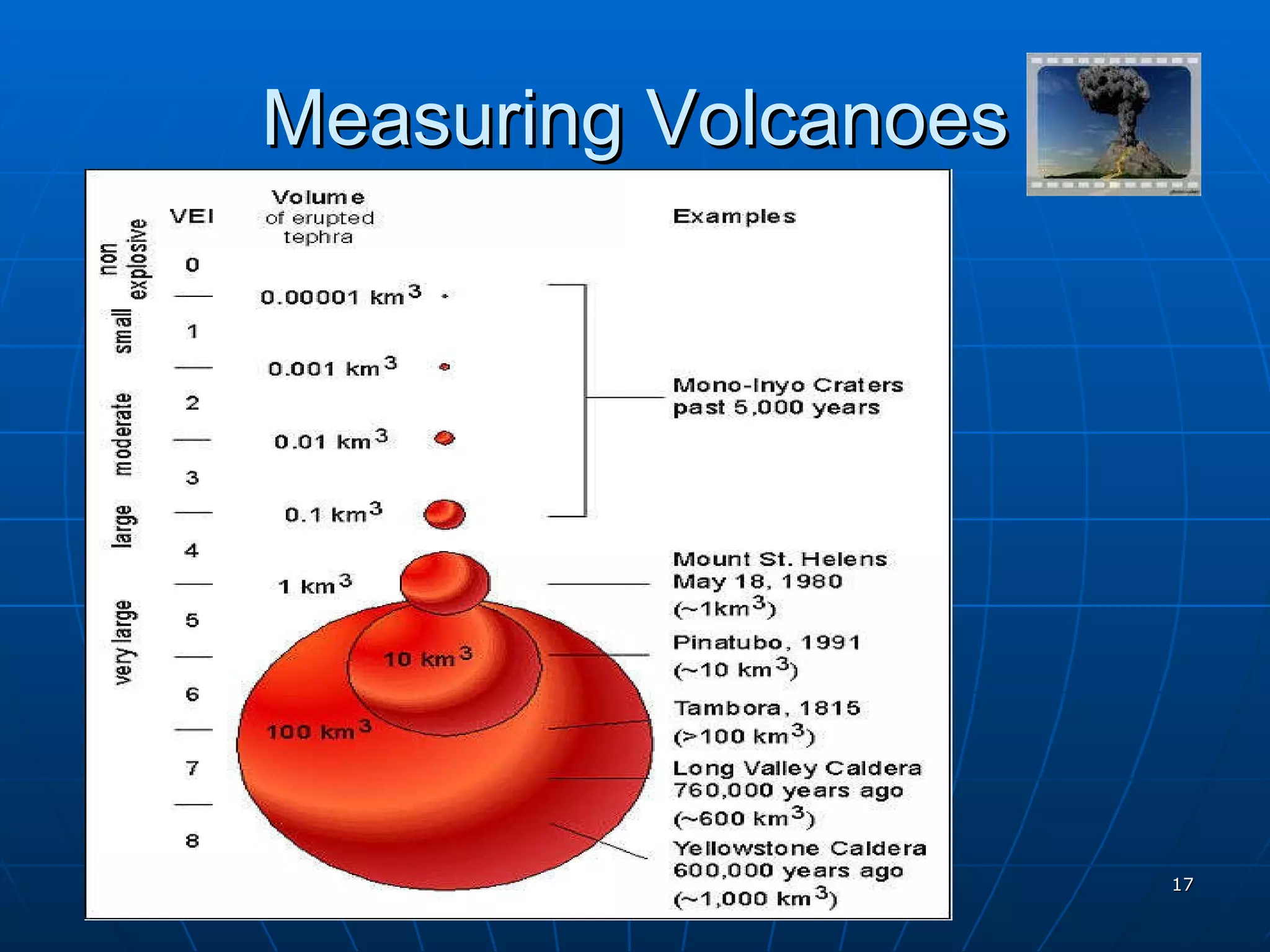
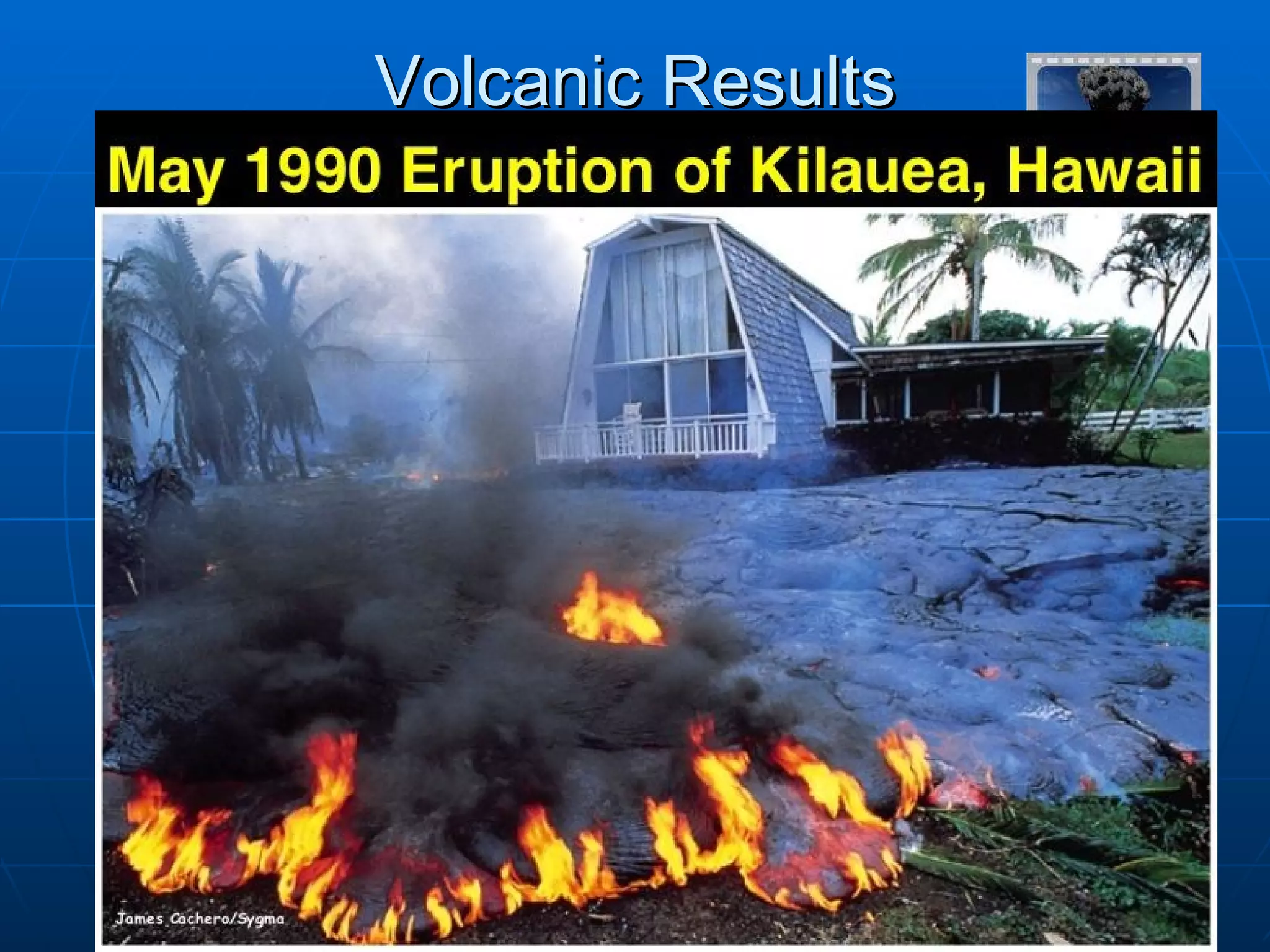
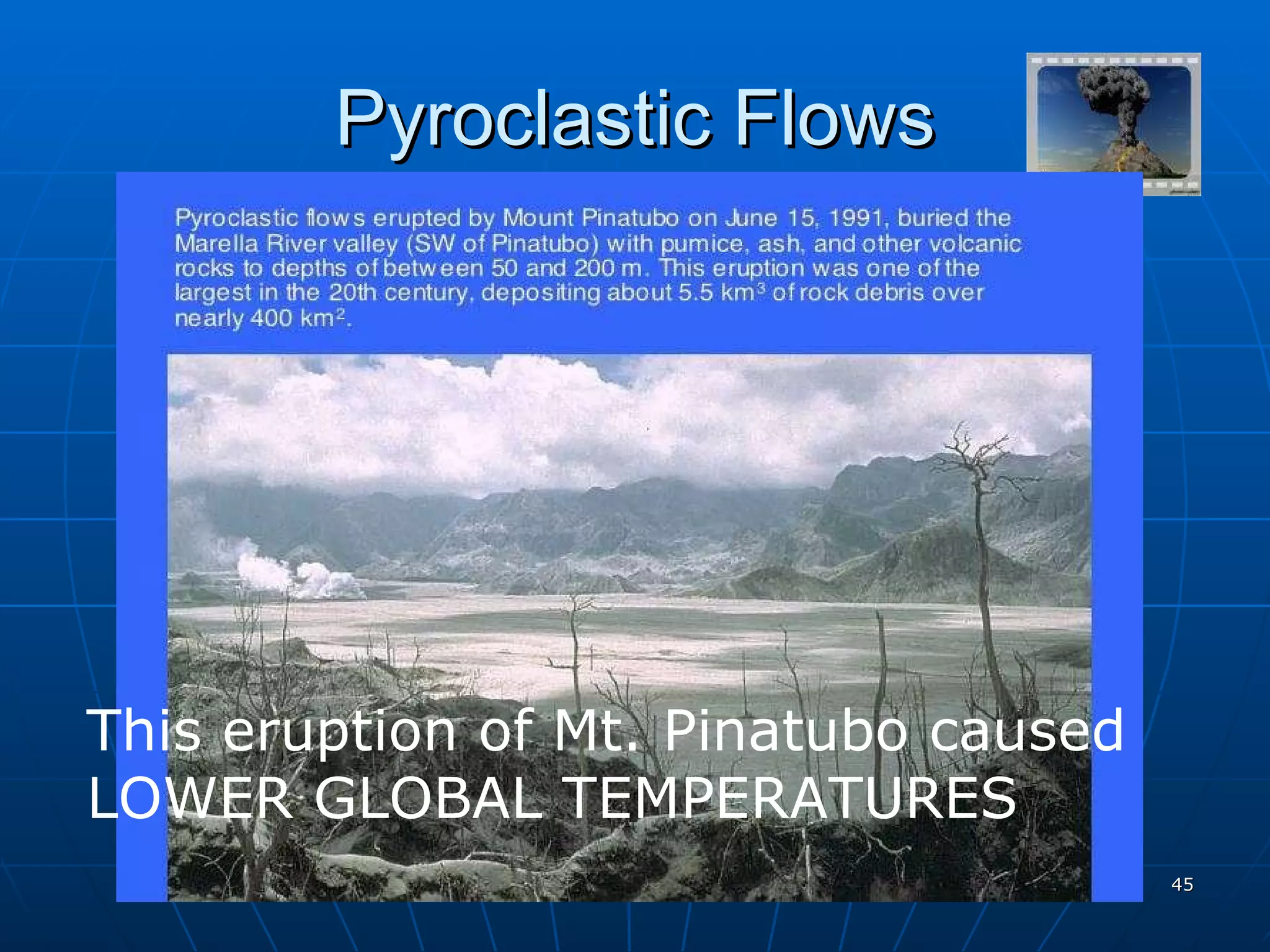
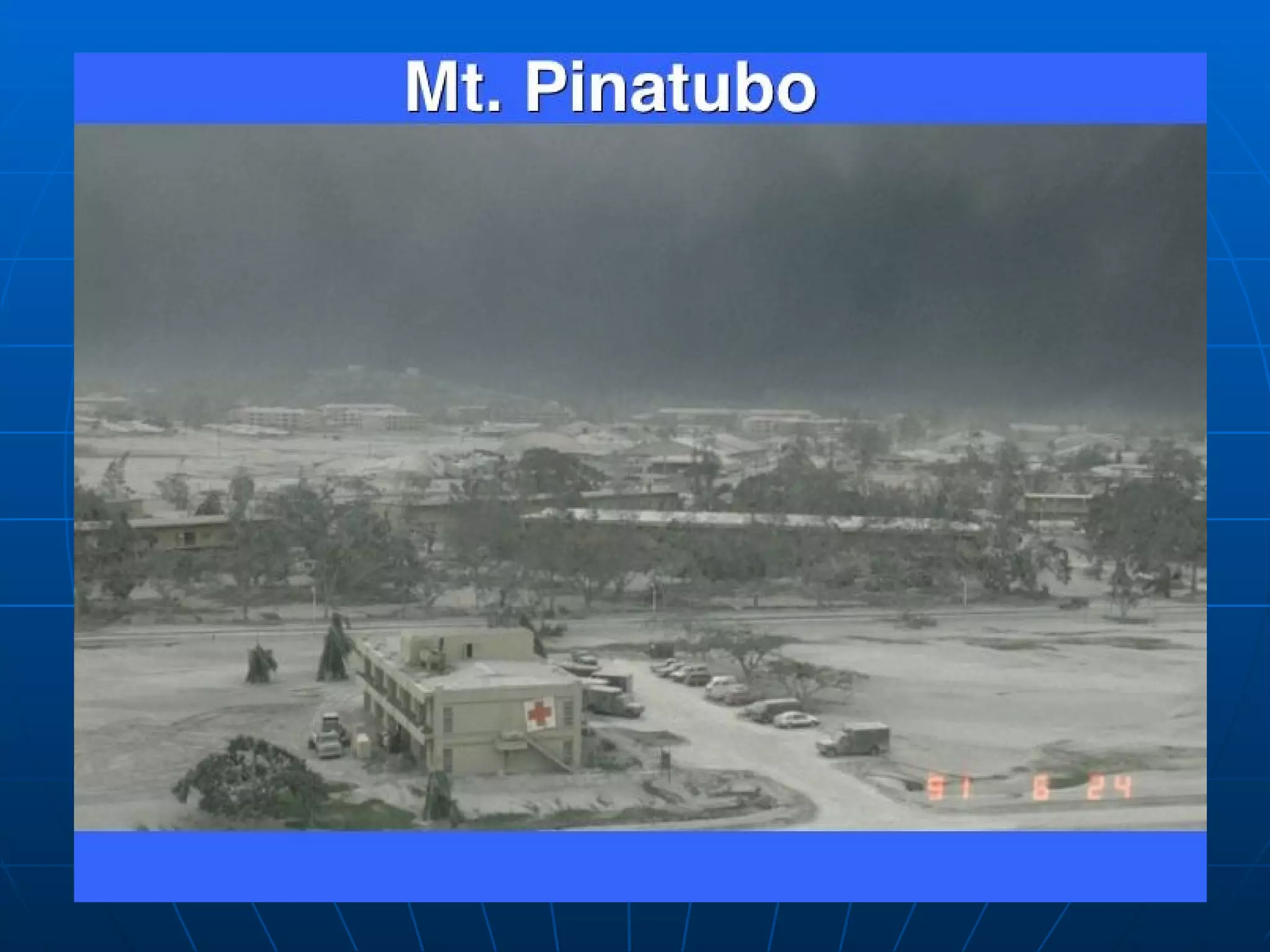
Volcanoes The  largest  most recent eruption in the  US  was  Mt. St. Helens  in  Washington State  in 1980 The  largest  most recent eruption  outside of the US  was Mt. Pinatubo in the Philippine Is. In 1991 Mt. Kilauea in Hawaii  is the world’s most  active  volcano
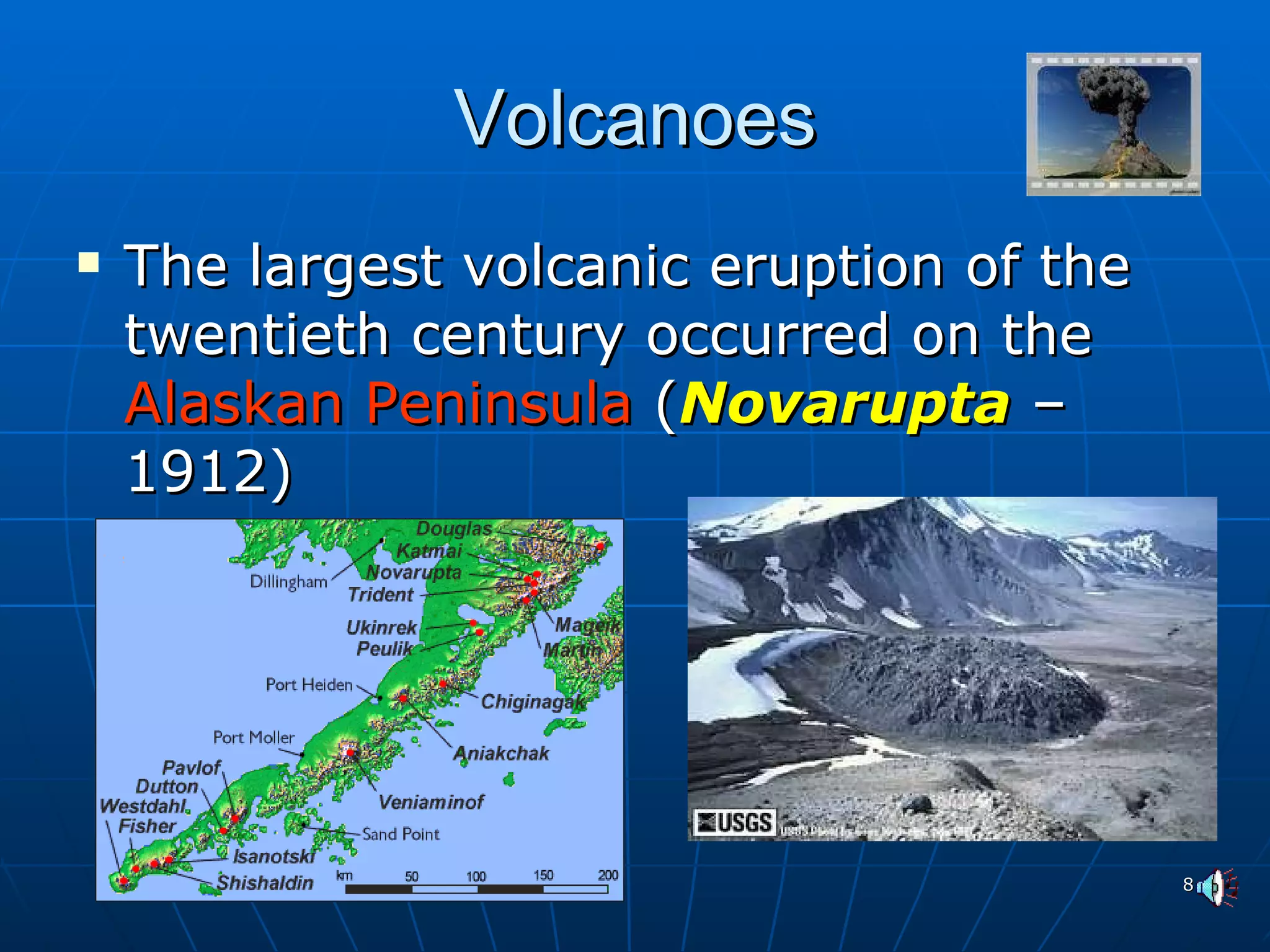
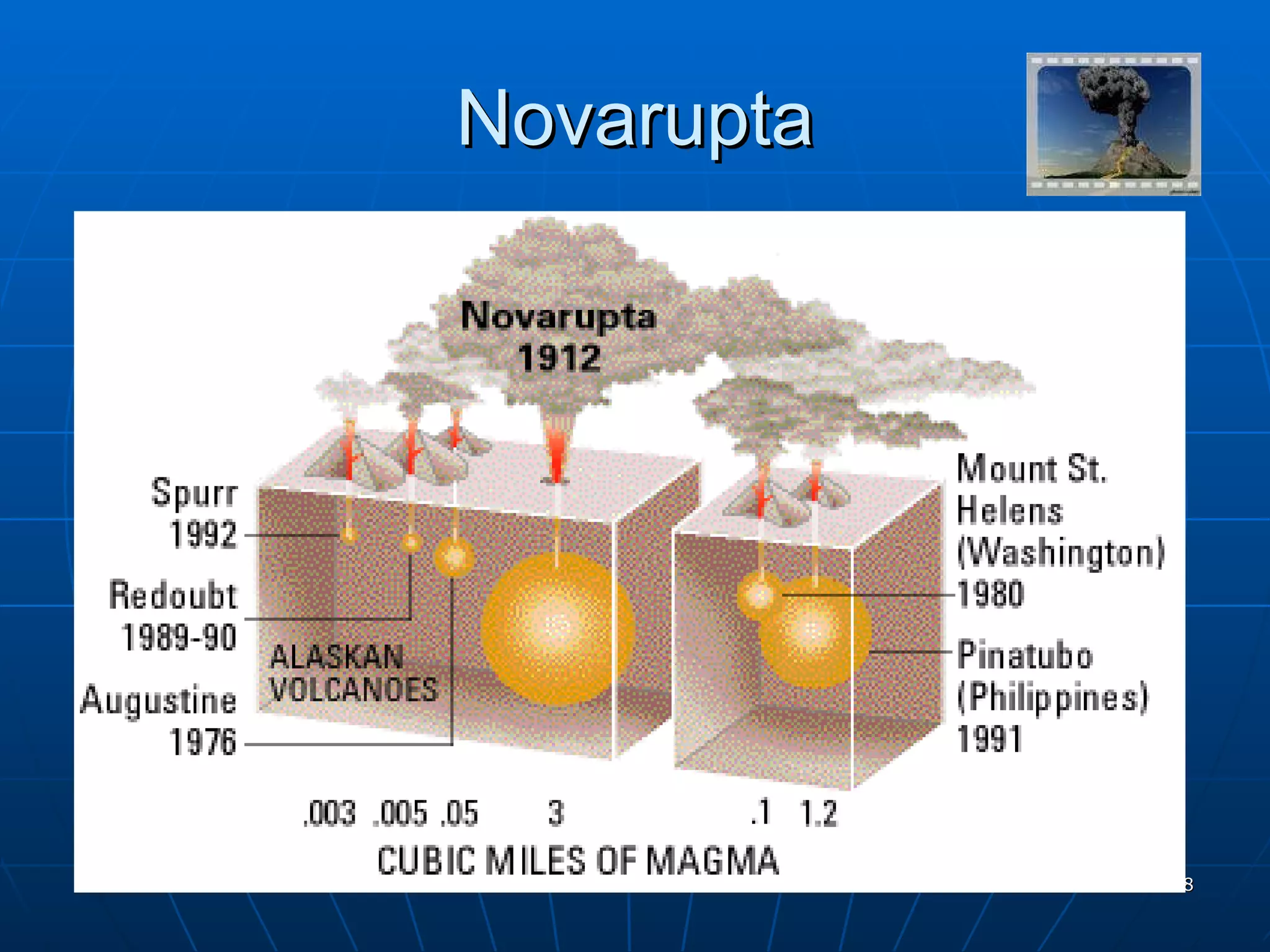
Volcanoes The largest volcanic eruption of the twentieth century occurred on the  Alaskan Peninsula  ( Novarupta  – 1912)
Volcanoes How do volcanoes form? Deep inside the earth, heat and pressure cause rock to melt and form magma Why is magma forced upward toward the earth’s surface? Magma is less dense than the rock around it, so it is forced upward towards the earth’s surface
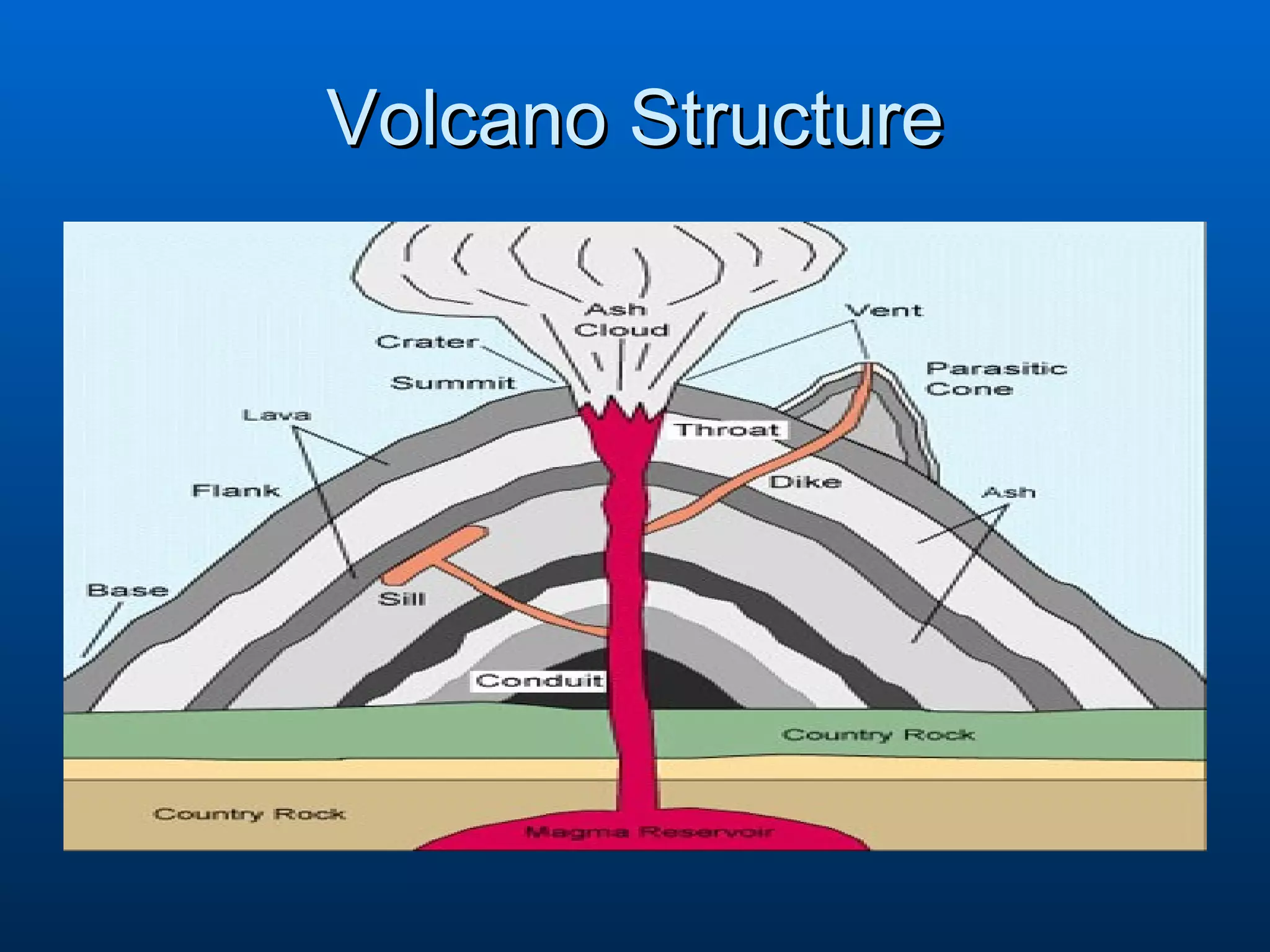
Volcanoes The opening at the top of a volcano is a Vent The steep walled depression around the vent is the  Crater
Volcano Structure
Volcanoes Where do volcanoes occur? Along plate boundaries and above hot spots AND rift boundaries A hot part in the middle of the mantle that melts rock that is then forced upward as magma Hotspot
Volcanoes An example of a volcanic area at divergent plate boundaries Mid Atlantic Ridge An example of a volcano at convergent plate boundaries  Soufriere Hills Volcano (Montserrat, West Indies – 1995)
Volcanoes Volcanic eruptions can be Explosive Violent Quiet What 3 factors control the style of a volcanic eruption Water Vapor Amount of trapped gases Magma composition
Volcanoes A volcanoes form depends on whether it is the result of a  QUIET  or and  EXPLOSIVE  eruption and whether it is made a  silica-rich  or  silica-poor  lava.
Magma! What is the difference between “lava” and “magma”?  Magma is  below  ground and lava is  above  ground.
Measuring Volcanoes
Novarupta
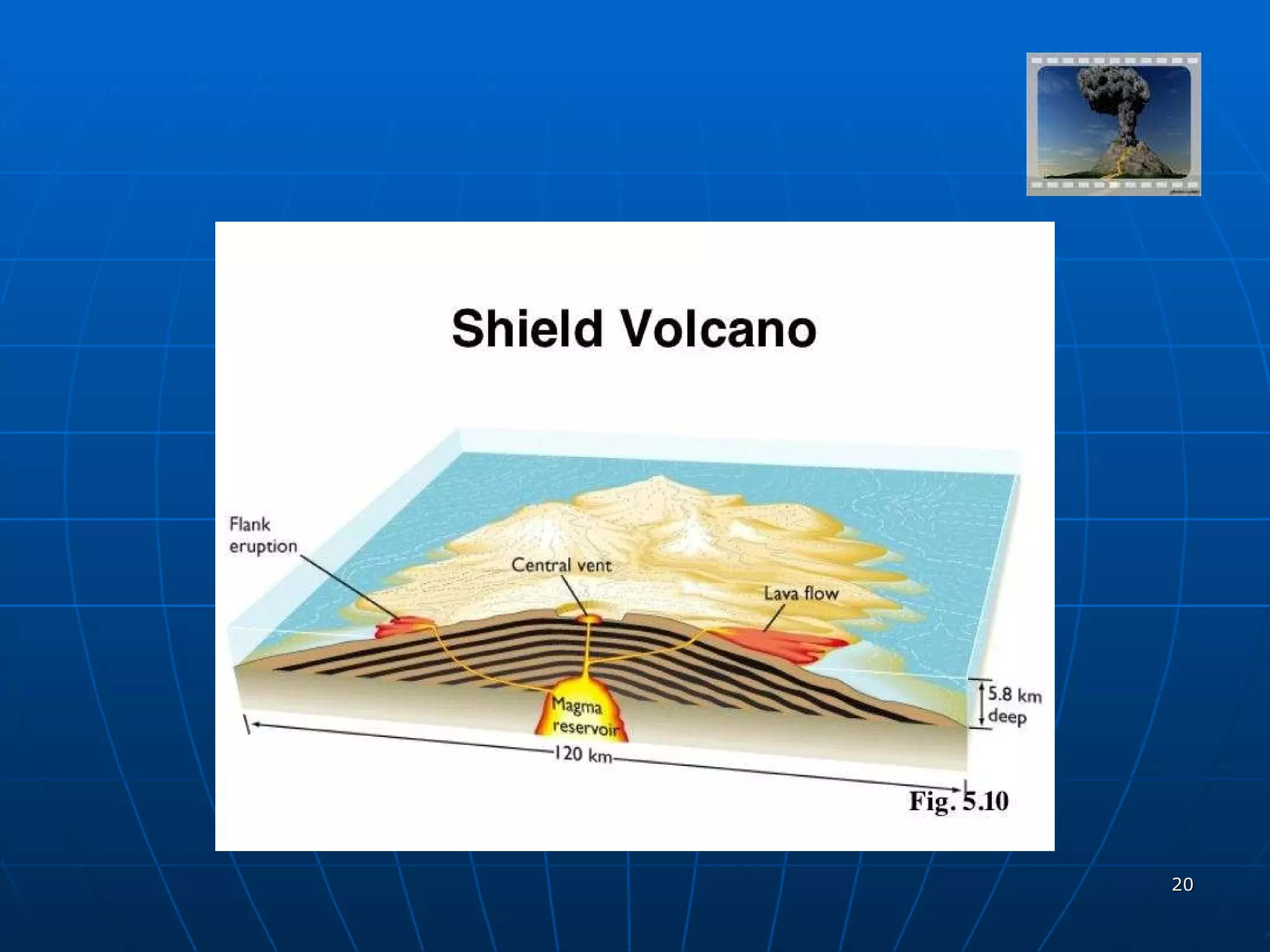
Volcanoes Shield Volcano:  A broad volcano with gently sloping sides, quiet eruptions, silica-poor lava. (ex. Hawaiian Islands)
 
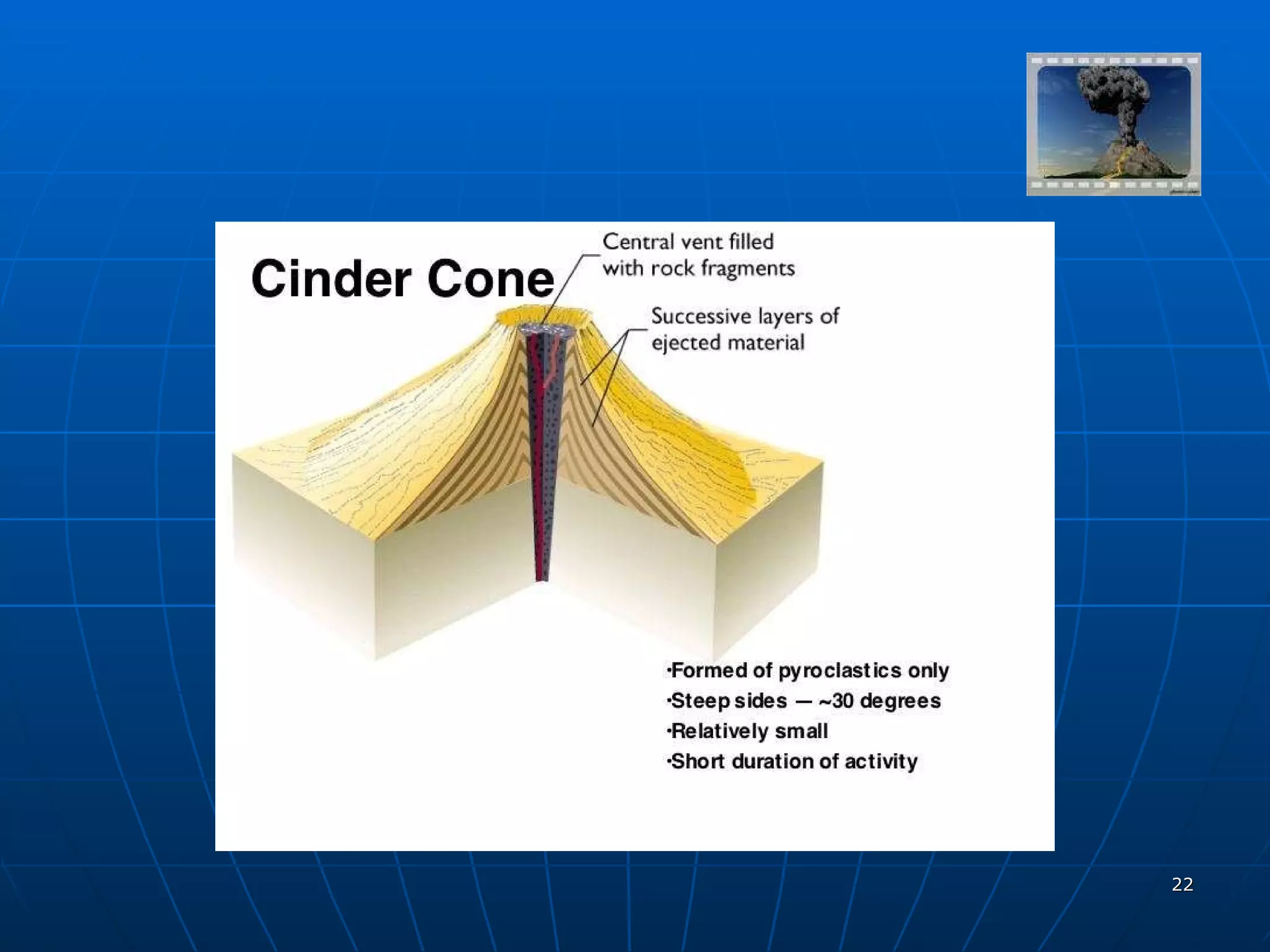
Volcanoes Cinder Cone Volcano:  steep sided volcano, explosive eruptions that throw lava and rock in the air, silica-rich lava (ex. Paricutin in Mexico)
 
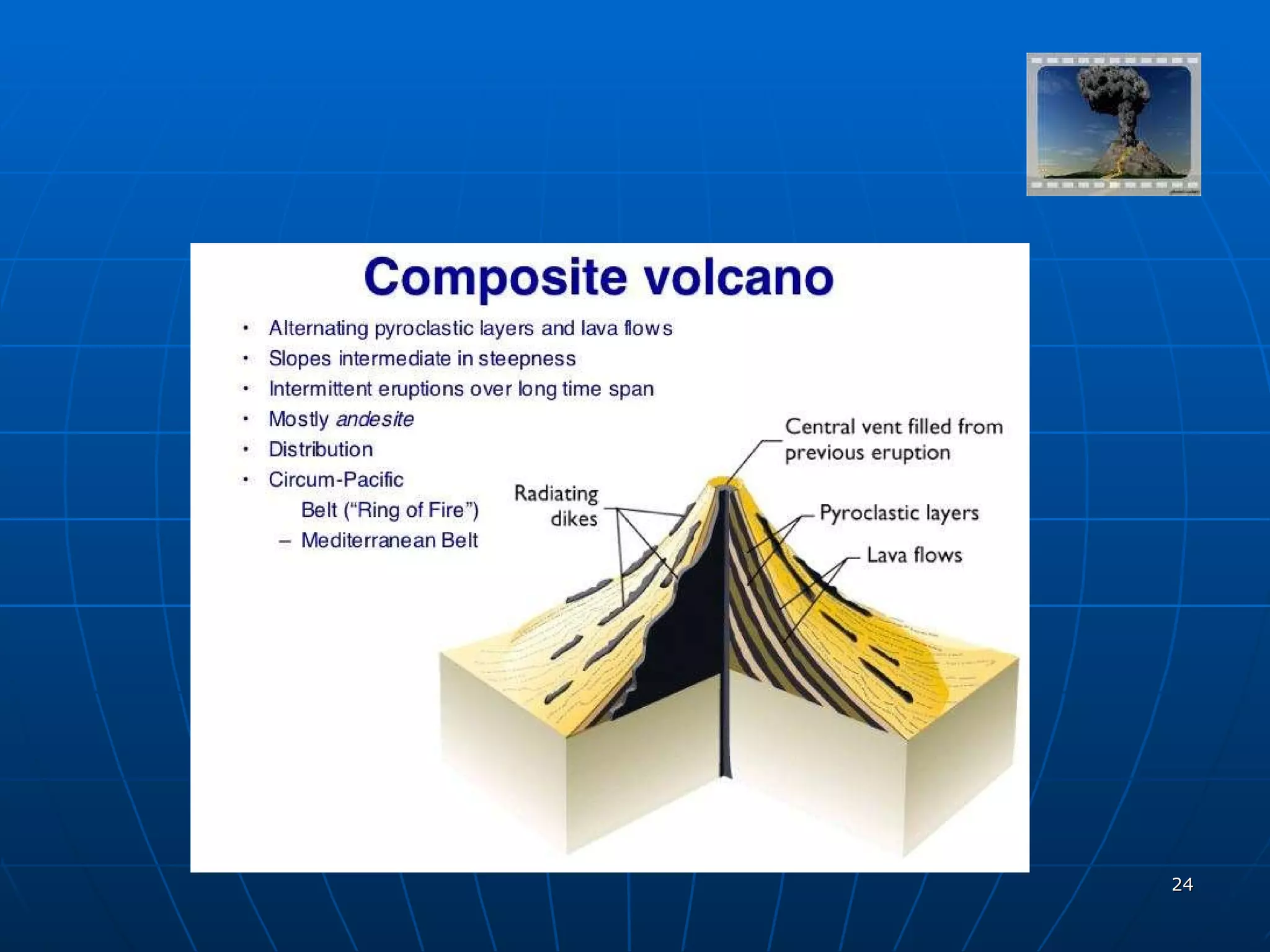
Volcanoes Composite Volcano:  a small volcano, both quiet and violent eruptions (ex. Mt. St. Helens) Also called “stratocones”
 
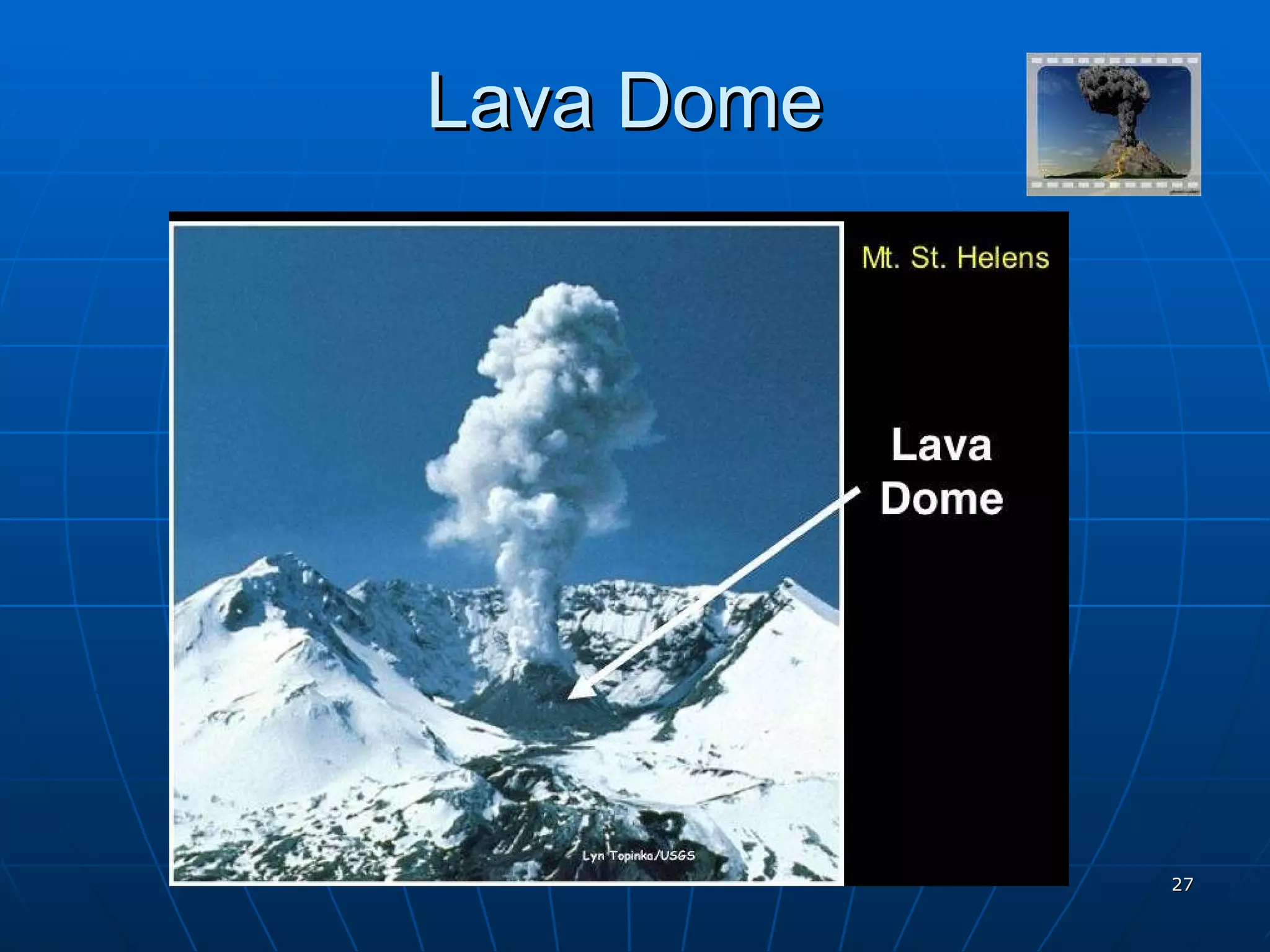
Volcanic (lava) Domes A volcanic dome is created when a body of viscous lava slowly pushes its way upward. An example is the Dome formed in crater left by 1980 eruption (explosion) of  Mount St. Helens.
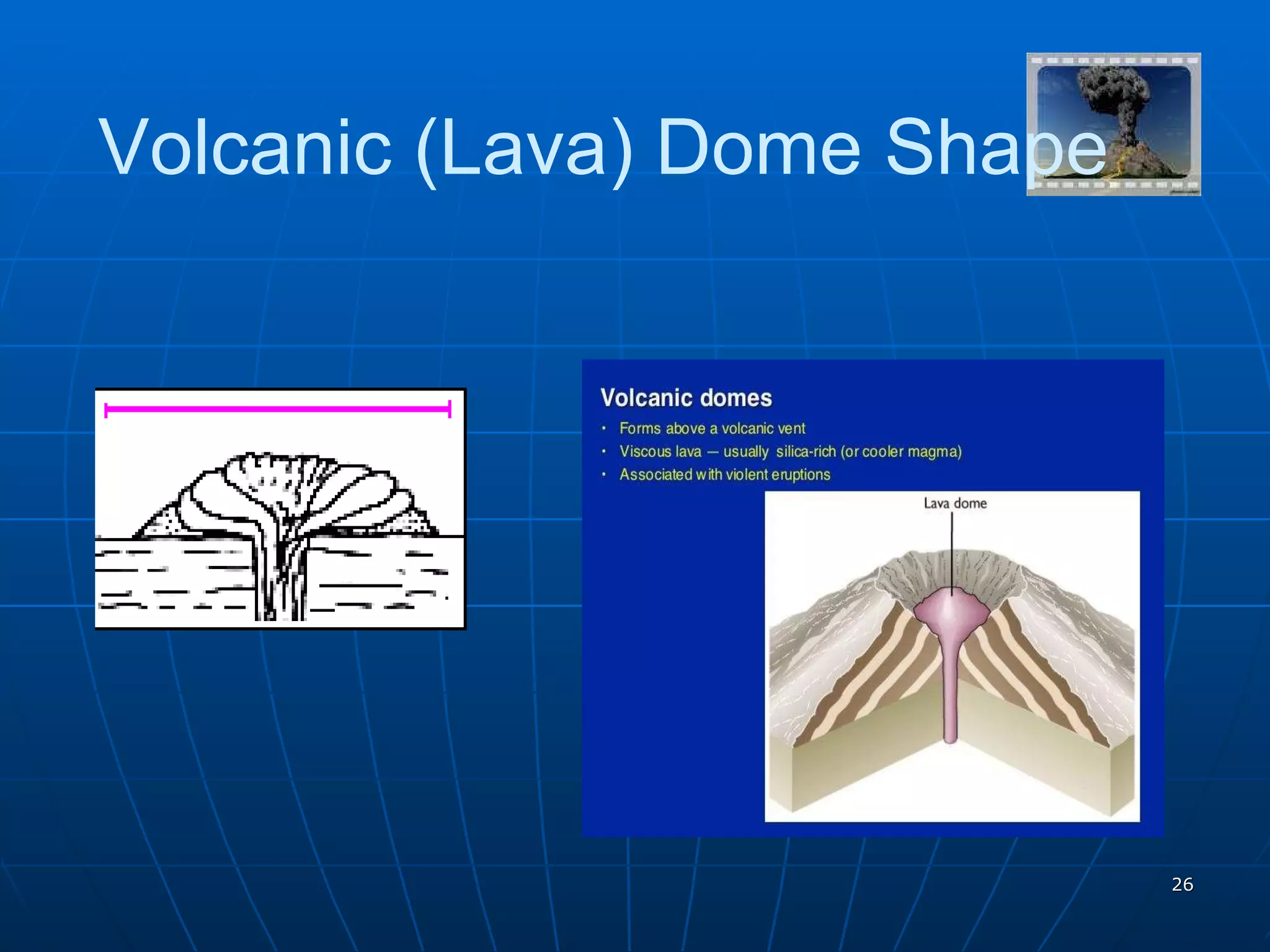
Volcanic (Lava) Dome Shape
Lava Dome
Volcanoes Tephra:  pieces of rock and solidified lava that fall from the air.
Igneous Rocks Volcanic eruptions are the results of the activity of  igneous rocks. Intrusive Rock  formed when magma cools UNDER the ground Extrusive Rock  form when magma cools ABOVE the ground
Igneous Rock Features Batholiths –  largest igneous rocks formed when magma cools  underground . Dike –  magma that is squeezed into a  generally  VERTICAL crack that cuts across rock layers and hardens Sill –  magma that is squeezed into a HORIZONTAL crack between rock layers and hardens
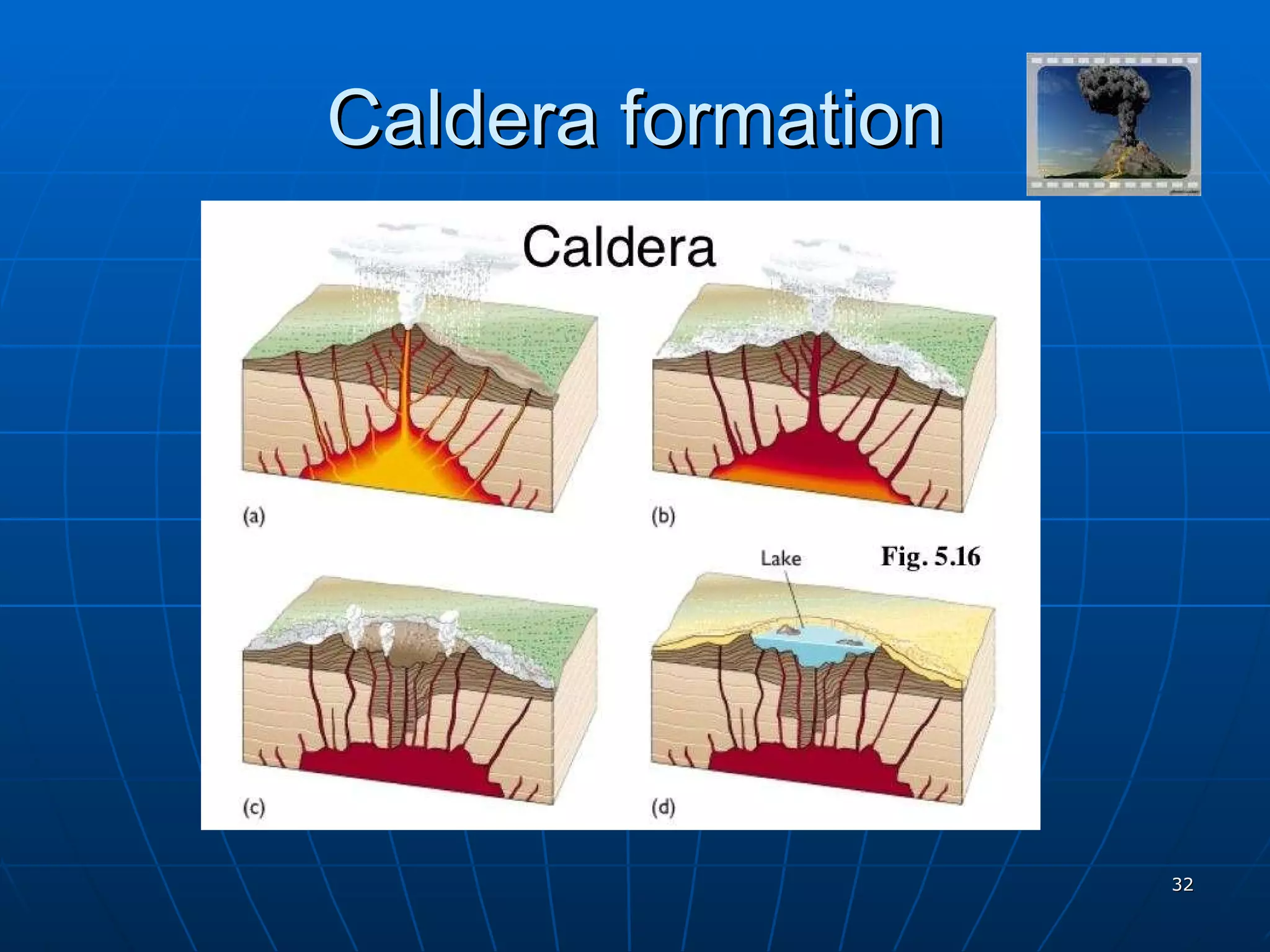
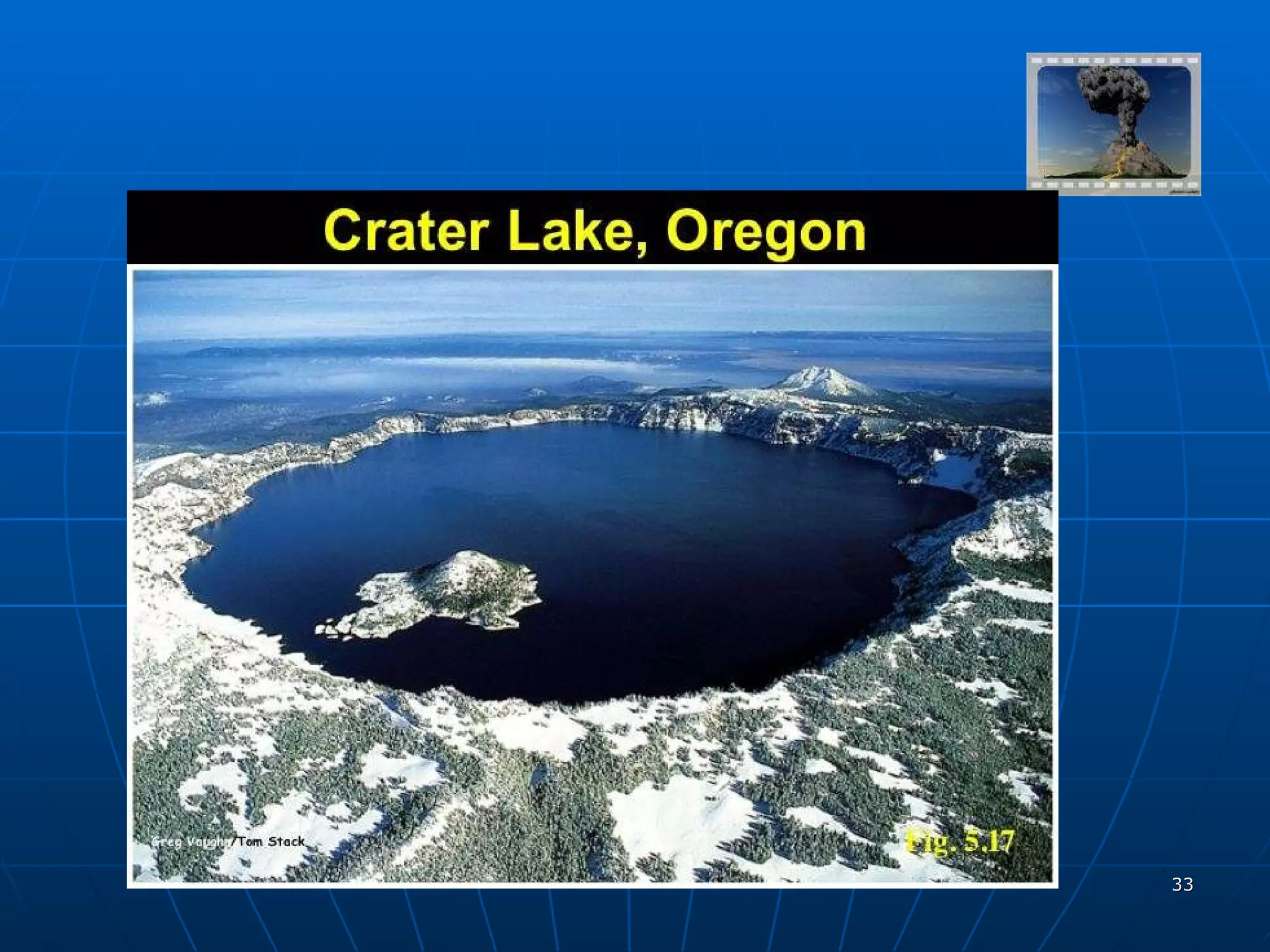
Volcanoes Volcanic Neck-  the solid igneous core of a volcano left behind when a volcano stops erupting Caldera –  large opening formed when a volcano collapses
Caldera formation
 
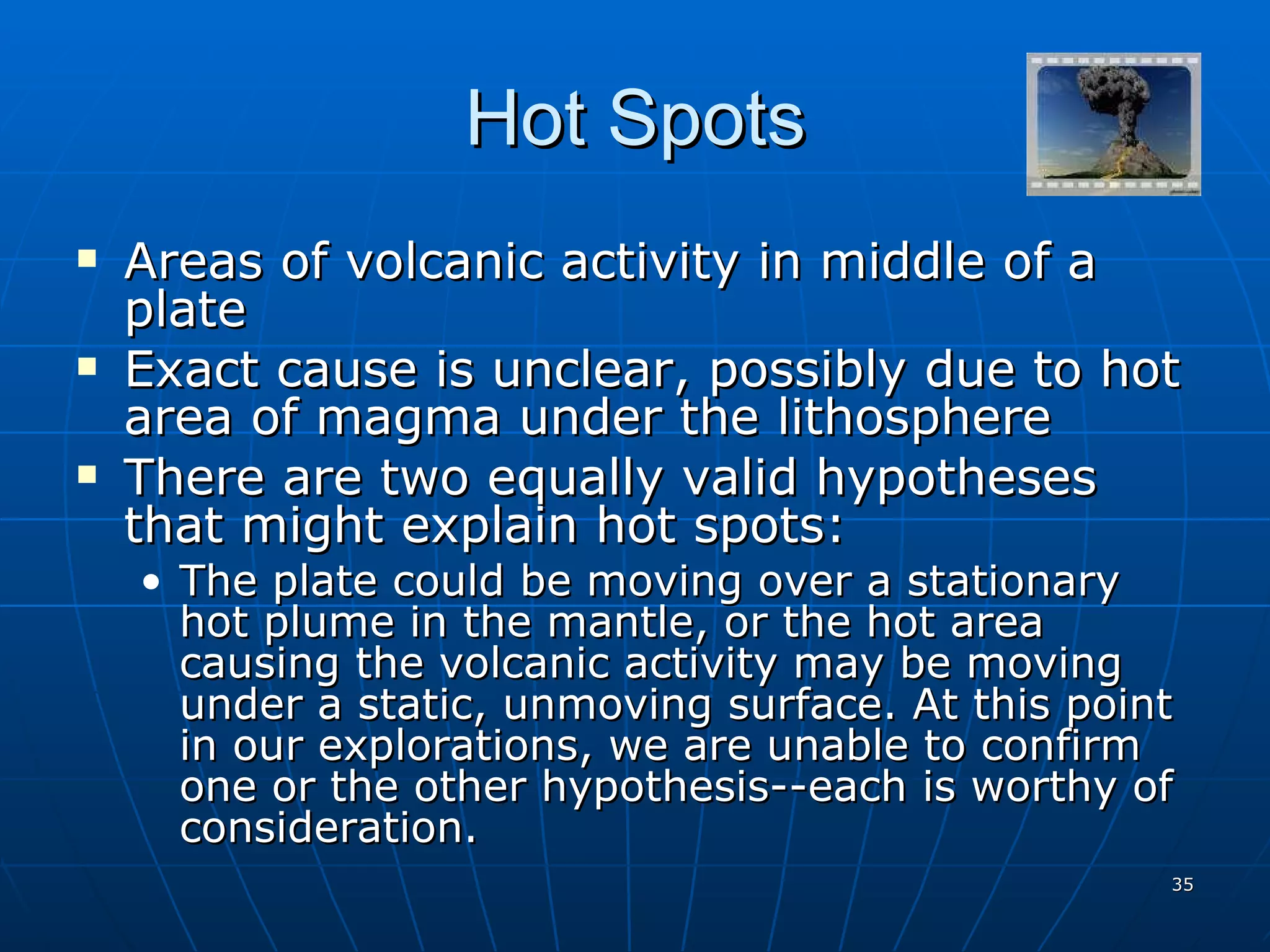
Volcanoes Igneous Rock  – formed when magma hardens below the ground. Eventually, the process of erosion wears down rock at the surface, exposing features such as  Batholiths Dikes Sills
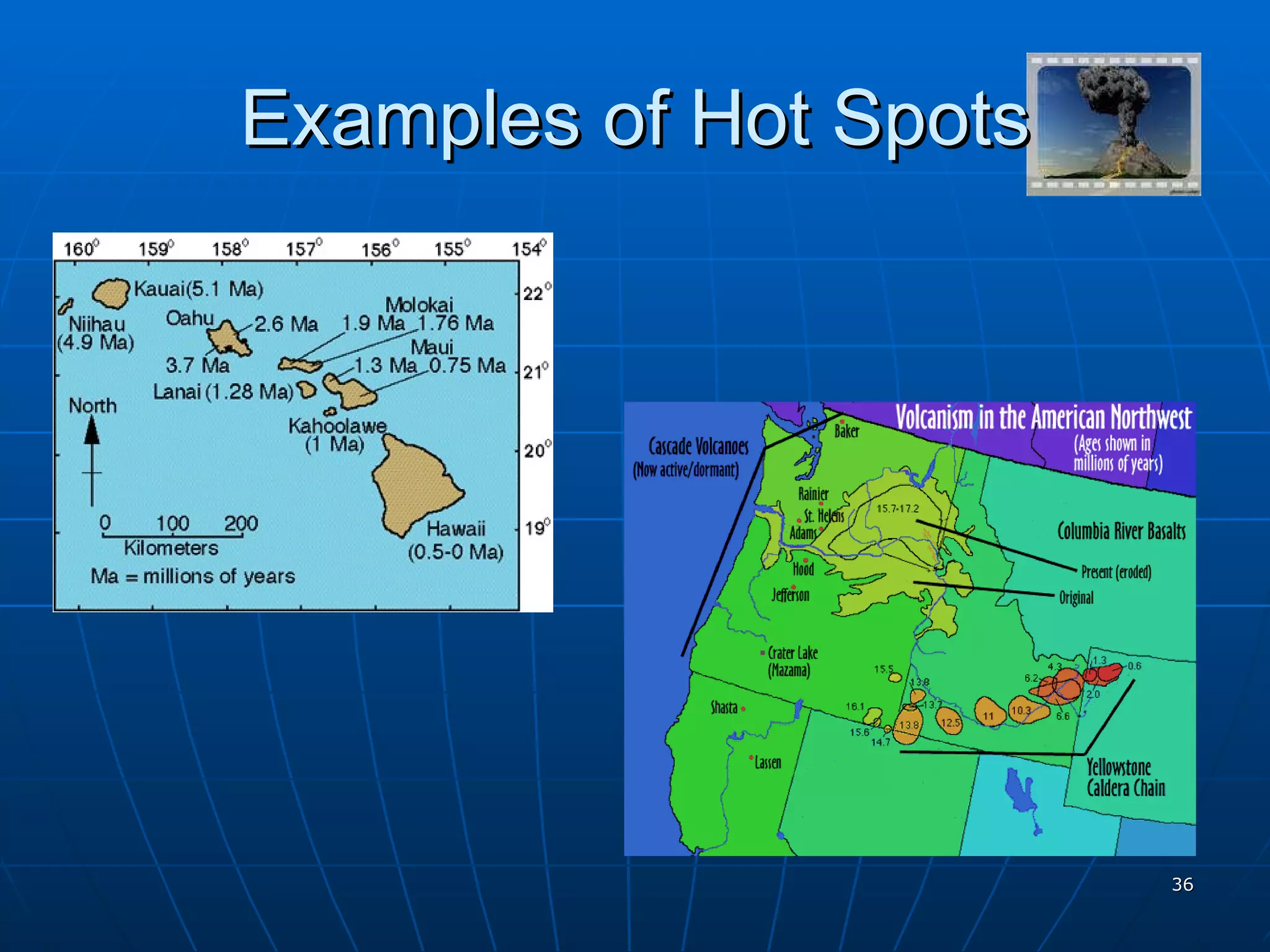
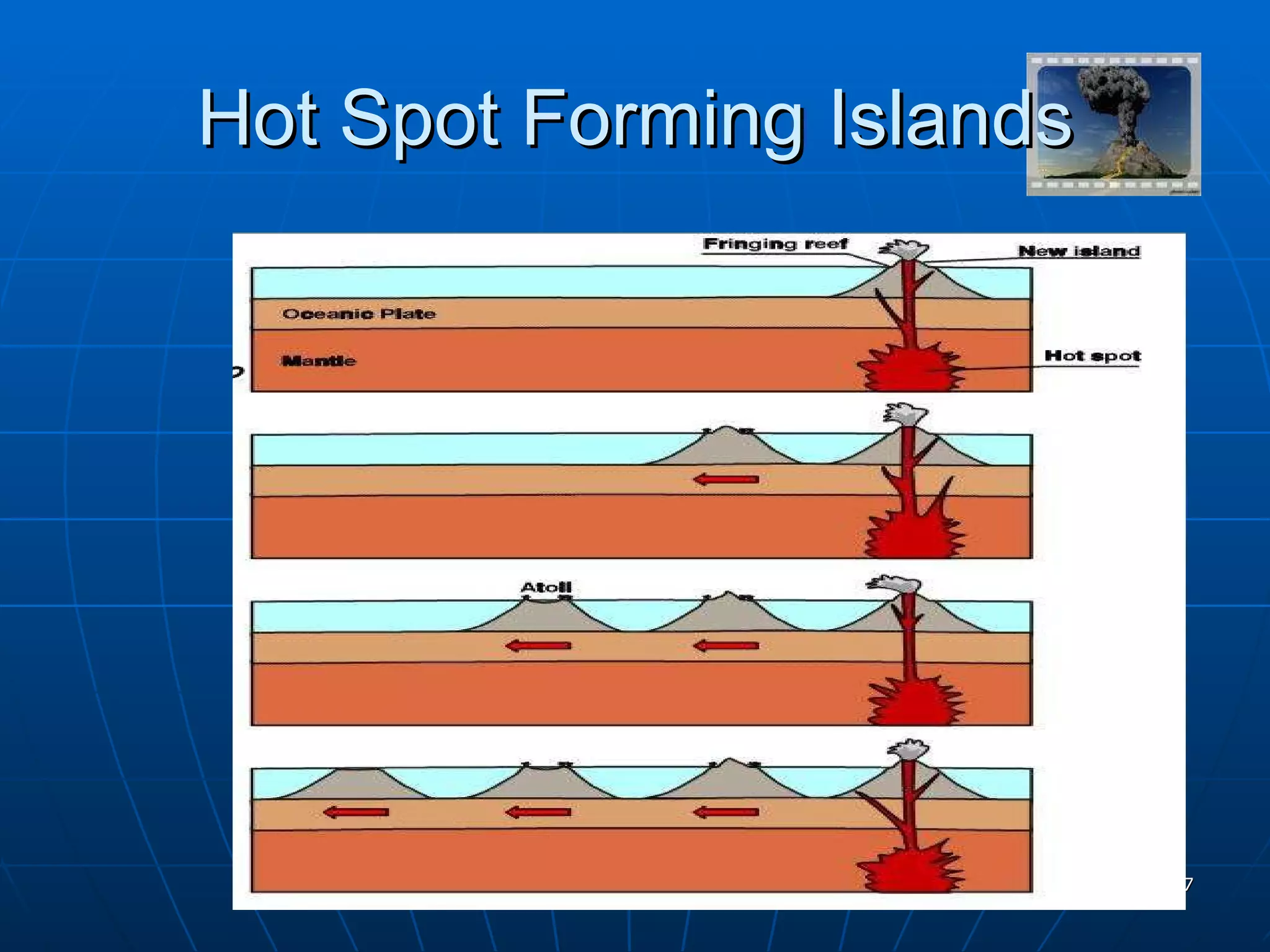
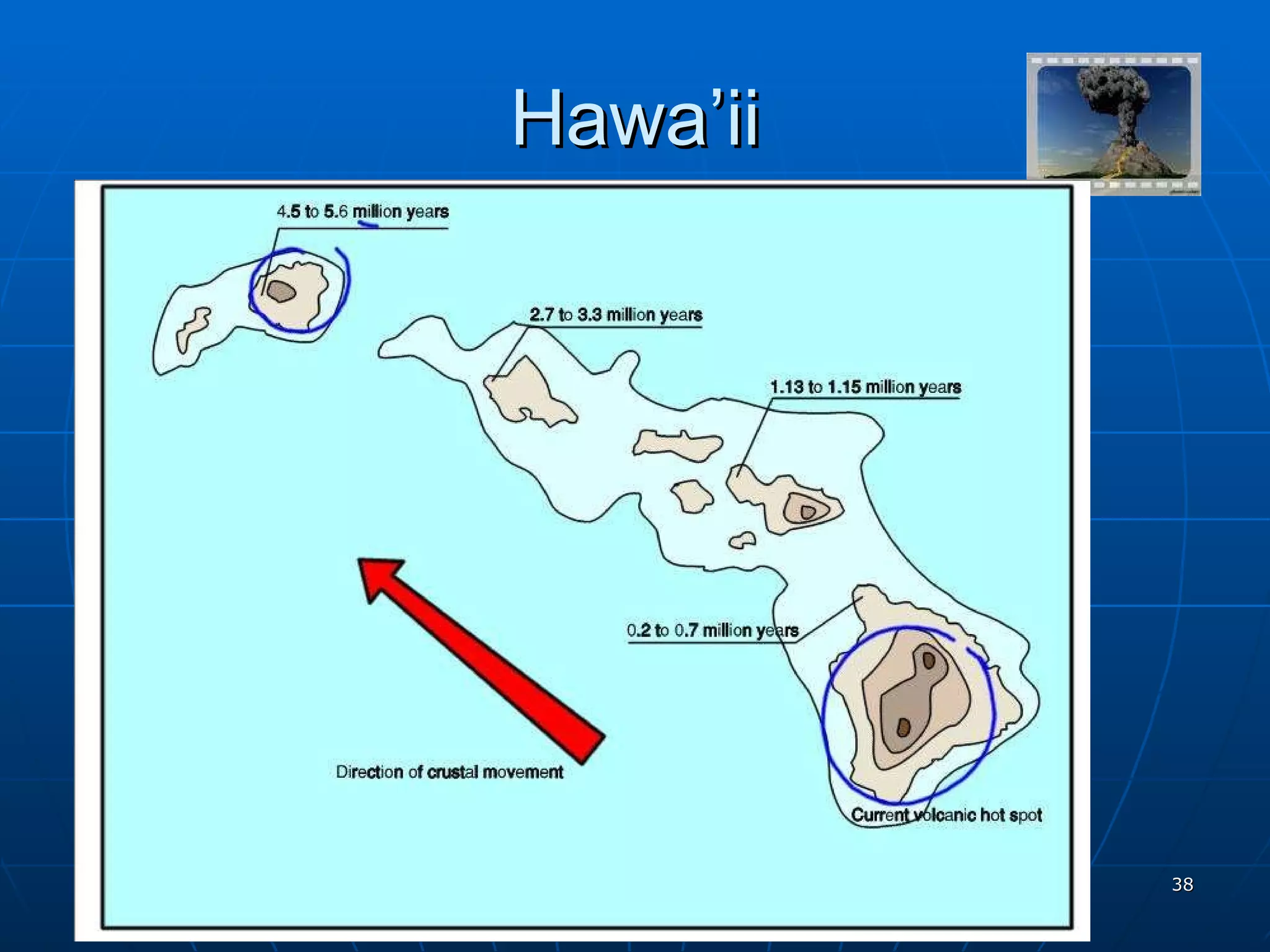
Hot Spots Areas of volcanic activity in middle of a plate Exact cause is unclear, possibly due to hot area of magma under the lithosphere There are two equally valid hypotheses that might explain hot spots: The plate could be moving over a stationary hot plume in the mantle, or the hot area causing the volcanic activity may be moving under a static, unmoving surface. At this point in our explorations, we are unable to confirm one or the other hypothesis--each is worthy of consideration.
Examples of Hot Spots
Hot Spot Forming Islands
Hawa’ii
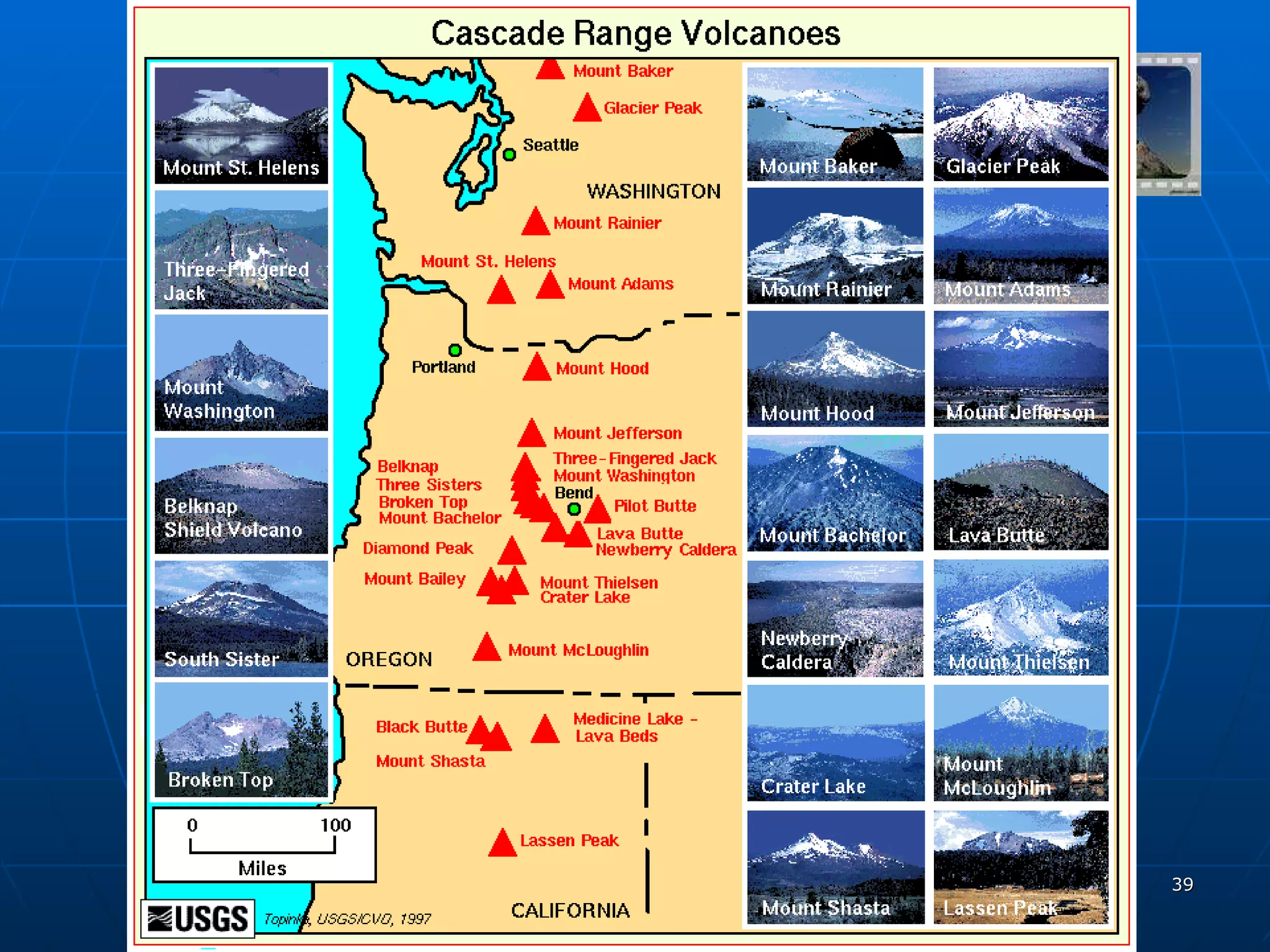
Cascade Range Volcanoes
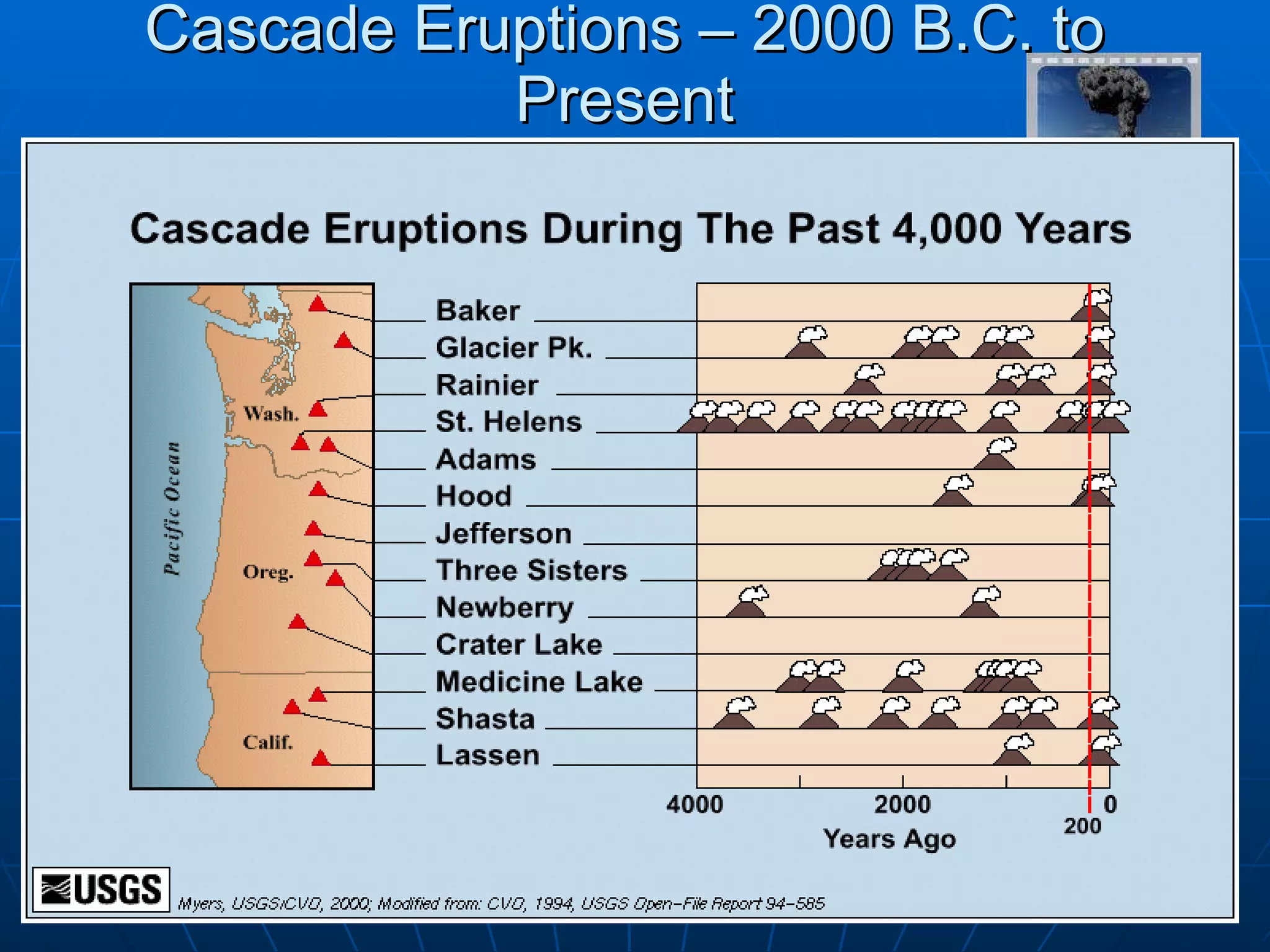
Cascade Eruptions – 2000 B.C. to Present
Volcanic Results
 
 
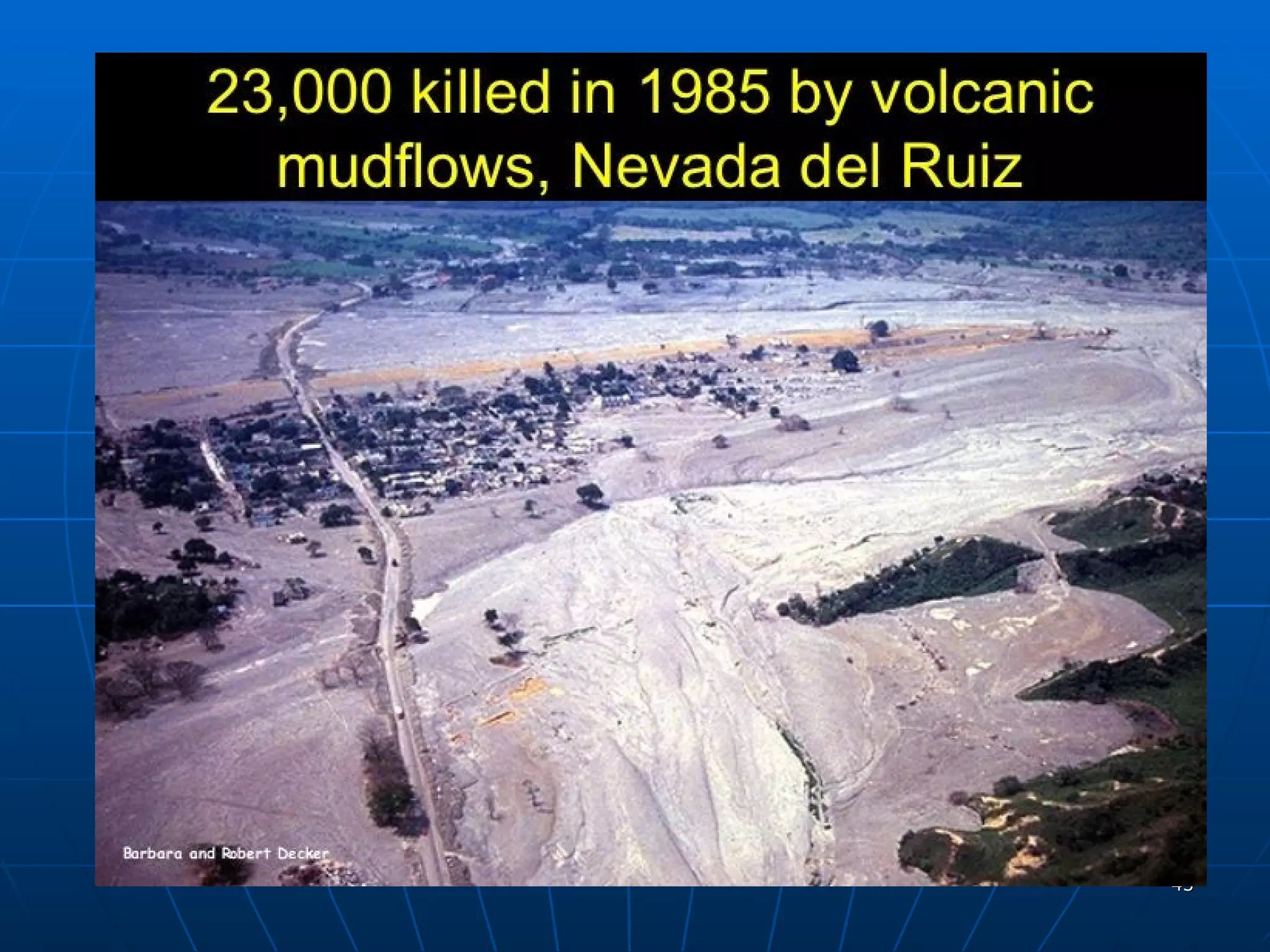
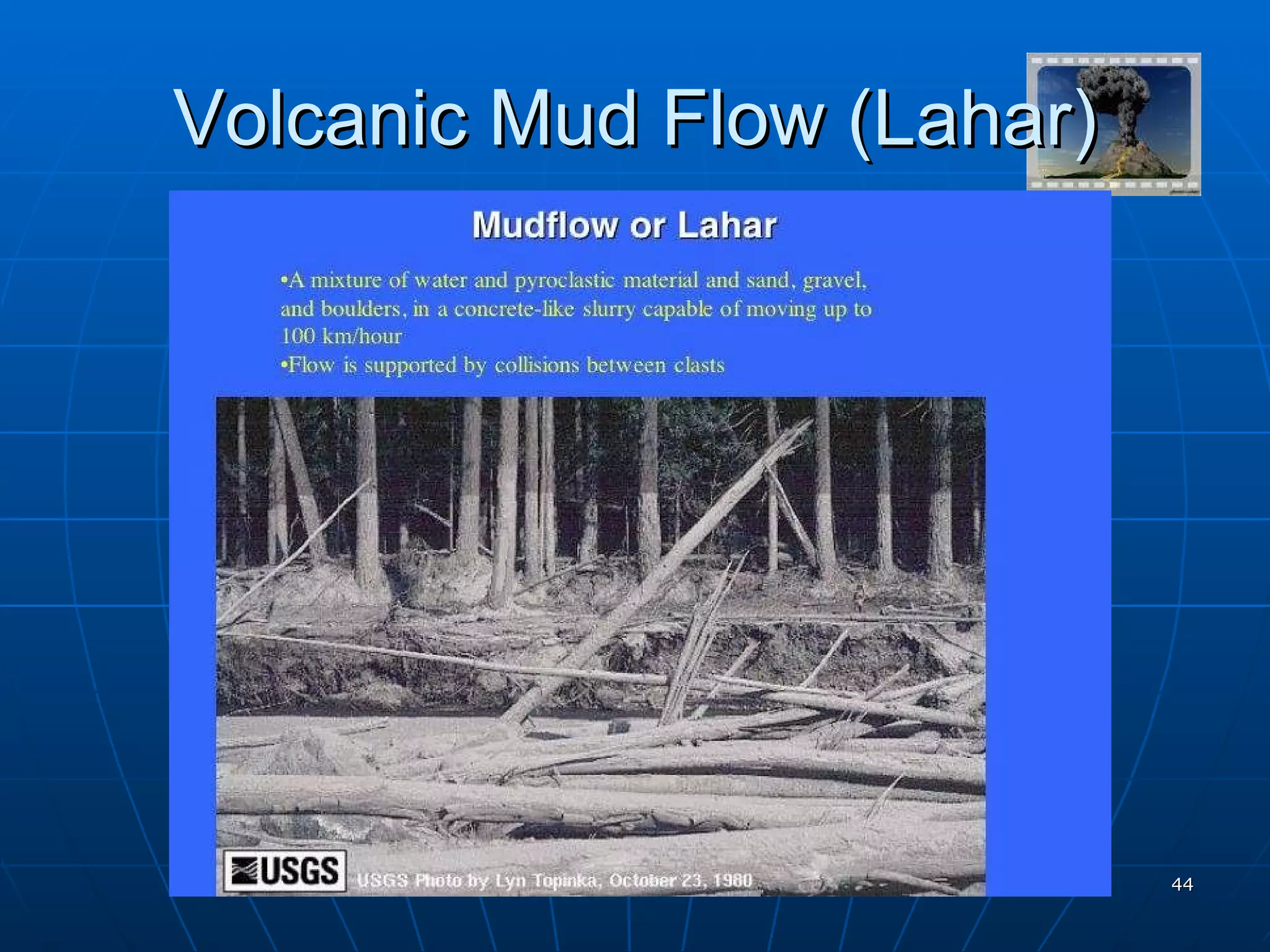
Volcanic Mud Flow (Lahar)
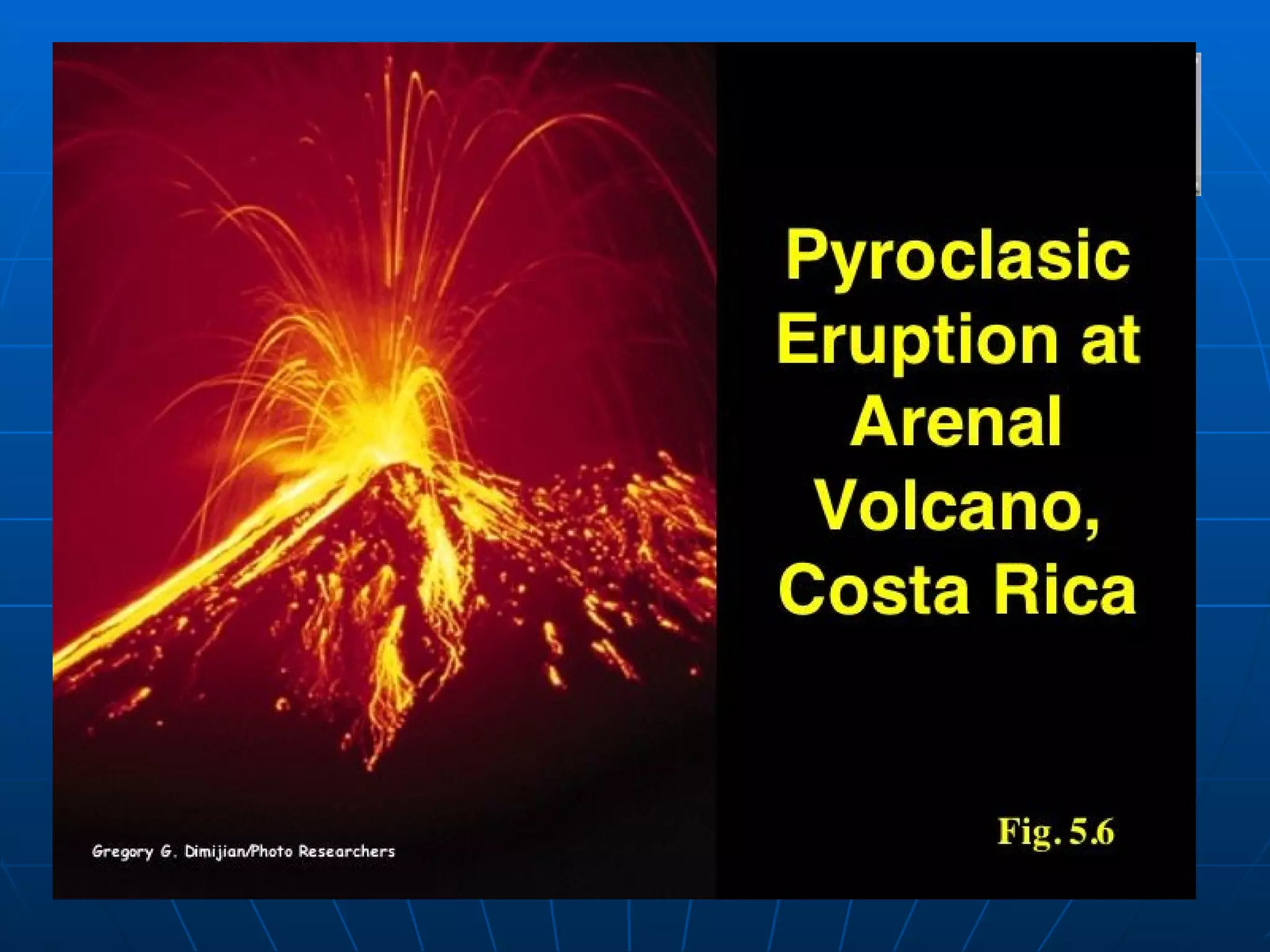
Pyroclastic Flows This eruption of Mt. Pinatubo caused  LOWER GLOBAL TEMPERATURES


Volcano Notes

  • 1.
  • 2.
    Individual Volcanoes - Locations Subduction Zones: Association between volcanoes & subduction zones. Ring of Fire = Ring of Subduction Zones Continental Rift Zone: A few volcanoes are associated with rift zones. e.g. Kilimanjaro & others in east African rift. Hot Spots: Some coincide with plate boundaries, most don’t. e.g. Hawaii Galapagos Is., Iceland, Yellowstone.
  • 3.
    Where are volcanoeslocated? Is there a pattern? AT PLATE BOUNDARIES
  • 4.
    Patterns: Not randomLinear Around large inactive plates Near areas where elevation is changing
  • 5.
    Ring of FireThere are currently about 1500 active volcanoes around the world
  • 6.
    Volcanoes Not currentlyerupting (but still could anytime) Dormant (still has seismic activity and lava flow) Currently erupting Active Not able to erupt (permanently) Extinct (no seismic activity, no magma flow) Magma Molten rock material under the surface of the earth Lava Molten rock material above the surface of the earth
  • 7.
    Volcanoes The largest most recent eruption in the US was Mt. St. Helens in Washington State in 1980 The largest most recent eruption outside of the US was Mt. Pinatubo in the Philippine Is. In 1991 Mt. Kilauea in Hawaii is the world’s most active volcano
  • 8.
    Volcanoes The largestvolcanic eruption of the twentieth century occurred on the Alaskan Peninsula ( Novarupta – 1912)
  • 9.
    Volcanoes How dovolcanoes form? Deep inside the earth, heat and pressure cause rock to melt and form magma Why is magma forced upward toward the earth’s surface? Magma is less dense than the rock around it, so it is forced upward towards the earth’s surface
  • 10.
    Volcanoes The openingat the top of a volcano is a Vent The steep walled depression around the vent is the Crater
  • 11.
  • 12.
    Volcanoes Where dovolcanoes occur? Along plate boundaries and above hot spots AND rift boundaries A hot part in the middle of the mantle that melts rock that is then forced upward as magma Hotspot
  • 13.
    Volcanoes An exampleof a volcanic area at divergent plate boundaries Mid Atlantic Ridge An example of a volcano at convergent plate boundaries Soufriere Hills Volcano (Montserrat, West Indies – 1995)
  • 14.
    Volcanoes Volcanic eruptionscan be Explosive Violent Quiet What 3 factors control the style of a volcanic eruption Water Vapor Amount of trapped gases Magma composition
  • 15.
    Volcanoes A volcanoesform depends on whether it is the result of a QUIET or and EXPLOSIVE eruption and whether it is made a silica-rich or silica-poor lava.
  • 16.
    Magma! What isthe difference between “lava” and “magma”? Magma is below ground and lava is above ground.
  • 17.
  • 18.
  • 19.
    Volcanoes Shield Volcano: A broad volcano with gently sloping sides, quiet eruptions, silica-poor lava. (ex. Hawaiian Islands)
  • 20.
  • 21.
    Volcanoes Cinder ConeVolcano: steep sided volcano, explosive eruptions that throw lava and rock in the air, silica-rich lava (ex. Paricutin in Mexico)
  • 22.
  • 23.
    Volcanoes Composite Volcano: a small volcano, both quiet and violent eruptions (ex. Mt. St. Helens) Also called “stratocones”
  • 24.
  • 25.
    Volcanic (lava) DomesA volcanic dome is created when a body of viscous lava slowly pushes its way upward. An example is the Dome formed in crater left by 1980 eruption (explosion) of Mount St. Helens.
  • 26.
  • 27.
  • 28.
    Volcanoes Tephra: pieces of rock and solidified lava that fall from the air.
  • 29.
    Igneous Rocks Volcaniceruptions are the results of the activity of igneous rocks. Intrusive Rock formed when magma cools UNDER the ground Extrusive Rock form when magma cools ABOVE the ground
  • 30.
    Igneous Rock FeaturesBatholiths – largest igneous rocks formed when magma cools underground . Dike – magma that is squeezed into a generally VERTICAL crack that cuts across rock layers and hardens Sill – magma that is squeezed into a HORIZONTAL crack between rock layers and hardens
  • 31.
    Volcanoes Volcanic Neck- the solid igneous core of a volcano left behind when a volcano stops erupting Caldera – large opening formed when a volcano collapses
  • 32.
  • 33.
  • 34.
    Volcanoes Igneous Rock – formed when magma hardens below the ground. Eventually, the process of erosion wears down rock at the surface, exposing features such as Batholiths Dikes Sills
  • 35.
    Hot Spots Areasof volcanic activity in middle of a plate Exact cause is unclear, possibly due to hot area of magma under the lithosphere There are two equally valid hypotheses that might explain hot spots: The plate could be moving over a stationary hot plume in the mantle, or the hot area causing the volcanic activity may be moving under a static, unmoving surface. At this point in our explorations, we are unable to confirm one or the other hypothesis--each is worthy of consideration.
  • 36.
  • 37.
  • 38.
  • 39.
  • 40.
    Cascade Eruptions –2000 B.C. to Present
  • 41.
  • 42.
  • 43.
  • 44.
  • 45.
    Pyroclastic Flows Thiseruption of Mt. Pinatubo caused LOWER GLOBAL TEMPERATURES
  • 46.
  • 47.