Concept of QUALITY CIRCLES
Voluntary group of employee and supervisor


8-10 members


QC works on the basic of a continuous & on going process in an organization.


In 1960s first quality circle develop.


Developed in Japan, it spread to more than 50 countries.

‘’ Wherever they are, human beings are human being’’. Ishikawa wrote this book in a 1980
preface to the English translation of the Koryo.

Middle and upper management the parent-teacher.
Employees want to do a good job.

Employees want to be recognized as intelligent and
interested who like to participate in decision making issues.

Employees want to be better informed about organizational
goals and problem.

Employees want recognition and responsibility and a feeling
of self esteem.
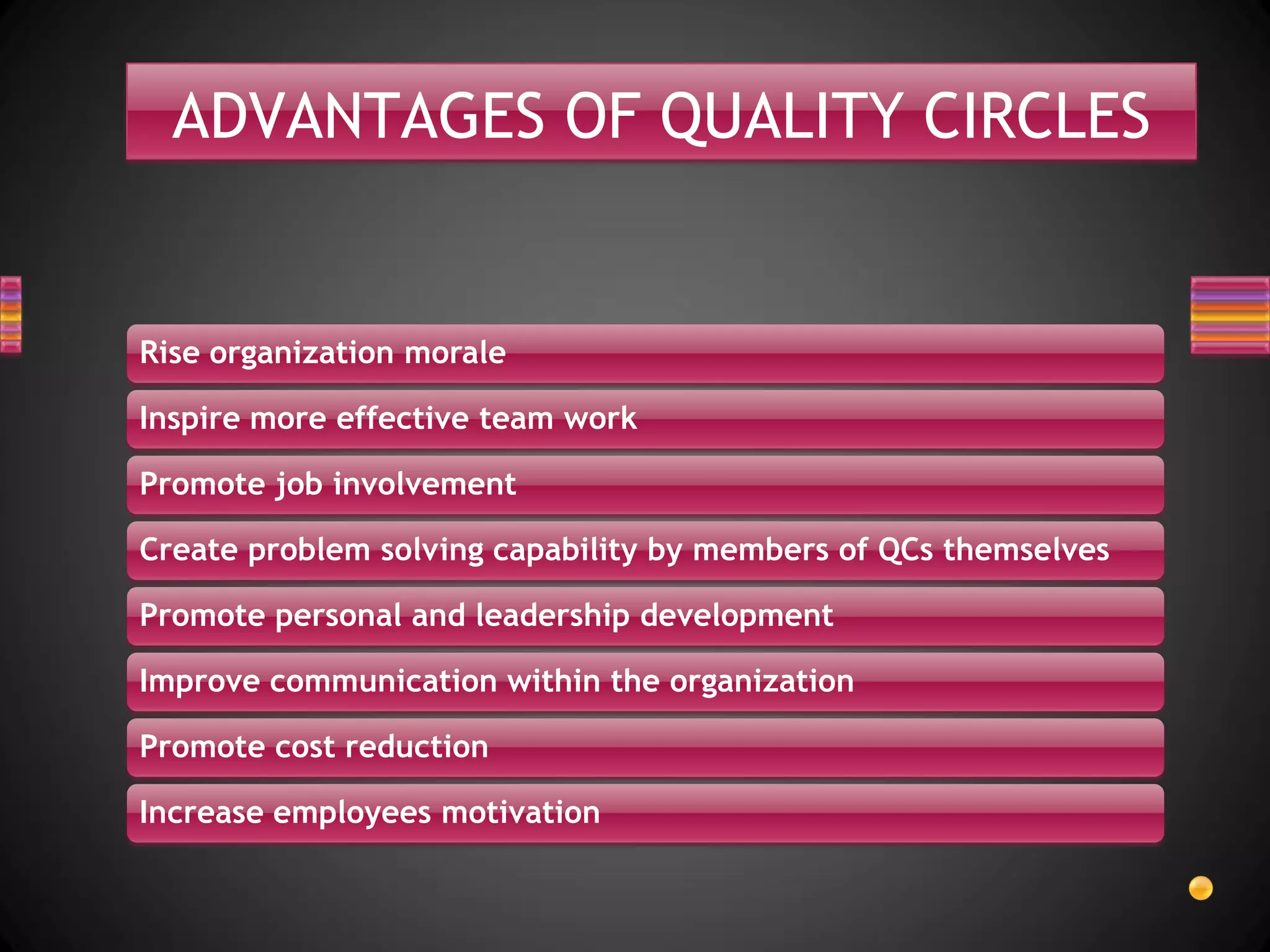
ADVANTAGES OF QUALITY CIRCLES


Rise organization morale

Inspire more effective team work

Promote job involvement

Create problem solving capability by members of QCs themselves

Promote personal and leadership development

Improve communication within the organization

Promote cost reduction

Increase employees motivation
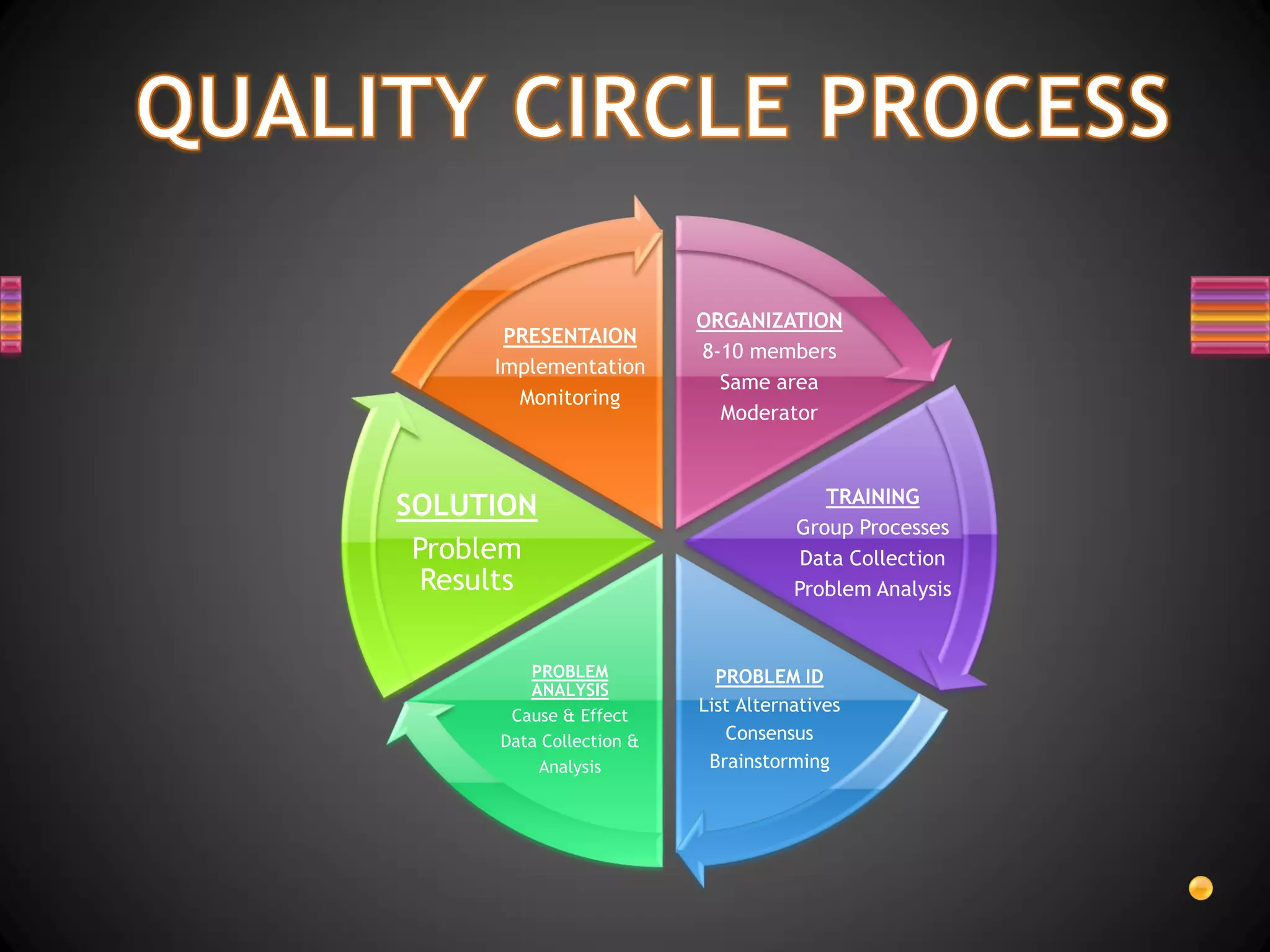
ORGANIZATION
       PRESENTAION
                          8-10 members
      Implementation
                            Same area
        Monitoring
                            Moderator


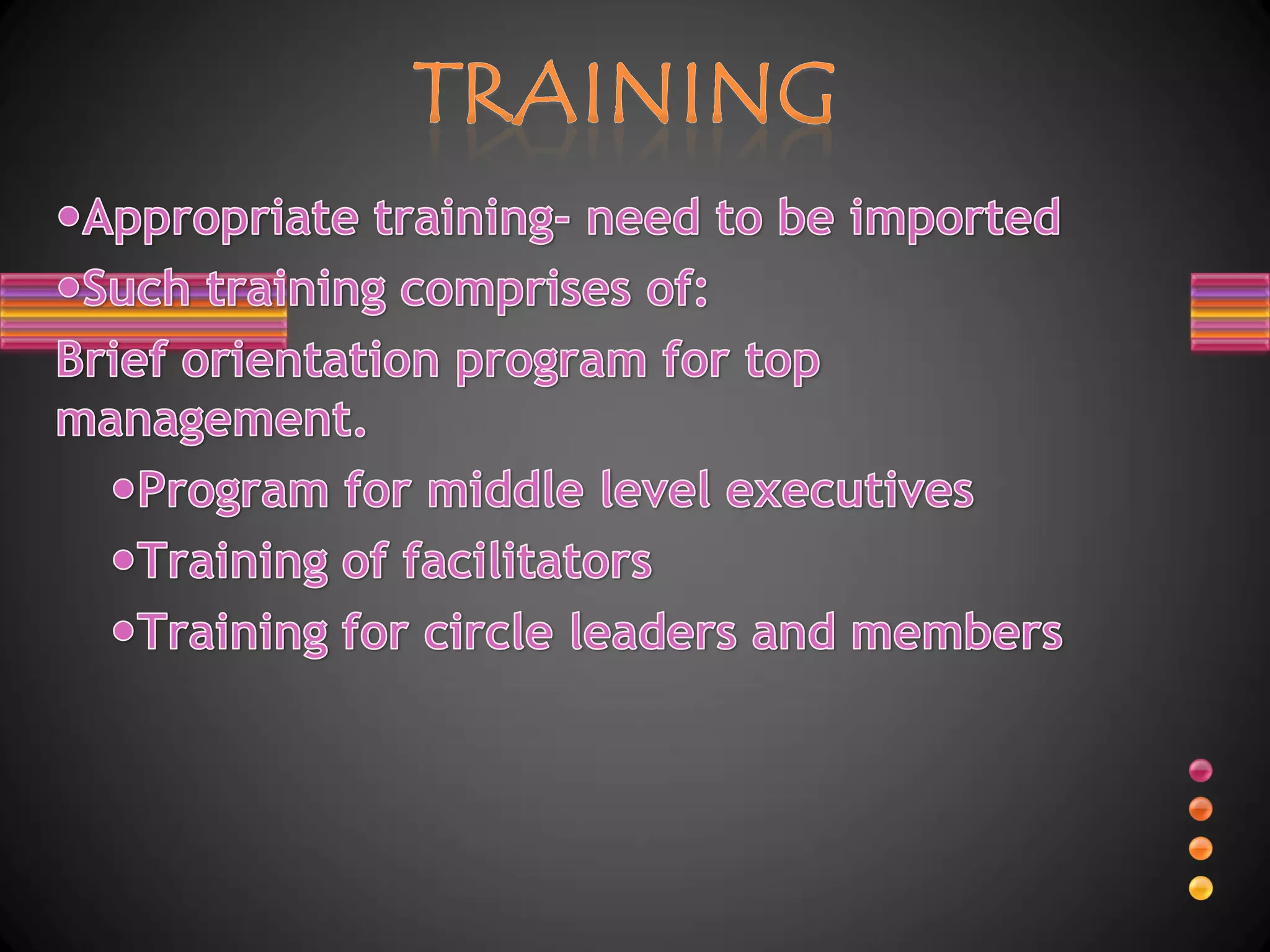
                                        TRAINING
SOLUTION
                                     Group Processes
 Problem                              Data Collection
  Results                            Problem Analysis


         PROBLEM            PROBLEM ID
         ANALYSIS
                          List Alternatives
       Cause & Effect
      Data Collection &      Consensus
          Analysis         Brainstorming
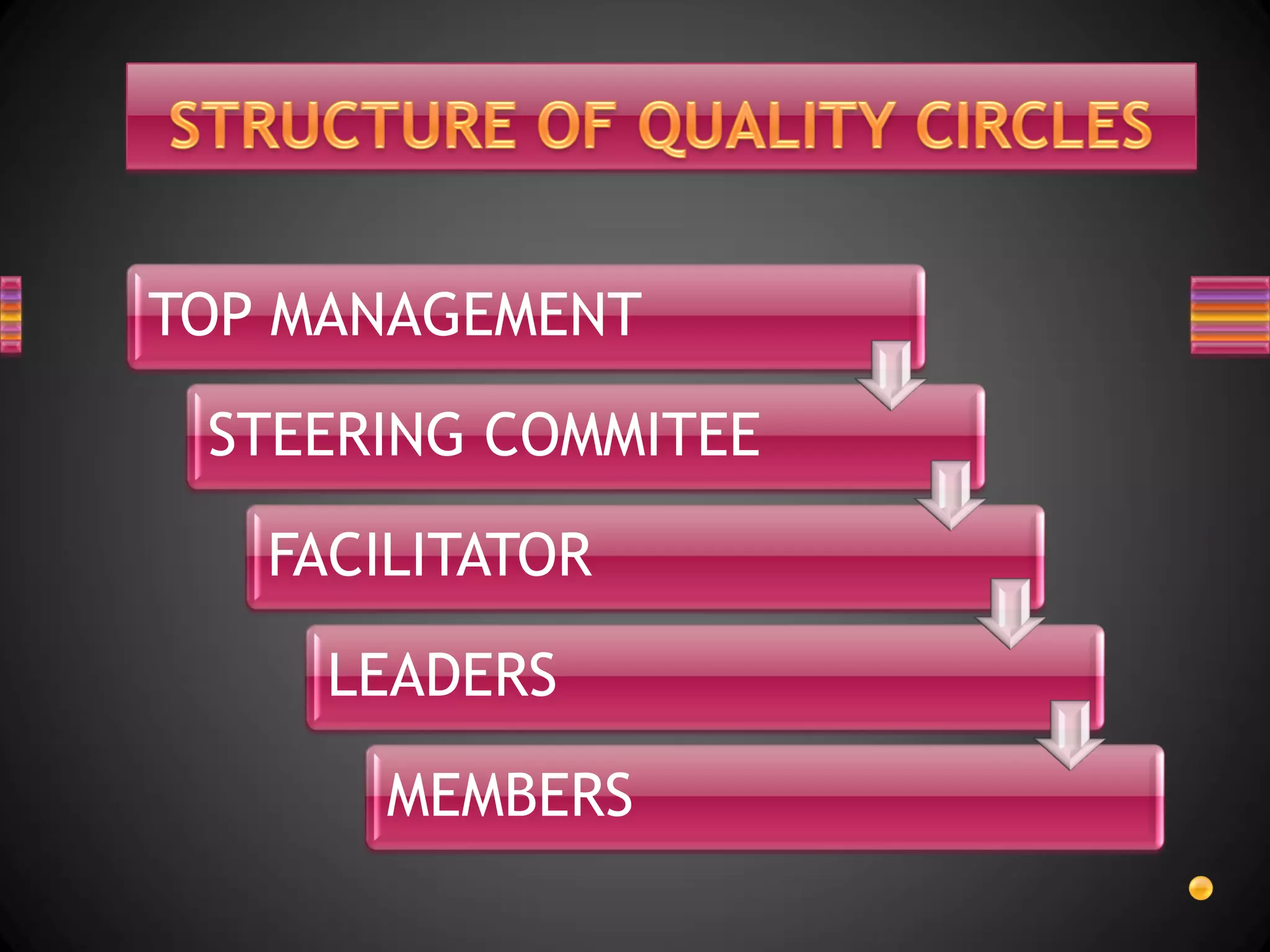
TOP MANAGEMENT

 STEERING COMMITEE

   FACILITATOR

     LEADERS

       MEMBERS
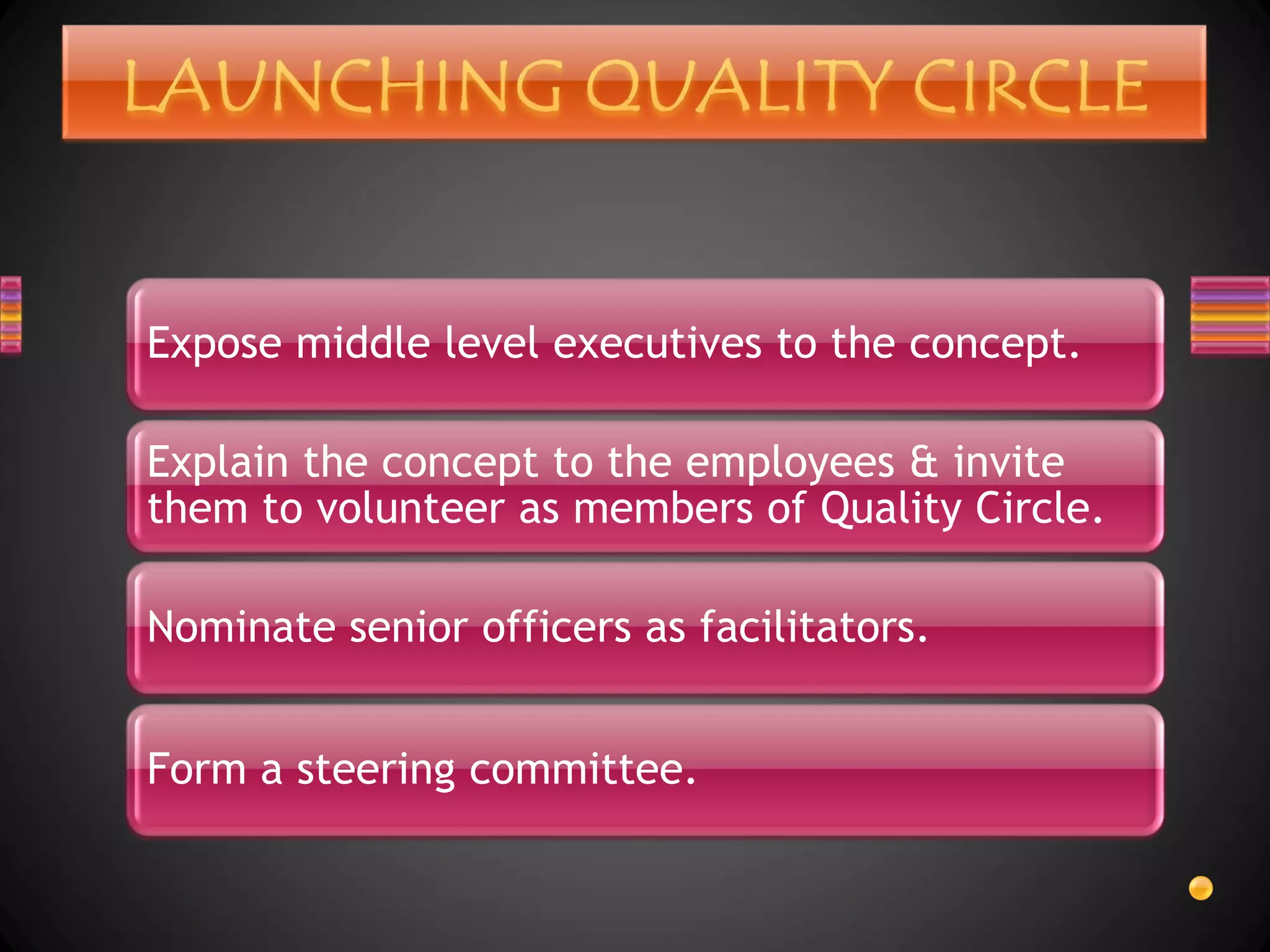
Expose middle level executives to the concept.

Explain the concept to the employees & invite
them to volunteer as members of Quality Circle.

Nominate senior officers as facilitators.


Form a steering committee.
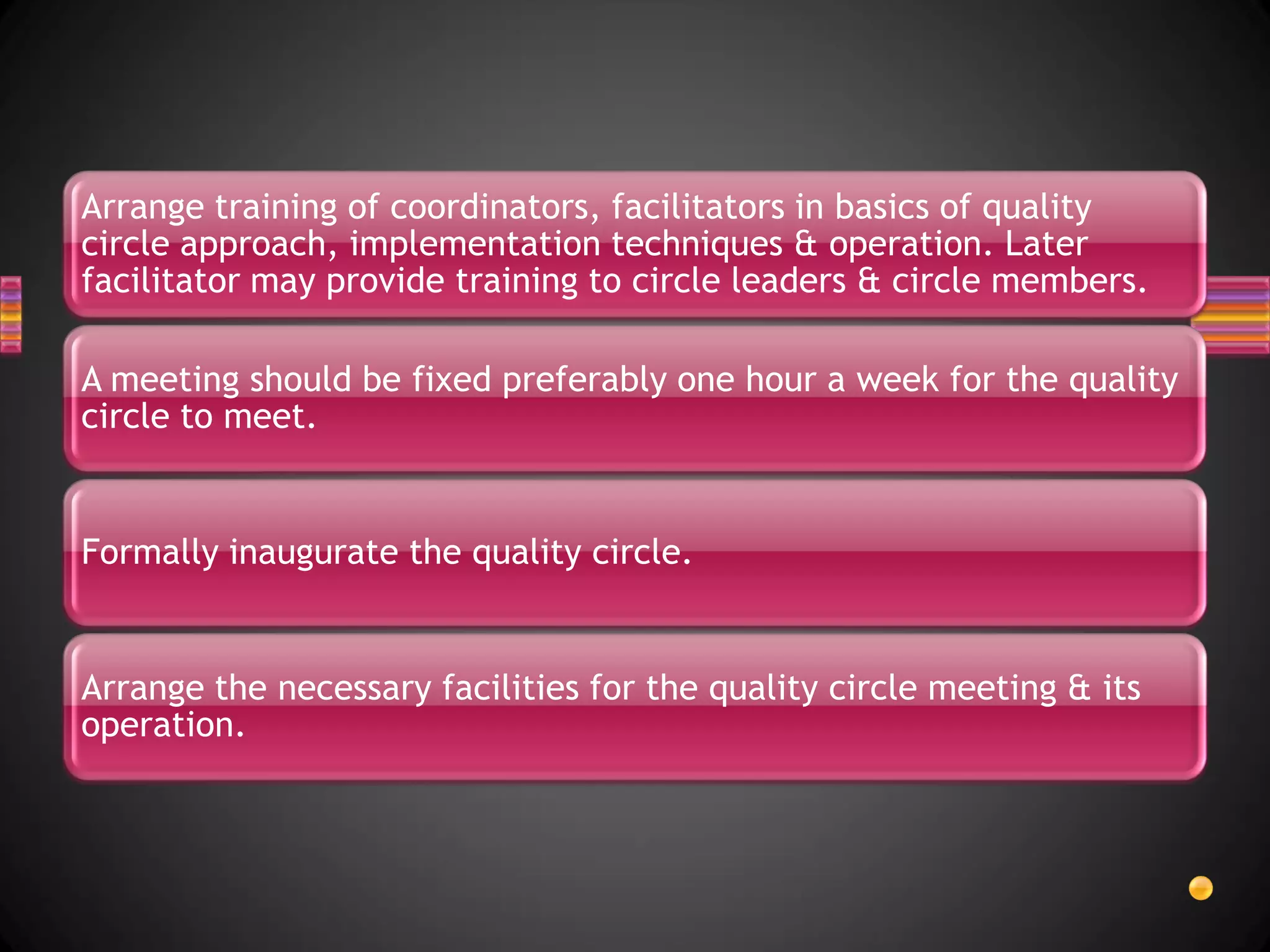
Arrange training of coordinators, facilitators in basics of quality
circle approach, implementation techniques & operation. Later
facilitator may provide training to circle leaders & circle members.

A meeting should be fixed preferably one hour a week for the quality
circle to meet.


Formally inaugurate the quality circle.


Arrange the necessary facilities for the quality circle meeting & its
operation.
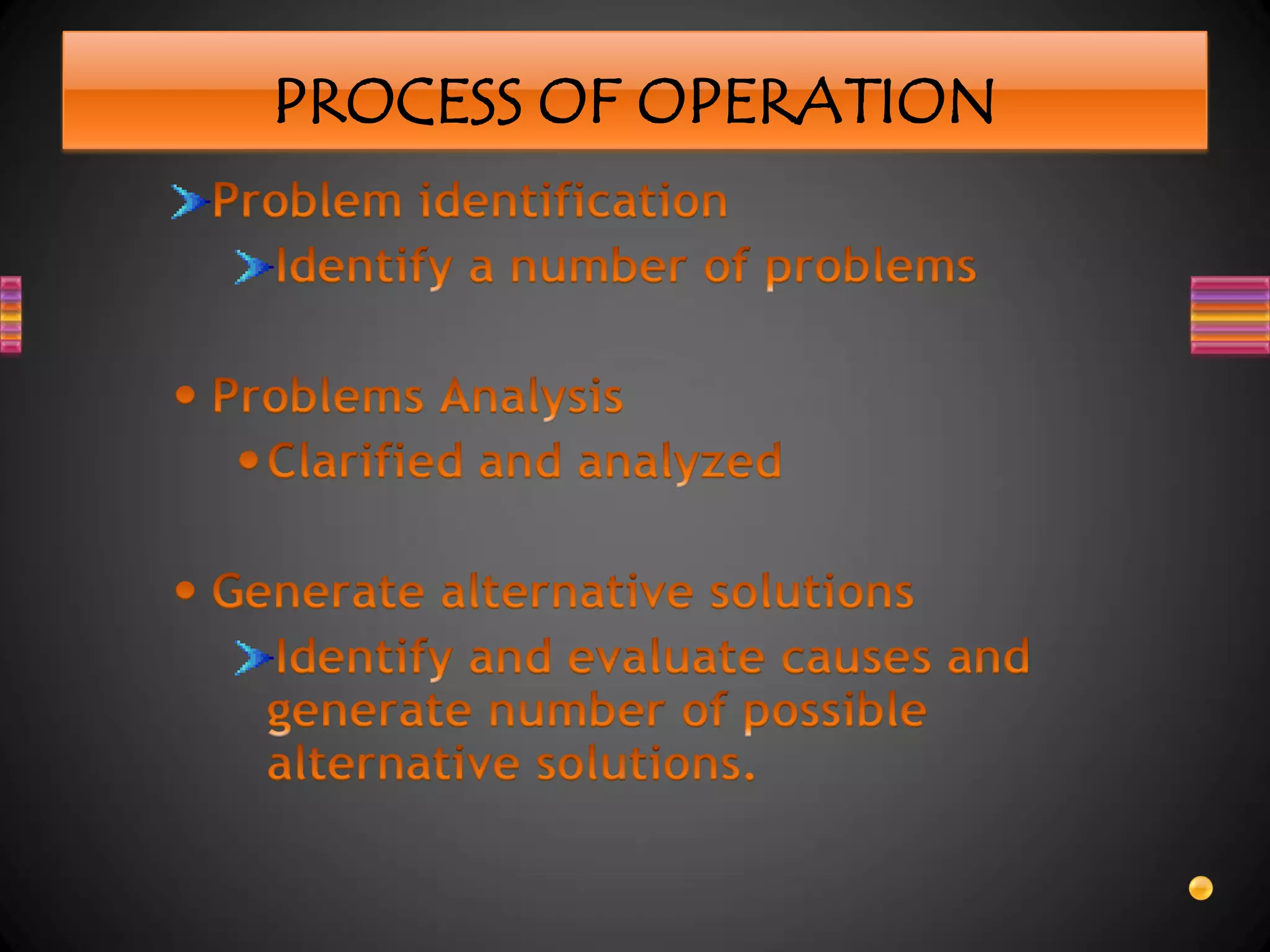
PROCESS OF OPERATION
How to use the concept
Basic Quality Problem Solving
PARETO CHART
Determine priority for quality improvement
activities

Provide tool for visualizing the pareto principle


Determine which problem should be solve first


Provide a before-and-after comparison
ISHIKAWA DIAGRAM


Referred to as cause-and effective diagram, tree
diagram, or fishbone diagram

Display the factor that effect a particular quality
characteristic, outcome or problem.

Typically result of a brainstorming

The main goal represented by the trunk of the
diagram, and primary factor represented as branches.
Quality Circles

Quality Circles

  • 1.
  • 2.
    Voluntary group ofemployee and supervisor 8-10 members QC works on the basic of a continuous & on going process in an organization. In 1960s first quality circle develop. Developed in Japan, it spread to more than 50 countries. ‘’ Wherever they are, human beings are human being’’. Ishikawa wrote this book in a 1980 preface to the English translation of the Koryo. Middle and upper management the parent-teacher.
  • 4.
    Employees want todo a good job. Employees want to be recognized as intelligent and interested who like to participate in decision making issues. Employees want to be better informed about organizational goals and problem. Employees want recognition and responsibility and a feeling of self esteem.
  • 7.
    ADVANTAGES OF QUALITYCIRCLES Rise organization morale Inspire more effective team work Promote job involvement Create problem solving capability by members of QCs themselves Promote personal and leadership development Improve communication within the organization Promote cost reduction Increase employees motivation
  • 8.
    ORGANIZATION PRESENTAION 8-10 members Implementation Same area Monitoring Moderator TRAINING SOLUTION Group Processes Problem Data Collection Results Problem Analysis PROBLEM PROBLEM ID ANALYSIS List Alternatives Cause & Effect Data Collection & Consensus Analysis Brainstorming
  • 9.
    TOP MANAGEMENT STEERINGCOMMITEE FACILITATOR LEADERS MEMBERS
  • 10.
    Expose middle levelexecutives to the concept. Explain the concept to the employees & invite them to volunteer as members of Quality Circle. Nominate senior officers as facilitators. Form a steering committee.
  • 11.
    Arrange training ofcoordinators, facilitators in basics of quality circle approach, implementation techniques & operation. Later facilitator may provide training to circle leaders & circle members. A meeting should be fixed preferably one hour a week for the quality circle to meet. Formally inaugurate the quality circle. Arrange the necessary facilities for the quality circle meeting & its operation.
  • 13.
  • 15.
    How to usethe concept
  • 16.
  • 17.
    PARETO CHART Determine priorityfor quality improvement activities Provide tool for visualizing the pareto principle Determine which problem should be solve first Provide a before-and-after comparison
  • 18.
    ISHIKAWA DIAGRAM Referred toas cause-and effective diagram, tree diagram, or fishbone diagram Display the factor that effect a particular quality characteristic, outcome or problem. Typically result of a brainstorming The main goal represented by the trunk of the diagram, and primary factor represented as branches.