Downloaded 714 times

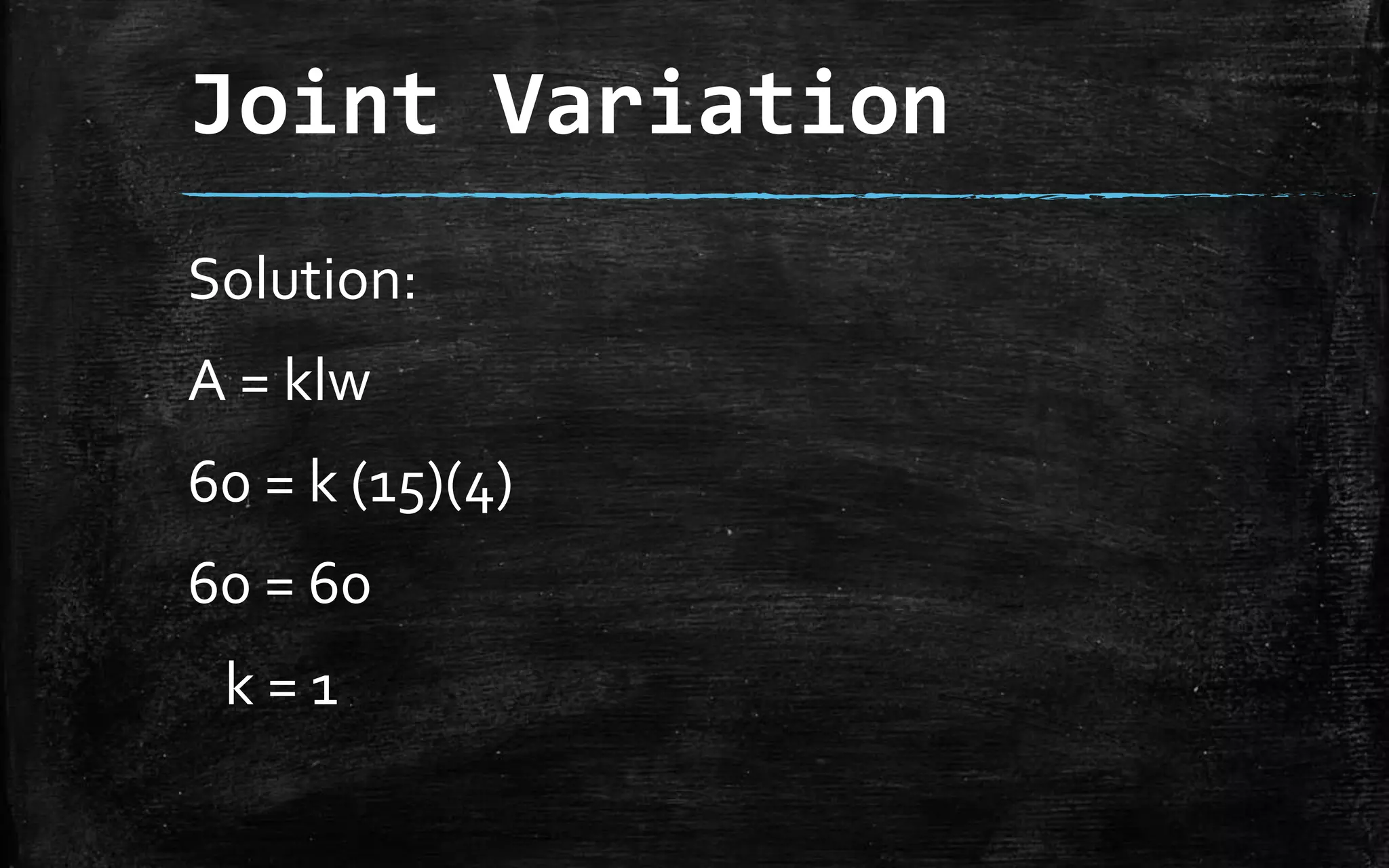
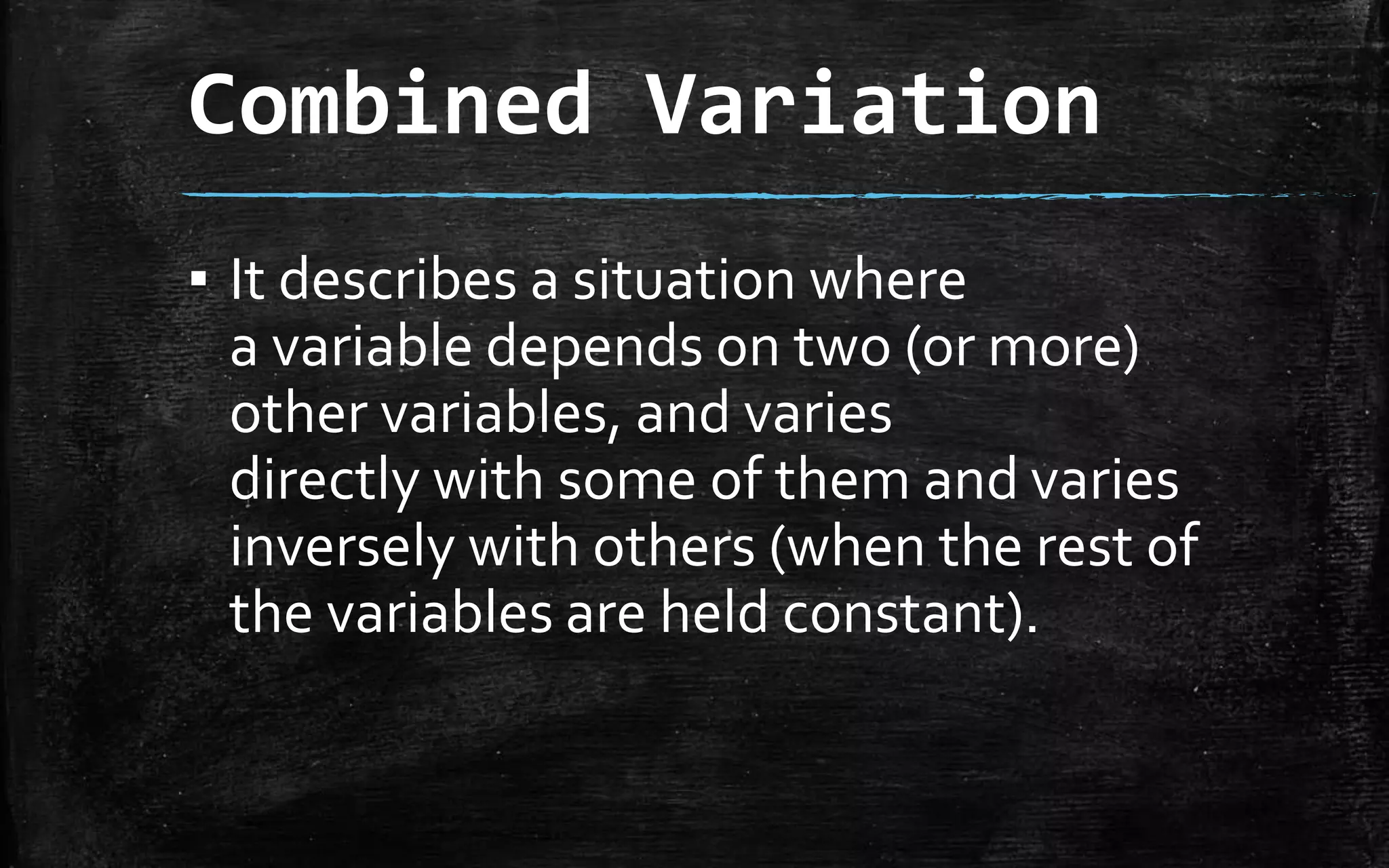
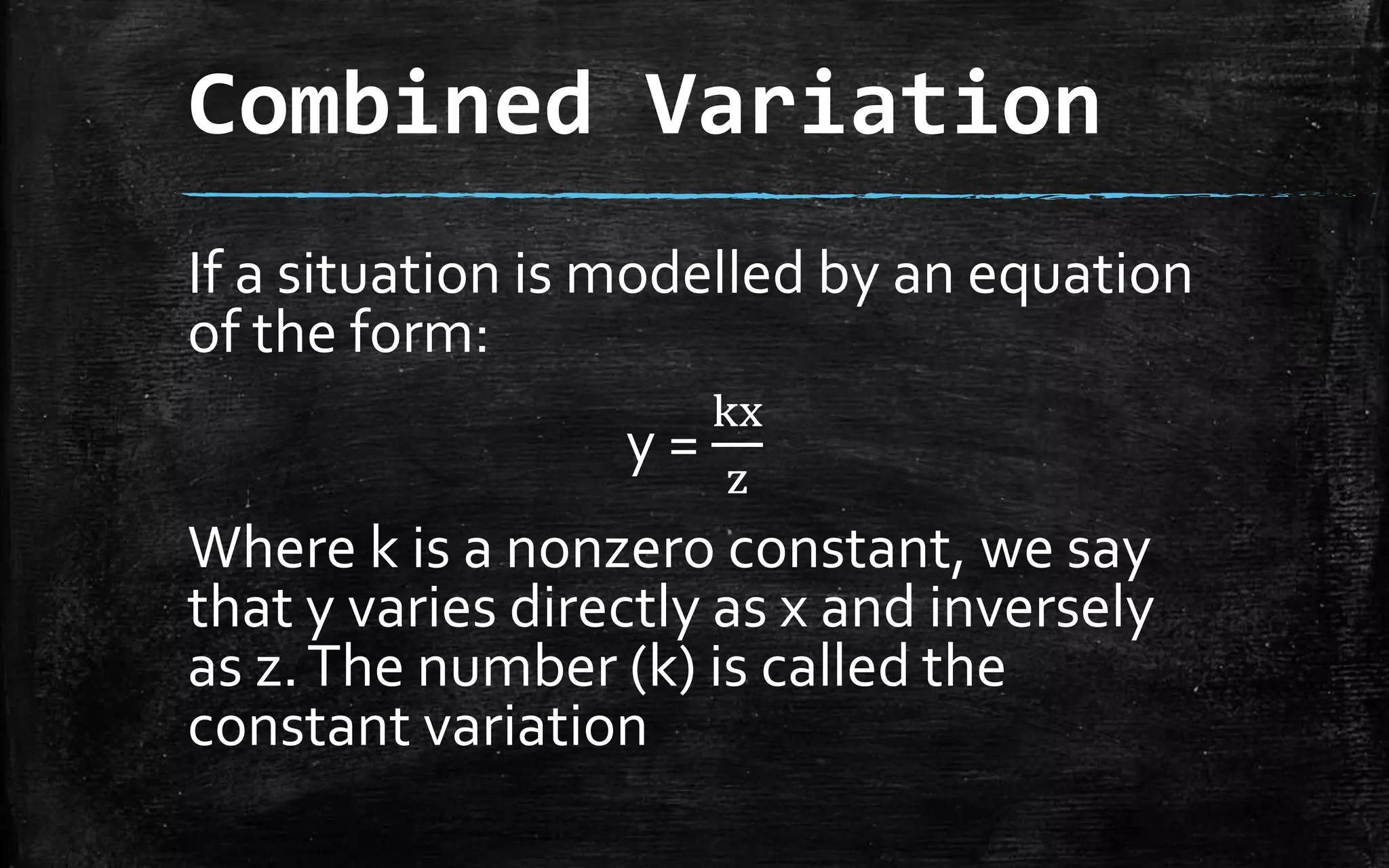
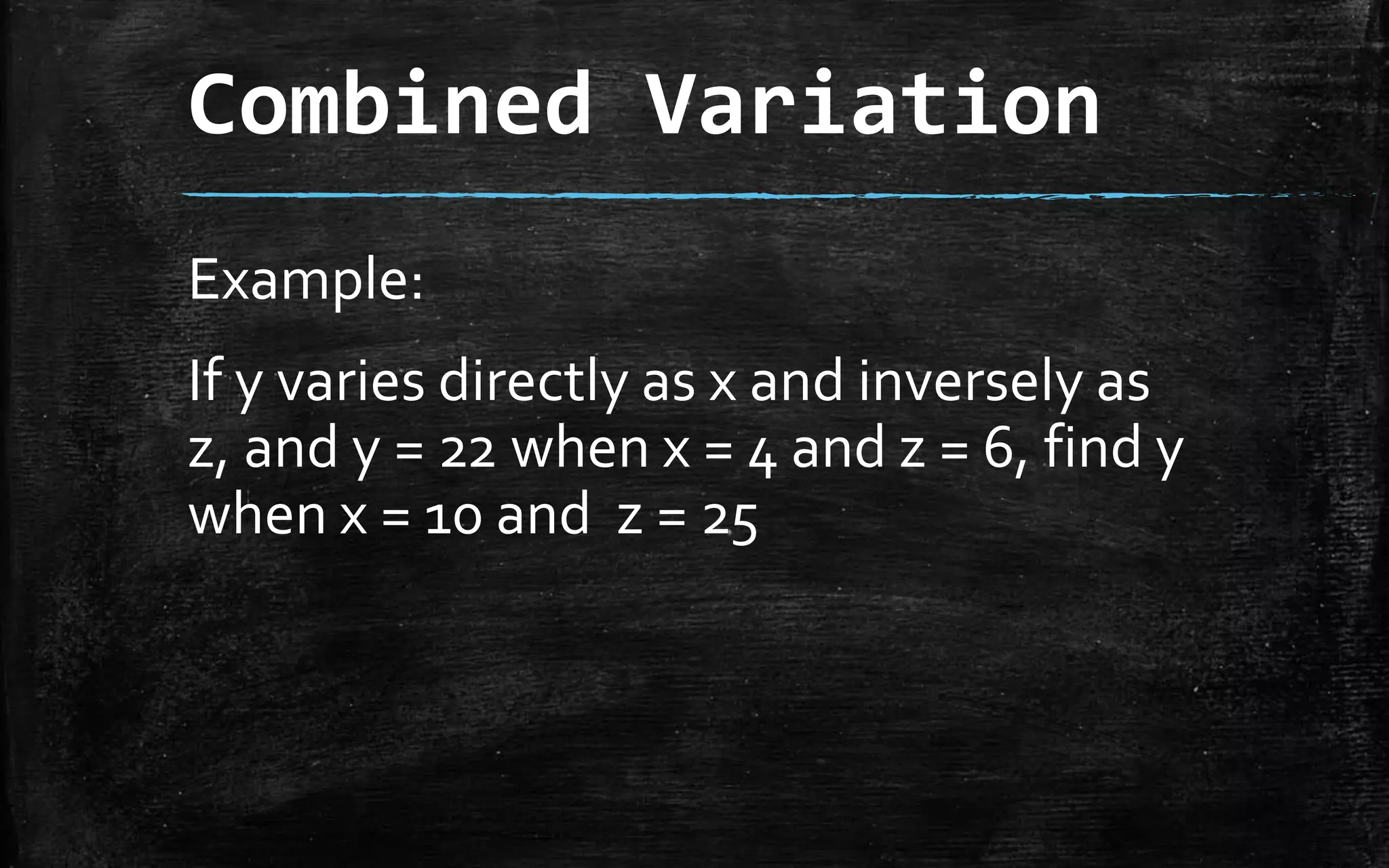
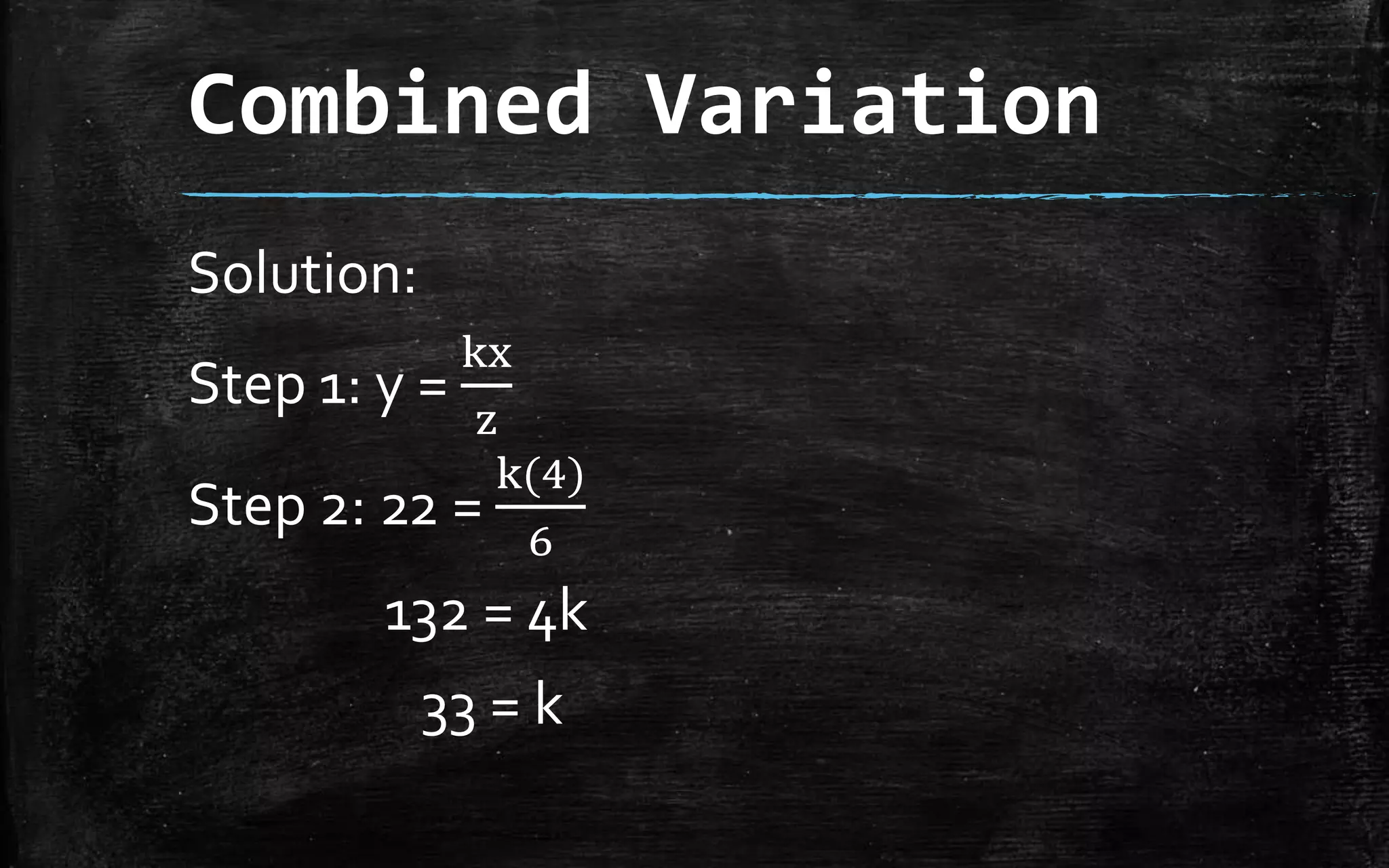
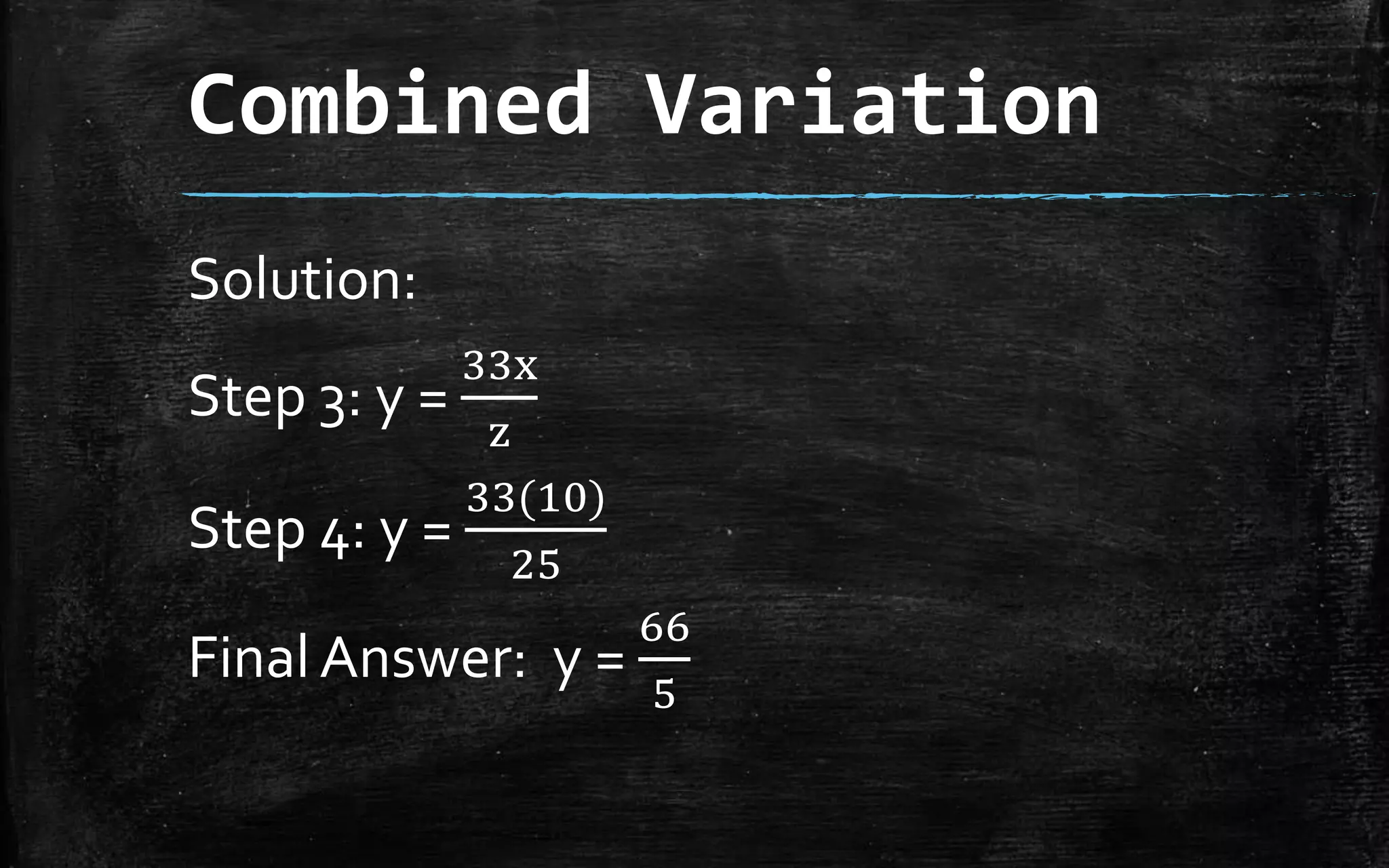
The document explains joint and combined variation, where joint variation describes a relationship where one quantity varies directly with the product of two other quantities, exemplified by the area of a rectangle. Combined variation refers to a dependence on multiple variables, with some varying directly and others inversely, illustrated through given equations and examples. Specific calculations for joint and combined variations are provided to show how to derive the constant and final answers.
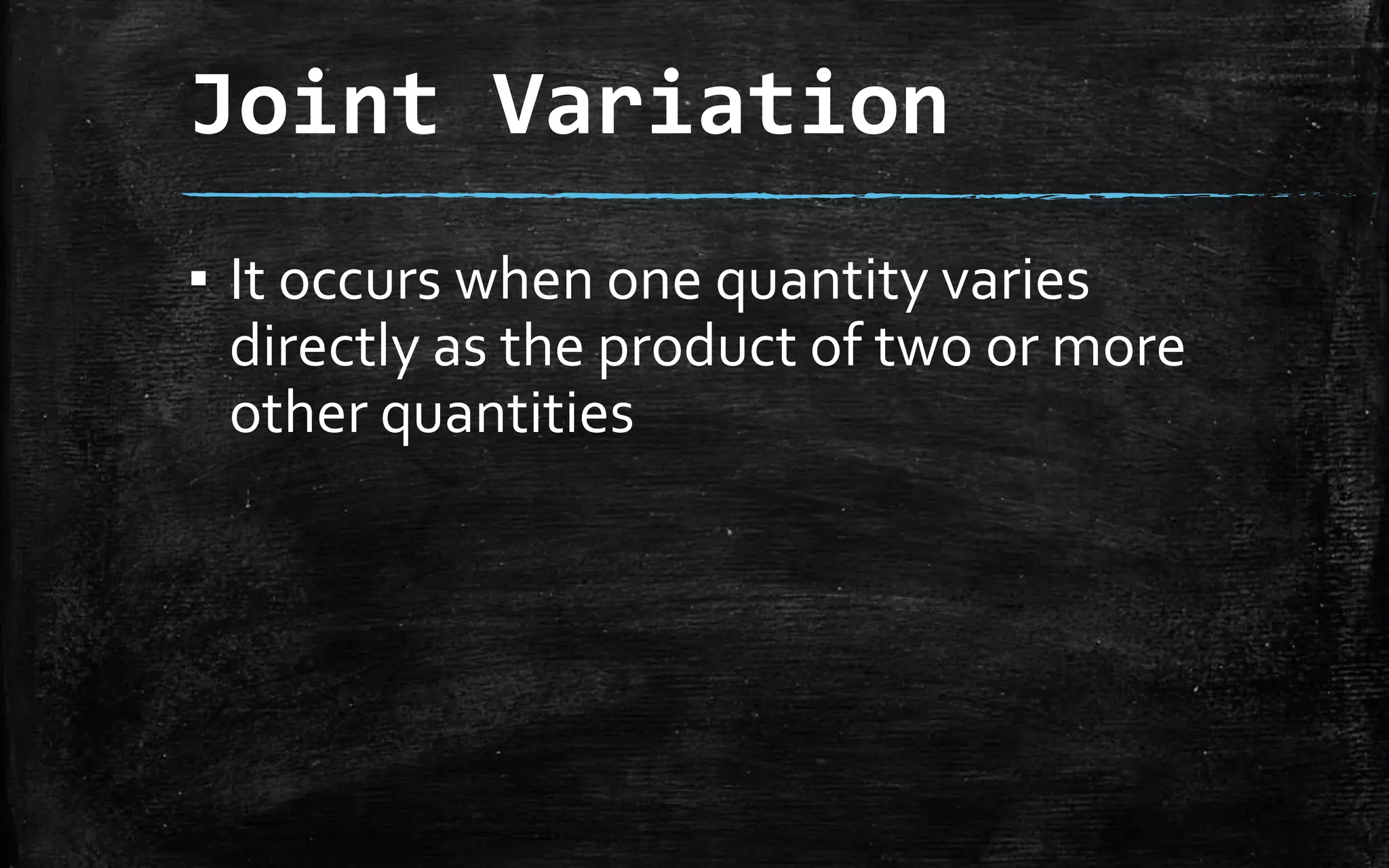
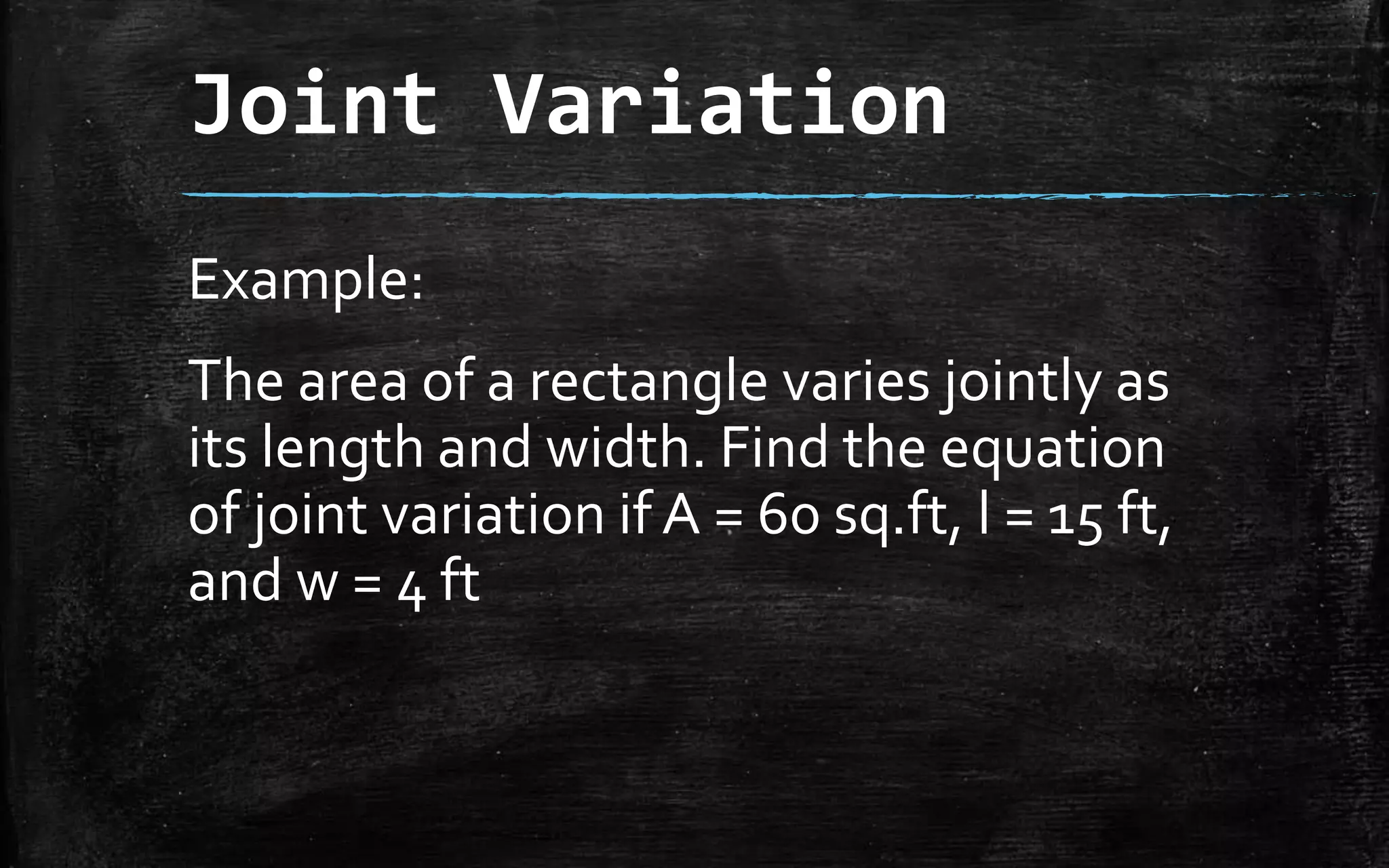
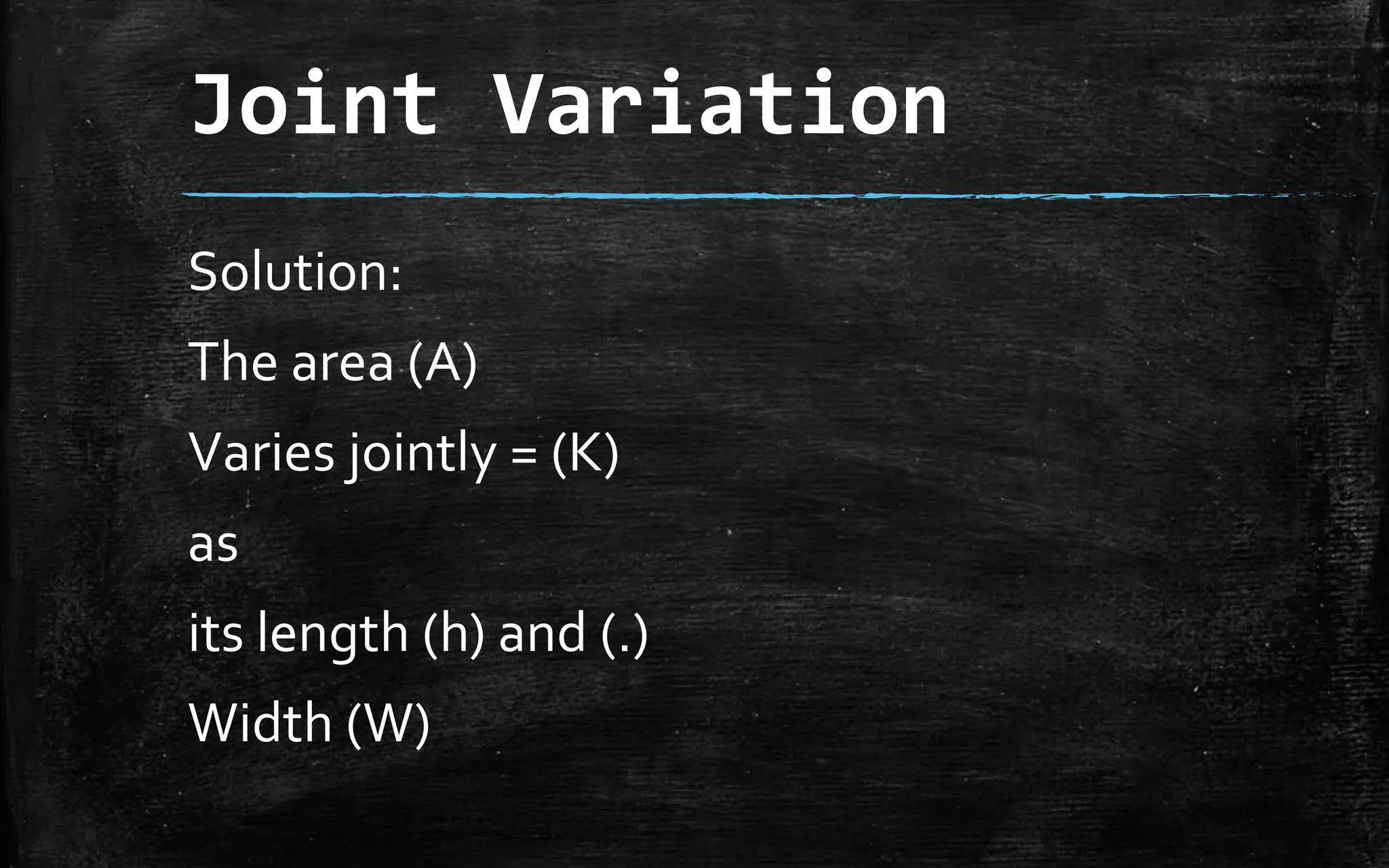
Introduces joint variation, explaining its definition, formula, and provides an example involving area calculation.
Describes combined variation, its formula and practical example. Demonstrates the steps needed to calculate values based on direct and inverse relationships.


