Inverse Variation
Activity 
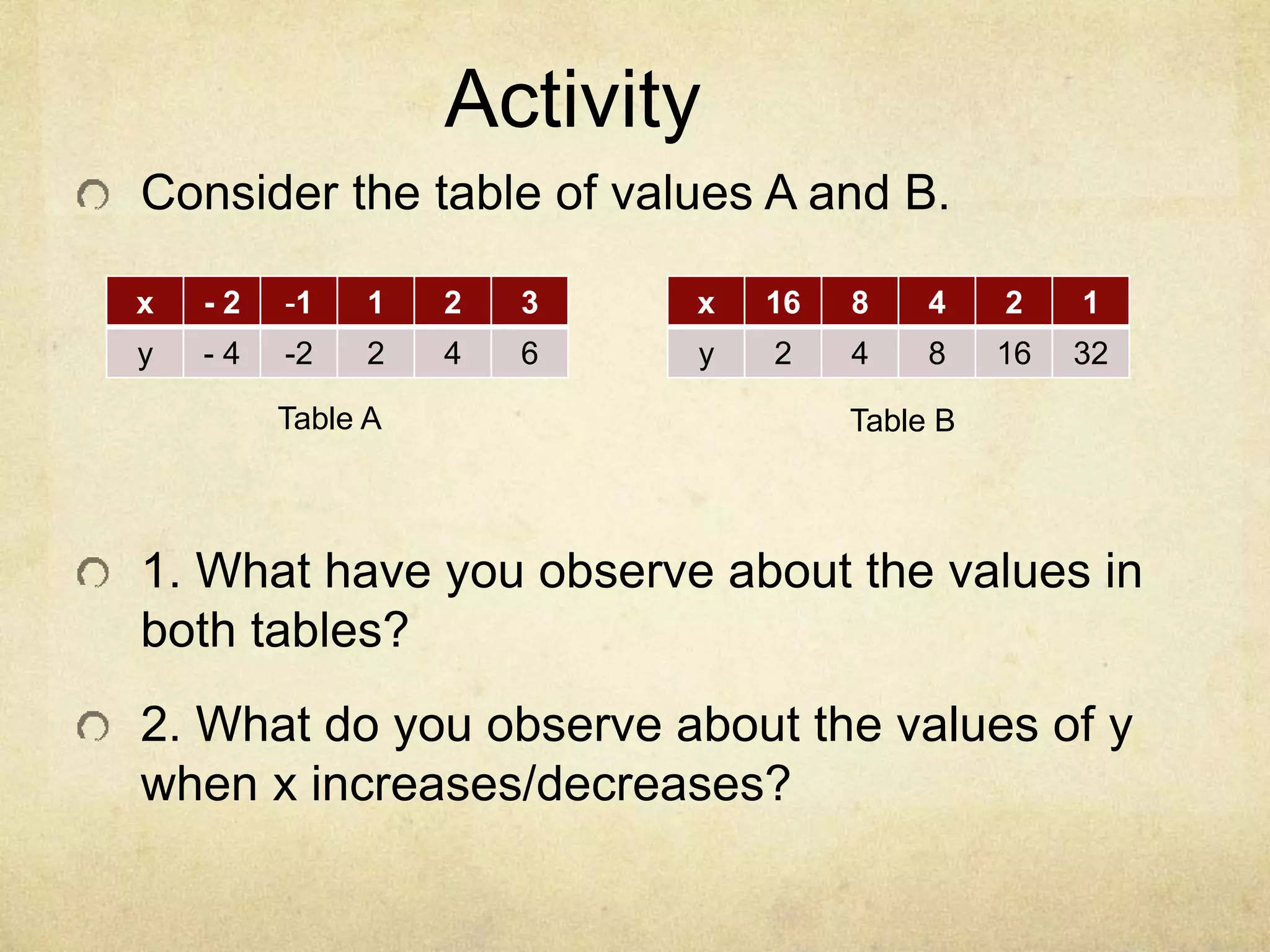
Consider the table of values A and B. 
x - 2 -1 1 2 3 
y - 4 -2 2 4 6 
x 16 8 4 2 1 
y 2 4 8 16 32 
Table A Table B 
1. What have you observe about the values in 
both tables? 
2. What do you observe about the values of y 
when x increases/decreases?
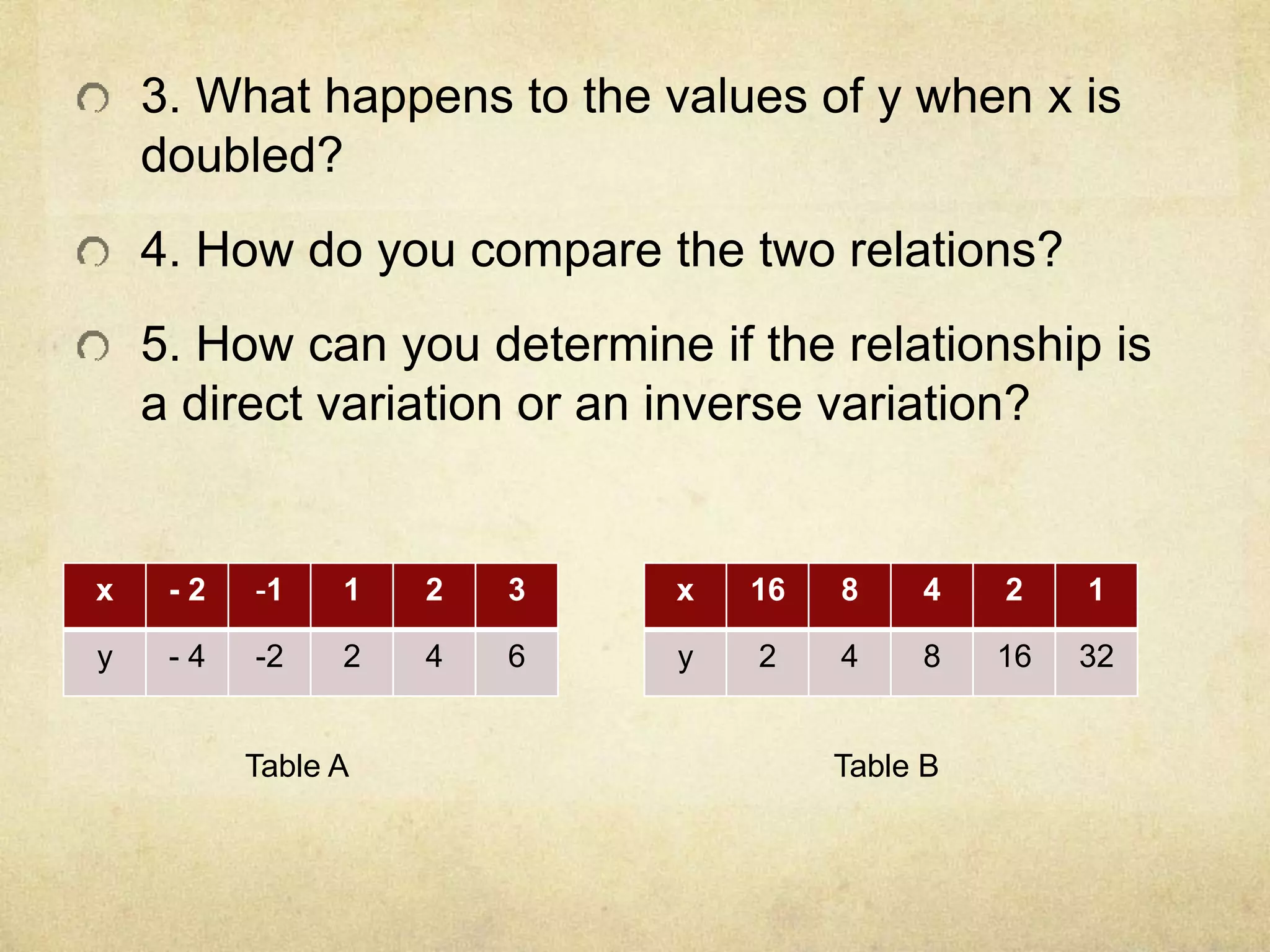
3. What happens to the values of y when x is 
doubled? 
4. How do you compare the two relations? 
5. How can you determine if the relationship is 
a direct variation or an inverse variation? 
x - 2 -1 1 2 3 
y - 4 -2 2 4 6 
x 16 8 4 2 1 
y 2 4 8 16 32 
Table A Table B
Inverse Variation 
This occurs whenever a situation 
produces pairs of numbers whose product is 
constant. 
For any quantities x and y, an increase 
in x causes a decrease in y or vice versa. We 
can say that y varies inversely as x or y = k/x. 
The statement, “y varies inversely to x,” 
translates to y = k/x, where k is the constant 
of variation.
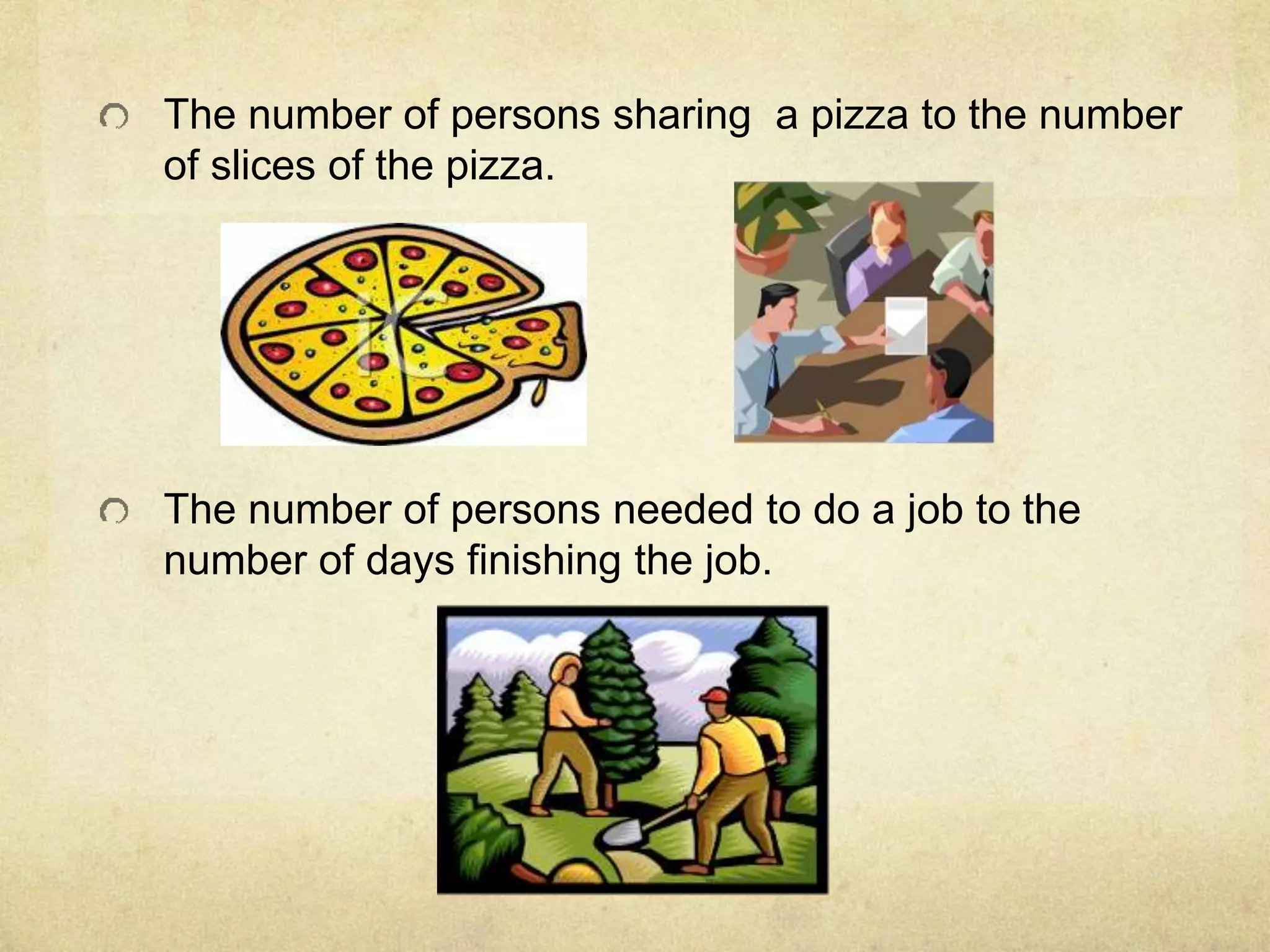
The number of persons sharing a pizza to the number 
of slices of the pizza. 
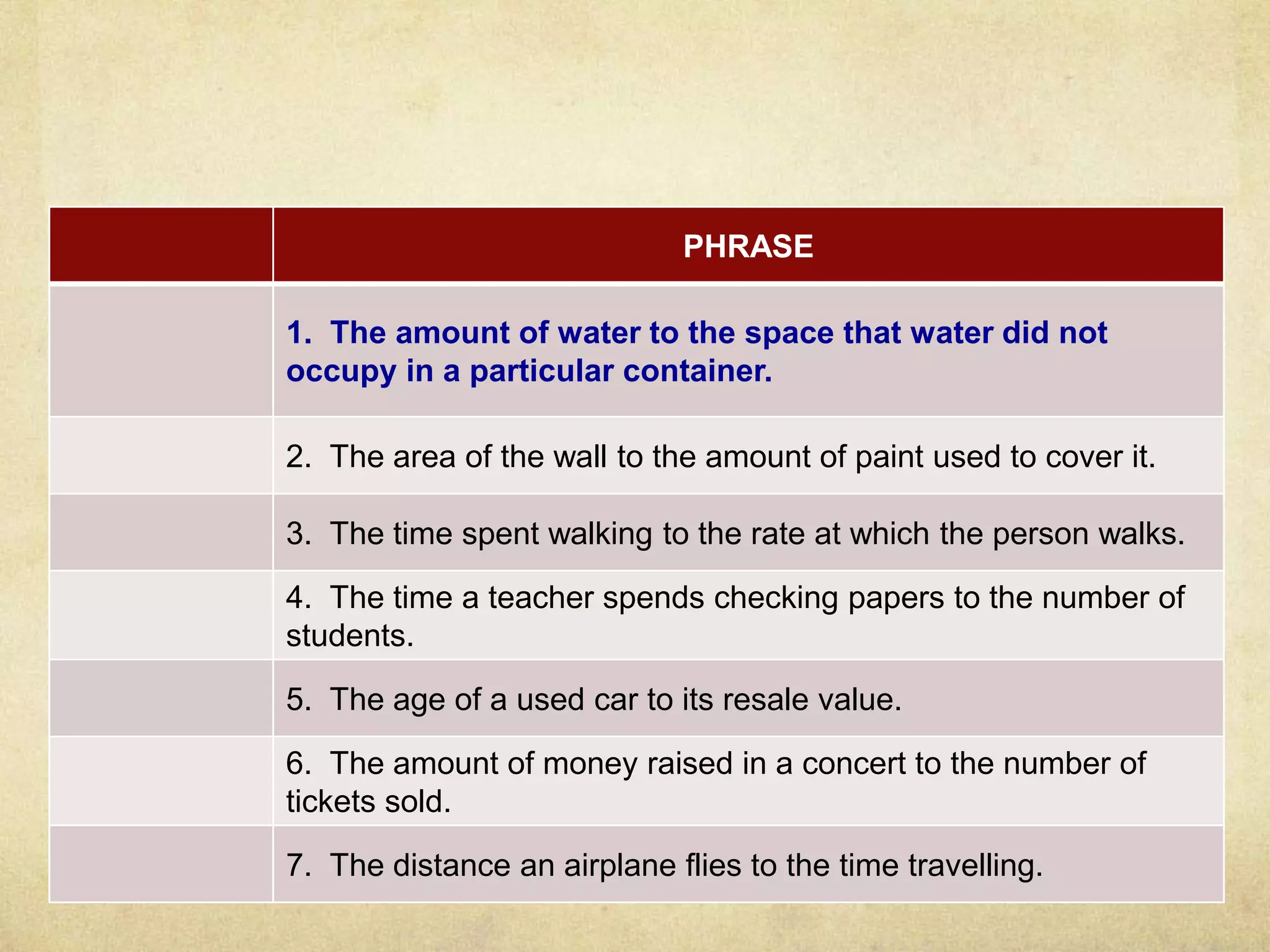
The number of persons needed to do a job to the 
number of days finishing the job.
On a ¼ sheet of paper, determine if the following phrases represent direct variation 
or inverse variation. Write DIRECT if the phrase suggest a direct variation and INVERSE 
If it suggests an inverse variation. 
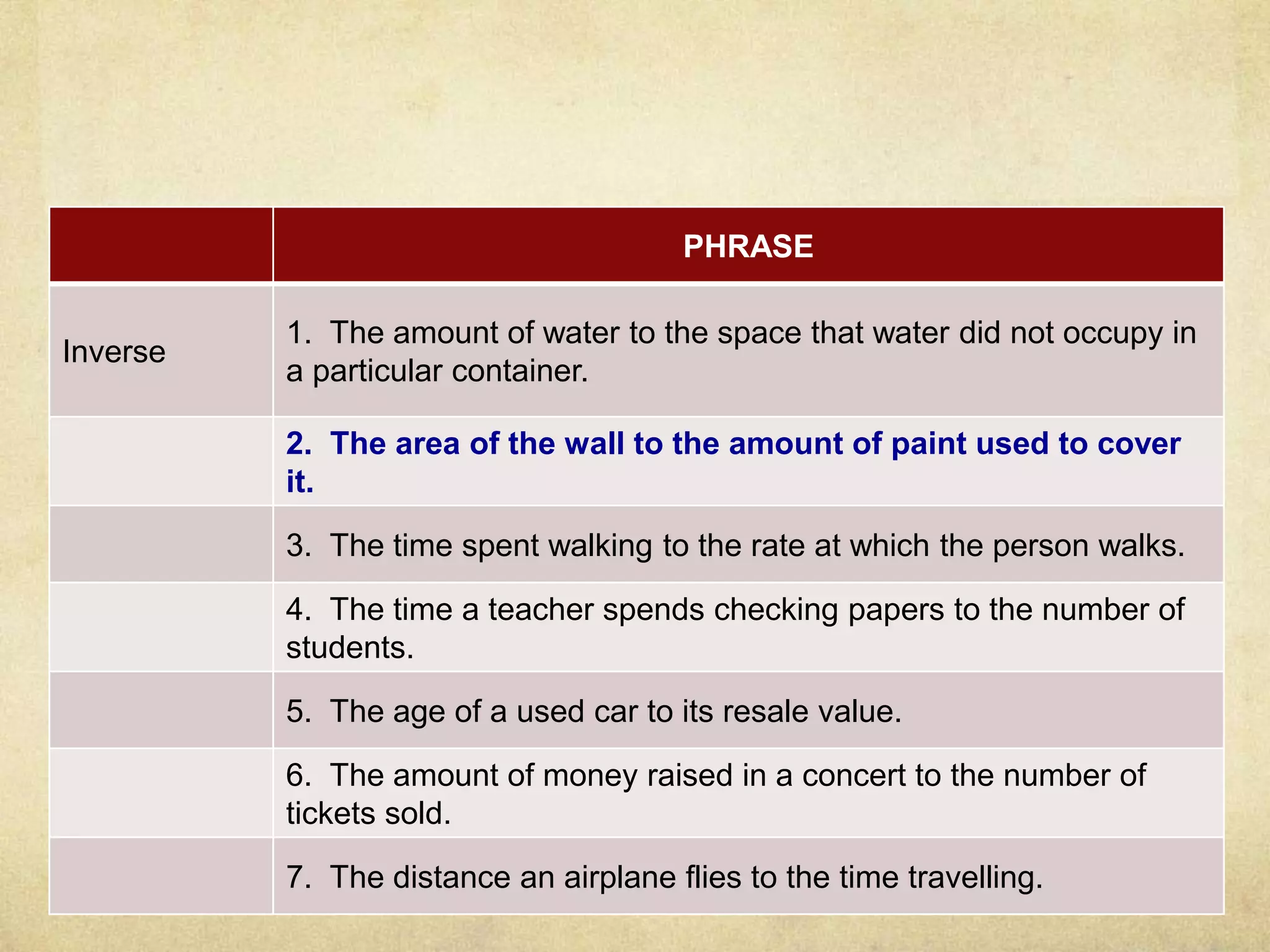
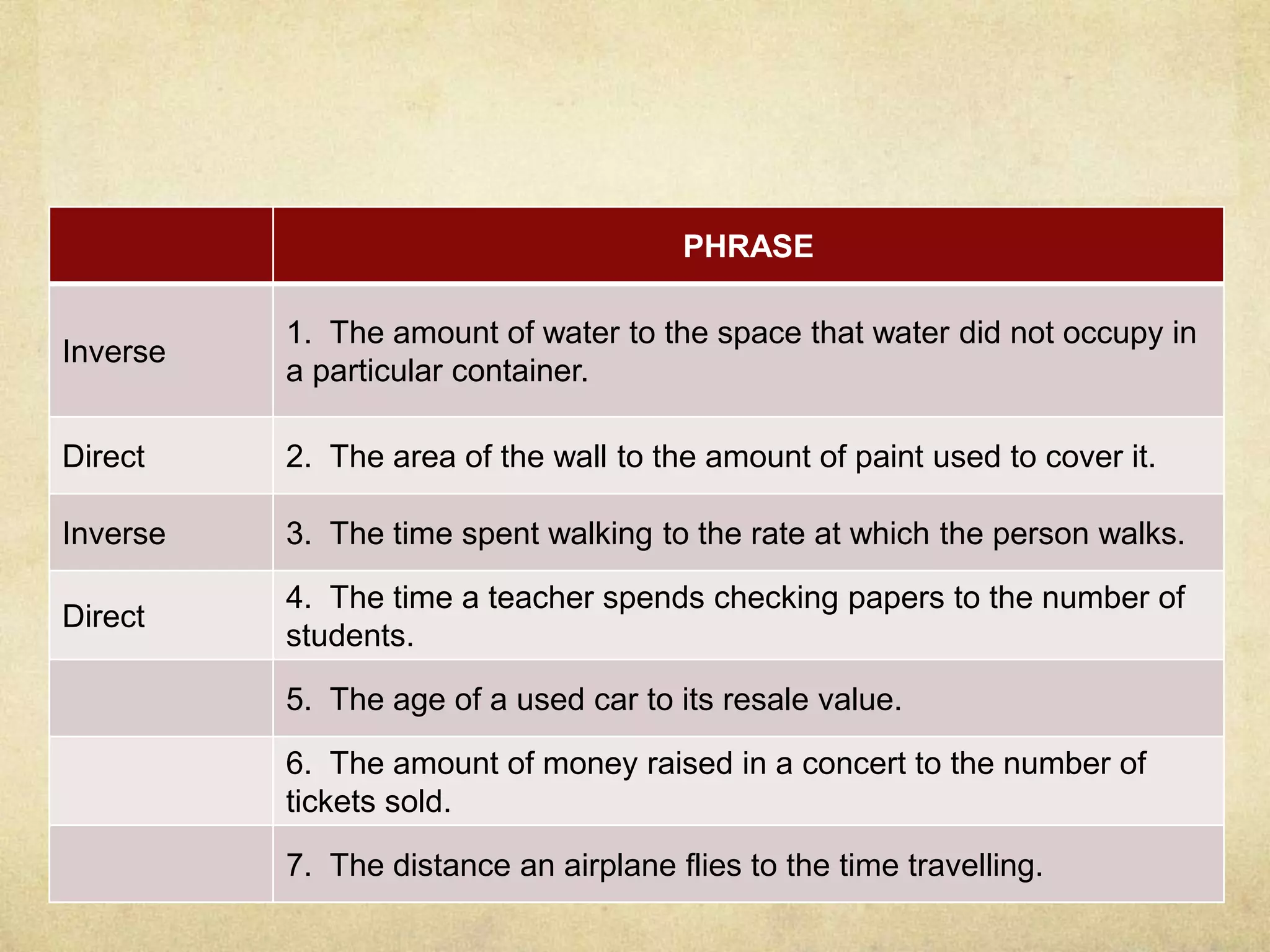
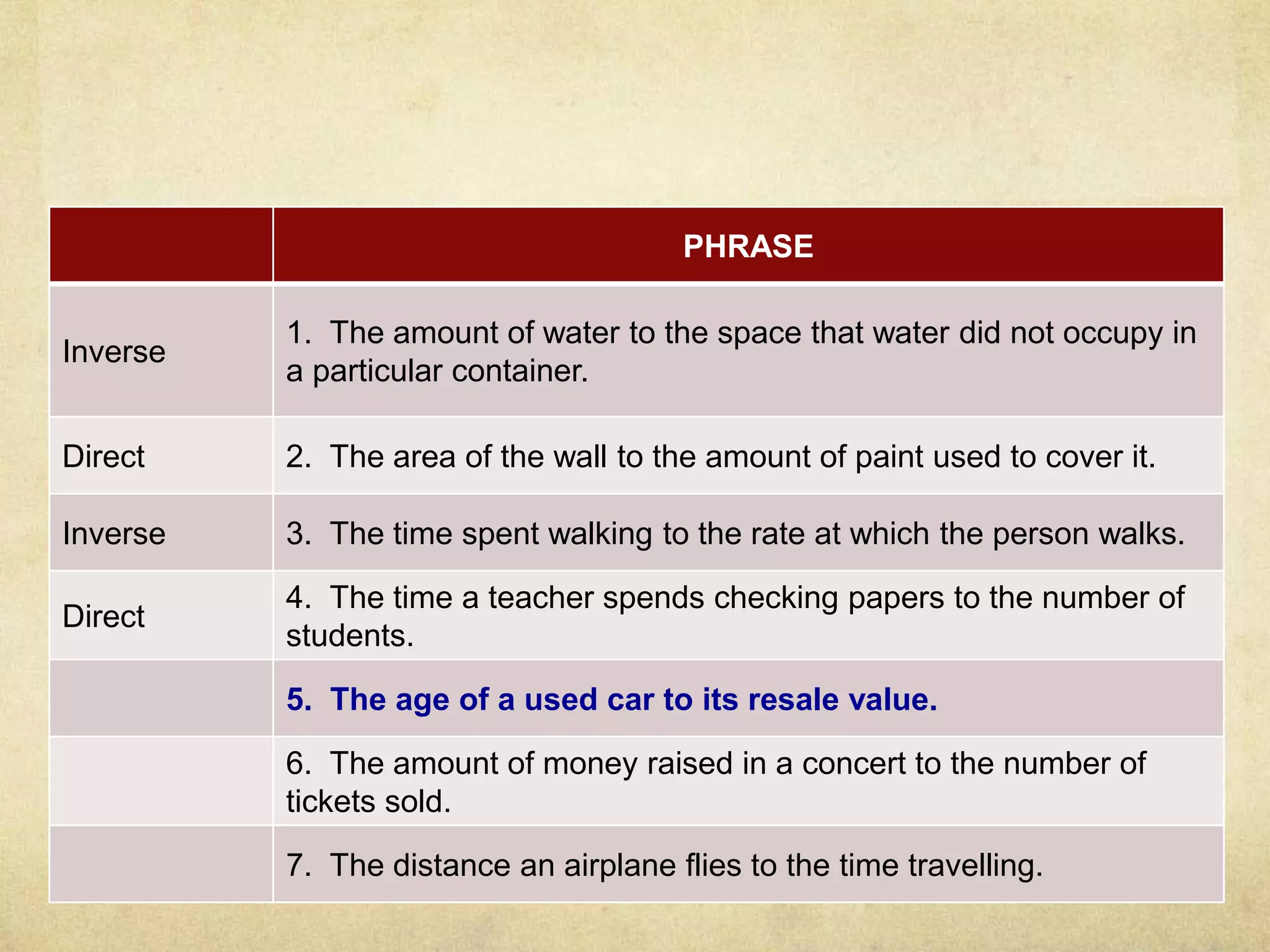
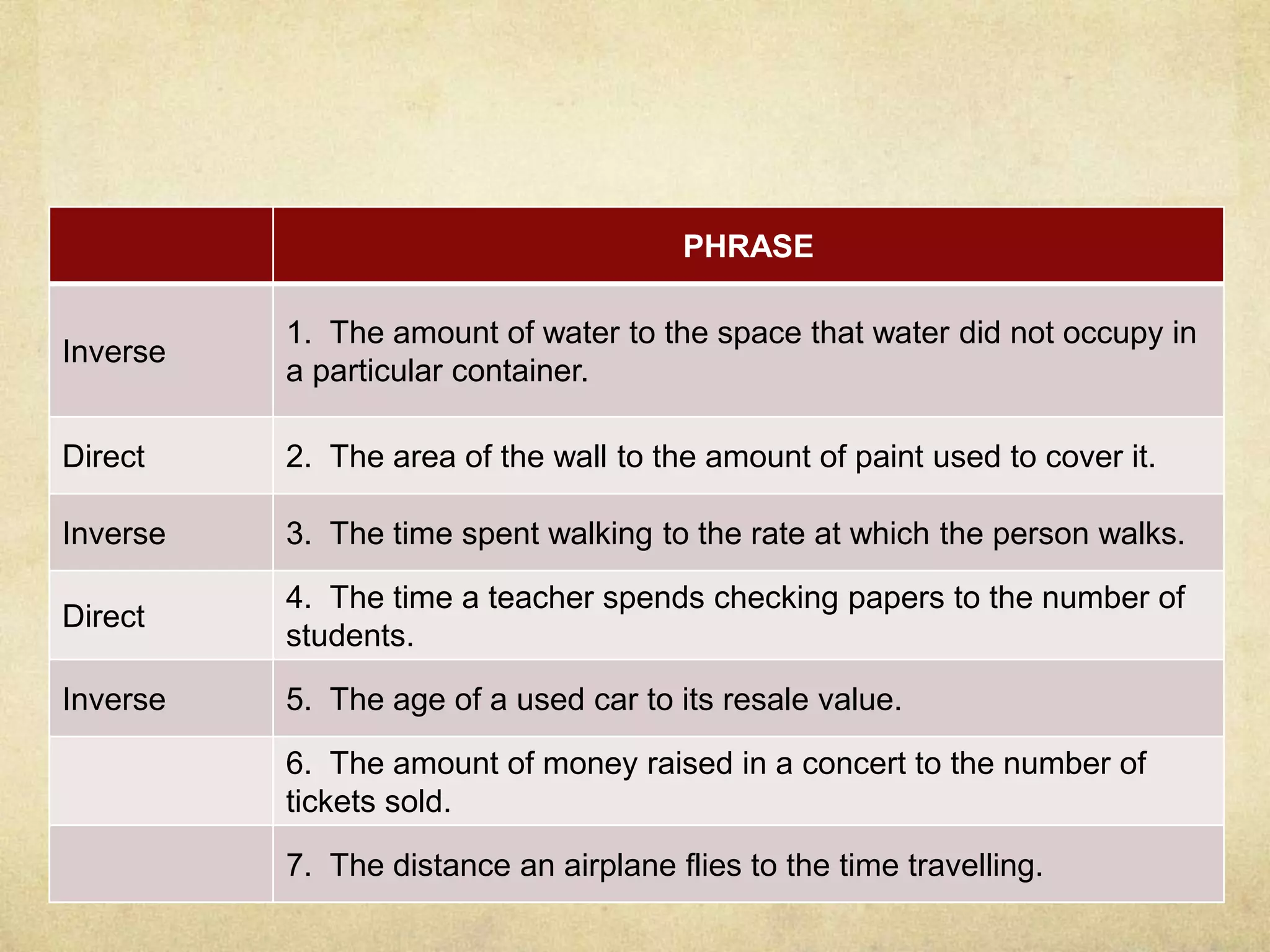
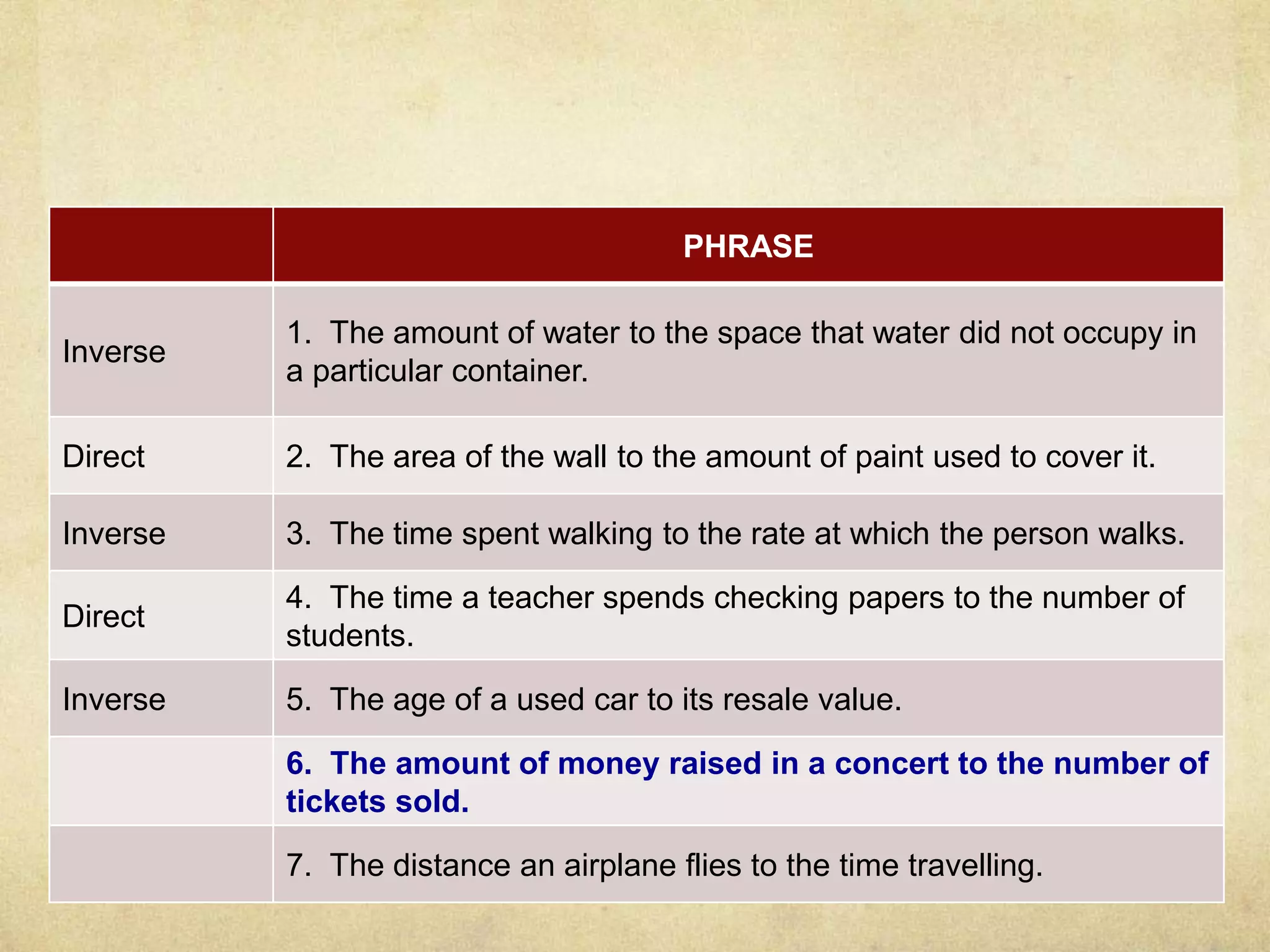
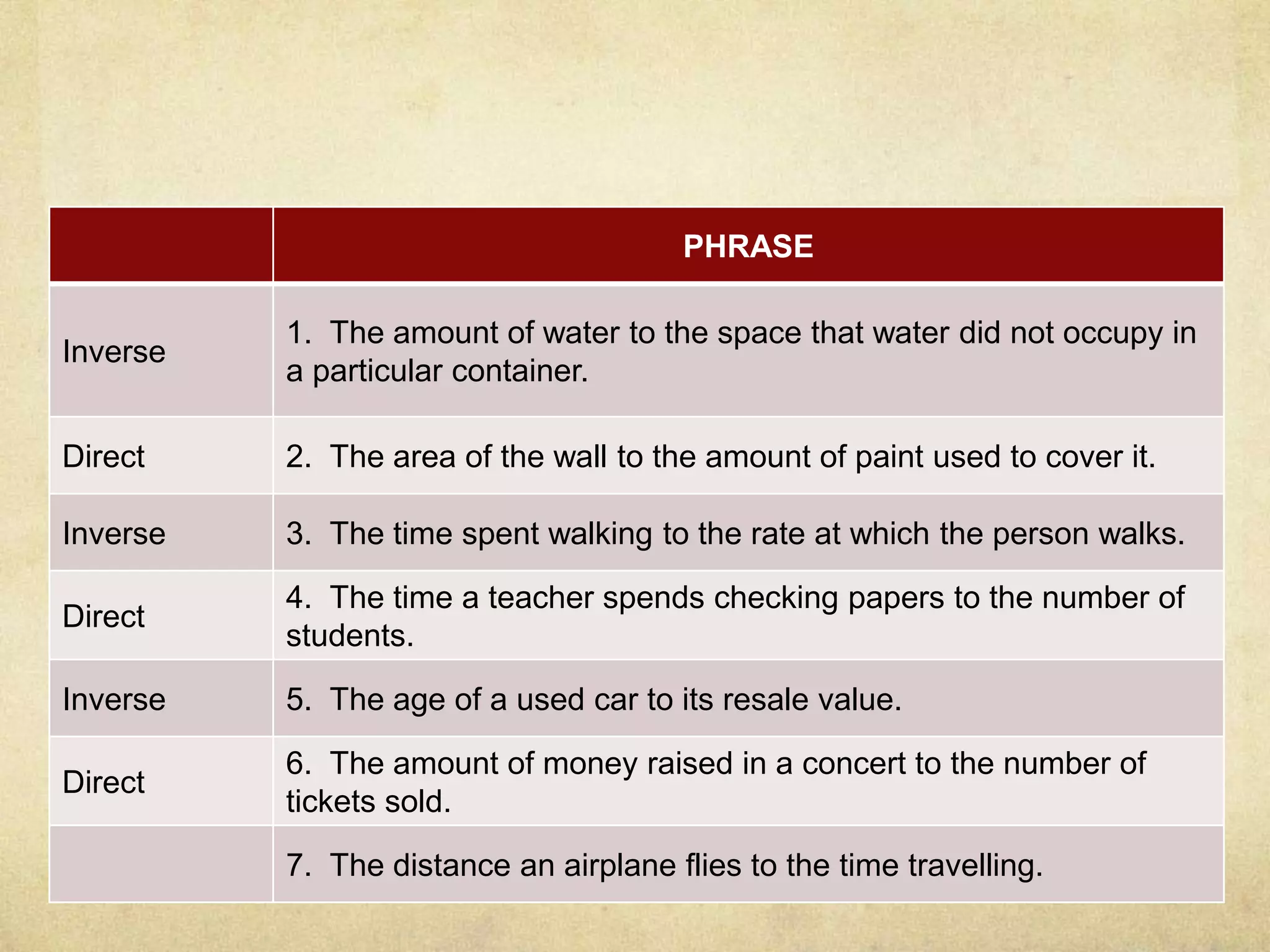
PHRASE 
1. The amount of water to the space that water did not occupy in 
a particular container. 
2. The area of the wall to the amount of paint used to cover it. 
3. The time spent walking to the rate at which the person walks. 
4. The time a teacher spends checking papers to the number of 
students. 
5. The age of a used car to its resale value. 
6. The amount of money raised in a concert to the number of 
tickets sold. 
7. The distance an airplane flies to the time travelling.
PHRASE 
1. The amount of water to the space that water did not 
occupy in a particular container. 
2. The area of the wall to the amount of paint used to cover it. 
3. The time spent walking to the rate at which the person walks. 
4. The time a teacher spends checking papers to the number of 
students. 
5. The age of a used car to its resale value. 
6. The amount of money raised in a concert to the number of 
tickets sold. 
7. The distance an airplane flies to the time travelling.
PHRASE 
Inverse 
1. The amount of water to the space that water did not occupy in 
a particular container. 
2. The area of the wall to the amount of paint used to cover it. 
3. The time spent walking to the rate at which the person walks. 
4. The time a teacher spends checking papers to the number of 
students. 
5. The age of a used car to its resale value. 
6. The amount of money raised in a concert to the number of 
tickets sold. 
7. The distance an airplane flies to the time travelling.
PHRASE 
Inverse 
1. The amount of water to the space that water did not occupy in 
a particular container. 
2. The area of the wall to the amount of paint used to cover 
it. 
3. The time spent walking to the rate at which the person walks. 
4. The time a teacher spends checking papers to the number of 
students. 
5. The age of a used car to its resale value. 
6. The amount of money raised in a concert to the number of 
tickets sold. 
7. The distance an airplane flies to the time travelling.
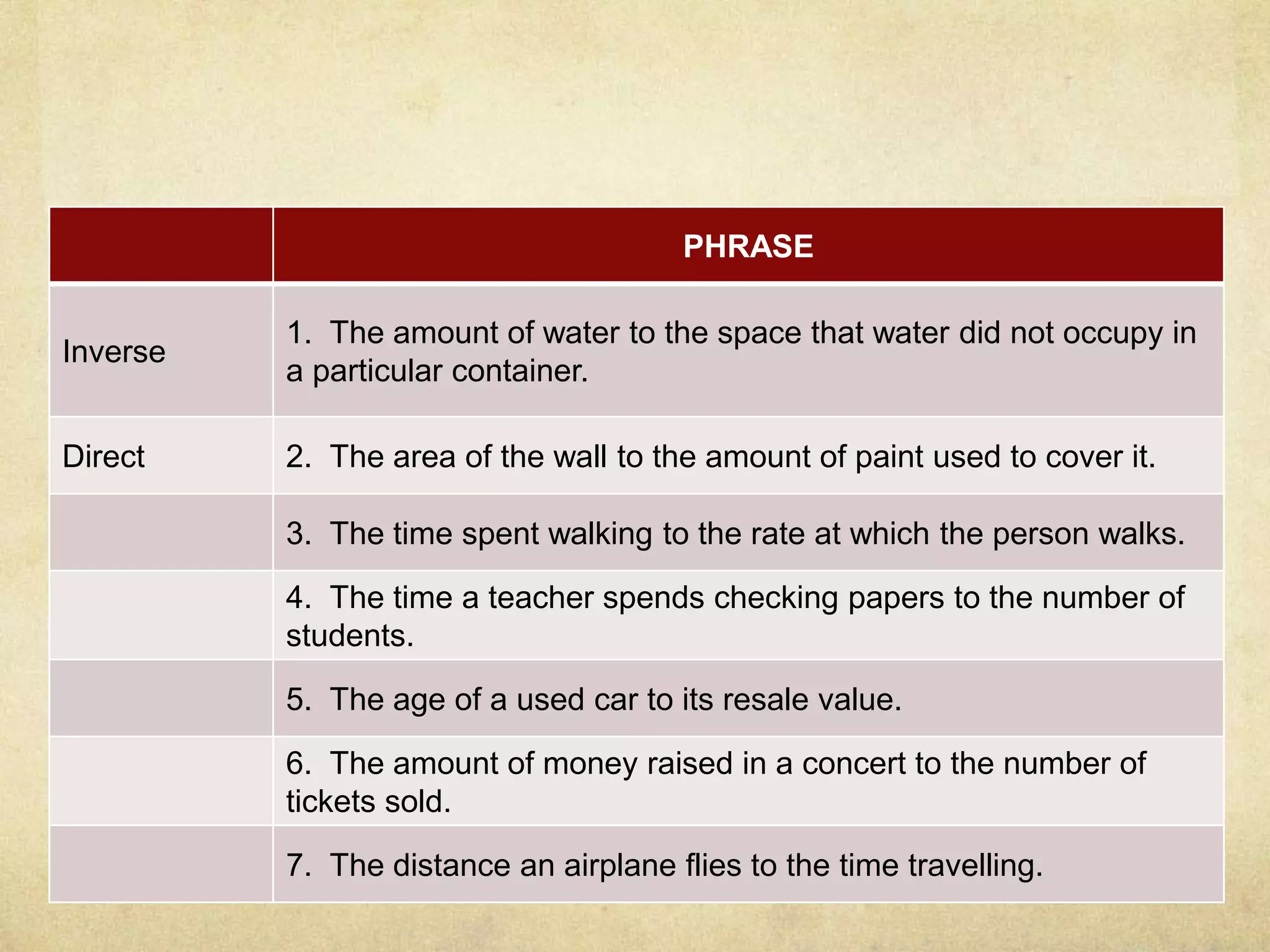
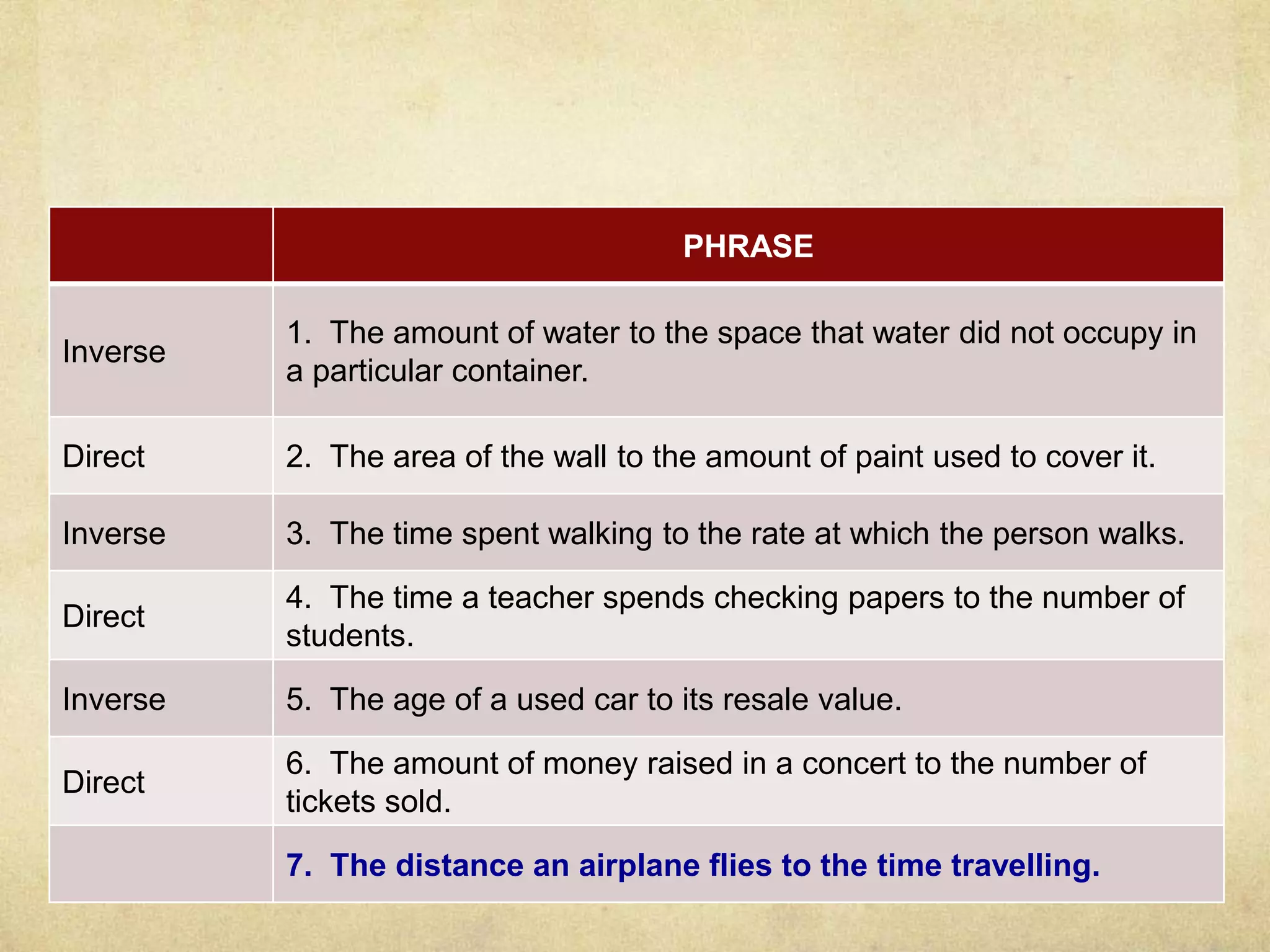
PHRASE 
Inverse 
1. The amount of water to the space that water did not occupy in 
a particular container. 
Direct 2. The area of the wall to the amount of paint used to cover it. 
3. The time spent walking to the rate at which the person walks. 
4. The time a teacher spends checking papers to the number of 
students. 
5. The age of a used car to its resale value. 
6. The amount of money raised in a concert to the number of 
tickets sold. 
7. The distance an airplane flies to the time travelling.
PHRASE 
Inverse 
1. The amount of water to the space that water did not occupy in 
a particular container. 
Direct 2. The area of the wall to the amount of paint used to cover it. 
3. The time spent walking to the rate at which the person 
walks. 
4. The time a teacher spends checking papers to the number of 
students. 
5. The age of a used car to its resale value. 
6. The amount of money raised in a concert to the number of 
tickets sold. 
7. The distance an airplane flies to the time travelling.
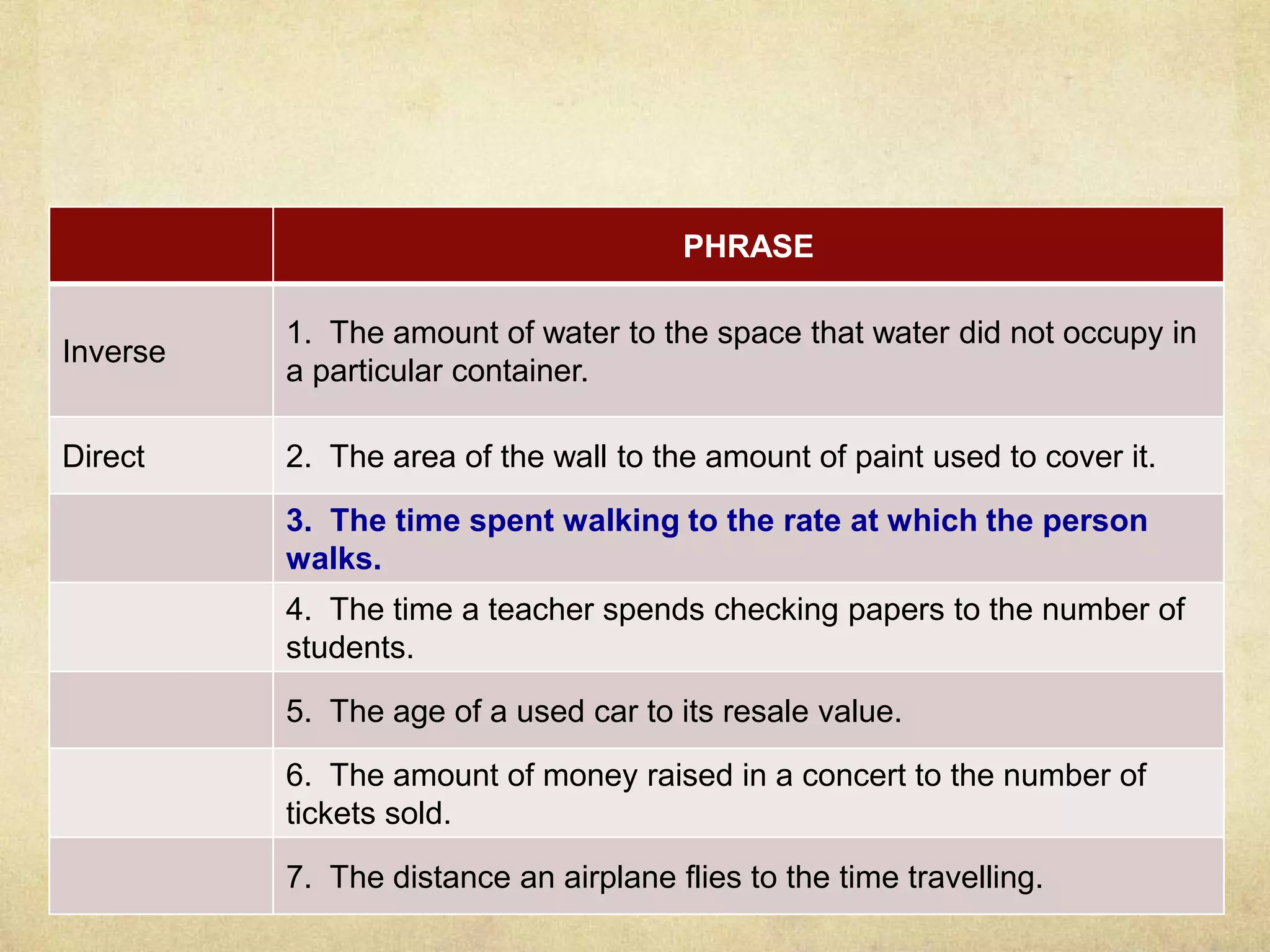
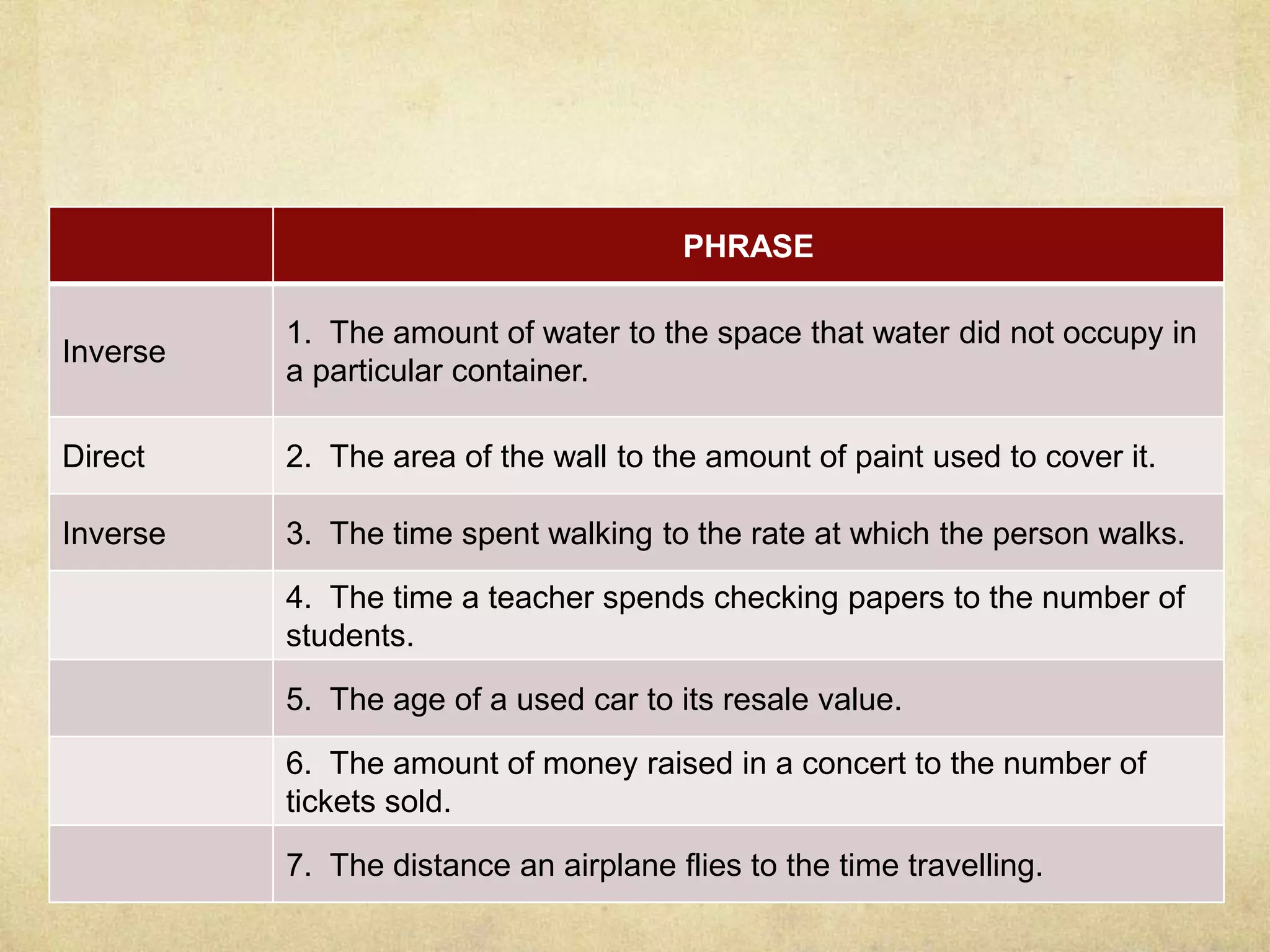
PHRASE 
Inverse 
1. The amount of water to the space that water did not occupy in 
a particular container. 
Direct 2. The area of the wall to the amount of paint used to cover it. 
Inverse 3. The time spent walking to the rate at which the person walks. 
4. The time a teacher spends checking papers to the number of 
students. 
5. The age of a used car to its resale value. 
6. The amount of money raised in a concert to the number of 
tickets sold. 
7. The distance an airplane flies to the time travelling.
PHRASE 
Inverse 
1. The amount of water to the space that water did not occupy in 
a particular container. 
Direct 2. The area of the wall to the amount of paint used to cover it. 
Inverse 3. The time spent walking to the rate at which the person walks. 
4. The time a teacher spends checking papers to the number 
of students. 
5. The age of a used car to its resale value. 
6. The amount of money raised in a concert to the number of 
tickets sold. 
7. The distance an airplane flies to the time travelling.
PHRASE 
Inverse 
1. The amount of water to the space that water did not occupy in 
a particular container. 
Direct 2. The area of the wall to the amount of paint used to cover it. 
Inverse 3. The time spent walking to the rate at which the person walks. 
Direct 
4. The time a teacher spends checking papers to the number of 
students. 
5. The age of a used car to its resale value. 
6. The amount of money raised in a concert to the number of 
tickets sold. 
7. The distance an airplane flies to the time travelling.
PHRASE 
Inverse 
1. The amount of water to the space that water did not occupy in 
a particular container. 
Direct 2. The area of the wall to the amount of paint used to cover it. 
Inverse 3. The time spent walking to the rate at which the person walks. 
Direct 
4. The time a teacher spends checking papers to the number of 
students. 
5. The age of a used car to its resale value. 
6. The amount of money raised in a concert to the number of 
tickets sold. 
7. The distance an airplane flies to the time travelling.
PHRASE 
Inverse 
1. The amount of water to the space that water did not occupy in 
a particular container. 
Direct 2. The area of the wall to the amount of paint used to cover it. 
Inverse 3. The time spent walking to the rate at which the person walks. 
Direct 
4. The time a teacher spends checking papers to the number of 
students. 
Inverse 5. The age of a used car to its resale value. 
6. The amount of money raised in a concert to the number of 
tickets sold. 
7. The distance an airplane flies to the time travelling.
PHRASE 
Inverse 
1. The amount of water to the space that water did not occupy in 
a particular container. 
Direct 2. The area of the wall to the amount of paint used to cover it. 
Inverse 3. The time spent walking to the rate at which the person walks. 
Direct 
4. The time a teacher spends checking papers to the number of 
students. 
Inverse 5. The age of a used car to its resale value. 
6. The amount of money raised in a concert to the number of 
tickets sold. 
7. The distance an airplane flies to the time travelling.
PHRASE 
Inverse 
1. The amount of water to the space that water did not occupy in 
a particular container. 
Direct 2. The area of the wall to the amount of paint used to cover it. 
Inverse 3. The time spent walking to the rate at which the person walks. 
Direct 
4. The time a teacher spends checking papers to the number of 
students. 
Inverse 5. The age of a used car to its resale value. 
Direct 
6. The amount of money raised in a concert to the number of 
tickets sold. 
7. The distance an airplane flies to the time travelling.
PHRASE 
Inverse 
1. The amount of water to the space that water did not occupy in 
a particular container. 
Direct 2. The area of the wall to the amount of paint used to cover it. 
Inverse 3. The time spent walking to the rate at which the person walks. 
Direct 
4. The time a teacher spends checking papers to the number of 
students. 
Inverse 5. The age of a used car to its resale value. 
Direct 
6. The amount of money raised in a concert to the number of 
tickets sold. 
7. The distance an airplane flies to the time travelling.
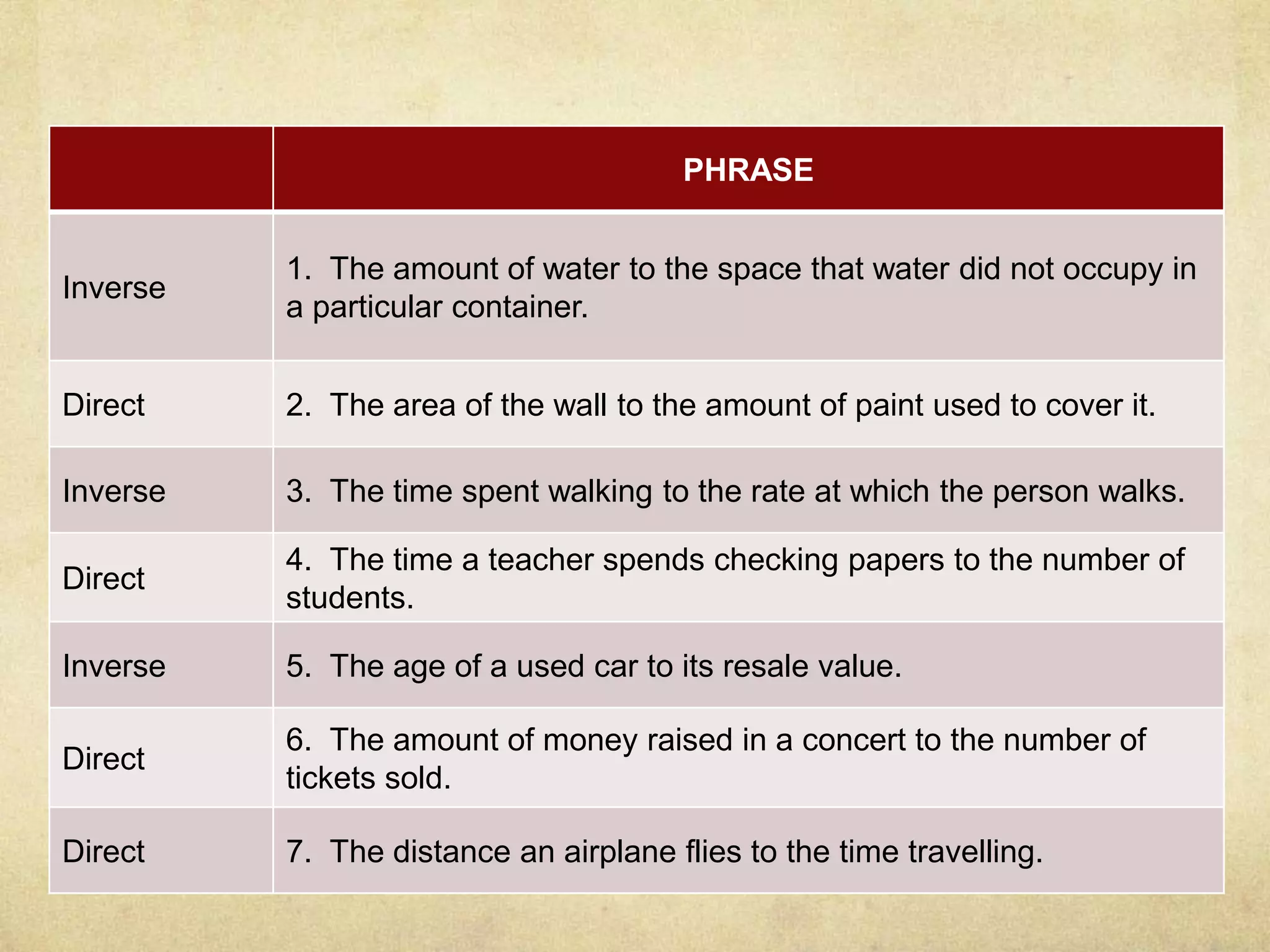
PHRASE 
Inverse 
1. The amount of water to the space that water did not occupy in 
a particular container. 
Direct 2. The area of the wall to the amount of paint used to cover it. 
Inverse 3. The time spent walking to the rate at which the person walks. 
Direct 
4. The time a teacher spends checking papers to the number of 
students. 
Inverse 5. The age of a used car to its resale value. 
Direct 
6. The amount of money raised in a concert to the number of 
tickets sold. 
Direct 7. The distance an airplane flies to the time travelling.
Now let us try solving a 
situation that involves an 
inverse variation.
A very seesaw 
problem… 
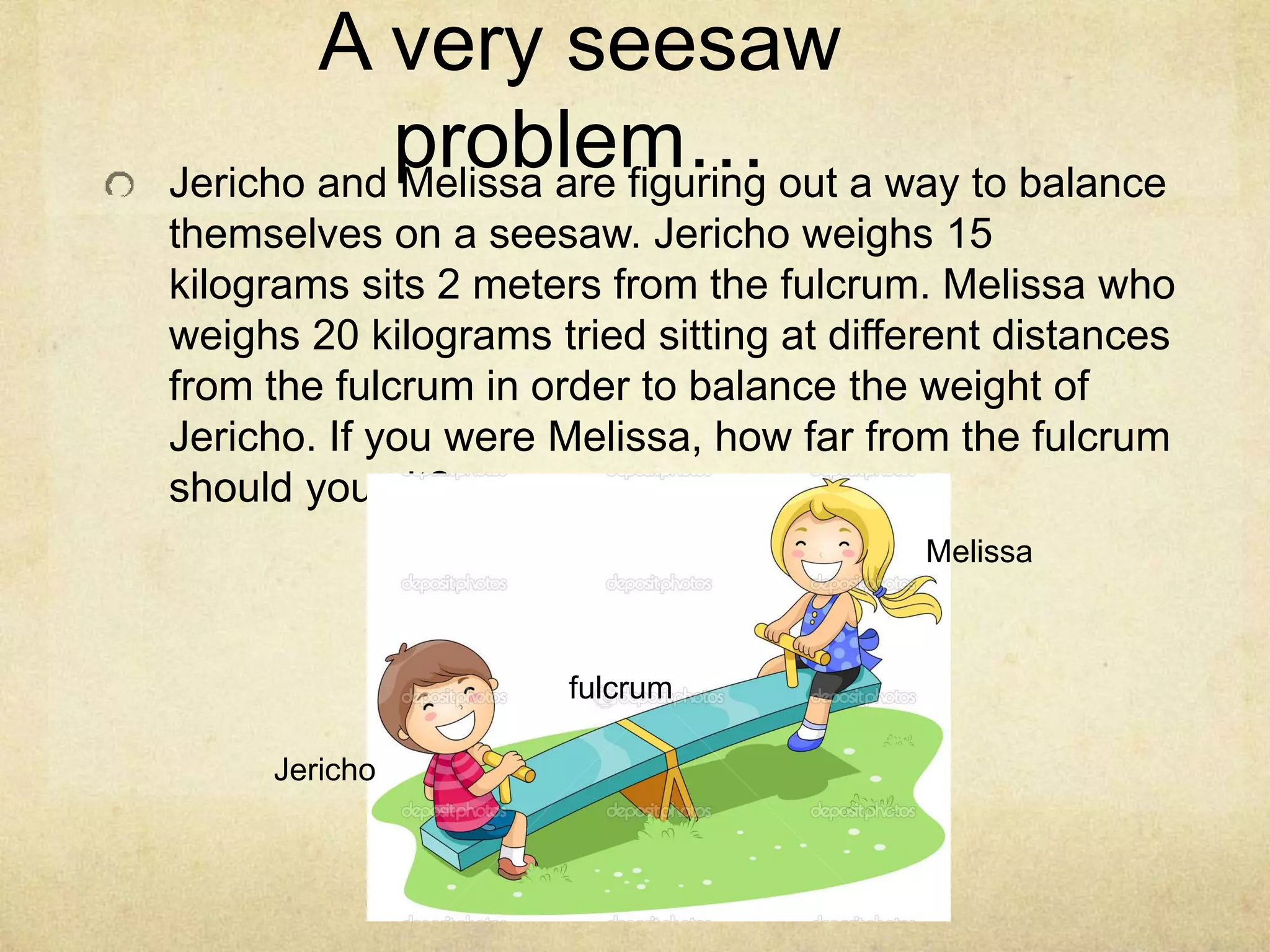
Jericho and Melissa are figuring out a way to balance 
themselves on a seesaw. Jericho weighs 15 
kilograms sits 2 meters from the fulcrum. Melissa who 
weighs 20 kilograms tried sitting at different distances 
from the fulcrum in order to balance the weight of 
Jericho. If you were Melissa, how far from the fulcrum 
should you sit? 
fulcrum 
Melissa 
Jericho
To balance the weight of Jericho, Melissa has to sit at 
a distance closer to the fulcrum. 
The relation shows that the distance d varies inversely 
as the weight w and can be transformed into a 
mathematical equation as d = k/w. 
Solution : Let us solve for k. 
Use Jericho’s: w = 15 k and d = 2 
k = dw 
= 15 (2) k = 30 
Solve for the distance of Melissa to the fulcrum.
d = k/w, 
= 30 / 20 d = 1. 5 meters 
Therefore, Melissa has to sit 1.5 meters from the fulcrum. 
Try this. 
• The number of days needed in repairing a house 
varies inversely as the number of men working. It 
takes 15 days for 2 men to repair the house. How 
many men are needed to complete the job in 6 days?
Inverse variation

Inverse variation

  • 1.
  • 2.
    Activity Consider thetable of values A and B. x - 2 -1 1 2 3 y - 4 -2 2 4 6 x 16 8 4 2 1 y 2 4 8 16 32 Table A Table B 1. What have you observe about the values in both tables? 2. What do you observe about the values of y when x increases/decreases?
  • 3.
    3. What happensto the values of y when x is doubled? 4. How do you compare the two relations? 5. How can you determine if the relationship is a direct variation or an inverse variation? x - 2 -1 1 2 3 y - 4 -2 2 4 6 x 16 8 4 2 1 y 2 4 8 16 32 Table A Table B
  • 4.
    Inverse Variation Thisoccurs whenever a situation produces pairs of numbers whose product is constant. For any quantities x and y, an increase in x causes a decrease in y or vice versa. We can say that y varies inversely as x or y = k/x. The statement, “y varies inversely to x,” translates to y = k/x, where k is the constant of variation.
  • 5.
    The number ofpersons sharing a pizza to the number of slices of the pizza. The number of persons needed to do a job to the number of days finishing the job.
  • 6.
    On a ¼sheet of paper, determine if the following phrases represent direct variation or inverse variation. Write DIRECT if the phrase suggest a direct variation and INVERSE If it suggests an inverse variation. PHRASE 1. The amount of water to the space that water did not occupy in a particular container. 2. The area of the wall to the amount of paint used to cover it. 3. The time spent walking to the rate at which the person walks. 4. The time a teacher spends checking papers to the number of students. 5. The age of a used car to its resale value. 6. The amount of money raised in a concert to the number of tickets sold. 7. The distance an airplane flies to the time travelling.
  • 7.
    PHRASE 1. Theamount of water to the space that water did not occupy in a particular container. 2. The area of the wall to the amount of paint used to cover it. 3. The time spent walking to the rate at which the person walks. 4. The time a teacher spends checking papers to the number of students. 5. The age of a used car to its resale value. 6. The amount of money raised in a concert to the number of tickets sold. 7. The distance an airplane flies to the time travelling.
  • 8.
    PHRASE Inverse 1.The amount of water to the space that water did not occupy in a particular container. 2. The area of the wall to the amount of paint used to cover it. 3. The time spent walking to the rate at which the person walks. 4. The time a teacher spends checking papers to the number of students. 5. The age of a used car to its resale value. 6. The amount of money raised in a concert to the number of tickets sold. 7. The distance an airplane flies to the time travelling.
  • 9.
    PHRASE Inverse 1.The amount of water to the space that water did not occupy in a particular container. 2. The area of the wall to the amount of paint used to cover it. 3. The time spent walking to the rate at which the person walks. 4. The time a teacher spends checking papers to the number of students. 5. The age of a used car to its resale value. 6. The amount of money raised in a concert to the number of tickets sold. 7. The distance an airplane flies to the time travelling.
  • 10.
    PHRASE Inverse 1.The amount of water to the space that water did not occupy in a particular container. Direct 2. The area of the wall to the amount of paint used to cover it. 3. The time spent walking to the rate at which the person walks. 4. The time a teacher spends checking papers to the number of students. 5. The age of a used car to its resale value. 6. The amount of money raised in a concert to the number of tickets sold. 7. The distance an airplane flies to the time travelling.
  • 11.
    PHRASE Inverse 1.The amount of water to the space that water did not occupy in a particular container. Direct 2. The area of the wall to the amount of paint used to cover it. 3. The time spent walking to the rate at which the person walks. 4. The time a teacher spends checking papers to the number of students. 5. The age of a used car to its resale value. 6. The amount of money raised in a concert to the number of tickets sold. 7. The distance an airplane flies to the time travelling.
  • 12.
    PHRASE Inverse 1.The amount of water to the space that water did not occupy in a particular container. Direct 2. The area of the wall to the amount of paint used to cover it. Inverse 3. The time spent walking to the rate at which the person walks. 4. The time a teacher spends checking papers to the number of students. 5. The age of a used car to its resale value. 6. The amount of money raised in a concert to the number of tickets sold. 7. The distance an airplane flies to the time travelling.
  • 13.
    PHRASE Inverse 1.The amount of water to the space that water did not occupy in a particular container. Direct 2. The area of the wall to the amount of paint used to cover it. Inverse 3. The time spent walking to the rate at which the person walks. 4. The time a teacher spends checking papers to the number of students. 5. The age of a used car to its resale value. 6. The amount of money raised in a concert to the number of tickets sold. 7. The distance an airplane flies to the time travelling.
  • 14.
    PHRASE Inverse 1.The amount of water to the space that water did not occupy in a particular container. Direct 2. The area of the wall to the amount of paint used to cover it. Inverse 3. The time spent walking to the rate at which the person walks. Direct 4. The time a teacher spends checking papers to the number of students. 5. The age of a used car to its resale value. 6. The amount of money raised in a concert to the number of tickets sold. 7. The distance an airplane flies to the time travelling.
  • 15.
    PHRASE Inverse 1.The amount of water to the space that water did not occupy in a particular container. Direct 2. The area of the wall to the amount of paint used to cover it. Inverse 3. The time spent walking to the rate at which the person walks. Direct 4. The time a teacher spends checking papers to the number of students. 5. The age of a used car to its resale value. 6. The amount of money raised in a concert to the number of tickets sold. 7. The distance an airplane flies to the time travelling.
  • 16.
    PHRASE Inverse 1.The amount of water to the space that water did not occupy in a particular container. Direct 2. The area of the wall to the amount of paint used to cover it. Inverse 3. The time spent walking to the rate at which the person walks. Direct 4. The time a teacher spends checking papers to the number of students. Inverse 5. The age of a used car to its resale value. 6. The amount of money raised in a concert to the number of tickets sold. 7. The distance an airplane flies to the time travelling.
  • 17.
    PHRASE Inverse 1.The amount of water to the space that water did not occupy in a particular container. Direct 2. The area of the wall to the amount of paint used to cover it. Inverse 3. The time spent walking to the rate at which the person walks. Direct 4. The time a teacher spends checking papers to the number of students. Inverse 5. The age of a used car to its resale value. 6. The amount of money raised in a concert to the number of tickets sold. 7. The distance an airplane flies to the time travelling.
  • 18.
    PHRASE Inverse 1.The amount of water to the space that water did not occupy in a particular container. Direct 2. The area of the wall to the amount of paint used to cover it. Inverse 3. The time spent walking to the rate at which the person walks. Direct 4. The time a teacher spends checking papers to the number of students. Inverse 5. The age of a used car to its resale value. Direct 6. The amount of money raised in a concert to the number of tickets sold. 7. The distance an airplane flies to the time travelling.
  • 19.
    PHRASE Inverse 1.The amount of water to the space that water did not occupy in a particular container. Direct 2. The area of the wall to the amount of paint used to cover it. Inverse 3. The time spent walking to the rate at which the person walks. Direct 4. The time a teacher spends checking papers to the number of students. Inverse 5. The age of a used car to its resale value. Direct 6. The amount of money raised in a concert to the number of tickets sold. 7. The distance an airplane flies to the time travelling.
  • 20.
    PHRASE Inverse 1.The amount of water to the space that water did not occupy in a particular container. Direct 2. The area of the wall to the amount of paint used to cover it. Inverse 3. The time spent walking to the rate at which the person walks. Direct 4. The time a teacher spends checking papers to the number of students. Inverse 5. The age of a used car to its resale value. Direct 6. The amount of money raised in a concert to the number of tickets sold. Direct 7. The distance an airplane flies to the time travelling.
  • 21.
    Now let ustry solving a situation that involves an inverse variation.
  • 22.
    A very seesaw problem… Jericho and Melissa are figuring out a way to balance themselves on a seesaw. Jericho weighs 15 kilograms sits 2 meters from the fulcrum. Melissa who weighs 20 kilograms tried sitting at different distances from the fulcrum in order to balance the weight of Jericho. If you were Melissa, how far from the fulcrum should you sit? fulcrum Melissa Jericho
  • 23.
    To balance theweight of Jericho, Melissa has to sit at a distance closer to the fulcrum. The relation shows that the distance d varies inversely as the weight w and can be transformed into a mathematical equation as d = k/w. Solution : Let us solve for k. Use Jericho’s: w = 15 k and d = 2 k = dw = 15 (2) k = 30 Solve for the distance of Melissa to the fulcrum.
  • 24.
    d = k/w, = 30 / 20 d = 1. 5 meters Therefore, Melissa has to sit 1.5 meters from the fulcrum. Try this. • The number of days needed in repairing a house varies inversely as the number of men working. It takes 15 days for 2 men to repair the house. How many men are needed to complete the job in 6 days?